Commonwealth Fusion Systems
Bob Mumgaard
Summary
Commonwealth Fusion Systems is building commercial fusion systems around high-temperature superconducting magnet technology developed with MIT. SPARC, its fusion-energy demonstration tokamak under construction in Devens, Massachusetts, hit ~75% completion in 2026: the first of 18 toroidal-field magnets was installed in January and the second 48-ton vacuum-vessel half arrived in May, with all 18 magnets targeted by end of summer 2026 ahead of first plasma and a Q>1 net-energy attempt in 2027. ARC, CFS' first commercial plant β officially named the Fall Line Fusion Power Station and sited on 100 acres in Chesterfield County, Virginia β became in April 2026 the first fusion project to file for grid interconnection with PJM, and on June 4, 2026 CFS published a five-paper ARC Physics Basis in the Journal of Plasma Physics projecting ~1.1 GW of fusion power and ~400 MW of net electricity. CFS has also begun monetizing its HTS magnet platform, signing a potentially multi-billion-dollar long-term magnet supply deal with Realta Fusion and launching a SPARC digital twin program with Nvidia and Siemens.
Main Products

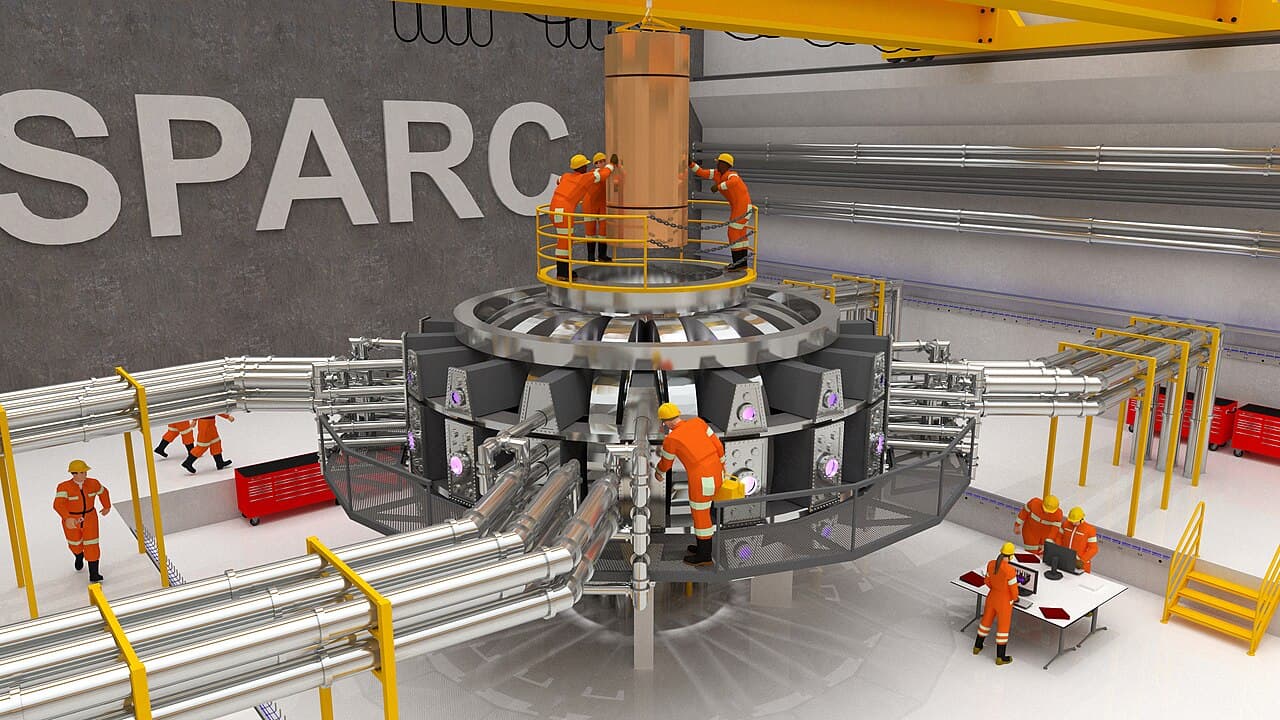
Compact, high-field tokamak designed to demonstrate net energy from fusion. It uses high-temperature superconducting magnets to achieve reactor-class magnetic fields in a much smaller machine, with peer-reviewed projections of roughly Q ~11 and ~140 MW of fusion power.
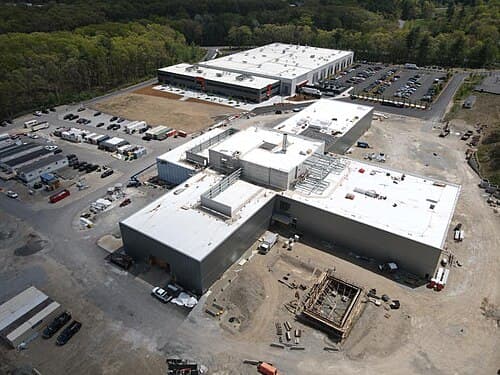
Assembly is advancing at the Devens campus. SPARC is about 75% complete: the first of 18 toroidal-field magnets was installed at CES 2026 in January, the second 48-ton vacuum-vessel half was lowered into Tokamak Hall in May 2026, and CFS targets having all 18 TF magnets installed by end of summer 2026 ahead of first plasma and a Q>1 net-energy attempt in 2027. CFS is also building an AI-powered digital twin of SPARC with Nvidia and Siemens.

CFS' first planned grid-scale commercial fusion power plant, designed to deliver about 400 MW of clean electricity using the HTS magnet and tokamak stack proven through SPARC. The project is officially named the Fall Line Fusion Power Station and is planned for a 100-acre site at the James River Industrial Center in Chesterfield County, Virginia.
Has not broken ground, but in April 2026 CFS became the first fusion company to file a grid interconnection request with PJM Interconnection, the largest U.S. wholesale electricity market. The plant is locked in with a 200 MW PPA from Google and a $1B+ offtake agreement with Eni; CFS still targets the early 2030s for first electricity delivery and a 20-year operating life.
What's Next
SPARC first plasma and net energy (Q>1)
Bring SPARC online and achieve first plasma, then push to net fusion energy (Q>1) β CFS' published design work projects about Q ~11 and ~140 MW of fusion power, which would make SPARC the first magnetic-confinement machine built outside a government lab to produce more fusion power than it consumes.
Move Fall Line Fusion Power Station through PJM interconnection and permitting
Work the April 2026 PJM grid-interconnection request through study and planning, complete Virginia permitting on the 100-acre Chesterfield County site, and lock down the final ARC plant design ahead of construction.
Scale the HTS magnet supply business
Execute the April 2026 Realta Fusion long-term HTS magnet supply agreement and turn the Type One Energy licensing deal, WHAM magnet supply, and Realta partnership into a recurring magnet business that funds the fusion roadmap before SPARC and ARC reach revenue.
Operations & Revenue
SPARC is ~75% complete: the first toroidal-field magnet was installed at CES 2026, the second vacuum-vessel half was lowered into Tokamak Hall in May 2026, and CFS targets installing all 18 TF magnets by the end of summer 2026 ahead of first plasma and a Q>1 attempt in 2027. The Fall Line Fusion Power Station (ARC) site in Chesterfield County, Virginia, has not broken ground, but CFS became the first fusion company to file a PJM grid interconnection request in April 2026 and the first ARC plant is locked in with a Google 200 MW PPA and a $1B+ Eni offtake. The HTS magnet platform is generating near-term commercial momentum through deals with Realta Fusion, Type One Energy, and the WHAM experiment.
Revenue Streams
Google Power Purchase Agreement
200 MW PPA with Google for electricity from the Fall Line Fusion Power Station (first ARC commercial fusion plant) in Chesterfield County, Virginia.
More than $1B offtake agreement with Eni for electricity from CFS' first ARC power plant in Virginia.
CFS is monetizing its superconducting magnet platform through external partnerships, anchored by an April 2026 long-term HTS magnet design and manufacturing agreement with Realta Fusion (potential multi-billion-dollar value) and prior cable licensing with Type One Energy plus magnet supply to the Wisconsin WHAM experiment.
Key Metrics
Timeline
At CES 2026 in January, CFS installs the first of SPARC's 18 toroidal field magnets β each about 24 tons, generating roughly 20 tesla β and announces a partnership with Nvidia and Siemens to build an AI-powered digital twin of SPARC using Siemens Xcelerator and Nvidia Omniverse. All 18 magnets are targeted to be installed by the end of summer 2026.
In April 2026 CFS signs a long-term strategic partnership to design and manufacture HTS magnets for Realta Fusion's CoSMo magnetic-mirror fusion systems. CFS' chief commercial officer Rick Needham calls it the company's largest deal of its kind to date, with potential multi-billion-dollar value over the life of the agreement.
On April 28, 2026, CFS becomes the first fusion company to submit a grid interconnection request, applying to PJM Interconnection for its first commercial ARC plant β officially named the Fall Line Fusion Power Station β on a 100-acre site in the James River Industrial Center in Chesterfield County, Virginia. CFS still targets electricity delivery from ARC in the early 2030s.
In May 2026 CFS lowers the second 48-ton half of the SPARC vacuum vessel into Tokamak Hall, giving the tokamak its final structural shape. Closure of the external cryostat and integration of fuel lines remain pending as the team continues toward end-of-summer magnet completion.
On June 4, 2026 CFS publishes a five-paper ARC Physics Basis in a special issue of Cambridge University Press' Journal of Plasma Physics, the most detailed peer-reviewed scientific case yet for a commercial-scale tokamak power plant. The papers use SPARC design lessons and state-of-the-art tools to project that the Fall Line Fusion Power Station will produce roughly 1.1 GW of fusion power and deliver about 400 MW of continuous net electricity to the grid, building on the original seven SPARC papers from 2020.