Commonwealth Fusion Systems

SPARC

Under Construction

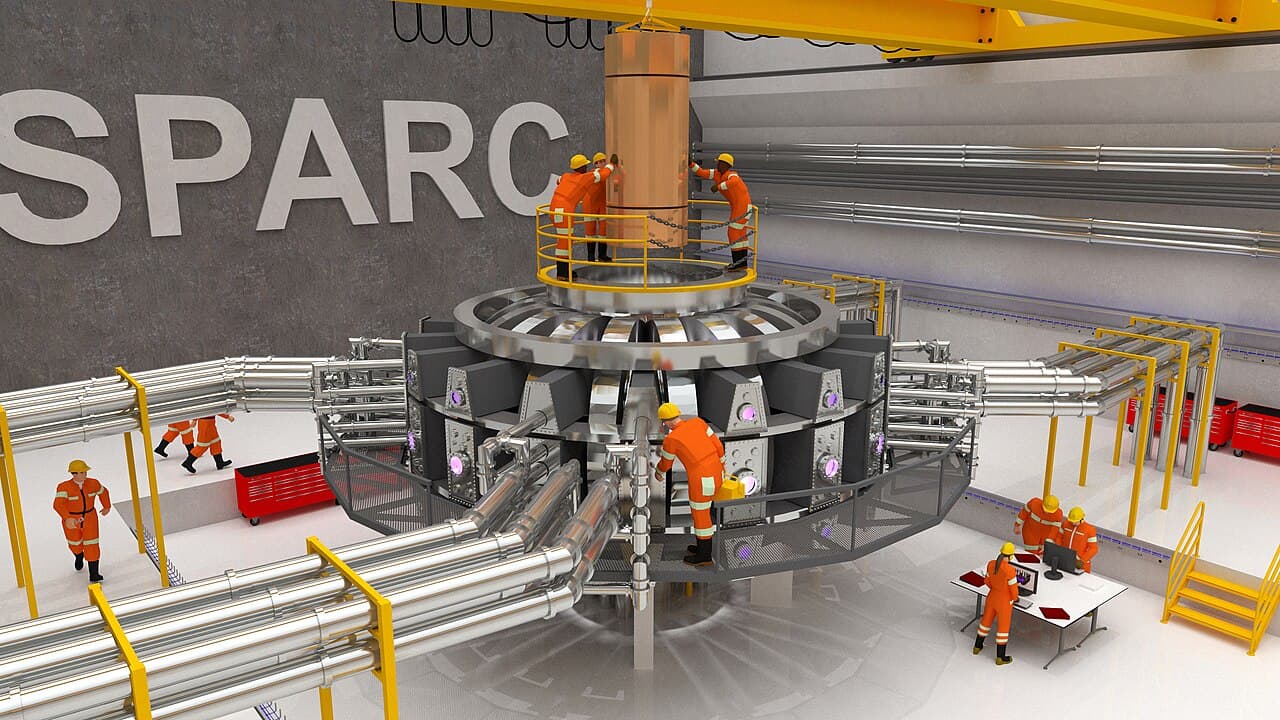
Compact, high-field tokamak designed to demonstrate net energy from fusion. It uses high-temperature superconducting magnets to achieve reactor-class magnetic fields in a much smaller machine, with peer-reviewed projections of roughly Q ~11 and ~140 MW of fusion power.

Latest update Oct 7, 2026

SPARC

01

Current status

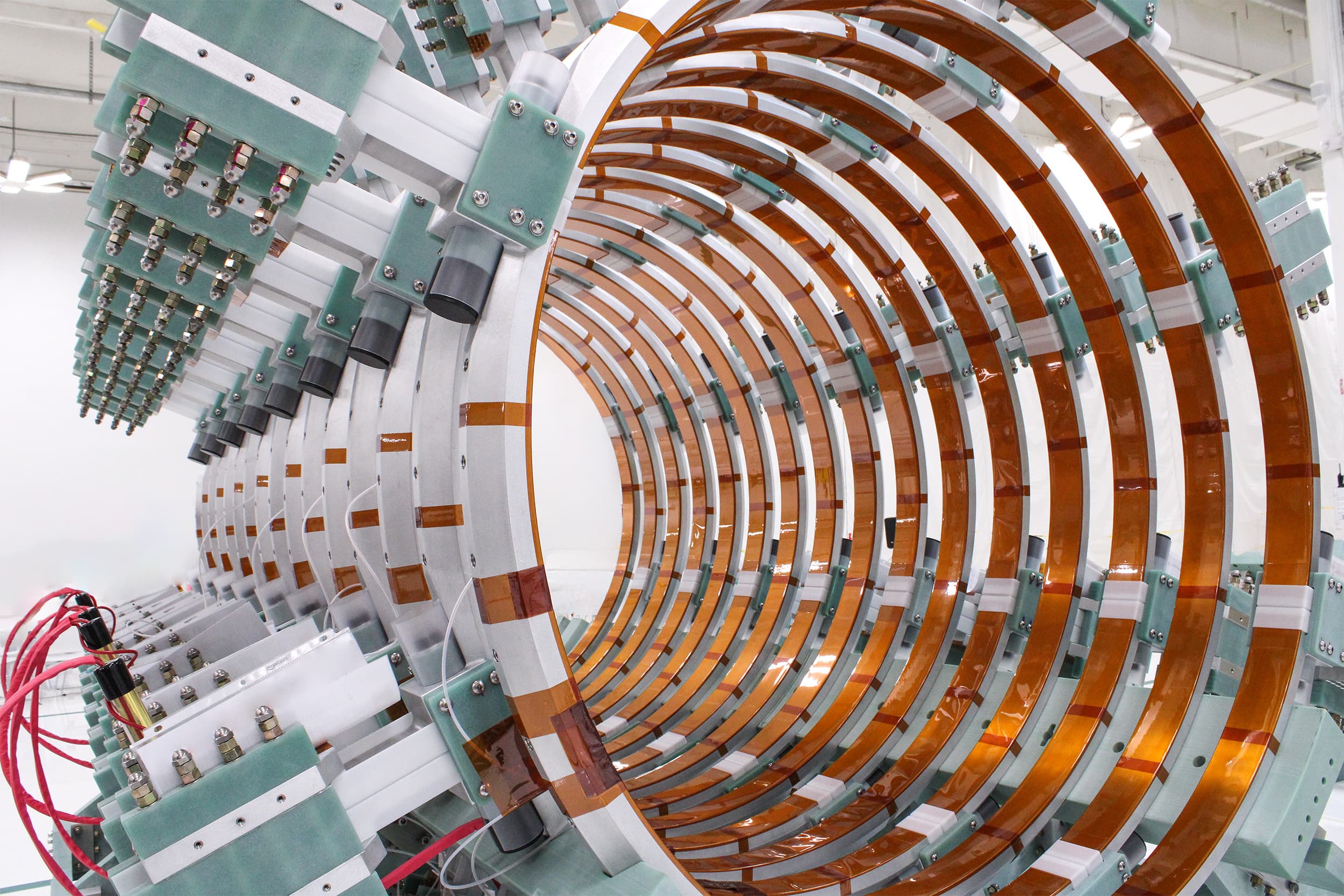
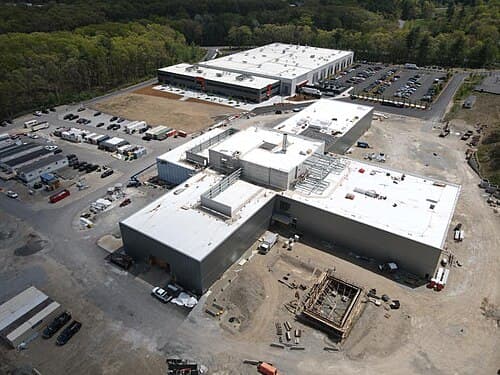
Assembly is advancing at the Devens campus. SPARC is about 80% complete. A September 22, 2026 CFS LinkedIn post said eight of 18 toroidal-field magnets are installed, up from three publicly confirmed in late June. That is a company social-media count; no later official blog opened here confirmed the eight-magnet figure. The remaining ten magnets now track to late 2026 or early 2027 ahead of first plasma and a Q>1 attempt still targeted for 2027. On September 16 the full cryogenic plant ran at 8 K; CFS still described the dry dress rehearsal as upcoming and unpublished a date. CFS is also building an AI-powered digital twin of SPARC with Nvidia and Siemens.

02

Specifications6

Projected Gain
Q ~11
Projected Fusion Power
~140 MW
Magnetic Field
12.2 T on-axis / just above 20 T on coil
TF Magnets

8 of 18 installed as of Sept 22, 2026 company LinkedIn post; remaining 10

Build Progress
~80% complete

both vacuum vessel halves installed

First Plasma Target
2027

Announced next steps from Commonwealth Fusion Systems that mention SPARC.

  1. 2026-2027

    Complete SPARC assembly and commissioning

    Close the external cryostat, integrate fuel and diagnostic lines, and complete final commissioning of the integrated tokamak, cryogenic, RF heating, and magnet systems at the Devens campus. The cryogenic plant cleared its own commissioning bar on September 16, 2026, running the full system at the 8 kelvin operating temperature the TF magnets require.

  2. 2026-2027

    Run SPARC's dry dress rehearsal

    Operate the entire SPARC plant - cryogenics, power, RF heating and vacuum systems - under full pulse loads as if a fusion pulse were happening, but without the tokamak itself, to validate the support infrastructure before first plasma. CFS described the September 16, 2026 8 kelvin cryogenic result as commissioning work leading into this integrated test; no date has been published for the rehearsal itself.

  3. 2026+

    Scale the HTS magnet supply business

    Execute the April 2026 Realta Fusion long-term HTS magnet supply agreement and turn the Type One Energy licensing deal, WHAM magnet supply, and Realta partnership into a recurring magnet business that funds the fusion roadmap before SPARC and ARC reach revenue.

  4. 2026

    Install all 18 SPARC TF magnets

    Finish installing the remaining SPARC toroidal-field magnets in Tokamak Hall. CFS had targeted all 18 by the end of summer 2026, but that window closed with only 3 magnets publicly confirmed as of late June 2026. The remaining 15 now need to go in during late 2026 or early 2027 so first plasma and the Q>1 attempt can still happen in 2027.

  1. DOE picks CFS to lead SPARC digital-twin project

    On Oct. 8, 2026 the U.S. Department of Energy named Commonwealth Fusion Systems lead of a Phase II Genesis Mission project to build an AI-enabled digital twin of SPARC, the tokamak CFS is assembling in Devens, Massachusetts. CFS said it is the only private company leading a Phase II award and the only fusion project in this round, with partners including PPPL, LLNL, ORNL, SLAC, MIT, Carnegie Mellon, Google DeepMind, Nvidia, Synopsys and General Atomics. DOE said the 12 new Phase II awards total $159 million; the CFS dollar amount is not separately disclosed, and the Office of Science list states that selection is for award negotiations rather than a funded obligation.

    cfs.energy www.energy.gov www.pppl.gov

  2. CFS places record 10,000 km HTS tape order with Fujikura

    Commonwealth Fusion Systems said it agreed to buy more than 10,000 km (3 GA-m) of high-temperature superconducting tape from Japan's Fujikura for ARC plants, starting with Fall Line in Chesterfield County, Virginia. CFS and Fujikura called it the largest HTS tape order of its kind; Fujikura is expanding manufacturing in Japan and CFS did not disclose financial terms. Chief science officer Brandon Sorbom told Khaleej Times deliveries could begin in one to two years and that SPARC uses about 1.5 GA-m of tape, roughly half the new order.

    cfs.energy www.khaleejtimes.com www.prnewswire.com

  3. Commonwealth Fusion runs SPARC's cryogenic system at 8 kelvin

    Commonwealth Fusion Systems said on September 16 that SPARC's full cryogenic system has run at its 8 kelvin operating temperature, the point at which the tokamak's high-temperature superconducting toroidal field magnets are cold enough to hold a plasma without quenching. The plant feeds three supercritical helium loops at 8, 15 and 80 kelvin and is essentially the same hardware CFS plans to use at its 400 MW ARC plant in Chesterfield County, Virginia. The company framed the result as part of commissioning ahead of the dry dress rehearsal, an integrated test that runs every SPARC support system as if a fusion pulse were happening without the tokamak itself.

    Commonwealth Fusion Systems

  4. Commonwealth Fusion Systems raises $1B, hits $4B total

    Commonwealth Fusion Systems announced on July 30 that it closed $1 billion in additional equity financing from institutional investors, including pension funds, sovereign wealth funds and infrastructure partners, bringing its total capital raised to $4 billion, the largest total of any fusion company. CEO Bob Mumgaard said the funds will finish assembly of the SPARC demonstration tokamak in Devens, Massachusetts, which is about 80% complete, and fund planning for the ARC commercial power plant in Virginia.

    Commonwealth Fusion Systems (PR Newswire) Power Magazine

  5. Commonwealth Fusion publishes ARC validation papers, pursues grid hookup

    Commonwealth Fusion Systems said a global team of scientists has published five peer-reviewed papers in a special issue of the Journal of Plasma Physics validating the physics of ARC, its planned first commercial-scale fusion power plant, building on lessons from its SPARC demonstration tokamak. The Gates- and Nvidia-backed company, which has raised nearly $3 billion, is targeting the early 2030s to feed about 400 megawatts onto the grid from its ARC plant in Chesterfield County, Virginia - enough to power roughly 280,000 homes - and has begun the interconnection process. Some outside researchers cautioned that data from an operating reactor is still needed to confirm the predictions.

    Commonwealth Fusion Systems Bloomberg Nature

05

More from Commonwealth Fusion Systems1

06

More in Nuclear Fusion