Active
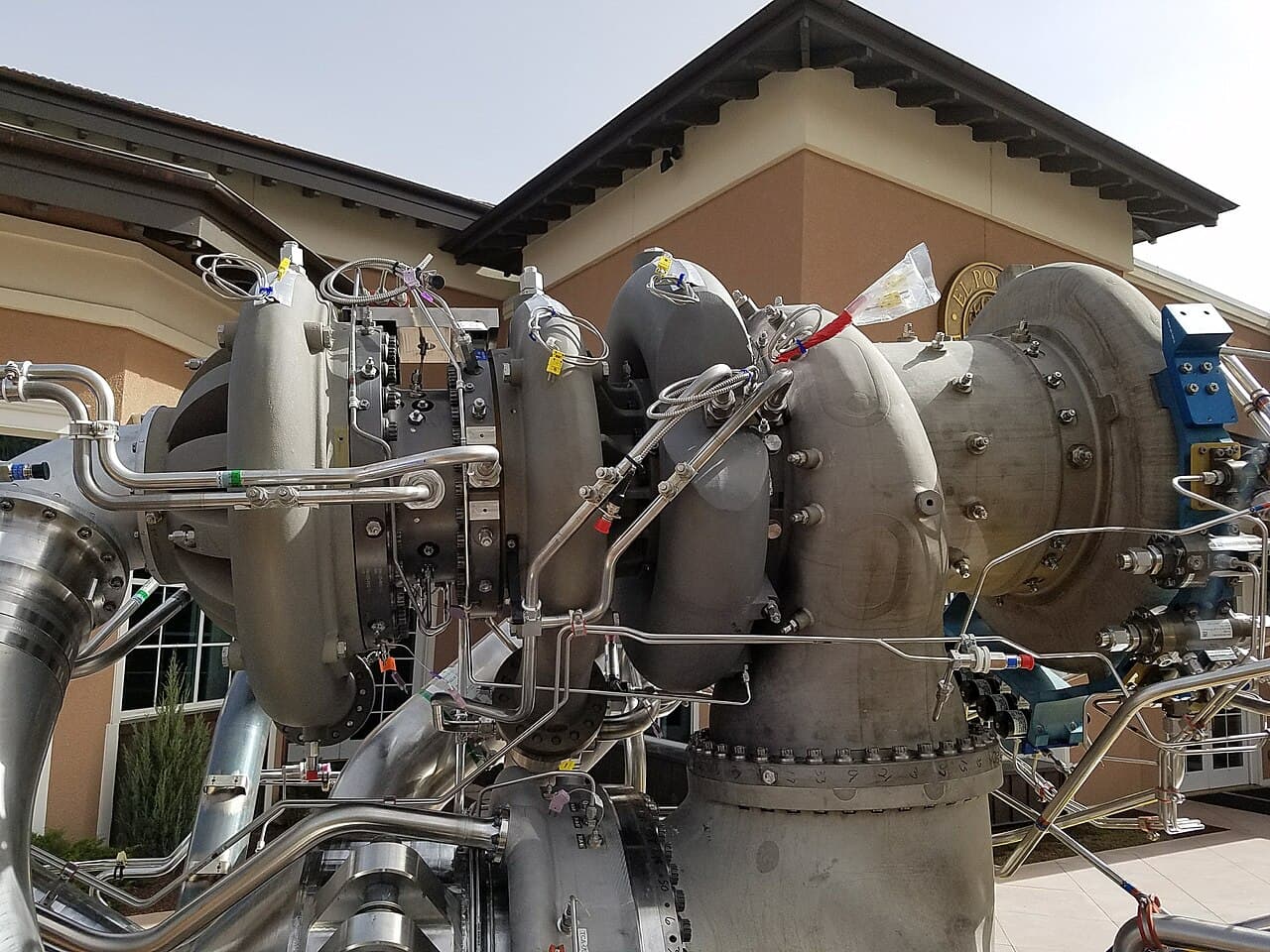
BE-4 Engine
Blue Origin
Liquid oxygen/liquefied natural gas (methane) rocket engine - the first American-made oxygen-rich staged combustion engine. Powers New Glenn and ULA Vulcan Centaur.
586 products, from shipping today to still in development.
586 products
Blue Origin
Liquid oxygen/liquefied natural gas (methane) rocket engine - the first American-made oxygen-rich staged combustion engine. Powers New Glenn and ULA Vulcan Centaur.
Blue Origin
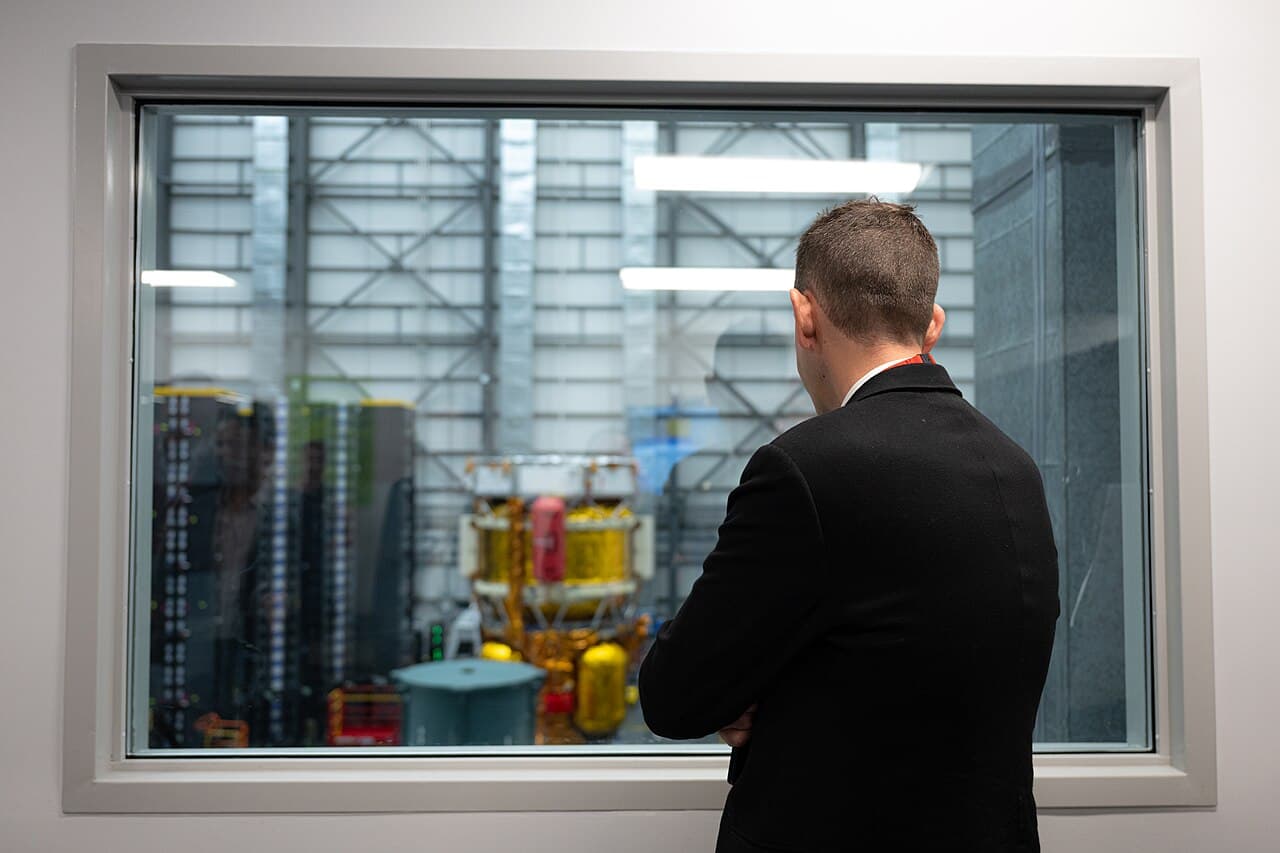
Lunar landing system family with a cargo-focused Mark 1 variant and a crew-capable Mark 2 variant being developed for NASA's Artemis program.
Blue Origin
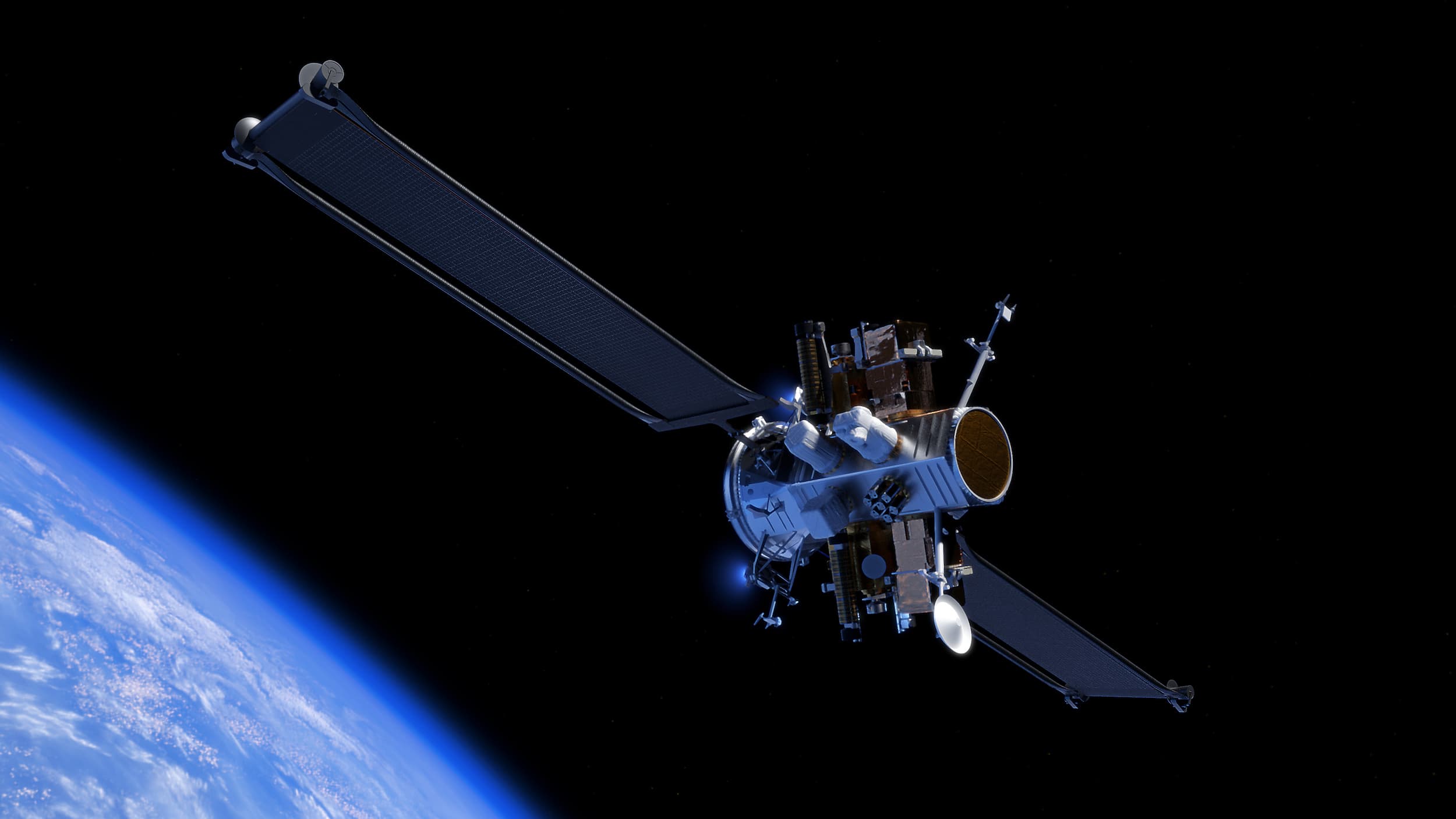
Multi-mission in-space transport platform with hybrid chemical and solar-electric propulsion, providing hosting, transportation, refueling, data relay, and in-space cloud computing services.

Blue Origin
Heavy-lift orbital launch vehicle with a reusable first stage, designed for commercial, civil, and national security missions.
Blue Origin
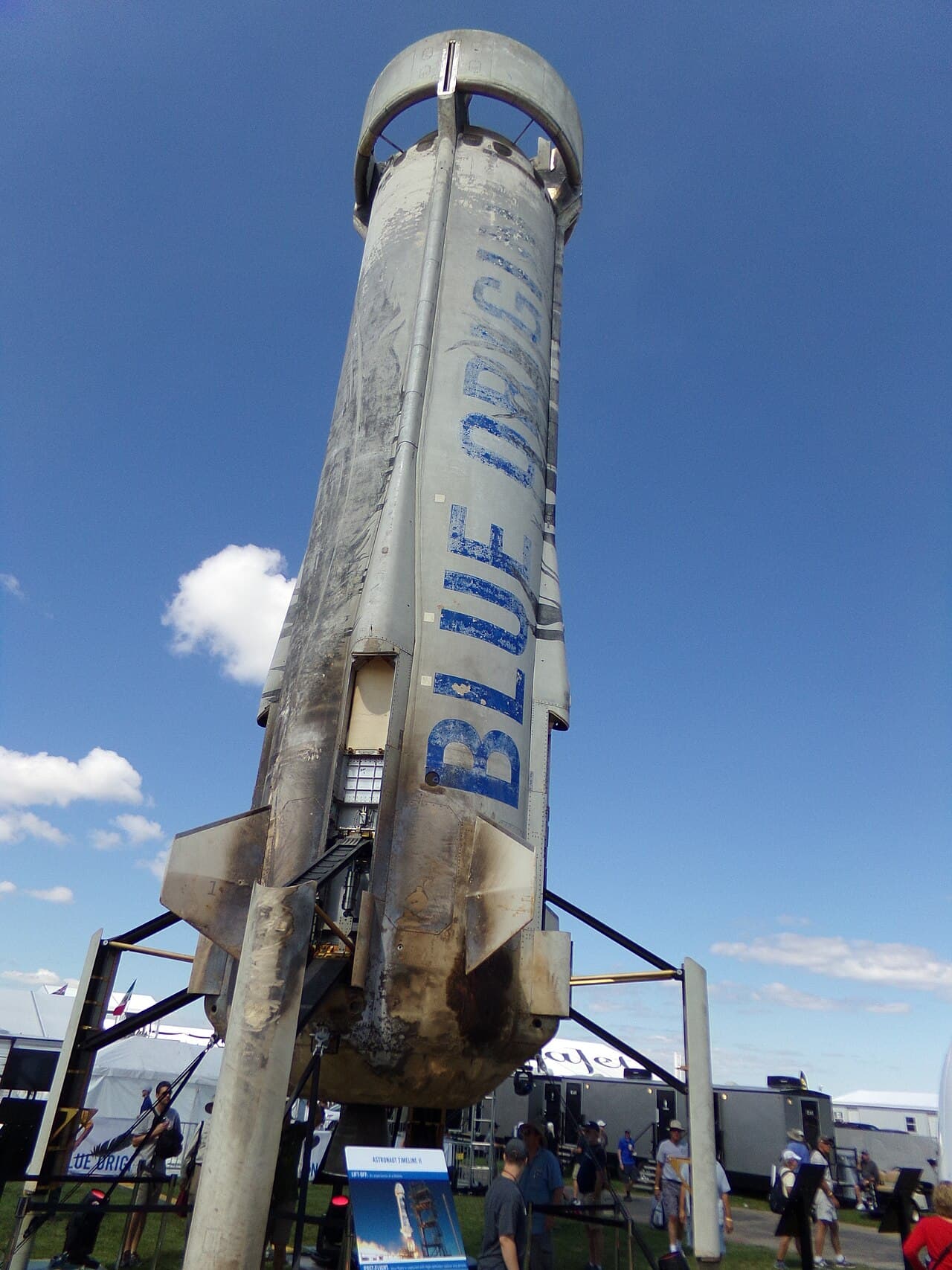
Suborbital launch vehicle for space tourism and research, capable of fully autonomous vertical landing and reuse.
Blue Origin
Commercial space station project co-led by Blue Origin and Sierra Space, with partners, as a mixed-use 'business park in space' for research, industrial, international, and commercial customers in low Earth orbit, built around Sierra Space's inflatable LIFE habitat. It is the slowest-advancing of the four major US commercial-station programs and remains Blue Origin's bid for NASA's Commercial LEO Destinations Phase 2 competition (draft RFP released July 6, 2026).
Blue Origin
Ground-station-as-a-service network providing communications, tracking, and telemetry (TT&C) access for satellite operators, built with partner RBC Signals.
Blue Origin
Enterprise broadband satellite constellation with 5,408 optically interconnected satellites across LEO and MEO, delivering up to 6 Tbps symmetrical data speeds for enterprise, data center, and government customers.
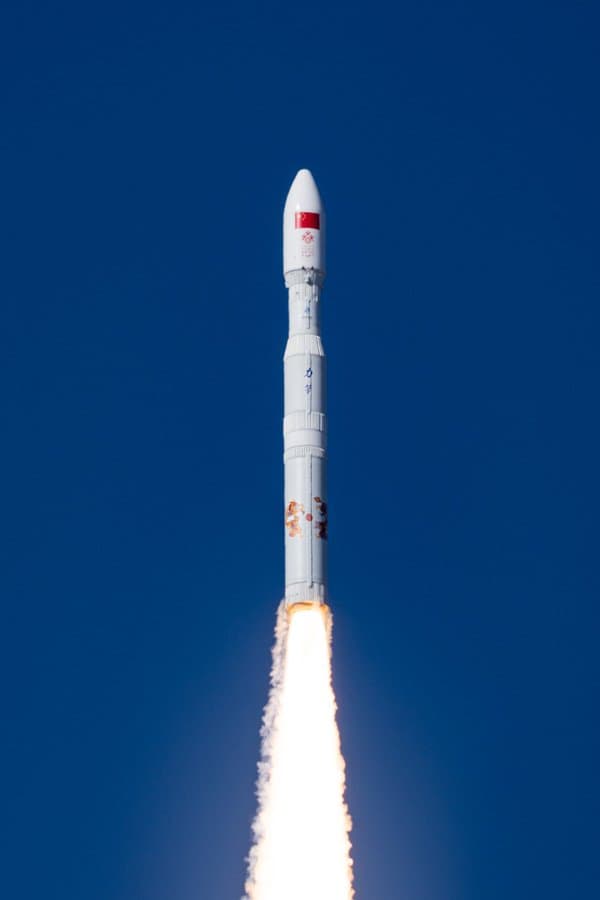
CAS Space
Four-stage solid-propellant small/medium-lift launch vehicle developed by a team with Long March 11 heritage - one of China's most-flown commercial rockets.
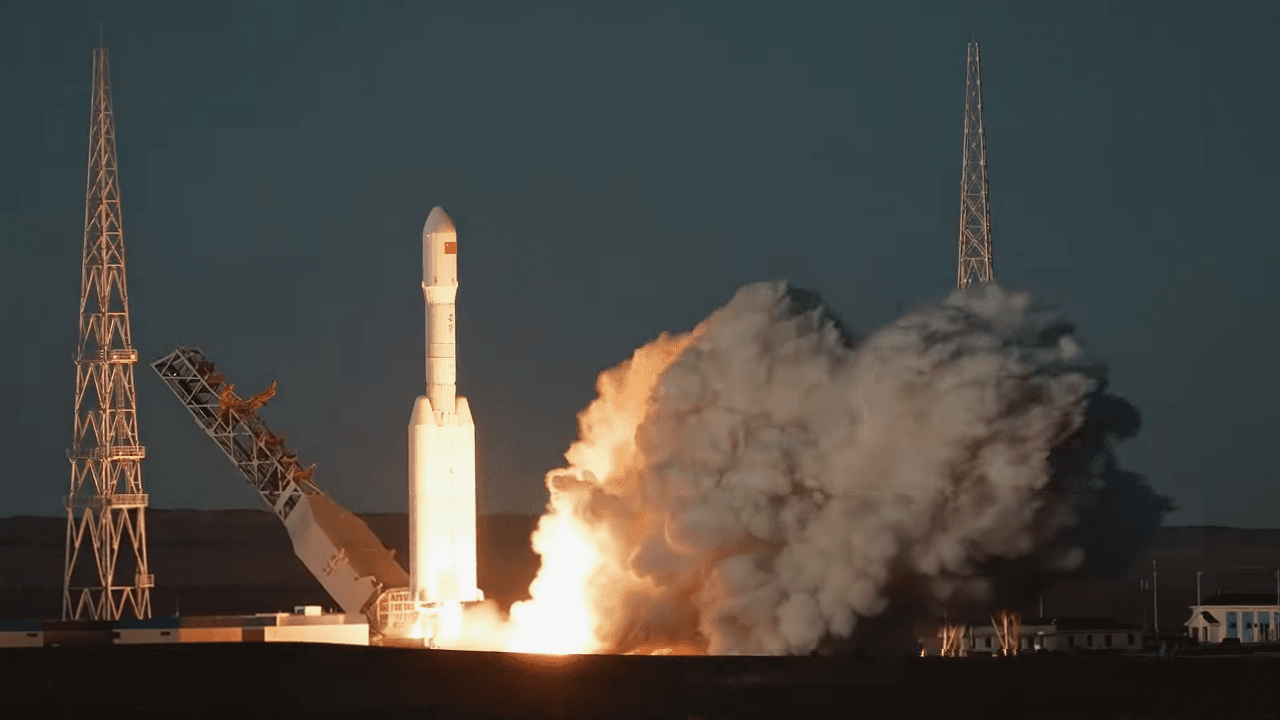
CAS Space
Medium-lift kerosene-liquid oxygen rocket with a three-core (tri-body) first stage powered by nine YF-102 engines - CAS Space's first liquid launch vehicle, designed for future first-stage reusability.
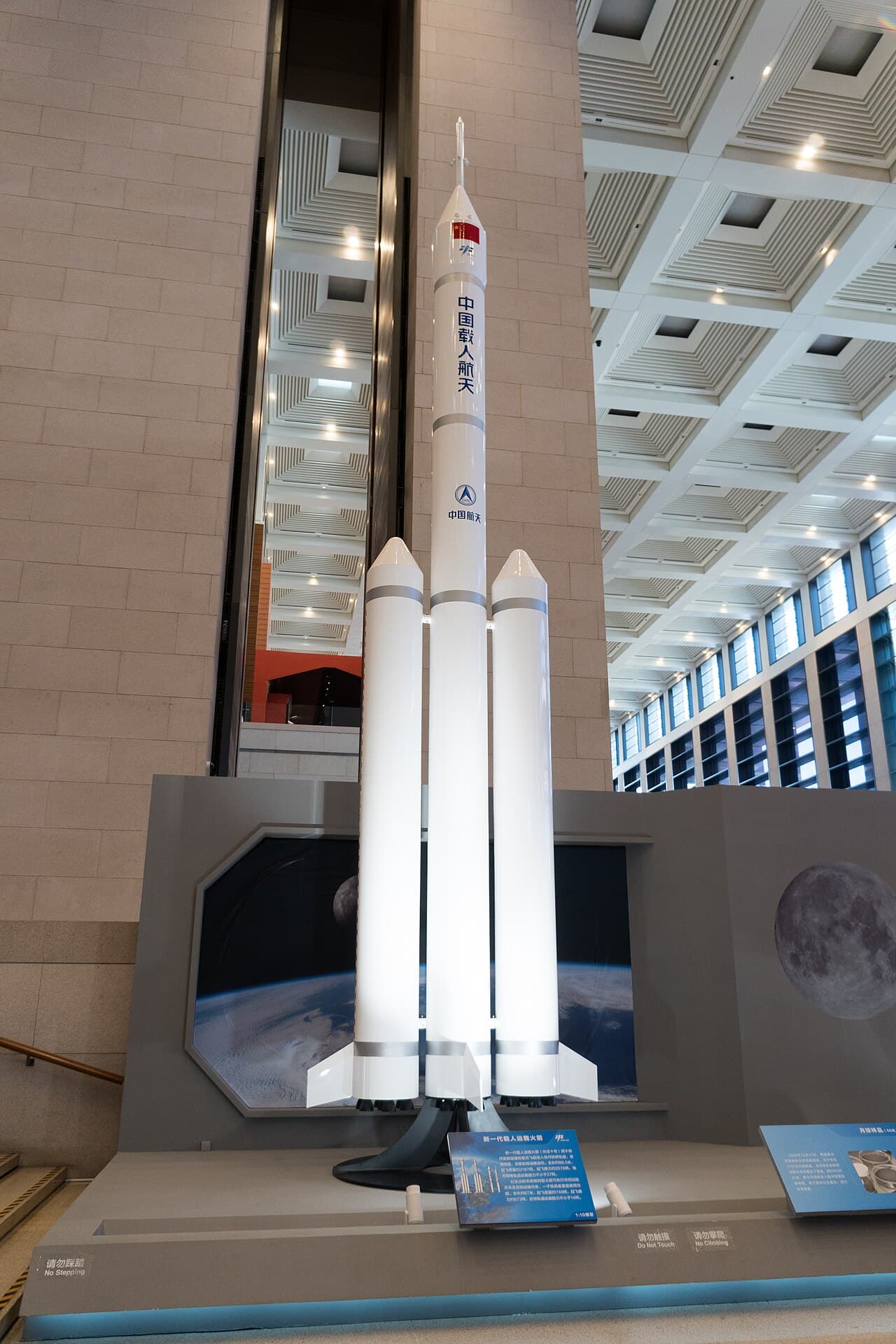
CASC
Partially reusable super-heavy-lift rocket for the crewed lunar program, designed to separately launch the Mengzhou spacecraft and Lanyue lander to trans-lunar injection.
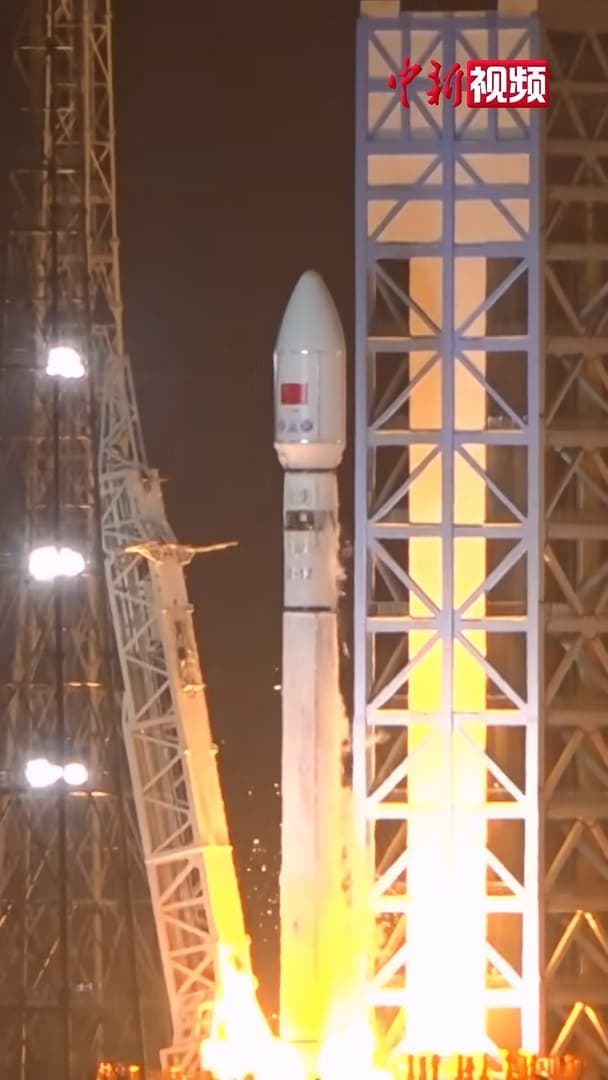
CASC
CASC Eighth Academy two-stage cryogenic launcher and China's first 4-meter-class single-core rocket. CASC says it is about 62 meters long and can lift at least 6 tonnes to a 700 km sun-synchronous orbit, with optional 4.2 or 5.2 meter fairings. On Oct. 10, 2026 it flew satellite-internet LEO group 27 from Hainan as the 671st Long March mission.
CASC
Partially reusable, kerosene/liquid-oxygen launch vehicle built by CASC Commercial Rocket Co., Ltd. for CASC's commercial constellation launch business, designed from the outset for propulsive first-stage recovery. A separate CASC reusable-rocket line, the methane/liquid-oxygen Long March 12A built by the Shanghai Academy of Spaceflight Technology, reached orbit on its own December 2025 debut but has yet to land its booster successfully.
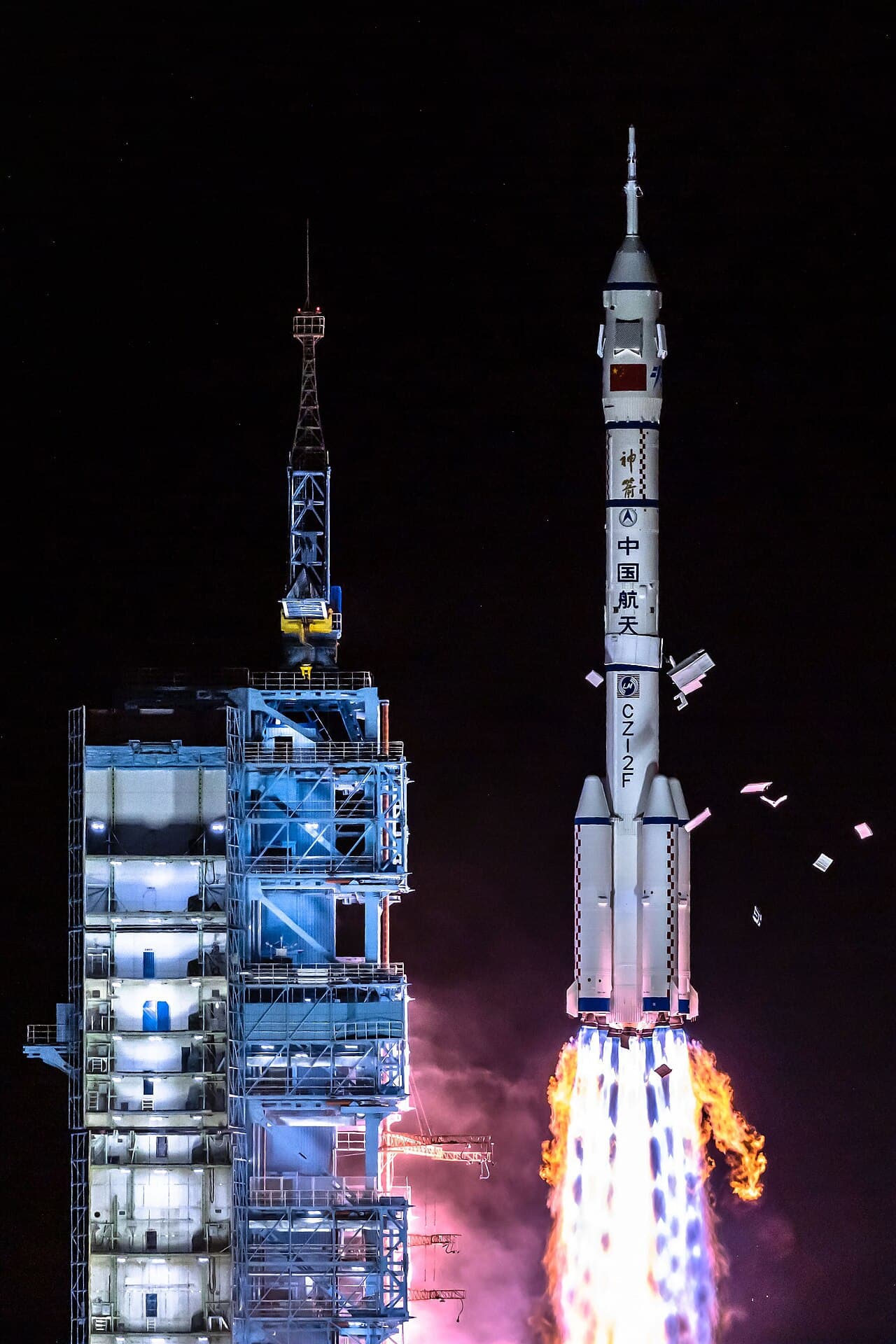
CASC
Human-rated medium-lift rocket and the only Chinese launch vehicle cleared to carry astronauts, flying Shenzhou crews to the Tiangong station.
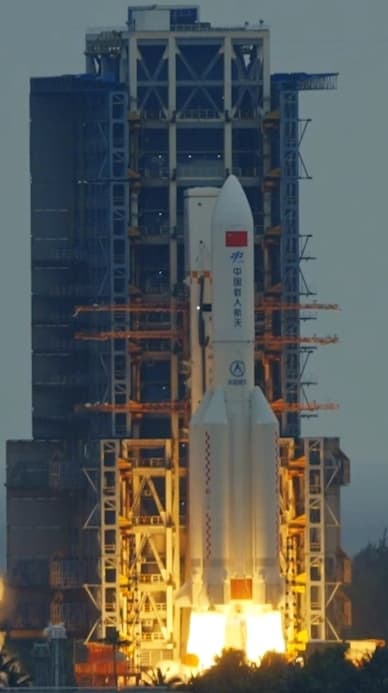
CASC
China's most powerful operational rocket; the heavy-lift workhorse that launches Tiangong station modules (5B), Chang'e and Tianwen deep-space missions, and large GEO satellites.
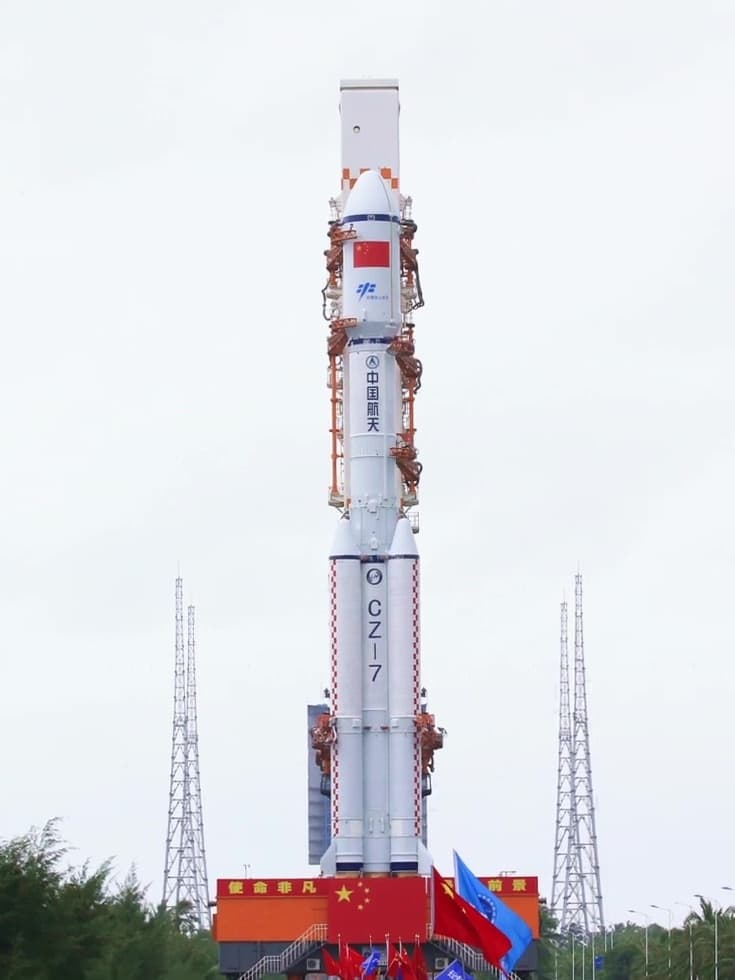
CASC
Kerolox medium-lift rocket designed as a next-generation workhorse; launches Tianzhou cargo freighters to the Tiangong space station.
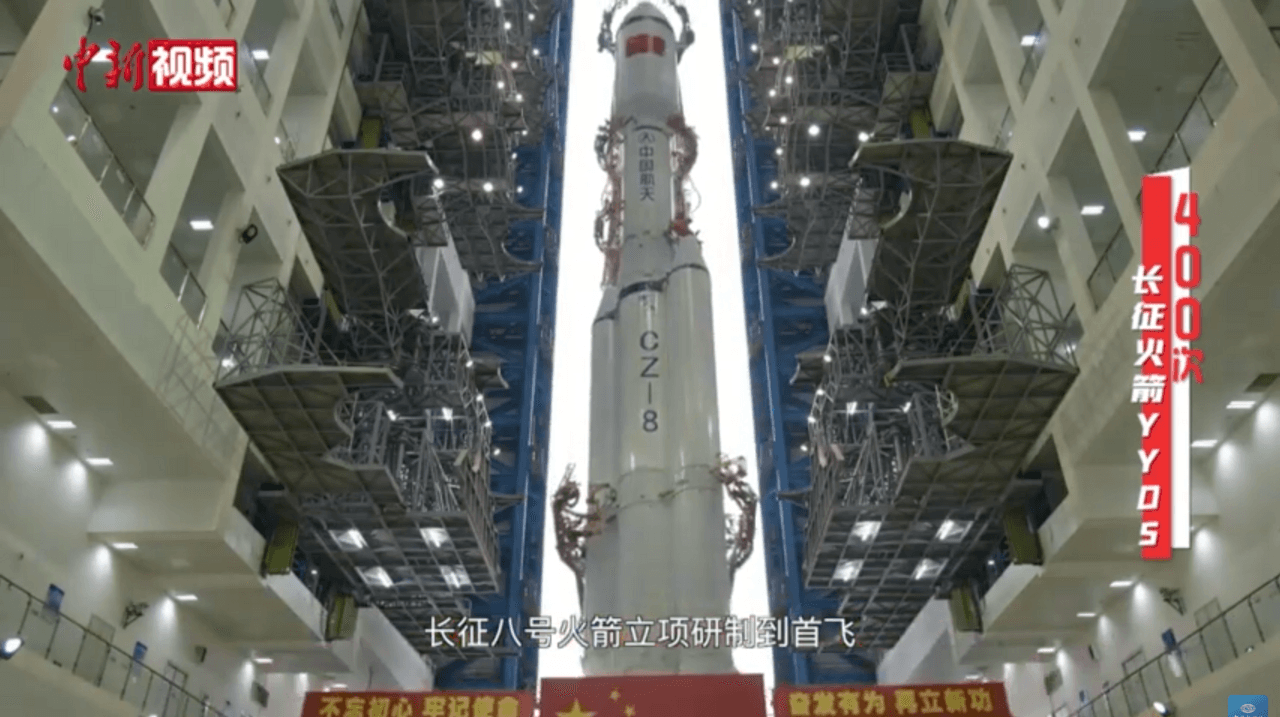
CASC
Lower-cost commercial medium-lift rocket optimized for sun-synchronous and constellation deployment, central to China's GuoWang and other satellite-internet build-out.
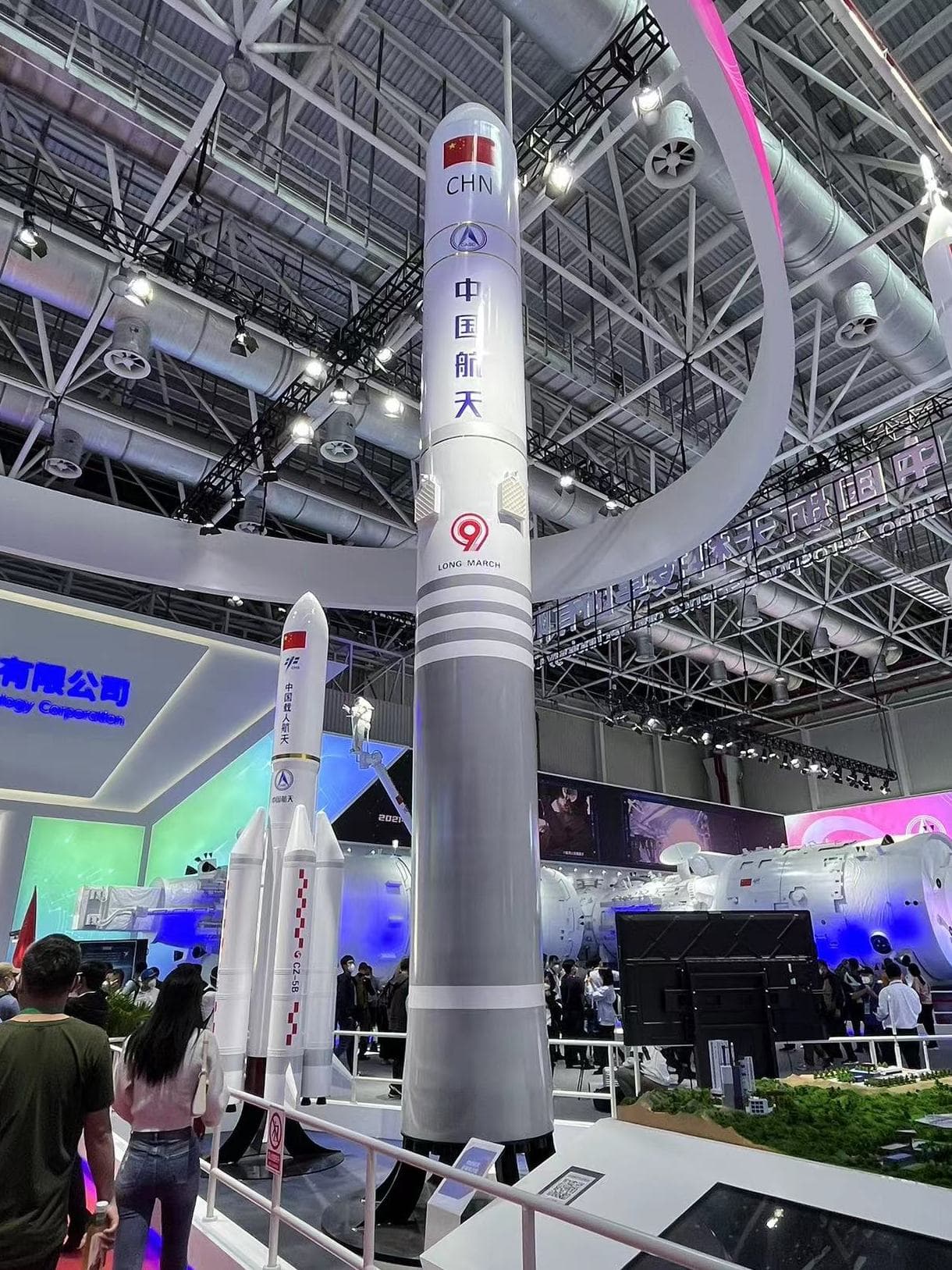
CASC
Fully reusable super-heavy launch vehicle in development - a Starship-class methalox design intended for mega-constellations, lunar and Mars cargo, and future crewed deep-space missions.
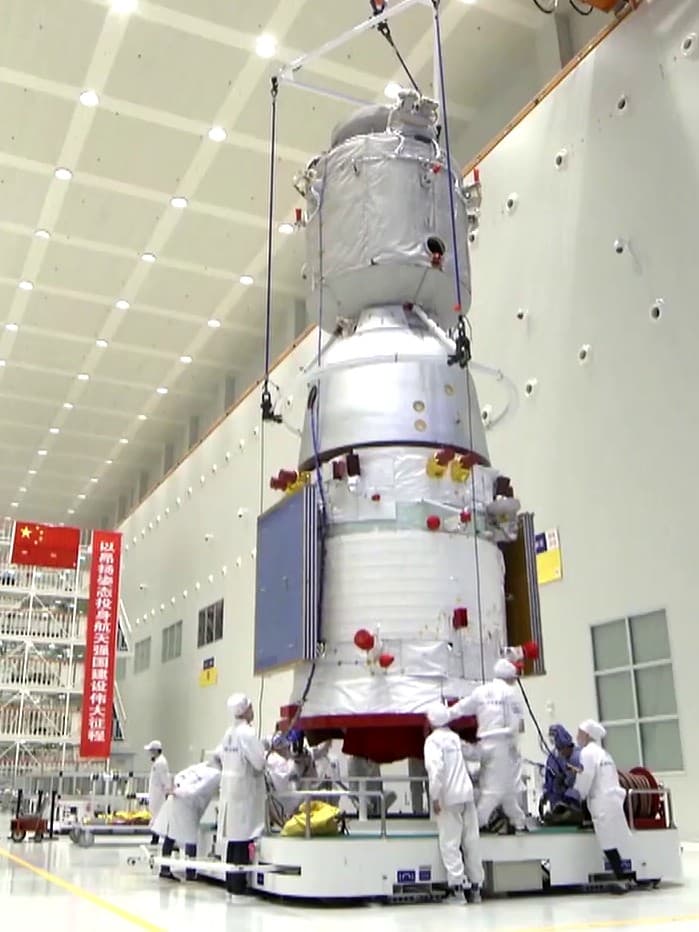
CASC
China's crewed spacecraft, ferrying three taikonauts at a time to the Tiangong station; built by the China Academy of Space Technology (CAST).
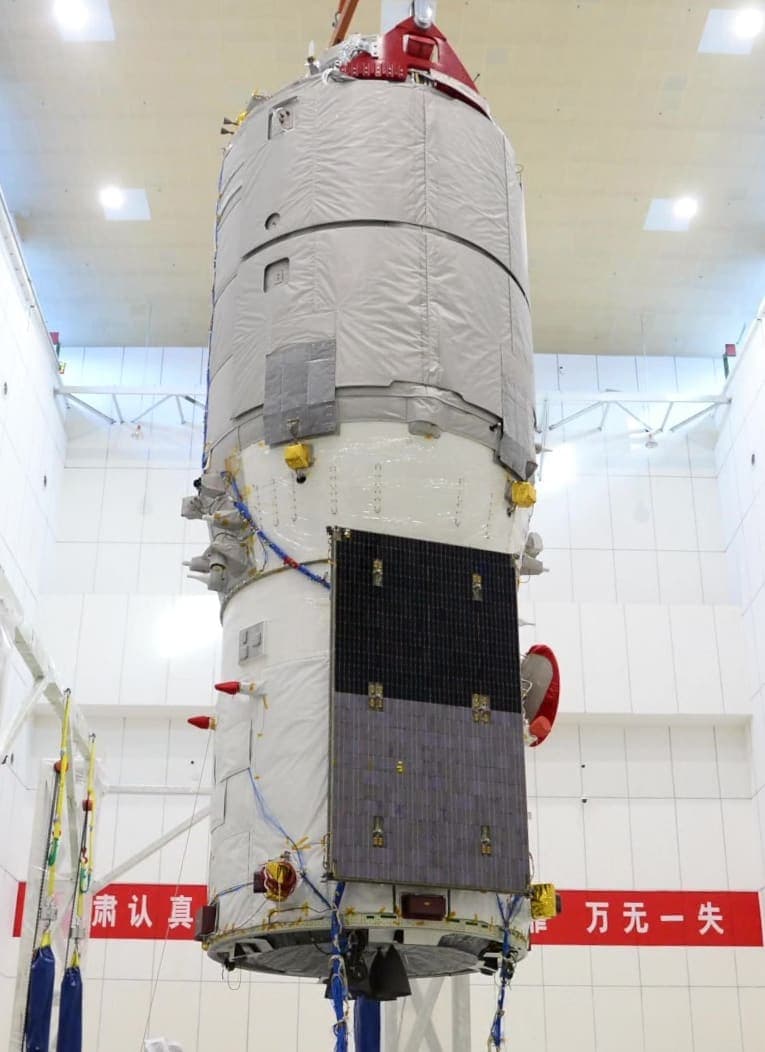
CASC
China's automated cargo spacecraft, delivering pressurized and unpressurized supplies, propellant, and experiment payloads to the Tiangong space station; built by CAST and rated the world's most capable active cargo spacecraft by transport capacity.
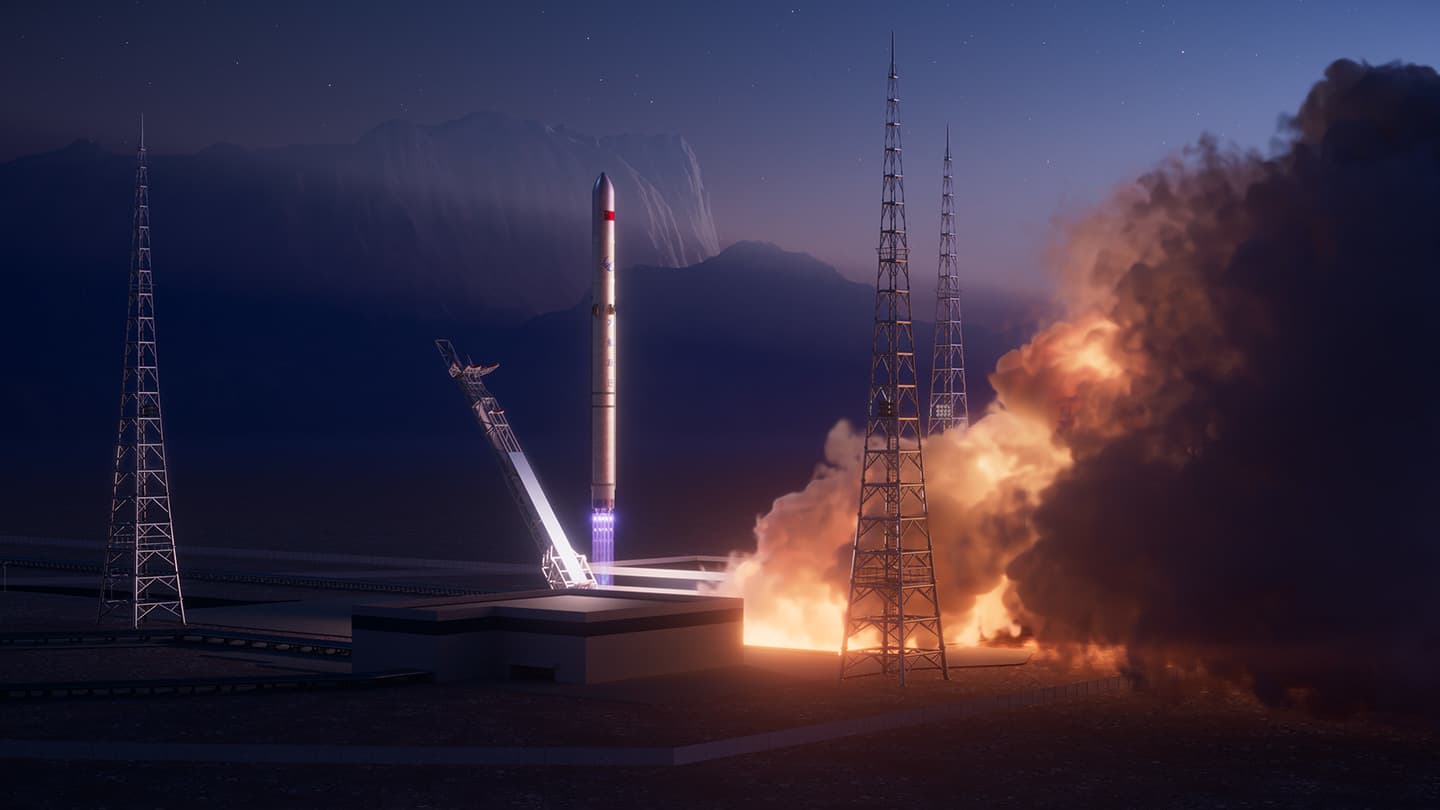
Cosmoleap
Two-stage, methane-liquid oxygen reusable rocket whose first stage is recovered by a ground 'chopstick' tower-catch system rather than landing legs - China's first such design, modeled on SpaceX's Mechazilla. Roughly 70 m tall and 4.2 m in diameter with a nine-engine first stage. The company also publishes a Flint-1 (Huoshi-1) flight computer and the recovery tower as supporting hardware on its product list.
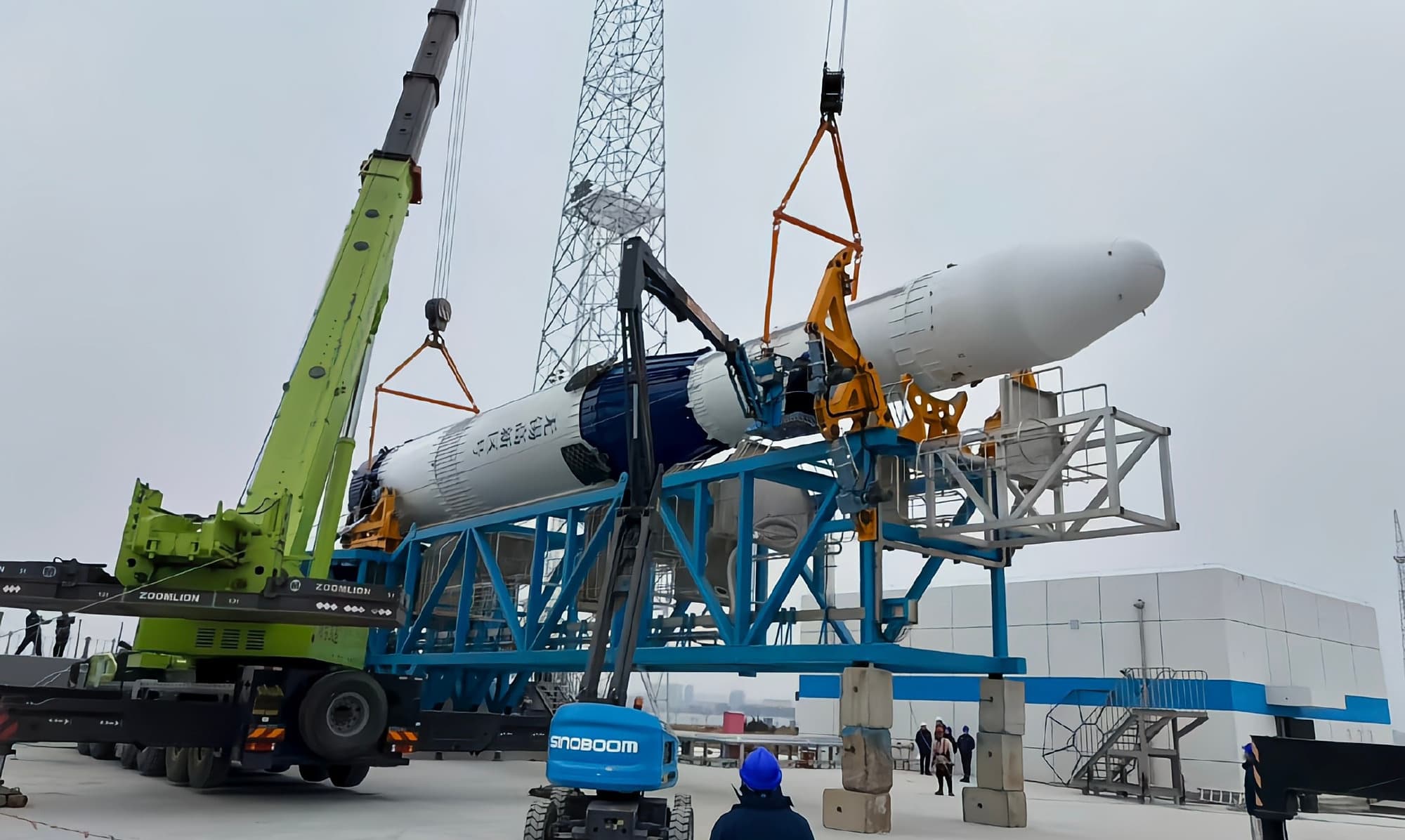
Deep Blue Aerospace
Two-stage, partially reusable kerosene–liquid oxygen medium-lift rocket with a vertically landing first stage powered by nine Thunder-R engines. The Nebula-1A debut variant adds grid fins and sea-recovery capability for a first-stage splashdown.
Deep Blue Aerospace
Larger, five-meter-diameter kerosene-liquid oxygen heavy-lift rocket stepping up from Nebula-1, designed to carry more than 25,000 kg to LEO on a cluster of up-rated Thunder-RS engines with planned first-stage recovery and reuse.
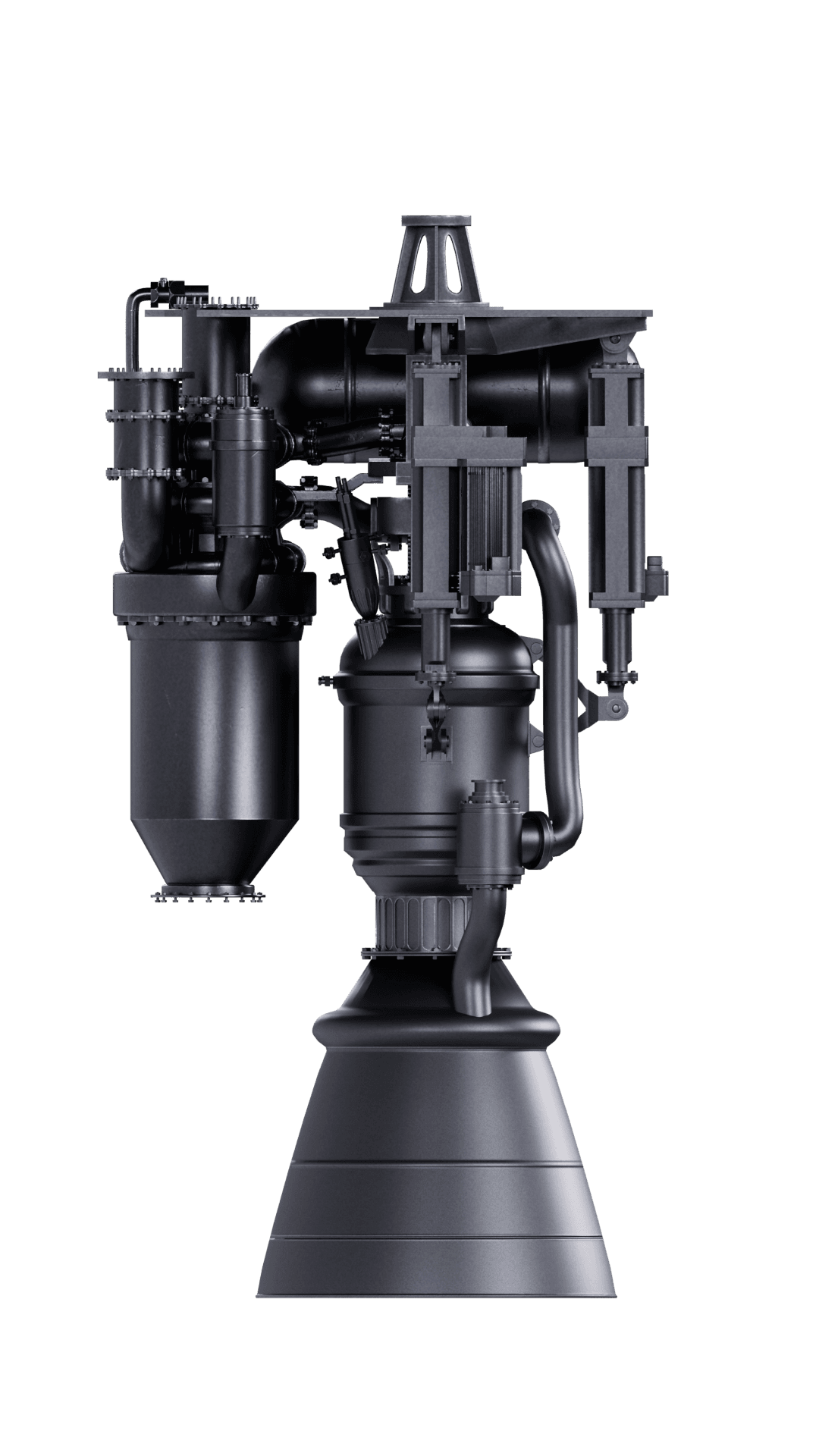
Deep Blue Aerospace
Reusable kerosene-liquid oxygen rocket engine in Deep Blue's Leiting (Thunder) family. Nine Thunder-R engines power the Nebula-1 first stage.
Deep Blue Aerospace
Up-rated, ~130-tonne-class kerosene-liquid oxygen engine in Deep Blue's Leiting (Thunder) family, using needle-valve injection and deep throttling, developed to power the Nebula-2 first stage with planned reuse.
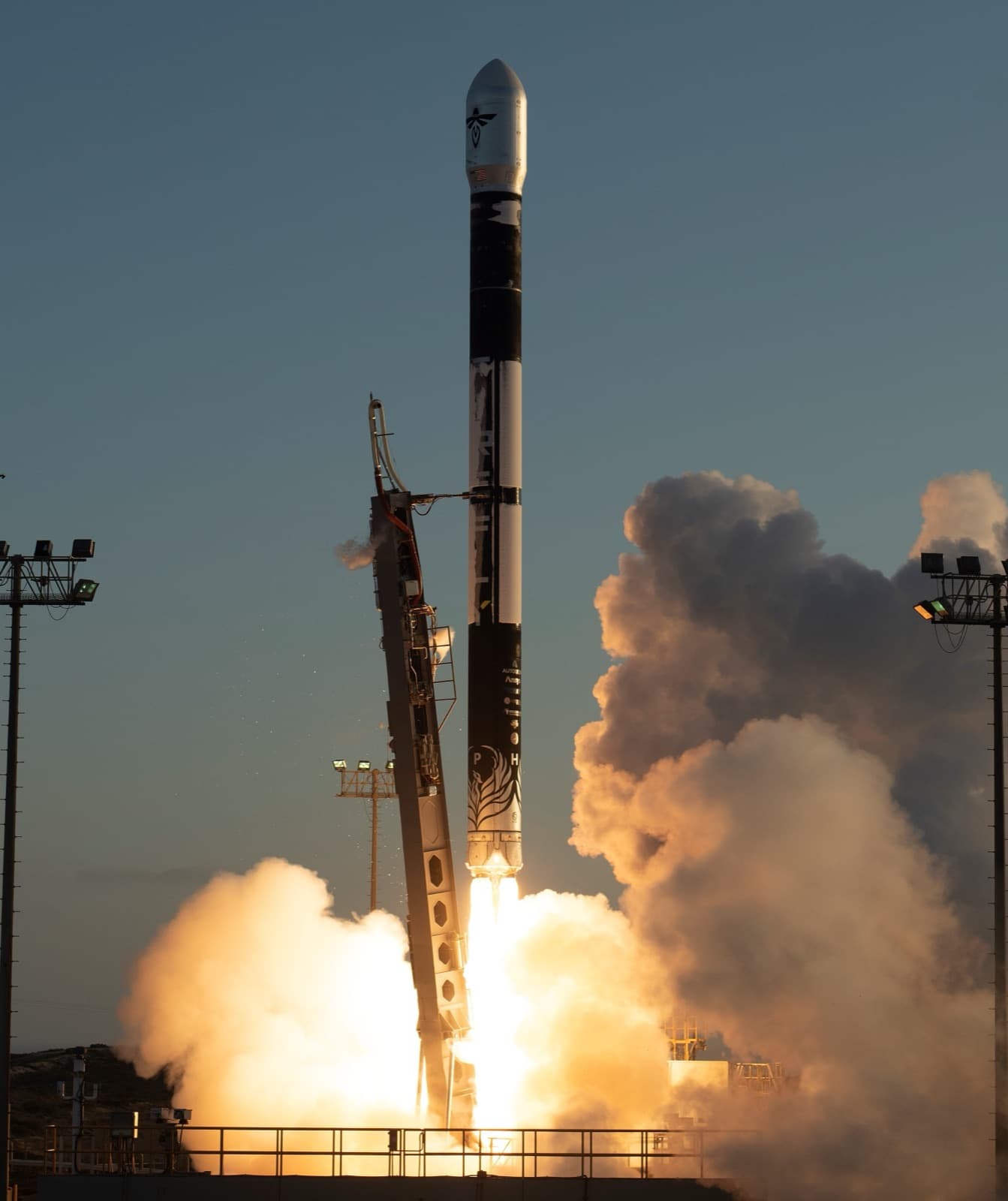
Firefly Aerospace
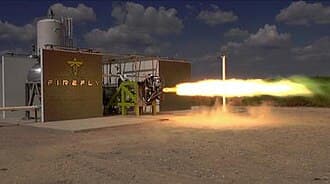
Small-lift two-stage orbital launch vehicle for dedicated commercial, civil, and national-security missions.
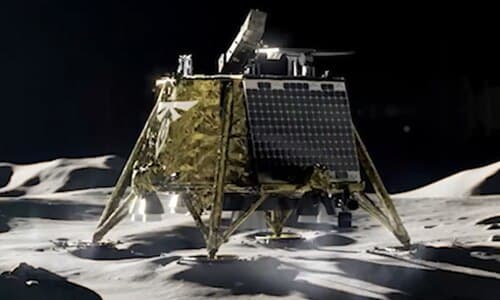
Firefly Aerospace
Lunar lander platform for NASA CLPS missions and commercial payload delivery anywhere on the lunar surface.
Firefly Aerospace
Reusable medium-lift launch vehicle co-developed with Northrop Grumman for commercial, civil, and national-security missions, launching from Virginia's Mid-Atlantic Regional Spaceport.
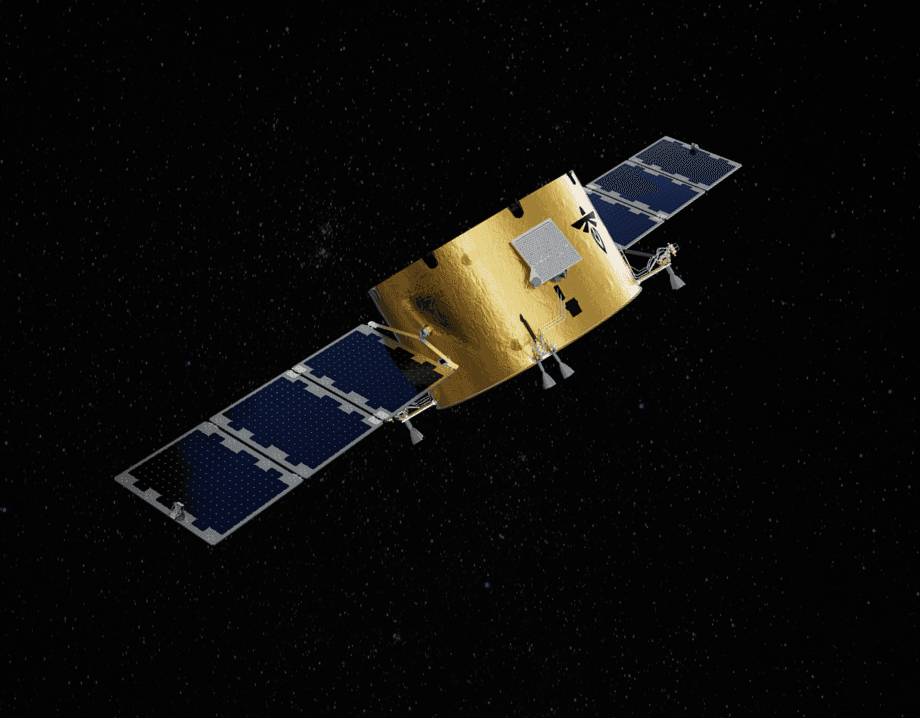
Firefly Aerospace
Family of orbital transfer and on-orbit service vehicles (Dawn, Dusk, Dark) providing in-space maneuvering, payload delivery and hosting, communications relay, and space domain awareness from LEO through cislunar space. Elytra Dark also carries Firefly's Ocula lunar imaging service.

Galactic Energy
Four-stage small-lift launch vehicle with three solid-propellant stages and a hydrazine upper stage. The sea-launched Ceres-1S variant flies from a platform in the Yellow Sea.
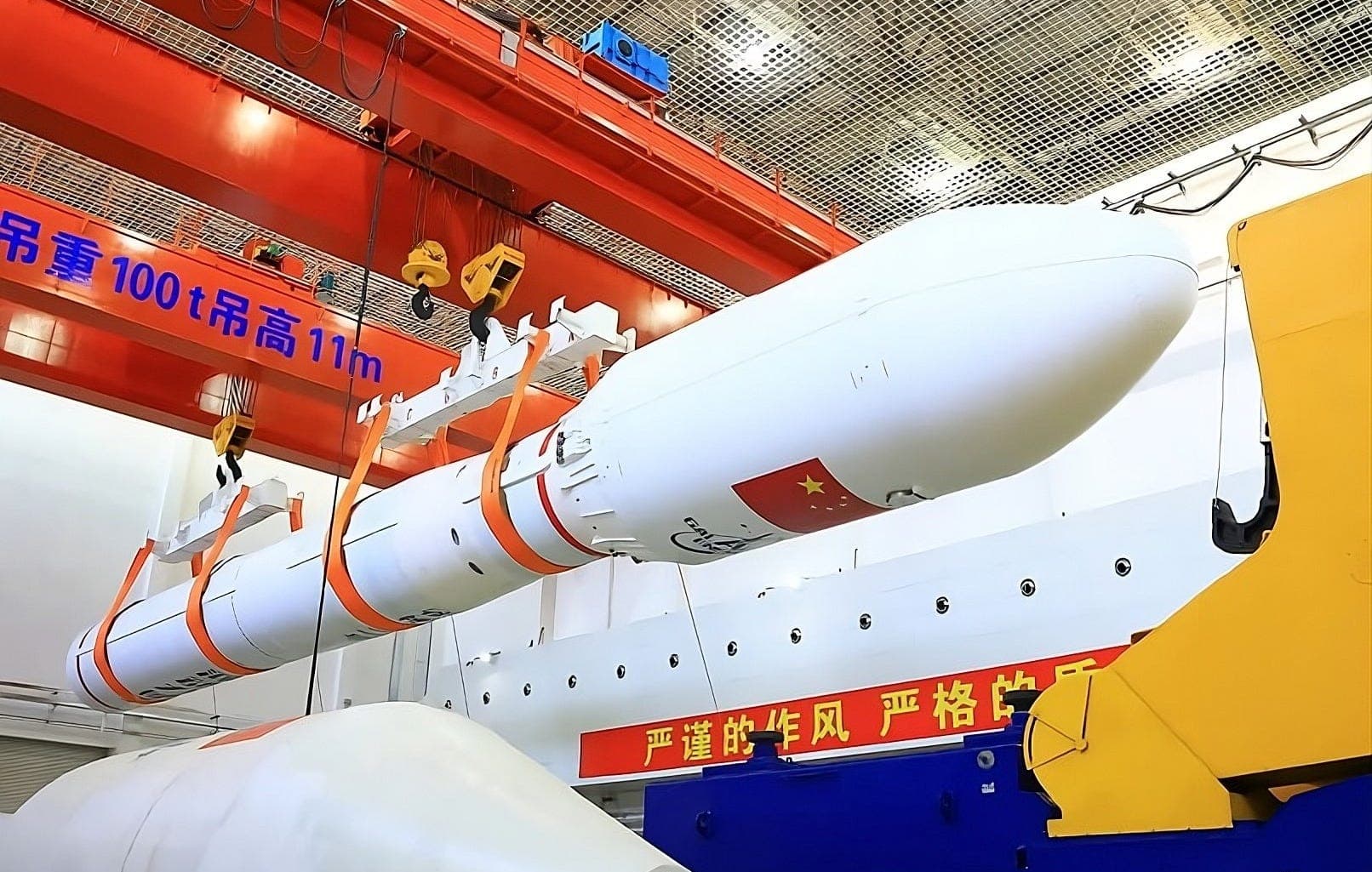
Galactic Energy
Larger four-stage solid-fuel rocket with a 3.35-meter diameter, designed to carry roughly four times the payload of Ceres-1 for constellation deployment.
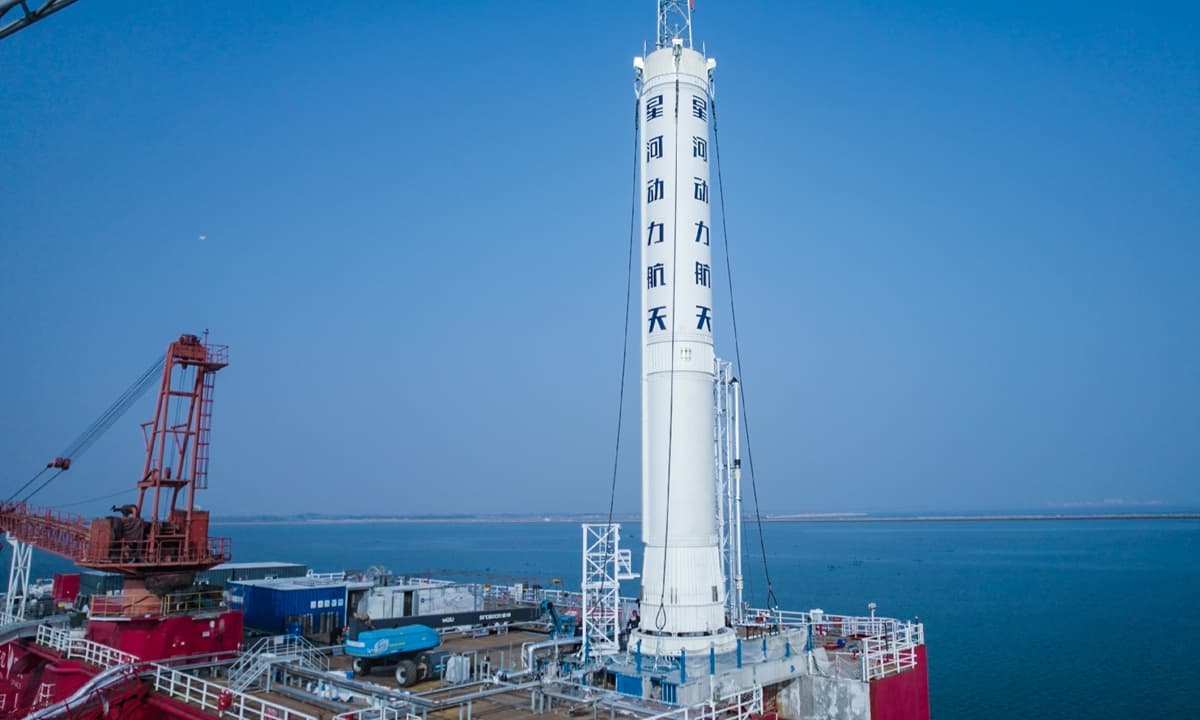
Galactic Energy
Two-stage, partially reusable kerosene-liquid oxygen medium-lift rocket - Galactic Energy's Falcon 9-class vehicle with a vertically landing first stage powered by seven CQ-50 engines.
Galactic Energy
Larger heavy-lift successor to Pallas-1 in single-stick or triple-core (CBC) configurations, powered by an upgraded liquid oxygen-kerosene CQ-90 engine and sized for constellation-scale payloads.
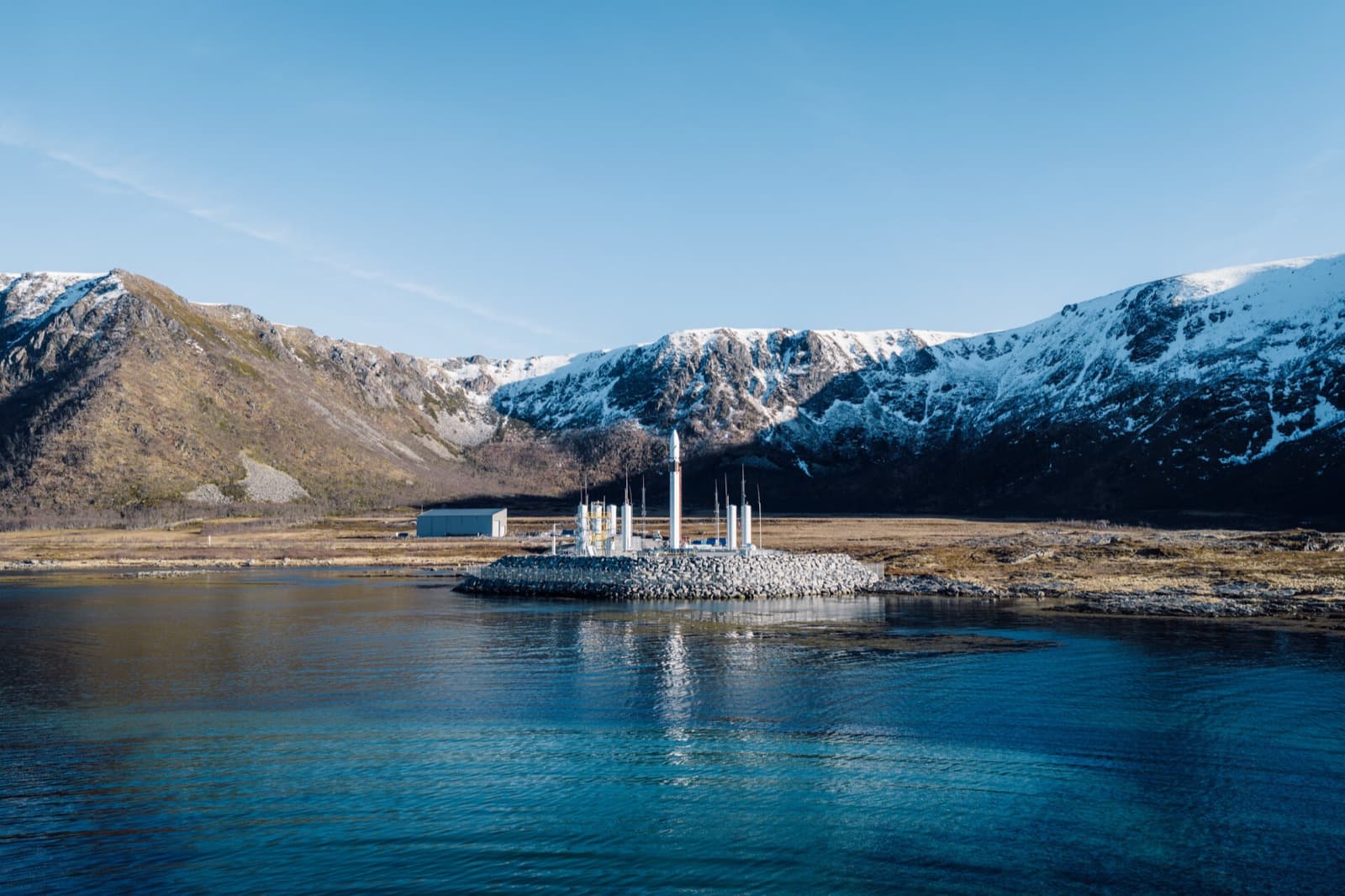
Isar Aerospace
Isar's two-stage orbital small-lift rocket: 28 meters tall, 2 meters in diameter, carbon-composite primary structure, propane and liquid oxygen, nine 75 kN Aquila gas-generator engines on the first stage and one 95 kN vacuum Aquila on the second stage with multi-ignition so it can circularize and deploy without a kick stage. Payload is 1,000 kg to low Earth orbit or 700 kg to sun-synchronous orbit. It is designed, built, and tested almost entirely in-house. Flight 1 failed; Flight 2 reached orbit from Andoya on September 5, 2026.
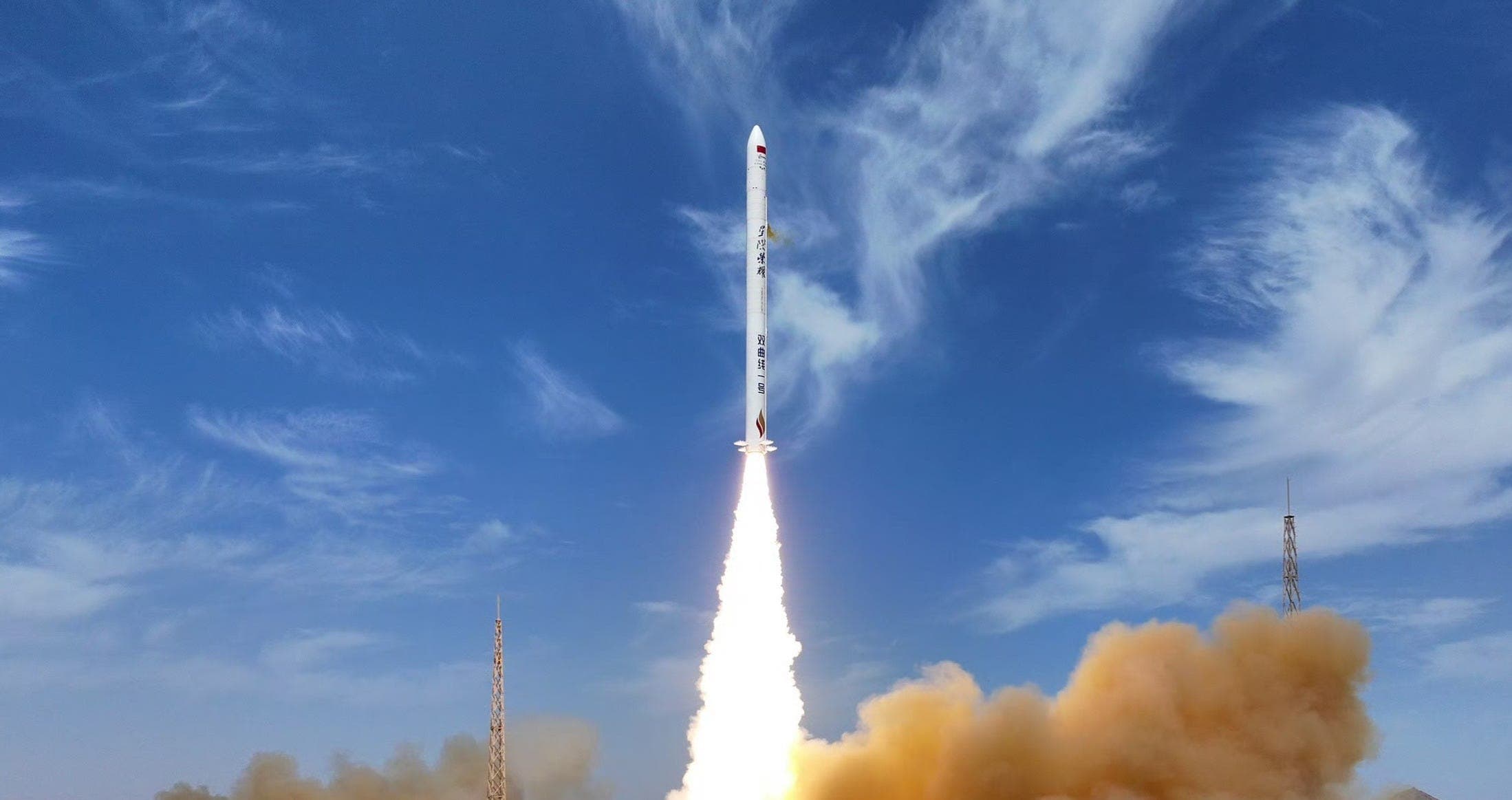
iSpace (Interstellar Glory)
Four-stage solid-fuel small-lift orbital rocket with liquid attitude-control thrusters; the first privately developed Chinese rocket to reach orbit.
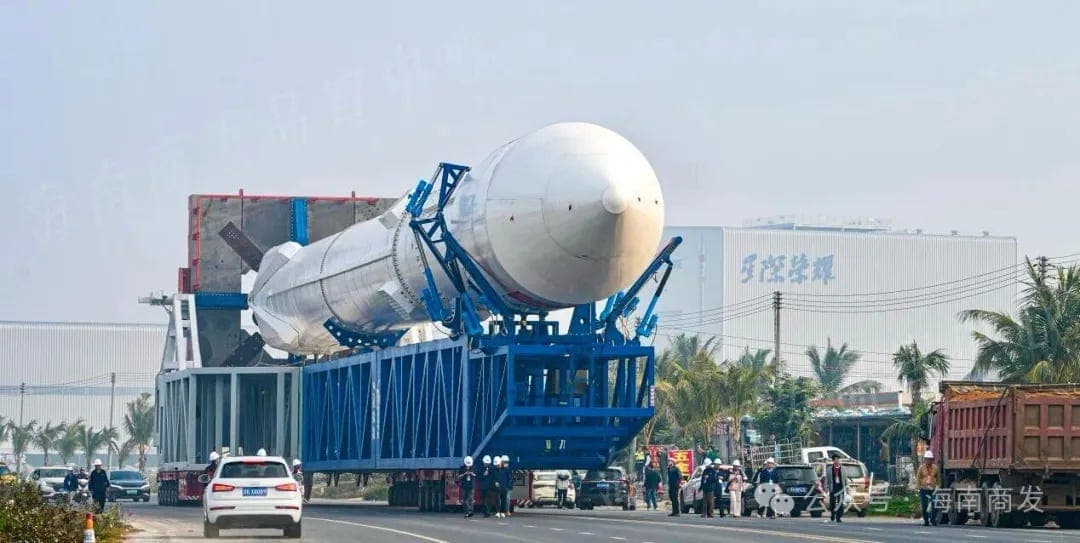
iSpace (Interstellar Glory)
Two-stage, partially reusable methane-liquid oxygen rocket with a sea-recoverable first stage - iSpace's Falcon 9-class vehicle aimed at low-cost, high-cadence launch for satellite constellations.
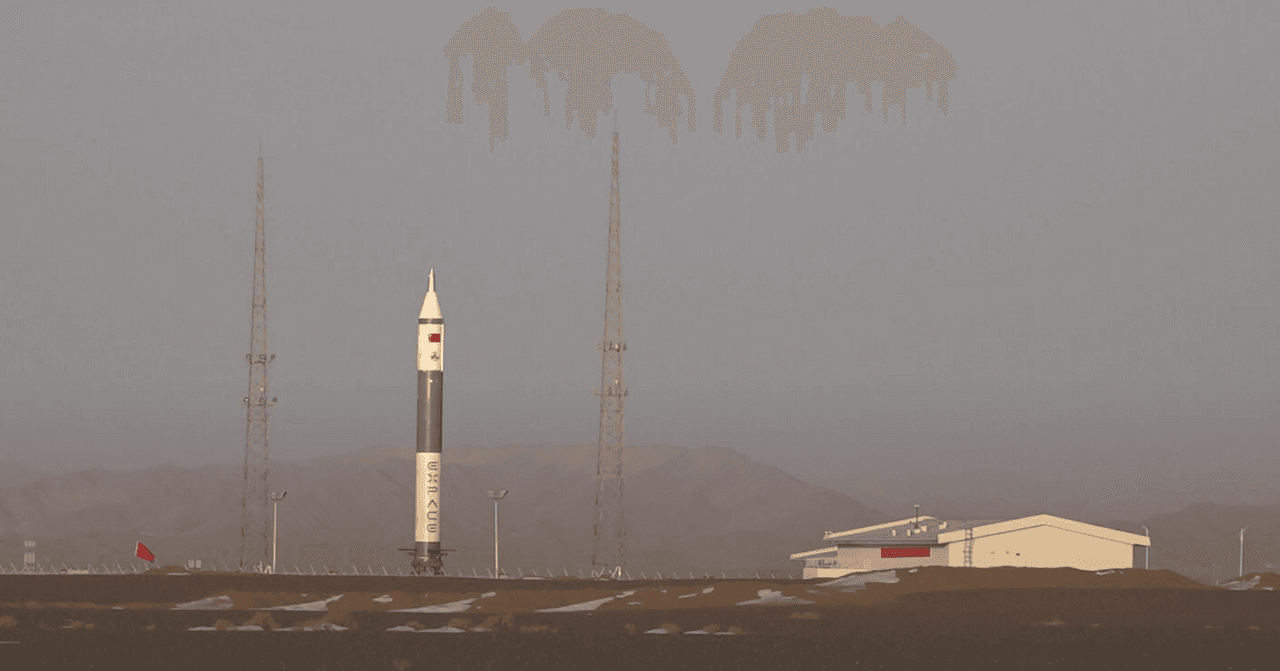
Kuaizhou Aerospace
Larger solid-propellant launch vehicle with a 2.2 m diameter and 2.2–2.6 m fairing, offering roughly one tonne to a 700 km sun-synchronous orbit for quick-response constellation launches.
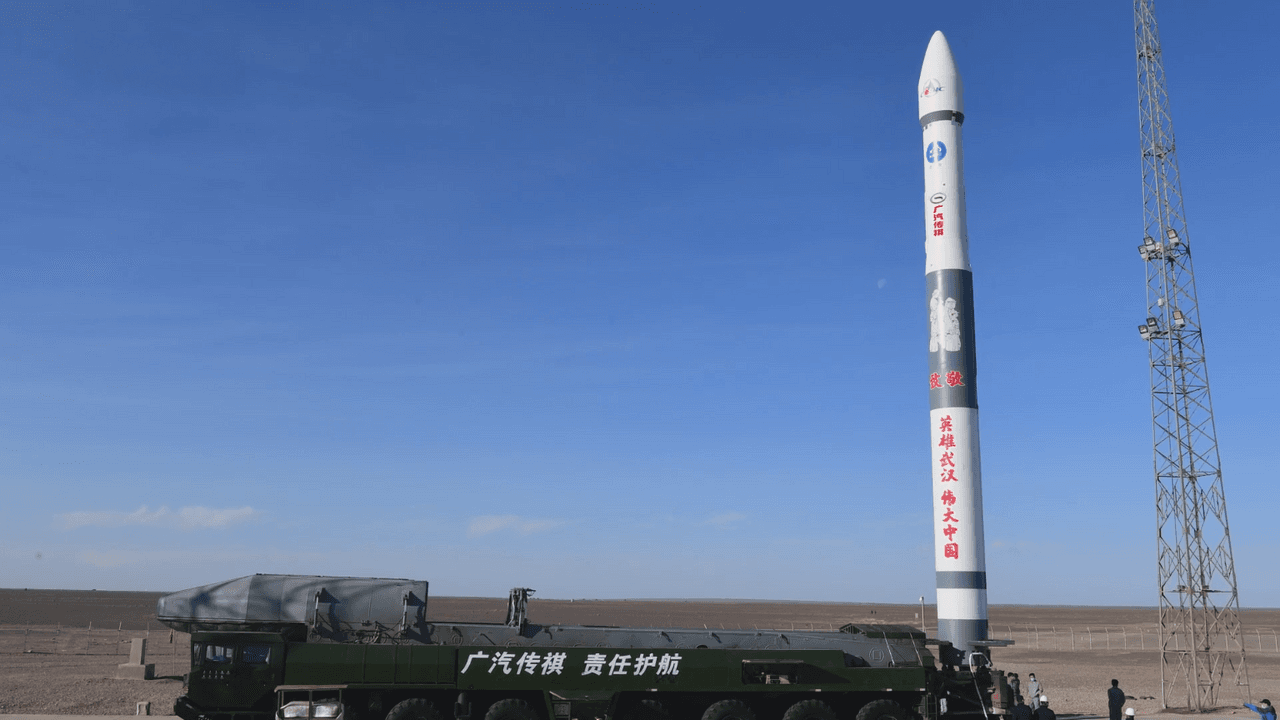
Kuaizhou Aerospace
Small-lift, solid-propellant launch vehicle (with a liquid upper stage) designed for rapid, low-cost small-satellite missions that can be prepared in hours. The upgraded 1A Pro adds a wider fairing and higher payload.
Kuaizhou Aerospace
Next-generation solid-propellant launch vehicle in development, stepping up from the flight-proven Kuaizhou-11 to roughly 20 tonnes to LEO - in the Falcon 9 payload class - for larger constellation and government missions.
Kuaizhou Aerospace
Largest planned member of the Kuaizhou family, a heavy-lift solid-propellant rocket targeting up to roughly 70 tonnes to LEO for large-constellation deployment and government payloads.
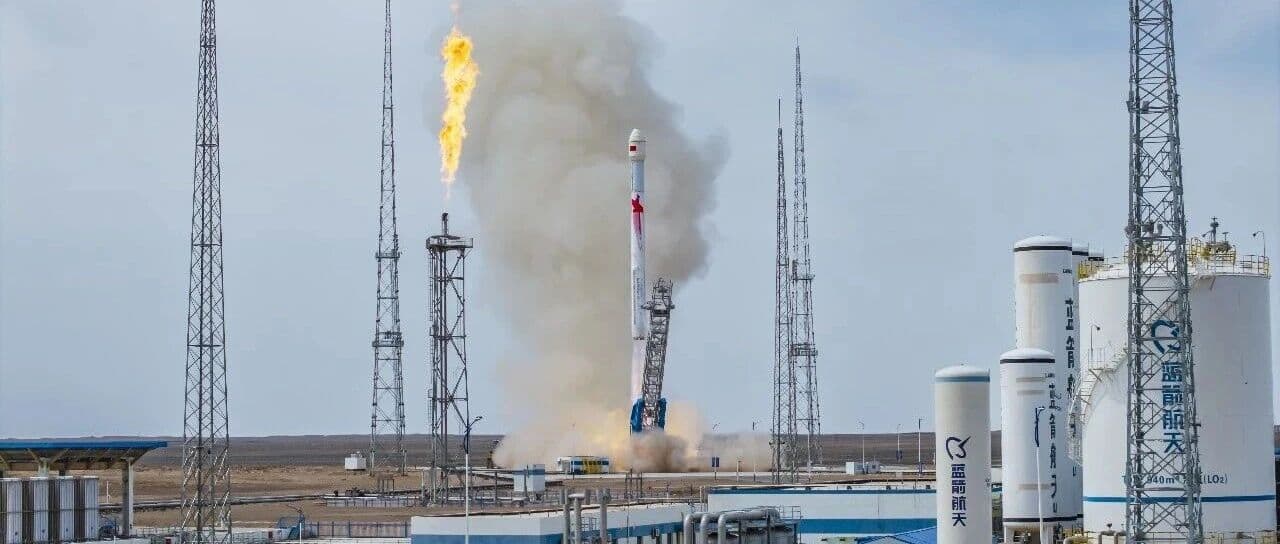
LandSpace
Two-stage methane-liquid oxygen medium-lift rocket; the first methalox launch vehicle in the world to reach orbit. The stretched Zhuque-2E variant adds payload performance for commercial missions.
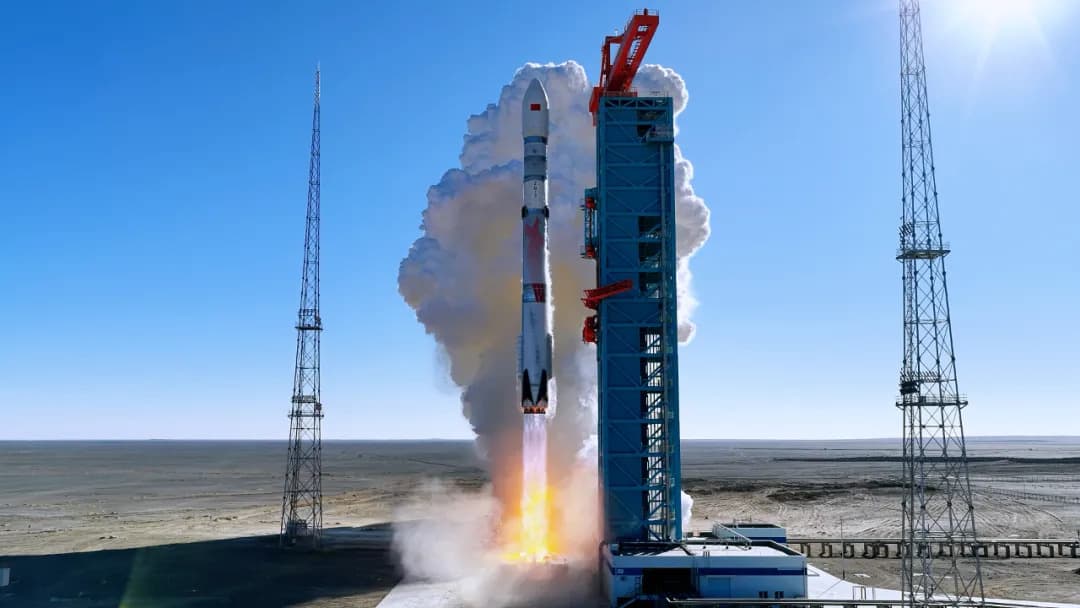
LandSpace
Two-stage, stainless-steel, methane-liquid oxygen rocket with a reusable first stage; LandSpace's Falcon 9-class vehicle aimed at low-cost, high-cadence launch. An enhanced Zhuque-3E variant is in development.
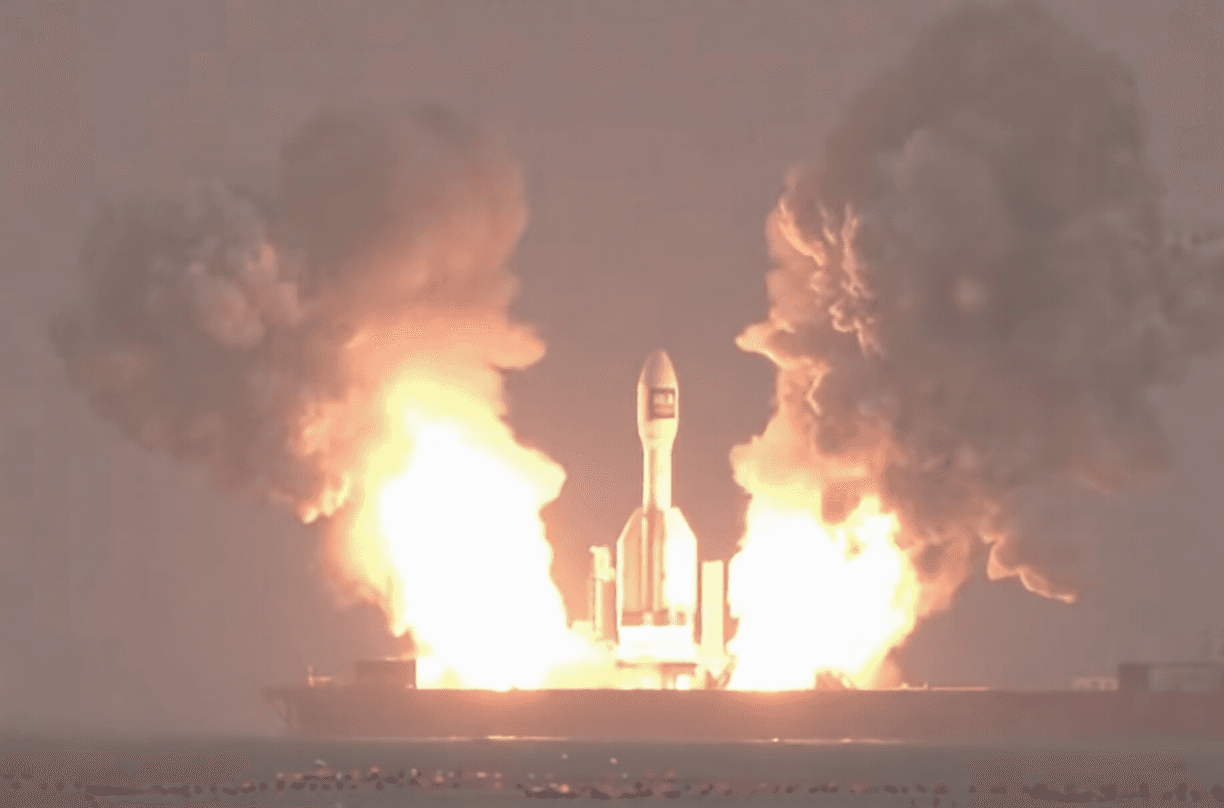
Orienspace
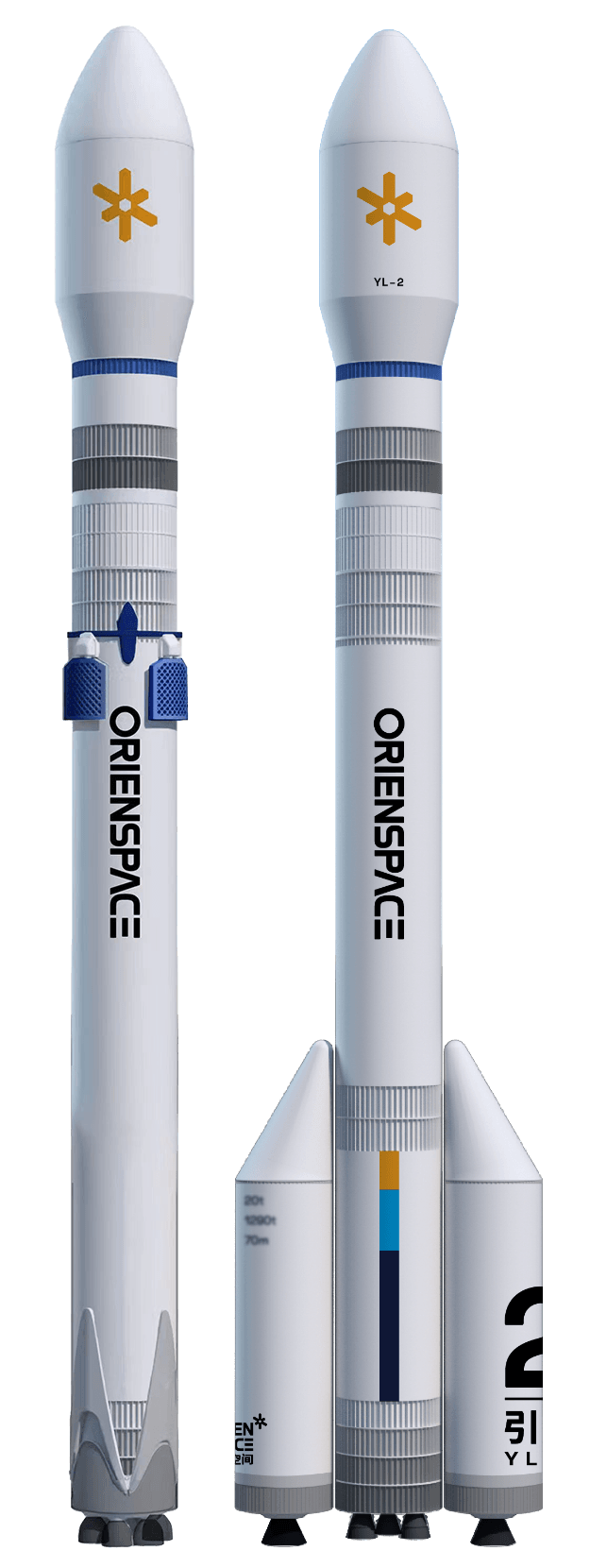
Solid-propellant medium-lift launch vehicle with a unique configuration of four ground-lit strap-on boosters and three air-lit core stages. Sea-launched from a barge off Haiyang, it is the world's largest and most powerful solid-fuel carrier rocket.
Orienspace
Two-stage, partially reusable kerosene-liquid oxygen heavy-lift rocket with a vertically landing first stage powered by nine in-house Yuanli-110 engines - Orienspace's higher-than-Falcon-9-class vehicle.
Orienspace
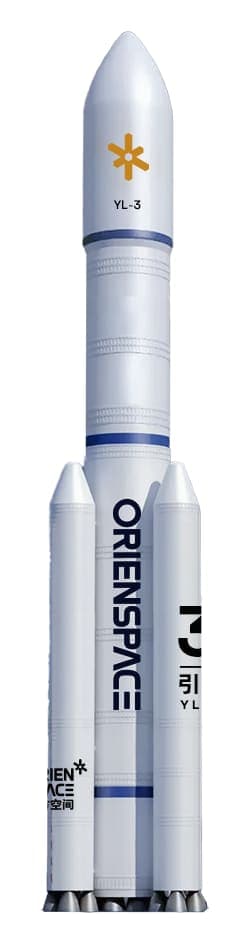
Orienspace's planned super-heavy launch vehicle for large-scale space construction and deep-space missions, specified on the company product page as an 81-meter rocket with an 8-meter fairing, 3,400-tonne liftoff mass and 5,040-tonne liftoff thrust, sized at 100 tonnes to LEO, 74 tonnes to 500 km SSO and 23 tonnes to GTO, with full-vehicle recovery as the design goal.

Relativity Space
Relativity's pathfinder vehicle, a two-stage small-lift rocket used to validate the company's propulsion, software, and additive-manufacturing approach before the program was retired.

Relativity Space
A two-stage reusable medium-to-heavy-lift rocket designed for constellation deployment, large satellite missions, and higher-cadence commercial and government launch operations.
Rocket Lab
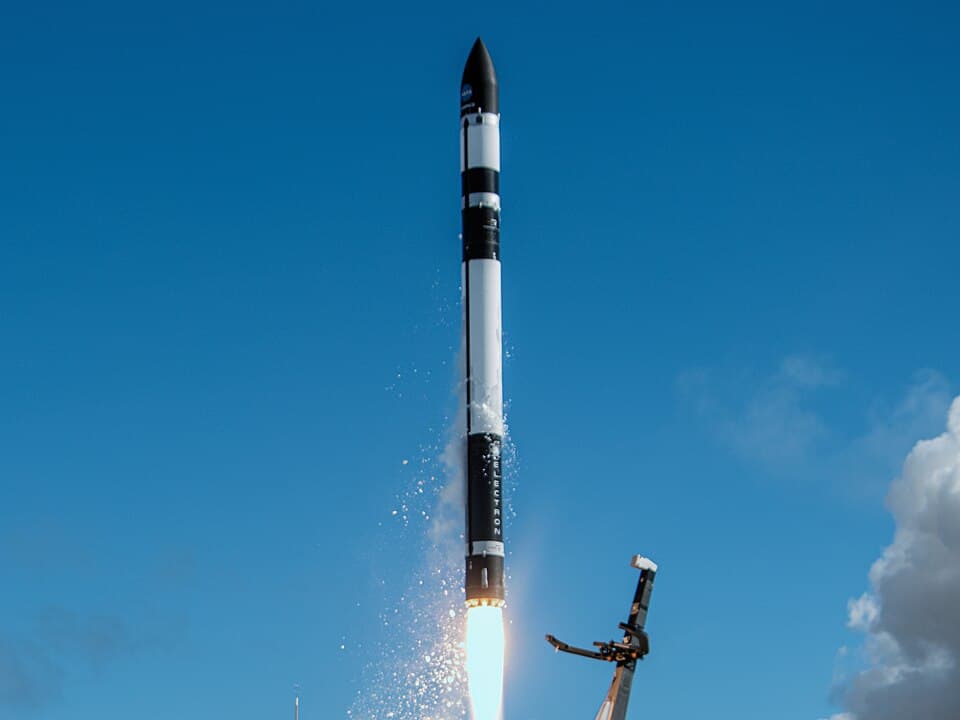
Small-lift, two-stage orbital launch vehicle for dedicated and rideshare small-satellite missions.
Rocket Lab
Containerized Deployable Launch System that packages a complete rocket, ground infrastructure, and range control equipment inside standard shipping containers, giving Electron and HASTE launch-anywhere, responsive-space capability.
Rocket Lab
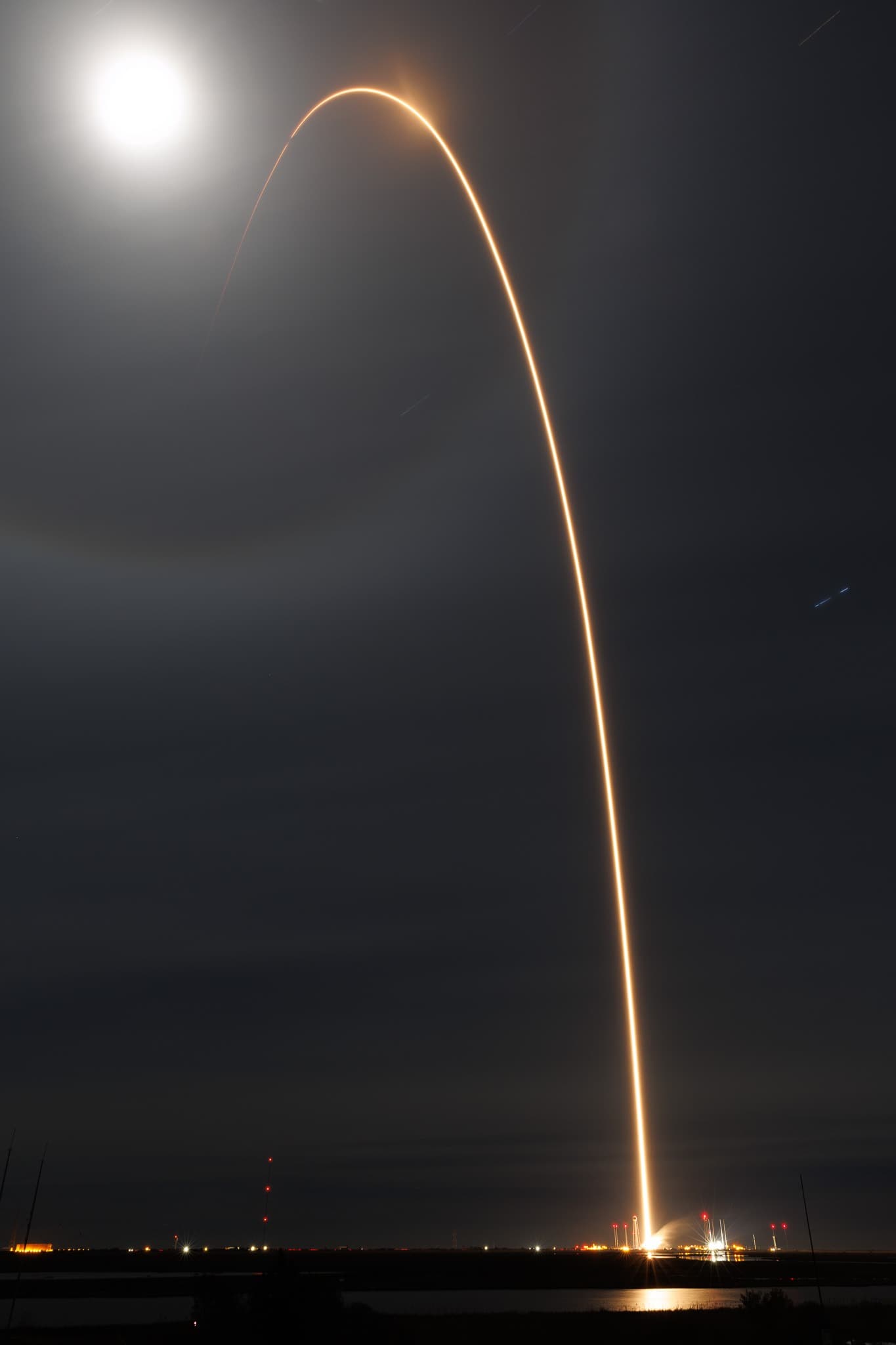
Suborbital launch vehicle derived from Electron, designed for hypersonic testing and defense applications.
Rocket Lab
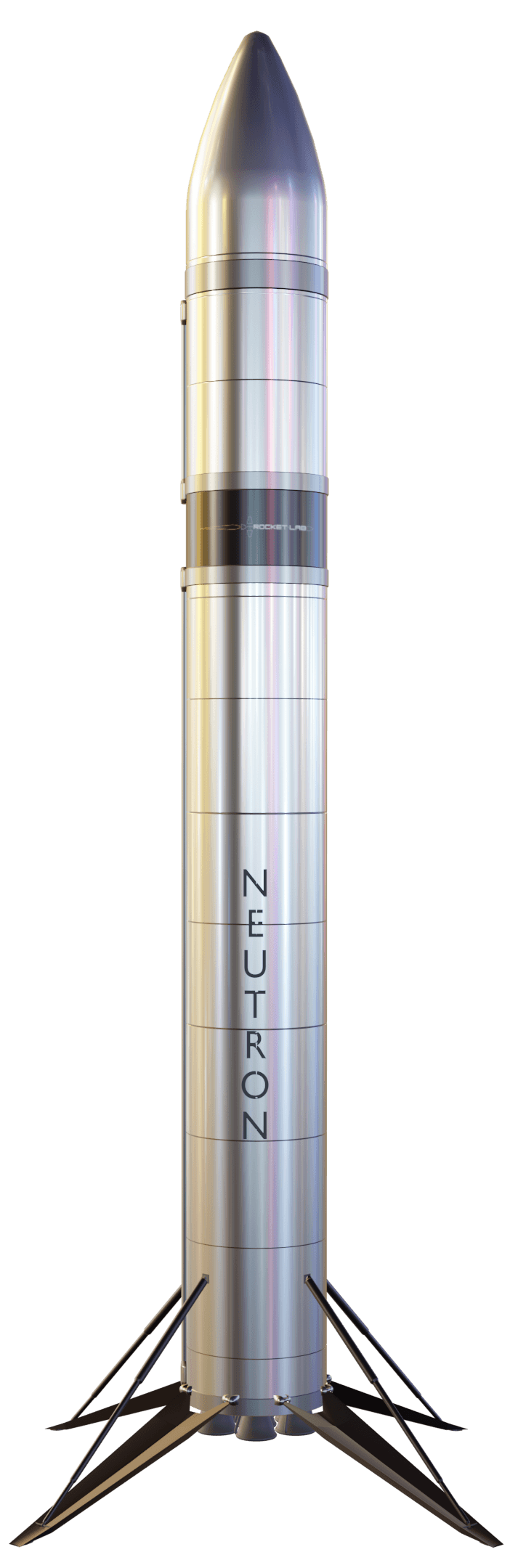
Medium-lift reusable rocket under development for mega-constellation deployment, national-security, and human spaceflight.
Rocket Lab
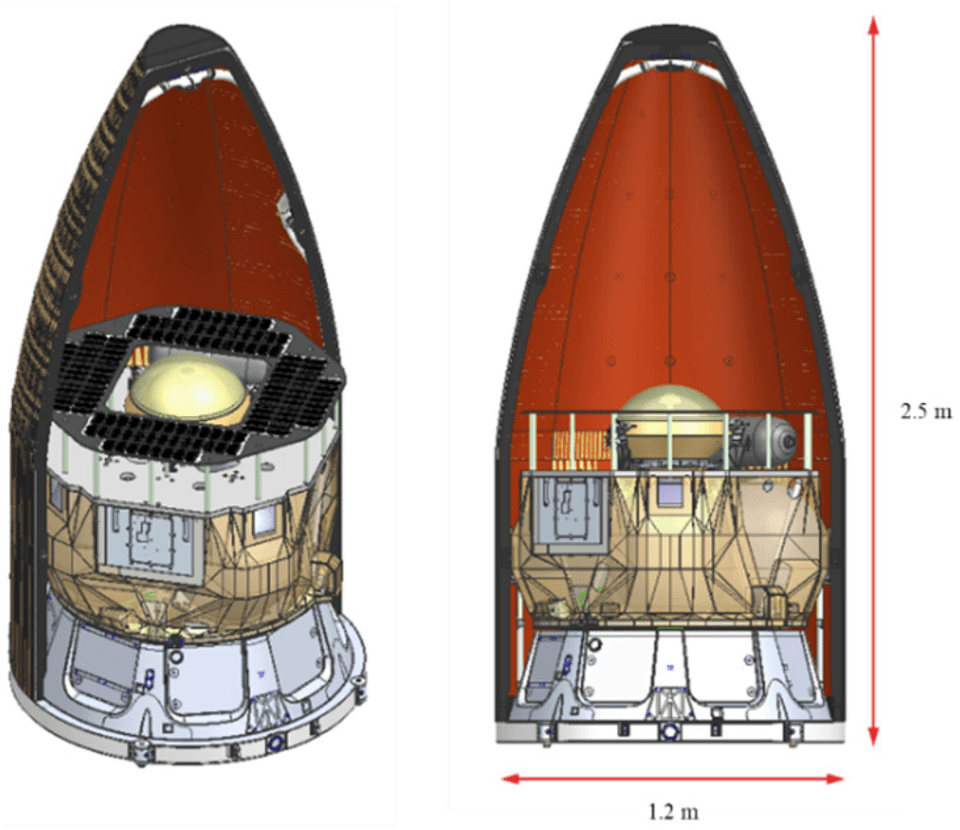
Versatile satellite bus and spacecraft platform for missions to the Moon and beyond.
Skyroot Aerospace
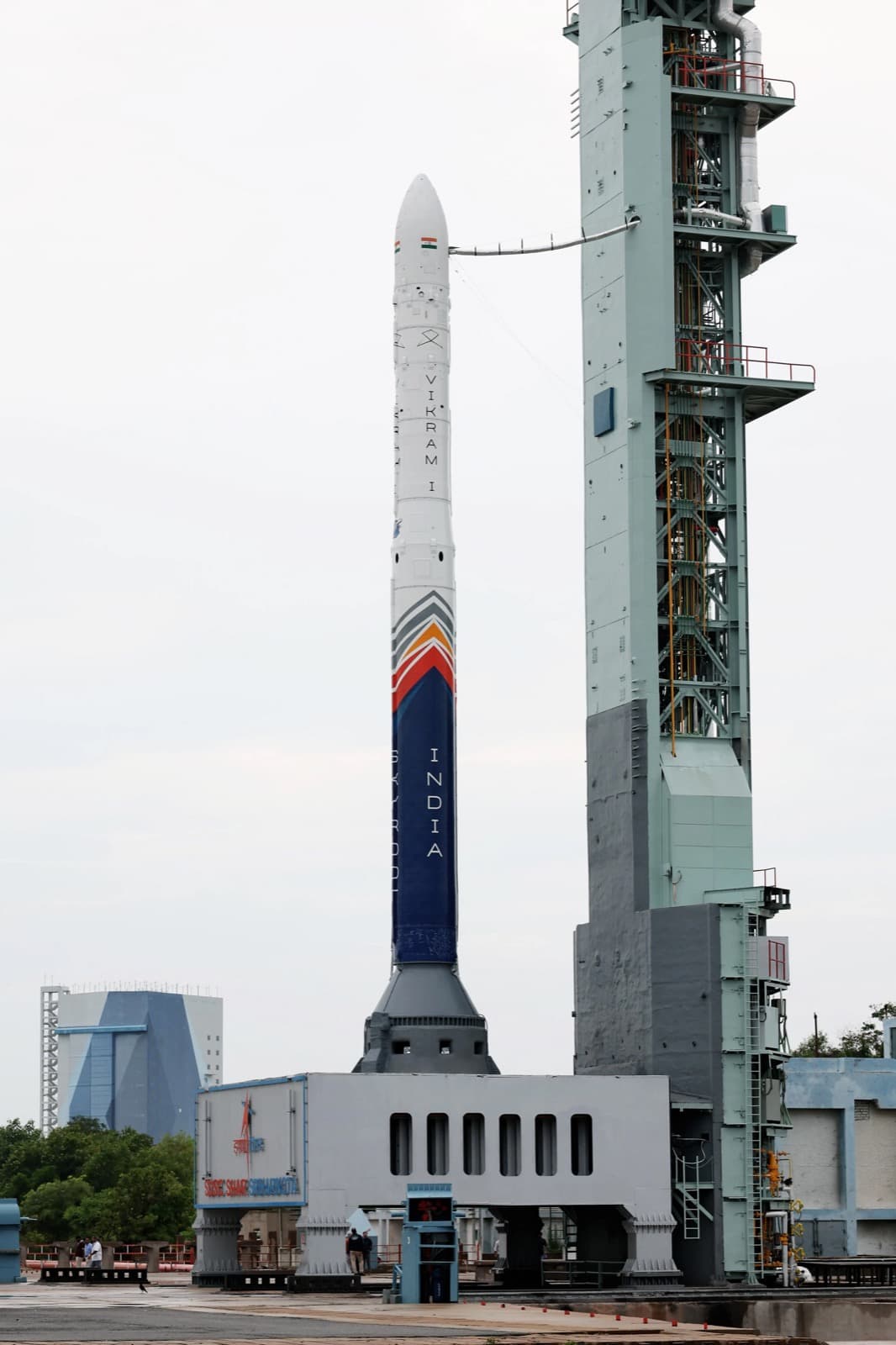
Skyroot's orbital small-satellite launcher: about 22 meters tall, built from carbon composite rather than metal, with three solid stages (Kalam-1200, Kalam-250, Kalam-100) and a 3D-printed Raman liquid upper stage that can start, stop, and restart in space to place payloads precisely. It carries 350 kg to a 500 km low Earth orbit or 260 kg to sun-synchronous polar orbit, and reached orbit on its first flight, July 18, 2026.
Skyroot Aerospace
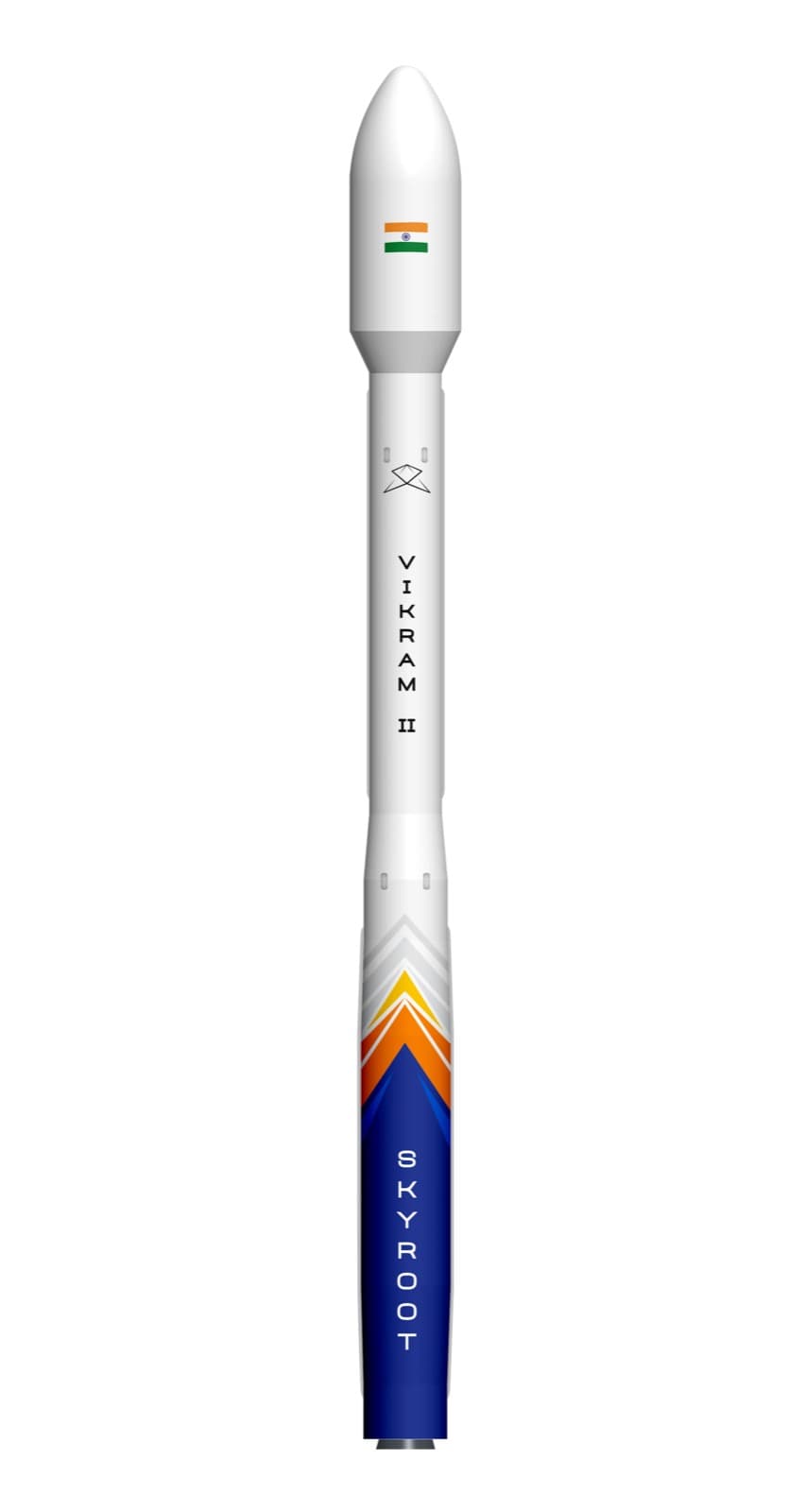
An in-development Skyroot rocket named in the Oct. 14, 2026 sale of two dedicated launches to Reflect Orbital. Skyroot says Vikram-1U adds first-stage boosters and improves performance relative to Vikram-1. That release does not give a payload figure or a first-flight date.
Skyroot Aerospace
The heavier follow-on, built around the Dhawan cryogenic upper stage that burns liquid natural gas and liquid oxygen and is 3D-printed in-house. It is designed for 900 kg to low Earth orbit and 600 kg to sun-synchronous polar orbit, roughly tripling Skyroot's addressable payload class. Dhawan-III validated a 145-second endurance burn in February 2026.
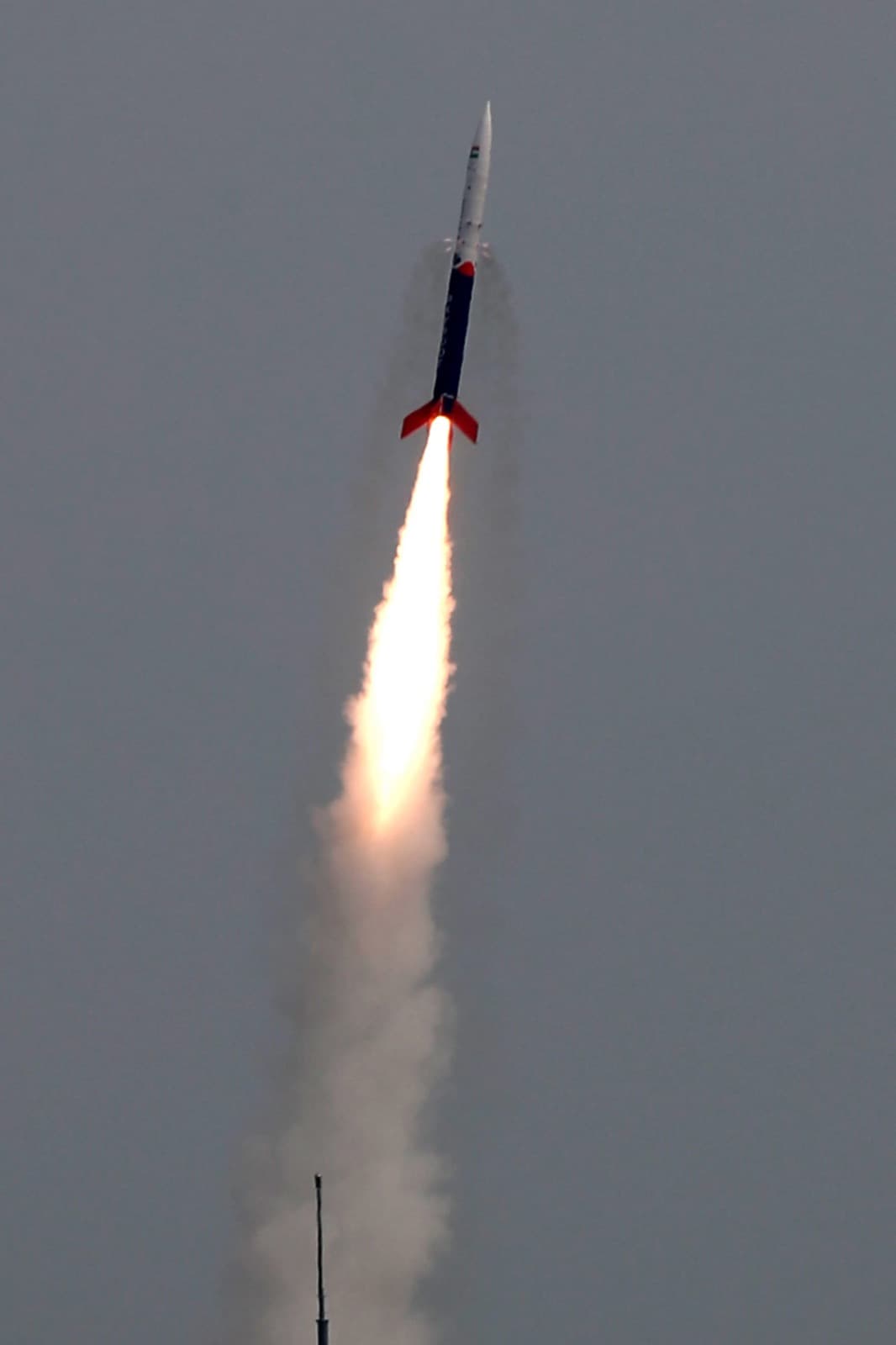
Skyroot Aerospace
The single-stage suborbital demonstrator that flew Mission Prarambh on November 18, 2022, reaching about 89.5 km and becoming the first privately built Indian rocket to launch. It proved the solid propulsion, avionics, and stage design that Vikram-1 later carried to orbit, and it remains the company's proof that the 2020 reforms were real.
Space Epoch
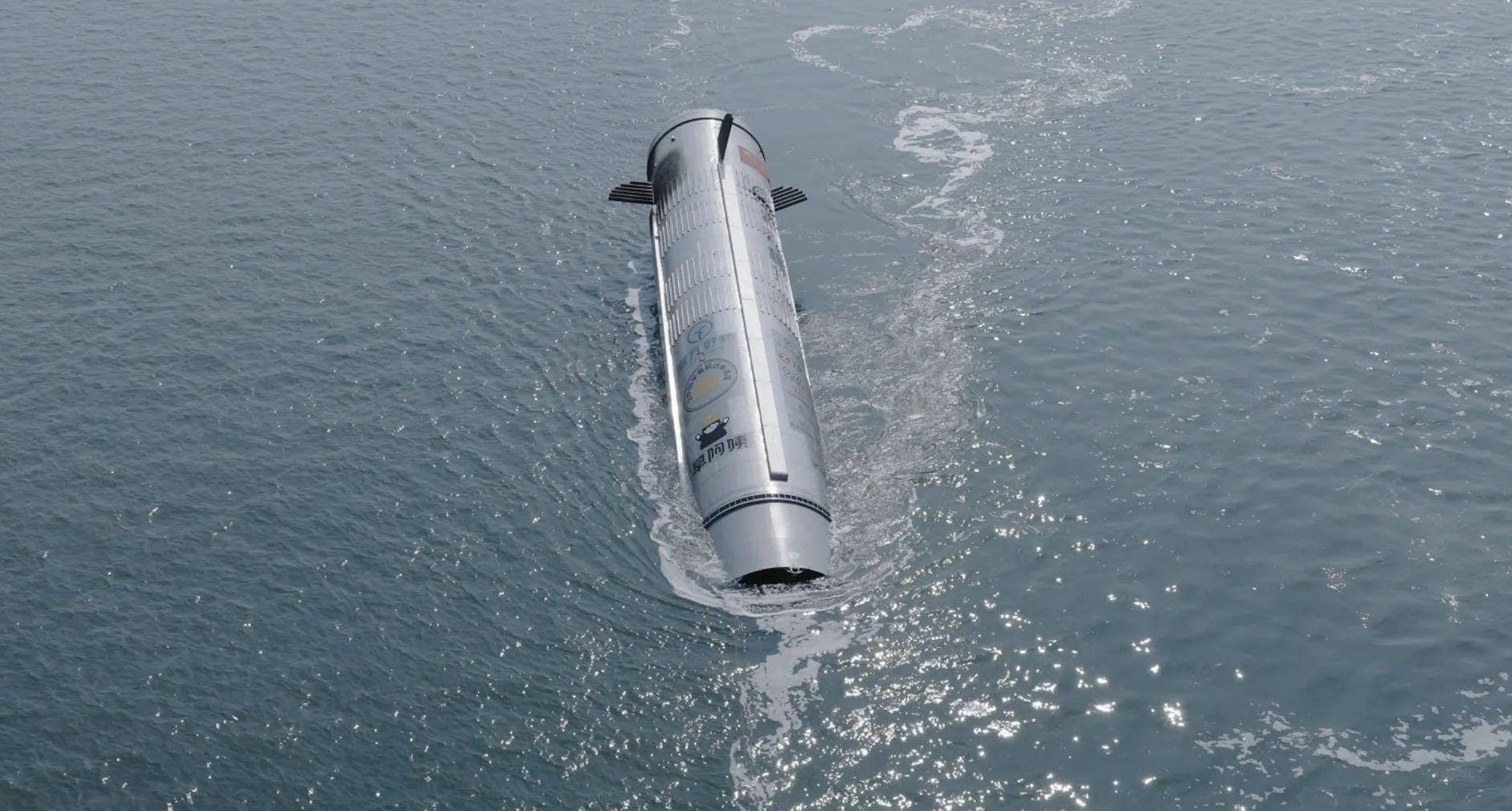
Two-stage, partially reusable stainless-steel rocket burning methane and liquid oxygen, designed for first-stage sea recovery and reuse. Branded 'Hiker-1' in English, its low-cost, stainless construction draws comparisons to a smaller SpaceX Starship.
Space Pioneer
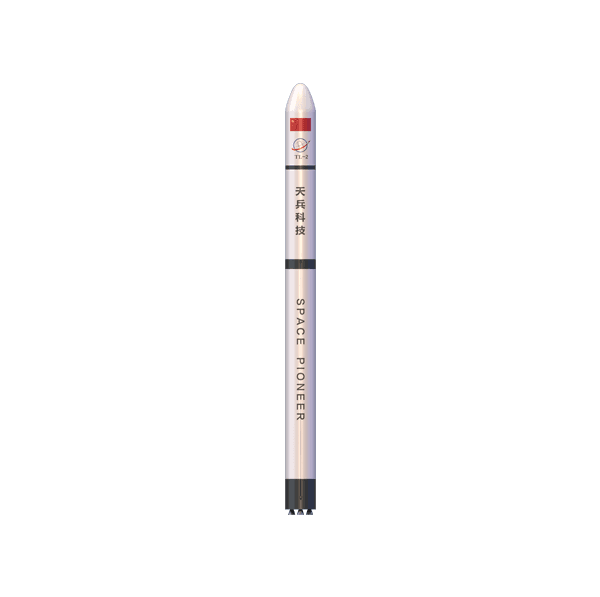
Two-stage kerosene-liquid oxygen orbital rocket; the first privately developed Chinese liquid-propellant rocket to reach orbit.
Space Pioneer
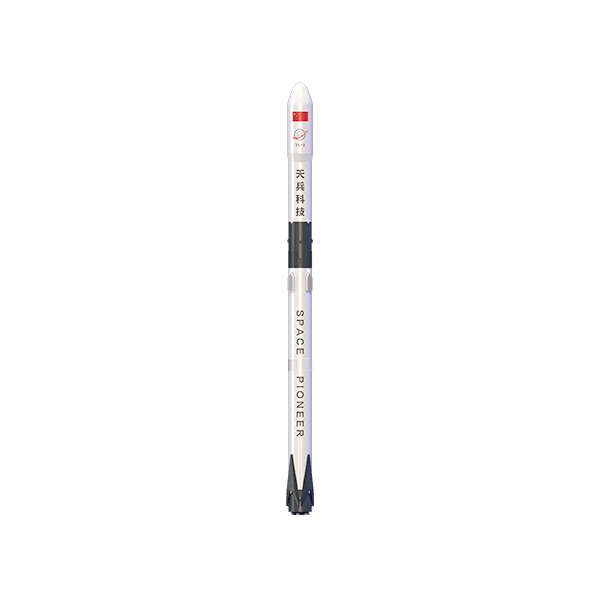
Two-stage kerolox rocket with a reusable first stage, designed as a Falcon 9-class vehicle for China's satellite-internet constellations. Official specs: 72 m tall, 3.8 m diameter, 600 t liftoff mass, 855 t thrust, nine TH-12 first-stage engines, one TH-12V second-stage engine, and a TH-32 upper stage. The company also lists a heavier TL-3H strap-on variant (85.2 m, 68 t to LEO) that has not flown.
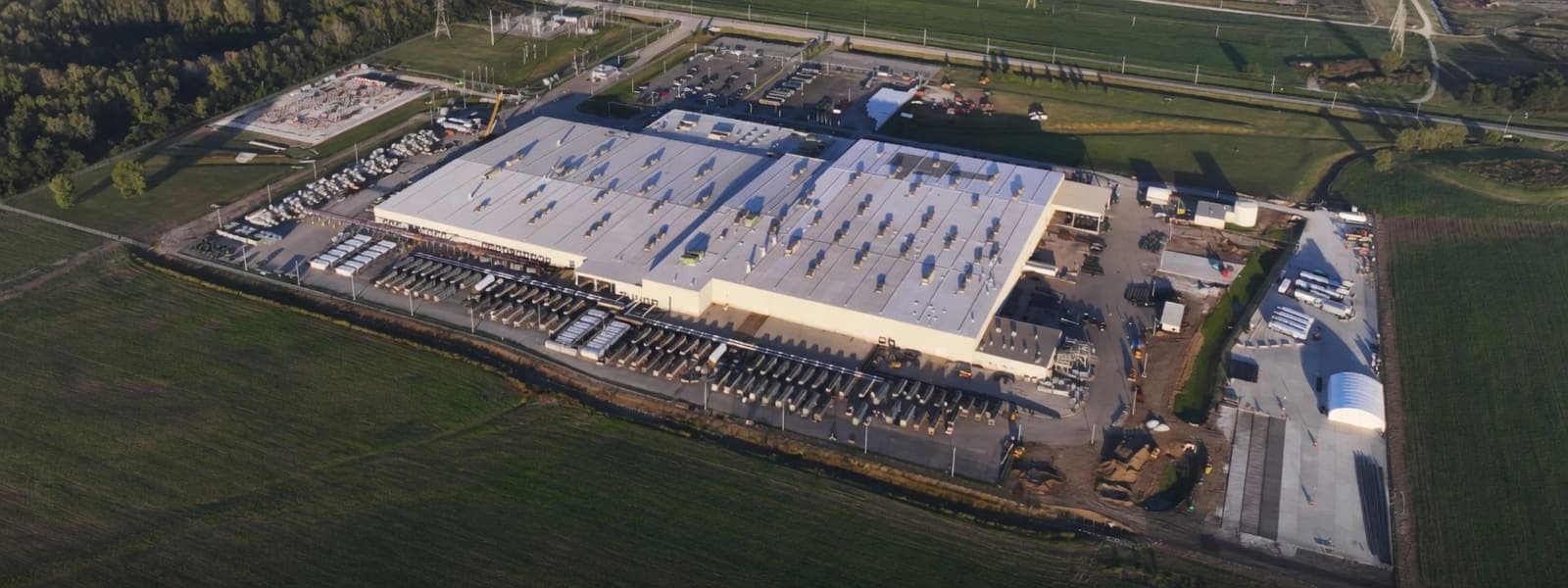
SpaceX
AI supercomputer in Memphis, Tennessee acquired in the February 2026 xAI merger. Sold as multi-year compute capacity to external AI customers, with disclosed contracts to Anthropic and Google.
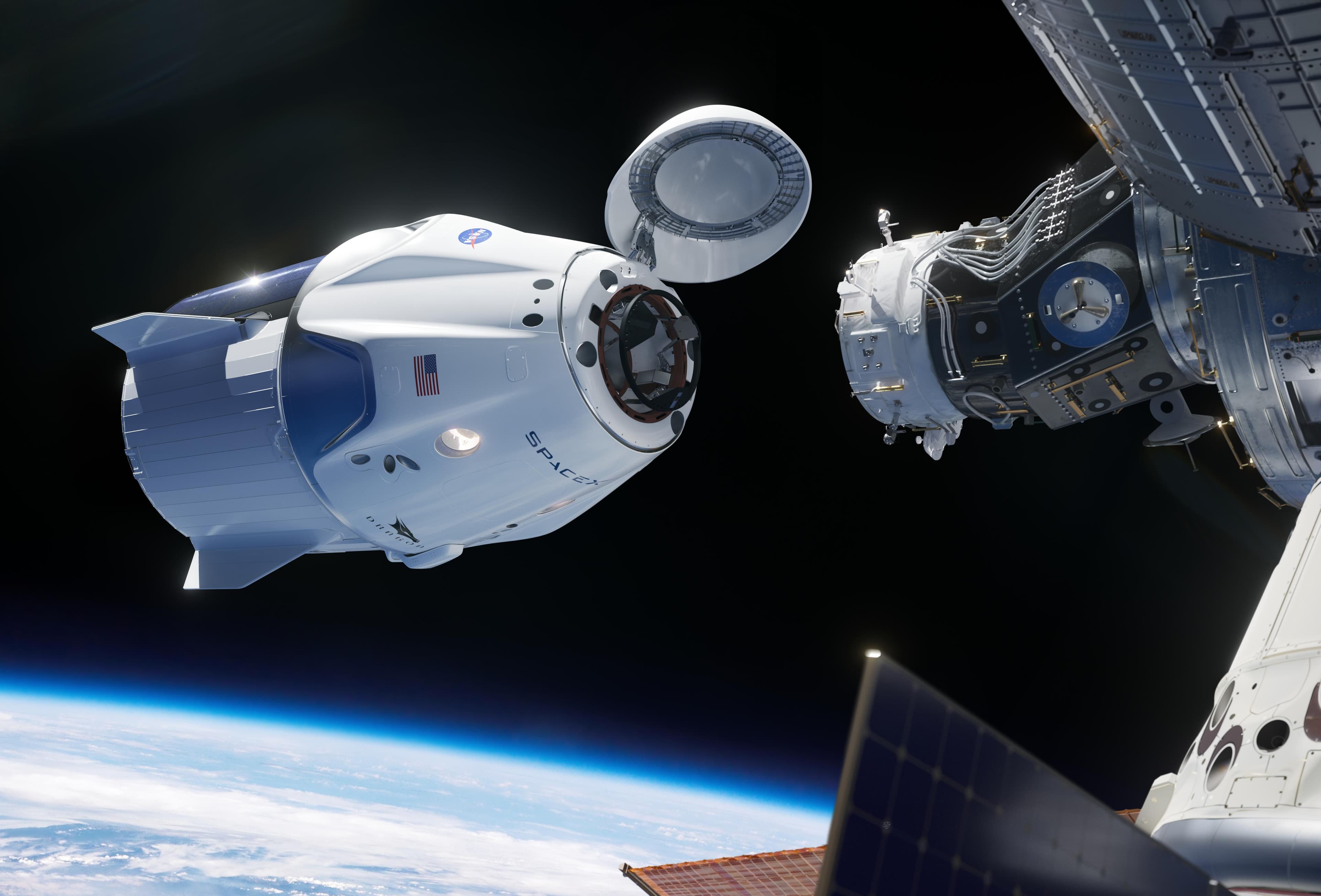
SpaceX
Reusable spacecraft for cargo and crew transport to the International Space Station.
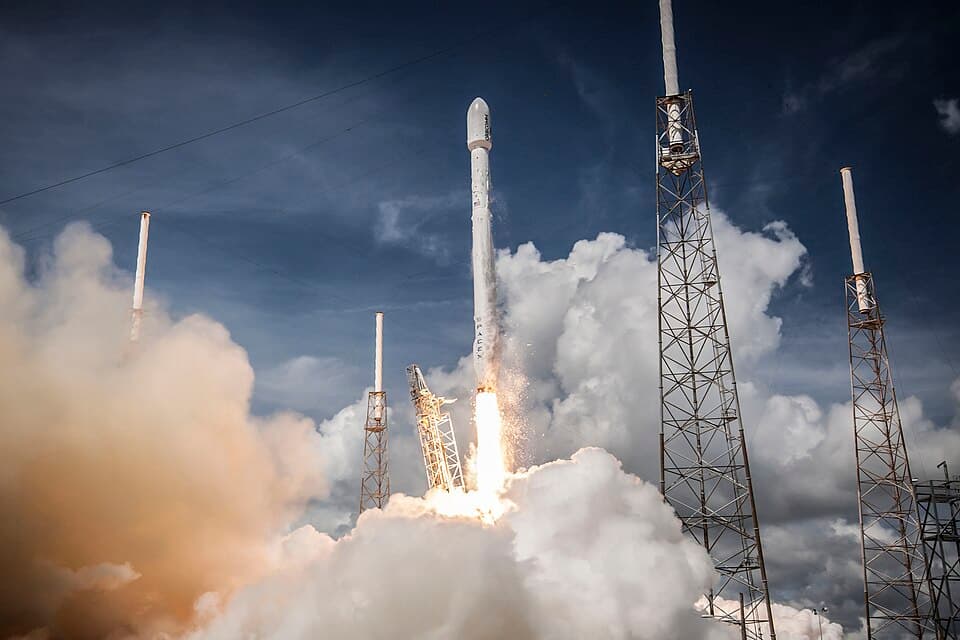
SpaceX
Partially reusable two-stage medium-lift launch vehicle. The world's most frequently launched orbital rocket.
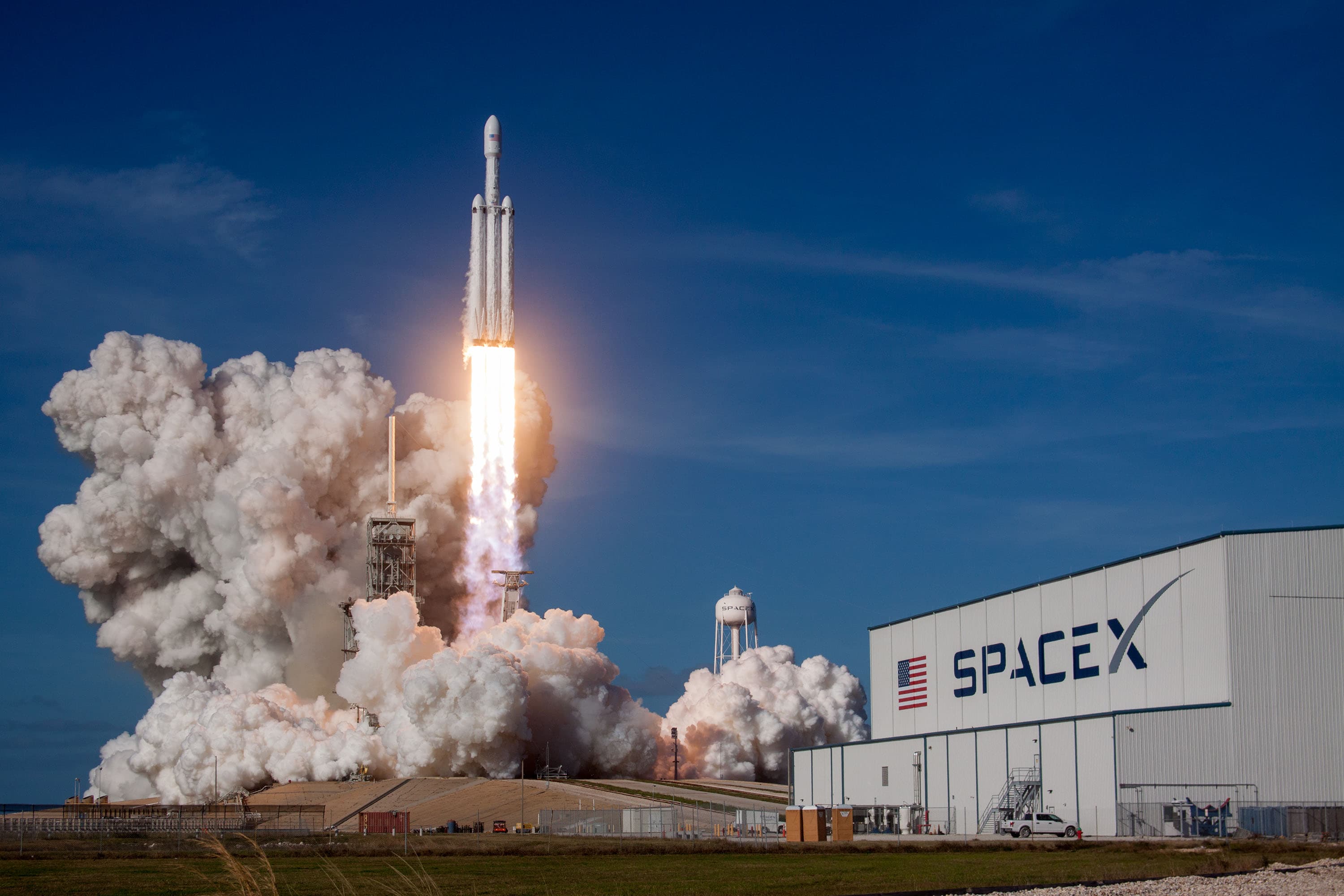
SpaceX
Heavy-lift launch vehicle consisting of a strengthened Falcon 9 core with two additional boosters.
SpaceX
Disk-shaped, uncrewed reentry capsule for returning cargo - such as pharmaceuticals and other orbital-manufacturing output - from low Earth orbit to Earth. SpaceX's entry into the commercial cargo-return market, competing with players like Varda Space Industries.
SpaceX
Government-focused satellite line built on SpaceX launch systems and Starlink platform technology for secure communications and other national-security missions.
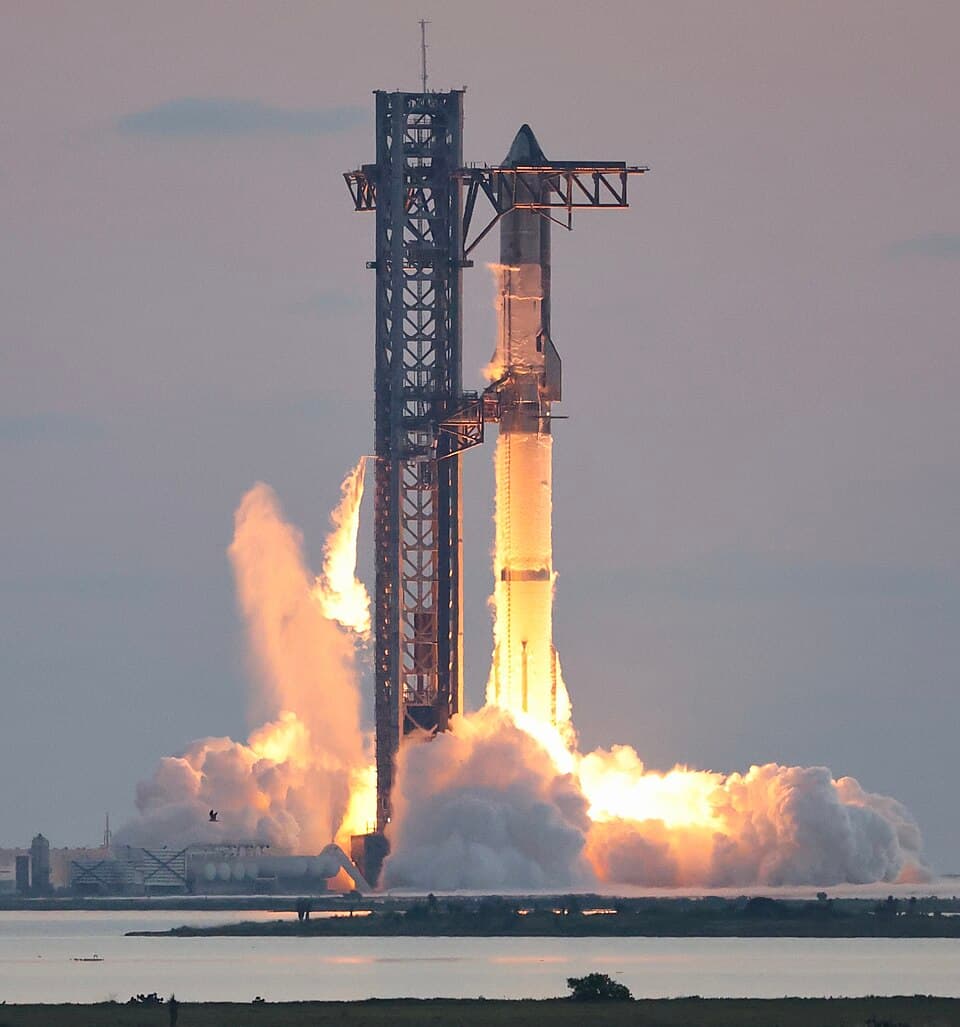
SpaceX
Fully reusable super-heavy-lift launch system designed for missions to the Moon, Mars, and beyond. V3 (Block 3) variant with Raptor 3 engines is the production version.
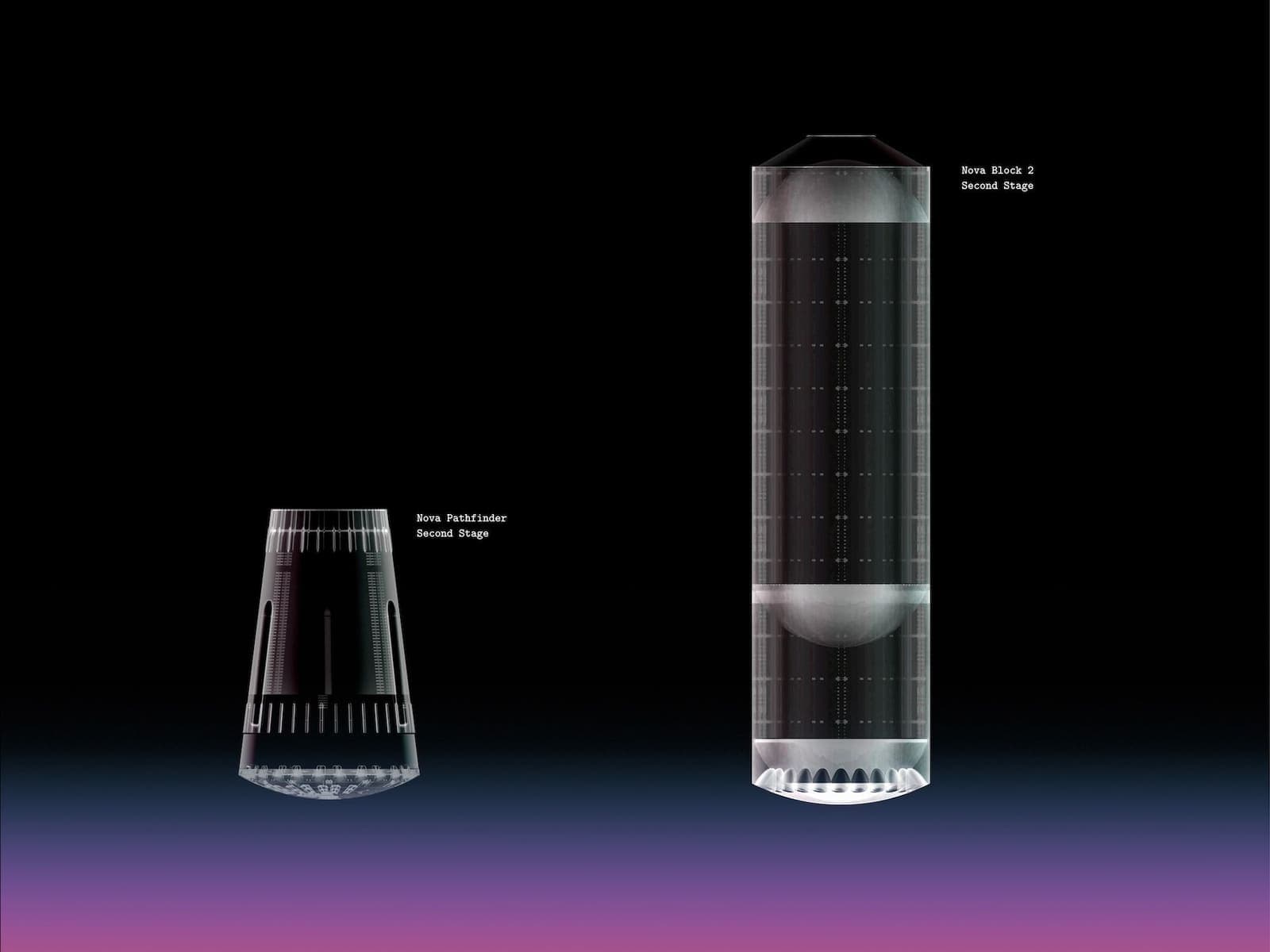
Stoke Space
Larger fully reusable Nova configuration developed in parallel with Pathfinder: 14 Zenith first-stage engines, a cylindrical upper stage with a 5-meter fairing, and an Andromeda Block 2 upper stage using 12 independent engines (24 thrust chambers) for engine-out resilience. Aimed at constellation deployment and replenishment.
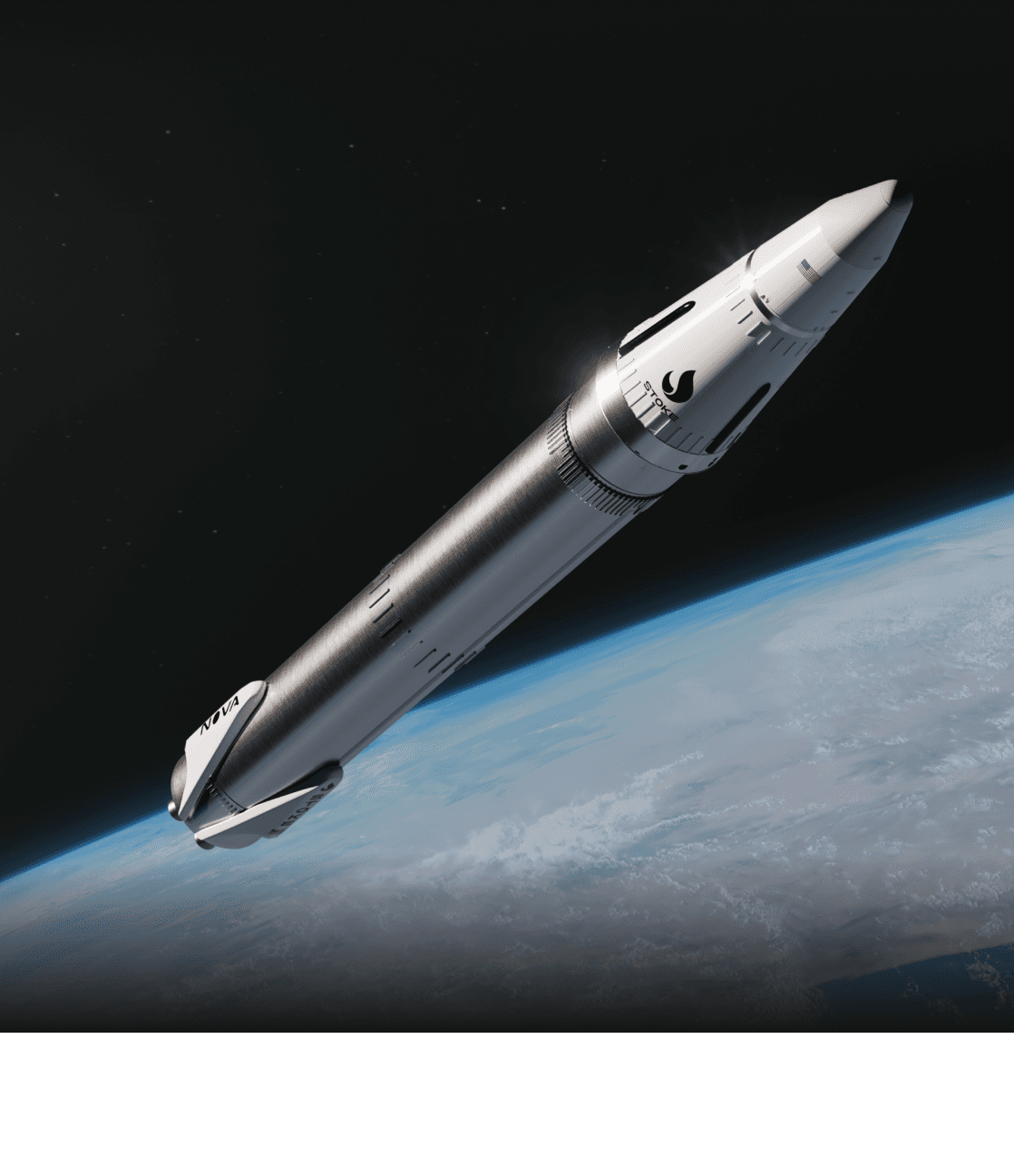
Stoke Space
Fully reusable two-stage medium-lift launch vehicle (Stoke's first orbital configuration) with a reusable fairing and a downmass-capable upper stage designed to prove full-reuse technologies in flight while carrying customer payloads.
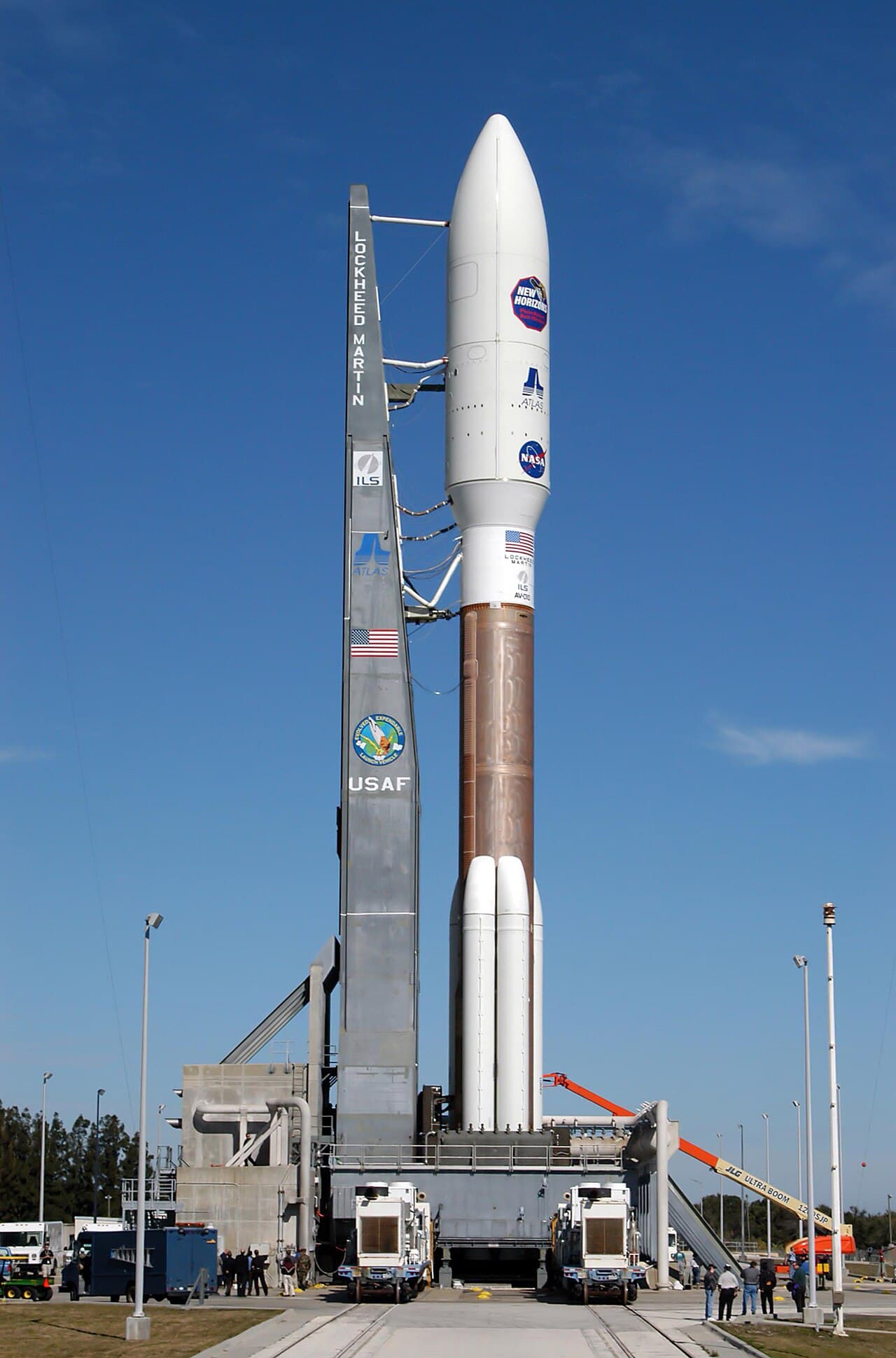
United Launch Alliance
Workhorse medium-lift launch vehicle with a 100% mission success rate, being phased out in favor of Vulcan Centaur.
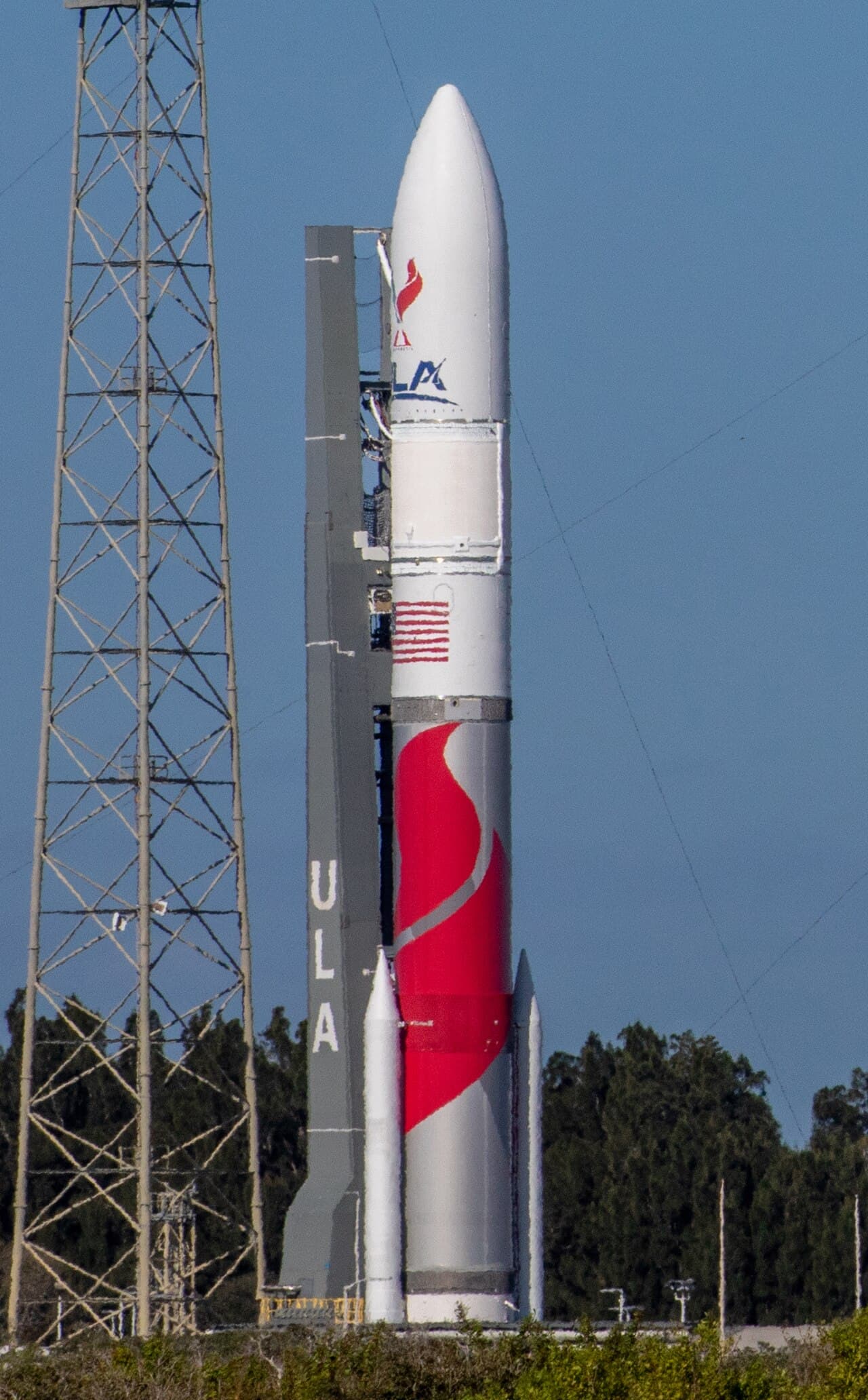
United Launch Alliance
Advanced cryogenic upper stage for Vulcan, enabling high-energy orbits and deep space missions.
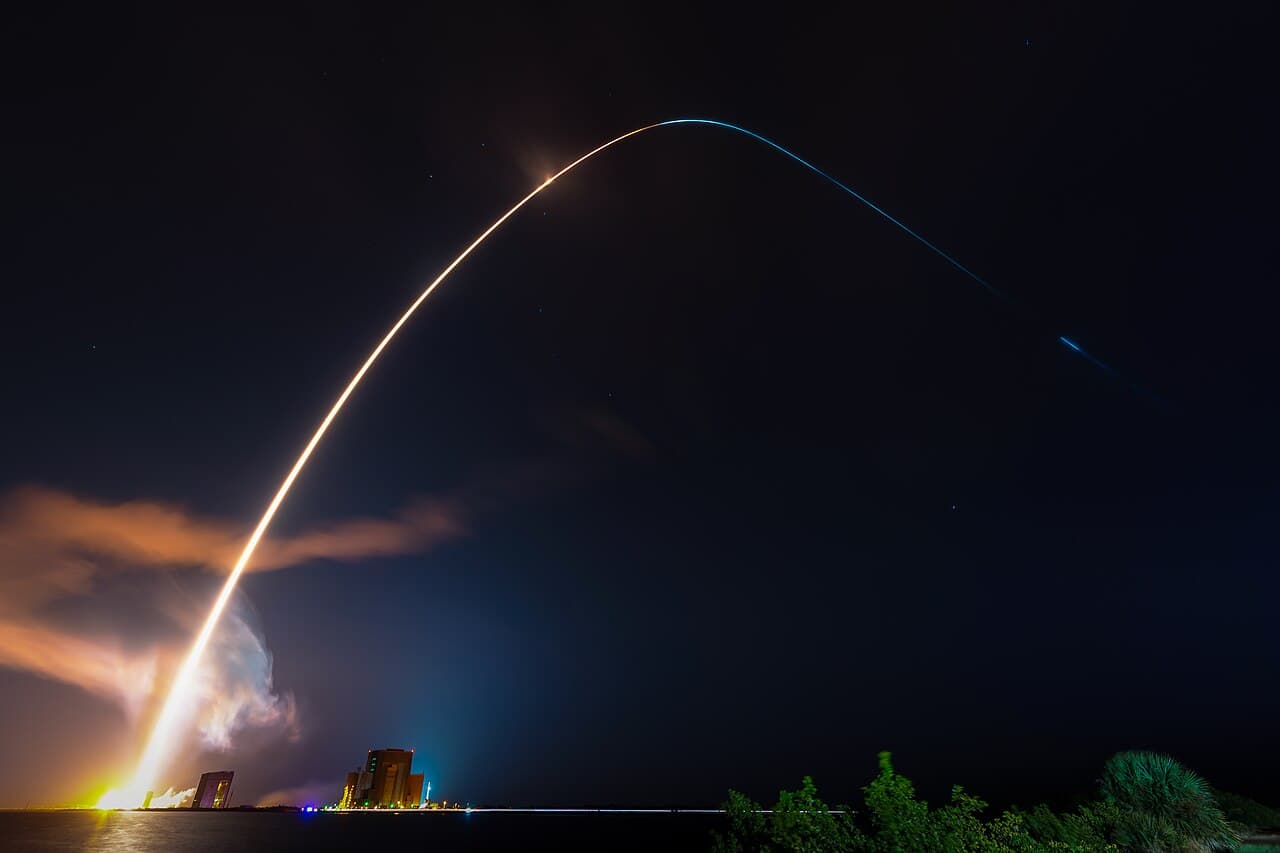
United Launch Alliance
Next-generation medium-to-heavy-lift launch vehicle replacing Atlas V and Delta IV, powered by BE-4 engines.

Anthropic
Anthropic's terminal- and IDE-based agentic coding tool that writes, edits and runs code autonomously. Launched as a research preview in February 2025, it has become one of Anthropic's fastest-growing products, with enterprise now the majority of its revenue.

Anthropic
Automated GitHub pull-request review for Claude Code. Team and Enterprise organizations can set Quick, Standard or Deep review per repository. Eligible Enterprise customers can claim at least $10,000 in credits through Jan. 15, 2027.

Anthropic
Anthropic's agentic 'AI coworker' that runs longer, multi-step business tasks (memos, research, RFP reviews, decks) rather than code. Originally desktop-only, it expanded to the web and to iOS/Android on July 7, 2026, with sessions running remotely in the cloud so work continues after a device closes and state syncs across devices. A 'Record a skill' feature (July 21, 2026) turns a screen-recorded workflow into a reusable Skill.

Anthropic
Anthropic's most capable widely released model, built for the most demanding reasoning and long-horizon agentic work, with always-on adaptive thinking. It includes safety classifiers that can decline high-risk requests, with fallback to other Claude models.

Anthropic
A Chrome/Edge/Brave/Opera browser extension that lets Claude act inside the browser on a user's behalf - reading pages, clicking, filling forms, and completing multi-step workflows - rather than only discussing them.

Anthropic
A FedRAMP High-authorized desktop application bringing Claude Code and Claude Cowork to US federal, state and local government agencies, deployable through standard agency MDM platforms without a separate cloud-provider contract. Adds government-specific controls: on-device conversation history, department-level administration, spend/model limits, and a hash-chained audit log.

Anthropic
Anthropic's small Claude model released Oct. 7, 2026. The company called it its cheapest, fastest, and most capable small model. Priced at $0.10 input and $0.50 output per million tokens for prompts up to 100,000 tokens, and $0.50 / $2.50 above that. Available on AWS, Google Cloud, Azure, and the Claude Platform as claude-haiku-5-5.

Anthropic
Anthropic's recommended everyday default across the Claude API, Claude Code and claude.ai, released July 24, 2026 to succeed Opus 4.8. Anthropic says it approaches the frontier intelligence of Claude Fable 5 at half the cost, with gains over Opus 4.8 on agentic coding, computer use, knowledge work and complex reasoning.
Anthropic
First model in the Claude 5.5 family, released September 22, 2026 for long-running agentic coding and knowledge work. Anthropic says it performs at Claude Fable 5.1 level on most work, costs 40% less than Opus 5 on typical workloads, generates output more than 30% faster, and is priced at $4 per million input tokens and $20 per million output tokens, with cache reads at $0.20. Deployed with Fable-class biology and cybersecurity safeguards; model ID claude-opus-5-5.

Anthropic
An AI research workbench, launched June 30, 2026, that connects Claude to more than 60 scientific databases and computation tools across genomics, proteomics, structural biology and cheminformatics, coordinating specialist sub-agents and a citation/calculation-checking reviewer agent. Built on the ~$400M acqui-hire of ex-Genentech drug-discovery startup Coefficient Bio, it launched alongside an internal Anthropic drug-discovery program targeting diseases traditional biopharma considers commercially unattractive.

Anthropic
The balanced and fast tiers of the Claude family. Sonnet 5 (June 30, 2026) pairs near-flagship capability with speed and a 1M-token context window; Haiku 4.5 is the fastest tier with near-frontier intelligence for high-volume, latency-sensitive workloads.
Anthropic
Second model in the Claude 5.5 family, launched September 28, 2026 as a faster, lower-cost complement to Opus 5.5 for well-scoped coding, documents, slides and spreadsheets. Official pricing is $2 per million input tokens, $10 per million output tokens and $0.20 per million cache-read tokens, the same as Sonnet 5; Anthropic says it runs 30%+ faster and costs up to 30% less per task because it uses fewer tokens. Available as claude-sonnet-5-5 on the Claude API, Amazon Bedrock, Google Cloud and Microsoft Azure. Haiku 5.5 remains unshipped.
Anthropic
Opt-in free service that periodically scans enrolled open-source projects with Anthropic's strongest models, including Claude Mythos, and sends model-generated vulnerability reports with a proof of concept, explanation, and suggested fix where available. Reports go out without human review. Anthropic said expert testers cleared 85 of 97 early high or critical findings for disclosure (88%), with one invalid among the rest.
DeepSeek
Developer platform exposing the V4 family through OpenAI- and Anthropic-compatible endpoints at aggressive prices (V4-Flash from $0.14/$0.28 per million input/output tokens), with cache-hit input discounts and, from the official V4 release, peak/off-peak pricing.
DeepSeek
Free consumer assistant across iOS, Android and web, running the V4 family with Expert and Instant modes. Briefly the #1 free app on the US iOS App Store after R1's January 2025 launch and still one of the world's top AI chat platforms.
DeepSeek
DeepSeek's open-weight V4 line. The live Flash checkpoint as of 18 October 2026 is DeepSeek-V4.1-Flash-1017, served as deepseek-flash. The 10 September card still describes a 552B backbone, 8B active parameters on prefill and 16B on decode, and 196B Engram parameters. Both cards list 763B in Safetensors metadata. V4-Pro-0813, 1.6T total and 49B active on the earlier card, remains a separate API model. Company benchmark scores for 1017 were not independently reproduced in this pass.
Google DeepMind
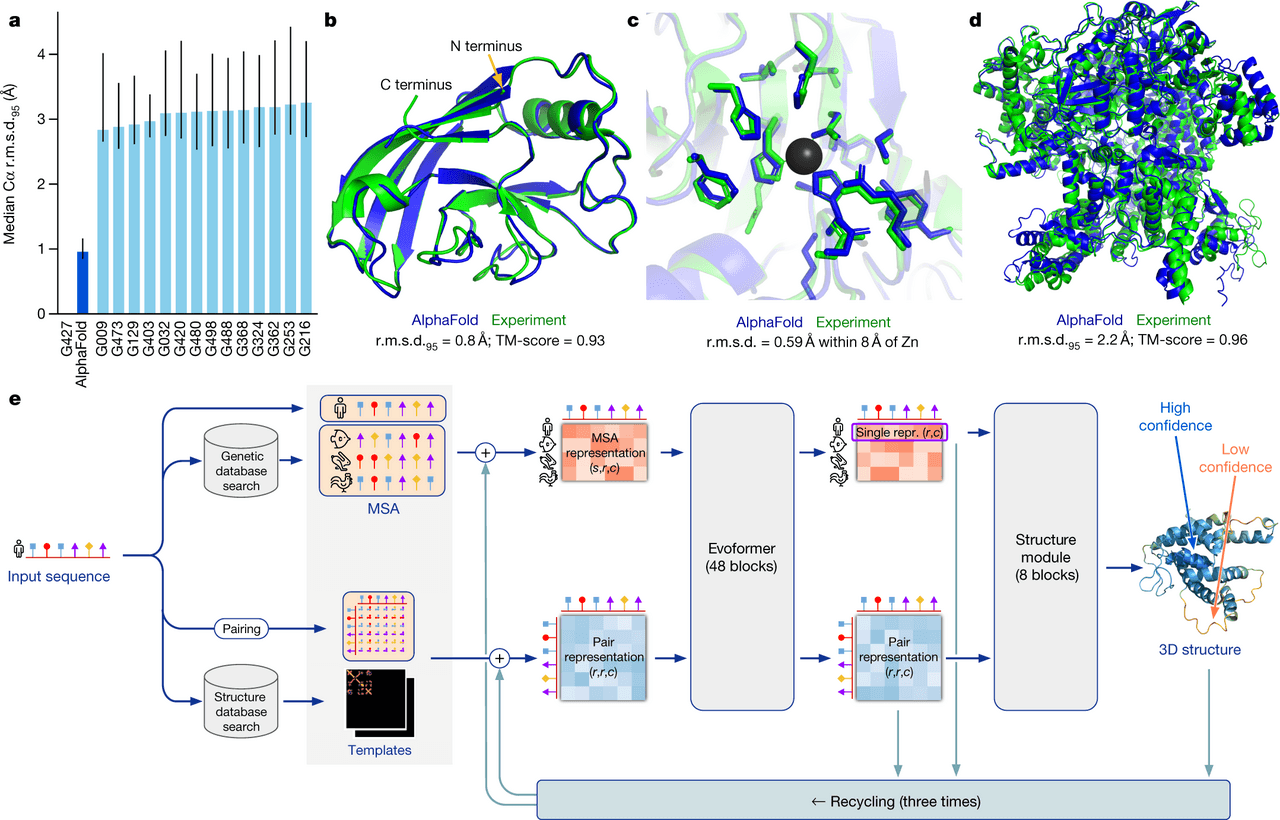
DeepMind's protein-structure-prediction system. AlphaFold2 solved the decades-old protein-folding problem; AlphaFold 3 (co-developed with Isomorphic Labs) extends predictions to how proteins interact with DNA, RNA, ligands and other molecules. Its open database covers 200M+ structures.
Google DeepMind
A roughly 1-petabyte catalogue of predicted molecular effects for about 9 billion single-nucleotide variants, covering every possible single-letter DNA change in the human genome, plus an AlphaGenome Variant Impact score that combines AlphaGenome and AlphaMissense.

Google DeepMind
Google DeepMind's frontier, natively multimodal LLM family spanning Pro, Flash and Flash-Lite tiers plus Deep Think reasoning. As of Oct. 15, 2026 the public frontier model is Gemini 4 Argon (gemini-4-argon), opened Oct. 13 to the paid API, Gemini for business, Ultra, and Pro and Ultra app users. The high-volume workhorse remains Gemini 3.8 Flash, with Gemini 3.8 Live and 3.8 Live Extended Thinking, Gemini 3.5 Flash-Lite, Gemini 3.1 Pro / 3.1 Deep Think, Gemini Omni, and a Fairwind-gated 3.8 Flash Cyber variant. Reuters and Bloomberg reported on Sept. 30, 2026 that Google no longer plans to release Gemini 3.5 Pro. DeepMind's Pro page presents Gemini 3.1 Pro.

Google DeepMind
Google DeepMind frontier model, model id gemini-4-argon. On Oct. 13, 2026 Google opened it beyond the Sept. 30 Fairwind cyber-defender cohort to the paid Gemini API, Gemini for business, Google AI Ultra in Antigravity, and Google AI Pro and Ultra subscribers in the Gemini app and AI Mode. Introductory API price is $2 per million input tokens and $10 per million output tokens through Nov. 30, 2026, then $4 and $20. API docs say it is not on the free tier or the Google AI Pro plan. Google states a 1 million token unified input-output limit. The Oct. 13 model card lists a March 2026 knowledge cutoff.
Google DeepMind
Google's consumer AI assistant (formerly Bard), powered by the Gemini models, with multimodal chat, Gemini Live voice/vision, image and video generation, and Deep Research. It is a delivery surface for Project Astra's universal-assistant capabilities. From Oct. 13, 2026, Google AI Pro and Ultra subscribers can use Gemini 4 Argon in the Gemini app and AI Mode.
Google DeepMind
DeepMind's physical-AI model family for controlling robots. Gemini Robotics 2, unveiled July 30, 2026, extends earlier upper-body-only models to whole-body control ('from feet to fingertips'), plus Gemini Robotics ER2 for embodied reasoning, an On-Device 2 tier, and multi-robot collaboration where different robot types hand off subtasks via shared semantic understanding.

Google DeepMind
Alphabet's AI-first drug-discovery company, spun out of DeepMind in 2021 and led by Demis Hassabis. Its IsoDDE drug-design engine builds on AlphaFold 3 to design candidate molecules; it runs pharma partnerships with Eli Lilly and Novartis worth nearly $3B and is preparing its first clinical trials, starting in oncology.
Google DeepMind
DeepMind's generative-media and world-model stack: Veo for high-fidelity video with synchronized audio, and Genie for interactive, navigable 3D worlds. At I/O 2026 these were merged into Gemini Omni, a native world-simulator that understands physical forces like gravity and fluid dynamics, with Project Genie anchored to Google Street View imagery.
Mistral AI
Mistral's developer and enterprise platform: pay-per-token API access to the full model catalog plus AI Studio for building production AI - Workflows (April 2026), built-in and custom MCP connectors, Search Toolkit, prompt/skills versioning and governance (July 2026), and Agentic Search (August 2026). Forge, launched March 2026, lets enterprises build frontier-grade custom models on Mistral's stack.
Mistral AI
Mistral's frontier model generation, headlined by Mistral Large 3 - a 675B-parameter sparse mixture-of-experts model (41B active) released open-weight under Apache 2.0 in December 2025 - alongside Mistral Medium 3.5 (the 'first flagship merged model,' default in Vibe since May 2026) and the efficient Mistral Small 4. A next-generation 'fat but sparse' MoE frontier model entered partner early access in July 2026.

Mistral AI
Sovereign European AI cloud built with Nvidia: GPU capacity for training and inference operated on Mistral's own data centers, anchored by the 44 MW Bruyères-le-Châtel site (13,800 Nvidia GB300 GPUs) in Essonne, a 10 MW inference facility at Les Ulis due in Q3 2026, a €1.2B second site under construction with EcoDataCenter in Borlänge, Sweden (250-600 MW, Nvidia Vera Rubin GPUs, opening 2027) - Mistral's first infrastructure investment outside France - and the 'Campus AI' joint venture with MGX, Bpifrance and Nvidia - a 1.4 GW flagship site at Fouju now under construction, scaled in June 2026 to a roughly 3 GW nationwide network with a second site pending.
Mistral AI
Public-preview natively multimodal mixture-of-experts model. Mistral's 6 Oct 2026 blog calls it a 1-trillion-parameter model with 52 billion active parameters and says the preview API is on Mistral Studio, with open weights due by the end of October. The docs page lists API identifier mistral-large-4+1, 52B active parameters, 1.05T total parameters, a 1.6B vision encoder, and a 1M context window. The Hugging Face card, still an upcoming release on 16 Oct 2026, says 49 billion active parameters per token and 52 billion including embeddings and output layers, with a current ETA of 31 Oct 2026. Artificial Analysis describes the same preview as 1T total and 49B active, with a 512k context window, and scores it 38 on the Intelligence Index and 50 on the Cyber Index. Weights were not downloadable on 16 Oct 2026, so there is no open-weight release date or public license yet.

Mistral AI
A broad lineup of purpose-built models: Codestral and Devstral for coding, Magistral for step-by-step reasoning, Voxtral for speech (with an open-weight TTS model added March 2026), Mistral OCR 4 for document intelligence (June 2026), Leanstral for formal proofs, Robostral Navigate (July 2026) - an 8B embodied-navigation model steering robots from a single RGB camera - and Shieldstral (August 2026), a 3B open-weight safety classifier that judges text and images against plain-language moderation policies at inference time instead of a fixed, retrained taxonomy.
Mistral AI
Time-series foundation models in 5M, 28M, 123M and 209M sizes. They output 21 forecast quantiles and accept past-only and known-future covariates. Mistral says the 209M model leads pretrained zero-shot results on GIFT-Eval, TIME and fev-bench.

Mistral AI
Mistral's consumer and enterprise AI assistant, rebranded from Le Chat to Vibe on May 28, 2026 and repositioned as 'one agent for long-running, multi-step work.' Work Mode connects to Google Workspace, Outlook, SharePoint, Slack and GitHub to execute multi-step tasks autonomously; Code Mode runs persistent sandboxed coding sessions through to merged pull requests, with a VS Code extension and CLI.
Moonshot AI
Moonshot's consumer AI assistant across web and mobile, launched October 2023 with a record long-context window (2M Chinese characters by March 2024). Peaked at #3 in China by monthly active users in 2024; now around 8th as domestic competition from Doubao, Qwen and DeepSeek intensifies.

Moonshot AI
Moonshot's open-weight frontier line: K2 (July 2025, 1T MoE), K2 Thinking (November 2025 agentic-benchmark leader), K2.5 (vision via MoonViT), K2.6, K2.7-Code, and K3 (July 16, 2026) - a ~2.8T-parameter MoE (104B active; 16 of 896 experts) with 1M-token context, Kimi Delta Attention, Attention Residuals, and native text/image/video understanding, the largest open-weight model ever released.
Moonshot AI
Developer platform (platform.kimi.ai) exposing the K-series through OpenAI-compatible endpoints, plus the Kimi Code CLI and Kimi Work agentic tools - the enterprise push behind customers like Cursor, DoorDash and Thinking Machines.

OpenAI
Exposes the GPT-6 family (Astra, Sol and Luna), the GPT-5 family, Sora video, and agent tooling to developers. Codex is OpenAI's flagship agentic coding system, spanning a CLI, IDE extension, cloud task delegation and a GitHub bot. GPT-6 Sol and Luna became available in the API on September 22, 2026, and GitHub Copilot added both models the same day.
OpenAI
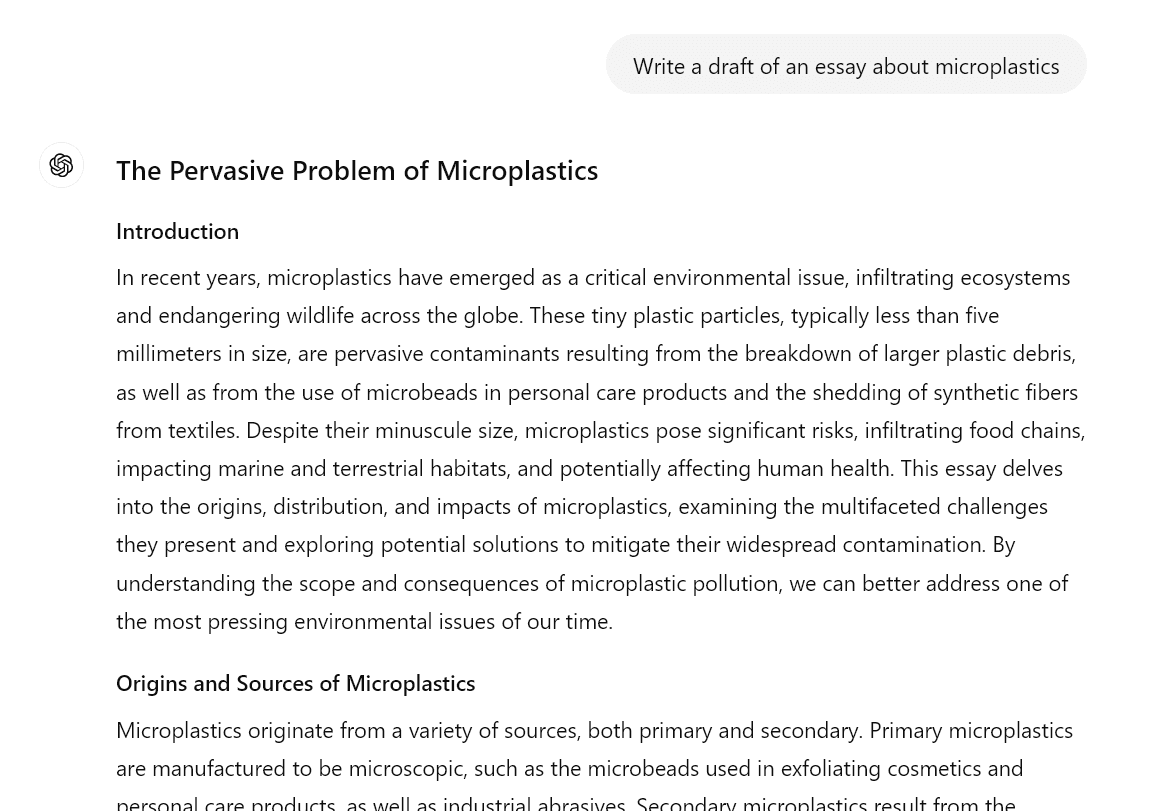
OpenAI's flagship consumer assistant, now running GPT-6 Sol and Luna alongside GPT-6 Astra and the GPT-5 family, with advanced voice, cross-chat memory, Projects, image and video generation, and agentic Agent Mode. The largest consumer AI product in the world.
OpenAI
A GPT-6 Astra product for bankers and equity researchers, launched September 10, 2026, with Morgan Stanley and Evercore as design partners. Pulls structured data from LSEG, PitchBook, Daloopa, Crunchbase and Quartr, with planned integrations to FactSet, S&P Global, Preqin and Datasite.
OpenAI
OpenAI's cyber-defense program, offering purpose-trained security models to vetted defenders, government agencies and enterprises under a tiered 'Trusted Access for Cyber' governance framework. Expanded Aug 10, 2026 into two access tiers (Blue for defensive workflows, Red for authorized offensive/penetration testing) alongside a new GPT-5.6-Cyber model.
OpenAI
Always-on ChatGPT agent introduced at DevDay on September 29, 2026. Business Insider said it runs on GPT-6 Astra on a cloud computer, is built for computer use across apps and websites, and can use some tools when a user is not actively directing it. The Verge reported initial access for ChatGPT Pro, Business Premium and Enterprise subscribers, with Muse remaining free. OpenAI said it plans to expand availability. An official openai.com product page was not retrieved.
OpenAI
OpenAI's prior frontier large-language-model family. GPT-5.5 (April 2026) was the broadly available flagship, built for agentic coding, computer use, and knowledge work. GPT-5.6 - variants Sol, Terra and Luna - opened to the public on July 9, 2026 after an initial government-gated preview. GPT-6 Astra, launched September 3, 2026, is now the new flagship (see that product).

OpenAI
OpenAI's current flagship model, launched September 3, 2026. OpenAI calls it a generational leap for coding, computer use, science and cybersecurity, and the first model it has designated Critical for cybersecurity under its Preparedness Framework - meaning it can find previously unknown security flaws and exploit them without step-by-step human guidance. President Greg Brockman told reporters it is not unreasonable to feel the company is now in the AGI era.

OpenAI
GPT-6 Luna is OpenAI's most efficient GPT-6 model for focused, high-volume tasks, with a 1,050,000-token context window, 128,000 max output tokens and a May 18, 2026 knowledge cutoff. Standard API text pricing is $0.10 per million input tokens and $0.50 per million output tokens.

OpenAI
GPT-6 Sol is OpenAI's GPT-6 model for complex coding and agentic workflows, with a 1,050,000-token context window, 128,000 max output tokens and an April 20, 2026 knowledge cutoff. Standard API text pricing is $2 per million input tokens and $10 per million output tokens.
OpenAI
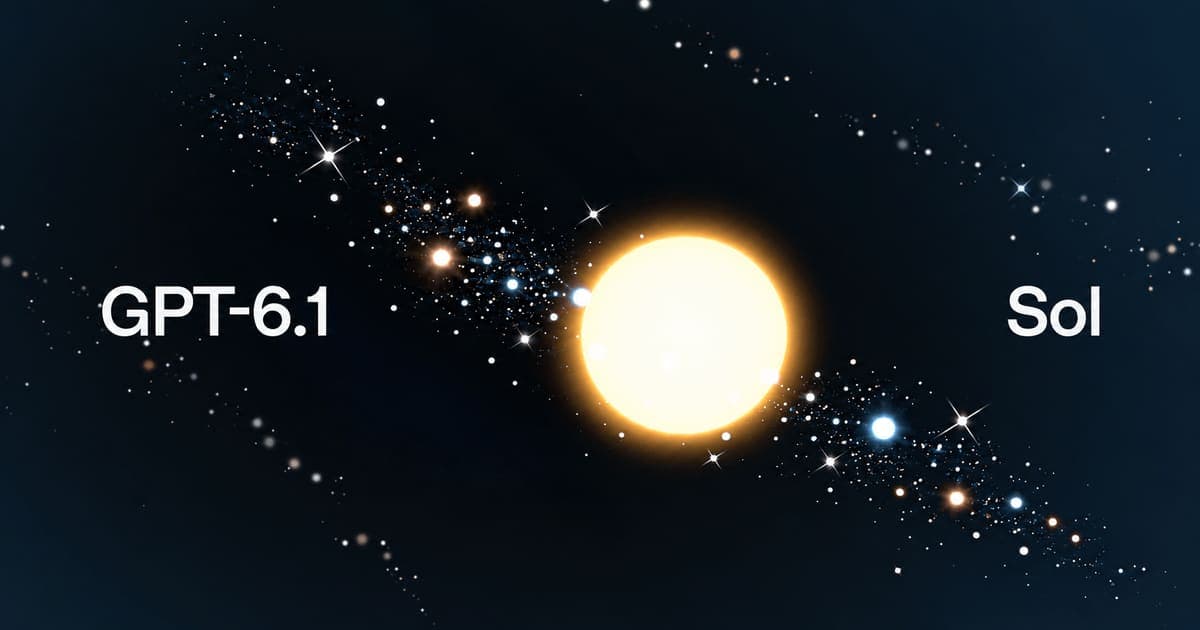
A GPT-6 family model OpenAI positions as near-Astra performance for coding, computer use and professional work at lower token prices than GPT-6 Astra. Distinct from the Sept 22 GPT-6 Sol launch; API model id is gpt-6.1-sol.

OpenAI
OpenAI life sciences model. The Rosalind Academic Plan offers approved US university labs up to 30 Business Standard seats at no cost for 12 months, with model access after trusted-access review. The academic offer does not include API access.
OpenAI
OpenAI's first consumer hardware device, developed with Jony Ive following the ~$6.5B acquisition of io - a screenless, doughnut-shaped, voice-first AI 'companion' roughly the size of a hockey puck, intended to complement rather than replace the smartphone. Not yet launched.

OpenAI
Managed enterprise platform for deploying governed AI agents over real-time voice and chat, covering customer support, sales and internal IT workflows with per-customer policies, guardrails and human-escalation rules.
OpenAI
OpenAI's video-and-audio generation model, with synchronized dialogue and sound, multi-shot generation, and improved physical accuracy. Launched September 2025; the standalone consumer app was discontinued in April 2026, with the model continuing via the API.

Qwen
The public Qwen site and chatbot at qwen.ai. Wikipedia describes Qwen as available as a web app and on Android. Alibaba's August 3 post points developers at the Qwen blog on that domain and says the model family powers services across its platforms. This entry is the consumer and developer front door, not a separate legal entity.
Qwen
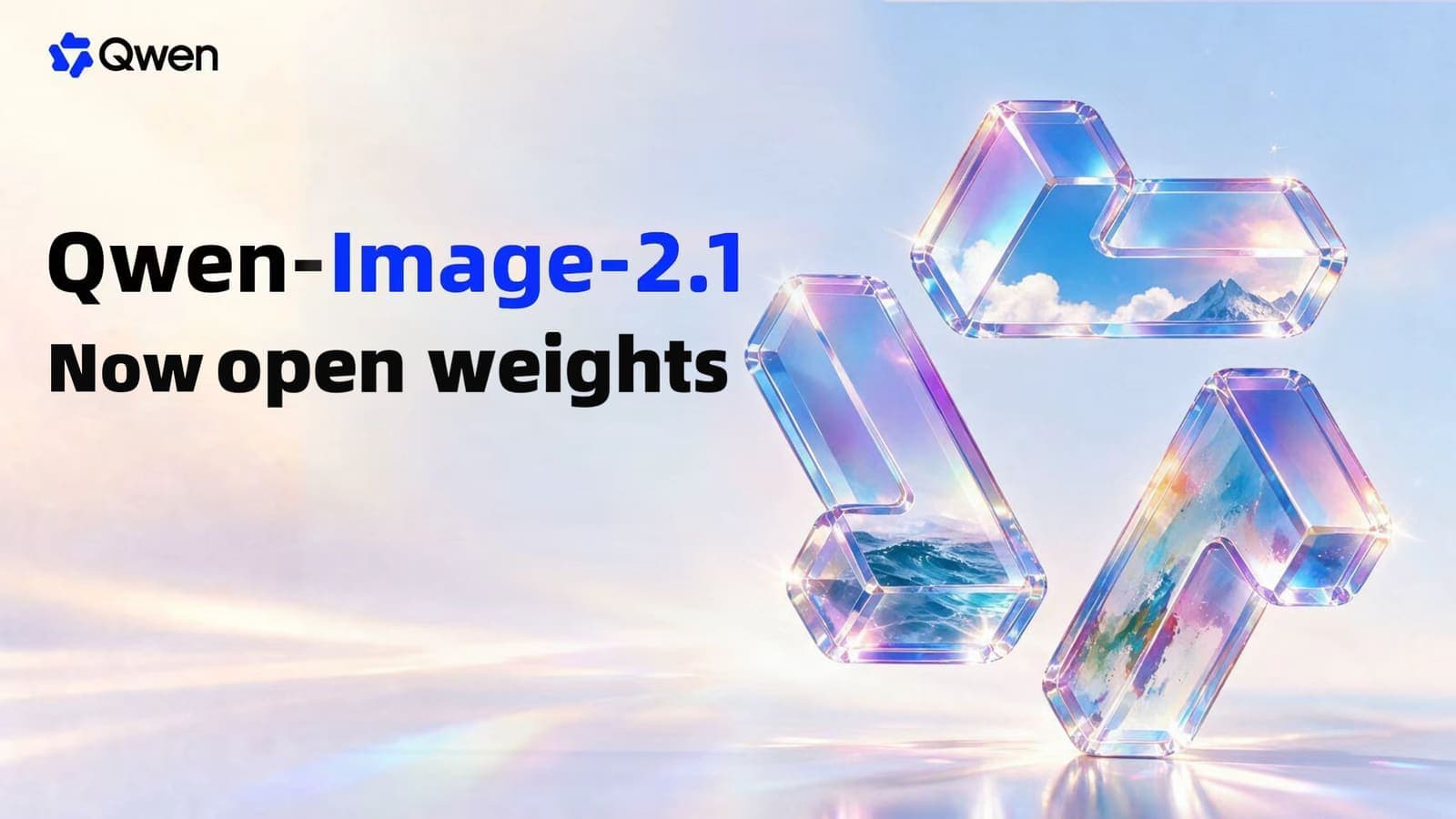
Open-weight unified text-to-image generation and image-editing model in the Qwen family. Alibaba's September 21, 2026 post and the GitHub README say the visual generation component has 7 billion parameters and 32 Single-Stream DiT layers, with native transparent (RGBA) output, up to 10 reference images, and local edits via circles, paint, or masks. Weights are on Hugging Face and ModelScope under the Qwen Research License. Qwen-Image-2.1-Turbo is a later eight-step checkpoint of this architecture.
Qwen
Eight-step accelerated checkpoint of Qwen-Image-2.1 for text-to-image generation and image editing, using the same 7B visual generation architecture. Alibaba released the weights and hosted Pro and Turbo APIs on Oct. 9, 2026 via GitHub, Hugging Face and Alibaba Cloud Model Studio.
Qwen
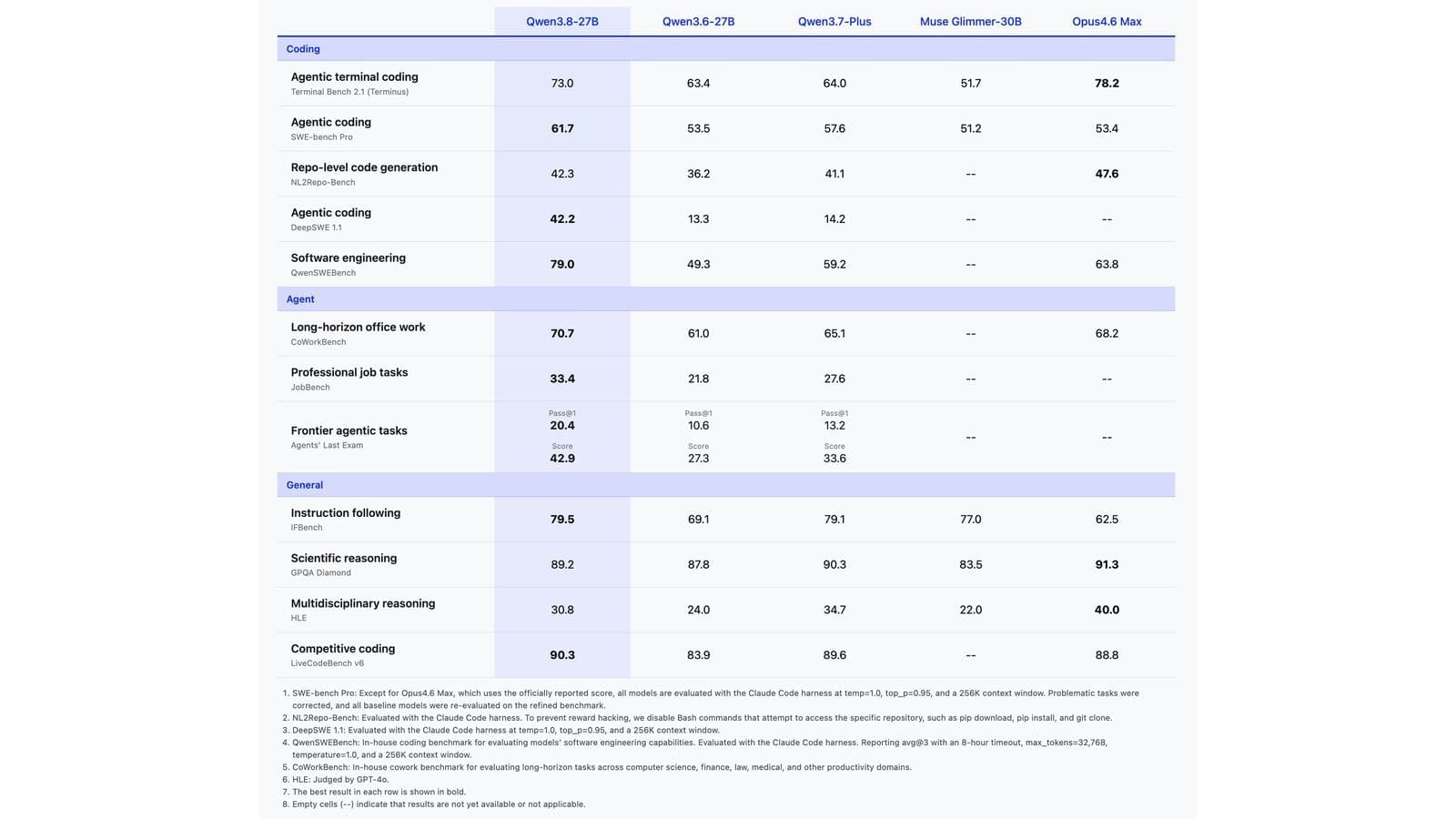
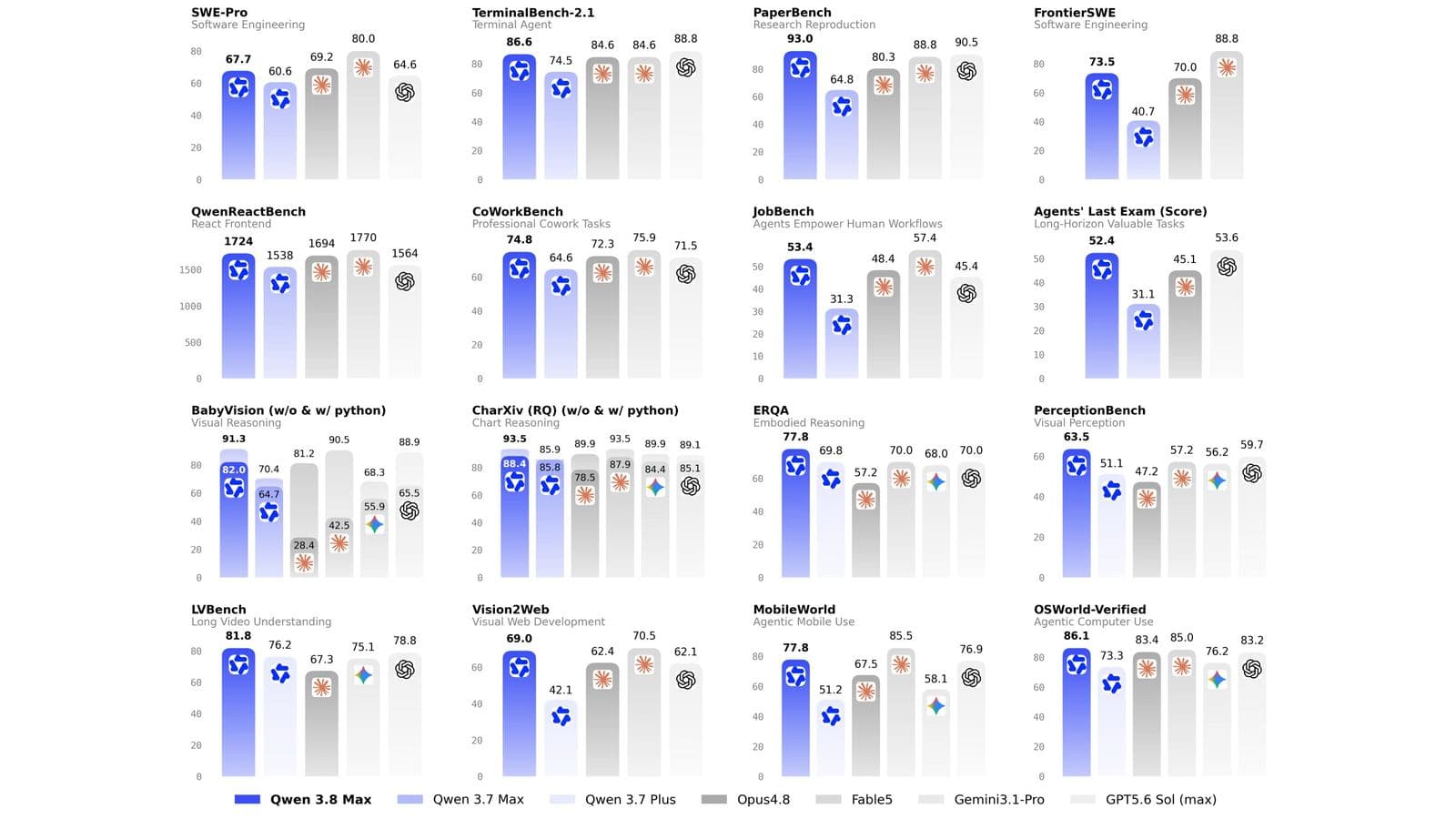
A smaller open-weight Qwen3.8 model. Alibaba's August 17, 2026 post says it is a native multimodal dense model that can run on consumer hardware, with a 262K context window that extends to 1 million tokens, under the Apache 2.0 license. Alibaba said it matched Qwen3.7-Plus, an MoE model it described as ten times the size.
Qwen
Alibaba's flagship Qwen model announced August 3, 2026. It has 2.4 trillion parameters, 95 billion active, and a context window of up to 1 million tokens, using a sparse mixture-of-experts design. It was offered first as an API on Alibaba Cloud Model Studio. Weights were later released as Qwen3.8-2.4T-A95B. Wikipedia says that larger release is not on the same Apache 2.0 terms as the 27B model.
xAI
The Memphis-area AI training complex built in 122 days in 2024, now ~555,000 Nvidia GPUs (H100/H200/GB200) across Colossus 1 and the gigawatt-class Colossus 2, targeting 1M+ GPUs and ~2 GW - with a third facility, Colossus 3 ('MACROHARDRR' in Southaven, Mississippi, a $20B+ investment), under construction. xAI trains Grok 5 on Colossus 2 while leasing Colossus 1 to Anthropic and capacity to Google - though its temporary gas turbines are the subject of an NAACP emissions lawsuit and a DOJ national-security intervention.
xAI
The AI-powered code editor and coding-agent platform built by Anysphere, acquired by SpaceX for $60B in an all-stock deal that closed August 14, 2026 and folded into the SpaceXAI division. Serves 50,000+ businesses (including 64% of the Fortune 500) at roughly $3B in annualized revenue, now running on SpaceX's GPU fleet including Colossus, and feeding coding data into Grok's training pipeline.
xAI
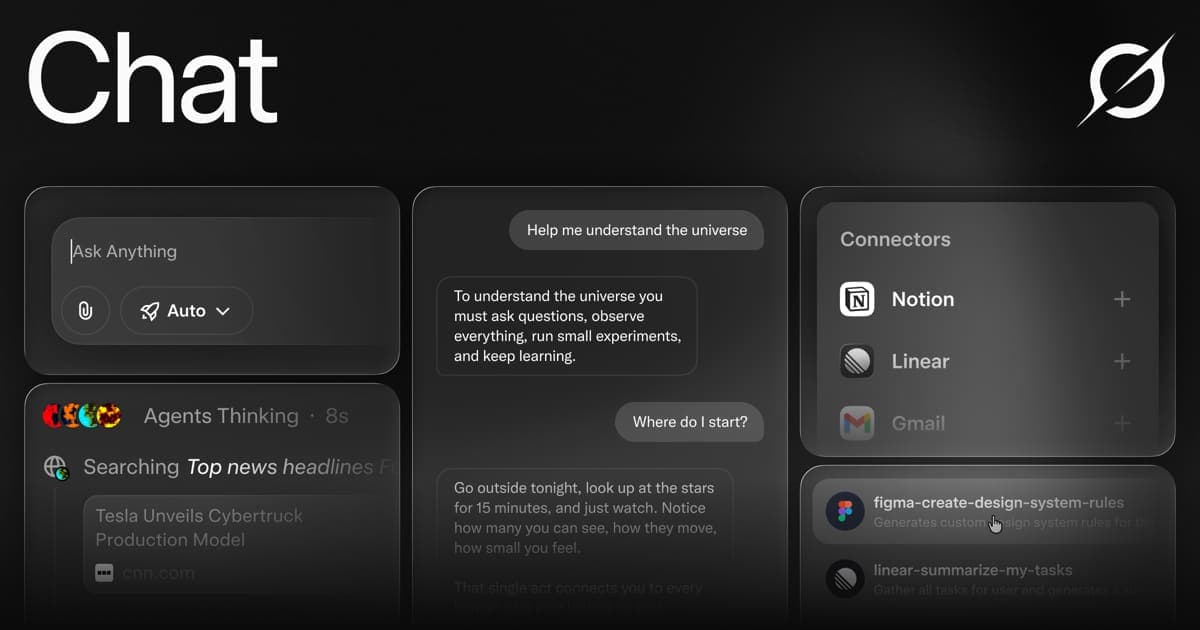
Grok's consumer surface: the grok.com site and iOS/Android apps, deep integration into the X platform for its ~600M monthly users, and in-vehicle Grok voice assistant in Tesla cars - a distribution moat no rival lab has.
xAI
A suite of Grok frontier models and tooling (Deep Search, Tool Use) packaged for US national-security, federal, state and local customers - spanning a DoD contract, GSA-wide availability, and embedding in the Pentagon's internal GenAI.mil platform at Impact Level 5.

xAI
xAI's image-and-video generation product, built into the Grok apps and API. Grok Imagine Video 1.5 launched May-June 2026 and topped the Image-to-Video Arena leaderboard on release; Musk declared the product 'done' on July 5, 2026, and a July 31 update added native 1080p output, voice/face-consistent references and up to seven-image multi-reference scene control. On August 7, 2026 xAI shipped Grok Imagine Image 2.0, rebuilding the image side around editing tools - a region-specific magic wand, precise segmentation, background removal, and multi-reference editing accepting up to five input images per generation.

xAI
xAI's frontier LLM line. Grok 4.7 is SpaceXAI's most capable model for coding and knowledge work, using a larger base than Grok 4.6 with a longer reinforcement-learning run on multi-hour tasks; Grok 4.6 (August 12, 2026) remains the prior flagship; Grok 4.1 Fast offers a 2M-token context window for agentic tool use.
Zhipu AI (Z.ai)
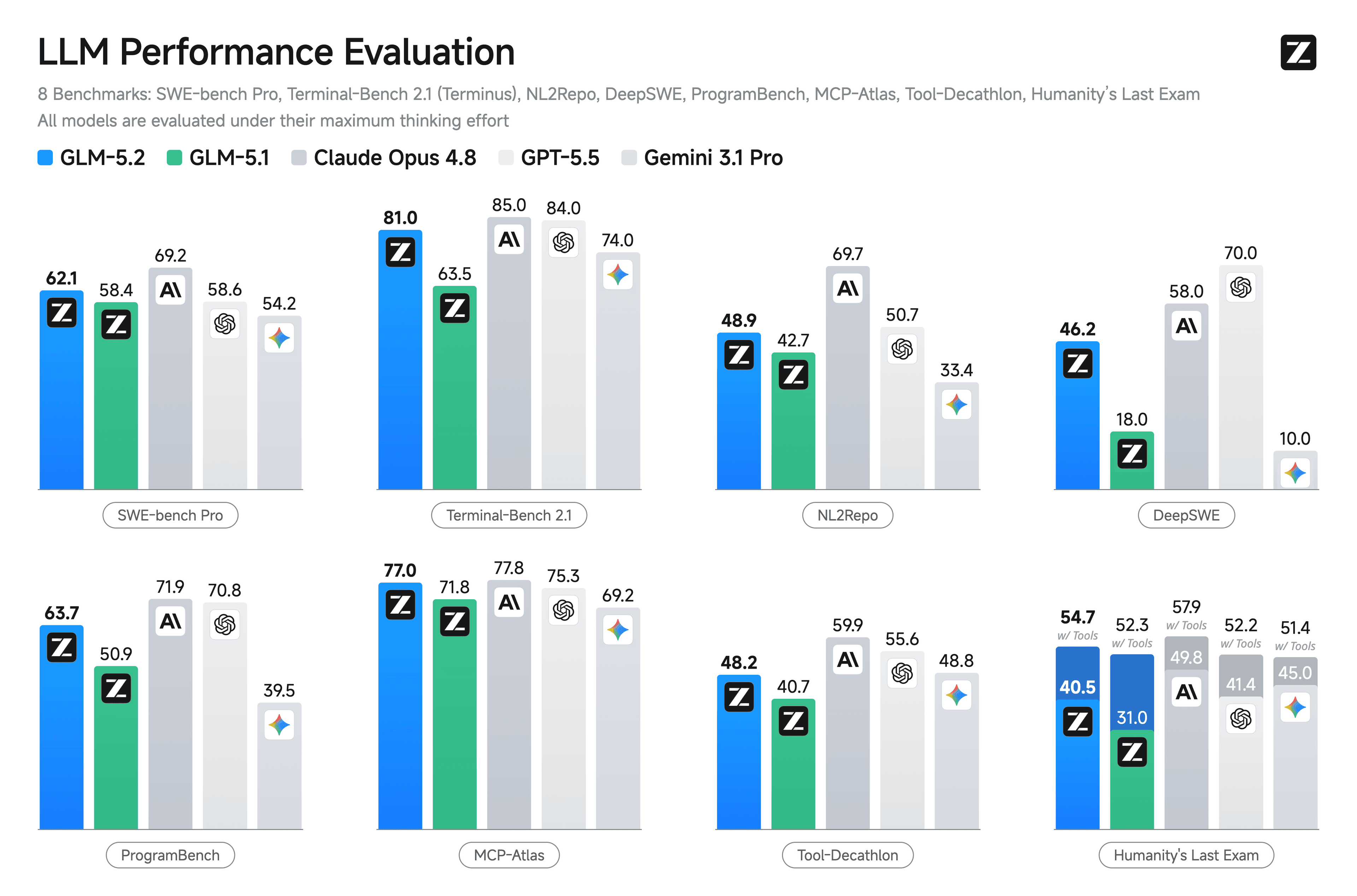
Zhipu's agentic product line: AutoGLM operates phones and the web on a user's behalf (AutoGLM-Thinking reasons and acts concurrently), while ZCode - launched July 2, 2026 - is a coding-agent harness for GLM-5.2 aimed squarely at Anthropic's Claude Code, seeded with free-token promotions.
Zhipu AI (Z.ai)
Zhipu's frontier line, designed for Agentic, Reasoning, Coding workloads. GLM-5.3 (August 14, 2026) is an extended post-training pass on the same ~743B-parameter mixture-of-experts base as GLM-5.2; Hugging Face lists the published weights at 753B total parameters under a custom GLM-5.3 License. GLM-5.3-Flash (August 26) is a 320B/18B natively multimodal MIT-licensed sibling served on domestic-chip clusters.
Zhipu AI (Z.ai)
Zhipu's consumer chatbot, served as ChatGLM in China and chat.z.ai internationally, running the GLM-5 family with vision, image/video generation (Ying) and agent features.
Axiom Space
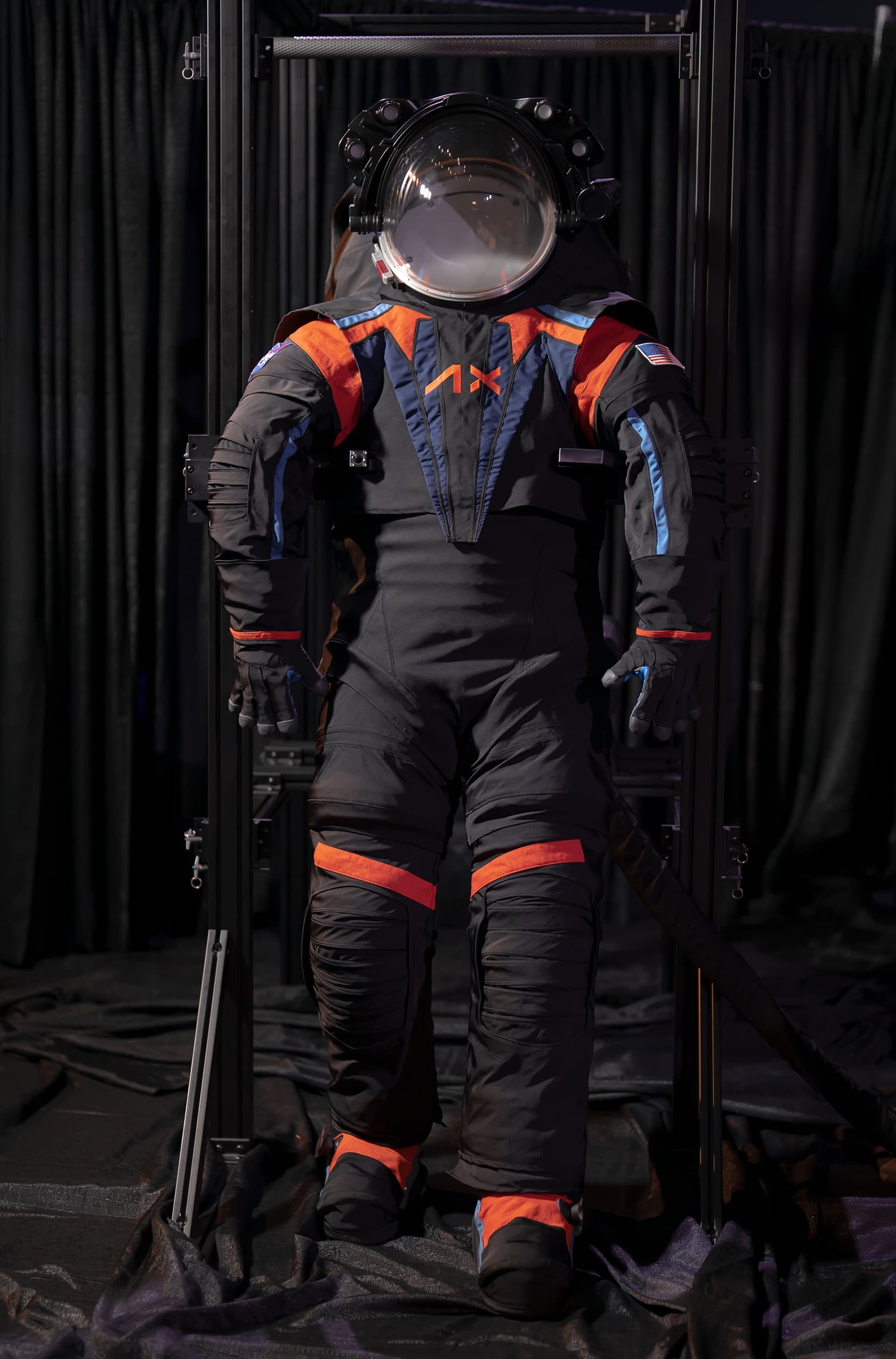
Next-generation extravehicular mobility unit evolved from NASA's xEMU design, built for the Artemis IV crewed lunar landing (targeted early 2028) after NASA's early-2026 Artemis restructuring turned Artemis III into a non-landing rendezvous and docking test flight - supporting at least two-hour EVAs at the lunar south pole and in permanently shadowed regions - with redundant life support, improved mobility joints, and broad crew sizing. Prada co-developed the outer layer (2024) and the liquid cooling and ventilation inner garment (unveiled June 2026).
Axiom Space
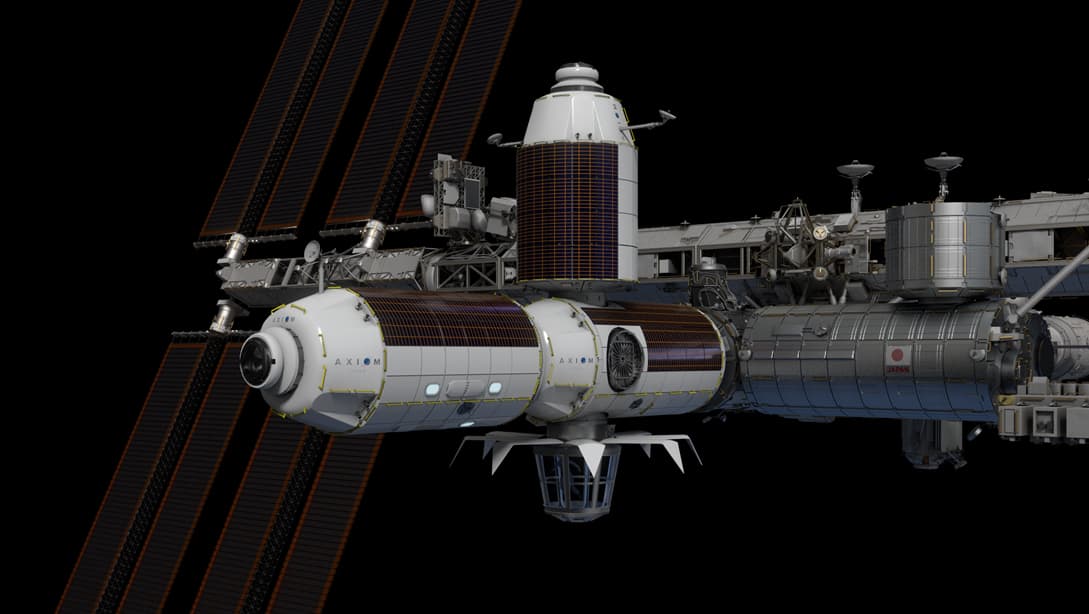
Commercial successor to the ISS, assembled in stages: a Payload Power Thermal Module (PPTM) berths to the ISS first (early 2028), then detaches to join the Hab-1 habitat as a free-flying station within months, later expanded with an airlock, Hab-2, and a Research & Manufacturing Facility with a windowed Earth observatory. Primary structures are in fabrication at Thales Alenia Space, with final assembly at Axiom's Houston Spaceport facility.
Axiom Space
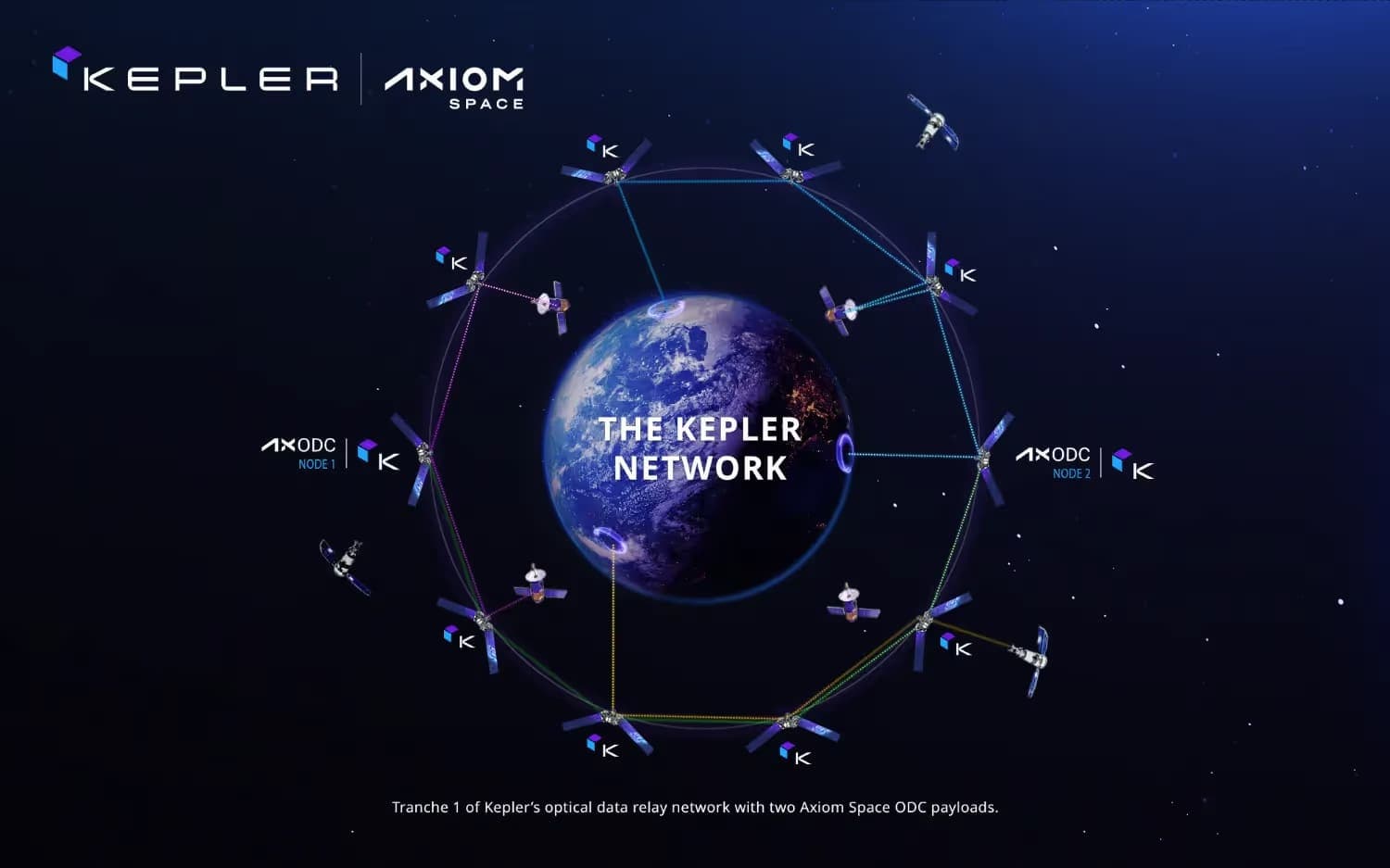
Space-based cloud computing nodes providing secure data storage, processing, and AI/ML directly to satellites and spacecraft on orbit, independent of ground infrastructure. The first two nodes launched January 11, 2026 aboard Kepler Communications' optical relay constellation, with 2.5 Gbps SDA-compatible optical links, options for additional Kepler payloads, and a roadmap from kilowatts toward megawatts of on-orbit compute. A third node (AxODC Node ISS), developed with Spacebilt and supported by Skyloom, Phison, and Microchip, is planned aboard the ISS itself in 2027, and Axiom is evaluating a role for the network in the Pentagon's proposed Golden Dome missile-defense architecture.
Axiom Space
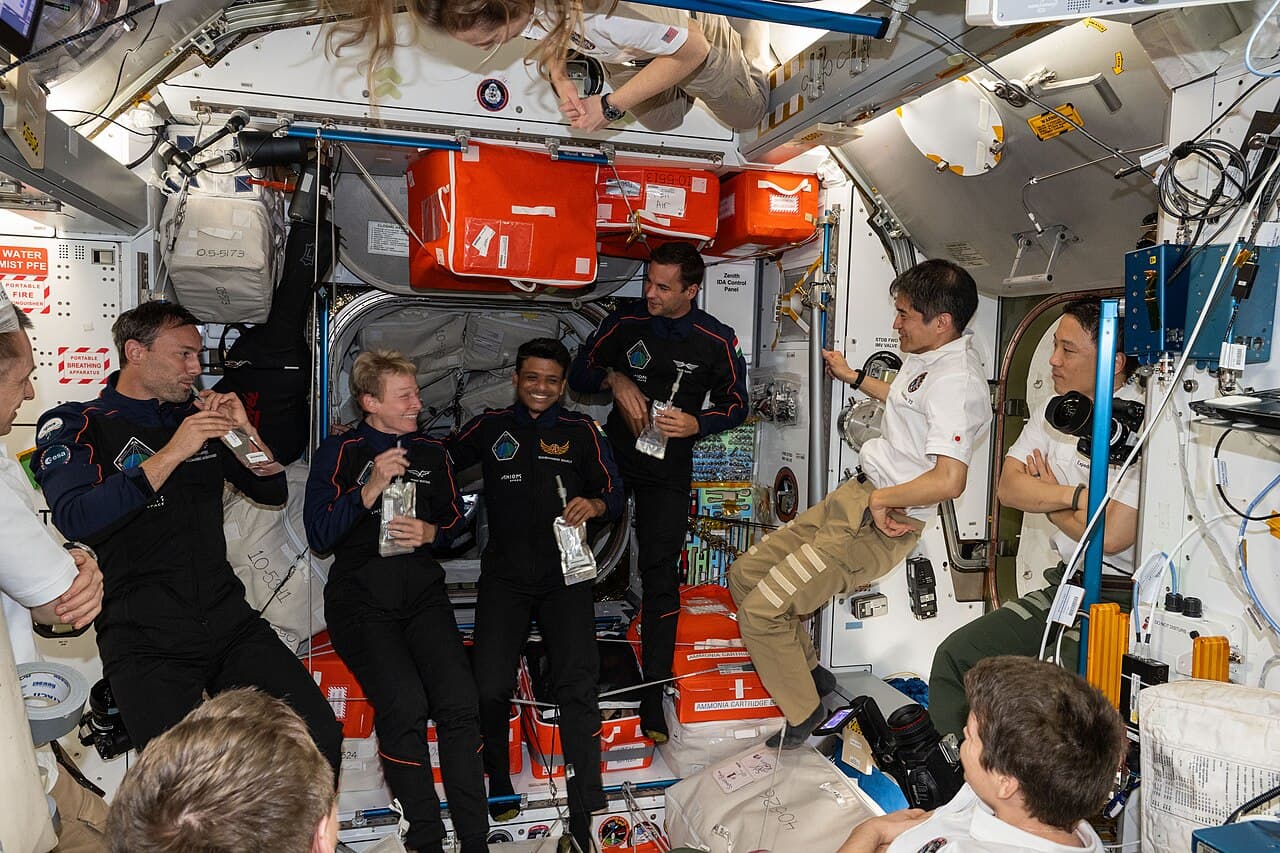
End-to-end crewed missions to the ISS on SpaceX Crew Dragon - crew selection, training, mission management, and research integration - sold to individuals and, increasingly, national governments. Four missions flown (Ax-1 April 2022, Ax-2 May 2023, Ax-3 January 2024, Ax-4 June 2025) carrying 16 astronauts, including the first government astronauts from Saudi Arabia, Turkey, India, Poland, and Hungary in decades.
Sierra Space
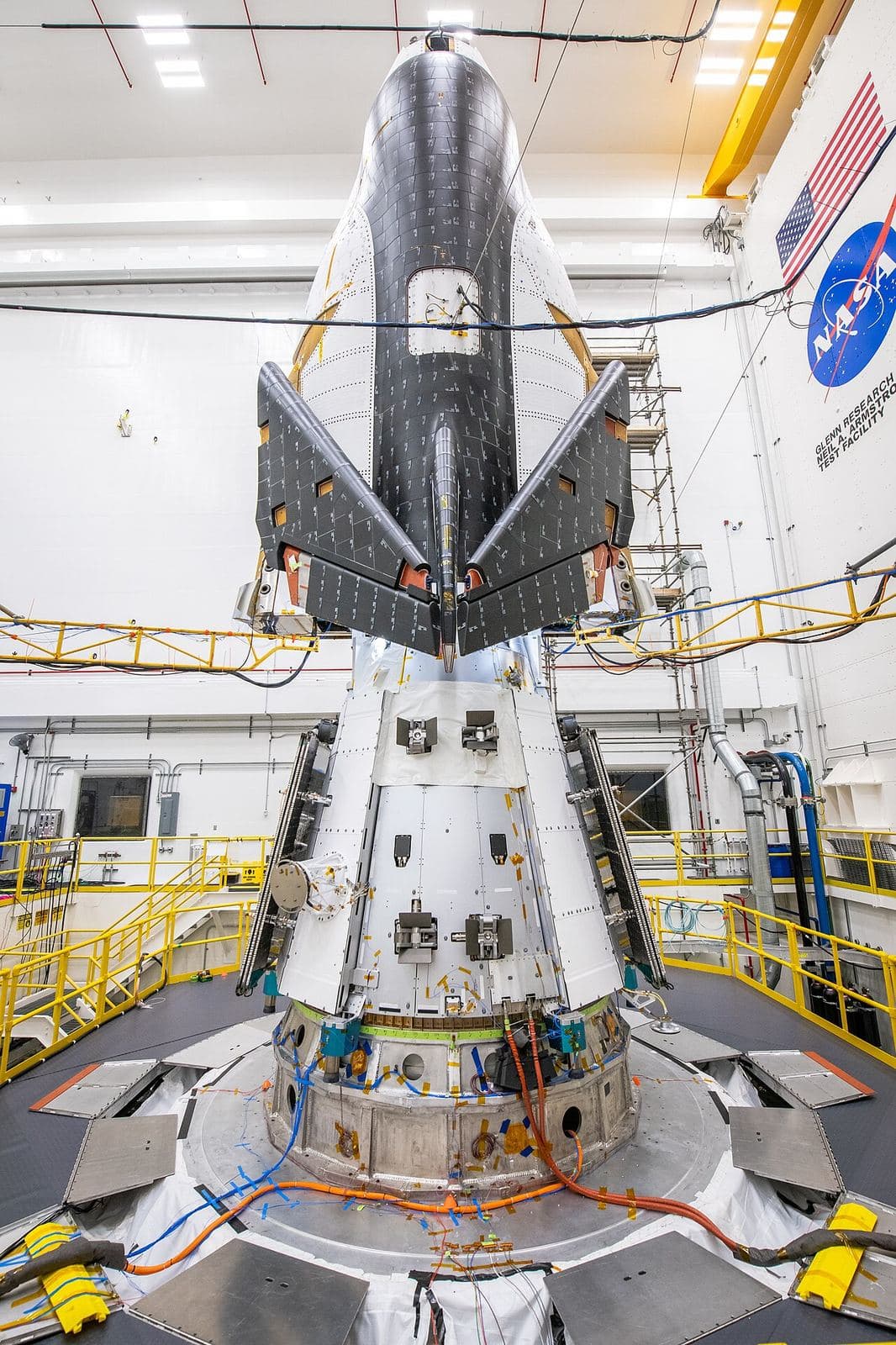
A reusable lifting-body spaceplane that launches vertically (Vulcan Centaur, folding wings inside a 5 m fairing) and lands on a conventional runway at less than 1.5 g. The cargo configuration can carry 5,000 kg pressurized and 500 kg unpressurized, with an expendable Shooting Star module adding cargo, power, and disposal. First vehicle Tenacity is planned for a late-2026 free-flyer from Kennedy to Vandenberg rather than an ISS docking. A crewed version remains a later product.
Sierra Space
A three-class satellite bus line - Horizon (proliferated LEO, missile warning/tracking), Velocity (high-delta-V, RPOD, refuellable), and Titan - used as the production chassis for Sierra's SDA Tracking Layer work. Horizon is the bus for both the 18 Tranche 2 vehicles (structures complete) and the 18 AMDT3 Golden Dome satellites.
Sierra Space
A deployable-decelerator reentry vehicle for returning cargo from orbit, or from high altitude, to a precise landing site. Sierra pitches it as a pre-staged orbital supply node with a five-year on-orbit life and a 90-minute delivery to anywhere on Earth. Unveiled in April 2024. In May 2026 two Ghost vehicles were dropped from 35,000 ft and 68,500 ft at Dugway during U.S. Space Command's Apollo Nexus exercise, recovering a software-defined radio and liquid cargo. AFRL's REGAL study, awarded October 2024, is meant to scale the 150 kg payload class toward 5-10 tonnes.
Sierra Space
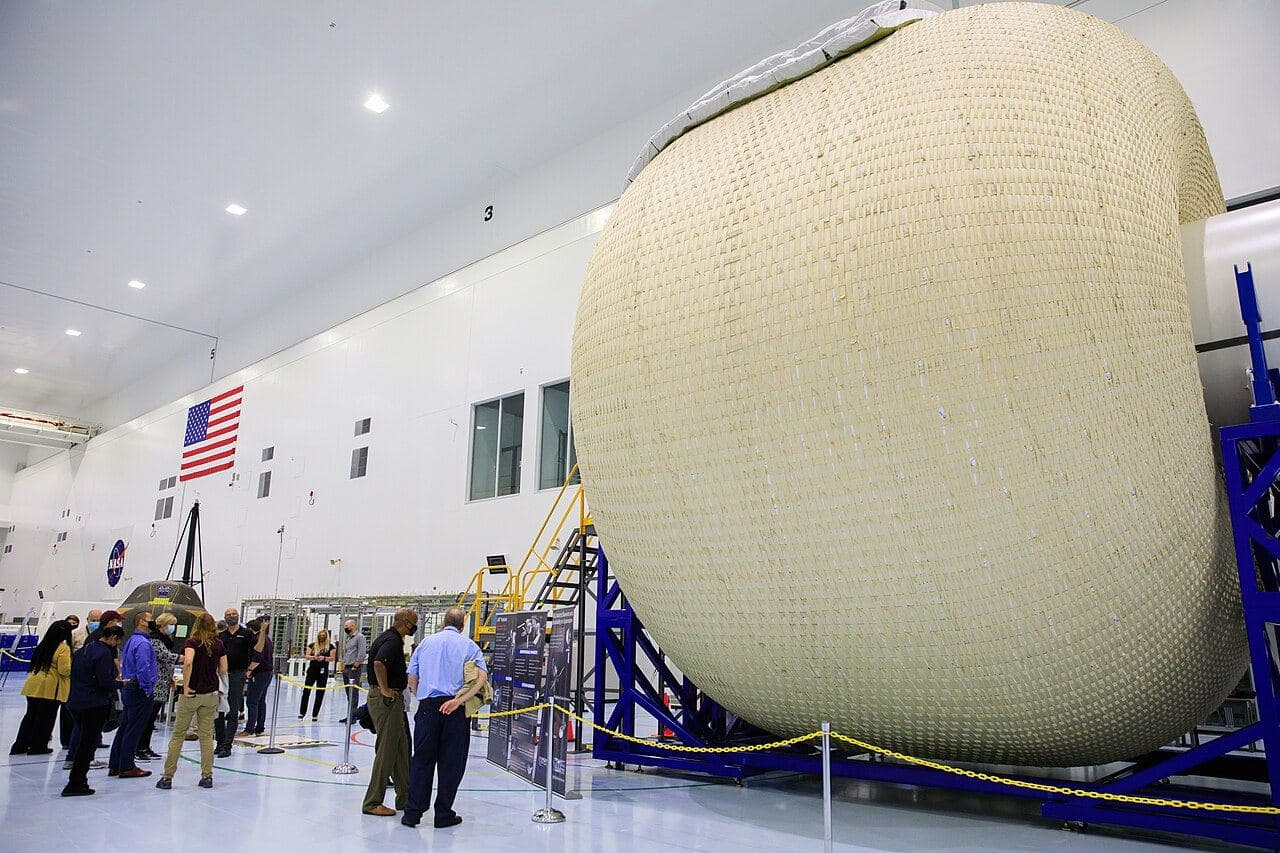
Large Integrated Flexible Environment, an inflatable softgoods habitat that launches packed in a 5 m fairing and inflates on orbit to a three-story, ~285 m3 pressurized volume - about one-third of the ISS in a single launch. Built from high-strength webbings and fabric with an air barrier, restraint layer, and MMOD/MLI blanket. Full-scale ultimate burst-pressure tests at NASA Marshall in 2023-2024 are the main structural qualification evidence. LIFE is Sierra's habitation contribution to Orbital Reef and is also offered as a standalone module family (including smaller LIFE 10 configurations).
Sierra Space
Commercial mixed-use station in LEO co-led with Blue Origin, with Boeing, Redwire, and others as partners. Sierra provides LIFE habitats, node modules, and Dream Chaser transport; Blue Origin provides core infrastructure, power/thermal mast, and New Glenn launch. It is the slowest of the four major US commercial-station architectures and is Blue Origin/Sierra's bid for NASA's Commercial LEO Destinations Phase 2 award.
The Exploration Company
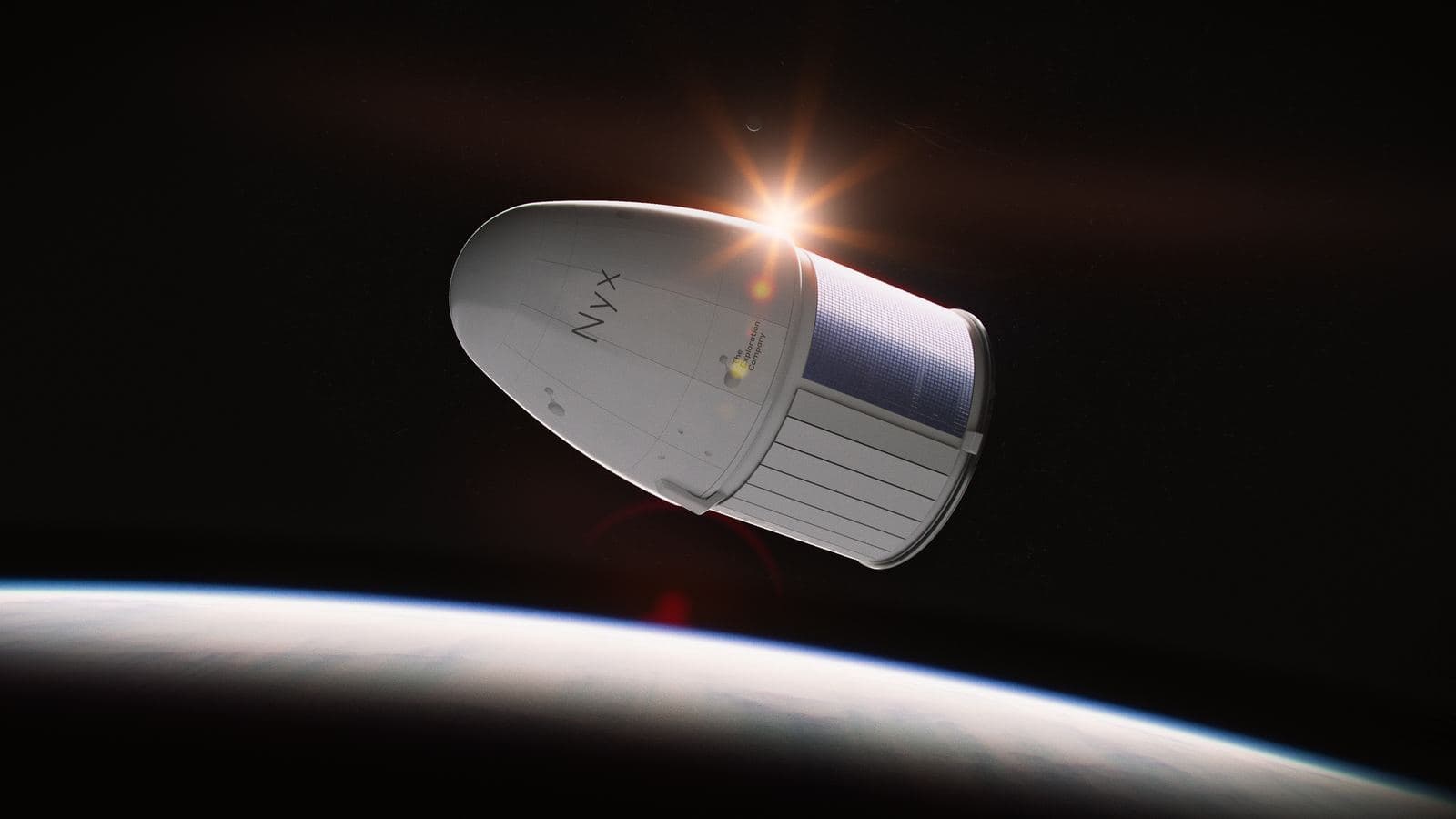
A reusable, launcher-agnostic cargo capsule designed to dock with the ISS and future commercial stations and return cargo to Earth. The Nyx Earth stack is a conical capsule plus cylindrical service module, about 4 m in diameter and 7 m tall with a total mass of 8 tonnes, able to carry several tonnes to LEO and return up to 3,000 kg. Company pages say it is reusable for up to 10 missions. A crewed version for 4-5 people is described as a mid-2030s follow-on. The first full-scale flight is the ESA ALADDIN ISS cargo demonstration on Ariane 6, company-targeted for 2028, with ISS docking reported no later than Q2 2029.

The Exploration Company
A proposed cylindrical lunar cargo lander, without the Nyx Earth reentry capsule, intended to deliver cargo to the lunar surface using TEC's GOX/GCH4 Breeze thrusters and the 15 kN methalox Huracan engine. Breeze was test-fired in July 2025; Huracan completed a first prototype hot-fire campaign in May 2026. Maiden flight had been discussed for 2028 in older materials; it remains a later-stage product behind Nyx Earth.
The Exploration Company
An in-orbit servicing spacecraft designed to dock with and refuel satellites, supported by ESA's In-Space Proof-of-Concepts (InSPoC) effort inside the Future Launchers Preparatory Programme. First launch has been discussed for 2028.
The Exploration Company
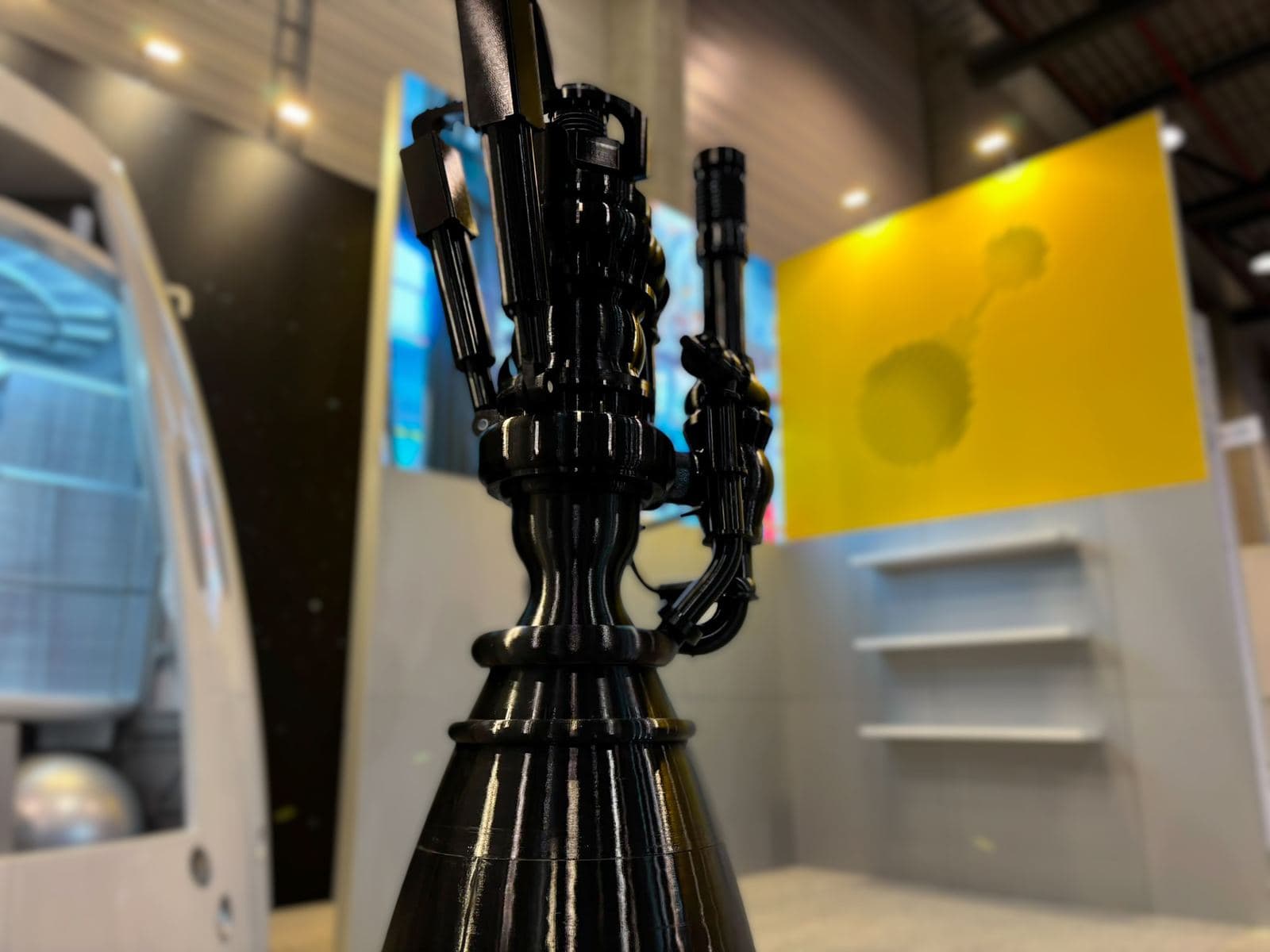
TEC's reusable high-thrust rocket engine program, using a full-flow staged-combustion cycle on liquid oxygen and biomethane. Designed for up to 180 tonnes of sea-level thrust and intended as the propulsion foundation for a future European reusable heavy launcher (the company briefly showed a nine-engine Yrene concept in 2026, then described it as long-term). Hardware work covers turbomachinery, preburners, and additive manufacturing, with subscale tests at DLR Lampoldshausen under ESA's THRUST! framework.
Vast
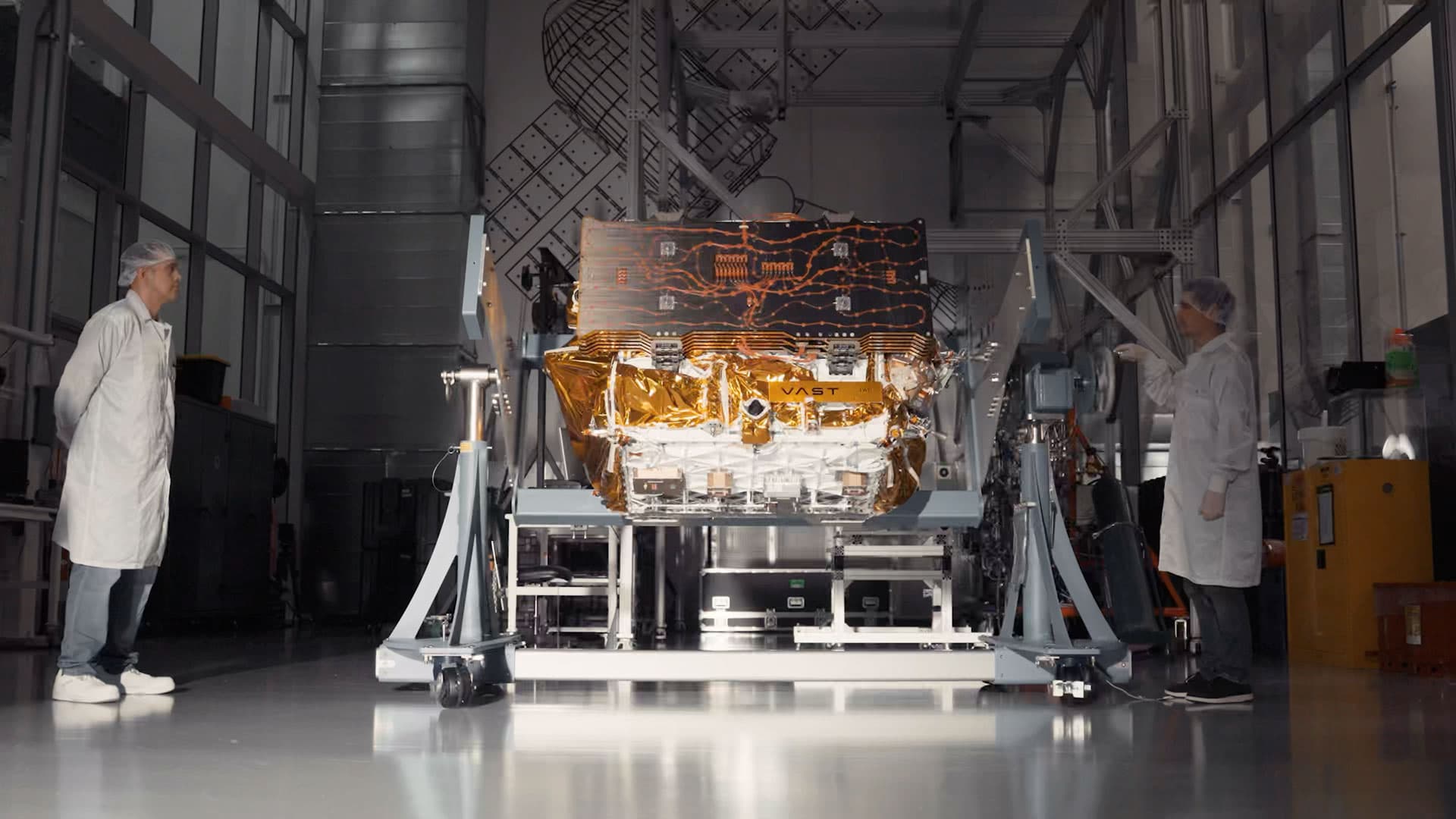
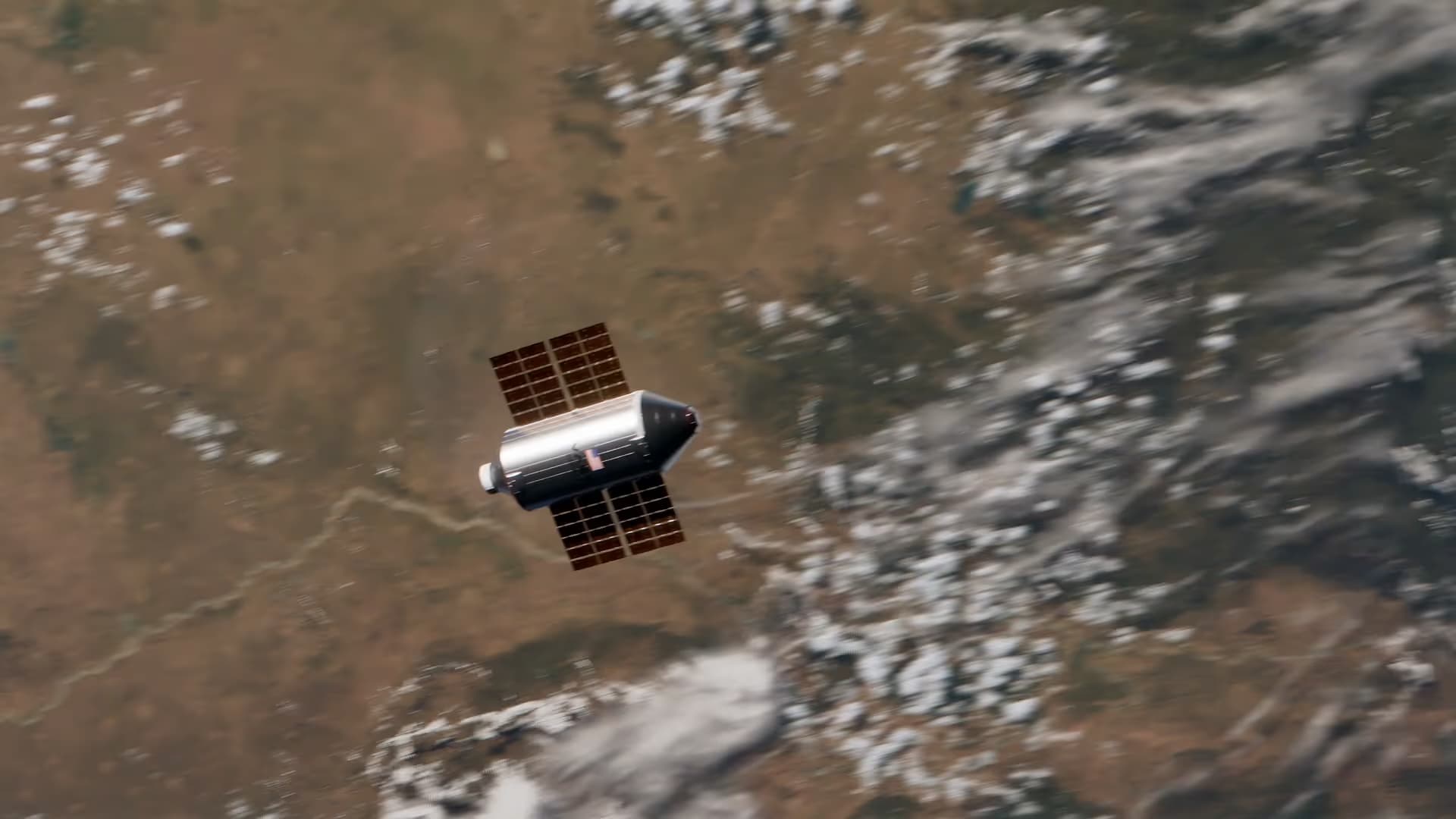
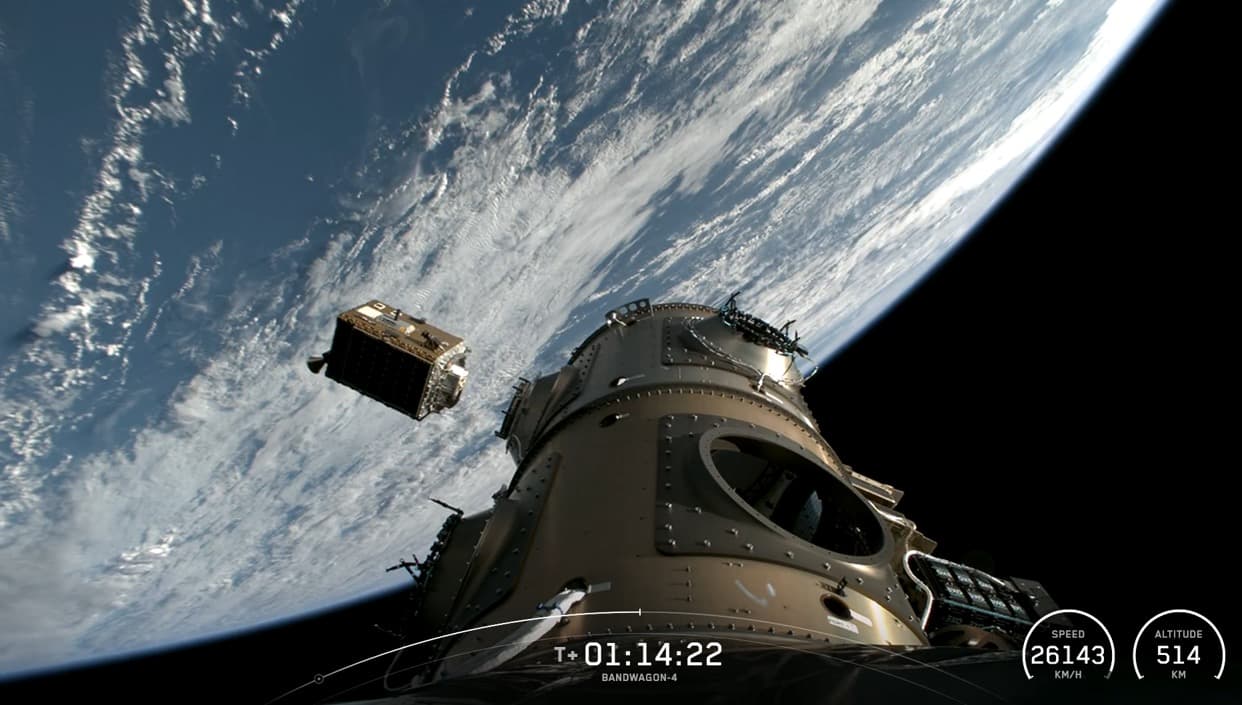
A 552 kg testbed satellite that flew Haven-1's non-human-rated systems in orbit before the station's launch. Launched November 2, 2025 on SpaceX's Bandwagon-4 rideshare to a 510 km orbit, it completed 49 test objectives - validating GNC, avionics, power, solar arrays, thermal control, propulsion, RF communications, and radiation mitigation - and ended with a controlled deorbit burn on February 4, 2026.
Vast
A single-module commercial space station scheduled to become the world's first, launching complete on a SpaceX Falcon 9 to a 425 km, 51.6° orbit. It hosts four astronauts for roughly two-week Dragon missions, with private crew quarters, a 1.1 m domed window, Starlink laser connectivity, and the Haven-1 Lab microgravity research facility. The flight structure has passed beyond-nominal pressure testing and is in final integration for launch readiness in Q1 2027, followed by an uncrewed Dragon docking verification before the first crew.
Vast
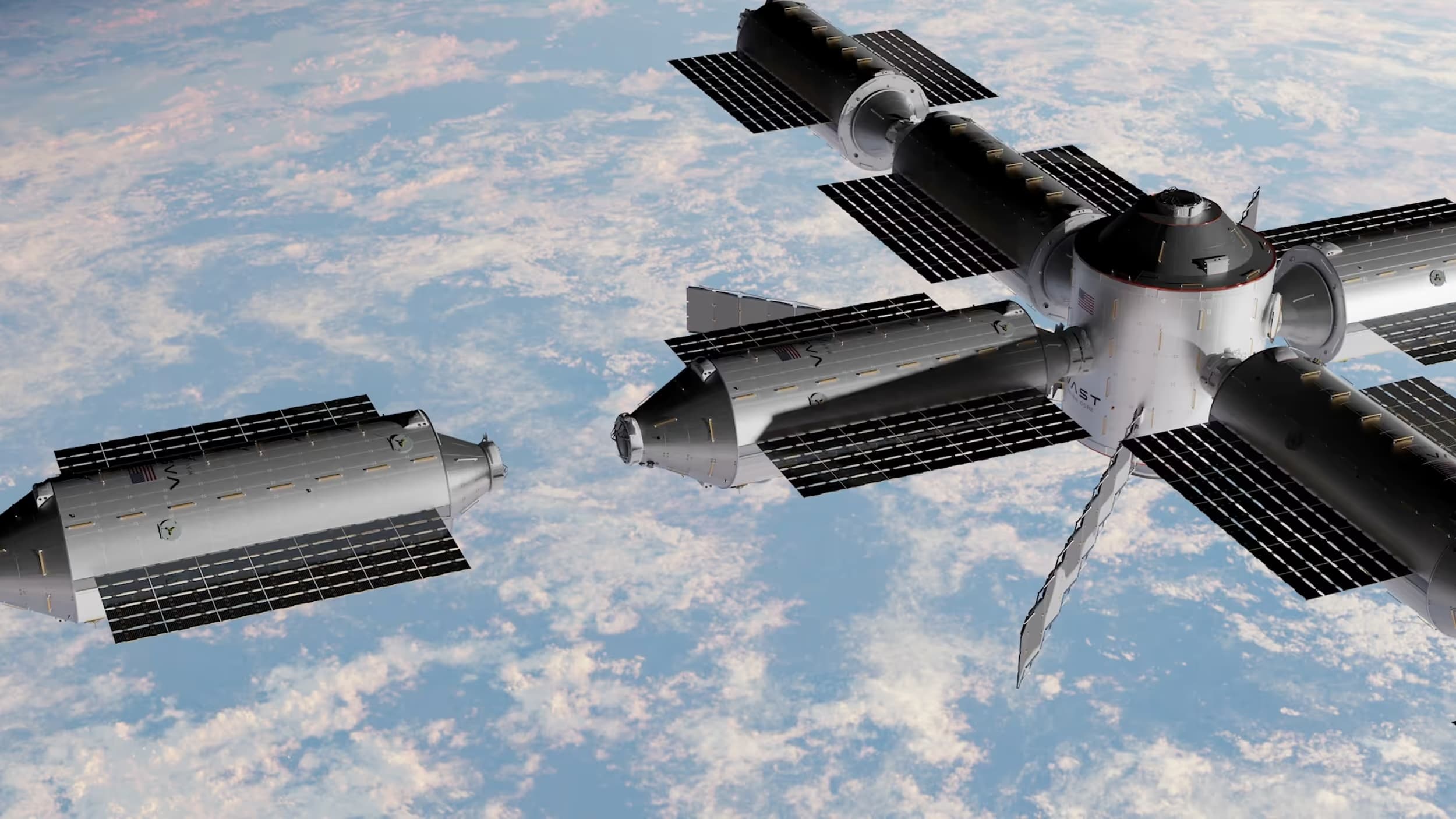
Vast's proposed successor to the International Space Station and its bid for NASA's CLD Phase 2 competition. Modules launch on Falcon Heavy roughly every six months starting in 2028, building from a single NASA-certifiable 16 m module to a nine-module station by 2032 with 12 crew, a 3.8 m cupola, EVA airlock, external payload facilities, and Starlink laser terminals. Unlike Haven-1's 160 crew-days of consumables, each Haven-2 module supports 720 crew-days and cargo resupply.
Vast
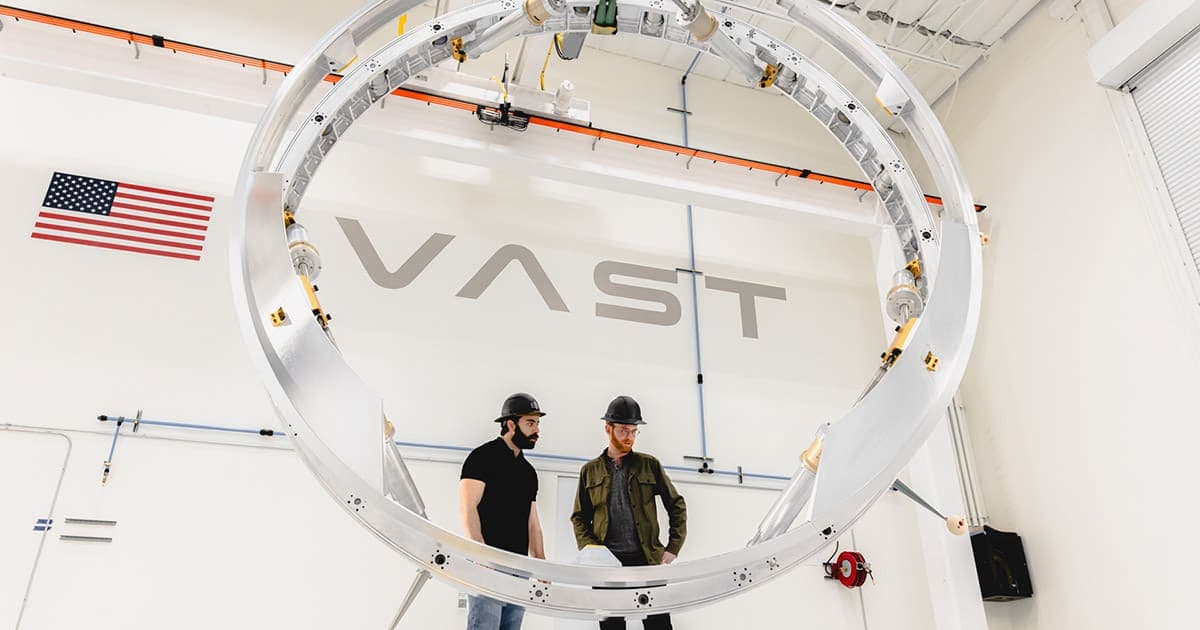
A docking interface for large space station modules and spacecraft, unveiled April 15, 2026 at the Space Symposium, with a 2.9 m pressurized opening (roughly 3x the International Docking Adapter's diameter, ~6.6 m² of area) and a structure up to 30 times more rigid than the IDA - intended for future large modules and vehicles like Starship, not for Haven-1 or Haven-2. Vast plans to sell the adapter commercially while publishing its interface as an open, non-proprietary standard for space agencies and other manufacturers to build compatible hardware against; a design user guide became available May 4, 2026.
Vast
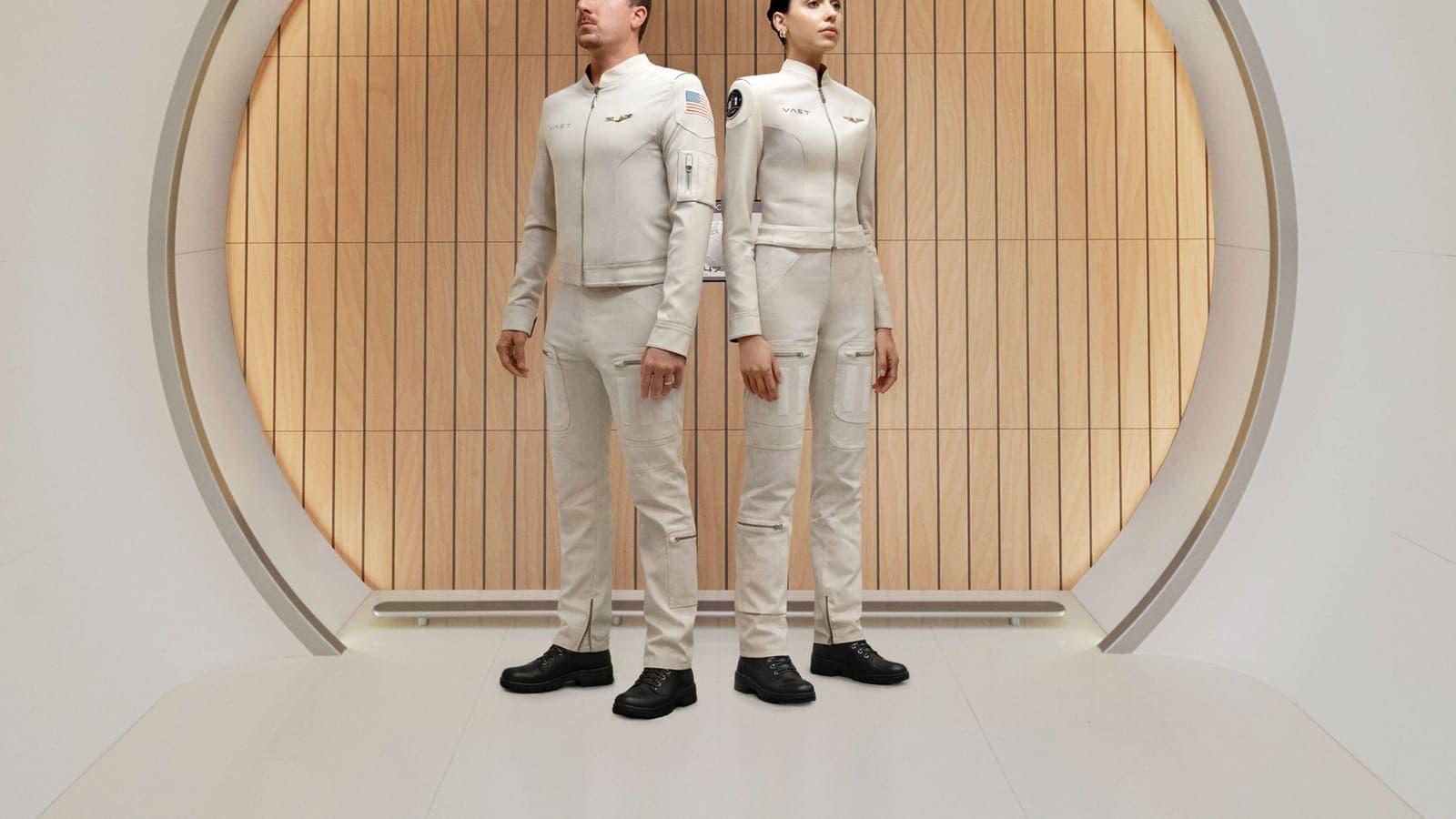
An intravehicular flight suit for crew aboard Haven-1 and NASA private astronaut missions, unveiled April 13, 2026 at the 41st Space Symposium and developed in partnership with Vast lead astronaut Drew Feustel. Custom-tailored per crew member, it is configurable as a single-piece or two-piece outfit (jacket zips from trousers) with pockets and hook-and-loop fasteners for securing tools and personal items in microgravity, prioritizing mobility, comfort, and on-orbit functionality over launch/entry protection.
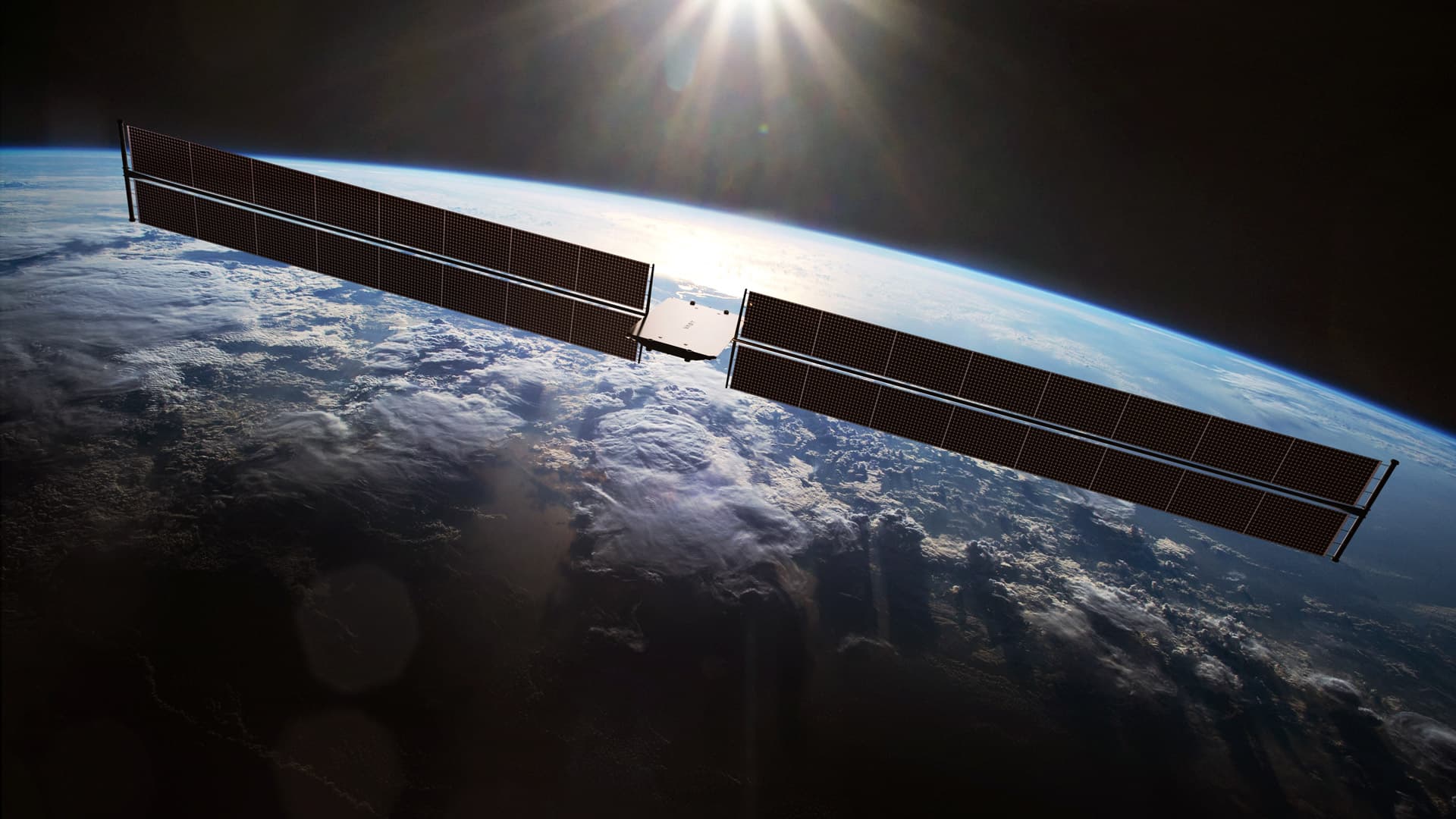
Vast
A high-power satellite bus line announced in May 2026, leveraging avionics, power systems, and flight software proven on Haven Demo. The inaugural 15 kW-class platform (700 kg dry mass, 350+ kg payload, 20+ kW peak payload power, 5-year design life, 350–1,200 km LEO) targets communications, Earth observation, national security, and orbital data-center constellations. A confidential first customer ordered 4 satellites with options for up to 200 more.
Voyager Technologies
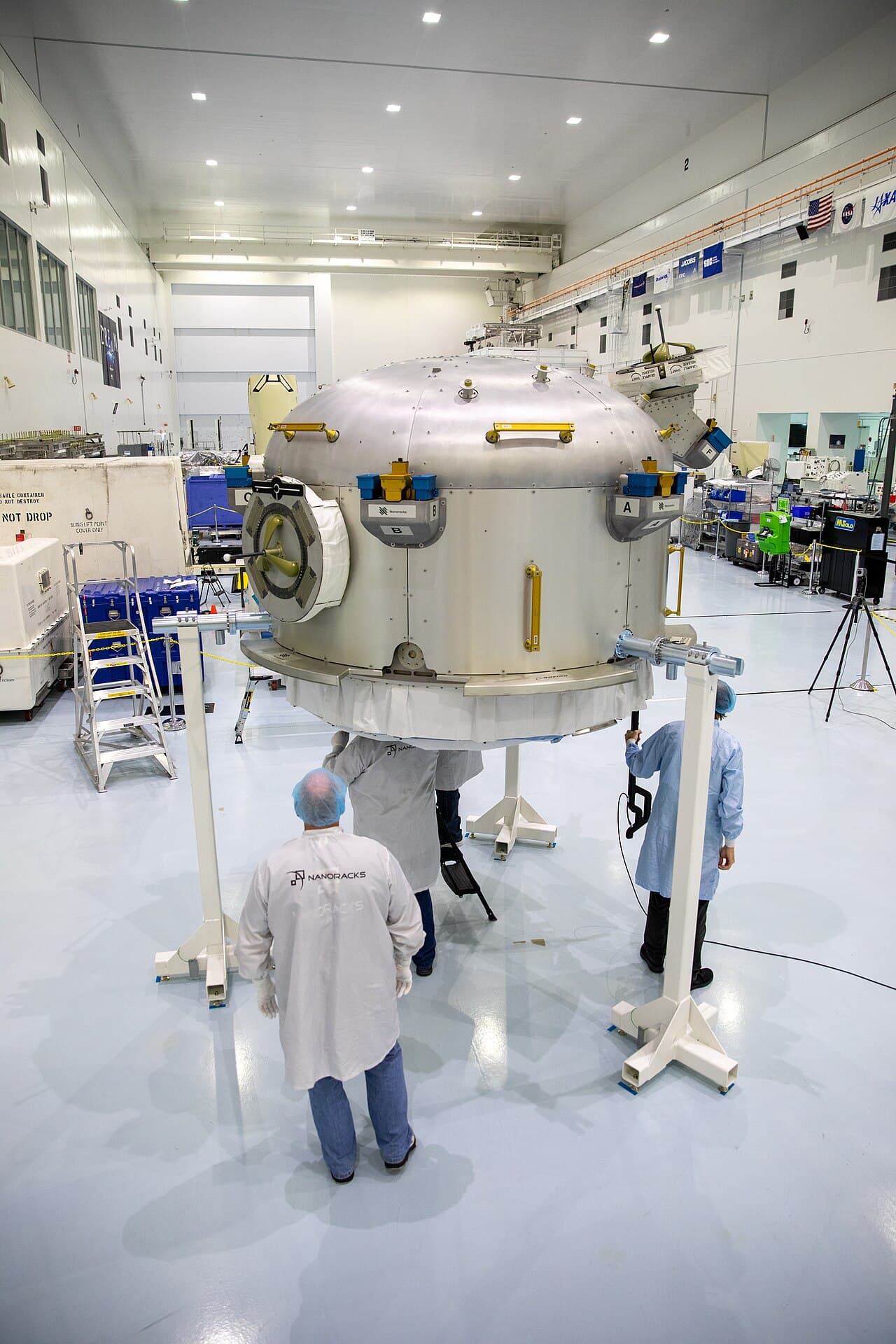
The first and only permanent commercially owned module on the International Space Station, built by Nanoracks (now Voyager) with Thales Alenia Space and Boeing. The bell-shaped, ~4 m³ airlock - five times the capacity of the station's government airlock - deploys CubeSats and external payloads, hosts experiments and ejects trash, and has operated since its December 2020 arrival on SpaceX CRS-21.
Voyager Technologies
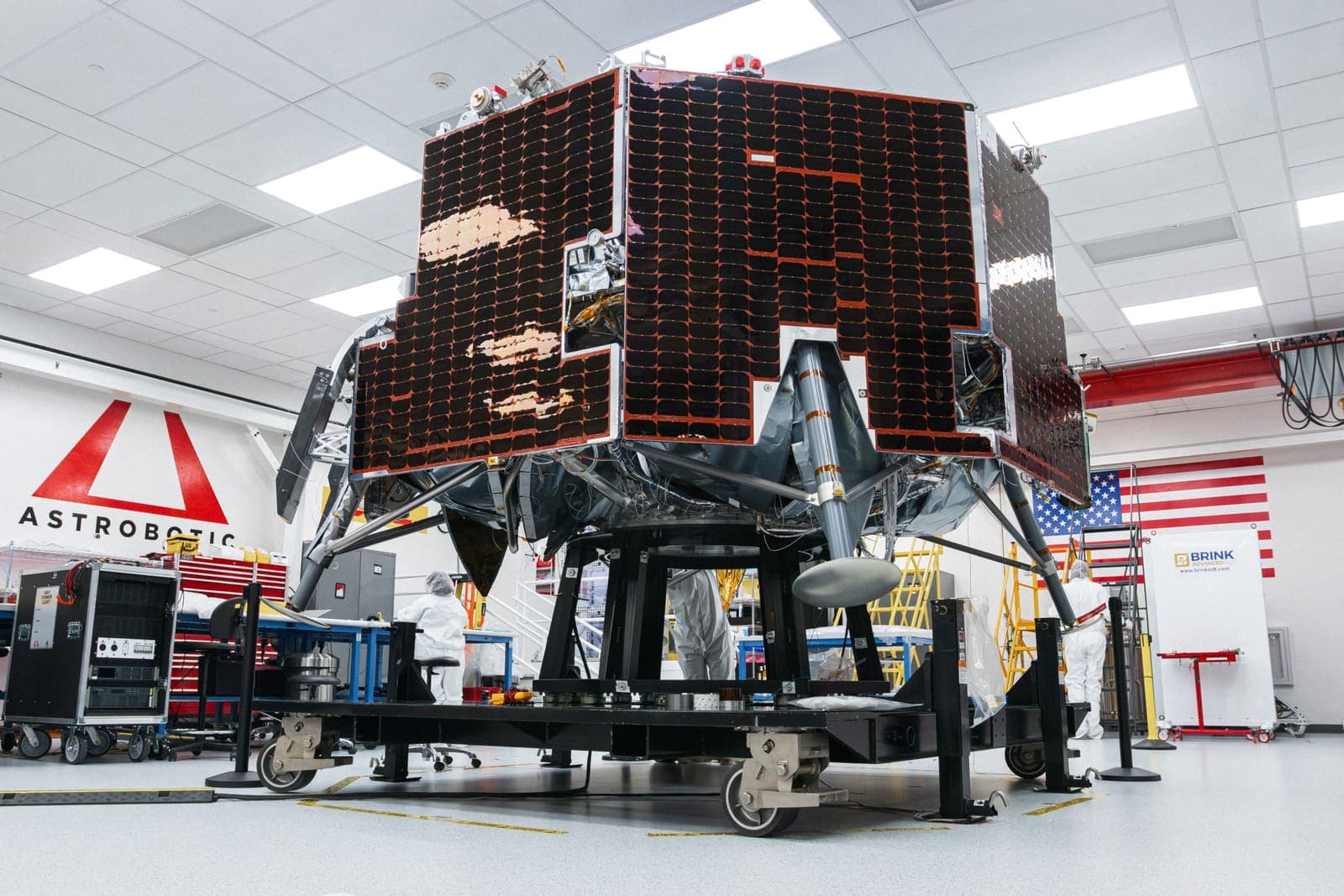
An infrastructure-class lunar lander acquired with the July 13, 2026 close of the Astrobotic acquisition, built for NASA's now-cancelled VIPER rover mission and repurposed as Griffin Mission One. Griffin-1 will carry 10 NASA, ESA and commercial payloads - including Venturi Astrolab's FLEX Lunar Innovation Platform (FLIP) rover - to the Nobile Crater region near Mons Mouton at the lunar south pole, delivering the largest commercial payload ever sent to the Moon and demonstrating Griffin's ability to carry Moon Base cargo such as rovers, science instruments and solar power plants.
Voyager Technologies
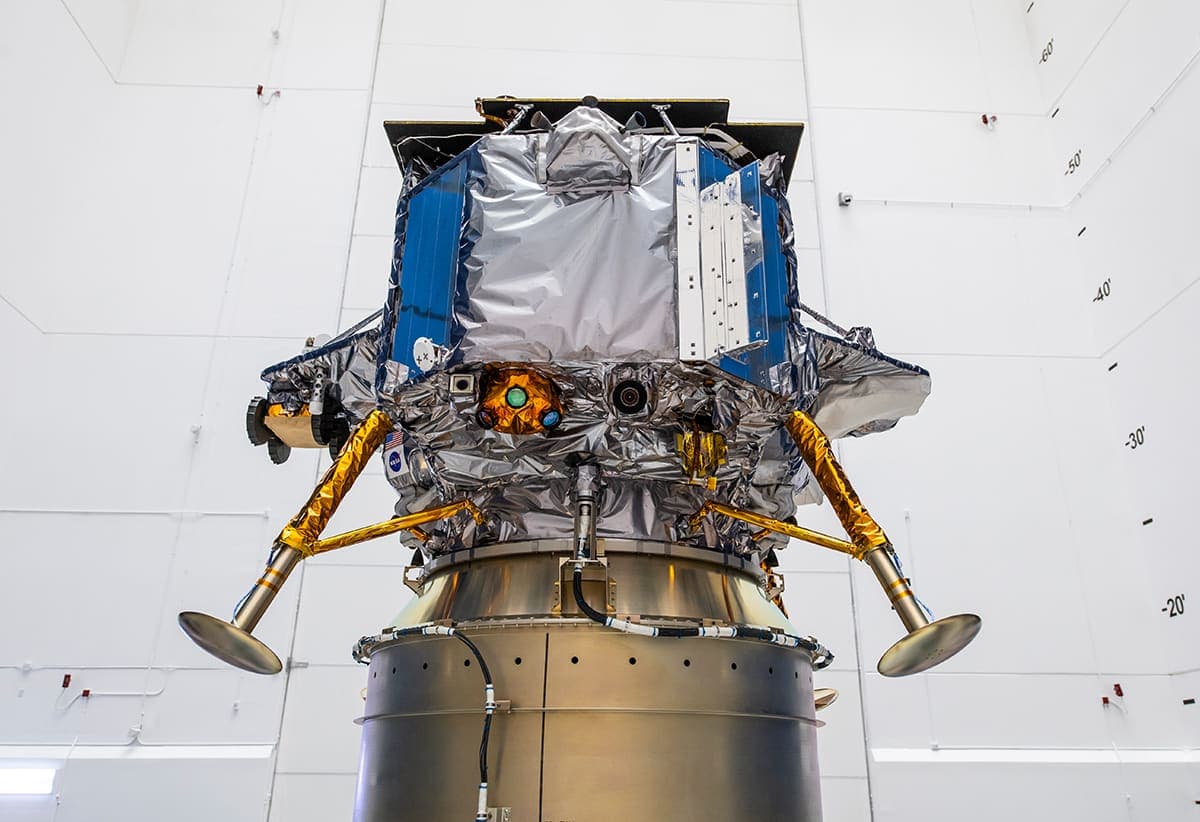
A commercial lunar lander acquired with the July 13, 2026 close of the Astrobotic acquisition, flying NASA payloads under the Commercial Lunar Payload Services program. Peregrine Mission One launched January 8, 2024 on the maiden flight of ULA's Vulcan Centaur, but a propellant-system valve failure caused a critical fuel leak shortly after separation; unable to attempt a soft landing, the spacecraft was directed to reenter and burn up in Earth's atmosphere on January 18, 2024. NASA's June 30, 2026 Moon Base awards fund two follow-on Peregrine landers - Peregrine-2 and Peregrine-3 - totaling $297.9M. Each is scheduled to launch in 2028 and deliver three NASA payloads (LETS radiation spectrometer, SCALPSS plume cameras, and a laser retroreflector array) plus leftover commercial capacity to a site near the Gruithuisen Domes.
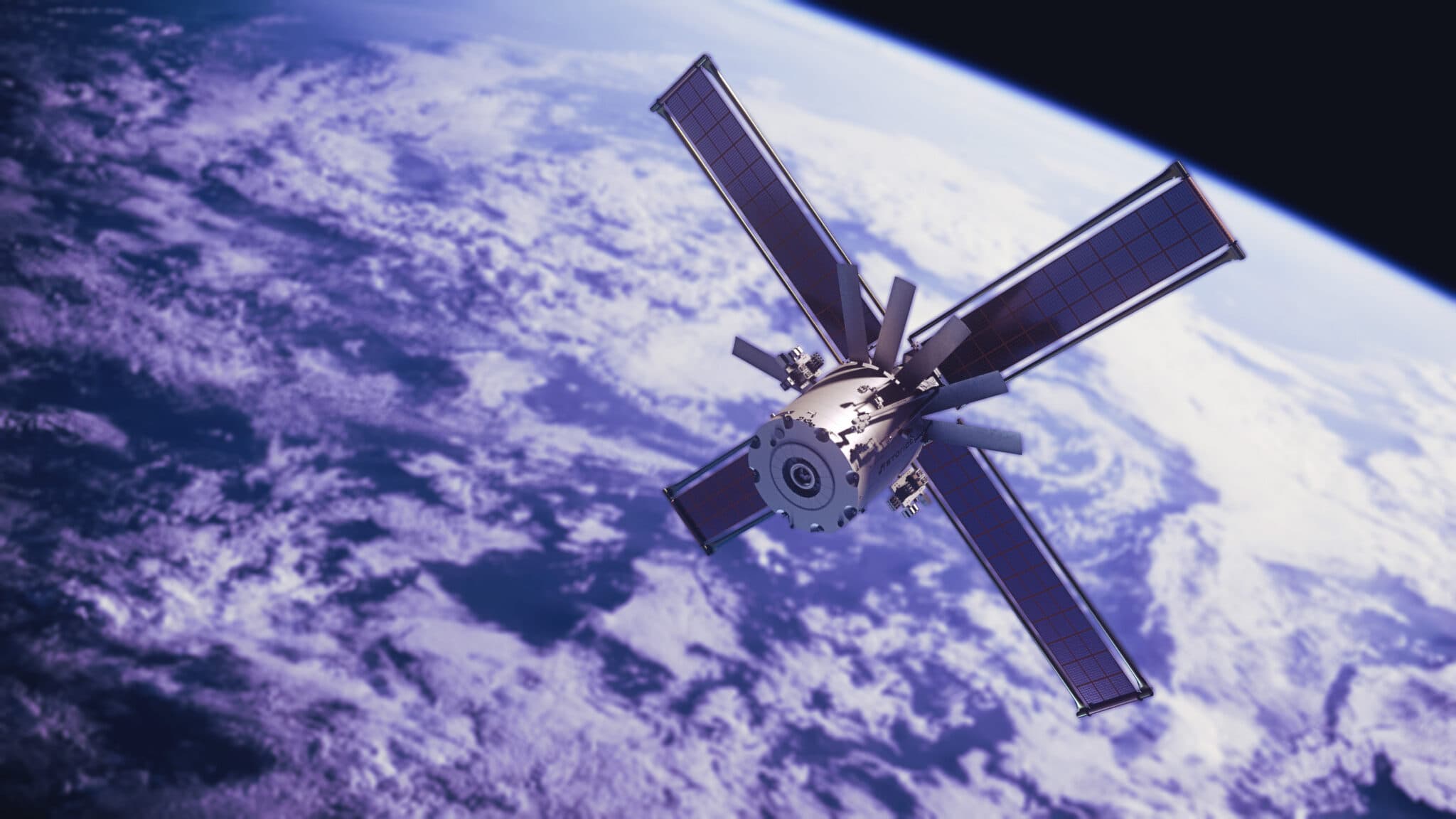
Voyager Technologies
Next-generation commercial space station developed by Starlab Space, the Voyager-led JV with Airbus, Mitsubishi Corporation and MDA Space. The ~8-meter-diameter, two-deck station launches complete in a single SpaceX Starship flight - no on-orbit assembly - and hosts a continuous crew of four with ISS-equivalent payload capability, an MDA SKYMAKER robotic arm, Palantir-built AI/data infrastructure and Hilton-designed crew quarters. Completed NASA Commercial Critical Design Review in February 2026; targeting a 2029 launch.
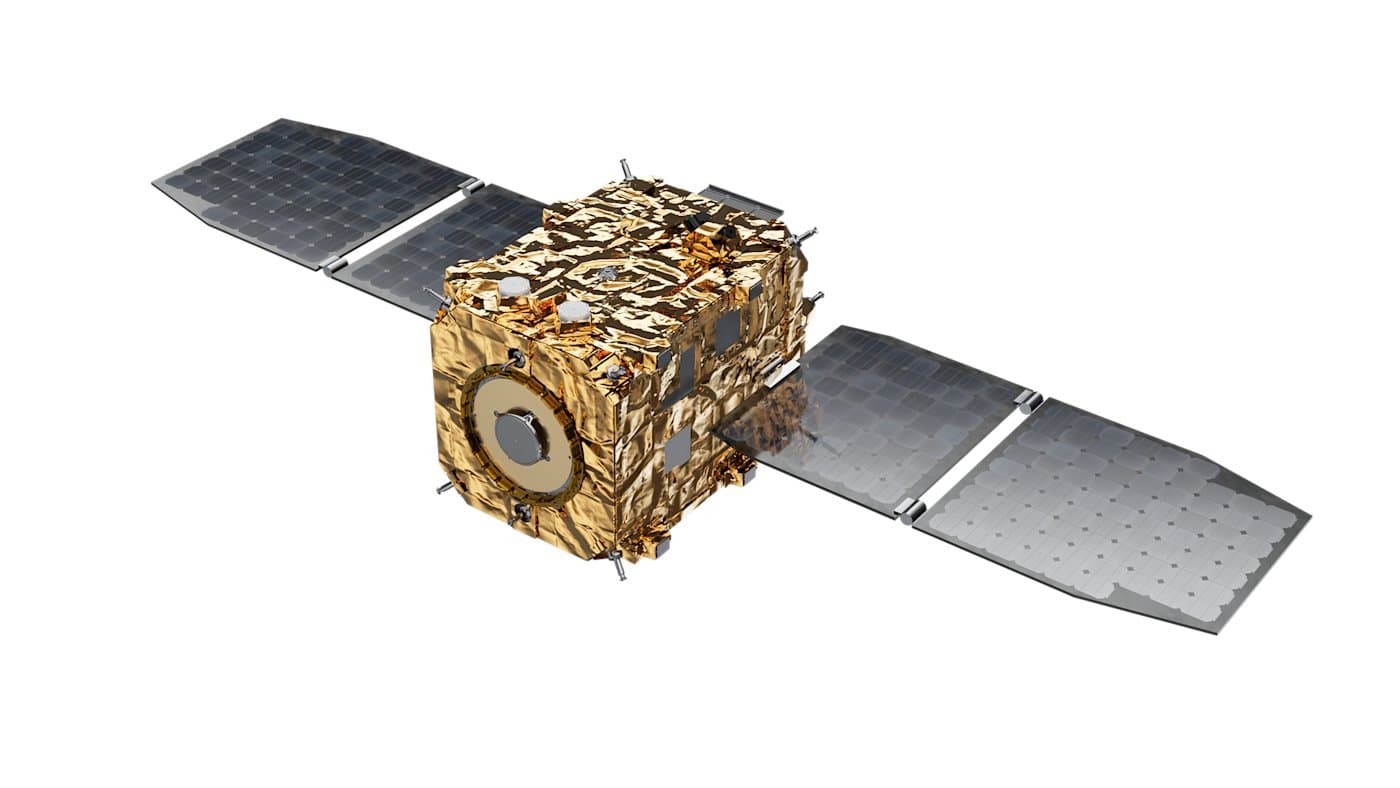
Astroscale
Debris removal servicer built for Phase II of JAXA's Commercial Removal of Debris Demonstration program. It returns to the same spent H-IIA upper stage that ADRAS-J surveyed, captures it with a robotic arm, and deorbits it.
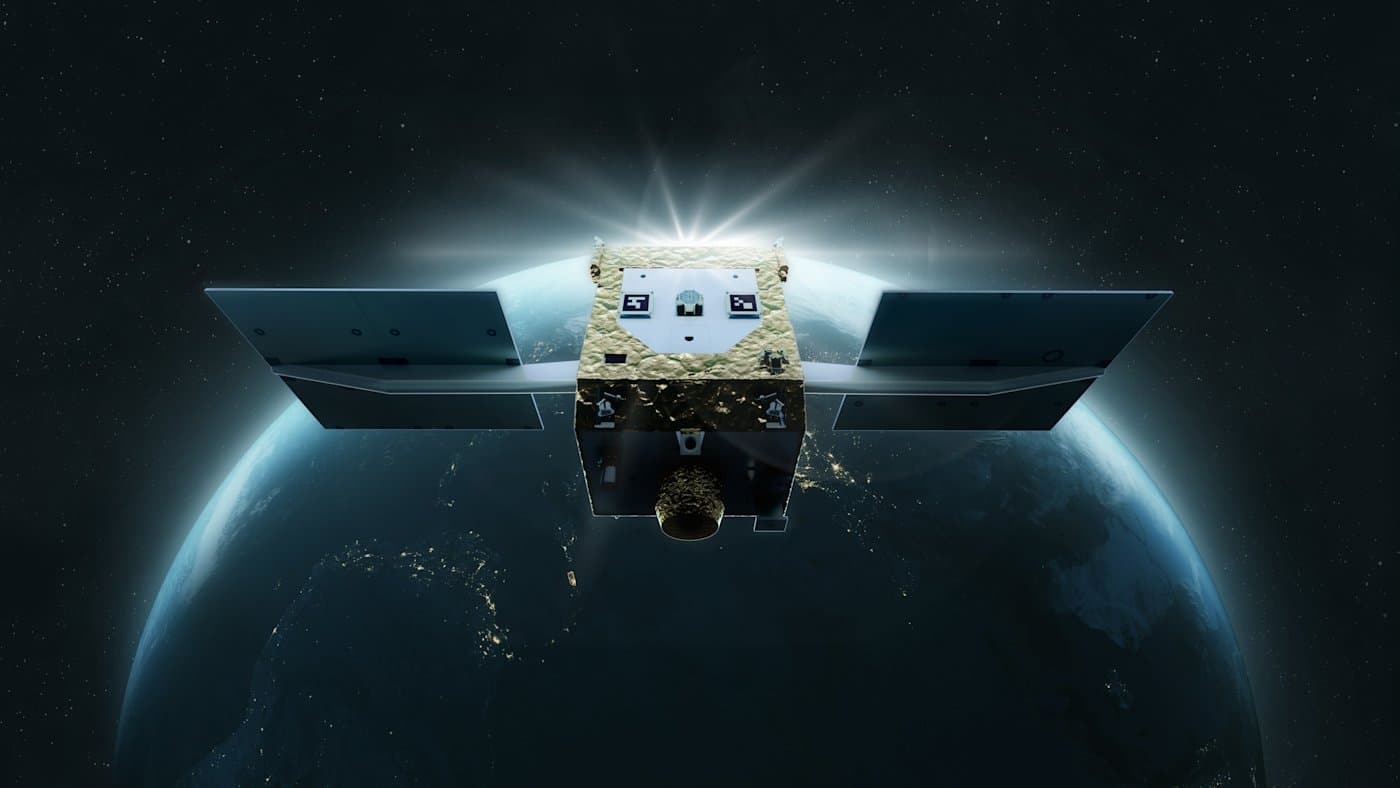
Astroscale
Roughly 300 kg refueling spacecraft that transfers hydrazine to satellites in geostationary orbit, and refuels itself from an Orbit Fab propellant depot so it can service more than one client per mission.
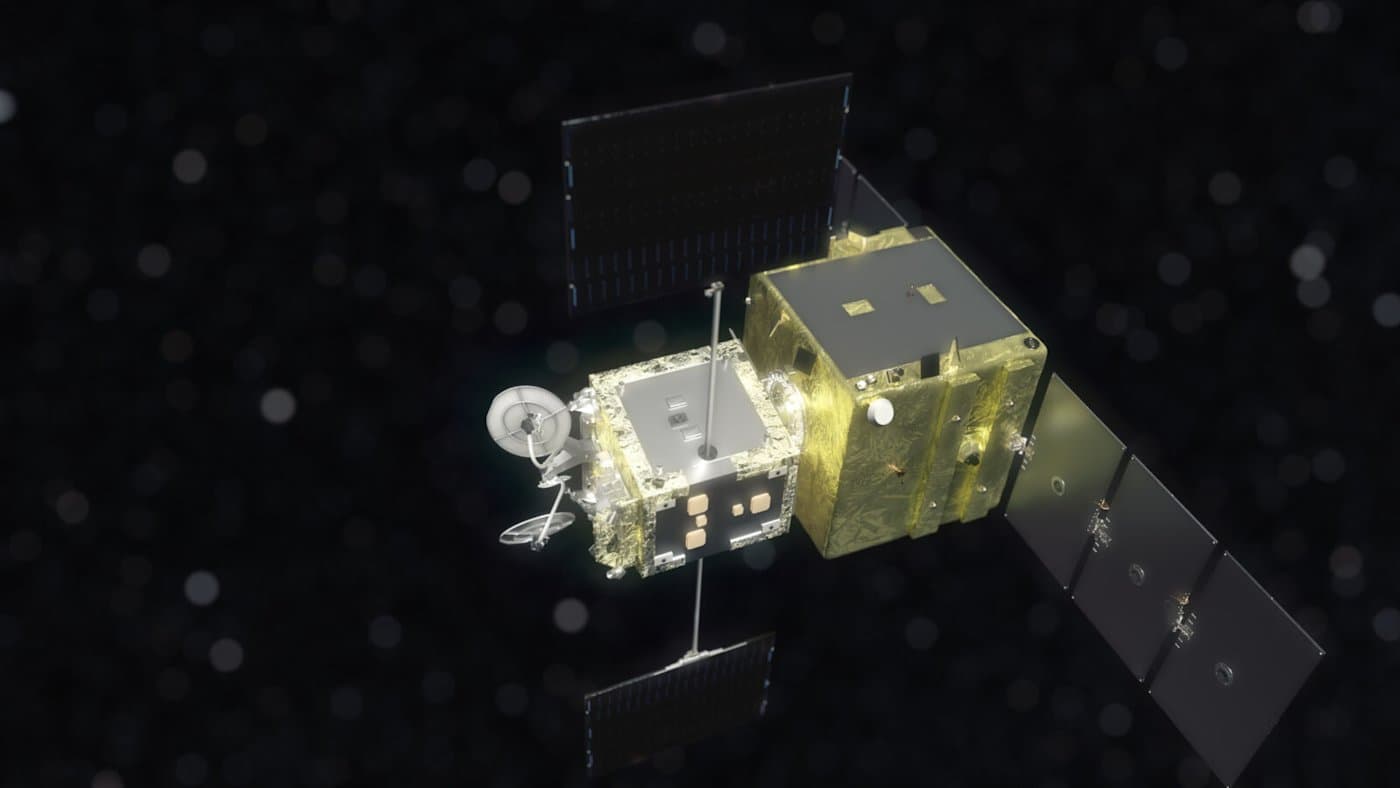
Astroscale
Commercial end-of-life servicer that docks with a prepared client satellite using a magnetic docking plate and drags it down to a disposal orbit. Designed to service multiple satellites on a single mission.
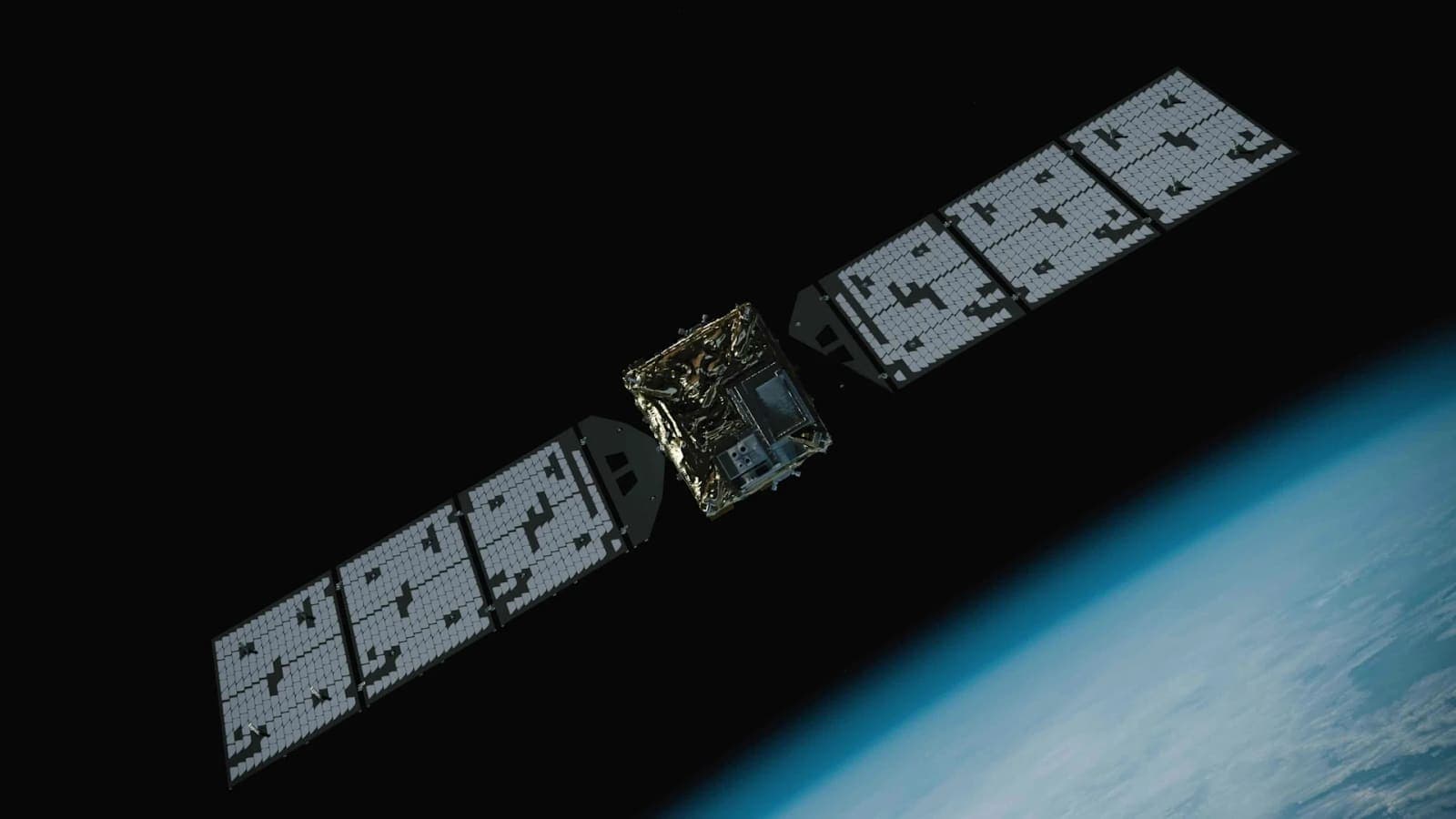
Astroscale
In-situ Space Situational Awareness inspection spacecraft that maneuvers to and photographs two retired Japanese satellites in different orbits on a single mission, using propulsion, electro-optical cameras, and proximity navigation without physical contact.
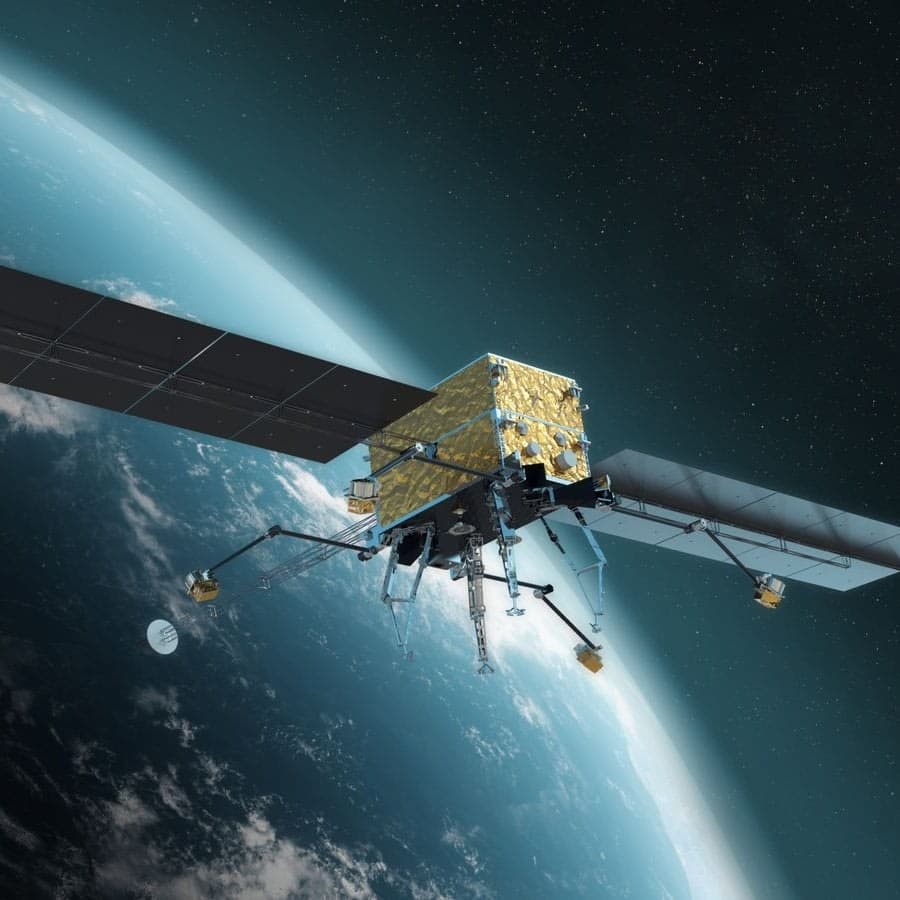
Astroscale
Life Extension In-Orbit servicer for geostationary satellites. It docks with an aging spacecraft and takes over stationkeeping and attitude control, adding years of revenue-generating life to a satellite that would otherwise be retired.
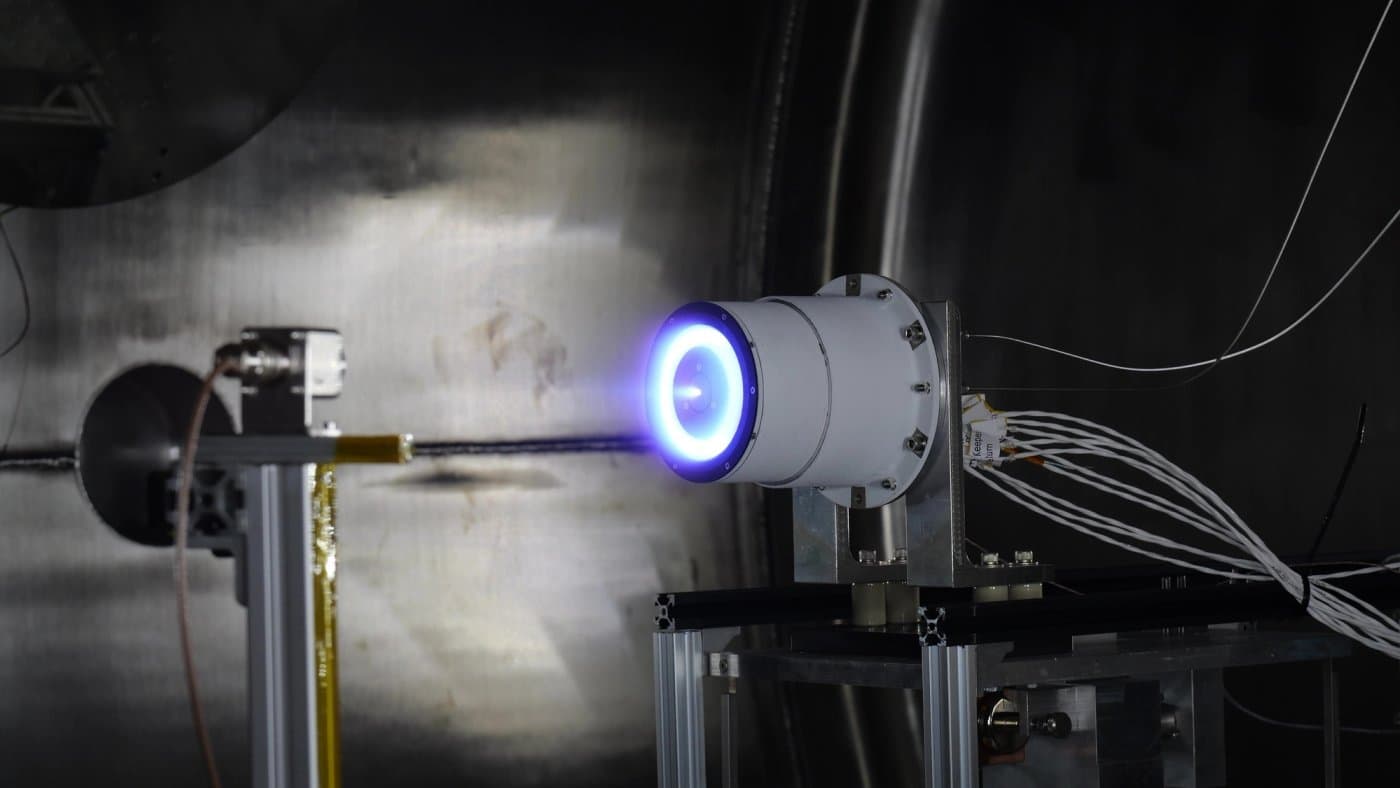
Impulse Space
Impulse's first in-house electric propulsion system, built to handle long-duration stationkeeping so a spacecraft's chemical propellant stays reserved for rapid, responsive maneuvers.
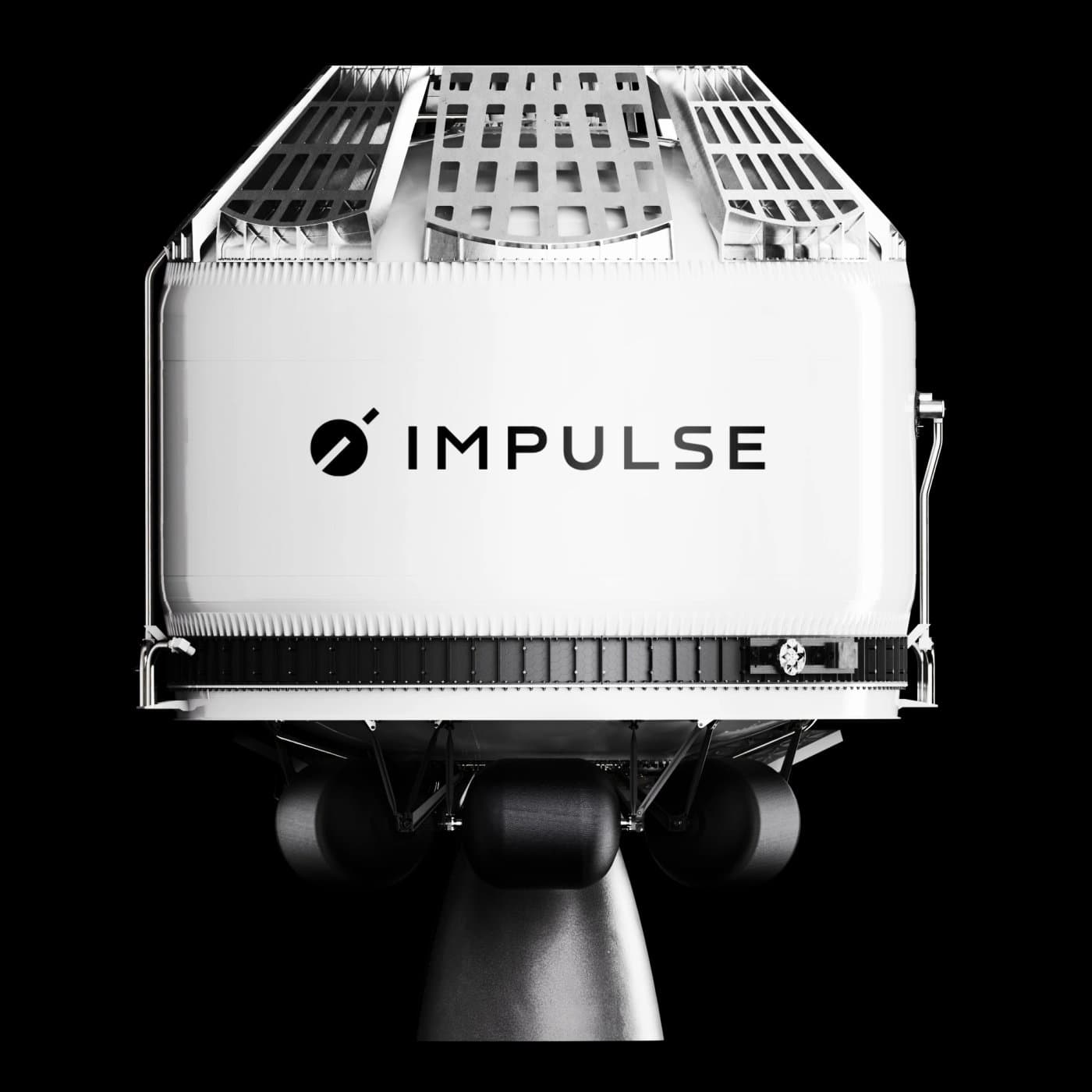
Impulse Space
High-energy kick stage powered by a single Deneb methalox engine, designed to take payloads from a medium-lift rocket's low Earth orbit drop-off to GEO, translunar injection, or Earth escape without waiting months on electric propulsion.
Impulse Space
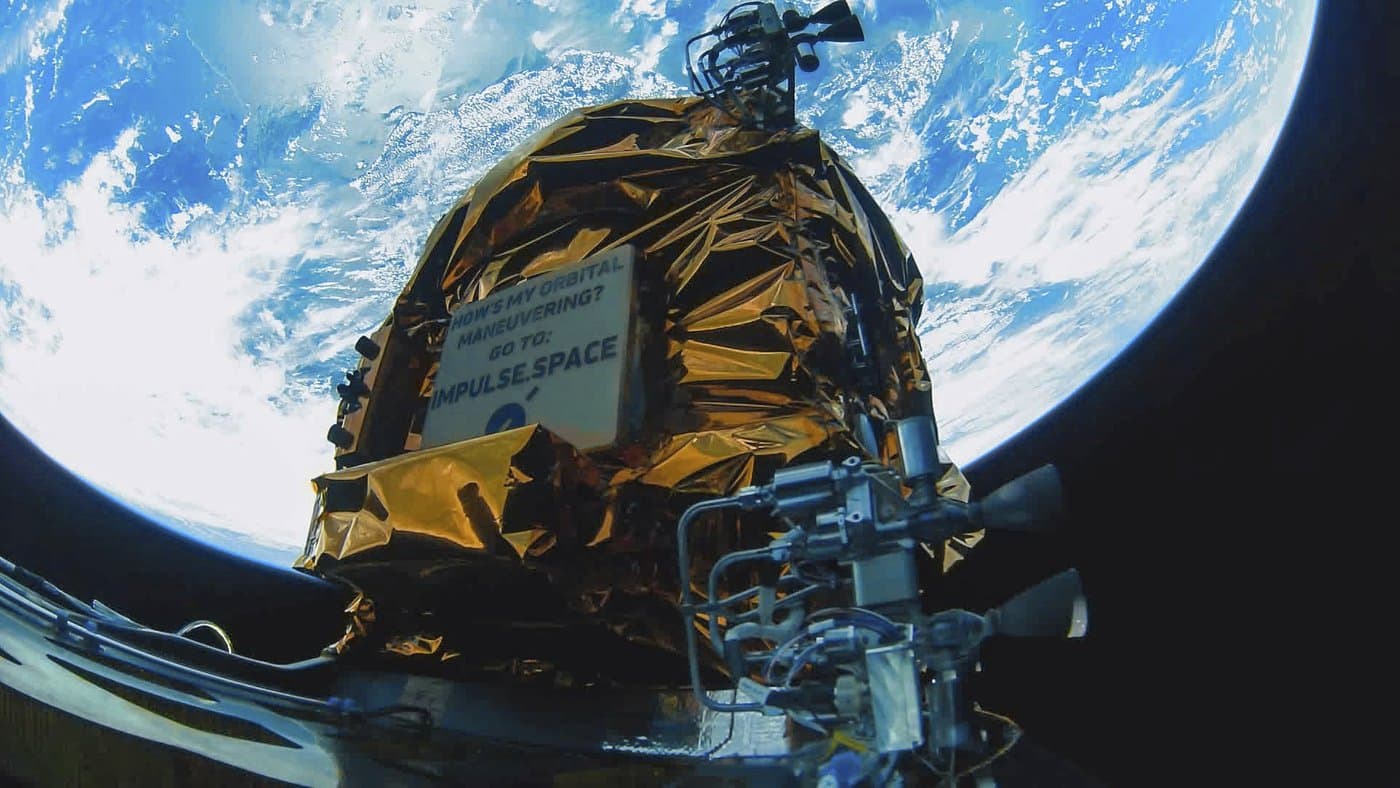
Orbital transfer and hosting spacecraft built for aggressive maneuvering, marketed as the most maneuverable vehicle on orbit. It delivers, deploys, and hosts payloads across LEO, MEO, GEO, and cislunar space.
Inversion Space
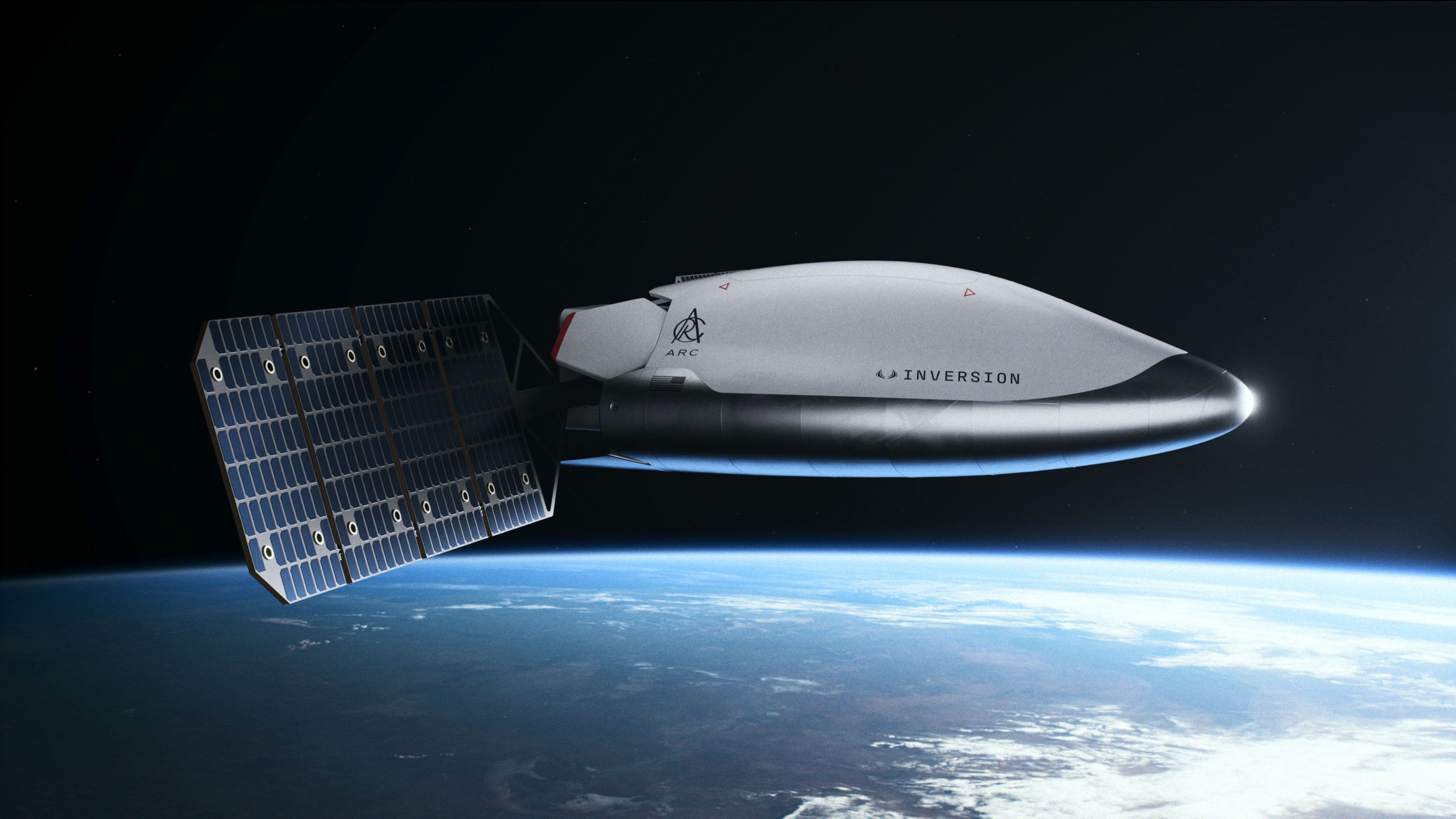
A fully reusable lifting-body reentry vehicle, roughly four feet wide and eight feet tall, that stays on orbit as a functioning satellite for up to five years holding about 500 lb of cargo, then deorbits on command. Control flaps, attitude-control thrusters, and a deorbit engine steer it through a Mach 20-plus reentry with more than 1,000 km of cross-range, and an autonomously guided parachute puts it down within about 50 feet of a target on unprepared ground. Non-toxic propellants let crews approach it as soon as it lands, and it can also capture and deploy assets and rendezvous with other spacecraft while on orbit.
Inversion Space
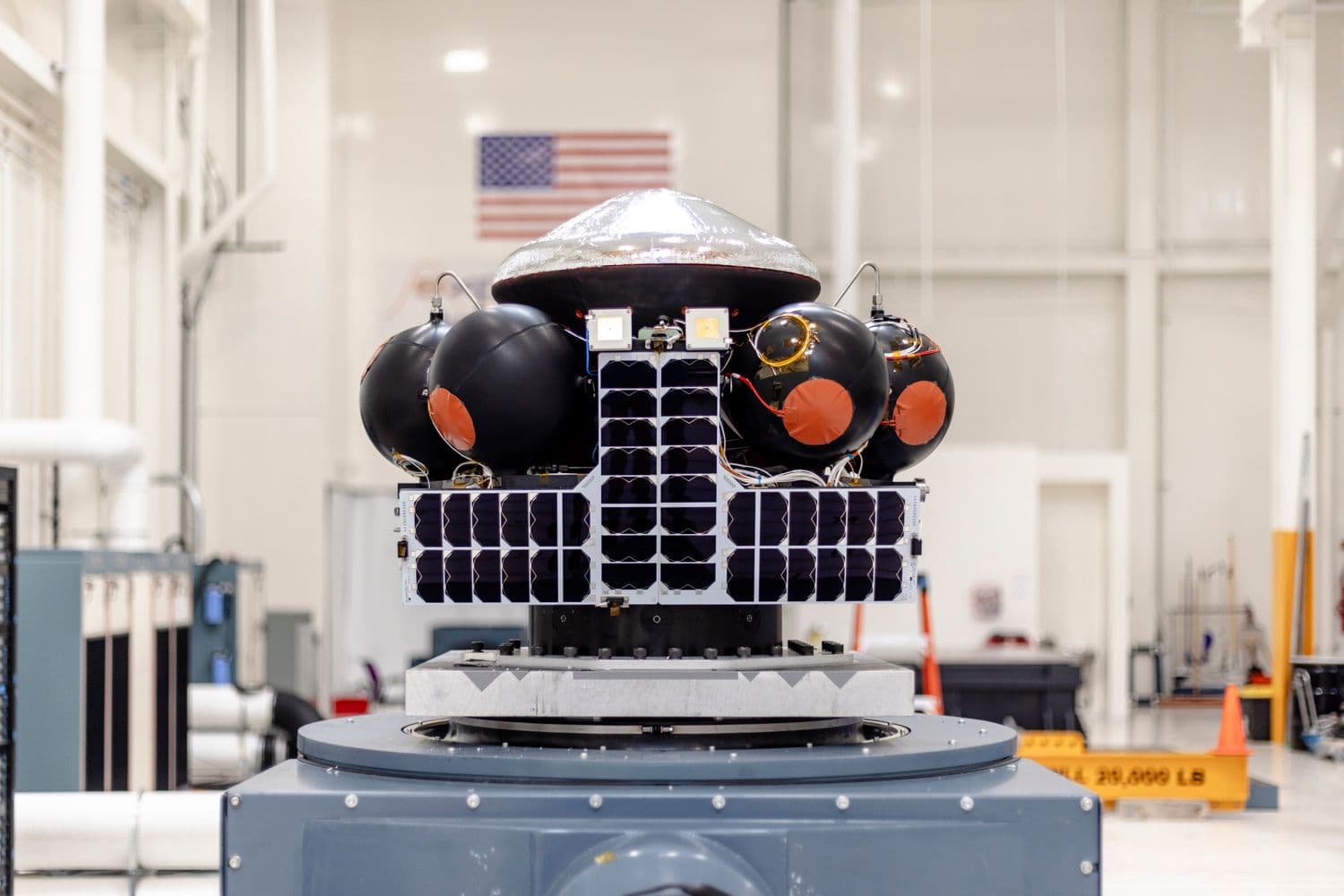
The 20-inch pathfinder capsule that flew Inversion's first orbital mission on SpaceX's Transporter-12 in January 2025. It validated avionics, solar power, the propulsion system, and an in-house separation mechanism on orbit, but a short circuit prevented the deorbit engine from igniting, so the planned reentry and recovery never happened. Its flight data underpins the Arc design.
Reflect Orbital
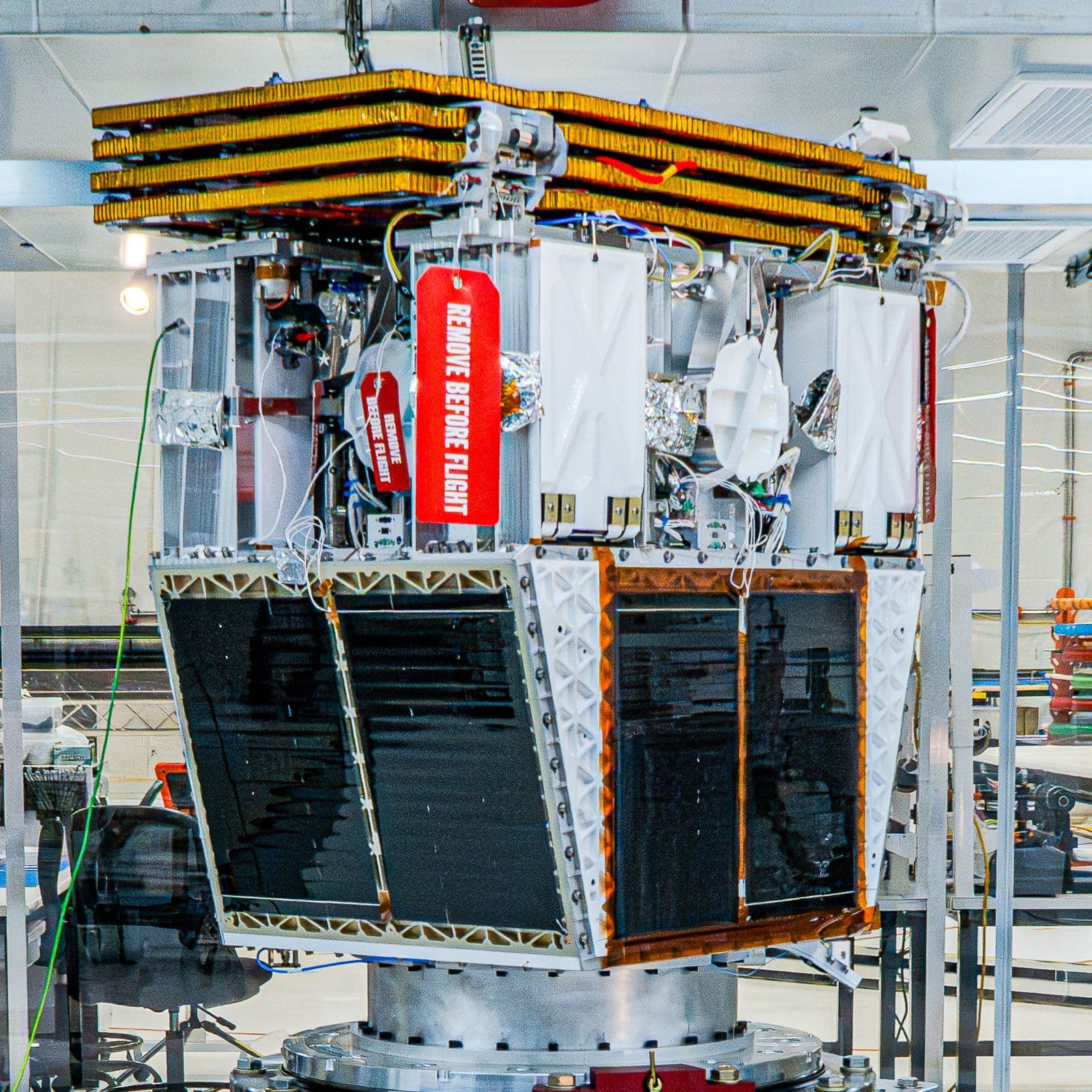
The first demonstration satellite: a 142 kg spacecraft carrying an aluminized thin-film reflector roughly 18 meters on a side, folded into a container about the size of a microwave oven and deployed on orbit at 600 to 650 km. It is designed to steer a reflected beam onto a spot several kilometers wide for up to five minutes per pass, within about two hours of local sunset. Reflect's homepage still describes 2026 lighting as 0.1 lux (full-moon comparable); a peer-reviewed August 2026 paper calculates about 1.05 lux for an 18-meter prototype.

Reflect Orbital
The commercial service the constellation is meant to deliver: customers request light at a location and time through an app, and passing reflectors steer sunlight onto it. Reflect commits to keeping reflections controllable and avoidable, publishing satellite positions in advance and geofencing observatories out of the service map. Brightness and duration scale with fleet size, from minutes of moonlight in 2026 toward daylight-level intensity in the 2030s.
Starcloud
A hosted lunar-orbit compute payload, not a free-flying Starcloud satellite. Firefly said SC-1L will fly on Elytra on Firefly's third lunar mission, targeted no earlier than 2028, ingest data from Firefly's Solux vision system, and remain in lunar orbit for five years after the Blue Ghost CLPS landing at the Gruithuisen Domes. Contract value was not disclosed. Starcloud has not posted its own product page.
Starcloud
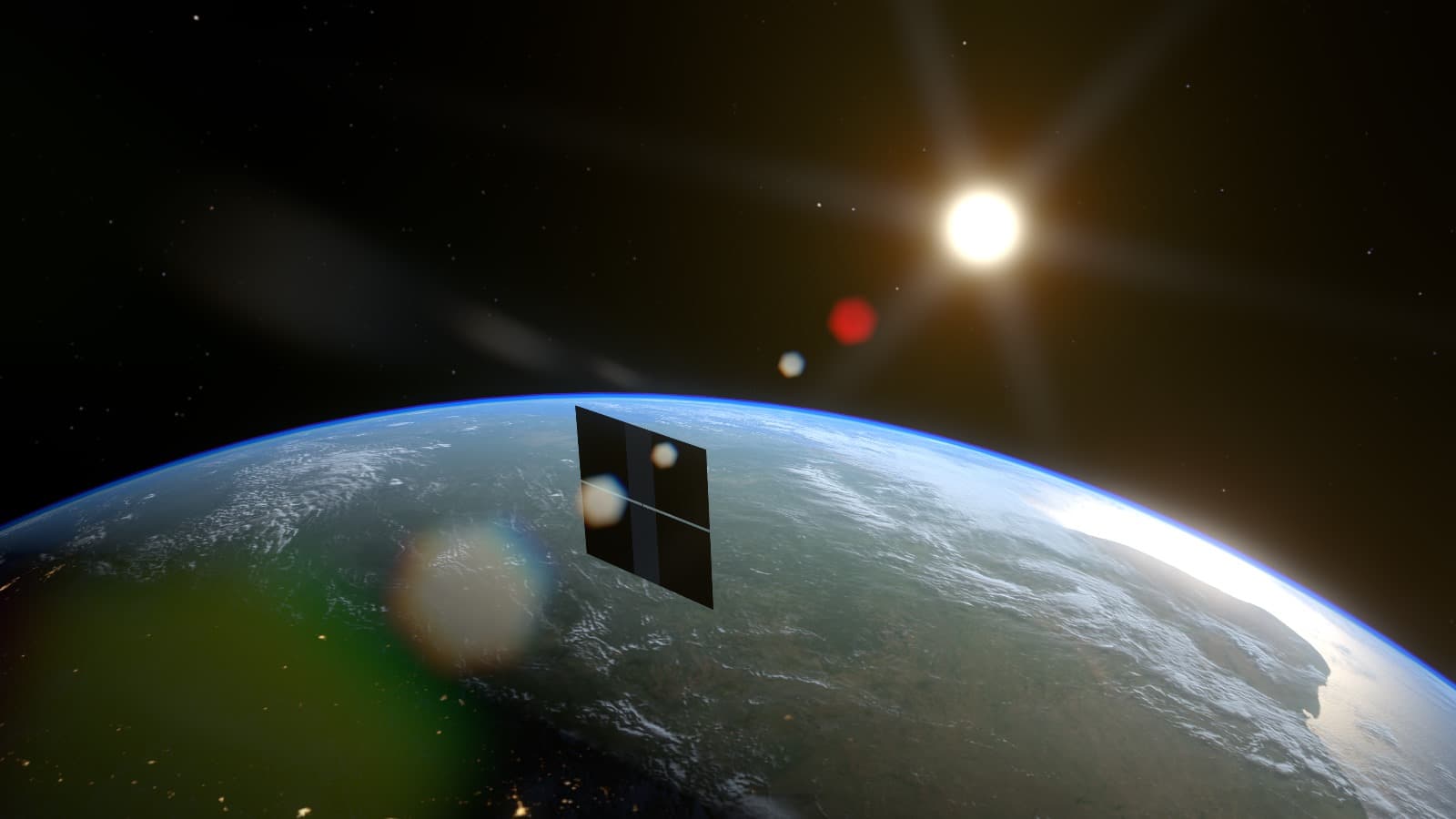
The demonstration satellite that made the case. A 60 kg spacecraft on Astro Digital's Corvus-Micro bus carrying the first data-center-class Nvidia H100 GPU to operate in space, launched November 2, 2025 on SpaceX's Bandwagon-4 rideshare. Within weeks it had run Google's Gemma model and trained nanoGPT in orbit, and it now runs inference on Capella Space radar data. One Nvidia A6000 GPU aboard failed during launch.
Starcloud
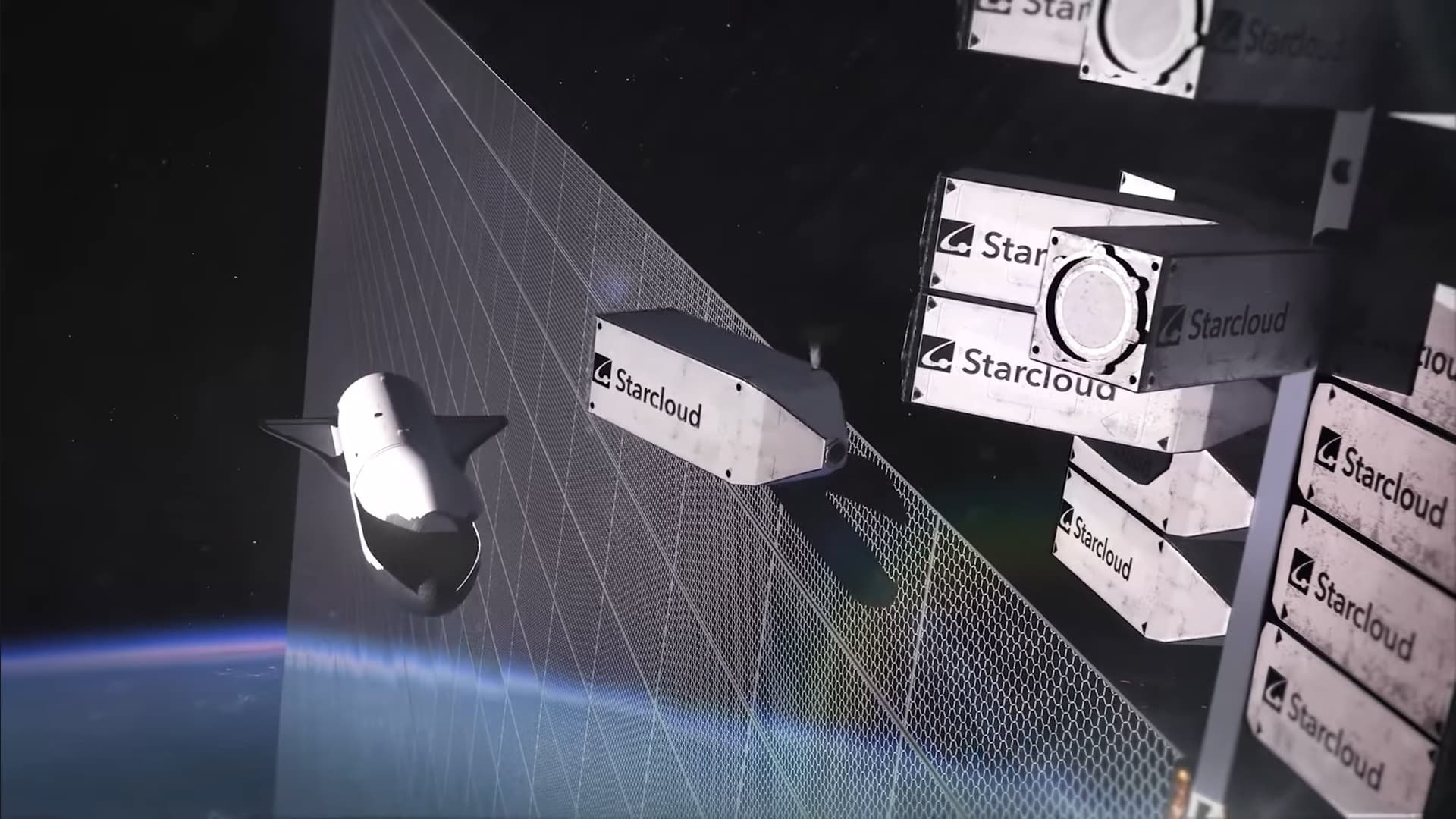
The first commercial mission: a GPU cluster with persistent storage and 24/7 access, plus an AWS server blade, bitcoin mining ASICs, and a pair of Starlink Mini Laser terminals. Waste heat, not power, is the binding constraint on dense orbital compute. Johnston told TechCrunch in August 2026 the near-term plan is two 8 kW Starcloud-2 satellites on 2027 rideshares for customers including US government agencies, rather than a single October 2026 launch. The official product page still targets full operation in sun-synchronous orbit by 2027.
Starcloud
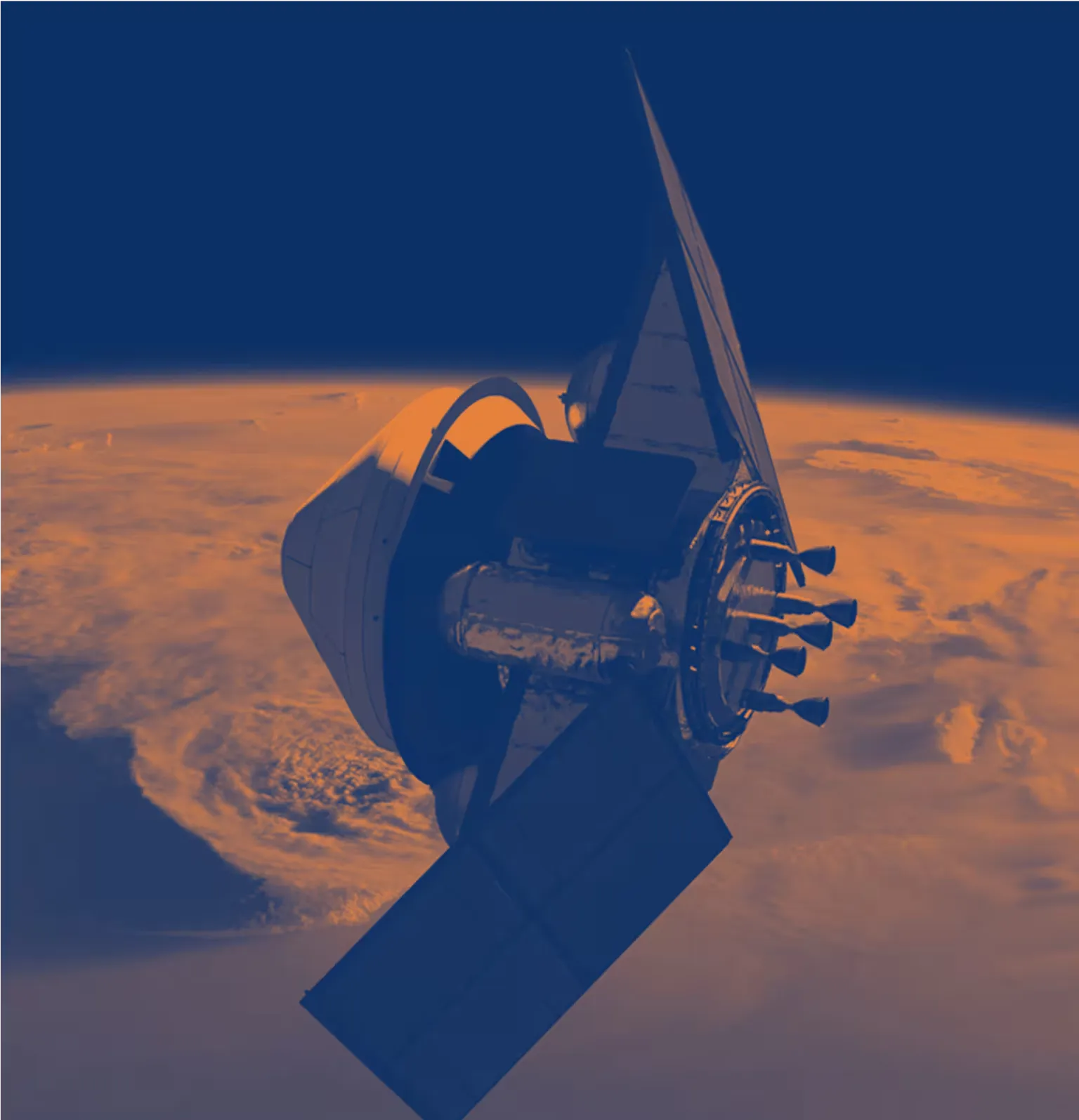
The design that is supposed to make orbital data centers cheaper than terrestrial ones: a 200 kW, roughly three-tonne spacecraft sized to fit the dispenser SpaceX built for launching Starlink satellites from Starship. Starcloud projects electricity costs near $0.05 per kilowatt-hour from it, but only if commercial Starship launch reaches roughly $500 per kilogram, which the company expects around 2028 to 2029.

Varda Space Industries
The W-Series capsule sold as a flight environment rather than a factory: a repeatable, low-cost way for defense and civil customers to test thermal protection materials, sensors, and guidance systems in real hypersonic reentry conditions.
Varda Space Industries
Free-flying orbital production satellite with an integrated reentry capsule. It processes materials in microgravity independently of any space station, then returns the finished product to Earth under parachute.
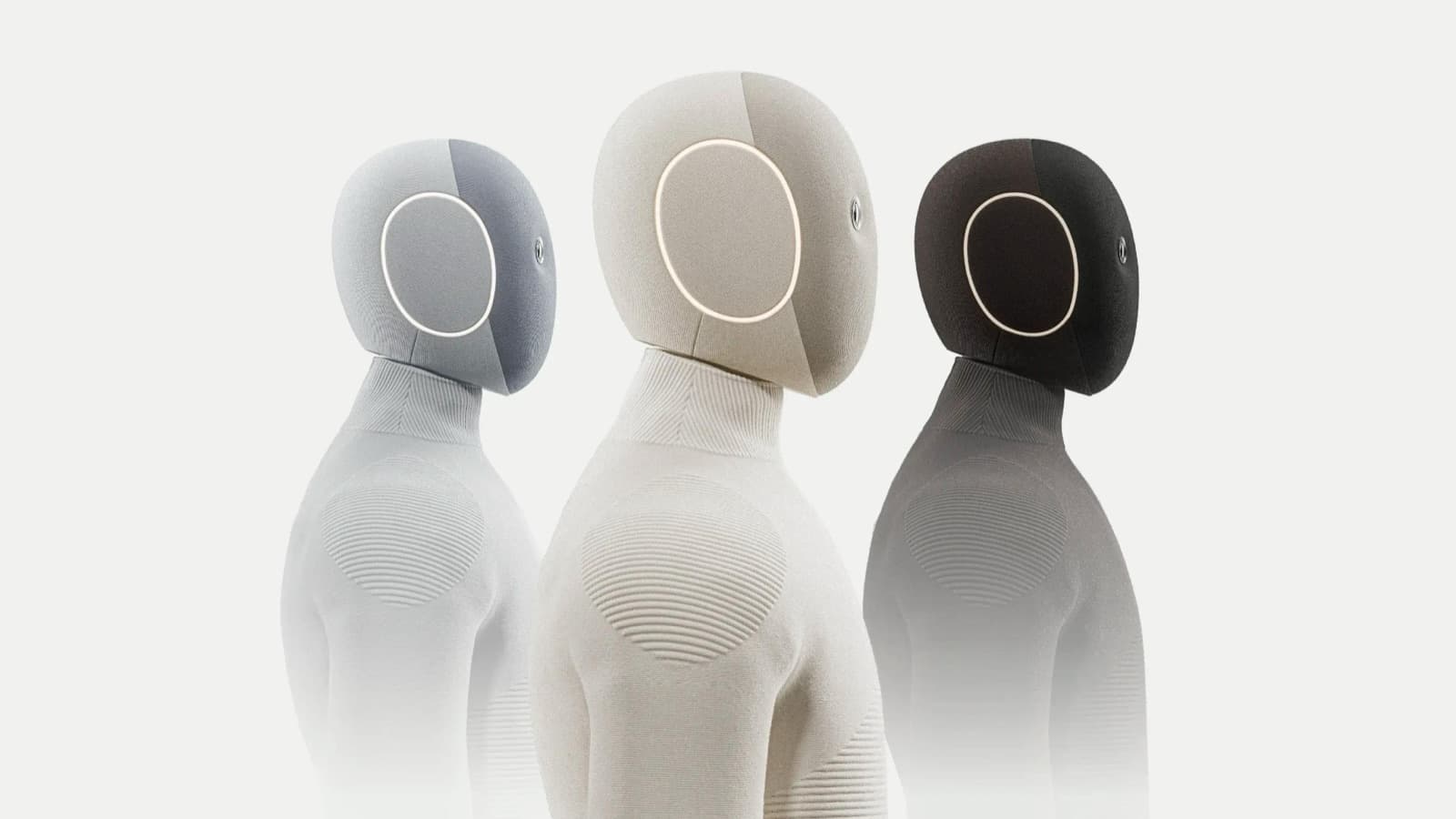
1X Technologies
Bipedal home humanoid, about 5 foot 6 inches and 66 lb, with a soft knit exterior, tendon-driven actuation, NVIDIA Jetson Thor onboard compute (NEO Cortex), and 25-DoF tendon-driven hands. Sold in tan, gray, and dark brown. Early units mix onboard autonomy with human teleoperation for tasks the policies cannot finish.

AgiBot
Full-size humanoid positioned for performance, interaction, and research. The product page lists height 173 cm, weight 55 kg, endurance up to 10 hours, dual battery packs of 1152 Wh, UWB positioning, and fleet coordination of more than 100 units. The August 20 release names the A3 alongside the G2 as part of the current commercial and industrial portfolio.
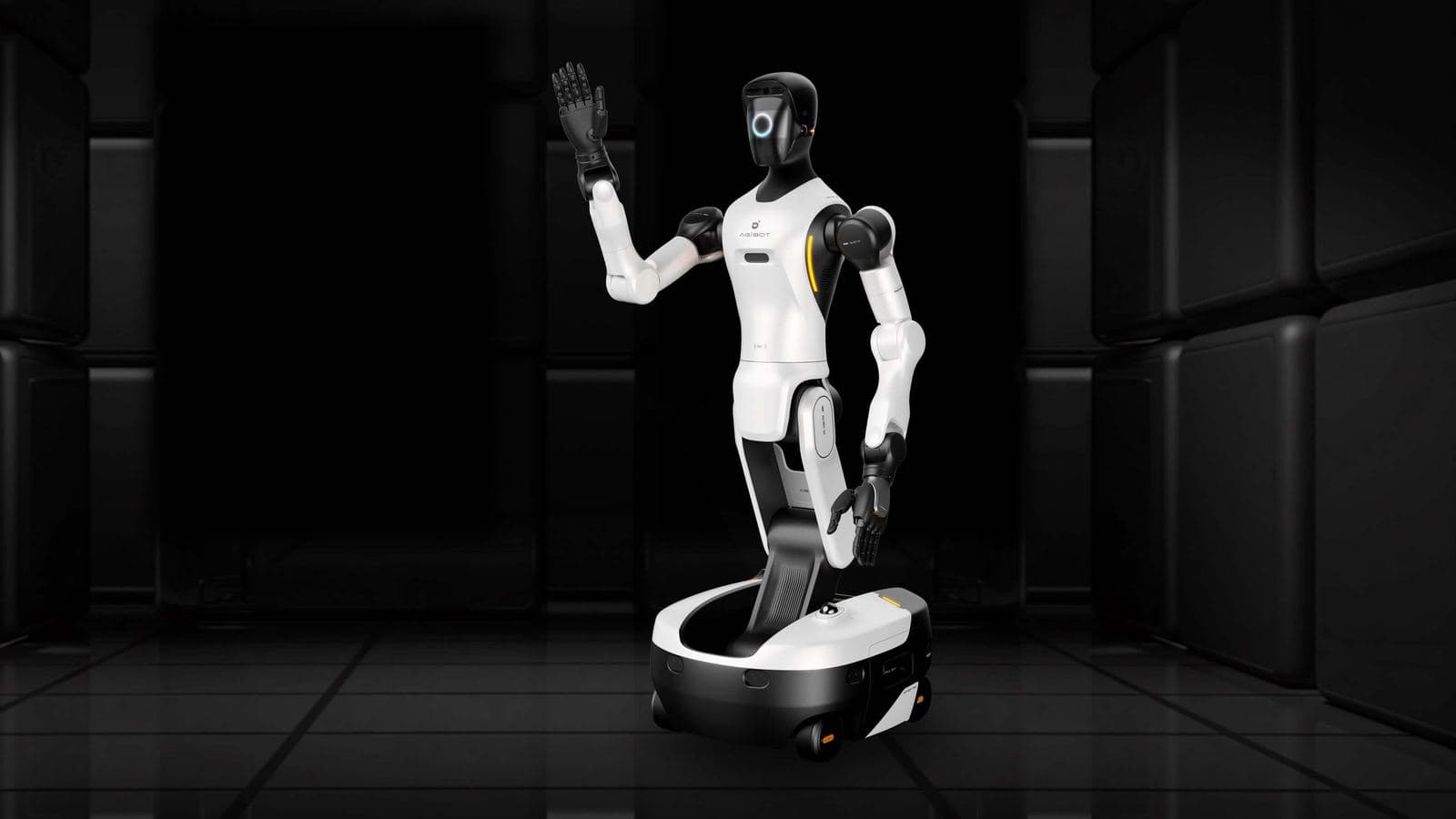
AgiBot
Industrial embodied robot. The product page says it uses automotive-grade components, is rated IP42, and does sub-millimeter force-controlled assembly with Genie RL. AgiBot's August 20 release says G2 robots are on Longcheer Technology's consumer-electronics line doing production tasks. SCMP says Smart Analytics Global counts wheeled G-series robots inside its humanoid shipment total. The English G2 page opened here does not itself say the robot is wheeled.

AgiBot
Smaller AgiBot robot featured on the English homepage as a fully intelligent agile robot. The August 20 release says the X2 series is used in commercial service and research. Specs were not taken from a product-page table in this profile.
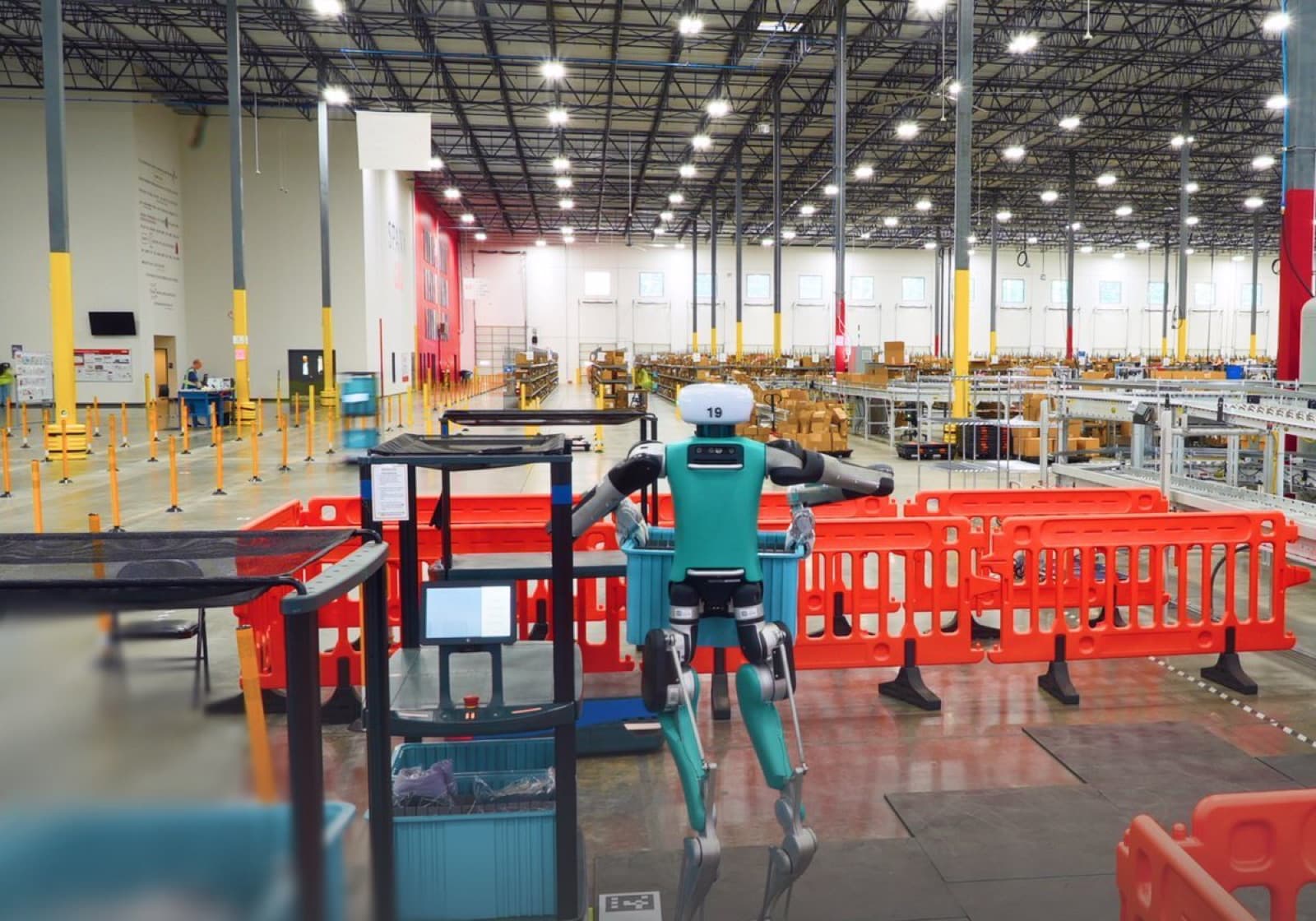
Agility Robotics
Current commercial humanoid for tote handling and material movement in warehouses and factories. Reverse-jointed legs, gripper end-effectors, and Agility Arc fleet software. Digit 4 is the machine behind the 65,000-hour and 100,000-tote claims.
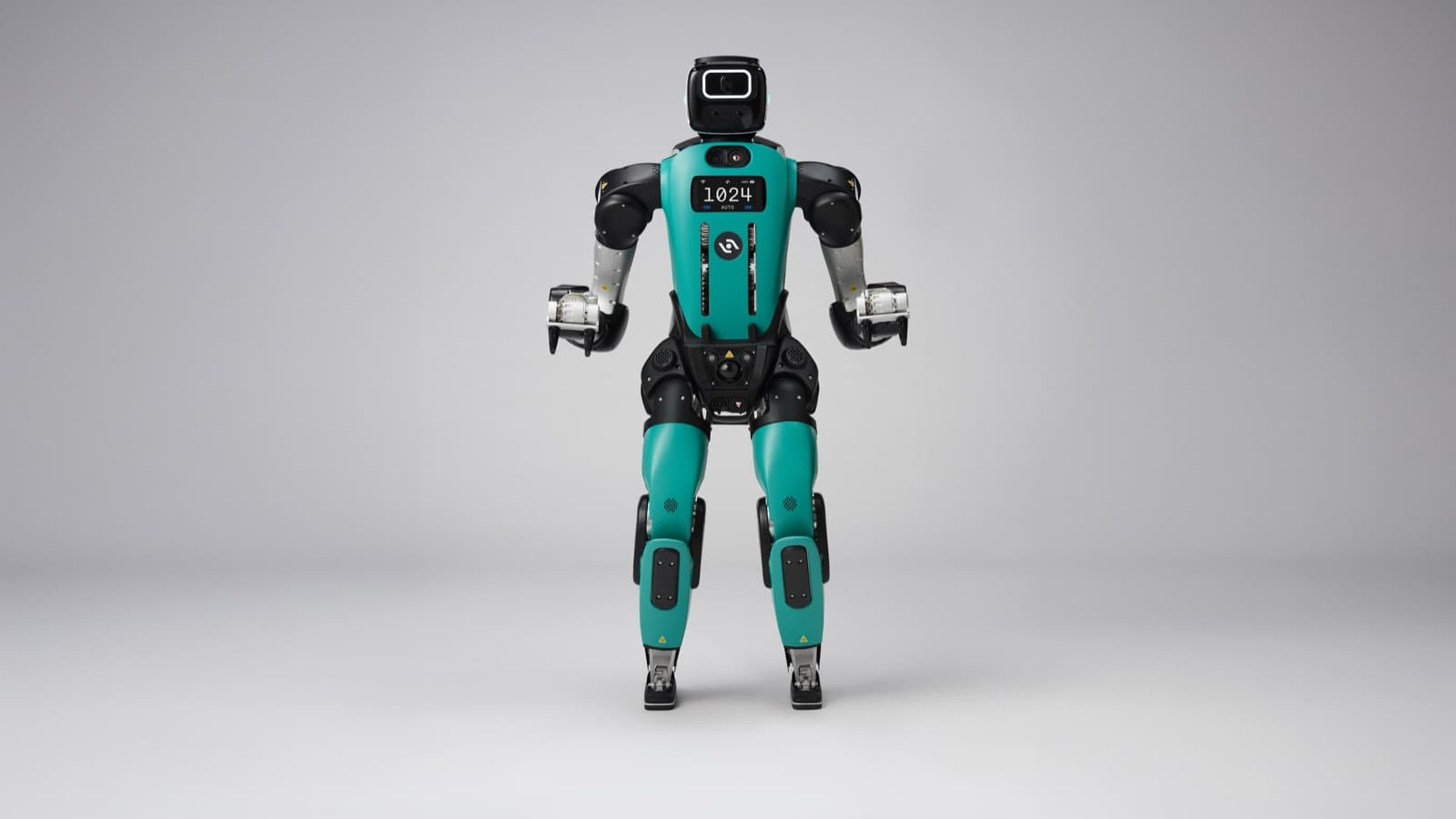
Agility Robotics
Next-generation industrial humanoid designed to work beside people without the cages Digit 4 still needs. New safety architecture (human detection, visual/auditory cues, independent motion controller), 50 lb payload, 5 foot 11 inch height, 7.2 foot reach, 90-minute runtime with a 9-minute charge, swappable ISO-flange end-effectors, and NVIDIA Halos / IGX Thor as the first Halos robotics launch partner.
Apptronik
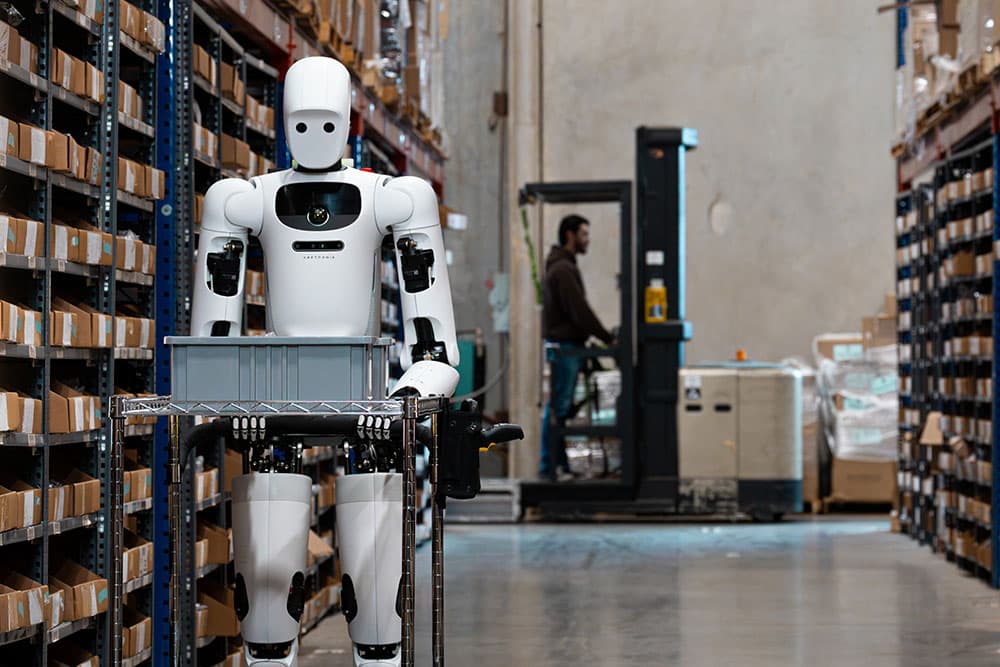
The humanoid that put Apptronik on the map: 5 feet 8 inches, 160 pounds, able to lift boxes up to 55 pounds, and sized and shaped to work in spaces built for people rather than requiring a rebuilt facility. It is pitched as multi-purpose rather than general purpose, aimed first at trailer unloading, palletizing, case picking, kitting, and parts transport. Units are working in designated areas inside Mercedes-Benz, GXO Logistics, and Jabil sites.

Apptronik
The second-generation platform, unveiled at the end of June 2026 through a site update rather than a launch event after more than a year of internal use. It ships in two configurations, bipedal and wheeled-base, uses patented actuators Apptronik rates above 90% efficient, takes swappable batteries for continuous operation, and communicates through an expressive LED mouth, coordinated lighting, speech, and listening. Its 22 degree-of-freedom, five-fingered SharpaWave hand is dexterous enough for Gemini Robotics 2 to tie knots and seal a ziplock bag with it. Apollo 2 is explicitly a data-collection and learning platform whose job is to produce the commercial Apollo 3.
Boston Dynamics
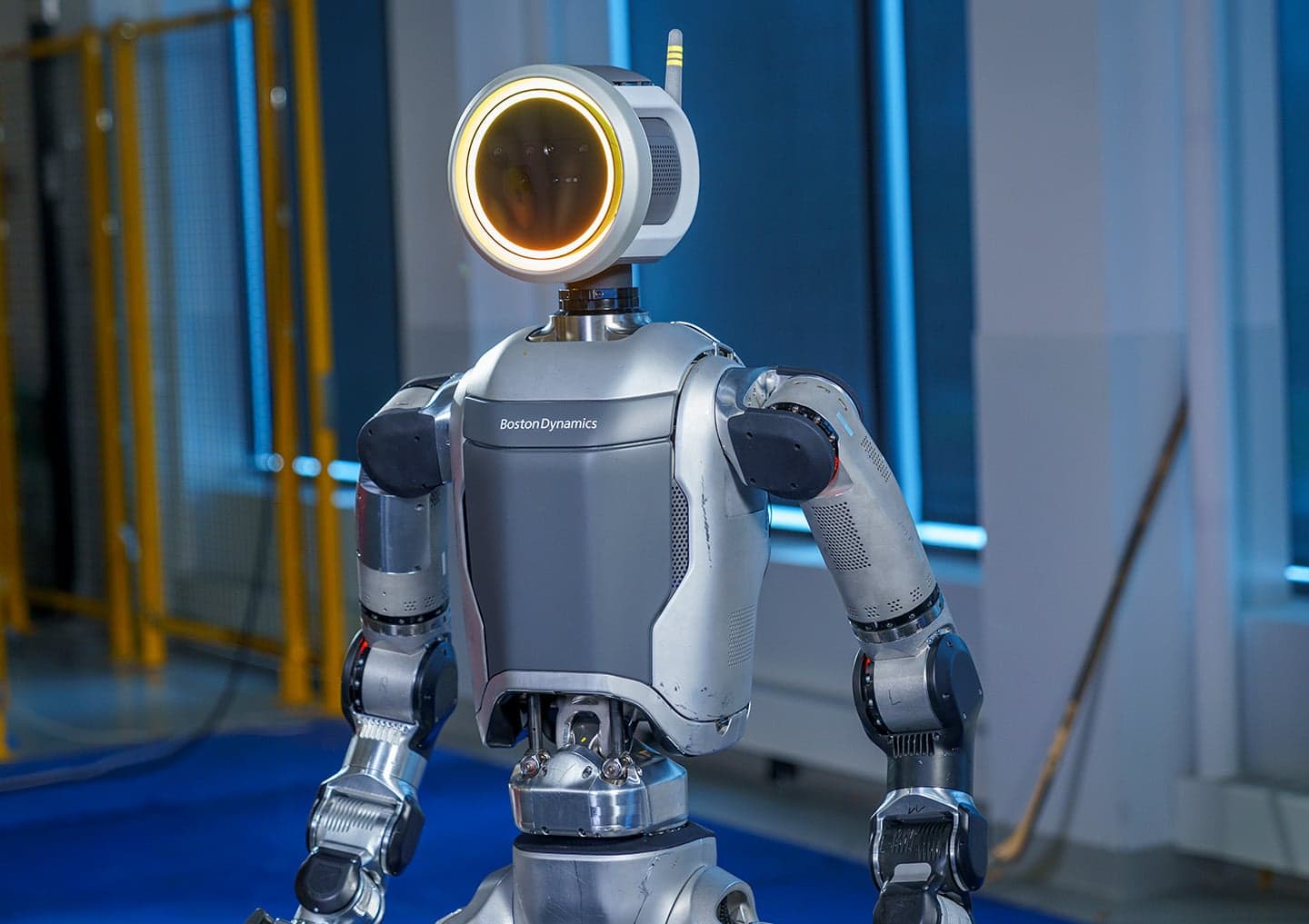
Enterprise humanoid robot designed for factories and warehouses. The all-electric Atlas is Boston Dynamics' commercial mobile-manipulation platform for part sequencing, machine tending, and heavy-object handling, built for manufacturability, serviceability, and continuous operation. The production version has 56 degrees of freedom with fully rotational joints, a 2.3 m reach, and the strength to lift up to 50 kg instant or 30 kg sustained.
Boston Dynamics
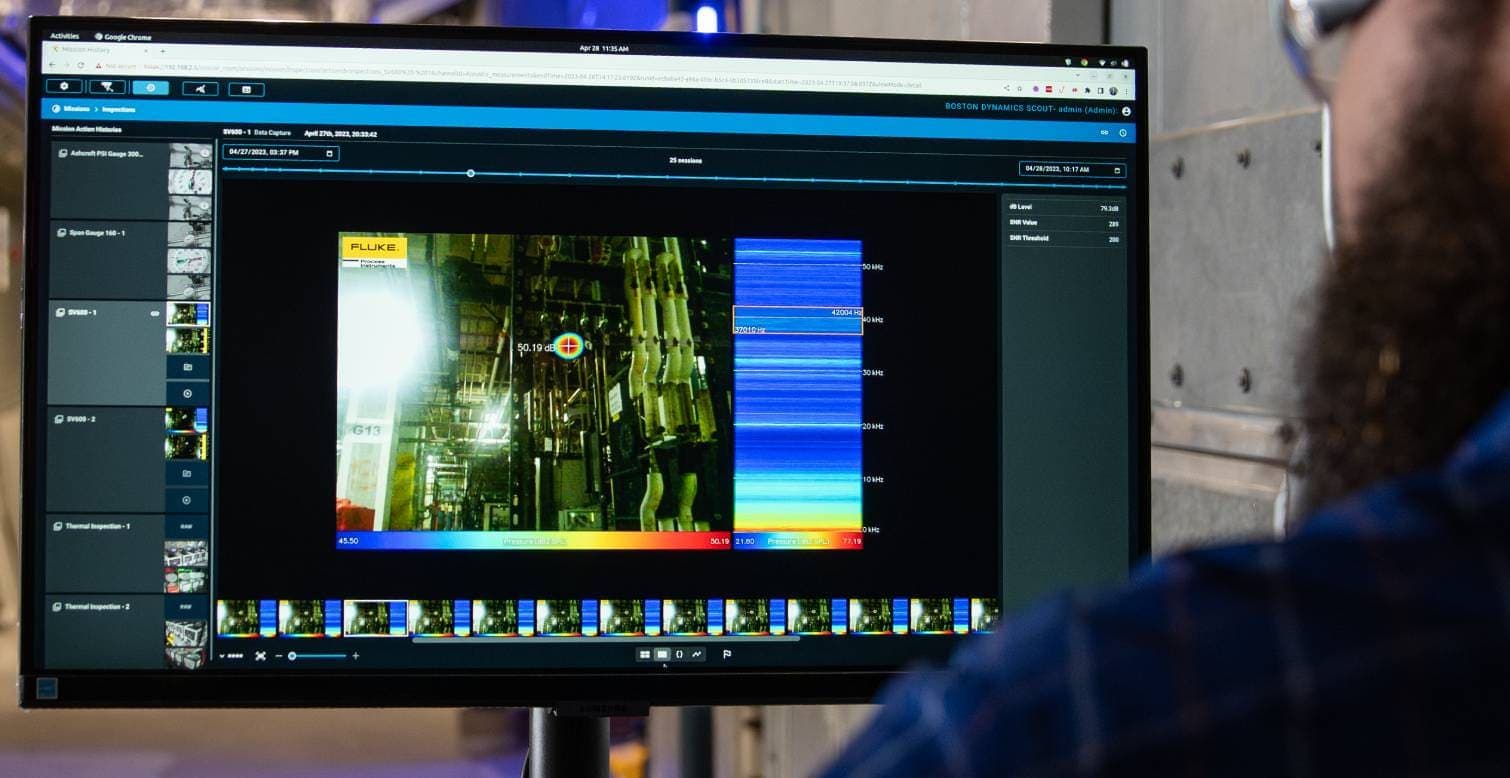
Fleet management and data analysis software for Boston Dynamics robots. Orbit provides remote site access, robot operations, inspection analytics, alerts, and workflow integrations across single or multi-site deployments.
Boston Dynamics
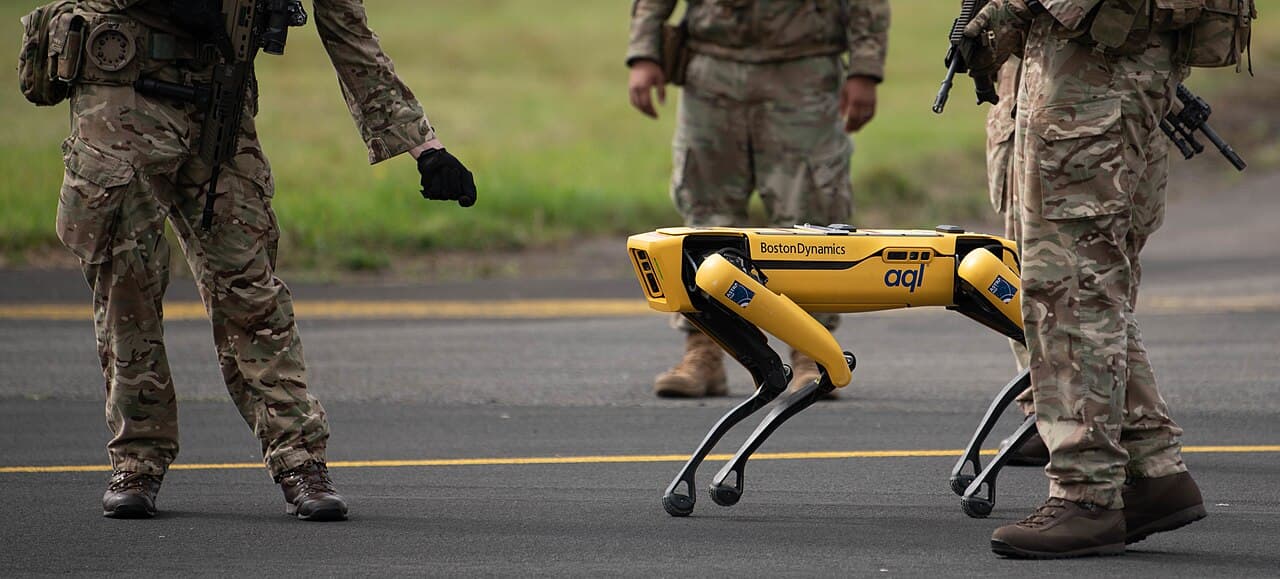
Agile quadruped robot for autonomous industrial inspection, data collection, and remote operation in hazardous environments. Features 3D vision, SLAM navigation, obstacle avoidance, and stair climbing. Used across oil & gas, utilities, construction, mining, and manufacturing.
Boston Dynamics
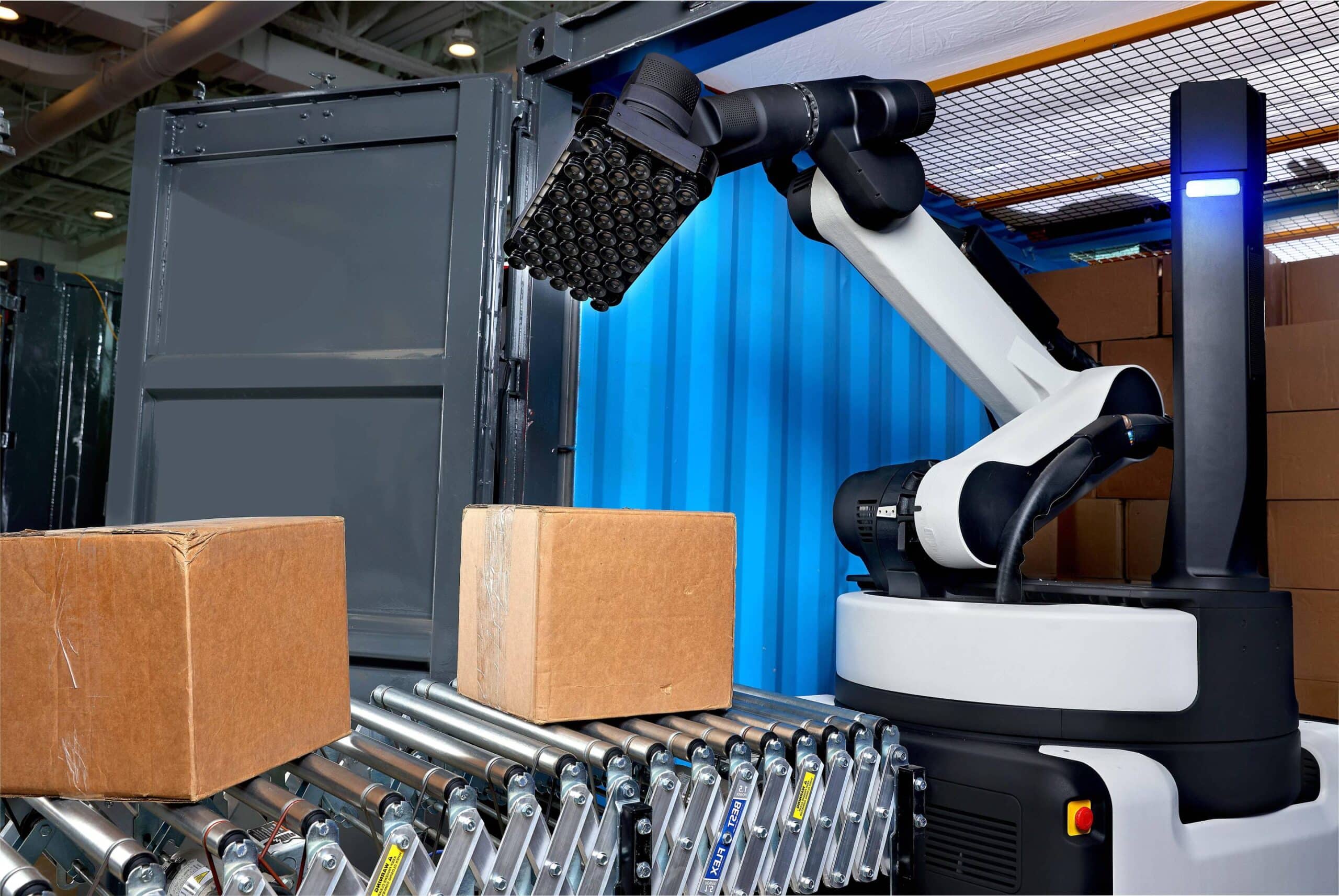
Mobile warehouse robot purpose-built for unloading floor-loaded trailers and containers. Features a mobile base, perception system, and a custom arm/gripper to handle boxes up to 50 lbs. Designed to work in existing warehouse infrastructure without modifications.
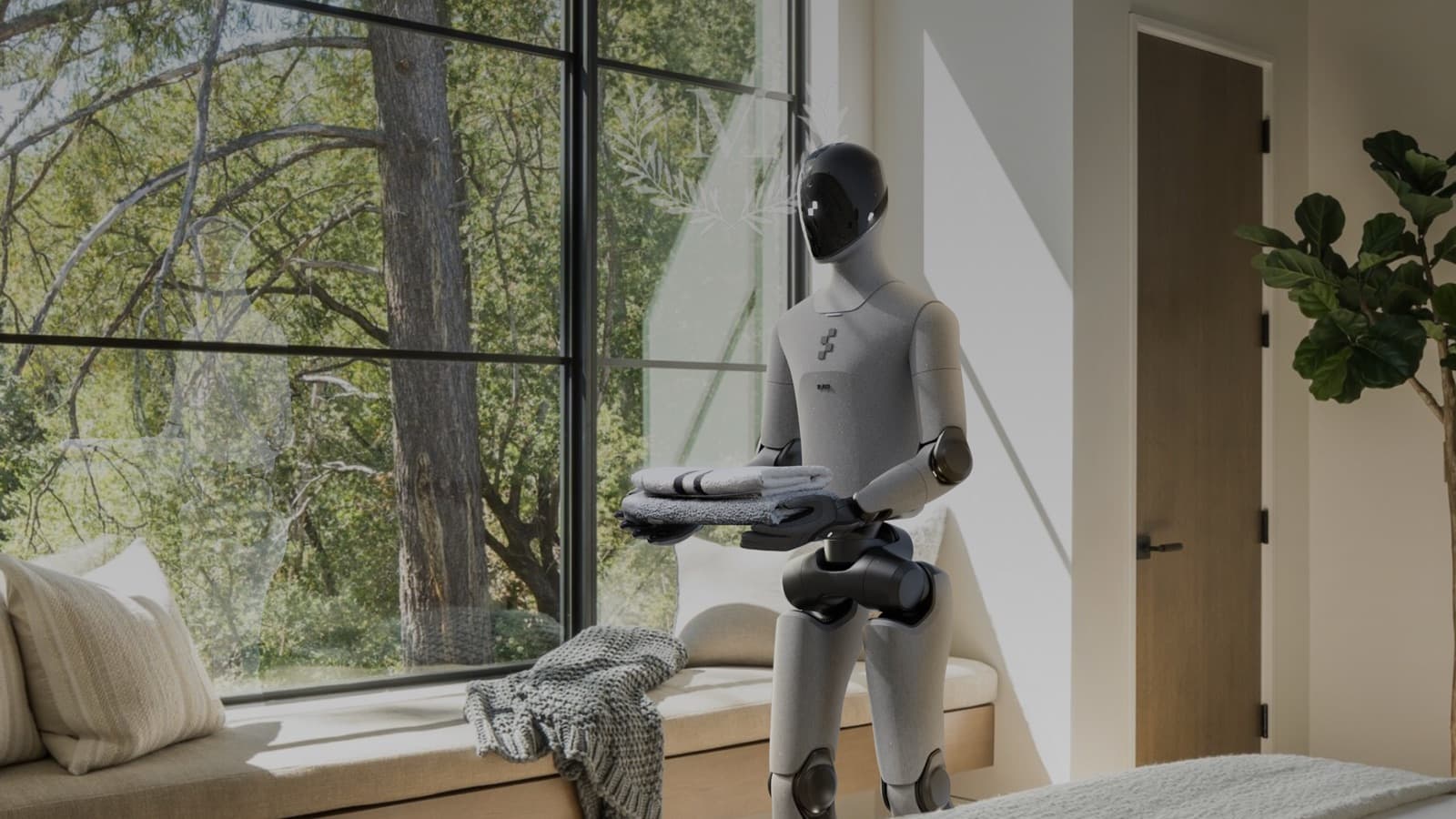
Figure AI
Second-generation workforce humanoid that validated Figure's first real factory deployment. Figure 02 paired six onboard RGB cameras, 16-DOF hands, onboard vision-language reasoning, and a 3x compute increase over Figure 01 for manufacturing and logistics tasks.

Figure AI
Third-generation humanoid robot redesigned for home and commercial environments, with softer surfaces, embedded palm cameras, tactile fingertips, wireless charging, and lower-cost manufacturing for large-scale deployment.

UBTECH Robotics
Consumer 'ultra-bionic' companion humanoid sold as U1 Lite (semi-torso), U1 Pro, and U1 Ultra, with 88 degrees of freedom and an emotion-oriented language model. Priced from RMB 119,800 at the June 30, 2026 launch.

UBTECH Robotics
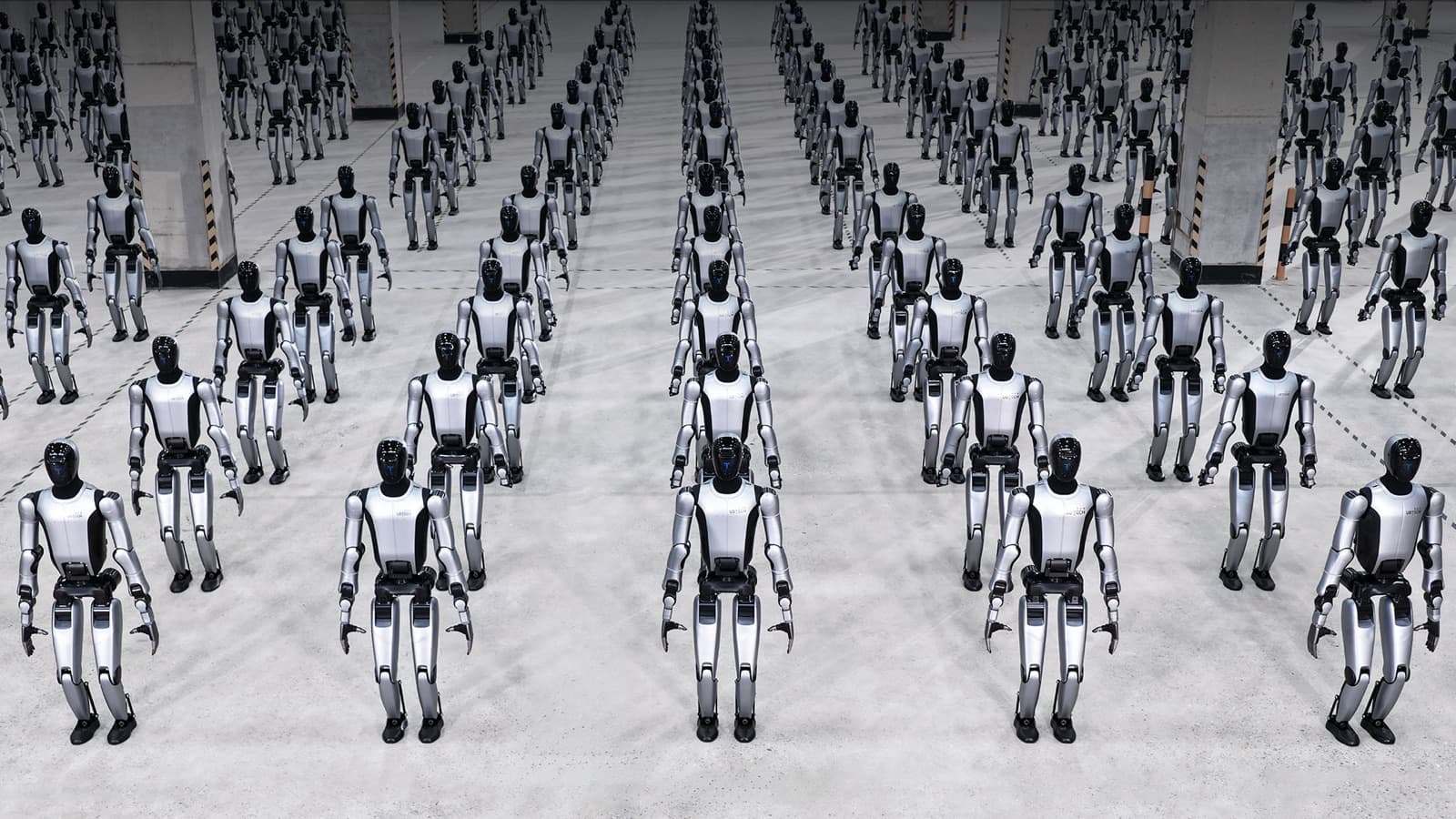
Full-size commercial service humanoid for urban reception, guidance, education, and hospitality, with a more aesthetic design than industrial Walker S2, customizable motion, and open SDK hooks for site-specific knowledge bases.
UBTECH Robotics
Industrial full-size humanoid designed for factory and logistics work, with a dual-battery hot-swap system that lets the robot change its own pack in about three minutes, RGB binocular stereo vision, BrainNet 2.0 plus Co-Agent software, and a 15 kg payload across a 0-1.8 meter workspace.
Unitree Robotics
Unitree's most advanced industrial quadruped, launched August 2025 as a rugged all-terrain platform for inspection, logistics, and field operations. The A2 ("Stellar Hunter") pairs dual front-and-rear 3D LiDAR for 360-degree awareness with hot-swappable batteries and a heavy standing-load capacity that pushes well beyond the B2.

Unitree Robotics
Compact industrial quadruped launched February 24, 2026, positioned between the consumer Go2 and the heavier B2/A2 platforms. Unitree markets roughly 2x Go2 dynamic performance in a ~20 kg package, with IP54 weather sealing, an open developer stack on the X and EDU trims, and a standing payload up to 65 kg on the top configuration.
Unitree Robotics
Industrial quadruped built for power inspection, emergency response, and harsh-environment field work. B2 pushes far beyond consumer quadrupeds on load, endurance, and climbing ability.
Unitree Robotics
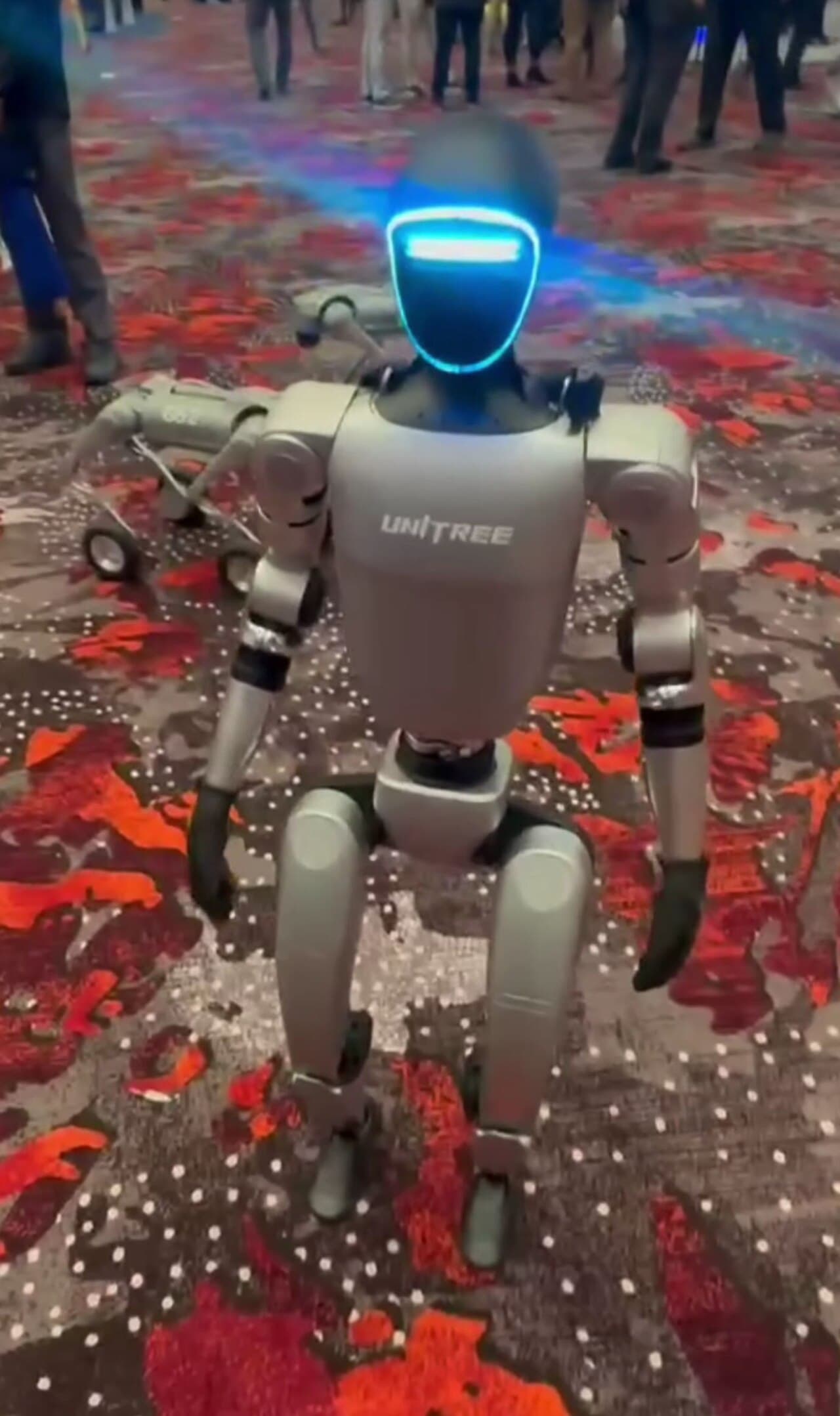
Compact humanoid platform designed for embodied-AI development, education, and research. Unitree positions G1 as a low-cost humanoid avatar with optional dexterous hands, 3D LiDAR, depth cameras, and 23 to 43 total joints depending on configuration.
Unitree Robotics
Upgraded G1 compact humanoid with two extra neck degrees of freedom, higher shoulder, waist and arm motor torque with lower heat, binocular plus wide-angle vision, head touch sensors, optional continuous external power, and a six-microphone far-field array. Aimed at research, education, and longer demo runtimes while keeping G1's price positioning.
Unitree Robotics
Optionally-manned 'mecha' that switches between bipedal and quadrupedal locomotion, built from high-strength alloy for heavy-duty civilian transport, with the pilot riding in a chest-mounted cockpit. Unitree markets it as the world's first production-ready manned mecha.
Unitree Robotics
Unitree's mainstream consumer and developer quadruped platform. Go2 pairs low pricing with 4D LiDAR, OTA updates, app control, and enough mobility to make quadrupeds accessible outside elite labs and enterprise buyers.
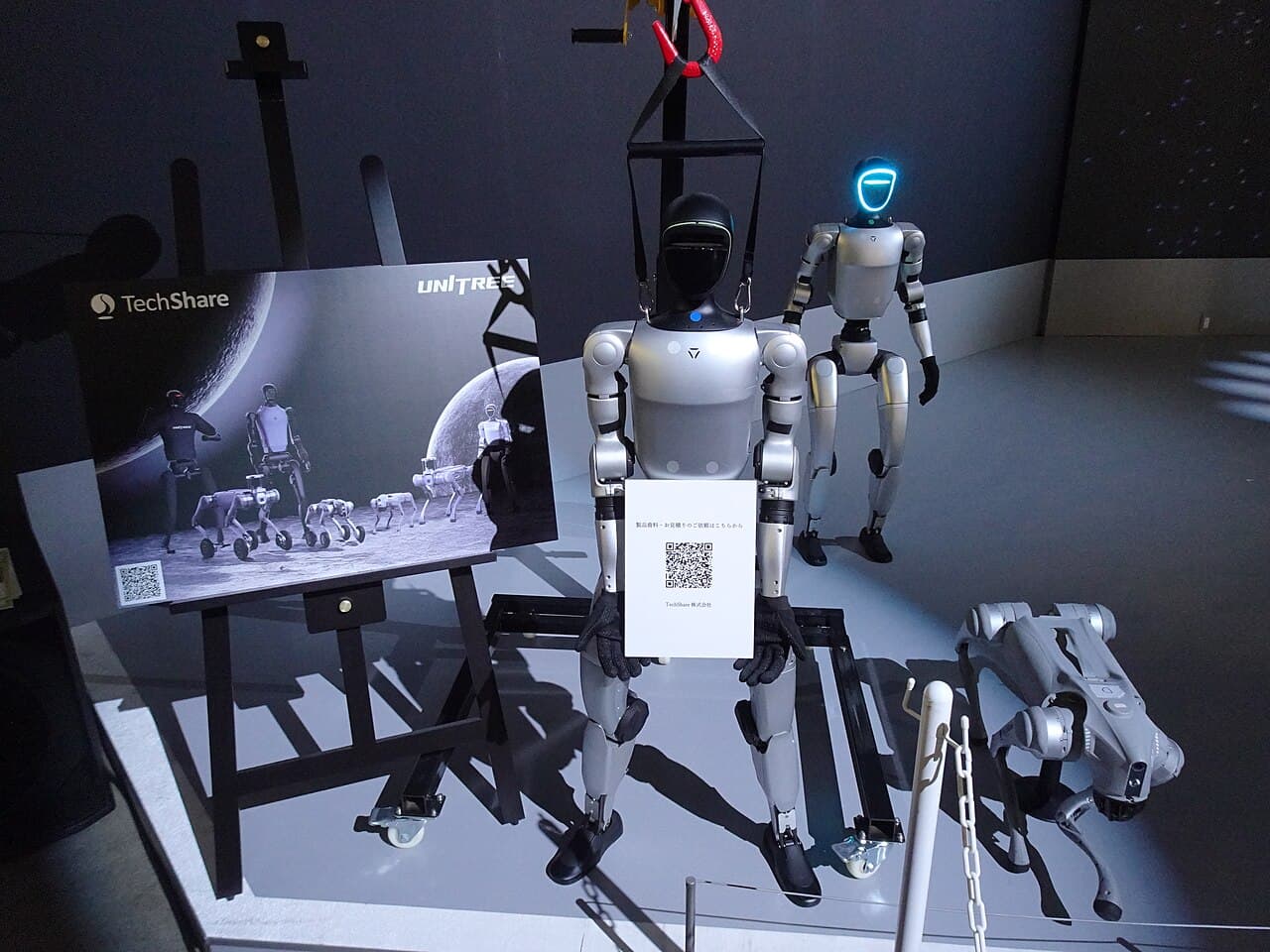
Unitree Robotics
Unitree's first universal full-size humanoid robot and the platform that put the company on the global humanoid map. It remains a high-mobility research platform with 3D LiDAR, depth sensing, and record-setting running performance.
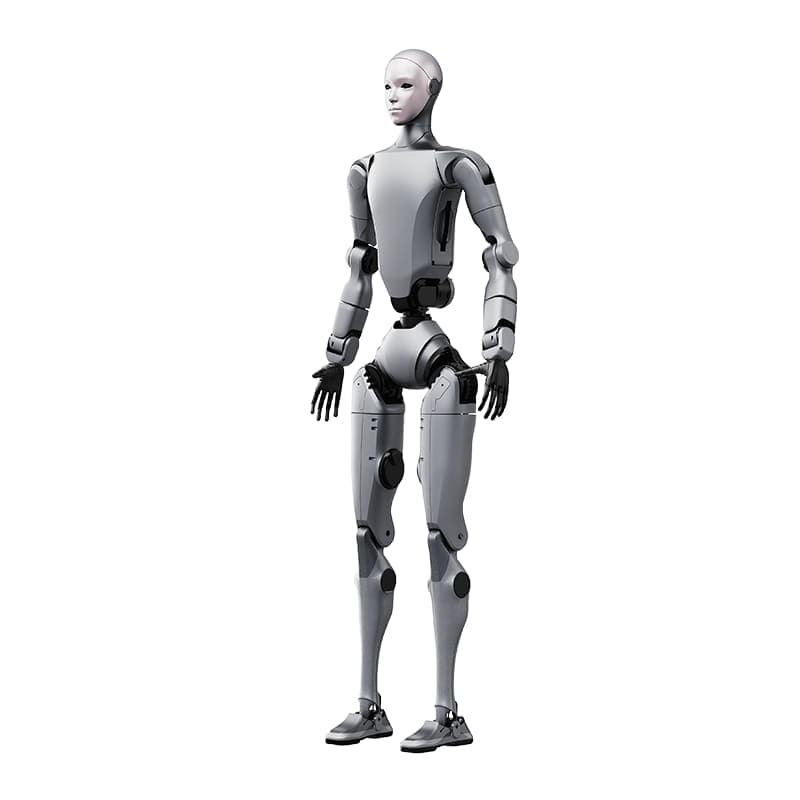
Unitree Robotics
Second-generation full-size humanoid platform aimed at broader embodied-AI and service use cases. H2 adds a bionic head, higher onboard compute, longer battery life, and a more capable upper body than H1. The H2+ variant - unveiled with Nvidia and Sharpa at COMPUTEX Taipei on June 1, 2026 - pairs the H2 body with Nvidia Blackwell-class compute, the Isaac GR00T stack, and Sharpa's 25-DoF dexterous hands as Nvidia's reference humanoid platform.
Unitree Robotics
Low-cost lightweight humanoid designed to push embodied-AI development toward broader developer and consumer experimentation. R1 integrates voice and image multimodal interaction with a smaller, cheaper body than G1 or H2.
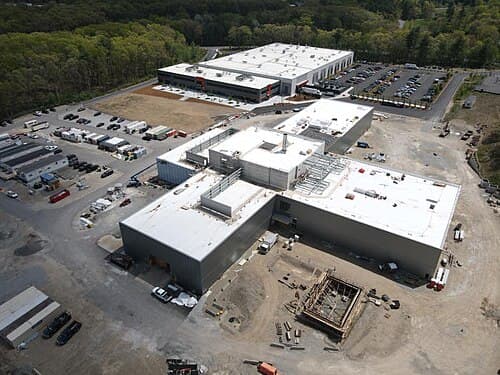
Commonwealth Fusion Systems
CFS' first planned grid-scale commercial fusion power plant, designed to deliver about 400 MW of clean electricity using the HTS magnet and tokamak stack proven through SPARC. The project is officially named the Fall Line Fusion Power Station and is planned for a 100-acre site at the James River Industrial Center in Chesterfield County, Virginia.
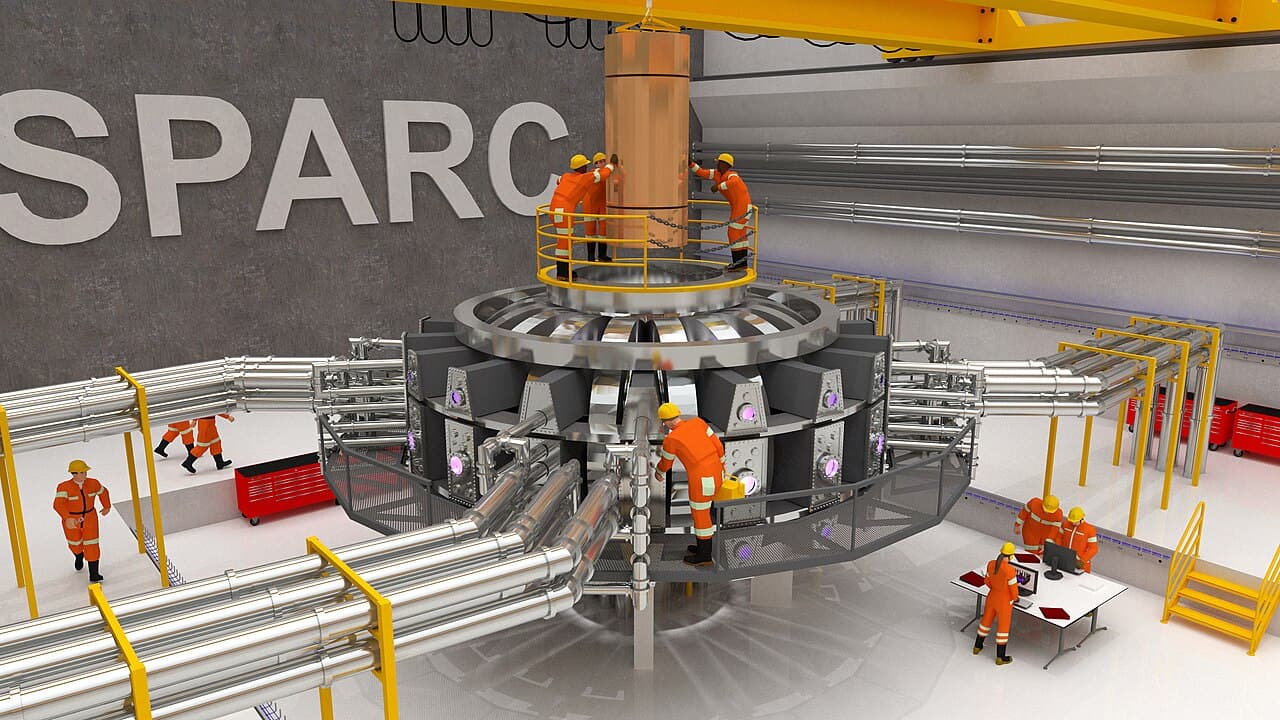
Commonwealth Fusion Systems
Compact, high-field tokamak designed to demonstrate net energy from fusion. It uses high-temperature superconducting magnets to achieve reactor-class magnetic fields in a much smaller machine, with peer-reviewed projections of roughly Q ~11 and ~140 MW of fusion power.
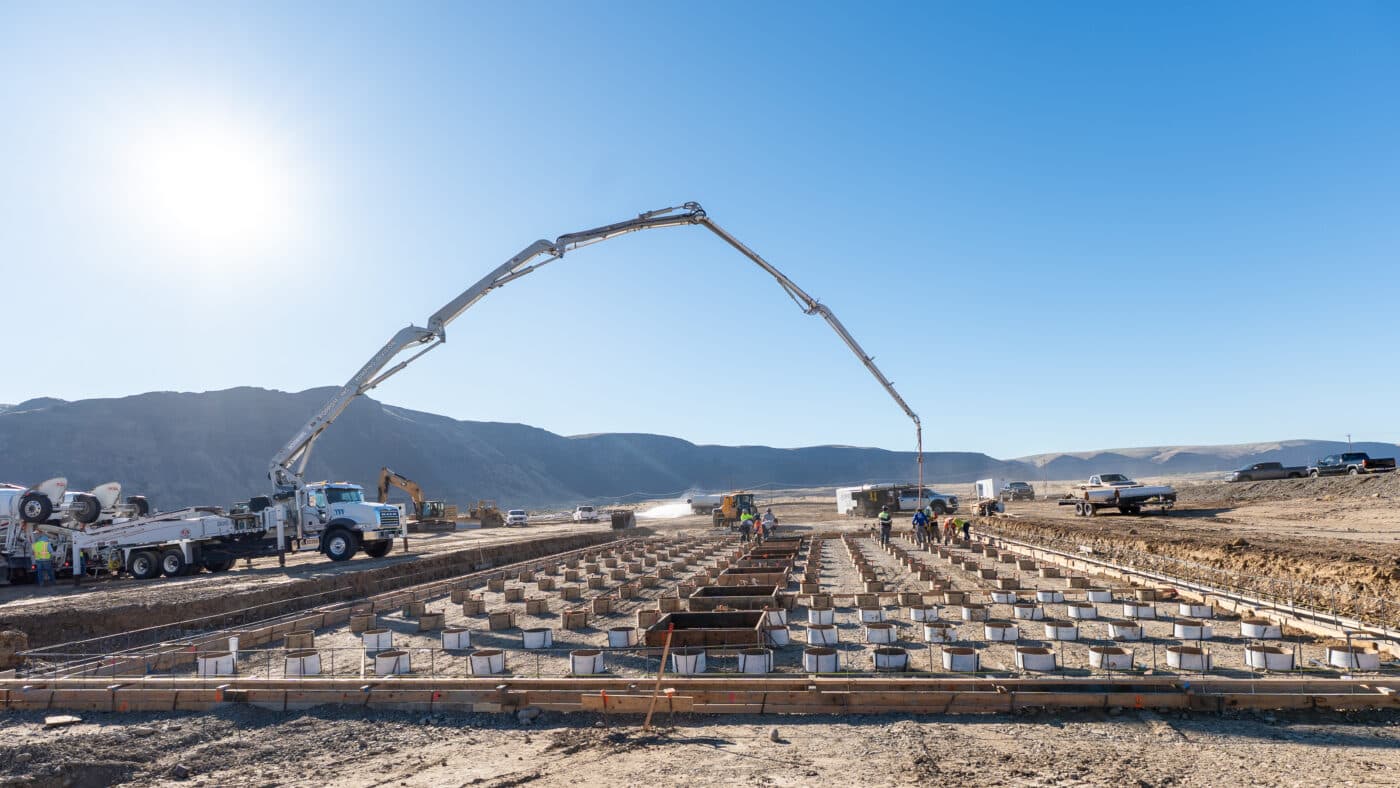
Helion Energy
First commercial fusion power plant, designed to generate 50+ MWe. Located in Malaga, Chelan County, Washington, on land leased from Chelan County PUD near Rock Island Dam. Power will be marketed by Constellation Energy to Microsoft data centers.
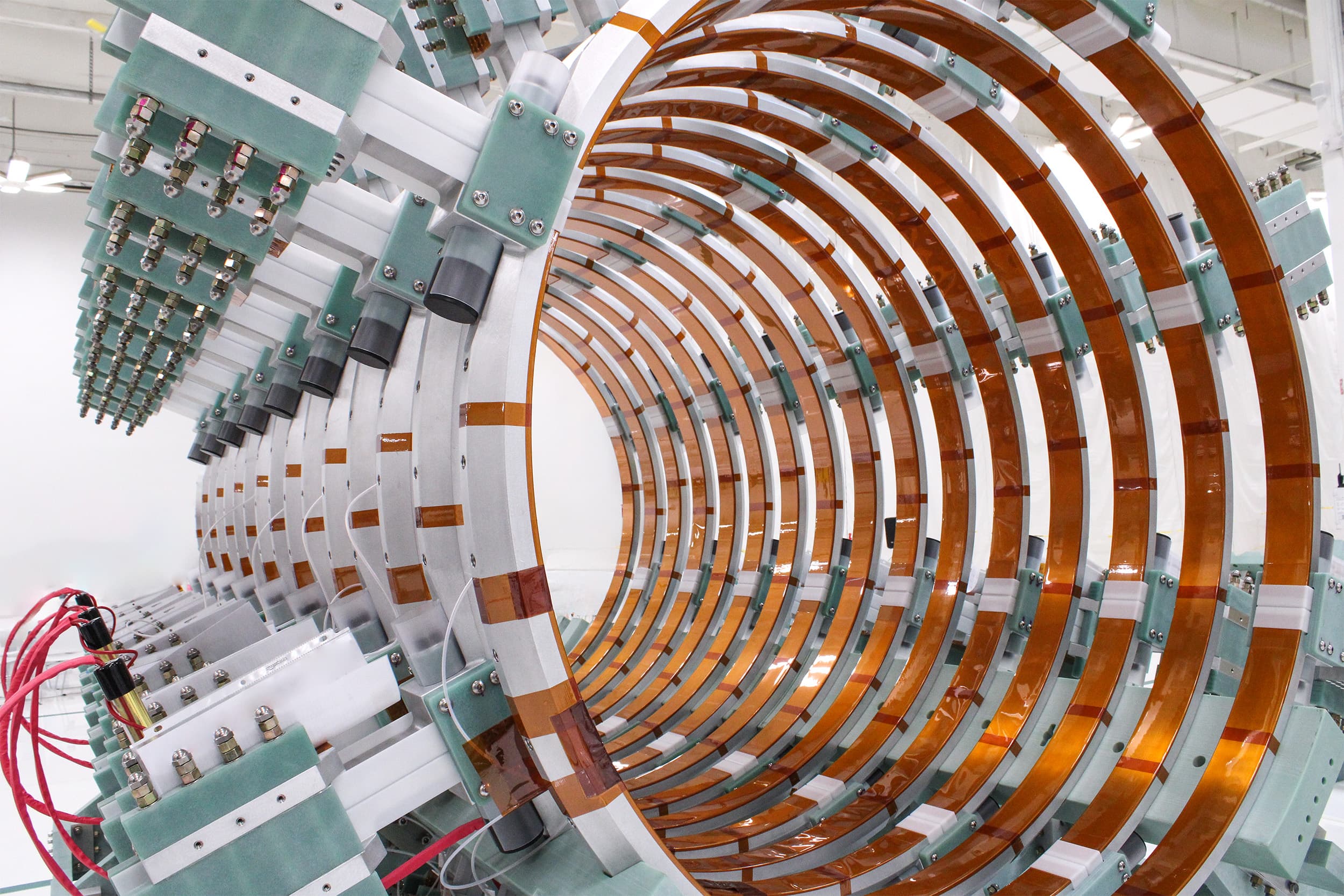
Helion Energy
7th-generation fusion prototype designed to demonstrate electricity production from fusion using Helion's pulsed magneto-inertial architecture and direct electricity recapture.
Helion Energy
Smaller, agile FRC fusion testbed roughly one-eighth the size of Polaris (~8 feet long) used to iterate on plasma formation and ring-merging experiments far faster than the larger machines. Helion sees Tiny Merge as a key learning loop to de-risk Orion ahead of the 2028 Microsoft delivery deadline.
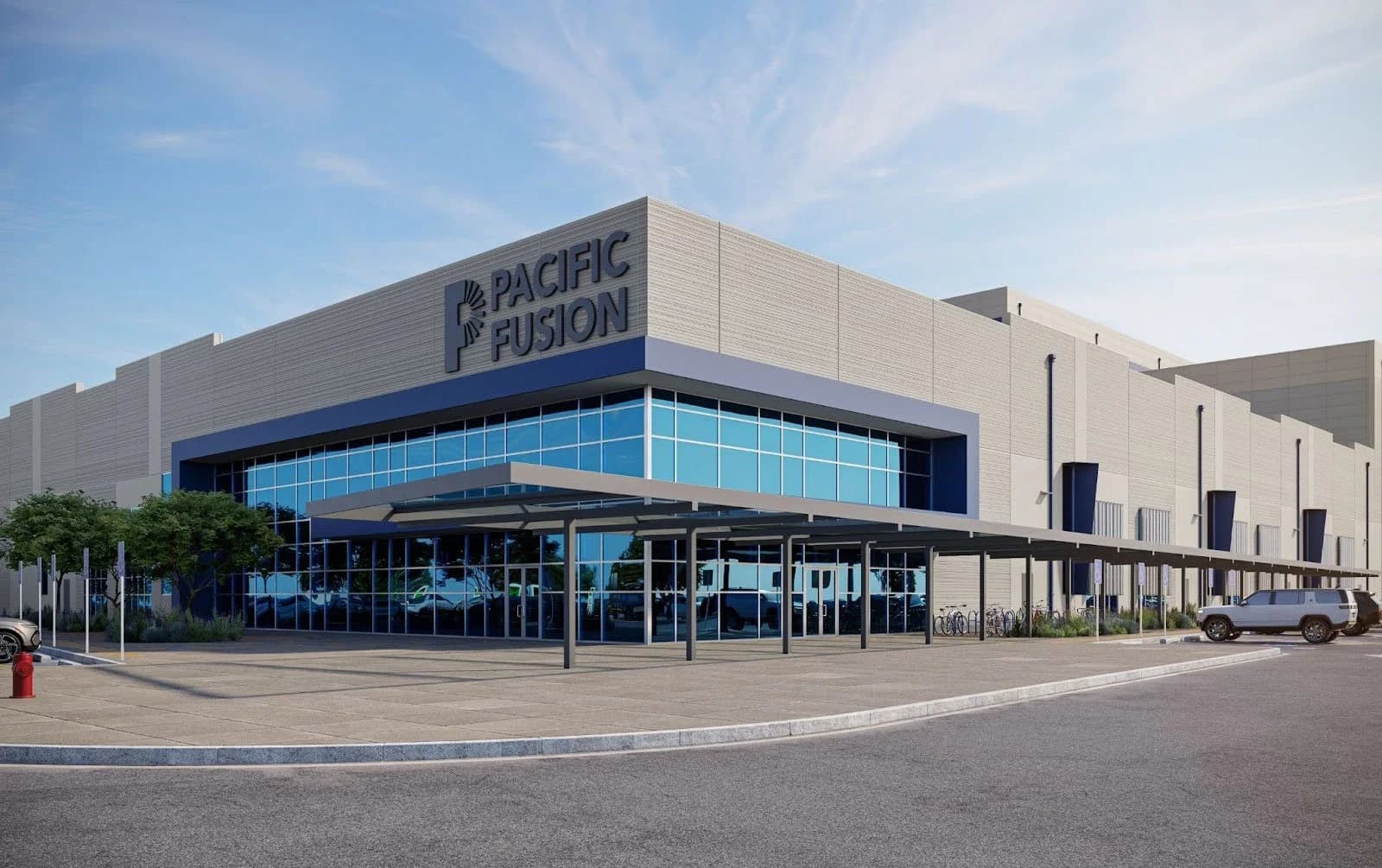
Pacific Fusion
Pacific Fusion's first-of-a-kind machine, to be assembled at the $1B Mesa del Sol campus in Albuquerque from 156 production-scale pulser modules (each 32 circular stages ringed with 10 bricks). It is designed to reach net facility gain, producing more fusion energy than the total energy stored in the system, and to do it at roughly 100x the facility gain of the National Ignition Facility for about a tenth of the cost.
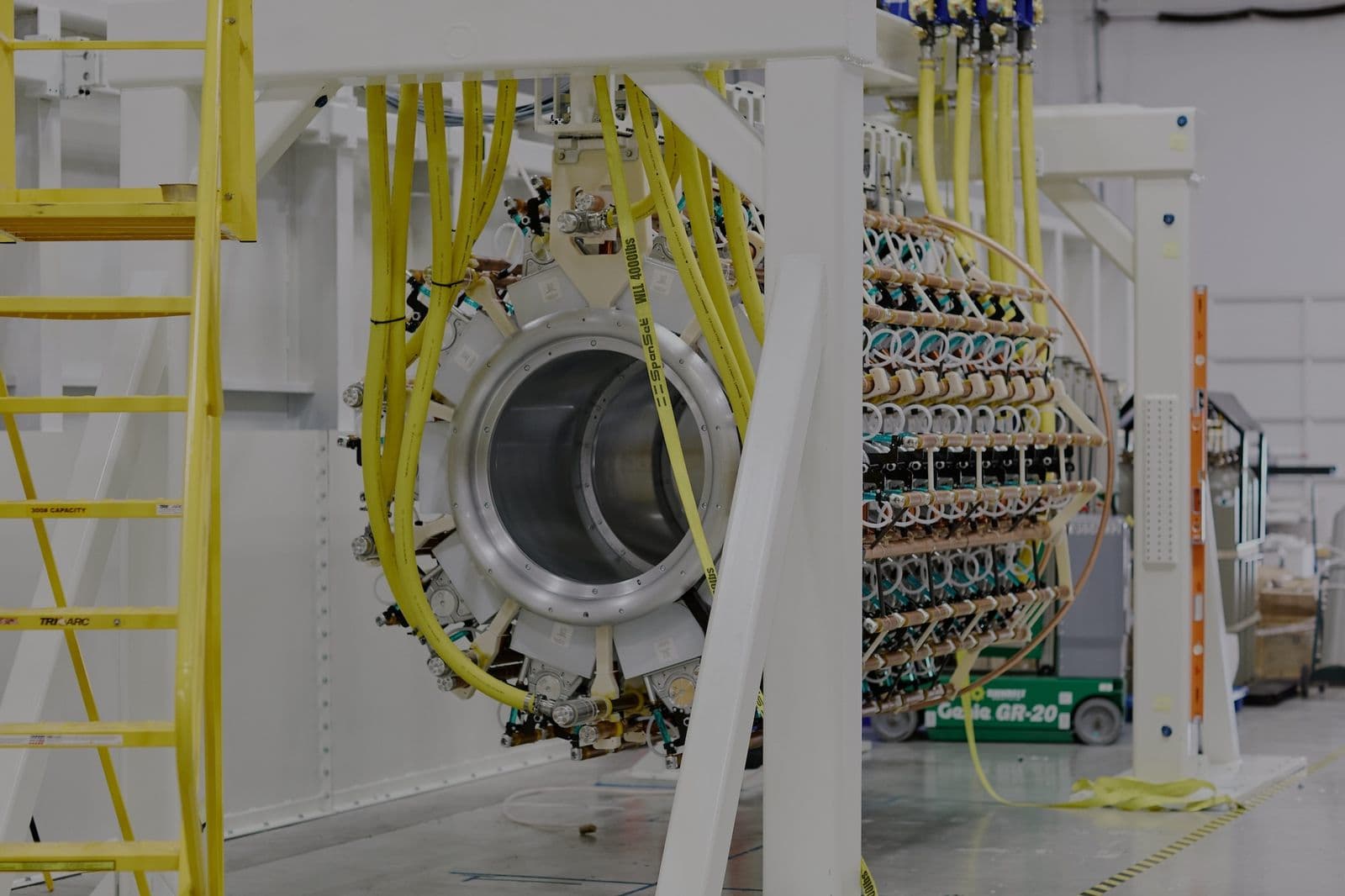
Pacific Fusion
The repeating building block of the Demonstration System: an impedance-matched Marx generator that stacks capacitor-and-switch 'bricks' into stages and synchronizes them into a single ultra-fast, high-current pulse. Getting one module right and then manufacturing it 156 times is the company's whole scaling strategy.
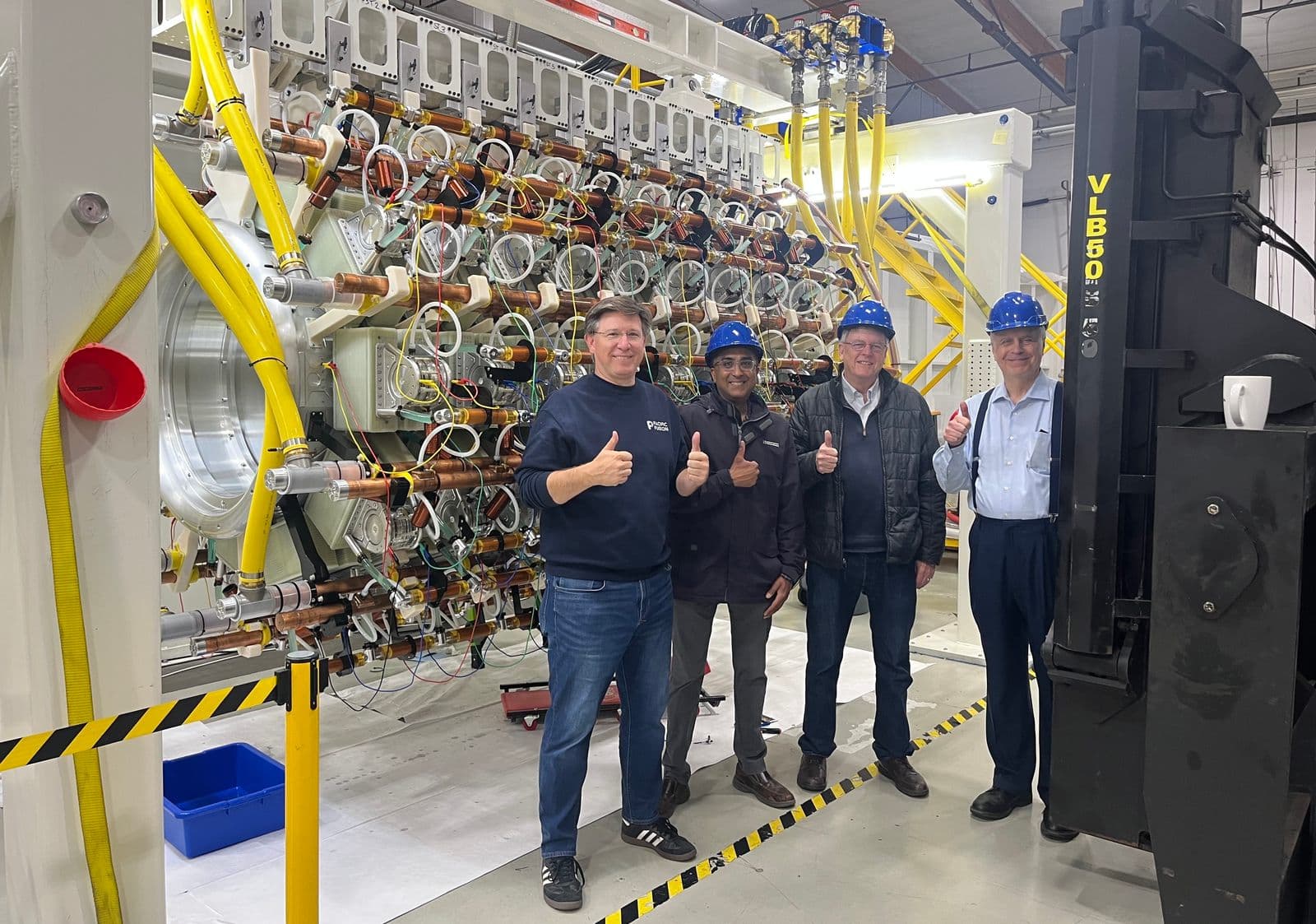
Pacific Fusion
The four-stage impedance-matched Marx generator prototype built at Lawrence Livermore National Laboratory under a cooperative research agreement. Sirius synchronizes electromagnetic waves onto a transmission line in a single step, which is what makes the architecture simpler and more efficient than conventional pulsed-power systems, and it is the machine that generated the empirical data validating Pacific Fusion's simulations.
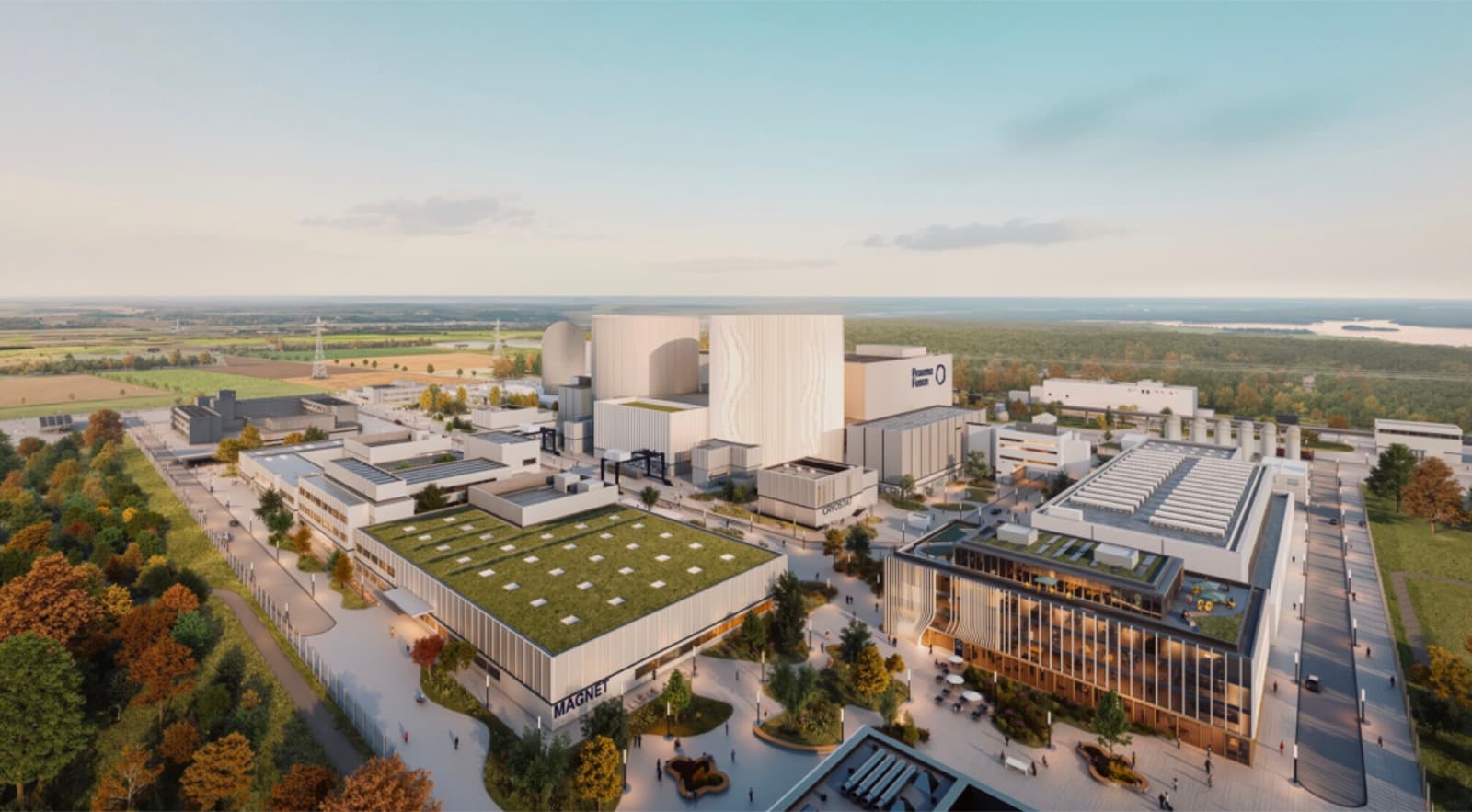
Proxima Fusion
Proxima's net-energy stellarator demonstrator, to be built at Garching near Munich next to the Max Planck Institute for Plasma Physics. Alpha is intended to be the first stellarator to achieve net energy gain (Q>1) and to prove out the manufacturing methods, materials and systems a commercial Stellaris plant would need.
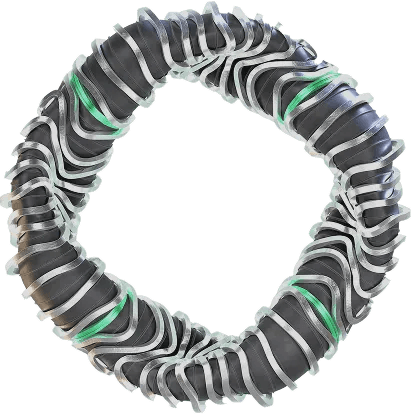
Proxima Fusion
Proxima's quasi-isodynamic stellarator power plant concept, published in February 2025 as the first stellarator power plant design optimized simultaneously for plasma physics, engineering and maintenance and validated through peer review. Quasi-isodynamic optimization cancels the net toroidal current, which is what lets a stellarator run continuously and avoid the disruptions that plague tokamaks.
TAE Technologies
TAE's first prototype commercial fusion power plant, designed to deliver net electrons to the grid from the company's hydrogen-boron fusion pathway and serve as the bridge to later utility-scale plants.
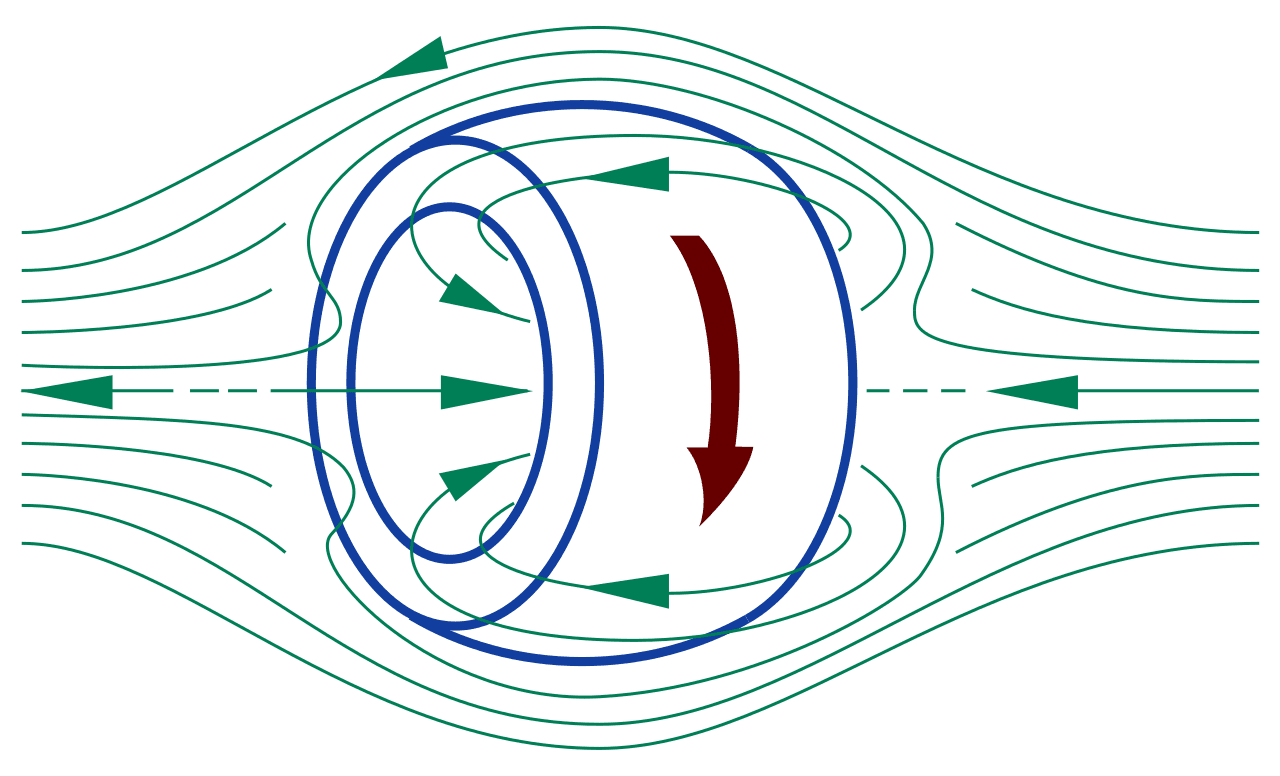
TAE Technologies
TAE's streamlined fusion research machine that forms field-reversed-configuration plasmas using only neutral beam injection, reducing reactor size, complexity, and cost versus Norman while preserving the path to commercial hydrogen-boron fusion.
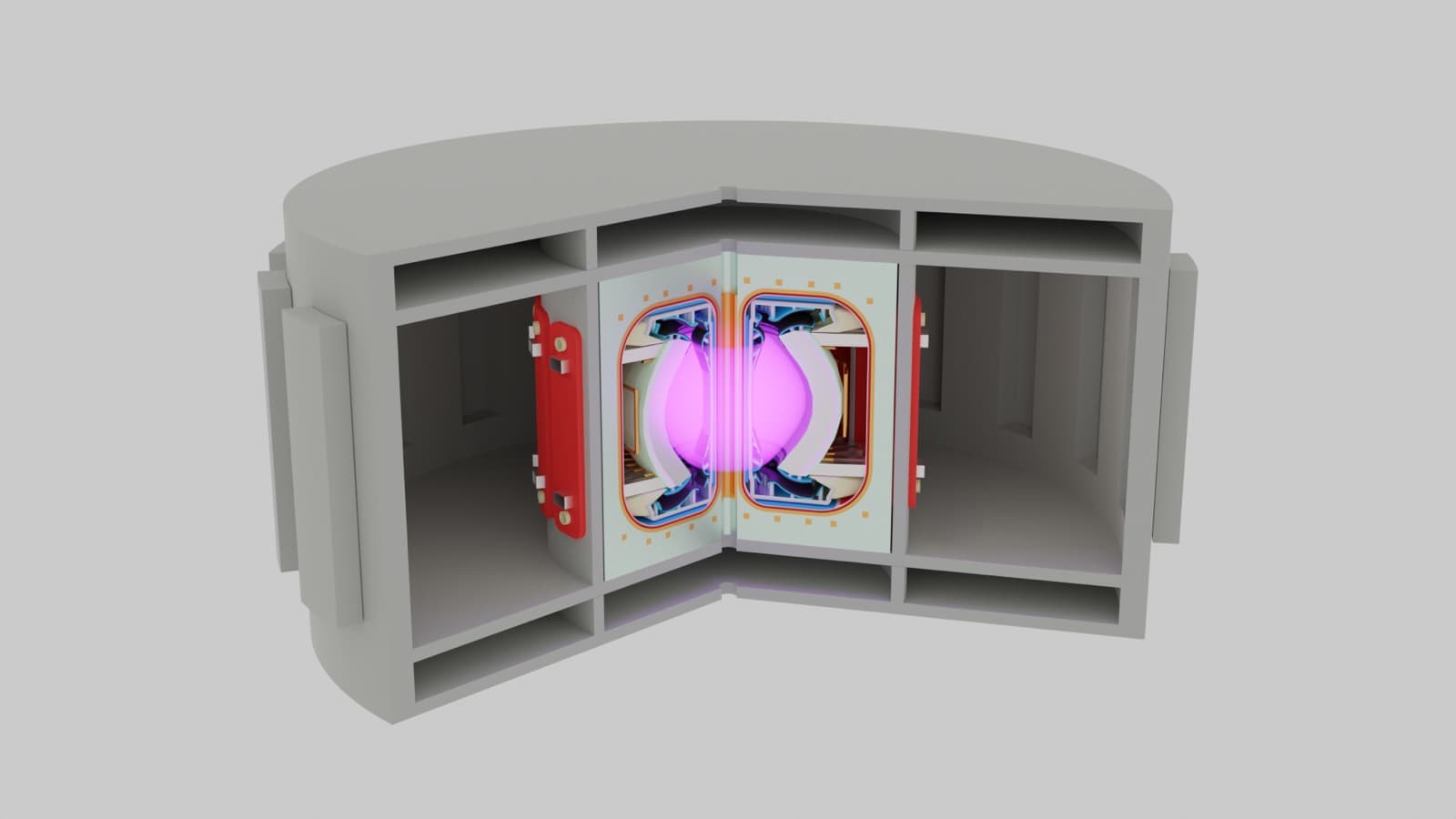
Tokamak Energy
Tokamak Energy's published fusion pilot-plant design, intended to show that a compact spherical tokamak with HTS magnets could deliver electricity to the grid. An 11-paper Focus Collection in Nuclear Fusion (August 2026) documented the pre-concept design; the company said in the same announcement that it will not construct the plant itself.
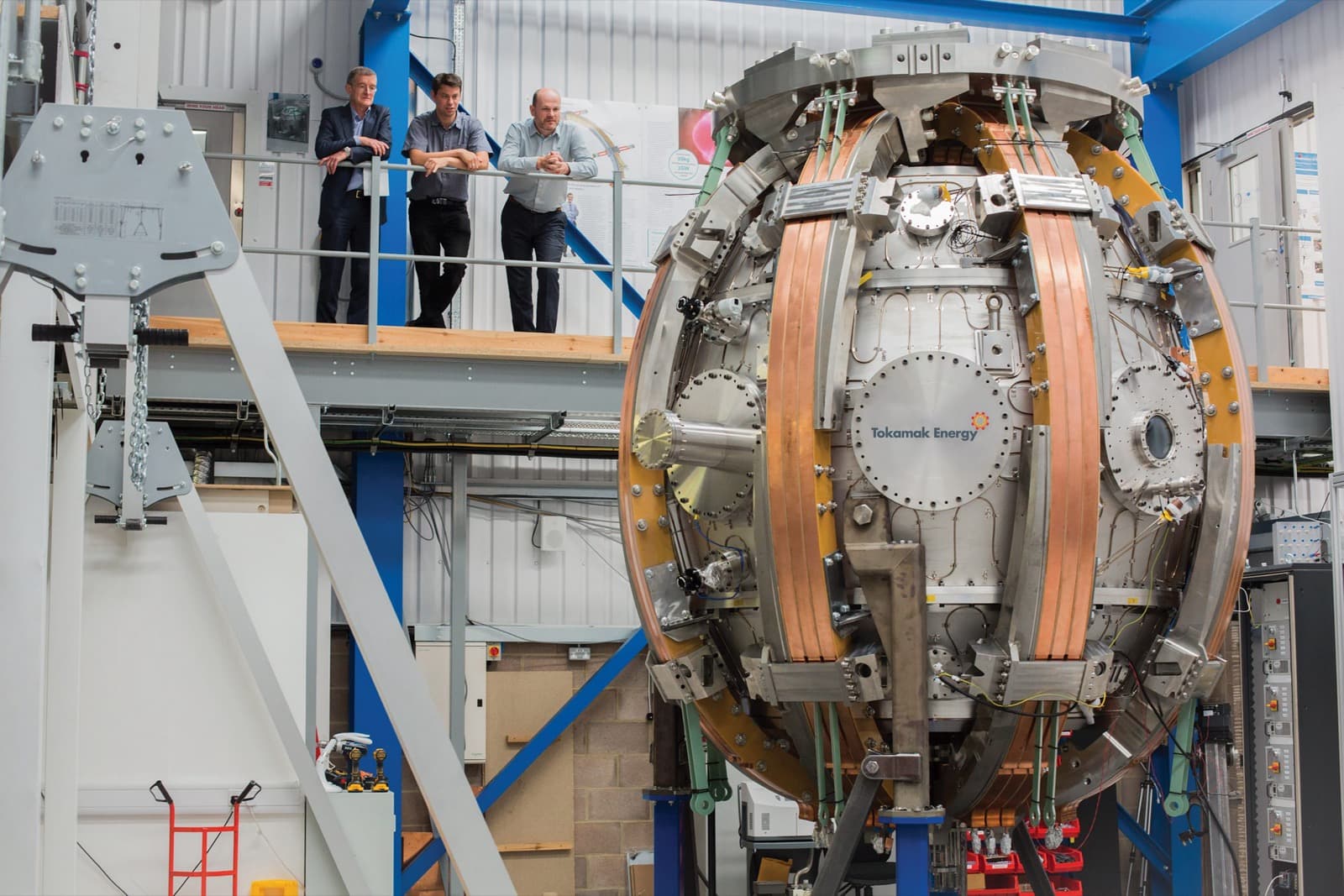
Tokamak Energy
Compact high-field spherical tokamak operating at the company's Oxfordshire campus since 2018 and the machine behind its plasma records. The spherical geometry confines plasma more efficiently per unit of magnetic field than a conventional tokamak, which is what makes a smaller, cheaper power plant plausible.
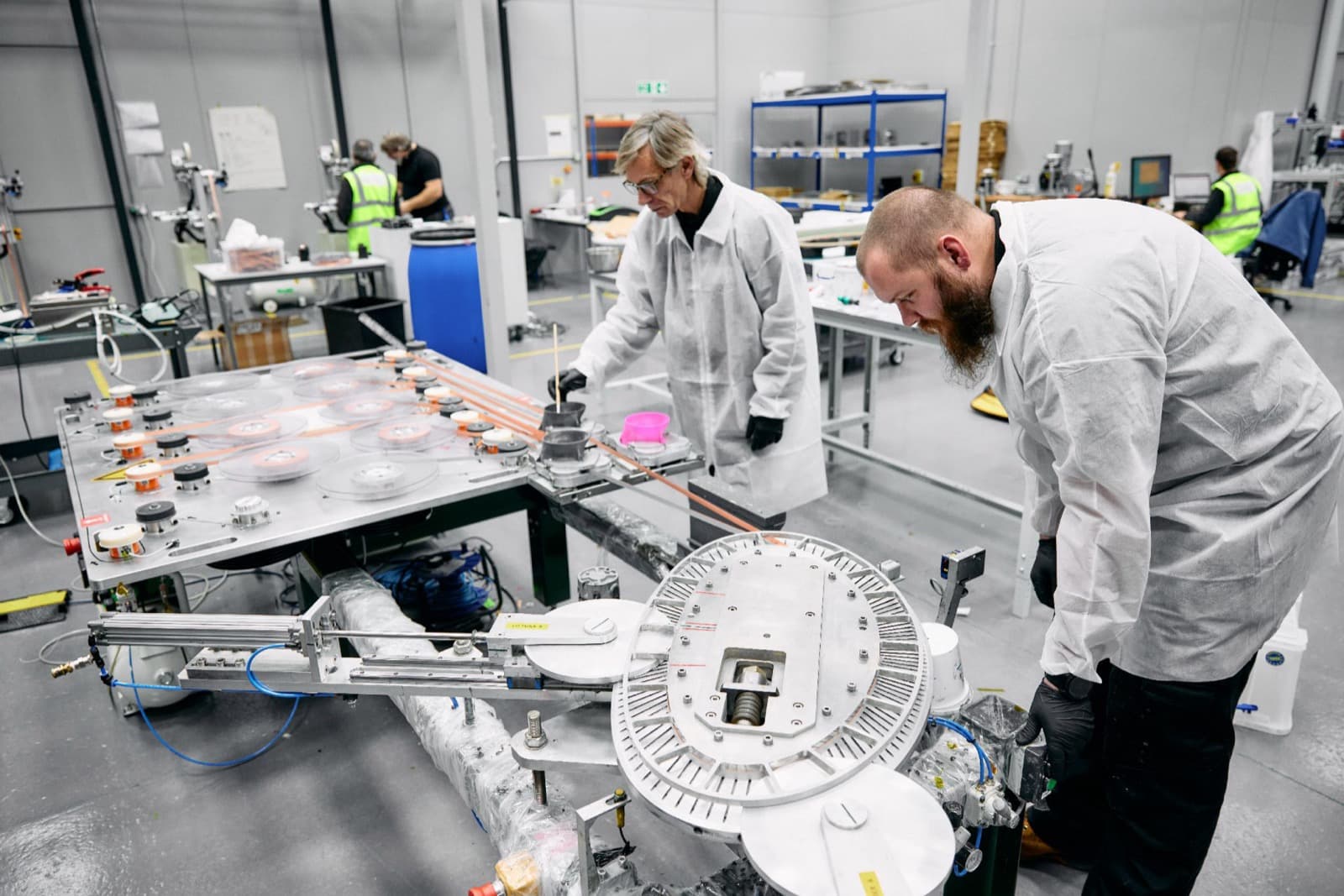
Tokamak Energy
The company's high-temperature superconducting magnet business, built on REBCO tape wound in-house, sold both into fusion programmes and into non-fusion markets including power distribution, propulsion, motors and generators, and analytical science. Demo4, its 44-coil demonstration system, is the technology proof point.
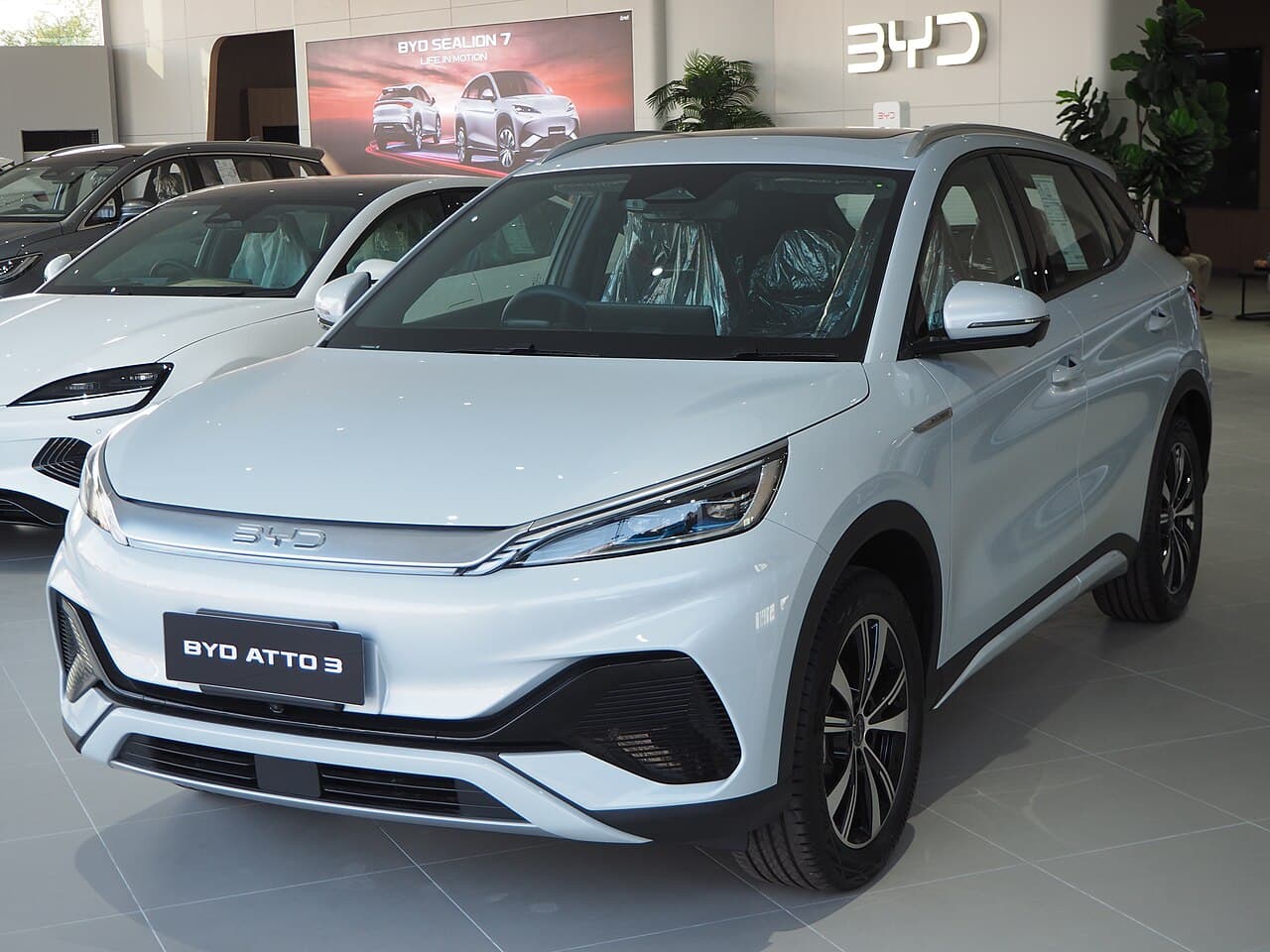
BYD
Compact electric crossover SUV, one of BYD's best-selling global models. Known as the Yuan Plus in China. Affordable pricing and Blade Battery technology make it a high-volume international model.
BYD
Seven-seat electric SUV shown at the Paris Motor Show on Oct. 12, 2026. BYD says European dealers start sales in Q1 2027. The rear-drive model is rated at up to 405 miles WLTP combined from a 115 kWh second-generation Blade battery. Flash Charging times are company claims on BYD's own chargers. Prices were not announced.
BYD
Dynasty flagship battery-electric sedan that went on sale in China on October 13, 2026 in three variants at 235,900, 249,900 and 275,900 yuan, below the August 21 pre-sale band of 249,900 to 299,900 yuan. Rear-drive models are rated 1,008 km CLTC and the all-wheel-drive flagship 880 km. CnEVPost reported a standard 102.3 kWh second-generation Blade battery and a company claim of a 10% to 97% charge in 9 minutes. A plug-in hybrid was not priced.
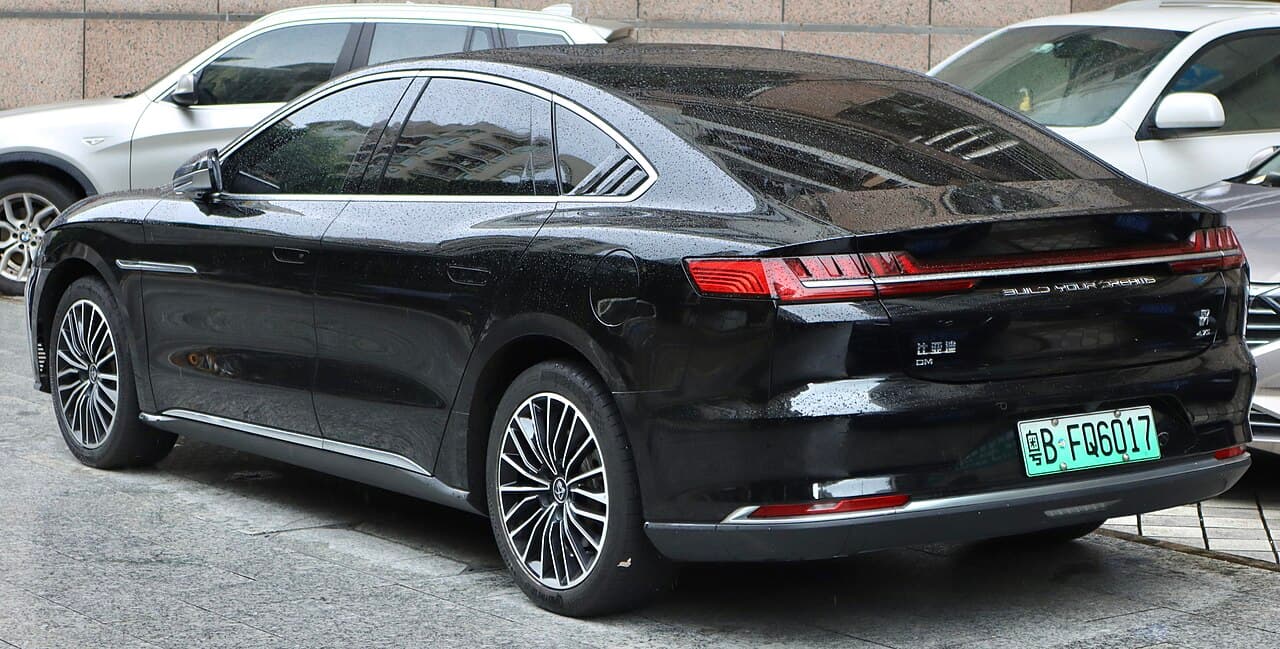
BYD
Flagship luxury sedan available in pure electric (EV) and plug-in hybrid (DM) variants. The first vehicle to feature BYD's Blade Battery technology. Positions BYD in the premium segment against Mercedes and BMW.
BYD
Second-generation Seagull hatchback. Ocean sales chief Zhang Zhuo opened China blind pre-orders on October 9, 2026 with six exterior colors and no published prices. MIIT filings list 4,205 x 1,810 x 1,570 mm, a 2,650 mm wheelbase, a 95 kW rear permanent-magnet motor and FinDreams LFP packs. Zhang said in August it would launch in 2026.
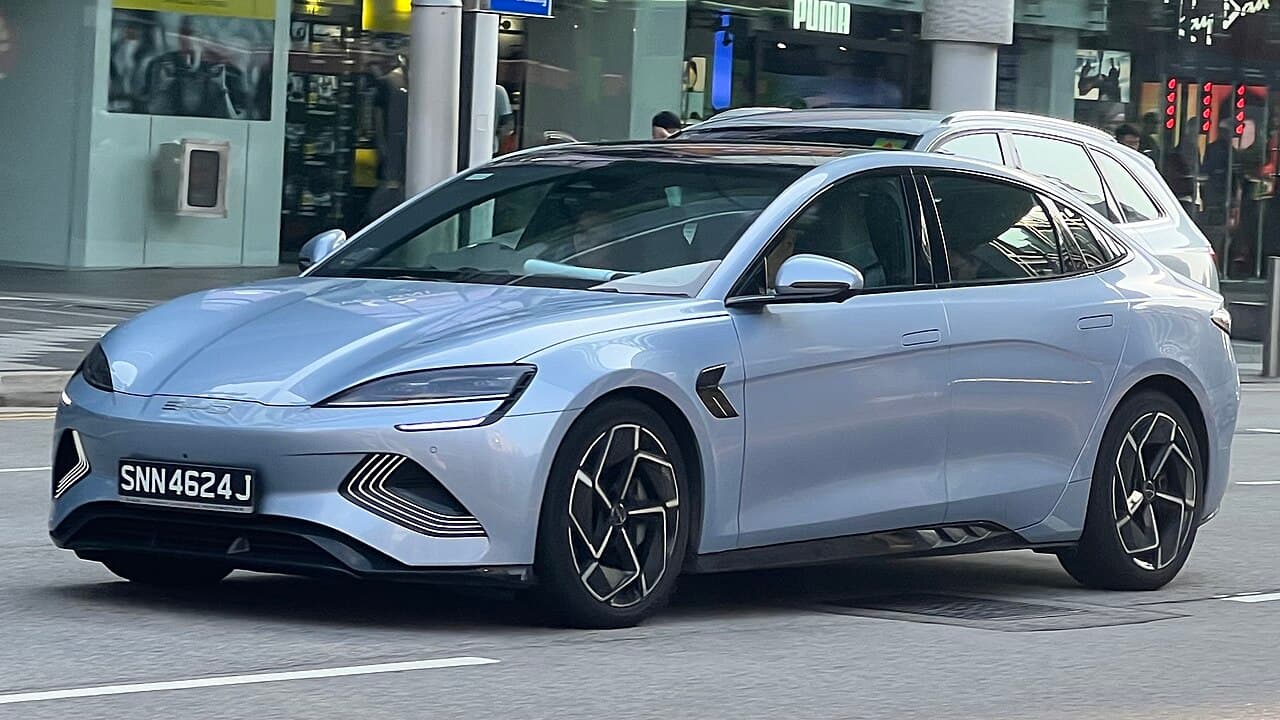
BYD
All-electric performance sedan competing directly with the Tesla Model 3. Features Blade Battery, available dual-motor AWD, and BYD's cell-to-body (CTB) technology that integrates the battery into the vehicle structure.
BYD
In-house automotive power-semiconductor business supplying the IGBT modules and silicon-carbide (SiC) MOSFETs used in BYD's electric-drive inverters and onboard chargers, giving BYD's EVs a vertically integrated power-electronics stack that most rivals still buy from third parties (Infineon, STMicro, etc.). Also supplies chips externally to other automakers.
BYD
BYD's Denza Z9S is a mid-to-large battery-electric sedan launched in China on September 23, 2026. The Flash Charge Premium and Flagship are rear-drive 370 kW cars with CLTC ranges of 920 km and 1,100 km; the e3 Flash Charge Performance uses an 890 kW tri-motor setup, 780 km CLTC, and a claimed 2.68-second 0-100 km/h time. Denza said the Flagship's 1,100 km CLTC figure is a record among mass-produced battery-electric cars. CarNewsChina lists 102.326 kWh packs on the Premium and Performance and 122.496 kWh on the Flagship, with Denza claiming 10% to 70% flash charging in five minutes.
BYD
BYD's first humanoid robot, a service-oriented machine designed to greet customers and demo vehicles in BYD's Di Space showrooms. Built around 360-degree vision, facial and lip-movement recognition, and gesture recognition, with real-time two-way translation across 6 Chinese dialects and 6 foreign languages, positioning BYD alongside Tesla, Unitree, XPeng, and Chery in the humanoid-robot race.
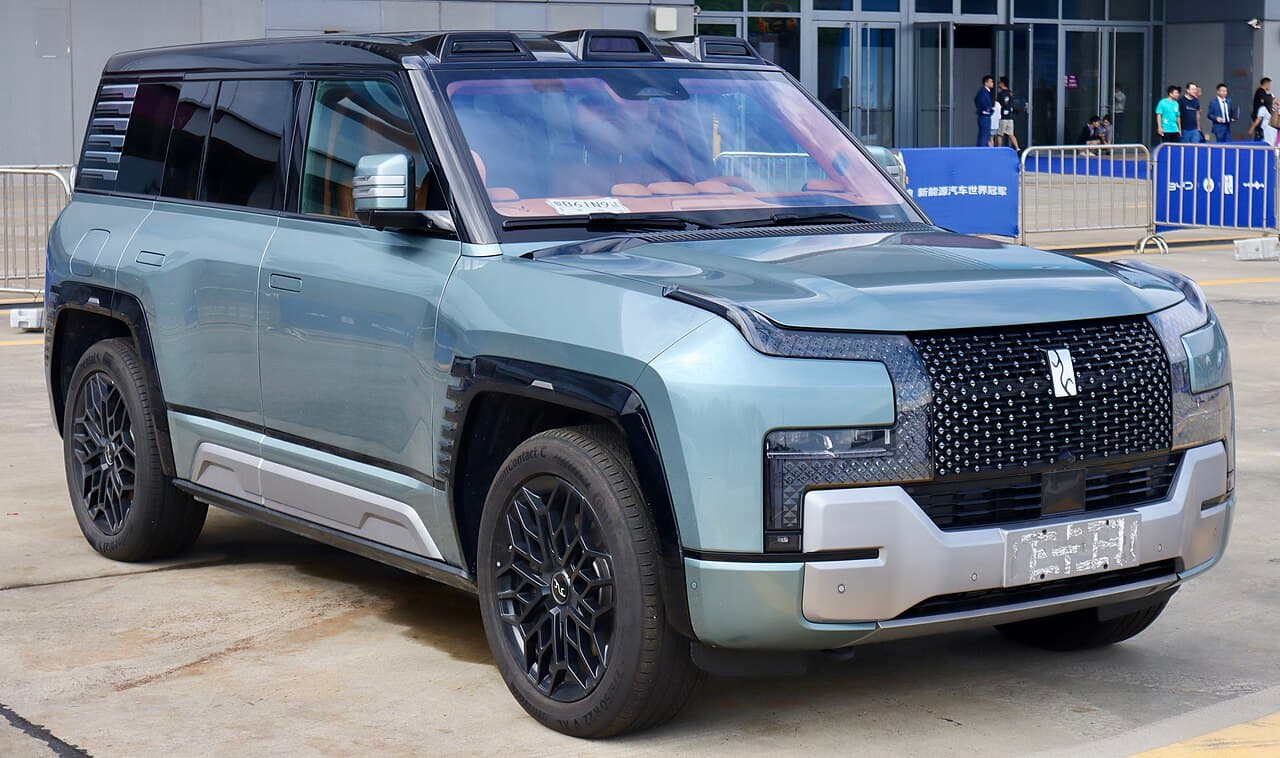
BYD
Ultra-luxury full-size off-road SUV under BYD's premium Yangwang brand. Features four independent electric motors, a plug-in hybrid powertrain with over 1,100 hp, and the ability to float and propel itself on water.
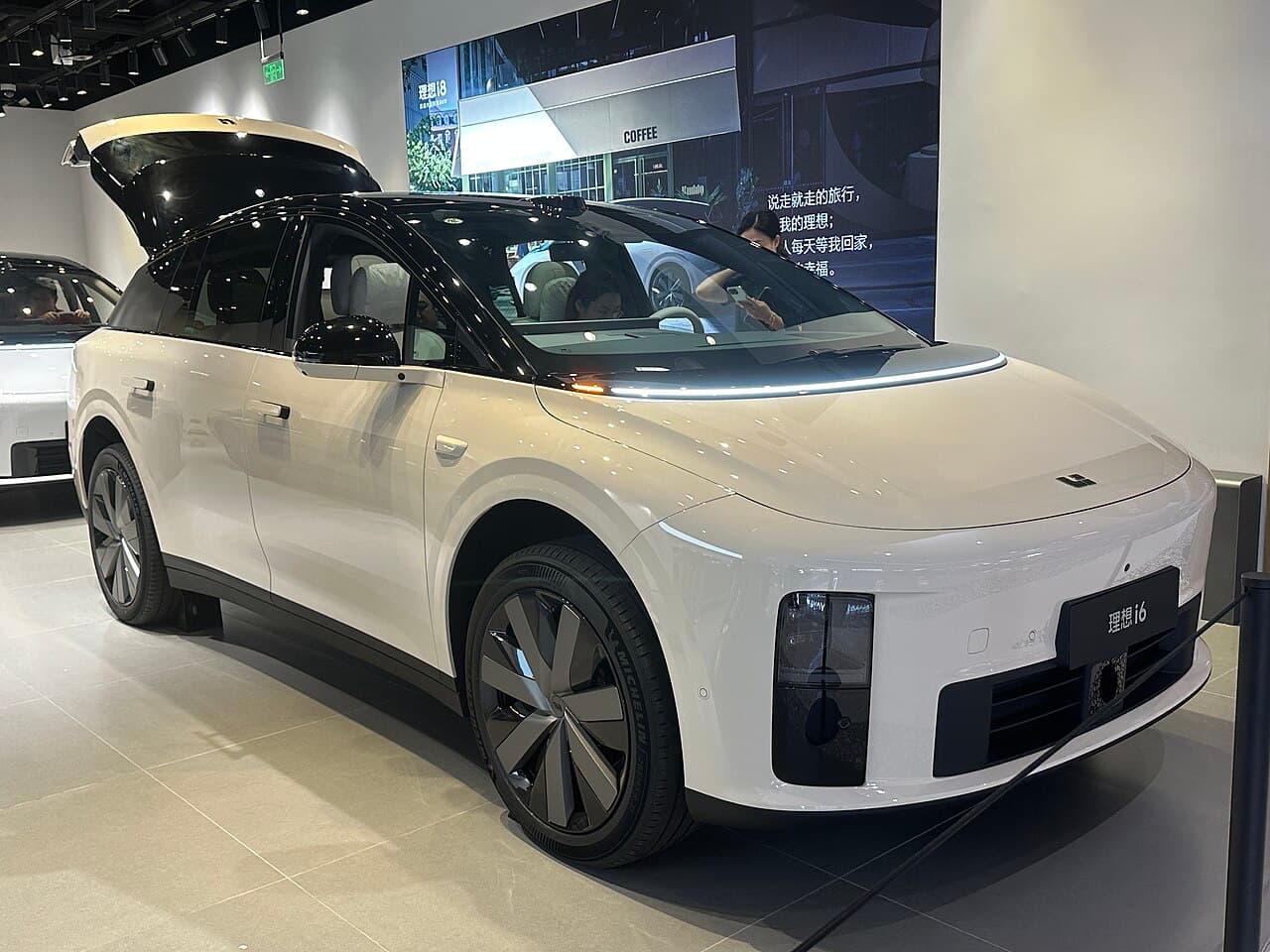
Li Auto
Five-seat all-electric SUV that became Li Auto's sales backbone - an affordable, long-range BEV built on a 5C LFP pack.

Li Auto
Six-seat battery-electric family SUV - part of Li Auto's push to build a pure-electric lineup alongside its EREVs.
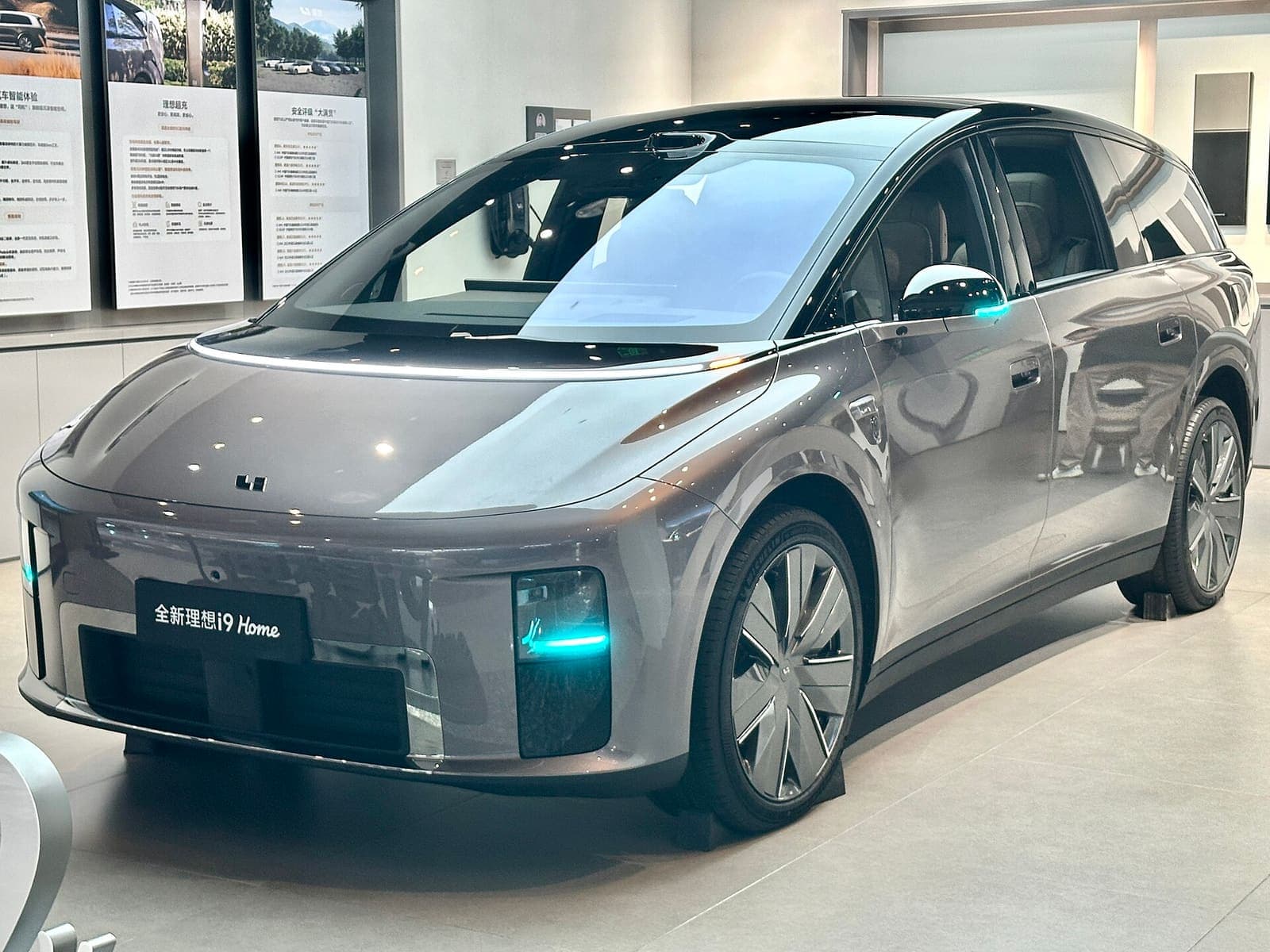
Li Auto
Six-seat flagship battery-electric family SUV and the first vehicle on Li Auto's second-generation pure-EV platform, combining the company's self-developed battery, electric motor, M100 chip and assisted-driving model.
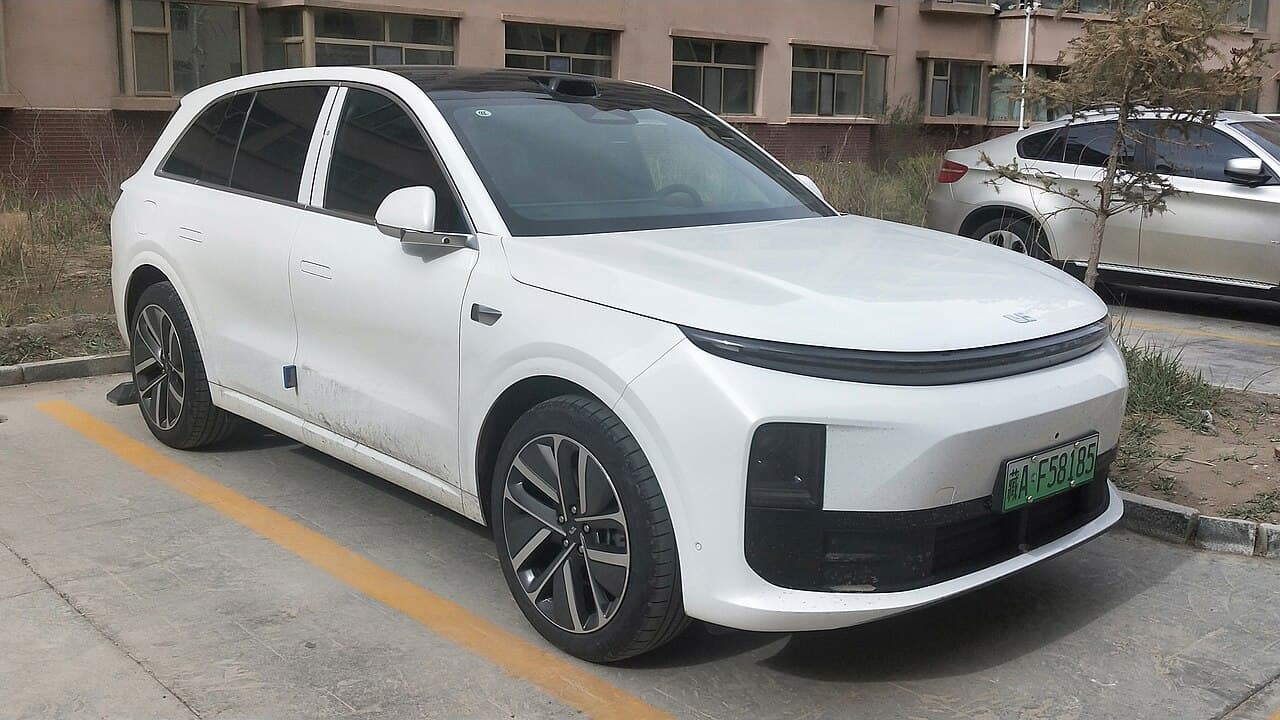
Li Auto
Entry-level EREV SUV and Li Auto's most affordable model, broadening the L-series to a lower price point.
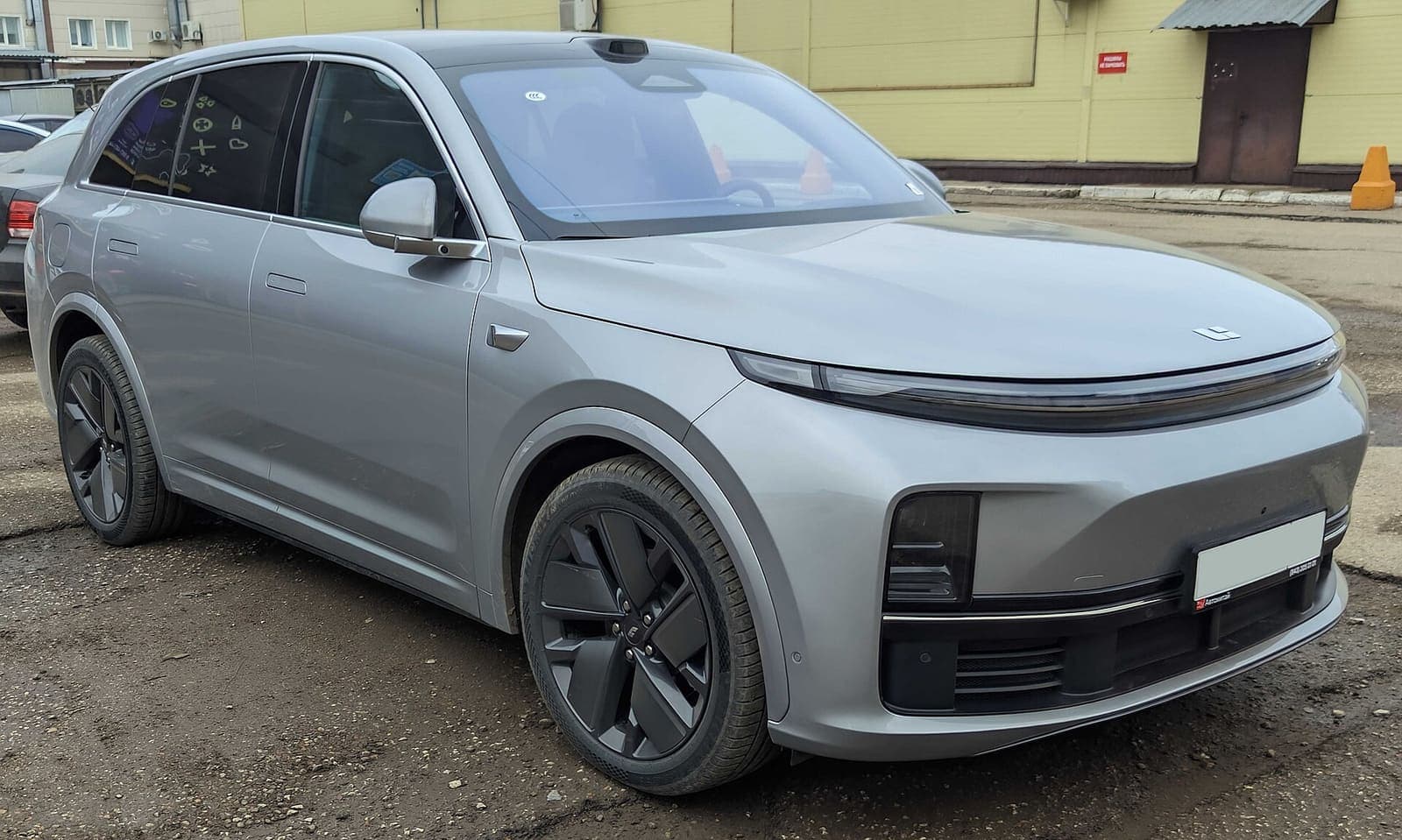
Li Auto
Five-seat extended-range SUV that Li Auto's official L7 page still presents as a current model, with Ultra and Max trims. The page lists a 52.3 kWh pack, CLTC combined range up to 1,421 km, CLTC electric range of 286 km and 0-100 km/h in 5.3 seconds, and says specifications may vary by market. It was missing from this catalog. No deployed L7 image is on file.

Li Auto
All-new five-or-family EREV SUV launched in June 2026 in Ultra and Livis trims, with a 72.7 kWh 5C battery, third-generation range extender, Qualcomm Snapdragon 8797 cockpit chip, steer-by-wire and rear-wheel steering. Ultra uses Magic Carpet air suspension and one MACH M100 chip; Livis uses 800V active suspension, electro-mechanical brake and dual MACH M100 chips.

Li Auto
Six-seat full-size flagship EREV SUV. The all-new 'L9 Livis' launched May 15, 2026 with an M100 chip, MindVLA autonomy, 800V architecture and active suspension; it entered Kazakhstan production in July 2026 as Li Auto's first overseas-built model.
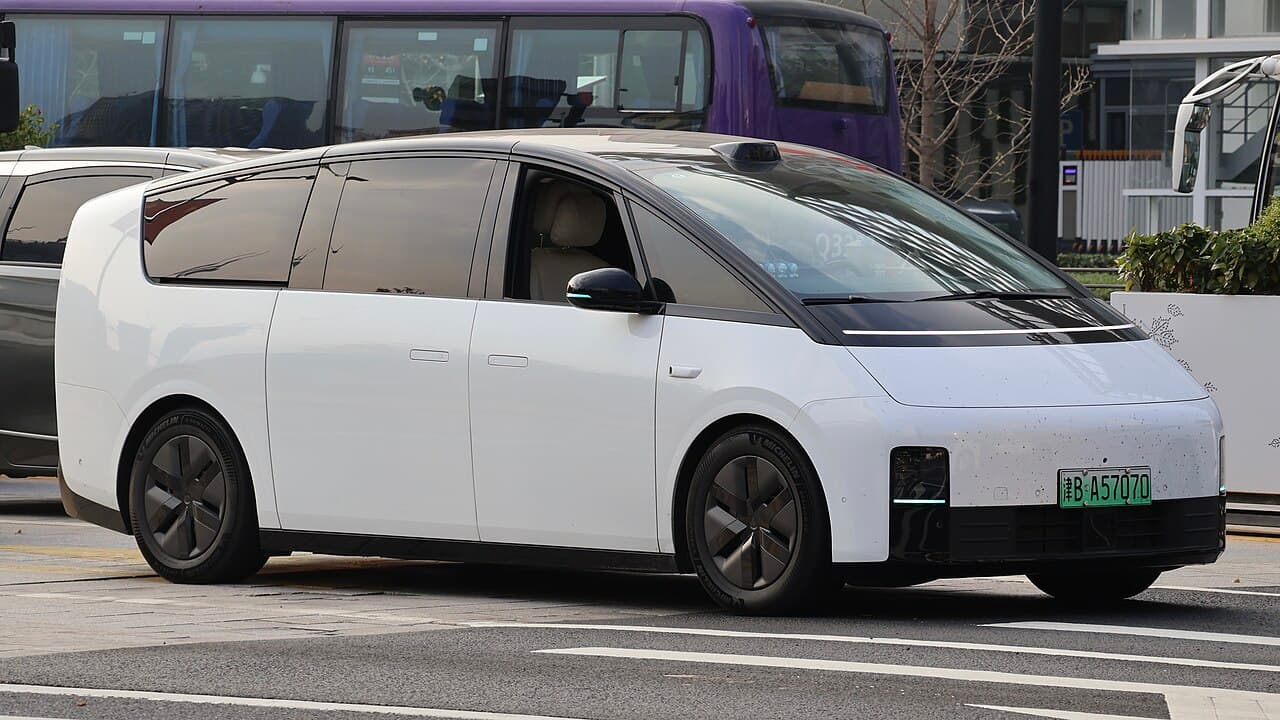
Li Auto
Li Auto's first battery-electric vehicle - a premium all-electric MPV with a distinctive aerodynamic shape and 5C fast charging.
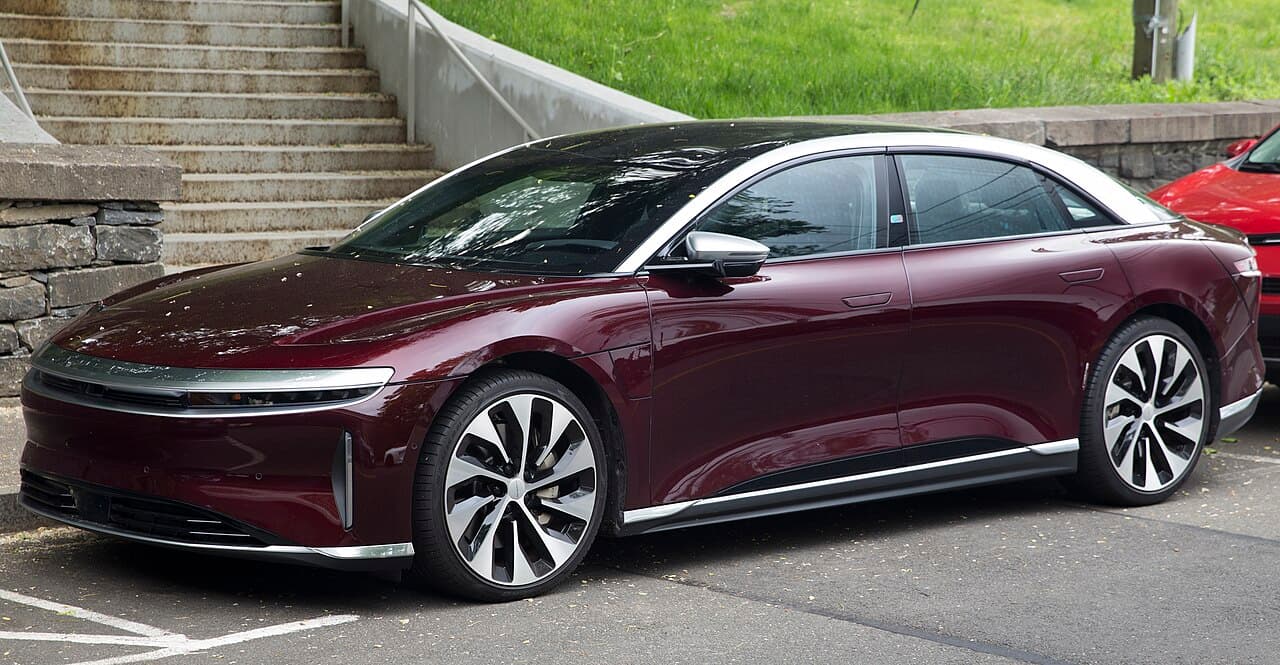
Lucid Motors
Ultra-luxury electric sedan with industry-leading range and efficiency. Features Lucid's proprietary 900V architecture and miniaturized drive units. Available in Pure, Touring, Grand Touring, and Sapphire trims - the Sapphire producing 1,234 hp with a 1.89-second 0–60 time.
Lucid Motors
Lucid's first midsize model, a sleek crossover on the lower-cost Atlas-based 800V midsize platform, aimed at the Tesla Model Y. A more rugged sibling model, Earth, is planned to follow Cosmos to market by roughly a year. The midsize platform uses a next-generation centralized 800V architecture with bidirectional charging and a new 'Atlas' drive unit that is about 23% lighter and has 30% fewer parts than Lucid's current-generation motors.
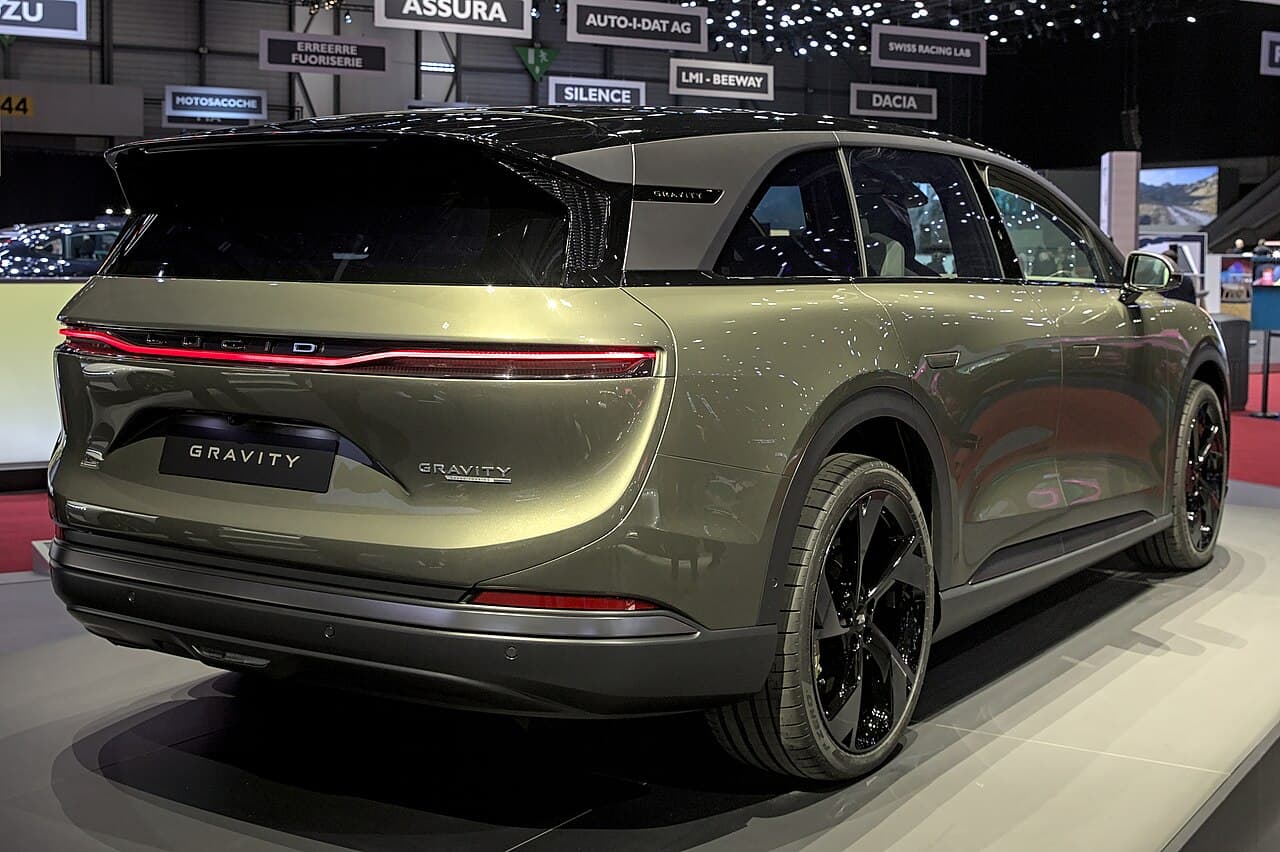
Lucid Motors
All-electric luxury SUV with three rows of seating, built on Lucid's 900V platform. Designed to combine the Air's range and performance leadership with SUV versatility, targeting the premium SUV market against the BMW iX, Mercedes EQS SUV, and Tesla Model X. The Gravity-based platform also underpins the Lucid-Nuro-Uber robotaxi.
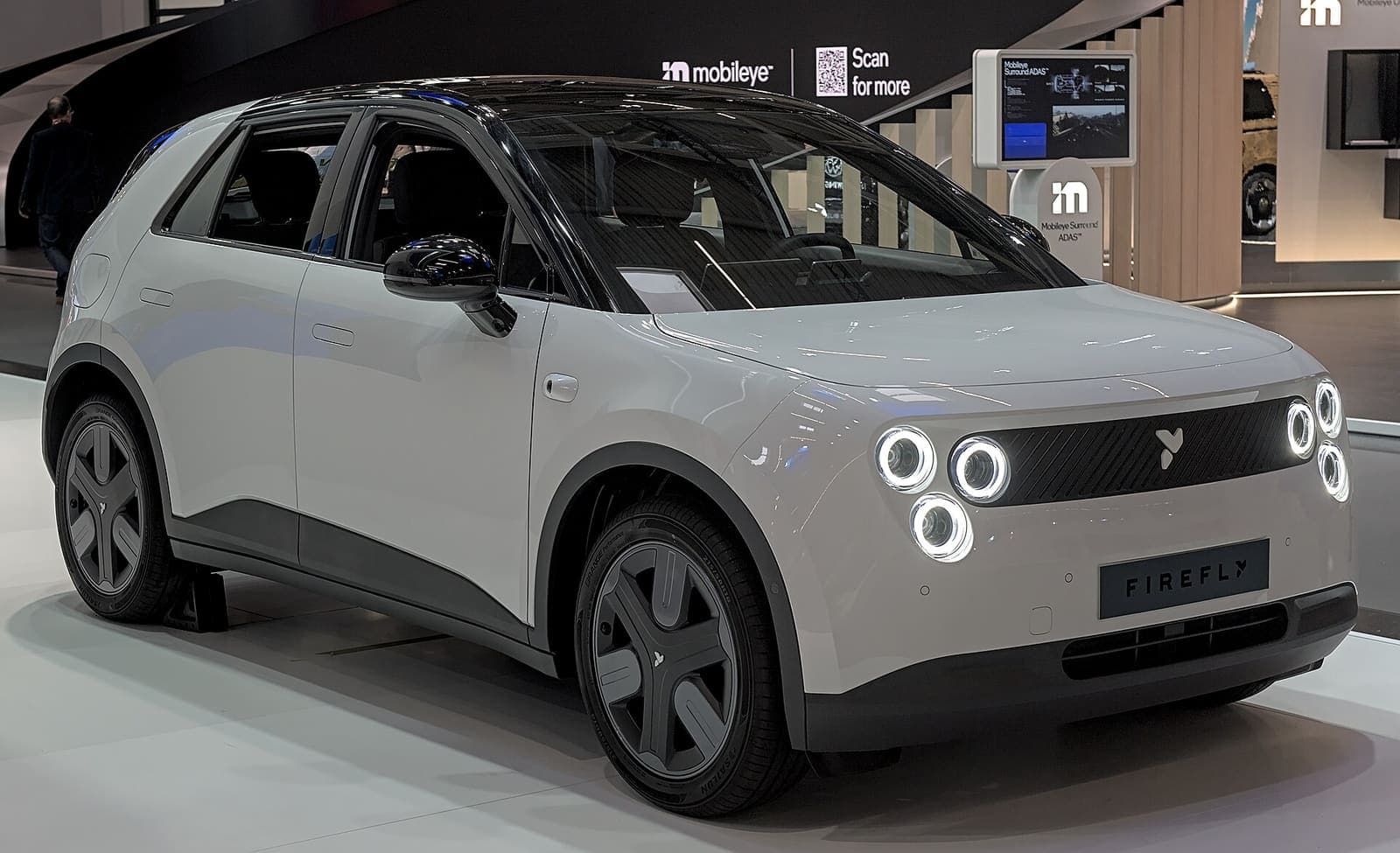
NIO
Boutique premium compact EV and NIO's third, entry-level brand - positioned below NIO and ONVO and serving as the group's lead export model. The 2026 upgrade (launched April 7) bumped power to a 120 kW (161 hp) motor while keeping a 42.1 kWh battery and ~420 km CLTC range. firefly is NIO's spearhead in international markets, with sales across Europe (Norway, Netherlands, Belgium and more) plus Singapore.
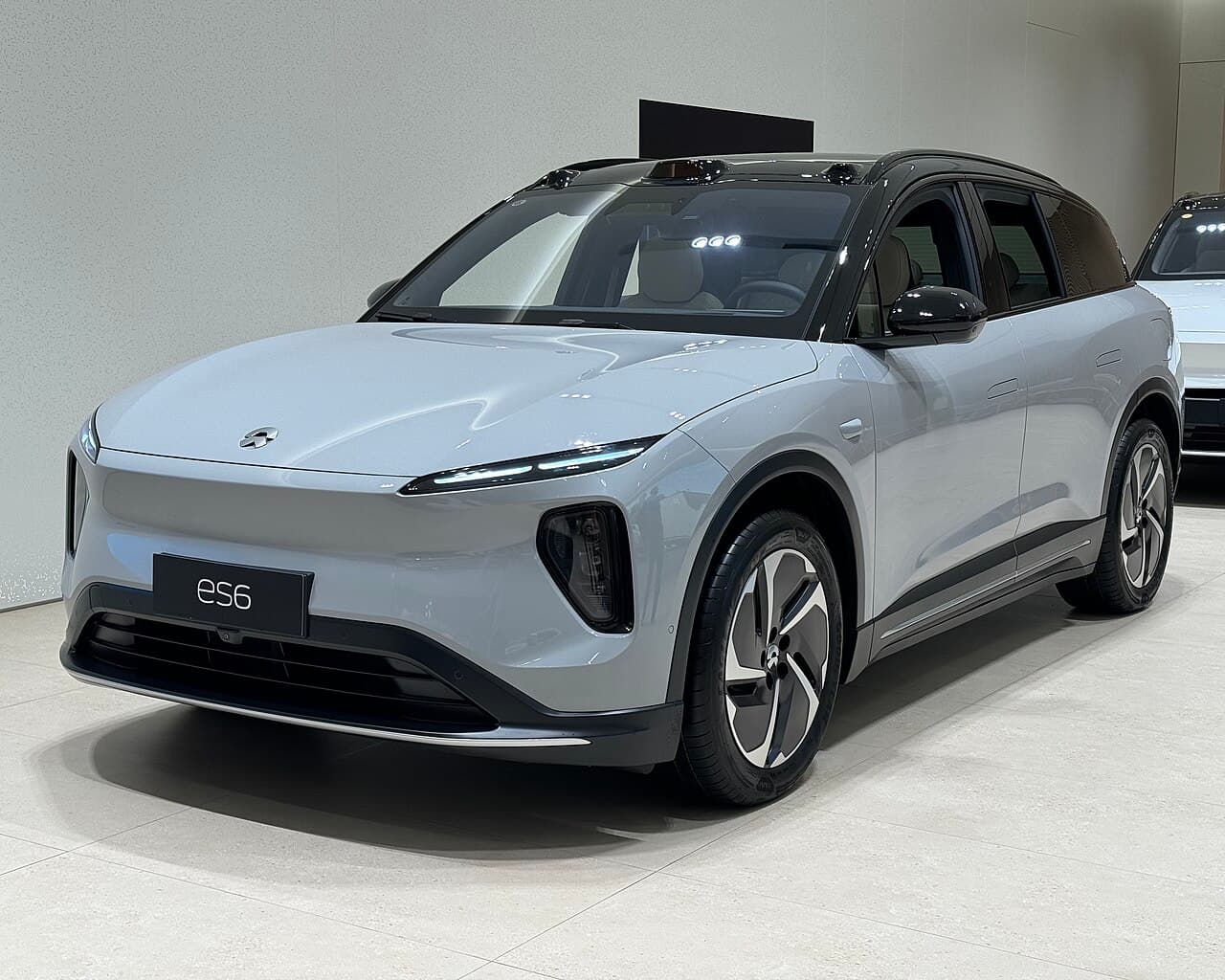
NIO
Mid-size electric SUV and NIO's best-selling model. Dual-motor AWD with 490 hp and swappable battery packs. Refreshed second generation launched in 2023 with updated design and improved efficiency.

NIO
Flagship full-size 6/7-seat electric SUV with dual-motor AWD and 653 hp. NIO's first mass-production vehicle and the largest model in the lineup, featuring swappable battery packs and NIO's premium interior.
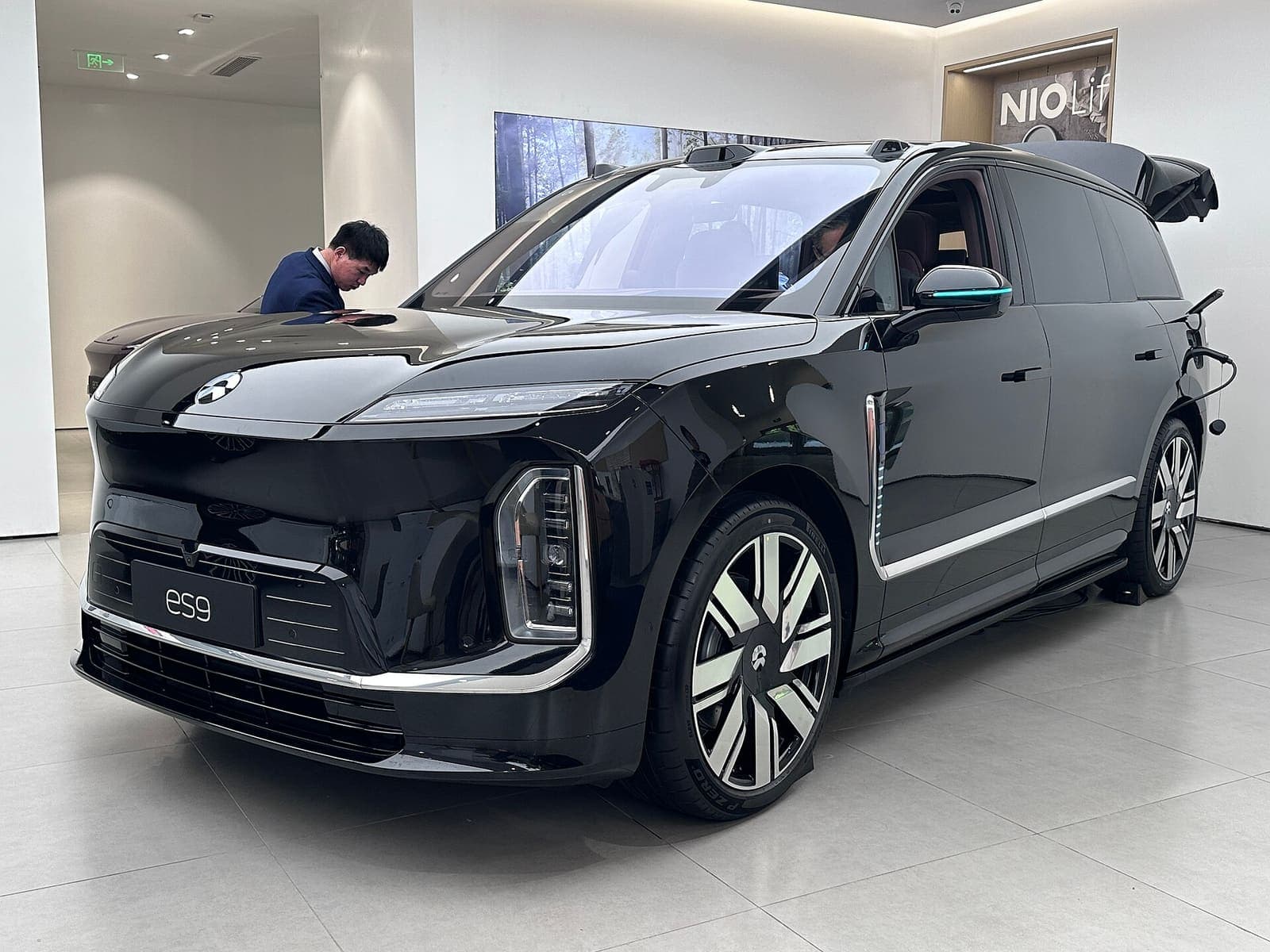
NIO
Executive flagship electric SUV launched in May 2026 on NIO's new 900V high-voltage architecture, with 5C ultra-fast charging alongside NIO's signature 3-minute battery swap. At 5.36 m long on a 3.25 m wheelbase, the ES9 is positioned as a status SUV for China's business elite with Yao Ming serving as Chief Experience Officer.
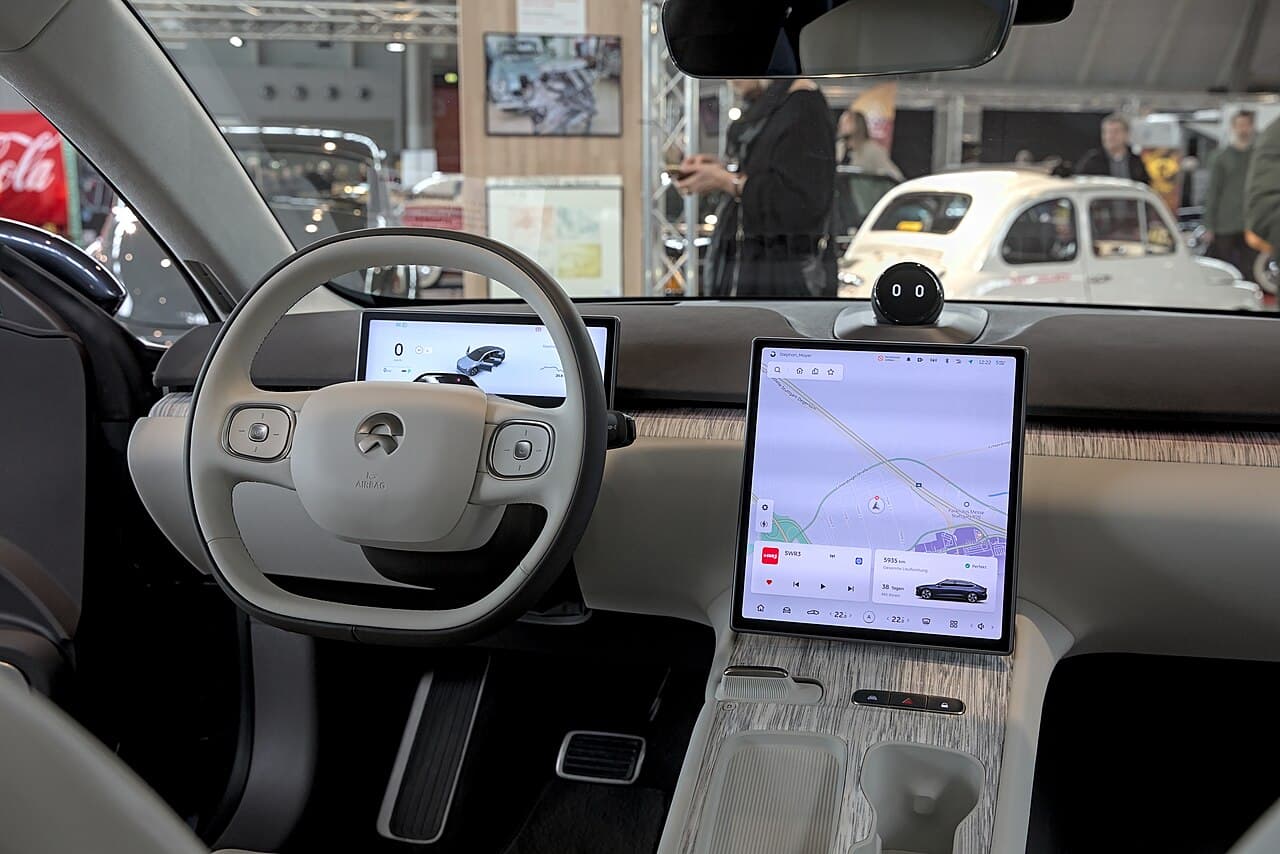
NIO
Flagship full-size electric sedan with dual-motor AWD, 653 hp, and swappable battery packs. Positions NIO against the BMW 7 Series and Mercedes EQS in the premium sedan segment.
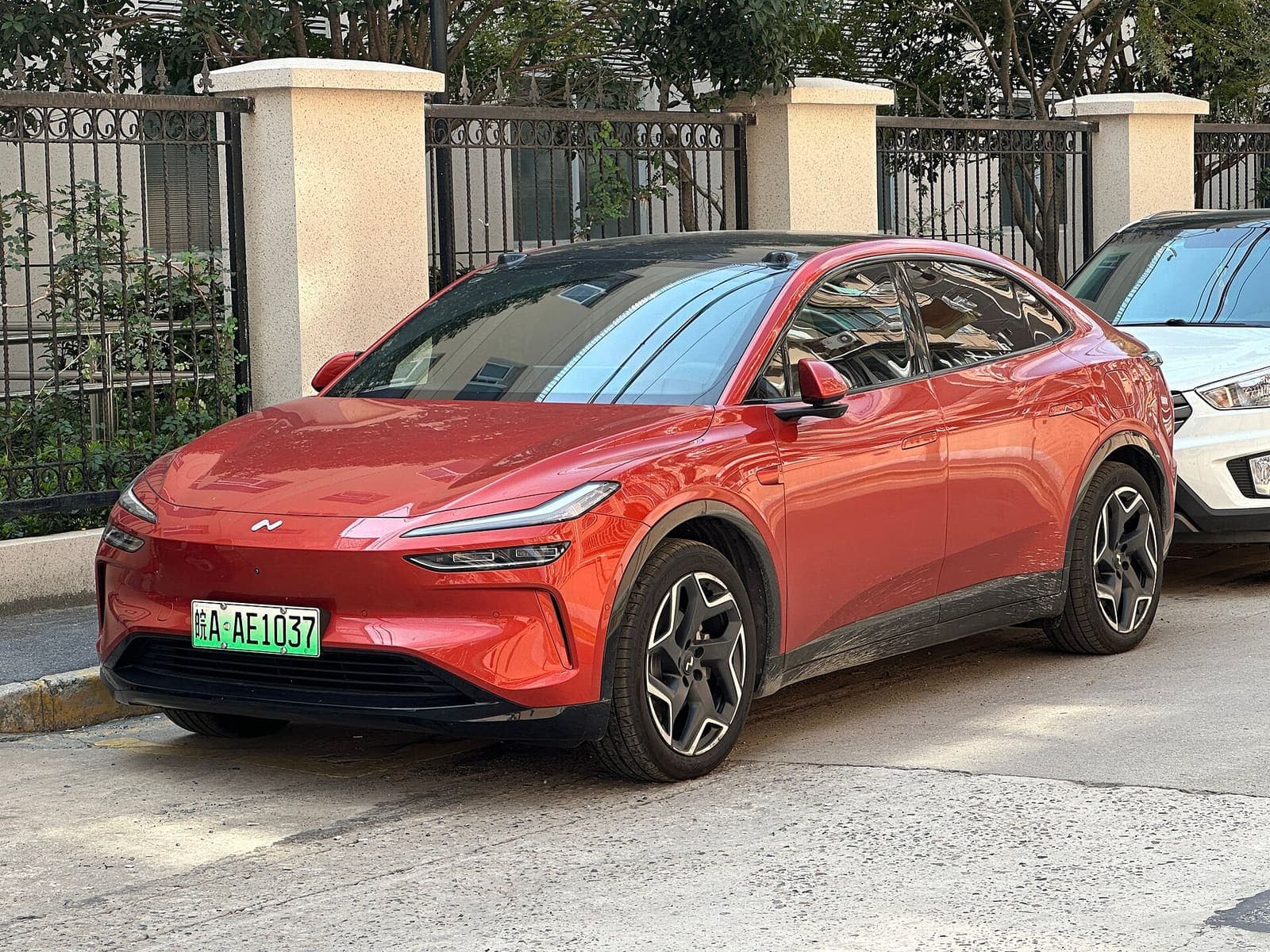
NIO
Mid-size electric SUV and ONVO's debut model - a direct rival to the Tesla Model Y and NIO's highest-volume sub-brand vehicle. The 2026 second-generation refresh (unveiled May 29, deliveries from June 12) added NIO's in-house Shenji NX9031 chip, an optional LiDAR variant, and a bigger 85 kWh pack option alongside the original 60 kWh pack, at a lower starting price than the outgoing model.
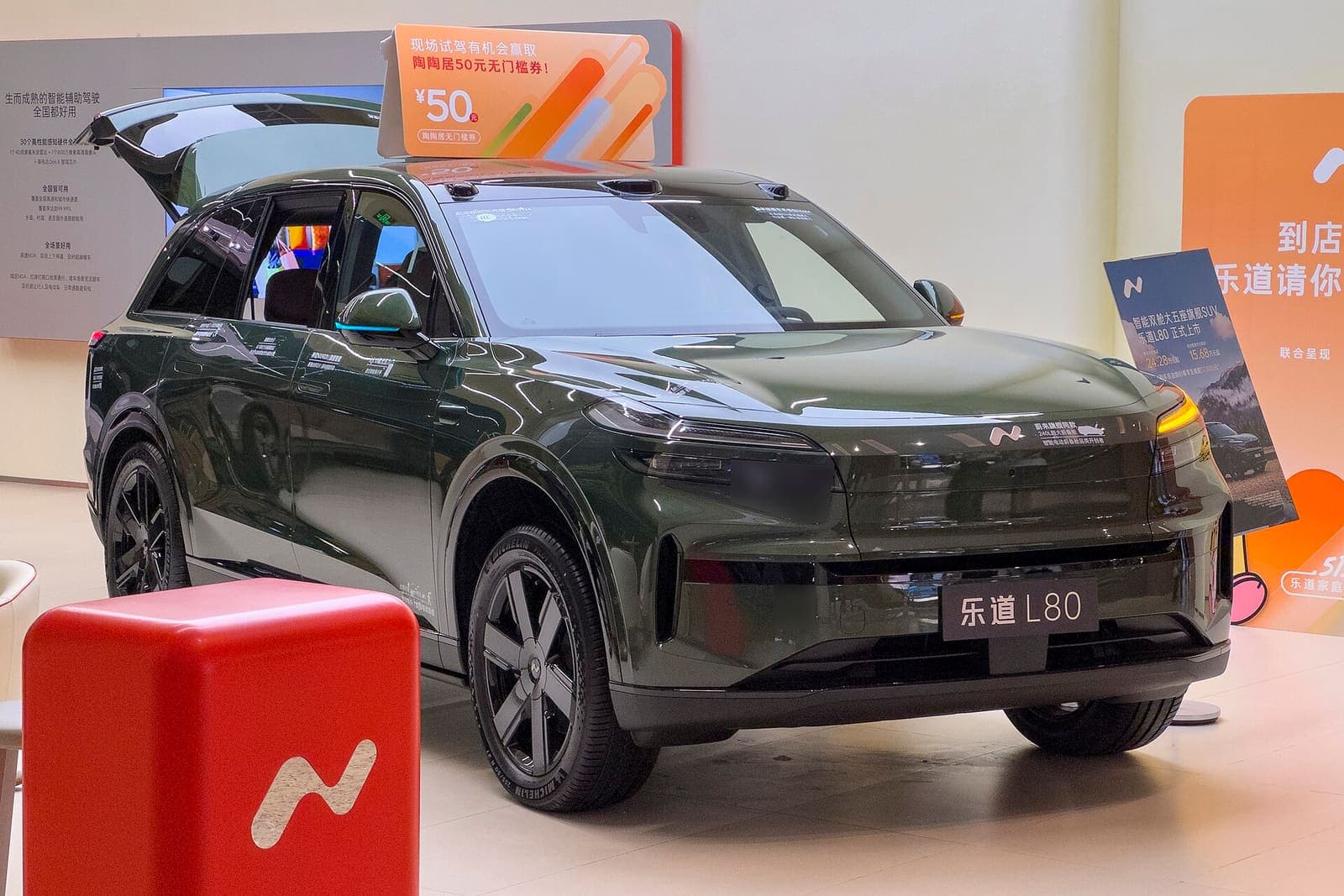
NIO
Five-seat large electric SUV and ONVO's third model, slotting in price below the flagship L90 while sharing its dimensions. Launched May 15, 2026 (ONVO's second anniversary) with a 240-liter frunk and up to 2,840 liters of total cargo space, positioning it against mid-size premium SUVs at a lower price point than rivals.

NIO
Full-size three-row (6/7-seat) electric SUV and the flagship of NIO's mid-market ONVO sub-brand. Built on an 850V-class architecture with an 85 kWh swappable battery and battery-swap support, it undercuts the premium NIO brand while keeping the swap ecosystem. The 2026 refresh (launched April 21) added LiDAR variants and was the first mass-market model to carry NIO's in-house 5nm Shenji NX9031 chip with the NIO WorldModel autonomy stack.
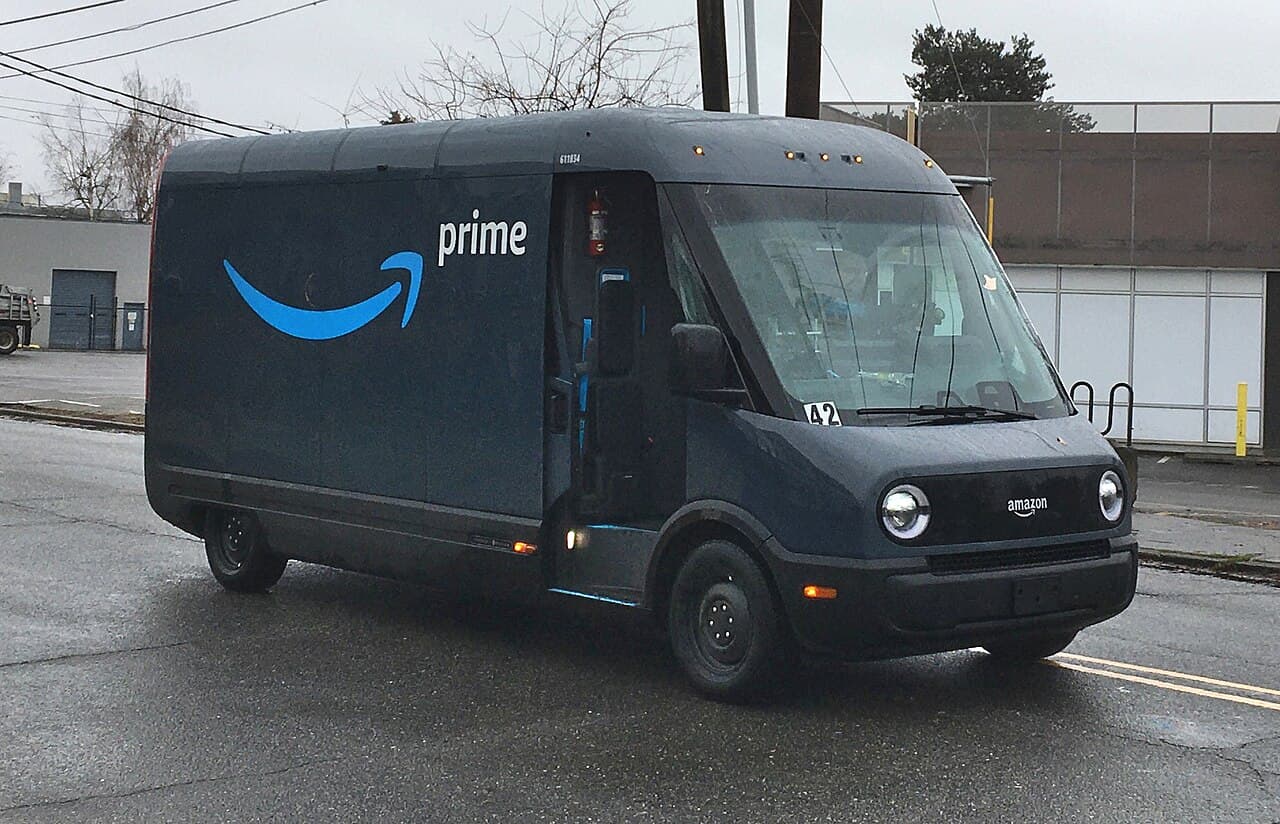
Rivian
Purpose-built electric delivery van platform derived from the Amazon EDV program and now marketed to a wider range of fleet operators for last-mile logistics and specialty upfits.

Rivian
All-electric midsize SUV sharing the R1T's skateboard platform, offering three rows of seating, up to 400+ miles of range, and robust off-road capability.
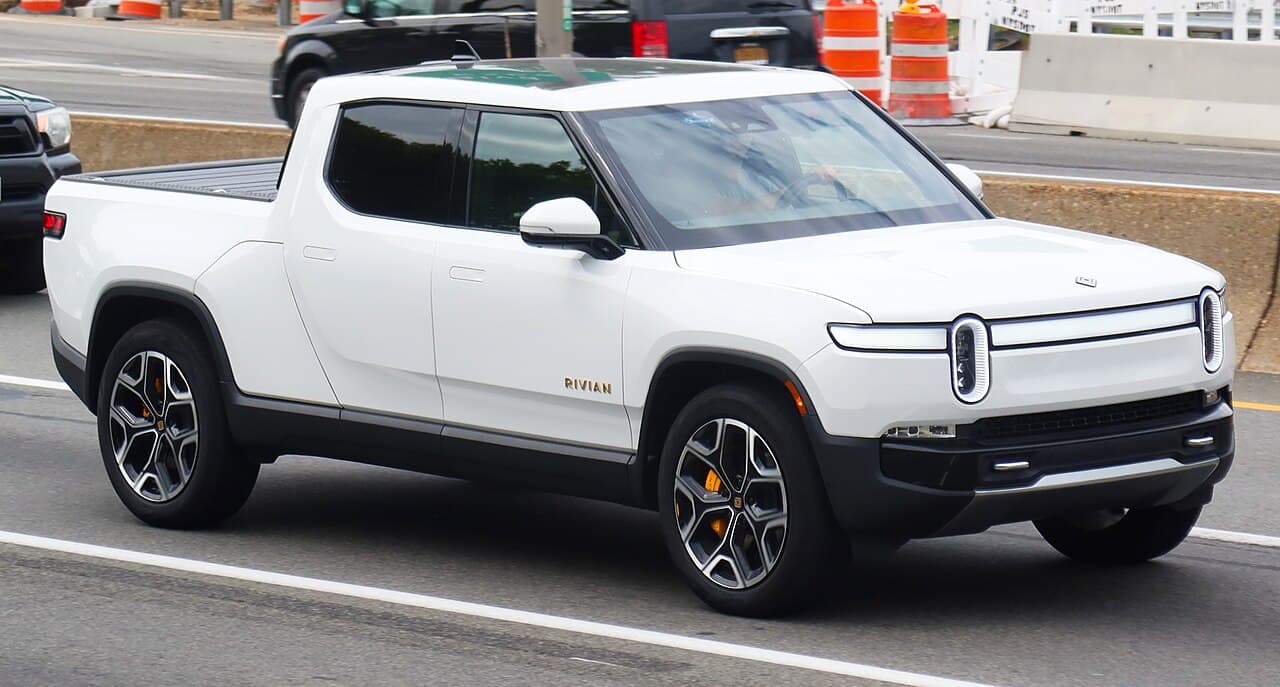
Rivian
All-electric midsize pickup truck with quad-motor AWD, up to 400+ miles of range, and adventure-focused features like a gear tunnel and camp kitchen option. First electric pickup truck to market.

Rivian
Midsize SUV on Rivian's new platform, positioned below the R1 line and designed to drive much higher unit volumes. The R2 lineup is staged: Performance Launch Edition first, followed by Premium and long-range Standard trims.
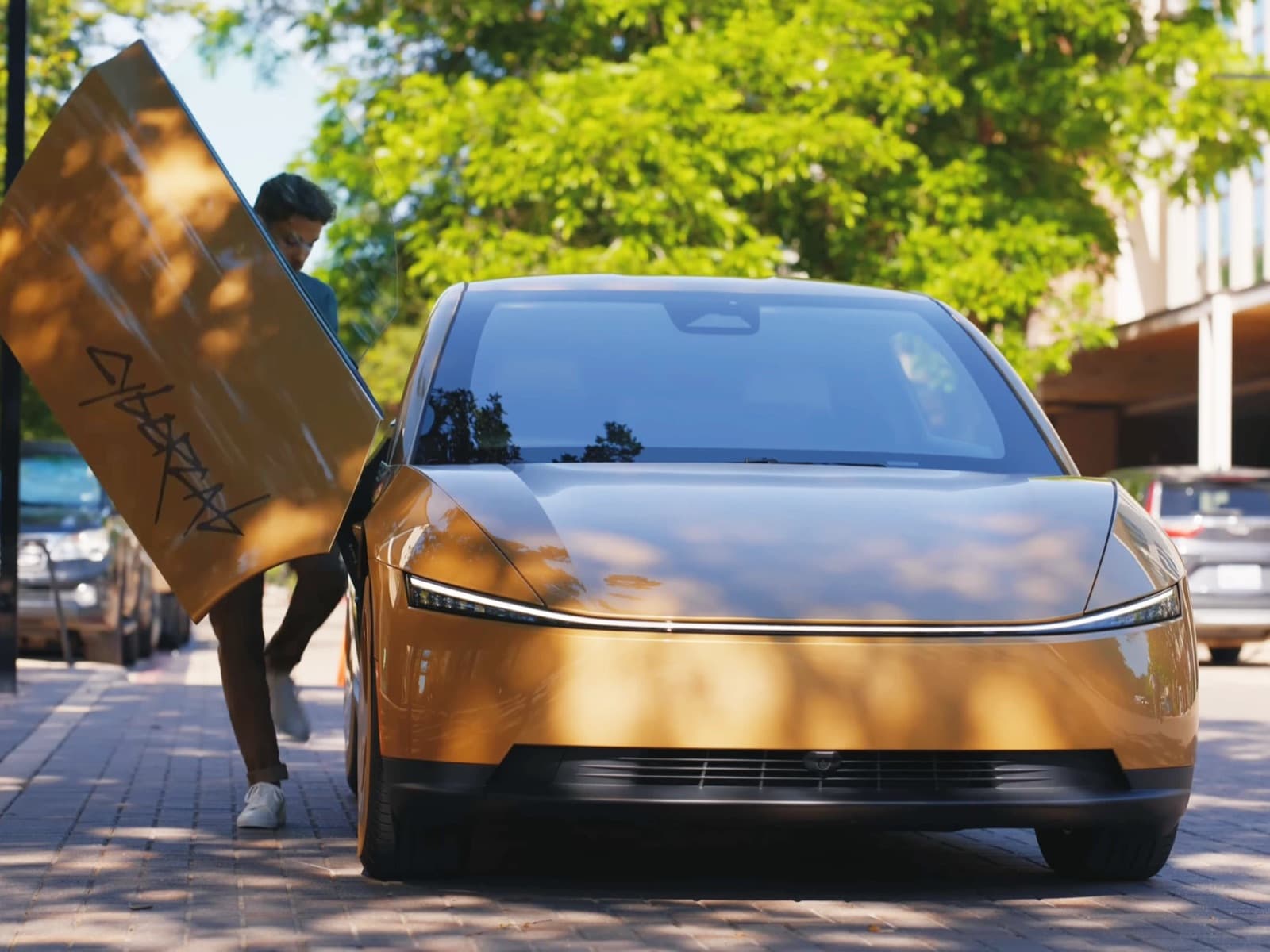
Tesla
Tesla's purpose-built two-seat autonomous vehicle for its Robotaxi network - no steering wheel, no pedals, vision-only FSD. Designed as an income-generating asset on the Tesla Network at a sub-$30,000 target price and ~$0.20/mile operating cost. tesla.com/robotaxi now lists Cybercab as a live fleet vehicle alongside Model Y, with unsupervised rides in Austin, Dallas, Houston, Miami, Orlando, and Tampa.
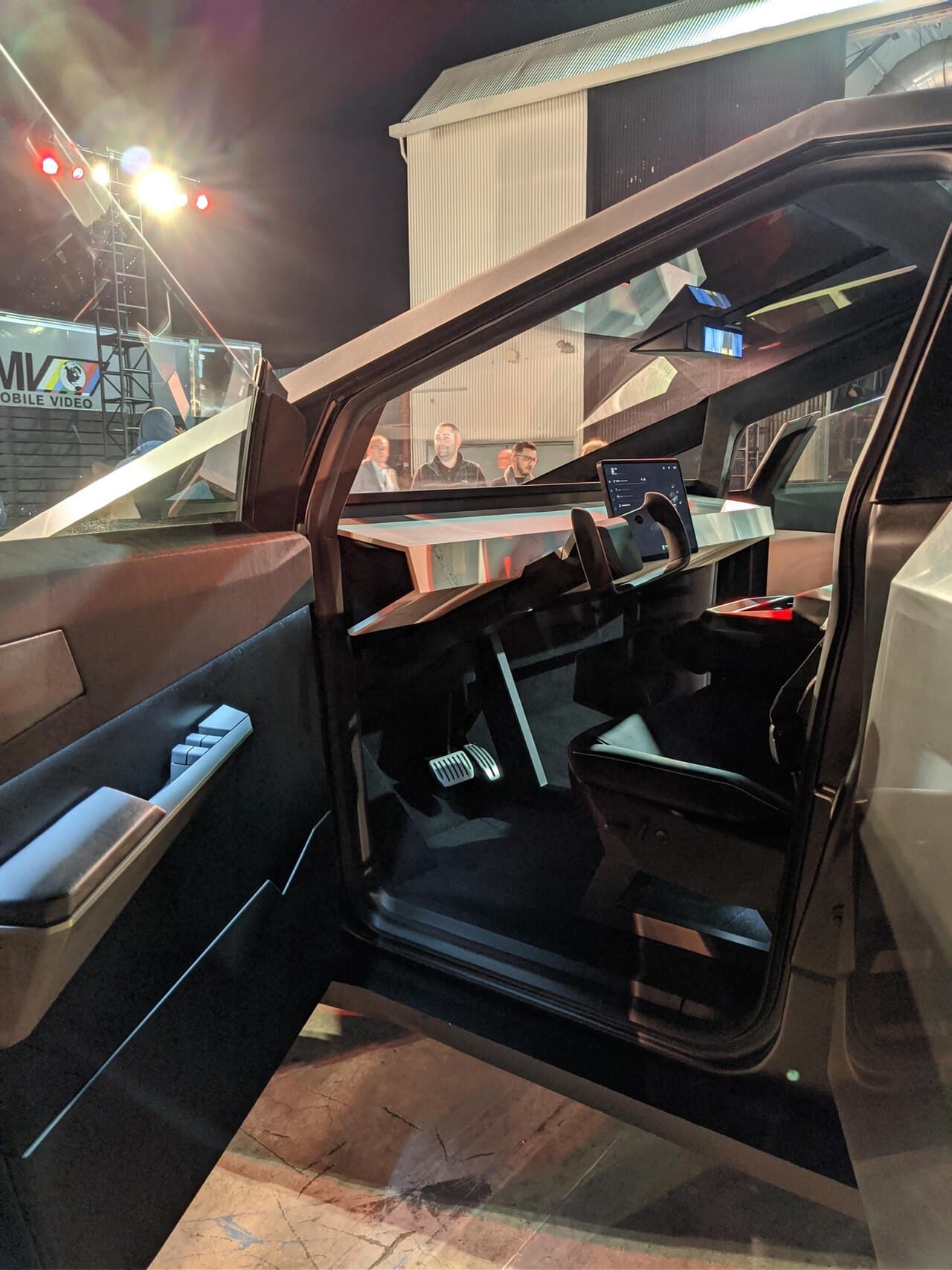
Tesla
Tesla's stainless steel electric pickup truck, positioned as a high-performance utility vehicle with adaptive suspension, high towing capacity, and fast charging. Tesla's current lineup includes Dual Motor All-Wheel Drive, Premium All-Wheel Drive, and Cyberbeast trims.
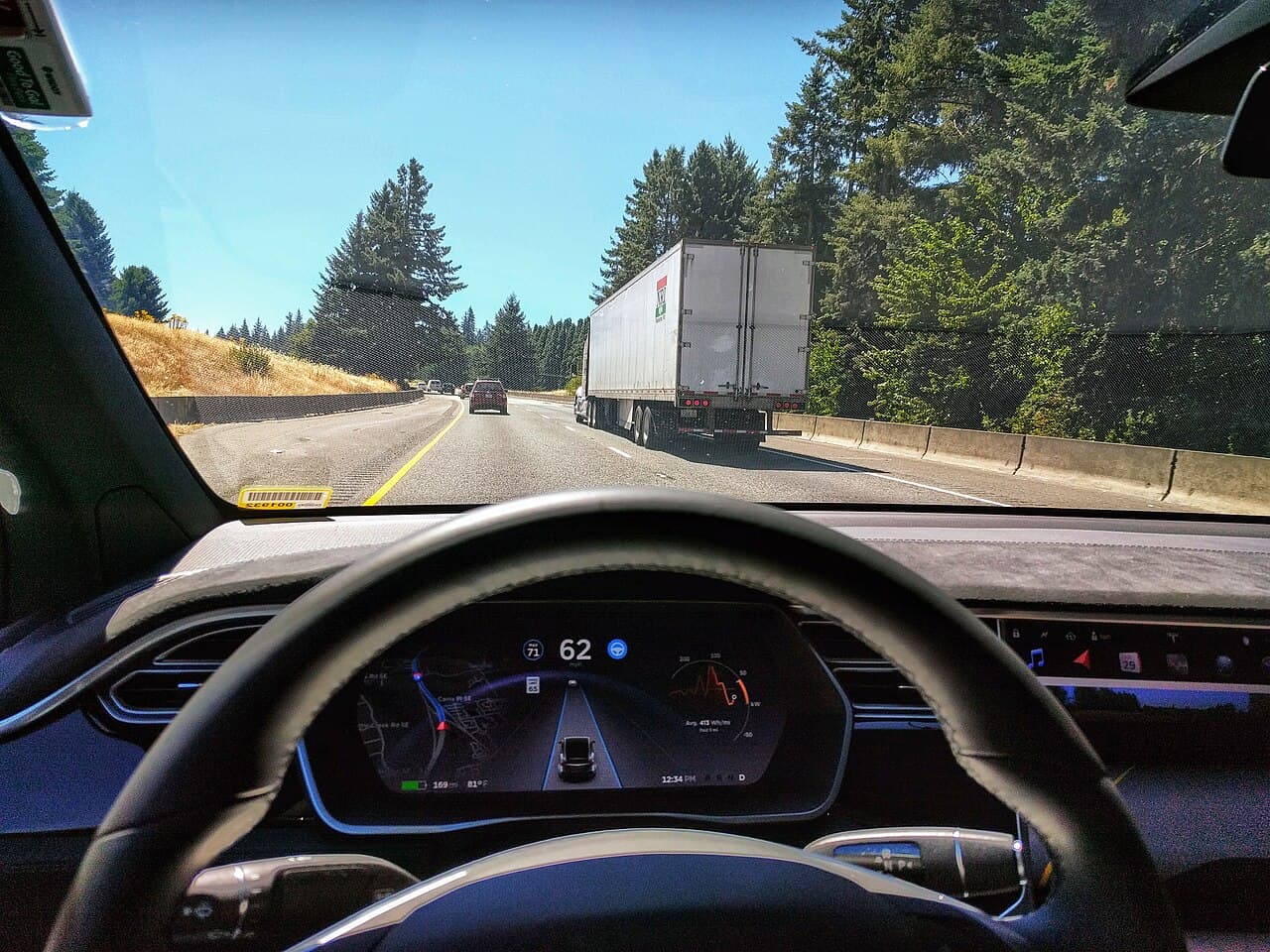
Tesla
Tesla's advanced driver-assistance software that can navigate city streets, make lane changes, park, and use summon features under active driver supervision. Tesla positions the same AI foundation behind FSD as part of its broader autonomy and robotics stack.
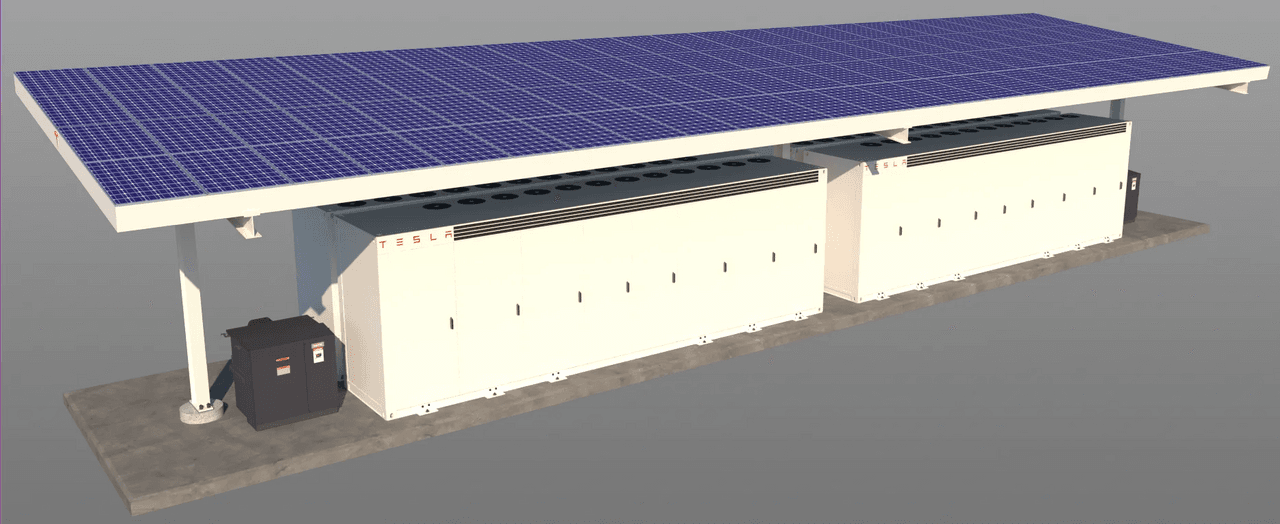
Tesla
Utility-scale integrated energy storage solution unveiled in September 2025. Combines up to 4 Megapack 3 units with a transformer and switchgear into a single 20 MWh AC system. Achieves 23% faster installation and up to 40% lower construction costs compared to traditional deployments. 248 MWh per acre density; can deploy 1 GWh in 20 business days. 25-year / 10,000-cycle life. To be manufactured at the Houston Megafactory.
Tesla
Utility-scale battery energy storage system. Current Megapack stores up to 3.9 MWh; next-gen Megapack 3 stores 5 MWh per unit and entered production in August 2026. Deployed worldwide for grid storage, renewable energy integration, and peak demand management. Tesla deployed a record 46.7 GWh of energy storage in 2025 (up 49% YoY), generating $12.8B in energy revenue. Three Megafactories: Lathrop, CA (operational); Shanghai (operational since Feb 2025); Brookshire/Houston, TX (Megapack 3 production began Aug 6, 2026, 50 GWh/year design capacity).
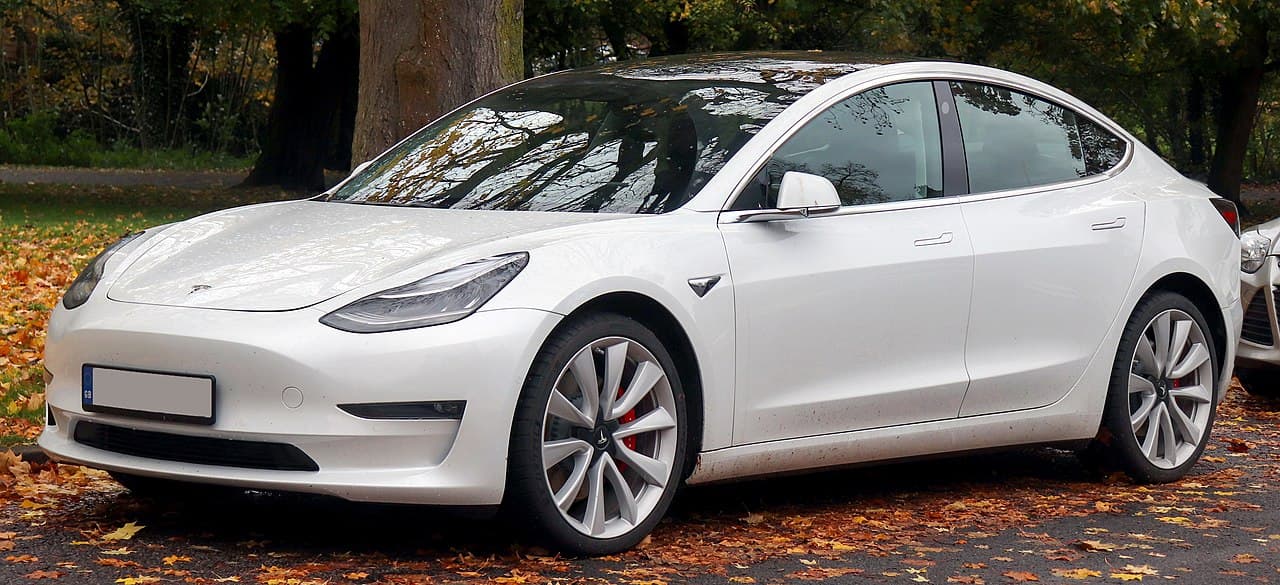
Tesla
Tesla's mass-market electric sedan and one of the company's longest-running products. The current Model 3 lineup emphasizes efficiency, software features, and lower entry pricing than Model Y or Cybertruck.
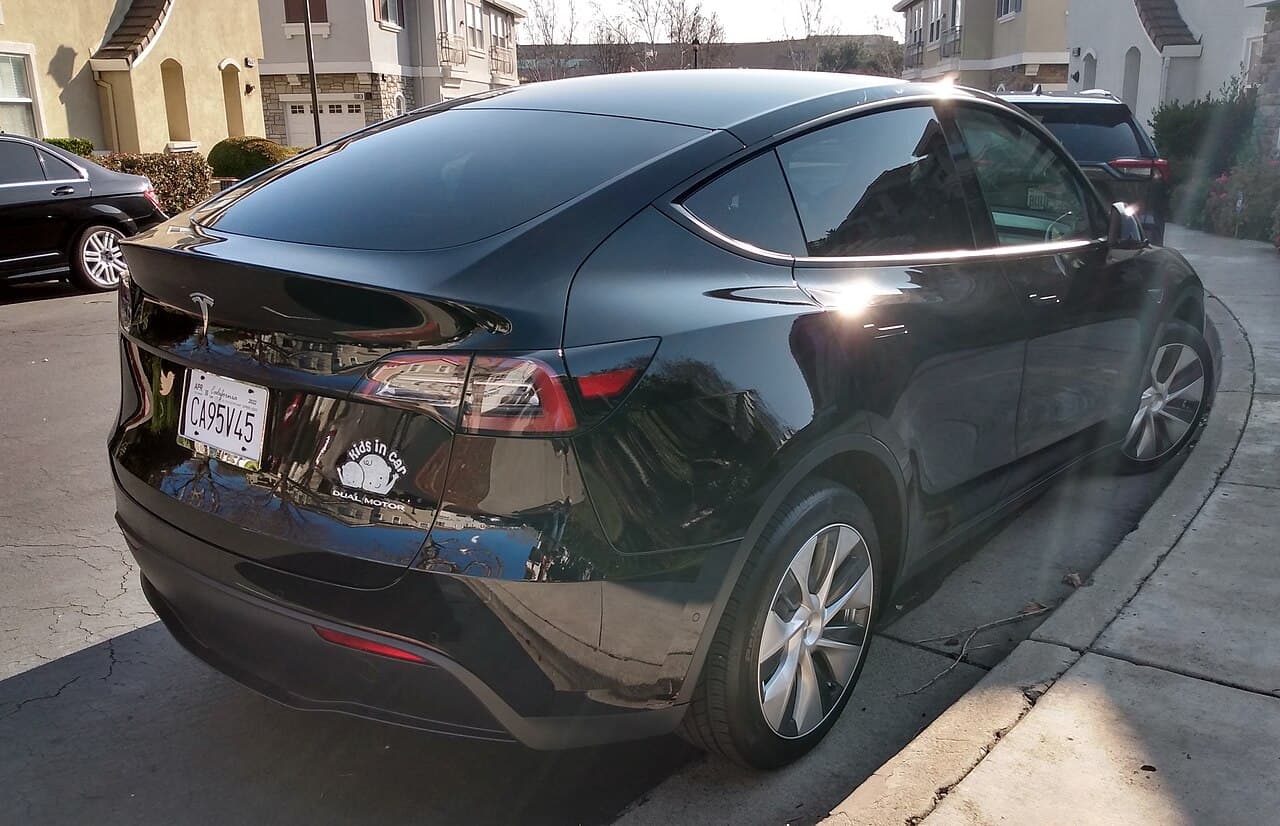
Tesla
Tesla's highest-volume electric crossover SUV and the core of its global vehicle lineup. Tesla says it completed the refreshed Model Y rollout in 2025, and the current lineup spans rear-wheel drive, all-wheel drive, premium, and performance variants depending on market.
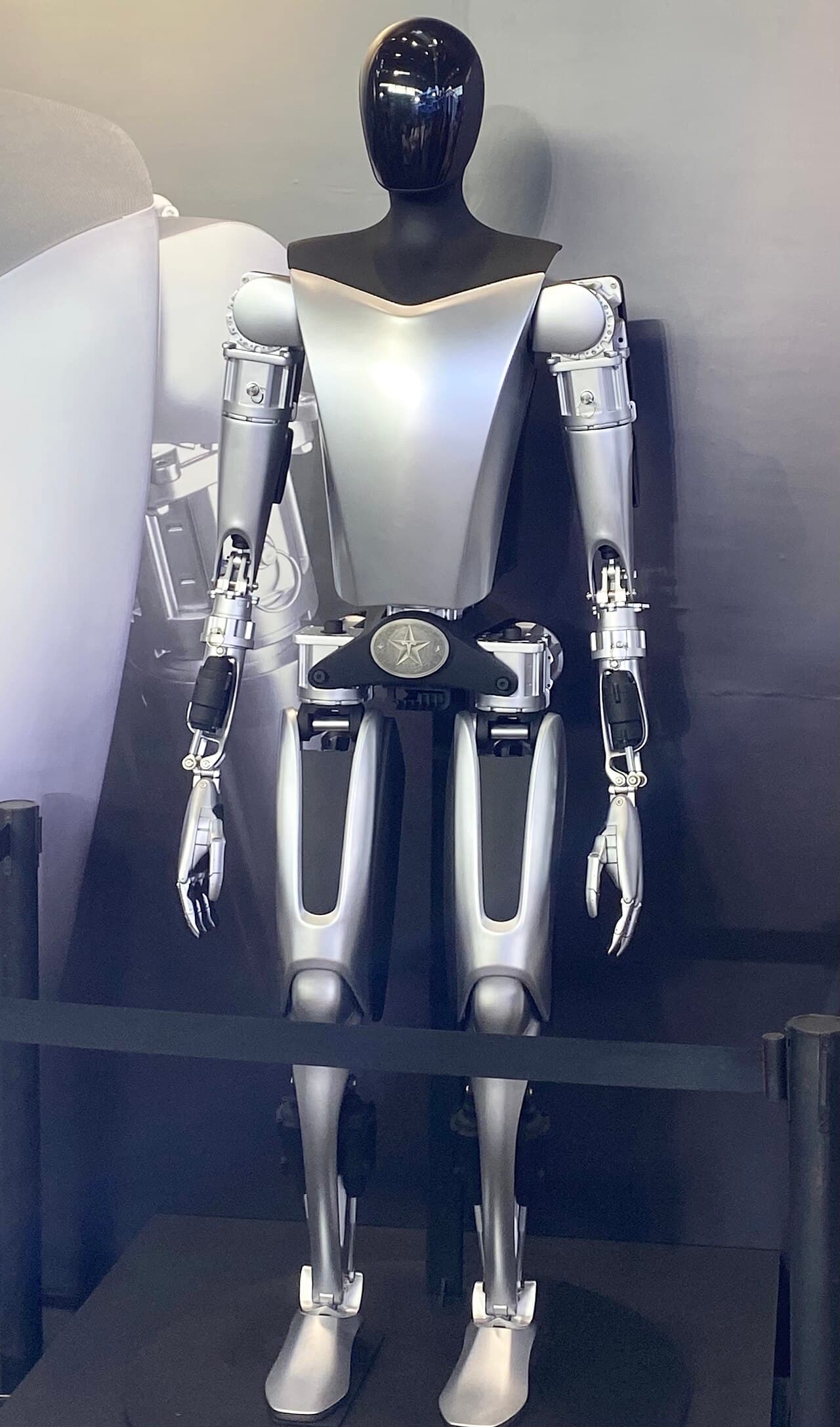
Tesla
Tesla's general-purpose autonomous humanoid robot program. Tesla describes Optimus as a bi-pedal robot meant to handle unsafe, repetitive, or boring tasks and says the same AI foundation used for vehicle autonomy underpins its robotics work. Optimus V3 - featuring doubled hand dexterity (22 DOF), Tesla's AI5 chip, and a target price of $20-30K at scale - is slated for a late-July/August 2026 reveal with first volume production targeted for summer 2026.
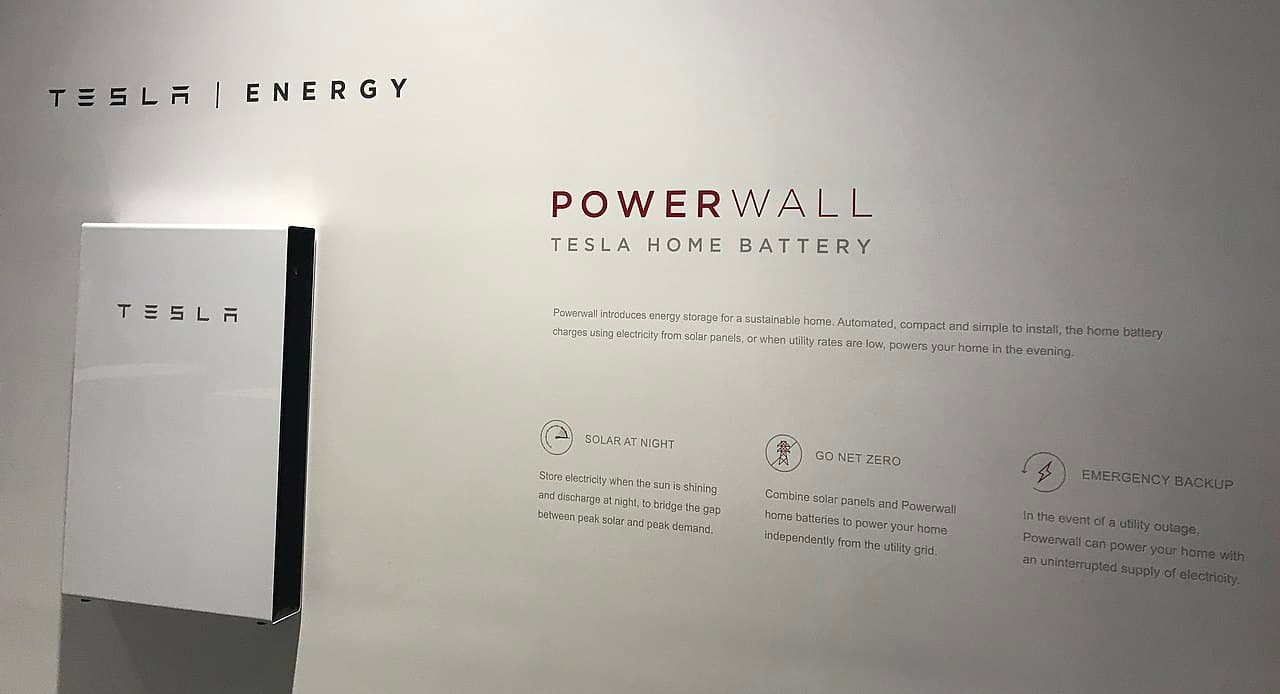
Tesla
Home battery storage system that stores solar energy and provides backup power during outages. Powerwall 3 (released 2023) features an integrated solar inverter, 13.5 kWh capacity, 20 kW DC solar input, and 11.5 kW AC continuous output. Over 1 million Powerwalls deployed worldwide (milestone reached in 2025). 10-year warranty.
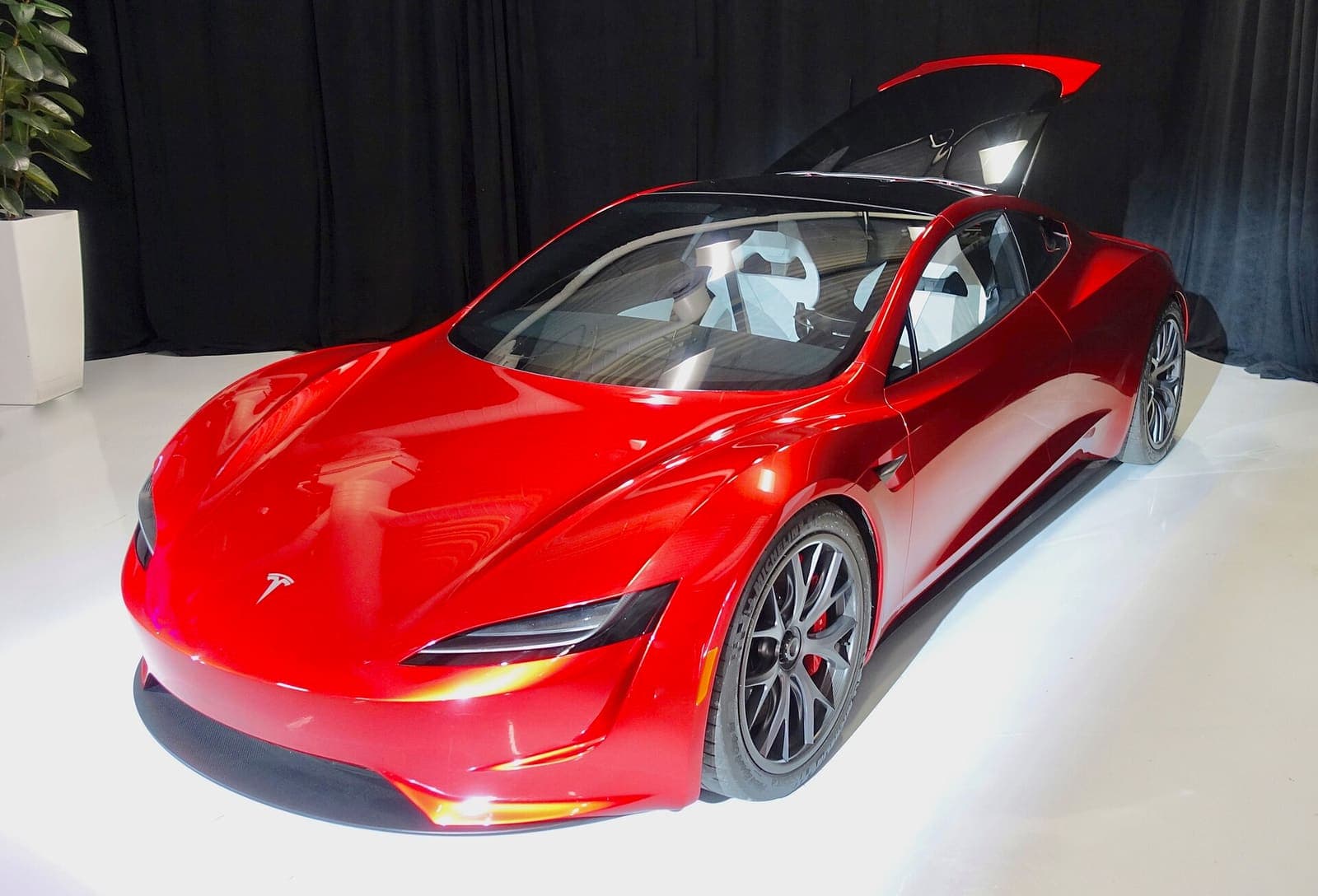
Tesla
Tesla showed the next-generation Roadster on 15 October 2026 at a SpaceX test site near Waco. The company page lists three configurations: a road-ready two-seat car by reservation, a limited-release two-seat car with rear cold-gas thrusters that Tesla says goes from 0-60 mph in under 1 second, and an invite-only one-seat Rocket trim with perimeter cold-gas thrusters. Tesla says the Rocket trim can fly and is not approved for public road use, and that it is not available in all regions. Musk said production in 2028. CNBC said no purchase price was announced and that $50,000 deposits had reopened. TechCrunch said the site showed a $250,000 reservation for the thruster trim. No product image is on file in this catalog.
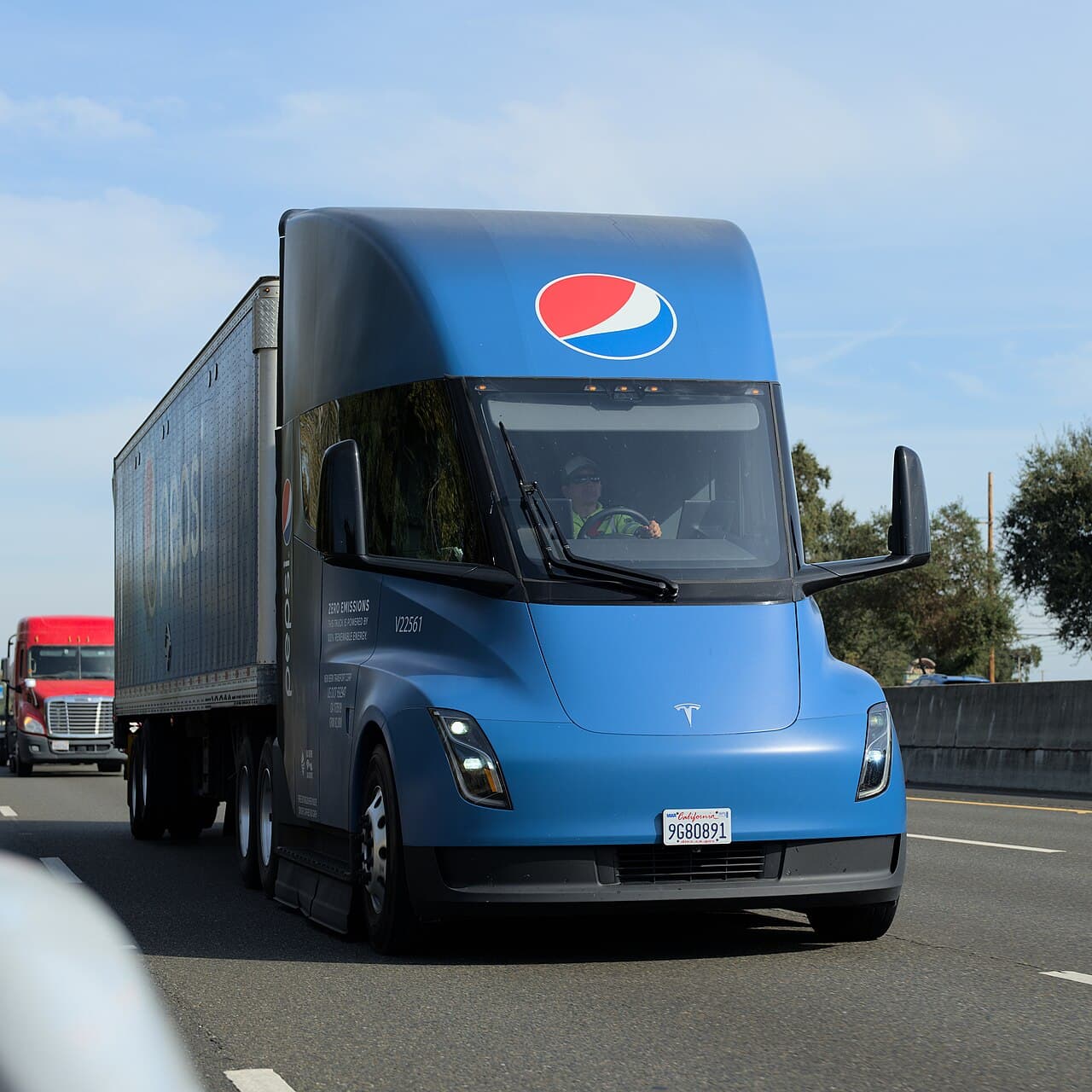
Tesla
Class 8 all-electric semi-truck for long-haul freight. Tesla says Semi can travel up to 500 miles on a charge, supports megawatt-class charging, has shed roughly 1,000 lb thanks to a 48V architecture and 4680 cells, and is now in early high-volume production at the dedicated Nevada Semi factory.
Xiaomi EV
Xiaomi's first extended-range (EREV) sub-brand, built on a new Kunlun architecture aimed at the Li Auto L9 and Aito M9. The on-sale lineup is the five-seat N70 Pro and N70 Max, the seven-seat N90 Max, and a five-seat N90 Max Explorer camping edition with a factory pop-top roof.
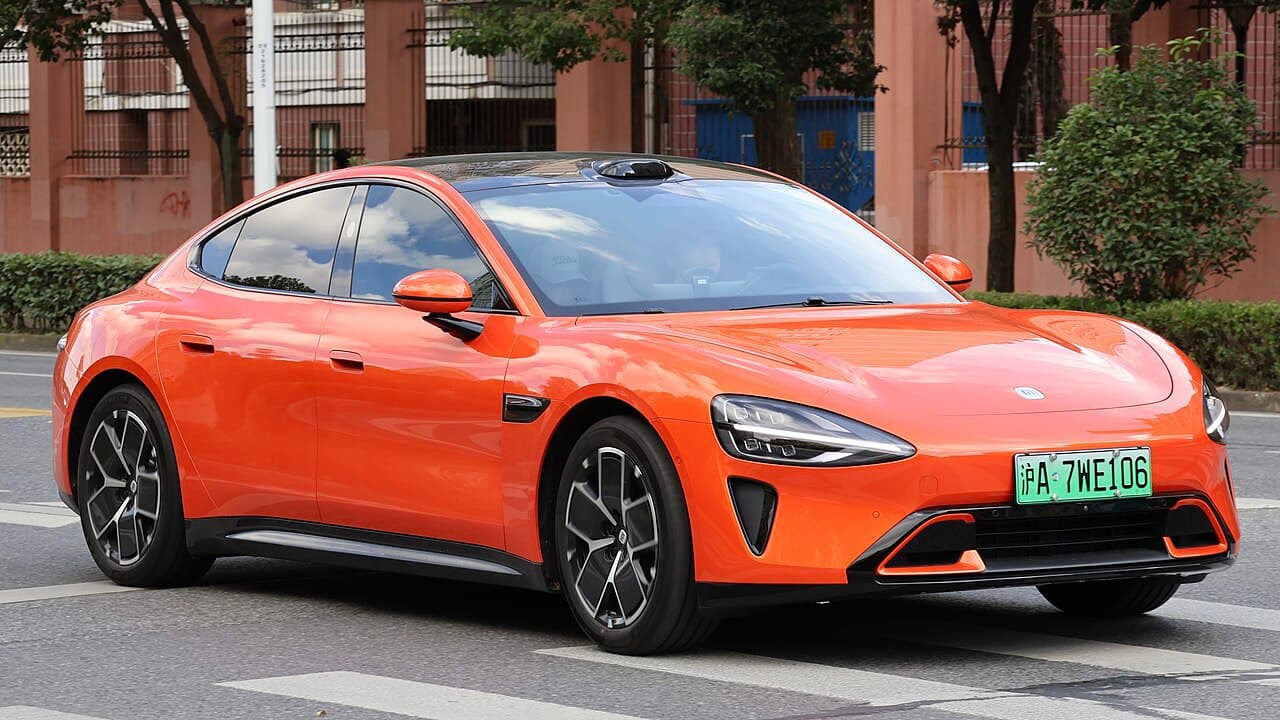
Xiaomi EV
Xiaomi's first vehicle - a sporty mid-large electric sedan positioned against the Tesla Model 3 and rich with Xiaomi-ecosystem integration via HyperOS.
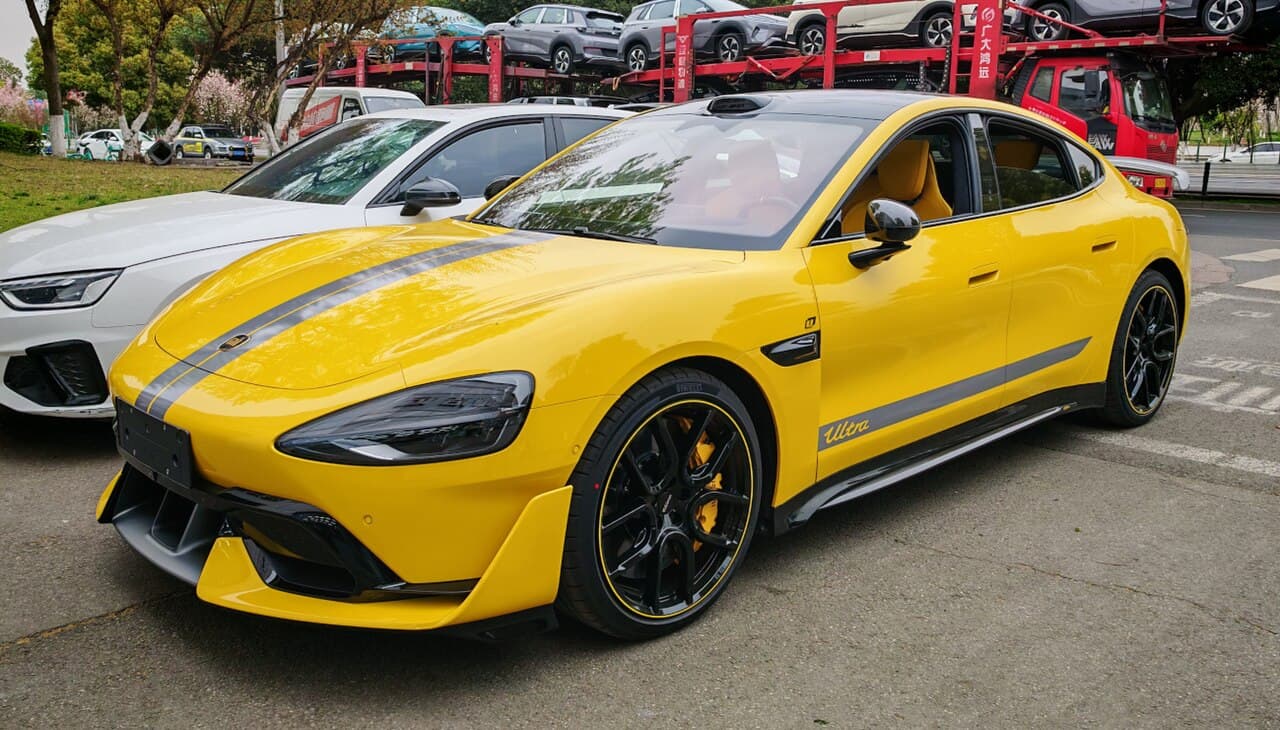
Xiaomi EV
Tri-motor performance flagship of the SU7 line - a hypercar-rivaling electric sedan that anchors Xiaomi's high-performance halo and track credentials.
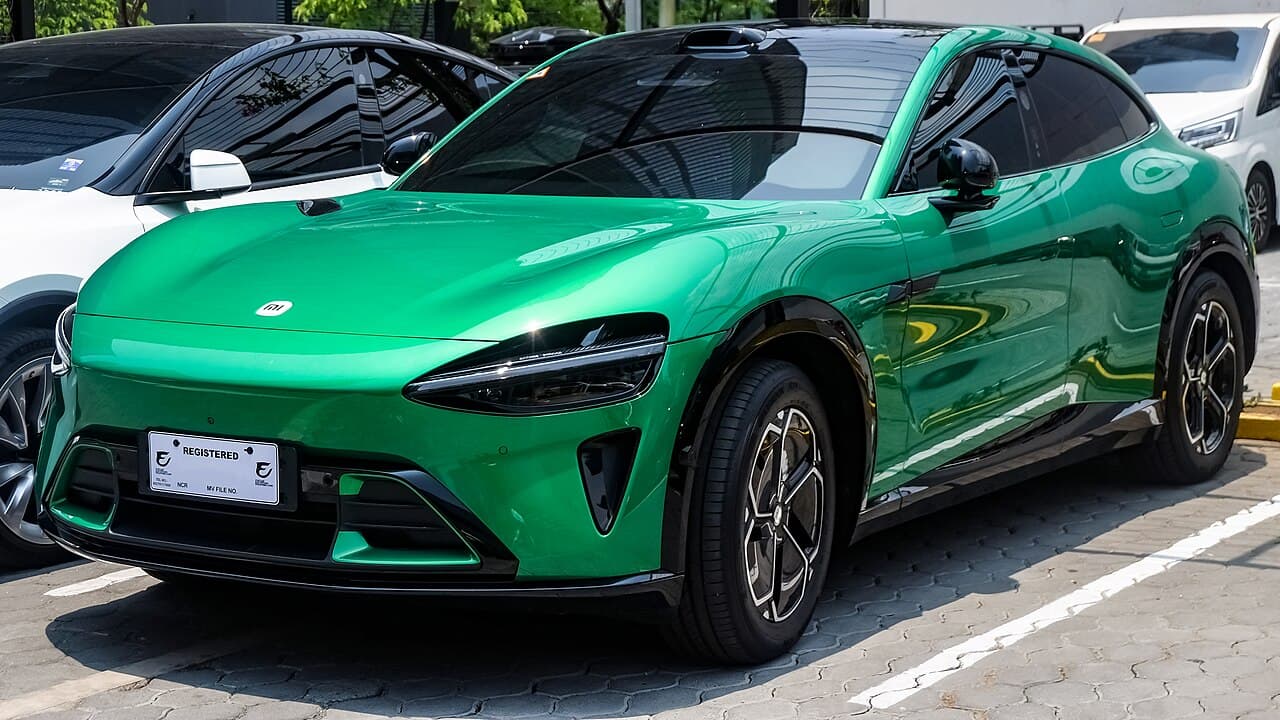
Xiaomi EV
Xiaomi's first SUV - a mid-large electric crossover priced under the Tesla Model Y that became the brand's main growth driver, outselling the SU7 roughly 3:1.

Xiaomi EV
A Grand Touring performance variant of the YU7 SUV - positioned between the standard YU7 and a future 'Ultra' halo, built for high-speed comfort-oriented driving rather than pure track dominance. A Track Package-equipped YU7 GT holds a sub-7:23 Nurburgring Nordschleife lap, at the time the fastest recorded for an SUV.
Xiaomi EV
Xiaomi's first in-house smart-driving chip, built on a 3nm process and designed to run large AI models on-device for autonomous-driving decisions rather than relying on the cloud.
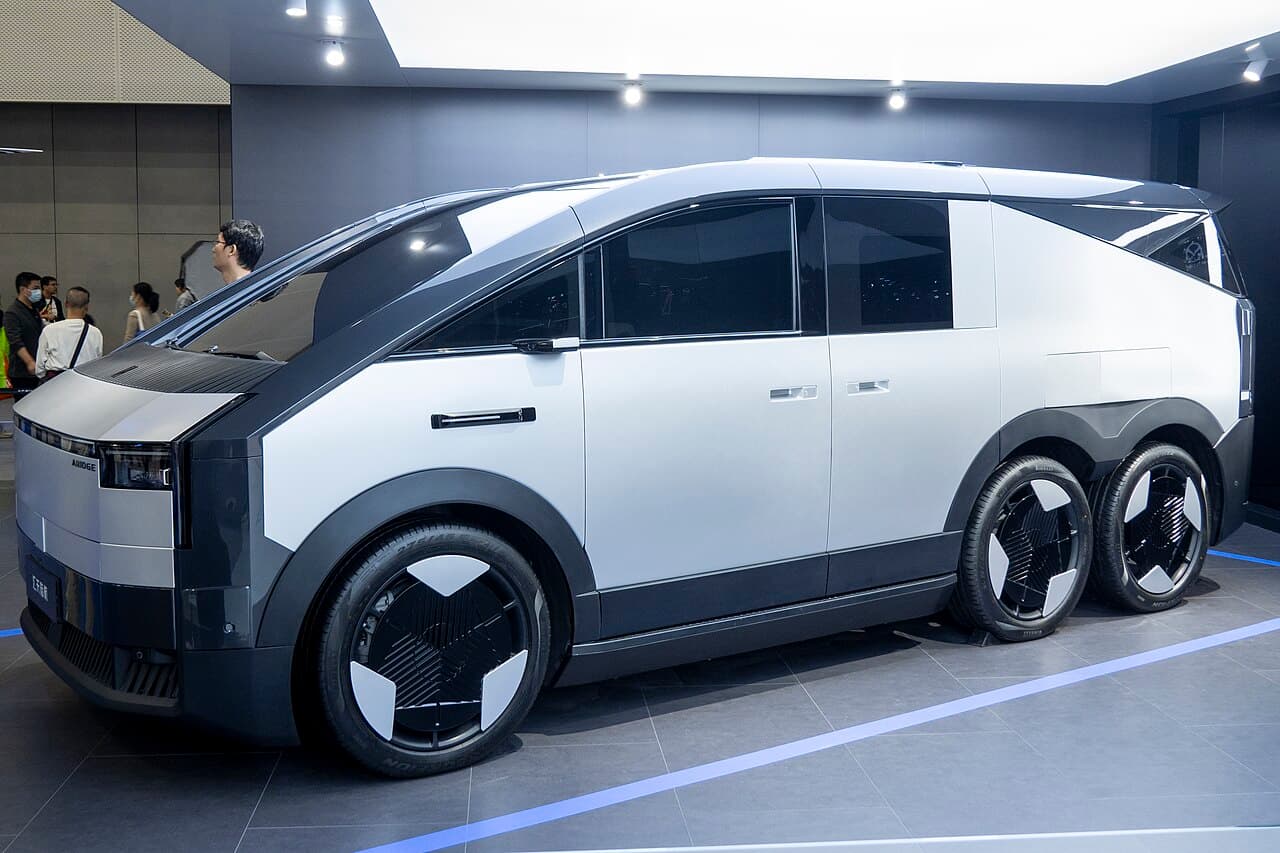
XPeng
A modular flying car built by XPeng subsidiary XPeng AeroHT (Aridge): a six-wheeled ~5.5m electric 'mothership' that carries and launches a detachable two-seat, six-rotor eVTOL aircraft.

XPeng
A human-size humanoid robot with bionic muscles, soft skin and 82 degrees of freedom, powered by three of XPeng's in-house Turing AI chips and its VLA/VLT/VLM models.

XPeng
Entry-level smart sedan under XPeng's Mona sub-brand and the company's volume best-seller, bringing AI-assisted driving to a mass-market price point.
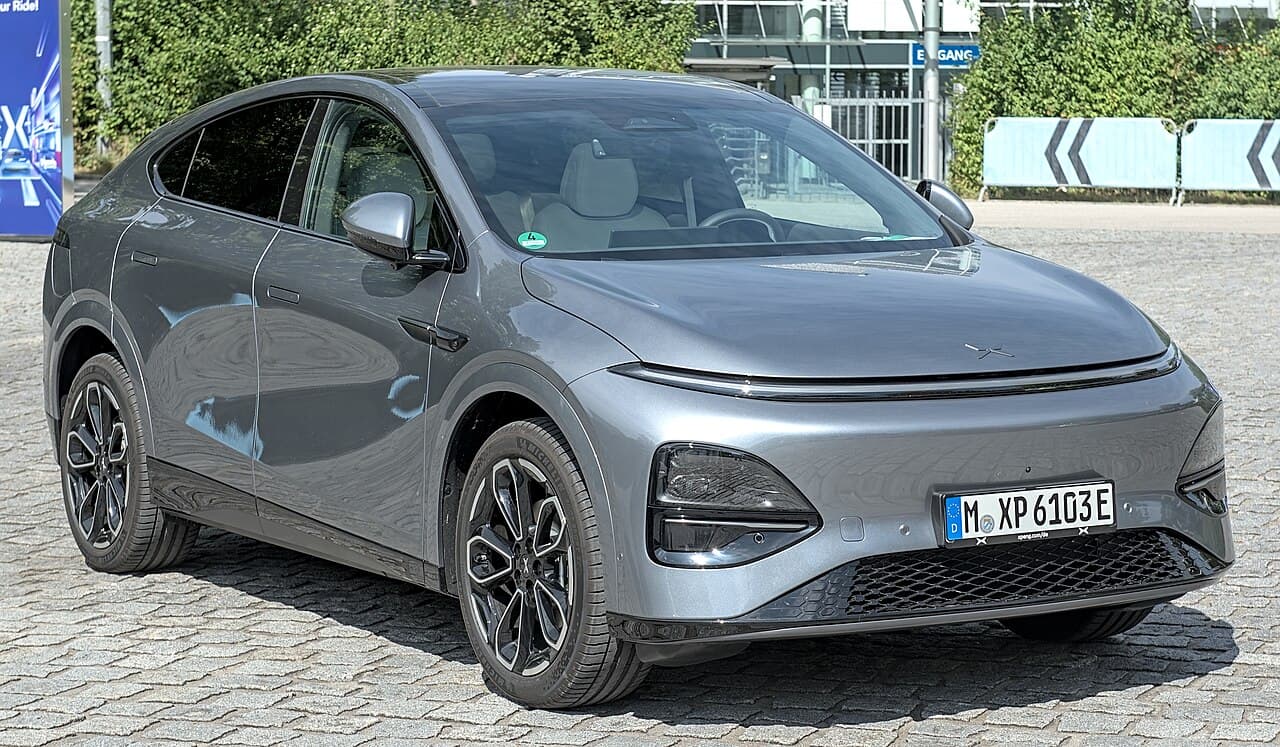
XPeng
Mid-size electric SUV on XPeng's 800V SEPA 2.0 platform, positioned as a Tesla Model Y rival with fast charging and XNGP assisted driving.

XPeng
Mid-size electric SUV positioned as a value-focused Tesla Model Y rival, built on XPeng's 800V architecture with up to three in-house Turing AI chips; a range-extended (EREV) variant was added in January 2026 for markets favoring hybrid powertrains.

XPeng
A five-seat electric SUV built as a global tech flagship on the same 800V platform as the GX, sharing its core platform technology with aviation-grade safety redundancy design.
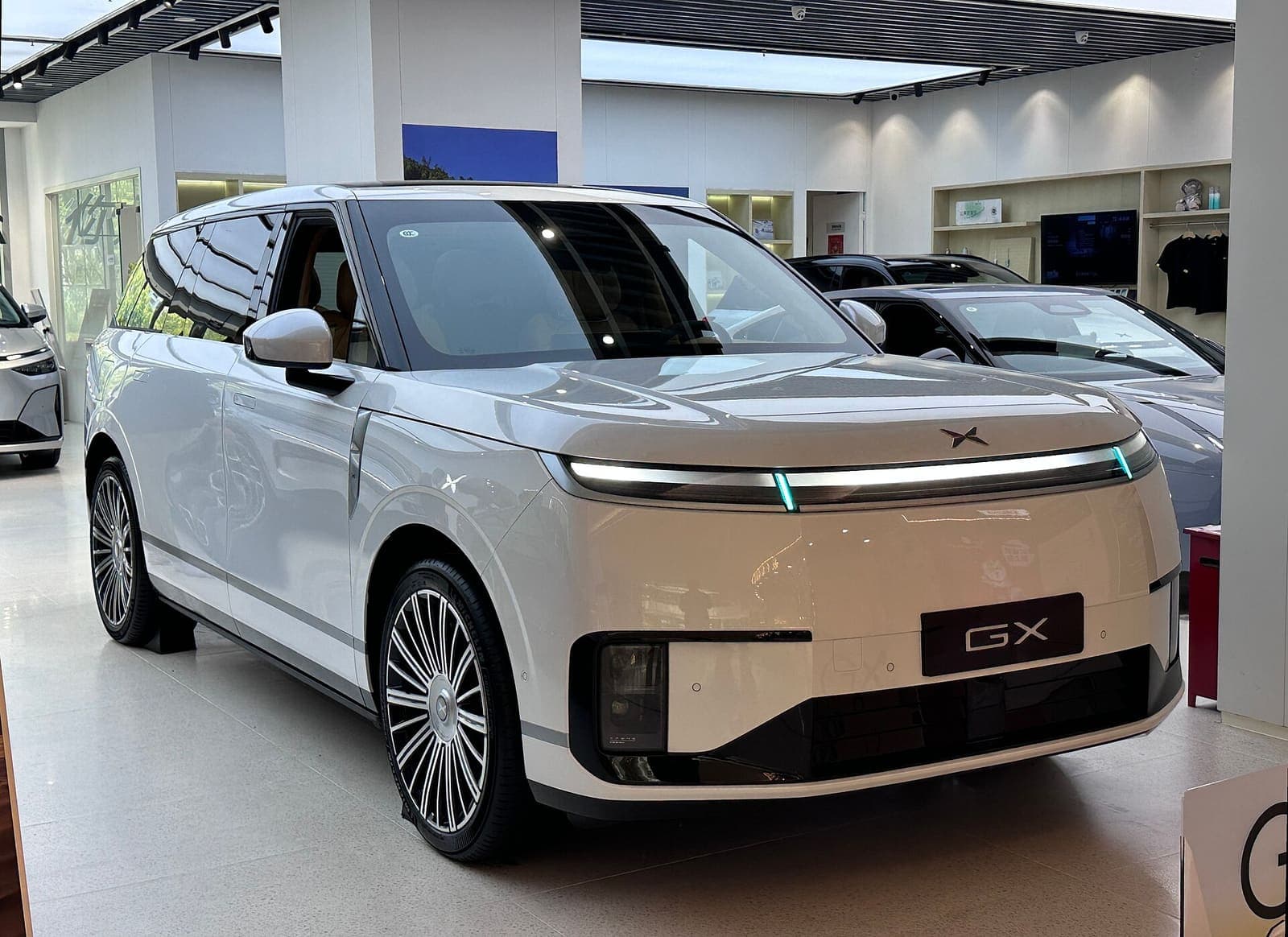
XPeng
XPeng's six-seat full-size flagship SUV on an 800V platform, offered in battery-electric and extended-range versions, with rear-wheel steering, dual-chamber air suspension and up to three in-house Turing AI chips. It forms a dual-flagship pair with the five-seat G9L.
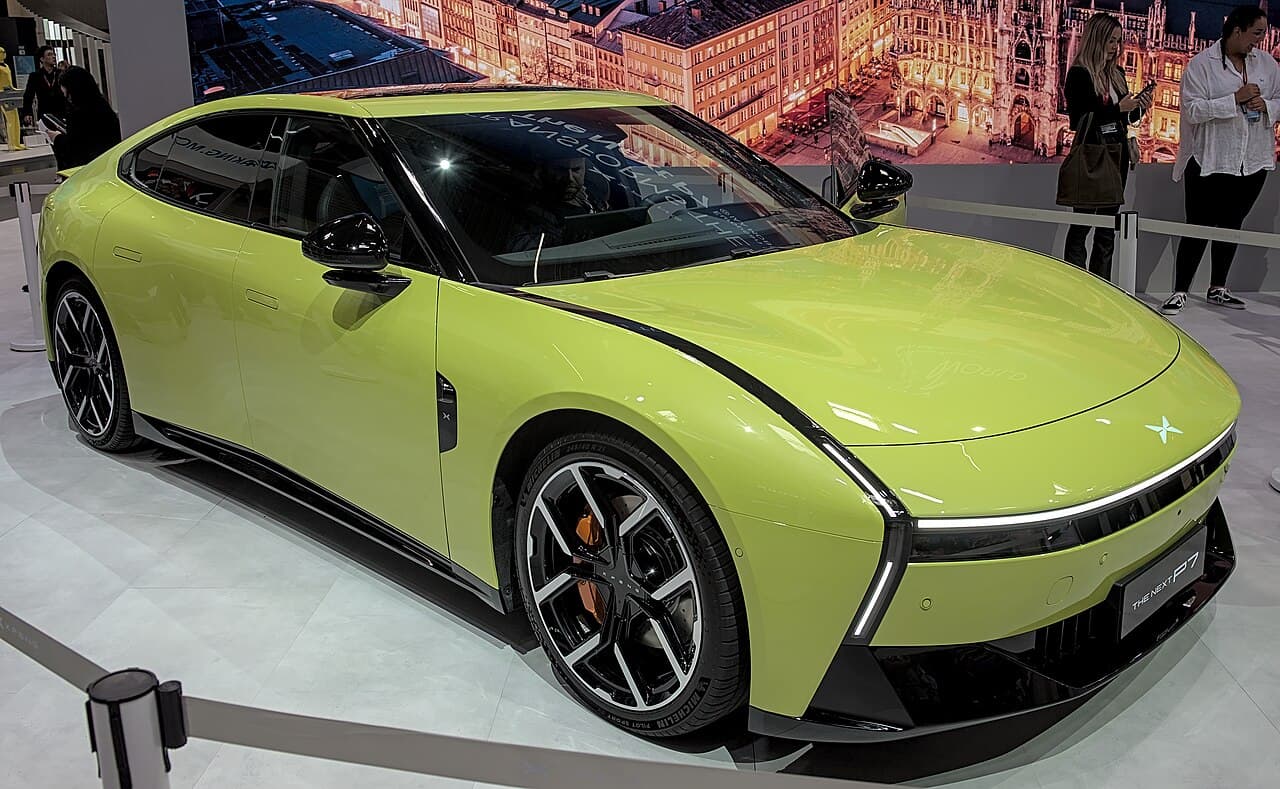
XPeng
New-generation flagship performance sedan with scissor doors, 5C ultra-fast charging and Turing-chip AI-assisted driving.
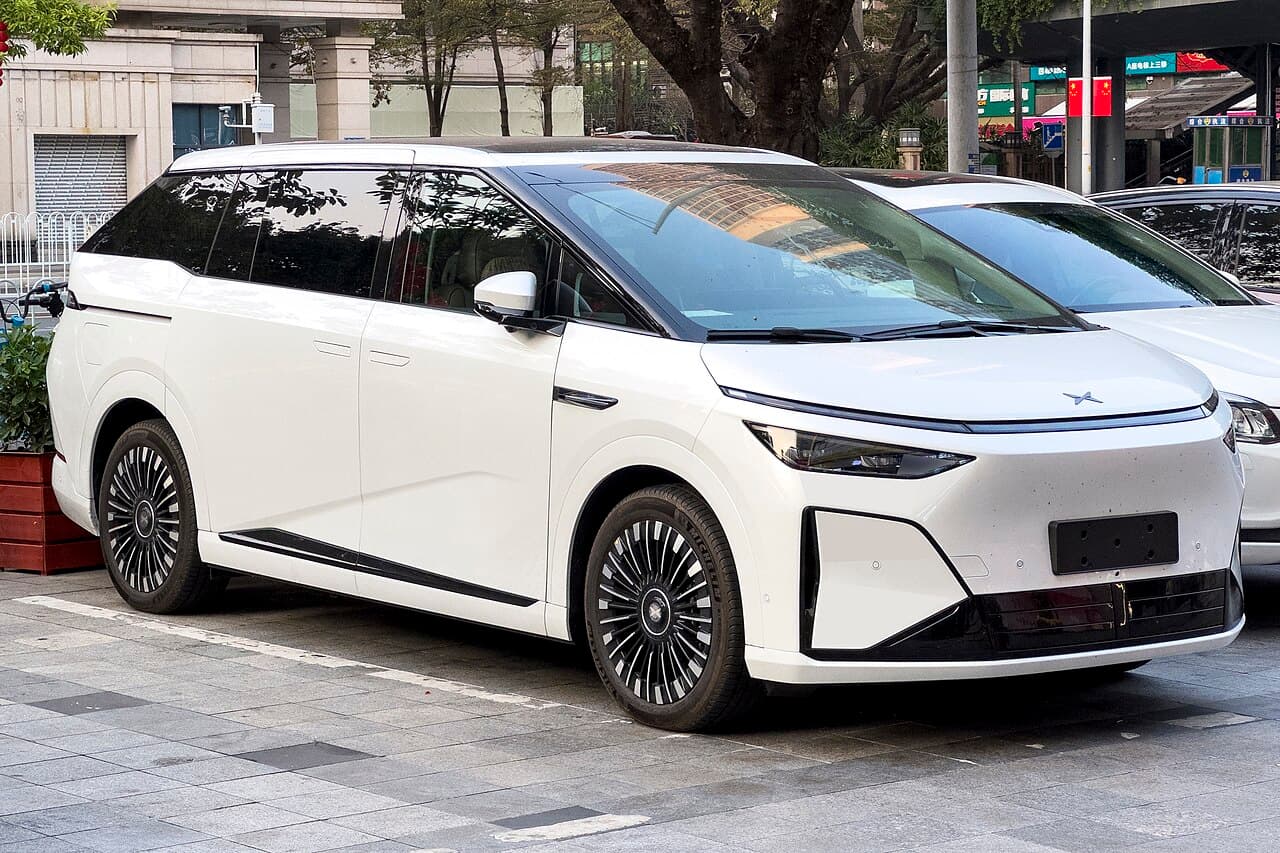
XPeng
Flagship seven-seat electric MPV with rear-wheel steering and an 800V platform - XPeng's premium halo model and a strong international export.
XPeng
XPeng's GX-based L4 robotaxi service, branded 小鹏悠游 / XPENG YOYO on 8 Oct 2026. A dedicated website page and YOYO ride-hailing mini-program launched the same day, with public trials planned through invitation codes. Prior company statements put employee testing and more than 2,000 Guangzhou internal rides behind the brand, with passenger service without a safety driver still targeted for 2027.
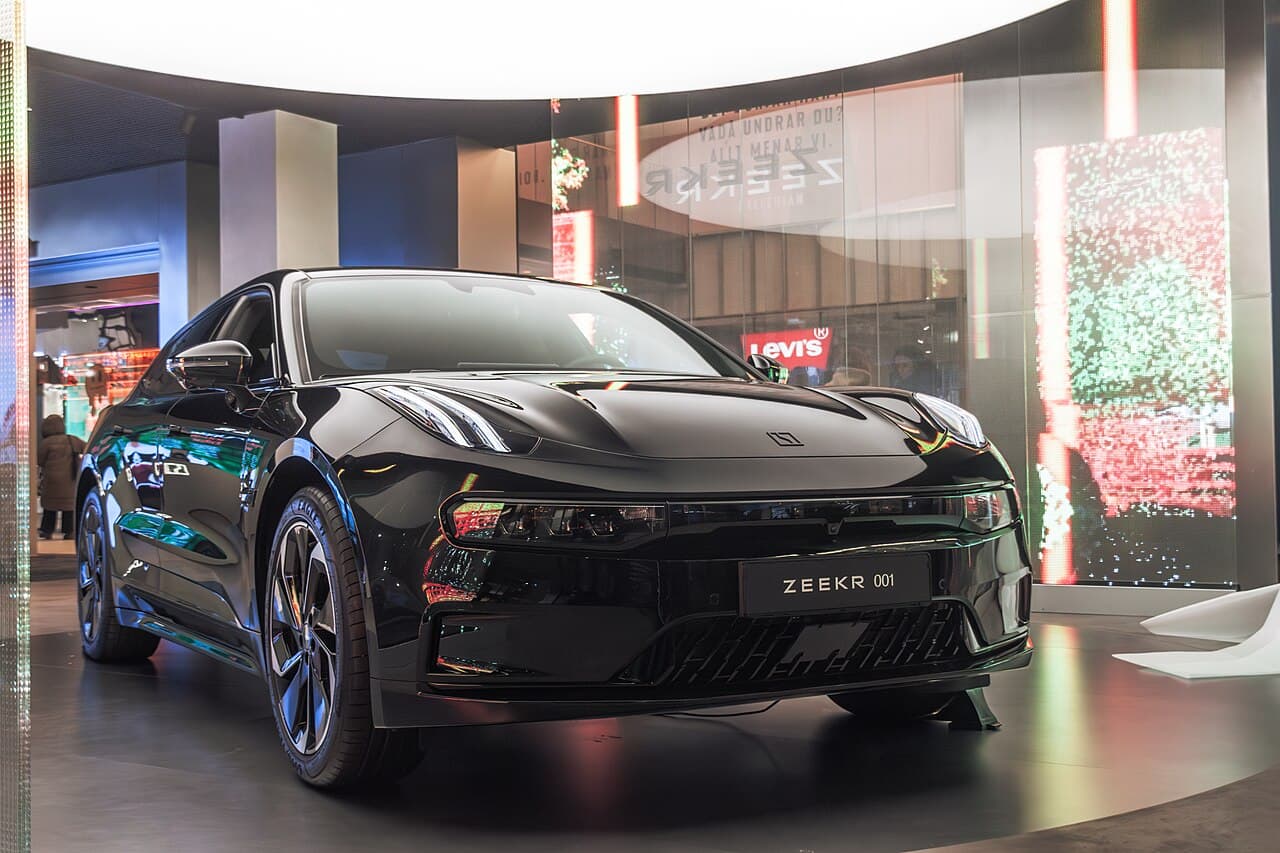
Zeekr
Zeekr's flagship battery-electric shooting brake - the model that launched the brand, blending wagon practicality with sports-car performance.
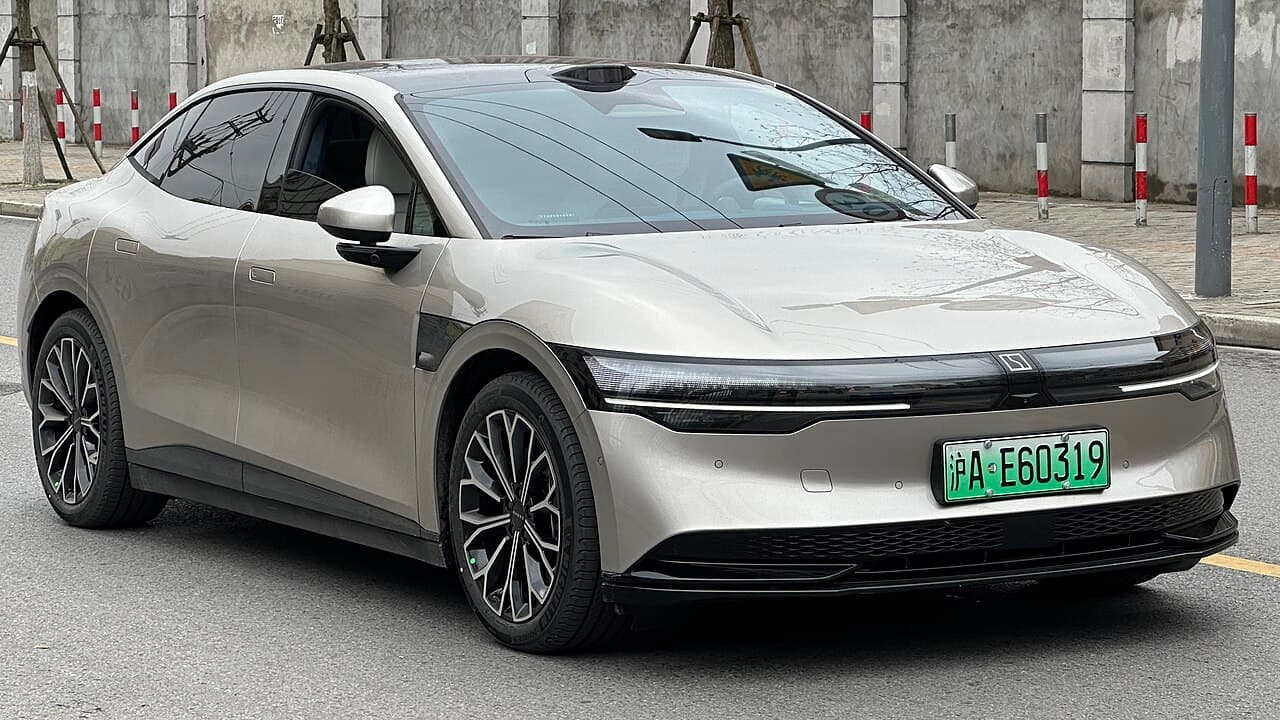
Zeekr
Zeekr's mainstream-market electric sedan (007) and its shooting-brake sibling (007 GT) - the brand's volume-oriented entry into the premium sedan segment and a spearhead of its European expansion.

Zeekr
Luxury six-seat electric MPV - Zeekr's high-end people-mover, positioned against premium MPVs with a lounge-style interior.
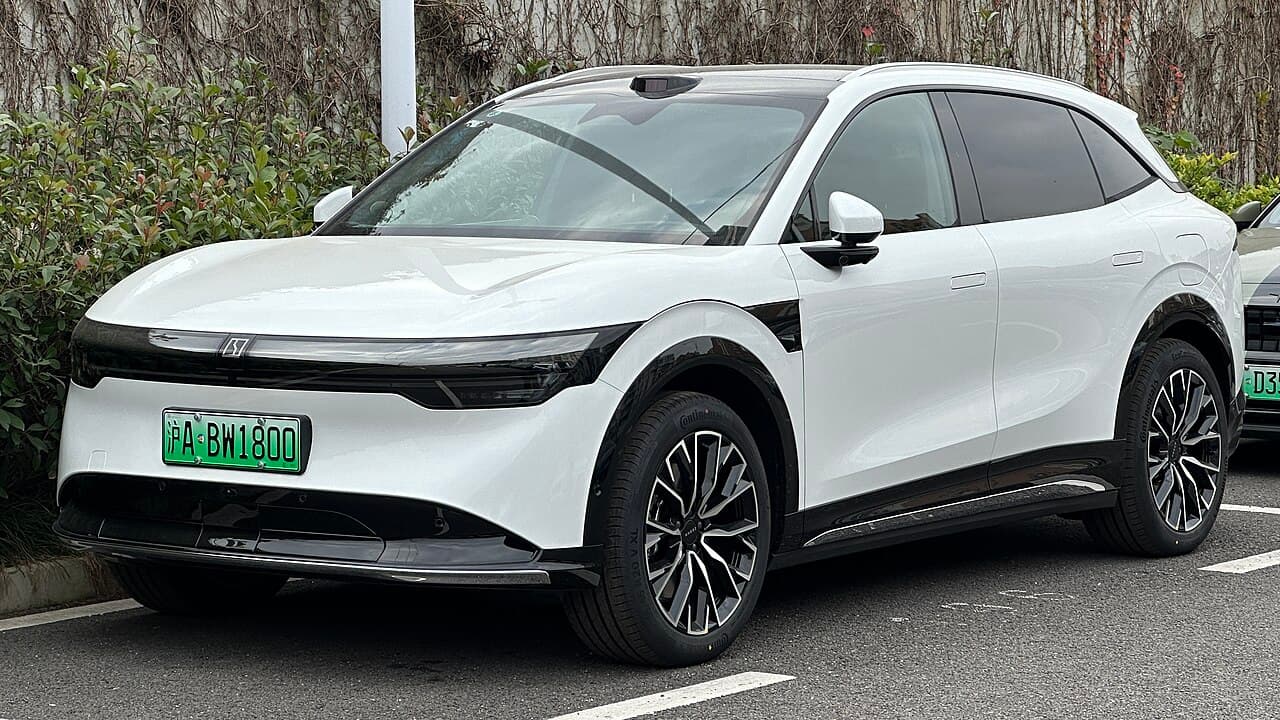
Zeekr
Mid-size electric SUV and one of Zeekr's best-sellers, built on an 800V/900V platform with fast charging and G-Pilot assisted driving.
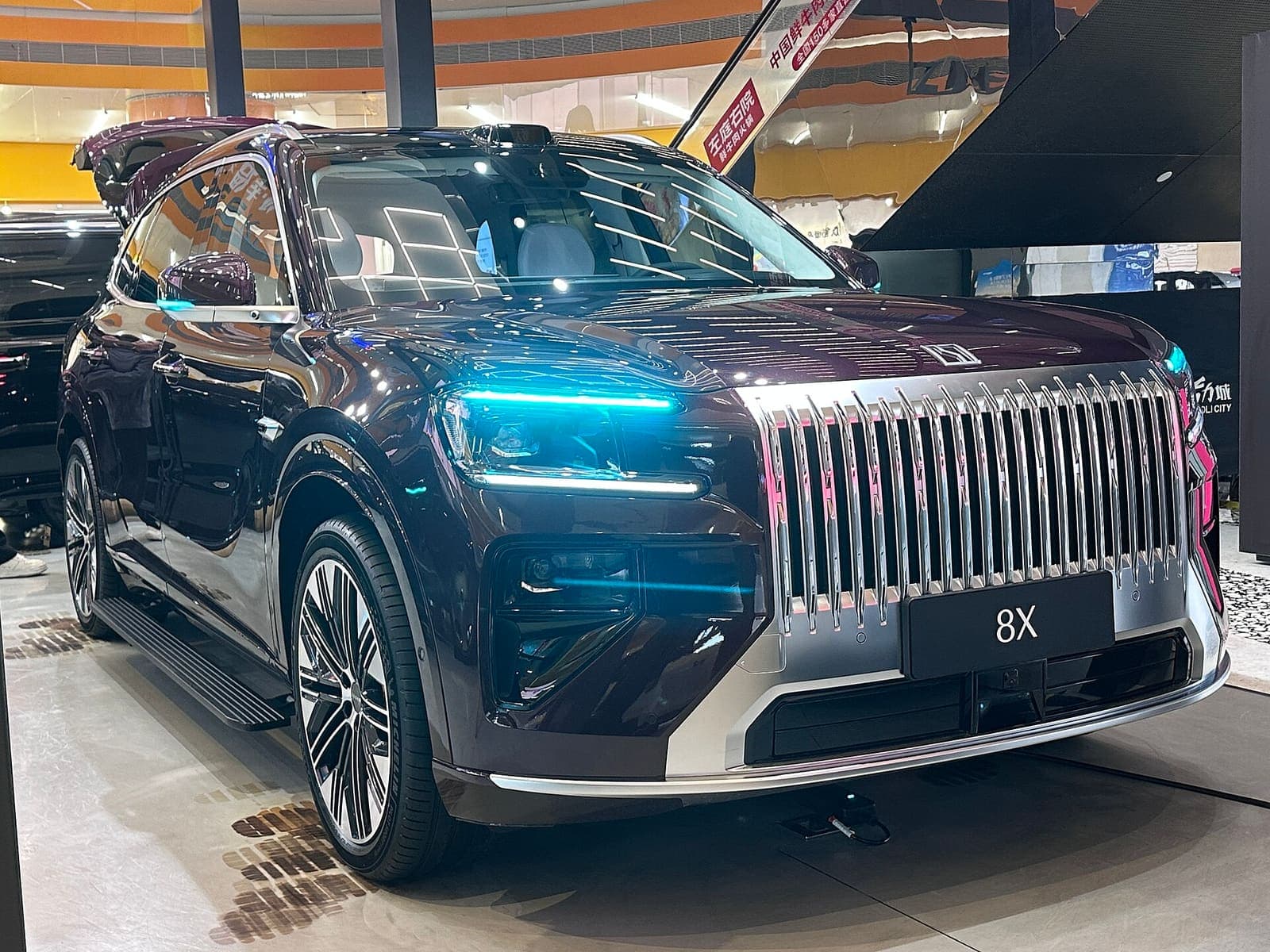
Zeekr
Zeekr's second PHEV flagship - a tri-motor, 900V full-size SUV pairing hypercar-level power with long combined range, positioned against premium hybrid SUVs like the Range Rover Sport.

Zeekr
Full-size luxury SUV and Zeekr's new flagship - its first plug-in hybrid, pairing a 900V SEA Super Hybrid powertrain with hypercar-level power and an L3-capable G-Pilot H9 sensor suite.
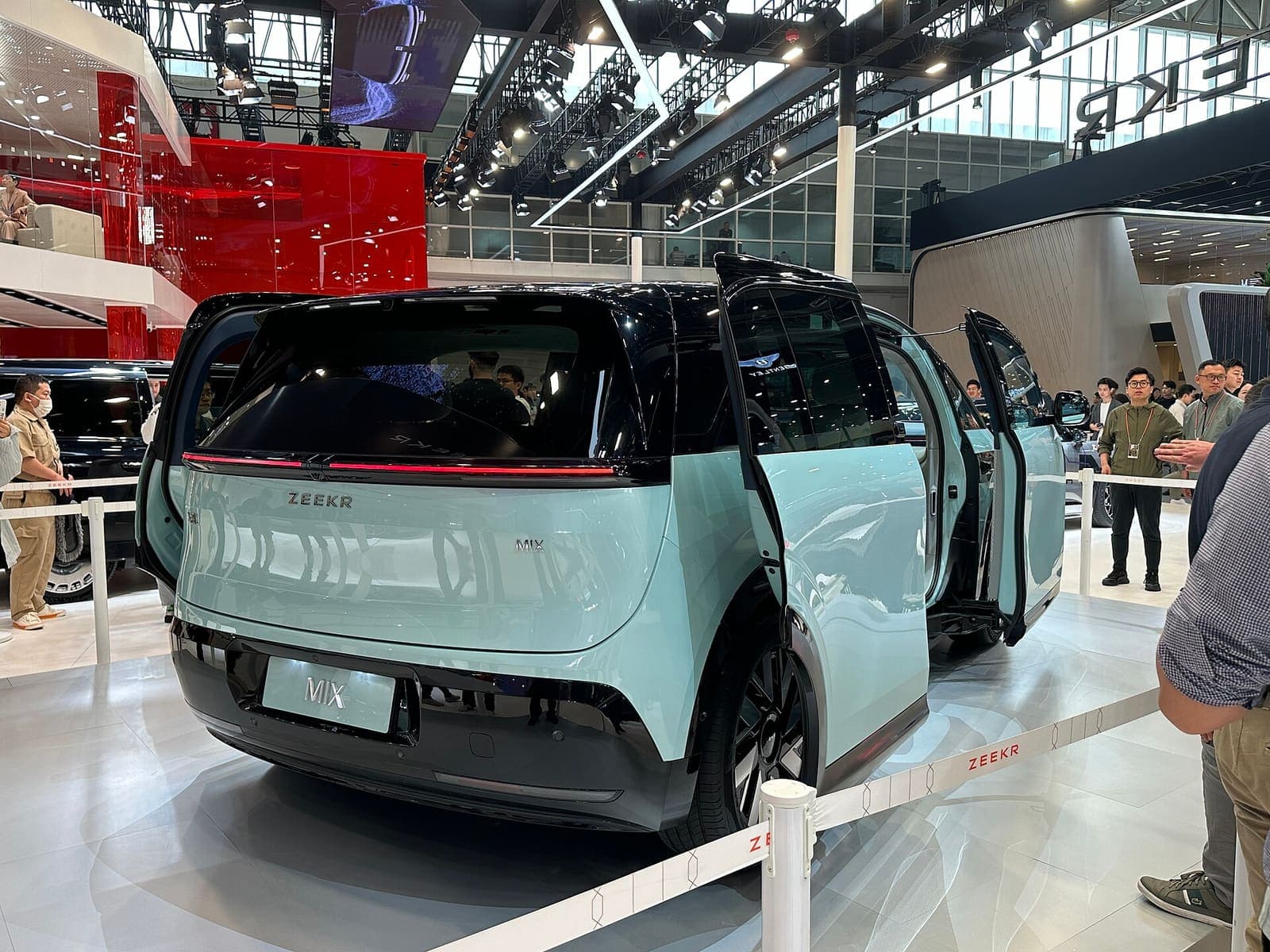
Zeekr
A five-seat family MPV/crossover with double sliding doors on the passenger side, carrying design lessons from Zeekr's Waymo robotaxi platform work.
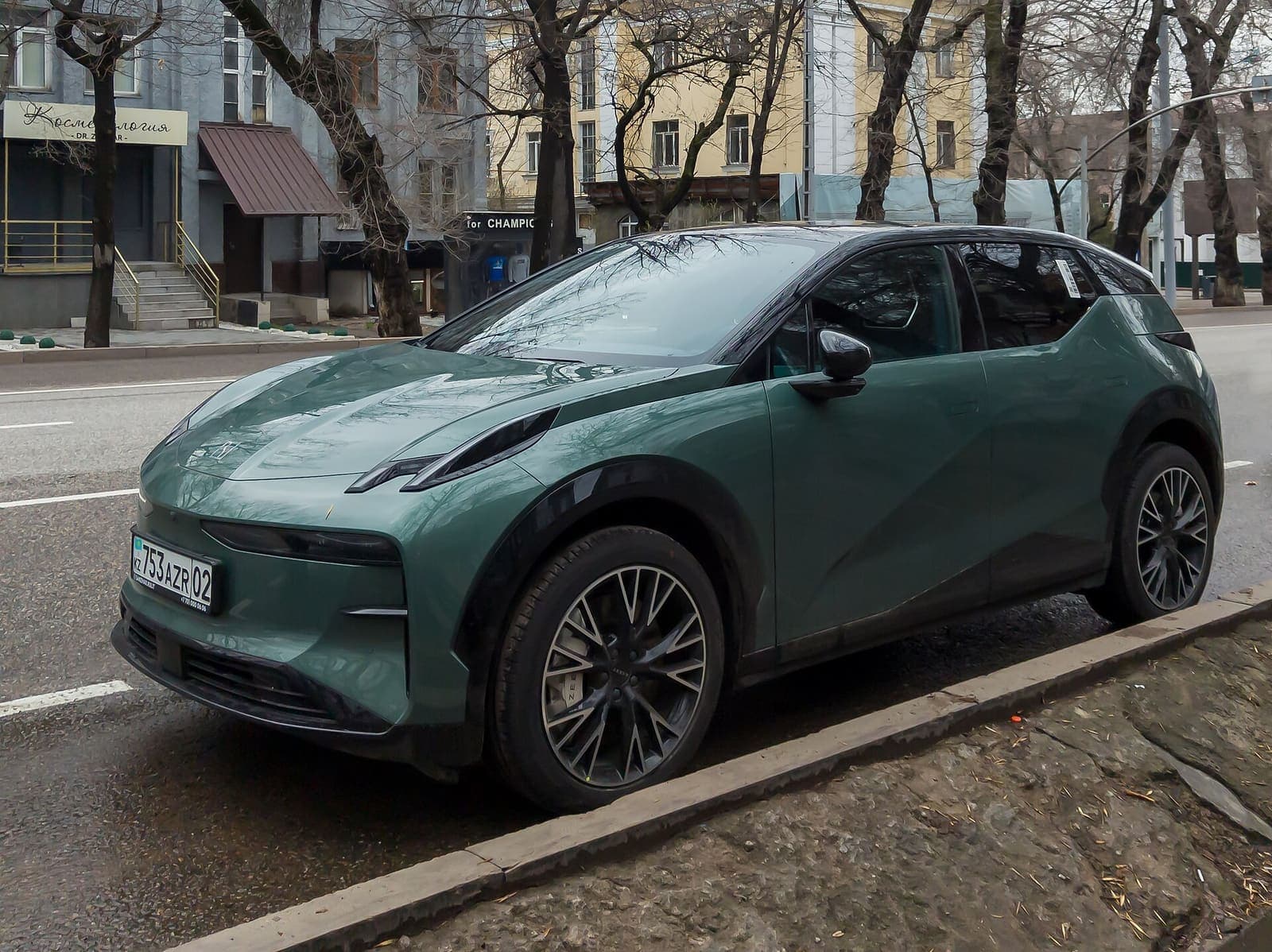
Zeekr
Zeekr's compact premium electric SUV - the brand's entry-level model and the vehicle that opened its Australian (October 2024) and Mexican (July 2024) markets.
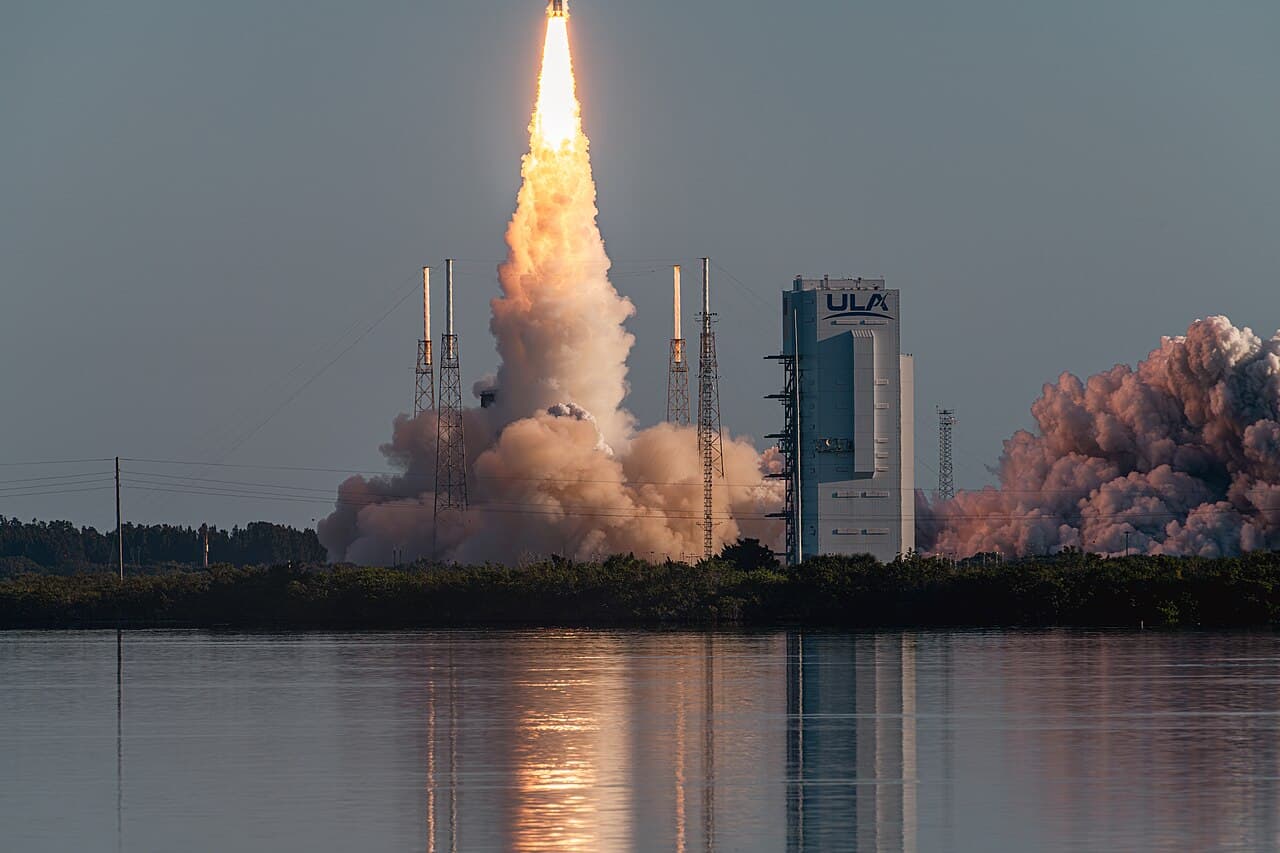
Amazon Leo
Low Earth orbit broadband system built around more than 3,000 satellites at 590–630 km with 100 Gbps optical inter-satellite links, a global ground network integrated with AWS, and a three-terminal customer hardware lineup. The network is designed to support residential broadband, enterprise and government links, aviation connectivity, maritime use cases, and telecom backhaul.
Amazon Leo
Three-tier customer terminal family with custom Amazon silicon: the portable 7-inch Leo Nano (up to 100 Mbps), the mainstream 11-inch Leo Pro (up to 400 Mbps, expected to cost under $400 to produce), and the enterprise-grade Leo Ultra (1 Gbps down / 400 Mbps up). A low-profile aviation phased-array antenna (1 Gbps per aircraft, no moving parts, one-day install) was unveiled in April 2026.
AST SpaceMobile
Space-based cellular broadband network using BlueBird satellites with massive phased array antennas (up to about 2,400 sq ft on Block 2 satellites). Connects directly to standard, unmodified 4G LTE and 5G smartphones - no special handset required. Block 2 satellites (starting with BlueBird 6) weigh about 6,100 kg. The FCC-licensed constellation of up to 248 satellites is the U.S. operating authority; AST still associates continuous coverage in key markets with a much smaller operational fleet.

Eutelsat OneWeb
Low Earth orbit broadband constellation providing global coverage through a Gen 1 fleet of 654 satellites at roughly 1,200 km altitude. The network delivers 1.1 Tbps of sellable capacity, sub-70 ms latency, and 99%+ availability, and is integrated with Eutelsat's GEO assets for multi-orbit services across government, mobility, enterprise, and telecom markets. The follow-on satellite program now covers 669 Airbus-built spacecraft (440 already procured plus a September 10, 2026 ATP for 229 more), adding digital channelizers, hosted-payload options, and service continuity through 2034.

ICEYE
ICEYE's flagship natural-catastrophe product: SAR-derived flood extent, depth, and duration at building level, delivered as GIS layers and APIs for insurers, reinsurers, and emergency agencies. The same SAR stack supports wildfire building-level damage and hurricane rapid-impact maps. Unlike modelled flood surfaces, ICEYE sells observed water from its own constellation, including through cloud cover at night.
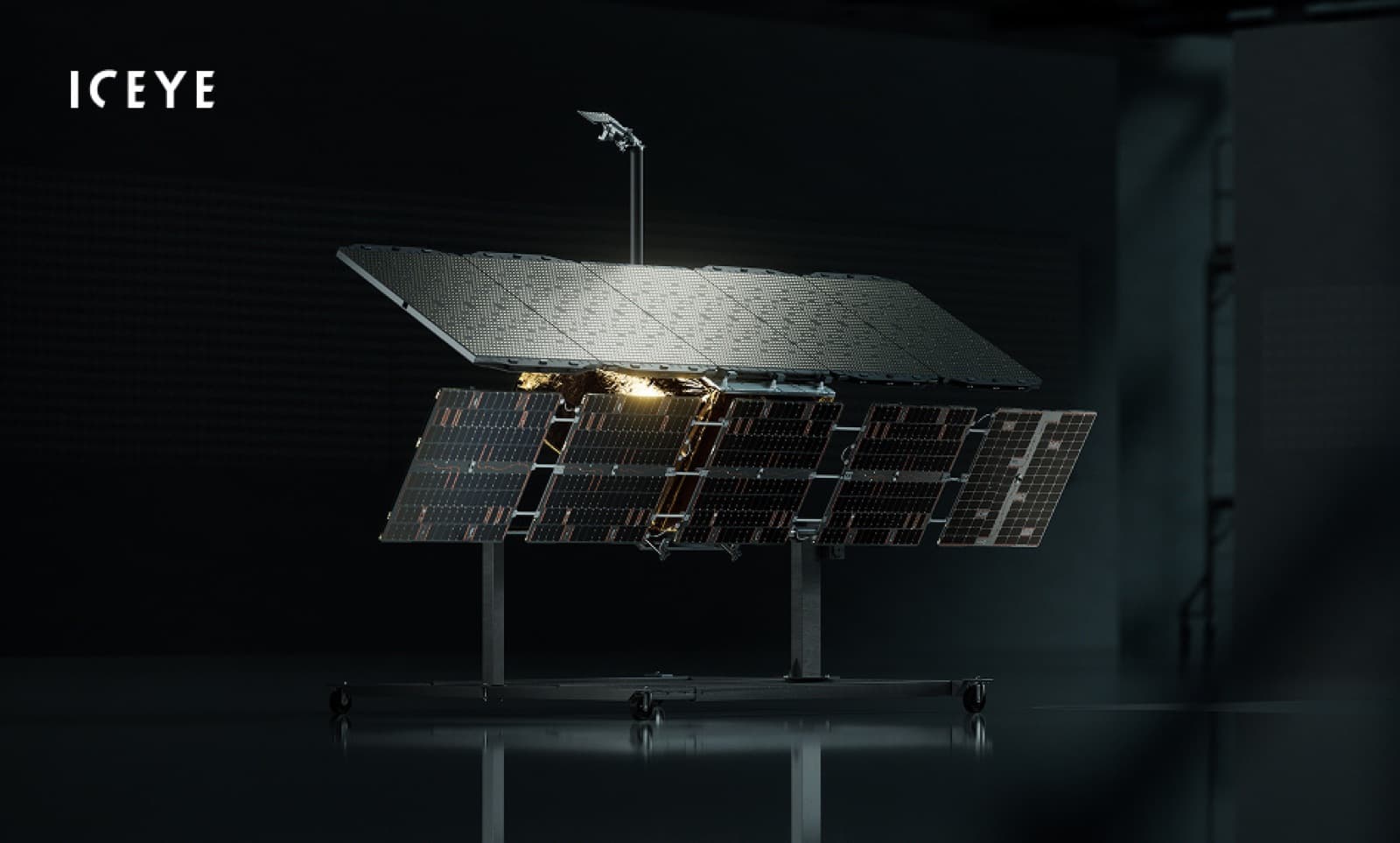
ICEYE
ICEYE's current production SAR bus, designed for mass manufacture and sovereign missions. Gen4 doubles antenna size and signal strength versus prior generations, images at up to 16 cm, covers a 400 km high-resolution field of regard, and downlinks at up to 700 Mbps on a steerable antenna. The satellites are software-defined (IceOS) and ITAR-free, which is central to ICEYE's European and allied government pitch.
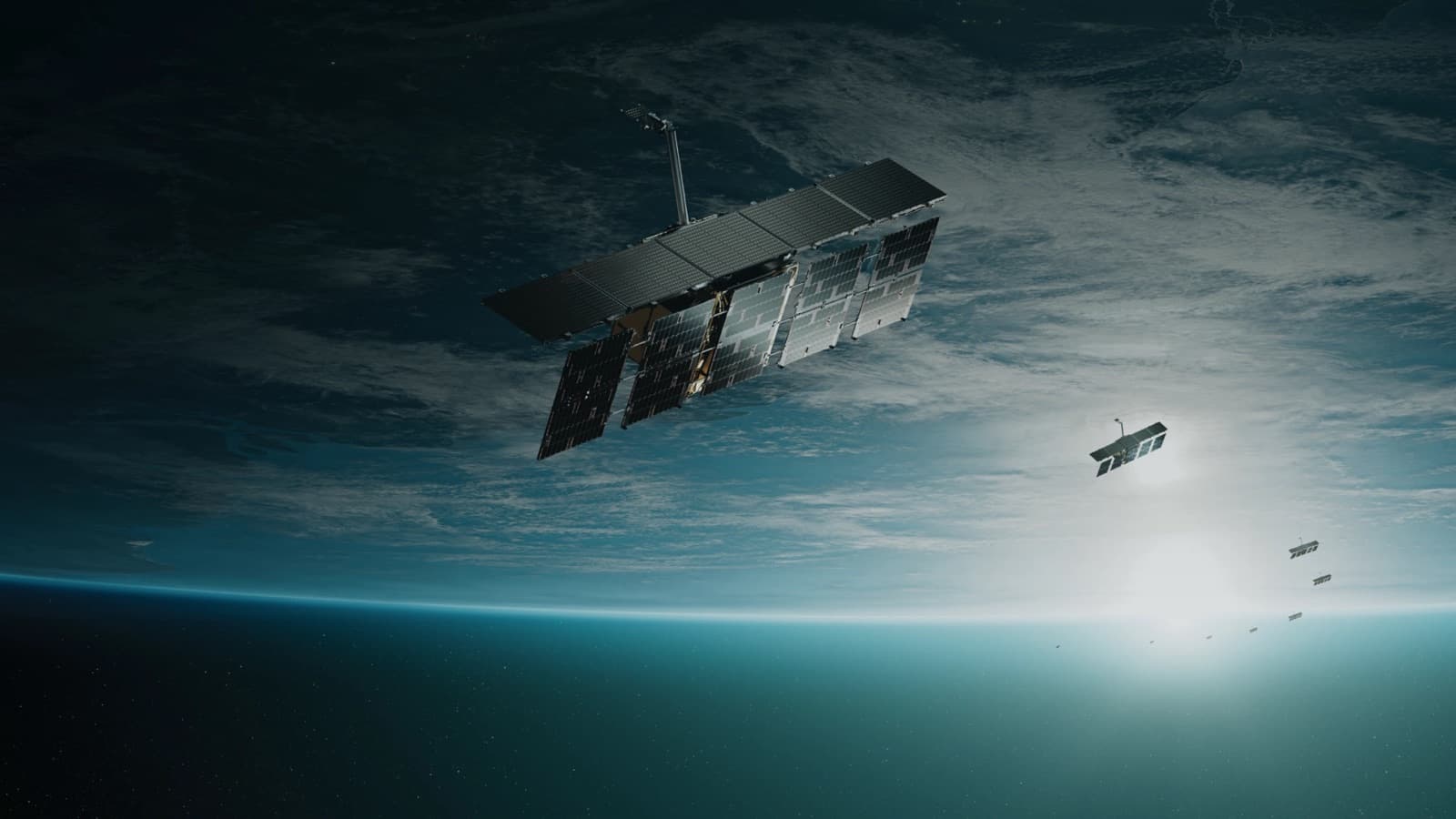
ICEYE
The world's largest commercial synthetic aperture radar constellation, imaging through clouds, smoke, and darkness from roughly 500-600 km sun-synchronous orbits. ICEYE sells tasking, archive, and derived products from its own fleet and uses the same buses for customer-owned national missions. Imaging modes run from wide Scan (scenes up to about 120,000 km2) down to Dwell Precise at 25 cm or 16 cm on Gen4, with claimed global revisit under six hours and sub-15-minute revisit on a dense constellation.
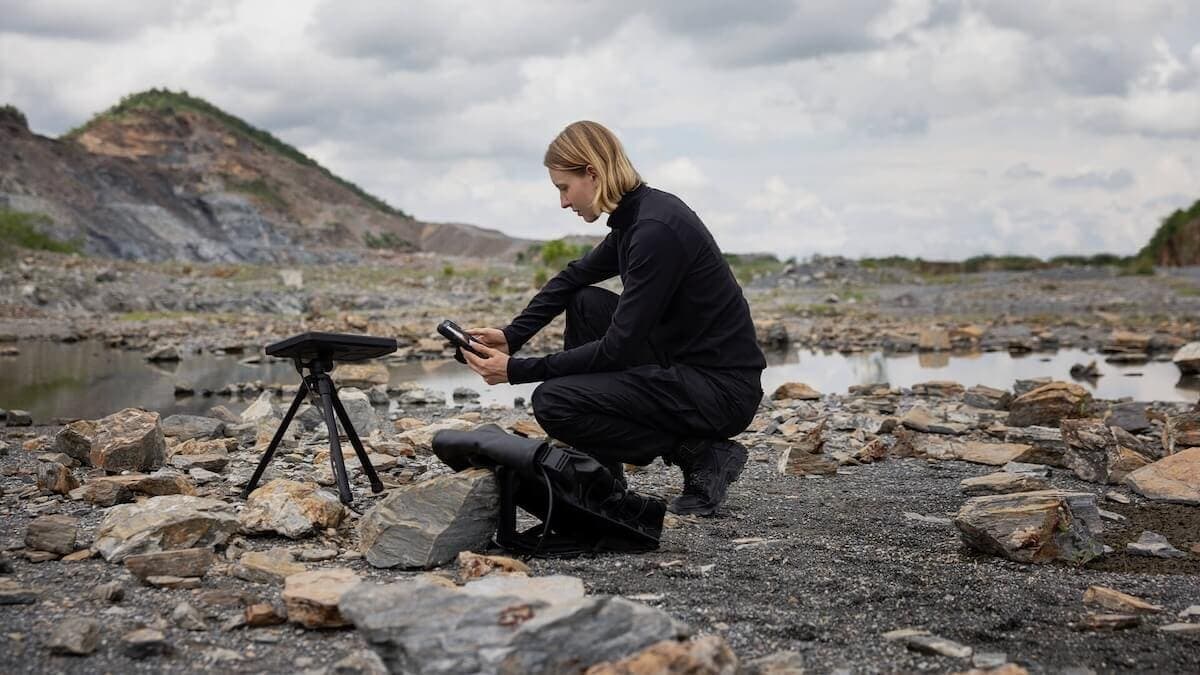
ICEYE
Partnership with Nokia, announced 1 October 2026, to develop sovereign broadband LEO communications systems that governments own and operate, including satellites, ground segment and terminals. Designed to complement military and commercial terrestrial networks rather than replace them. First communications satellites are expected in 2028.
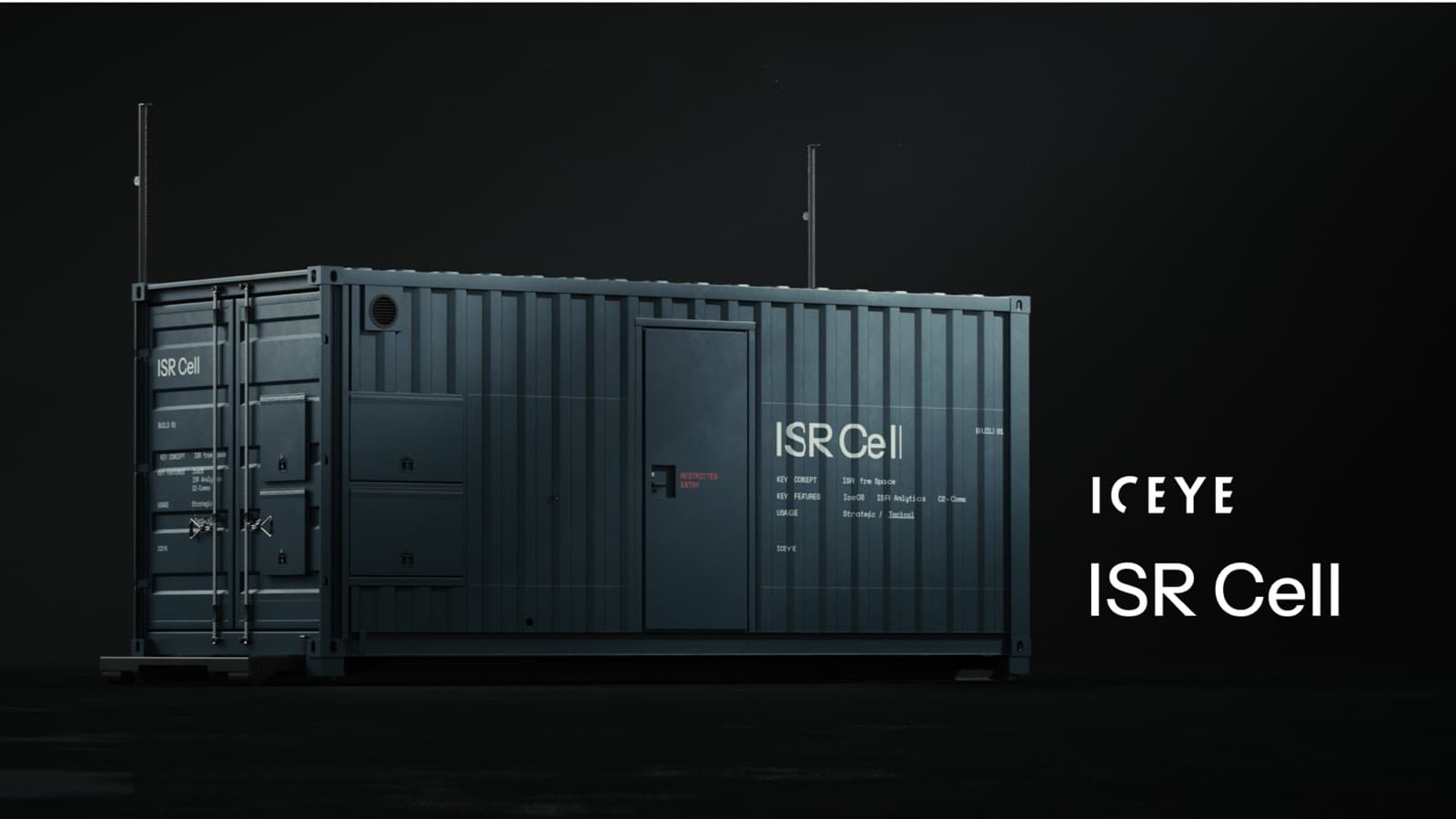
ICEYE
An end-to-end intelligence, surveillance, and reconnaissance stack: customer-owned Gen4 satellites, on-prem processing, IceOS mission software, automated target recognition, and a deployable ISR Cell that runs the full tasking-to-dissemination loop from a single container. ICEYE says processing a Dwell Fine image takes under 15 seconds and that the ISR Cell can operate if the main ground segment is knocked out. The system is sold as NATO-interoperable and is described as battle-tested with Ukrainian forces since 2022.
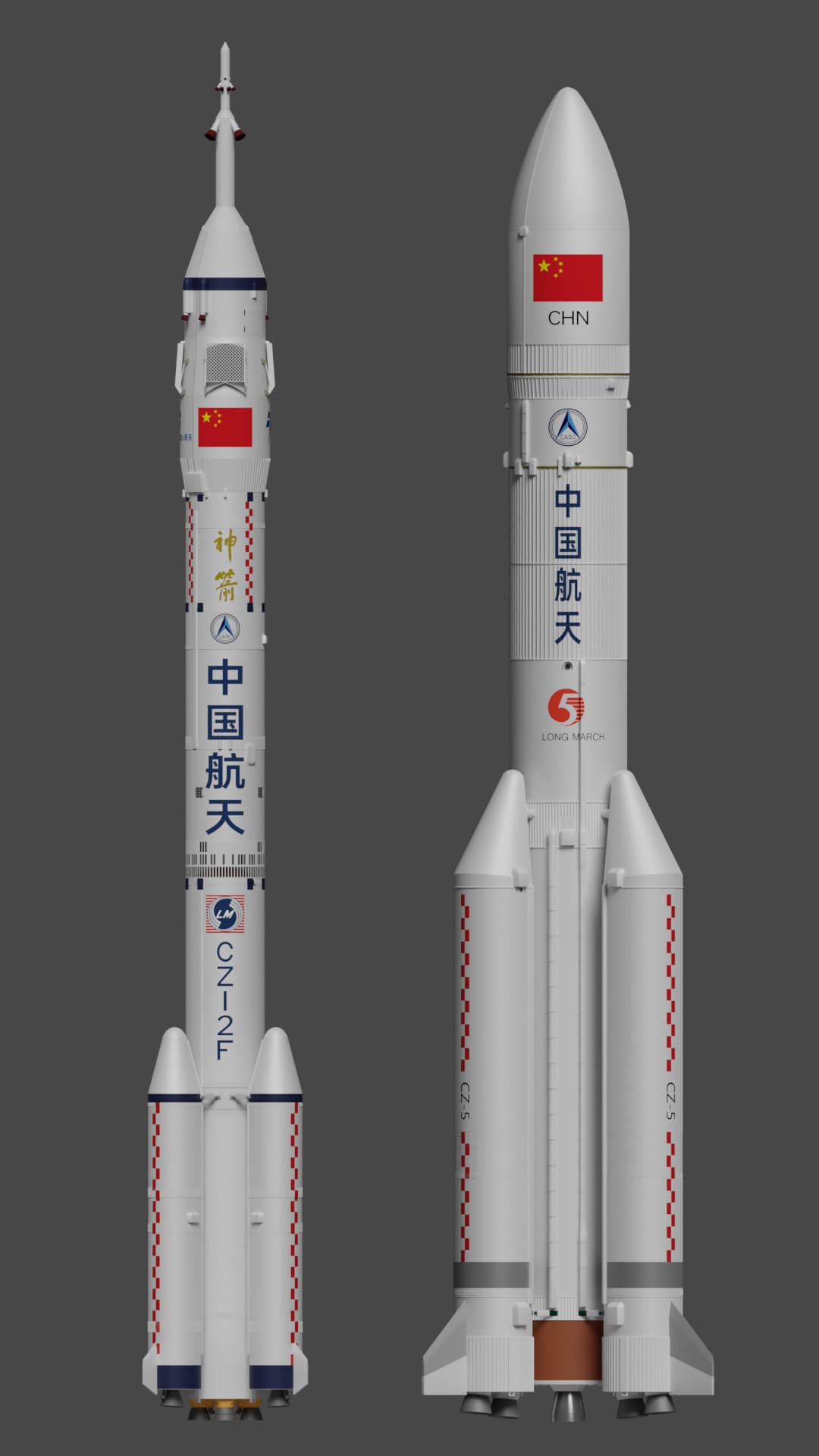
Qianfan (Spacesail)
China's first commercial LEO mega-constellation in formal network deployment. The system is being built in phases: a 324-satellite initial network for regional coverage, a 1,296-satellite Phase 1, and a long-term total of more than 15,000 satellites for global coverage by 2030. Two July 2026 Long March batches lifted the network to 238; on September 15-16, 2026 LandSpace's Zhuque-2E and Orienspace's Gravity-1 flew the first private-launcher networking missions (10 and 8 satellites) and took the count to 256. Primary deployments still mix 18-to-20-satellite Long March batches with smaller commercial-rocket groups.
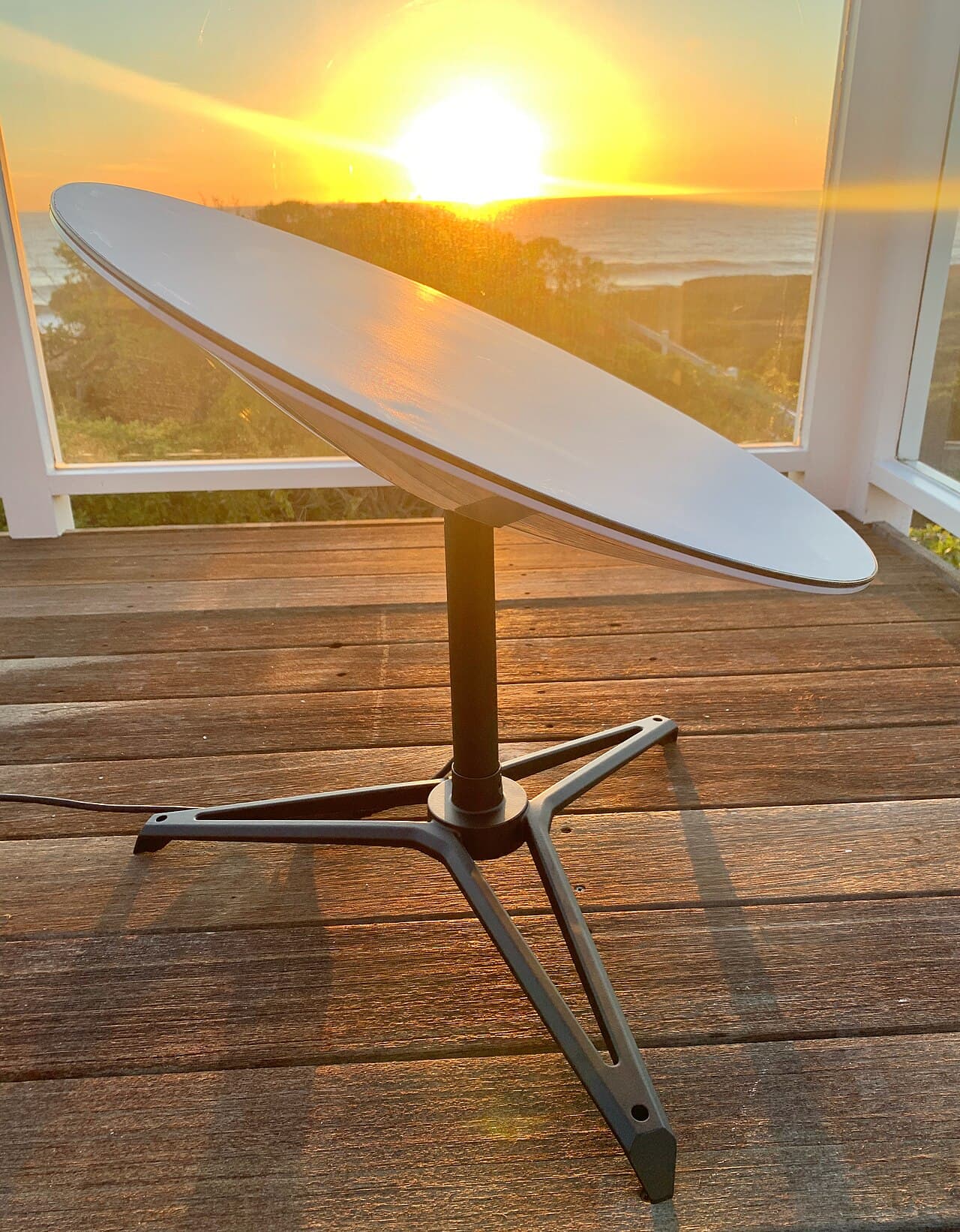
Starlink
The largest satellite constellation ever flown: 11,112 working satellites in low Earth orbit delivering broadband across 160+ countries, with laser inter-satellite links and multiple weekly Falcon 9 deployment launches.
Starlink
Satellite-to-phone service using 650+ dedicated satellites that act as cell towers in space, providing messaging, voice, data, and IoT connectivity to unmodified phones - commercial in the US since July 2025 as T-Mobile's T-Satellite and live with carrier partners worldwide.
Starlink
Self-install phased-array user terminals: the Standard Kit ($349), the portable Starlink Mini, and the enterprise-grade Performance dish ($1,999), with terminal manufacturing in Bastrop, Texas.
Telesat
Integrated low Earth orbit network built around a large MDA-made satellite constellation, landing stations, network software, and an ecosystem of user terminals. Lightspeed is aimed at telecom, enterprise, aviation, maritime, government, and defense users, with MEF-aligned service delivery, public/private interconnect options, and both commercial Ka-band and Mil-Ka service tiers.
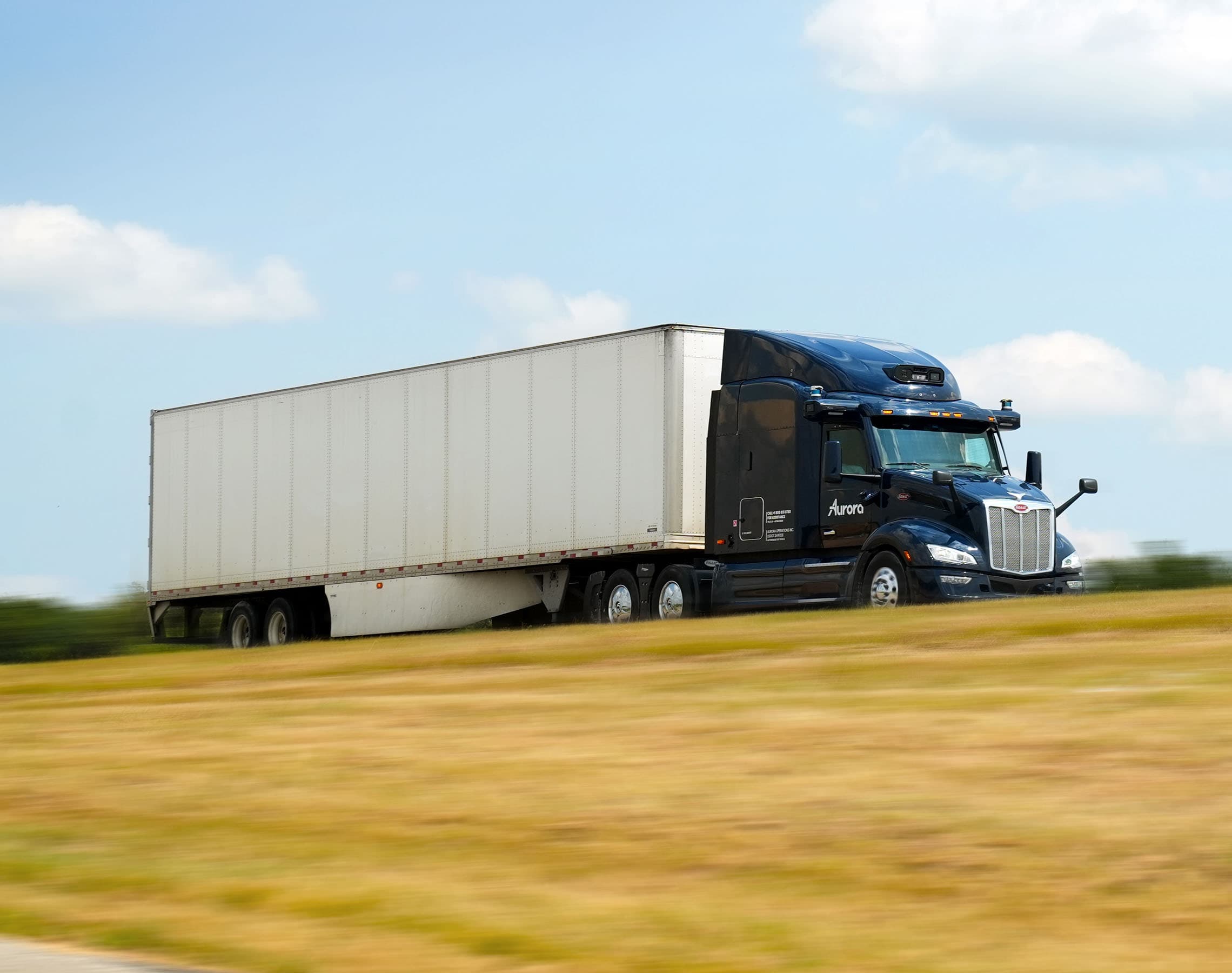
Aurora Innovation
Aurora's SAE Level 4 self-driving trucking system and subscription service for long-haul freight. It combines FirstLight lidar, radar, cameras, and autonomy software and is being deployed first on Class 8 trucks for middle-mile highway routes.
Aurora Innovation
Aurora's proprietary long-range lidar stack for highway autonomy. Aurora Driver 2, now in commercial driverless freight, uses FirstLight lidar that Aurora's website states can see 1,000 meters ahead, more than 34 seconds of planning horizon at highway speed. Earlier FirstLight generations were disclosed at 450+ meters; the 1,000-meter figure is the Driver 2 production stack.

Baidu Apollo
Baidu's fully driverless autonomous ride-hailing service, deployed across China and expanding internationally through direct apps and mobility-platform partners.

Baidu Apollo
Baidu Apollo's sixth-generation purpose-built robotaxi vehicle, used for international deployments and designed around fully autonomous ride-hailing.
Baidu Apollo
A low-speed autonomous shuttle platform developed through Baidu Apollo's ecosystem, used as an early Apollo robobus product and smart-mobility demonstrator.
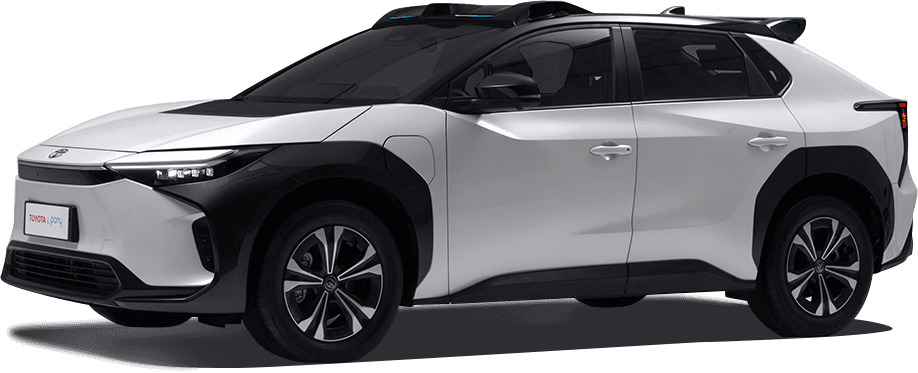
Pony.ai
Pony.ai's mass-production robotaxi platform for fully driverless commercial service, built with multiple OEM partners and designed for large-scale fleet deployment.
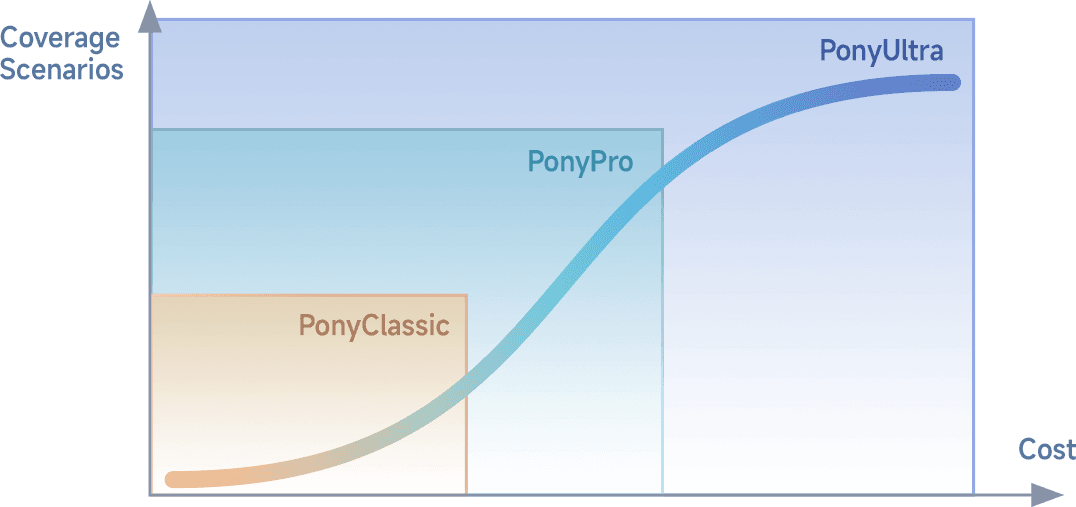
Pony.ai
Pony.ai's personally owned vehicle and licensing business applies its virtual-driver technology to passenger vehicles, autonomous domain controllers, and adjacent robotics markets.
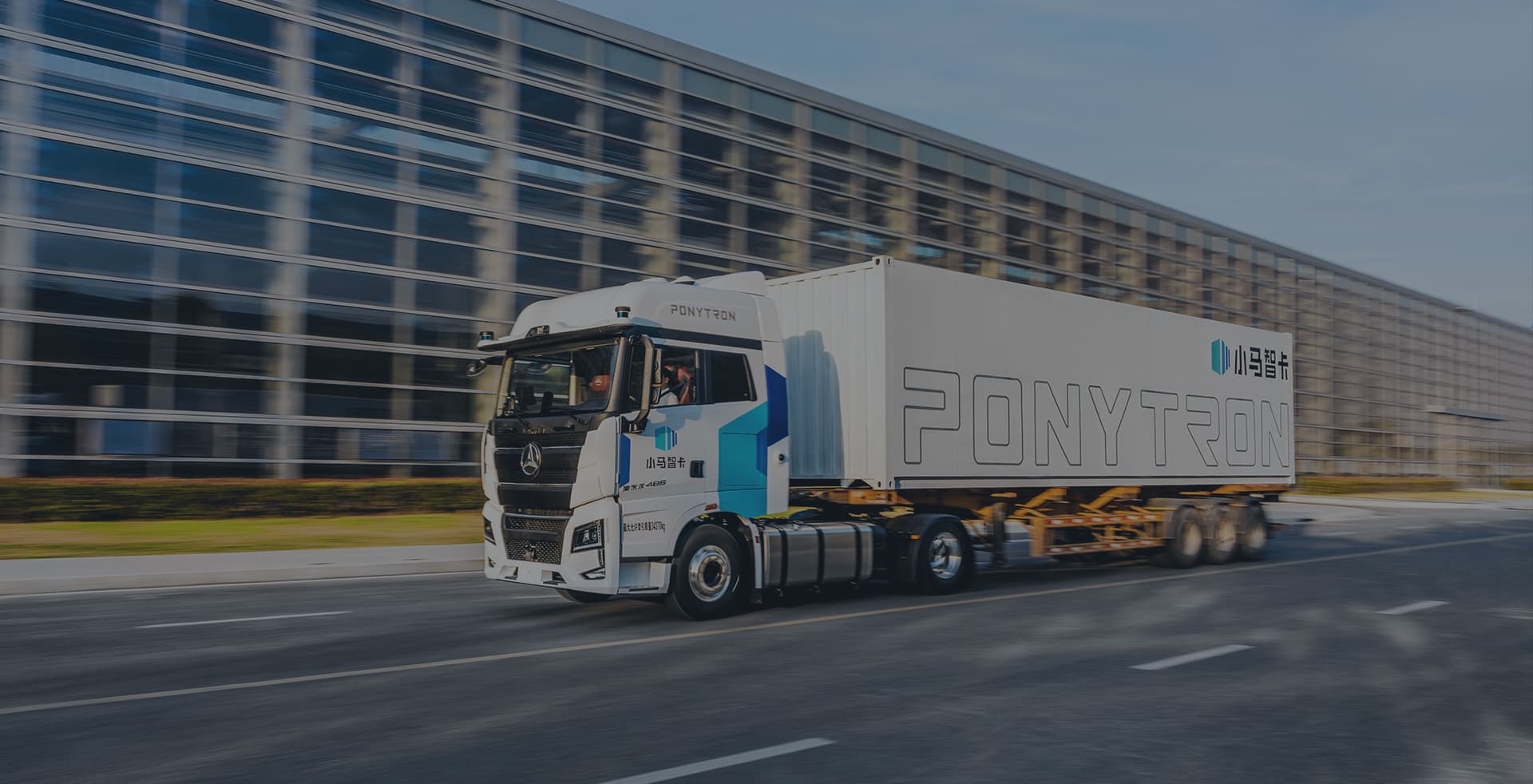
Pony.ai
Pony.ai's autonomous freight platform for commercial logistics, including a Gen-4 robotruck designed for thousand-unit scale deployment.

Waymo
Waymo's next-generation autonomous stack is designed for lower cost, broader weather coverage, and deployment across multiple vehicle platforms. It is rolling out first on the Ojai robotaxi and will also be integrated into the Hyundai IONIQ 5.

Waymo
Waymo's main commercial robotaxi platform today. The company shifted Waymo One to an all-electric Jaguar I-PACE fleet in 2023, and these vehicles underpin daily rider service across its U.S. markets.

WeRide
WeRide's mass-produced autonomous shuttle and minibus platform (LCR 2.0) for public transit, campus, airport, resort, and event routes. The company product page lists 10 seats, HPC 3.0 compute at 2,000 TOPS, and testing or operations in 40+ cities across China, Singapore, the UAE, Saudi Arabia, Qatar, France, Switzerland, Spain and other markets.
WeRide
WeRide's Level 4 autonomous sanitation vehicles for open-road sweeping. The company calls S1 the first L4 sanitation vehicle commercially deployed on public roads in China and Singapore, with S6 adding a 3.5 m3 water tank and at least 300 km NEDC range.

WeRide
WeRide's latest purpose-built robotaxi platform, developed with Geely Farizon and deployed across China, the Middle East, Southeast Asia, and Europe.
WeRide
WeRide's Level 4 autonomous logistics van for urban delivery, listed on the company product page as China's first remote-testing (driverless) and cargo-testing licensed robovan, with 5.5 m3 cargo space, 220 km range, and 1,000 kg load capacity.

WeRide
A one-stage end-to-end L2++ ADAS solution that transfers WeRide's Level 4 data, simulation, and autonomy stack into mass-production passenger vehicles.
Zoox
The autonomy stack plus the human infrastructure behind it. Zoox Fusion Centers are the hubs where teleguidance, mission control, and rider support monitor the fleet and talk vehicles through situations they cannot resolve alone, as when a teleoperator reversed a robotaxi out of a smoke-obscured Las Vegas fire scene in June 2026. New markets are mapped first by retrofitted Toyota Highlander test vehicles with safety drivers before purpose-built robotaxis are introduced.
Zoox
The app-booked robotaxi service itself. Paid in Las Vegas since August 10, 2026 across the Strip and downtown; free to the public in San Francisco, where Zoox still lacks the California permits needed to charge; and in early-rider phases in Austin and Miami. More than half a million riders have been carried since the September 2025 Las Vegas opening.
Zoox
A ground-up robotaxi rather than a retrofitted car: symmetric and bidirectional, with four-wheel steering, subway-style doors, four face-to-face seats, and no steering wheel, pedals, or mirrors in either direction. A 133 kWh battery supports up to 16 hours of operation per charge and a 75 mph top speed, though city operation runs far below that. The version shown on August 4, 2026 is the production model, with an aloe-green and stone-grey interior and reflectors that rotate position and color as the vehicle changes travel direction.
Aalo Atomics
Aalo's extra-modular power plant for AI data centers: five Aalo-1 reactors sharing multiple turbines (the company site specifies three) producing 50 MWe. Built from factory-manufactured truck-sized modules, designed to install in months and to phase maintenance so the plant is never fully offline.
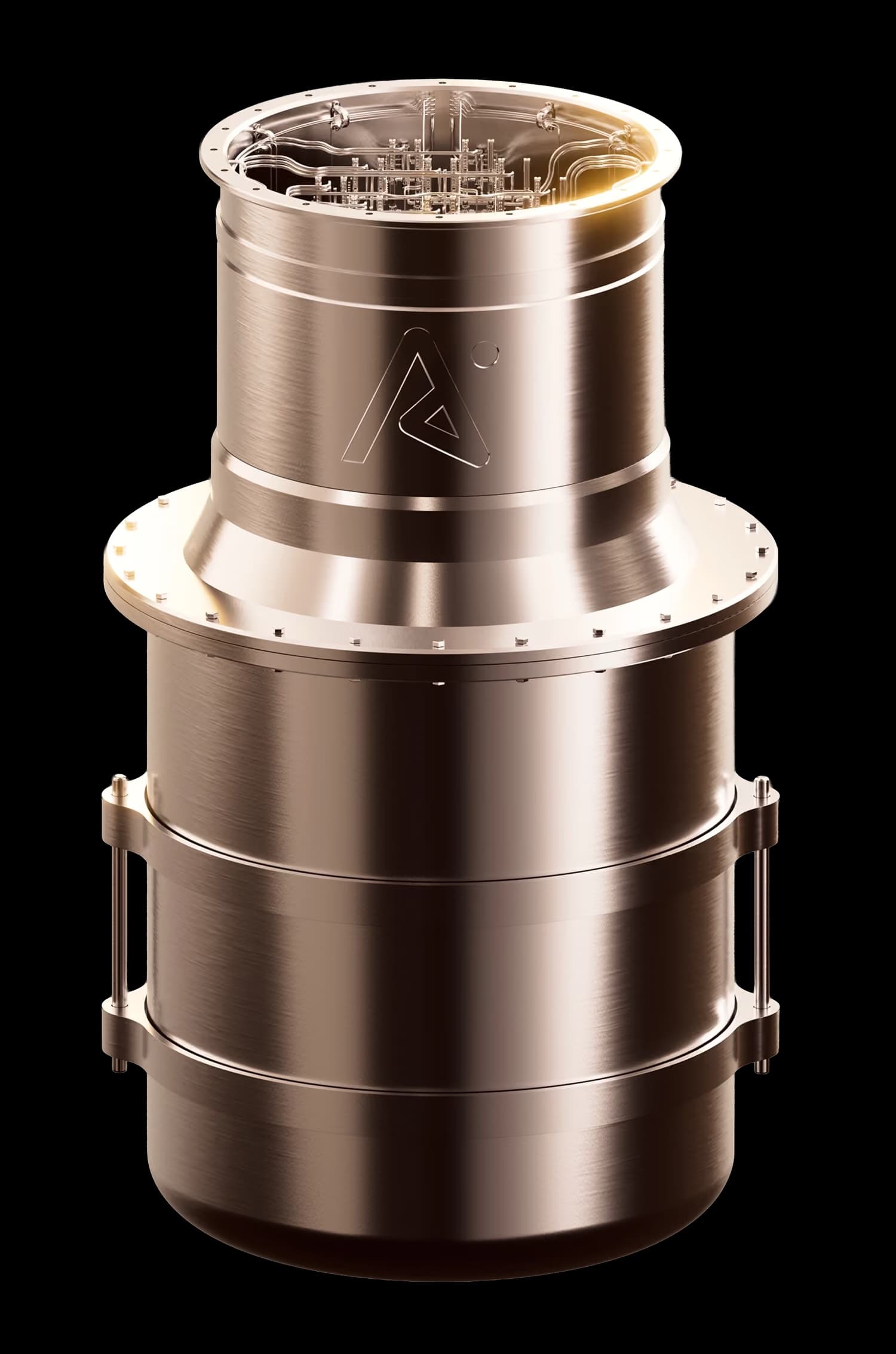
Aalo Atomics
A factory-mass-manufactured 10 MWe (30 MWt) sodium-cooled, graphite-moderated reactor running on low-enriched uranium-dioxide fuel at near-atmospheric pressure. Sized to ship by truck, with fully passive shutdown and 72+ hour passive decay-heat removal; five Aalo-1s power each Aalo Pod.
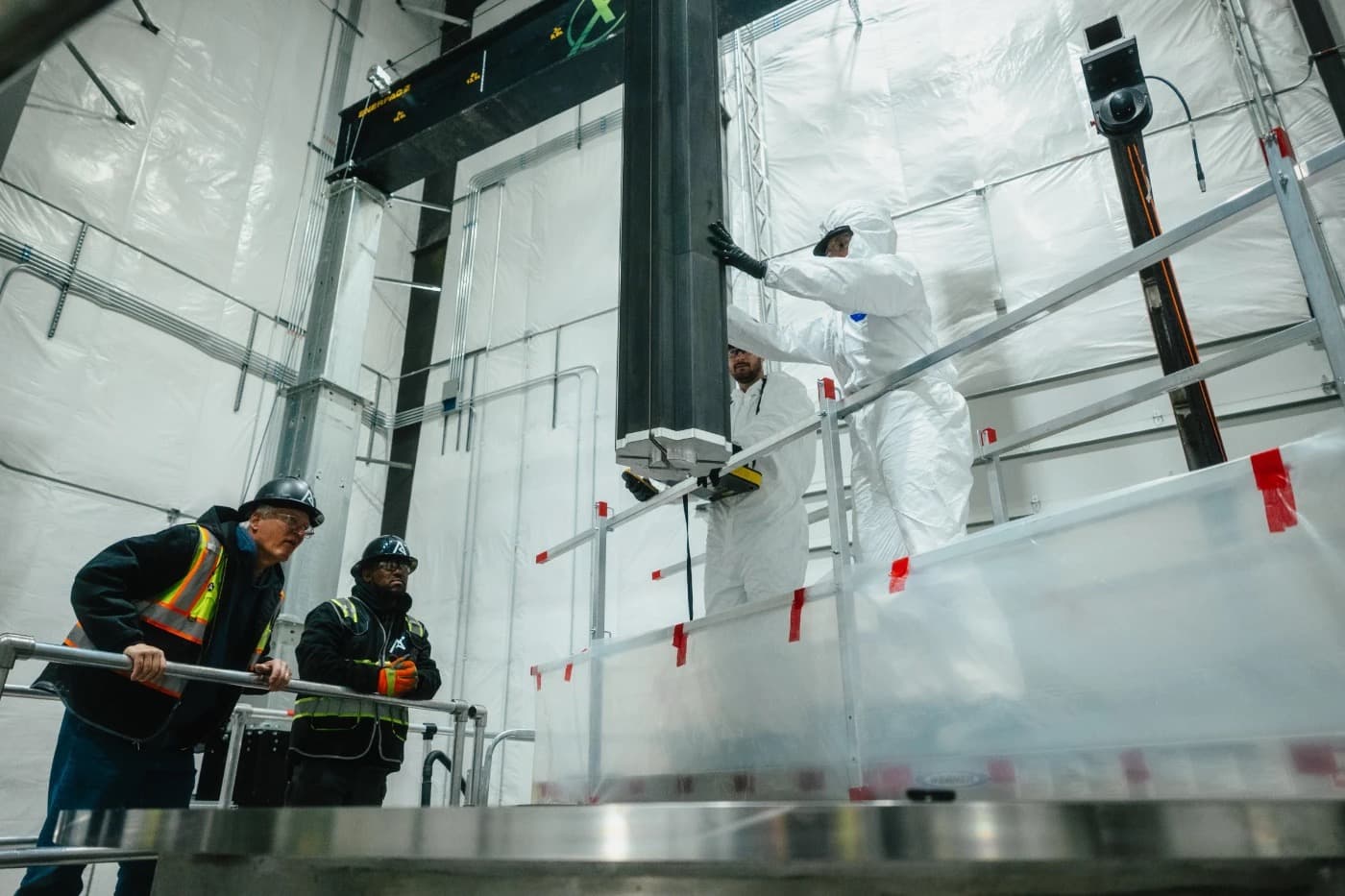
Aalo Atomics
Aalo's experimental reactor campus at Idaho National Laboratory, built under the DOE Reactor Pilot Program. Its sodium-cooled Critical Test Reactor - a full-scale Aalo-1 core with 13 uranium-dioxide fuel assemblies - reached first criticality on July 4, 2026; the campus's follow-on Project Ascension reactor is intended to generate 10 MWe and power a co-located experimental data center.
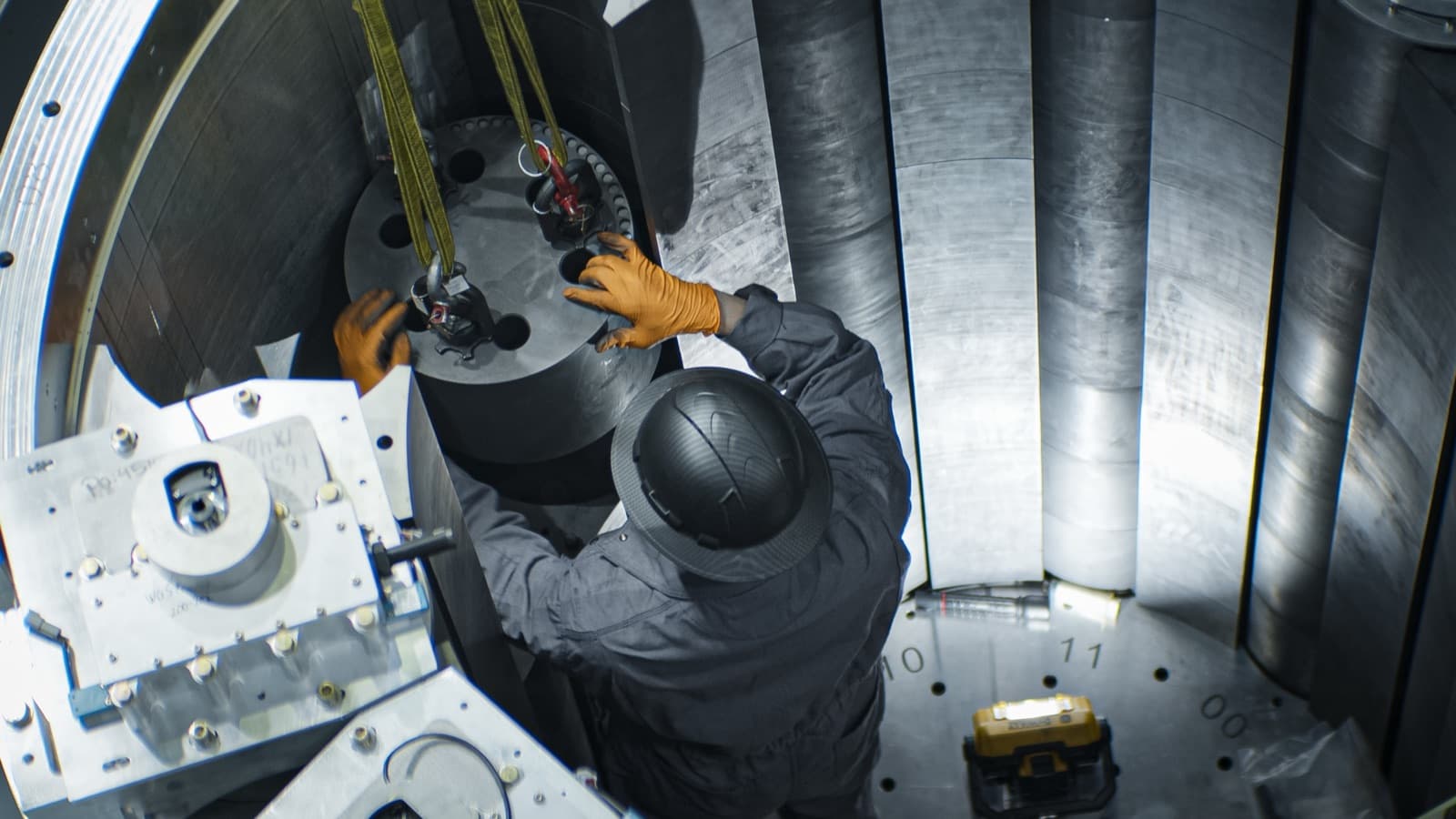
Antares Nuclear
A full-scale, zero-power demonstration of the R1 core at Idaho National Laboratory's RACE facility, built under DOE's Reactor Pilot Program. It has no power conversion or heat-removal loop; the test validated reactor physics, control-drum behavior, and the DOE authorization pathway using BWXT-fabricated HALEU TRISO.
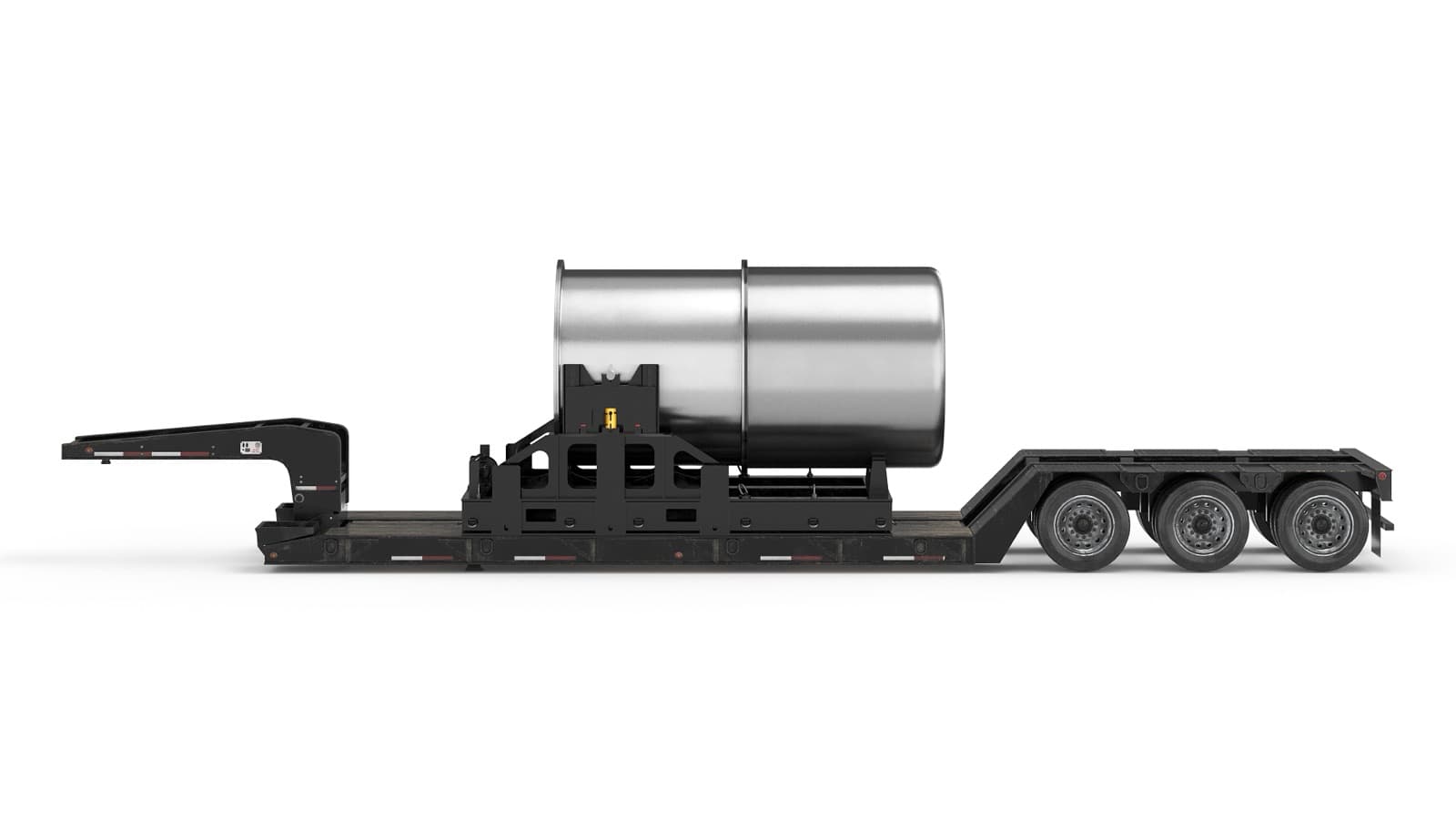
Antares Nuclear
Antares' commercial factory-built microreactor: a TRISO-fueled prismatic graphite core with graphite and boron carbide control drums, passive sodium heat pipes, a fin-and-tube primary heat exchanger, and a recuperated nitrogen closed Brayton cycle at under 300 psi. Packaged with integrated shielding and a transport cradle for defense-critical assets, rated at 100 kWe to 1 MWe for 6+ years without refueling and without a grid connection.
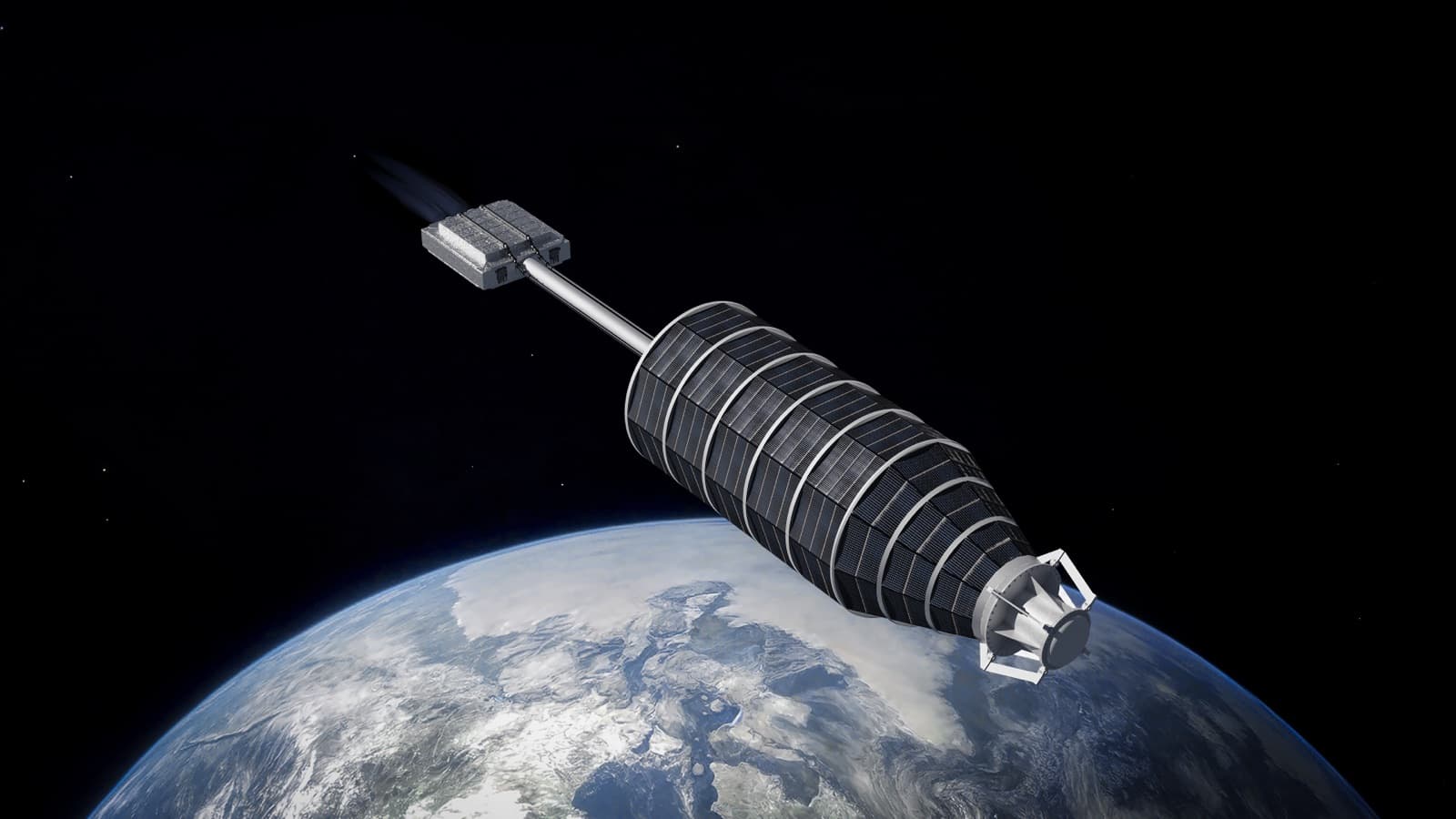
Antares Nuclear
Space variant of the R1 heat-pipe microreactor. Under a $161M Space Force Strategic Breakthrough award, Antares will run a nuclear ground demonstration of the R1-S, integrate it with a spacecraft for flight certification, and use Mark-1 to power an operational ground-to-space asset during 2027 testing.
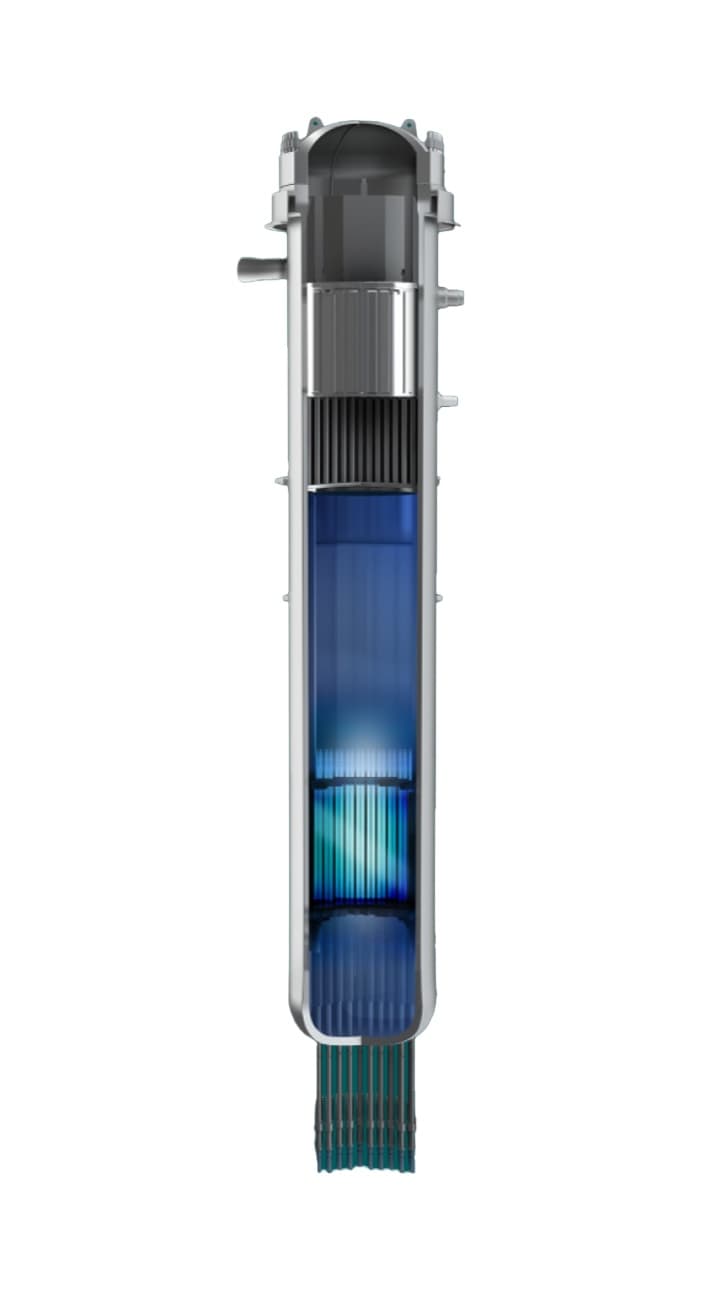
GE Vernova Hitachi Nuclear Energy
300 MWe Gen III+ boiling-water small modular reactor derived from the NRC-certified ESBWR, using natural circulation and passive safety systems, a 60-year design life, and proven GNF fuel. Designed for a power block that fits within two soccer fields and 24-36 month nth-of-a-kind construction. The first grid-scale SMR under construction in the Western world.
GE Vernova Hitachi Nuclear Energy
GE Vernova-led fuel alliance with Hitachi producing advanced BWR fuel assemblies (GNF2, GNF3, GNF4) that improve plant performance and fuel-cycle economics for the operating reactor fleet worldwide.
GE Vernova Hitachi Nuclear Energy
345 MWe sodium-cooled fast reactor with molten-salt thermal storage that can boost output to 500 MWe for over five hours, co-developed with TerraPower under a 2020 joint development agreement. The first plant is being built at Kemmerer, Wyoming.
GE Vernova Hitachi Nuclear Energy
Lifecycle services for the global BWR fleet (and PWR services) - outage execution, performance upgrades, inspections, non-destructive examination and VR-based training - built on GE's boiling-water-reactor lineage dating to the first privately financed reactor at Vallecitos in 1957 and the NRC-certified ABWR/ESBWR designs.
Holtec International
Industry-leading dry cask storage system for spent nuclear fuel - the most widely deployed system of its kind worldwide.

Holtec International
Holtec's Gen III+ pressurized water small modular reactor platform, intended for first deployment as the dual-unit Pioneer 1 & 2 project at Palisades and for follow-on projects such as Cottam in the UK.
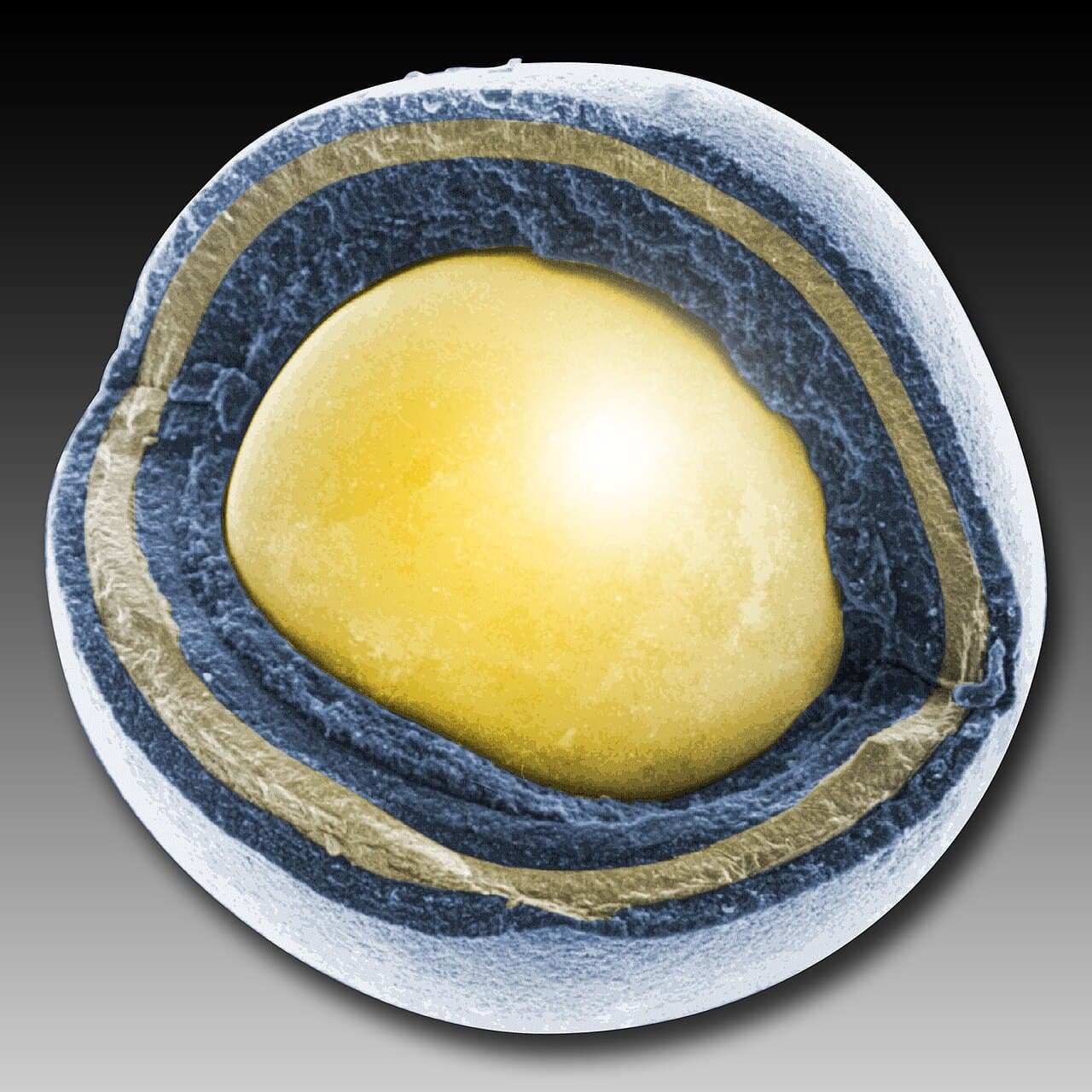
Kairos Power
35 MWth low-power demonstration reactor validating Kairos Power's KP-FHR design, construction methods, fuel program, and operating approach in Oak Ridge, Tennessee.
Kairos Power
Commercial-scale demonstration plant that extends the Hermes learning loop into electricity production for the TVA grid and Google-backed demand.
Kairos Power
Kairos Power's modular commercial reactor platform for grid, data center, and industrial users, designed around paired 75 MWe units that scale into larger multi-unit plants.
NuScale Power
Self-contained 77 MWe pressurized water reactor module with integrated steam generators.
NuScale Power
Full-scale SMR power plant with 12 modules generating up to 924 MWe of carbon-free electricity.
NuScale Power
Mid-size SMR plant configuration with 6 modules producing up to 462 MWe.
Oklo
Oklo's isotope business combines the Idaho Radiochemistry Laboratory, a planned pilot reactor in Texas, and a future multi-reactor foundry to supply critical medical, industrial, research, defense, and space isotopes.
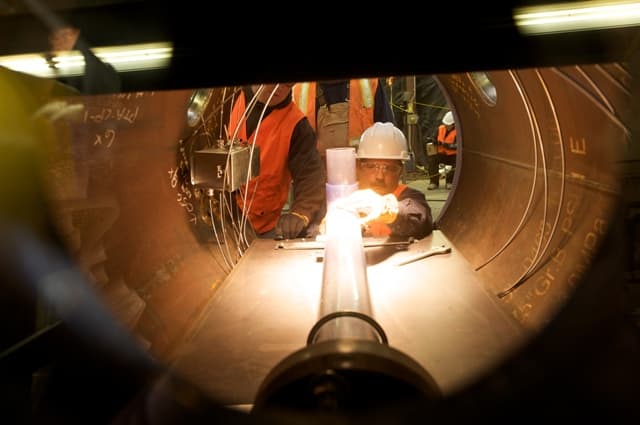
Oklo
Oklo's fast-fission powerhouse product line is designed for build-own-operate deployment, targeting customers that want firm clean power in a smaller footprint than traditional large reactors.
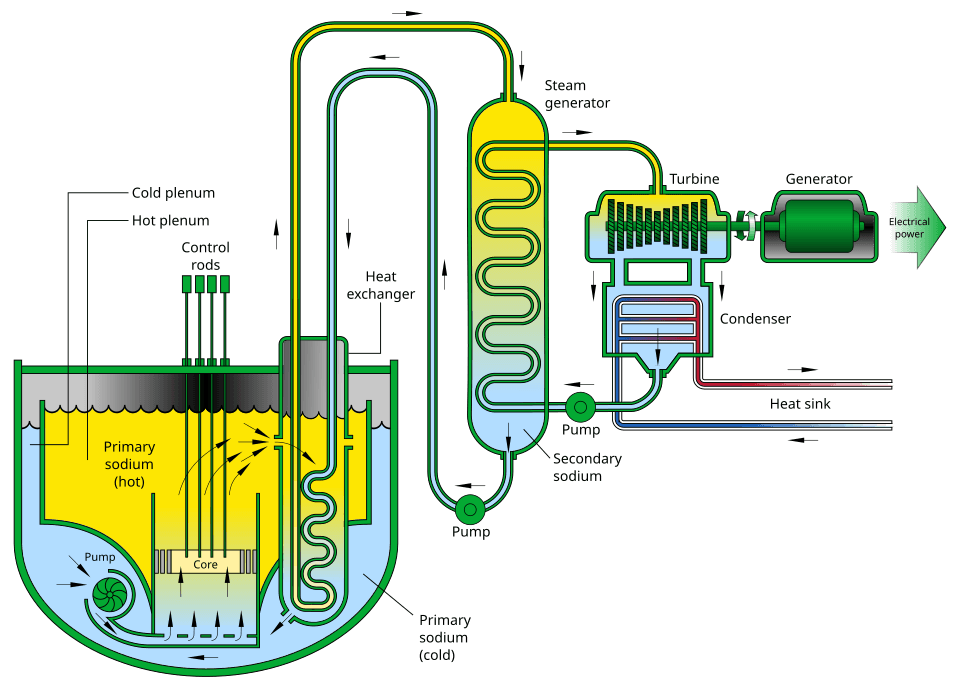
Oklo
Oklo is developing an advanced fuel center to recycle used nuclear fuel and fabricate metal fuel for Aurora and other fast-reactor applications.
Oklo
Oklo's planned isotope production and processing pilot, announced October 13, 2026. Oklo said it will combine reactor irradiation with hot-cell processing, including separation, recovery, packaging, and transportation, initially for lutetium-177. Commercial-scale production still requires NRC licenses. The August 24 NRIC Launch Pad selection named Oklo but did not describe this facility.
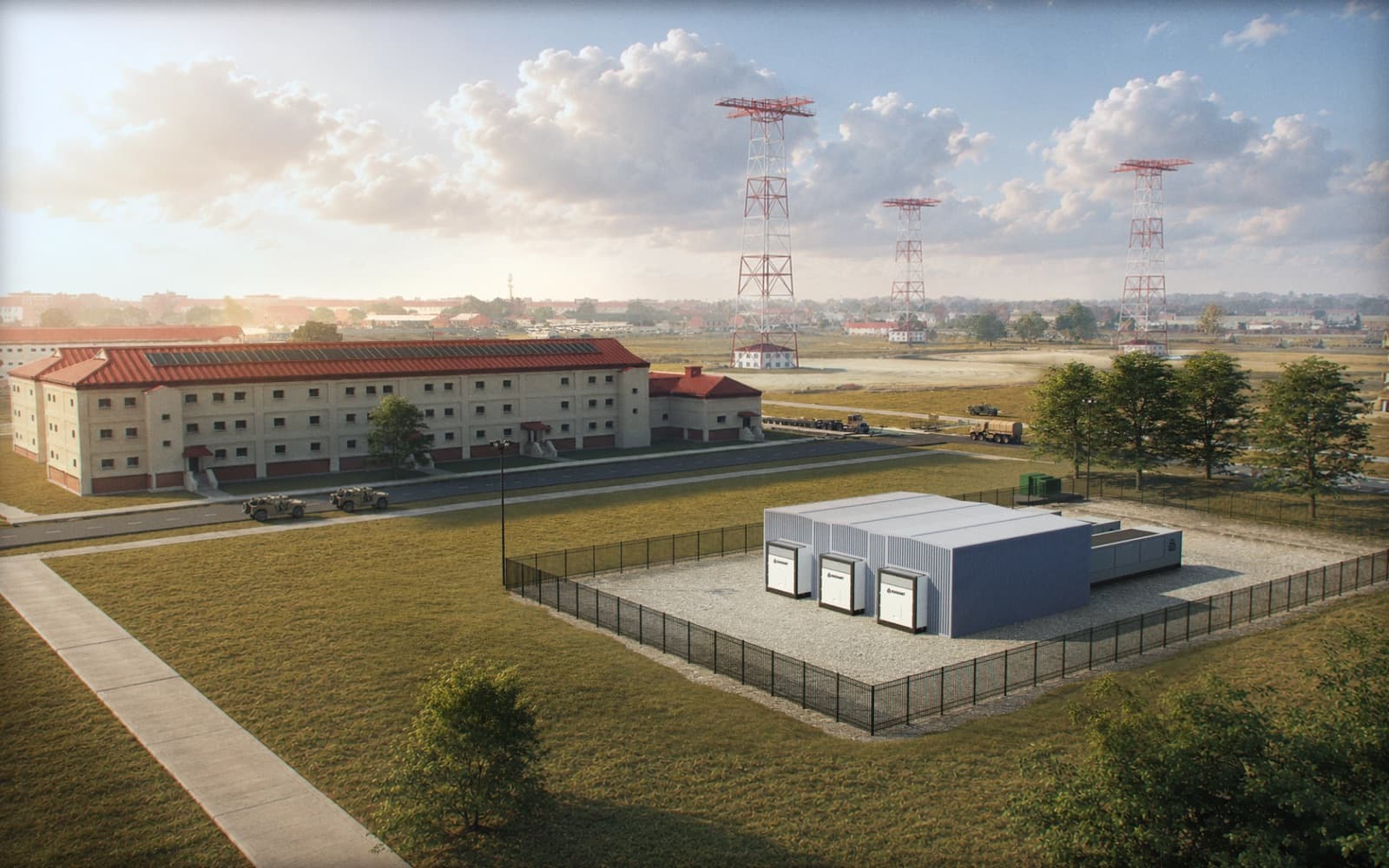
Radiant Nuclear
A 1 MWe portable high-temperature gas-cooled microreactor using TRISO fuel, helium coolant, and prismatic graphite blocks with zirconium-hydride moderator, packaged in a single shipping container with power conversion and air cooling. Designed to be trucked, shipped, or flown to a prepared pad, reach full power the next day, run five years before factory refueling, and last 20 years (four cores). No on-site water and no on-site spent-fuel storage.
Radiant Nuclear
The first full-scale Kaleidos article, the same design, size, and commercial fuel load intended for customers, built in El Segundo and shipped by trailer to INL's DOME facility for a five-phase campaign: install and fuel, zero-power criticality, 1 MW thermal, full-temperature/full-power operation, and a minimum 150-hour unattended run.

TerraPower
Integrated thermal energy storage system using molten salt to decouple reactor output from grid delivery, enabling peak power output.
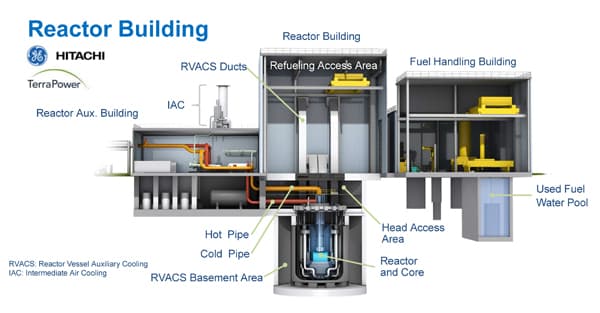
TerraPower
Sodium-cooled fast reactor with integrated molten salt energy storage, enabling flexible output from 345 MWe to 500 MWe peak.
TerraPower
Medical-isotope business producing actinium-225 (Ac-225), a rare alpha-particle-emitting isotope used in targeted radiotherapeutics for cancers including prostate, breast, colon, and neuroendocrine cancers, melanoma, and lymphoma.

Valar Atomics
Valar's commercial concept: industrial campuses hosting hundreds to thousands of mass-produced HTGR units (each scalable to ~5 MWe) generating grid-independent electricity, sulfur-iodine-cycle hydrogen, and synthetic hydrocarbon fuels from captured CO2 for data centers, heavy industry, and transportation.
Valar Atomics
A 100 kW TRISO-fueled research microreactor being developed in the Philippines with the Philippine Nuclear Research Institute through Valar's local arm VARI (Valar Atomics Research Institute), intended for the University of the Philippines Diliman campus as a standalone, non-grid-connected demonstration unit.
Valar Atomics
A 100 kWt TRISO-fueled, graphite-moderated, helium-cooled high-temperature gas test reactor at the Utah San Rafael Energy Lab - roughly minivan-sized before shielding - built to demonstrate the reactor architecture Valar plans to mass-produce, with the design scalable to 5 MWe per unit.
Westinghouse Electric Company
Generation III+ pressurized water reactor with fully passive safety systems and modular construction - the only fully designed and licensed advanced large reactor operating in the United States, and the reference design for the US nuclear buildout and for new plants in Poland, Bulgaria, and Ukraine.
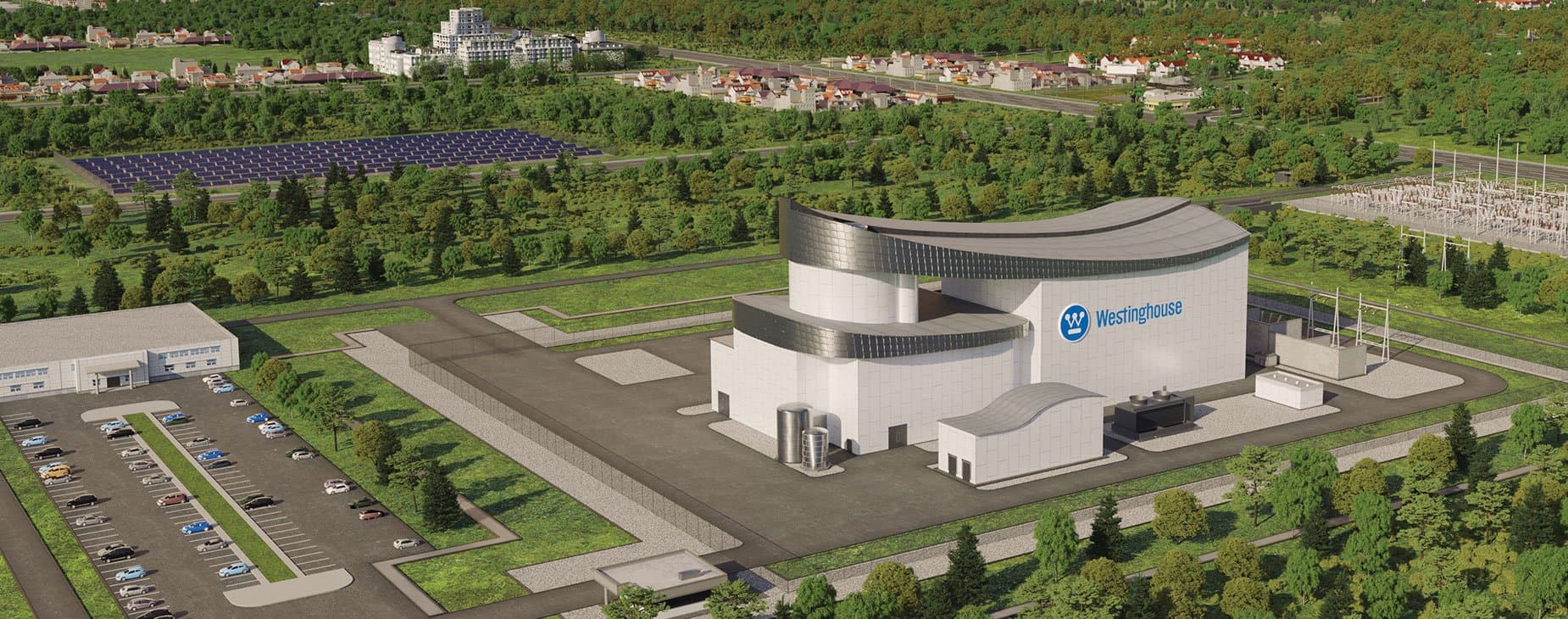
Westinghouse Electric Company
330 MWe (990 MWt) single-loop small modular reactor derived directly from the licensed AP1000, reusing its passive safety architecture and supply chain to shorten the path through licensing and construction.
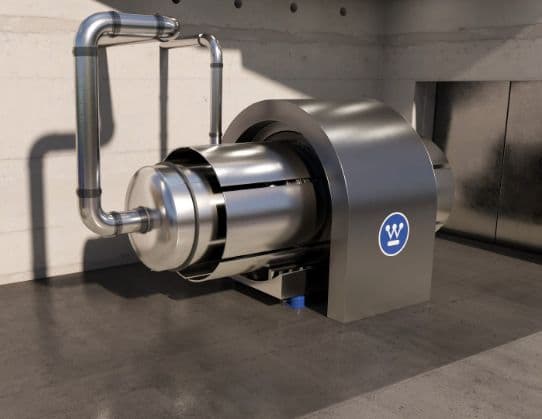
Westinghouse Electric Company
Transportable 5 MWe heat-pipe-cooled microreactor with TRISO fuel and no water cooling, designed to run for eight-plus years without refueling - targeting remote communities, mining, industry, data centers, and military installations.
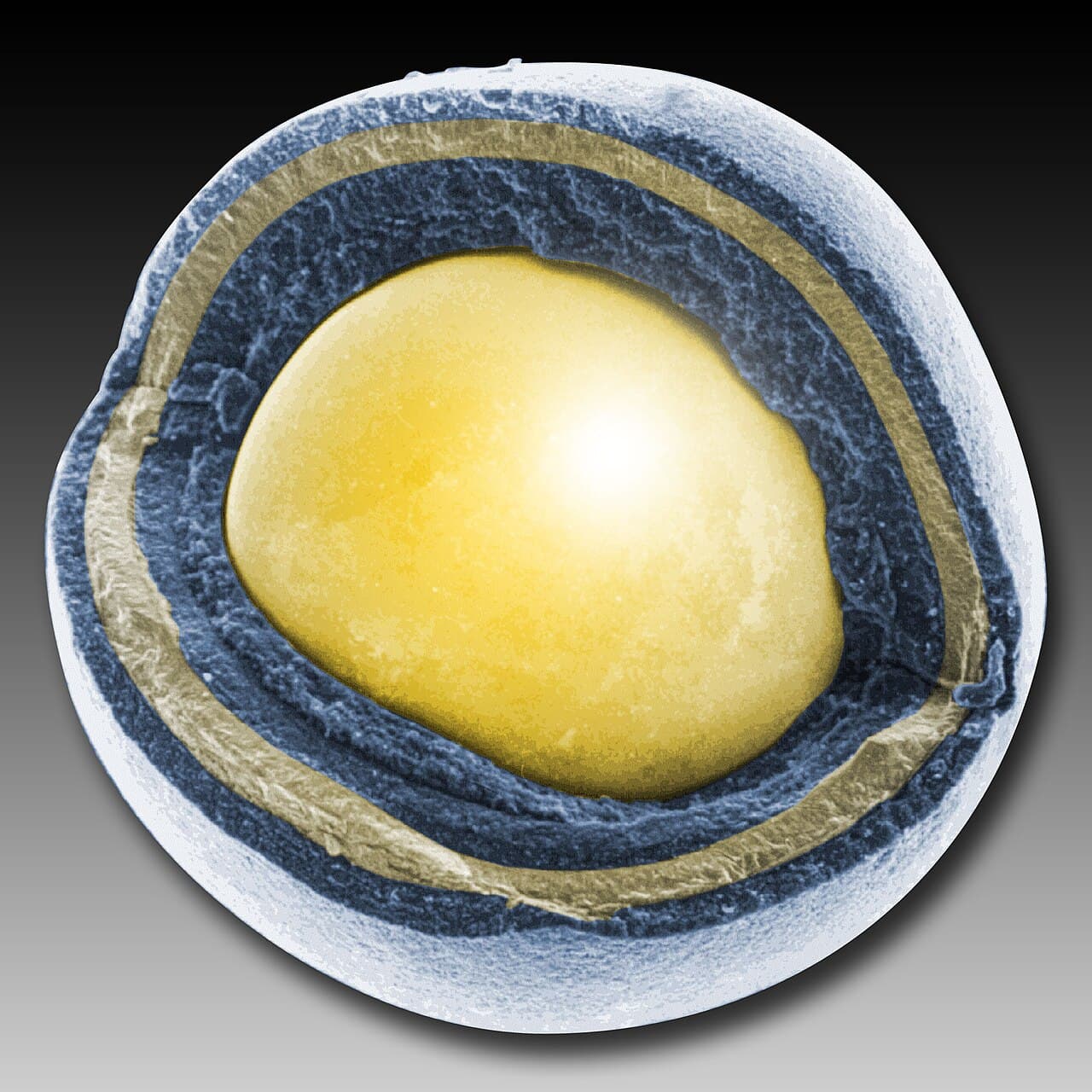
X-energy
First commercial-scale TRISO fuel fabrication facility in the United States, being built in Oak Ridge, Tennessee.
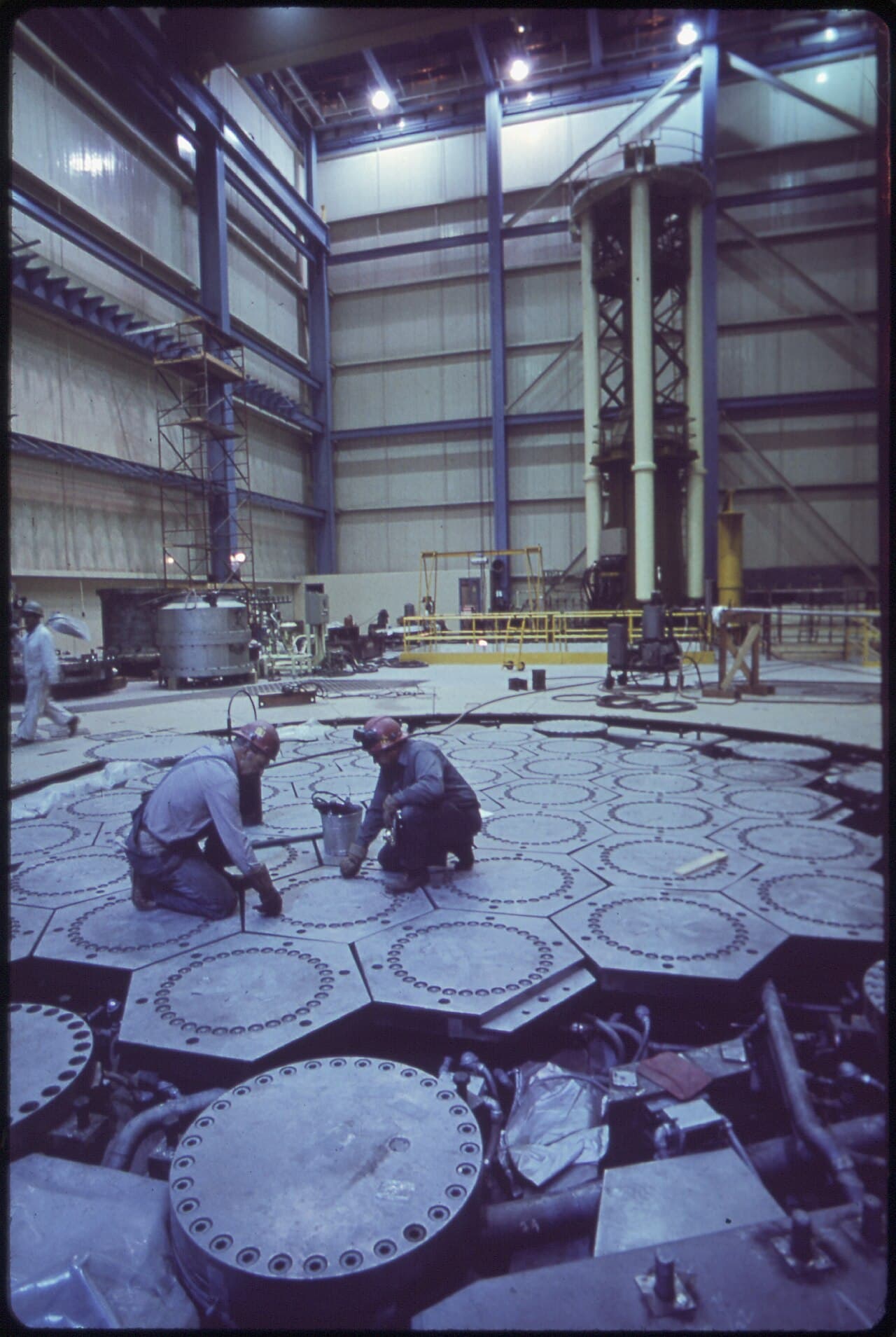
X-energy
80 MWe high-temperature gas-cooled reactor (HTGR) using TRISO fuel, deployable as single unit or in a four-pack configuration for 320 MWe.
Archer Aviation
Archer's commercial variant of a dual-use, series hybrid-electric tiltrotor VTOL platform co-developed with Anduril Industries and unveiled at the July 2026 Farnborough International Airshow. Halo shares its airframe, hybrid-electric propulsion and core systems with Anduril's defense-focused 'Thunder' variant, and is aimed at offshore energy, freight, humanitarian and maritime missions with fully autonomous takeoff, cruise and landing.
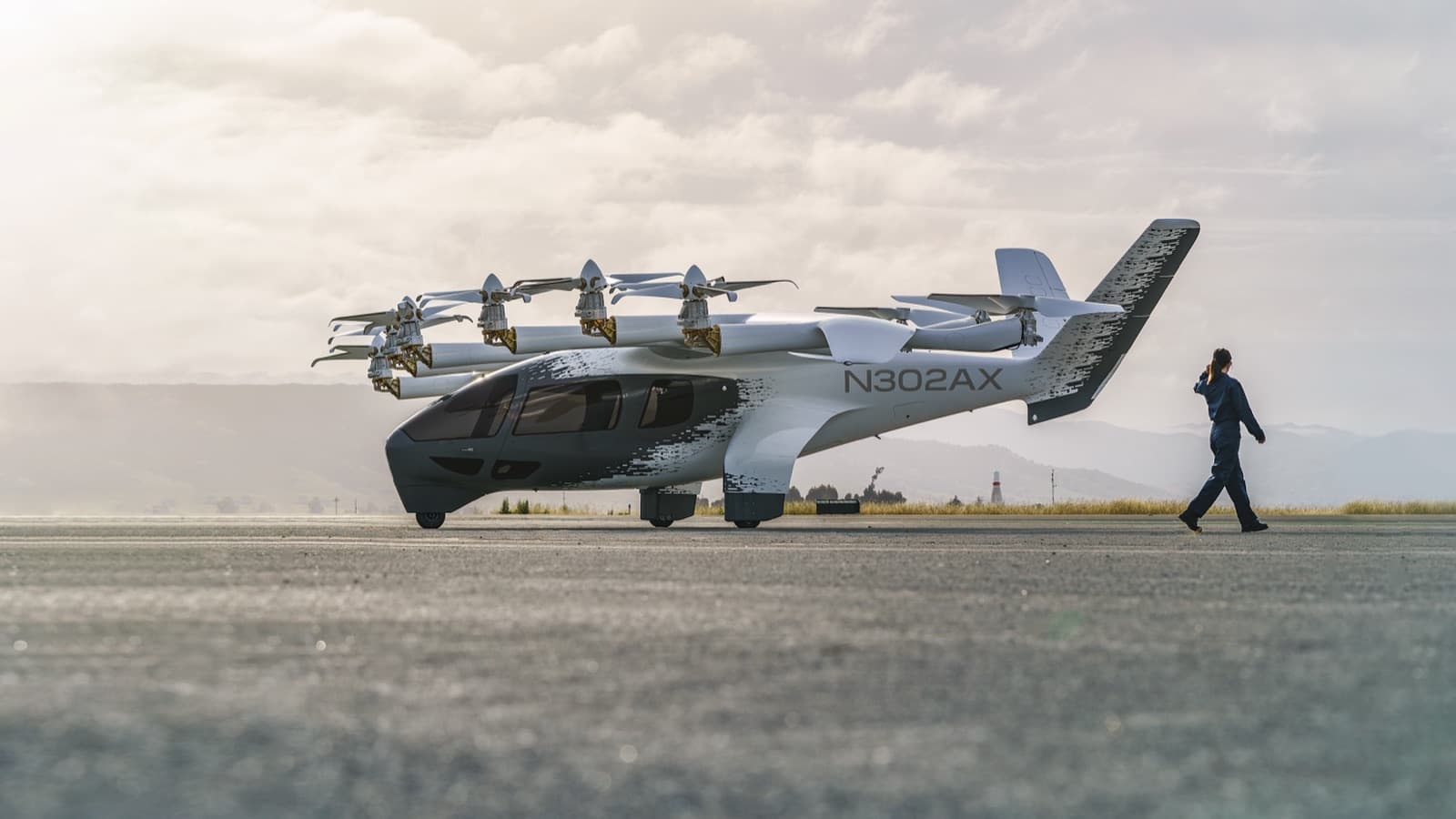
Archer Aviation
Archer's production eVTOL aircraft - a piloted, all-electric VTOL with seating for 4 passengers plus 1 pilot. Features 12 electric motors (6 tilt for cruise, 6 lift for VTOL), a V-tail design, and is optimized for back-to-back short trips of ~20 miles with ~10-minute recharge between flights. Designed for high-utilization urban air taxi operations.
Archer Aviation
An aviation-specific AI foundation model built as a unified aviation-intelligence platform, trained on real-world operational data - ADS-B feeds from a global network of 6,000+ receivers, ATC communications, maps and charts, aircraft state, terrain, and weather. Designed to run offline/on-device as well as server-hosted, with target applications spanning airline operations, airspace management, UAV/autonomous-flight support, and pilot copilot assistance.
Aridge
Six-seat hybrid-electric full-tiltrotor aircraft unveiled at XPeng AI Day in November 2025 - Aridge's move from short-hop flying cars into longer-range regional air mobility, with a range above 500 km and top speed above 360 km/h.
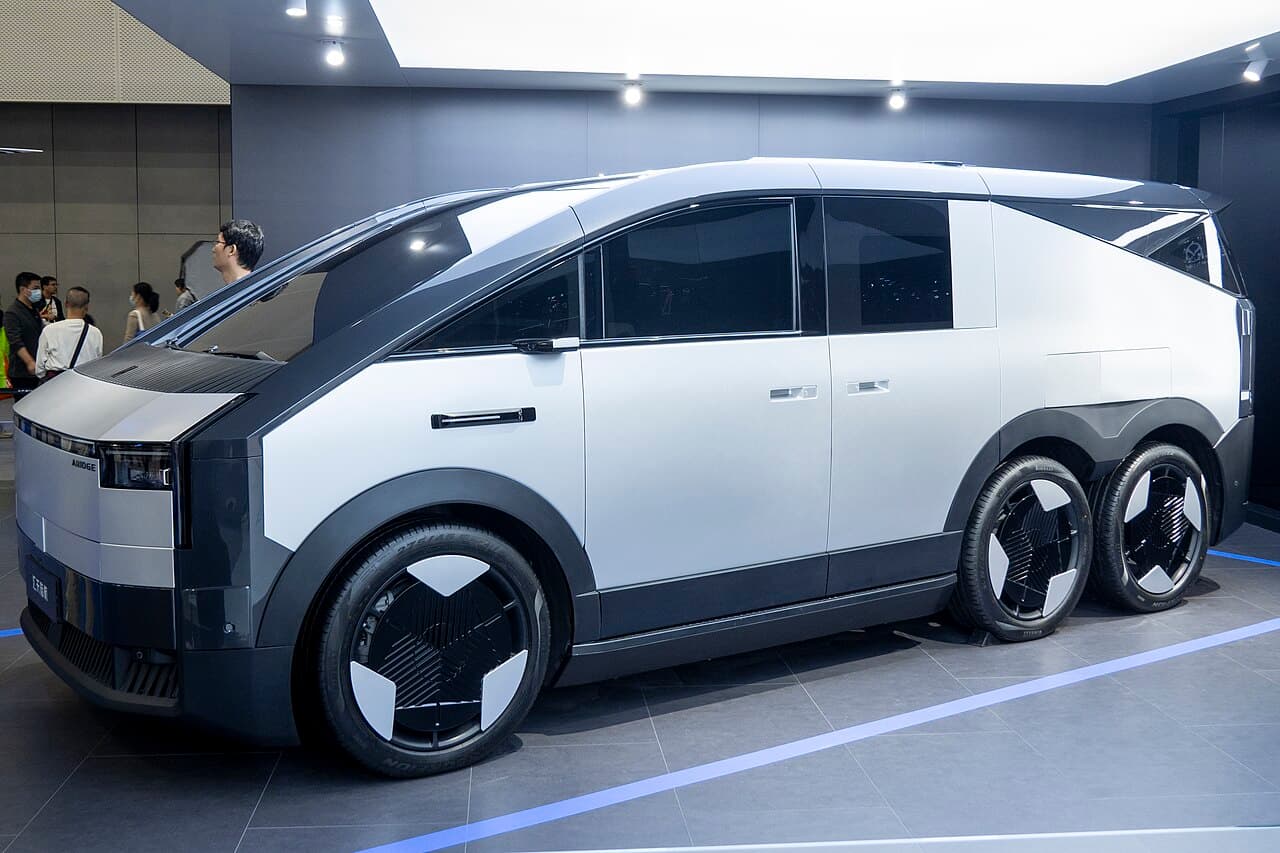
Aridge
The world's first modular flying car: a six-wheel, 4–5-seat extended-range-hybrid 800V 'mothership' van that stores, recharges, and auto-launches a detachable two-seat eVTOL air module (X3-F: six rotors plus two ducted fans, ~50 kWh battery, 30→80% recharge in 18 minutes, manual single-stick or autonomous flight). Combined system range exceeds 1,000 km on the ground.

Aridge
Fifth-generation two-seat electric octocopter demonstrator with a 130 km/h top speed and ~35-minute flight time. Not for sale - it validated XPeng's eVTOL technology and still tours international shows.
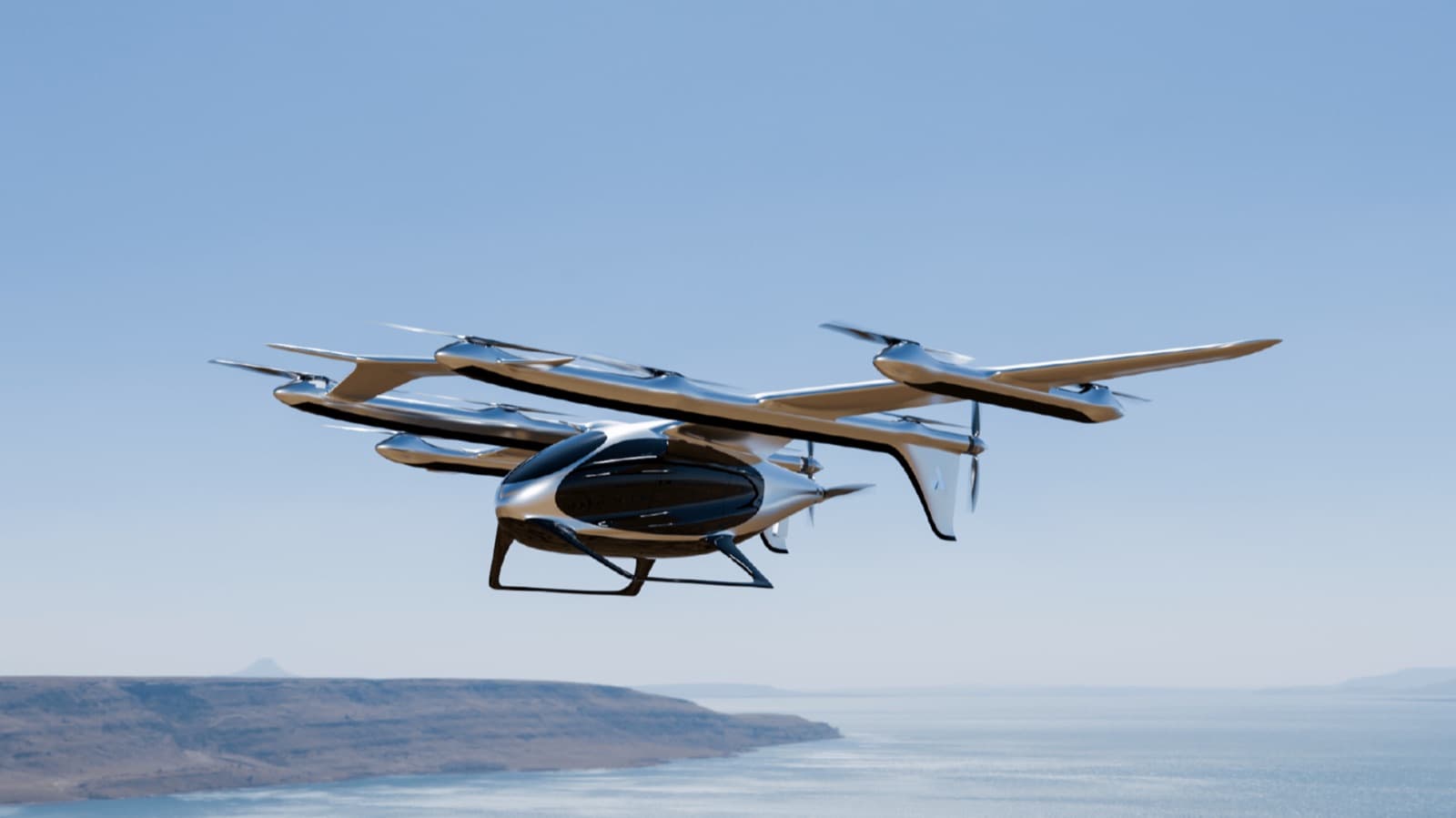
AutoFlight
Autonomous 2-ton cargo eVTOL - a carbon-fiber lift-and-cruise design with 13 propellers (10 lift + 3 pusher), 400 kg payload, 3.2 m3 cargo volume, and a 200 km official operational range. The world's first and only ton-class eVTOL holding the full CAAC type, production, and airworthiness certificate set.

AutoFlight
5.7-ton heavy-lift platform seating 10 passengers or carrying 1.5 tons of cargo in 13.9 m3, with a 280 km/h cruise and 250 km electric range - up to 1,500 km for the hybrid-electric cargo variant V5000CGH.
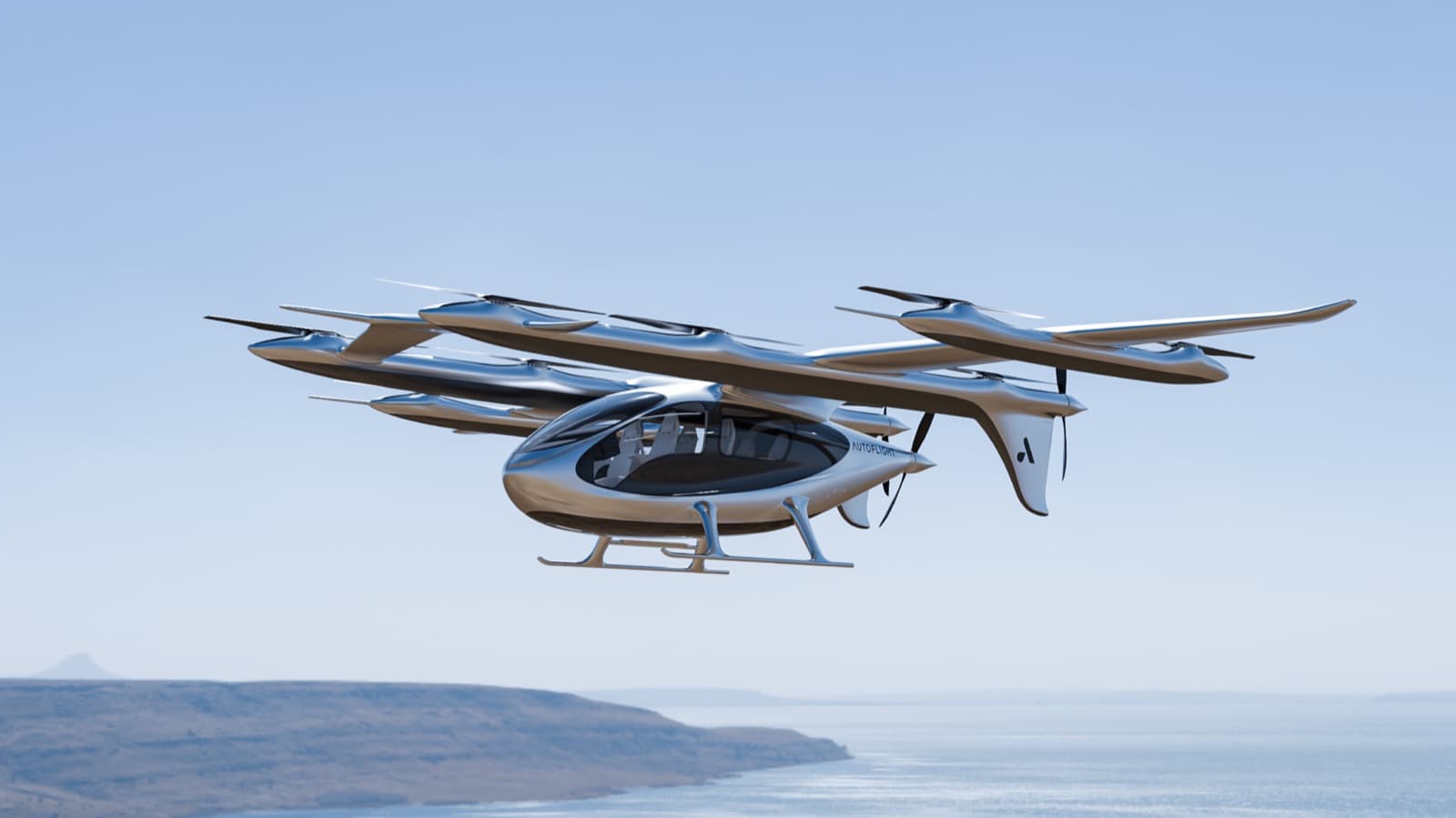
AutoFlight
Passenger air-taxi variant of the V2000 platform. The live official catalog lists 1+5 seats, a 3.6 m3 cabin, 2,400 kg MTOW, and a 200 km operational range. Holder of the 2023 world-record 250.3 km eVTOL flight and the first inter-city cross-sea eVTOL demonstration (Shenzhen-Zhuhai, 2024).
Beta Technologies
The crewed, all-electric vertical takeoff and landing (eVTOL) member of the ALIA family - a lift-plus-cruise design with four fixed-pitch overhead rotors for vertical lift and a single rear pusher propeller for forward cruise. It shares roughly 80% commonality with the CX300, including flight controls and cockpit layout, and is the aircraft the defense-focused MV250 is derived from.

Beta Technologies
Conventional takeoff and landing electric aircraft in BETA's ALIA family, designed for cargo, medical, and regional passenger missions using existing airport infrastructure. BETA's stepwise commercialization plan puts the CTOL aircraft into service first before the VTOL variant.
Beta Technologies
Autonomous hybrid-electric VTOL derivative of the A250 aimed at contested military logistics, CASEVAC, and other defense missions where payload, austere operation, range, and optional autonomy matter more than urban air taxi economics. Formally unveiled at the July 2026 Farnborough Airshow, it pairs a GE Aerospace CT7/T700 hybrid-electric turbine propulsion system with Sikorsky's MATRIX autonomy stack.
Beta Technologies
BETA's multimodal charging ecosystem spans fixed Charge Cubes, mobile Mini Cubes, and thermal management systems for electric aircraft and EVs. It is designed as both enabling infrastructure for ALIA and a third-party charging product line, and anchors the July 2026 ACES consortium with Archer Aviation and Macquarie Capital to build up to 250 interoperable U.S. sites by 2030.
Beta Technologies
BETA's aerospace-grade pusher motor is sold as a standalone propulsion product as well as used inside the ALIA family, giving the company a component business beyond aircraft deliveries.
EHang
Pilotless two-passenger multicopter eVTOL with 16 propellers on 8 arms, flying preset routes under centralized command-and-control with no pilot aboard. The world's first passenger eVTOL to hold type, production, and standard airworthiness certificates, now flying trial commercial passenger operations in Guangzhou and Hefei. Logistics (EH216-L) and firefighting (EH216-F) variants share the platform.

EHang
Long-range pilotless lift-and-cruise eVTOL with tandem fixed wings, eight lift propellers, and one pusher propeller - extending EHang's pilotless platform from short sightseeing hops to intercity routes of up to ~200 km.
Eve Air Mobility
Lift-plus-cruise eVTOL carrying four passengers plus a pilot: eight dedicated fixed-pitch vertical-lift rotors, one aft pusher propeller, and Embraer fifth-generation fly-by-wire, with a ~100 km range. Electric motors supplied by Beta Technologies; cabin by Diehl Aviation.
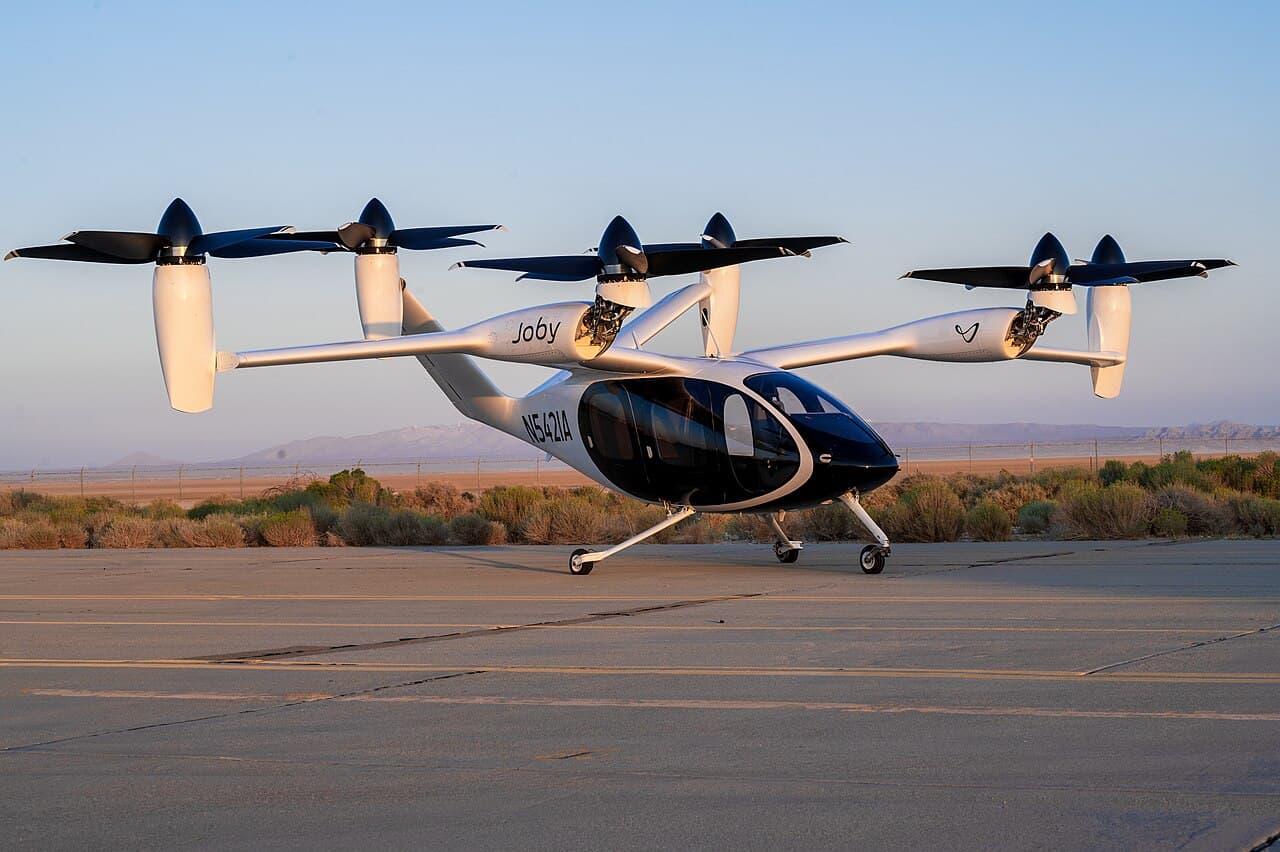
Joby Aviation
Five-seat (1 pilot + 4 passengers) all-electric VTOL aircraft with six tilting propellers. Designed for urban air mobility with a top speed of 200 mph, a range of up to 100 miles, and a low acoustic footprint suitable for dense cities. It takes off and lands vertically, then transitions to efficient wing-borne cruise flight.
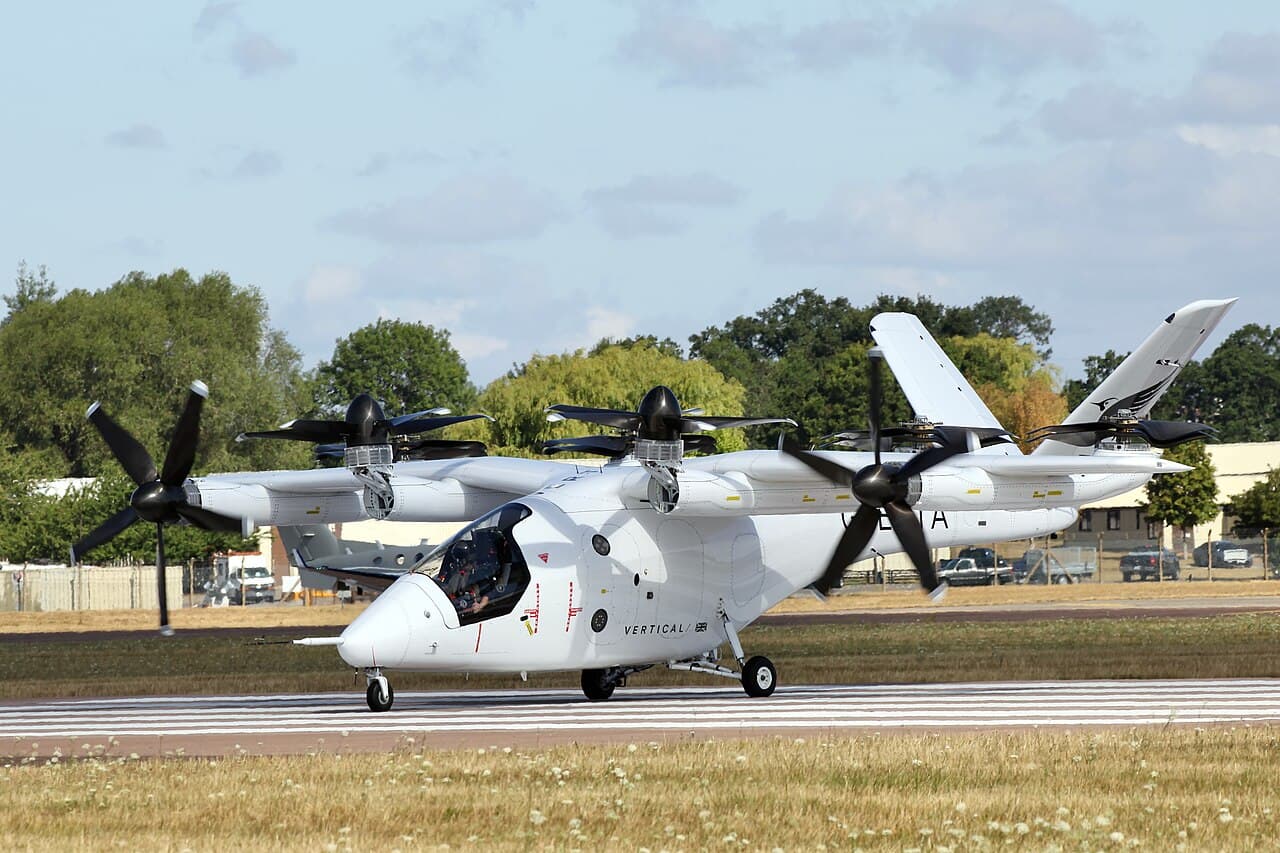
Vertical Aerospace
Piloted tilt-rotor eVTOL with eight propellers (four tilting front, four rear) and zero operating emissions. The production design, unveiled as Valo in December 2025, evolves the VX4 prototype with a more aerodynamic airframe and under-floor liquid-cooled batteries - freeing a cabin that seats up to six passengers (four in premium layout) plus a pilot. VX4 prototypes continue to fly the certification test campaign.
Vertical Aerospace
Hybrid-electric version of the Valo airframe for defense, logistics, and wider commercial markets - up to 1,000 miles of range, up to 1,100 kg payload, and a low acoustic and thermal signature, in crewed and uncrewed configurations.
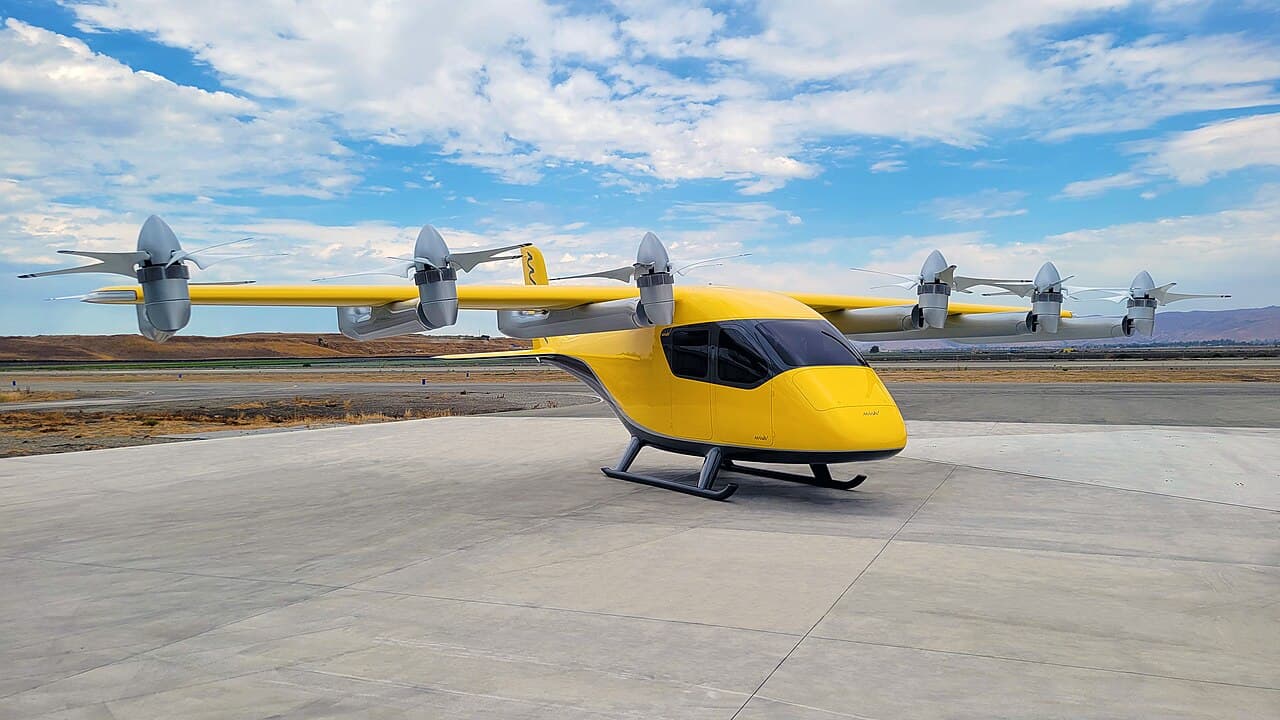
Wisk Aero
Four-passenger, all-electric, fully autonomous eVTOL air taxi with no cockpit controls - flown by onboard automation with ground-based multi-vehicle supervisors who can intervene. Twelve propellers (six tilting, six fixed-lift) on a fixed main wing. The first-ever candidate for FAA type certification of an autonomous eVTOL.
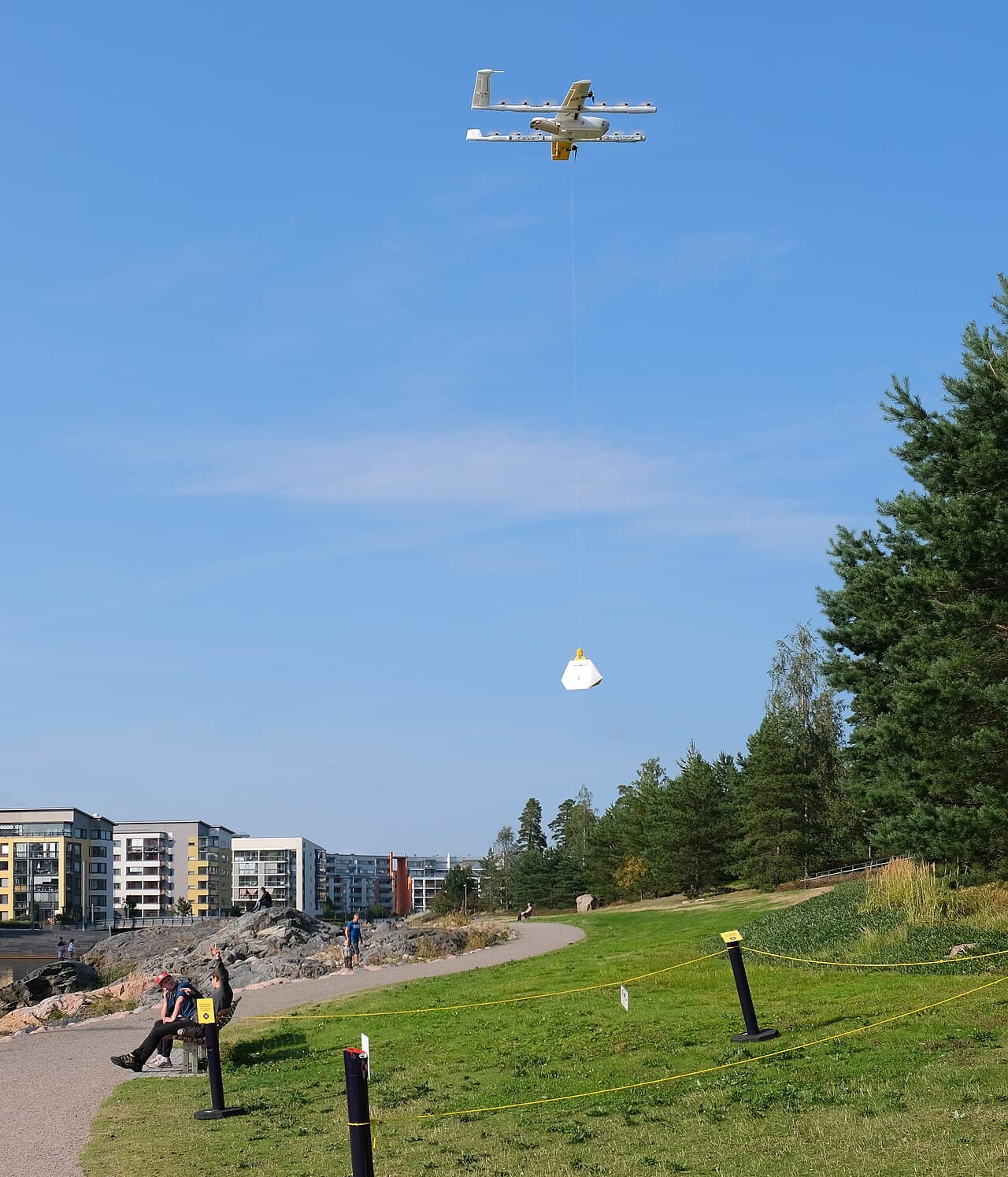
Wing
Wing's autonomous delivery aircraft is designed for short-haul local logistics: it picks up packages from merchant stations, cruises above streets and obstacles, then lowers the order on a tether into a small delivery zone. The system is highly automated, with pilots overseeing multiple flights from remote operations centers rather than manually flying each aircraft. Wing now operates a fleet of differently sized drones: a standard aircraft carries ~2.5 lb (a single drone fulfills roughly 70% of U.S. orders) and a larger aircraft introduced in 2024 doubles payload to ~5 lb to consolidate bigger orders into a single flight.
Wing
Wing's merchant-side stack combines lightweight pickup hardware with software integrations so retailers, restaurants, and healthcare providers can add drone delivery inside their existing ordering workflows.
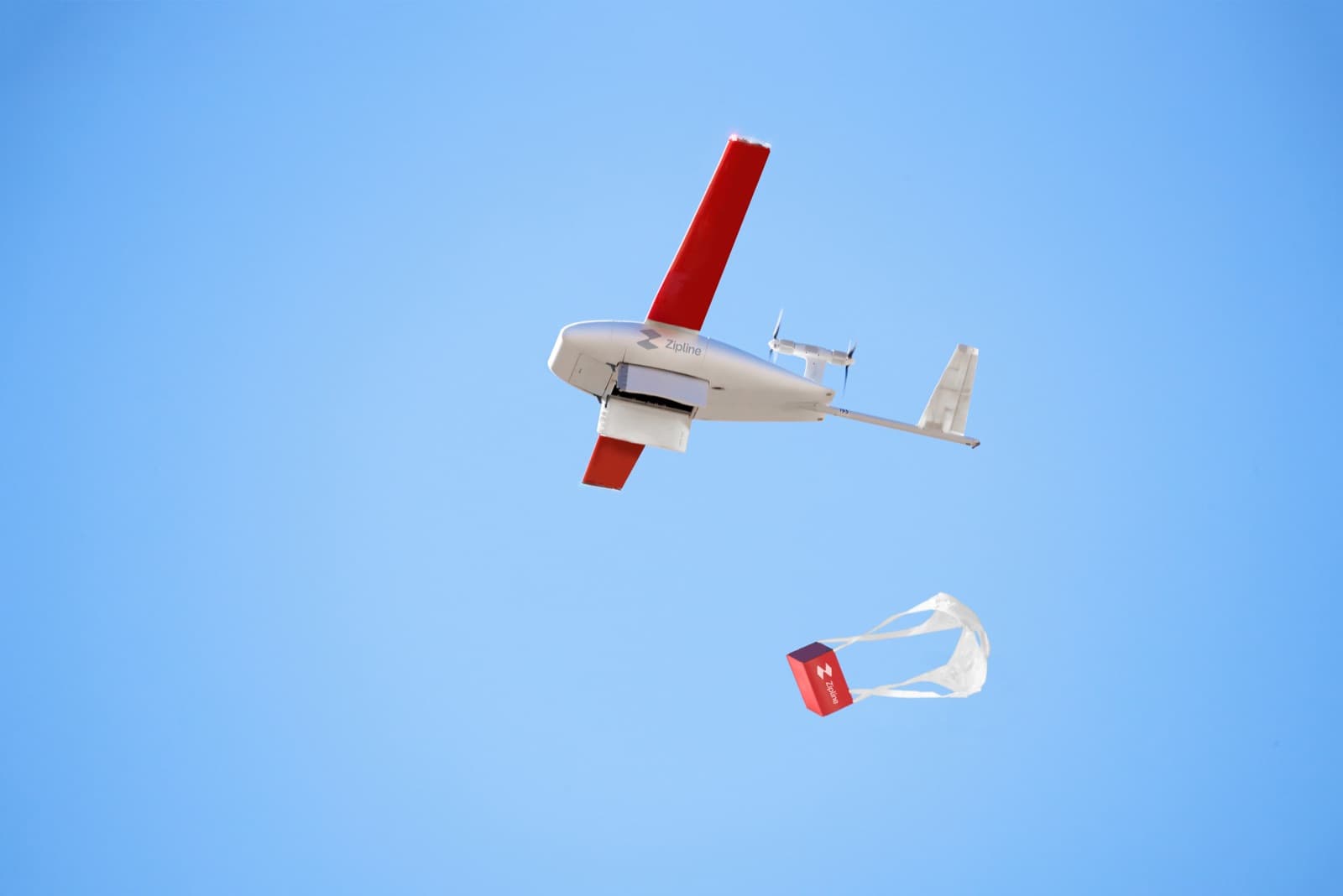
Zipline
Zipline's original long-range delivery platform, optimized for enterprise, business, and government routes where speed and reliability matter more than dense urban doorstep service. It remains the backbone of many healthcare and public-sector logistics networks.
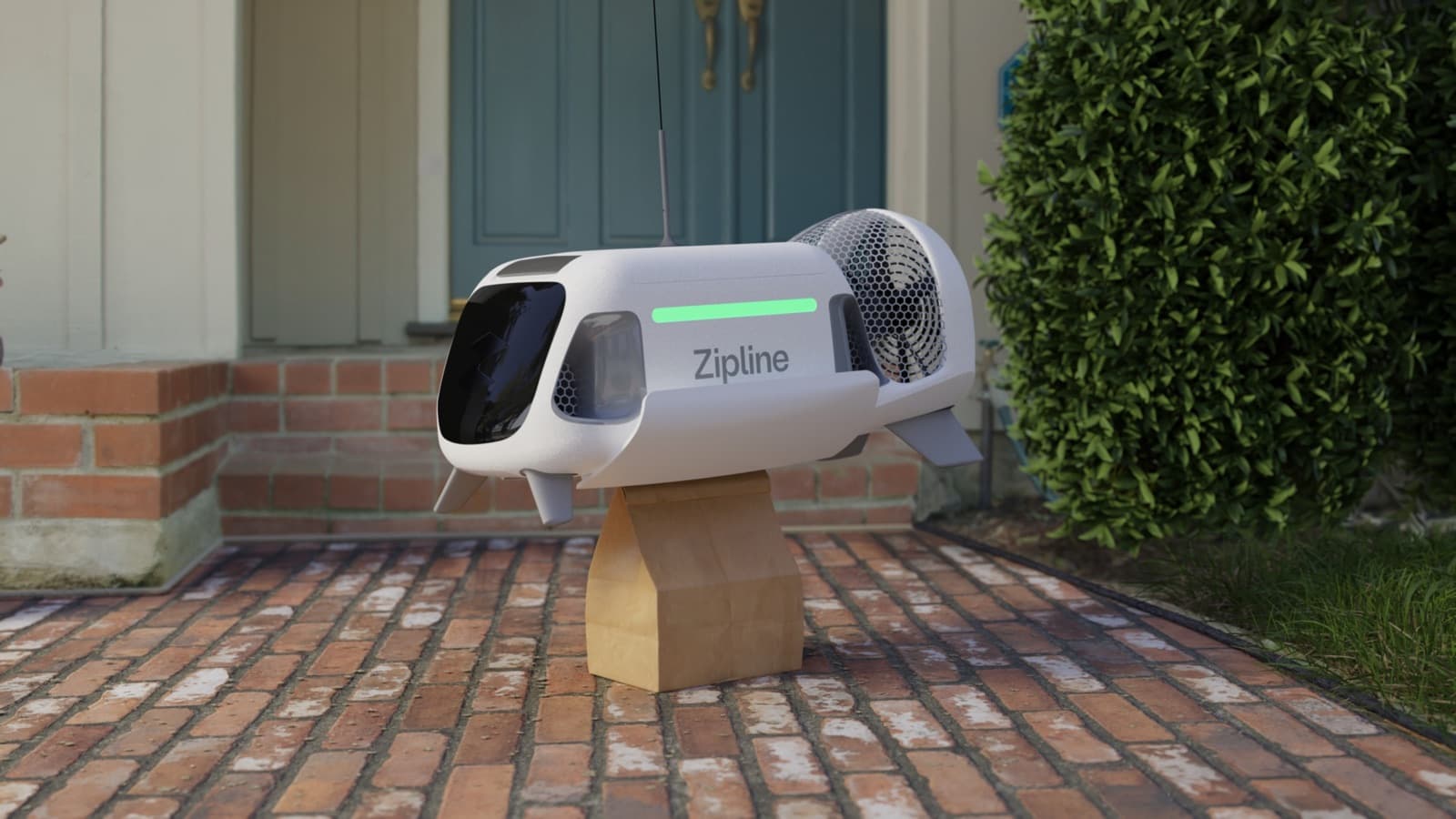
Zipline
Zipline's next-generation delivery system featuring a large fixed-wing autonomous drone that carries a tethered delivery droid. The P2 drone cruises at altitude, then lowers the droid on a tether to deliver packages weighing up to 8 lbs precisely to doorsteps, porches, or backyards - then retracts the droid and flies back. The system is 10x quieter than P1, requires no landing zone, and enables true last-mile home delivery in suburban and urban areas.
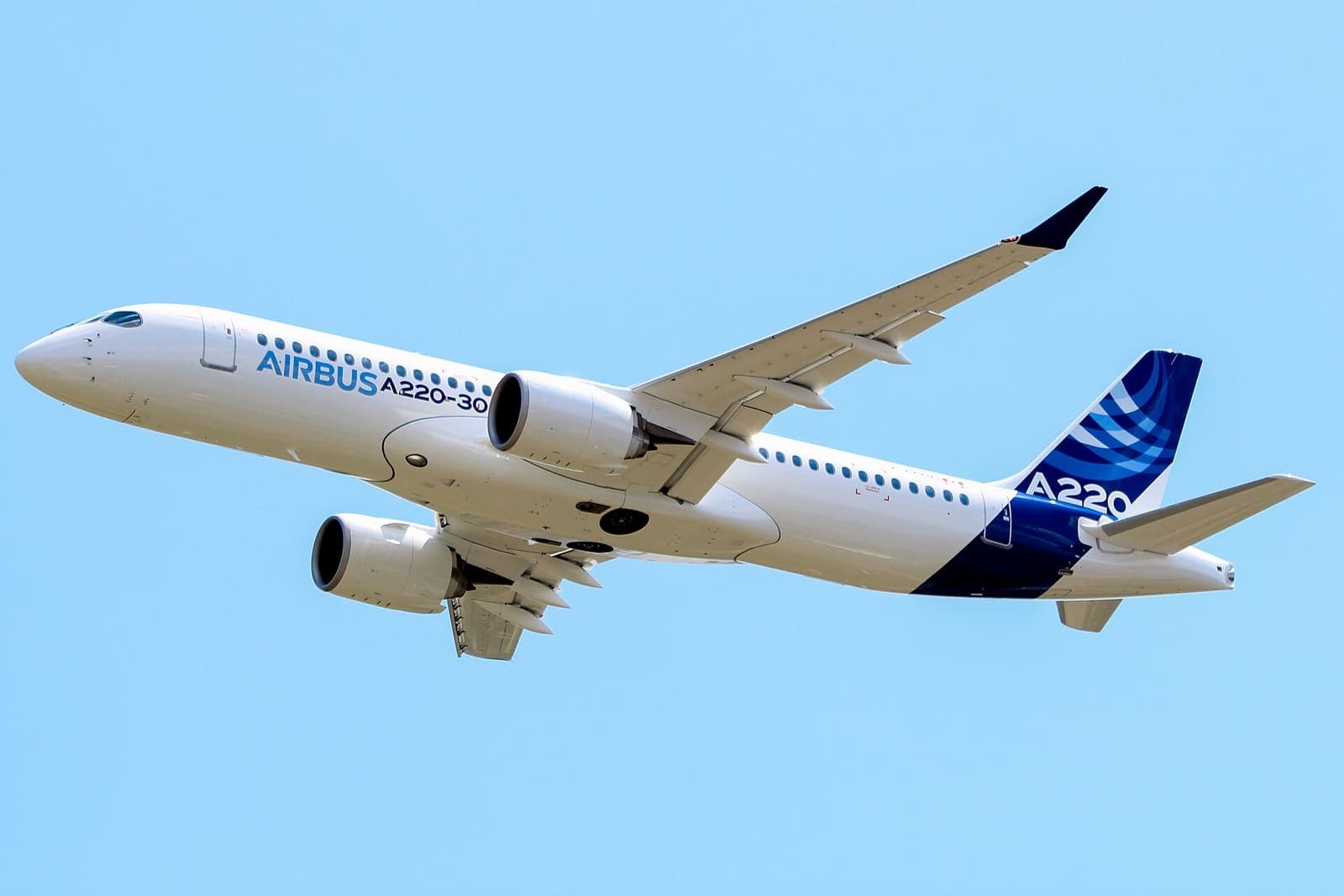
Airbus
The A220 is a 100-160 seat single-aisle airliner inherited from Bombardier's C Series (acquired in 2018), serving the smaller end of Airbus's narrow-body lineup below the A320neo Family. It comes in two variants, the A220-100 and the larger A220-300.
Airbus
The A320neo (new engine option) family is Airbus's best-selling narrow-body airliner family, featuring new-generation engines and Sharklet wingtip devices for 15-20% fuel savings. Includes the A319neo, A320neo, and A321neo variants.
Airbus
The A330neo (new engine option) is an updated version of the proven A330 wide-body family, featuring Rolls-Royce Trent 7000 engines and new Sharklet wingtips for improved fuel efficiency and range.
Airbus
The A350 XWB (eXtra Wide Body) is Airbus's latest-generation wide-body aircraft, featuring a carbon-fibre reinforced polymer fuselage and wings for superior fuel efficiency and passenger comfort.
Airbus
Airbus's four-seat all-electric eVTOL demonstrator for advanced air mobility, built around a lift-and-cruise configuration with fixed wings, a V-tail and distributed electric propulsion.
Airbus
Uncrewed collaborative combat aircraft Airbus is developing with Kratos for European forces, based on the Kratos Valkyrie airframe and intended to carry Airbus's MARS mission system.
Boeing
Boeing's current single-aisle aircraft family, spanning the 737-7 through 737-10, built around improved LEAP-1B engines, lower fuel burn, and broad commonality for airline operators.
Boeing
Next-generation wide-body twin-engine aircraft and the world's largest twin-engine jetliner, featuring folding wingtips, composite wings, and GE9X engines.
Boeing
Wide-body long-haul twin-engine aircraft family built around composite structures, lower fuel burn, and route-opening flexibility for airlines.
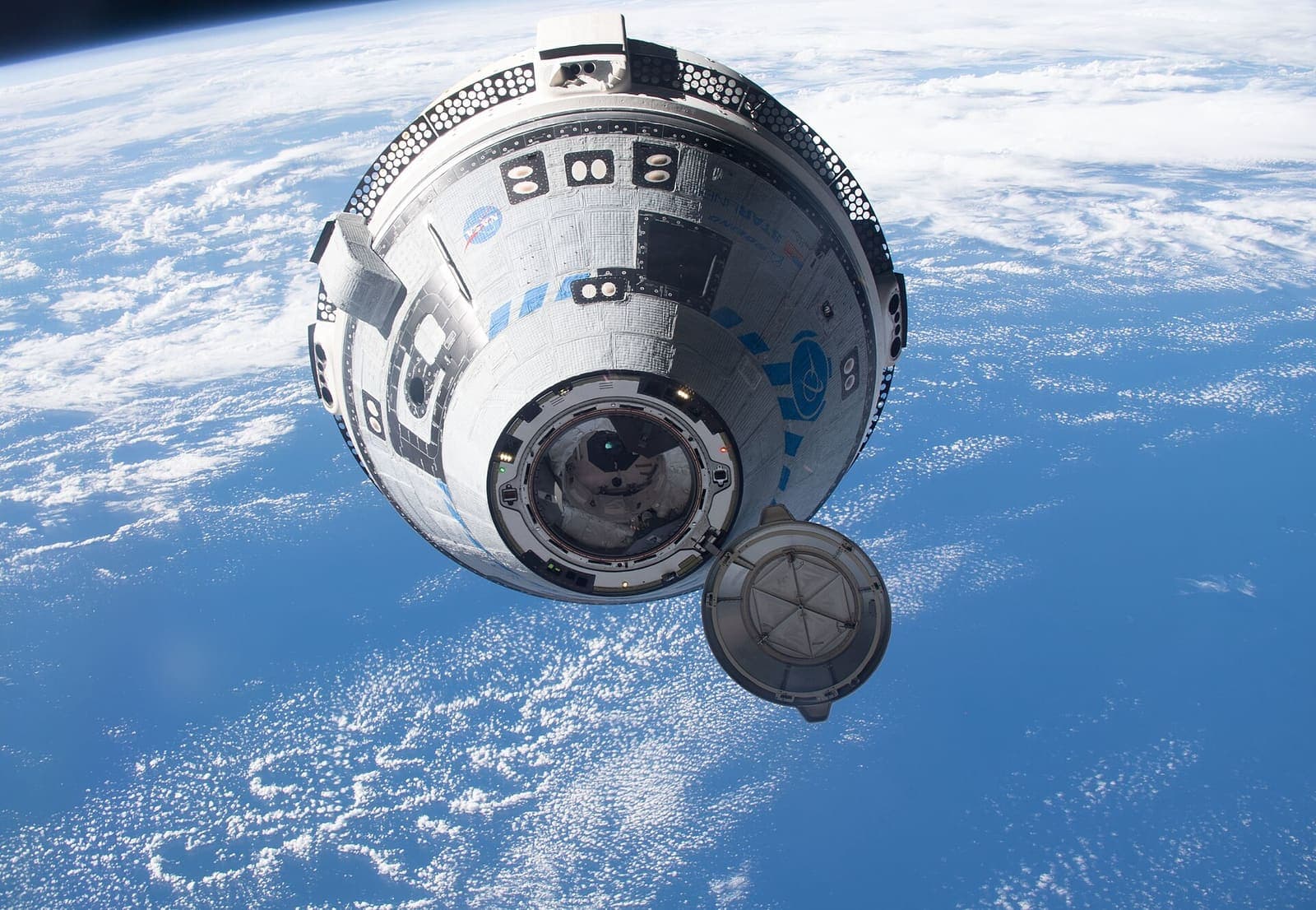
Boeing
Boeing's crew capsule for NASA's Commercial Crew Program, built to ferry astronauts and cargo to the International Space Station under a $4.2B NASA award (alongside SpaceX's Crew Dragon).
Boeing
Boeing's newest-generation F-15 fighter for the U.S. Air Force and export customers, combining a modernized airframe and avionics with the F-15 family's high weapons payload as part of the Air Force's fighter 'high-low' mix alongside the F-35.

Boom Supersonic
Purpose-built Mach 1.7 supersonic commercial airliner designed to cut travel times in half on 600+ routes. Overture is optimized for up to 100% sustainable aviation fuel, flies at 60,000 feet, and is positioned as an all-premium aircraft for 60-80 passengers.
Boom Supersonic
42 MW natural-gas turbine derived from the same core engine technology as Symphony, with about 80% hardware commonality. Superpower is designed for AI data centers and other onsite power applications, emphasizing waterless operation and strong output in hot, dry environments.
Boom Supersonic
One-third scale supersonic technology demonstrator that validated the core aerodynamic, structural, and flight-control concepts behind Overture. XB-1 became the first independently developed jet to fly supersonic and completed Boom's full test campaign in early 2025.
COMAC
China's first domestically developed short- to medium-range turbofan regional airliner. The C909 is optimized for 78 to 97 seats, short and narrow runways, and demanding high-temperature or plateau operations, making it COMAC's current spearhead for regional export expansion in Southeast Asia, with growing derivative interest in medical-rescue and firefighting configurations.
COMAC
China's first domestically developed narrow-body single-aisle commercial airliner, designed to compete directly with the Airbus A320neo and Boeing 737 MAX. Powered by CFM International LEAP-1C engines with a domestic CJ-1000A engine in flight-test on a Y-20 testbed and now expected to enter daily C919 service around 2028-2029.
COMAC
COMAC's planned twin-aisle wide-body program for long-haul international and regional flying. The aircraft is aimed at the Airbus A330neo and Boeing 787 class and is now being advanced as an independent Chinese program after the earlier Russia-China partnership unraveled. Air China has signed a preliminary launch-customer agreement.
COMAC
A large-cabin business-jet derivative of the C909 regional airliner, adapted with an extended-range VIP cabin for private and corporate operators - COMAC's first entry into the large-cabin business-jet market.
Heart Aerospace
A 30-seat clean-sheet hybrid-electric regional aircraft built around Heart's Reserve Hybrid architecture for short-haul routes. Heart is positioning the ES-30 around lower operating cost, lower noise, shorter-runway access, and zero-CO2 operations on short segments.
Heart Aerospace
Heart's production 36-seat hybrid-electric regional airliner, evolved from the ES-30. Twin 1.65-megawatt series-hybrid powertrains, 125-mile all-electric range plus reserves, 745-mile hybrid range plus reserves, and a 95-foot wingspan. JSX signed a deposit-backed order for 50 aircraft with rights for 50 more. The first pre-production aircraft is being built in Los Angeles, with first flight targeted in the second half of 2028 and FAA Part 25 certification and entry into service in 2031.
Hermeus
A multi-mission reusable hypersonic uncrewed aerial system (UAS) designed for defense and national security missions including ISR and strike in contested environments. Powered by the Chimera II TBCC engine.
Hermeus
A planned Mach 5 commercial hypersonic airliner that would carry approximately 20 passengers at 90,000+ feet altitude, cutting transatlantic flight times from 7 hours to 90 minutes. Represents Hermeus's long-term commercial vision.
Hermeus
An iterative program of unmanned, remotely piloted test aircraft designed to unlock high-speed flight one step at a time. Hermeus's aircraft page now lists Mk 0 through Mk 4 plus a 2028 Mission Plane, each purpose-built to validate a specific technical challenge and feed the next build.
Anduril Industries
A new class of autonomous surface vessel co-developed with South Korea's HD Hyundai Heavy Industries, combining HD Hyundai's shipbuilding scale with Anduril's software-defined autonomy and mission-systems integration. Originally aimed at the Navy's Modular Attack Surface Craft program, which the Navy cancelled in March 2026 in favor of a new Medium Unmanned Surface Vessel 'marketplace' that did not include Anduril in its initial seven-company demonstration cohort; Anduril and HD Hyundai are building the vessel independently.
Anduril Industries
Family of low-cost, air-breathing autonomous cruise missiles (Barracuda-100/250/500) designed for mass production with commercial components - Anduril's answer to America's munitions-capacity problem. Variants span air, ground (surface-launched SLB/Barracuda-500M), and pallet-airdrop launch, with the 500-class reaching roughly 900 km. A May 2026 production agreement with the Department of War covers at least 3,000 surface-launched Barracuda-500M systems over three years (~1,000/year, first deliveries H1 2027), a July 2026 framework agreement targets thousands of air-launched Barracuda-500s per year, Poland's PGZ will build the surface-launched Barracuda-500M locally, and an Embraer MoU is integrating a palletized Barracuda-500M on the C-390 transport.
Anduril Industries
Jet-powered, semi-autonomous Collaborative Combat Aircraft designed to fly as a robotic wingman alongside F-35s, F-22s, and the F-47. Fury flew 556 days after clean-sheet design start and in June 2026 was ordered into production by the Air Force - the first combat jet produced by a defense startup. Anduril executives said on September 14, 2026 that the unit cost is well below $20 million at currently contemplated quantities, beating the earlier ~$30M (about a third of an F-35) target, and that a Fury has already flown in formation alongside F-35s, though the fighter is not yet controlling it.
Anduril Industries
Extra-large autonomous undersea vehicle co-developed with the Royal Australian Navy for stealthy, long-range intelligence, surveillance, and strike missions; its commercial baseline is the Dive-XL. After delivering three prototypes ahead of schedule, Anduril won a A$1.7B program of record in September 2025, opened a purpose-built Sydney factory, and delivered the first production boat in November 2025.
Anduril Industries
AI-powered command-and-control software platform that fuses data from thousands of sensors and autonomous systems into a single operational picture, letting small teams direct large fleets of machines. Lattice underpins nearly every Anduril product and is increasingly sold as infrastructure in its own right - it is the software backbone of the Army's SBMC soldier systems and the tactical C2 layer for national counter-drone defense.
Anduril Industries
Twin-turbojet, vertical take-off-and-landing autonomous interceptor that flies at high subsonic speed to defeat drones and cruise-missile-class threats. The Roadrunner-M variant carries a high-explosive warhead but can land and be reused at near-zero cost if a kill isn't needed - an economics-first answer to the drone threat.
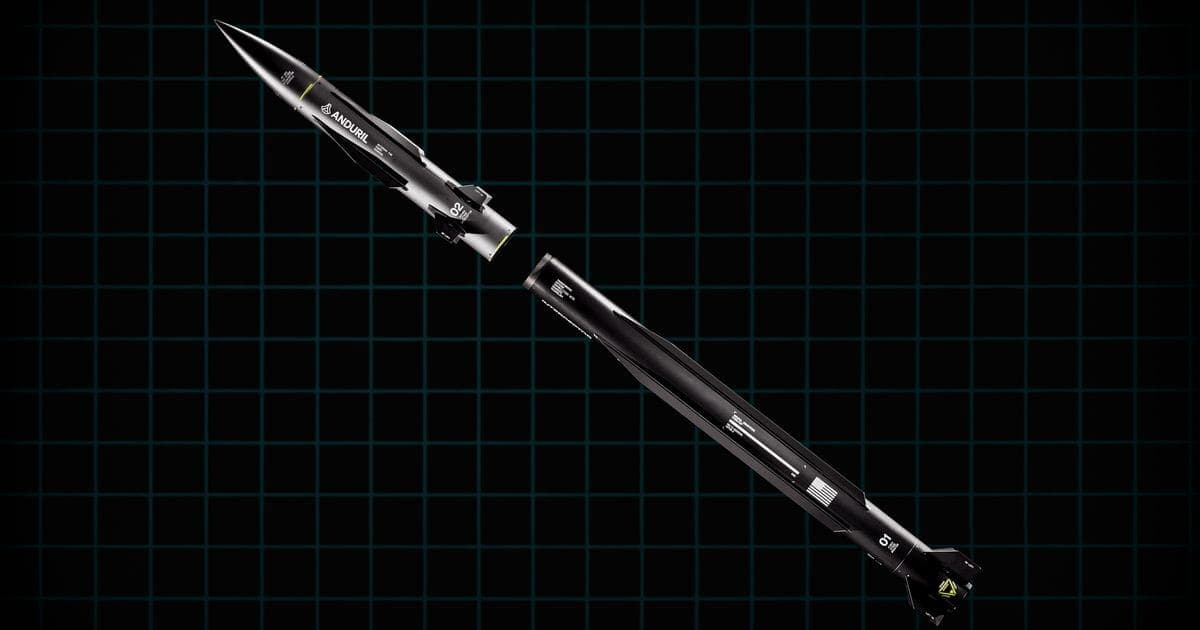
Anduril Industries
A family of modular two-stage surface-to-air interceptors with a common terminal-stage airframe, avionics and flight controls and a first-stage booster configurable for range, performance and launchers including PAC-3, CAML, Typhoon and containerized canisters. Anduril pitches it against cruise, ballistic and hypersonic threats and as a lower-cost alternative to PAC-3 MSE. Ballistic tests with representative air vehicles are complete; flight tests are planned in 2027. No production contract has been disclosed.
Anduril Industries
Autonomous, series hybrid-electric tilt-rotor Group 5 attack aircraft co-developed with Archer Aviation and unveiled at the Farnborough International Airshow on July 20, 2026. Designed as a pilotless 'loyal wingman' to fly in formation with crewed helicopters such as the AH-64 Apache and MV-75, cruising above 200 knots with a range of thousands of nautical miles. Archer's commercial variant of the same airframe is called 'Halo.'
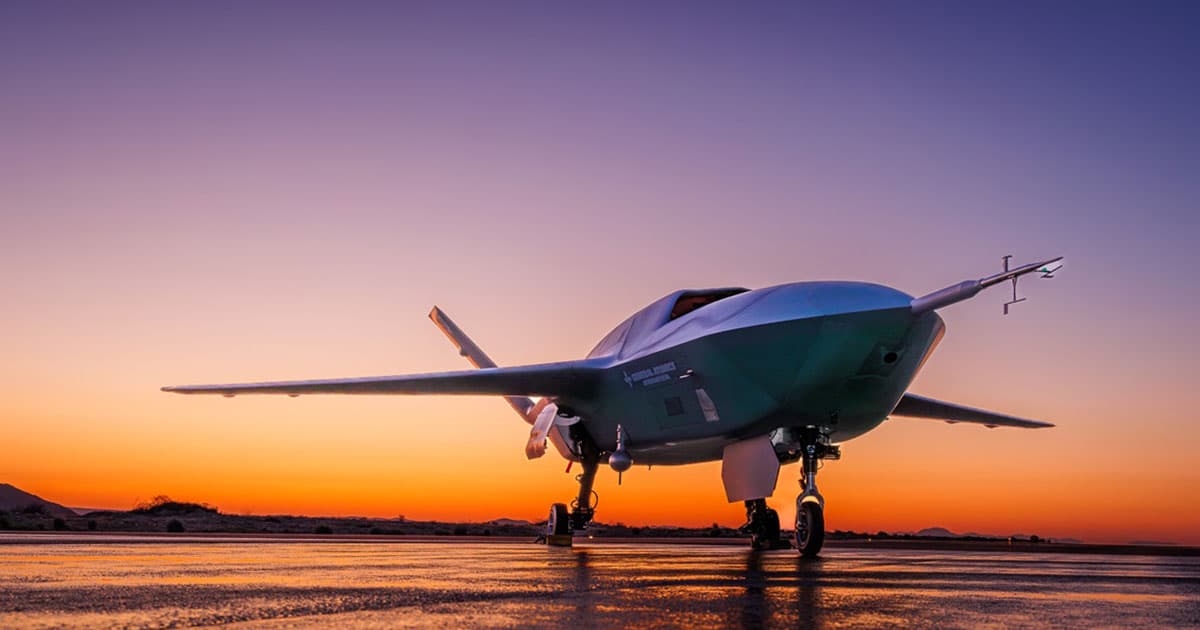
General Atomics Aeronautical Systems
GA-ASI's Collaborative Combat Aircraft: a purpose-built uncrewed fighter designed for modular mission-system integration, with planned variants for surveillance, air-to-air and air-to-ground work. It is among the first aircraft to carry the FQ designation, F for fighter and Q for uncrewed. The Air Force named the production jet FQ-42A Vengeance on September 14, 2026, dropping the company name Dark Merlin. The YFQ-42A prototype flew in August 2025, 15 months after contract award, was lost in an April 2026 autopilot mishap, and returned to flight in May 2026. Production was ordered on June 17, 2026 at a program target cost near $30 million per aircraft. On July 21, 2026 a CCA test aircraft and a Tactical Air Support F-5 Advanced Tiger closed a kill chain using Infrared Search and Track Multi-Ship Ranging and TacACE software. The mission autonomy that flies it comes from a separate competition: Collins Aerospace's Sidekick software has been flying the aircraft, and the primary autonomy provider for Increment 1 is chosen by summer 2027.
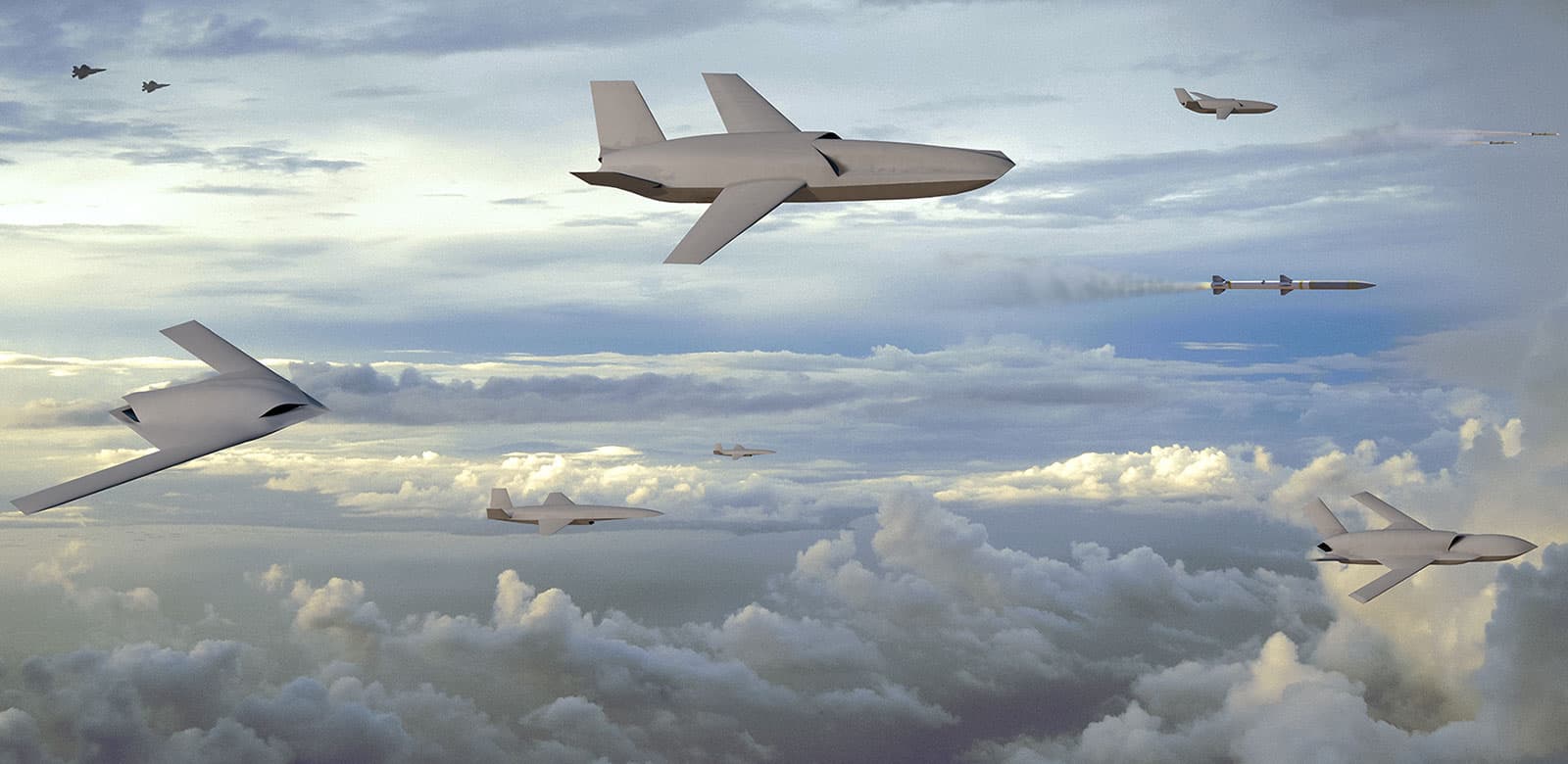
General Atomics Aeronautical Systems
A family of uncrewed combat aircraft built on one common core chassis, which is where the FQ-42A's speed came from: Gambit 1 for long-endurance ISR, Gambit 2 for air-to-air, Gambit 3 as an advanced trainer and target, Gambit 4 for stealthy long-endurance reconnaissance, Gambit 5 as a carrier-capable CATOBAR design, and Gambit 6, revealed in November 2025, adding air-to-ground strike. GA-ASI is marketing the family to international CCA customers and used Gambit 5 as the basis for the Navy carrier CCA design study awarded in October 2025.
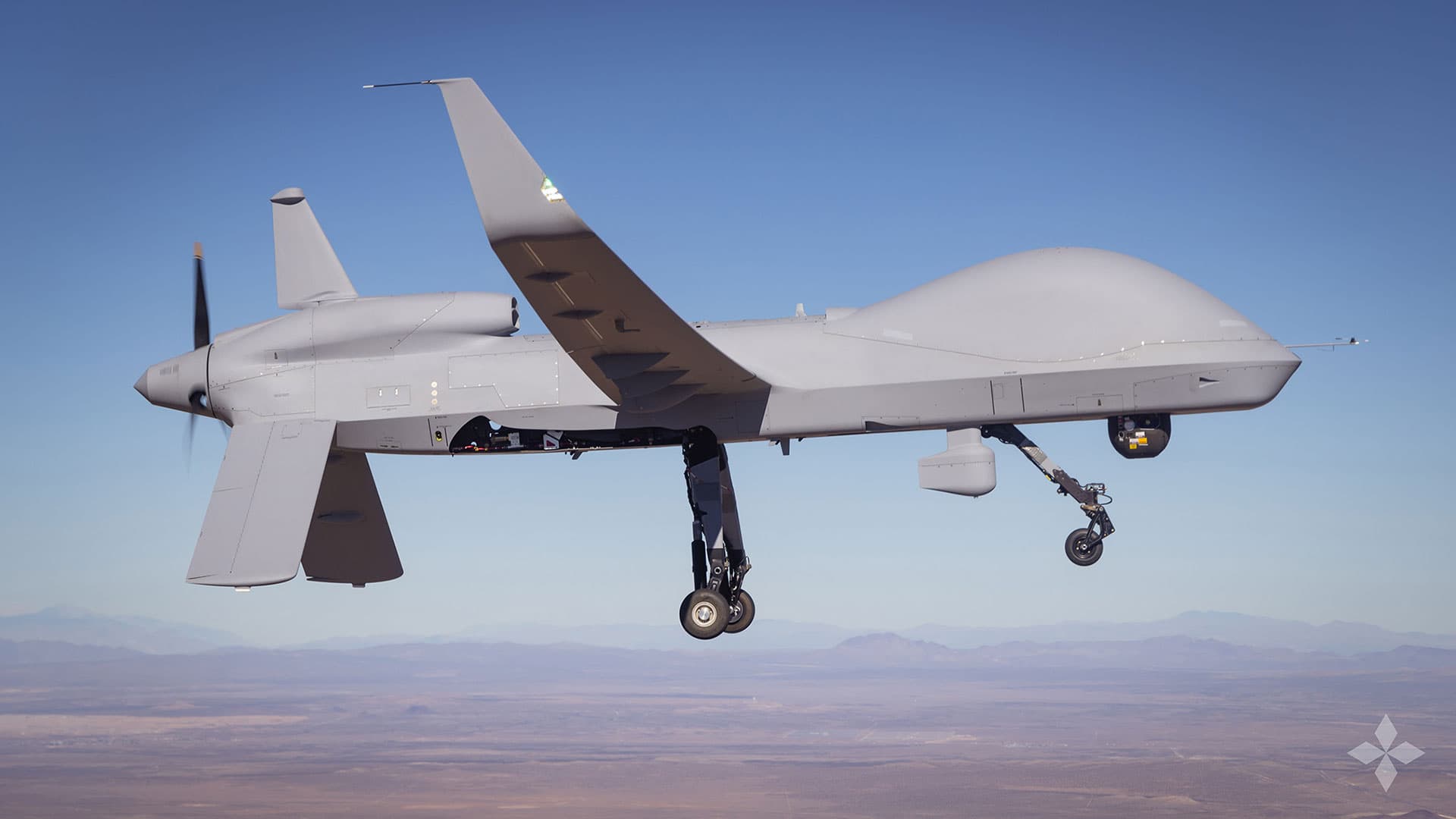
General Atomics Aeronautical Systems
The Army's medium-altitude long-endurance aircraft, still being upgraded rather than replaced. The Extended Range variant carries communications intelligence, synthetic aperture radar and moving-target indicator payloads on a modular architecture, and in April 2026 the Army added an electronic intelligence sensor, integrated with Sierra Nevada Corporation, so it can find and geolocate integrated air defense systems while standing off from them.
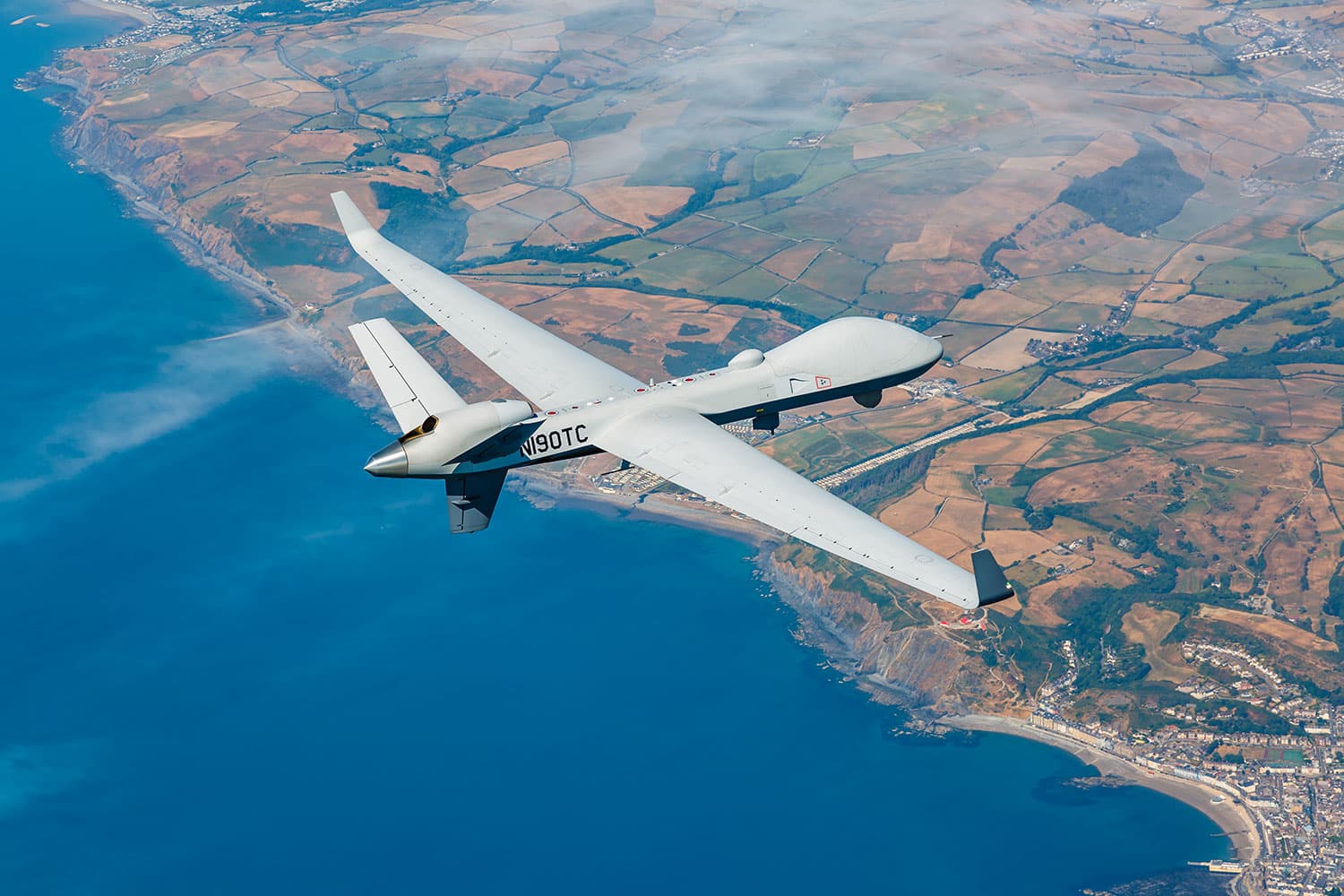
General Atomics Aeronautical Systems
The export franchise and the successor to the Reaper: a long-endurance remotely piloted aircraft certified to fly in civil airspace, with SeaGuardian adding maritime surveillance and anti-submarine warfare payloads. Under contract with Belgium, Canada, Denmark, Germany, India, Japan, Poland, Taiwan, the UK and US SOCOM, it is what turns GA-ASI from a US program house into a global one. Weapons integration is continuous, most recently Paveway IV and Brimstone 3 qualification on the RAF's Protector RG Mk1 and Kongsberg Joint Strike Missile work.
General Atomics Aeronautical Systems
A clean-sheet medium-altitude long-endurance unmanned aircraft GA-ASI unveiled in August 2026 as its answer to whatever comes after the MQ-9 Reaper. No images or detailed specifications have been released. Spokesman C. Mark Brinkley said Wildfire meets every item on the Pentagon's Massed Modular Aircraft wish list and can be delivered years earlier than the current schedule, while also saying the design is not dependent on that program. After Iran combat losses reached about 45 Reapers, Secretary Troy Meink on September 14, 2026 set MMA inventory goals of 100 aircraft in 2029 and 500 by 2032 at about $10 million a copy.
Helsing
Reconnaissance-strike software platform that fuses feeds from many drones into a single battlefield picture and coordinates swarming strikes. Acts as the command-and-control layer above HX-2 and other unmanned systems, and is deployed in Ukraine.
Helsing
An autonomous combat aircraft in the three-to-five-tonne class, developed and built by Helsing subsidiary Grob Aircraft in Bavaria and natively flown by the Centaur AI. Unveiled September 2025; at ILA Berlin 2026 Helsing added a dedicated CA-1EA electronic-attack variant alongside the CA-1KA kinetic-attack version, pitching the only all-European 'wingman' answer to systems like the EA-18G Growler.
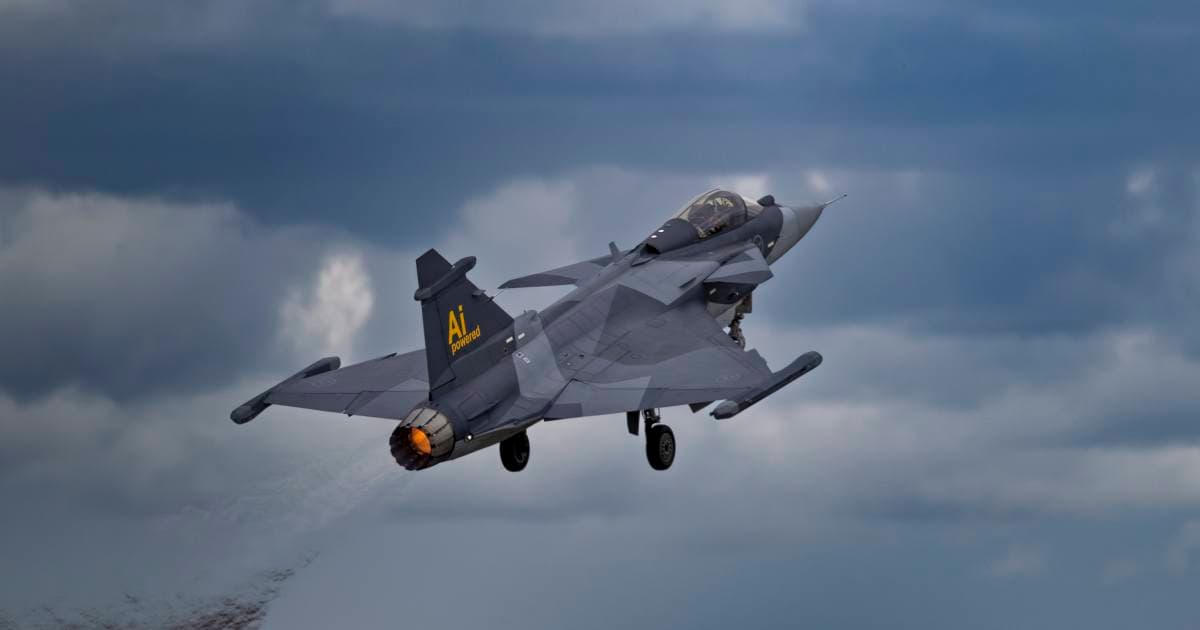
Helsing
AI air-combat agent ('AI fighter pilot') trained by reinforcement learning at massive scale. In Saab's Project Beyond it took control of a Gripen E fighter over the Baltic in May–June 2025 - a publicly claimed world first for AI flying a real fighter in beyond-visual-range combat scenarios - and is the native autonomy stack for the CA-1 Europa.
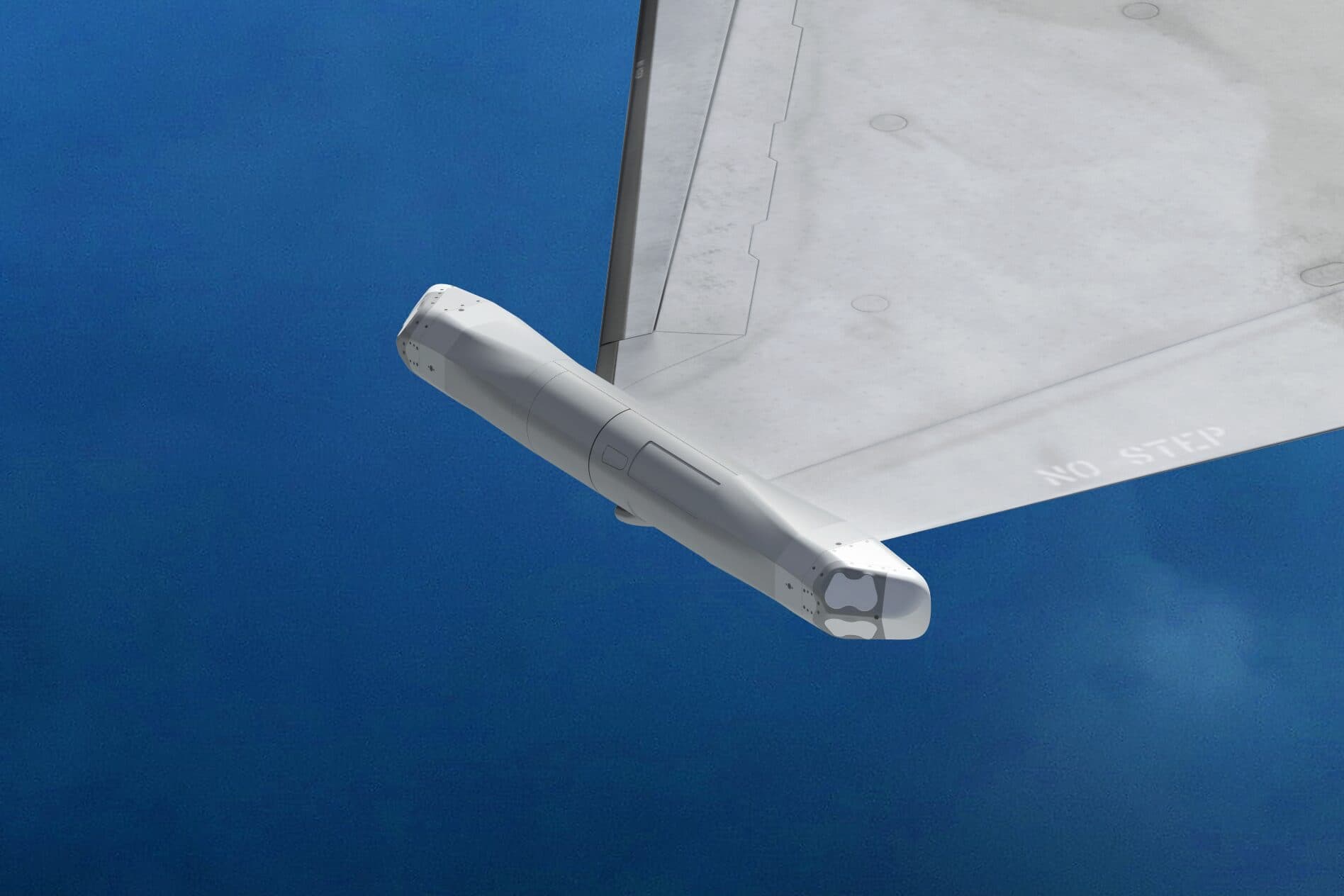
Helsing
AI electronic-warfare software that uses deep learning to classify unknown radar emitters and infer their intent in real time. Being integrated into Saab's Arexis EW suite for Germany's 15 Eurofighter EK electronic-combat jets under a €258M contract signed November 2025, replacing Tornado ECR capability around 2030.

Helsing
Electrically propelled X-wing precision strike drone (loitering munition) with onboard AI that keeps hunting and re-identifying targets through GPS denial and jamming, with a human on the loop for critical decisions. Software-defined and built for low-cost mass production; combat-deployed in Ukraine and ordered by the Bundeswehr.
Helsing
Autonomous quadrupedal ground robot, acquired with Keybotic in January 2026, built to navigate multi-story industrial sites without GPS using onboard cameras and sensors, climbing stairs and slopes while its visual, thermal and acoustic sensors detect anomalies and trigger real-time alerts. Originally sold for energy, oil-and-gas and mining inspection; Helsing is integrating it into its broader autonomous-systems and ground-robotics line.
Helsing
A quadrupedal robotics research platform designed and manufactured in Europe, including Helsing-designed actuators, unveiled June 1, 2026 with the public launch of Area 9, Helsing's advanced research division led by Chief Scientist Antoine Bordes. Built for outdoor autonomy research rather than combat sales; Helsing is making it available to academic labs, starting with ETH Zurich (Marco Hutter) and INRIA Paris.
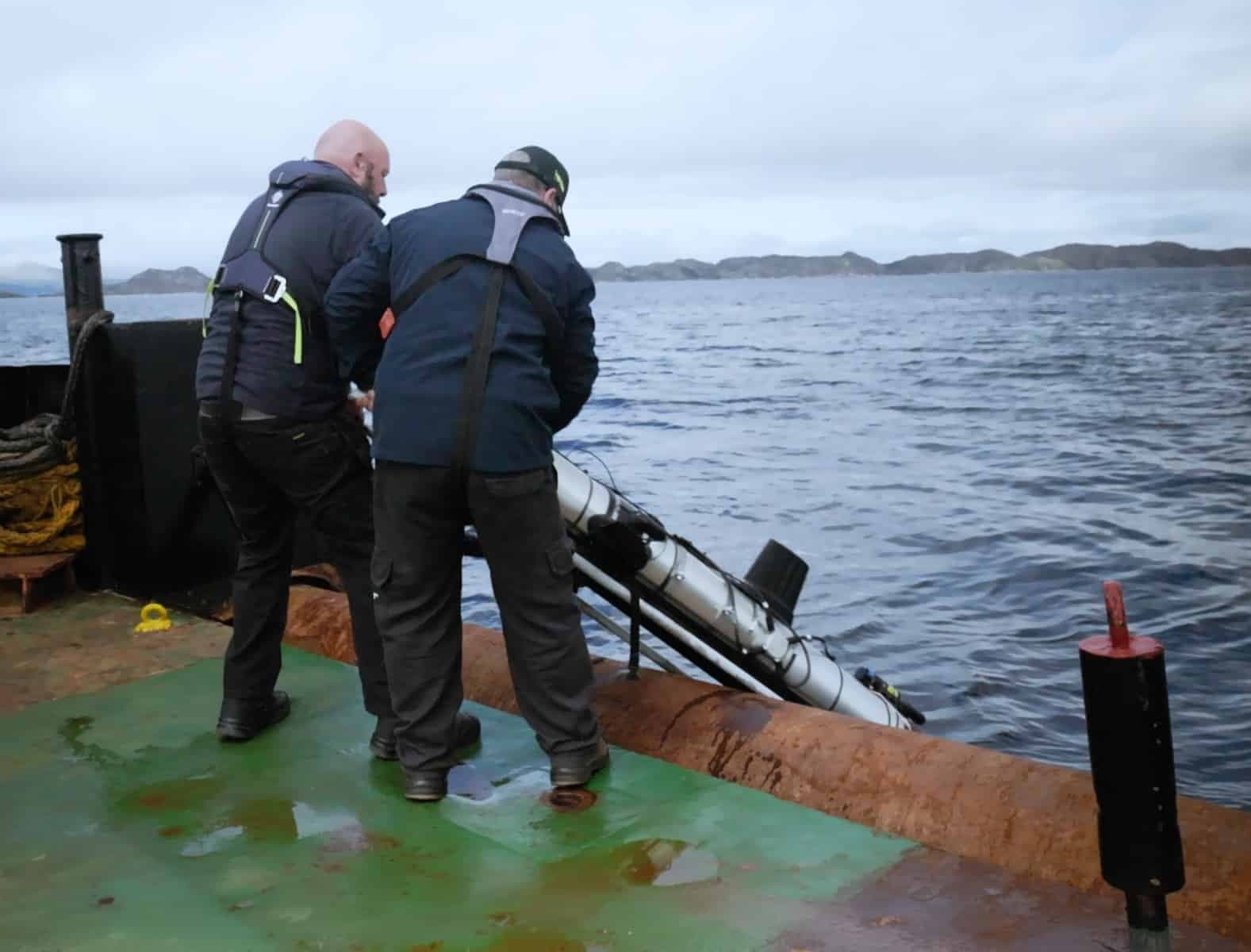
Helsing
A ~2 m, ~60 kg autonomous underwater glider that patrols for up to three months running Lura, a 'large acoustic model' trained on decades of ocean sound to detect and classify ships and submarines. Deployable in swarms as affordable persistent undersea surveillance; built in Plymouth for the Royal Navy's Atlantic Bastion program.
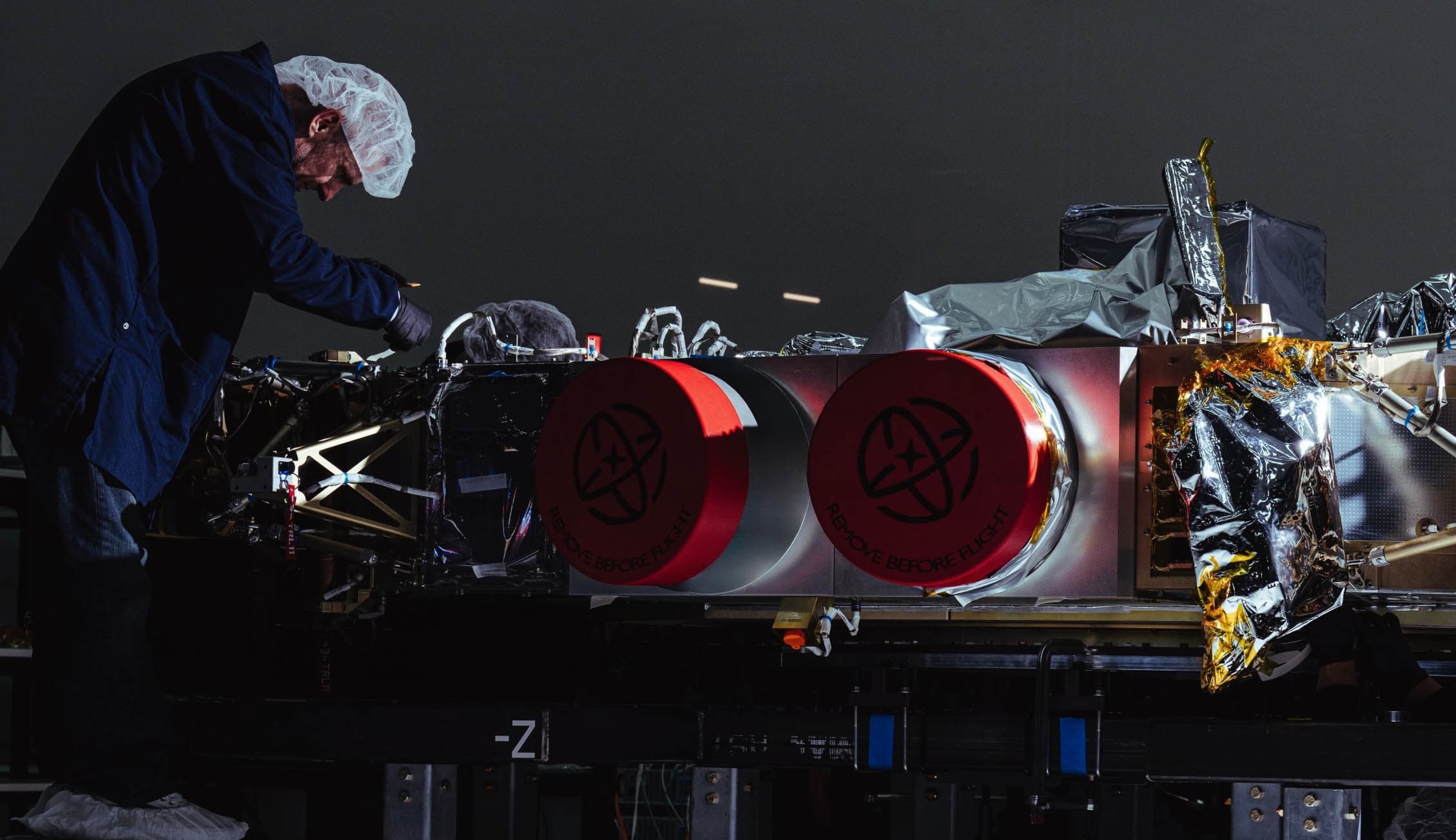
K2 Space
The krypton-fed electric thruster K2 designed in house, test fired at full power on the ground in 2025 and flown on Gravitas in 2026. K2 describes it as the most powerful Hall-effect thruster ever flown, and it is what lets a two-tonne satellite ride a cheap rideshare to low Earth orbit and then climb itself to medium Earth orbit in under 90 days instead of paying for a dedicated direct-inject launch. The economics of the whole Mega Class product depend on it.
K2 Space
The scaled-up bus: 110 kW of array power, 15,000 kg of payload mass on a 6.2 by 6.2 metre deck, four 20 kW Hall-effect thrusters, and more than 30 kW of heat rejection. It is aimed at the applications that a Mega Class cannot power, including orbital compute and high-power defense payloads, and is the platform behind K2's pitch that satellites should get bigger as launch gets cheaper.
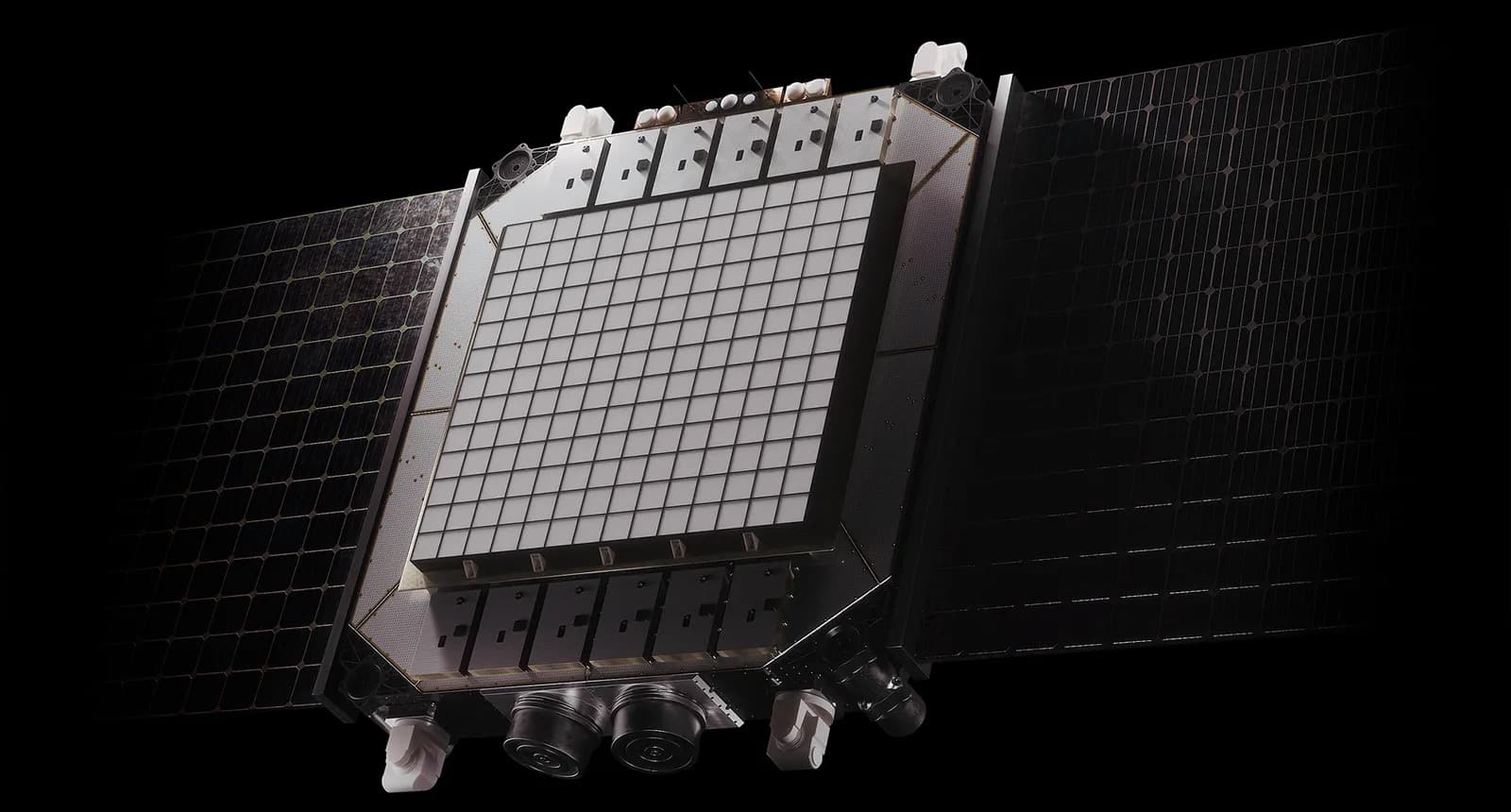
K2 Space
K2's production satellite bus and the whole thesis in one product: 3,000 kg of payload mass on a 3 by 2.7 metre deck, up to 30 kW of peak payload power, and 20 kW Hall-effect propulsion capable of an orbit raise from LEO to MEO in under three months. It is roughly ten times the power of a typical constellation-class satellite, and K2 says ten of them stack into a single launch vehicle for 200 kW delivered per launch. It flies to LEO, MEO, and GEO, and lists around $15 million.

Palantir Technologies
Launched in April 2023, AIP lets organizations run large language models and AI agents against their own data on private, secure networks, with hands-on 'bootcamps' taking customers from zero to a working use case in days. AIP is the primary driver of Palantir's triple-digit US commercial growth and now hosts NVIDIA Nemotron open models for sovereign government deployments.
Palantir Technologies
Palantir's continuous-delivery and deployment platform, which autonomously ships and updates software across cloud, on-premise, classified, and air-gapped environments. Apollo is what lets Palantir operate SaaS-style inside secure government networks, and it anchors the company's sovereign AI stack, including the June 2026 engine for deploying NVIDIA Nemotron models in sovereign environments.

Palantir Technologies
Palantir's data-integration platform for enterprises and civil government, released in 2016, turns an organization's data into an integrated 'ontology' that operational applications are built on. It underpins the UK NHS Federated Data Platform and contributes to the US Army's Next Generation Command and Control (NGC2) common data layer baseline established in June 2026, alongside Anduril's Lattice, with Anduril as lead integrator.

Palantir Technologies
Palantir's defense and intelligence operating system, released in 2008, fuses satellite imagery, signals, and intelligence sources so analysts and commanders can find targets and run operations. Its AI evolution, the Maven Smart System, combines those workflows with large-model assistance for targeting and command and control.
Quantum Systems
Modular high-mobility unmanned ground vehicle for logistics, medevac, recovery, UAV launch/recovery and electronic-warfare payloads. Company specs: up to 750 kg payload, 100 km/h top speed, up to 200 km electric range, MOSAIC UXS integration and GNSS-denied navigation. Unveiled at EnforceTac 2026 in Germany. Not the same product as the MOSAIC Ground Autonomy Kit retrofit for heavy trucks.
Quantum Systems
Vehicle-agnostic retrofit that turns heavy tactical and logistics trucks into unmanned or teleoperated assets, descended from Europe's first TÜV-certified autonomous trucking stack. Leader-follower convoys, GNSS-denied driving and remote cabin-off operations, integrated into MOSAIC UXS. Demonstrated on a Daimler Truck Mercedes-Benz Arocs.
Quantum Systems
Open, vendor-agnostic mission software for unmanned systems in the air, on land and at sea. AI planning builds a 3D mission picture and issues autopilot commands; the same stack scales from a handheld controller to a multi-screen operations center and is built to plug into BMS, MGCS and FCAS environments without locking customers to Quantum hardware.
Quantum Systems
Optionally piloted light military aircraft for low-altitude counter-UAS, ISR, maritime patrol, SIGINT/EW, light attack and training. Designed from scratch for crewed, remotely piloted or uncrewed use, with MOSAIC UXS as the mission layer and under-wing stations for interceptor drones and precision effectors. Unveiled 10 June 2026 at ILA Berlin.
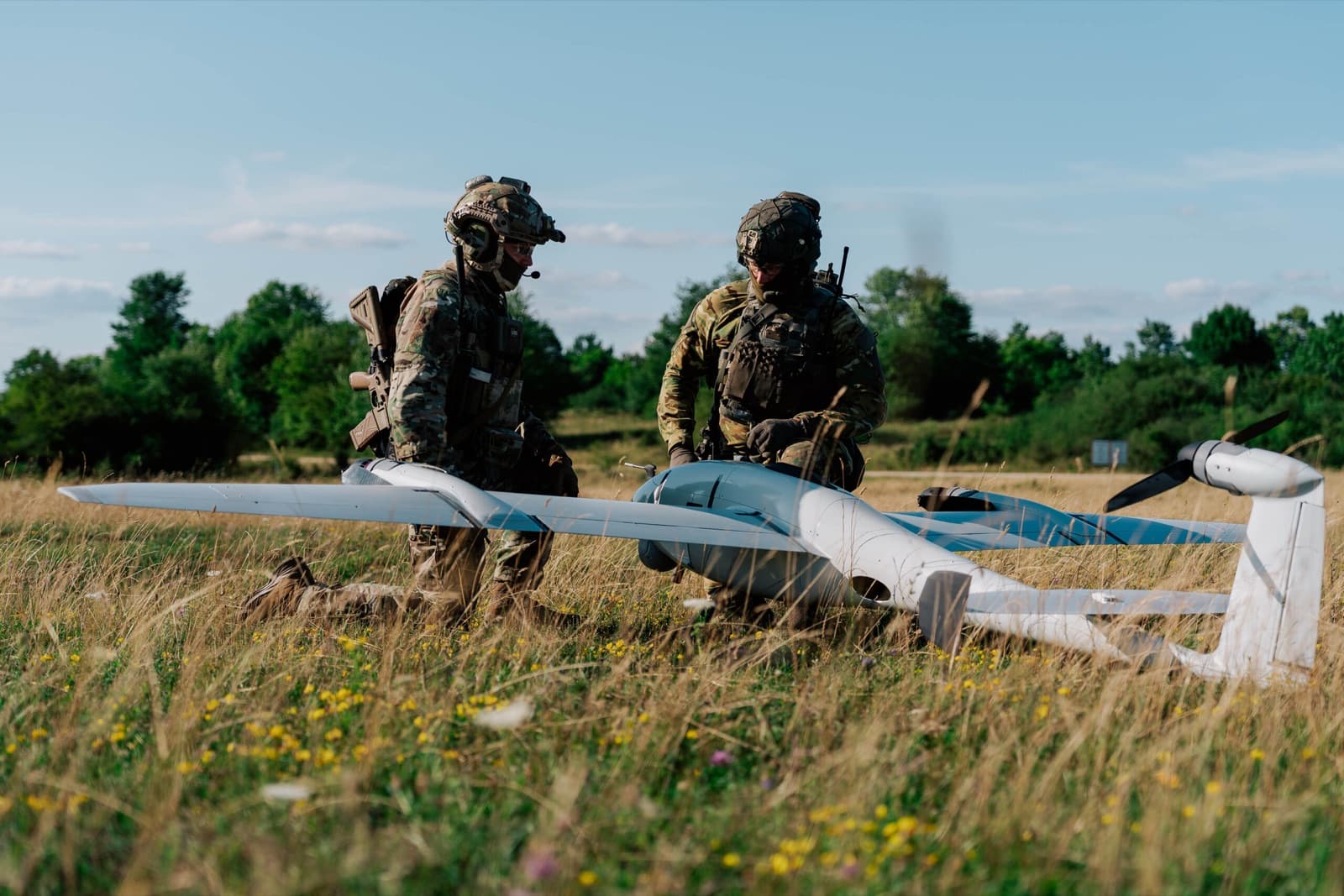
Quantum Systems
Group 3 hybrid-electric VTOL long-range ISR aircraft. Two-person assembly, 10-by-10-metre launch pad, 10-plus hours of endurance and a 160 km datalink, with dual swappable payload bays for EO/IR, laser designation, SAR, SIGINT/EW and SATCOM. July 2026 upgrade raised payload to 9 kg. Open architecture (ROS/Docker) and NATO C2 connectors (TAK, SitaWare, Kropyva).
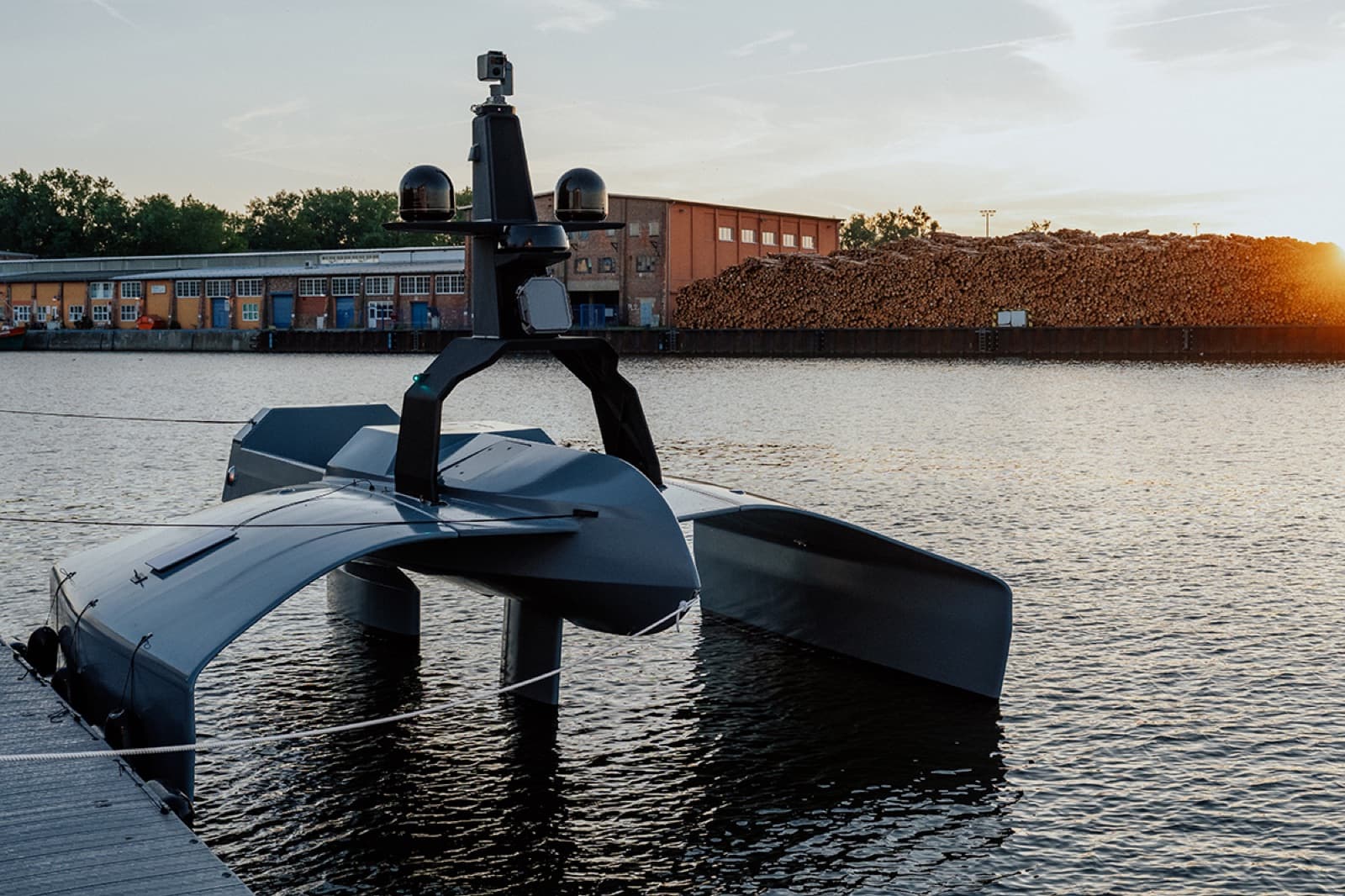
Quantum Systems
Long-endurance unmanned surface vehicle launched 14 September 2026 as Quantum's maritime mission hub. Carries surveillance and counter-drone radars plus EO sensors with onboard AI, launches and recovers UAVs, and docks, recharges and offloads UUVs. Integrated into MOSAIC UXS.
Quantum Systems
High-speed interceptor developed with WIY Drones through Quantum WIY Industries to counter jet-powered attack drones such as Geran-4 and Geran-5. It is distinct from STRILA. On 7 October 2026 Quantum vice president Matthias Lehna said a letter of intent signed over the weekend covered tens of thousands of SPYS, that thousands were ready for delivery in 2026, and that production using existing STRILA capacity could reach several thousand units a month. Reporting of the briefing distinguishes that letter from a final procurement contract. No euro price and no exact unit count were disclosed.
Quantum Systems
WIY STRILA is a high-speed interceptor UAV built to defeat fast, maneuverable aerial targets including Shahed-class loitering munitions and reconnaissance drones. The April 2026 Quantum techsheet lists 5.7 kg take-off weight, up to 700 g payload, 34 km maximum flight range, 15-minute flight time, 415 km/h top speed and 6,000 m maximum altitude, with radar cueing, VTOL launch and operator-in-the-loop intercept. Production is scaled in Ukraine through Quantum WIY Industries and integrates with MOSAIC UXS.
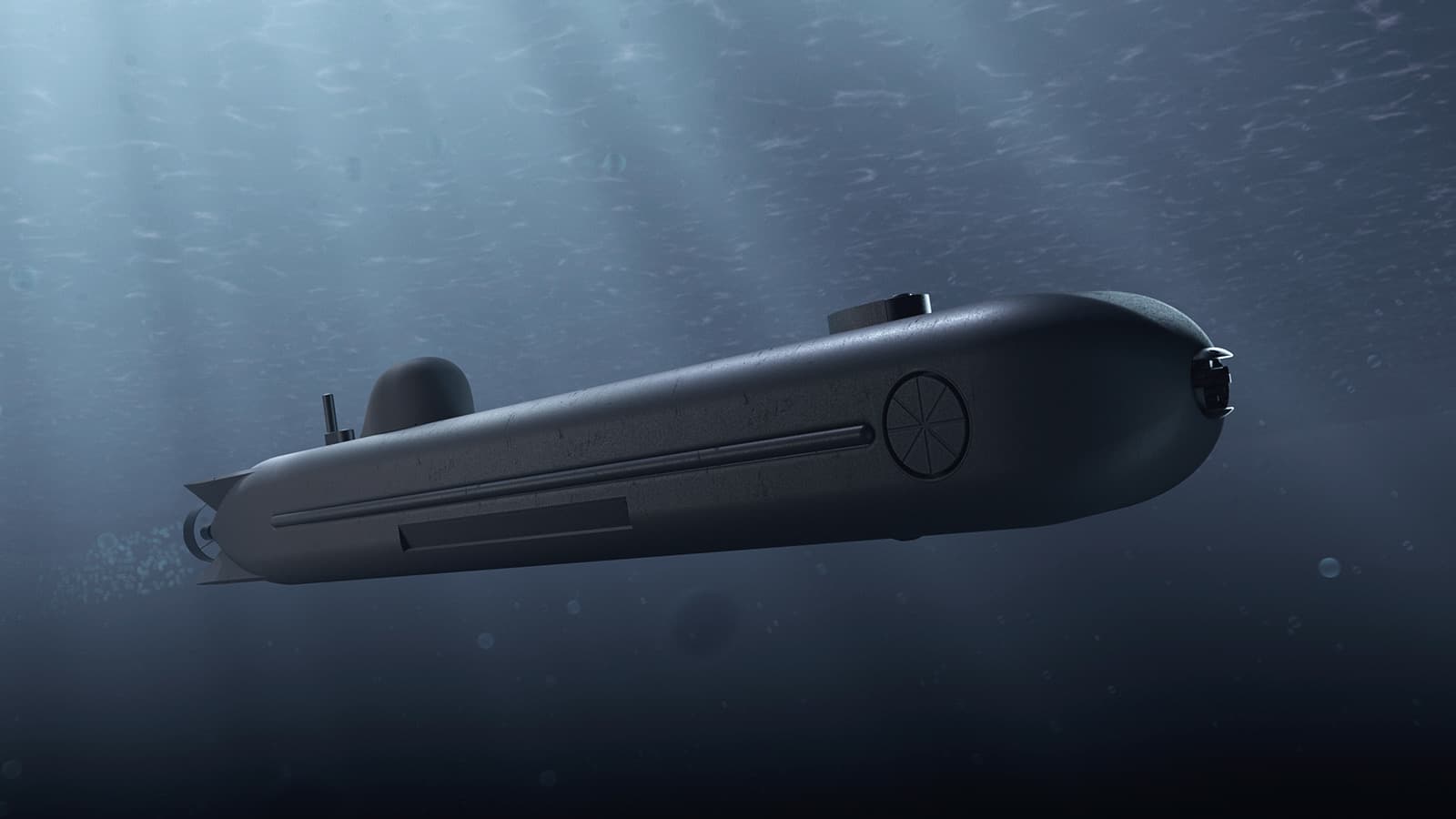
Quantum Systems
AI-enabled unmanned underwater vehicle for autonomous ISR down to 6,000 metres, with sonar and hydroacoustic sensors and onboard edge processing. Can cruise for up to four days or sit on the seabed in passive watch for weeks, and docks with Seavex for charge and data offload.
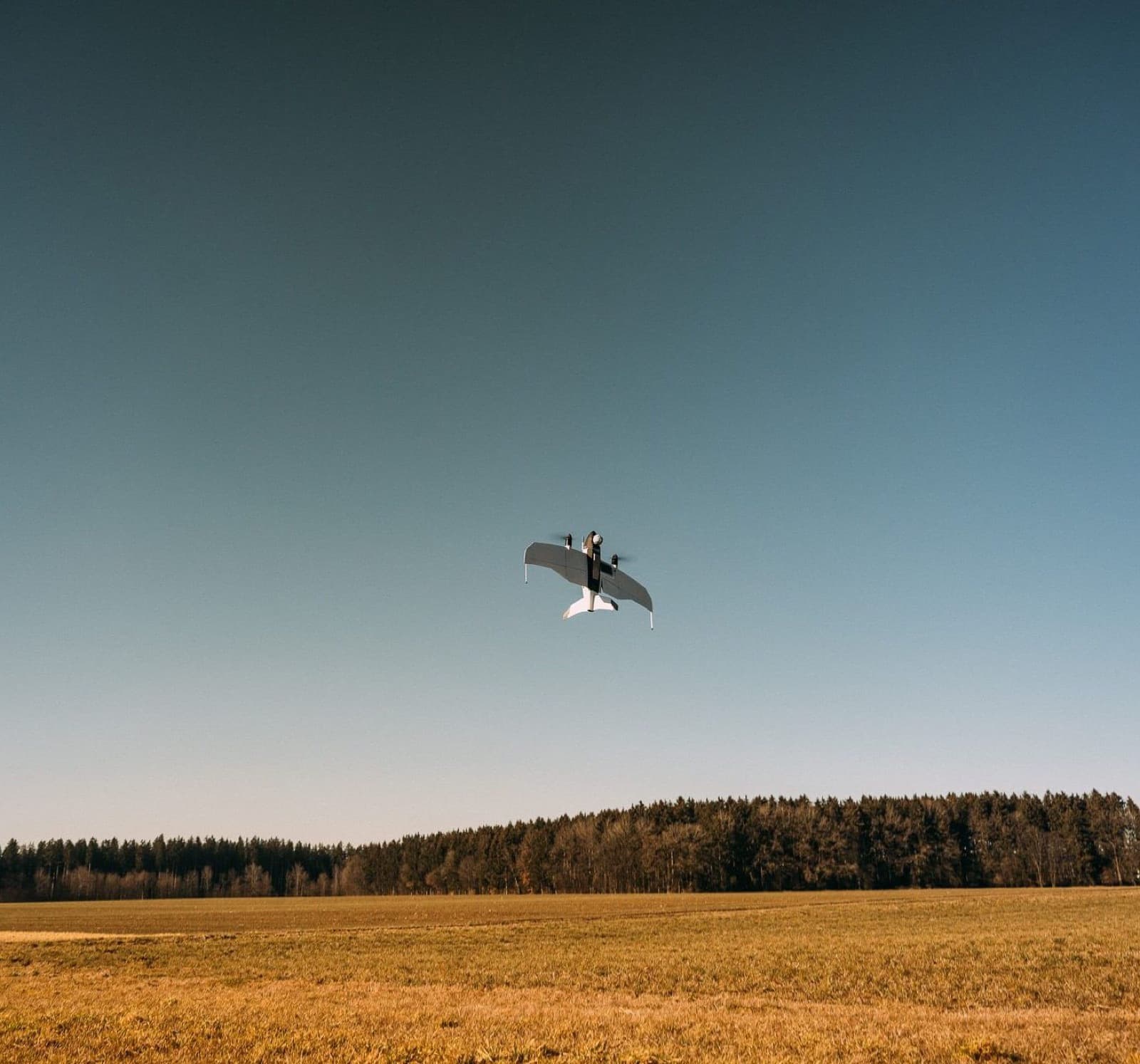
Quantum Systems
Backpackable short-range eVTOL ISR drone for squad-level reconnaissance. Two-minute setup from a 2-by-2-metre pad, ultra-low acoustic signature, onboard Jetson Orin AI, and a 15 km datalink. Selected as the Bundeswehr ALADIN successor.
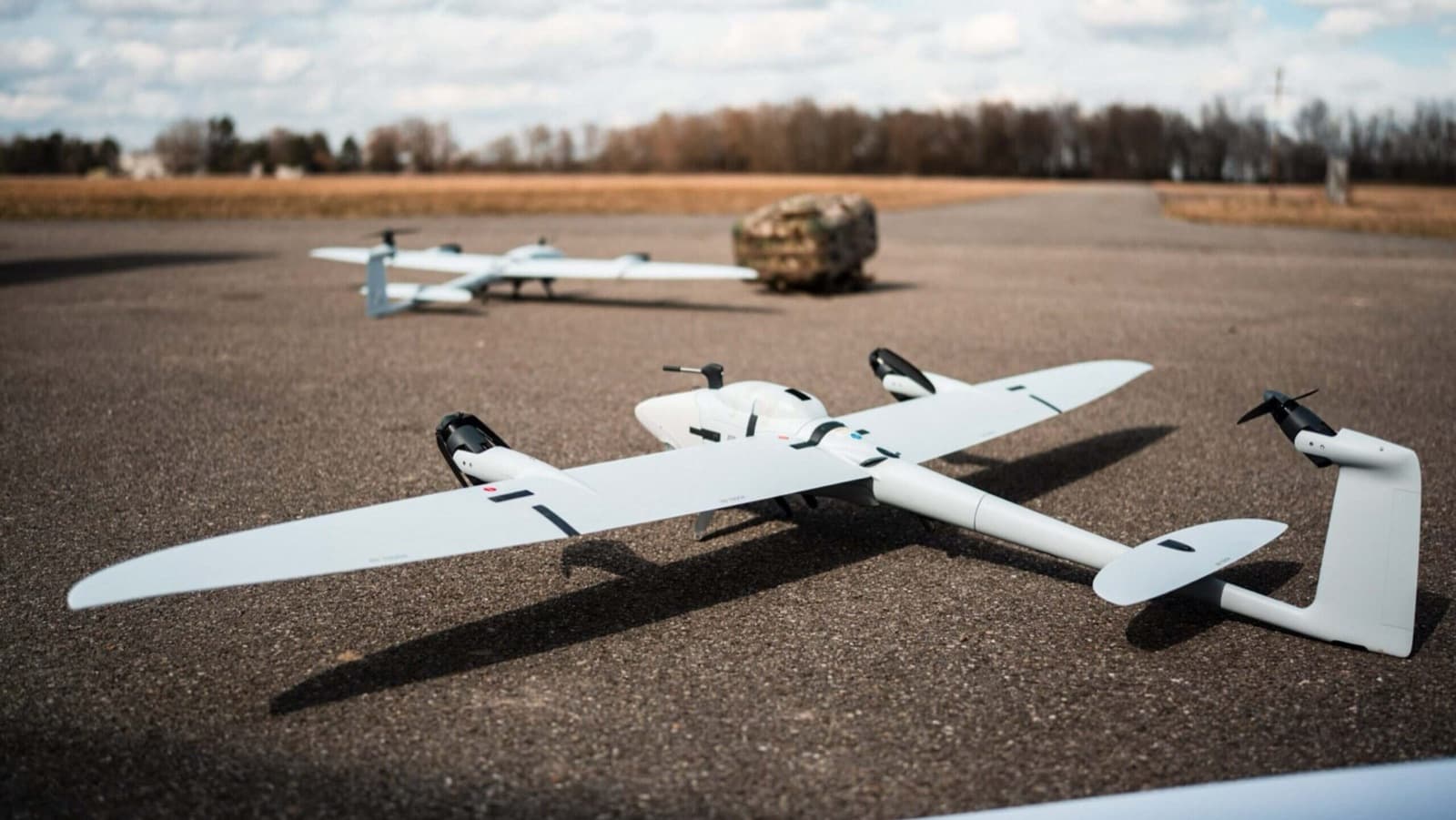
Quantum Systems
Silent mid-range eVTOL fixed-wing ISR drone, the current iteration of the combat-proven Vector family. A 2-in-1 airframe that converts without tools into a multicopter (including tethered persistent watch), with dual NVIDIA Jetson Orin boards for onboard detection, classification and tracking, visual-inertial GNSS-denied navigation, and a 60-plus km encrypted datalink. Single-operator setup in under three minutes.
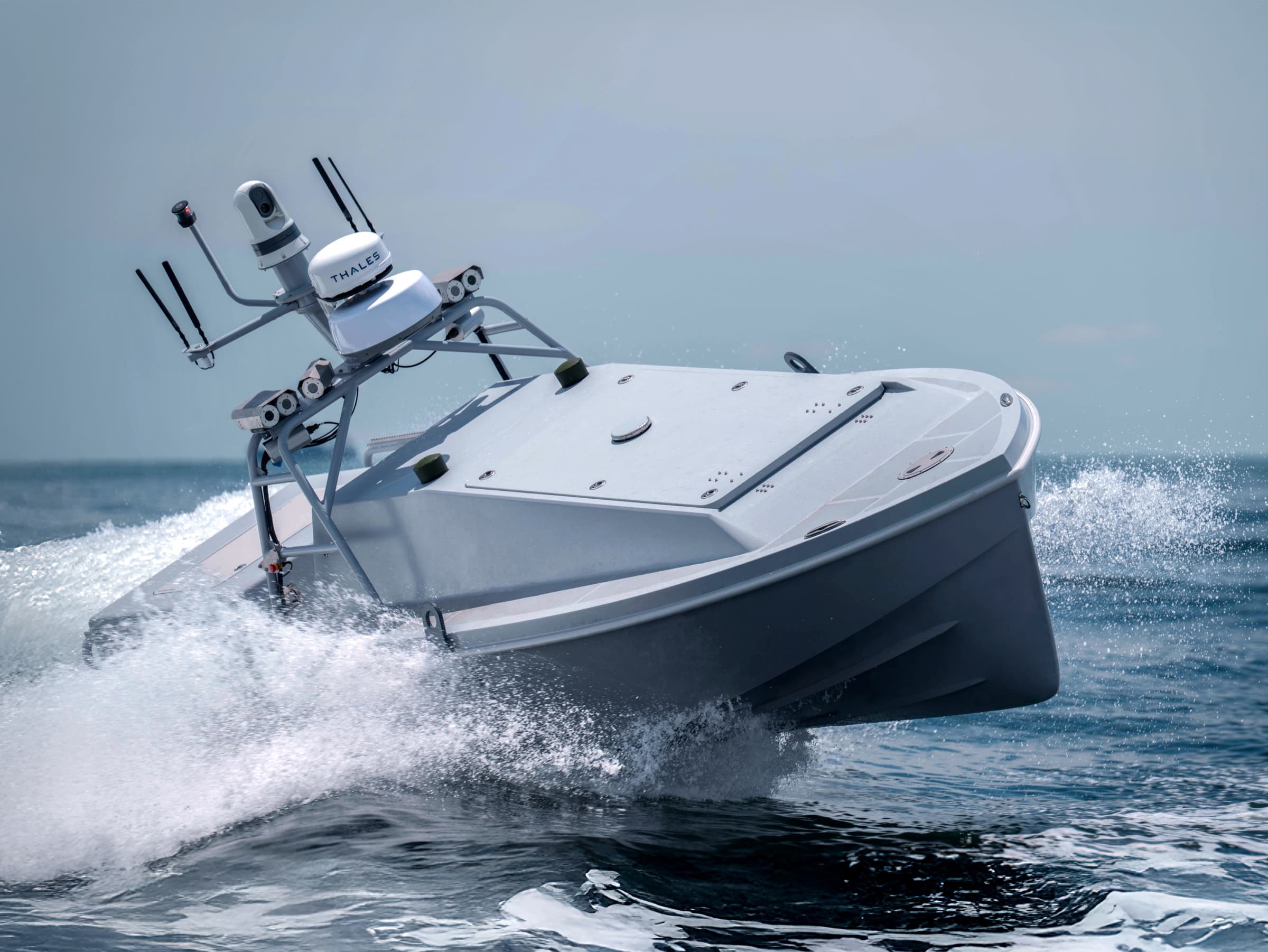
Saronic
The 24-foot autonomous surface vessel that carries Saronic's combat record. Official specs: 1,000 pounds of payload, 1,000-plus nautical miles, and 35-plus knots. Corsairs deployed to the Middle East with Task Force 59 in March 2026, recovered two downed Army aviators off Oman on June 8, and three struck Iran's Bandar Abbas naval base on July 12 in the first combat use of USVs by US forces.
Saronic
The single command-and-control layer across everything Saronic builds. Operators plan, simulate, and execute missions for one vessel or a whole fleet from one interface, and the same autonomy stack runs on every class from the six-foot Spyglass to the 180-foot Marauder, which is what lets Saronic scale hull sizes without rebuilding the software each time. A strategic collaboration with Nvidia announced October 2025 pairs Nvidia's AI computing, software, and simulation tools with Echelon, which Saronic says has cut autonomy software training and deployment cycles from days to hours.
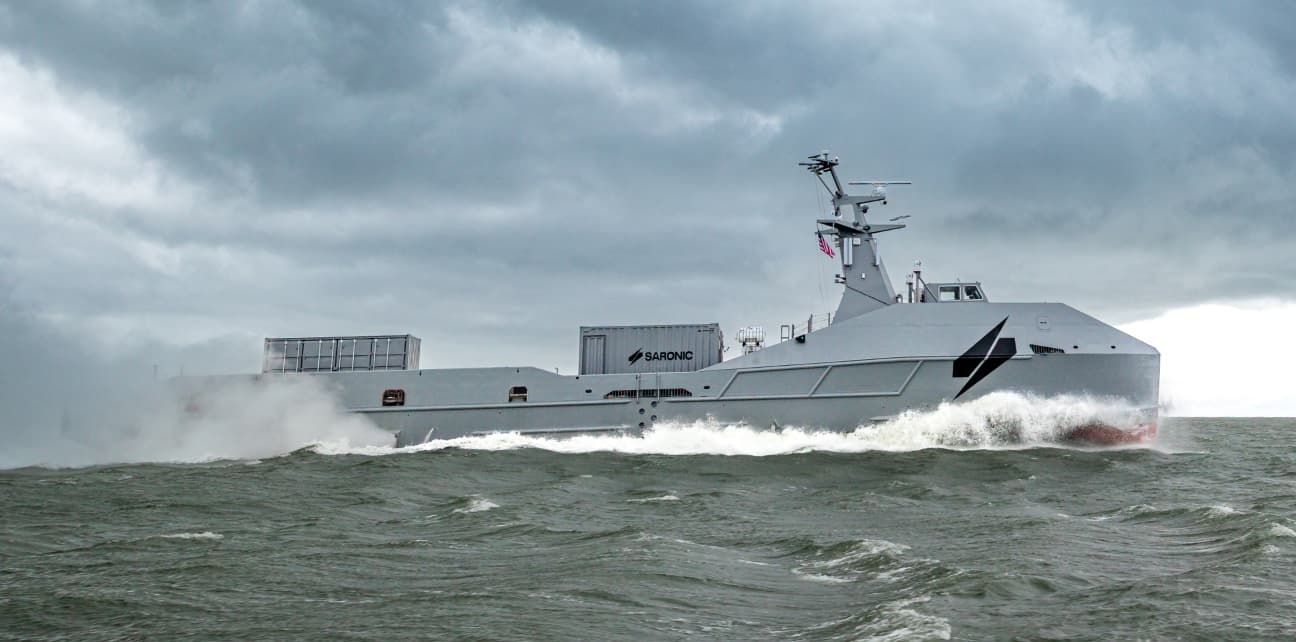
Saronic
Saronic's 180-foot Medium Unmanned Surface Vessel: 12-knot cruise, 25-plus-knot sprint, up to 5,400 nautical miles at 25 MT base load and 4,100 nm at 150 MT max load, with 150 metric tons of modular payload (four 40-foot or eight 20-foot ISO containers). First hull was designed, built, and launched in under a year at Franklin, Louisiana. On Sept 29, 2026 the Navy awarded a production Other Transaction after Phase I at-sea testing.
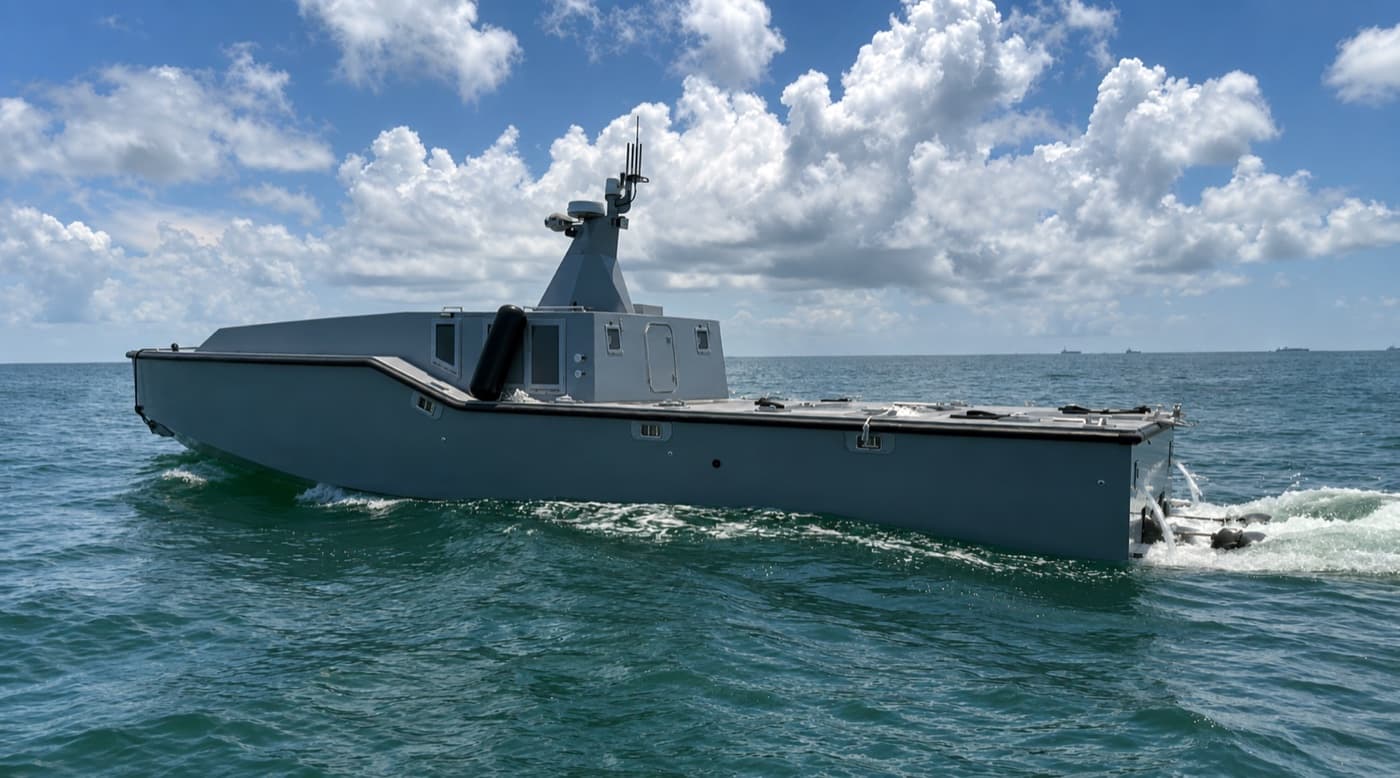
Saronic
A 52-foot (16-meter) dual-use autonomous surface vessel launched July 2, 2026, sitting between the Corsair and the Marauder and pitched at both defense and commercial customers. Saronic said in July 2026 it could build hundreds a year.
Shield AI
The autonomy stack that is the actual company. Hivemind flies aircraft with no GPS, no waypoints, and no remote pilot. Co-founder Brandon Tseng said in September 2026 that it has been used on more than 40 platforms, including F-16s, helicopters, drone boats, ground vehicles, NCSIST Mighty Hornet III, and a first on-orbit satellite test in August 2026. It descends from the Heron Systems agent that beat a human F-16 pilot 5-0 in DARPA's AlphaDogfight trials. Hivemind Enterprise packages it as a developer platform for other manufacturers, and the Hivemind Foundation Model for Defense is trained in simulation, which is what the March 2026 Aechelon acquisition bought.

Shield AI
A computer-vision counter-drone software product that runs on electro-optical and infrared video for passive detection, without radar or radio emissions. Shield AI licenses it onto platforms operators already field rather than selling a dedicated interceptor.
Shield AI
A 165-pound tail-sitting drone that takes off and lands vertically from a small deck or a clearing, then flies horizontally for 12-plus hours at up to 18,000 feet on a single heavy-fuel engine. Hivemind runs onboard with visual odometry, so it keeps navigating when GPS and communications are jammed, which is why it has stayed useful in Ukraine where cheaper drones have not. Shield AI now advertises fully unassisted launch and land, a 40-pound payload, and deployment on nearly every class of US Navy ship plus all seven Marine Expeditionary Units. It is flown by five US services plus a widening list of allied navies and armies.
Shield AI
An autonomous VTOL fighter meant to erase the runway from the problem: it takes off and lands vertically from a truck bed, a clearing, or a ship, then flies more than 2,000 nautical miles at above 50,000 feet with internal and external weapons bays for air-to-air, air-to-surface, and electronic warfare missions. Propulsion is a GE Aerospace F110-GE-129E with the AVEN thrust-vectoring nozzle, integrated and light-off tested on July 20, 2026. Three fit in the deck space of one legacy fighter, and one commander is meant to direct a team of them through Hivemind.
Stark Defence
Tube- or canister-launched one-way effector for simultaneous multi-round launch from vehicles, vessels or ground tubes. Folding wings, modular warhead up to 4.5 kg, GNSS-free terminal guidance, under 20 kg for launcher plus effector so more than ten fit on one vehicle. Range 40, 60 or 100 km depending on battery.
Stark Defence
Foldable man-portable eVTOL quadcopter for short-range ISR or strike. Strike variant: under 25 km, under 25 minutes, under 2 kg warhead, 6 kg MTOW. ISR variant: under 40 km, more than 50 minutes, 4-4.5 kg MTOW. Optional fibre-optic guidance for contested EM environments. Recoverable if the mission is aborted.
Stark Defence
Sovereign, MOSA-based command-and-control software for unmanned weapons across land, air and sea. Automated target prioritisation and effector selection, swarm mission planning from operator intent, and a human-in-the-loop architecture that keeps the engagement decision with the operator. Designed as middleware into existing battle-management systems, with logs built for weapons-system certification.
Stark Defence
Family of unmanned surface vessels for hybrid naval operations, with multi-sensor (visual, IR, radar) detection, Minerva C2 integration, and a modular payload bay. Specs on the product page: up to 910 nautical miles, 45-plus knots, 2,100 kg displacement, up to 500 kg payload, 6 m length, sea state 4 operate / 6 survive.
Stark Defence
Flagship software-defined eVTOL loitering munition (OWE-V). Launches from unprepared ground in under 10 minutes with no catapult or tube, cruises above 120 km/h, dives at 250 km/h, and carries a modular German warhead of up to 5 kg claimed to penetrate 800 mm of high-hardness armour. GNSS-denied navigation mixes visual odometry with satellite-imagery localisation. Recoverable for training.
BioNTech
An individualized neoantigen-specific mRNA cancer vaccine, custom-manufactured for each patient's tumor mutations and co-developed with Genentech (Roche) to train the immune system against residual disease after surgery.
BioNTech
Investigational mRNA cancer immunotherapy encoding the HPV16 E6 and E7 proteins, also called tenu-ra. It is designed to induce HPV16-specific immune responses alongside checkpoint-inhibitor treatment. The lead study is AHEAD-MERIT (NCT04534205), a Phase 2/3 trial of BNT113 plus pembrolizumab versus pembrolizumab alone in first-line unresectable recurrent or metastatic HPV16-positive, PD-L1-expressing head and neck cancer.
BioNTech
BioNTech's flagship oncology asset: a next-generation bispecific antibody targeting both PD-L1 and VEGF-A, gained via the Biotheus acquisition and positioned as a potential immuno-oncology backbone across many solid tumors. Co-developed with Bristol Myers Squibb.
BioNTech
The mRNA COVID-19 vaccine (BNT162b2 / tozinameran) co-developed and commercialized with Pfizer - the first mRNA vaccine authorized for human use and the product that validated the platform at global scale.
BioNTech
A next-generation, topoisomerase-1-inhibitor-based antibody-drug conjugate targeting the immune-checkpoint protein B7-H3, co-developed with China's DualityBio - BioNTech's third late-stage oncology asset alongside BNT327 and trastuzumab pamirtecan, with clinical experience across more than ten tumor types.
BioNTech
A next-generation, pH-sensitive anti-CTLA-4 antibody designed to deplete regulatory T cells within tumors while sparing normal tissue, co-developed with OncoC4 since a March 2023 strategic collaboration ($200M upfront to OncoC4, costs and profits split on PD-(L)1 combination studies, BioNTech holding exclusive worldwide commercialization rights). It is BioNTech's fourth late-stage oncology asset alongside BNT327, trastuzumab pamirtecan, and elfetabart drozuntecan.
BioNTech
A HER2-targeted antibody-drug conjugate (third-generation topoisomerase-1 inhibitor payload) co-developed with China's DualityBio - BioNTech's lead candidate for its first-ever cancer-drug regulatory submission, being tested in HER2-expressing endometrial cancer and HER2-positive breast cancer.
CRISPR Therapeutics
The world's first approved CRISPR/Cas9 gene-editing medicine (exagamglogene autotemcel). A one-time therapy that edits the BCL11A gene in a patient's own blood stem cells to reactivate fetal hemoglobin, treating sickle cell disease and transfusion-dependent beta thalassemia. Partnered with Vertex Pharmaceuticals.
CRISPR Therapeutics
A next-generation, deviceless beta-cell replacement candidate for type 1 diabetes, made of unencapsulated precursor islet cells derived from gene-edited, hypoimmune induced pluripotent stem cells (iPSCs), designed for direct administration without an encapsulation device or chronic immunosuppression.
CRISPR Therapeutics
An in vivo gene-editing therapy delivered by lipid nanoparticles that knocks out the ANGPTL3 gene in the liver to lower triglycerides and LDL cholesterol - a potential one-time treatment for severe dyslipidemia and cardiovascular risk, and the lead of CRISPR's in vivo pipeline.
CRISPR Therapeutics
A long-acting, double-stranded siRNA that targets Factor XI (FXI) messenger RNA to inhibit FXI protein expression, aiming to provide anticoagulant and antithrombotic protection with less bleeding risk than existing anticoagulants, potentially dosed as infrequently as semi-annually. Co-developed with Sirius Therapeutics (50/50 cost and profit share; CRISPR leads U.S. commercialization, Sirius leads Greater China) across a range of thromboembolic indications including atrial fibrillation, venous thromboembolism, and stroke prevention.
CRISPR Therapeutics
An allogeneic, gene-edited anti-CD19 CAR-T cell therapy (zugocaptagene geleucel) being developed for autoimmune diseases such as lupus as well as relapsed/refractory B-cell cancers, using CRISPR editing to make an off-the-shelf product.
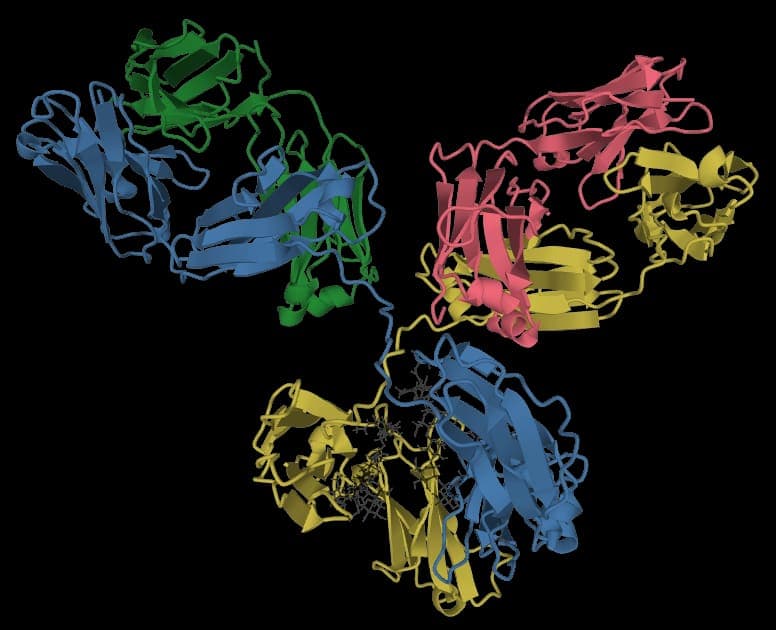
Earendil Labs
A half-life extended anti-TL1A monoclonal antibody for inflammatory bowel disease, including ulcerative colitis and Crohn's disease, formulated at high protein concentration for subcutaneous injection.
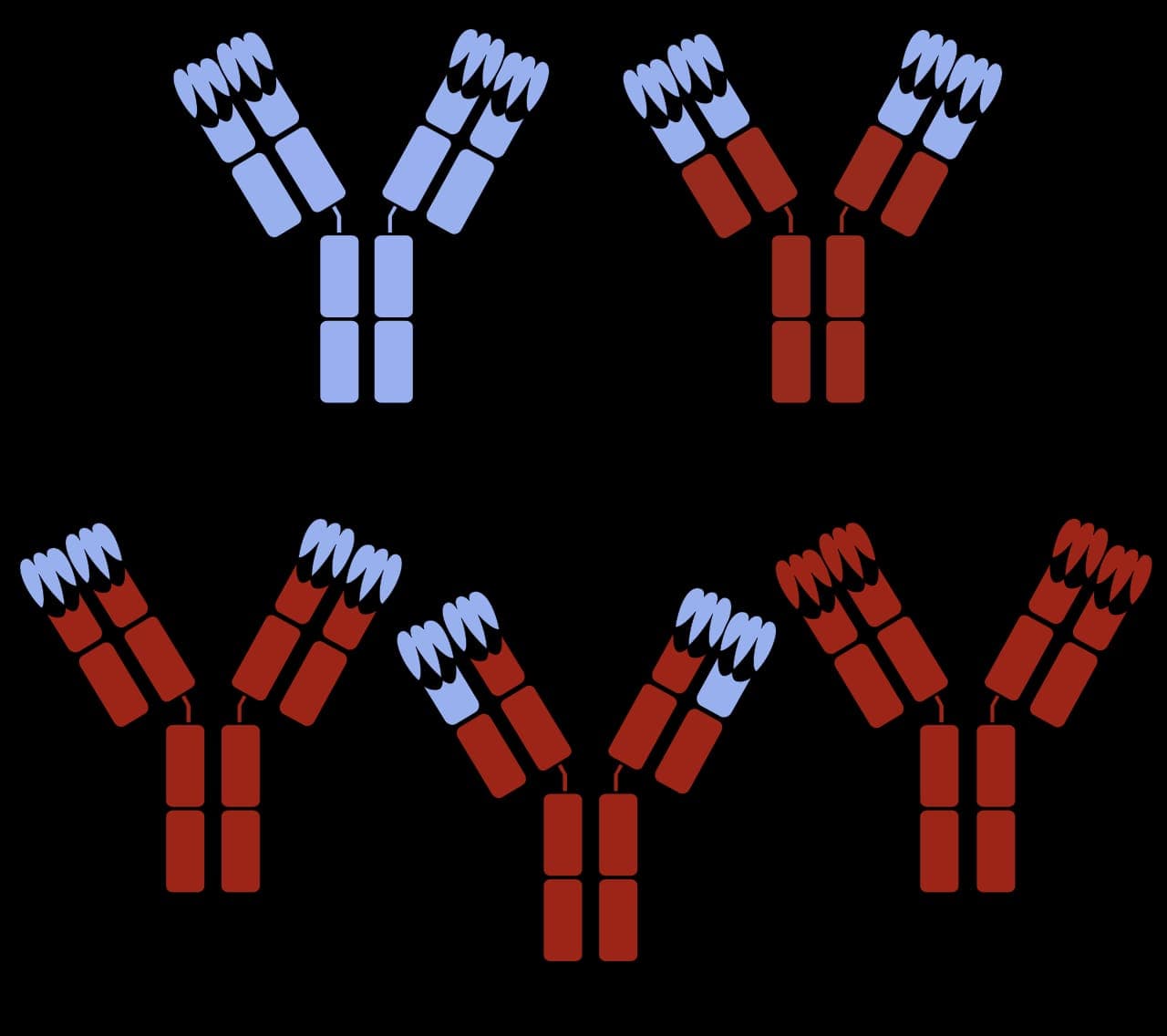
Earendil Labs
Two bispecific antibodies licensed exclusively to Sanofi for autoimmune and inflammatory bowel disease. HXN-1002 targets α4β7 and TL1A for moderate-to-severe ulcerative colitis and Crohn's disease. HXN-1003 targets TL1A and IL-23 and has shown synergistic activity in preclinical colitis and skin-inflammation models.
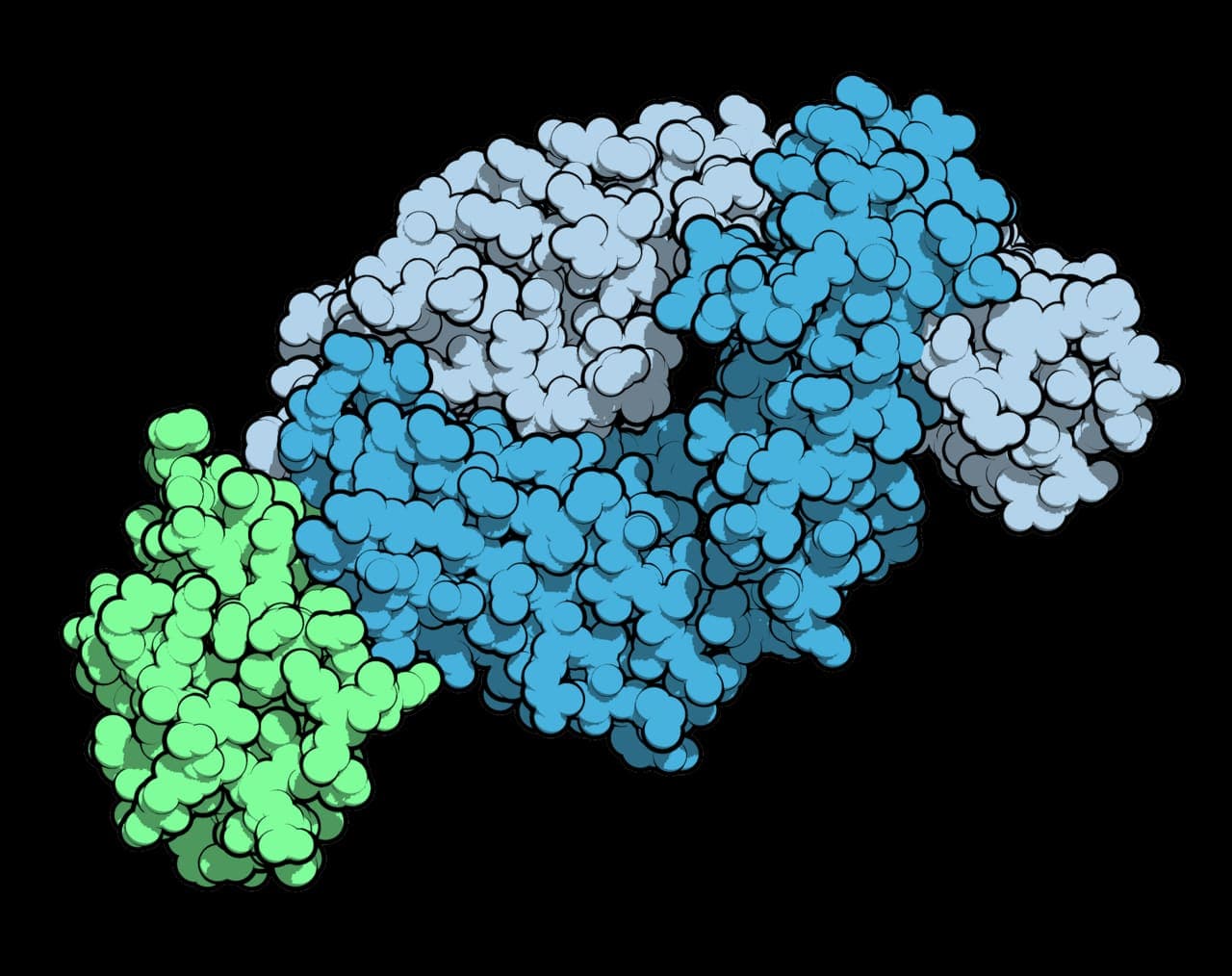
Earendil Labs
A recombinant humanized biparatopic antibody against two epitopes on TSLP that is designed to block both units of the heterodimeric TSLP receptor (TSLPR/CRLF2 and IL-7Rα). High-concentration subcutaneous formulation. Aimed at asthma, COPD and other TSLP-driven inflammatory diseases.
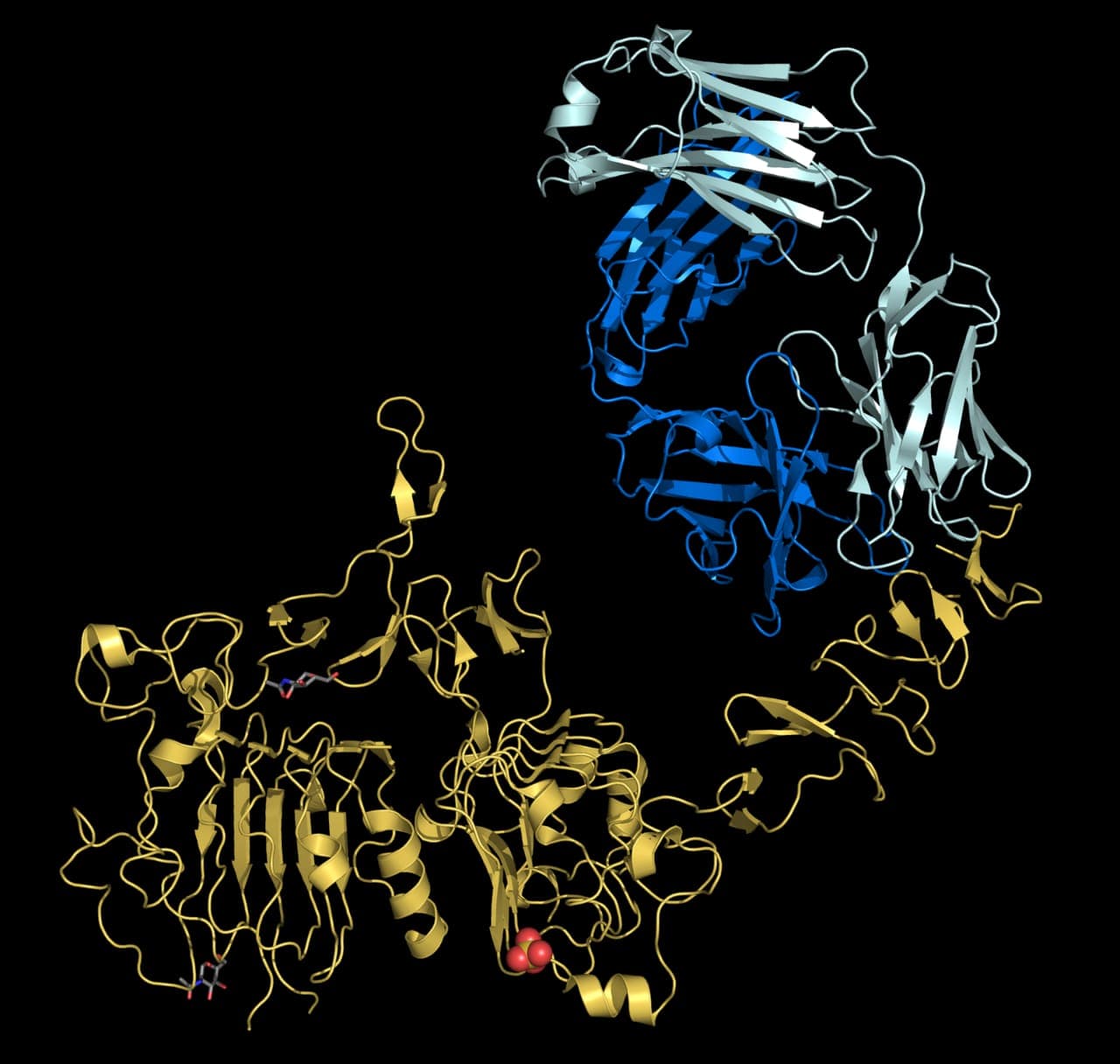
Earendil Labs
A preclinical oncology set listed on Earendil's pipeline page: CDH17 dual-payload ADC (HXN-2001), CEACAM5/CDH17 TCE and ADC, GUCY2C TCE, DLL3 TCE and dual-payload ADC, B7-H3 ADC, TROP2/PD-L1 and EGFR/PD-L1 bispecific ADCs, and a PD-1/IL-15 fusion protein. February 2026 WuXiTecan-2 license is meant to supply payload-linkers for a subset of these ADCs.
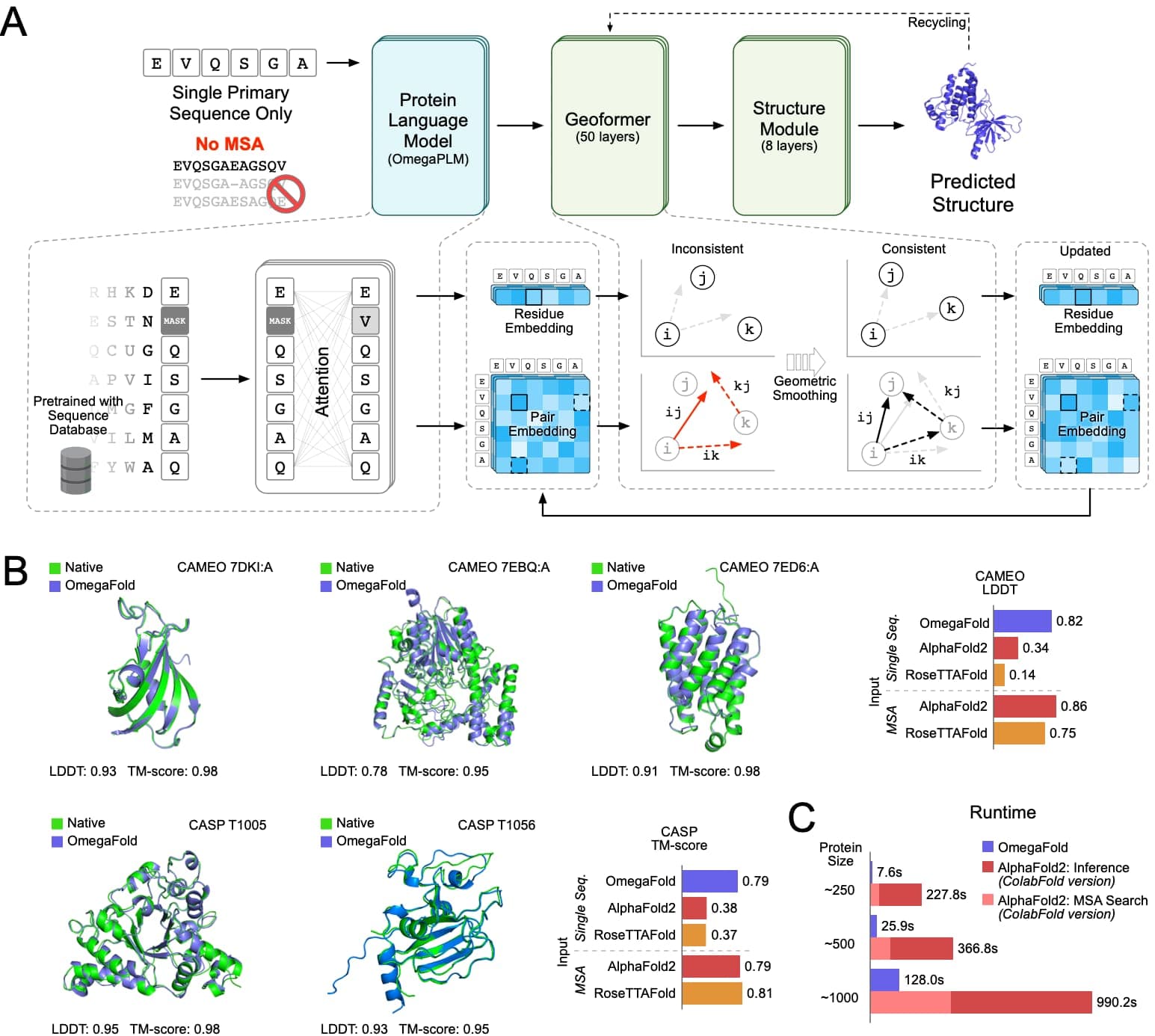
Earendil Labs
Earendil's foundational protein-AI stack for antibody sequence design, structure and epitope prediction, biophysical-property scoring and closed-loop optimization, paired with high-throughput wet-lab validation. The public scientific ancestor is OmegaFold, Helixon's 2022 single-sequence structure predictor.
Moderna
An individualized neoantigen cancer therapy, co-developed with Merck, that is custom-manufactured for each patient's tumor mutations and given with KEYTRUDA to train the immune system against the cancer. It is Moderna's highest-value pipeline asset.
Moderna
Moderna's combination COVID-19 and influenza vaccine (mRNA-1083), the world's first authorized flu-plus-COVID combination vaccine, delivered as a single shot.
Moderna
Moderna's standalone mRNA seasonal influenza vaccine (mRNA-1010), the fourth product in its respiratory franchise alongside Spikevax, mRESVIA, and mCOMBRIAX.
Moderna
mRNA vaccine (mRNA-1345) against respiratory syncytial virus (RSV) - the first mRNA vaccine approved for a disease other than COVID-19, and a key pillar of Moderna's expanding respiratory franchise.
Moderna
An investigational mRNA cancer-prevention vaccine, developed with the University of Oxford, designed to generate immune responses against early cancer-development targets in people with Lynch syndrome - Moderna's first program aimed at preventing cancer before it develops rather than treating existing disease.
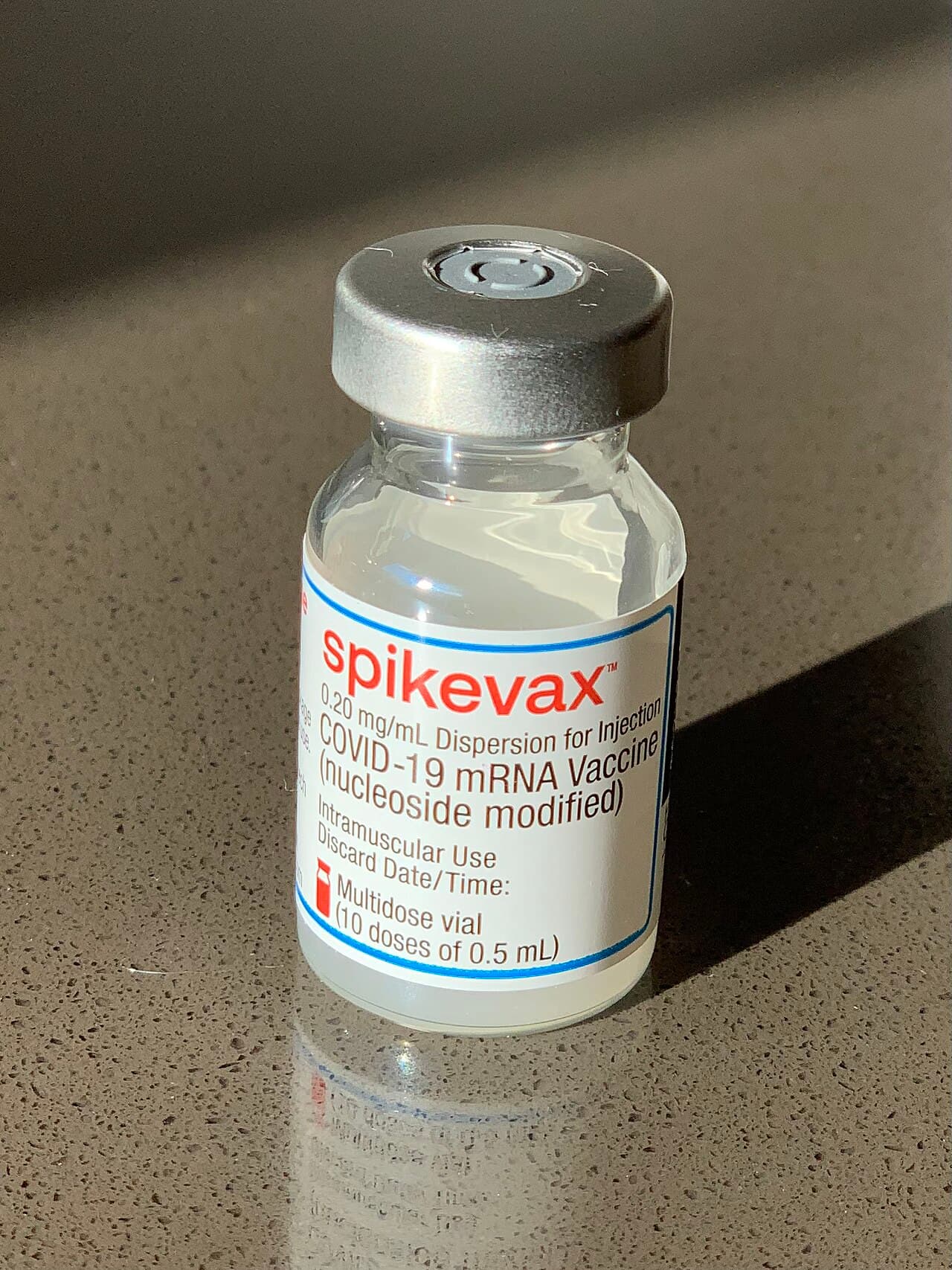
Moderna
Moderna's original COVID-19 mRNA vaccine (mRNA-1273), the product that validated mRNA vaccines at global scale. Now sold as a seasonal respiratory vaccine and the company's largest historical revenue driver.
Vertex Pharmaceuticals
An oral pipeline candidate for endocrine disease acquired with Crinetics Pharmaceuticals, part of the endocrinology pipeline Vertex and Crinetics said could reach $5B+ in combined peak annual sales alongside Palsonify.
Vertex Pharmaceuticals
The first approved CRISPR/Cas9 gene-editing medicine (exagamglogene autotemcel), a one-time therapy for sickle cell disease and transfusion-dependent beta thalassemia, developed and commercialized with CRISPR Therapeutics.
Vertex Pharmaceuticals
A first-in-class oral, non-opioid pain medicine (VX-548) that selectively inhibits the NaV1.8 sodium channel to block pain signals in the peripheral nervous system before they reach the brain - the first new class of pain drug in over 20 years.
Vertex Pharmaceuticals
An oral, once-daily somatostatin receptor agonist for acromegaly, acquired through the Crinetics Pharmaceuticals deal - Vertex's first marketed product outside CF, pain, and gene therapy, and the anchor of its new endocrine-disease business.

Vertex Pharmaceuticals
Vertex's flagship cystic fibrosis triple-combination CFTR modulator (elexacaftor/tezacaftor/ivacaftor), effective for roughly 90% of CF patients and the company's dominant revenue engine - now complemented by the once-daily next-generation Alyftrek.
Vertex Pharmaceuticals
An allogeneic, stem-cell-derived, fully differentiated islet cell therapy for type 1 diabetes designed to restore the body's own insulin production - a potential functional cure delivered as a one-time infusion.
AMD
Open rack blueprint for agentic AI, separate from Helios. A CPU-only configuration uses 6th Gen EPYC processors and can hold up to 32,768 Zen 6 cores. An enterprise configuration adds up to 16 Instinct MI350P GPUs as two independent eight-GPU nodes, with up to 102 Tbps of networking. AMD said on 12 October 2026 that partner configurations are under development and planned for November 2026, and that it plans to contribute the specification to OCP. The OCP specification was not found published, and no Helion system was reported shipped.
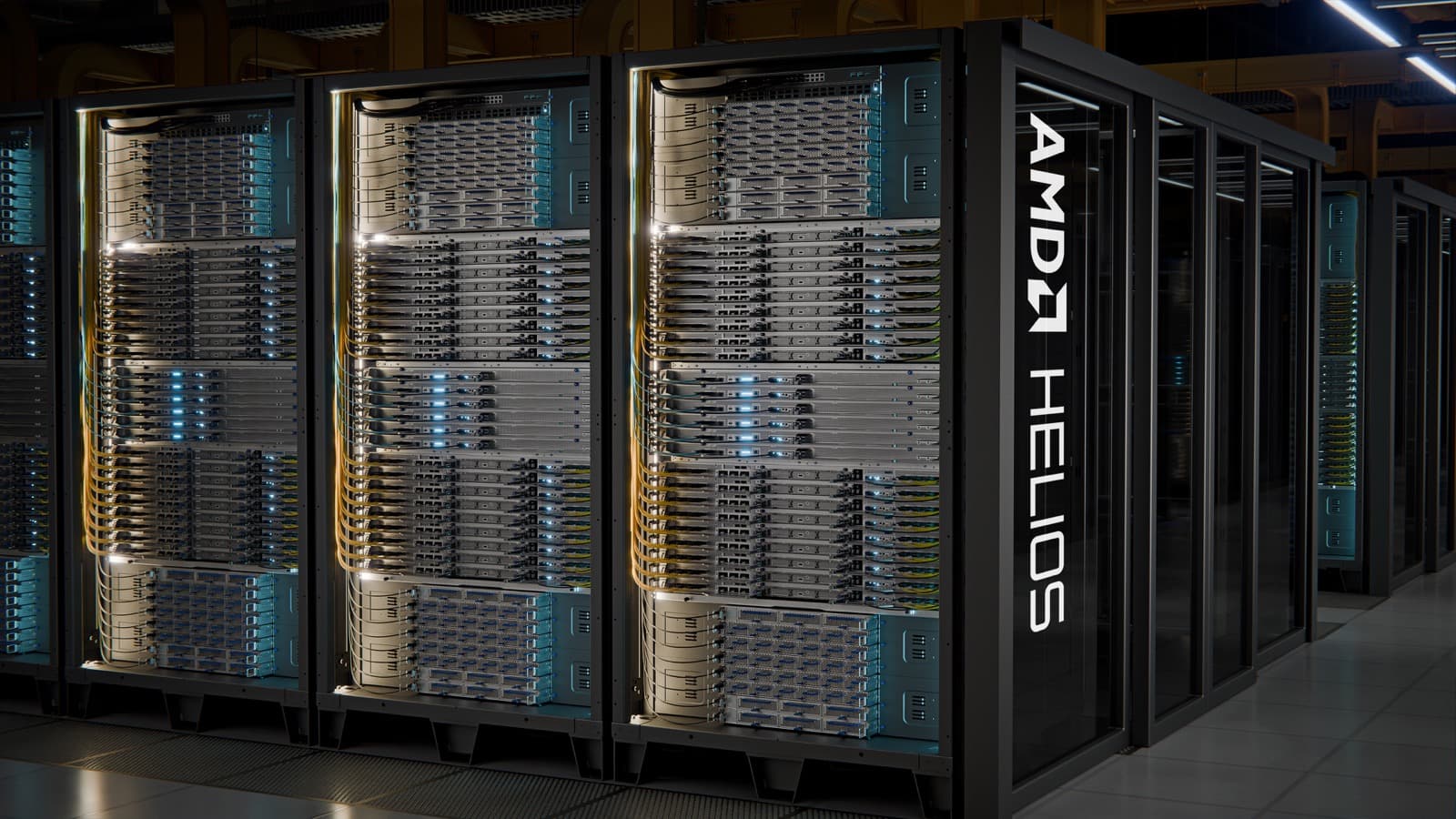
AMD
AMD's first rack-scale AI system: 72 Instinct MI455X GPUs in 18 Open Rack Wide compute trays, 18 6th Gen EPYC Venice CPUs, Pensando Vulcano 800 AI NICs, UALink-over-Ethernet scale-up and Ethernet scale-out, running ROCm. A rack is specified at up to 2.9 exaflops FP4, 1.4 exaflops FP8, 31 TB of HBM4 and 1.7 PB/s of memory bandwidth. AMD claims up to 30% more inference tokens per dollar, 15% more peak FP4, and 50% more HBM than Nvidia's Vera Rubin NVL72.
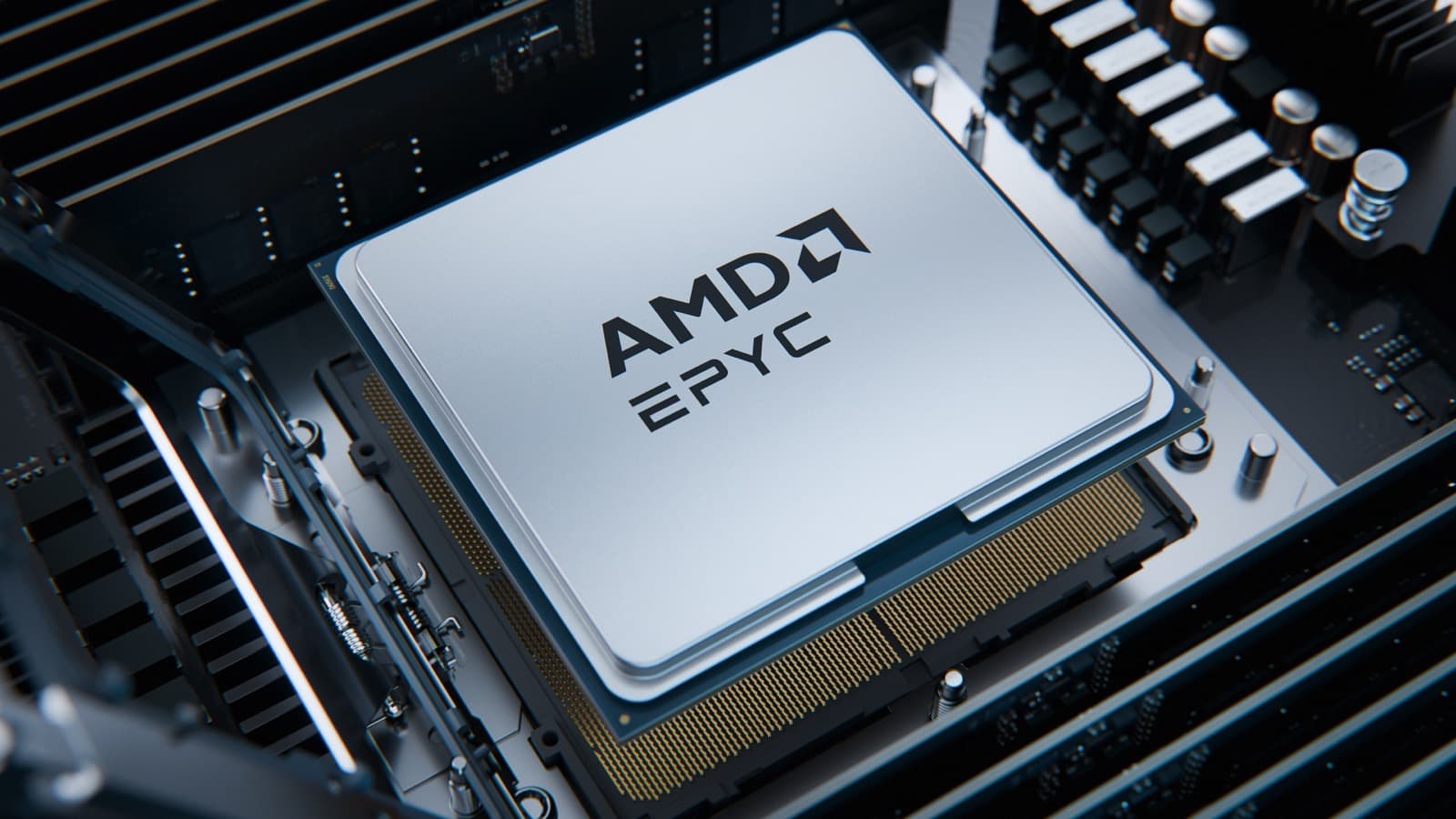
AMD
6th Generation EPYC 9006-series server CPUs on Zen 6, launched at Advancing AI 2026 as the host CPU for Helios and as a general-purpose and agentic-AI server line. Top SKU EPYC 9996 is specified at 256 cores / 512 threads. AMD positions them as the densest x86 CPU for agentic workloads and the CPU that keeps Instinct GPUs fed. Meta is a lead customer; Azure is adding Venice-powered HDv2 and HXv2 VM series.

AMD
AMD's data-center GPU line. MI350-series (CDNA 4), led by MI355X (288 GB HBM3E, 8 TB/s, up to 10.1 PFLOPS MXFP4, 1,400 W TBP), is the generation shipping into 2026 and the volume driver of Instinct revenue. MI400-series (CDNA 5), launched July 23, 2026, splits into MI455X for frontier AI and AI factories (432 GB HBM4, 23.3 TB/s, up to 40 PFLOPS FP4, 320 billion transistors) and MI430X for HPC and sovereign AI (up to 288 TFLOPS FP64). ROCm and ROCm.ai are the software stack.
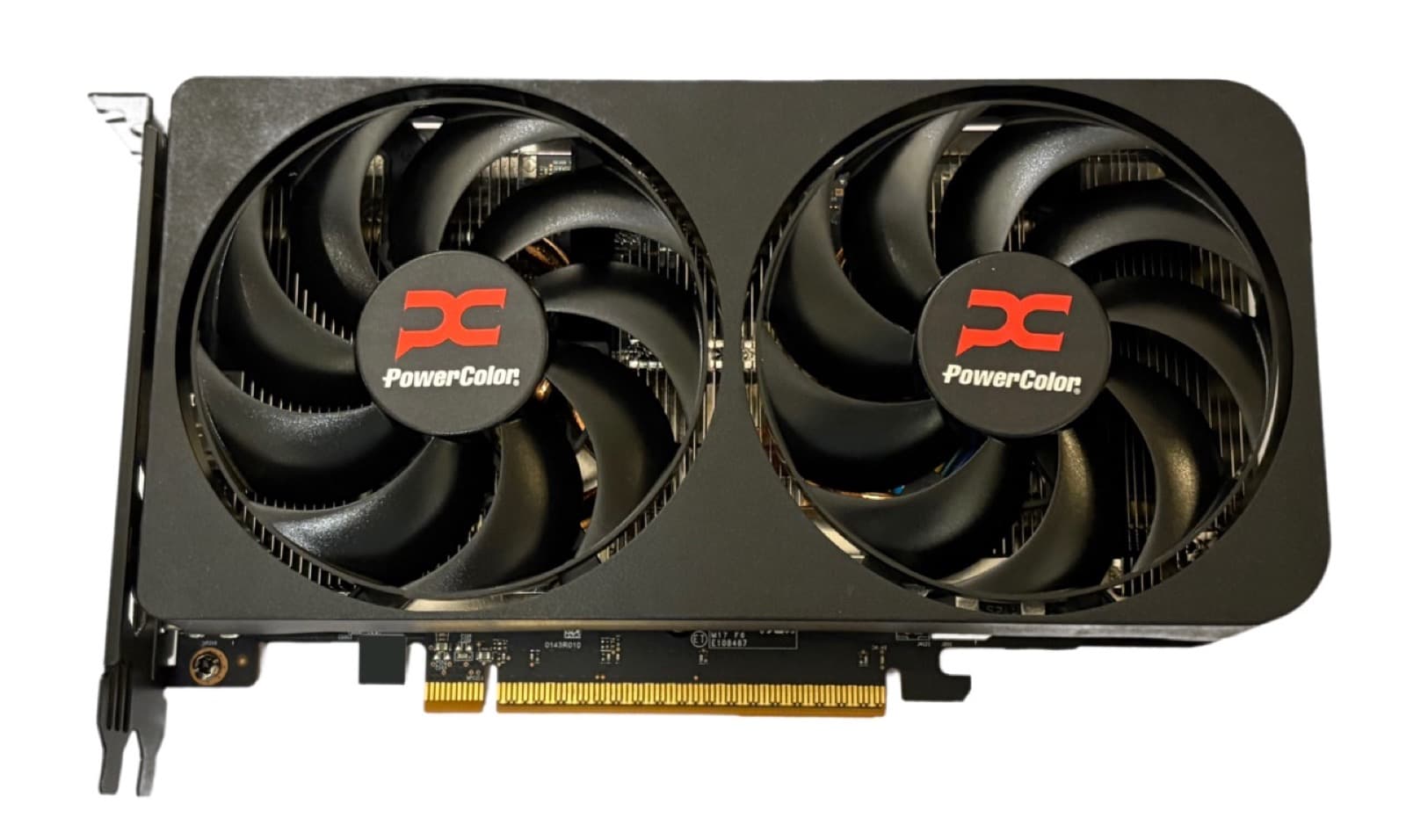
AMD
RDNA 4 desktop GPUs launched in 2025 as RX 9070 XT ($599 SEP) and RX 9070 ($549 SEP), later joined by RX 9070 GRE and RX 9060 XT. FY2025 gaming revenue was $3.9 billion, but Q2 2026 gaming fell to $779 million (-31% YoY) on lower semi-custom console SoC sales and higher board prices that Lisa Su said weighed on demand.
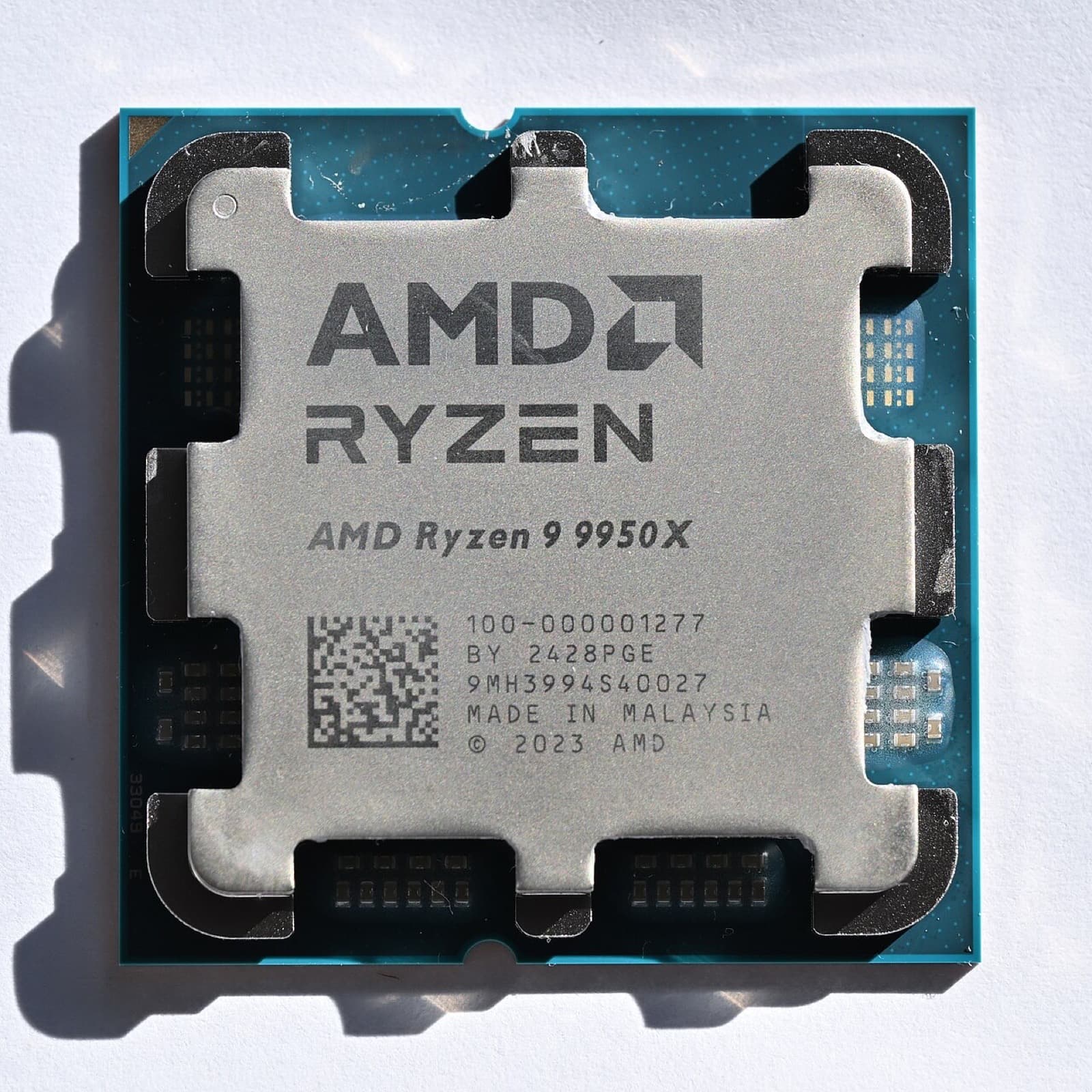
AMD
AMD's client CPU and APU brand, from desktop AM5 chips through Ryzen AI notebooks and Ryzen AI Halo agentic PCs. Client revenue was a record $10.6 billion in 2025 and $3.1 billion in Q2 2026. Recent additions include Ryzen AI PRO 400 Series, Ryzen AI Halo developer systems, 3D V-Cache on Ryzen PRO workstations, and a commitment to support Socket AM5 through 2029.
ASML
An i-line (365nm) scanner for advanced 3D packaging and hybrid bonding - chiplet and HBM interposer work - that first shipped to a customer around Q3 2025 under new CTO Marco Pieters' push to expand ASML beyond lithography proper. At roughly 270 wafers per hour, it runs about 4x the throughput of ASML's prior packaging-focused tools, targeting demand from memory makers building HBM stacks for AI accelerators.
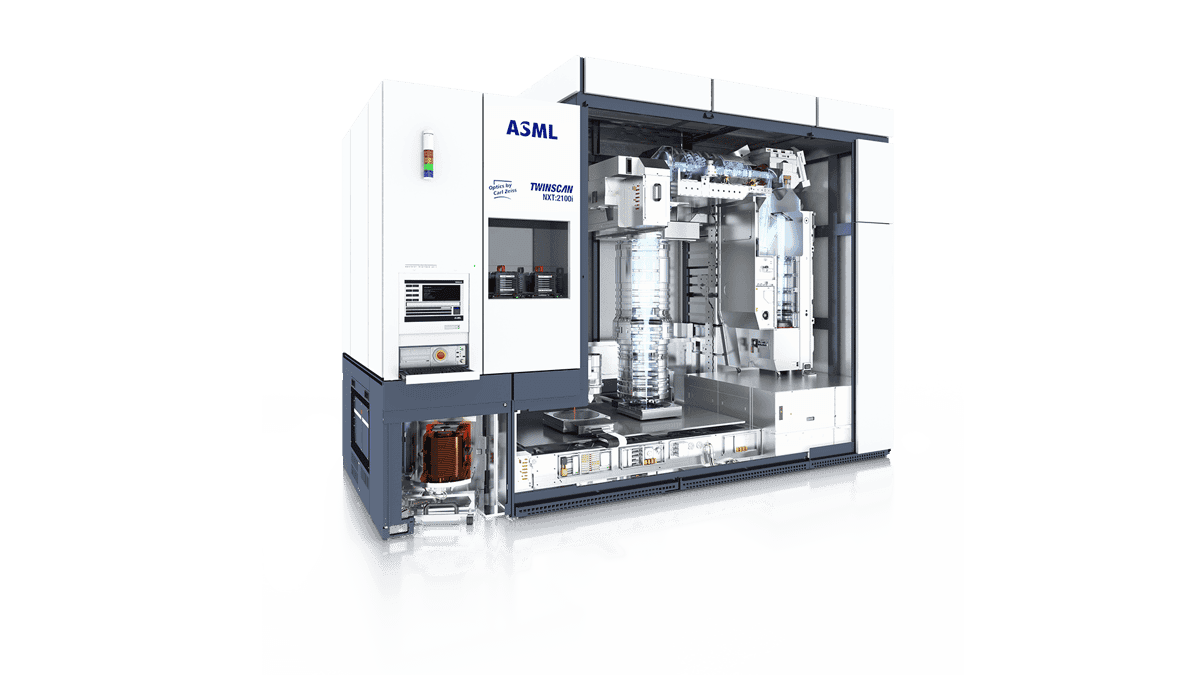
ASML
Deep-ultraviolet immersion and dry scanners - the workhorses that pattern the large majority of layers on every chip made, from leading-edge logic to mature automotive nodes. The flagship NXT:2100i immersion system runs 295 wafers per hour; 279 DUV systems were recognized in 2025.
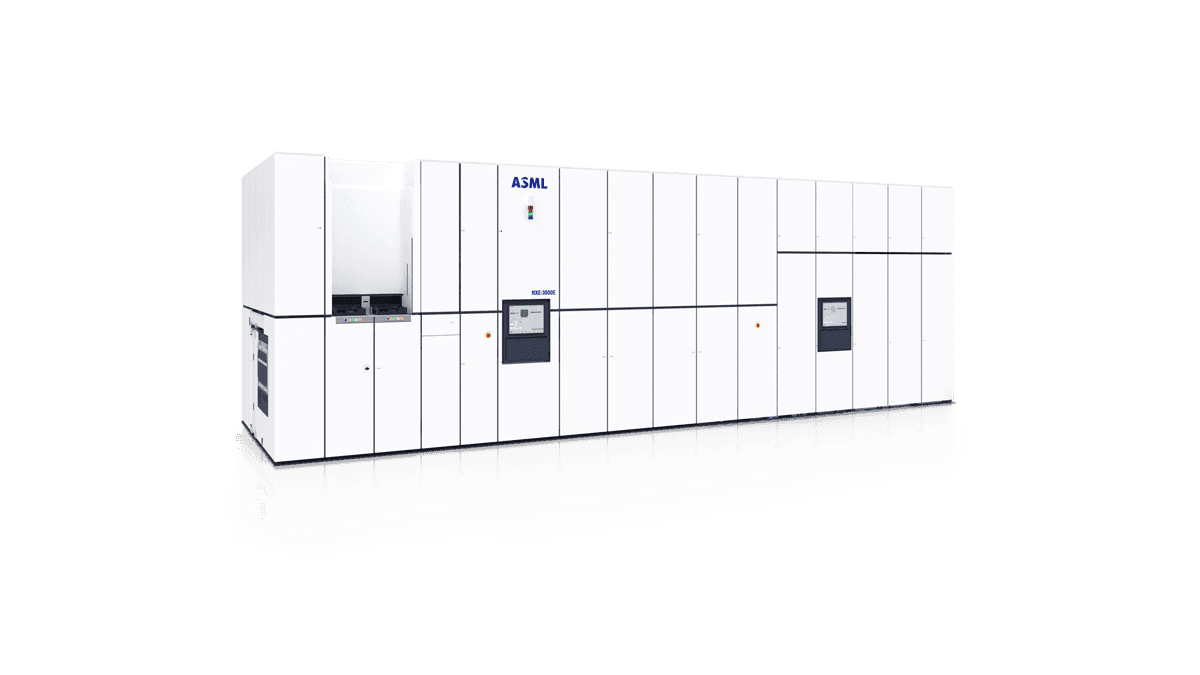
ASML
The 0.33 NA extreme-ultraviolet scanners that are the only tools on Earth capable of patterning leading-edge chips from 7nm down to 2nm. The latest NXE:3800E runs 220 wafers per hour - 37% faster than its predecessor - at roughly $180M per machine; 48 EUV systems were recognized in 2025 revenue.
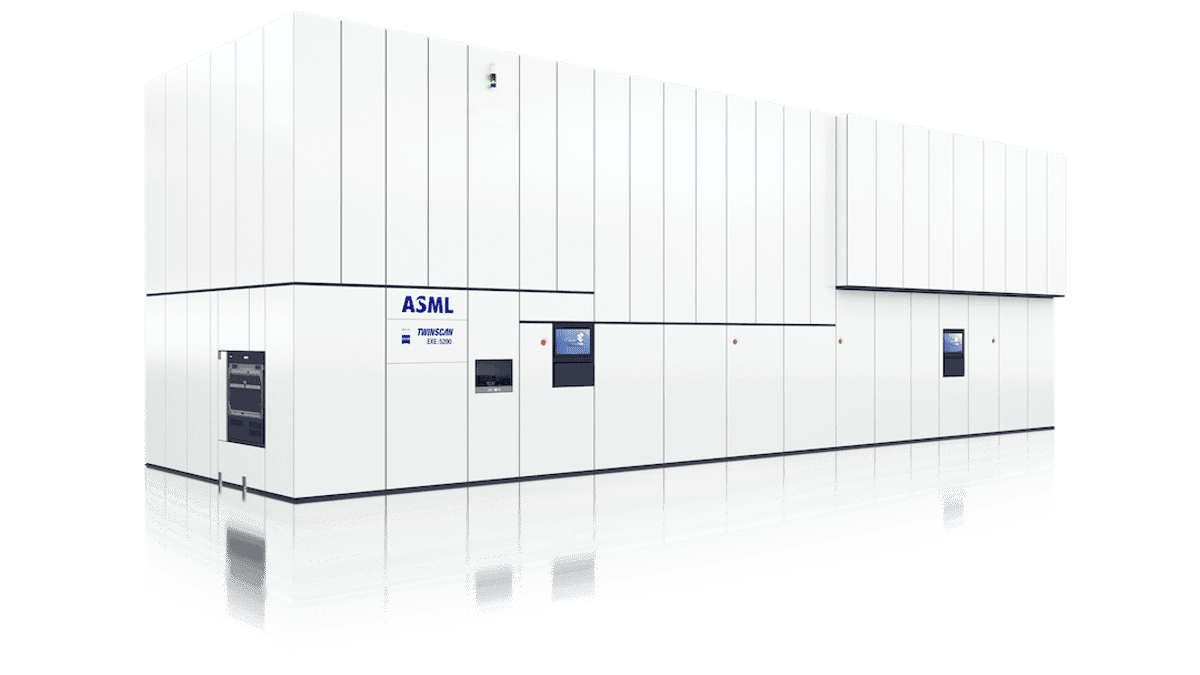
ASML
The 0.55 NA anamorphic-optics scanners for sub-2nm chipmaking - at ~$380M each, the most expensive production tools ever built. The production-grade EXE:5200B installed at Intel in Q4 2025 for the 14A node; on July 15, 2026 select layers of Intel's Panther Lake (18A) chips became the first High-NA-patterned product to reach high-volume manufacturing. On September 8, 2026 Intel Foundry and ASML said more than one million wafers had been processed on High-NA tools across certification, R&D and those Panther Lake layers. As of Semicon Taiwan 2026, 10 EXE systems were running at four customers with three more shipping, July fleet availability was 84% (90% Q4 target), and the qualified EXE:5200B had reached 135 wafers per hour in acceptance testing. TSMC said on September 8, 2026 that it intends to use High-NA in high-volume manufacturing from 2030.
ASML
YieldStar optical metrology systems measure focus, dose, and overlay on exposed wafers, while HMI (Hermes Microvision) e-beam systems locate and analyze individual chip defects - together closing the litho control loop that keeps EUV and DUV scanners in spec. The latest YieldStar 10 extends in-line EUV metrology to sub-3nm nodes, and the HMI eP5 is ASML's highest-resolution e-beam system for defect detection and CD metrology.
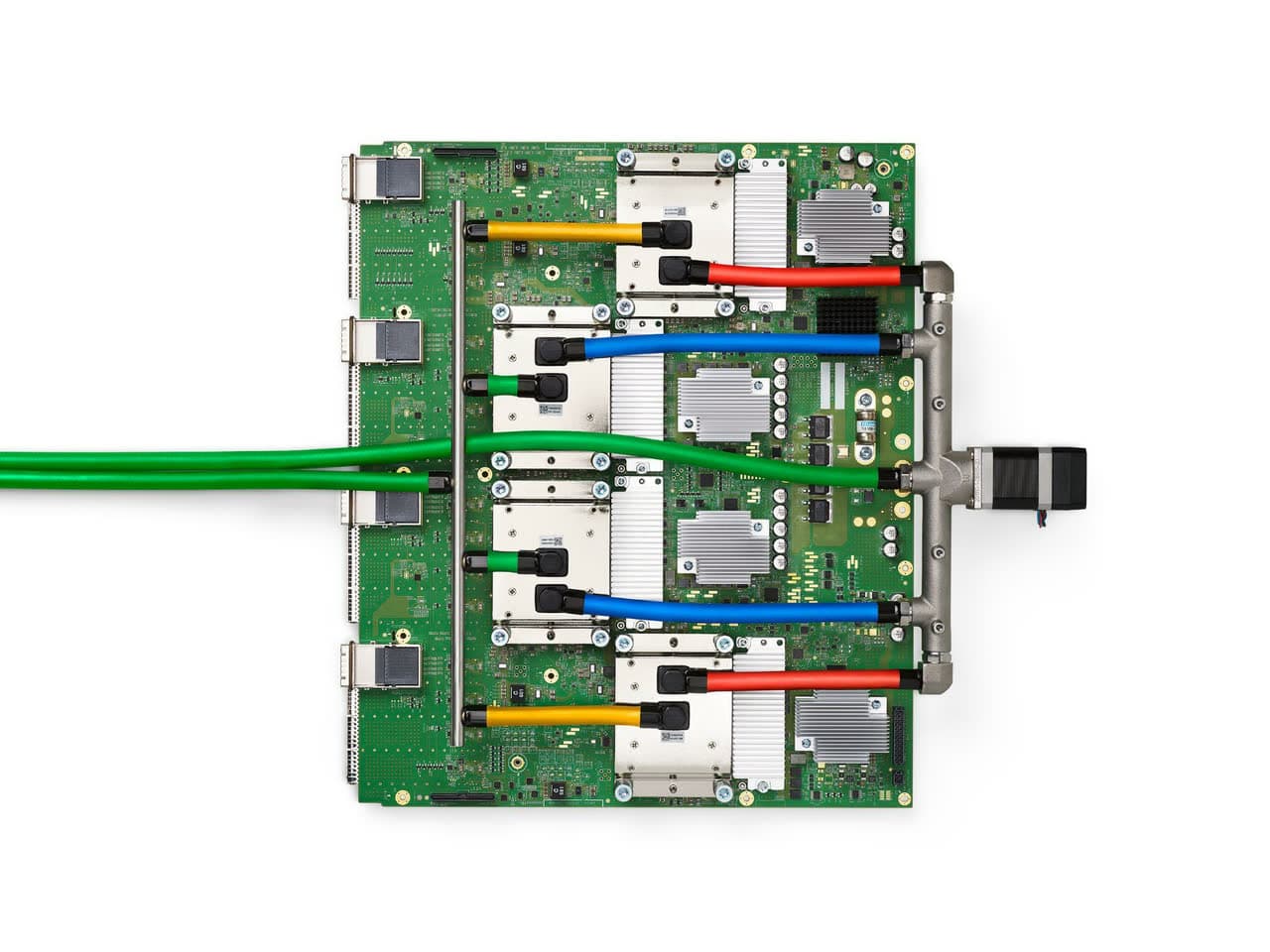
Broadcom
Broadcom's custom ASIC / XPU franchise co-designs accelerators with hyperscalers and frontier labs: Google TPUs (every generation since the program began, now contracted through 2031), Meta MTIA (extended through 2029, including a 2nm device), OpenAI Jalapeno (LLM-inference chip taped out in nine months), and Anthropic capacity on Google TPU Ironwood and TPU v8i. Broadcom owns the silicon implementation, HBM PHY, SerDes/network I/O, and 3.5D XDSiP face-to-face packaging; TSMC and, under a July 2026 MOU, Samsung manufacture. Q3 FY2026 XPU shipments grew more than 3.5x year over year and were 73% of AI semiconductor revenue.
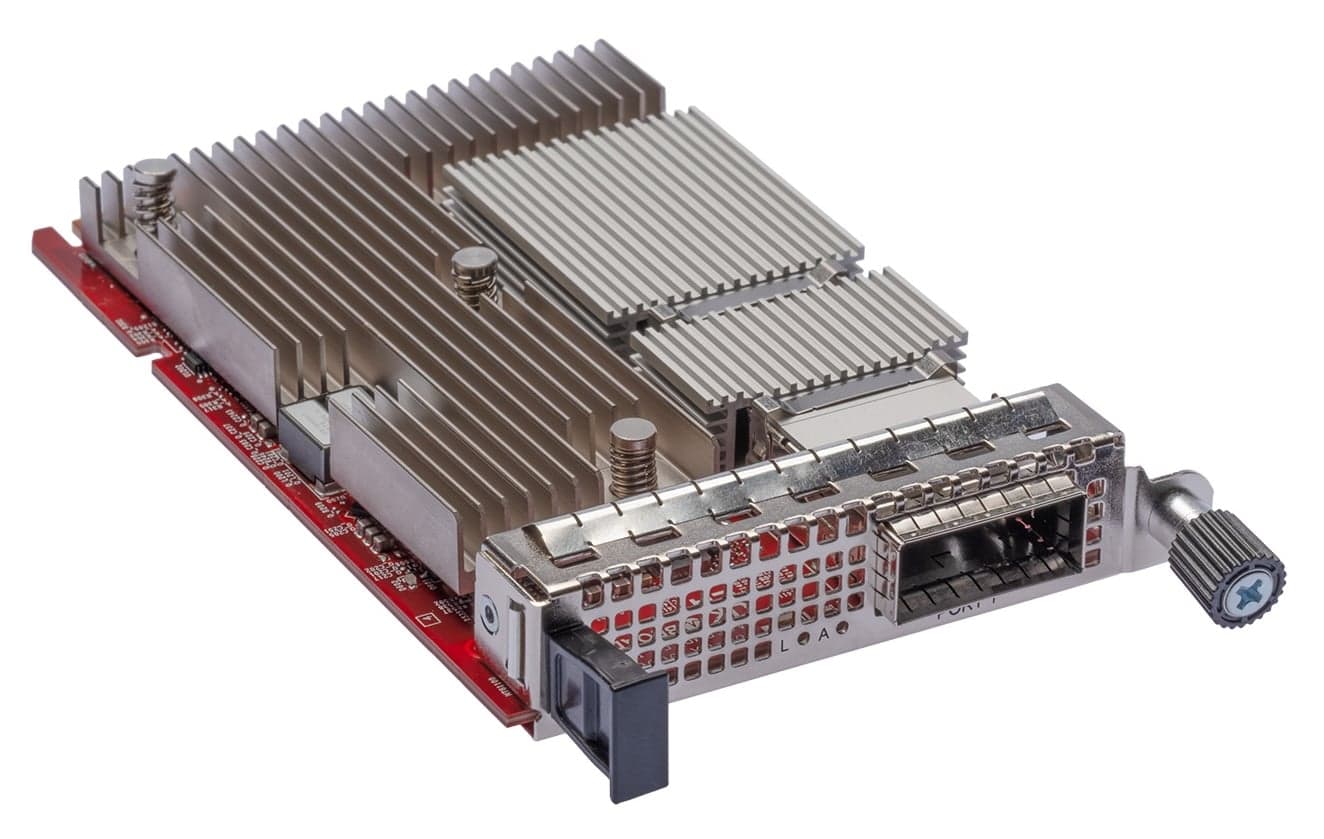
Broadcom
Industry's first 800G AI Ethernet NIC fully compliant with Ultra Ethernet Consortium 1.0, introduced October 14, 2025. Clean-sheet RDMA design (not a dual-400G bond) with packet-level multipathing, out-of-order placement into XPU memory, hardware SACK, programmable congestion control, PCIe Gen 6 x16, and line-rate PSP encryption. Ships as P1800GO (PCIe) and N1800GO (OCP 3.0) 800GbE adapters. Paired with Tomahawk 6, Tomahawk Ultra, Jericho 4, and Scale-Up Ethernet as Broadcom's open Ethernet alternative to proprietary GPU-scale fabrics.
Broadcom
World's first 102.4 Tbps Ethernet switch chip (BCM78910 series), implemented in 3nm, with 512 x 200GbE or 1,024 x 100G SerDes, Cognitive Routing 2.0, and a co-packaged-optics variant (TH6-Davisson) using TSMC COUPE optical engines. Built for AI scale-up (512 XPUs in one domain) and two-tier scale-out (100,000-plus XPUs). Volume production was confirmed in March 2026 after first shipments in June 2025. AI networking, of which Tomahawk is the flagship, was almost 40% of Broadcom's AI semiconductor revenue in Q2 FY2026 and more than 2.5x year over year in Q3.
Broadcom
Next Ethernet switch generation after Tomahawk 6. On the September 2, 2026 Q3 call Tan said Broadcom had just taped out Tomahawk 7 and called it the industry's first 200 Tbps Ethernet switch for AI scale-up and scale-out. Tomahawk 6 remains the shipping 102.4 Tbps part (production volume from March 12, 2026). No Broadcom product page or SKU family has been posted for Tomahawk 7.
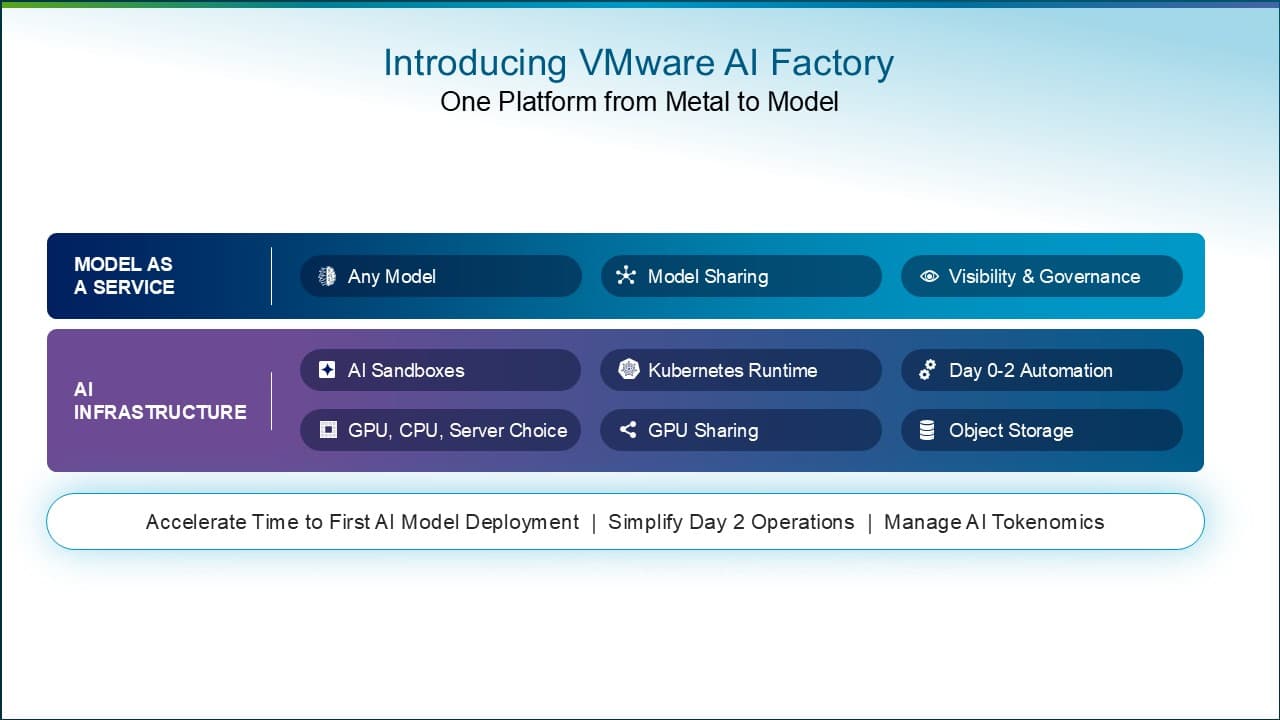
Broadcom
Broadcom's private-cloud software platform, inherited in the November 2023 VMware deal and now the core of infrastructure-software revenue. VCF 9.0 shipped in 2025; VCF 9.1 (May 2026) added production-AI features (memory tiering, storage dedupe, multi-accelerator GPU choice). At VMware Explore 2026 Broadcom layered VMware Private AI Cloud and VMware AI Factory on VCF for on-prem inference and agentic apps, plus AgentMinder for agent governance. VMware ARR was still growing about 15% in Q3 FY2026. EU cloud providers (CISPE) filed a March 2026 complaint alleging post-acquisition licensing abuses.
Broadcom
Broadcom's first full Wi-Fi 8 (IEEE 802.11bn / Ultra High Reliability) silicon ecosystem for residential gateways, enterprise access points, and client devices. Flagship parts include the BCM6719 4x4+4x4 dual-band AP chip, BCM4918 AI-ready network processor with an on-die Neural Engine, and May 2026 integrated SoCs (BCM6772/6774/6776) for mesh and multi-gigabit routers. A May 2026 collaboration with Samsung puts Broadcom Wi-Fi 8 alongside Samsung 5G modems for fixed-wireless access. Combined with RF front-ends, this line is the core of the Apple wireless relationship extended through 2031.
Cerebras Systems
Current production wafer-scale system, one WSE-3 per chassis, used for Cerebras Cloud, OpenAI Ultrafast, AWS disaggregated decode, and on-prem clusters. The 5nm WSE-3 is 46,225 mm2 with 4 trillion transistors, 900,000 AI cores, 44 GB of on-chip SRAM, and 21 PB/s of memory bandwidth, about 58 times the area of an Nvidia B200 die and thousands of times its on-chip memory bandwidth.
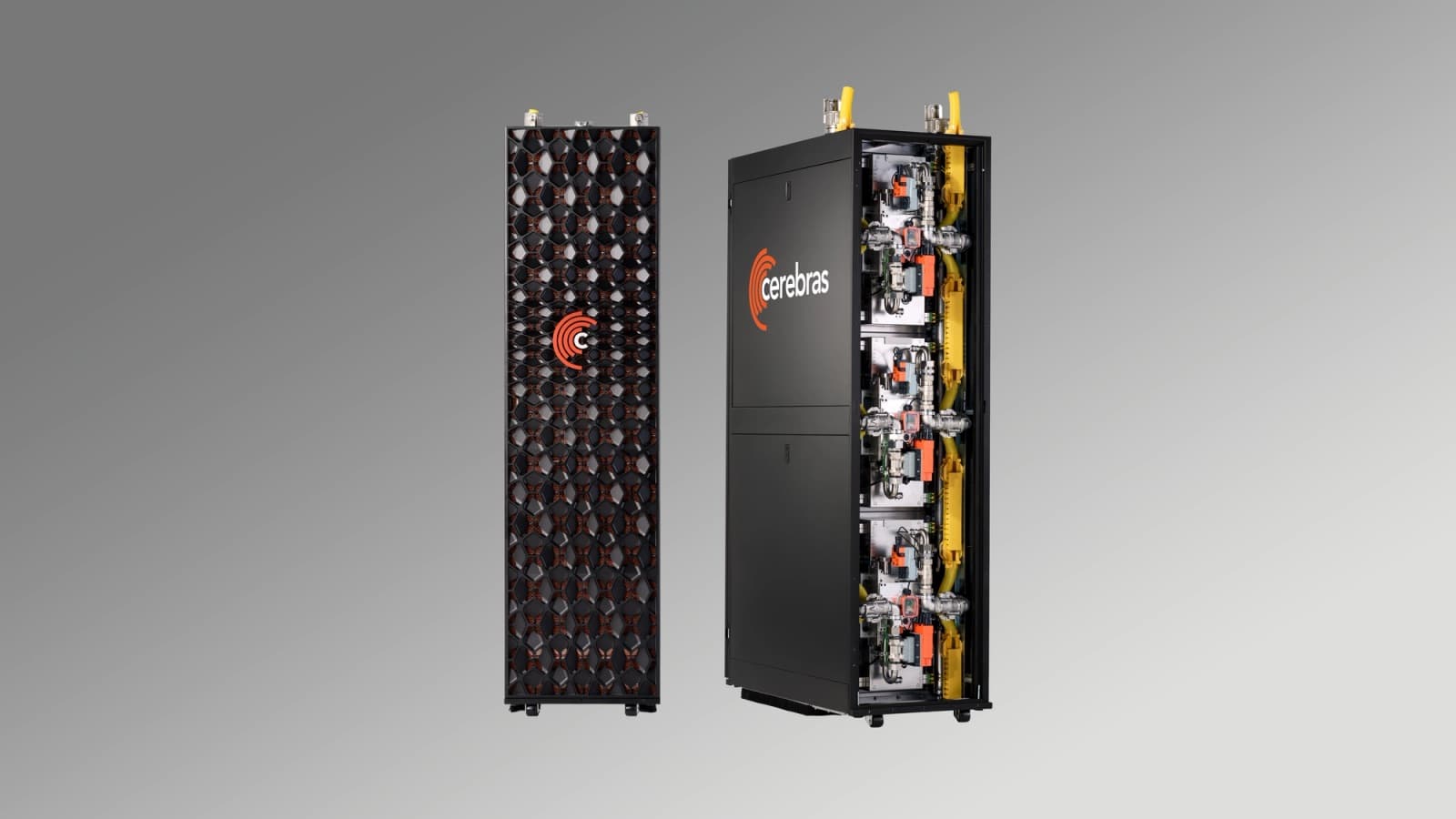
Cerebras Systems
Rack-scale AI system on the new Cerebras Nexus platform, built from three WSE-3 Turbo processors in modular liquid-cooled compute backpacks. Cerebras says CS-4 delivers up to 30x faster inference than GPU systems, up to 10x more throughput per watt than CS-3, 750 PFLOPs of AI compute, 7.2 Tbps of I/O, 129.6 PB/s of memory bandwidth, and wafer-to-wafer latency as low as 2 microseconds for models above 50 trillion parameters.
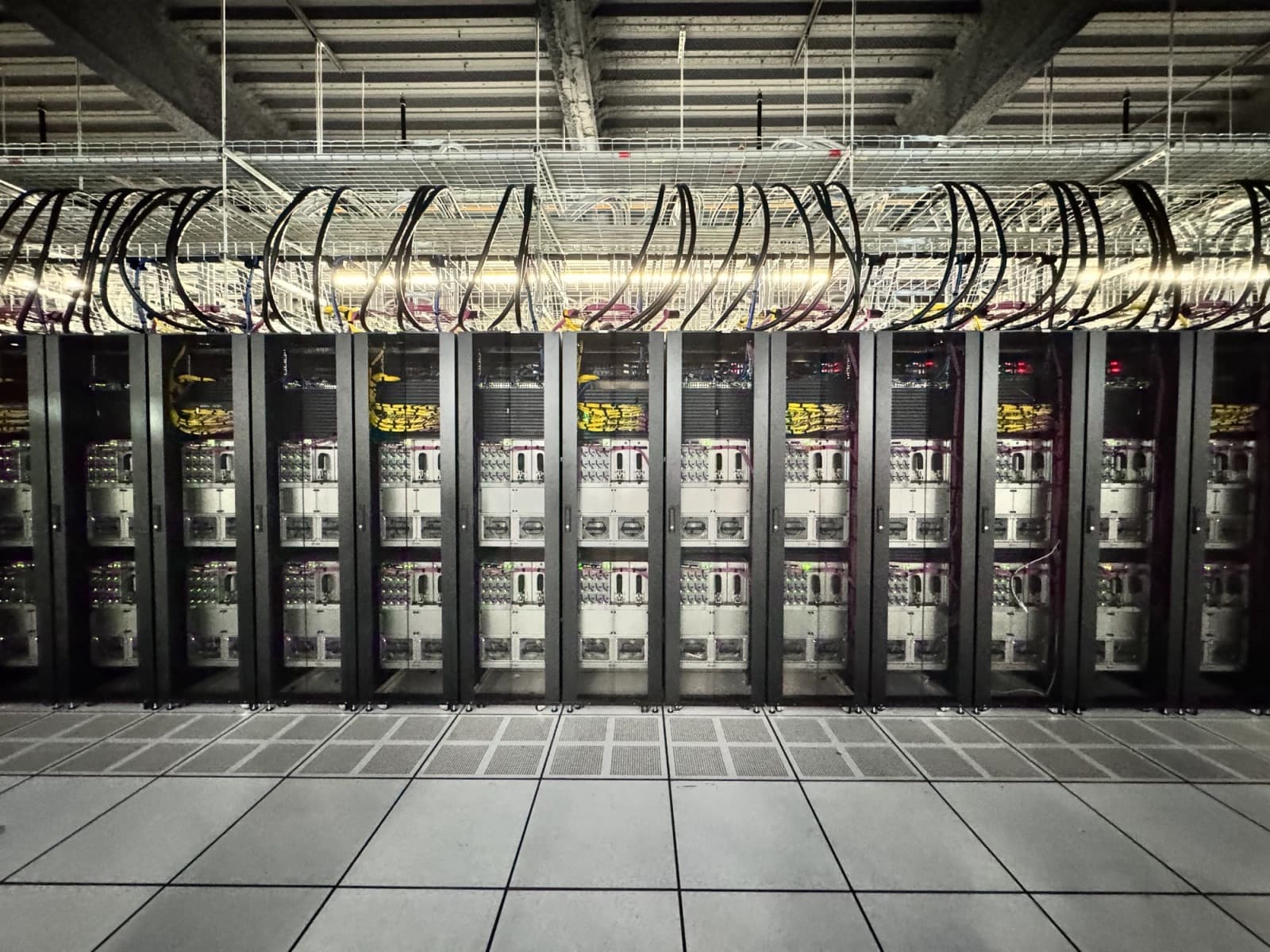
Cerebras Systems
Cerebras-operated cloud that serves open and dedicated models through an OpenAI-compatible API, plus a training cloud for fine-tunes and from-scratch runs. Production customers include OpenAI (GPT-5.6 Sol Ultrafast), Meta's Llama API, Mistral, Perplexity, Cognition, Lovable, CrowdStrike, AlphaSense, GSK, Block, and Figma. Partner distribution includes AWS Marketplace, OpenRouter, Hugging Face, Vercel, and IBM watsonx.
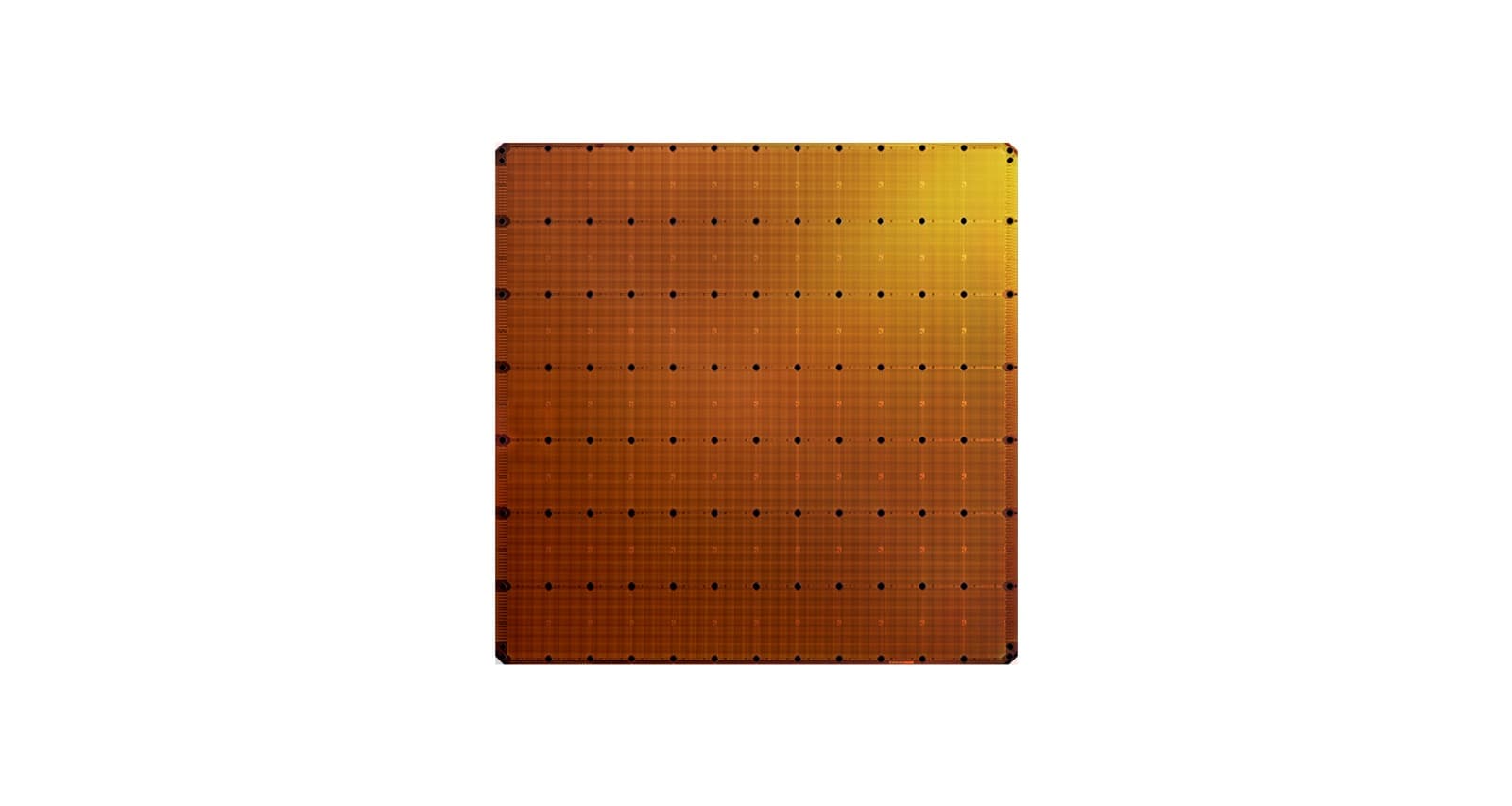
Cerebras Systems
Current flagship wafer-scale processor inside CS-4. Same 4 trillion transistors, 900,000 cores, 46,225 mm2, and 44 GB of SRAM as WSE-3, clocked and packaged for roughly 2x the speed of the prior wafer, 250 PFLOPs of AI compute, and 43.2 PB/s of memory bandwidth per wafer. Redundant cores and fail-in-place routing are how Cerebras yields a dinner-plate-sized die.
MediaTek
Announced September 22, 2025, when MediaTek called it the most advanced mobile platform yet. The CPU is a third-generation All Big Core design with a 4.21 GHz ultra core, three premium cores, and four performance cores, plus four-lane UFS 4.1. Flagship phones were expected in the fourth quarter of 2025.
MediaTek
Announced September 15, 2026. MediaTek said this flagship phone chip uses a 2nm process. The CPU is two C2-Ultra cores up to 4.55 GHz, three C2-Pro cores at 4.35 GHz, and three C2-Pro cores at 3.1 GHz. The release also names an NPU 1090, a G2-Ultra NX GPU, and Imagiq 1290. A stated 61% drop in multi-core power is from MediaTek lab demos.
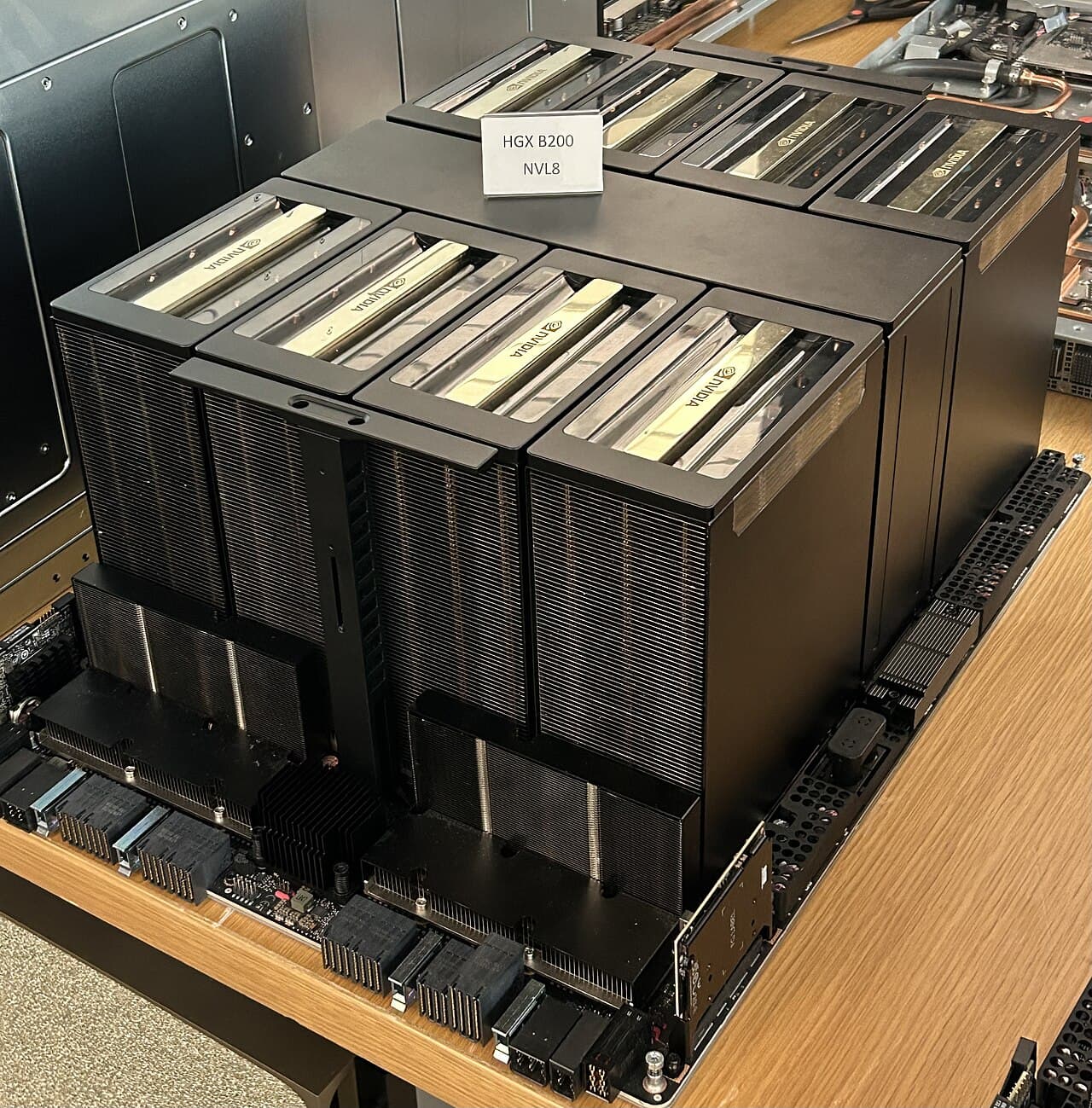
Nvidia
Nvidia's shipping flagship: rack-scale AI systems built around Blackwell and Blackwell Ultra GPUs - the GB300 NVL72 links 72 GPUs into one giant accelerator, delivering up to 50x better agentic-AI performance than Hopper per SemiAnalysis benchmarks. GB300 entered mass production in mid-2025 and has been the engine of record data-center revenue since.
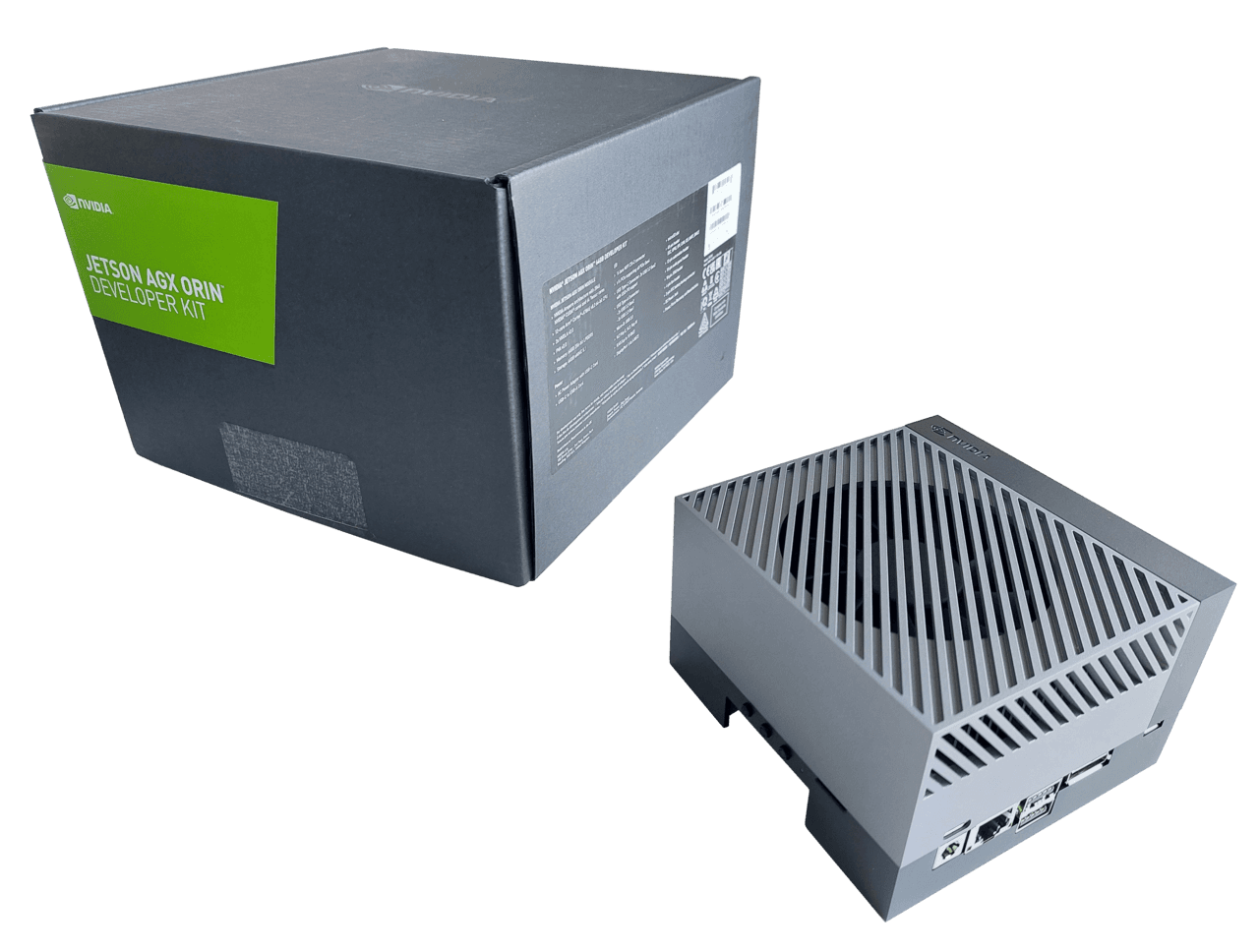
Nvidia
DRIVE AGX Thor and DRIVE Hyperion power L4-ready vehicles from BYD, Geely, Isuzu, and Nissan plus Hyundai/Kia and Uber robotaxi programs, while Jetson AGX Thor - the Blackwell-powered 'robot brain' released August 2025 with 7.5x the AI compute of Orin - is the standard compute platform for humanoid-robot makers including Figure, Boston Dynamics, Agility, and Amazon Robotics. On August 25, 2026 Nvidia announced Jetson Orin Nano 2, an entry-level robotics computer with 2x the inference performance of Orin Nano Super, expected in the first half of 2027.
Nvidia
Blackwell-based gaming and creator GPUs, topped by the RTX 5090 ($1,999 MSRP, launched January 2025). FY2026 gaming revenue hit a record $16.0B, but supply to board partners was reportedly cut ~20% in 2026 to prioritize data-center silicon, pushing street prices 15–19% above MSRP.
Nvidia
Open-weight 120-billion-parameter mixture-of-experts model that activates 12 billion parameters per token, for text, image, document and video agent work. Nvidia released the weights on Oct. 15, 2026, with Nemotron 3.5 Bolt 74B-A9B for 24GB local systems. Bolt E4B is scheduled for Oct. 23.
Nvidia
Windows laptops built around an NVIDIA Blackwell RTX GPU and Grace CPU, on sale from OEM partners starting at $2,599 as of October 16, 2026. NVIDIA states up to 128GB of unified memory and up to 1 petaflop of FP4 performance. The named lineup includes ASUS ProArt P14 and P16, Dell XPS 16, HP OmniBook Ultra and OmniBook X 14, Lenovo Yoga Pro 9n, Microsoft Surface Laptop Ultra, and MSI Prestige N16 Flip AI+ and Prestige N16. Nvidia does not list which memory sizes shipped.
Nvidia
Nvidia's next-generation seven-chip platform - Vera CPU, Rubin GPU, NVLink 6 switch, ConnectX-9, BlueField-4, Spectrum-6, and the Groq 3 LPU integrated after a December 2025 licensing deal. Rubin NVL72 racks train mixture-of-experts models with a quarter of the GPUs Blackwell needs and deliver up to 10x inference throughput per watt at a tenth the cost per token.
Qualcomm
On June 24, 2026 Qualcomm Technologies and Meta announced a multi-generation agreement for Qualcomm to supply data-center CPUs. The first-generation Dragonfly C1000 is planned to power Meta's next-generation server fleet. Production is scheduled to start in the second half of 2028. The release does not state a price or unit volume.
Qualcomm
Qualcomm Technologies unveiled this platform on Sept. 22, 2026 and called it the company's most powerful mobile platform. The release says the companion Snapdragon 8 Elite Gen 6 uses the same advanced 2nm process. Named debut brands include HONOR, iQOO, Motorola, OnePlus, OPPO, REDMI, RedMagic, vivo, and Xiaomi. No ship date is given.
Qualcomm
Qualcomm Technologies introduced this platform on February 25, 2026 and called it the most advanced Snapdragon mobile platform to date. It was set to power the Samsung Galaxy S26 Ultra globally and the Galaxy S26+ and S26 in select regions. The release names a 3rd Gen Qualcomm Oryon CPU, an Adreno GPU, and a Hexagon NPU, and calls the platform the world's fastest mobile system-on-a-chip.
Qualcomm
Qualcomm Technologies unveiled this platform on Sept. 22, 2026 alongside Snapdragon 8 Elite Extreme Gen 6. The release says it is built on the same advanced 2nm process, with a custom Oryon CPU, a re-architected Adreno GPU, and a Hexagon NPU, and that it brings many of the same AI, gaming, imaging, and connectivity features to a broader set of top-tier phones. No ship date is given.
SK hynix
SK hynix's advanced NAND node, including QLC products used in high-capacity enterprise SSDs. The Q2 2026 release said 321-layer products already represent the largest share of NAND production and are planned to reach about 50% of domestic production capacity by the end of 2026. FY2025 results said development of 321-layer QLC products was complete.
SK hynix
The prior high-bandwidth memory generation. SK hynix described it as the mature comparison point for HBM4, saying HBM4 yields and product quality had reached levels close to HBM3E. FY2025 results also said the company had been supplying HBM3E and HBM4.
SK hynix
SK hynix's sixth-generation high-bandwidth memory for AI accelerators. The company said HBM4 met customer operating-speed requirements with what it called industry-leading power efficiency, and that mass shipments began in the second quarter of 2026, with production to ramp in the second half. It also said HBM4 yields and quality were already close to mature HBM3E.
TSMC
TSMC's 1.6nm-class node combining gate-all-around nanosheets with Super Power Rail backside power delivery, targeting AI and HPC chips with 8–10% more speed or 15–20% less power than N2P. Volume production is now slated for 2027 after slipping from the original H2 2026 target; the follow-on A14, A12, and A13 nodes extend the roadmap to 2029 - all planned without High-NA EUV.
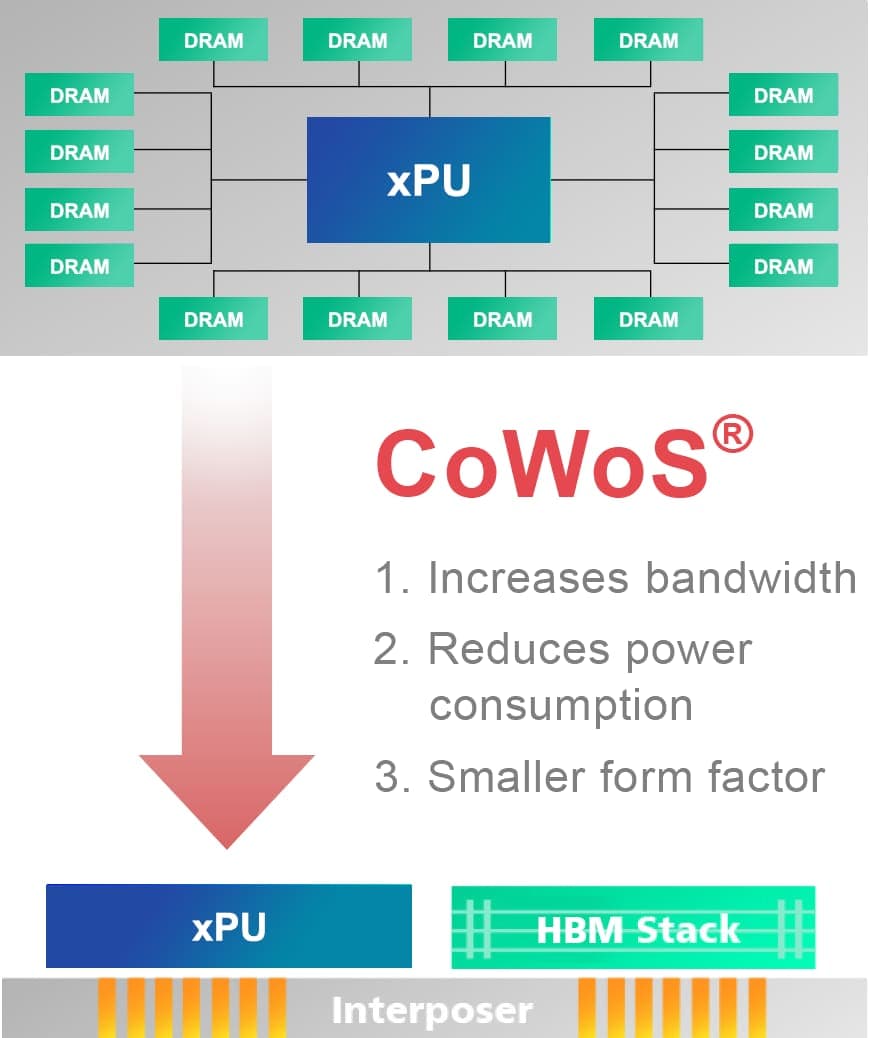
TSMC
TSMC's 2.5D and 3D packaging technologies that integrate GPU dies with stacks of high-bandwidth memory on silicon interposers - the technology every leading AI accelerator depends on, and for two years the binding constraint on global AI chip supply. Capacity is being expanded roughly fourfold from late-2024 levels, including the new AP7 plant in Chiayi and two planned Arizona packaging facilities.
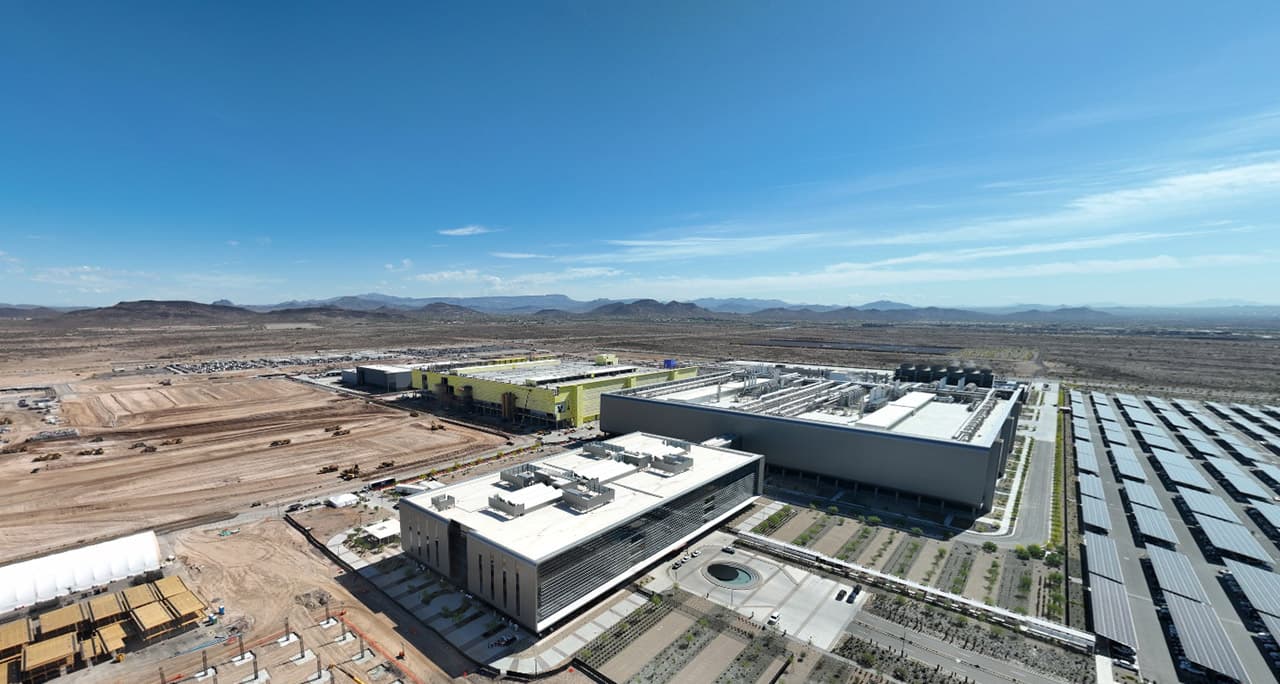
TSMC
TSMC's US manufacturing site in Phoenix, now backed by a ~$265B commitment - the largest foreign direct investment in US history - after TSMC pledged another ~$100B on its July 16, 2026 earnings call to add at least four more 2nm-and-below fabs. Phase 1 has produced 4nm chips at Taiwan-par yields since Q4 2024 for customers including Apple and Nvidia; Phase 2 brings 3nm production, with equipment move-in from Q3 2026, pilot production in early 2027, and volume production targeted for Q3 2027 (pulled in about a year from the original plan); Phase 3, targeting N2 and A16, has broken ground for ~2029. TSMC expects ~30% of its 2nm-and-below capacity to eventually sit in the US.
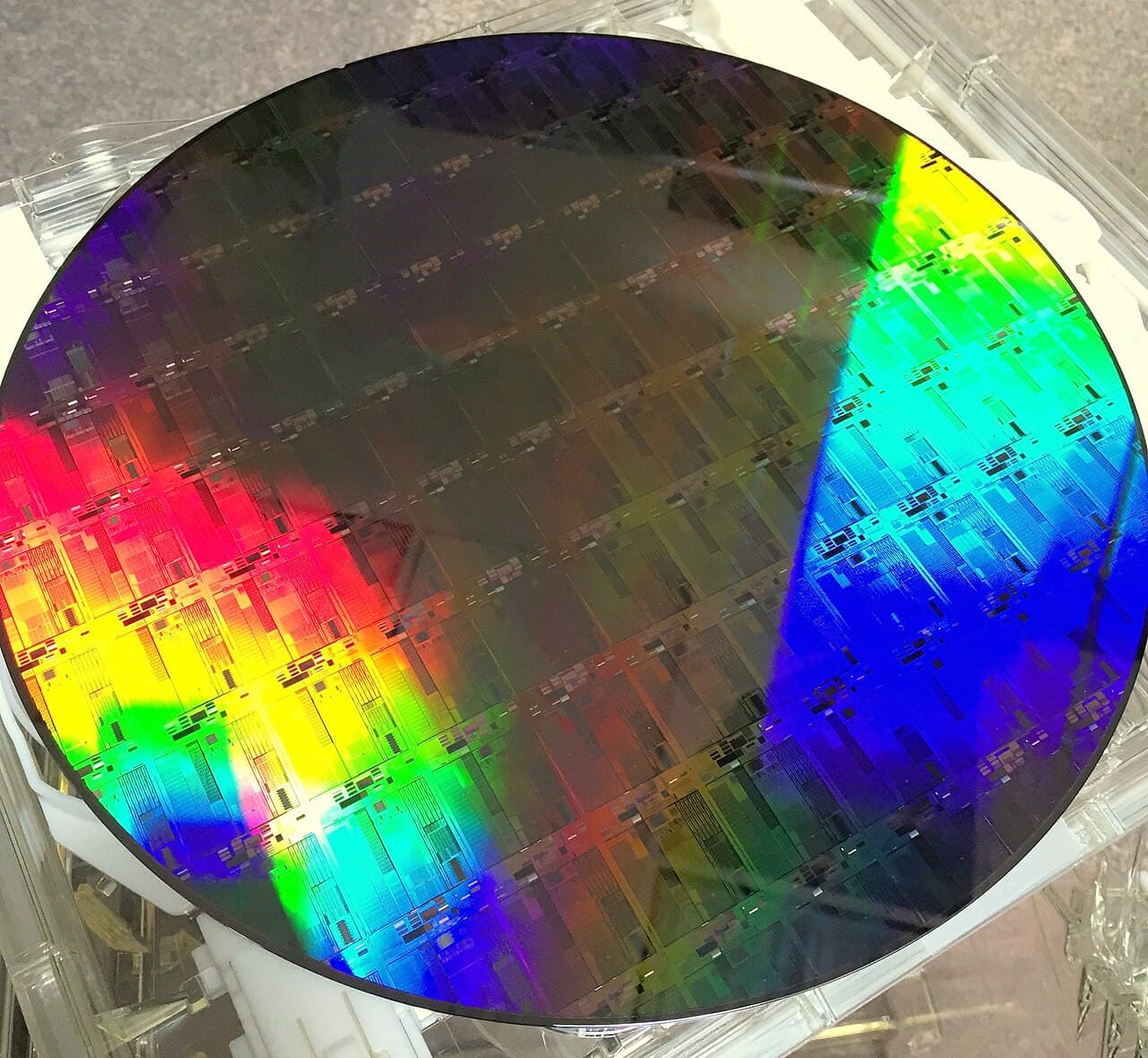
TSMC
TSMC's 2nm-class node and its first with gate-all-around nanosheet transistors, delivering 10–15% more speed or 25–30% less power than N3E. Volume production began on schedule in Q4 2025 at Fab 22 (Kaohsiung) and Fab 20 (Hsinchu), with the enhanced N2P variant following in H2 2026 - the process powering the next generation of flagship smartphone and AI silicon.
CATL
CATL's battery system for passenger eVTOLs, built on prismatic cells with energy density as high as 350 Wh/kg. Around August 9-10, 2026 the system passed a thermal-runaway propagation test - triggering two adjacent cells simultaneously at both the center and corners of the pack - with no propagation to other cells in any test, a result CATL and China's CAAC, which was involved in manufacturing, inspection and testing, describe as a world first for a prismatic-cell aviation battery at this energy density.
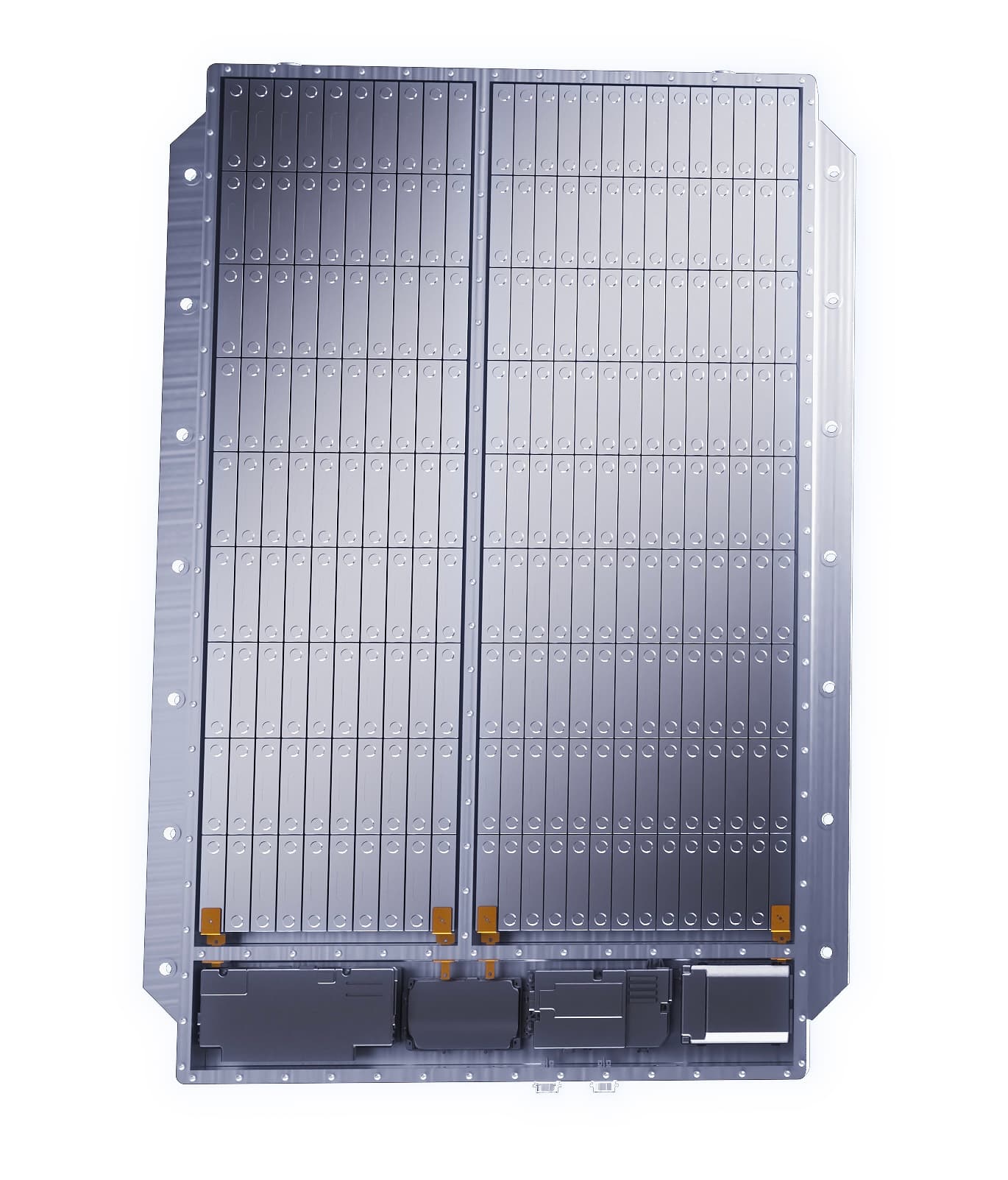
CATL
CATL's bet that the cheapest path past lithium is table salt. Naxtra reaches 175 Wh/kg, effectively matching LFP energy density while using no lithium, nickel or cobalt, and performs far better in extreme cold. CATL has said sodium-ion could eventually displace 30% to 40% of the existing battery market, and is deploying it across battery swapping, passenger cars, commercial vehicles and grid storage. The first mass-produced sodium-ion passenger EV, the Changan Nevo A06, was shown in February 2026.
CATL
The LFP fast-charging platform that made four-minute charging a mainstream expectation. The third generation, launched in April 2026, peaks at a 15C charging rate and takes a pack from 10% to 80% state of charge in 3 minutes 44 seconds, holds above 90% capacity retention after 1,000 full cycles, and still charges from 20% to 98% in around nine minutes at -30C.
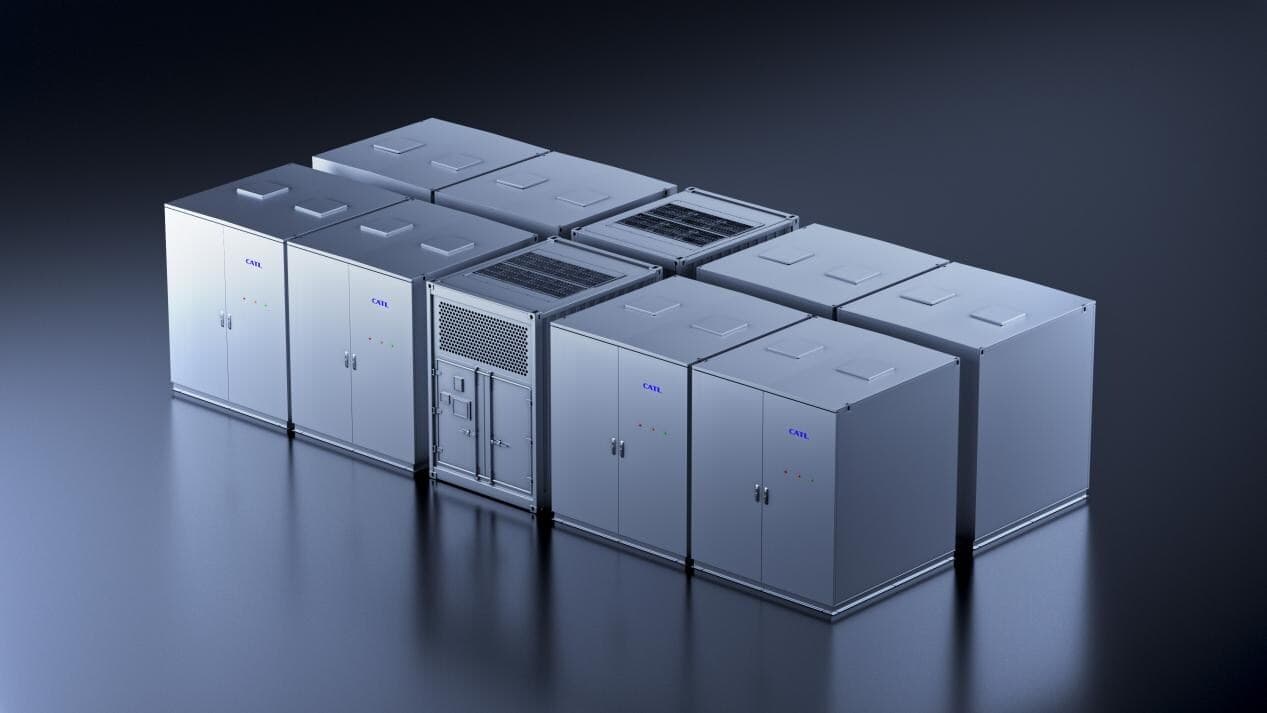
CATL
CATL's grid-scale storage family and the product behind its five-year run as the world's largest storage battery supplier. The original TENER packs 6.25 MWh into a 20-foot container with claimed zero degradation across its first five years; the TENER Stack raised that to 9 MWh in May 2025. TENER Sodium, launched June 22, 2026, is billed as the first field-validated sodium-ion grid storage system, rated above 30 MWh per system with 15,000 cycles to 70% state of health, roughly 25 to 30 years of service.
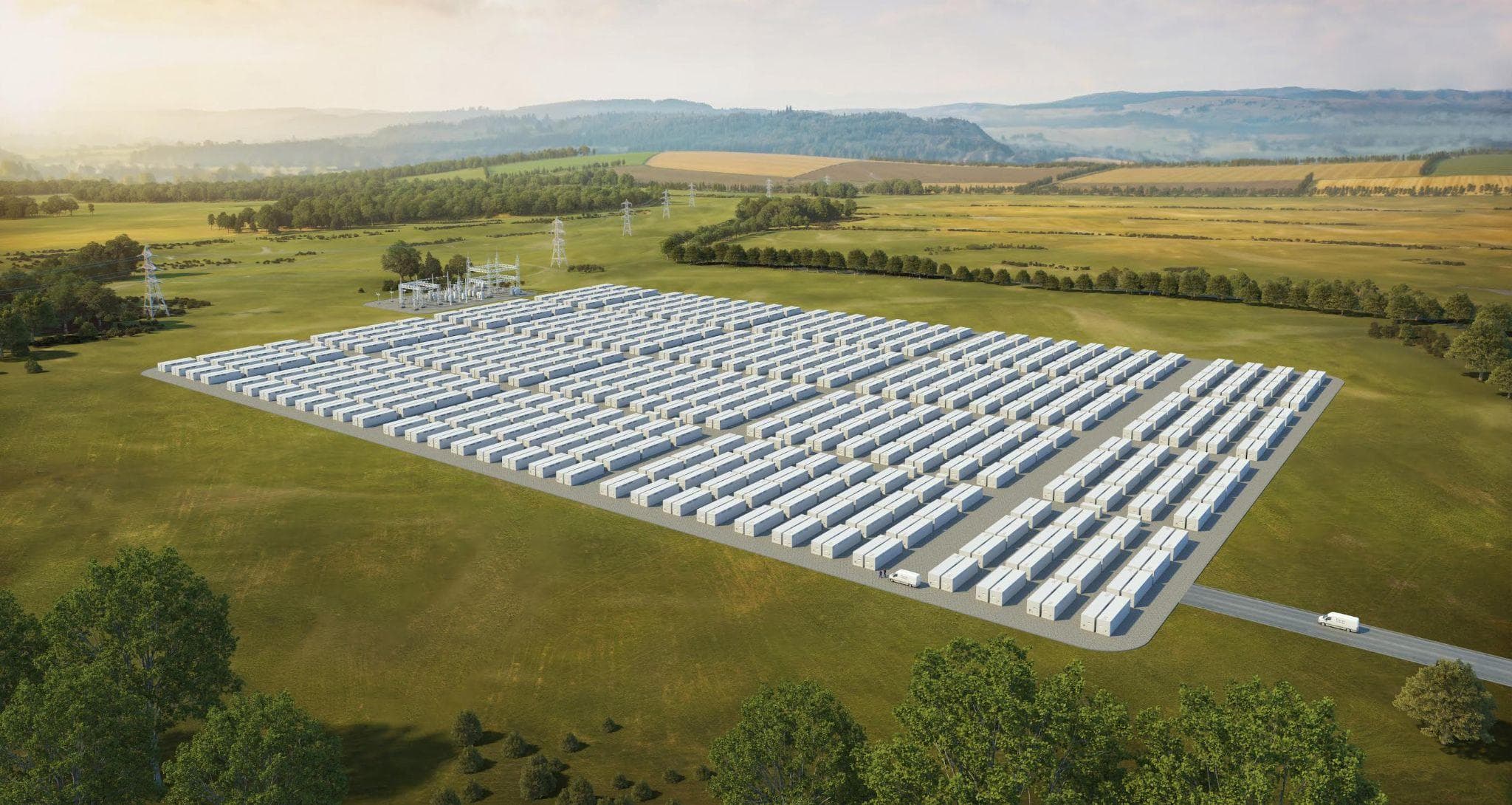
Form Energy
A grid storage system built from modules the size of a washing machine, each filled with iron electrodes and a water-based alkaline electrolyte. Discharging oxidises the iron with oxygen drawn from the air; charging reverses the reaction and turns the rust back into metallic iron. Because the active materials are iron, water and air, the cost per kilowatt-hour is a small fraction of lithium-ion's, which is what makes 100-hour duration economic. Systems are assembled into multi-acre installations sized from megawatts to hundreds of megawatts.
LG Energy Solution
Lithium iron phosphate cells built for grid-scale storage, the product behind LGES's pivot away from EV dependence. They are made at the Holland, Michigan plant, the first large-scale LFP cell factory in the United States, which gives American storage developers a non-Chinese supply option that qualifies for domestic-content and foreign-entity-of-concern rules. Capacity runs from 17 GWh at the end of 2025 to more than 30 GWh by the end of 2026, and the full output is contracted three to five years ahead by large project developers.
LG Energy Solution
The pouch and cylindrical lithium-ion cells that made LGES the largest battery maker outside China, supplied to GM, Tesla, Ford, Hyundai, Stellantis, Honda, Toyota and Mercedes-Benz from plants in Korea, Poland and Michigan plus automaker joint ventures across North America. LGES held 8.3% of global EV battery installations from January through July 2026 on 60.3 GWh, third behind CATL and BYD, though its share slipped from 9.6% a year earlier and from 8.6% in the first half as Chinese makers gained and North American EV demand stayed weak.
QuantumScape
Modular solid-state lithium-metal battery reference design for in-rack AI data-center energy storage, including 800VDC architectures and module, shelf, and rack formats. QuantumScape said Oct. 8, 2026 that prototype tests and modeled configurations showed 4x power density and 5x runtime versus the OCP Open Rack V3 specification, with thermal stability above 300 C in third-party and customer tests versus about 180 C for a conventional lithium-ion reference. The company said it joined OCP and will display the design at the Oct. 12-15 2026 OCP Global Summit. Customer talks are company-described; no commercial order was disclosed.
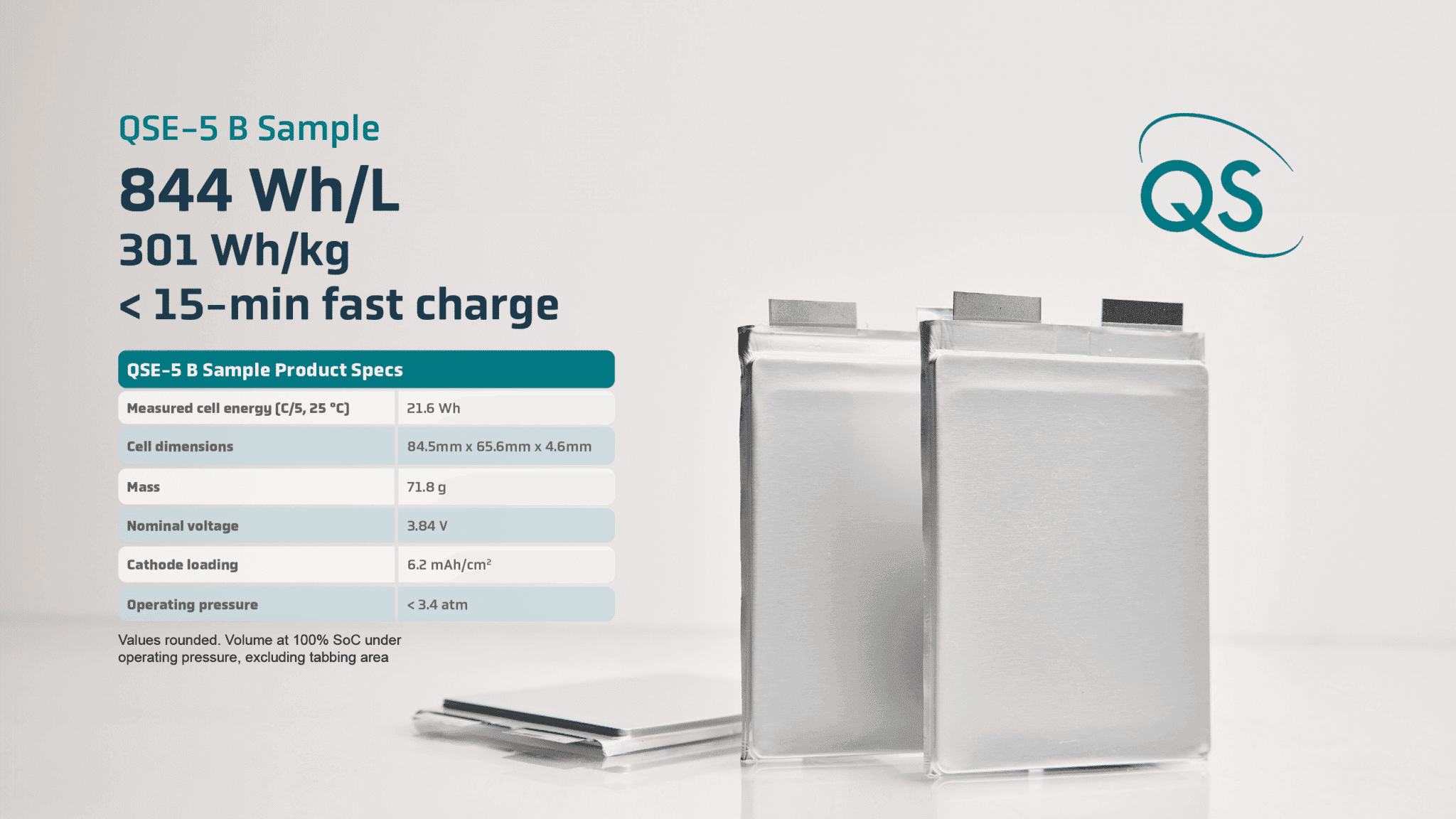
QuantumScape
QuantumScape's flagship cell: an anode-free lithium-metal design in which the lithium anode forms in place on first charge, paired with a ceramic solid-state separator that blocks dendrites and an organic catholyte around the cathode. The B-sample measures 844 Wh/L and 301 Wh/kg with charging from 10% to 80% in under 15 minutes, at 21.6 Wh per cell in an 84.5 x 65.6 x 4.6 mm format. Cells are produced with the proprietary Cobra separator process, which entered baseline production in June 2025.
Sungrow
Sungrow's entry into AI data center power infrastructure: a self-developed commercial solid-state transformer offering a full-stack 800V DC power architecture, positioned as a smaller-footprint, higher-efficiency alternative to conventional data center power equipment.
Sungrow
Sungrow's next-generation three-phase hybrid inverter for homes and businesses, covering 10 kW to 25 kW and combining solar generation with battery storage in one unit.
Sungrow
Compact plug-and-play residential micro storage shown at Sungrow's 23 September 2026 Amsterdam home-energy event for apartments, townhouses, and other space-constrained homes.
Sungrow
Sungrow's all-in-one residential energy storage system. Modular 6-10 kWh battery modules stack to 120 kWh at 10-30 kW. Supports up to 1.6x PV-to-battery charging and 0.66P charge/discharge. The 23 September 2026 Amsterdam event said it supports up to 160% PV-to-battery charging and comes standard with iHomeManager Mini.
Sungrow
Unveiled at SNEC 2026, PowerMatrix is a new product category that merges the PV inverter, energy storage converter, energy routing and grid control into one 'core energy node' for combined PV-storage plants rather than pairing separate inverter and PCS units. It carries a high-density MPPT architecture (up to 28 MPPTs per MW) for finer string-level optimization, cell-to-plant state-of-charge balancing that lifts usable lifetime storage output by about 8%, and is pitched at cutting balance-of-system costs by over 10% on gigawatt-scale plants (Sungrow cites a reference 1 GW PV plant paired with 8 GWh of storage).
Sungrow
Sungrow's utility-scale storage platform and the product that put it top of the global integrator rankings. Three container sizes cover the range: Flex at 3.45 MWh in 10 feet, Class at 6.9 MWh in 20 feet, and Plus at 12.5 MWh in 30 feet, the largest BESS container in the world by capacity and energy density, cutting land footprint by 45%. The platform uses up to 684 Ah stacked cells and the first large-scale fully liquid-cooled silicon-carbide power conversion system, hitting 99.3% peak efficiency and supporting 2 to 12 hour durations. The grid-forming version launched in Europe in January 2026 adds 20-millisecond reactive power response, microsecond voltage construction and gigawatt-scale black start, at 7.2 MW / 28.5 MWh per AC block and 92% round-trip efficiency.

Apple Inc.
Open-ear AirPods with Active Noise Cancellation. Apple says they remove up to 50 percent more external noise than AirPods 4 with ANC. Cult of Mac reported a $129 starting price and $149 for the wireless-charging case.
Apple Inc.
Apple's 7-inch Liquid Retina smart display with Siri AI. It recognizes up to six people and is sold as a tabletop model and a wall-mounted model, each $299 in the US. Pre-orders opened October 13, 2026 in the US, UK, Canada, Australia, New Zealand, and India, with availability on November 13. Apple said it is not for sale in the EU because Siri AI is unavailable in iOS there.
Apple Inc.
Fourth-generation Apple TV 4K with an A19 chip, hands-free Siri AI, and a US price of $299. Apple said CPU performance is up to 50 percent faster and GPU performance up to twice the previous generation. Pre-orders opened October 13, 2026, with store availability November 13.

Apple Inc.
Current flagship Apple Watch. Apple says Series 12 uses a new Health Sensing System and S11 chip for higher-frequency heart rate and HRV measurements and a readiness score. Available in aluminum, titanium and ceramic cases. Cult of Mac reported 42 mm and 46 mm sizes starting at $399.
Apple Inc.
Second-generation HomePod mini at $149 in the US. Pre-orders opened October 13, 2026, with availability October 30. Apple said Siri AI will arrive in a later software update. Colors are pink, green, blue, white, and midnight.
Apple Inc.
iPhone 17, as specified on Apple's current specs page. Super Retina XDR display, 6.3 inches diagonal, with a rectangular measurement of 6.27 inches and a resolution of 2622 by 1206 at 460 ppi. Weight 177 grams (6.24 ounces). A19 chip with a 6-core CPU. 48MP Dual Fusion camera system: 48MP Fusion Main at 26 mm, f/1.6, and 48MP Fusion Ultra Wide at 13 mm, f/2.2. No US starting price is printed on this specs page.
Apple Inc.
Apple's current Pro iPhone. The specs page lists a 6.3-inch Super Retina XDR OLED display (6.27 inches measured as a rectangle), a body of 71.9 by 150.0 by 8.75 mm, and a weight of 211 grams. The camera block includes a 48MP Fusion Main camera with variable aperture and a 48MP Fusion Telephoto at 100 mm (4x). The chip is A20 Pro. Apple says eSIM-only models deliver up to 36 hours of video playback. Storage starts at 256GB and the US price starts at $1,199. Colors on the announcement are black, silver, glacier, and burgundy.
Apple Inc.
Larger sibling of iPhone 18 Pro. Apple says iPhone 18 Pro Max delivers the largest increase in battery life ever on iPhone. Same A20 Pro chip and 48MP Fusion Main camera with variable aperture. U.S. price starts at $1,299. Colors: black, silver, glacier and burgundy.

Apple Inc.
Apple's first foldable iPhone. Opened it has a 7.6-inch inner Super Retina XDR display; closed it has a 5.4-inch outer display that Apple says delivers 90 percent of the screen area of iPhone 18 Pro. Powered by A20 Pro, with dual-battery architecture. Colors are star white and night sky. U.S. price starts at $1,999 for 256GB, with 512GB, 1TB and 2TB options. On Oct. 16, 2026 Apple said preorder demand was nothing short of extraordinary, and CNBC reported some online delivery estimates had slipped into late January.
Huawei Investment & Holding Co., Ltd.
Chinese official spec page for the HUAWEI Mate 80. Colors are spruce green, dawn gold, snow white, and obsidian black. The page lists the Kirin 9020, HarmonyOS 6.0, a 6.75-inch OLED display at 2832 x 1280 with 1-120 Hz LTPO, 12 or 16 GB of RAM, 256 or 512 GB of storage, a 5750 mAh typical battery rated 5620 mAh, and up to 66 W wired SuperCharge. It does not print a price.
Huawei Investment & Holding Co., Ltd.
Chinese official spec page for the HUAWEI Mate 90 base model (https://consumer.huawei.com/cn/phones/mate90/specs/), on sale from October 1, 2026. Colors are lattice green, lattice pink, zero white, and obsidian black. The page lists Kirin 9030, HarmonyOS 7.0, a 6.75-inch OLED display at 2832 x 1280 with 1-120 Hz LTPO, 12 GB RAM, 256 GB, 512 GB or 1 TB storage, a 6600 mAh typical battery rated 6415 mAh, up to 66 W wired SuperCharge, and a 5,999 yuan starting price.
Huawei Investment & Holding Co., Ltd.
Chinese official product page for the HUAWEI Mate 90 Pro (https://consumer.huawei.com/cn/phones/mate90-pro/). Starting price 6,999 yuan. The page lists Kirin 9035, HarmonyOS 7, a second-generation Linglong Display with 12,000-nit peak brightness, a 6600 mAh typical battery rated 6415 mAh, and up to 100 W wired SuperCharge.
Huawei Investment & Holding Co., Ltd.
Chinese official product page for the HUAWEI Mate 90 Pro Max (https://consumer.huawei.com/cn/phones/mate90-pro-max/). Starting price 9,499 yuan. The page lists a Kirin 9050-series chip, HarmonyOS 7, a full-color Linglong Display with 12,000-nit peak brightness, a 6800 mAh battery, up to 100 W wired SuperCharge, a 200 MP telephoto camera, and four-SIM three-standby.
Huawei Investment & Holding Co., Ltd.
Chinese official product page for the HUAWEI Mate 90 RS Ultimate Design (https://consumer.huawei.com/cn/phones/mate90-rs-ultimate-design/). Starting price 12,999 yuan. The page lists Kirin 9050 Pro, a full-color Linglong Display with 12,000-nit peak brightness, Tiantong satellite communications, BeiDou satellite messaging, four-SIM three-standby, and a 200 MP telephoto with 18 EV ultra-HDR main camera. The XMAGE Z10 modular camera is sold separately.
Huawei Investment & Holding Co., Ltd.
Chinese official product page for the HUAWEI Mate XT 2 Ultimate Design tri-fold (https://consumer.huawei.com/cn/phones/mate-xt-2-ultimate-design/), launched September 7, 2026. Starting price 19,999 yuan. The page lists first use of Kirin 9050 Pro, HarmonyOS 7, Tiantong and BeiDou satellite features, and IP58/IP59 dust and water ratings in footnotes.
Huawei Investment & Holding Co., Ltd.
Chinese official spec page for the HUAWEI Pura 90. Printed colors are 罗兰紫, 丝绒黑, and 雪域白. The page lists the Kirin 9010S, HarmonyOS 6.1, a display size of 6.8 inches with a standard-rectangle diagonal of 6.84 inches, 12 or 16 GB of RAM, 256 or 512 GB of storage, a 6500 mAh typical battery rated 6370 mAh, and up to 100 W wired SuperCharge. It does not print a price.
Huawei Investment & Holding Co., Ltd.
Chinese official spec page for the HUAWEI Pura X wide foldable. The inner display is 6.3 inches and the outer display is 3.5 inches, both OLED with 1-120 Hz LTPO 2.0. The page lists HarmonyOS 5.0.1, says units can upgrade to HarmonyOS 6 or later, and says some units ship with HarmonyOS 6 or later. Standard storage is 12 GB of RAM with 256 or 512 GB; the collector edition is 16 GB with 512 GB or 1 TB. The battery is 4720 mAh typical, rated 4610 mAh, with up to 66 W wired SuperCharge. The opened specs page does not print a processor or a price.
Huawei Investment & Holding Co., Ltd.
Chinese official pages for the HUAWEI Pura X Max book-style foldable. The product page lists Kirin 9030 Pro, HarmonyOS 7, a 5.4-inch outer display, a 7.7-inch inner display, and a reference starting price of 10,999 yuan. The specs page lists 1-120 Hz LTPO 2.0 on both displays, 12 GB of RAM with 256 or 512 GB on the standard model, a collector edition at 16 GB with 512 GB or 1 TB, a 5300 mAh typical battery rated 5150 mAh, and up to 66 W wired and 50 W wireless SuperCharge. The opened specs page does not repeat a processor line. The product page says the store price controls.
OPPO
OPPO Find X9 Ultra, model CPH2841, in Canyon Orange and Tundra Umber. About 163.16 by 76.97 mm. Thickness about 8.65 mm in Canyon Orange and 9.10 mm in Tundra Umber. Weight about 235 grams or 236 grams by color. Memory options are 12GB plus 512GB and 16GB plus 1TB, with LPDDR5X and UFS 4.1. The display is 6.82 inches, 3168 by 1440, 510 ppi, from 1 to 120 Hz, with 144 Hz in some games. Rear cameras include a 50MP ultra-wide at f/2.0, a 200MP wide camera at f/1.5, a 200MP telephoto at f/2.2, a 50MP ultra telephoto at f/3.5, and a 3.2MP monochrome camera. The front camera is 50MP at f/2.4. Chip is Snapdragon 8 Elite Gen 5. Battery is 7050 mAh typical (26.23 Wh), with adapter power up to 100W and 50W AIRVOOC. ColorOS 16.0. No official price or announcement date is on this specs page.

OPPO
OPPO Reno16 Pro 5G, model CPH2863, in Starlight Black and Pop White. About 151.21 by 72.42 mm. Thickness about 8.20 mm in Starlight Black and 8.36 mm in Pop White. Weight about 188 grams or 191 grams by color. Memory is 12GB plus 256GB or 512GB. The display is 6.32 inches, 2640 by 1216, up to 144 Hz in some games. Cameras include a 50MP ultra-wide at f/2.0, a 200MP wide camera at f/1.8, a 50MP telephoto at f/2.8, and a 50MP front camera at f/2.0. Chip is Dimensity 8550 SUPER. Battery is 6700 mAh typical (24.93 Wh), with up to 80W SUPERVOOC. ColorOS 16.0. No official price or announcement date is on the specs page.
Samsung Electronics
Samsung's Galaxy S26 Ultra, from the global newsroom specification table. Display is 6.9 inches in the full rectangle and 6.7 inches accounting for rounded corners, QHD+ Dynamic AMOLED 2X, 1 to 120 Hz. Body 78.1 by 163.6 by 7.9 mm, 214 grams. Cameras: 50MP ultra-wide at F1.9, 200MP wide at F1.4, 50MP telephoto with 5x optical zoom and 10x optical-quality zoom at F2.9, 10MP 3x telephoto at F2.4, and a 12MP front camera at F2.2. Processor is Snapdragon 8 Elite Gen 5 for Galaxy. Memory options include 16GB with 1TB, 12GB with 512GB, and 12GB with 256GB. Battery is 5,000 mAh typical, rated minimum 4,855 mAh. Wired charging reaches about 75 percent in about 30 minutes with a 60W adapter. Colors include Cobalt Violet, White, Black, and Sky Blue. The announcement highlights a built-in Privacy Display. No dollar price is in the article.
Samsung Electronics
Samsung's Galaxy Z Flip8, from the July 22, 2026 newsroom announcement and the August 6, 2026 worldwide sales note. The announcement says it is Samsung's slimmest and lightest Flip, 180 g and 6.1 mm thick, with a 50 MP camera and a reimagined FlexWindow cover screen. Colors on the announcement include Graphite, Cream and Pink, with Mint as a Samsung.com exclusive. No dollar price is in those pages.
Samsung Electronics
Samsung's Galaxy Z Fold8. The newsroom says that at 201 grams it is the lightest Galaxy Z Fold yet, with the Snapdragon 8 Elite Gen 5 Mobile Platform for Galaxy and a 4,800 mAh battery. The main screen is a 7.6-inch QXGA+ Dynamic AMOLED 2X, 1848 by 2448, 403 ppi, 1 to 120 Hz. The cover screen is 5.5 inches in the full rectangle and 5.4 inches accounting for rounded corners, 1248 by 1972, 428 ppi. Folded size is 81.9 by 123.9 by 9.7 mm. Unfolded size is 161.4 by 123.9 by 4.5 mm, and the unfolded thickness excludes the main-screen frame. Rated battery capacity is 4,660 mAh. Colors on the page include Graphite, Cream, and Lavender for Fold8. Rear cameras in the Fold8 table are a 50MP wide and a 50MP ultra-wide.
Samsung Electronics
Samsung's sixth-generation high-bandwidth memory. The Feb. 12, 2026 newsroom says mass production has begun and commercial products have shipped. Typical pin speed 11.7 Gbps, up to 13 Gbps; up to 3.3 TB/s per stack; 12-layer stacks from 24 GB to 36 GB, using 1c DRAM and a 4nm logic base die. HBM4E 12-layer samples began shipping May 29, 2026 at 14 Gbps typical (up to 16 Gbps) and 48 GB; mass production follows customer schedules and is not dated as general availability.
Shenzhen Transsion Holdings Co., Ltd.
Infinix spec payload for the NOTE 60 Ultra, model X6877. It lists XOS 16 on Android 16, a MediaTek Dimensity 8400 Ultimate on 4 nm, a 6.78-inch AMOLED display up to 144 Hz at 1208 x 2644, a 200 MP main camera, a 50 MP periscope, an 8 MP ultrawide, a 32 MP front camera, and a 7000 mAh typical battery with up to 100W wired charging and up to 50W wireless charging. The payload does not print a price.
Shenzhen Transsion Holdings Co., Ltd.
TECNO's official tech-spec page for the CAMON 50 Ultra 5G. It lists HiOS 16, a MediaTek Dimensity 7400 Ultimate, 5G, a 6.78-inch curved AMOLED display at 144 Hz and 1208 x 2644, a 50 MP front camera, a rear set of 50 MP with OIS, 50 MP 3x, and 8 MP ultrawide, and a 6500 mAh battery with 45W Super Charge. The page does not print a price.
vivo
Global English parameter page for the vivo V70. Named colors are Golden Hour, Sandalwood brown, Alpine Gray, and Authentic Black, and the spec color line reads Black Gold Gray Brown. The page lists OriginOS 6 on Android 16, a Snapdragon 7 Gen 4, a 6.59-inch 2750 x 1260 AMOLED display up to 120 Hz, and a 6500 mAh typical battery with 90W charging. It does not print a price or a launch date.
vivo
Global English parameter page for the vivo X300 Ultra. Colors are Black, Green, and White. The page lists OriginOS 6 on Android 16, a Snapdragon 8 Elite Gen 5, a 6.82-inch 3168 x 1440 AMOLED display, and a single-cell battery with a typical capacity of 6600 mAh and a rated capacity of 6395 mAh. It does not print a price or a launch date.
Xiaomi Corporation
REDMI 17 as specified on Xiaomi's global specs page. MediaTek Helio G91-Ultra. 6.9-inch display at 1600 by 720, with a refresh rate of up to 120 Hz. Battery is 7500 mAh typical and supports 45W turbo charging. The page says no power adapter is included. No price or launch date is printed on this specs page.
Xiaomi Corporation
Xiaomi 17 as specified on Xiaomi's UK product page. 6.3-inch body, 191 grams, 8.06 mm thick, and 71.8 mm wide. Camera description leads with a Leica Summilux lens and a Light Fusion 950 sensor at 1/1.31 inch. Chip is Snapdragon 8 Elite Gen 5. Battery is 6330 mAh typical, with 100W wired and 50W wireless HyperCharge. This page's 6330 mAh figure is the one used. No price or launch date is printed here.
CoreWeave
CoreWeave Cloud is the company's AI cloud. The 2025 Form 10-K says it covers large-scale training, inference, data movement, continuous iteration, and agentic workflows. Named software includes Mission Control and Slurm on Kubernetes, called SUNK. The company calls the service The Essential Cloud for AI.
CoreWeave
The GPU Compute page offers NVIDIA GPUs on bare metal and names GB200 NVL72, H200, H100, and L40S systems. In the quarter ended June 30, 2026 CoreWeave said it completed the first bring-up and validation of NVIDIA Vera Rubin NVL72. That is a validation milestone, not a statement that Vera Rubin was generally available.

Alphabet
Google fitness tracker with a display, built-in GPS and up to seven days of battery life. Pre-orders opened 12 October 2026 at $179.99, with retail availability set for 27 October. A Stephen Curry special edition is $219.99. The same post describes Health Guardian as background tracking of blood pressure trends, insulin resistance trends, and high or low heart rate alerts, and says availability varies by country.
Alphabet
Google Cloud workplace agent announced Oct. 8, 2026 that takes objectives, plans work, and returns finished output across Workspace, Microsoft 365, Slack, CLI, and other channels. Google said it orchestrates Gemini and Anthropic Claude models, can create coworker agents with their own identities, and starts with businesses. 9to5Google reported private preview.
Alphabet
Google Cloud sells infrastructure and platform services, applications, and other enterprise products. The Q2 2026 release says service revenue comes from Google Cloud Platform, Google Workspace, and other enterprise services, and product revenue comes primarily from TPU systems. Cloud revenue was $24,768 million, up 82% from $13,624 million, and Cloud operating income was $8,814 million.
Alphabet
Google Search is the web search service inside Google Services. The FY2025 10-K says it helps people find information, with trillions of searches a year. In the quarter ended June 30, 2026, Google Search and other revenue was $63,271 million, up from $54,190 million, and the earnings release says that line grew 17%. Google Services as a whole, which also includes YouTube, subscriptions, platforms, and devices, was $94,540 million.
Amazon
Three-model Android tablet lineup announced Oct. 8, 2026 with Alexa+ built in and Google Play Store access: 12 Pro from $499.99, 11 from $329.99, and 8 from $229.99. Amazon said units are available for purchase immediately and ship Oct. 14 in the United States, Mexico, and Canada.

Amazon
Amazon Stores is the consumer retail business. Douglas J. Herrington has been CEO of Worldwide Amazon Stores since July 2022. The 10-K says Amazon competes on selection, price, and convenience. In Q2 2026 the North America segment, which is wider than online stores, had sales of $116.2 billion, up 16%. International segment sales were $42.2 billion and are a geography, not a second stores brand.
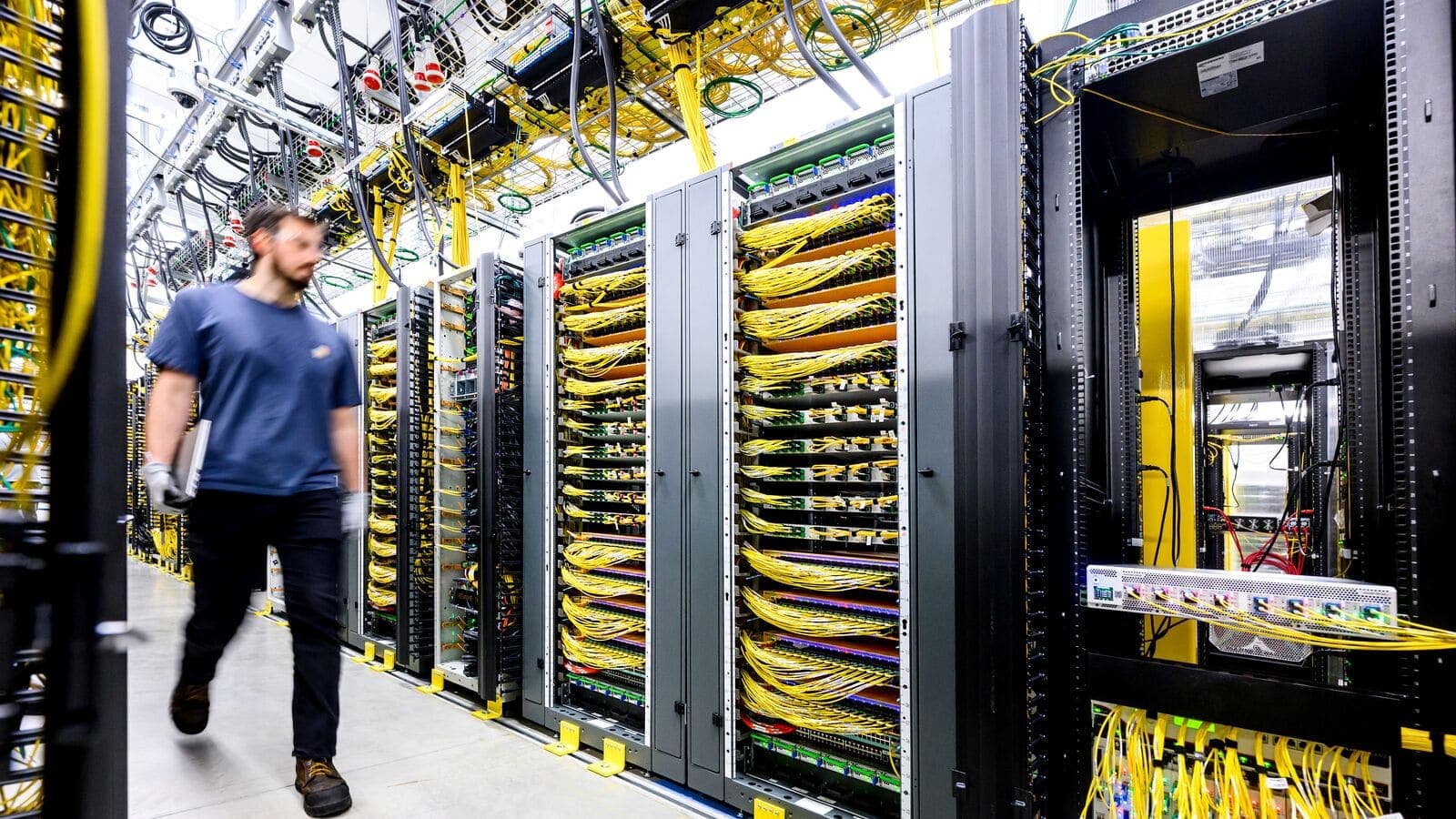
Amazon
Amazon Web Services is the company's cloud business. Matthew S. Garman has been its CEO since June 2024. In the quarter ended June 30, 2026, AWS segment sales were $42.2 billion, up 37% on the release headline. Jassy said growth was 36.7% and that the AWS AI business and the chips business each passed a run rate of more than $25 billion.
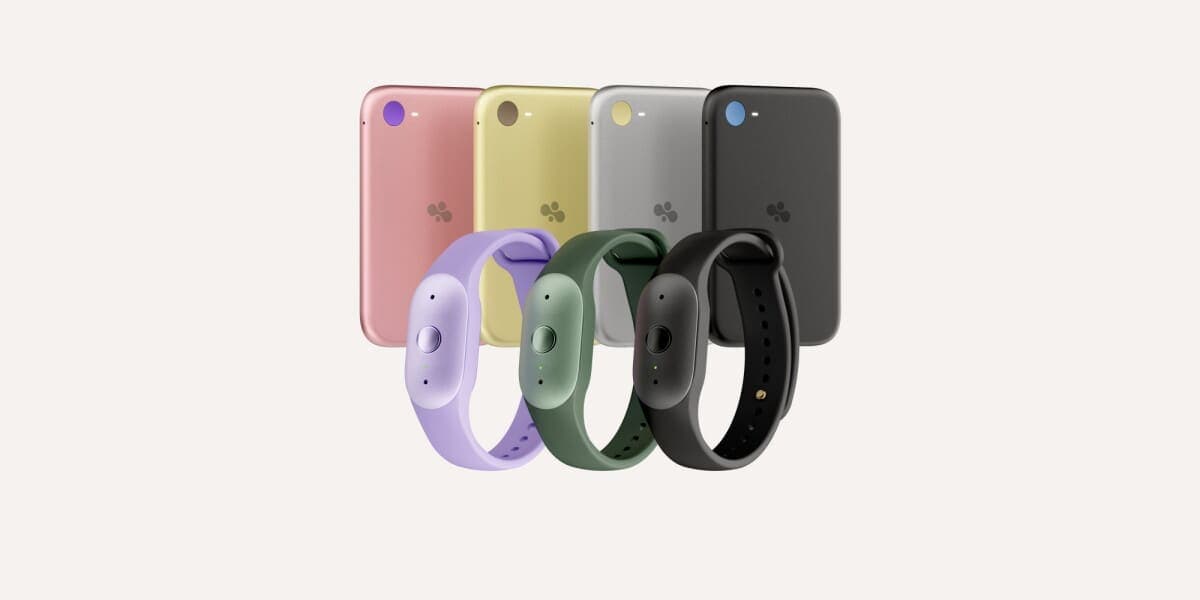
Amazon
Wrist or clip-on personal AI device on sale for $74.99 as of October 15, 2026, with up to seven days of battery life. Amazon says the microphone is button-controlled and that audio is processed in real time and then deleted. Bee Eclipse, a magnetic phone attachment from $99.99, is not yet on sale.
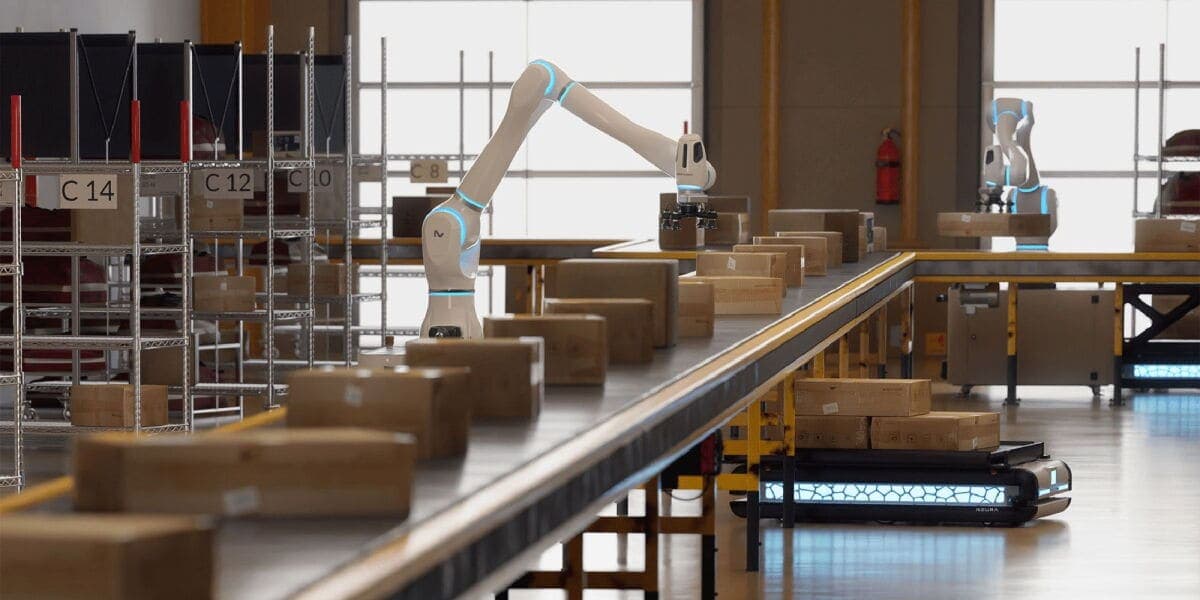
Amazon
Physical AI Toolchain on AWS is an open-source stack of architecture guidance, deployment automation, and reference code for synthetic data, training, simulation, edge deployment, and continuous improvement of physical-AI models. Amazon launched it Oct. 8, 2026. It combines SageMaker, EC2 GPU instances, IoT Greengrass, and Bedrock AgentCore with NVIDIA Isaac Sim, Isaac Lab, Isaac GR00T, and Cosmos.
Meta
Instagram is one of the four Family apps, with Facebook, Messenger, and WhatsApp. Family of Apps revenue in the quarter ended June 30, 2026 was $60,370 million, of which advertising was $59,363 million, and Family of Apps operating income was $23,394 million. Family daily active people averaged 3.60 billion in June 2026. That count is anyone who used at least one Family app. It is not an Instagram user count.
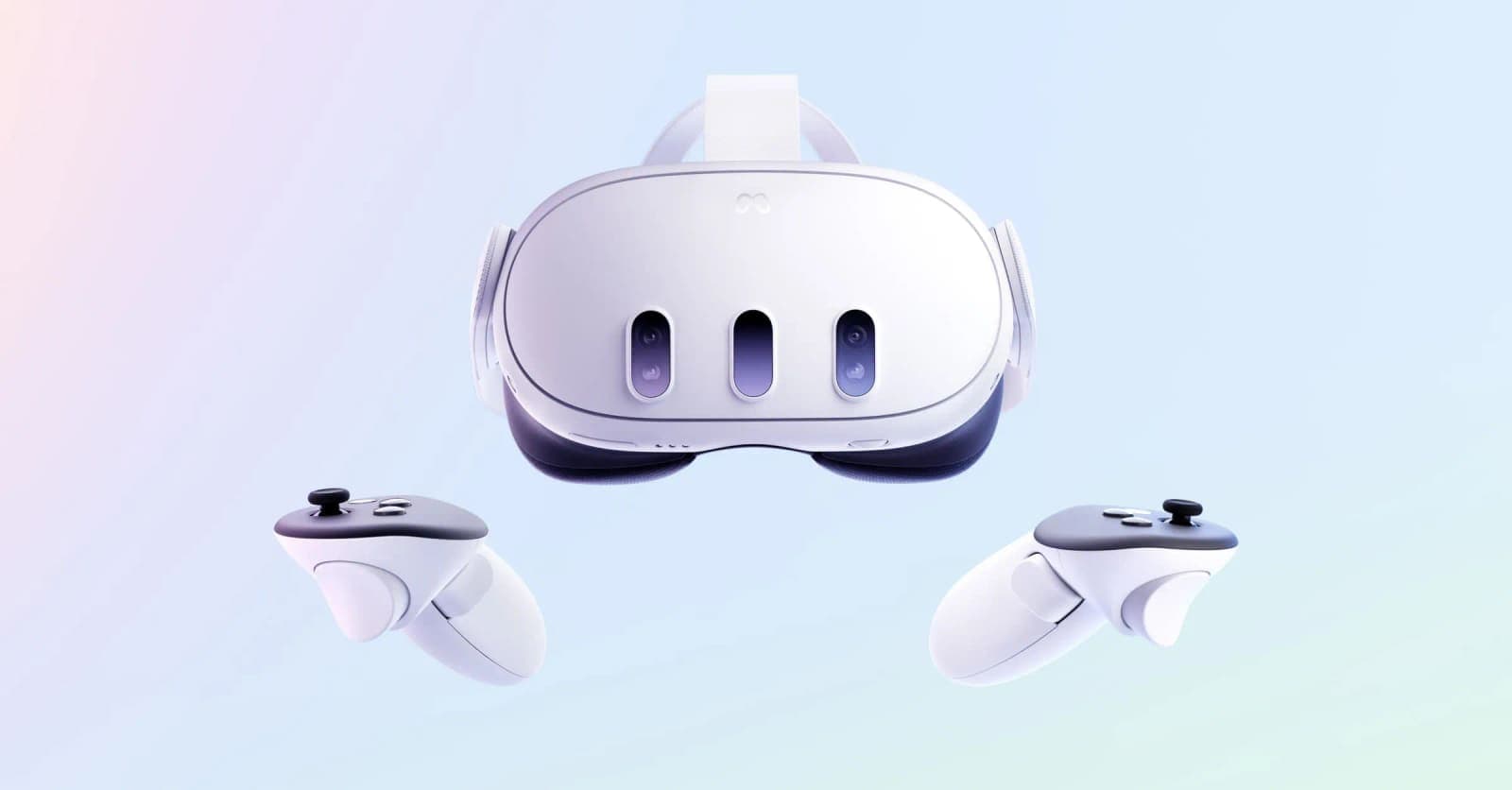
Meta
Reality Labs is Meta's virtual and augmented reality consumer hardware, software, and content business. Meta Quest is the headset line inside that segment. In the quarter ended June 30, 2026, Reality Labs revenue was $431 million and the operating loss was $4,619 million. The release does not print a Quest-only revenue line. A later headset announced for 2027 is not given a price or ship date on this profile.

Meta
Open-weight multimodal model with 816 billion total parameters, 42 billion active, and a 1 million-token context window. Meta released the weights on 15 October 2026 under the Muse Model License. The license allows commercial use, including sale, with a Built with Muse Spark Open notice, and requires a separate agreement before a model-as-a-service business above $20 million in any 12 months. Meta says the MLX desktop setup uses two M5 Ultra Mac Studios. GPU serving is specified separately as at least 700GB of VRAM for NVFP4 or 2TB for BF16.
Meta
Meta frontier model pair, Muse Wonder and Muse Wonder Full, for personal and professional agent tasks. Wonder (muse-wonder-1.0) is on the Meta Model API and in Muse Code at $4 input, $0.20 cached input, and $20 output per million tokens, with a 1,048,576-token context. Wonder Full is not on the API and is limited to Muse Code Power Usage and Maximum Usage.

Meta
Meta's audio glasses, introduced at Meta Connect on 23 September 2026 and on sale from 13 October 2026 at $349. Meta says they weigh 43 grams, last up to 12 hours on a charge or up to 6 hours of continuous audio, and come in Clubmaster and Burbank styles with prescription options. The Meta Store FAQ says they have no camera.
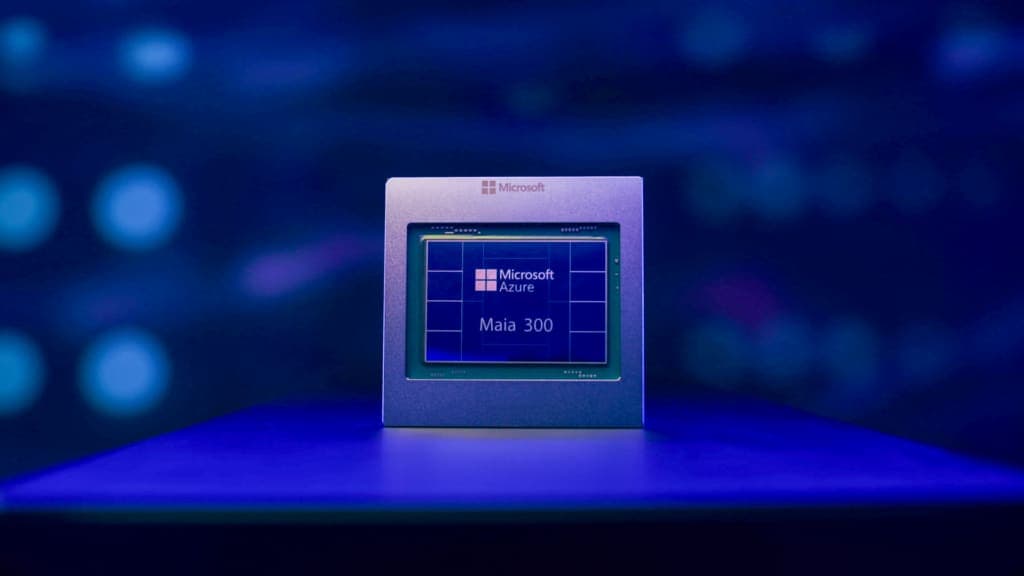
Microsoft
Microsoft's third-generation inference accelerator, announced 12 October 2026. The blog says production deployments begin in 2027 and that the Maia family will scale to multi-gigawatt deployments starting in 2027 as the primary inference system for Microsoft products and services. A rack holds 96 accelerators in a 167 kW envelope, with eight HBM4 stacks at 18.0 TB/s inside a 950 W TDP, and compute chiplets on TSMC N2P. Microsoft expects up to 7x the rack token throughput of Maia 200 and 40 percent more tokens per megawatt than leading GPU systems. Alistair Speirs told CNBC he would not set a completion date beyond that start. CNBC reported the accelerators cannot be rented by the hour.
Microsoft
Microsoft AI said on 15 October 2026 that pre-training of MAI-Base-2 is complete. It is a mixture-of-experts model with 80 billion active parameters and 2.8 trillion total parameters, trained on 16,000 Nvidia GB200 GPUs for 38 days in August and September 2026. Microsoft says it beat every open-weight model it compared on held-out tests and estimates 4.2 to 12.3 times the pre-training FLOPs efficiency of DeepSeek-V4-Pro-Base. The held-out sets were not published, and no independent FLOPs check was found. The model is in post-training. Microsoft says the pipeline will enable licensing weights to trusted partners through Foundry, with no date.
Microsoft
Microsoft 365 is the company's productivity subscription, including the Copilot service discussed in the earnings release. Nadella said Microsoft 365 Copilot reached over 30 million paid seats in the year ended June 30, 2026. The release does not print a Microsoft 365 dollar total. Productivity and Business Processes is a wider segment and is not used here as a Microsoft 365 revenue figure.
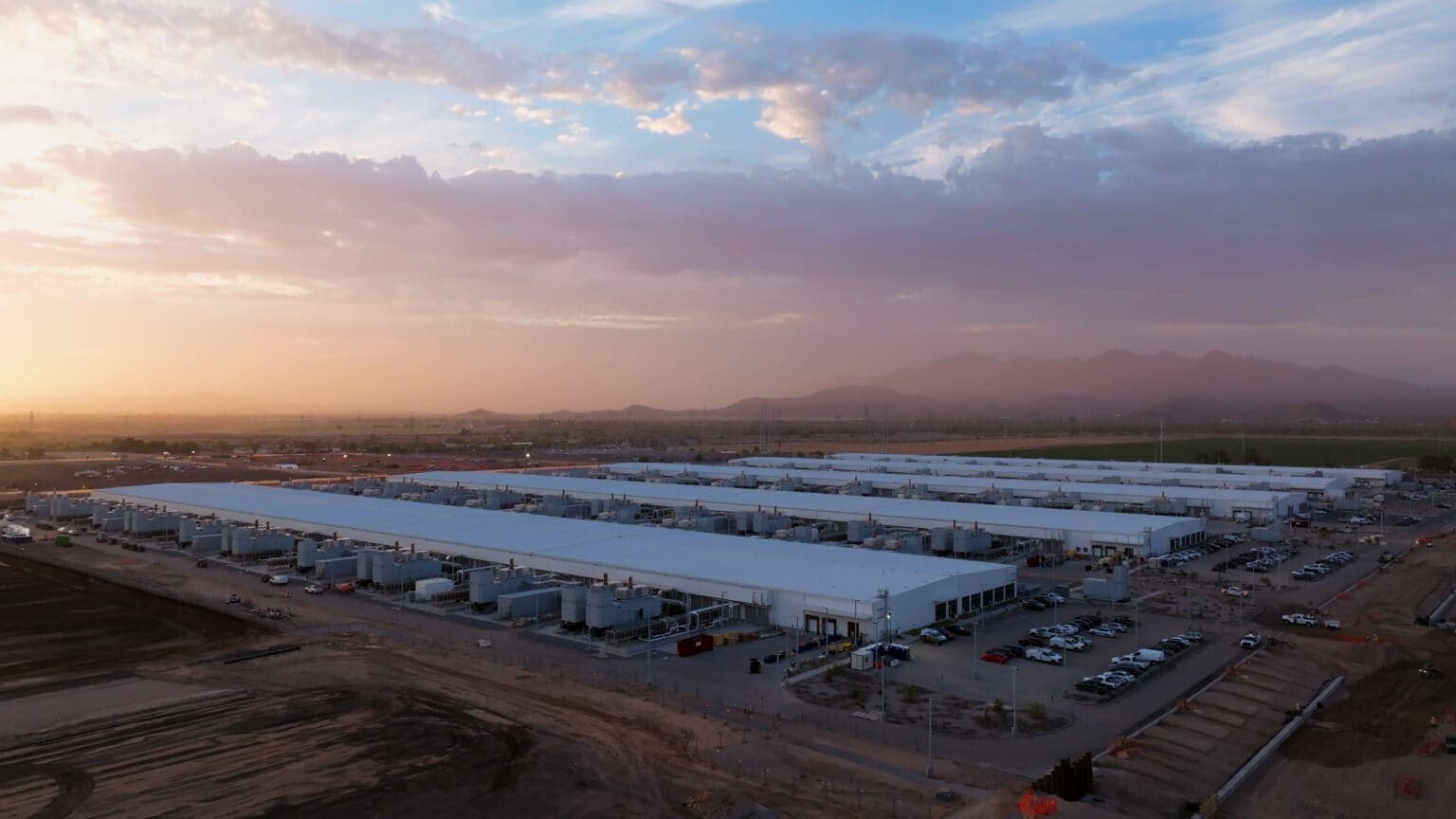
Microsoft
Azure is Microsoft's cloud platform. In the July 29, 2026 release, Satya Nadella said Azure revenue surpassed $100 billion for the first time and was up 41%. The financial statements do not print a separate Azure revenue line. Intelligent Cloud, a wider segment, had quarterly revenue of $39.3 billion, up 32%.

Microsoft
Microsoft-Decision-1 is a decision-scoring model Microsoft opened in Foundry and on OpenRouter on 9 October 2026. It is post-trained from Qwen3.5-9B and returns calibrated probabilities for fixed yes/no, multiple-choice, and rating options. Input tokens are $0.042 per million; output tokens are free. Microsoft says it was about 35 times faster than GPT-6 Sol and the most accurate model in a 36-benchmark comparison kept blind from training. Those latency and accuracy figures were not reproduced on a public suite in this pass, and the post does not show that the Foundry and OpenRouter endpoints serve identical weights.