COMAC (Commercial Aircraft Corporation of China) is China's state-owned commercial aircraft manufacturer and the core vehicle for the country's indigenous airliner program.
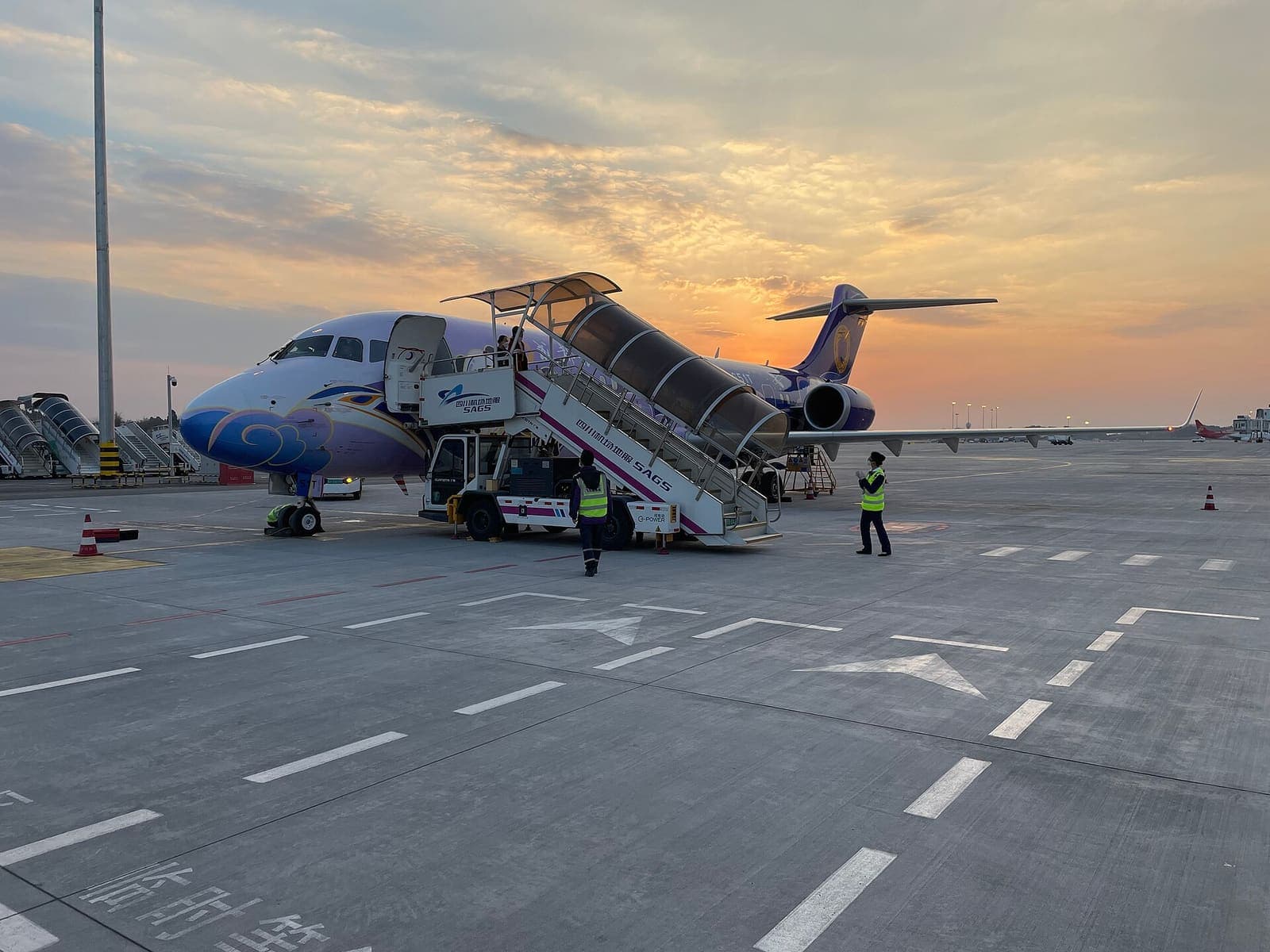
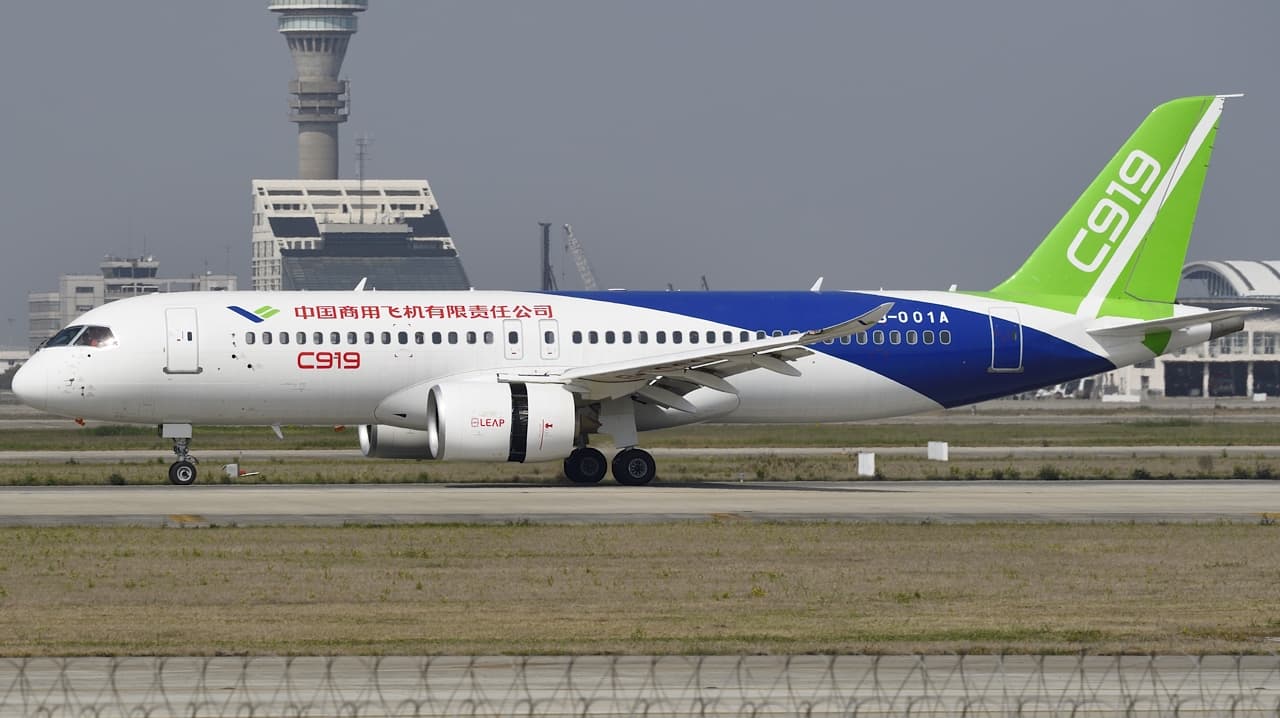
Its current aircraft family spans the in-service C909 regional jet, the in-service C919 narrow-body, and the C929 wide-body now in detailed design. COMAC has moved beyond a symbolic national program into real airline operations, customer support, and export expansion in Southeast Asia: Air Cambodia converted its 10+10 C909 commitment into a firm purchase agreement on July 17, 2026 - COMAC's first bulk order from a foreign flag carrier - and Cambodia's civil aviation authority completed a C909 training-program review in mid-September 2026 ahead of the first two deliveries, still slated for November. AeroRoutes schedule filings dated September 8, 2026 now put Air Cambodia's C909 service debut on December 15, 2026, including Phnom Penh-Nanning, Ho Chi Minh City, Vientiane, Haikou and Zhengzhou plus Sihanoukville-Shenzhen and Sihanoukville-Chongqing from February 1, 2027. On August 12, 2026 the C919 flew its first-ever international route, Air China's daily Beijing-Ulaanbaatar service. The high-altitude C919-600 variant also completed its maiden flight on July 29, 2026. Even so, 2026 C919 deliveries continue to lag well behind the airlines' 33-aircraft annual plan: eight in the first half, two more in July, and none publicly recorded in August or the first half of September, for 10 year-to-date and a cumulative fleet of about 42 as of September 18. A September 1, 2026 Leeham analysis, citing IBA, framed the production ramp - not the Mongolia debut - as COMAC's real test, with IBA expecting roughly 28 C919 deliveries in 2026 rising toward 93 by 2030. The C919 still lacks FAA and EASA certification needed to reach Western markets.
COMAC delivered 10 C919s through September 18, 2026 - 8 in the first half plus 2 in July (Air China's 12th and China Southern's B-659G on July 21) and none publicly recorded in August or the first half of September - against the 33-aircraft total Chinese airlines have planned for the year, leaving it on track to miss the annual goal by a wide margin. Cumulative deliveries since the 2023 entry into service now stand at about 42. IBA's September 2026 forecast still expects roughly 28 C919s for the full year, rising toward 59 in 2028 and 93 by 2030. The near-term challenge is unblocking LEAP-1C engine supply, easing labor shortages, and lifting monthly throughput after the August-September pause.
The Beijing-Ulaanbaatar route (flights CA723/CA724, a two-class 158-seat configuration) was scheduled through at least mid-September 2026. As of September 16, 2026 no public cancellation has been reported and no additional C919 international routes have been announced. The next test is whether Air China keeps the service running beyond that first-phase window and whether COMAC and its airline customers add further international routes - the natural next candidates being other nearby markets that accept Chinese airworthiness documentation, since the C919 still lacks FAA and EASA certification for Western markets. Sustained, expanding international flying (rather than a single symbolic route) is the clearer signal of the C919's export readiness.
TargetNovember 2026 (first Air Cambodia deliveries); December 15, 2026 (C909 service debut); 2026-2029 (broader expansion, incl. Vietjet's 10-aircraft lease)
Air Cambodia's 10+10 C909 MoU is now a firm purchase agreement, signed in Shanghai on July 17, 2026 - the first bulk C909 order by a foreign flag carrier. In mid-September 2026 Cambodia's State Secretariat of Civil Aviation completed a review of COMAC's C909 flight and maintenance training programs and signed an operational-support agreement; SSCA spokesperson Sinn Chanserey Vutha confirmed to Leeham News that the first two aircraft remain due in November 2026, then two in 2027, three in 2028 and three in 2029, in a 93-seat layout (3 business / 90 economy). AeroRoutes schedule filings dated September 8, 2026 now put Air Cambodia's C909 service debut on December 15, 2026, including Phnom Penh-Nanning (4 weekly), Phnom Penh-Ho Chi Minh City (daily), Phnom Penh-Vientiane (2 weekly), Phnom Penh-Haikou and Phnom Penh-Zhengzhou from December 16, plus Sihanoukville-Shenzhen and Sihanoukville-Ho Chi Minh City from December 15 and Sihanoukville-Chongqing from February 1, 2027. Vietjet itself has stepped up its commitment: after its initial 2025 wet-lease of two aircraft, it signed a finance lease for 10 C909s with SPDB Financial Leasing in April 2026 - the first time it will operate the type itself rather than under a wet-lease - to back five new Vietnam-China routes, though a delivery timeline has not been disclosed.
The CJ-1000A engine, designed to replace the Western LEAP-1C on the C919, continues flight-testing on a Y-20 testbed. Industry analysts still put Chinese certification around 2027-2028, with initial deliveries following and mass production around 2030 - roughly eight years behind AECC's original schedule - which would reduce the C919's dependence on Western engine supply once achieved. No later official certification date has been published as of mid-September 2026.
EASA remains around Phase 3 of a four-phase C919 review, with pilots and engineers keeping a near-permanent presence in Shanghai for ongoing flight and ground evaluations - China Southern completed the type's first heavy C-check (about 6,000 man-hours) in late May 2026, work European regulators are watching as part of the airworthiness review. EASA chief Florian Guillermet has said approval will not arrive before 2028 and could take three to six years overall - making EASA sign-off the single most important unlock for non-Chinese sales.
With the plateau-optimized C919-600's maiden flight complete (July 29, 2026, a roughly two-hour sortie out of and back to Shanghai Pudong), the next milestones are certification and entry into service - COMAC has not yet disclosed a certification timeline for the variant, which will enter service with launch customer Xizang Airlines (formerly Tibet Airlines, 40 aircraft on order). In parallel, COMAC continues to mature the stretched, 200+ seat C919-800 with China Eastern, still targeting a 2030 entry-into-service goal to chase the higher-capacity A321neo / 737 MAX 10 segment. No later flight-test or certification update has been published as of mid-September 2026.
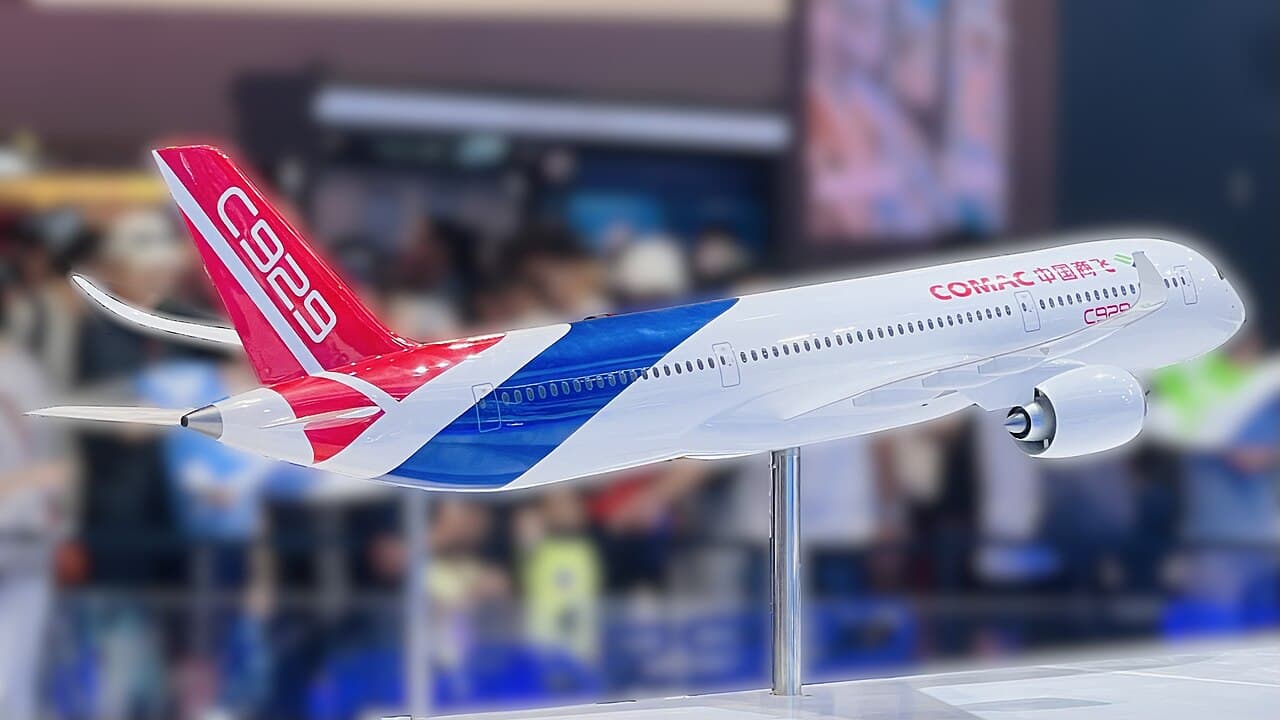
Drive the C929 deeper into hardware execution: complete wind-tunnel and aerodynamic validation, lock in remaining tier-1 suppliers beyond Aviage/Safran/Crane, take delivery of Huarui Aero's first middle fuselage by September 2027, and ultimately pick a powerplant - the domestic AECC CJ-2000/AEF-3500 turbofan is emerging as a leading candidate after a successful Feb 2025 high-altitude bench test, but no selection has been confirmed. COMAC's own site now lists the baseline C929 at 282 to 440 seats. COMAC has publicly set a prudent timeline of a China type certificate by 2032 and first commercial flight around 2035.
Air China operated COMAC's C919 on its first-ever scheduled international route on August 12, with the C919-100(ER) aircraft (registered B-919Y) departing Beijing Capital International Airport around 3:20pm and landing at Ulaanbaatar New International Airport in Mongolia around 5:00pm local time, where it received a water-cannon salute. The Beijing-Ulaanbaatar service will operate daily, a first step toward international operations for the Boeing and Airbus rival, though the C919 still lacks FAA and EASA certification that would open Western markets.
Air China will begin the C919's first-ever international scheduled service on August 12, flying daily between Beijing Capital and Ulaanbaatar with flight CA723 departing Beijing at 3pm and returning as CA724, using an aircraft configured for up to 158 passengers. The route marks a milestone for China's push to export its domestically developed narrow-body beyond the C909 regional jet's existing international network in Southeast Asia.
COMAC's C919-600, a shortened variant built to operate from Tibetan Plateau airports above 4,000 meters, completed its first flight on July 29, departing and returning to Shanghai Pudong International Airport after just under two hours in the air. The 140-seat aircraft is co-developed with Tibet Airlines, which holds a 40-jet launch order.
COMAC brought models of stretched (up to 210-seat) and high-altitude C919 variants to the Farnborough International Airshow for the first time, and revealed the seat map for its in-development C929 widebody, configured for 281 seats across three classes. The Chinese airframer's expanded international presence follows a recent purchase agreement for 20 C909 regional jets with Air Cambodia, as it works to broaden its narrowbody family and challenge Boeing and Airbus beyond its home market.
COMAC's C909 regional jet marked its 10th anniversary of commercial service on June 28, with 186 aircraft delivered to more than 10 customers since its 2016 entry into service. The fleet now accounts for roughly 70% of China's regional-aircraft market, has carried more than 37 million passengers across 860-plus routes, and operates over 500 flights a day. The type has also expanded onto about 25 international routes across Indonesia, Laos and Vietnam.
(~$2.9B) in 2020; current revenue not publicly disclosed (COMAC remains a loss-making state-owned enterprise reliant on state capital injections). At list prices, 2025's roughly 13-15 C919 deliveries plus C909 deliveries would carry a combined notional value in the low single-digit billions of dollars, though realized revenue is materially lower after customer discounts and lease subsidies.
C909/C919 Combined Deliveries
~228
about 42 C919 + 186 C909, as of September 18, 2026; no public C919 deliveries since July
2026 C919 Deliveries to Date
10 delivered through September 18, 2026
(8 in H1 plus 2 in July; 0 in August and none publicly recorded in the first half of September), lifting cumulative deliveries to about 42 since 2023 EIS - still well off pace for the 33-aircraft 2026 airline plan. IBA's September 2026 forecast still expects roughly 28 C919s for the full year.
(mostly state-directed). IBA's September 2026 note restated more than 1,000 firm C909/C919 orders and over 1,500 including LOIs and MoUs.
C919 Passengers Carried
7.5M+ across 58 routes / 26 cities
August 12, 2026, after the Beijing-Ulaanbaatar international debut
06
Operations & revenue
Operating status
Operating
C909 and C919 are both in revenue service. The C909 marked 10 years in service on June 28, 2026 with ~186 aircraft delivered to 10+ customers, over 37 million passengers, 860+ routes and ~70% of China's regional-jet market. The C919 ramp remains well behind the airlines' 33-aircraft 2026 plan: 8 delivered in the first half, 2 more in July (Air China's 12th and China Southern's 12th), and none publicly recorded in August or the first half of September, for 10 year-to-date and a cumulative fleet of about 42 as of September 18. Labor shortages and LEAP-1C engine supply remain the binding constraints. On August 12, 2026 the C919 began its first international service, a daily Air China flight between Beijing and Ulaanbaatar, taking its network to 58 routes / 26 cities and over 7.5 million cumulative passengers; Leeham's September 1 recap, citing Cirium, said Air China had 12 C919s in service. Southeast Asia remains COMAC's main export beachhead: Air Cambodia's 10+10 C909 firm order still targets first deliveries in November 2026 after Cambodia's civil aviation authority completed a C909 training review in mid-September, and AeroRoutes schedule filings dated September 8 now put C909 service starting December 15, 2026 on routes including Phnom Penh-Nanning, Ho Chi Minh City, Vientiane, Haikou and Zhengzhou. Vietjet's 10-aircraft C909 finance lease signed in April 2026 remains without a public delivery date.
Revenue streams
C919 Aircraft Sales
Narrow-body aircraft sales and lifecycle support centered on the C919 trunk-liner program, which is already flying with China Eastern, Air China, and China Southern (about 42 delivered as of mid-September 2026) and carries a state-directed backlog of 1,000+ orders.
C909 (ARJ21) Aircraft Sales
Regional-jet sales, leasing, and support (~186 delivered by its June 2026 10-year service milestone), including export placements in Indonesia, Laos, and Vietnam. The C909 is also being extended into derivative markets such as medical rescue, firefighting, cargo, and business-jet configurations.
Government Funding and Subsidies
Ongoing state capital injections, subsidies, grants, and R&D support. Received $6.2B capital injection in 2025 from state shareholders.
07
Track record
How past announced dates turned out.
2/2announced dates hit on time
2 Hit
0 Slipped
0 Missed
Hit
C919 launches first international route
Target August 12, 2026 · Resolved Aug 12, 2026
Air China flew the C919 as scheduled on its new daily Beijing-Ulaanbaatar route (flights CA723/CA724) on August 12, 2026, the type's first-ever regularly scheduled international passenger service, taking the C919 network to 58 routes across 26 cities with over 7.5 million cumulative passengers carried.
C919-600 (high-altitude plateau variant) first flight
Target 2027 · Resolved Jul 29, 2026
The high-altitude C919-600 completed its maiden flight on July 29, 2026 - a 1-hour-59-minute sortie departing from and returning to Shanghai Pudong International Airport - well ahead of the previously announced 2027 target. Launch customer Xizang Airlines (formerly Tibet Airlines) holds 40 aircraft on order.
Air Cambodia files C909 service debut for December 15
AeroRoutes reported on September 8, 2026 that Air Cambodia's Northern Winter 2026/27 schedule filings put COMAC C909 operations starting December 15, 2026. Filed C909 routes include Phnom Penh-Nanning (4 weekly, replacing A320), Phnom Penh-Ho Chi Minh City (daily), Phnom Penh-Vientiane (2 weekly), Phnom Penh-Haikou (3 weekly from December 16), Phnom Penh-Zhengzhou (3 weekly from December 16), Sihanoukville-Ho Chi Minh City (daily from December 15), Sihanoukville-Shenzhen (2 weekly from December 15), and Sihanoukville-Chongqing from February 1, 2027 (2 weekly). First two aircraft remain due in November 2026.
C919 deliveries pick up in July, then stall again in August
After eight C919 deliveries in the first half of 2026, COMAC handed over two more in July - Air China's 12th C919 in mid-July and China Southern's 12th (B-659G) on July 21 - lifting the 2026 year-to-date total to 10 and the cumulative fleet to about 42 (including one COMAC Express aircraft). August then recorded no public formal C919 deliveries, a pause Chinese aviation observers tied to the production-ramp supply-chain window after H1 consumed a batch of LEAP-1C engines and avionics. A September 1 Leeham analysis, citing IBA, said Air China had 12 C919s in service and framed boosting monthly output - IBA still expects roughly 28 C919s in 2026, 59 in 2028 and 93 by 2030 - as COMAC's real test after the Mongolia debut. No public C919 delivery was recorded in the first half of September 2026 either.
C919 completes first international flight
Air China operates the C919 on its first-ever scheduled international route on August 12, 2026, with the C919-100(ER) aircraft (registered B-919Y) flying from Beijing Capital International Airport to Ulaanbaatar New International Airport in Mongolia. The Beijing-Ulaanbaatar service runs daily, a step toward international operations for COMAC's narrow-body, though the C919 still lacks FAA and EASA certification needed to reach Western markets.
Air Cambodia firms up C909 order
Air Cambodia and COMAC sign a definitive purchase agreement in Shanghai on July 17, 2026, converting the September 2025 MoU into a firm order for 10 C909s plus 10 options - the first bulk C909 purchase by a foreign flag carrier. Cambodia's State Secretariat of Civil Aviation also signs a separate MoU with COMAC covering infrastructure, operational support, talent development, and maintenance training; the first aircraft are due for delivery in the second half of 2026.
C919-600 plateau variant completes maiden flight
The high-altitude C919-600, built to operate from Tibetan Plateau airports above 4,000 meters, completes its first flight on July 29, 2026, departing and returning to Shanghai Pudong International Airport after just under two hours in the air. Tibet Airlines, the 140-seat variant's launch customer, holds a 40-jet order.
COMAC debuts stretched/high-altitude C919 and C929 cabin at Farnborough
At the Farnborough International Airshow in July 2026, COMAC for the first time brought models of the stretched (up to ~210-seat) and high-altitude C919 variants to a major Western airshow, and revealed the cabin seat map for its in-development C929 wide-body - configured for 281 seats across three classes. The appearance marked a step up in COMAC's international presence, coming shortly after its 20-aircraft C909 purchase agreement with Air Cambodia.
C919 derivative family takes shape (-600 high-altitude and -800 stretch)
COMAC's plan to grow the C919 into a family becomes more concrete. The shortened, plateau-optimized C919-600 - a roughly 34 m fuselage, ~140-160 seats, and aimed at high-elevation airports in western China - is photographed at Shanghai Pudong in January 2026 ahead of flight testing, with Tibet Airlines as launch customer under a 40-aircraft joint-development agreement signed in December 2023 and first flight targeted for 2027. In parallel, COMAC and launch operator China Eastern are jointly developing the stretched C919-800, a 200+ seat variant targeting the Airbus A321neo and Boeing 737 MAX 10 class, with COMAC citing a 2030 entry-into-service goal.
Vietjet returns with a 10-aircraft C909 finance lease
Vietjet signs a finance lease agreement with SPDB Financial Leasing (a Shanghai Pudong Development Bank subsidiary) for 10 C909s on April 16, 2026 in Beijing, during a state visit by Vietnam's top leadership. Unlike its earlier 2025 wet-lease of two aircraft from Chengdu Airlines, this is the first time Vietjet will operate C909s itself, backing five new Vietnam-China routes (Hanoi-Hangzhou, Hanoi-Enshi, Hanoi-Huangshan, Ho Chi Minh City-Guilin, Ho Chi Minh City-Huangshan). A delivery timeline for the leased aircraft has not been disclosed.
2026
C919 deliveries lag despite 33-aircraft airline plan
Chinese airlines projected 33 C919 deliveries in 2026, but COMAC ships only 5 aircraft through the end of April (1 in February, 2 in March, 2 in April), with output constrained by labor shortages and supplier dependencies - particularly LEAP-1C engines. Deliveries pick up slightly through the first half of the year: 8 total for H1 2026 (3 to Air China, 3 to China Eastern, 2 to China Southern), lifting cumulative C919 deliveries to roughly 40 since the 2023 entry into service - still well short of the annual plan's pace.
C929 detailed design phase advances
COMAC accelerates the C929 wide-body into detailed design, with CAAC engineers embedded in design reviews, preliminary wind-tunnel testing under way, and a letter of intent signed with Aviage Systems at Singapore Airshow for the core avionics processing system. Air China has signed a preliminary launch-customer agreement, and fuselage manufacturer Huarui Aero is targeting first middle-fuselage delivery by September 1, 2027.
$92M capital injection into Chengdu Airlines
In February 2026, COMAC pumps 634 million yuan (~$91.76M) into subsidiary Chengdu Airlines, nearly tripling the carrier's registered capital from 680M yuan to 2B yuan and reinforcing COMAC's 48% stake. The move turns Chengdu Airlines into a demonstration platform for the C909 with planned expansion to routes across Southeast Asia, Central Asia, and Russia. Later 2026 reporting has Chengdu Airlines recruiting partners for prospective routes to Vladivostok and Khabarovsk in Russia and Osh in Kyrgyzstan, and eyeing longer-term interest from the UAE, Saudi Arabia, Qatar, and Oman.
C909 marks 10 years in service with ~70% of China's regional market
On June 28, 2026, COMAC's C909 (formerly the ARJ21) marked its 10th anniversary of commercial service. Since entering service in 2016 the type had reached 186 aircraft delivered to more than 10 customers, carried over 37 million passengers across 860-plus routes at more than 500 flights per day, and accounted for roughly 70% of China's regional-aircraft market, while expanding onto about 25 international routes across Indonesia, Laos, and Vietnam.
Singapore Airshow export push
At Singapore Airshow 2026, COMAC showcases the C919 with a demonstration flight and brings the C909 medical-rescue variant to Southeast Asia for the first time. COMAC says combined C909 and C919 deliveries have exceeded 200 aircraft, serving more than 800 routes and carrying over 36 million passengers. Shanxi Victory General Aviation also signs for up to six C909 firefighting aircraft - the C909's first dedicated firefighting order.
2025
Southeast Asia expansion and C929 supplier deals
COMAC adds Lao Airlines and Vietjet Air as new C909 customers and uses the Paris Air Show 2025 to sign C929 program cooperation MoUs with Safran and Crane Aerospace & Electronics. By mid-2025 it had delivered 20 C919s and 165 C909s. Vietjet's 6-month wet-lease of two C909s wraps in October without renewal, while Air Cambodia commits in September to up to 20 C909s (10 firm + 10 options) - the largest C909 order outside China.
2024
ARJ21 rebranded as C909
At Airshow China in November 2024, COMAC commercially renames the ARJ21 as the C909 and standardizes its lineup under the COMAC+ naming scheme. By that point, the aircraft had been in service since 2016 with 150 deliveries and more than 17 million passengers carried.
2023
C919 enters commercial service
China Eastern Airlines puts the C919 into commercial passenger service on May 28, 2023 on the Shanghai-Beijing route. COMAC takes over the C929 wide-body program independently after Russia partnership is dissolved.
2022
C919 CAAC certification and first delivery
The C919 receives its type certificate from CAAC on September 29, 2022. First production aircraft delivered to China Eastern Airlines on December 9, 2022.
2017
C919 maiden flight
The C919 completes its maiden flight on May 5, 2017 from Shanghai Pudong International Airport after years of development.
2015
C919 prototype rollout
The first C919 prototype is rolled out on November 2, 2015 at COMAC's Shanghai facility, marking a major milestone for China's commercial aviation ambitions.
2009
C919 program launched
COMAC officially launches the C919 narrow-body program and selects CFM International to supply LEAP-1C engines.
2008
COMAC founded
The Chinese government establishes COMAC on May 11, 2008 in Shanghai with RMB 19 billion (~$2.7B) in registered capital from state-owned shareholders including SASAC and AVIC.
Cambodia SSCA completes C909 training review ahead of November deliveries
In mid-September 2026 a delegation from Cambodia's State Secretariat of Civil Aviation completed a review of COMAC's C909 flight and maintenance training programs, covering syllabus, instructor qualifications, facilities and quality management, and signed an operational-support, maintenance-training and talent-development agreement. SSCA spokesperson Sinn Chanserey Vutha confirmed to Leeham News that Air Cambodia's first two of 10 firm C909s remain due in November 2026, followed by two in 2027, three in 2028 and three in 2029, in a 93-seat layout (3 business / 90 economy) aimed at domestic, ASEAN and China routes.
09
Funding
$17.2Bdisclosed across 3 rounds with a stated amount