Active
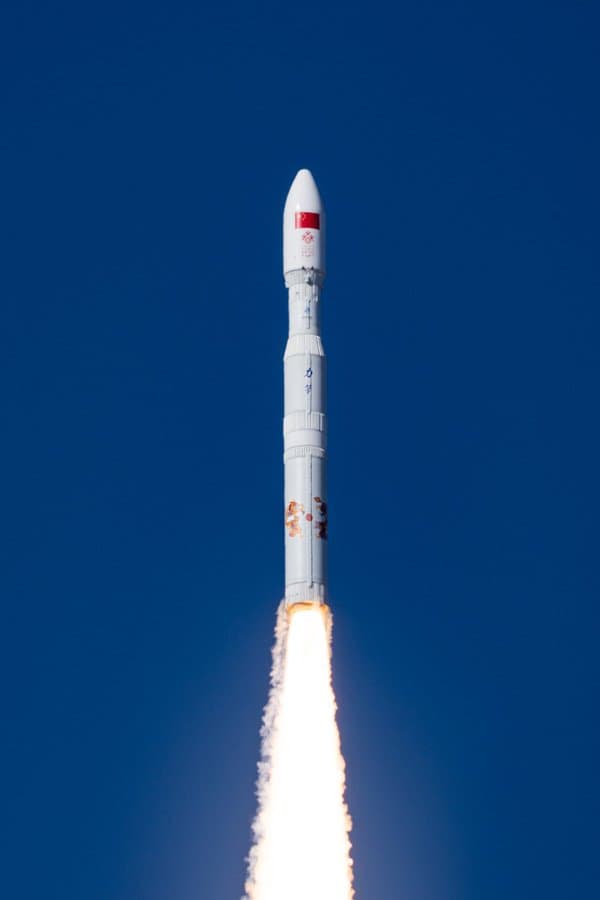
Kinetica-1 (Lijian-1)
Four-stage solid-propellant small/medium-lift launch vehicle developed by a team with Long March 11 heritage - one of China's most-flown commercial rockets.
CAS Space (Zhongke Aerospace) is a 2018 commercial spinoff majority-owned by the Chinese Academy of Sciences, led by founder and chairman Yang Yiqiang, former chief commander of the state Long March 11 solid rocket.
Latest update Oct 5, 2026
01
Headquartered in Guangzhou, it now lists 900+ employees. After the successful 20 September 2026 Kinetica-1 Y18 flight from Dongfeng (nine satellites including Chaozhisuan-1), the company homepage reports 16 successful launches and 122 payloads in orbit (Kinetica-1: 16 flights, 15 successes, 119 satellites; the Kinetica series also includes the 30 March Kinetica-2 maiden flight). That September land flight filled the monthly Kinetica-1 slot missed in August, but the first sea launch (Y17, three satellites from waters near Guangdong) remained unflown as of 5 October 2026, with the Y18 mission article still calling it about to depart. The second Kinetica-2 vehicle (Y2) left Guangzhou for Jiuquan on 26 August 2026 for an 18-satellite Qianfan mission; company news through 28 September and the Kinetica-2 product page (still one success) have not reported a flight or a dated Jiuquan window, so the October 2026 target remains the last sourced schedule, distinct from LandSpace's 15 September 10-satellite Qianfan flight. The 4.18 billion yuan STAR Market application, refreshed 29 June 2026, was listed by SSE as suspended (financials update) on 30 September 2026 after FY2025 figures expired; that is a prospectus-refresh pause, not a rejection, and no CSRC registration, pricing, or trading date has been set. On 17 September the company said Lihong-2's first flight and 100 km-class recovery are planned for Q1 2027.
cas-space.comUpdated Oct 5, 2026
02
2026-2027
Ramp Kinetica-2 production at the new Zhejiang super factory (up to 12-20 vehicles per year) and fly its planned 2026-2027 manifest as the line enters serial production across Guangzhou and Shaoxing. The second flight (Y2), carrying 18 Qianfan (Thousand Sails) mega-constellation satellites, remains targeted for October 2026 after the vehicle departed the Guangzhou factory for Jiuquan on August 26, 2026 - LandSpace already flew its 10-satellite Qianfan demonstration batch on September 15. A third flight (another 18 Qianfan satellites) is targeted for December 2026 and a fourth mission for January 2027; the first operational Qingzhou cargo flight to the Tiangong station remains expected around Q4 2026.
2026-2028
The in-house Kinecore-2 engine (110 tf) completed a 620-second cumulative long-duration qualification test - including a 400-second single burn, a new stability record - on June 30, 2026, en route to replacing the off-the-shelf YF-102 on Kinetica-2's first stage; no further Kinecore-2 test milestones have been reported as of Sept 20, 2026. CAS Space's phased reuse plan adds a full grid-fin system on Kinetica-2's third flight for aerodynamic reentry control, integrates Kinecore-2 capabilities (multiple engine firings, thrust control, cluster recovery) across flights four through seven, and targets complete first-stage recovery by the rocket's tenth flight around 2028. A roughly 100 km recovery demonstration of the Lihong-2 vehicle is now planned for Q1 2027 rather than later in 2026.
2026
The July 24, 2026 monthly Kinetica-1 cadence commitment for the second half of 2026 has missed its August slot and, as of September 20, 2026, its September slot as well. Y17 completed a first sea-launch shipboard rehearsal on August 25 and remains in countdown for a three-satellite mission from waters near Guangdong; Y18 passed factory review July 31 for a nine-satellite Dongfeng land flight and is also unflown. Company news through September 17 covers a space-medicine partnership rather than a launch, and the homepage still lists 15 successful flights. A second sea launch is still described as targeting October. On the IPO, CAS Space's $607M STAR Market application still has no CSRC registration, pricing, or trading date as of September 20, 2026.
Oct 2026
CAS Space's second Kinetica-2 flight remains targeted for October 2026 from Jiuquan, carrying 18 Qianfan constellation satellites under an August 2025 demonstration contract. The Y2 vehicle left Guangzhou for the launch site on August 26 after factory acceptance. LandSpace already flew a 10-satellite Qianfan batch on Zhuque-2E Y7 on September 15, and Orienspace flew eight more on Gravity-1 Y3 the next morning, so Y2 is no longer the first private Qianfan demonstration. A third Kinetica-2 flight (another 18 Qianfan satellites) is still described as targeting December 2026. Company news through September 17 did not change the October target.
2026
TargetLate 2026 to early 2027
CAS Space and Zhongshan Third Hospital are building Yixian-B, a dedicated biomedical test satellite with a lab-on-chip stem-cell culture and observation payload. The company said on September 17, 2026 that development is accelerating and that the satellite will fly on Kinetica-1; 21st Century Business Herald reported the in-orbit verification window as late 2026 to early 2027. It is the first step in a cell, animal, then crewed-life-support space-medicine path, ahead of Lihong-3 in 2028.
Q1 2027-2028
Lihong-1 completed China's first parachute-assisted commercial suborbital capsule recovery from above 100 km on January 12, 2026 (120 km altitude, ~300s microgravity, landing within 100 m of target). The fully reusable, seven-passenger Lihong-2 - powered by three Liqing-1 engines - has finished design and entered engineering development. On September 17, 2026 CAS Space set Lihong-2's first flight and a ~100 km-class recovery verification for Q1 2027, a slip from the prior within-2026 target, with commercial suborbital tourism service still planned from 2028; space tourism is listed as a stated business line in the IPO prospectus.
Q1 2027
CAS Space's in-space upper stage/orbital transfer vehicle (力巡一号 / Lixun-1), which ferries satellites between orbits after a rocket delivers them to space. Company news on August 18, 2026 said the stage completed a series of propulsion-system tests and still plans a maiden flight in Q1 2027. It is separately due to fly on a CASC Long March 10A mission carrying a Space-Time Reference Satellite, and CAS Space has a letter of intent with Interstellar Datalink to launch a geostationary relay-satellite constellation using Kinetica-2 plus the stage. As of September 20, 2026 no later flight-date change has been posted.
03
CAS Space completed a 566-second integrated compatibility hot-fire test of its Kinastra-1 upper stage's full propulsion system in mid-August, verifying pressurization, propellant feed and servo control across all subsystems. Kinastra-1 is designed to ferry satellites between orbits after a rocket delivers them to space, and the successful test clears the way for a maiden flight targeted in the first quarter of 2027.
LandSpace and CAS Space each refiled updated STAR Market IPO prospectuses on June 29, both setting a 2029 profitability target for the first time, contingent on higher launch cadence and mature reusable-rocket technology. LandSpace's filing disclosed its first full-year 2025 results (52.10 million yuan revenue against a 1.71 billion yuan net loss), as the two Chinese rocket makers race to become the country's first publicly listed commercial-launch company.
CAS Space launched its solid-fueled Kinetica-1 rocket on its 15th mission on July 24 from Jiuquan, placing five satellites into sun-synchronous orbit in what was China's 53rd orbital launch of the year. Alongside the flight the company committed to a monthly Kinetica-1 launch cadence for the second half of 2026, roughly double its historical rate of under four flights a year since the rocket's 2022 debut. Payloads included a demonstrator aimed at thermal-dissipation and power systems for future space-based data centers.
CAS Space launched its Kinetica-1 (Lijian-1) Y14 solid rocket from the Dongfeng Commercial Space Innovation Test Zone on June 15, placing eight rideshare satellites into orbit on the vehicle's 14th flight and third mission of 2026. The success lifted Kinetica-1's cumulative tally to 105 satellites and more than 15 tonnes delivered, making it the first Chinese commercial launch vehicle to loft over 100 spacecraft. The milestone lands as CAS Space pursues an IPO amid a national push toward roughly 140 orbital launches this year.
04
Four-stage solid-propellant small/medium-lift launch vehicle developed by a team with Long March 11 heritage - one of China's most-flown commercial rockets.
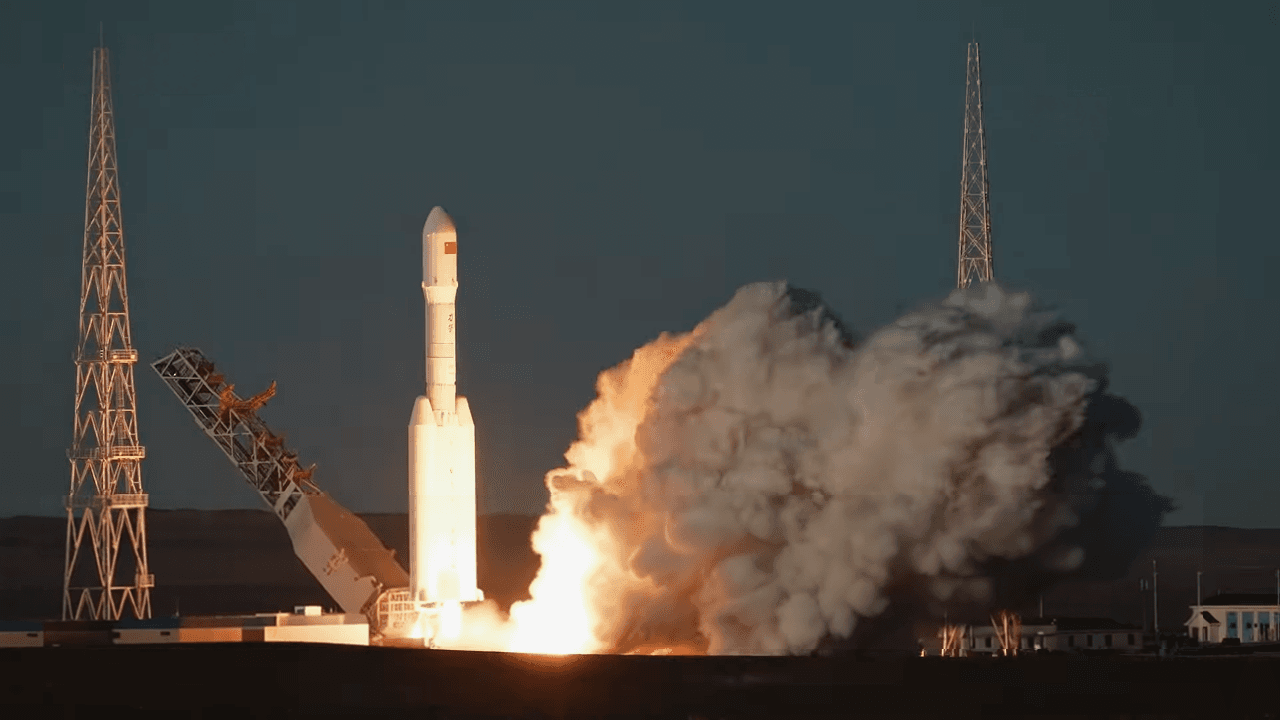
Medium-lift kerosene-liquid oxygen rocket with a three-core (tri-body) first stage powered by nine YF-102 engines - CAS Space's first liquid launch vehicle, designed for future first-stage reusability.
05
Not yet profitable: STAR Market IPO prospectus (refreshed June 29, 2026) shows revenue growing from ~5.95M yuan (2022) to ~77.72M yuan (2023), ~244M yuan (2024), and ~277M yuan (~$40.9M) in full-year 2025 (about 89% CAGR 2023-2025), against net losses of ~1.76B yuan (2022), ~512M yuan (2023), ~861M yuan (2024), and ~1.12B yuan (2025) - cumulative net losses of roughly 4.25B yuan since 2022. Management now targets profitability by 2029 (2030 under conservative assumptions), contingent on higher launch cadence, mature first-stage reuse, and large constellation orders.
(~$2.1B) (STAR Market IPO target, filed April 2026 and unchanged in the June 29, 2026 prospectus refresh; ~11B yuan last private round); management now targets profitability by 2029
(119 satellites on Kinetica-1). Y18 on 20 September 2026 flew nine satellites from Dongfeng. Homepage totals 16 successful launches and 122 payloads including Kinetica-2. Y17 first sea launch remained unflown as of 5 October 2026
06
Operating status
Operational
As of 5 October 2026 the homepage lists 16 successful launches, 122 payloads, and 900+ employees. Kinetica-1 has flown 16 times with 15 successes (119 satellites on that vehicle) after Y18 lifted nine satellites from Dongfeng at 12:03 Beijing time on 20 September 2026, filling the September monthly slot after a missed August flight. Y17's first sea launch remained unflown in the 20 September company article and in news through 28 September. Kinetica-2 Y2 has not flown: the product page still shows one success and three payloads, Wikipedia lists no Y2 row, and the last sourced schedule is October 2026 from Jiuquan with 18 Qianfan satellites, not a dated window. SSE listed the STAR Market IPO as suspended (financials update) on 30 September 2026.
Dedicated and rideshare small/medium-lift launches on the solid-fuel Kinetica-1 from Jiuquan for Chinese and international commercial payloads, with sea launches from the Eastern Maritime Spaceport planned for 2026.
Medium-lift kerolox launches for satellite-internet mega-constellation deployment (including Qianfan batches) and cargo missions such as the Qingzhou spacecraft to China's space station.
Suborbital test platforms - the solid-fuel Lihong-1, which completed China's first commercial suborbital capsule recovery from above 100 km on January 12, 2026, and the fully reusable, seven-passenger Lihong-2 (three Liqing-1 engines) - underpin a planned crewed suborbital space-tourism vehicle. Lihong-2 has finished design and entered engineering development; on September 17, 2026 CAS Space set the maiden flight and ~100 km-class recovery demonstration for Q1 2027 (slipped from a 2026 target), with commercial service still planned from 2028.
Space Manufacturing and Life-Science Payloads
In-orbit manufacturing and biomedical experiment services built around the Lihong vehicle family and dedicated satellites. On September 17, 2026 CAS Space said it is accelerating Yixian-B, a stem-cell culture satellite with Zhongshan Third Hospital, for a Kinetica-1 launch around late 2026 to early 2027, with a three-step path of cell, animal, and crewed-life-support experiments. Lihong-3 is planned for a 2028 first flight carrying at least 300 kg of space-manufacturing payload with sample return.
07
How past announced dates turned out.
0/1announced date hit on time
Fly Lihong-2 maiden flight and ~100 km recovery demonstration
Target 2026 · Resolved Sep 17, 2026
CAS Space had targeted a Lihong-2 maiden flight and ~100 km-class recovery verification within 2026, accelerated from an earlier ~2027 estimate. On September 17, 2026 the company published that Lihong-2's first flight and 100 km-class recovery, including an uncrewed robot checkout, are now planned for Q1 2027. Commercial suborbital tourism service remains planned from 2028.
08
2026
STAR Market IPO review paused for financials refresh
On 30 September 2026 the Shanghai Stock Exchange listed CAS Space's STAR Market IPO as suspended (financials update) because audited figures in the application had expired, a status also applied that day to dozens of other issuers. 21st Century Business Herald and Ifeng, citing the SSE site, said the filing was accepted 31 March, entered inquiry 15 April, and last refreshed 29 June with FY2025 revenue of about 277 million yuan against a 1.119 billion yuan net loss. Direct SSE HTML was not retrieved (site error). This is a document-validity pause, not a rejection; CSRC registration and a trading date remain pending.
Kinetica-1 Y18 nine-satellite success
On 20 September 2026 at 12:03 Beijing time, Kinetica-1 Y18 (Chaozhisuan) lifted nine satellites to orbit from the Dongfeng commercial site, the rocket's 16th flight and 15th success. CNSA named Qinling 01/02, Pujiang-4, Pengcheng first satellite, Diting-01 A/B/C, Chaozhisuan-1, and Yunxiao Pathfinder. CAS Space said the Kinetica series had then placed one spacecraft and 121 satellites in orbit. The same article still described the first Kinetica-1 sea launch (Y17, three satellites) as about to depart.
Yixian-B stem-cell satellite and Lihong-2 flight re-dated to Q1 2027
On September 17, 2026 CAS Space said its space-medicine joint research center with Zhongshan Third Hospital is accelerating Yixian-B, a dedicated biomedical test satellite carrying a stem-cell culture and observation payload on a lab-on-chip, to fly on Kinetica-1. 21st Century Business Herald reported the in-orbit verification window as late 2026 to early 2027. In the same update the company set Lihong-2's first flight and 100 km-class recovery, plus an uncrewed robot checkout, for Q1 2027, and outlined Lihong-3 in 2028 as a reusable spacecraft for at least 300 kg of space-manufacturing payload with sample return.
Kinetica-1 completes first sea-launch shipboard rehearsal
On August 25, 2026 CAS Space completed a full mission rehearsal for Kinetica-1's first maritime launch aboard the Dongfang Hangtiangang vessel, simulating launch-day flow including erector raise (120 seconds), dynamic-platform self-alignment, and anti-tip-system operation. The company said the exercise closed the land-to-sea support chain and put the three-satellite Y17 mission into countdown from waters near Guangdong. As of September 20, 2026 the sea launch had not yet flown; company news through September 17 covers a space-medicine partnership rather than a launch, and the homepage still lists 15 successful flights.
Second Kinetica-2 (Y2) departs factory for Jiuquan
On August 26, 2026, the second Kinetica-2 vehicle (Y2) completes its departure review and leaves CAS Space's Guangzhou factory, with its three first-stage booster cores, second stage, and fairing convoyed to the Jiuquan Satellite Launch Center. The flight, carrying 18 Qianfan mega-constellation satellites, has slipped from a September to an October 2026 target as Kinetica-2 enters serial production across Guangzhou and the Zhejiang super factory.
Kinecore-2 completes long-duration qualification test
On June 30, 2026, the in-house Kinecore-2 engine (110 tf kerolox) completes a long-duration qualification test totaling 620 seconds of cumulative burn time - about 3.5x its actual flight duration requirement - including a single 400-second ignition that sets a new stability record for the engine, under simulated high-temperature, high-rotational-speed, and vibration conditions. The engine is intended to replace the off-the-shelf YF-102 on Kinetica-2's first stage to enable reusability.
Lihong-1 completes China's first commercial suborbital capsule recovery
On January 12, 2026, the solid-fuel Lihong-1 flies a suborbital test from Jiuquan to roughly 120 km, giving its payload capsule about 300 seconds of microgravity before a parachute-assisted landing about 150 km downrange within 100 meters of the target - the first recovery of a Chinese commercial payload capsule from above 100 km, validating reentry, deceleration, and booster descent guidance ahead of the crewed Lihong-2 suborbital tourism vehicle.
Kinetica-1 Y15 and monthly-cadence commitment
On July 24, 2026 the 15th Kinetica-1 flight (Y15) lifts five satellites to sun-synchronous orbit from Jiuquan, bringing the series' cumulative total to 110 spacecraft in what was China's 53rd orbital launch of the year. Alongside the flight CAS Space commits to a monthly Kinetica-1 launch cadence for the second half of 2026, roughly doubling its historical rate of under four flights a year since the rocket's 2022 debut.
2026
Guangzhou Aerospace Town groundbreaking
On May 28, 2026, ground is broken on Guangzhou Aerospace Town, a commercial-aerospace industrial cluster in the city's Huangpu district on a river-adjacent, 574,100 sq m site with two 5,000-tonne berths for large aerospace equipment. CAS Space's reusable launch vehicle, spacecraft, and liquid-engine production base is the project's first flagship tenant, targeted for completion and production start in 2027 - a second manufacturing expansion alongside the Zhejiang 'super factory.'
IPO application filed and Zhejiang 'super factory' opens
On April 1, 2026 the Shanghai Stock Exchange accepts CAS Space's IPO application targeting a 4.18 billion yuan (~$607M) raise at a ~15 billion yuan (~$2.1B) valuation. On April 28 the company opens a 2 billion yuan Kinetica-2 'super factory' in Keqiao, Zhejiang, targeting up to 12 vehicles per year (up to 20 combined with Guangzhou).
Kinetica-2 maiden flight succeeds
On March 30, 2026, the medium-lift kerolox Kinetica-2 (Lijian-2) reaches orbit on its debut from the Dongfeng commercial site at Jiuquan, deploying its payloads including a prototype of the Qingzhou low-cost cargo spacecraft - CAS Space's first liquid-propellant rocket.
Kinetica-1 Y14 - first Chinese commercial rocket past 100 satellites
On June 15, 2026, the 14th Kinetica-1 flight (Y14) lifts eight rideshare satellites from the Dongfeng Commercial Space Innovation Test Zone, bringing the series' cumulative total to 105 satellites and making Kinetica-1 the first Chinese commercial launch vehicle to deploy more than 100 spacecraft. It is the rocket's third flight of 2026.
Kinetica-1 Y13 - 100 satellites milestone
On May 15, 2026, the 13th Kinetica-1 flight (Y13) delivers five Earth-imaging satellites from Jiuquan, bringing the total satellites launched by the Kinetica series to over 100, with cumulative payload mass exceeding 18 tonnes.
2024
2022
2018
09
$607Mdisclosed across 1 round with a stated amount
Strategic & venture rounds
2018-2024
Chinese Academy of Sciences and state-linked strategic investors (mixed-ownership structure)
STAR Market IPO Application Filed
April 2026
Targeting 4.18B yuan (~$607M); IPO valuation ~15B yuan (~$2.1B)
SSE accepted the listing application on April 1, 2026; lead underwriter Guotai Haitong Securities. Inquiry began April 15; prospectus refreshed June 29 with FY2025 figures. On September 30, 2026 SSE listed the review as suspended (financials update) because those audited figures had expired. CSRC registration, pricing, and a trading date remain pending.