Proxima Fusion
Francesco Sciortino
Data verified as of Aug 31, 2026
Summary
Proxima Fusion is Europe's best-funded fusion company and the first research spin-off from the Max Planck Institute for Plasma Physics, founded in Munich in 2023 to commercialize the stellarator - a twisted magnetic bottle that is harder to build than a tokamak but runs continuously without needing to drive a current through the plasma. Its quasi-isodynamic design, Stellaris, was published in February 2025 as the first peer-reviewed, fully integrated stellarator power plant concept. In February 2026 Proxima signed a memorandum of understanding with RWE, the Free State of Bavaria and the Max Planck IPP to build Alpha, a roughly €2B net-energy demonstrator at Garching near Munich targeted to begin operating in 2031, followed by a commercial Stellaris plant at the decommissioned Gundremmingen nuclear site later in the 2030s; an Alpha Alliance of more than 30 European industrial companies including Siemens Energy, Framatome, Air Liquide and Thales was announced the day before. On July 7, 2026 the company raised €411M ($468M) at a €2.4B ($2.7B) valuation, led by XTX Ventures and East X Ventures with RWE and Google as strategic investors, taking total funding past €650M and funding completion of its Stellarator Model Coil in 2027.
Main Products
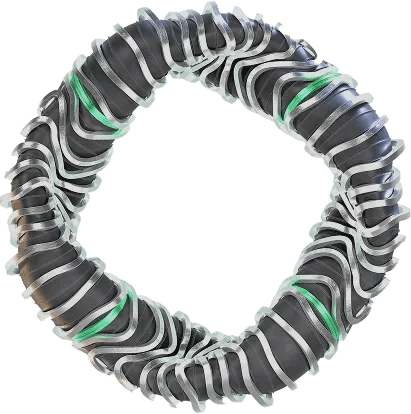
Proxima's quasi-isodynamic stellarator power plant concept, published in February 2025 as the first stellarator power plant design optimized simultaneously for plasma physics, engineering and maintenance and validated through peer review. Quasi-isodynamic optimization cancels the net toroidal current, which is what lets a stellarator run continuously and avoid the disruptions that plague tokamaks.
Design stage. The first commercial Stellaris plant is planned for the site of the decommissioned Gundremmingen nuclear fission station in Bavaria, with deployment targeted for the mid-to-late 2030s once Alpha has demonstrated net energy gain. Engineering design will be driven directly by data from Alpha.
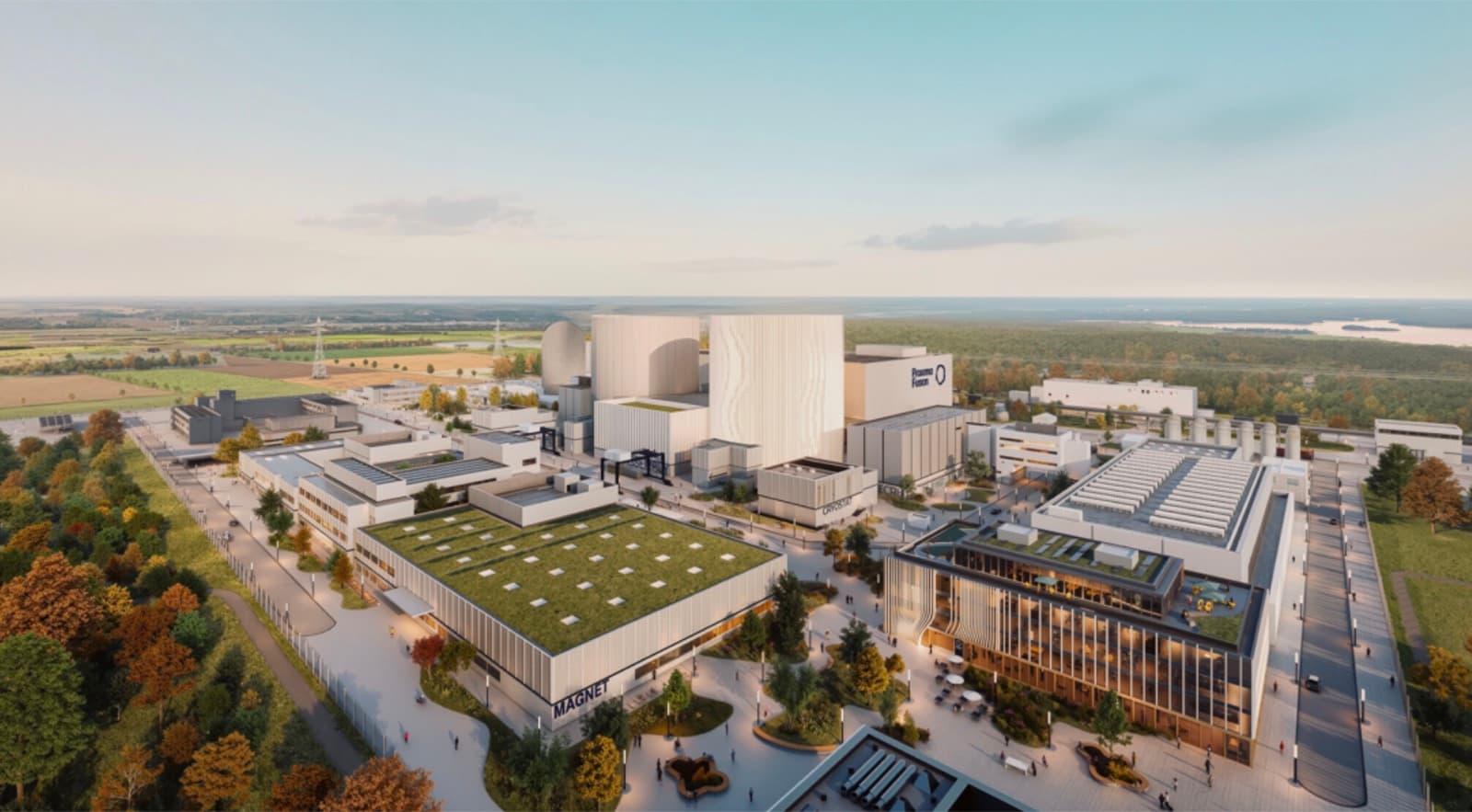
Proxima's net-energy stellarator demonstrator, to be built at Garching near Munich next to the Max Planck Institute for Plasma Physics. Alpha is intended to be the first stellarator to achieve net energy gain (Q>1) and to prove out the manufacturing methods, materials and systems a commercial Stellaris plant would need.
Pre-construction. A February 2026 MoU with RWE, the Free State of Bavaria and Max Planck IPP set the financing and siting framework, and the Alpha Alliance of more than 30 European industrial companies was assembled to deliver the hardware. The July 2026 round funds the Stellarator Model Coil, the full-scale magnet demonstration due in 2027 that gates Alpha's construction.
What's Next
Complete the Stellarator Model Coil
Finish the Stellarator Model Coil, a full-scale high-temperature superconducting magnet demonstration that is the main hardware gate before Alpha construction. It is meant to de-risk HTS magnets for stellarator geometry, where coils are non-planar and far harder to manufacture than a tokamak's.
Scale HTS cable and magnet production
Use the July 2026 round to expand high-temperature superconducting cable and magnet manufacturing and the engineering systems behind stellarator production across the Munich, Paul Scherrer Institute and Culham sites, and hire across engineering, manufacturing and operations.
Convert the Alpha MoU into binding financing and permits
Turn the February 2026 memorandum of understanding with RWE, the Free State of Bavaria and Max Planck IPP into firm agreements: roughly 20% private financing, roughly 20% Bavarian co-financing against the up-to-€400M High-Tech Agenda, federal funding, and the permitting needed to build at Garching. The July 2026 €411M round met Bavaria's private-match condition, unlocking its €400M pledge; a further ~€1.2B in German federal funding for Alpha remains uncommitted and is expected to go out to tender later in 2026, alongside the ~€125M STRIDE national fusion hub - whose Aug 2026-Dec 2029 phased rollout began with a governance and partner-alignment phase covering 34 initial partners - as a separate, complementary funding channel.
Bring Alpha online and demonstrate net energy gain
Build and commission the ~€2B Alpha demonstrator at Garching and operate it from 2031, aiming to make it the first stellarator ever to produce more fusion energy than it consumes and to generate the data that sets the Stellaris engineering design.
Operations & Revenue
No fusion device is operating yet. The company is building toward its Stellarator Model Coil, a full-scale HTS magnet demonstration targeted for completion in 2027 that is meant to de-risk stellarator magnets, while scaling HTS cable and magnet production across its Munich, Paul Scherrer Institute and Culham sites. Alpha, the ~€2B net-energy demonstrator at Garching, is in design with an MoU in place covering financing and siting and operations targeted for 2031; the commercial Stellaris plant at Gundremmingen follows later in the 2030s. Headcount is around 200 and growing across engineering, manufacturing and operations, with hiring accelerating after the July 2026 raise.
Pipeline & Contracts
More than €650M raised to date, including the July 2026 €411M round co-led by XTX Ventures and East X Ventures with utility RWE and Google investing strategically. RWE also brings power plant construction and operating expertise to the Alpha project.
Key Metrics
Timeline
On February 25, 2026 Proxima announces the Alpha Alliance, an industrial consortium of more than 30 European and international companies - including Siemens Energy, Framatome, Air Liquide, Thales, TRUMPF, Eni, Bilfinger, Pfeiffer Vacuum, Kyoto Fusioneering Europe and RWE Nuclear - assembled to manufacture, integrate and deliver the Alpha demonstrator's systems at scale.
On February 26, 2026 Proxima, utility RWE, the Free State of Bavaria and the Max Planck Institute for Plasma Physics sign a memorandum of understanding covering the roadmap to Europe's first commercial fusion power plant: Proxima leads engineering, procurement and construction and finances about 20% privately, Bavaria signals potential co-financing of about 20% (with up to €400M available through its High-Tech Agenda) plus permitting support, RWE contributes power plant construction and operating expertise, and IPP leads the plasma physics for Alpha.
On July 7, 2026 Proxima closes a €411M ($468M) financing round at a €2.4B ($2.7B) valuation, led by XTX Ventures and East X Ventures with RWE and Google joining as strategic investors alongside KfW Capital, SPRIND, Burda Principal Investments and returning backers including Plural, UVC Partners, Balderton, Cherry Ventures, Lightspeed and DST Global Partners. Total funding passes €650M including €95M of public grants, making Proxima Europe's best-funded fusion company. The raise also meets the private-funding condition of Bavaria's February 2026 MoU, unlocking the state's €400M matching commitment toward Alpha.
In May 2026 Proxima forms an Industrial Development Board of four senior European energy and industrial leaders - Luc Remont, Michael Bolle, Ann Mettler and Erich Clementi, with backgrounds spanning EDF, Schneider Electric, Robert Bosch, E.ON, IBM, the European Commission and Breakthrough Energy - to advise on converting the Alpha and Stellaris roadmap into project finance, supply-chain buildout and regulatory delivery.
Effective June 1, 2026 Sergei Galperin joins Proxima as CFO, moving from Ribbit Capital after more than 15 years at J.P. Morgan (most recently European Head of Financial Technology Advisory) and a stint as CFO of health insurer Alan, where he scaled the company through successive funding rounds.
On July 29, 2026 Germany's Federal Ministry for Research, Technology and Space (BMFTR) designates STRIDE (Stellarator Technology & Research for Industrial Development) as the country's national magnetic-fusion hub, to be led jointly by Proxima Fusion, Gauss Fusion and the Max Planck Institute for Plasma Physics at the same Garching and Gundremmingen sites as Alpha and Stellaris. STRIDE is one of three national fusion hubs (alongside laser-fusion hub VEGA and fuel-cycle hub MAT-TRIx) and receives an initial ~EUR125M in federal funding, with funding starting in August 2026.
Founded in April 2023 by Francesco Sciortino, Lucio Milanese, Jorrit Lion, Jonathan Schilling and Martin Kubie - scientists and engineers from the Max Planck Institute for Plasma Physics, MIT and X Development - as the institute's first research spin-off, with €7.5M in pre-seed funding from investors including Plural and UVC Partners.