Pacific Fusion is taking the inertial route to fusion rather than the magnetic one: instead of holding plasma in a magnetic bottle, it crushes a small capsule of deuterium-tritium fuel with an enormous, extremely fast electrical pulse. The company's distinguishing technology is the impedance-matched Marx generator, a pulser architecture that is simpler and cheaper than the systems used at national laboratories, and its plan is to gang 156 production-scale pulser modules into a Demonstration System designed to reach net facility gain - more fusion energy out than the total energy stored in the machine - by 2030. Founded in 2023 by Eric Lander, Keith LeChien, Will Regan, Carrie von Muench and Leland Ellison, it launched publicly in October 2024 with a roughly $900M Series A led by General Catalyst that is released in tranches against technical milestones; the round has since passed $1B as those milestones cleared. In June 2026 a scaled module prototype delivered more than 440 gigawatts at about 1.1 megavolts in an 80-nanosecond pulse, and in July 2026 the Sirius prototype at Lawrence Livermore National Laboratory passed 3,000 full-power shots at 95% energy efficiency. Pacific Fusion broke ground on its $1B, roughly 225,000-square-foot research and manufacturing campus at Mesa del Sol in Albuquerque, New Mexico, on August 25, 2026 - the National Nuclear Security Administration signed a fusion-research MOU with the company the same day - and Nature reporters visiting the nearby Los Lunas build center that month found two of the more than 150 full-scale pulser modules the Demonstration System needs already completed. The Users Program FAQ, still current as of September 2026, says Demonstration System commissioning is expected to begin in 2028, with the first external-user campaigns in 2029 after a 2027 call for proposals. The machine is designed to produce more than 100 megajoules of fusion output per pulse, about 10 times NIF's record output.
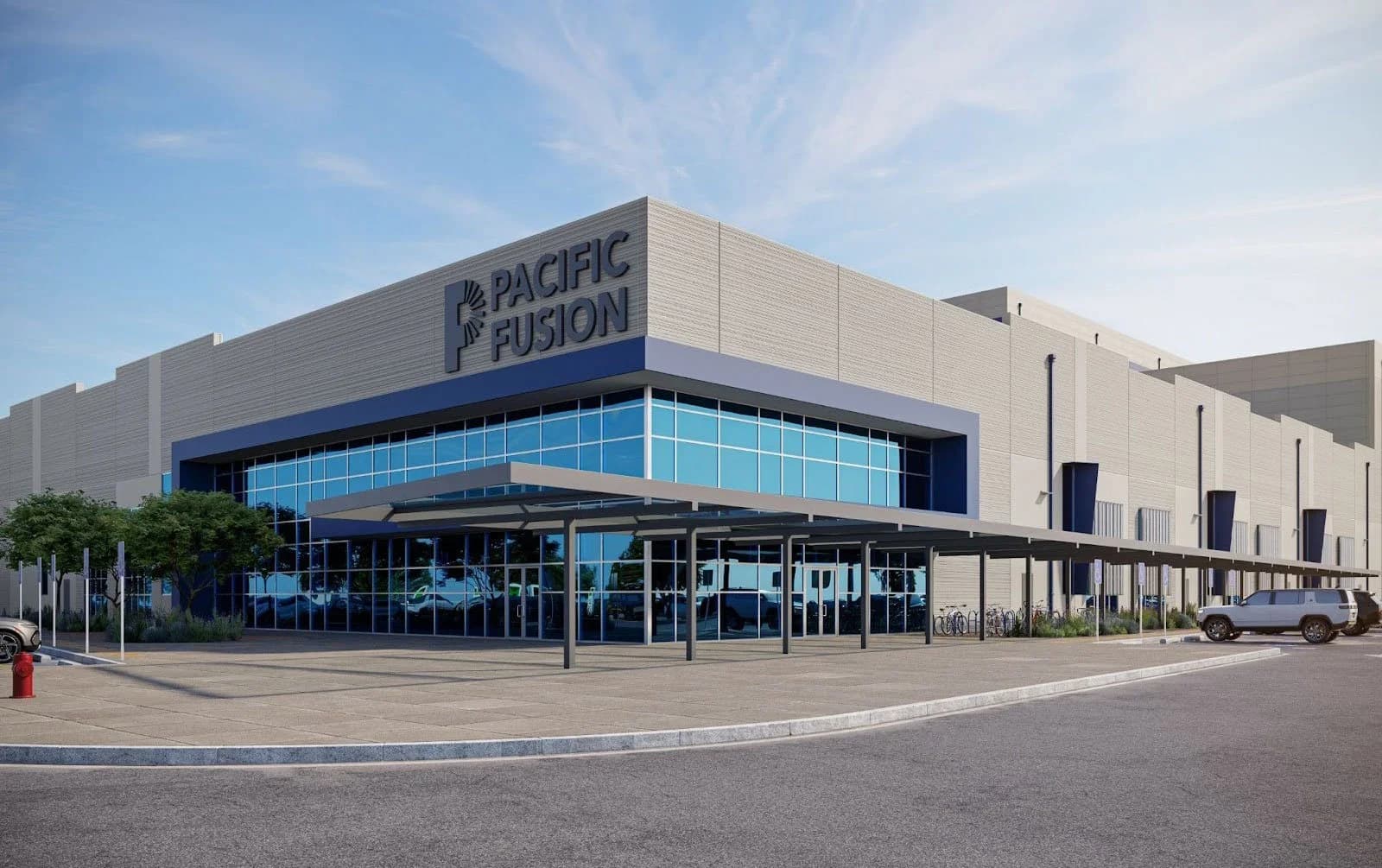
Pacific Fusion held a groundbreaking ceremony on August 25 for its $1 billion research and manufacturing campus at Mesa del Sol in Albuquerque, which will house the Demonstration System the company is targeting for net facility gain by 2030. The event drew board chairman Eric Schmidt, US Senators Martin Heinrich and John Hickenlooper, NNSA administrator Brandon Williams and Sandia National Laboratories director Laura McGill, with the project expected to create about 200 permanent jobs.
Pacific Fusion and Lawrence Livermore National Laboratory reported that Sirius, their four-stage impedance-matched Marx generator prototype, has completed 3,000 full-power shots, each delivering 60 gigawatts in a 100-nanosecond pulse at 95% energy efficiency. The reliability campaign provides the empirical base for the much larger 156-module Demonstration System Pacific Fusion is targeting for net facility gain by 2030.
Pacific Fusion's first-of-a-kind machine, to be assembled at the $1B Mesa del Sol campus in Albuquerque from 156 production-scale pulser modules (each 32 circular stages ringed with 10 bricks). It is designed to reach net facility gain, producing more fusion energy than the total energy stored in the system, and to do it at roughly 100x the facility gain of the National Ignition Facility for about a tenth of the cost.
Under construction. Ground was broken on the Albuquerque campus on August 25, 2026, with components already being produced at the Los Lunas build center opened in December 2025; Nature reporters visiting Los Lunas that same month found two of the more than 150 full-scale production modules already completed. Pacific Fusion's Users Program FAQ says Demonstration System commissioning is expected to begin in 2028, with net facility gain targeted by 2030. The company stresses this is a demonstration machine, not a power plant.
Pulser Modules156 (each 32 stages x 10 bricks); 2 full-scale modules completed as of August 2026
GoalNet facility gain by 2030; commissioning expected to begin 2028
LocationMesa del Sol, Albuquerque, New Mexico ($1B campus)
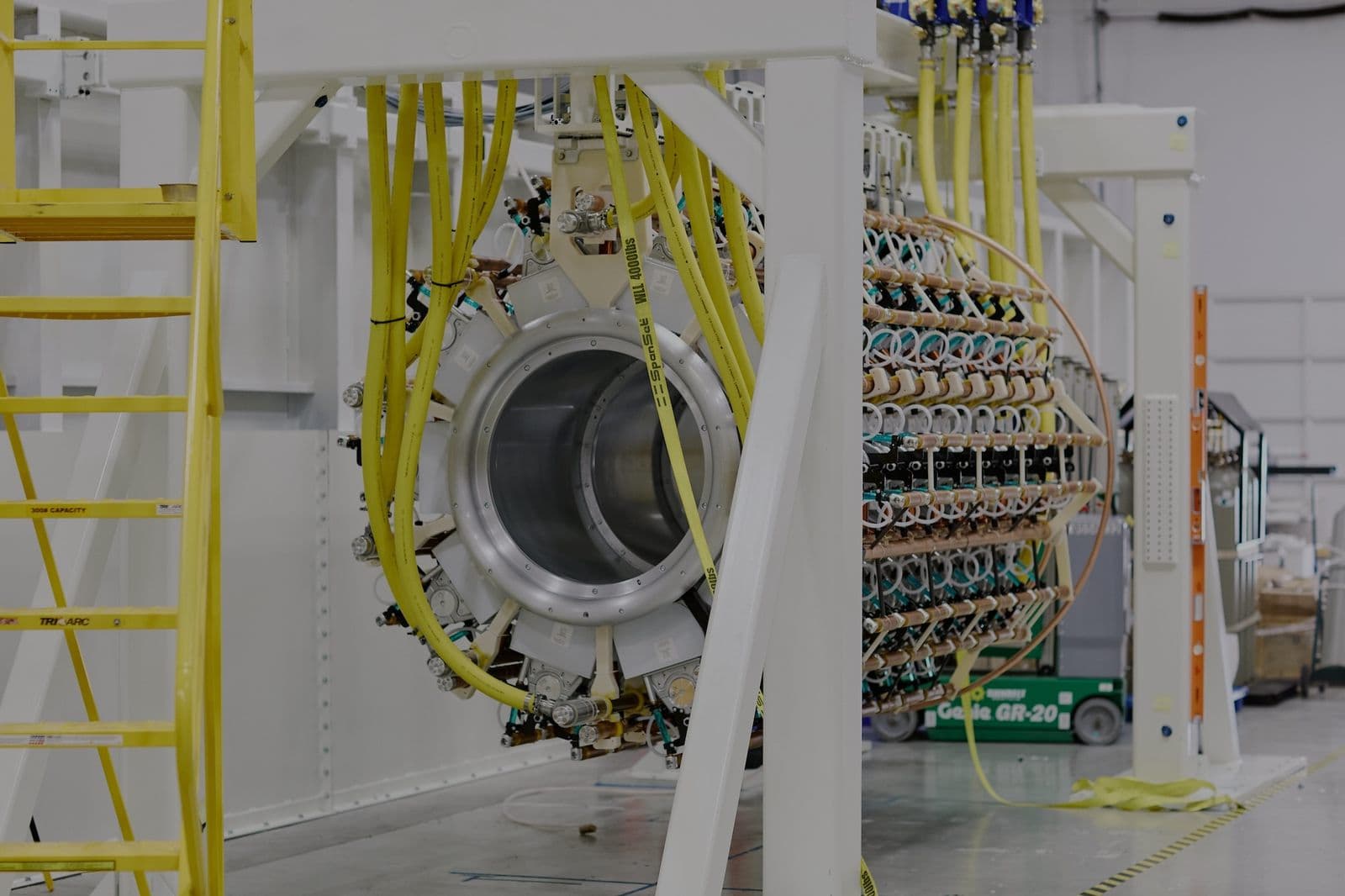
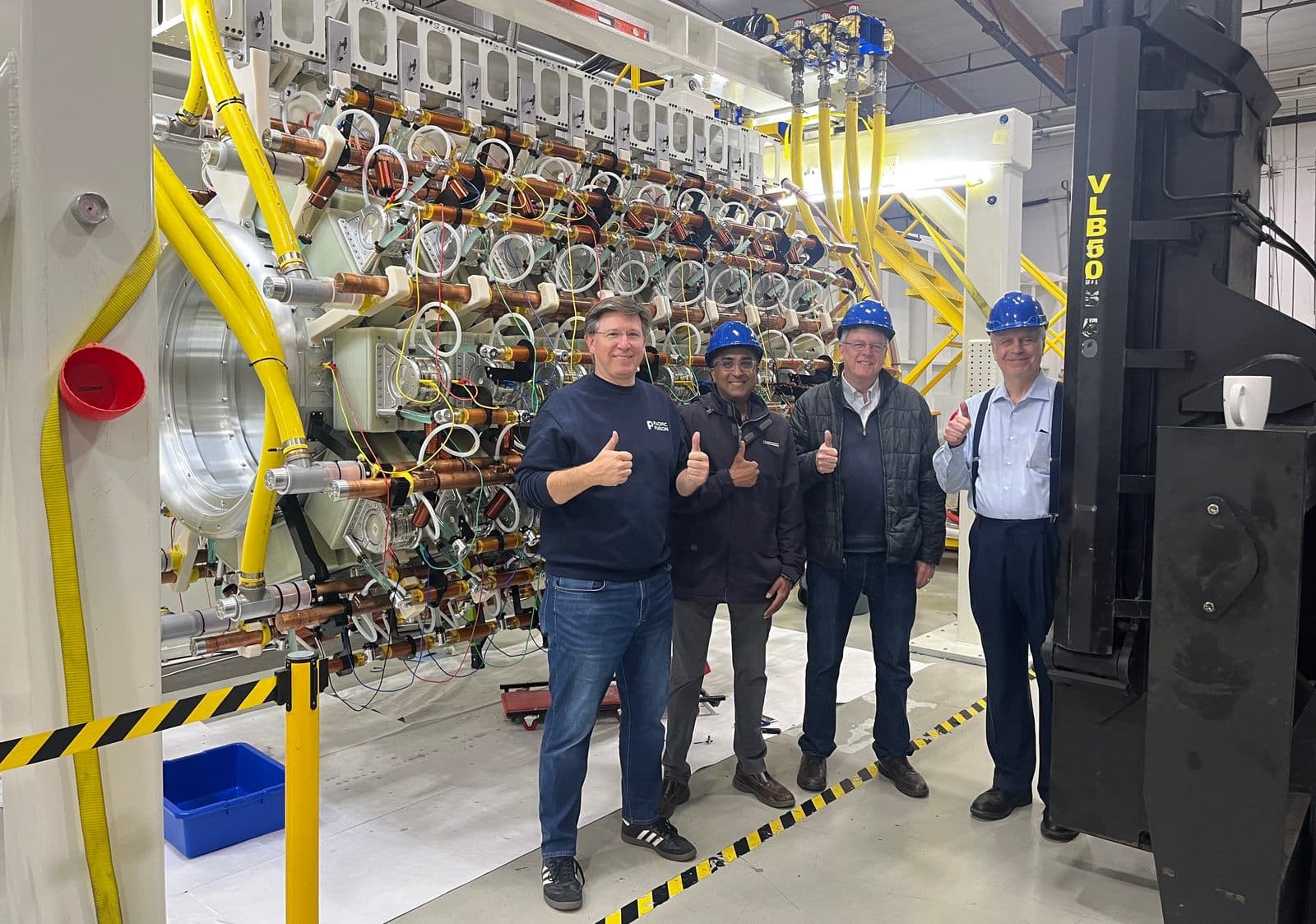
The repeating building block of the Demonstration System: an impedance-matched Marx generator that stacks capacitor-and-switch 'bricks' into stages and synchronizes them into a single ultra-fast, high-current pulse. Getting one module right and then manufacturing it 156 times is the company's whole scaling strategy.
A scaled prototype at about one third of full module size (nine stages, 90 bricks) delivered more than 440 GW at ~1.1 MV in an 80-nanosecond pulse in June 2026, meeting the requirements for scaling to the full Demonstration System and unlocking a further Series A tranche. A full-scale module prototype is now in build.
The four-stage impedance-matched Marx generator prototype built at Lawrence Livermore National Laboratory under a cooperative research agreement. Sirius synchronizes electromagnetic waves onto a transmission line in a single step, which is what makes the architecture simpler and more efficient than conventional pulsed-power systems, and it is the machine that generated the empirical data validating Pacific Fusion's simulations.
Completed 3,000 full-power shots by July 2026, delivering 60 GW in a 100-nanosecond pulse at 95% energy efficiency. The June 2026 scaled prototype is roughly an 11x scale-up of Sirius, and the full-scale module now in build is about 40x its size.
Peak Power60 GW
Pulse Length100 nanoseconds
Energy Efficiency95%
Shots Completed3,000 at full power
What's Next
Test a full-scale production pulser module
Complete and test full-scale pulser modules, each roughly 40x the size of Sirius and 3x the June 2026 scaled prototype, to prove the unit that will be manufactured 156 times over for the Demonstration System. Nature reporters visiting the Los Lunas build center in August 2026 found two of the more than 150 full-scale modules already completed.
2026-2027
Build the 156-module Demonstration System
Manufacture and assemble all 156 production-scale pulser modules at the New Mexico campus, supported by component production at the Los Lunas build center, and integrate them with the target chamber and diagnostics.
2026-2030
Achieve net facility gain
Fire the Demonstration System and produce more fusion energy than the total energy stored in the facility - a stricter bar than scientific breakeven and the result that would put pulser-driven inertial fusion on a commercial footing.
2030
Begin Demonstration System commissioning
After manufacturing and assembling the 156-module Demonstration System at Mesa del Sol, Pacific Fusion's Users Program FAQ says commissioning is expected to begin in 2028, ahead of first external-user campaigns in 2029 and the 2030 net-facility-gain target. Watch whether that 2028 window holds as full-scale pulser-module testing proceeds.
2028
Open the Users Program to outside researchers
Pacific Fusion launched the Users Program on March 4, 2026 with a call for Expressions of Interest from academia, national labs, government and industry; submissions are now closed. The Users Program FAQ, still current as of September 2026, keeps the next phase as a detailed Call for Proposals in 2027, with Demonstration System commissioning expected to begin in 2028 and the first external-user campaigns anticipated in 2029.
2027-2029
Track Record
1 of 1 announced date hit
Break ground on the Albuquerque campus
Target August 2026 · Resolved Aug 25, 2026
Pacific Fusion held a groundbreaking ceremony for its $1B Mesa del Sol research and manufacturing campus in Albuquerque on August 25, 2026, formally starting construction of the site that will house the Demonstration System; the NNSA signed a fusion-research MOU with the company the same day.
Hit
Operations & Revenue
StatusPre-revenue
Development stage. Pulser modules are being assembled and tested at the Bay Area R&D campuses, the Sirius prototype at Lawrence Livermore has passed 3,000 full-power shots, and the June 2026 scaled module prototype validated the architecture at roughly one third of full module scale. The company broke ground on its Albuquerque campus on August 25, 2026, formally starting construction of the roughly 225,000-square-foot site that will host the 156-module Demonstration System (net facility gain targeted by 2030). The Users Program FAQ, still current as of September 2026, says commissioning is expected to begin in 2028, with first external-user campaigns in 2029. Two of the more than 150 full-scale production modules were already complete as of August 2026 at the Los Lunas build center, which has hired more than 70 people. The same day as groundbreaking, Pacific Fusion signed a fusion-research MOU with the NNSA covering high-yield fusion and high-energy-density science. The Demonstration System is explicitly not a power plant.
Pipeline & Contracts
Milestone-tranched venture capital
A Series A led by General Catalyst that now exceeds $1B, released against pre-agreed technical milestones rather than in a lump sum, which the company says lets the team stay on engineering rather than continuous fundraising.
National laboratory partnerships
Cooperative research and development agreements with Sandia National Laboratories (Z Pulsed Power Facility, December 2024) and Lawrence Livermore National Laboratory (January 2025), plus an April 2025 partnership with General Atomics on inertial fusion energy, giving Pacific Fusion access to facilities and expertise it would otherwise have to build.
Key Metrics
Employees
Not disclosed company-wide; Los Lunas, New Mexico build center has hired 70+ as of the August 2026 Albuquerque groundbreaking
Est. Annual Revenue
Pre-revenue. Funded entirely by its milestone-tranched Series A, now above $1B.
Total Funding
>$1B Series A (released in milestone-based tranches)
156 pulser modules, net facility gain targeted by 2030; 2 full-scale modules completed as of August 2026
New Mexico Campus
$1B, ~225,000 sq ft at Mesa del Sol, Albuquerque; ~200 permanent jobs; Los Lunas build center has hired 70+; groundbreaking held August 25, 2026
Design Target vs NIF
100x higher facility gain at 10x lower cost
Users Program
EOI phase launched March 2026 (closed); Call for Proposals expected 2027; Demonstration System commissioning expected to begin 2028; first external-user campaigns anticipated 2029
Design Fusion Output Target
100+ MJ of fusion output per pulse from ~80 MJ of stored electrical energy, versus NIF's 3.15 MJ record output
Timeline
2026Simplified fusion target validated on Sandia's Z machine
On February 5, 2026 Pacific Fusion reports results from experiments at Sandia's Z Pulsed Power Facility showing that a much simpler target - plastic wrapped in aluminium, letting the magnetic field diffuse in to pre-magnetize the fuel - can work in place of more complex designs, removing external laser and magnet hardware and cutting the cost and maintenance burden of a system that has to fire repeatedly.
2026Scaled pulser prototype hits 440 GW, unlocking more Series A
On June 2, 2026 the company reports that a scaled module prototype - nine stages of 90 bricks, about one third of a full module - delivered more than 440 gigawatts of peak power at roughly 1.1 megavolts in an 80-nanosecond pulse, with a low-cost trigger system synchronizing every stage into a single coherent pulse. The result unlocked a further tranche of the Series A, taking the round past $1B.
2026Sirius passes 3,000 full-power shots at Livermore
On July 16-17, 2026 Pacific Fusion and Lawrence Livermore report that Sirius, the four-stage impedance-matched Marx generator prototype built under their CRADA, has completed 3,000 full-power shots, delivering 60 gigawatts in a 100-nanosecond pulse at 95% energy efficiency. The campaign is the empirical base for the simulation models behind the far larger Demonstration System.
2026Users Program opens to outside researchers
On March 4, 2026 Pacific Fusion launches the Pacific Fusion Users Program, opening a call for Expressions of Interest from academia, national laboratories, government and industry ahead of a 2027 detailed-proposal call and a planned 2029 start for the first external-user experiments on the Demonstration System.
2026Josh Tech named head of New Mexico operations
Pacific Fusion names Josh Tech, a former Tesla manager and most recently COO of REE Automotive, to lead New Mexico operations and the Mesa del Sol campus build-out.
2026Groundbreaking on the $1B Albuquerque campus
Pacific Fusion holds a groundbreaking ceremony on August 25, 2026 for its $1B research and manufacturing campus at Mesa del Sol in Albuquerque, formally starting construction on the site that will house the Demonstration System. The event draws board chairman Eric Schmidt, US Senators Martin Heinrich and John Hickenlooper, NNSA administrator Brandon Williams and Sandia National Laboratories director Laura McGill.
2026NNSA signs fusion research MOU with Pacific Fusion
On the same day as the Albuquerque groundbreaking, August 25, 2026, the National Nuclear Security Administration signs a memorandum of understanding with Pacific Fusion covering collaboration on high-yield fusion, high-energy-density science and related technical areas - research that could also inform science-based stockpile stewardship without underground nuclear testing.
2025CRADA with Lawrence Livermore and the AMPS design paper
Adds a January 2025 cooperative agreement with Lawrence Livermore National Laboratory, then in April 2025 publishes its AMPS framework (affordable, manageable, practical, scalable) describing a demonstration system designed for 100x higher facility gain at 10x lower cost than the National Ignition Facility - what the company calls a 1,000-fold leap in practical fusion performance. A partnership with General Atomics follows the same month.
2025Simulation tools validated in four peer-reviewed papers
In September 2025 Pacific Fusion publishes four peer-reviewed papers in Physics of Plasmas validating its simulation stack against six benchmarks spanning hydrodynamic instabilities, fuel compression, confinement and ignition-scale inertial fusion target modelling - the first time a private fusion company has published validation across all of those processes.
2025$1B New Mexico campus announced
On September 26, 2025 New Mexico's governor announces Pacific Fusion's $1B research and manufacturing campus at Mesa del Sol in Albuquerque, which will house the Demonstration System and is expected to create about 200 permanent jobs and roughly 1,000 construction jobs. A build center in Los Lunas producing components for the system opens that December.
2024Public launch with ~$900M Series A
The company emerges from stealth on October 25, 2024 with a roughly $900M Series A led by General Catalyst, structured to release capital in tranches as technical milestones are met. Backers include Breakthrough Energy Ventures, Ken Griffin, Patrick Collison, John Doerr and Mustafa Suleyman; Patrick Collison, Hemant Taneja and Eric Schmidt join the board.
2024CRADA with Sandia National Laboratories
Signs a cooperative research and development agreement with Sandia National Laboratories in December 2024, giving it access to the Z Pulsed Power Facility, the world's most powerful pulsed-power machine and the reference point for magnetically driven inertial fusion.
2023Founded
Pacific Fusion is founded by Eric Lander (founding CEO, previously founding director of the Broad Institute and White House science adviser), Keith LeChien, Will Regan, Carrie von Muench and Leland Ellison to pursue pulser-driven inertial fusion.
Funding
Round
Date
Amount
Investors
Source
Series A
2024-10
~$900M (milestone-tranched)
General Catalyst (lead), Breakthrough Energy Ventures, Ken Griffin, Patrick Collison, John Doerr, Mustafa Suleyman