Tokamak Energy
Warrick Matthews
Data verified as of Aug 1, 2026
Summary
Tokamak Energy is a UK fusion company spun out of the UK Atomic Energy Authority in 2009 that pairs two bets: the spherical tokamak, a squashed-sphere reactor shape that holds plasma more efficiently than a conventional doughnut, and high-temperature superconducting (HTS) magnets built in-house. Its ST40 machine reached 100 million degrees Celsius in 2022 and closed out its 2025 campaign with three records - 1 mega-amp of plasma current, its highest stored energy, and a fusion triple product up over 30% to about 8 x 10^18 m^-3 keV s - before entering a $52M upgrade co-funded with the U.S. Department of Energy and the UK's DESNZ that runs through most of 2026. On the magnet side, Demo4 became in November 2025 the first HTS magnet system to reproduce fusion-relevant fields at system level (11.8 tesla, 7 million ampere-turns), and in April 2026 Tokamak Energy was named Magnet Systems Partner for the UK government's STEP prototype power plant under a £70M contract running to March 2029. The company sells that magnet capability commercially through TE Magnetics, which acquired manufacturer Ridgway Machines in 2025, and its roadmap runs ST40 to the ST80-HTS prototype at Culham and then to ST-E1, a pilot plant designed to put up to 200 MW of electricity on the grid in the early 2030s.
Main Products

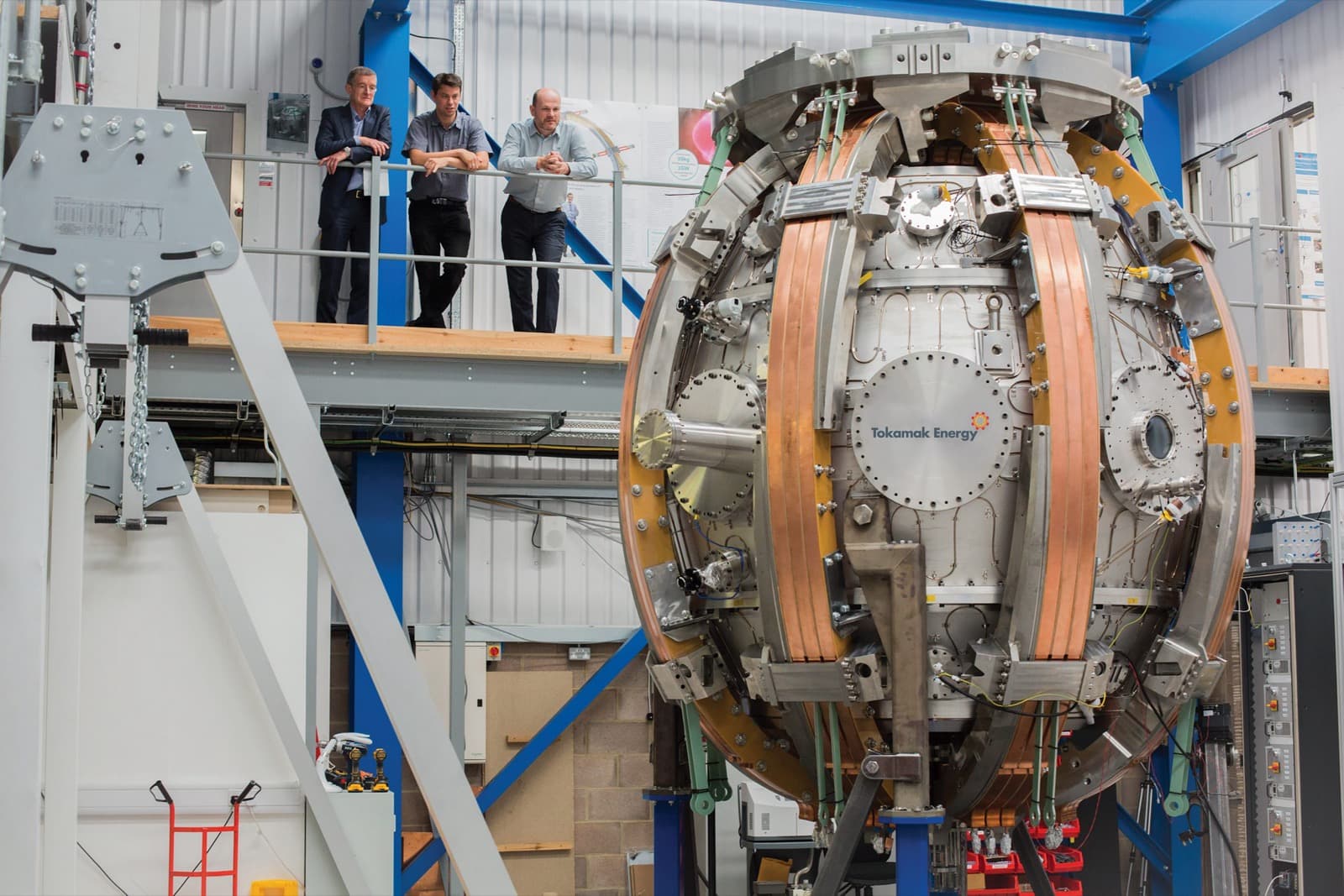
Compact high-field spherical tokamak operating at the company's Oxfordshire campus since 2018 and the machine behind its plasma records. The spherical geometry confines plasma more efficiently per unit of magnetic field than a conventional tokamak, which is what makes a smaller, cheaper power plant plausible.
Closed out its 2025 campaign in December with three records (1 MA plasma current, highest stored energy, triple product up 30%+) and entered the $52M DOE/DESNZ upgrade shutdown that runs through most of 2026. The upgrade adds lithium-coated all-metal plasma-facing components and radiofrequency heating; the gyrotron heating system passed site acceptance testing in July 2026 and the next experimental campaign is scheduled for 2027-2028.

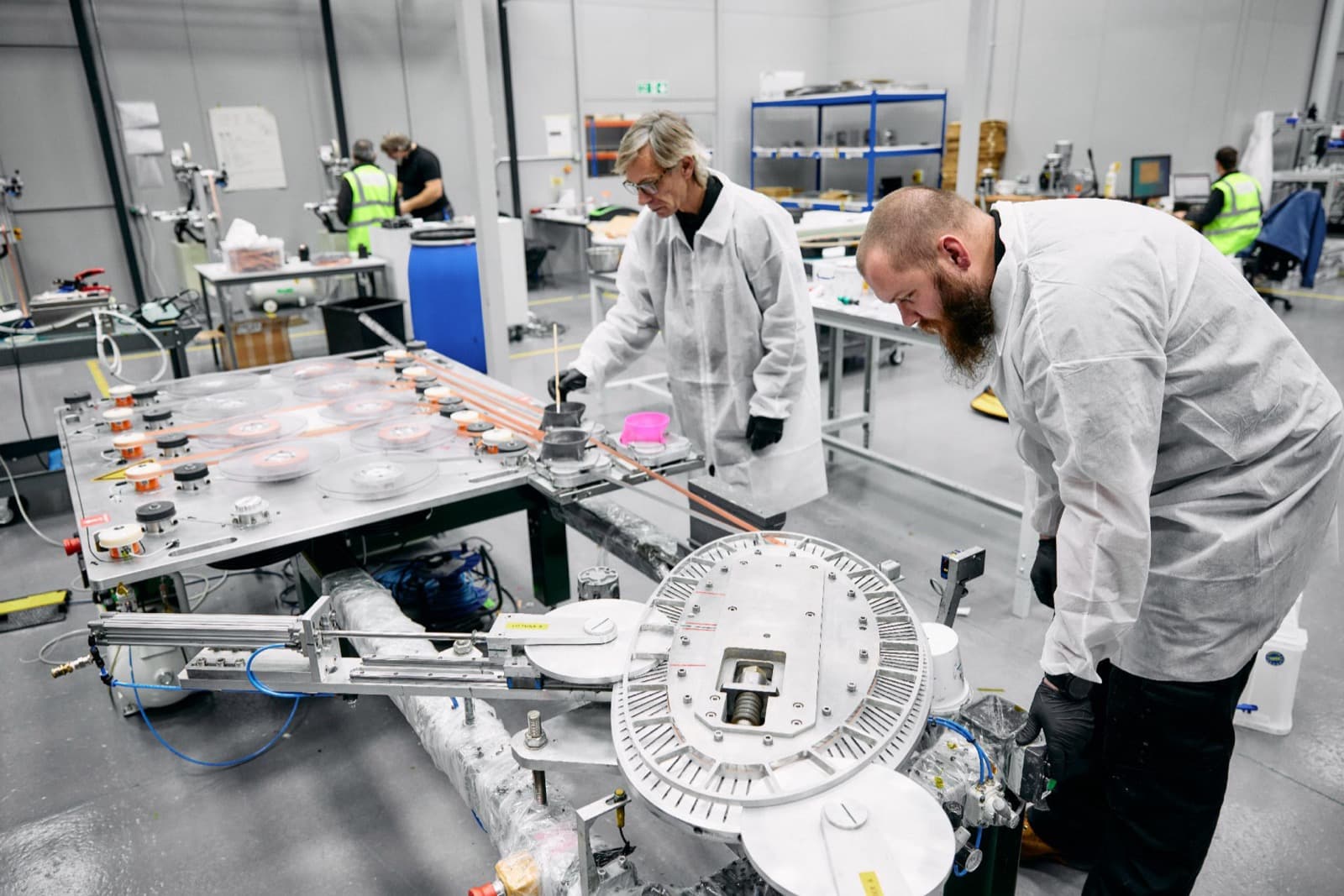
The company's high-temperature superconducting magnet business, built on REBCO tape wound in-house, sold both into fusion programmes and into non-fusion markets including power distribution, propulsion, motors and generators, and analytical science. Demo4, its 44-coil demonstration system, is the technology proof point.
Demo4 reached 11.8 tesla with seven million ampere turns in November 2025, the first HTS magnet system to reproduce fusion-relevant magnetic fields at system level. The division won the £70M STEP Magnet Systems Partner contract in April 2026, acquired Ridgway Machines in 2025 to expand manufacturing, and is working with Furukawa Electric to build UK HTS tape capability.

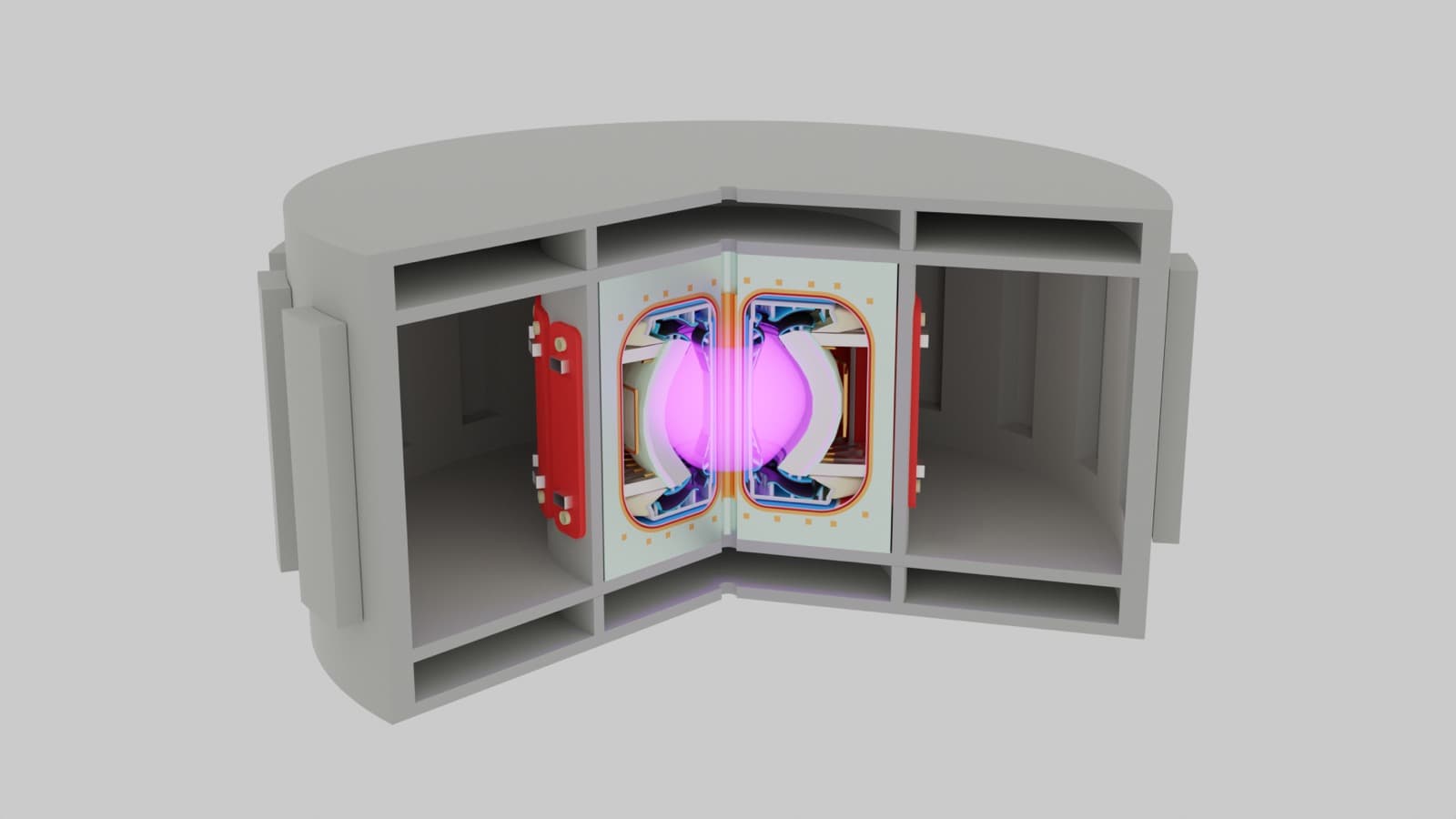
Tokamak Energy's planned fusion pilot plant, designed to demonstrate that a compact spherical tokamak with HTS magnets can deliver electricity to the grid. It is preceded on the roadmap by ST80-HTS, an advanced prototype planned for UKAEA's Culham campus that will be the world's first high-field spherical tokamak using HTS magnets.
Design work only. First plant design details were presented publicly in October 2024 and an updated design image was released in April 2025. ST-E1 follows the ST80-HTS prototype, and the company targets delivering electricity to the grid in the early 2030s with commercial plants around 500 MW in the mid-2030s.
What's Next
Complete the $52M ST40 upgrade and restart experiments
Finish installing lithium-coated all-metal plasma-facing components, the gyrotron radiofrequency heating system that passed site acceptance testing in July 2026, and the rest of the DOE/DESNZ upgrade package, then bring ST40 back online for the next campaign studying RF start-up and ramp-up and lower-recycling regimes.
Stand up UK HTS tape manufacturing with Furukawa Electric
Turn the June 2026 Furukawa Electric collaboration into domestic UK production of high-temperature superconducting tape, the single largest supply constraint on HTS magnet programmes - STEP's magnet system alone is expected to need around 30,000 km of it.
Operations & Revenue
ST40 is in a major shutdown running through most of 2026 for the $52M DOE/DESNZ upgrade, with lithium-coated plasma-facing components, all-metal walls and radiofrequency heating being installed and the next experimental campaign scheduled for 2027-2028; the gyrotron heating system passed site acceptance testing in July 2026. Demo4 has proven the magnet architecture at system level, and TE Magnetics is delivering magnet work commercially, most significantly as STEP's Magnet Systems Partner under a £70M contract to March 2029. The ST80-HTS prototype at UKAEA's Culham campus and the ST-E1 pilot plant remain ahead.
Revenue Streams
STEP magnet systems partnership
£70M contract to March 2029 as Magnet Systems Partner for the UK government's STEP prototype fusion power plant, covering eight work packages delivered with UK Fusion Energy across magnets, tokamak systems and plasma integration. STEP's magnet system is expected to require roughly 30,000 km of HTS tape.
Commercial HTS magnet division launched in 2024, selling magnet systems beyond fusion into power distribution, propulsion, motors and generators, analytical science and life sciences. Manufacturing capacity was expanded by the 2025 acquisition of Ridgway Machines.
Key Metrics
Employees
300+
Est. Annual Revenue
Pre-revenue on electricity. Near-term revenue comes from HTS magnet systems and engineering contracts through TE Magnetics, anchored by the £70M STEP magnet partnership to March 2029 and Ridgway Machines' industrial manufacturing business.
Timeline
On April 14, 2026 Tokamak Energy is confirmed as Magnet Systems Partner for STEP, the UK government's prototype fusion power plant at West Burton, under a £70M contract running to March 2029 covering eight work packages with UK Fusion Energy. The deal also gives STEP access to ST40 for testing magnetic configurations and plasma scenarios, and makes Tokamak Energy the UK's only specialist manufacturer of high-field HTS magnet technology.
In June 2026 Tokamak Energy and Japan's Furukawa Electric Group advance their collaboration toward building high-temperature superconducting tape manufacturing capability in the UK, addressing the supply bottleneck behind every HTS fusion magnet program.
In November 2025 Demo4, a full HTS magnet system of 44 coils, reaches 11.8 tesla with seven million ampere turns at cryogenic temperatures - the first time an HTS magnet system has reproduced fusion-relevant magnetic environments at system level rather than in a single coil.
The December 2025 campaign ends with ST40's highest plasma current (1 mega-amp, up from 0.85 MA), close to double its previous stored energy, and a fusion triple product up more than 30% to roughly 8 (±2) x 10^18 m^-3 keV s. ST40 then enters the DOE/DESNZ-funded upgrade shutdown that runs through most of 2026.
Tokamak Energy carves out TE Magnetics in September 2024 to sell HTS magnet systems into fusion, power distribution, propulsion, medical and analytical-science markets, then raises $125M in November led by East X Ventures and Lingotto Investment Management to commercialize both the fusion and magnet businesses.
The U.S. Department of Energy, the UK's Department for Energy Security and Net Zero and Tokamak Energy agree to fund a $52M, five-year upgrade of the privately owned ST40 in equal thirds, adding lithium wall conditioning, all-metal plasma-facing components and radiofrequency heating to study conditions relevant to future power plants.
Funding
Cumulative disclosed raise · dated rounds
Related Companies
All Nuclear Fusion
Commonwealth Fusion Systems
Nuclear Fusion
Commonwealth Fusion Systems is building commercial fusion systems around high-temperature superconducting magnet technology developed with MIT. SPARC, its fusion-energy demonstration tokamak under construction in Devens, Massachusetts, hit ~75% completion in 2026: the first of 18 toroidal-field magnets was installed in January and the second 48-ton vacuum-vessel half arrived in May, with all 18 magnets targeted by end of summer 2026 ahead of first plasma and a Q>1 net-energy attempt in 2027. ARC, CFS' first commercial plant - officially named the Fall Line Fusion Power Station and sited on 100 acres in Chesterfield County, Virginia - became in April 2026 the first fusion project to file for grid interconnection with PJM, and on June 4, 2026 CFS published a five-paper ARC Physics Basis in the Journal of Plasma Physics projecting ~1.1 GW of fusion power and ~400 MW of net electricity. CFS has also begun monetizing its HTS magnet platform, signing a potentially multi-billion-dollar long-term magnet supply deal with Realta Fusion and launching a SPARC digital twin program with Nvidia and Siemens, and in July 2026 became the first international partner in the UK Atomic Energy Authority's £220M LIBRTI tritium-breeding program to tackle fusion's fuel-supply challenge.

Helion Energy
Nuclear Fusion
Helion Energy is building fusion generators aimed at producing commercial electricity from fusion. Its Polaris prototype began operating in late 2024 and in February 2026 became the first privately developed fusion machine to demonstrate measurable deuterium-tritium fusion at 150 million degrees Celsius. Helion is now advancing Orion in Malaga, Washington, where site work began in 2025 for the company's first commercial machine intended to deliver electricity from fusion to Microsoft, while a smaller new 'Tiny Merge' testbed is being built to iterate on plasma formation faster. On June 4, 2026 Helion closed a $465M Series G led by Thrive Capital at a $15.5B post-money valuation, lifting total funding to roughly $1.5B; OpenAI is in advanced talks to buy fusion power from Helion at gigawatt scale, prompting Sam Altman to step down as board chair to recuse himself from those negotiations.

Pacific Fusion
Nuclear Fusion
Pacific Fusion is taking the inertial route to fusion rather than the magnetic one: instead of holding plasma in a magnetic bottle, it crushes a small capsule of deuterium-tritium fuel with an enormous, extremely fast electrical pulse. The company's distinguishing technology is the impedance-matched Marx generator, a pulser architecture that is simpler and cheaper than the systems used at national laboratories, and its plan is to gang 156 production-scale pulser modules into a Demonstration System designed to reach net facility gain - more fusion energy out than the total energy stored in the machine - by 2030. Founded in 2023 by Eric Lander, Keith LeChien, Will Regan, Carrie von Muench and Leland Ellison, it launched publicly in October 2024 with a roughly $900M Series A led by General Catalyst that is released in tranches against technical milestones; the round has since passed $1B as those milestones cleared. In June 2026 a scaled module prototype delivered more than 440 gigawatts at about 1.1 megavolts in an 80-nanosecond pulse, and in July 2026 the Sirius prototype at Lawrence Livermore National Laboratory passed 3,000 full-power shots at 95% energy efficiency. Its $1B research and manufacturing campus at Mesa del Sol in Albuquerque, New Mexico, backed by a build center in Los Lunas, is where the Demonstration System will be assembled.

Proxima Fusion
Nuclear Fusion
Proxima Fusion is Europe's best-funded fusion company and the first research spin-off from the Max Planck Institute for Plasma Physics, founded in Munich in 2023 to commercialize the stellarator - a twisted magnetic bottle that is harder to build than a tokamak but runs continuously without needing to drive a current through the plasma. Its quasi-isodynamic design, Stellaris, was published in February 2025 as the first peer-reviewed, fully integrated stellarator power plant concept. In February 2026 Proxima signed a memorandum of understanding with RWE, the Free State of Bavaria and the Max Planck IPP to build Alpha, a roughly €2B net-energy demonstrator at Garching near Munich targeted to begin operating in 2031, followed by a commercial Stellaris plant at the decommissioned Gundremmingen nuclear site later in the 2030s; an Alpha Alliance of more than 30 European industrial companies including Siemens Energy, Framatome, Air Liquide and Thales was announced the day before. On July 7, 2026 the company raised €411M ($468M) at a €2.4B ($2.7B) valuation, led by XTX Ventures and East X Ventures with RWE and Google as strategic investors, taking total funding past €650M and funding completion of its Stellarator Model Coil in 2027.

TAE Technologies
Nuclear Fusion
TAE Technologies is a private fusion company developing hydrogen-boron fusion with a beam-driven field-reversed-configuration architecture. Its 2025 'Norm' breakthrough reduced reactor complexity enough to skip the planned Copernicus step and move directly toward Da Vinci, its first prototype power plant. In 2026 TAE completed its multi-state site evaluation tour for the first 50 MWe plant (Alabama, Ohio, Texas), formally established the TAE Beam UK joint venture with UKAEA at Culham to commercialize neutral-beam accelerator technology, and is now targeting a Q4 2026 close of its $6B all-stock merger with Trump Media & Technology Group, which in June 2026 confirmed it will no longer spin off Truth Social and other media assets ahead of the deal. TAE Power Solutions and TAE Life Sciences commercialize adjacent power-delivery and oncology technologies derived from its fusion R&D.