Operational
Polaris
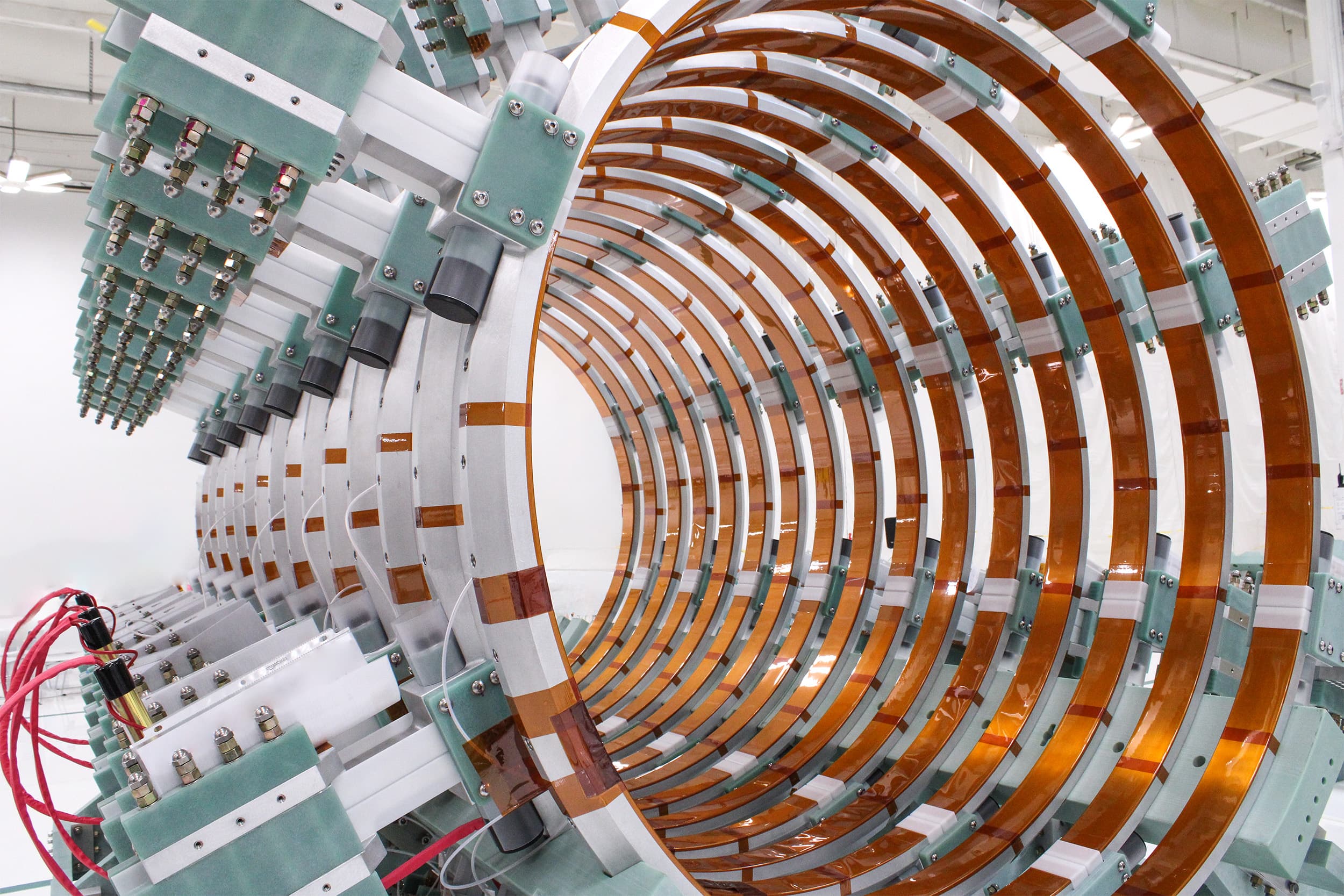
7th-generation fusion prototype designed to demonstrate electricity production from fusion using Helion's pulsed magneto-inertial architecture and direct electricity recapture.
Helion Energy is building fusion generators aimed at producing commercial electricity from fusion. Its Polaris prototype began operating in late 2024 and in February 2026 became the first privately developed fusion machine to demonstrate measurable deuterium-tritium fusion at 150 million degrees Celsius.
Latest update Sep 16, 2026
01
Helion is now advancing Orion in Malaga, Washington, where site work began in 2025 and generator-building construction is underway after Washington State issued the world's first fusion-plant licenses in June 2026. The company's own Orion page now says the plant is designed to meet the 2023 Microsoft PPA for at least 50 MW, with initial operations beginning in 2028; public-affairs director Jackie Siebens said at FusionX that Helion will not have 50 MW at full operation in 2028 and that the Microsoft contract requires Orion to be connected to the grid and begin operations by the end of 2028, with full power not expected before 2029 or 2030. A smaller Tiny Merge testbed is still being integrated at Everett after an August 28, 2026 first vacuum pump-down; the end-of-summer 2026 online target was not met. On September 8, 2026 Helion opened a downtown Seattle office for its business team and CEO David Kirtley said headcount has grown to 800. Helion's Series G, initially closed at $465M on June 4, 2026, was later marked oversubscribed and closed at $500M in September 2026, still at a $15.5B post-money valuation led by Thrive Capital, lifting total funding to more than $1.5B. OpenAI remains in unsigned, advanced talks to buy fusion power from Helion at gigawatt scale as of September 16, 2026, a negotiation that prompted Sam Altman to step down as Helion board chair on March 23, 2026.
helionenergy.comUpdated Sep 16, 2026
Analysis · 6 min read · Jul 5, 2026The long view on Helion Energy: strategy, technology and what to watch02
2026–2027
Push Polaris from one pulse every ~10 minutes toward sustained 1 Hz operation - the rate Helion needs to convert fusion energy into recapturable electricity in commercial operation. A separate pulsed-power testbed, Vela, already operated at 1 Hz and moved more than 11 GJ through a simulated Polaris compression magnet, but that 1 Hz result has not been demonstrated on Polaris itself as of September 16, 2026.
2026–2027
Move the OpenAI negotiations from term sheet to a binding agreement - reportedly 5 GW by 2030 scaling to 50 GW by 2035 - and identify the sites and Orion-class plants needed to deliver that capacity. Talks remained ongoing and unsigned as of September 16, 2026, with site selection among the unresolved terms. Helion's newsroom still lists Microsoft and Nucor as its only announced customers. The arrangement has drawn Congressional and courtroom scrutiny over Sam Altman's personal stake in Helion and his recusal from the talks.
Late 2026
Stand up the Tiny Merge agile testbed and use its faster experimental loop to lock in final FRC formation and ring-merging choices that flow into the Orion power plant design. On August 28, 2026 Helion completed the first vacuum pump-down, reaching 1x10⁻⁶ torr in under an hour. CEO David Kirtley's subscale-systems blog still describes Tiny Merge as being integrated in parallel with Polaris. Remaining hardware is still being installed at the Everett campus. The end-of-summer 2026 online target was not met; as of September 16, 2026 Helion has not announced first plasma or a fully online experimental campaign.
2028
Complete construction of the Orion fusion power plant in Malaga, Washington, and begin commissioning. With the assembly and office structures finished and Washington State's world-first fusion Radioactive Materials and Air Emissions licenses secured in June 2026, work is on the fusion generator building. Helion's Orion page now says initial operations begin in 2028.
2028
Meet the Microsoft PPA's 2028 obligation as restated by Jackie Siebens at FusionX: Orion must be connected to the grid and begin operations by the end of 2028. Helion's own site now uses the phrase 'initial operations beginning in 2028' and no longer says the plant will begin producing electricity by 2028. Full 50 MW is a later step.
2029-2030
Reach full 50+ MW output on the world's first fusion power purchase agreement, delivering electricity to Microsoft data centers via Constellation Energy. Jackie Siebens said Helion will not have 50 MW at full operation in 2028 and that full power is not expected before 2029 or 2030. The original 2028 full-delivery reading of the PPA has been recorded as slipped.
2030s
Move the Nucor commercial agreement from customer commitment into a concrete plant deployment for a 500 MWe fusion facility serving industrial manufacturing, with operations targeted as soon as 2030 pending final site selection. As of September 16, 2026 Helion had not announced a selected Nucor mill site or a construction start.
03
Helion said on August 28, 2026 that it completed the first vacuum pump-down on Tiny Merge, its subscale field-reversed-configuration fusion testbed at the Everett, Washington campus, reaching a target base pressure of 1x10⁻⁶ torr in under an hour. The company said the result confirms the machine can hold high vacuum before remaining hardware is installed. Tiny Merge is roughly one-eighth the size of the Polaris prototype and is meant to iterate on plasma formation and merging faster ahead of Helion's 2028 Microsoft power-delivery deadline for the Orion plant.
The Fusion Industry Association's 2026 report, released July 13, said 56 fusion companies raised a record $4.48 billion in the year to mid-2026 - up 69% from 2025 - lifting cumulative private fusion investment to $14.24 billion and industry employment above 16,000. The largest rounds came from Commonwealth Fusion Systems ($863 million) and Helion Energy ($465 million), and 71% of surveyed companies still expect a fusion plant to deliver commercial electricity in the 2030s. The tally underscores accelerating investor conviction as demand for clean, firm power for AI data centers grows.
Fusion Industry Association World Nuclear News + Commonwealth Fusion Systems
Helion Energy said on June 16 it has become the first company in the world to secure the regulatory licenses required to build and operate a fusion power plant, after the Washington State Department of Health issued it a Radioactive Materials License and a Radioactive Air Emissions License. The licenses cover Orion, Helion's roughly 50-MW fusion plant under construction in Malaga, Washington, and clear the company to proceed with its generator building now that assembly and office structures are complete. Fusion is regulated under a byproduct-material framework rather than as a fission reactor, and the milestone advances Helion's pledge to deliver fusion power to Microsoft by 2028.
Fusion developer Helion Energy closed a $465 million Series G round in early June, lifting the Everett, Washington company's valuation to about $15.5 billion. The round was led by Thrive Capital, with new backers including Lux Capital, Peak XV Partners and Ford Motor executive chairman Bill Ford, and will fund Helion's first power plant, expand Washington manufacturing, and support its pledge to deliver fusion power to Microsoft by 2028. The raise follows Helion becoming the first company in the world to secure regulatory licenses for a fusion power facility and reporting measurable deuterium-tritium fusion at 150 million degrees Celsius on its Polaris prototype.
Helion Energy on June 4 closed a $465 million Series G led by Thrive Capital at a $15.5 billion post-money valuation, lifting total funding to roughly $1.5 billion as the Everett, Washington startup races to deliver fusion electricity to Microsoft from its Orion plant in Malaga by 2028. New investors include Lux Capital, Peak XV Partners, Alta Park Capital, Anti Fund, BoxGroup and Ford Motor Executive Chairman Bill Ford, joining existing backers SoftBank Vision Fund 2, Lightspeed, Mithril, Capricorn and Good Ventures; the cash will scale manufacturing and feed the Polaris prototype and forthcoming Tiny Merge testbed campaigns.
04
7th-generation fusion prototype designed to demonstrate electricity production from fusion using Helion's pulsed magneto-inertial architecture and direct electricity recapture.
Smaller, agile FRC fusion testbed roughly one-eighth the size of Polaris (~8 feet long) used to iterate on plasma formation and ring-merging experiments far faster than the larger machines. Helion sees Tiny Merge as a key learning loop to de-risk Orion ahead of the 2028 Microsoft delivery deadline.
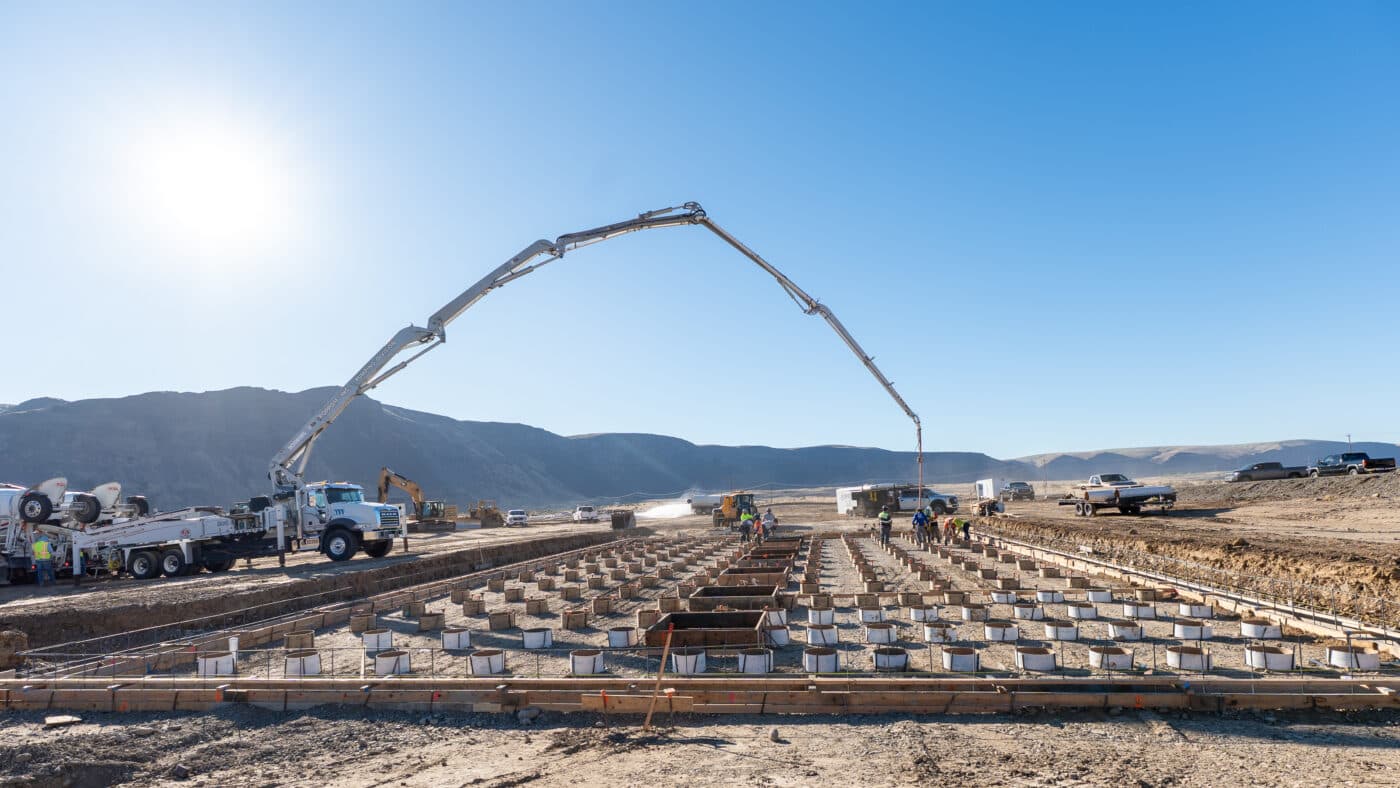
First commercial fusion power plant, designed to generate 50+ MWe. Located in Malaga, Chelan County, Washington, on land leased from Chelan County PUD near Rock Island Dam. Power will be marketed by Constellation Energy to Microsoft data centers.
05
06
Operating status
Pre-revenue
Development stage - Orion site work is underway in Malaga, Washington, but Helion has not yet delivered commercial electricity. With Orion's assembly and office buildings complete, construction has moved to the fusion generator building following Washington State's June 2026 world-first fusion plant licenses. Helion's Orion page still says initial operations begin in 2028; Jackie Siebens said at FusionX that the Microsoft contract requires grid connection and the start of operations by the end of 2028, and that Helion will not have 50 MW at full operation in 2028, with full power not expected before 2029 or 2030. Polaris is operating in Everett. Tiny Merge completed a first vacuum pump-down on August 28, 2026 and Helion's subscale-systems blog still describes it as being integrated, running in parallel with Polaris; the end-of-summer 2026 online target was not met and no first-plasma announcement had been made as of September 16, 2026. Headcount reached 800 as of September 8, 2026, with a new Seattle business office. Series G closed at $500M in September 2026, up from the June $465M initial close. A gigawatt-scale OpenAI supply deal remained unsigned as of September 16, 2026.
Microsoft Power Purchase Agreement
World's first fusion PPA - at least 50 MW of electricity to be delivered via Constellation Energy to Microsoft data centers. Helion's Orion page now frames 2028 as the start of initial operations. Jackie Siebens said the contract requires Orion to be connected to the grid and begin operations by the end of 2028, and that Helion will not have 50 MW at full operation in 2028, with full power not expected before 2029 or 2030. The contract still carries financial penalties if Helion misses the 2028 connection/operations obligation.
Customer agreement to develop a 500 MWe fusion power plant at a Nucor steel manufacturing facility in the United States, targeted for 2030 or later depending on final site selection; the deal also included a $35 million investment by Nucor in Helion. Helion's Nucor newsroom page and subsequent 2026 coverage still describe the plant as a planned collaboration rather than a sited, under-construction project.
OpenAI is in advanced negotiations to buy fusion electricity from Helion at gigawatt scale - reportedly 5 GW by 2030 and up to 50 GW by 2035, equivalent to ~12.5% of Helion's planned production. No site has been selected and the agreement remains unsigned as of September 16, 2026; Helion's newsroom still lists Microsoft and Nucor as its only announced customers. The talks have also drawn Congressional and courtroom scrutiny over OpenAI CEO Sam Altman's personal stake in Helion and his recusal from the negotiations.
Fusion byproduct valuable for medical imaging, quantum computing, and other applications. Helion's technology page still describes helium-3 as produced in-house from deuterium as the commercial fuel cycle.
07
How past announced dates turned out.
0/1announced date hit on time
Deliver 50+ MWe to Microsoft
Target 2028 · Resolved Sep 8, 2026
Helion's Orion page now says initial operations begin in 2028 rather than that the plant will begin producing electricity by 2028. Jackie Siebens said at FusionX that Helion will not have 50 MW at full operation in 2028, that the Microsoft contract requires grid connection and the start of operations by the end of 2028, and that full power is not expected before 2029 or 2030. The 50+ MWe delivery step remains expected on the later date.
08
2026
Clarifies Orion 2028 as initial operations, not full 50 MW
Helion's Orion page now says the plant is designed to meet the Microsoft PPA for at least 50 MW, with initial operations beginning in 2028. Axios reported on September 8, 2026 that Helion public-affairs director Jackie Siebens said at FusionX the company will not have 50 megawatts at full operation in 2028, and that the Microsoft contract requires Orion to be connected to the grid and begin operations by the end of 2028, with full power not expected before 2029 or 2030.
Opens Seattle office; headcount reaches 800
On September 8, 2026 Helion opened a downtown Seattle office for its business team. CEO David Kirtley said the company has grown from 80 employees to 800 over the past four years at its Everett headquarters, with people now also working in Seattle and at the Orion site in Chelan County.
World's first fusion power plant licenses
Washington State's Department of Health issues Helion a Radioactive Materials License and a Radioactive Air Emissions License for Orion on June 16, 2026, making Helion the first company in the world to secure the regulatory licenses required to build and operate a fusion power plant. Granted under the byproduct-material framework that regulates fusion separately from fission reactors, the licenses confirm Helion's facilities, trained personnel and safety programs and clear it to proceed with Orion's fusion generator building now that assembly and office structures are complete.
$500M Series G at $15.5B valuation
Helion initially closed a $465M Series G on June 4, 2026 led by Thrive Capital at a $15.5B post-money valuation, with new investors Lux Capital, Peak XV Partners, Alta Park Capital, Anti Fund, BoxGroup and Bill Ford joining existing backers SoftBank Vision Fund 2, Lightspeed, Mithril, Capricorn and Good Ventures. In September 2026 Helion updated the same newsroom post to say the oversubscribed round closed at $500M and was capped despite additional investor interest. Total funding to date is more than $1.5B, with proceeds earmarked for scaling manufacturing and accelerating Polaris and Tiny Merge ahead of the 2028 Microsoft commitment.
HERCULES external research program launched
Helion launches HERCULES (Helion External Research Collaboration for Universities, Labs, and Enterprise Scientists) and awards $4M across 25 proposals at 20 institutions in the US and UK in its first funding round, with more than $17M committed through 2028 to fund materials and systems research aimed at scaling fusion deployment beyond Orion.
Tiny Merge completes first vacuum pump-down
On August 28, 2026 Helion said it completed the first vacuum pump-down on Tiny Merge at its Everett campus, reaching a target base pressure of 1x10⁻⁶ torr in under an hour and confirming the machine can hold high vacuum before remaining hardware is installed. The subscale testbed is still being integrated and is targeted to come online by the end of summer 2026 so its faster experimental loop can feed Orion design choices.
Tiny Merge agile fusion testbed under construction
Helion confirms it is building 'Tiny Merge', an ~8-foot, roughly one-eighth-scale FRC testbed designed to iterate on plasma formation and merging far faster than the full Polaris prototype, with the goal of de-risking Orion ahead of the 2028 Microsoft delivery commitment.
Altman-Helion ties draw Congressional and trial scrutiny
Sam Altman's personal stake in Helion and his recusal from the OpenAI-Helion power talks come under scrutiny on two fronts: the House Oversight Committee sends Altman a document request on May 8, 2026 over potential conflicts of interest, and Elon Musk's related claims against Altman in the Musk v. Altman OpenAI trial are dismissed by an Oakland jury on May 18, 2026 on statute-of-limitations grounds, without a ruling on their merits. The OpenAI-Helion negotiations continue unresolved.
2026
OpenAI fusion power talks; Altman steps down as board chair
Reports surface that OpenAI is in advanced talks with Helion to buy 5 GW of fusion power by 2030, scaling to 50 GW by 2035 - roughly 12.5% of Helion's planned production. Sam Altman, who is Helion's largest individual investor, steps down as board chair on March 23, 2026 and recuses himself from the negotiations to manage the conflict of interest.
Polaris achieves 150 million degrees Celsius and becomes the first private fusion machine to demonstrate deuterium-tritium fusion.
2025
Chelan County grants a Conditional Use Permit that clears the approval pathway for all major Orion structures, including the fusion generator facility.
Breaks ground on Orion, the world's first commercial fusion power plant, in Malaga, Chelan County, Washington.
2023
2021
2015
2014
2013
09
$1.5Bdisclosed across 6 rounds with a stated amount
Cumulative disclosed raise · dated rounds
DOE/NASA grants
2011
U.S. Department of Energy, NASA
Seed / Series A
2014
Y Combinator, Mithril Capital
Series D
2020
Dustin Moskovitz (Good Ventures)
Series E
2021
$500M (+$1.7B milestone commitments)
Sam Altman (lead), Mithril Capital, Capricorn Investment Group
Series F
2025
Lightspeed Venture Partners, SoftBank Vision Fund 2, Sam Altman, Mithril, Nucor
Series G
2026-06-04 (final close September 2026)
$500M ($15.5B post-money; upsized from a $465M June close)
Thrive Capital (lead), Lux Capital, Peak XV Partners, Alta Park Capital, Anti Fund, BoxGroup, Bill Ford, SoftBank Vision Fund 2, Lightspeed, Mithril, Capricorn, Good Ventures