Active
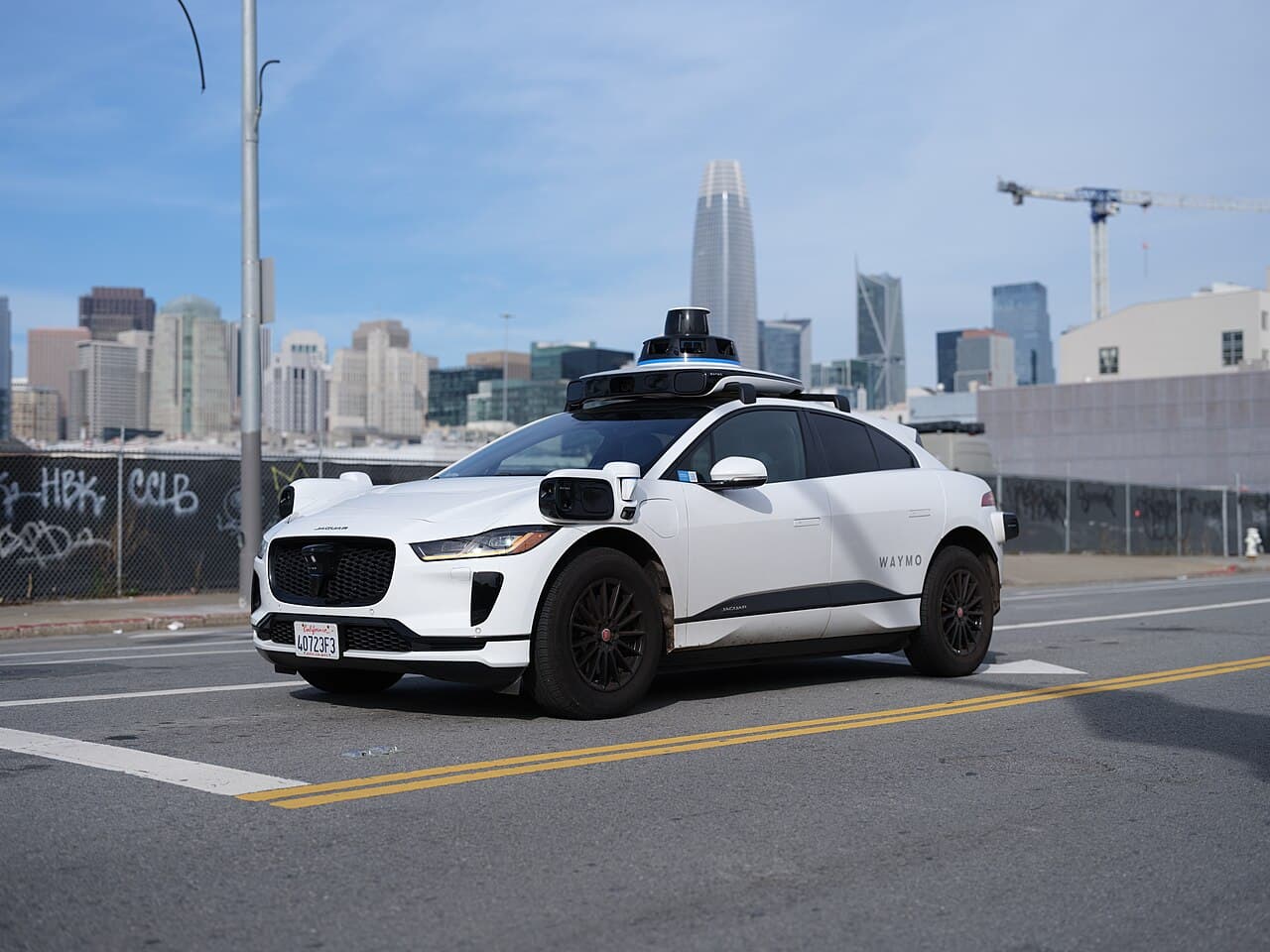
Waymo One (Jaguar I-PACE Fleet)
Waymo's main commercial robotaxi platform today. The company shifted Waymo One to an all-electric Jaguar I-PACE fleet in 2023, and these vehicles underpin daily rider service across its U.S. markets.
SubsidiaryFounded 2009🇺🇸Mountain View, CaliforniaCEO Dmitri Dolgov (Co-CEO) & Tekedra Mawakana (Co-CEO)
Waymo is Alphabet's autonomous-driving company and operator of the world's first autonomous ride-hailing service. It serves paid riders in 15 U.S. metro areas through Waymo One.
Latest update Oct 18, 2026
01
Its homepage still lists 20M+ lifetime rides, and CNBC on October 3, 2026 restated more than 500,000 paid rides per week and more than 4,000 U.S. commercial vehicles, with Texas DMV records as of October 2 showing 1,154 authorized vehicles including 359 Ojai models. On October 2, 2026 Flexdrive by Lyft held a ribbon-cutting for an 80,000-square-foot Nashville depot in a former post office near the airport; Waymo vehicles are due to begin using the site on October 12. A first-ever $3B-plus unrated debt raise with Pimco, Blackstone, and Sixth Street, reported September 2 as unsigned talks expected to close within days, had not been confirmed as closed by Waymo or the lenders as of October 6. Alphabet had not published Q3 2026 results. Singapore paid service remains targeted for 2028 after 2027 mapping. SFMTA said robotaxis including Waymo will be geofenced off San Francisco's northern waterfront during Fleet Week, October 9-11.
waymo.comUpdated Oct 6, 2026
Analysis · 5 min read · Jun 22, 2026The long view on Waymo: strategy, technology and what to watch02
2026–2027
Waymo opened the Ojai robotaxi to all riders (not just the select group it had run since May) in San Francisco, Los Angeles, and Phoenix on August 19, 2026, adding accessibility features like embedded Braille and screen-reader support plus an in-cabin Gemini assistant. Ojai then expanded to Denver and San Diego with their September 1, 2026 public launches, where it is currently the only bookable vehicle, and Las Vegas opened September 14 with a majority-Ojai launch fleet of dozens of minivans. Fleet trackers around Waymo's Mesa, Arizona integration facility estimated roughly 300 Ojai units in active commercial public service nationwide as of early September 2026 - up from about 100 in late July - with a further ~2,900 additional units in various stages of integration, calibration, storage, or reserve at the same site, pointing to substantial further ramp room toward Waymo's stated goal of thousands of Ojai robotaxis on the road by year-end (scaling to tens of thousands per year). Waymo continues importing Zeekr-built bodies from China (3,200+ to date) despite a 102.5% U.S. tariff to keep that pipeline fed.
2026-2027
On July 8, 2026 Waymo began fully driverless operations in four new metros - Las Vegas, San Diego, Tampa, and Denver - starting rider-only with Alphabet employees before opening to the public. On September 1, 2026 Waymo converted that employee-only pilot into paid public service in Denver, San Diego, and Tampa; on September 14 it began rolling public invites in Las Vegas, bringing its total US footprint to 15 metro areas. Denver and San Diego riders can currently only book the Ojai, and Las Vegas launched with a majority-Ojai fleet of dozens of minivans covering a nearly 24-mile area (Strip south of Highway 589 into Boulder Junction, Allegiant Stadium, Chinatown, UNLV, Spring Valley). Full unrestricted Las Vegas access, beyond the 100,000-plus interest-list invites, is still ahead. On September 17, 2026 Waymo resumed paid San Antonio rides, including the airport, after an April flood pause, with new riders still on a waitlist. Nashville opened to the public on June 25, 2026, and on September 9, 2026 Lyft said Waymo rides are live in its Nashville app, the first U.S. market where the same driverless fleet is available on both the Waymo and Lyft apps. On August 4, 2026 Dallas dropped its interest-list waitlist for full public access after roughly 150,000 people had signed up since its February 2026 commercial launch, though freeway and Dallas Love Field airport routes remain in testing with no public date set. Beyond those, Detroit is Waymo's confirmed next Midwest market for 2026, with 6th-generation Driver testing underway (including cold-weather validation in Michigan's Upper Peninsula) ahead of winter service; Washington, D.C. remains blocked on a change to local law banning fully driverless operation without a safety driver, with a city council bill (the Autonomous Vehicle Deployment Authorization Amendment Act of 2026) introduced to lift that restriction but not yet passed as of early September 2026; and Seattle remains in supervised testing and mapping with no launch date set. On September 18, 2026 Waymo said it is now driving fully autonomously in Pittsburgh with a safety technician, after PennDOT authorized autonomous testing in February; commercial driverless service still needs state permission and has no public date. On August 14, 2026 the California Public Utilities Commission separately approved Waymo to expand across 18 counties spanning the Bay Area and Southern California down to the Mexican border, plus first-time entries into Sacramento and San Diego. On August 13, 2026 Waymo and the Las Vegas Raiders announced a multi-year deal making Waymo the team's official autonomous ride-hailing partner for Allegiant Stadium. On August 20, 2026 Waymo opened Houston to anyone with the app, dropping the interest-list requirement after more than 100,000 people had signed up since the city's February 2026 commercial launch. The next step is converting Las Vegas from rolling invites to full public access, dropping the San Antonio waitlist, the newly CPUC-cleared California counties, and the remaining Up Next cities into full public commercial service.
2026-2028
Translate current Tokyo, London, Munich, and Singapore market preparation into Waymo's first commercial launches outside the United States. London is still targeted for a fully driverless launch by the end of 2026 with a ~100-vehicle Jaguar I-PACE fleet operated with Moove, but Uber and Wayve opened a supervised (safety-driver) paid service in London on September 3, 2026. On September 15, 2026 Waymo, GO, and Nihon Kotsu set a 2027 target for Japan's first fully unmanned Level 4 commercial taxi in Tokyo. Munich mapping toward an end-2027 EU launch continues. On September 18, 2026 Waymo added Singapore as its first Southeast Asian market, targeting paid service in 2028 after 2027 mapping. On September 7, 2026, Waymo managing director Steven Han said in Seoul that the company wants to enter South Korea after forming a Korean unit on July 24, with Hyundai Ioniq 5 verification tests underway and no launch date.
H2 2026
NHTSA's end-of-July 2026 deadline for AV developers to explain how they will stop interfering with first responders passed without a formal investigation being opened, but Rep. Kevin Mullin's AV Emergency Response Coordination Act was formally introduced as H.R. 10033 and referred to the House Transportation & Infrastructure and Energy & Commerce committees on August 3, 2026, and San Francisco's mayor is separately pressing California regulators for stricter statewide AV rules after the July 4 fireworks-night gridlock. Waymo gained a counterweight to the incident-driven narrative on July 23, 2026 when the IIHS published a study finding its vehicles were involved in 68% fewer police-reportable crashes per mile than human drivers across four cities. That counterweight was complicated by an investigative report published August 10, 2026 finding Waymo has issued three federal recalls since December 2025, versus three across the prior 22 months, even as the company says its edge-case rate is falling with scale; the report cited a federal regulator's July letter stating 'Emergency scenes are not rare or extreme edge cases.' The safety debate sharpened further after the night of August 7, 2026, when a pedestrian struck by an SUV on a Dallas street was thrown into the path of an unoccupied Waymo and later died; Waymo said its vehicle detected the pedestrian and had slowed to about 5 mph before contact, and early police and analyst assessments point to the SUV as the primary cause. As of August 29, 2026 no fault determination or new NHTSA probe specific to the Dallas fatality had been confirmed, and H.R. 10033 remained in committee with no floor vote scheduled. Watch whether NHTSA opens a formal probe into either the first-responder pattern or the Dallas fatality, whether the Mullin bill advances out of committee, whether California tightens operating requirements, and whether the recall and incident trend or the IIHS findings end up shaping the regulatory conversation - any of which could affect the pace of Waymo's city and freeway expansion.
End of 2026
Co-CEO Tekedra Mawakana has guided to more than 1 million paid robotaxi rides per week in the U.S. by the end of 2026, roughly doubling the ~500,000 weekly run-rate that has now held flat across multiple public disclosures since late March 2026 - even as Waymo's footprint grew to 15 metro areas (after the September 14, 2026 Las Vegas rolling public invite and the September 1 Denver, San Diego, and Tampa public launches) and its fleet passed 4,000 vehicles. That flat trip count implies per-vehicle utilization has fallen, so hitting 1M/week by year-end now looks like it needs either a large jump in ridership per vehicle or a fleet well above Waymo's current disclosed size. Independent forecasting firm FutureSearch, re-running its model on August 6, 2026 after Q2 earnings, projects a Q4 2026 median of only ~765,000 weekly rides (p10 590K, p90 1.03M), implying the 1M goal is more likely to be missed than hit absent a sharp acceleration - underscoring that the Ojai ramp and new-metro conversions (see below) are the swing factors. No newer weekly-ride figure had been disclosed beyond the ~500,000-plus mentioned alongside the September 1, 2026 metro launches; Alphabet's Q3 2026 earnings (expected late October) will be the next official checkpoint.
2027
Convert the September 15, 2026 GO, Waymo, and Nihon Kotsu agreement into Japan's first fully unmanned Level 4 commercial taxi service during 2027, starting with a small fleet and scaling toward about 100 vehicles bookable on the GO and Waymo apps. Supervised mapping with Nihon Kotsu drivers has been running across seven Tokyo wards since 2025. Formal start date still depends on safety validation and permits under Japan's Road Traffic Act and Road Transportation Act; current rules require a person in the driver's seat.
End of 2027
Waymo said on August 25, 2026 that it will begin manually driving vehicles through Munich to build high-definition maps and validate software, then test with trained autonomous specialists, before aiming to open commercial ride-hailing to the public towards the end of 2027. Munich is Waymo's first planned EU market. Waymo Germany GmbH is already registered in Munich. No later date change has been published. On September 16, 2026 Waymo added the risk-transfer layer the launch needs, signing a strategic partnership with Allianz Partners covering motor fleet insurance, multinational liability and product-liability cover, new insurance models for autonomous platforms, digital claims through Allianz's Solvd Group, joint safety research with the Allianz Center for Technology, and possible autonomous-vehicle recovery services, starting in Germany and extendable to other European markets.
2028
Convert the September 18, 2026 announcement into paid autonomous ride-hailing in Singapore in 2028, Waymo's first Southeast Asian market. An initial all-electric Jaguar I-PACE fleet with the fifth-generation Waymo Driver will arrive in the coming months; trained specialists will manually map the island day and night in 2027, including monsoon weather, then seek Land Transport Authority approval for the autonomous driving system. After a period of autonomous driving with local specialists, Waymo intends to open fully driverless service to the public in 2028. Launch still depends on LTA and CETRAN safety assessment. Transport Minister Jeffrey Siow welcomed Waymo as Singapore's newest AV operator.
No public date set
Convert the September 18, 2026 autonomous-on-road testing milestone into paid Waymo One service in Pittsburgh. Senior Director Euan Guttridge said vehicles are now driving fully autonomously with a safety technician after PennDOT authorized autonomous testing in February and after manual mapping that began in December 2025. Guttridge described mapping downtown and slightly beyond, then hundreds of thousands of miles of testing, trusted testers, and a later public opening. Waymo has not received Pennsylvania permission to operate without a person in the driver's seat and has not published a commercial launch date.
Sep 2026
Waymo is in the final stages of arranging its first debt raise - more than $3 billion in unrated debt from Pimco, Blackstone, and Sixth Street Partners at a spread over 500 basis points above the benchmark rate, advised by Goldman Sachs - reported by Bloomberg on September 2, 2026 as expected to close within days. As of September 18, 2026 no close had been confirmed by Waymo or the lenders, so the raise remains pending more than two weeks after that report. Closing would mark Waymo's shift from relying solely on Alphabet-led equity rounds toward layering in debt to fund fleet scaling and rising AI compute costs.
03
On Oct. 13, 2026 Waymo said it serves Nashville International Airport, with pickups and drop-offs in Terminal Garage 2 for a limited number of riders. Access is meant to widen until all riders are included. WSMV confirmed that Waymo announced that day that airport trips were starting and would roll out gradually in the Waymo app.
On October 16, 2026 Waymo said it is preparing a fully autonomous ride-hailing service in Toronto, its first planned city in Canada, with a goal of welcoming first riders in 2028. Manual mapping drives are to begin in the coming days with specialists behind the wheel. Element Fleet Management, already supporting Waymo in San Diego, will handle Toronto fleet operations, and Waymo said the work will add hundreds of roles over time.
On October 14, 2026 Waymo said anyone in San Antonio, San Diego and Tampa can download its app and hail a fully autonomous ride, including trips at San Antonio International Airport. The company said those cities had already served hundreds of thousands of riders since service opened earlier in the year. KSAT confirmed the same day that San Antonio was open to all riders, including the airport.
Waymo CFO Steve Fieler said on Oct. 8, 2026 that Waymo closed a $5 billion term loan, its first debt financing, with PIMCO, Blackstone, and Sixth Street as lead syndicated lenders and Goldman Sachs as sole lead bookrunner. The company said the loan supports expansion of fully autonomous ride-hailing in the United States and internationally after a $16 billion equity round earlier in 2026. This is the close of the financing Bloomberg had described on Oct. 6 as an unsigned upsize to $5 billion; Waymo did not disclose rate, tenor, or collateral.
Waymo told the Detroit Free Press on Oct. 6 that it is operating fully autonomous vehicles in Detroit, with rides limited for now to employees. Spokesman Chris Bonelli said the company will keep driving downtown and nearby neighborhoods including Corktown, Midtown, Hamtramck and Indian Village, and will open public rides after it validates the technology and local operations. Public rider service has not started.
Bloomberg reported on Oct. 6, citing people familiar with the financing, that Waymo increased its first private loan to $5 billion from more than $3 billion sought earlier. Pimco, Blackstone and Sixth Street were among lenders, Goldman Sachs arranged the deal, and the loan priced at 5.25 percentage points over the benchmark. Later write-ups said the loan was allocated and expected to close soon. Waymo has not announced the deal. This is a single-origin Bloomberg account; syndications are not independent confirmation, and the financing is not confirmed closed.
Waymo said on September 24 that its latest safety analysis now covers more than 270 million miles of fully autonomous operations through the end of June 2026 across Atlanta, Austin, Los Angeles, Phoenix and San Francisco. The company said that, regardless of fault, the Waymo Driver was involved in 82% fewer injury-causing crashes and 95% fewer serious-injury-or-worse crashes than human drivers over the same distance, estimating 841 injury-causing crashes avoided. Its public Safety Impact hub still listed 220.6 million rider-only miles through March 2026, so the June cutoff and 270 million-mile figure come from the September 24 post rather than an updated hub table. The crash-reduction percentages are Waymo's own comparisons.
Waymo said on September 17 it has resumed paid autonomous rides in San Antonio, including trips to and from San Antonio International Airport, after pausing passenger service following an April flood in which an empty vehicle entered a flooded lane. The company said it audited flood zones, added location limits in high-risk areas, adjusted weather alerts, and improved the Waymo Driver's ability to detect and leave floodwaters, work it said had already been tested in other cities that kept running this summer. Severe weather can still trigger another pause; San Antonio Current reported that new riders remain on a waitlist rather than booking like Austin Uber users.
Waymo Senior Director Euan Guttridge said on September 18 that the company is now driving fully autonomously in Pittsburgh with a safety technician behind the wheel, after PennDOT authorized autonomous testing in February while vehicles were still in the manual-driving phase that began in December 2025. Guttridge, speaking around Pittsburgh's AI Horizons Summit, described mapping downtown and a bit beyond, then hundreds of thousands of miles of testing before trusted testers and a later public opening. Waymo has not received Pennsylvania permission to operate without a person in the driver's seat and has not set a commercial robotaxi launch date.
Waymo said on September 18 that it will open a fully autonomous, all-electric ride-hailing service to the public in Singapore in 2028, its first market in Southeast Asia and second confirmed Asian city after Tokyo in 2027. An initial fleet of Jaguar I-PACE vehicles arrives in the coming months for manual mapping and validation driving, with trained autonomous specialists behind the wheel through 2027 while Waymo teaches the Waymo Driver local road geometry and monsoon weather. The rollout runs with Singapore's Ministry of Transport and Land Transport Authority, and still needs LTA approval of the driving system plus a safety assessment at the CETRAN test centre before any passenger can ride.
Allianz Partners and Waymo announced on September 16 a strategic partnership covering insurance, claims handling, safety research and vehicle recovery for Waymo's planned autonomous ride-hailing service in Europe, starting in Germany. Allianz will provide motor fleet cover plus multinational liability and product-liability protection and develop insurance models built for autonomous mobility platforms, with digital end-to-end claims run through its Solvd Group unit and crash analysis and risk modeling contributed by the Allianz Center for Technology. The agreement, reported as an initial three-year deal, underpins Waymo's Munich rollout, where mapping and supervised testing are due this autumn and commercial driverless rides are targeted for the end of 2027.
Waymo, GO, and Nihon Kotsu said on September 15 they aim to launch Japan's first fully unmanned Level 4 commercial taxi service in Tokyo during 2027, starting small and scaling toward about 100 vehicles bookable on the GO and Waymo apps. Supervised mapping with Nihon Kotsu drivers has been running across seven Tokyo wards since 2025. Co-CEO Tekedra Mawakana told reporters the service would be unmanned for the public from day one, subject to permits; Japanese rules still require a person in the driver's seat.
Waymo began inviting public riders in Las Vegas on September 14, its 15th U.S. metro, starting with dozens of Ojai minivans on a rolling invite from more than 100,000 interest-list signups. Service covers the Strip south of Highway 589 into Boulder Junction plus Allegiant Stadium, Chinatown, UNLV and Spring Valley, a nearly 24-mile area. Full unrestricted access is still ahead; the Nevada Transportation Authority has authorized Waymo to operate up to 1,000 AVs in Clark County.
San Francisco police arrested two juveniles in the Outer Richmond after a Waymo robotaxi pulled over and alerted officers shortly before 4 a.m. on September 3. A Waymo spokesperson told the Los Angeles Times the vehicle detected a terms-of-service violation involving a firearm, stopped, and cooperated with police, who said they recovered a loaded AR-style ghost gun plus suspected marijuana and mace spray. Both passengers were booked into juvenile hall; the investigation remains open.
Lyft said Waymo robotaxis can now be booked in its Nashville app, the first U.S. market where the same driverless Jaguar I-Pace fleet is available on both the Waymo and Lyft apps. Trips that start and end inside the ~60-square-mile central service area (Downtown, North Nashville and Germantown, East Nashville, Midtown, South Nashville) carry no extra charge on Standard, Priority, Wait & Save, or Extra Comfort. Flexdrive will open an 80,000-square-foot depot this October, adding more than 70 local jobs.
04
Waymo's main commercial robotaxi platform today. The company shifted Waymo One to an all-electric Jaguar I-PACE fleet in 2023, and these vehicles underpin daily rider service across its U.S. markets.
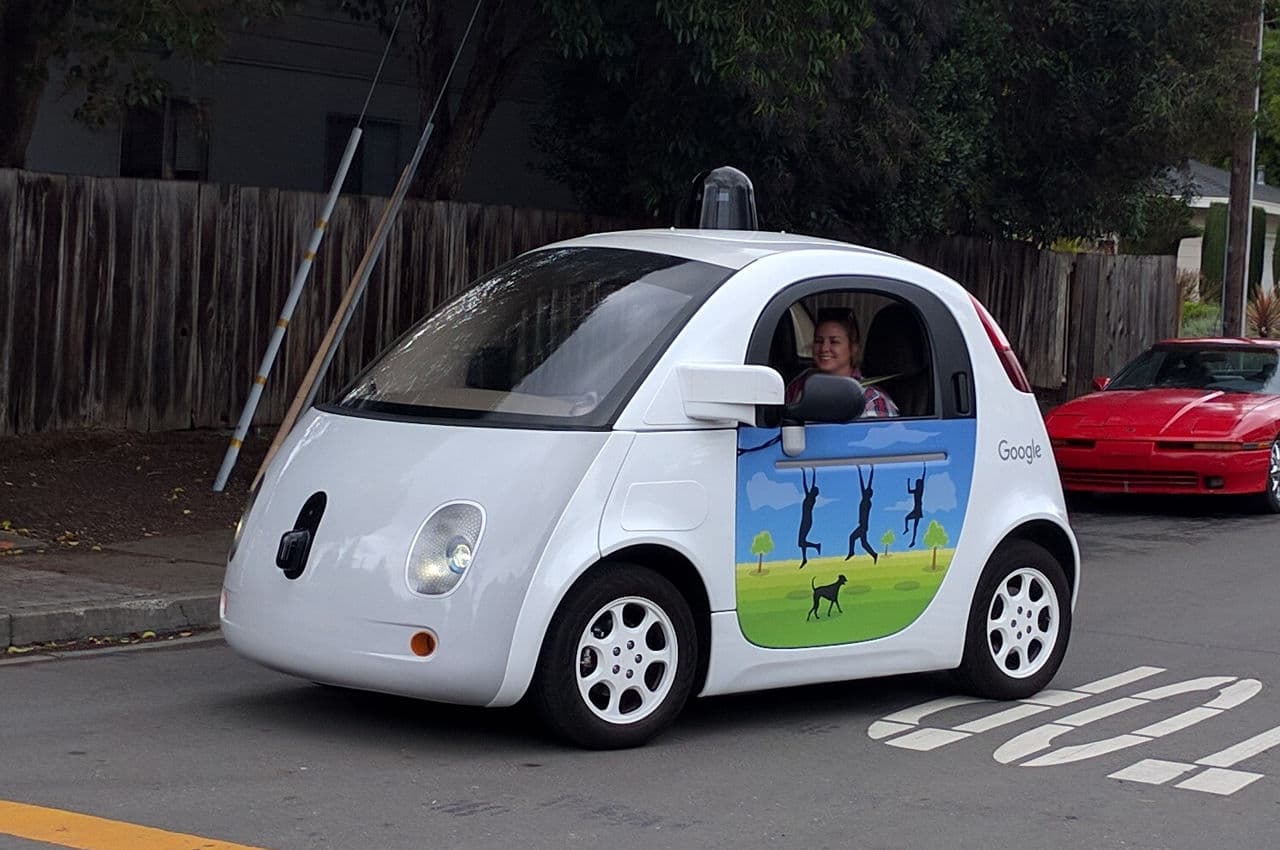
Waymo's next-generation autonomous stack is designed for lower cost, broader weather coverage, and deployment across multiple vehicle platforms. It is rolling out first on the Ojai robotaxi and will also be integrated into the Hyundai IONIQ 5.
05
LinkedIn company-page headcount as of September 2026; Waymo does not publicly disclose headcount - Wikipedia still cites an older ~2,500 figure
($126B post-money valuation per Feb 2026 round); independent research firm Sacra estimated an annualized run rate of roughly $355M as of February 2026, up from ~$284M at end of 2025; no newer Sacra or third-party estimate had been published as of September 18, 2026, and Alphabet had not yet reported Q3 2026 results
homepage still lists '20M+ rides served' as of September 18, 2026; no newer cumulative total has been disclosed since the end-2025 crossing, and Alphabet had not yet reported Q3 2026 results
restated on Waymo's homepage and Singapore page as of September 18, 2026, unchanged in substance since late March 2026 even as the footprint reached 15 metros with the September 14 Las Vegas rolling public invite and the fleet passed 4,000 vehicles. Independent forecasting firm FutureSearch (model re-run August 6, 2026 after Q2 earnings) still projects a Q4 2026 median of ~765,000 weekly rides (p10 590K / p90 1.03M), short of Co-CEO Mawakana's 1M/week year-end goal unless ridership per car recovers. Alphabet's Q3 2026 earnings (expected late October) will be the next official checkpoint
metros as of September 14, 2026 after Las Vegas opened on rolling public invites (Atlanta, Austin, Dallas, Denver, Houston, Los Angeles, Miami, Nashville, Orlando, Phoenix, San Antonio, San Diego, San Francisco Bay Area, Tampa, plus Las Vegas). San Antonio paid rides resumed September 17, 2026 after an April flood pause, including airport trips, with new riders still on a waitlist. Las Vegas is invite-only for now, with more than 100,000 interest-list signups, and is not yet fully open to anyone with the app. The NTA has authorized up to 1,000 Waymo AVs in Clark County. Nashville is also live on the Lyft app as of September 9, 2026
~1,400 sq mi as of the May 13, 2026 11-city expansion, plus three new public markets (Denver, San Diego, Tampa) that Waymo said start at roughly 150 square miles each; no newer company-published aggregate square-mileage figure as of September 13, 2026
More than 4,000 vehicles in commercial service as of the September 1, 2026 three-city public launch (Waymo and CNBC), including Jaguar I-PACE hatchbacks and the Zeekr-built Ojai; TechCrunch put the in-service Ojai fleet at about 300 as of that launch, with further units still integrating at the Mesa, Arizona factory
February 2026 $16B growth round; no newer equity round as of September 18, 2026. A first-ever $3B+ unrated debt raise with Pimco, Blackstone, and Sixth Street was reported near close on September 2 and had not been confirmed as closed by September 18
(July 23, 2026): 68% fewer police-reportable crashes per mile than human drivers across San Francisco, Phoenix, Los Angeles, and Austin (85% fewer single-vehicle crashes, 81% fewer injury crashes) on ~50M Waymo miles vs 222B human-driven miles, 2021-2024. Waymo's own homepage (as of September 2026) separately claims a 92%+ reduction in reported serious-injury-or-worse crash rates where it operates, including 94% fewer serious-injury crashes and 82% fewer injury-causing crashes versus an average human driver over the same distance in its operating cities. No newer IIHS study has superseded the July paper
More than 270 million fully autonomous miles through the end of June 2026, per Waymo's September 24, 2026 safety post covering Atlanta, Austin, Los Angeles, Phoenix and San Francisco. The Safety Impact hub still listed 220.6 million rider-only miles through March 2026.
More than 4,000 vehicles in commercial service. TechCrunch (Sept 24): about 80% in California and Texas; 1,102 registered in Texas as of September 24 (up 49% in three weeks); Ojai about one-third of the Texas fleet. MoffettNathanson: on track for 5,100 Ojai imports by year-end.
First-ever $3B-plus unrated debt with Pimco, Blackstone, and Sixth Street still unconfirmed as closed as of September 30, 2026. Latest primary account remains Bloomberg/Transport Topics September 2: unsigned talks, Goldman Sachs advising, terms could change, all parties declined to comment.
First-ever $3B-plus unrated debt with Pimco, Blackstone, and Sixth Street still unconfirmed as closed as of October 6, 2026. Latest primary account remains Bloomberg/Transport Topics September 2: unsigned talks, Goldman Sachs advising, terms could change, all parties declined to comment. Waymo blog through September 24 has no close post.
500,000+ per week, restated October 3, 2026 by CNBC and still listed as 500K+ trips/week on Waymo's Singapore page. Unchanged in substance since late March 2026 even as the footprint is 15 metros and the fleet is more than 4,000 vehicles.
6, 2026: inaugural private loan increased to $5 billion from more than $3 billion, priced 5.25 percentage points over the benchmark, with Pimco, Blackstone and Sixth Street among lenders and Goldman Sachs arranging; allocated and expected to close soon. Waymo has not announced it. Not confirmed closed.
06
Operating status
Operational; Toronto mapping next; BNA airport service limited
Waymo One (Direct Ride-Hailing)
Core commercial ride-hailing business booked through the Waymo app across Waymo's company-operated service areas.
Network Distribution Partnerships
Waymo distributes rides through partner apps in selected markets, with Uber managing the fleet and demand in Austin and Atlanta (through an exclusivity period ending January 2028), and a Lyft + Flexdrive partnership bringing Nashville online in 2026.
Autonomous Delivery Partnerships
Waymo is extending its driver platform into delivery, with DoorDash users in Phoenix able to receive autonomous deliveries. After ending its Phoenix ride-hailing distribution deal with Uber in late June 2026, Waymo redirected the freed-up Phoenix vehicles toward DoorDash deliveries, deepening this stream.
07
How past announced dates turned out.
1/2announced dates hit on time
Confirm whether the Pimco, Blackstone, and Sixth Street $3B-plus debt raise closed
Target Confirm lender set, amount, and close date after Alphabet Q3 2026 results; calendars list October 28 but abc.xyz/investor had not confirmed the date · Resolved Oct 8, 2026
Waymo CFO Steve Fieler said Oct. 8, 2026 that Waymo closed a $5 billion term loan with PIMCO, Blackstone, and Sixth Street as lead syndicated lenders and Goldman Sachs as sole lead bookrunner. Rate, tenor, and collateral remain undisclosed.
Confirm whether the Pimco, Blackstone, and Sixth Street $3B-plus debt raise closed
Target After September 2026; confirm lender set, amount, and close date · Resolved Oct 6, 2026
September 2026 passed without a Waymo, Pimco, Blackstone, Sixth Street, or Goldman Sachs close announcement. Transport Topics reprint of Bloomberg September 2 remains the last primary account and still describes ongoing unsigned talks. Waymo's blog index through September 24 has no close post. Do not treat FXBus as confirmation.
08
2026
Starts limited service at Nashville International Airport
On Oct. 13, 2026 Waymo said pickups and drop-offs at Nashville International Airport are available in Terminal Garage 2 for a limited number of riders, with access widening over time.
Starts Toronto mapping and targets riders in 2028
On October 16, 2026 Waymo said it is preparing fully autonomous ride-hailing in Toronto, its first planned Canadian city, with first riders targeted for 2028. Manual mapping drives with specialists behind the wheel are to begin in the coming days. Element Fleet Management will provide end-to-end fleet operations, extending a San Diego partnership announced in June, and Waymo said the work will add hundreds of roles over time.
Tampa station confirms all-rider access; Ojai claim is not in Waymo's post
NewsRadio WIOD reported that on 14 October 2026 Waymo opened Tampa to anyone in the app, with no invitation code, across about 50 square miles including downtown, Hyde Park, Westshore, and Ybor City. KSAT said a Waymo news release included the Ojai in the San Antonio opening. Waymo's own 14 October post names San Antonio, San Diego, Tampa, and the San Antonio airport, and does not name Ojai or a vehicle type. ClickOnDetroit's 6 October report still says Detroit rides are employee-only in downtown, Corktown, Midtown, Hamtramck, and Indian Village, with no public date and no paid service-area size.
Opens San Antonio, San Diego and Tampa to everyone
On October 14, 2026 Waymo said anyone in San Antonio, San Diego and Tampa can download the Waymo app and hail a fully autonomous ride, including San Antonio International Airport. The company said those cities had already welcomed hundreds of thousands of riders since opening earlier in the year. KSAT confirmed San Antonio was open to all riders the same day.
Closes $5 billion first term loan
CFO Steve Fieler said Waymo closed a $5 billion term loan on Oct. 8, 2026, its first debt financing, with PIMCO, Blackstone, and Sixth Street as lead syndicated lenders and Goldman Sachs as sole lead bookrunner.
Bloomberg says debut loan upsized to $5B
Bloomberg reported on Oct. 6, 2026, citing people familiar with the financing, that Waymo increased its first private loan to $5 billion from more than $3 billion sought earlier. Pimco, Blackstone and Sixth Street were among lenders, Goldman Sachs arranged, and the loan priced at 5.25 percentage points over the benchmark. Reports said it was allocated and expected to close soon. Waymo has not announced the deal, and it is not confirmed closed.
Starts fully driverless Detroit runs for employees
Waymo told Detroit media on October 6 that it is operating fully autonomous vehicles in Detroit, with rides limited to employees. Spokesman Chris Bonelli said operations remain around downtown, Corktown, Midtown, Hamtramck and Indian Village until public rides open after local validation. Public rider service has not started.
SFMTA geofences robotaxis off the northern waterfront for Fleet Week
On October 5, 2026 SFMTA said autonomous rideshare, including Waymo, will have designated pick-up and drop-off boundaries Friday through Sunday, October 9-11, from 10 a.m. to 6 p.m., to reduce congestion and protect pedestrians near the waterfront. Traditional Uber, Lyft, and taxi services are not geofenced. No autonomous rideshare in The Presidio.
2026
Flexdrive opens an 80,000-square-foot Nashville depot for Waymo
On October 2, 2026 Flexdrive by Lyft held a ribbon-cutting for an 80,000-square-foot charging and maintenance depot in a former post office near Nashville International Airport. Waymo vehicles are scheduled to begin using the site on October 12. WSMV reported Annabel Chang of Waymo said the depot would let hundreds of vehicles join the fleet and shorten wait times, and that the site is convenient to airport testing. More than 70 full-time jobs were cited for this year.
Texas DMV shows 1,154 Waymo vehicles authorized, including 359 Ojai
CNBC reported on 3 October 2026, citing Texas Department of Motor Vehicles records as of Friday 2 October, that Waymo had 1,154 autonomous vehicles authorized for commercial use in Texas, including 359 Ojai models. The same article put Waymo at more than 500,000 paid rides a week, about 270 million fully autonomous commercial miles, and more than 4,000 driverless vehicles in US commercial operations, and said Waymo's website listed 15 US markets.
Announces Bay Area transit rewards with Waymo Cash
Waymo's blog index dated September 22, 2026 announced a transit rewards program, initially in the San Francisco Bay Area with future cities to follow, that rewards riders with Waymo Cash when they connect Waymo rides with public transit and use a Visa card. The dedicated post URL was not reachable this run, so dollar amounts and eligibility windows are not recorded.
Opens teen accounts in Nashville
Waymo said teens ages 13-17 can hail fully autonomous rides across 50 square miles of Nashville when linked to a parent or guardian account, following the Phoenix teen-account launch. The company cited trip-status sharing, automatic receipts, and specially trained Rider Support. A Boys & Girls Clubs of the Valley and Legacy Institute summer-internship study cited in the same post said commuting stress fell from 86% to 43% with Waymo access. Help pages still list teen accounts as available only in Metro Phoenix and Nashville.
Texas registrations show a 49% three-week fleet surge
Kirsten Korosec reported that about 80% of Waymo's roughly 4,000 robotaxis are in California and Texas. Using Texas vehicle registrations and the Texas Autonomous Vehicle Fleet Tracker, TechCrunch said Waymo had 1,102 autonomous vehicles registered in Texas as of September 24, 2026, up 49% in three weeks after a summer that had inched from about 600 in June to more than 700 by end of August. Ojai minivans now make up about a third of the Texas fleet. MoffettNathanson, tracking shipping records, said Waymo is on track to bring 5,100 Ojai vehicles into the U.S. by year-end. Weekly paid rides remain about 500,000 across 15 cities.
Publishes 270 million-mile autonomous safety analysis
On September 24, 2026 Waymo said its latest safety analysis covers more than 270 million miles of fully autonomous operations through the end of June 2026 across Atlanta, Austin, Los Angeles, Phoenix and San Francisco. It said the Waymo Driver was involved in 82% fewer injury-causing crashes and 95% fewer serious-injury-or-worse crashes than human drivers over the same distance, estimating 841 injury-causing crashes avoided. The public Safety Impact hub still listed 220.6 million rider-only miles through March 2026.
Resumes paid San Antonio rides after the April flood pause
On September 17, 2026 Waymo said it resumed paid autonomous rides in San Antonio, including trips to and from San Antonio International Airport, after pausing passenger service following an April flood in which an empty vehicle entered a flooded lane. No one was injured. The company said it audited flood zones, added location limits in high-risk areas, adjusted weather alerts, and improved the Waymo Driver's ability to detect and leave floodwaters, work it said had already been tested in other cities that kept running this summer. Weather product lead Robert Chen said severe weather can still trigger another pause. San Antonio Current reported that new riders remain on a waitlist rather than booking like Austin Uber users.
Starts fully autonomous Pittsburgh testing with a safety technician
On September 18, 2026 Waymo Senior Director Euan Guttridge said vehicles are now driving fully autonomously on Pittsburgh roads with a safety technician behind the wheel, after PennDOT authorized autonomous testing in February while the fleet was still in the manual-driving phase that began in December 2025. Guttridge described mapping downtown and slightly beyond, then hundreds of thousands of miles of testing before trusted testers and a later public opening. Waymo has not received Pennsylvania permission to operate without a person in the driver's seat and has not set a commercial launch date.
Sets 2028 target for paid robotaxi service in Singapore
On September 18, 2026 Waymo announced it will bring paid autonomous ride-hailing to Singapore in 2028, its first Southeast Asian market and fourth confirmed international city after London, Tokyo, and Munich. An initial fleet of all-electric Jaguar I-PACE vehicles with the fifth-generation Waymo Driver will arrive in the coming months; trained specialists will manually map the island in 2027, including monsoon weather, before seeking Land Transport Authority approval. Transport Minister Jeffrey Siow welcomed Waymo as Singapore's newest AV operator. Commercial service remains subject to LTA and CETRAN safety assessment.
Allianz Partners to insure the European fleet
On September 16, 2026 Waymo and Allianz Partners announced a strategic partnership to build the insurance, claims and safety-research layer behind Waymo's European rollout, starting with its phased commercial deployment in Germany. Allianz will supply motor fleet insurance, multinational liability and product-liability programs and new insurance models designed for autonomous mobility platforms, with digital end-to-end claims handled by its Solvd Group unit and crash analysis and risk modeling from the Allianz Center for Technology; the two also intend to explore specialized recovery services for autonomous vehicles. German press reported the collaboration as an initial three-year arrangement, tied to a Munich launch targeted for the end of 2027.
Sets 2027 target for fully driverless taxis in Tokyo
On September 15, 2026 Waymo, GO, and Nihon Kotsu said they aim to launch Japan's first fully unmanned Level 4 commercial taxi service in Tokyo during 2027, starting with a small fleet and scaling toward about 100 vehicles bookable on the GO and Waymo apps. Co-CEO Tekedra Mawakana said the service would be unmanned for the public from day one. Supervised mapping with Nihon Kotsu drivers has been running across seven Tokyo wards since 2025. The launch still depends on permits; Japanese rules currently require a person in the driver's seat.
Opens Las Vegas robotaxi service to public riders
On September 14, 2026 Waymo began inviting public riders in Las Vegas, its 15th U.S. metro, converting the employee-only driverless operations it began there in July. Access is rolling from more than 100,000 interest-list signups rather than fully open to anyone with the app. The launch fleet is dozens of Ojai minivans covering the Strip south of Highway 589 into Boulder Junction plus Allegiant Stadium, Chinatown, UNLV and Spring Valley, a nearly 24-mile area that Waymo said will scale. The Nevada Transportation Authority has authorized Waymo to operate up to 1,000 AVs in Clark County.
San Francisco robotaxi stop after loaded firearm detected
Shortly before 4 a.m. on September 3, 2026, a Waymo in San Francisco's Outer Richmond pulled over and alerted police after detecting a terms-of-service violation involving a firearm. Officers conducted a high-risk stop, recovered a loaded AR-style ghost gun plus suspected marijuana and mace spray, and booked two juvenile passengers into juvenile hall. Waymo confirmed the vehicle to the Los Angeles Times and said it cooperated fully; the investigation remains open.
Uber and Wayve open supervised London robotaxi service first
On September 3, 2026 Uber and UK startup Wayve began offering paid trips in London using Wayve's camera-and-radar AV2.0 stack in Ford Mustang Mach-E vehicles, with licensed TfL safety drivers still in the front seat and no geofence. The Verge reported it as the first paid autonomous ride-hailing offer in the city, ahead of Waymo's still-planned fully driverless London launch by the end of 2026 and a Lyft-Baidu test in Brent. Wayve started with about 15 TfL-registered cars; Uber said the safety drivers will be phased out later, subject to regulation.
Waymo rides go live on the Lyft app in Nashville
On September 9, 2026 Lyft said Waymo robotaxis can be booked in its Nashville app, the first U.S. market where the same driverless Jaguar I-Pace fleet is available on both the Waymo and Lyft apps. Trips that start and end inside the roughly 60-square-mile central service area (Downtown, North Nashville and Germantown, East Nashville, Midtown, South Nashville) carry no extra charge on Standard, Priority, Wait & Save, or Extra Comfort. Flexdrive will open an 80,000-square-foot depot in October, adding more than 70 local jobs.
Seeks first-ever debt financing: $3B+ from Pimco, Blackstone, Sixth Street
Bloomberg reported September 2, 2026 that Waymo is in the final stages of arranging more than $3 billion in unrated debt - its first-ever debt raise - from lenders including Pacific Investment Management Co. (Pimco), Blackstone, and Sixth Street Partners, advised by Goldman Sachs, at a spread of more than 500 basis points over the benchmark rate. Until now Waymo has funded its expansion entirely through Alphabet-led equity rounds (most recently $16B in February 2026 at a $126B valuation); the shift to debt reflects the rising capital needs of scaling the fleet and AI compute as Waymo pushes toward 1 million weekly rides. The deal remained subject to change and had not been confirmed as closed as of the report.
Argues against camera-only autonomy days before Tesla's Cybercab launch
On September 1, 2026, a week before Tesla's planned September 3 Cybercab launch event, Waymo VP of Onboard Software Srikanth Thirumalai published a blog post and gave an Axios interview arguing that a driver-assistance system cannot simply be improved into a self-driving one - calling that idea a 'false summit' - and that cameras alone, without lidar and radar, are not sufficient for safe full autonomy. The post reprised the long-running lidar-versus-camera-only debate between Waymo's multi-sensor approach (now running roughly 4,000 vehicles across 14 U.S. cities) and Tesla's vision-only strategy, which CEO Elon Musk has long defended by calling lidar a 'crutch.'
Public robotaxi rides go live in Denver, San Diego and Tampa
On September 1, 2026 Waymo opened paid, driverless robotaxi rides to the general public in Denver, San Diego and Tampa, converting the employee-only driverless operations it began there in July into full commercial service and bringing its US footprint to 14 metro areas. Denver and San Diego riders can only book the Ojai, Waymo's Zeekr-based purpose-built robotaxi; each new market starts with dozens of vehicles scaling toward hundreds over time, covering roughly 150 square miles of service territory per market. Waymo's national fleet now exceeds 4,000 vehicles delivering more than 500,000 paid rides a week, with a goal of 1 million weekly rides by year-end.
OSHA data shows test drivers injured by hard braking and swerving
Reporting published around August 27, 2026 based on OSHA filings found more than two dozen injuries - sprains, strains, whiplash and back pain, some sidelining workers for weeks or months - among Waymo and Zoox safety-test drivers in 2024 and 2025, caused by the vehicles' autonomous software braking hard or swerving suddenly. Transdev, which employs and manages Waymo's test drivers, reported 16 injuries tied to Waymo depot locations across three cities; incidents were concentrated in Los Angeles, Phoenix, and San Francisco. Waymo and Zoox said they take employee safety seriously and continue refining vehicle behavior based on the reports.
First national ad campaign rides on World Cup exposure; WPP wins global media assignment
Waymo aired its first national U.S. ad campaign in July 2026 during a FIFA World Cup broadcast, built around a safety message for its self-driving platform. Operating in six World Cup host cities during the tournament, Waymo gave rides to fans attending roughly a third of all matches, completing more than 90,000 trips to stadiums and official watch parties, supporting 400+ fan events, and welcoming over 200,000 first-time riders. Building on that push, Waymo awarded WPP its media planning and buying assignment for North America and EMEA on August 14, 2026, with WPP set to lead strategy for some of Waymo's first international city launches.
Analysis: weekly ride count plateaus as footprint outgrows demand
An analysis published in mid-August 2026 found Waymo's roughly 500,000 weekly paid trips have held essentially flat across four public disclosures since late March 2026, even as its footprint expanded from 10 to 15 metro areas and its fleet grew from roughly 700 to roughly 4,000 vehicles. The flat trip count against a growing fleet implies per-vehicle utilization fell about 25%, to roughly 125 trips per vehicle per week versus about 167 in May 2025, raising the bar for Co-CEO Mawakana's goal of 1 million weekly rides by year-end 2026.
Imports 3,200+ Zeekr-built Ojai bodies from China despite 102.5% tariffs
Reporting published in early-to-mid August 2026 detailed how Waymo has imported more than 3,200 Zeekr-built Ojai vehicle bodies from a factory in Ningbo, China (more than 2,600 of them in 2026 alone), absorbing a 102.5% U.S. tariff on Chinese-made vehicles that otherwise blocks ordinary consumers from buying them. Waymo manages the cost by importing stripped-down, sensorless bodies valued at roughly $10,000-$20,000 each rather than finished consumer vehicles, then fits them with its autonomous driving hardware at its Mesa, Arizona facility.
Arizona factory backlog signals a major Ojai fleet step-up
An aerial count of Waymo's Mesa, Arizona vehicle-integration facility published August 12, 2026 found roughly 953 Ojai robotaxis staged on site, with about 684 already finished and ready to deploy - up sharply from roughly 500 units counted at the same site in early June 2026. The buildup points to a step-up from the roughly 100 Ojai vehicles that had been in public service across San Francisco, Los Angeles, and Phoenix through late July 2026, as Zeekr-built bodies continue arriving from China for retrofitting with Waymo's sensor suite.
Robotaxis snarl traffic in new Miami-area incidents
Video circulating since August 8, 2026 shows two Waymo vehicles blocking each other while attempting to turn at a Miami Beach intersection, unable to proceed and stopping cross traffic, and separate footage shows Waymo vehicles snarling traffic on a Miami bridge around the same period. The incidents add to the operational and safety scrutiny Waymo has faced through 2026, including federal probes into first-responder interference and the July 4 San Francisco gridlock.
Pedestrian dies after being thrown into an unoccupied Waymo's path in Dallas
On the night of August 7, 2026 a pedestrian crossing Maple Avenue outside a crosswalk in Dallas was struck by an SUV traveling roughly 35 mph, throwing him more than 30 feet into the path of an oncoming, unoccupied Waymo. Waymo said its vehicle detected the pedestrian about 150 feet away and slowed to roughly 5 mph before the pedestrian struck the vehicle's left rear; both vehicles stopped, and the man was taken to a hospital, where he later died. Waymo said it was 'deeply saddened' and that its Event Response Team coordinated with responding officers; police and outside safety analysts pointed to the SUV as the primary cause of the collision and described the low-speed Waymo contact as unlikely to have been preventable or the primary cause of death. No fault determination or new regulatory action specific to the incident had been announced as of mid-August 2026, but it is Waymo's first fatality involving physical contact with a person and lands amid its broader federal safety scrutiny.
Dallas robotaxi service opens to the general public
On August 4, 2026 Waymo ended its invitation-only waitlist in Dallas, letting anyone download the app and hail a fully autonomous ride without joining a list first. Roughly 150,000 people had signed up for the interest list since the city's commercial launch in February 2026; rides remain limited to city streets, with freeway and Dallas Love Field airport routes still in testing and no public launch date set for either.
Court orders halt to overnight charging at two Santa Monica lots
An LA County Superior Court judge granted the City of Santa Monica's motion for a preliminary injunction on July 27, 2026, ruling that around-the-clock noise, lights, and traffic at Waymo's two Broadway charging and servicing lots amount to a public nuisance. Waymo is barred from operating the two sites between 11pm and 6am while the case proceeds toward an October 23, 2026 status conference, adding a local legal setback to the company's mounting regulatory scrutiny.
Gemini AI assistant and redesigned interface added to Ojai
On July 29, 2026 Waymo announced a Gemini-powered in-car assistant for its Ojai robotaxi alongside a redesigned interface with bigger screens and buttons. Gemini answers questions about the neighborhood and points of interest, gives journey information, and handles cabin controls like air conditioning or requesting a stop, though it does not control the driving itself. Early access is live now with a broader rollout to more riders planned in the coming weeks.
IIHS study finds Waymo vehicles crash far less often than human drivers
On July 23, 2026 the Insurance Institute for Highway Safety published a study analyzing roughly 50 million miles of Waymo driving in San Francisco, Phoenix, Los Angeles, and Austin between 2021 and 2024 against 222 billion human-driven miles in the same cities. It found Waymo vehicles were involved in 68% fewer police-reportable crashes per mile than human drivers overall (85% fewer single-vehicle crashes, 81% fewer injury crashes), though the advantage varied by city - from 76% fewer in Phoenix to just 4% higher in Austin, where the sample size was small. IIHS cautioned the federal AV crash-reporting system needs improvement as deployment scales. The findings landed as Waymo faced mounting federal and local safety scrutiny over first-responder interference and the July 4 San Francisco gridlock.
Congress introduces AV Emergency Response Coordination Act after NHTSA deadline passes
NHTSA's end-of-July deadline for AV developers to explain how they will stop interfering with first responders passed without the agency opening a formal investigation, but pressure moved to Congress: on July 28, 2026 Rep. Kevin Mullin (D-CA) introduced the AV Emergency Response Coordination Act, which would let officials geofence autonomous vehicles away from emergency scenes, require AV companies to give first responders a 24-hour direct contact line, and direct NHTSA to set minimum national emergency-response standards. The bill follows Waymo's July 4 San Francisco gridlock and a string of incidents where officers had to move Waymo vehicles clear of emergency scenes.
July 4 fireworks gridlock strands robotaxis; SF mayor demands tougher AV rules
During San Francisco's July 4, 2026 fireworks show, more than 30 Waymos became stuck near the viewing area and several ran out of charge and had to be towed while blocking travel lanes as crowds dispersed; separately, a Waymo caught fire after driving over lit fireworks, with no injuries reported. Mayor Daniel Lurie sent a letter to California's Secretary of Transportation on July 16 asking the state to require autonomous-vehicle operators to demonstrate they can keep traffic moving and immediately clear travel lanes, intensifying local pressure on Waymo even as it expands service.
Moves to end Uber robotaxi exclusivity in Austin and Atlanta
On July 24, 2026 Waymo told Uber it will end their exclusive robotaxi arrangement in Austin and Atlanta and begin offering rides through its own Waymo app in both cities in January 2028, while keeping vehicles available on Uber until the existing contract expires in May 2028. The Financial Times reported the companies had held internal discussions about a broader split amid tensions, including conflicting autonomous-vehicle policy proposals they are pushing in different U.S. markets. The step follows the wind-down of the Waymo-Uber Phoenix partnership earlier in 2026 and a mid-July D.C. lobbying clash, sharpening the rivalry between the largest U.S. robotaxi operator and the largest ride-hailing platform.
Uber–Waymo clash over D.C. AV bill as NHTSA deadline looms
In mid-July 2026 Waymo's regulatory pressures sharpened on two fronts. NHTSA's end-of-July deadline for AV developers to explain how they will stop interfering with first responders remained open, with regulators continuing to scrutinize the pattern but not yet opening a formal investigation. And in Washington, D.C., a July 13 hearing over an autonomous-vehicle bill exposed a lobbying clash between Waymo - which backs the measure - and Uber, which argues the framework would effectively hand Waymo a monopoly, underscoring how policy fights are becoming as consequential to robotaxi expansion as the technology itself.
NHTSA orders AV firms to fix first-responder interference
On July 8, 2026 NHTSA sent letters to autonomous-vehicle developers demanding they fix a 'clear pattern' of driverless cars interfering with police, firefighters, ambulances and other first responders, calling the failures a 'functional insufficiency' rather than a rare edge case. Regulators cited multiple incidents - including Waymo vehicles that had to be moved by officers during emergencies - and gave companies until the end of July to explain how they will detect and respond to emergency scenes. As the largest U.S. robotaxi operator, Waymo faces the most scrutiny; the order adds to a string of federal probes into the company's safety record even as it expands to new metros.
Expands driverless service to four new metros
On July 8, 2026 Waymo said it is bringing fully autonomous rides to four new U.S. markets - Las Vegas, San Diego, Tampa, and Denver - with Las Vegas vehicles operating with no human at the wheel that day and the others to follow. The rollout starts with Alphabet employees before opening to the public, extending Waymo's driverless footprint beyond its existing metros as it pushes toward 1 million paid rides per week by year-end and a planned first international launch in London.
Uber–Waymo Phoenix partnership ends; cars pivot to DoorDash
In late June 2026 Waymo and Uber wound down their roughly three-year Phoenix partnership (launched October 2023), removing Waymo robotaxis from the Uber app in Phoenix and returning those vehicles to Waymo's own app and fleet. Reported by CNBC on June 29 and confirmed locally in early July, the shift also pairs the freed-up Phoenix cars with autonomous DoorDash deliveries - a tie-up that competes with Uber Eats - while Uber said it would line up a different AV partner for Phoenix. The Waymo–Uber partnerships in Austin and Atlanta, where Uber manages fleet and demand, continue unaffected.
Opens Nashville robotaxi service to the public
On June 25, 2026 Waymo opens its fully autonomous ride-hailing service to the general public in Nashville, letting anyone hail a driverless trip across a roughly 60-square-mile area spanning Broadway, 12 South, Midtown, and East Nashville. The public launch follows an interest-list rollout running since April that served tens of thousands of riders, with access through the Lyft app slated for later in 2026.
Recalls 3,871 robotaxis over freeway construction zones
Disclosed through NHTSA on June 18, 2026, Waymo issues a voluntary recall of 3,871 fifth-generation vehicles after a software defect let robotaxis enter closed freeway construction zones and keep traveling at posted speeds. It followed 13 incidents in Phoenix and the San Francisco Bay Area - including seven SF cars on May 18 - prompting Waymo to pull its fleet from all highways on May 19 while a software fix is developed. The action is separate from the May flooded-roads recall and adds to a string of federal probes into the company's safety record.
Launches Waymo Premier loyalty subscription
On June 11, 2026, Waymo launched Waymo Premier, its first loyalty subscription, at $29.99 a month for priority vehicle matching, 10% back in Waymo Cash ride credits, up to five free cancellations a month, and early access to new markets. The invite-only plan rolled out to tens of thousands of the company's most frequent riders in San Francisco, Los Angeles, and Phoenix - Waymo's first move to build recurring revenue beyond per-ride fares as it scales toward 1 million weekly trips.
Acquires Apple's Project Titan proving ground for $220M
On June 5, 2026, Waymo acquires a 5,458-acre autonomous-vehicle testing facility in Wittmann, Arizona - built by Apple for ~$125M in 2021 as the centerpiece of its now-cancelled Project Titan self-driving program - paying $220M from Route 14 Investment Partners, a Delaware entity linked to Apple. The site includes a 115-acre city-simulation course, a vehicle dynamics area, a four-mile oval track, and a dedicated freeway course; Waymo will use it for rider-only testing, motion control validation, and operational training as the commercial fleet scales toward 1 million weekly rides.
CNN investigation: red-light runs, flooded roads, and emergency-responder blockages
A CNN investigation published June 3, 2026, drawing on public records across Waymo's 11-metro footprint, found robotaxis have run red lights, driven into closed and flooded roads, and blocked emergency responders - including a June 6, 2026 Dallas incident where a Waymo was filmed on a deputy constable's body camera partially obstructing crews at a fatal apartment fire. Federal regulators are running at least five concurrent probes, including the flooding incidents that triggered a 3,800-vehicle recall in May 2026, illegal passing of stopped school buses, and a January crash that injured a child. Waymo said incidents are isolated and that no investigation has identified a systemic safety defect.
B2U deal opens second-life pipeline for retired packs
On June 4 Waymo and B2U Storage Solutions announce a multi-year supply agreement to repurpose batteries from Waymo's electric robotaxi fleet into grid-connected battery energy storage systems across California and Texas. Retired Jaguar I-PACE packs (typically still at 70-80% of original capacity) will provide grid services in those electricity markets, turning end-of-life fleet hardware into stationary storage as the ~4,000-vehicle commercial fleet scales.
Ojai purpose-built robotaxi opens to public riders
Waymo begins offering public trips in the Ojai - its first ground-up purpose-built robotaxi, built by Zeekr and outfitted at Waymo's Arizona factory - across San Francisco, Los Angeles, and Phoenix, starting with about 100 vehicles on the 6th-generation Waymo Driver.
Coverage expands to ~1,400 square miles across 11 cities
On May 13, 2026 Waymo expands its driverless service area by more than 20% to roughly 1,400 square miles across 11 markets, starting with Miami and rolling into Austin, Atlanta, Houston, and the San Francisco Bay Area.
Crosses 500,000 paid rides per week
Waymo passes roughly 500,000 paid rides per week across its 11 U.S. metros as of late March 2026 - a tenfold increase from 50,000 weekly rides in May 2024 - keeping it on Co-CEO Tekedra Mawakana's path to 1 million weekly trips by the end of 2026.
Commercial footprint reaches 11 U.S. metro areas
By April, Waymo is serving riders in Atlanta, Austin, Dallas, Houston, Los Angeles, Miami, Nashville, Orlando, Phoenix, San Antonio, and the San Francisco Bay Area.
6th-generation Waymo Driver enters fully autonomous operations
Waymo begins fully autonomous operations with its 6th-generation Driver, positioning the new stack as the main platform for lower-cost, higher-scale expansion across more vehicle types and tougher weather conditions.
2024
2023
2020
2018
2016
2015
2009
09
$29.4Bdisclosed across 5 rounds with a stated amount
Cumulative disclosed raise · dated rounds
First External Round
March 2020
Silver Lake, CPP Investments, Mubadala, Magna, Andreessen Horowitz, AutoNation, Alphabet
Investment Round
June 2021
Alphabet, Andreessen Horowitz, AutoNation, CPP Investments, Fidelity, Magna, Mubadala, Perry Creek, Silver Lake, T. Rowe Price, Temasek, Tiger Global
Oversubscribed Investment Round
October 2024
Alphabet, Andreessen Horowitz, Fidelity, Perry Creek, Silver Lake, Tiger Global, T. Rowe Price
Growth Round
February 2026
Dragoneer, DST Global, Sequoia, Andreessen Horowitz, Mubadala, Bessemer, Silver Lake, Tiger Global, T. Rowe Price, Alphabet and others
First Debt Financing
September 2026 (pending close as of September 18)
$3B+ (unrated, >500bps spread over benchmark)
Pimco, Blackstone, Sixth Street Partners (advised by Goldman Sachs)