Aurora Innovation logo

Aurora Innovation

APublic (NASDAQ: AUR)Founded 2017🇺🇸Pittsburgh, Pennsylvania
CEO

Chris Urmson

Data verified as of Jul 13, 2026

Summary

Aurora Innovation is a self-driving vehicle company now focused on commercial autonomous trucking, with the Aurora Driver deployed first as Aurora Driver for Freight. After beginning regular driverless customer deliveries between Dallas and Houston in late April 2025, Aurora has tripled its driverless network to 10 routes across the Sun Belt — including a roughly 1,000-mile Fort Worth–Phoenix lane — and in May 2026 ran its first lane outside Texas, a ~200-mile Dallas–Oklahoma City route with Volvo's VNL Autonomous. By April 2026 it had surpassed 370,000 driverless miles with zero Aurora Driver-attributed collisions and 100% on-time performance. Customers now include Werner, Hirschbach, McLane (Berkshire Hathaway), Detmar, Uber Freight, and others, and Aurora is commercializing an asset-light Driver-as-a-Service subscription model with partners PACCAR, Volvo, and AUMOVIO. Q1 2026 revenue was ~$1M, and management is guiding to $14-16M for 2026 with a goal of exiting the year with 200+ driverless trucks and ~$80M run-rate.

Company OverviewRead the long-form profile of Aurora Innovation

Main Products

Aurora Driver for Freight

Aurora's SAE Level 4 self-driving trucking system and subscription service for long-haul freight. It combines FirstLight lidar, radar, cameras, and autonomy software and is being deployed first on Class 8 trucks for middle-mile highway routes.
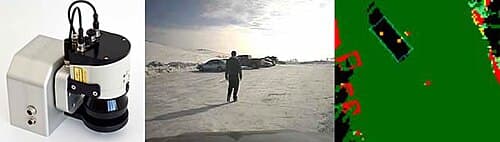

Regular driverless customer deliveries began in late April 2025 on Dallas-Houston. Aurora has since tripled the driverless network to 10 routes across the Sun Belt (adding night operations and validating the ~1,000-mile Fort Worth-Phoenix lane) and in May 2026 ran its first lane outside Texas — a ~200-mile supervised Dallas–Oklahoma City route with Volvo's VNL Autonomous. As of April 2026 the Aurora Driver had logged 370,000+ driverless miles at zero attributed collisions; next-generation lower-cost hardware on the International LT platform is targeted to run driverless without an observer in 2026 en route to 200+ trucks by year-end.

Autonomy LevelSAE Level 4 (highway freight)
Driverless Miles370,000+ (April 2026)
Current Network10 routes incl. Dallas-Houston, Fort Worth-El Paso, El Paso-Phoenix, Fort Worth-Phoenix, Dallas-Laredo, plus a supervised Dallas–Oklahoma City lane with Volvo (Phoenix terminal operational since 2025)
Werner Utilization4,000+ miles/week per truck
Safety RecordZero Aurora Driver-attributed collisions; 100% on-time
FirstLight LiDAR

Aurora's proprietary long-range lidar stack for highway autonomy. The current production system sees more than 450 meters ahead and underpins the Aurora Driver's night and bad-weather performance; Aurora's next-generation version is designed for 1,000-meter detection and lower-cost scale deployment.

Current-generation FirstLight is deployed in commercial operations, while Aurora's next-generation sensing stack — part of a lower-cost hardware kit designed to roughly halve system cost — is being integrated onto additional truck platforms (including the International LT Series) ahead of broader 2026 scale-up.

Detection Range450+ meters (current generation)
Next-Gen Range1,000 meters
TechnologyFMCW LiDAR

What's Next

Scale the Sun Belt freight network

Aurora's next near-term milestone is turning its February 2026 software release into regular service across more southern freight corridors and customer endpoints, including expanded McLane lanes between distribution centers and Detmar's frac-sand runs between Midland and Monahans, Texas.

2026

Deploy next-gen International trucks driverless

Aurora is launching its next-generation hardware kit on the International LT Series truck platform without a partner-requested ride observer, targeted for the second quarter of 2026, with the second-gen commercial kit also integrating onto Volvo's VNL Autonomous pilot line ahead of hundreds of units in 2027. Aurora has selected Roush as its upfitter, initially equipping the partner to build about 20 next-gen driverless trucks per week later in 2026 to support the 200+ truck year-end goal.

Q2-Q3 2026

Reach 200+ driverless trucks in operation

Management's explicit scale target is to end 2026 with more than 200 driverless trucks in operation, translating to ~$80M of TaaS revenue on a run-rate basis and setting up industrialized scaling in 2027 and beyond.

End of 2026

Finalize the Hirschbach 500-truck definitive agreement

Convert the May 2026 Hirschbach MOU for 500 Driver-as-a-Service trucks into a definitive agreement later in 2026, with truck deliveries beginning in 2027 and a potential multi-year revenue stream in the hundreds of millions.

2026

Recent News

View all →

Operations & Revenue

StatusOperational

Aurora launched regular driverless freight service between Dallas and Houston in late April 2025 and has since tripled its driverless network to 10 routes, added night operations, validated the ~1,000-mile Fort Worth-Phoenix lane, and operates a Phoenix terminal opened in 2025. In May 2026 it extended autonomous freight outside Texas for the first time via a ~200-mile Dallas–Oklahoma City route run with Volvo Autonomous Solutions' VNL Autonomous (supervised, five days a week). As of April 2026 the Aurora Driver had logged 370,000+ driverless miles at 100% on-time and zero attributed collisions; Werner trucks now average 4,000+ miles per week and commercial truck capacity is fully committed through Q3 2026. Customer base expanded to seven (Hirschbach, McLane, Werner, Detmar, Jetmar, Clean Energy, Uber Freight). In June 2026, an independent ~three-month assessment by safety-assurance firm Edge Case validated Aurora's Safety Case as well-structured and aligned with best practices (UL 4600, ISO 26262, AVSC, NHTSA elements). Aurora will report Q2 2026 results and host a business review call after market close on July 29, 2026, with investors watching the planned next-generation International LT driverless launch and progress toward 200+ trucks by year-end.

Revenue Streams

Aurora Driver for Freight

Aurora's driverless trucking subscription service. Aurora aims for an asset-light driver-as-a-service model where fleets subscribe to Aurora Driver-powered trucks and use ecosystem partners for vehicle, maintenance, and operational support; during early commercialization Aurora is also operating its own logistics service to seed capacity.

Aurora Driver for Rides

Longer-term driverless ride-hailing subscription service planned after freight expansion, leveraging Aurora's shared core autonomy stack plus its strategic relationships with Toyota and Uber.

Key Metrics

Employees

~1,900

Est. Annual Revenue

~$1M in Q1 2026 (+10% QoQ); 2026 guidance of $14-16M (back-end loaded) with a year-end ~$80M run-rate as the fleet scales to 200+ driverless trucks

Driverless Miles

370,000+ (April 2026)

Q1 2026 Revenue

~$1M (+10% QoQ)

2026 Revenue Guidance

$14-16M (~+400% YoY)

Liquidity

~$1.3B (Mar 31, 2026)

2026 Fleet Goal

200+ driverless trucks (~$80M run-rate)

Hirschbach DaaS MOU

500 trucks (deliveries from 2027)

Q2 2026 Results

Reported after market close July 29, 2026 (business review call same day)

Timeline

2026Triples network and sets 200-truck scale goal

In February 2026 Aurora says its latest software release has tripled the driverless network to 10 routes, validated the roughly 1,000-mile Fort Worth-Phoenix lane, and set a goal to exit 2026 with more than 200 driverless trucks in operation.

2026Volvo VNL Autonomous launches Dallas–Oklahoma City route

On May 4, 2026 Aurora and Volvo Autonomous Solutions begin a new ~200-mile autonomous freight route between Dallas and Oklahoma City using the Volvo VNL Autonomous integrated with the Aurora Driver — Aurora's first commercial lane reaching outside Texas and the first deployment of the VNL Autonomous across multiple states. The route initially runs five days a week in supervised autonomy hauling directly to customer endpoints, with the pair in final validation for driverless operations as Volvo prepares to build hundreds of VNL Autonomous trucks in 2027.

2026McLane commercial agreement begins driverless hauls

Aurora and Berkshire Hathaway-owned McLane Company announce a commercial agreement on May 6, 2026 to start driverless hauls between Dallas and Houston for McLane's restaurant supply chain, building on a 2023 supervised pilot that had logged 280,000+ autonomous miles and 1,400 loads. Aurora plans to expand to additional McLane distribution-center routes across the Sun Belt by year-end.

2026Hirschbach signs MOU for 500-truck DaaS fleet

Hirschbach Motor Lines signs a memorandum of understanding to own and operate 500 trucks through Aurora's Driver-as-a-Service business model, with a definitive agreement expected later in 2026 and deliveries starting in 2027 — Aurora's largest customer commitment to date and a potential multi-year revenue stream in the hundreds of millions of dollars.

2026Q1 2026 results: 370k driverless miles, fleet ramp ahead

Aurora reports Q1 2026 revenue of ~$1M (up 10% sequentially) and an operating loss of $244M, with the Aurora Driver having surpassed 370,000 driverless miles at 100% on-time and zero attributed collisions. Werner trucks now average 4,000+ miles per week, and Aurora reiterates 2026 revenue guidance of $14-16M, an exit fleet of 200+ trucks, and a ~$80M run-rate target.

2026Uber sells $479M block, trims Aurora stake to ~15.6%

Uber Technologies' wholly owned Neben Holdings subsidiary disposes of 67,500,000 Class A shares of Aurora on June 2 in a single block trade at $7.10 per share — about $479.25M of proceeds — disclosed in a Schedule 13D/A. The sale cuts Uber's stake by 14.46 percentage points to roughly 15.6%, continuing Uber's gradual capital recycling out of the 2020 Uber ATG deal even as the two companies remain operationally aligned on driverless freight and ride-hailing.

2026Independent Edge Case audit validates Aurora's Safety Case

On June 25, 2026, third-party safety-assurance firm Edge Case completed a roughly three-month independent assessment of Aurora's Safety Case — the structured argument that the Aurora Driver is safe to operate driverless. Edge Case, given broad access to Aurora's systems and teams and free to choose what to evaluate, concluded the Safety Case is well-structured, substantively aligned with industry best practices, and actively maintained, measuring it against NHTSA safety elements and standards including UL 4600, ISO 26262, and AVSC. Aurora framed the review as a new bar for AV safety transparency as it scales toward 200+ driverless trucks.

2025Launches commercial driverless trucking

Aurora begins regular driverless customer deliveries between Dallas and Houston in late April 2025, becoming the first company to operate a commercial self-driving Class 8 trucking service on public roads in the U.S.

2025Expands to El Paso and 100,000 driverless miles

By October 2025 Aurora launches a second driverless route from Fort Worth to El Paso, surpasses 100,000 driverless miles on public roads, and begins integrating lower-cost next-generation hardware for broader 2026 deployment.

2023First-Light LiDAR and PACCAR partnership

Acquires FirstLight LiDAR assets for next-gen sensor development. Deepens partnership with PACCAR to integrate Aurora Driver into Kenworth and Peterbilt trucks for commercial deployment.

2021Goes public via SPAC

Goes public on NASDAQ through a SPAC merger with Reinvent Technology Partners Y, with an initial valuation of ~$13B. Announces Aurora Horizon (trucking) and Aurora Connect (ride-hailing) products.

2020Acquires Uber ATG

Acquires Uber's Advanced Technologies Group (ATG) — Uber's self-driving division — in a deal valued at ~$4B, gaining engineering talent, technology assets, and a partnership with Uber for future ride-hailing deployment.

2019Partnerships with major OEMs

Announces partnerships with Hyundai, Kia, and Fiat Chrysler to integrate the Aurora Driver into their vehicles. Raises $600M+ from Sequoia, Amazon, and others.

2017Founded by autonomous driving veterans

Chris Urmson (Google SDC lead), Drew Bagnell (Uber ATG VP), and Sterling Anderson (Tesla Autopilot director) co-found Aurora Innovation in Pittsburgh to build a broadly applicable autonomous driving platform.

Funding

Cumulative disclosed raise · dated rounds

$2.5B$5B$7.5B2019202120232025$7.4B raised
RoundDateAmountInvestorsSource
Series A–B2018–2019$690M+Sequoia Capital, Amazon, T. Rowe Price, Greylock
Uber ATG AcquisitionDecember 2020~$4B (stock deal)Uber Technologies (initially 26%; reduced to ~15.6% after a 67.5M-share, $479M block sale on June 2, 2026)
SPAC IPONovember 2021~$1.8BReinvent Technology Partners Y, public offering (NASDAQ: AUR)
ATM Equity Issuance2025$874M net proceedsPublic-market sales through Aurora's ATM program
Q1 2026 ATM Equity IssuanceQ1 2026$14M net proceeds (3M shares)Public-market sales through Aurora's ATM program