
Active
Gen-7 Robotaxi
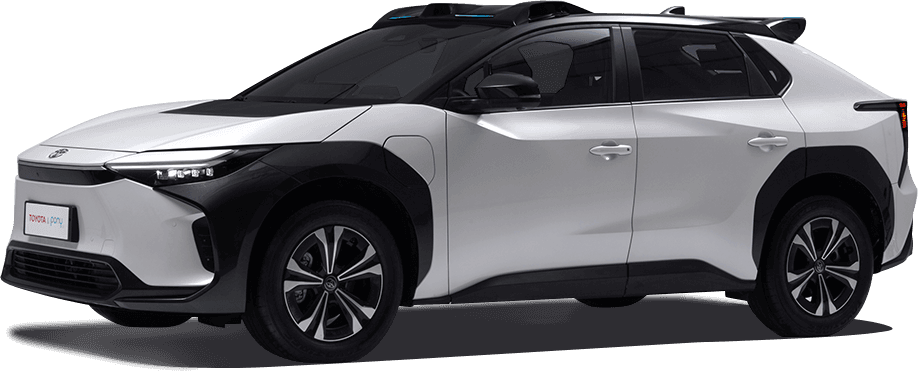
Pony.ai's mass-production robotaxi platform for fully driverless commercial service, built with multiple OEM partners and designed for large-scale fleet deployment.
Pony.ai is a dual-listed autonomous-driving company running Gen-7 robotaxis, Robotruck, and licensing. Fully driverless commercial service is live in China's four tier-one cities plus Hangzhou and Changsha.
Latest update Oct 19, 2026
01
On Oct. 14, 2026 Uber, Pony.ai and Verne said Gen-7 robotaxis were testing in Manchester. The Guardian reported a safety driver, no passengers, and street mapping, and Transport for Greater Manchester said no driverless-taxi application had been filed. London Gen-7 testing was announced Oct. 8 for the coming weeks. TechCrunch reported that the companies had not named the London fleet owner or operator, and as of Oct. 19 the press room had no later London start, safety-operator plan, test area, or public-service date. IT Chosun on Oct. 17 still described Korean certification of 10 Gen-7 robotaxis as a plan, not an arrival. Dubai fare-charging service is not in the press room. Q2 2026 revenue was $36.2 million on 1,975 robotaxis as of June 30, with a year-end target above 3,500.
theguardian.comUpdated Oct 19, 2026
02
H2 2026
Convert Dubai driverless testing - run with the RTA since early 2026 - into a public, fare-charging robotaxi service in the second half of 2026 with a fleet scaling to several hundred vehicles, Pony.ai's first commercial Middle East deployment. As of September 20, 2026 the fare-charging launch had not been announced; driverless trials remain the latest disclosed status.
After Sept 2026
After offering Doha's first no-safety-operator robotaxi rides at the September 7-9, 2026 Autonomous e-Mobility Forum, turn the existing Karwa-app commercial service with Mowasalat into fully driverless public operations, the next stage Qatar's Ministry of Transport flagged in July 2026 once safety and passenger-satisfaction results exceeded expectations.
2026
TargetComing months after Sept 2026
After starting fully driverless invited-passenger tests on a 22-kilometer Zagreb airport route on September 10, 2026, expand those no-operator routes over the coming months until they cover Verne's full operating area in the city, moving from the April operator-onboard commercial service (200,000+ km, 4.7 average rating) toward fully driverless commercial operations in Europe.
Late 2026
TargetLate 2026 (volume production); 2027-2028 (Europe and Middle East)
Begin volume production of the GAC Commercial Vehicle T9 Gen-4 L4 heavy-duty truck later in 2026, then expand Pony.ai's Robotruck business into Europe and the Middle East over the next two years, using the same Virtual Driver stack already running on Gen-7 robotaxis.
End of 2026
After raising its year-end 2026 target in the first quarter, Pony.ai now aims to operate more than 3,500 robotaxis across over 20 cities worldwide by the end of 2026. The fleet reached 1,975 vehicles as of June 30, 2026 (Q2 2026 results, August 18, 2026), with operations already spanning nine countries, new public launches in Singapore (via ComfortDelGro's Zig app) and Luxembourg (with Bolt and Stellantis), and an overseas deployment pipeline now exceeding 4,000 contracted vehicles, including 2,000+ across five European cities with Uber. No later fleet figure has been published.
Mid-2027
Finish the June 2026-launched 12-month Luxembourg trial with Bolt and Stellantis - five safety-driver Stellantis L4-Ready vans in Bissen expanding toward Luxembourg City and up to 30 vehicles - and reach fully driverless readiness by the end of the program while keeping a safety driver onboard throughout as required by European rules. Through September 20, 2026 no later public update reported a city expansion or a fleet above the initial five.
2028-2029
Following the August 2026 reset of its freight roadmap, deploy 500 to 1,000 Gen-4 autonomous heavy-duty trucks - which cut autonomous-driving kit (ADK) bill-of-materials cost roughly 70% versus the prior generation - across long-haul freight, bulk-commodity transport, and port logistics in China within the next two to three years, scaling up from the ~200-truck fleet running today. On September 14, 2026 Pony.ai and GAC Commercial Vehicle unveiled the Gen-4 T9, with volume production scheduled later in 2026, a nearer-term manufacturing step inside that 2028-2029 fleet window.
2028
Under the August 28, 2026 FutureLink partnership, ship an initial 10 BAIC Arcfox Alpha T5-based Gen-7 units to South Korea for domestic certification, then add the remaining 190 toward a 200-robotaxi fully unmanned commercial service by 2028 starting in Gangnam. Electronic Times reported certification with MOLIT targeted by May 2027 and Seoul-pilot operations from June 2027, with a Korean joint venture to be finalized at certification. FutureLink has logged about 87,000 km of Gangnam testing on Hyundai Kona EVs fitted with Pony.ai's kit.
2030
Scale the newly unveiled CATL-built L4 light-duty autonomous truck - which shares its technology stack and operating infrastructure with the Gen-7 robotaxi and targets a 40-50% lower freight cost per km than human-driven transport - to a longer-run fleet goal of 100,000 units for urban logistics. The 2030 target is unchanged since the August 2026 briefing.
Sep 2026
Aju Press and Electronic Times reported that Pony.ai would bring 10 Arcfox Alpha T5-based seventh-generation robotaxis to South Korea the month after the August 28, 2026 FutureLink signing (September or early October 2026) to begin government certification. Electronic Times dated MOLIT certification to May 2027 and Seoul-pilot operations to June 2027. No public confirmation that the first 10 units had arrived had been published as of September 20, 2026.
03
Pony.ai and Uber said they will begin testing Pony.ai Gen-7 robotaxis in London in the coming weeks, extending their European partnership beyond Zagreb. Pony.ai has not named a London fleet operator or a public-ride date. The companies already plan more than 2,000 Pony.ai robotaxis across Europe, and Uber also works with Wayve in London.
Dubai's Roads and Transport Authority and the Dubai Integrated Economic Zones Authority inaugurated Dubai Mobility Labs at Dubai Silicon Oasis on 27 September 2026. The facility has 248 test scenarios across controlled tracks and public roads toward Al Qudra, and RTA said it has already hosted trials of vehicles and autonomous-driving systems from WeRide, Pony.ai and Tesla. German testing firm DEKRA will operate the labs for the first three years under Dubai's plan to make 25 percent of journeys autonomous by 2030.
On September 14 at IAA Transportation in Hannover, Pony.ai unveiled a Level 4 heavy-duty truck built with GAC Commercial Vehicle on the T9 battery-electric platform, part of its Gen-4 Robotruck lineup. The truck uses a fully redundant drive-by-wire chassis and an automotive-grade ADK with nine lidars, three millimeter-wave radars and 13 cameras sharing the Gen-7 robotaxi domain controller, with ADK bill-of-materials cost down 70% versus the prior generation. Volume production is scheduled later in 2026, and Pony.ai said it plans to take Robotruck into Europe and the Middle East over the next two years.
Pony.ai and Verne said on September 10, 2026 they have started fully driverless robotaxi test rides with invited passengers on public roads in Zagreb, a European first with no onboard safety operator. The tests run on a 22-kilometer route linking Verne's headquarters and a central business district with Franjo Tudman Airport, with plans to expand across the city's operating area in the coming months. Since the operator-onboard commercial service launched in April, the fleet has logged more than 200,000 kilometers, several thousand customer rides and a 4.7 out of 5 average rating on Uber.
At Qatar's Autonomous e-Mobility Forum in Doha from September 7 to 9, 2026, Pony.ai and national operator Mowasalat offered the city's first robotaxi rides without an onboard safety operator, using Gen-7 vehicles. Passengers can already book Pony.ai robotaxis through Mowasalat's Karwa app covering historic Doha, the business district, tourist sites and Hamad International Airport, which Pony.ai calls its first at-scale commercial program outside China. Qatar's transport ministry said in July that fully driverless commercial operations are the next stage after the current service exceeded safety and satisfaction expectations.
Pony.ai signed a partnership with Seoul-based FutureLink on August 28 to bring 200 Level 4 Gen-7 robotaxis to South Korea by 2028, starting with 10 BAIC-built units for domestic certification and 190 more after approval. Service is planned first in Gangnam's autonomous-driving pilot zone, then across Seoul and other cities; FutureLink will handle certification, operations and localization, and the partners are considering a joint venture. FutureLink said it has already logged about 80,000 kilometers of Gangnam testing on Hyundai Kona EVs fitted with Pony.ai's stack, without an accident.
Uber, fleet operator Verne and Pony.ai launched autonomous ride-hailing in Zagreb, Croatia on August 19, 2026, letting riders book a Pony.ai-powered self-driving car through the Uber app for the first time in Europe, with a licensed safety operator still on board. The launch is the first concrete step under the expanded Uber-Pony.ai-Verne partnership announced August 14 that targets more than 2,000 robotaxis across five European cities plus Middle East markets.
Pony.ai reported Q2 2026 total revenue of $36.2 million (up 68.8% year over year) on August 18, with robotaxi services revenue up 691.2% to $12.1 million and net loss narrowing 14.9% to $45.4 million. The robotaxi fleet reached about 2,000 vehicles against a year-end target of 3,500+, and the company launched public service in Singapore via ComfortDelGro's Zig app while beginning Luxembourg operations with Bolt and Stellantis.
Pony.ai and Uber announced on August 14 an expanded partnership to deploy more than 2,000 Pony.ai robotaxis across Europe, growing from their existing Zagreb, Croatia commercial service to four additional European cities. The companies said the expansion also includes plans for the Middle East, with a phased rollout and city-by-city details to follow; Pony.ai supplies Level 4 autonomous driving technology and fleet operations while Uber provides the ride-hailing platform.
Pony.ai disclosed at an August 3 media briefing that it now expects to deploy 500 to 1,000 Gen-4 autonomous heavy-duty trucks over the next two to three years across long-haul freight, bulk-commodity and port logistics in China, scaled back from its earlier late-2026 mass-production target. The company also unveiled a new automotive-grade L4 light-duty truck built on CATL's Kunshi chassis platform for urban logistics, targeting 100,000 units by 2030.
Pony.ai and local operator ComfortDelGro opened their autonomous mobility service in Singapore's Punggol district to the general public on June 22, letting riders book driverless trips through ComfortDelGro's Zig app after an earlier invite-only pilot. The route links Punggol residential areas with hubs including Punggol Coast Mall, Punggol Coast MRT station and One Punggol. It is Pony.ai's first public-access robotaxi service in Southeast Asia and supports its target of deploying more than 3,500 robotaxis across over 20 cities by the end of 2026.
Pony.ai, ride-hailing firm Bolt and automaker Stellantis announced on June 9 a Level 4 autonomous-mobility pilot in Luxembourg to validate the safety, performance and regulatory readiness of Pony.ai's seventh-generation system in real traffic. The test fleet will use vehicles based on the Peugeot e-Traveller built on Stellantis's L4-Ready platform, with Bolt supplying ride-hailing integration and the partners aiming for driverless readiness by the program's end. It marks Pony.ai's deepening push into Europe alongside its operations in China and the Middle East.
On May 26 Pony.ai reported Q1 2026 revenue of $34.3M, up 145% year over year, with robotaxi revenue rising 395% as fare-charging income jumped about 456%; the fleet topped 1,700 vehicles during the quarter. Off the back of those numbers, the company raised its 2026 year-end robotaxi fleet target from 3,000 to more than 3,500 vehicles and increased its 2026 robotaxi revenue target from 3x to more than 3.5x its 2025 level, widening its lead among Chinese L4 operators racing to scale fully driverless service.
04
Pony.ai's mass-production robotaxi platform for fully driverless commercial service, built with multiple OEM partners and designed for large-scale fleet deployment.
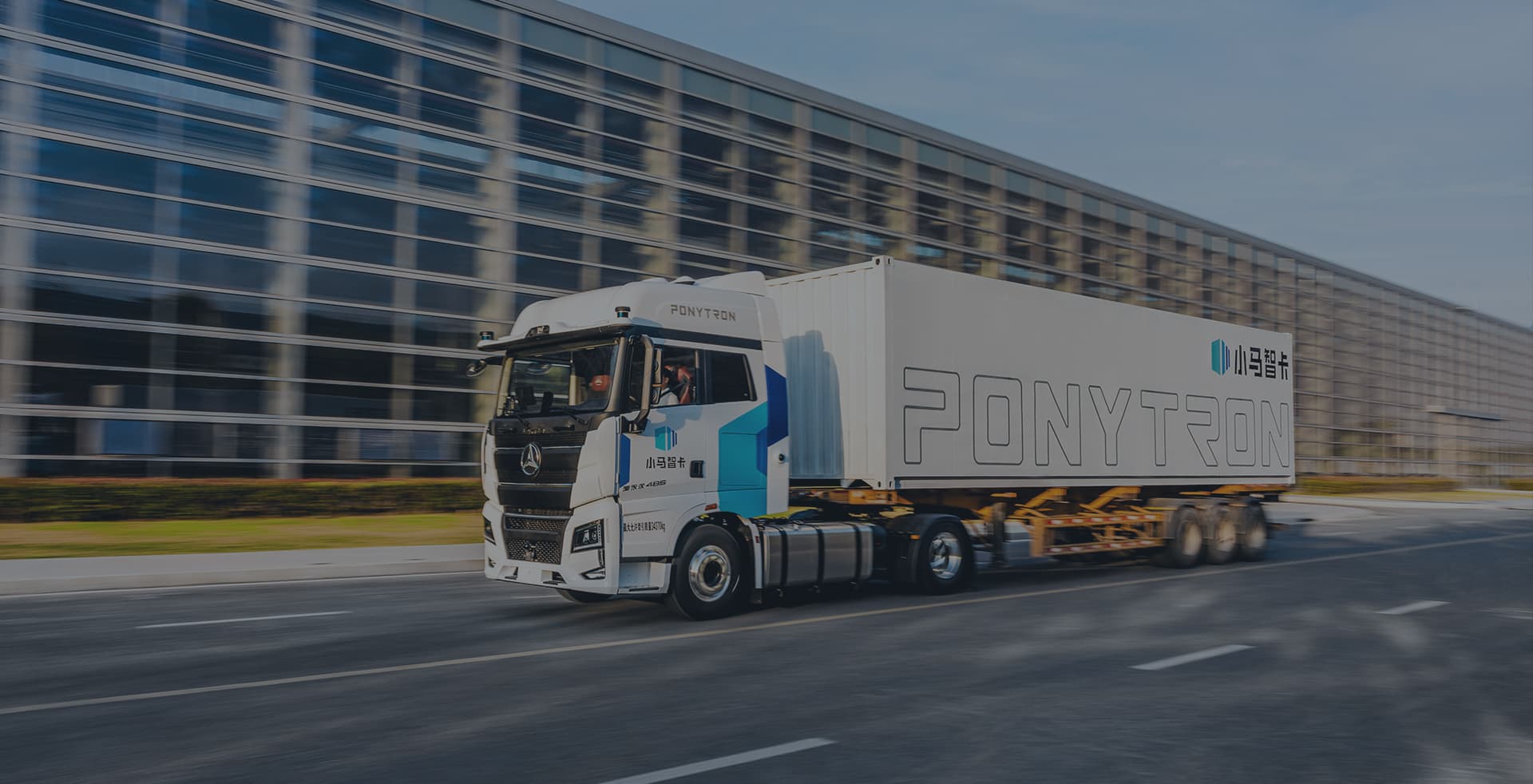
Pony.ai's autonomous freight platform for commercial logistics, including a Gen-4 robotruck designed for thousand-unit scale deployment.
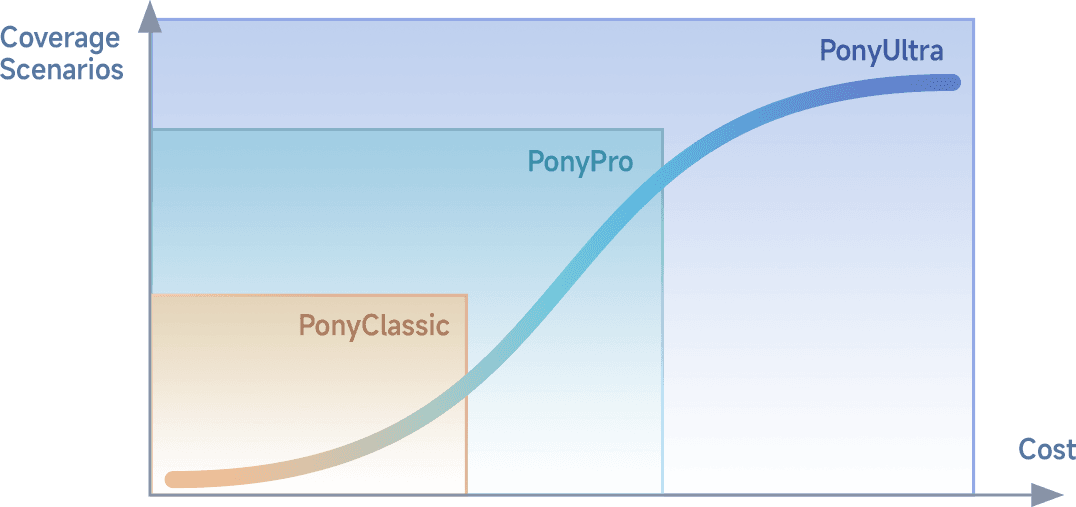
Pony.ai's personally owned vehicle and licensing business applies its virtual-driver technology to passenger vehicles, autonomous domain controllers, and adjacent robotics markets.
05
(up ~20% YoY); Q2 2026 revenue of $36.2M (+68.8% YoY), split robotaxi $12.1M (+691.2% YoY), robotruck $13.3M (+40.0% YoY), intelligent solutions $10.8M (+4% YoY); net loss narrowed 14.9% YoY to $45.4M; cash and investments of $1.39B as of June 30, 2026. No later quarterly print has been published.
(+68.8% YoY): robotaxi $12.1M (+691.2% YoY), robotruck $13.3M (+40.0% YoY), intelligent solutions $10.8M (+4% YoY)
4,000+ vehicles contracted outside China, including 2,000+ across 5 European cities with Uber
(cumulative testing and operational mileage, topped the mark on August 10, 2026, up from 65M+ km previously); no later disclosed figure
06
Operating status
Operational
Manchester Gen-7 testing with Uber and Verne was underway by Oct. 14, 2026 with a safety driver and no passengers, and no Greater Manchester passenger-service application. London testing, announced Oct. 8 for the coming weeks, still has no named fleet operator, no stated safety-operator plan, no named test area, and no public-service date. The first 10 BAIC Arcfox Alpha T5 Gen-7 robotaxis are not confirmed to have arrived in South Korea. Dubai fare-charging service has not been announced in the company press room.
Paid autonomous ride-hailing through PonyPilot and partner networks (including Uber and ComfortDelGro's Zig app). Q2 2026 robotaxi services revenue reached a record $12.1 million (+691.2% YoY), the first quarter robotaxi revenue represented roughly a third of total revenue, on rapidly growing fare-charging revenue.
Autonomous freight services and fleet operations - around 200 trucks in commercial service as of late 2025, having transported over 1 billion tonne-kilometers of freight - continuing collaboration with Sinotrans, SANY, and Dongfeng Liuzhou, and expanding into a new automotive-grade L4 light-duty truck built with CATL for urban logistics. Q2 2026 robotruck revenue grew 40.0% YoY to $13.3 million as production Gen-4 heavy-duty trucks began entering commercial service, including at Shenzhen's Mawan Port.
Autonomous driving domain controllers, vehicle integration, and technology applications for delivery, sanitation, logistics, humanoid robotics, and POV use cases. Reported by Pony.ai as "intelligent solutions" revenue, which reached $10.8 million in Q2 2026 (+4% YoY).
07
How past announced dates turned out.
0/1announced date hit on time
Deploy Gen-4 Robotruck fleet
Target Late 2026 · Resolved Aug 3, 2026
At an August 3, 2026 media briefing, Pony.ai reset its Gen-4 heavy-duty Robotruck rollout: rather than reaching mass-production/initial-fleet scale by late 2026, the company now expects to deploy just 500-1,000 Gen-4 heavy-duty trucks over the next two to three years across long-haul freight, bulk-commodity, and port-logistics use cases in China - a materially slower and smaller near-term target than originally announced, alongside a separate new longer-run goal of 100,000 L4 light-duty autonomous trucks by 2030.
08
2026
Gen-7 robotaxis start safety-driver mapping tests in Manchester
On Oct. 14, 2026 Pony.ai, Uber and Verne said Gen-7 robotaxis were testing in Manchester, extending the Zagreb partnership. The Guardian reported the cars were mapping streets with a safety driver and no passengers. Transport for Greater Manchester said no application had been made to operate driverless taxis. No passenger-service date was given.
Says London Gen-7 Uber tests start in coming weeks
On Oct. 8, 2026 Pony.ai and Uber said they would begin testing Pony.ai Gen-7 robotaxis in London in the coming weeks. Pony.ai said it would work with UK officials and partners toward self-driving trials under UK AV rules. TechCrunch reported the London service is expected to follow the Zagreb model, but the companies did not name a London fleet owner or a public-ride date.
Named among first Dubai Mobility Labs trial operators
On 27 September 2026 Dubai's RTA and DIEZ opened Dubai Mobility Labs at Dubai Silicon Oasis. RTA said Pony.ai, WeRide and Tesla have already run autonomous-driving trials at the site. Pony.ai's fare-charging Dubai launch remains planned for the second half of 2026 and was not announced as live.
Unveils Gen-4 T9 Robotruck with GAC at IAA Transportation
On September 14, 2026 at IAA Transportation in Hannover, Pony.ai unveiled a Level 4 autonomous heavy-duty truck built with GAC Commercial Vehicle on the T9 battery-electric platform, one of the models in its Gen-4 Robotruck lineup. The truck uses a fully redundant drive-by-wire chassis and an automotive-grade ADK (nine lidars, three millimeter-wave radars, 13 cameras) sharing the Gen-7 robotaxi domain controller, with ADK bill-of-materials cost down 70% versus the prior generation. Volume production is scheduled to begin later in 2026 for long-haul freight, dedicated-route logistics and port transportation. Pony.ai also said it plans to expand Robotruck into Europe and the Middle East over the next two years.
Starts fully driverless passenger tests in Zagreb
On September 10, 2026 Pony.ai and Verne began fully driverless robotaxi test rides with invited passengers on public roads in Zagreb, with no onboard safety operator, which they called a European first. The tests run on a 22-kilometer route linking Verne's headquarters and a central business district with Franjo Tudman Airport, with plans to expand across the city's operating area in the coming months. Since the operator-onboard commercial service launched in April, the fleet has logged more than 200,000 kilometers, several thousand customer rides and a 4.7 out of 5 average rating; Uber remains the booking platform.
Offers first no-operator Doha robotaxi rides at AEMOB forum
At Qatar's Autonomous e-Mobility Forum in Doha from September 7 to 9, 2026, Pony.ai and Mowasalat offered the city's first robotaxi rides without an onboard safety operator, using Gen-7 vehicles. Passengers can already book Pony.ai robotaxis through Mowasalat's Karwa app covering historic Doha, the business district, tourist sites and Hamad International Airport, which Pony.ai calls its first at-scale commercial program outside China. Qatar's transport ministry said in July that fully driverless commercial operations are the next stage.
Partners with FutureLink for 200 Korea robotaxis by 2028
On August 28, 2026 in Seoul, Pony.ai and FutureLink signed a strategic partnership to introduce 200 Level 4 Gen-7 robotaxis to South Korea by 2028. Aju Press reported the first 10 BAIC Arcfox Alpha T5-based units would arrive in September 2026 for domestic certification, with the remaining 190 after a June 2027 certification target, launching first in Gangnam and then expanding across Seoul. FutureLink will handle certification, operations, data management and localization; Pony.ai supplies the vehicles and stack; and the partners are considering a Korean joint venture. FutureLink said it has already logged about 87,000 kilometers of Gangnam testing on Hyundai Kona EVs fitted with Pony.ai's kit.
Q2 results: robotaxi revenue up 691% YoY; Singapore and Luxembourg launches
Pony.ai reports Q2 2026 total revenue of $36.2M (+68.8% YoY): robotaxi services revenue up 691.2% YoY to a record $12.1M (about a third of total revenue), robotruck revenue up 40.0% YoY to $13.3M, and intelligent-solutions revenue up 4% YoY to $10.8M. The robotaxi fleet reaches 1,975 vehicles as of June 30 (targeting 3,500+ by year-end), net loss narrows 14.9% YoY to $45.4M, and cash and investments stand at $1.39B. Pony.ai also discloses an overseas robotaxi deployment pipeline of more than 4,000 contracted vehicles, including 2,000+ across five European cities with Uber. The company also launches public robotaxi service in Singapore via ComfortDelGro's Zig app and begins operations in Luxembourg with Bolt and Stellantis.
2026
Global autonomous mileage tops 100 million km
Pony.ai's cumulative global autonomous driving testing and operational mileage passed 100 million km on August 10, 2026, up from 65 million km previously, a milestone the company framed as marking its transition from technical verification to large-scale commercial operations.
First Uber-booked robotaxi rides launch in Zagreb
Uber, fleet operator Verne and Pony.ai launched autonomous ride-hailing in Zagreb, Croatia on August 19, 2026, letting riders book a Pony.ai-powered self-driving car through the Uber app for the first time in Europe, with a licensed safety operator still on board. It is the first concrete step under the expanded Uber-Pony.ai-Verne partnership announced August 14 that targets more than 2,000 robotaxis across five European cities.
Expands Uber partnership to 2,000+ robotaxis in Europe
On August 14, 2026 Pony.ai and Uber announce an expanded partnership to deploy more than 2,000 Pony.ai robotaxis across Europe, growing from their existing commercial service in Zagreb, Croatia to four additional European cities, with plans to also expand into the Middle East. Pony.ai supplies Level 4 autonomous driving technology and fleet operations while Uber provides the ride-hailing platform; no city-by-city rollout timeline has been announced.
Resets Gen-4 heavy-duty Robotruck rollout target
At an August 3, 2026 media briefing, Pony.ai discloses that its Robotruck fleet has reached around 200 trucks and transported over 1 billion tonne-km of freight, with Robotruck revenue of $10.2M in Q1 2026 (+31% YoY). Rather than the previously announced late-2026 mass-production/initial-fleet milestone, the company now expects to deploy 500-1,000 Gen-4 heavy-duty autonomous trucks over the next two to three years across long-haul freight, bulk-commodity, and port-logistics use cases in China, alongside a separate longer-run goal of 100,000 L4 light-duty autonomous trucks by 2030.
Sets August 18 date for Q2 2026 results
On July 17, 2026 Pony.ai announced it will report unaudited second-quarter 2026 and interim (six months ended June 30, 2026) financial results before U.S. market open on August 18, 2026 - the next checkpoint on its raised full-year targets of more than 3,500 robotaxis and over 3.5x its 2025 robotaxi revenue.
Bolt and Stellantis join Pony.ai for Luxembourg L4 robotaxi pilot
On June 9, 2026 Pony.ai, European ride-hailing platform Bolt, and Stellantis launched a year-long autonomous-mobility testing program in Luxembourg to validate Pony.ai's seventh-generation robotaxi in European traffic. RTL Today reported the pilot began with five safety-driver-equipped Stellantis L4-Ready vans in the town of Bissen, with a plan to expand into Luxembourg City and up to 30 vehicles, aiming for fully driverless readiness by the end of the 12-month trial while keeping a safety driver onboard throughout as required by European rules. Pony.ai's Q2 2026 results later confirmed operations had begun. No later public update through September 20, 2026 reported a move to Luxembourg City or a fleet above the initial five.
Shares added to Shanghai-Hong Kong Stock Connect
Effective June 4, 2026, Pony.ai's Hong Kong-listed Class A ordinary shares are included as eligible securities under the Shanghai-Hong Kong Stock Connect program, giving Chinese Mainland investors direct access to trade the stock and broadening the company's investor base after its November 2025 Hong Kong dual-primary listing.
Q1 results, raised fleet and revenue targets
Pony.ai reports Q1 2026 revenue of $34.3M (+145% YoY) with robotaxi revenue up ~395% and fare-charging revenue up ~456%. The fleet exceeds 1,700 units during the quarter and the company raises its 2026 year-end fleet target from 3,000 to more than 3,500 robotaxis and its 2026 robotaxi revenue target from 3x to >3.5x its 2025 level.
Unveils lower-cost robotaxi target and new L4 light truck
At Auto China 2026 (April 24), Pony.ai says its Gen-7 robotaxi ADK bill-of-materials cost has fallen 70% versus the prior generation, targeting a total vehicle-plus-ADK cost below RMB 230,000 by 2027, and unveils a new automotive-grade, fully redundant L4 light-duty truck built on CATL's Kunshi chassis platform for urban logistics, sharing its technology stack and operating infrastructure with the Gen-7 robotaxi.
Launches PonyWorld 2.0 physical-AI training system
On April 10, 2026, Pony.ai launches PonyWorld 2.0, an upgrade to the proprietary world-model training system it has built since 2020 that spans cloud-side training and vehicle-side deployment. The new version adds self-diagnosis of the autonomy model's weaknesses, targeted data collection for the scenarios where it still falls short, and more efficient training focused on the hardest cases - part of Pony.ai's broader case that its virtual-driver technology stack has applications as a physical-AI training system beyond autonomous driving.
Shenzhen breakeven and multi-city expansion
Pony.ai achieves city-wide unit-economics breakeven in Shenzhen (February 2026) - its second after Guangzhou - and expands Gen-7 service into Hangzhou, Changsha, and central Zagreb, Croatia. The fleet surpasses 1,400 units as the company sets a year-end target of more than 3,000 robotaxis in over 20 cities globally.
2025
Gen-7 fully driverless service launches
Pony.ai begins fully driverless commercial Gen-7 robotaxi operations in Guangzhou, Shenzhen, and Beijing, and reports city-wide unit-economics breakeven in Guangzhou.
Hong Kong dual-primary listing
Pony.ai launches its Hong Kong IPO and dual-primary listing plan under stock code 2026, with proceeds earmarked for large-scale commercialization of Level 4 autonomy.
2024
2020
2018
2016
09
$1.6Bdisclosed across 4 rounds with a stated amount
Cumulative disclosed raise · dated rounds
Series A
January 2018
Morningside Venture Capital, Legend Capital, Sequoia China, IDG Capital and others
Toyota-Led Strategic Round
February 2020
Toyota Motor Corporation and existing investors
Nasdaq IPO
November 2024
Public offering (NASDAQ: PONY)
Hong Kong IPO
November 2025
Public offering (HKEX: 2026)


