Active
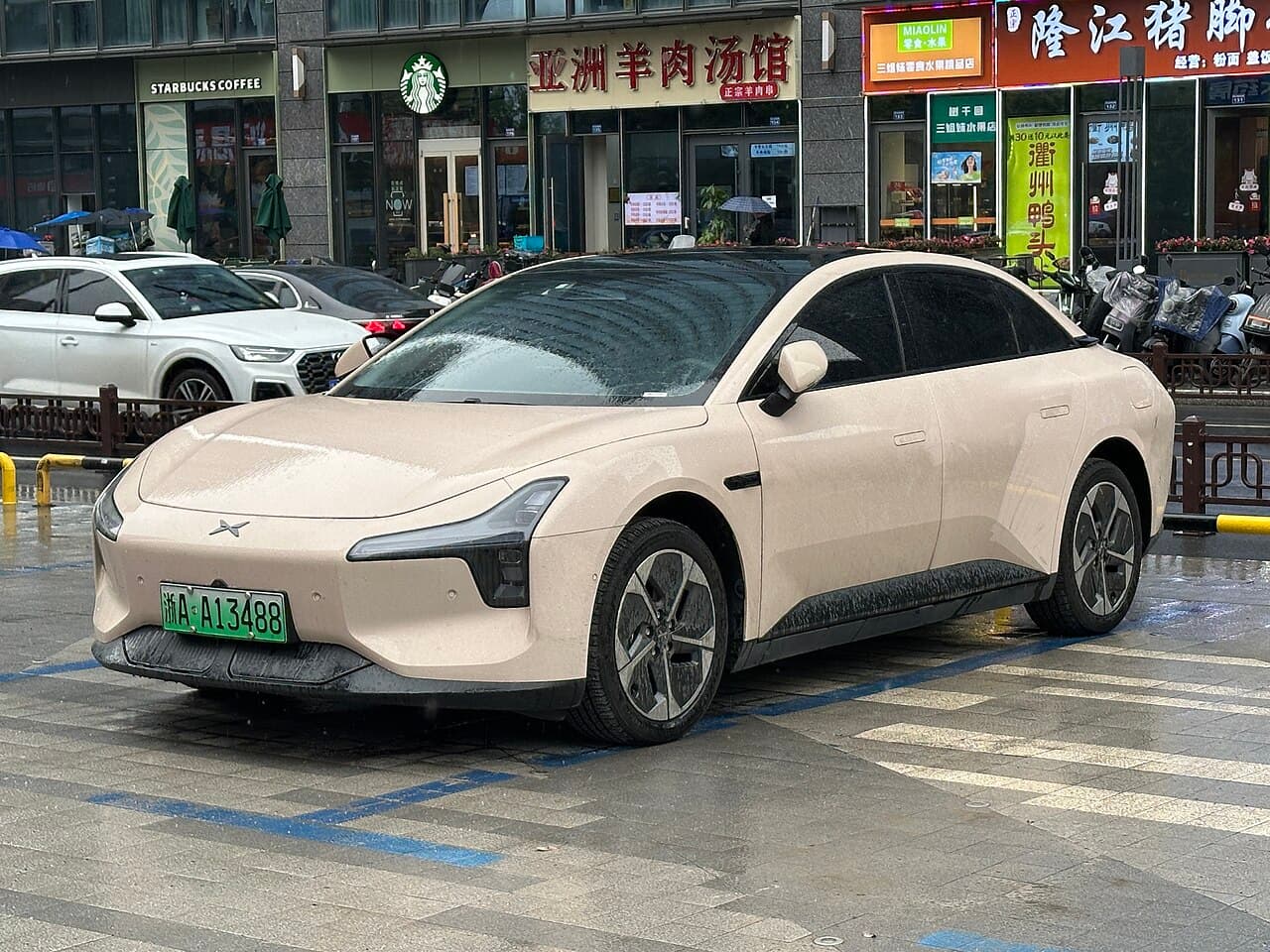
Mona M03
Entry-level smart sedan under XPeng's Mona sub-brand and the company's volume best-seller, bringing AI-assisted driving to a mass-market price point.
XPeng is a Guangzhou-based smart-EV maker (founded 2014; NYSE: XPEV / HKEX: 9868) that delivered a record 429,445 vehicles in 2025 (+125.9% YoY) and delivered 41,256 vehicles in September 2026 (+5% from August), with L03 above 10,000, for 118,390 in the third quarter inside the 115,000-121,000 guide issued 24 August.
Latest update Oct 19, 2026
01
Q1 2026 posted a RMB1.78B net loss on a seasonal delivery dip, and Q2 2026 rebounded to a record 103,295 deliveries with gross margin at 20.7%, though net loss nearly tripled year-over-year to RMB1.34B on heavy AI, robotics and flying-car reinvestment. Overseas business contributed more than 25% of H1 2026 revenue. The Mona series and the six-seat GX flagship SUV (7,224 in September, its third straight month above 7,000) are core volume drivers, alongside the P7, G6, G7, G9, X9, Mona L03, and the G9L five-seat flagship launched in China on 17 September. XPeng designs its own Turing AI chips and VLA 2.0 stack, and Volkswagen is a partner on E/E architecture and VLA licensing. Robotaxi employee testing began in Guangzhou in July 2026, with an August permit for remote testing without an onboard safety operator on designated roads. Flying-car unit Aridge said at IFA Berlin on 3 September that Land Aircraft Carrier mass production starts in H2 2026 with customer deliveries expected in 2027. IRON walked off an automated Guangzhou line on 8 September; mass production is still targeted by late 2026. Cash was RMB40.48B as of 30 June 2026. The official Chinese September post says XPeng now operates in 79 countries and regions with more than 500 international stores. On 12 October 2026 XPeng opened European G9L orders, with its own list prices from 74,600 euros in Germany, 74,990 euros in Belgium and the Netherlands, and 75,600 euros in Austria, and first customer deliveries in December 2026. On 8 October it opened YOYO robotaxi registration by invitation code, without a disclosed public ride count. The Mona L05 China debut and pre-sales are set for 15 October 2026 at 19:00 Beijing time. As of 14 October the pre-sale had not opened and no official price or formal launch date had been published.
xpeng-newsroom.pr.coUpdated Oct 14, 2026
02
2026
After its first quarterly net profit in Q4 2025 and a seasonal Q1 2026 loss, XPeng is targeting sustained profitability across 2026. Q2 2026 deliveries rebounded 64.8% sequentially to a record 103,295 units within its guided range and gross margin held at 20.7%, but net loss nearly tripled year-over-year to RMB1.34B on continued AI, robotics and flying-car investment. XPeng guided Q3 2026 deliveries of 115,000-121,000 units and revenue of RMB21.7-23.4B; it has not issued formal full-year profitability guidance. July plus August volume of 77,134 leaves a still-steep September needed to hit the Q3 delivery range.
2026-2027
XPeng began employee testing of its Robotaxi platform in Guangzhou on July 10, 2026 (CEO He Xiaopeng completed the first end-to-end ride) and plans to launch three full-stack Robotaxi models with trial passenger operations in H2 2026, targeting fully autonomous operation without an onboard safety officer by 2027. In its September 1, 2026 August-delivery release, XPeng said it had secured a permit to test its second-generation VLA Robotaxi on designated Guangzhou roads without an onboard safety operator, and that the vehicle had completed more than 2,000 internal test rides using a newly built cloud-based remote-intervention platform. On its Q2 2026 results page the company said a first major VLA 2.0 upgrade in China was due from the end of August, folding selected L4 Robotaxi capabilities into passenger cars, with a goal of obtaining European regulatory approval in the first half of 2027 and beginning overseas user deliveries. Volkswagen remains the launch partner for a global VLA 2.0 version from 2027.
2026-2027
XPeng opened its first X-Energy megawatt charging station on September 15, 2026 in Hong Kong with operator Halo, open to all brands, at 1 megawatt peak and 1,000 amps with 400 kWh of on-site storage that holds the grid connection to 240 kW. He Xiaopeng previously said X-Energy hardware would arrive in Europe next, alongside a broader plan for more than 1,000 self-operated supercharging stations across 13 European countries. XPeng has not given a European megawatt-station count or date, and no XPeng model can yet accept megawatt charging.
H2 2026
At IFA Berlin on September 3, 2026, Aridge confirmed the Land Aircraft Carrier is ready for series production, with mass production starting in the second half of 2026 at about 5,000 units/year initially (scaling toward 10,000) against roughly 7,000 pre-orders, mainly from China and the Middle East. CAAC has certified Aridge as an aircraft manufacturer. The unit is still preparing a Hong Kong IPO after raising nearly $1B to date.
Late 2026
XPeng commissioned its automated IRON production line in Guangzhou on September 8, 2026, with a unit walking off the line under its own power and more than 80 percent of core processes automated. The company still aims to reach 1,000+ robots per month by the end of 2026 and begin the first commercial deployment (as showroom assistants) in Q1 2027, part of a long-term goal of 1M robots by 2030. In August 2026 the robotics business raised over $900M in its first outside funding round (post-money valuation above $6.3B, led by IDG Capital) to accelerate the buildout.
Q4 2026
The G9L half of this milestone is done: XPeng launched the SUV in China on September 17, 2026 from 231,800 yuan after the limited-time discount, with deliveries starting the same month. The Mona L05 is still due to launch in China in the fourth quarter, and the pair, plus overseas Mona L03 deliveries, is what He Xiaopeng expects to push monthly sales toward 60,000 - roughly 53% above August's 39,107. Whether the G9L's below-pre-sale pricing converts into that volume is the open question; XPeng guided Q3 deliveries of 115,000-121,000 units and July plus August came to 77,134.
Q4 2026
Reuters reported on September 17, 2026, citing two people familiar with the matter, that XPeng intends to sell its E/E architecture, smart cockpit systems, Turing AI chips and driver-assistance software to foreign automakers beyond Volkswagen, with foreign software developers and suppliers also in scope, and to broaden licensing and customization into robotaxis, humanoid robots and other physical AI, including operational deployment of XPeng robotaxis. One source said XPeng has already approached potential partners who expressed interest. He Xiaopeng said the company will unveil new international partnership cases at the Paris Motor Show in October and that deals are expected to materialize in the fourth quarter. No counterparty has been named and no commercial terms have been disclosed, so the test is whether a second named licensee actually signs.
Q4 2026
Q4 2026
End of 2026
XPeng said the first right-hand-drive G9L SUVs rolled off its Guangzhou line on September 11, 2026, with the first batch bound for Australia as part of a 64-country G9L export plan covering Australia, the United Kingdom, and Southeast Asia. Local Australian pricing has not been announced. Arrival in showrooms is expected by the end of 2026.
Dec 2026
2027
After slipping the original late-2026 delivery window, Aridge now expects CAAC type approval and first end-customer deliveries of the Land Aircraft Carrier in 2027, initially focused on China and the Middle East.
Oct 12, 2026
XPeng said at the September 17, 2026 China launch that the G9L global launch event will take place on October 12 at the Paris Motor Show, with the company's booth in Hall 6, and that France is only the first stop of a rollout into 64 countries and regions. The G9L becomes the fourth XPeng model built at Magna's Graz plant in Austria after the G6, G9 and P7+, giving the company four locally assembled European models within a single year. European pricing has not been announced.
Oct 15, 2026
03
XPeng launched the G9L at the Paris Motor Show on Oct. 12, with company-stated French pricing from 74,990 euros, six- and seven-seat layouts, and EV range up to 591 km WLTP. It said Magna Graz trial production is complete and that the G9L is set to be its fourth model built in Europe, and it opened public NGP test rides there on VLA 2.0. CnEVPost reported further starting prices of 74,600 euros in Germany, 74,990 in Belgium, 75,600 in Austria and 75,990 in the Netherlands. Neither source gave a European customer-delivery date.
XPeng's official WeChat account said October 8 that its Robotaxi business is now branded 小鹏悠游 / XPENG YOYO, with a dedicated website page and a YOYO autonomous ride-hailing mini-program. Public trials are planned through invitation codes, moving the program from employee testing toward open-user operations. The company has previously said mass-produced GX-based robotaxis completed more than 2,000 internal Guangzhou rides and still targets passenger service without a safety driver in 2027.
www.yicai.com www.163.com autonews.gasgoo.com www.xiaopeng.com
XPeng said it delivered 41,256 vehicles in September 2026, up 5% from August, with monthly L03 deliveries above 10,000, for a third-quarter total of 118,390, up 15% from the prior quarter and inside the 115,000-121,000 range it guided on August 24. The company also said the G9L launched in China on September 17, XOS 6.3.0 with VLA 2.0 began rolling out in China on September 22, and its self-operated China charging network exceeded 4,000 stations in more than 430 cities as of September 30. The Paris global G9L launch remains scheduled for October.
XPeng staged its Philippine brand launch on Sept. 25 at SM Mall of Asia Arena, pricing six X9 and L03 variants from 1.548 million pesos for the L03 EV Standard Range to 4.058 million pesos for the X9 Long Range with the Second Row Premium Seat Package. Country director Katoon Su said the local unit is XPeng's first Southeast Asia subsidiary; the official Philippines site lists Greenhills, Makati, North EDSA and Cebu dealers, and local reports say deliveries are due in the fourth quarter. Top Gear Philippines also recorded a plan for two more models within six months and eight showrooms in Metro Manila, Cebu and Davao by year-end.
newsbytes.ph www.topgear.com.ph cleantechnica.com www.xpeng.com
Volkswagen Anhui opened presales of the ID. UNYX 09 on September 24, the second model jointly developed with XPeng, at 199,900 to 249,900 yuan, with an official on-sale target at the end of October. Reuters, CnEVPost and Phoenix Auto said the Hefei-built sedan uses CATL 91.963 kWh LFP cells, XPeng's VLA assisted-driving stack and a Turing chip at 750 TOPS, with CLTC range of 755 km for the rear-drive version and 705 km for all-wheel drive. Phoenix also said the car started mass production the same day. Volkswagen is untracked.
XPeng plans to sell its technology to foreign automakers beyond existing partner Volkswagen as it hunts for new revenue streams, Reuters reported on September 17, citing two people familiar with the matter. The offering would cover XPeng's electrical and electronic architecture, smart cockpit systems, Turing AI chips and advanced driver-assistance software, with foreign software developers and automotive suppliers also seen as potential customers, and one source said the company plans to extend licensing and customization to robotaxis, humanoid robots and other physical AI applications. XPeng set up a strategic commercialization team about six months ago to pursue the business, and chairman He Xiaopeng said the company will unveil new international partnership cases at the Paris Motor Show in October, with deals expected to land in the fourth quarter.
XPeng launched the G9L five-seat flagship SUV at an event in Beijing on September 17 with official prices of 241,800 to 319,800 yuan across six variants, cut by a limited-time 10,000 yuan discount for orders placed before November 15 that takes the entry price to 231,800 yuan (about $34,000), well under the 259,800 yuan pre-sale figure set in August. The 5,120 mm SUV comes in battery-electric and extended-range versions, both with 800V fast charging as standard, offering up to 755 km of CLTC range on the BEV and 1,602 km of combined range on the EREV, and it runs XPeng's VLA 2.0 model on the same Turing chips used in the company's IRON humanoid robot. XPeng said the G9L will be sold in 64 markets, will be built both in Guangzhou and at Magna's Graz plant in Austria as its fourth European-assembled model, and gets its global launch at the Paris Motor Show on October 12.
XPeng said on September 16 that it has opened its first X-Energy megawatt charging station anywhere, built with local operator Halo in Hong Kong and open to drivers of all brands. The station peaks at 1 megawatt and 1,000 amps and carries 400 kWh of on-site storage, which holds its grid connection to 240 kW and avoids costly distribution upgrades in a city where land and grid timelines have long blocked high-power charging. Chairman He Xiaopeng has said the same X-Energy hardware will follow in Europe, where XPeng is targeting more than 1,000 self-operated stations across 13 countries, though no XPeng model can yet accept megawatt charging.
XPeng said on September 14 that the G9L five-seat flagship SUV will launch in China on September 17 at 7:00 p.m. Pre-sales opened August 11 at 259,800 yuan, with BEV range up to 755 km CLTC and an EREV variant offering 435 km electric and 1,602 km combined range on an 800-volt platform. CEO He Xiaopeng has said deliveries begin the same month, and that the G9L plus Mona L05 are aimed at lifting monthly sales above 60,000 in the fourth quarter.
XPeng said the first right-hand-drive G9L SUVs rolled off its Guangzhou Global Smart Manufacturing line on September 11, 2026, with the first batch bound for Australia. The company said the G9L will enter 64 countries and regions, with right-hand-drive versions aimed at Australia, the United Kingdom, and Southeast Asia. China launch and deliveries are still slated for September 2026; Australian pricing has not been announced.
XPeng said on September 8, 2026 that it commissioned what it calls the first automated production line for advanced humanoid robots in Guangzhou, and that an IRON unit walked off the line under its own power. CEO He Xiaopeng said more than 80 percent of core processes are automated and called the step small but a start on manufacturing a new product category. Mass production is still targeted by the end of 2026 for XPeng stores and campuses, with external sales planned for 2027.
In its September 1, 2026 August-delivery release, XPeng said it had obtained a permit to test its second-generation VLA Robotaxi on designated Guangzhou roads without an onboard safety operator, a step toward its targeted 2027 fully driverless passenger launch. The Robotaxi has completed more than 2,000 internal test rides using a newly built cloud-based remote-intervention platform. XPeng delivered 39,107 vehicles in August, up 4% year over year and its second-highest month of 2026, though deliveries for the first eight months of the year remain down 10.49% from a year earlier.
XPeng reported Q2 2026 revenue of RMB19.74 billion ($2.91 billion), up 8% year over year and 51.5% sequentially, on record deliveries of 103,295 vehicles with gross margin holding at 20.7%. Net loss nearly tripled year over year to RMB1.34 billion on heavy AI, robotics and flying-car investment, though overseas deliveries topped 20,000 for the first time; XPeng guided Q3 2026 deliveries of 115,000 to 121,000 units.
XPeng's robotics division raised more than $900 million in its first outside funding round, reaching a post-money valuation above $6.3 billion, led by IDG Capital with Gaorong Ventures, Tencent and Alibaba also participating. XPeng called it the largest private funding round in China's embodied-intelligence sector, with proceeds funding its IRON humanoid robot, which the company is targeting for mass production by the end of 2026 and commercial deliveries in 2027.
A Federal Court of Australia case brought by former XPeng distributor TrueEV was dismissed on August 20 after TrueEV failed to post a required security bond ahead of an October trial. XPeng said it will honor documented cashback and extended-warranty commitments TrueEV made to customers before XPeng terminated the five-year distribution deal and TrueEV entered receivership in March.
04
Entry-level smart sedan under XPeng's Mona sub-brand and the company's volume best-seller, bringing AI-assisted driving to a mass-market price point.
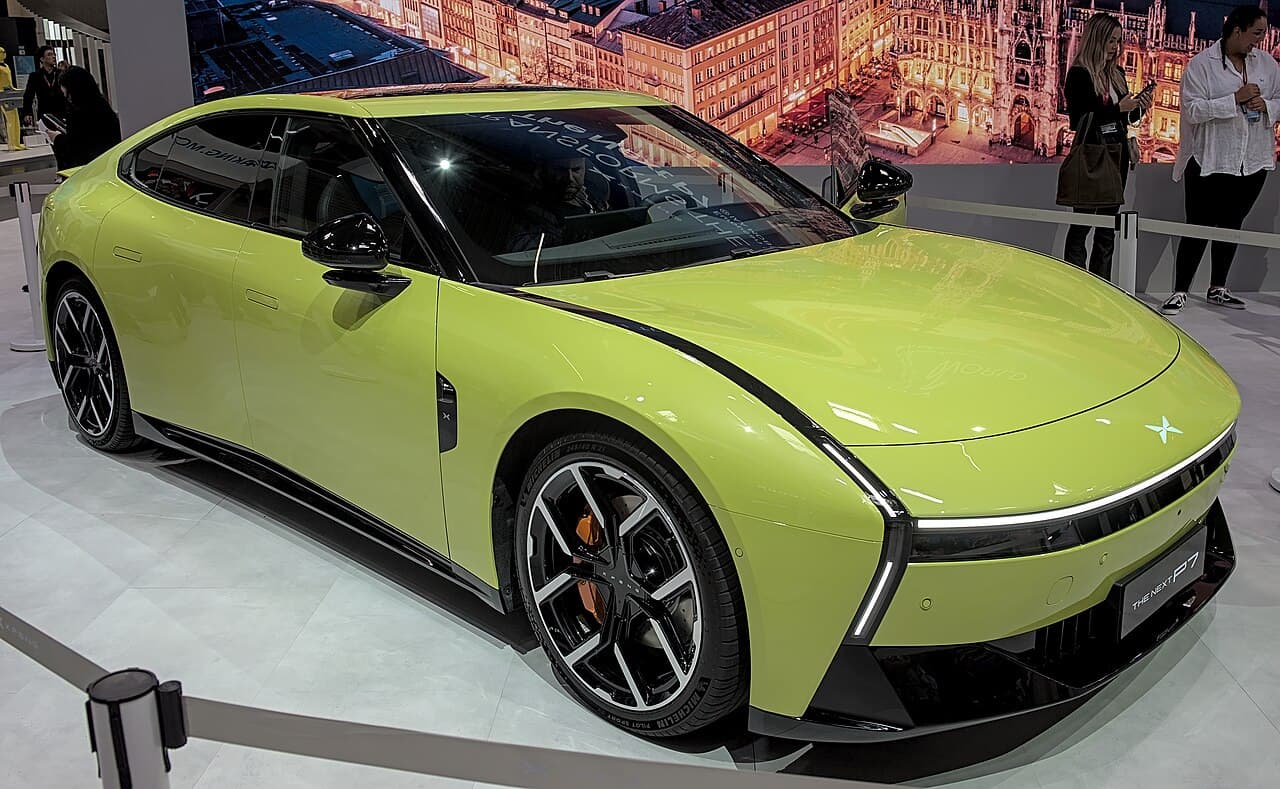
New-generation flagship performance sedan with scissor doors, 5C ultra-fast charging and Turing-chip AI-assisted driving.
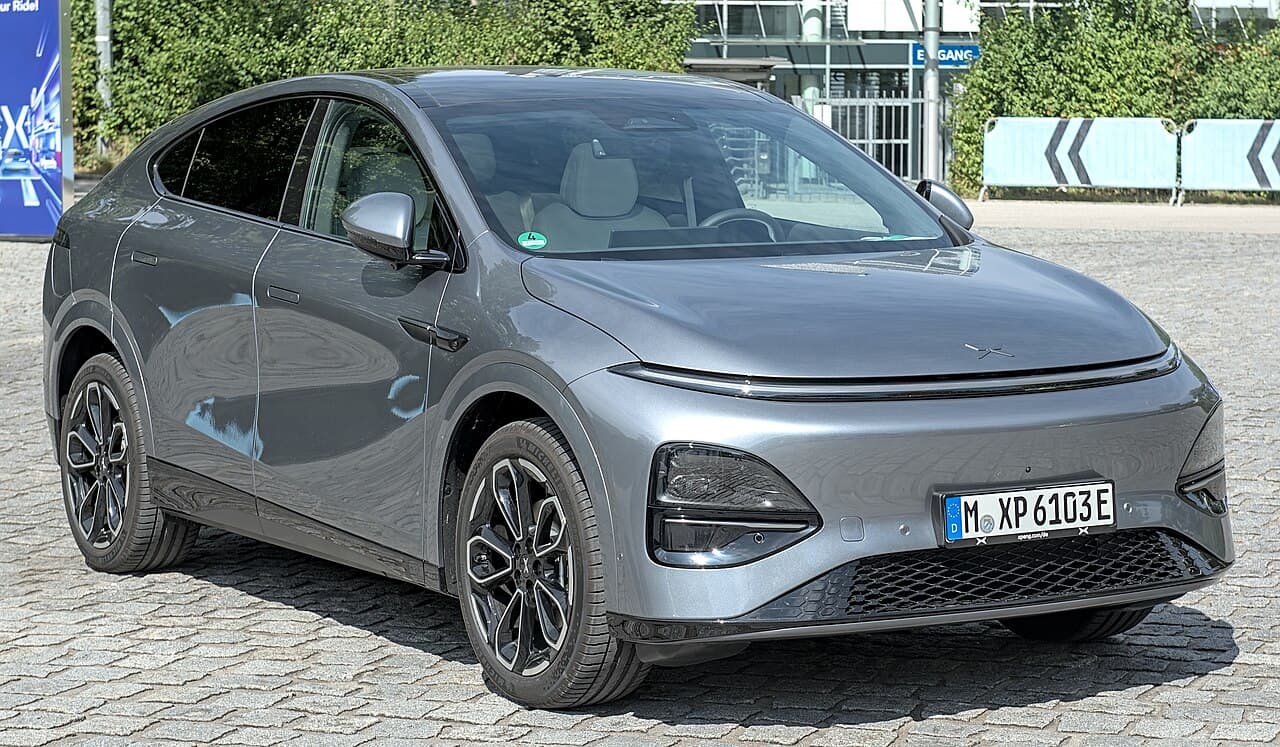
Mid-size electric SUV on XPeng's 800V SEPA 2.0 platform, positioned as a Tesla Model Y rival with fast charging and XNGP assisted driving.
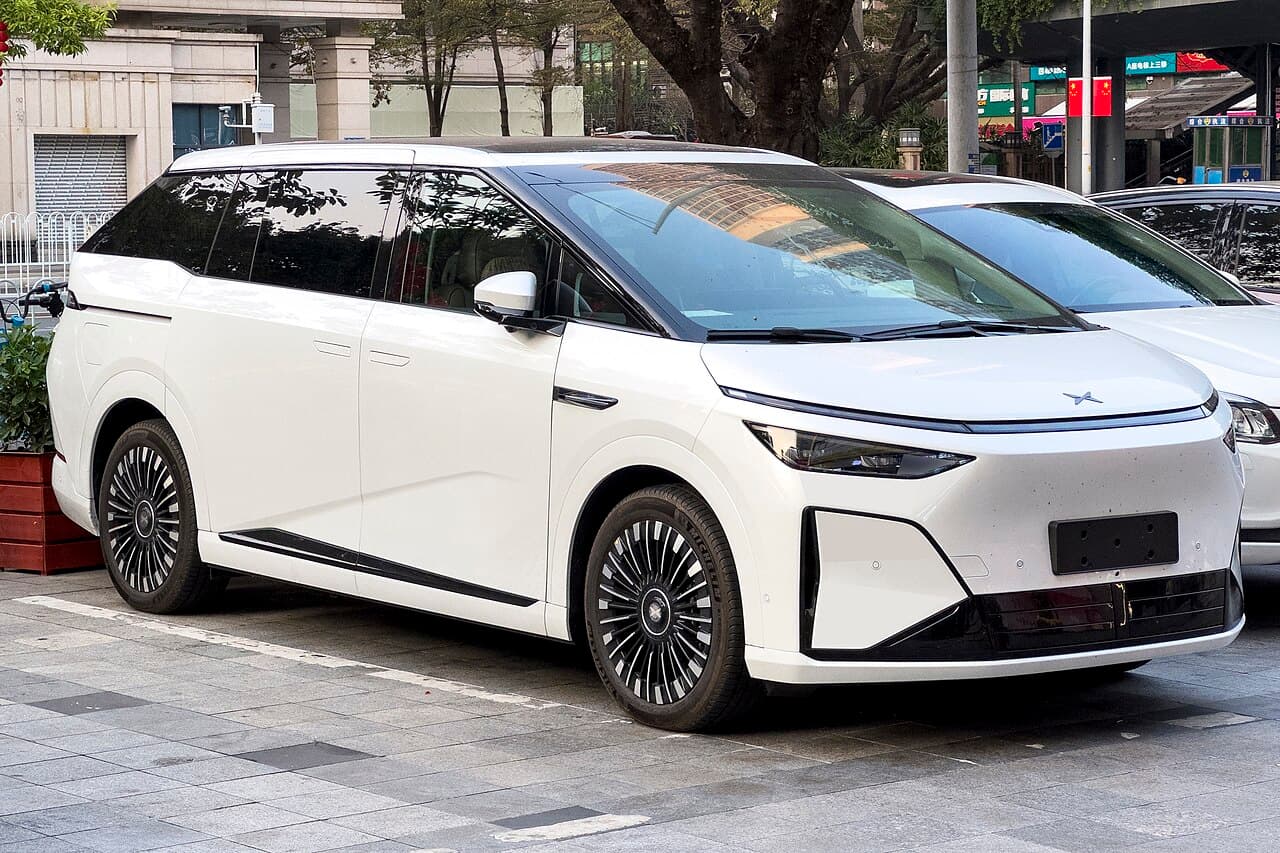
Flagship seven-seat electric MPV with rear-wheel steering and an 800V platform - XPeng's premium halo model and a strong international export.
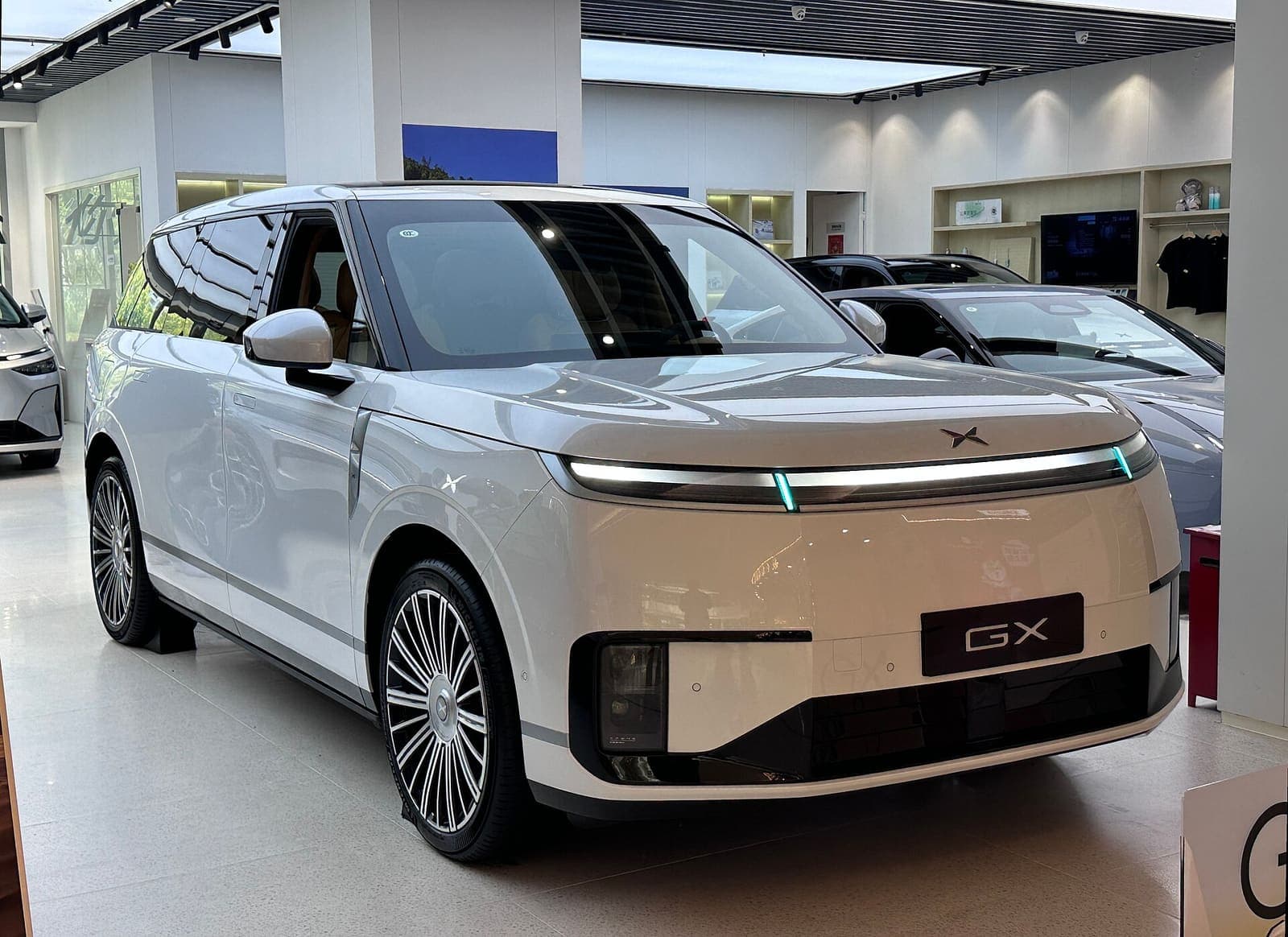
XPeng's six-seat full-size flagship SUV on an 800V platform, offered in battery-electric and extended-range versions, with rear-wheel steering, dual-chamber air suspension and up to three in-house Turing AI chips. It forms a dual-flagship pair with the five-seat G9L.
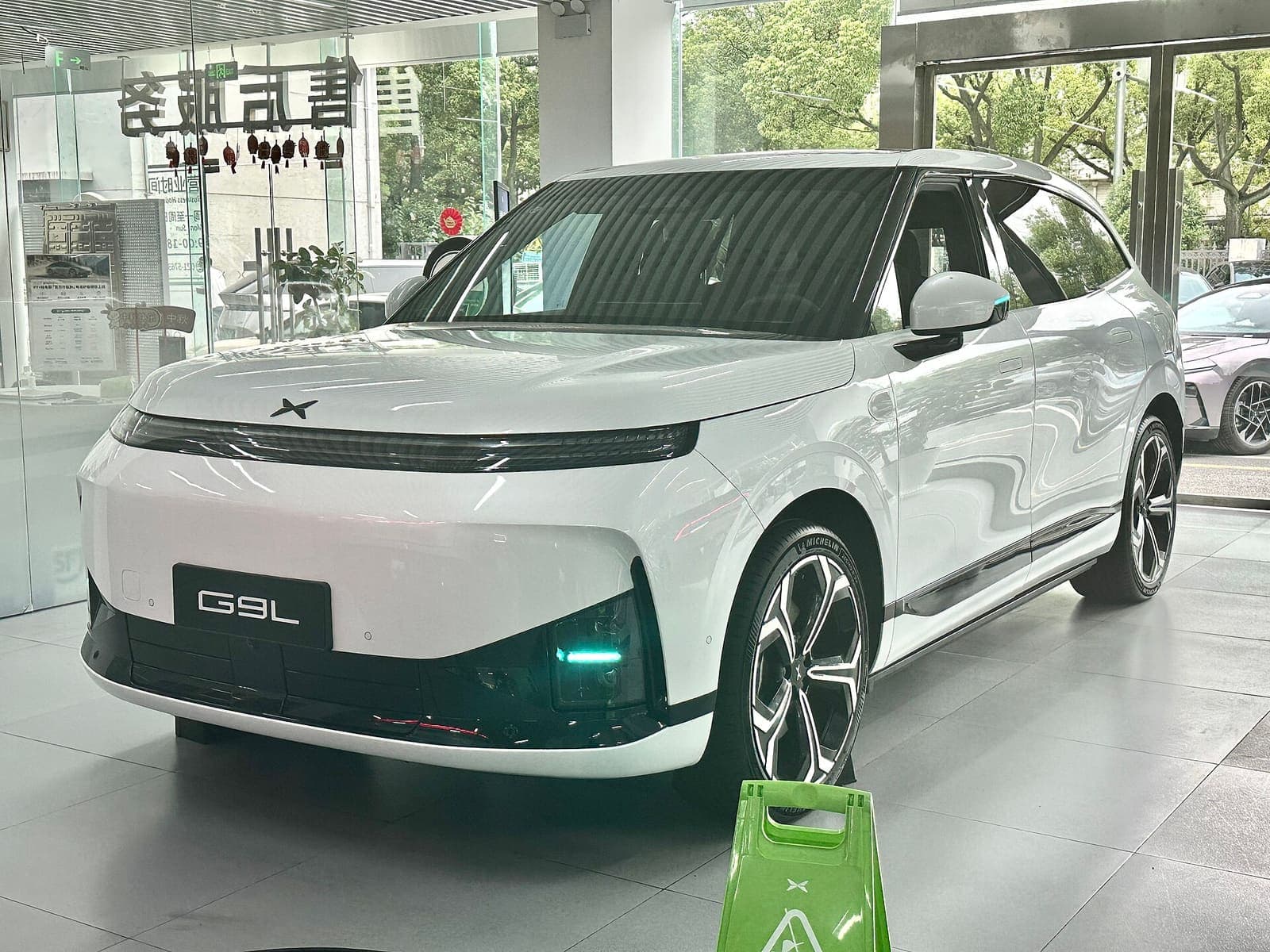
A five-seat electric SUV built as a global tech flagship on the same 800V platform as the GX, sharing its core platform technology with aviation-grade safety redundancy design.
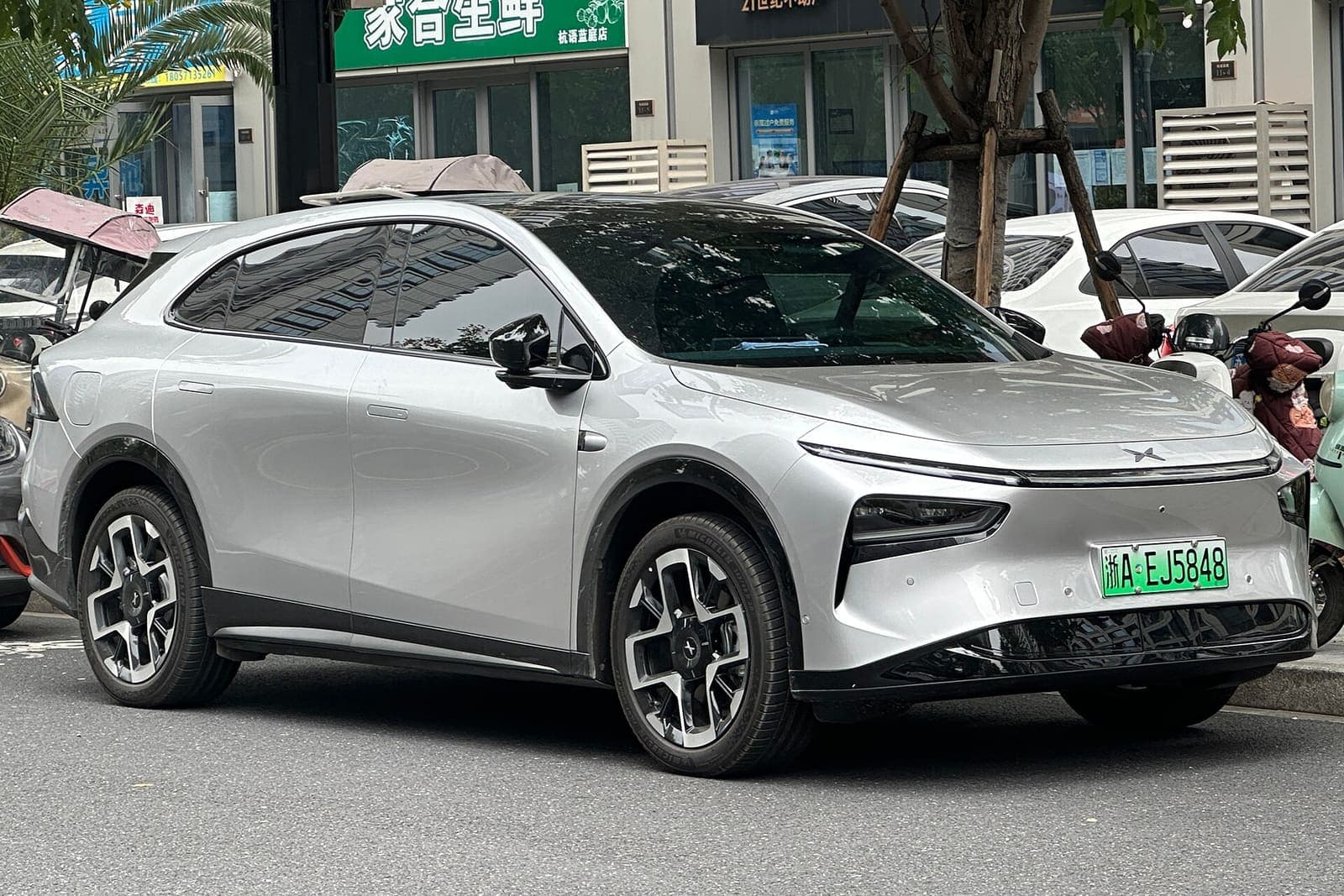
Mid-size electric SUV positioned as a value-focused Tesla Model Y rival, built on XPeng's 800V architecture with up to three in-house Turing AI chips; a range-extended (EREV) variant was added in January 2026 for markets favoring hybrid powertrains.
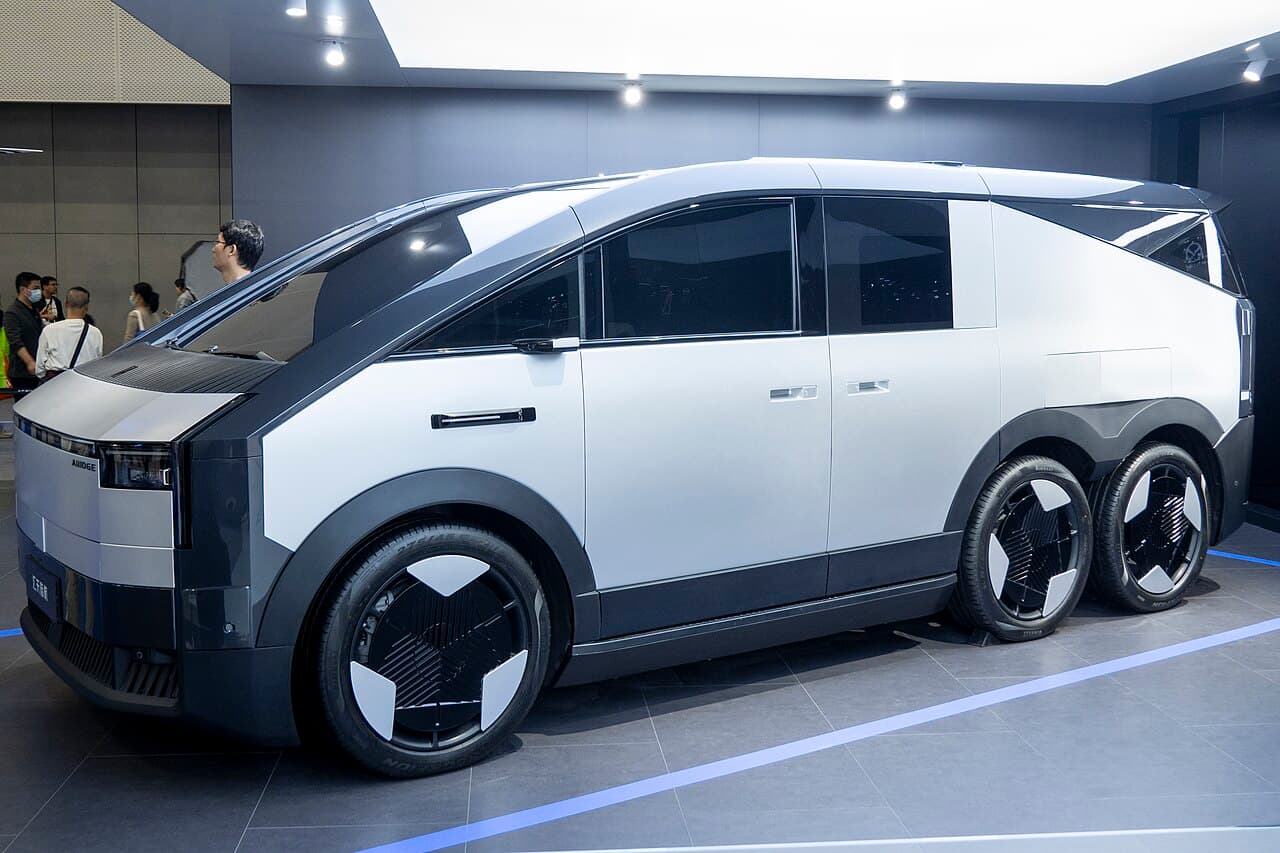
A modular flying car built by XPeng subsidiary XPeng AeroHT (Aridge): a six-wheeled ~5.5m electric 'mothership' that carries and launches a detachable two-seat, six-rotor eVTOL aircraft.
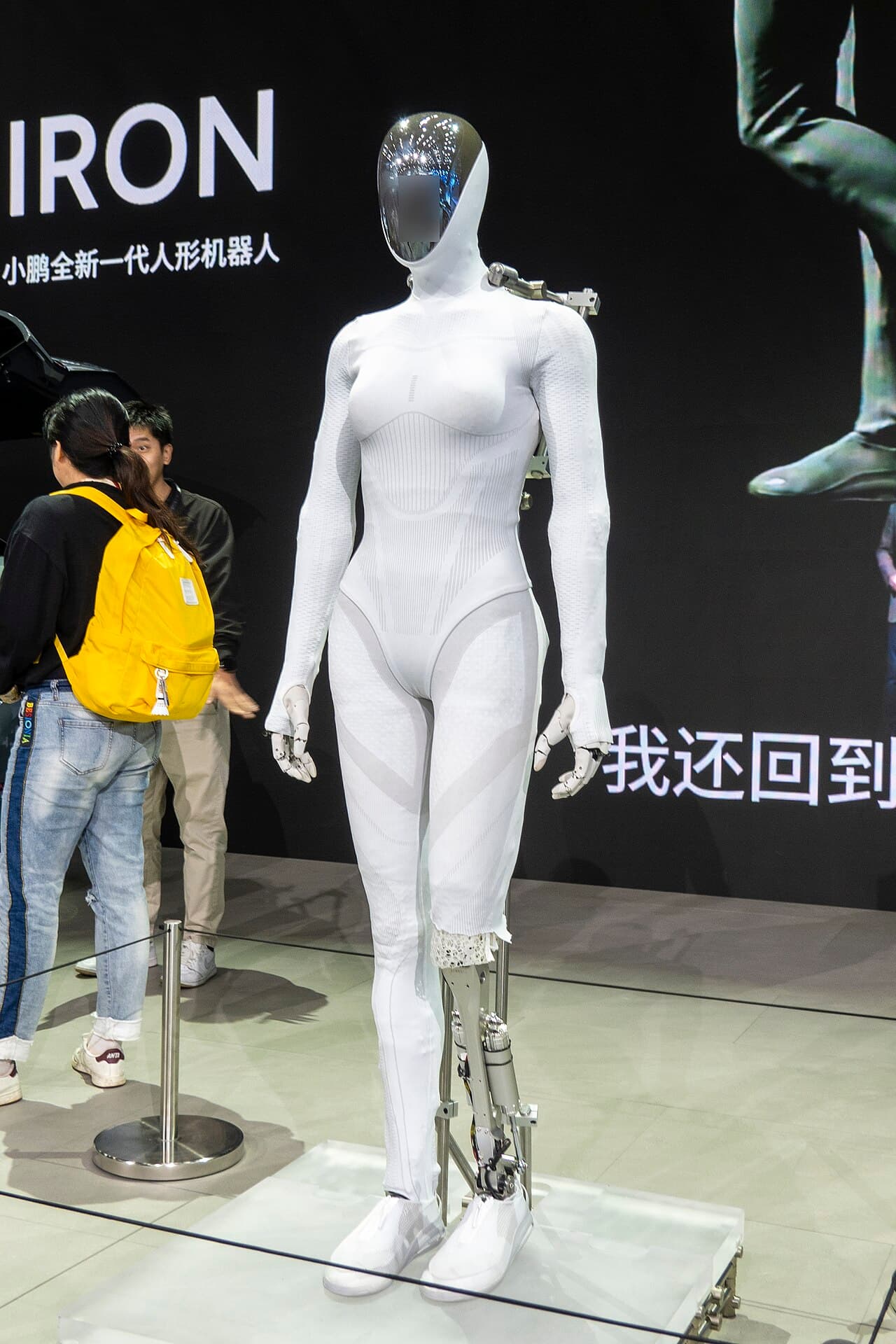
A human-size humanoid robot with bionic muscles, soft skin and 82 degrees of freedom, powered by three of XPeng's in-house Turing AI chips and its VLA/VLT/VLM models.
XPeng's GX-based L4 robotaxi service, branded 小鹏悠游 / XPENG YOYO on 8 Oct 2026. A dedicated website page and YOYO ride-hailing mini-program launched the same day, with public trials planned through invitation codes. Prior company statements put employee testing and more than 2,000 Guangzhou internal rides behind the brand, with passenger service without a safety driver still targeted for 2027.
05
(Dec 31, 2025); company described headcount as more than 27,000 as of May 2026
(~$2.91B) in Q2 2026, up 8.0% YoY and 51.5% sequentially from Q1's RMB13.03B (~$1.79B), within the prior RMB19.60-20.80B guide; Q3 2026 guided at RMB21.7-23.4B. Vehicle sales were RMB17.05B in Q2; services and other rose 93.9% YoY to RMB2.70B, helped by Volkswagen R&D-service revenue
(1,223,828 at July 31 plus 39,107 August deliveries); 243,111 year-to-date
June 2026; August 2026 was 39,107, the year's second-highest month
(up from 20.6% in Q1 and 17.3% a year earlier); vehicle margin 12.1% (flat QoQ); net loss widened to RMB1.34B from RMB480M a year earlier on continued AI, robotics and flying-car investment
(+28.1% to +39.7% YoY) from the January internal target; Q3 guided at 115,000-121,000, with management targeting 60,000+ monthly in Q4 after the G9L and Mona L05 launches. July plus August deliveries were 77,134, so September needs about 37,900-43,900 units to hit the Q3 range
Q2 overseas deliveries topped 20,000 (+81% YoY) with average selling price above €40,000
Second jointly developed Volkswagen-XPeng model. Volkswagen Anhui opened China presales on 24 Sep 2026 at 199,900-249,900 yuan, with official sales targeted for end-October. Hefei-built B-segment fastback sedan, 5,081 mm long, CATL 91.963 kWh LFP pack, RWD 230 kW / 755 km CLTC or AWD 370 kW / 705 km. Uses XPeng Turing chip at 750 TOPS (below ID. UNYX 08's dual-Turing 1,500 TOPS / VLA 2.0). Brought to production in about 24 months. Not an XPeng-branded product.
market cap about $9.68B on 956.97M shares. Employees still listed as 19,884 (31 Dec 2025) on stockanalysis; company had described headcount as more than 27,000 as of May 2026.
July 38,027 plus August 39,107 = 77,134, so September needs about 37,866-43,866 to hit the 115,000-121,000 Q3 guide. CnEVPost's monthly table still leaves September 2026 blank; stockanalysis latest delivery headline remains the 1 Sep August PR.
market cap about $9.52B on 956.97M shares, versus $10.12 / about $9.68B on 25 Sep. Employees still listed as 19,884 (31 Dec 2025).
(+15% QoQ), inside 115,000-121,000 guidance; September 41,256 (+5% MoM) with L03 above 10,000 units
more than 500 international stores (official Chinese September 2026 post)
4,000-plus stations as of 30 Sep 2026, including 3,510-plus ultra-fast, 22,200-plus piles, 430-plus cities
06
Operating status
Operational; G9L orders open; L05 pre-sales open
On 12 Oct 2026 XPeng's English release said it launched the G9L at the Paris Motor Show with French pricing from 74,990 euros, WLTP range up to 591 km, and charging from 10 percent to 80 percent in as little as 11.7 minutes. After a production trial at Magna in Graz, the G9L is set to be the fourth XPeng model manufactured in Europe. That is a list price, not a count of completed orders. On 15 Oct 2026 XPeng opened Mona L05 China pre-sales from 169,800 yuan for the pure-electric 535 Max and the range-extender 1310 Max, with other listed trims at 179,800, 181,800 and 191,800 yuan, and said the formal launch is 29 Oct. Pre-sale prices are not deliveries.
The full EV lineup (Mona, P7, G6, G7, G9, X9, GX, and the incoming G9L) - RMB17.05B in Q2 2026 (+1.0% YoY, +55.0% QoQ), after RMB11.0B and roughly 85% of revenue in Q1 2026.
After-sales, parts, financing and R&D-service revenue. RMB2.70B in Q2 2026 (+93.9% YoY) with a 75.1% segment margin, driven by technical R&D services for Volkswagen plus parts and accessories.
Technology & Software Licensing
R&D-service revenue from the Volkswagen E/E architecture (CEA) collaboration and VLA autonomous-software licensing, with VW as launch customer. Reuters reported on September 17, 2026, citing two people familiar with the matter, that XPeng plans to widen this business well beyond Volkswagen, offering its E/E architecture, smart cockpit systems, Turing AI chips and advanced driver-assistance software to other foreign automakers as well as foreign software developers and automotive suppliers, and extending licensing and customization into robotaxi, humanoid-robot and other physical-AI applications. A strategic commercialization team was set up about six months earlier to pursue it; no customer has been named and no terms disclosed.
07
How past announced dates turned out.
1/2announced dates hit on time
Launch the G9L in China
Target September 17, 2026 · Resolved Sep 17, 2026
XPeng launched the G9L on schedule at a Beijing event on September 17, 2026, pricing six variants at 241,800 to 319,800 yuan with a limited-time 10,000 yuan cut that takes the entry price to 231,800 yuan, below the August pre-sale figure of 259,800 yuan. He Xiaopeng said deliveries begin the same month.
Land Aircraft Carrier customer deliveries
Target Late 2026 · Resolved Sep 3, 2026
At IFA Berlin on September 3, 2026, Aridge said mass production still starts in H2 2026, but CAAC type approval and end-customer deliveries are now expected in 2027 rather than late 2026. The factory plan (about 5,000 units/year initially, scaling toward 10,000) and roughly 7,000 pre-orders were reaffirmed.
08
2026
Opens Mona L05 China pre-sales from 169,800 yuan
On 15 October 2026 XPeng opened China pre-sales for the Mona L05, a five-seat SUV in pure-electric and range-extender forms. Official pre-sale prices are 169,800 yuan for the 535 Max and the 1310 Max, 179,800 yuan for the 635 Max, 181,800 yuan for the 1310 Ultra SE, and 191,800 yuan for the 635 Ultra SE. The company said the formal launch is 29 October 2026. These are pre-sale prices, not deliveries.
Schedules Mona L05 China pre-sales
CnEVPost reported on 13 October 2026 that XPeng's Weibo set the Mona L05 China debut and pre-sales for 15 October 2026 at 7 p.m. Beijing time. Pricing and a formal launch date were still unpublished as of 14 October. The Q4 2026 launch step remains open.
Opens European G9L order books
At the Paris Motor Show on 12 October 2026 XPeng opened G9L order books. The German newsroom lists Germany from 74,600 euros and says the first customer cars are delivered in December 2026, with European production at Magna in Graz. The Austria store starts at 75,600 euros, and the Belgium and Netherlands stores at 74,990 euros. The Belgium model page expects showroom cars from November. A separate volume-production start date was not named. These are announced list prices, not recorded first customer orders.
Launches G9L in Europe from 74,990 euros
At the Paris Motor Show on Oct. 12, 2026 XPeng launched the G9L for Europe. The company said French pricing starts at 74,990 euros, with six- and seven-seat versions, EV WLTP range up to 591 km, and a 10% to 80% charge in as little as 11.7 minutes on 800V. It said Magna Graz trial production is done and that this is its fourth European-built model. CnEVPost reported starting prices of 74,600 euros in Germany, 74,990 in Belgium, 75,600 in Austria and 75,990 in the Netherlands. No European delivery date was given.
Names Robotaxi service YOYO and launches invite mini-program
XPeng's official WeChat account said 8 Oct 2026 that Robotaxi is branded 小鹏悠游 / XPENG YOYO. A dedicated Robotaxi webpage and the YOYO autonomous ride-hailing mini-program launched the same day, with public trials planned through invitation codes. Fetched xiaopeng.com/robotaxi.html lists 2026 Guangzhou L4 demonstration and employee testing, then a 2027 next-generation Robotaxi. Native WeChat/Weibo posts were not opened; invite-code volume was not disclosed.
Q3 deliveries 118,390, inside 115,000-121,000 guide
XPeng reported 41,256 September deliveries, up 5% from August, with L03 monthly volume above 10,000, for 118,390 in the third quarter, up 15% from Q2 and inside the 115,000-121,000 guide issued August 24. The company also said G9L launched in China on September 17 and XOS 6.3.0 with VLA 2.0 began rolling out in China on September 22.
Philippines launch and second Volkswagen joint model
XPeng Philippines opened on September 25, 2026 at SM Mall of Asia Arena with the X9 from 3.858 million pesos and the L03 from 1.548 million pesos. Country director Katoon Su said deliveries begin in the fourth quarter of 2026. On September 24 Volkswagen Anhui opened ID. UNYX 09 presales from 199,900 yuan, the second XPeng-joint model, with CATL LFP packs, XPeng VLA assistance and Turing compute, built in Hefei, on sale end-October.
Launches in the Philippines with X9 and L03
XPeng held its Philippine brand launch on Sept. 25, 2026 at SM Mall of Asia Arena, offering six X9 and L03 variants from 1.548 million pesos to 4.058 million pesos. Country director Katoon Su said XPeng Philippines is the company's first Southeast Asia subsidiary. The official local site lists Greenhills, Makati, North EDSA and Cebu dealers; local reports say customer deliveries start in the fourth quarter, with two more models in six months and eight showrooms in Metro Manila, Cebu and Davao targeted by year-end.
2026
Second Volkswagen joint model, ID. UNYX 09, opens presales
Volkswagen Anhui opened presales of the ID. UNYX 09, the second jointly developed Volkswagen-XPeng model, at 199,900 to 249,900 yuan, with official sales targeted for the end of October. The Hefei-built sedan uses CATL LFP cells and XPeng's VLA assisted-driving stack.
G9L launches in China from 231,800 yuan
XPeng launched the G9L at a Beijing event on September 17, 2026 with official prices of 241,800 to 319,800 yuan across six variants and a limited-time 10,000 yuan cut for orders placed before November 15, taking the entry price to 231,800 yuan, below the 259,800 yuan pre-sale figure set on August 11. The lineup runs from a rear-wheel-drive 702 km BEV Max to a 755 km all-wheel-drive BEV Ultra Flagship and two extended-range all-wheel-drive trims rated at 435 km electric and 1,602 km combined, with 800V fast charging standard. XPeng said the G9L will be sold in 64 countries and regions, will be produced in Guangzhou and at Magna's Graz plant in Austria as its fourth European-assembled model, and will hold its global launch at the Paris Motor Show on October 12.
Opens its first X-Energy megawatt charging station, in Hong Kong
On September 16, 2026 XPeng said it had opened the first X-Energy megawatt charging station anywhere, built with Hong Kong operator Halo and open to drivers of all brands. The station peaks at 1 megawatt and 1,000 amps with 400 kWh of on-site storage, which keeps its grid connection within 240 kW and avoids distribution upgrades in a city where land and grid timelines have constrained high-power charging. XPeng first showed X-Energy at the Mona L03 launch in Munich on July 16, quoting 1,040 kW peak output and 91.5% round-trip efficiency, and says the hardware goes to Europe next; no XPeng model can yet accept megawatt charging, and no rollout timeline or station count outside Hong Kong has been disclosed.
Sets G9L China launch for September 17
On September 14, 2026 XPeng said the G9L five-seat flagship SUV will launch in China on September 17 at 7:00 p.m. Pre-sales opened August 11 at 259,800 yuan. He Xiaopeng has said deliveries begin the same month, with the G9L and Mona L05 aimed at lifting monthly sales above 60,000 in the fourth quarter.
First right-hand-drive G9L SUVs roll off for Australia
On September 11, 2026 XPeng said the first right-hand-drive G9L SUVs rolled off its Guangzhou Global Smart Manufacturing line, with the first batch set to ship to Australia. The company said the G9L will enter 64 countries and regions, and that right-hand-drive versions are aimed at Australia, the United Kingdom, and Southeast Asia. China launch and deliveries remain slated for September 2026; Australian pricing has not been announced.
IRON walks off automated Guangzhou production line
On September 8, 2026 XPeng commissioned what it calls the first automated production line for advanced humanoid robots in Guangzhou, and an IRON unit walked off the line under its own power. CEO He Xiaopeng said more than 80 percent of core processes are automated and called the step small but a start on manufacturing a new product category. Mass production is still targeted by the end of 2026 for XPeng stores and campuses, with external sales planned for 2027.
Aridge confirms Land Aircraft Carrier mass production at IFA
At IFA Berlin on September 3, 2026, Aridge (XPeng AeroHT) said the Land Aircraft Carrier is ready for series production, with mass production starting in the second half of 2026 at about 5,000 units/year initially (scaling toward 10,000) against roughly 7,000 pre-orders, mainly from China and the Middle East. The company said CAAC has certified its suitability as an aircraft manufacturer and now expects type approval and end-customer deliveries in 2027, later than the late-2026 delivery window previously cited.
August deliveries 39,107; GX and Mona keep climbing
XPeng delivered 39,107 vehicles in August 2026 (+4% YoY), its second-highest month of the year, taking year-to-date deliveries to 243,111 and cumulative deliveries to 1,262,935. The GX SUV delivered 7,338 units in August (21,501 cumulative), and the Mona series passed 310,000 cumulative units. The company also said it now operates in 68 countries and regions, with more than 3,900 self-operated charging stations as of August 31.
Q2 2026 results: record deliveries, net loss nearly triples
XPeng reports Q2 2026 revenue of RMB19.74B (~$2.91B, +8.0% YoY, +51.5% QoQ) on record deliveries of 103,295 vehicles, with gross margin at 20.7%. Net loss nearly tripled year-over-year to RMB1.34B on heavy AI, robotics and flying-car reinvestment; overseas deliveries topped 20,000 for the first time. XPeng guides Q3 2026 deliveries of 115,000-121,000 units and revenue of RMB21.7-23.4B.
European local manufacturing scales; France hits 6,000 deliveries
XPeng's contract-manufacturing partnership with Magna Steyr in Graz, Austria (already producing the G6, G9 and P7+) is set to add a fourth model in 2026. Overseas deliveries hit a monthly record of 9,700 units in July 2026 (+223.33% YoY, 25.51% of total deliveries), and XPeng passed 6,000 cumulative deliveries in France on August 18, 2026 - a P7+ sedan - across a network of 70+ French stores.
G9L pre-sales open at RMB 259,800
XPeng opens pre-sales for the G9L on August 11, 2026 at a starting price of RMB 259,800 (about $36,500), above the RMB248,800 figure floated at its August 3 reveal. The five-seat SUV spans four trims and six powertrain configurations, from a 702 km rear-wheel-drive battery-electric Max to a 1,602 km all-wheel-drive extended-range Ultra Flagship.
Reveals G9L global flagship SUV
XPeng reveals the G9L on August 3, 2026, a five-seat electric SUV built as a global tech flagship on the GX's 800V platform, with a starting price of RMB248,800 - CEO He Xiaopeng says the project was approved three years earlier to build a global flagship model.
Aridge raises ~$1B and gains eVTOL certification fast-track status
Flying-car unit Aridge (formerly XPeng AeroHT) raises nearly $200M in a March 2026 round, bringing its total equity funding to about $1B, and is named among the first four companies on China's CAAC eVTOL airworthiness-certification fast-track list in July 2026, while preparing a Hong Kong IPO.
Robotaxi employee testing begins with end-to-end ride
XPeng starts employee testing of its Robotaxi platform in Guangzhou on July 10, 2026; CEO He Xiaopeng completes the first full end-to-end journey (order, pickup, drop-off) via the platform, ahead of planned trial passenger operations in H2 2026.
Mona L03 begins deliveries in China
XPeng delivers the first Mona L03 compact SUVs to customers in China on July 22, 2026, with a nationwide sales ramp planned for August following the July 16 global unveiling in Munich.
XPeng launches the GX, a full-size flagship SUV with L4-ready hardware, dual-chamber air suspension, rear-axle steering and Turing AI chips, debuting at the Beijing Auto Show in April 2026 and later priced from RMB269,800 (~$40,000); it becomes a core volume driver as June 2026 deliveries hit a 2026 high.
Launches Mona L03 in Europe, undercutting Tesla
XPeng unveiled its new Mona L03 compact electric SUV in Munich on July 16, 2026 - its first model debuted simultaneously across international markets rather than launching in China first. In Germany the entry battery-electric version starts at €35,600 (~$40,700) with a 58.3 kWh LFP battery and 445 km of WLTP range, pricing it more than €3,000 below Tesla's Model Y and over €10,000 below Audi's Q4 e-tron. XPeng is targeting 8,000 L03 sales in Germany in 2026 and 20,000 in 2027 as it accelerates its European expansion.
Cumulative deliveries pass 1.18M; June sets 2026 high
XPeng passes 1,185,801 cumulative deliveries by the end of June 2026, with June's 40,126 units a 2026 monthly high as the premium GX SUV ramps. Q1 2026 revenue was RMB13.03B and Q2 deliveries rebounded to 103,295.
VLA 2.0 rolls out; Volkswagen named global launch partner
XPeng officially rolls out its VLA 2.0 autonomous-driving system across its China lineup in March 2026, and Volkswagen is named launch partner for a global version - the first at-scale licensing of Chinese AI-driving software by a Western automaker.
2025
Record year and first quarterly profit
XPeng delivers a record 429,445 vehicles in 2025 (+125.9% YoY) and posts its first-ever quarterly net profit (~$55.5M) in Q4 2025.
AI Day: VLA 2.0, Robotaxi, IRON robot and flying car
At its November 2025 AI Day, XPeng unveils its VLA 2.0 autonomous-driving model, three Robotaxi models, a next-generation IRON humanoid robot, and the Aridge (AeroHT) 'Land Aircraft Carrier' flying car under a 'Physical AI' strategy.
2024
Mona M03 launches as the volume driver
XPeng launches the mass-market Mona M03 sedan from RMB119,800 in August 2024; it becomes the brand's best-seller, surpassing 250,000 cumulative deliveries by 2026.
Volkswagen platform and architecture partnership
Following VW's ~4.99% stake in 2023, XPeng and Volkswagen sign framework agreements to co-develop EVs and integrate XPeng's E/E architecture (CEA) into VW's China platform from 2026, targeting faster development and lower cost.
2021
2020
2014
09
$4.4Bdisclosed across 4 rounds with a stated amount
Cumulative disclosed raise · dated rounds
IPO (NYSE)
August 2020
Public offering (NYSE: XPEV)
IPO (Hong Kong)
July 2021
Dual-primary listing (SEHK: 9868)
Strategic Investment & Partnership
2023-2024
Volkswagen Group
Aridge (flying-car unit) pre-IPO round
March 2026
GL Ventures, HongShan Capital, Gaorong Ventures, Fortune Capital
Robotics division first external round
August 2026
$900M+ (post-money valuation above $6.3B)
IDG Capital (lead), Gaorong Ventures, Tencent, Alibaba