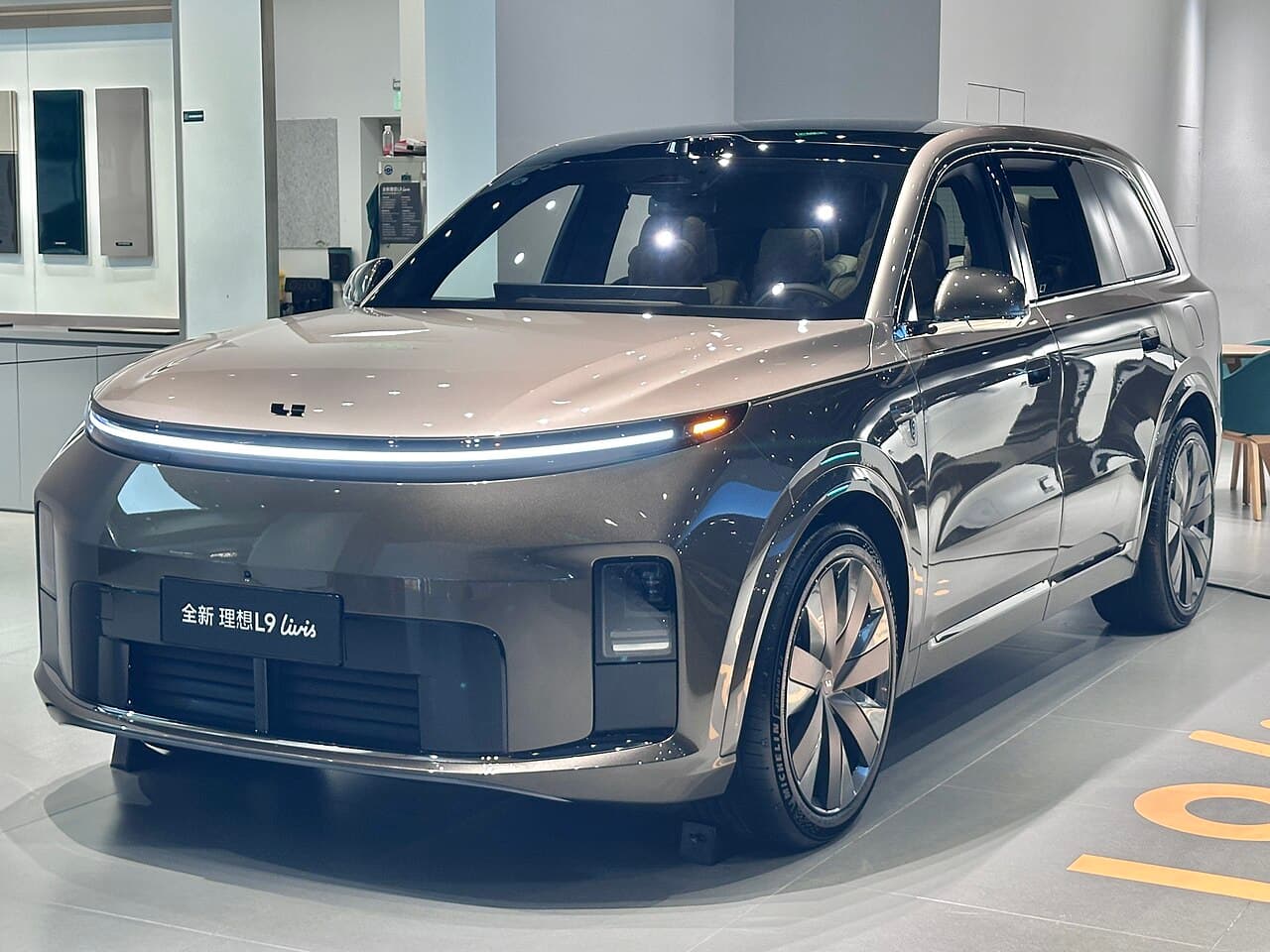
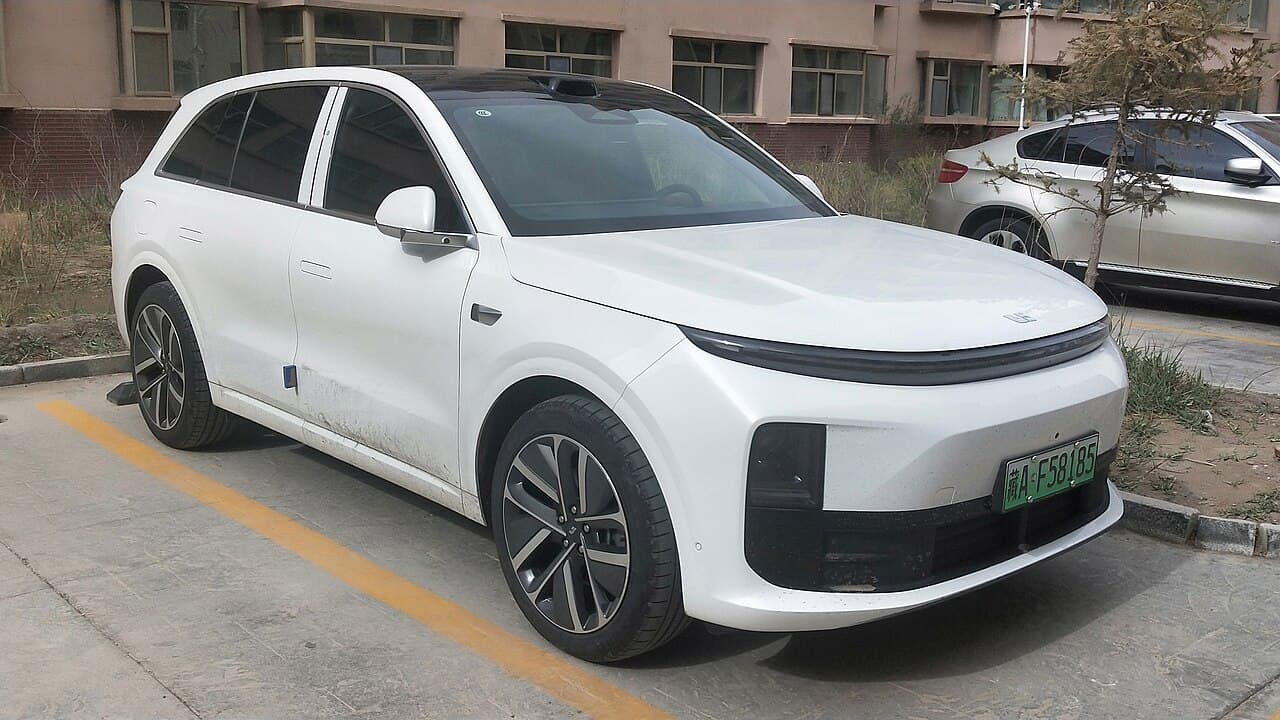
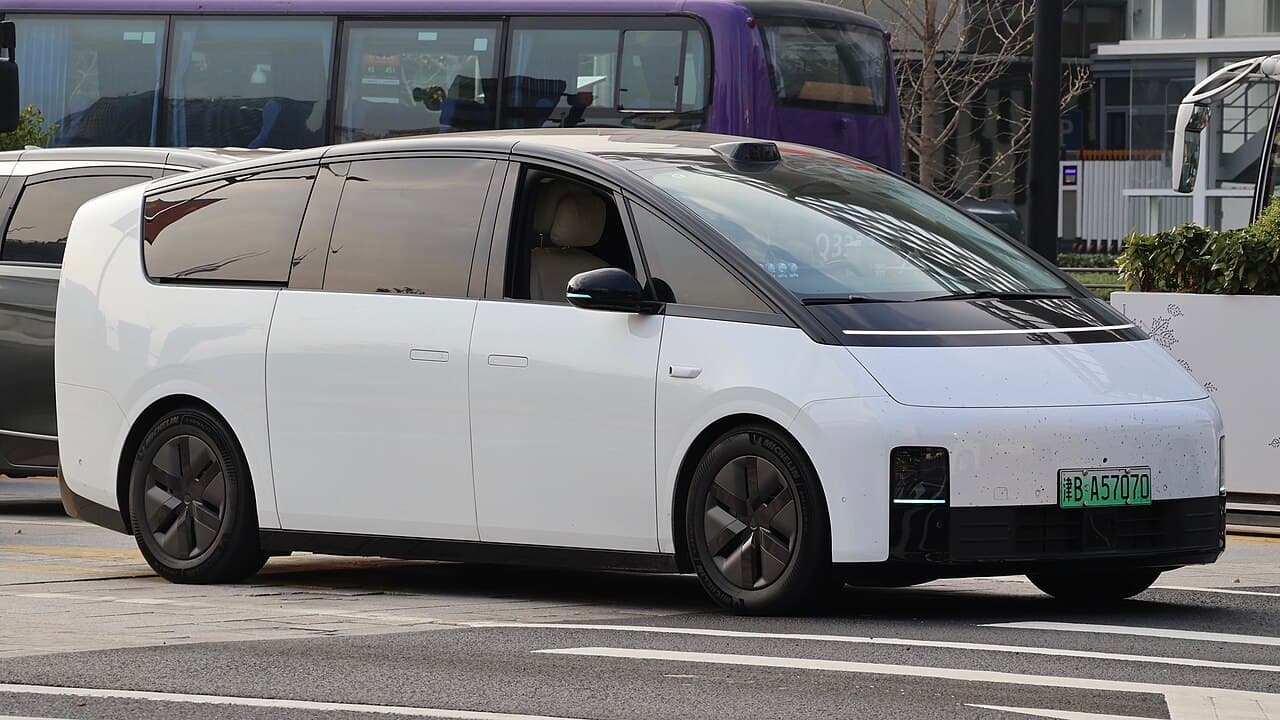
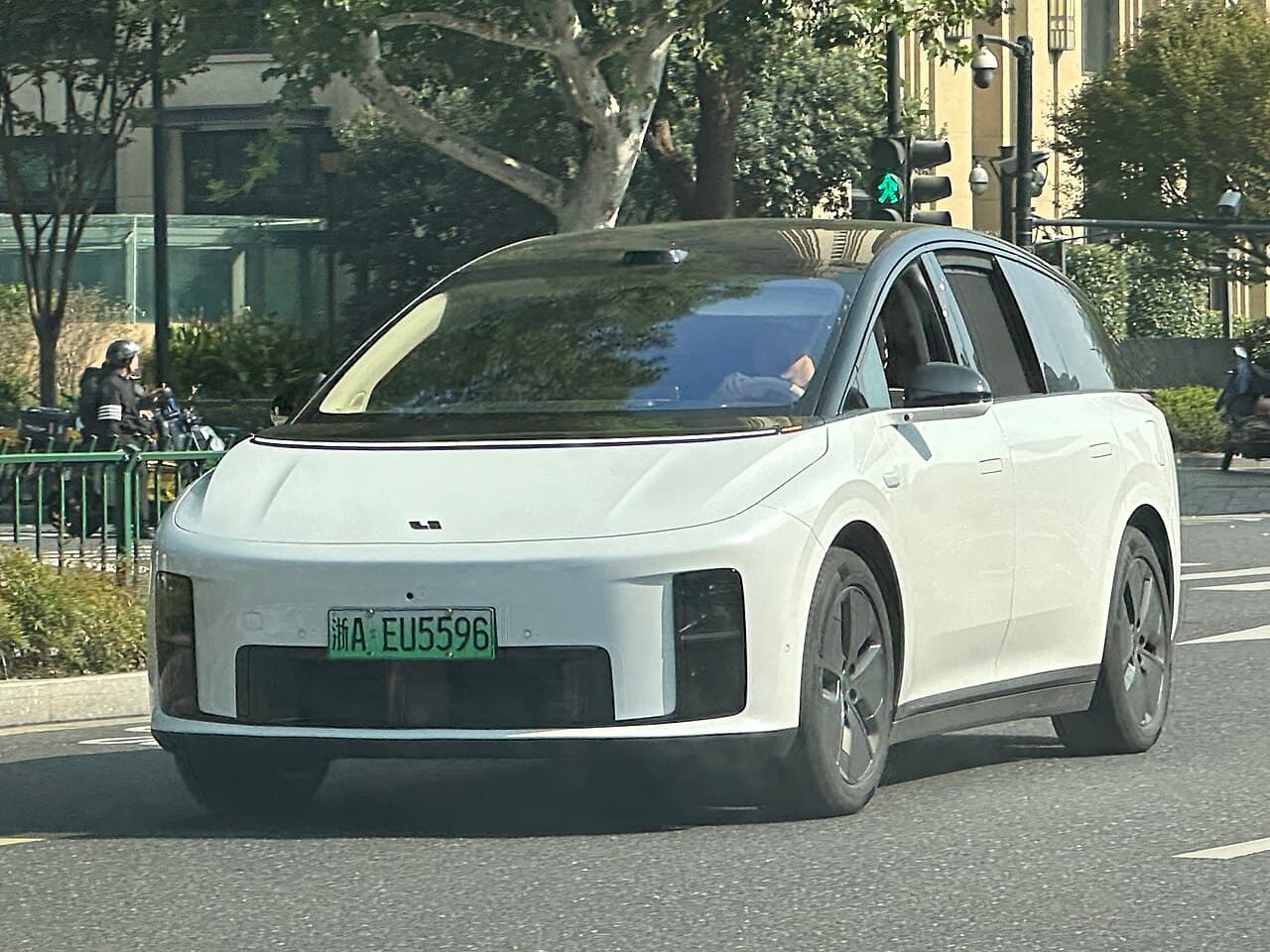
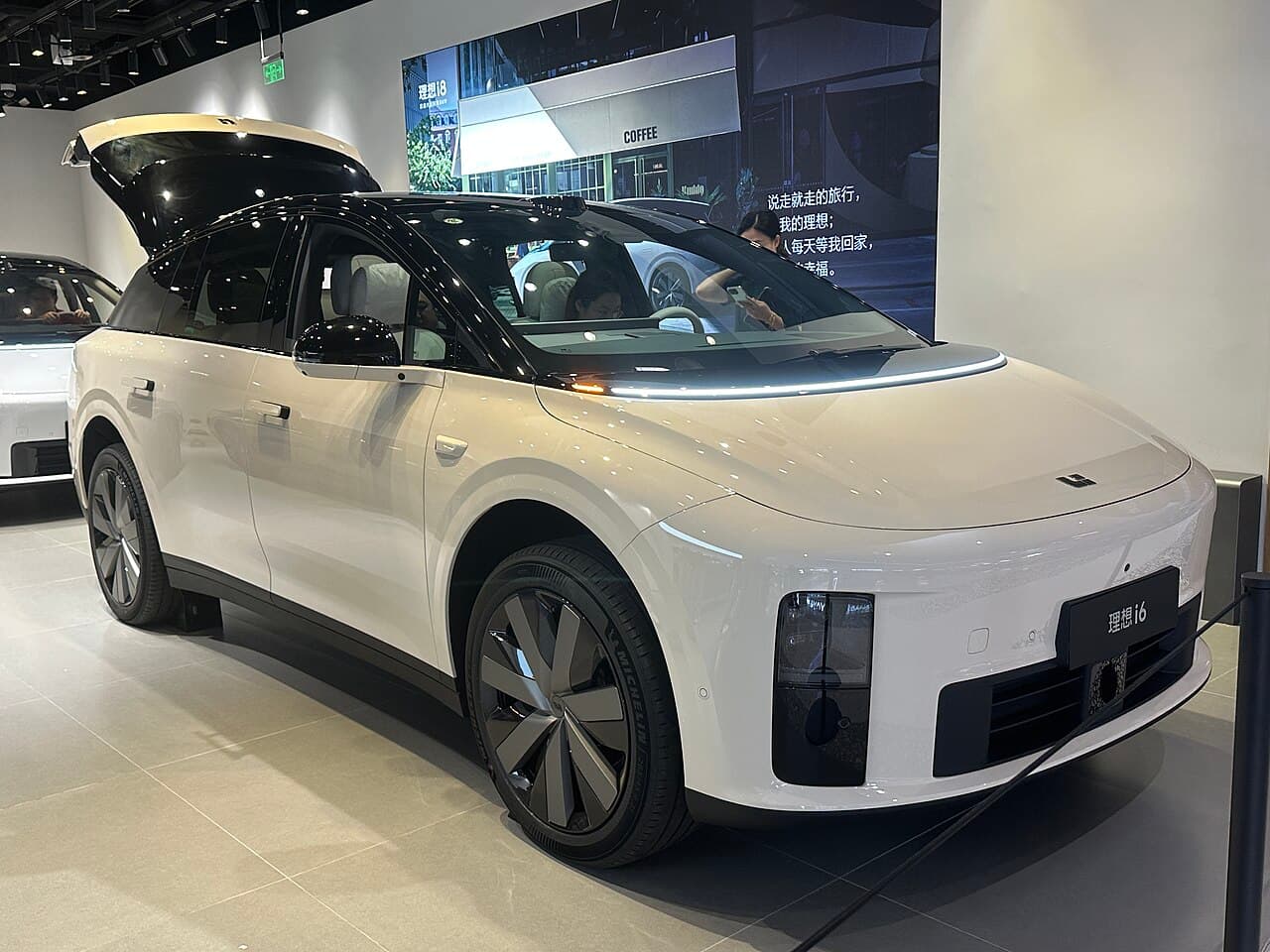
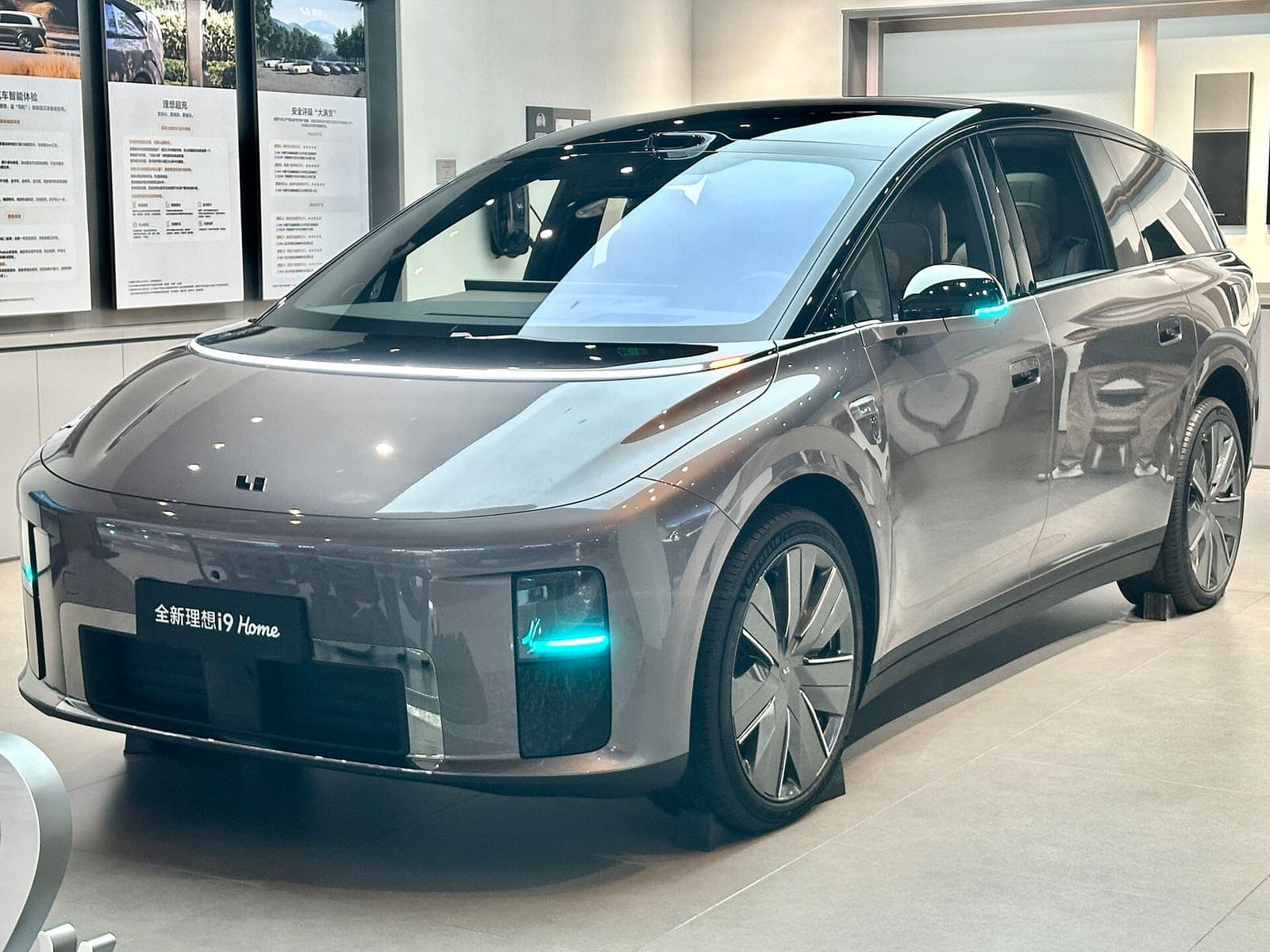
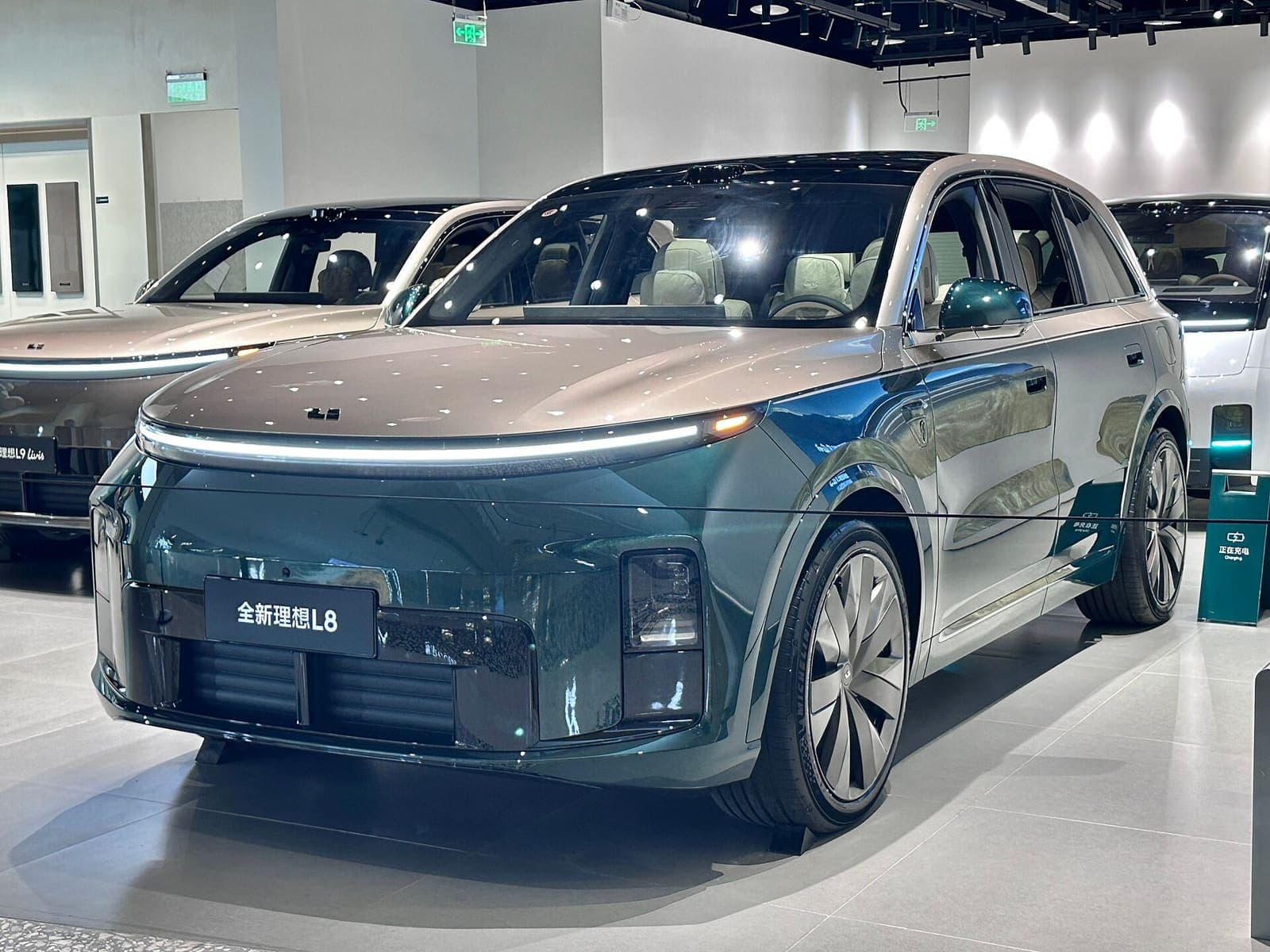
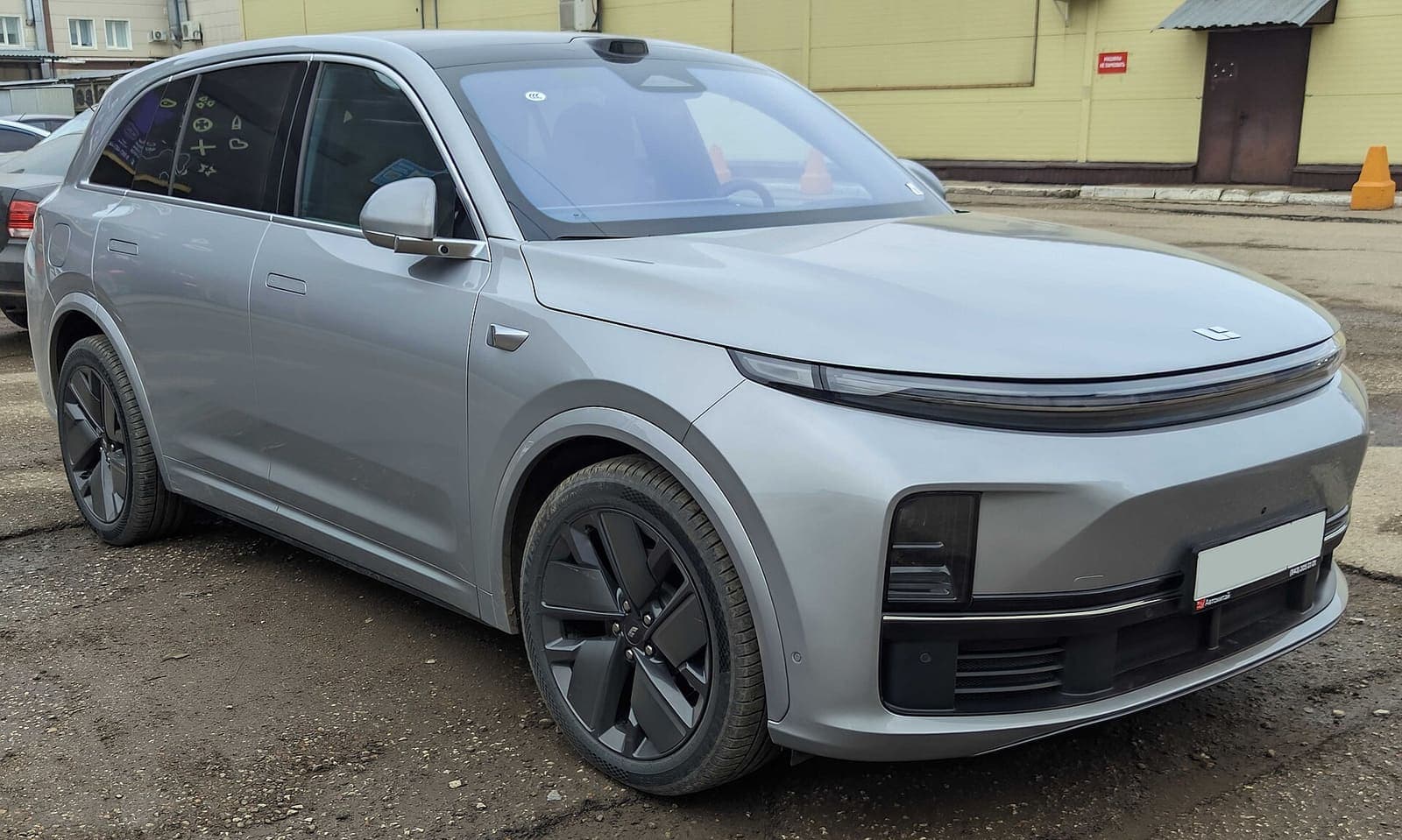
Li Auto is a Beijing-based premium new-energy vehicle maker founded in 2015 by Li Xiang. L-series EREV SUVs remain the volume backbone, including the L7, which the official site still lists, the all-new L8 launched in June 2026, and L6 and L9, with MEGA, i8, i6 and i9 on the BEV side.
It delivered 31,817 vehicles in September 2026 and 1,833,651 cumulatively as of 30 Sep. Monthly prints imply 99,964 in Q3, inside 95,000-100,000 guidance. Q3 financial results are still unprinted, and there is no post-June 30, 2026 headcount. The 2026 i6 China launch remains October 28, with early November deliveries; prices and deposit terms are still unpublished. On October 12 Li Auto premiered the European Li 6 at the Paris Motor Show and set first sales and deliveries for the Netherlands and Norway in Q1 2027, later than the earlier Q4 2026 sales plan. UAE showrooms are still listed as coming soon. On October 16 MHX Technology, the chip subsidiary, signed subscription agreements totaling RMB1.625 billion, including RMB625 million from outside investors; closing is still conditional. No deployed L8 product image is on file.
Li Auto cut its full-year 2026 delivery growth target from ~40% (~550,000 units) to ~20% (~490,000 units) on its Q1 2026 earnings call, citing the launch cadence of the all-new L9, L8 and L6 EREVs and the ramping i-series BEVs. Q2 2026 deliveries came in at 98,330 units (-11.5% YoY) on RMB25.7B revenue, with the net loss narrowing to RMB1.7B and vehicle margin recovering to 9.4% from Q1's 7.9%. January-August 2026 deliveries reached 261,619 (-0.6% YoY), so hitting ~490,000 still requires about 228,000 units in the last four months, or roughly 57,000 a month versus August's 37,679. Li Auto guided Q3 2026 deliveries of 95,000-100,000 units and revenue of RMB26.6-28.0B; July-August already delivered 68,147, leaving 26,853-31,853 needed in September.
Li Auto's next-generation MindVLA autonomous-driving model (paired with the in-house M100 chip) debuted in production on the all-new L9 in May 2026. The company's August 2026 delivery update said Mach VLA would roll out in September to vehicles on the Thor and Orin-X platforms, broadening the stack beyond the newest M100 cars. The all-new L8 and revamped L6 already support Livis voice-command parking. A wider AD Max rollout continues through 2026-2027.
Launch a first robotics product under the secretive 'Nexus' program
Li Auto is developing wheeled and humanoid robots under an internal codename, 'Nexus', as CEO Li Xiang pushes the company toward becoming an embodied-AI company - the 'second half' of a decade-long AI strategy that starts with autonomous driving. The roadmap still leads with a two-wheeled factory robot expected in 2026, ahead of a later bipedal humanoid; no public product launch or factory-deployment date has been announced as of September 11, 2026. Li Auto reorganized its foundation-model unit in May 2026, adding three embodied-AI departments alongside its autonomous-driving unit.
TargetLate October 2026 (i9); November 2026 (MEGA)
Initial new-generation MEGA deliveries use CATL 5C ternary packs. Li Auto said MEGA orders locked at or after 3:00 pm Beijing time on September 7, 2026 will get in-house 5C batteries, with those deliveries expected in November. For the i9, Li Auto said the first customer batch also uses CATL 5C ternary packs, with the battery brand shown on the order page, and that self-developed 5C ternary packs begin deliveries in late October, after which all i9 Home units switch to the in-house solution.
Ramp Li i9 deliveries after the September 16 launch
TargetQ4 2026 (delivery ramp)
The Li i9 launched on September 16, 2026 at 369,800 yuan in a single Home trim, and Li Auto said deliveries would commence the same week. The open questions are the order book for a 370,000-yuan six-seat BEV in a discount-heavy market, how fast the i9 contributes to the roughly 228,000 units Li Auto still needs in the last four months of 2026 to hit its ~490,000 target, and whether the claimed 705 km CLTC range and 0.215 drag coefficient hold up in independent testing. The i9 also has to carry the first production use of Li Auto's self-developed battery, motor, M100 chip and assisted-driving model together.
Launch the 2026 Li i6 with in-house 5C battery and Mach chip
The 2026 i6, a refresh of Li Auto's volume five-seat BEV SUV, will launch in the fourth quarter with Li Auto's in-house 5C battery and Mach assisted-driving chip. Pre-orders open in late September 2026, with deliveries starting in early November.
After launching official L9 sales in the UAE on September 3, 2026 through exclusive distributor Al Fahim (Ultra AED 319,900, Livis AED 359,900), Li Auto said its first official retail center will open in downtown Dubai in September, with more than two retail and service sites planned after climate, dust, charging and map localization work. As of September 11, 2026 Li Auto has not published a confirmed opening date or a photo of an open store.
On September 10, 2026 Li Auto started its European marketing push as an official 2026 Solheim Cup partner in the Netherlands, supplying 20 i6 SUVs as courtesy transport. The overseas i6 will be named Li 6 and will make its European debut at the Paris Motor Show from October 12-18, 2026, where Li Auto plans to unveil its global lineup and European business plans. Management said on the August 26 earnings call that European i6 sales would begin in the fourth quarter; first countries, pricing and channels are not yet public. A right-hand-drive MEGA for Hong Kong and Singapore remains targeted by year-end 2026.
Li Auto set Oct. 28, 2026 as the launch date for the refreshed 2026 i6, with display vehicles in 485 China stores from Oct. 11, a Paris Motor Show appearance on Oct. 12 under the Li 6 name, and China deliveries from early November. Company materials list a 96 kWh in-house 5C pack rated 780 km CLTC plus Qualcomm 8797 and Mach M100 chips. Pricing was not announced. Li Xiang's Weibo post was quoted by CnEVPost; the Weibo page itself returned HTTP 500 in this run.
Li Auto said it delivered 31,817 vehicles in September 2026, taking cumulative deliveries to 1,833,651 as of September 30. That is below August's 37,679 and continues a slower monthly run versus the ~57,000 pace implied by its ~490,000 full-year target. The company said it delivered more than 10,000 new L6 units in September, launched MEGA Home and i9 Home, and pushed MACH VLA 2.0 over the air to nearly one million Li AD Max cars on Orin-X and Thor; October plans include the new i6 and a Paris Motor Show Europe debut. It also counted 4,188 super charging stations and 23,077 stalls in China.
Li Auto launched the six-seat Li i9 on September 16 in a single Home trim priced at 369,800 yuan (about $54,400), with orders open immediately and deliveries starting this week. The i9 is the flagship of Li Auto's second-generation pure-EV platform and comes standard with a 101 kWh 5C ternary battery for up to 705 km of CLTC range, a 400 kW dual-motor all-wheel-drive system, steer-by-wire with rear-wheel steering, and four lidars paired with dual M100 chips. Li Auto claims a 0.215 drag coefficient, which it calls the lowest of any mass-produced SUV; early cars use CATL cells before a planned switch to Li Auto's own packs.
Li Auto will launch the i9, a six-seat flagship battery-electric SUV, at 7:30 p.m. Beijing time on September 16, with display vehicles in stores from September 11. Regulatory filings list a 5,225 mm length, 3,168 mm wheelbase and a 400 kW dual-motor all-wheel-drive system; a Home trim adds rotating zero-gravity seats. Initial deliveries use CATL 5C ternary packs before a later switch to Li Auto-developed batteries.
Li Auto said on September 10, 2026 that its battery-electric i6 SUV will be sold overseas as the Li 6 and will debut at the Paris Motor Show in October, where it will outline its global lineup and European business plans. The company called a 2026 Solheim Cup partnership in the Netherlands, including 20 courtesy i6 SUVs, the formal start of its European push and still aims to begin European sales in the fourth quarter. First countries, pricing and sales channels were not disclosed.
Li Auto said on September 7, 2026 that its in-house 5C batteries, already used on the L8, L6 and i8, will expand across the lineup. The new MEGA and upcoming i9 start on CATL 5C packs and will switch fully to Li Auto cells once production is ready; MEGA orders locked at or after 3:00 pm Beijing time on September 7 get the in-house pack, with those deliveries expected in November. The 2026 i6 will launch in the fourth quarter with Li Auto's 5C battery and Mach chip, opening pre-orders in late September and deliveries in early November.
Li Auto's board approved a 2.65 billion yuan (about $390 million) strategic investment for an 8.79% stake in Sunwoda Electronic's power-battery unit, Sunwoda EVB, making Li Auto the second-largest shareholder after related entities of about 11.17% combined. The deal values Sunwoda EVB at about 27.49 billion yuan pre-money and 30.14 billion yuan post-money; Sunwoda will keep consolidation, while Huizhou New Energy's stake falls from 26.38% to 24.06%. Li Auto said the investment is a long-term battery technology and quality partnership, building on a 2022 Pre-A stake of about 3.2% and a 50/50 Shandong battery joint venture.
Li Auto held its first official Gulf sales event in Dubai on September 3, 2026, launching the L9 Ultra at AED 319,900 (about $87,100) and the L9 Livis at AED 359,900 through exclusive distributor Al Fahim. The company said its first official retail center will open in downtown Dubai in September, with more than two retail and service sites planned, after climate, dust, charging and map localization work. Arabic interface support is live now, with Arabic voice planned by year-end.
Li Auto put a new-generation Li MEGA on sale in China on September 2, 2026, offering only a Home trim priced at RMB509,800 (about $71,600), roughly RMB50,000 below the prior Home version, in a bid to revive volume for the flagship that pioneered its battery-electric lineup. The refreshed seven-seat MPV pairs a 108 kWh CATL battery good for 710 km of range with a 413 kW dual-motor powertrain, a 4-lidar sensor suite and Li Auto's new Mahe VLA driving model, plus an air-suspension chassis with active anti-roll control.
Li Auto delivered 37,679 vehicles in August 2026, up 32% year over year, snapping three straight months of year-over-year decline and lifting cumulative deliveries to 1,801,834 as of August 31. The rebound follows Li Auto's spring relaunch of the L9, L8 and L6 EREV SUVs with its MindVLA autonomous-driving model, part of a push to revive volume after management cut its full-year 2026 delivery growth target earlier in the year.
Li Auto reported Q2 2026 revenue of RMB25.7 billion ($3.8 billion) on deliveries of 98,330 vehicles, down 11.5% year over year, with a net loss of RMB1.7 billion as vehicle margin fell to 9.4% from 19.4% a year earlier and cash reserves declined to RMB87.5 billion. The company guided Q3 2026 deliveries of 95,000 to 100,000 units and said it will launch the next-generation Li Mega, its flagship electric MPV, on September 2 with an upgraded cabin and smart-driving hardware aimed at reviving demand that has fallen sharply since the model's 2024 debut.
Li Auto said on August 14 that cumulative deliveries of its L6 extended-range SUV surpassed 400,000 units less than 27 months after its April 2024 launch, calling it the fastest extended-range vehicle priced above 200,000 yuan to reach the mark. The revamped L6, relaunched July 16 with a larger 51 kWh battery and 300 km of pure-electric range, delivered about 9,000 units in the first half of August alone versus 2,716 for all of July, as the refresh revived demand for one of Li Auto's slowing models.
Li Auto delivered 30,468 vehicles in July 2026, lifting cumulative deliveries to 1,764,155 units as of July 31. The Li L9 SUV surpassed 300,000 cumulative deliveries during the month, and Li Auto began localized Li L9 production in Kazakhstan alongside an OTA update improving assisted-driving features on 2026 models.
Shanghai authorities said on July 22 they convened a compliance-guidance meeting with 15 major automakers, including BYD, NIO, XPeng, Li Auto, Xiaomi, SAIC and Tesla, plus more than 80 dealer groups and platforms such as Bilibili and Xiaohongshu. The city's market regulator clarified rules on pricing compliance across manufacturing, pricing strategy and vehicle sales, and urged the companies to self-inspect and resist improper online marketing practices. The move is part of a widening Chinese campaign to cool the EV price war and rein in aggressive online promotion.
Li Auto launched a revamped version of its L6 extended-range SUV on July 16 at an unchanged starting price of RMB249,800 (about $36,900), aiming to reinvigorate one of its best-selling but slowing models. The single L6 Ultra variant pairs a larger 51 kWh battery (up from 36.8 kWh) for 300 km of battery-only CLTC range and 1,250 km combined, with Li Auto's in-house 1,280-TOPS Mach M100 assisted-driving chip and a 29-inch 6K display. Deliveries begin within a week, part of a July EREV refresh alongside the all-new L9 as Li Auto targets roughly 550,000 deliveries in 2026 after a down year.
(~$3.8B) in Q2 2026 (net loss RMB1.7B, vehicle margin 9.4%); RMB23B (~$3.33B) in Q1 2026 (-11.4% YoY, net loss RMB2.3B); FY2025 revenue RMB112.3B, down from RMB144.5B in 2024. Q3 2026 guidance is RMB26.6-28.0B on deliveries of 95,000-100,000 units. January-August 2026 deliveries of 261,619 leave about 228,000 units to hit the ~490,000 full-year target.
Cumulative Deliveries
1,801,834
(as of August 31, 2026); August deliveries 37,679, up 32% YoY, ending three straight months of year-over-year decline.
2025 Deliveries
406,343 (-18.8% YoY)
2026 YTD Deliveries
261,619 in January-August 2026
(-0.6% YoY); August 37,679 (+32% YoY) ended three straight months of year-over-year decline
Cash Reserves
RMB87.5B at end of Q2 2026, down from RMB94.3B at Q1 2026 and RMB101.2B (~$14B) at end-2025. Still the latest official cash figure as of September 11, 2026; Q3 results are not yet out.
FY2025 Net Income
RMB1.1B
-85.8% YoY, down from RMB8.0B in 2024
Q2 2026 Net Loss
RMB1.7B
(vs. RMB1.1B net income in Q2 2025; RMB2.3B loss in Q1 2026); vehicle margin fell to 9.4% from 19.4% YoY. Still the latest official quarter as of September 11, 2026.
Super-charging Network
4,162 stations / 22,939 stalls in China
(as of August 31, 2026), up from 4,141 stations / 22,841 stalls at July 31
Q3 2026 Deliveries
99,964
(compiled; +7.24% YoY, +1.66% vs Q2); inside 95,000-100,000 guide
2026 YTD and cumulative deliveries
September 31,817
Jan-Sep 293,436 (-1.25% YoY); cumulative 1,833,651 as of 30 Sep 2026
Super-charging and retail network
4,188 stations / 23,077 stalls
485 retail stores in 160 cities; 532 service sites in 217 cities (30 Sep 2026)
Market capitalization
$11.12 close 1 Oct 2026
about $11.46B (1.03B shares)
Market capitalization
$11.04 after-hours last 7 Oct 2026
about $11.33B (1.03B shares)
06
Operations & revenue
Operating status
Operational; Li 6 Europe sales moved to Q1 2027
On Oct. 12, 2026 Li Auto premiered the European Li 6 at the Paris Motor Show and set first sales and deliveries for the Netherlands and Norway in Q1 2027, later than the earlier Q4 2026 plan. A Netherlands parts centre, roadside assistance and a Europe call centre are scheduled for December 2026. The 2026 i6 China launch remains Oct. 28, with test drives the same day and deliveries in early November. The Oct. 12 release and the Oct. 9 schedule article do not state a China or Europe price or deposit terms. The company describes an in-house 5C pack; whether CATL cells are excluded, or Sunwoda and CALB only assemble packs, was not in the pages opened. UAE showrooms are still listed as coming soon, with no downtown Dubai opening date or photo. Q3 financials are unprinted; the investor news index still tops financial results at Q2 on Aug. 26. No post-June 30, 2026 headcount was found. The official L7 page is still live. No deployed L8 image is on file. On Oct. 16 MHX Technology signed a RMB1.625 billion subscription that has not closed.
Revenue streams
Vehicle Sales
Dominant revenue source - L-series EREV SUVs plus the MEGA and i-series BEVs.
Other Sales & Services
After-sales, parts and accessories, super-charging, financing and embedded software features.
07
Track record
How past announced dates turned out.
4/4announced dates hit on time
4 Hit
0 Slipped
0 Missed
Hit
Debut in Europe at the Paris Motor Show with Li i6 / Li 6
Target Paris Motor Show 12-18 Oct 2026 · Resolved Oct 12, 2026
Li Auto's Oct. 12 release said it premiered the European Li 6 at the Paris Motor Show that day. CnEVPost reported the same debut, with a Li Auto photo credit. Sales were not part of this milestone.
Li Auto launched the six-seat i9 on September 16, 2026 in a single Home trim at 369,800 yuan, on the announced date, with orders opening the same evening and deliveries starting that week. It is the first model on the company's second-generation pure-EV platform and the first to combine its self-developed battery, motor, M100 chip and assisted-driving model.
A second-generation Li MEGA went on sale September 2, 2026 in a single Home trim at RMB509,800, about RMB50,000 below the prior Home price, with a 108 kWh CATL battery, 413 kW dual-motor powertrain and Mahe VLA driving model.
Li Auto launched the all-new L9 in Kazakhstan on July 15, 2026 and began local assembly at partner Allur's Kostanay plant - its first overseas manufacturing base and first major international market entry, within the Q3 2026 target window. It had also signed dealer partnerships covering L-series EREVs in the UAE and Saudi Arabia in April 2026.
European Li 6 premiere; Netherlands and Norway set for Q1 2027
On Oct. 12, 2026 Li Auto premiered the European Li 6 at the Paris Motor Show. The company release says sales and deliveries begin in the Netherlands and Norway in the first quarter of 2027, later than the earlier fourth-quarter 2026 sales plan, with more European markets later. A Netherlands parts distribution centre, roadside assistance and a customer call centre are scheduled for December 2026. At least one new European model a year is planned from 2027 through 2029, covering BEVs and EREVs. The release does not state a price. China launch of the 2026 i6 remains Oct. 28.
Locks 2026 i6 launch for October 28
On Oct. 9, 2026 Li Auto said the refreshed 2026 i6 will launch on Oct. 28, with display vehicles in 485 China stores from Oct. 11, a Paris Motor Show debut on Oct. 12 as Li 6, and China deliveries from early November. Official upgrade points include a 96 kWh in-house 5C pack rated 780 km CLTC and Qualcomm 8797 plus Mach M100 chips. Pricing was not announced.
Q3 deliveries 99,964, inside 95,000-100,000 guide
Company monthly prints for July 30,468, August 37,679 and September 31,817 sum to 99,964 third-quarter deliveries, inside Li Auto's 26 Aug guide of 95,000-100,000. That is up 7.24% from Q3 2025's 93,211 and 1.66% from Q2 2026's 98,330, per CnEVPost compilation. Li Auto did not itself publish a Q3 total in the 1 Oct release. January-September deliveries were 293,436. Hitting about 490,000 for 2026 still requires about 196,564 in the fourth quarter, or roughly 65,500 a month.
September deliveries 31,817; MACH VLA 2.0 OTA
Li Auto reported 31,817 September deliveries and 1,833,651 cumulative deliveries as of September 30. It said new L6 volume exceeded 10,000 in September, MEGA Home and i9 Home launched, and MACH VLA 2.0 went out over the air to nearly one million Li AD Max vehicles. October plans include the new i6 and a Paris Motor Show Europe debut.
Launches the i9 flagship BEV SUV at 369,800 yuan
Li Auto launched the six-seat Li i9 on September 16, 2026 in a single Home trim at 369,800 yuan (about $54,400), opening orders the same evening with deliveries starting that week. The flagship of the company's second-generation pure-EV platform comes standard with a 101 kWh 5C ternary battery for up to 705 km of CLTC range, a 400 kW dual-motor all-wheel-drive system, steer-by-wire with rear-wheel steering, third-generation dual-chamber air suspension, four rotating zero-gravity seats and a 23-speaker audio system. Li Auto claims a 0.215 drag coefficient, the lowest of any mass-produced SUV, and says intelligent-driving features carry no activation or subscription fee. Optional packages include a dual Mach M100 embodied-intelligence set at 20,000 yuan during the launch period.
Starts European push; overseas i6 named Li 6
On September 10, 2026 Li Auto said it is an official partner of the 2026 Solheim Cup in the Netherlands, supplying 20 i6 SUVs as courtesy transport and calling the event the formal start of its European entry. The overseas i6 will be sold as the Li 6 and will debut at the Paris Motor Show in October, where Li Auto plans to unveil its global lineup and European business plans. Management had already said on the August 26 earnings call that i6 sales in Europe would begin in the fourth quarter.
Locks i9 launch for September 16 on a second-generation EV platform
On September 9, 2026 Li Auto said the flagship i9 six-seat BEV SUV will launch at 7:30 pm Beijing time on September 16, with display vehicles in stores from September 11. CEO Li Xiang said the next day that the i9 debuts Li Auto's second-generation pure-EV platform and is the first model to combine the company's self-developed battery, electric motor, M100 chip and assisted-driving model; Li Auto claims a 0.215 drag coefficient. Regulatory filings list a 5,225 mm length, 3,168 mm wheelbase, and a 400 kW dual-motor all-wheel-drive system. Initial deliveries use CATL 5C ternary packs before a switch to Li Auto-developed batteries.
Plans lineup-wide shift to in-house 5C batteries
Li Auto said on September 7, 2026 that in-house 5C batteries already used on the L8, L6 and i8 will expand across the lineup. The new MEGA and upcoming i9 start on CATL 5C ternary packs and will switch fully to Li Auto cells once production is ready; MEGA orders locked at or after 3:00 pm Beijing time on September 7 get the in-house pack, with those deliveries expected in November. The 2026 i6 will launch in the fourth quarter with Li Auto's 5C battery and Mach chip, opening pre-orders in late September and deliveries in early November.
2026
Starts official L9 sales in the UAE
Li Auto held its first official Gulf sales event in Dubai on September 3, 2026, launching the L9 Ultra at AED 319,900 (about $87,100) and the L9 Livis at AED 359,900 through exclusive distributor Al Fahim. The first official retail center is slated for downtown Dubai in September, after climate, dust, charging and map localization work.
Takes 8.79% stake in Sunwoda EVB
Li Auto's board approved a 2.65 billion yuan (about $390 million) strategic investment for an 8.79% stake in Sunwoda Electronic's power-battery unit, Sunwoda EVB, making Li Auto the second-largest shareholder after related entities of about 11.17% combined. The deal values the unit at about 27.49 billion yuan pre-money and 30.14 billion yuan post-money; Sunwoda keeps consolidation. Li Auto said the move is a long-term battery technology and quality partnership, building on a 2022 Pre-A stake of about 3.2% and a 50/50 Shandong battery joint venture.
Second-generation MEGA goes on sale
A next-generation Li MEGA flagship MPV went on sale September 2, 2026 in a single Home trim at RMB509,800, about RMB50,000 below the prior Home price, with a 108 kWh CATL battery for 710 km of range, a 413 kW dual-motor powertrain, a 4-lidar sensor suite and Li Auto's Mahe VLA driving model.
Pivots toward embodied AI and robotics
Li Auto reorganizes its foundation-model unit (May 29) into an independent autonomous-driving department plus three new embodied-AI teams (embodied engineering, embodied interaction, embodied behavior), formalizing a secretive robotics program - internally codenamed 'Nexus' - that CEO Li Xiang frames as the 'second half' of the company's decade-long AI strategy after autonomous driving.
All-new L8 and revamped L6 launch; first overseas plant
Li Auto launches the all-new L8 five-seat flagship EREV SUV (June 23) and a revamped L6 (July 16) to broaden the EREV lineup, then begins its first overseas production at partner Allur's Kostanay, Kazakhstan plant (July 15), building the L6, L8 and L9 - Li Auto's first major overseas market entry, with cumulative L9 deliveries passing 300,000.
All-new L9 launches with MindVLA autonomy
Li Auto launches the all-new L9 ('Livis' and 'Ultra' trims, ~1,650 km combined range, 800V) on May 15, 2026, its first vehicle to fully deploy the in-house MAHE M100 AI chip and next-generation MindVLA autonomous-driving model; deliveries begin May 17.
Down year and a Q1 loss
Full-year 2025 deliveries fall ~18.8% to 406,343 and net income drops 85.8% to RMB1.1B; Q1 2026 then swings to a RMB2.3B net loss with gross margin collapsing to 7.9% during the i-series ramp and price competition.
2025
BEV expansion (i8, i6) and VLA driver model
Li Auto launches the i8 six-seat BEV SUV (July, relaunched at lower prices after a weak reception) and the i6 five-seat BEV SUV (September from RMB249,800), and fully deploys its Vision-Language-Action (VLA) driver model across AD Max vehicles.
2024
MEGA BEV launch stumbles; record deliveries
Li Auto's first BEV, the MEGA MPV, launches in March 2024 but badly misses targets (~10,798 units for the year), forcing price cuts. The company still delivers a record 500,508 vehicles in 2024 on the strength of the L-series.
2023
First profitable full year
Li Auto becomes the first Chinese EV startup to post a full-year profit, with net income of RMB11.8B on revenue of RMB123.85B (+173.5% YoY) and a 22.2% gross margin, powered by the L-series EREV lineup.
2021
Hong Kong dual-primary listing
Li Auto lists on the Hong Kong exchange (2015) in August 2021, raising ~$1.5B in a dual-primary listing.
2020
Nasdaq IPO
Li Auto lists ADSs on Nasdaq (ticker LI) in July 2020, raising ~$1.1B.
2019
Li ONE launches
Li Auto's first model - a six-seat extended-range (EREV) SUV - begins deliveries in December 2019, validating the range-extender approach for the Chinese market.
2015
Company founded
Li Xiang founds the company (originally CHJ Automotive / Chehejia) in Beijing to build family-oriented new-energy vehicles.
09
Funding
$2.6Bdisclosed across 2 rounds with a stated amount
RoundAmountInvestors
IPO (Nasdaq)
July 2020
~$1.1B
Public offering (Nasdaq: LI); pre-IPO backers included Meituan and Bytedance
IPO (Hong Kong)
August 2021
~$1.5B
Dual-primary listing (HKEX: 2015)
MHX Technology equity subscription
2026-10-16
RMB1.625 billion announced
Li Auto subsidiary RMB1.0 billion; Hangzhou Jingtao, Lanchi Ventures, Huaye Tiancheng and MiraclePlus RMB625 million