Active
NIO ET7
Flagship full-size electric sedan with dual-motor AWD, 653 hp, and swappable battery packs. Positions NIO against the BMW 7 Series and Mercedes EQS in the premium sedan segment.
NIO is a Chinese smart electric vehicle manufacturer built around premium EVs, battery swapping, and a multi-brand portfolio spanning NIO, ONVO, and firefly.
Latest update Oct 19, 2026
01
NIO delivered 35,836 vehicles in August 2026 (+14.5% YoY), split across 21,174 NIO-brand, 8,810 ONVO-brand and 5,852 firefly-brand units, lifting year-to-date deliveries to 262,893 (+57.9% YoY) and cumulative deliveries to 1,260,485. The core NIO brand's pricing power is anchored by the third-generation ES8, which delivered 10,999 units in August (51.95% of NIO-brand volume, YTD 99,946) after topping 140,000 cumulative deliveries on August 21; NIO user-ops head Yang Bo said on September 14 the 150,000th third-gen ES8 would land that week, approaching the model's first anniversary, though NIO has not posted a confirmation of the actual unit. The ES9 flagship rebounded to 6,479 August deliveries (+2.6% MoM after July's first sequential drop) for 24,497 cumulative since May 28. Q2 2026 posted record revenue of RMB32.14B on 107,658 deliveries but missed guidance as memory-chip costs bit; NIO guided Q3 deliveries of 108,000-111,000. The battery swap network stood at 4,090 stations as of September 18, with first true Gen-5 stations live from August 7. firefly handed over its 80,000th vehicle in Hefei on September 5, 2026. On September 16 the Silk Road Challenge fleet of 14 NIO and Onvo cars left Xi'an for a 41-day, 20,000 km drive to Budapest. On September 18 NIO Power signed a Virtual Power Plant Collaboration Cooperation Plan with China Huaneng in Xiong'an to deepen electricity trading, green power and green-certificate work around the swap network. Shenji's NX9031 has shipped 300,000+ units; follow-on rounds in June and August 2026 totaled RMB493 million at a RMB12.25 billion post-money valuation, taking NIO's controlling stake to 59.95%. On September 14 founder William Li told a WTO audience in Geneva that NIO's world-model smart-driving system is in more than 950,000 vehicles. On September 15 he said NIO is not exiting Europe and will keep a hybrid direct-plus-distributor model, with Onvo's European debut now expected in 2028-2029.
chinaevhome.comUpdated Sep 19, 2026
Analysis · 6 min read · Jun 28, 2026The long view on NIO: strategy, technology and what to watch02
Full-year 2026
NIO's financial target for full-year 2026 is a positive non-GAAP operating profit, backed by positive free-cash-flow generation in the second half. The company has now posted positive non-GAAP operating profit for three straight quarters - Q4 2025, Q1 2026 (RMB66.8M) and Q2 2026 (RMB206.9M) - but the streak is a non-GAAP one: GAAP operations were positive only in Q1 2026 and swung back to a RMB347.2M loss in Q2 (GAAP net loss RMB528.0M), with management citing a memory-chip (DRAM/HBM) cost headwind averaging roughly RMB14,000/vehicle as a key drag alongside a Q2 revenue and delivery miss versus guidance. NIO guided Q3 2026 deliveries of 108,000-111,000 (revenue RMB33.285B-RMB34.051B) and non-GAAP SG&A/revenue falling to 10-11% in H2 from ~13% in H1, with vehicle margin expected to hold near 18.5%. Hitting the annual target - amid a domestic price war in which only a handful of Chinese EV brands are sustainably profitable, and now against rising memory-chip costs - would mark NIO's turn from a perennial cash-burn story to sustained profitability, powered by ONVO and firefly volume. Q3 results are still due around November 2026.
2026
Firefly is now live in 10+ overseas markets - including Singapore, Thailand (launched March 5, 2026), the Netherlands, Norway, and Belgium - and led NIO's first simultaneous three-brand overseas launch in Costa Rica (opened March 26, 2026, NIO's first Americas market, via distributor Horizontes Cielo Azul). It also unveiled its first right-hand-drive model at the 2026 Hong Kong Auto Show on June 18, 2026, ahead of confirmed 2026 entries into the UK, Australia, and New Zealand. Cumulative deliveries crossed 80,000 on September 5, 2026 (August volume 5,852, YTD 40,795). NIO still targets roughly 40 countries and regions for firefly by year-end 2026 and 100,000 cumulative firefly deliveries, prioritizing markets where Chinese EVs face minimal tariffs. No new country launch has been announced since the Costa Rica opening. The September 18, 2026 SAMR recall of 686 March-April 2026 cars is a China manufacturing issue, not an overseas market change.
2026-2027
The in-house Shenji NX9031 (5nm, ~4x Orin-X compute) has surpassed 300,000 units shipped as of July 2026 and now powers the full NIO-brand and ONVO lineups, paired with NIO WorldModel end-to-end autonomy and LiDAR. Shenji's June and August 2026 follow-on rounds totaled RMB493 million at a RMB12.25 billion post-money valuation, with NIO retaining 59.95% control. External monetization is underway: Shenji's Chongqing joint venture with Axera Semiconductor and OmniVision is pitching the 700+ TOPS M97 chip, still targeted for a Q3 2026 launch, to third-party automakers. A September 2, 2026 36Kr report said Geely is evaluating two M97 chips for a dual-chip L3 system, with Leapmotor and Chery also showing interest - no nomination, volume, or SOP date has been disclosed. Licensing fees remain described only as hundreds of millions of yuan. The next checkpoints are whether M97 ships in Q3 2026 and whether any Geely evaluation converts into a signed supply deal.
2026
Target2026 (deal terms still pending)
On the September 1, 2026 Q2 earnings call, CEO William Li confirmed that smart-driving SVP Ren Shaoqing is starting an independent company focused on physical AI and embodied intelligence, and that NIO is a strategic shareholder while Ren remains head of NIO's smart-driving organization. Li said the arrangement lets NIO track the field without diluting its car-business focus or hitting its P&L, and that the startup can also attract external investors and AI talent. The startup's legal name, valuation, NIO's check size, and any product roadmap remain undisclosed as of September 7, 2026. The near-term milestone is official deal terms; NIO is not building an in-house robot line.
2026
TargetLate September 2026 (corridor); late October 2026 (Budapest)
Fourteen NIO and Onvo battery-electric vehicles left Xi'an Zhangba Nio Space on September 16, 2026 for a 41-day, more than 20,000 km Silk Road Challenge to Budapest across 11 countries. Watch the late-September go-live of the 33-station, 3,605 km China Silk Road swap corridor and whether the fleet completes the China leg entirely on swaps, then the Budapest arrival around late October.
Q4 2026
Under SAMR recall S2026M0114V, filed September 18, 2026, NIO must inspect 686 firefly cars built from March 20 to April 2, 2026 for steering-column torque-sensor wiring-harness interference with the sensor rotor, and replace the harness where interference is found. Vehicles already repaired need no further work. Watch completion of owner notifications via app, SMS and phone, how many of the 686 actually need a harness swap versus inspection-only, and whether SAMR posts a close-out.
Q3 2026
TargetQ3 2026 (results due ~November 2026)
Following the Q2 2026 report (revenue and deliveries below guidance, GAAP operations back in a loss), NIO guided Q3 2026 deliveries of 108,000-111,000 and revenue of RMB33.285B-RMB34.051B, with vehicle margin expected to hold near 18.5% and non-GAAP SG&A/revenue falling to 10-11% in H2 from ~13% in H1. The named risk to the full-year non-GAAP-profitability target is a memory-chip (DRAM/HBM) cost headwind that averaged roughly RMB14,000/vehicle in Q2 versus late 2025; on the September 1 earnings call management added that H2 incremental per-vehicle costs of RMB2,000-RMB3,000 are expected on top of that, and that it is targeting average monthly deliveries above 40,000 in Q4 if China's passenger-vehicle market recovers. The next checkpoint is NIO's Q3 2026 earnings release, typically in November.
By year-end 2026
After firefly beta-tested prototype Gen-5 hardware across six cities from June 25, 2026, NIO's first true customer-facing fifth-generation stations went live as planned on August 7, 2026. As of September 18, 2026 NIO Power counted 4,090 swap stations and 5,282 charging stations. Large-scale deployment remains the H2 2026 focus - NIO targets roughly 100+ new Gen-5 stations per month from September, rising toward 150+/month in Q4. On September 18 NIO Power also signed a virtual-power-plant plan with China Huaneng to put swap stations into electricity trading. NIO plans to add 1,000+ stations in 2026 and still guides to roughly 4,500-4,600 total swap stations by year-end.
2028-2029
Target2028-2029 (Onvo Europe debut); late 2027-early 2028 (NT3 models)
On a September 15, 2026 Europe visit, founder William Li said operational changes are not an exit: NIO will keep running directly in selected markets while leaning more on local distributors, and confirmed that family brand Onvo will enter Europe in 2028-2029. That restates the mid-2026 retrenchment: Hamburg Nio House closed July 20, Weiterstadt service hub shut days later, deputy Germany chief Christian Wiegand departed July 31, and next-generation NT3 models remain off the table until late 2027 or early 2028. Combined European registrations (NIO brand plus firefly) totaled just 88 vehicles in August 2026 (-24.1% YoY). Distributor partnerships have already opened markets such as Greece (Athens Nio House with Motodynamics, June 2026). Watch whether the hybrid model and the delayed Onvo debut stabilize the region before NT3 arrives.
Date not announced
TargetSubject to regulatory clearances; no closing date announced
Date not announced
TargetOn or before Geely/Haohan close
03
NIO said six fifth-generation swap stations opened on Oct. 11, 2026 in Guangzhou, Shenzhen, Huizhou, Dongguan, Foshan and Zhuhai, taking Guangdong past 500 swap stations. The company counted more than 17 million Guangdong swaps, about 13% of its national total, and said China had 9,584 charging and swap sites including 4,176 swap stations and 1,073 highway swap stations as of that date. NIO English IR has not restated the provincial milestone; Geely 30% NIO Power stake remains signed, not closed.
NIO Energy said its 4,168 swap stations completed 1,192,221 battery swaps from Oct. 1 to 7, up 22% from a year earlier, with a single-day peak of 183,664 on Oct. 5 after 183,469 on Oct. 1. Its 9,567 charging and swap sites provided more than 2 million services, highway sites supplied 24.83 million kWh, and cumulative charging sessions passed 100 million on Oct. 3.
NIO said it delivered 37,408 vehicles in September 2026, up 7.7% year over year, including 21,318 NIO-brand, 8,763 ONVO and 7,327 FIREFLY units, for 109,178 in the third quarter, up 25.4% and inside its 108,000-111,000 guide. Year-to-date deliveries reached 300,301, up 49.2%, and cumulative deliveries 1,297,893 as of September 30. CnEVPost, working from the monthly prints, said ONVO's September drop of about 43% year over year was the second straight decline, while FIREFLY set a monthly record at 7,327. The ES8 150,000 and ES9 30,000 milestones in the same release were already covered on September 20 and 23.
NIO said on September 27 it signed definitive agreements for a Geely Holding subsidiary to take 30% of NIO Power by contributing Yiyi Internet Technology plus RMB640 million in cash, at a post-money valuation of about RMB16 billion. NIO China would keep a controlling 63.6% stake, with Wuhan Guangchuang at 6.4%, subject to regulatory clearances; Geely's stake can fall to no less than 20% on missed milestones and it has an option to invest another RMB640 million. In a parallel deal NIO China agreed to buy 10% of Geely's Haohan Energy charging unit, while plans to put swapping on Geely-related consumer models remain preliminary.
NIO said on September 26 that its 3,605-kilometer Silk Road battery-swap corridor is now fully connected, with 33 swap stations along the route. The company said drivers can travel by swap from any NIO station to every provincial-level region on the Chinese mainland. IT Home, citing NIO, counted 4,125 swap stations and 5,306 charging stations nationwide the same day, three days after the off-grid Xingxingxia station opened.
HERE Technologies said on September 23 it expanded its European mapping partnership with NIO beyond firefly to the full regional lineup, naming the ET5, ET7, EL6, EL7 and EL8. NIO is adopting HERE streaming maps for continuous road-network, traffic-regulation and point-of-interest updates. The companies said they will explore using that data for Navigation on Autopilot and NIO World Model work on European roads, without giving a launch date.
NIO said a swap station at the Xingxingxia service area on the G30 in Xinjiang began operating on September 23, 2026 as its first off-grid site, meeting all electricity demand from solar generation and storage without the grid. Co-founder Qin Lihong called it a first real-world test of off-grid swapping; the station uses LONGi Block and H2D equipment and is a node on NIO's 3,605 km Silk Road swap corridor, which NIO still scheduled to connect on September 26 with 33 stations. As of September 23 NIO counted 4,109 swap stations and 5,301 charging stations in China. Treat the world's-first wording as NIO's claim.
NIO said on September 20 that president Qin Lihong handed the 150,000th third-generation ES8 to owner Tang Limei at the company's Beijing Future Science City Experience Center, on the first anniversary of the large electric SUV's China launch. The 140,000th unit was delivered on August 21 at the Chengdu Auto Show, so the latest 10,000 units took 30 days, matching the prior 10,000. NIO said the model ranks first in China's large-SUV and 400,000-yuan segments across all powertrains; CnEVPost's compilation of China Passenger Car Association figures put January-August ES8 deliveries at 99,948, about 62% of NIO-brand volume.
NIO said China Huaneng Group's marketing department and NIO Power signed a Virtual Power Plant Collaborative Cooperation Work Plan in Xiong'an New Area on September 18, covering virtual power plants, electricity trading, and green power and certificates. The group-level plan is meant to give Huaneng's regional energy-sales companies a standard way to work with NIO's charging and swap network, which Gasgoo said numbered 9,372 sites in China as of September 17, including 4,090 swap stations. NIO CEO William Li called the deal a step toward using that infrastructure as an energy and commercial asset in the new power system, not only for driver charging.
China's State Administration for Market Regulation said on September 18 that NIO Auto Technology (Anhui) had filed recall S2026M0114V covering 686 firefly battery-electric cars built from March 20 to April 2, 2026. Manufacturing-process variation may let the steering-column torque-sensor wiring harness interfere with the sensor rotor, which in extreme cases can trigger abnormal sensor signals, light the electronic-steering warning and cut power-steering assist. NIO will inspect the vehicles free of charge and replace the harness where interference is found; cars already repaired need no further work, and owners will be contacted by app, SMS or phone.
NIO founder William Li visited Europe this week and said operational changes there are not an exit: the company will keep running directly in selected markets while leaning more on local distributors. NIO confirmed that its family EV brand Onvo will enter international markets, with a European debut now expected in 2028-2029, later than the 2027 window it had been evaluating in May. Distributor partnerships have already opened markets such as Greece, where NIO's first Athens Nio House opened in June with Motodynamics.
NIO signed as official EV partner of the 2026 Silk Road Challenge on September 10. Fourteen battery-electric vehicles, including ES8, ES6, ET5 Touring and Onvo L90 and L80, will leave Xi'an on September 16 for a 41-day, more than 20,000 km drive across 11 countries to Budapest. NIO said the 3,605 km China Silk Road corridor will run 100 percent on battery swap across 33 stations and go fully operational in late September; as of September 10 the company counted 4,079 swap stations, 5,255 charging stations and more than 123 million lifetime swaps.
NIO Power and Yunnan Transport Investment put 10 new highway battery-swap stations into operation on September 8, 2026 at state-run service areas on the G5621, G85, G78, G5 and G8511 corridors. NIO said it had 9,328 charging and swap sites in China as of that date, including 4,075 swap stations and 5,253 charging stations, and more than 800 jointly built stations with over 40 local state partners.
NIO reported unaudited second-quarter 2026 results on September 1, 2026: revenue of RMB32.14 billion (up 69.1% year over year) on record deliveries of 107,658 vehicles (up 49.4% year over year), but both figures came in below NIO's own guidance of 111,000-115,000 deliveries and roughly $4.95 billion in revenue. Vehicle margin held at 18.5% and non-GAAP operating profit was positive for a third straight quarter (RMB206.9 million), though GAAP operations swung back to a loss as management cited a memory-chip cost headwind of about RMB14,000 per vehicle. NIO guided third-quarter deliveries of 108,000-111,000 units and shares fell about 4.4% on the report.
NIO delivered 35,836 vehicles in August 2026, up 14.5% year over year, split across 21,174 NIO-brand, 8,810 ONVO-brand and 5,852 firefly-brand units. Year-to-date deliveries reached 262,893, up 57.9% year over year, with cumulative deliveries hitting 1,260,485 as of August 31.
04
Flagship full-size electric sedan with dual-motor AWD, 653 hp, and swappable battery packs. Positions NIO against the BMW 7 Series and Mercedes EQS in the premium sedan segment.
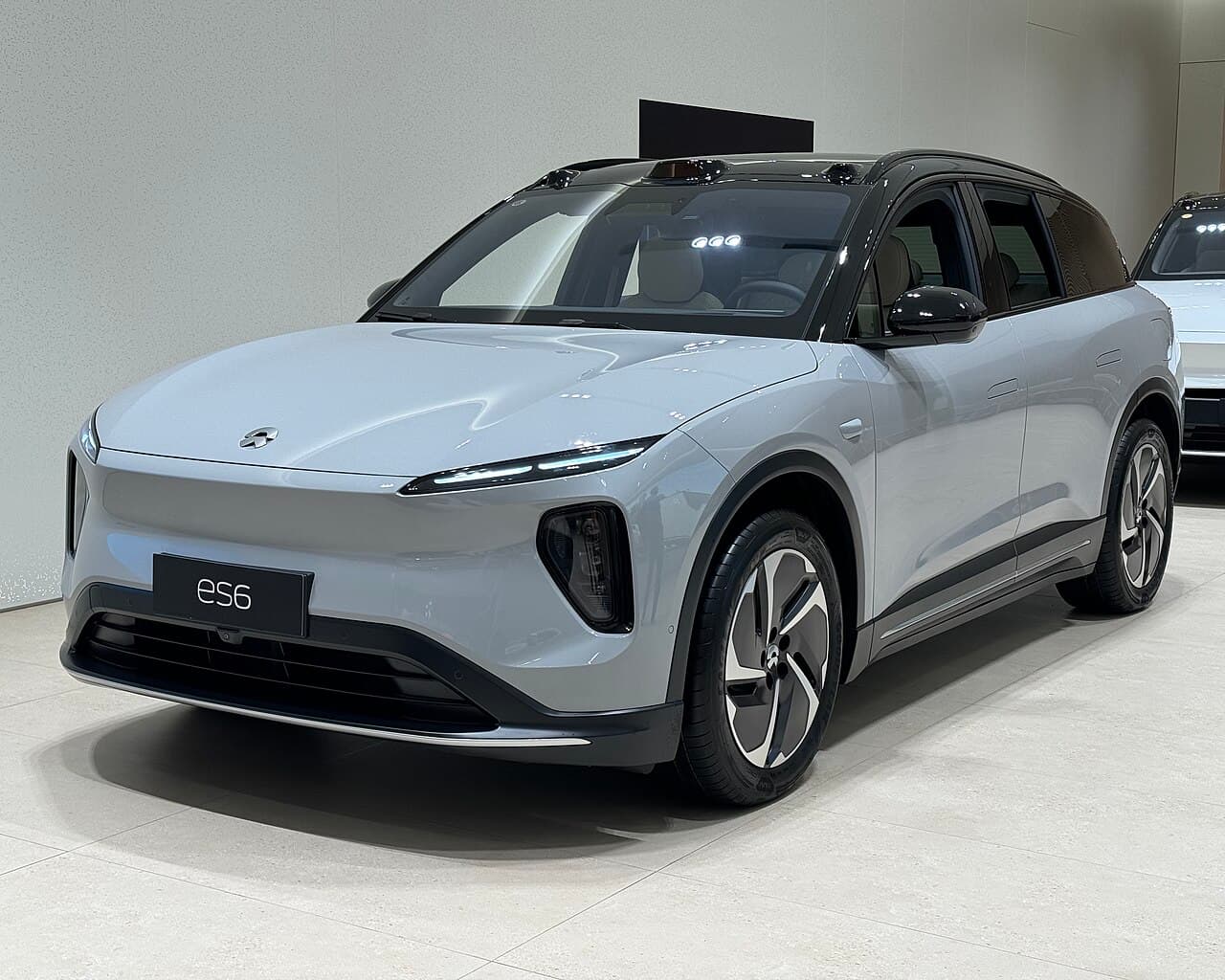
Mid-size electric SUV and NIO's best-selling model. Dual-motor AWD with 490 hp and swappable battery packs. Refreshed second generation launched in 2023 with updated design and improved efficiency.
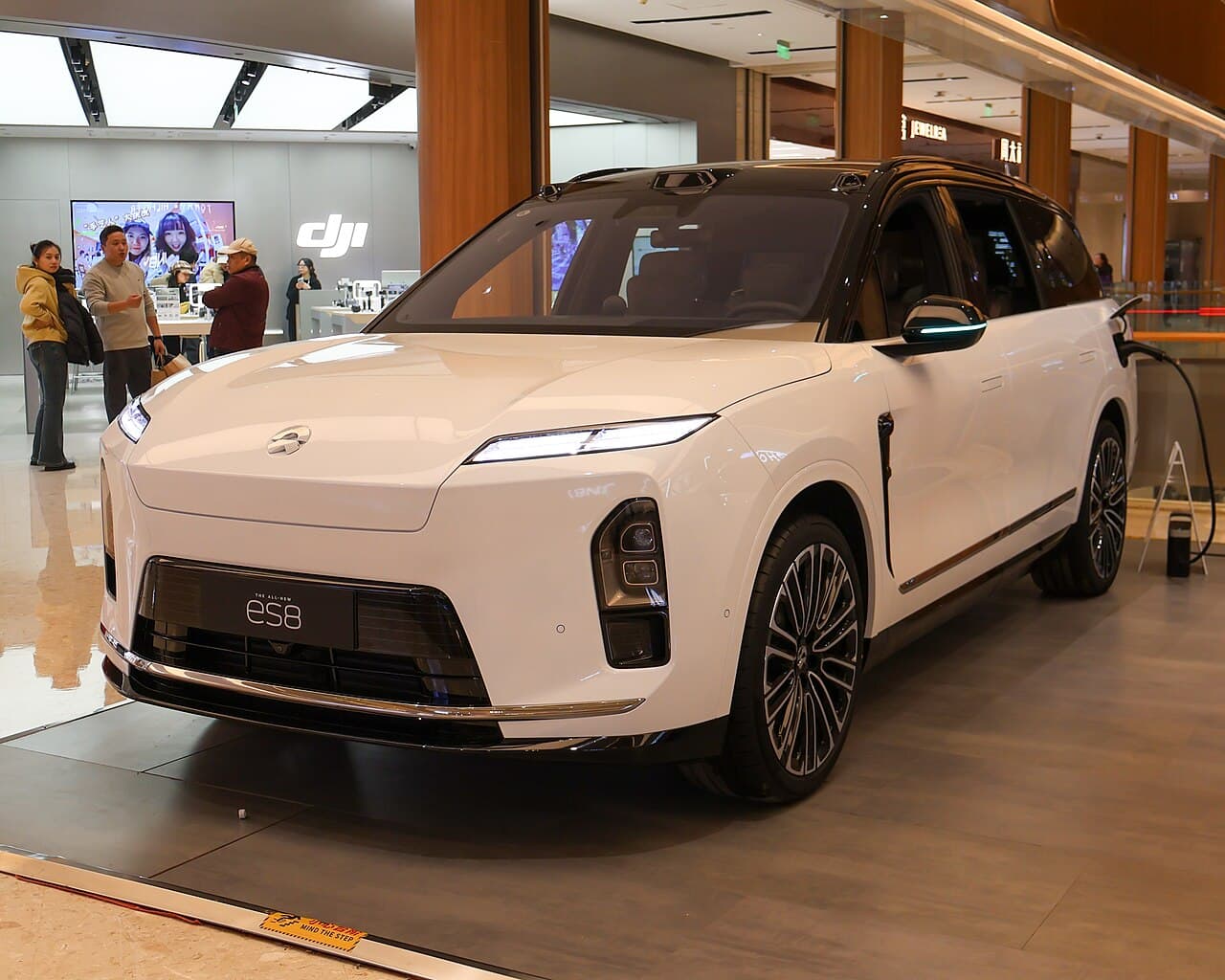
Flagship full-size 6/7-seat electric SUV with dual-motor AWD and 653 hp. NIO's first mass-production vehicle and the largest model in the lineup, featuring swappable battery packs and NIO's premium interior.
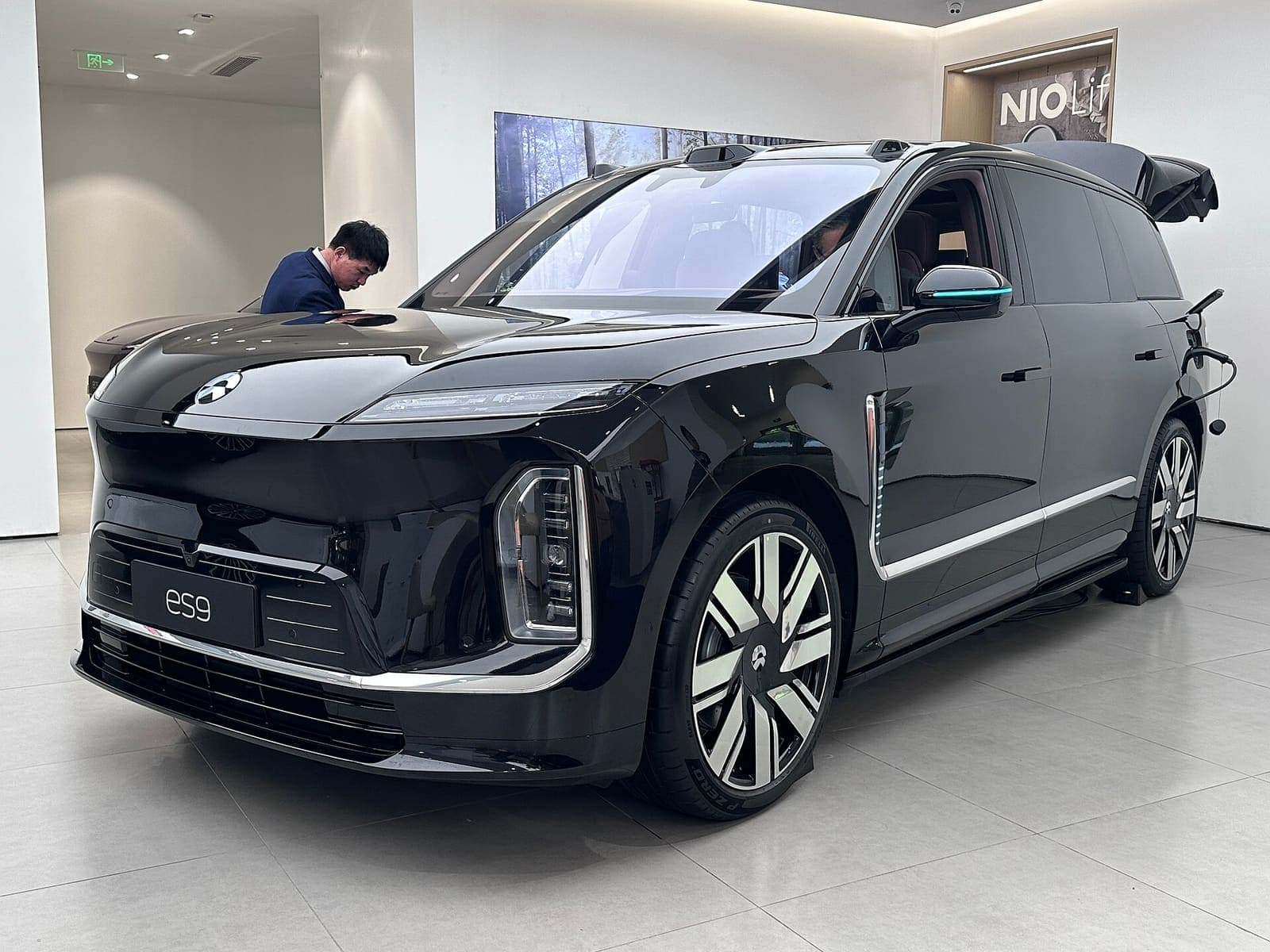
Executive flagship electric SUV launched in May 2026 on NIO's new 900V high-voltage architecture, with 5C ultra-fast charging alongside NIO's signature 3-minute battery swap. At 5.36 m long on a 3.25 m wheelbase, the ES9 is positioned as a status SUV for China's business elite with Yao Ming serving as Chief Experience Officer.
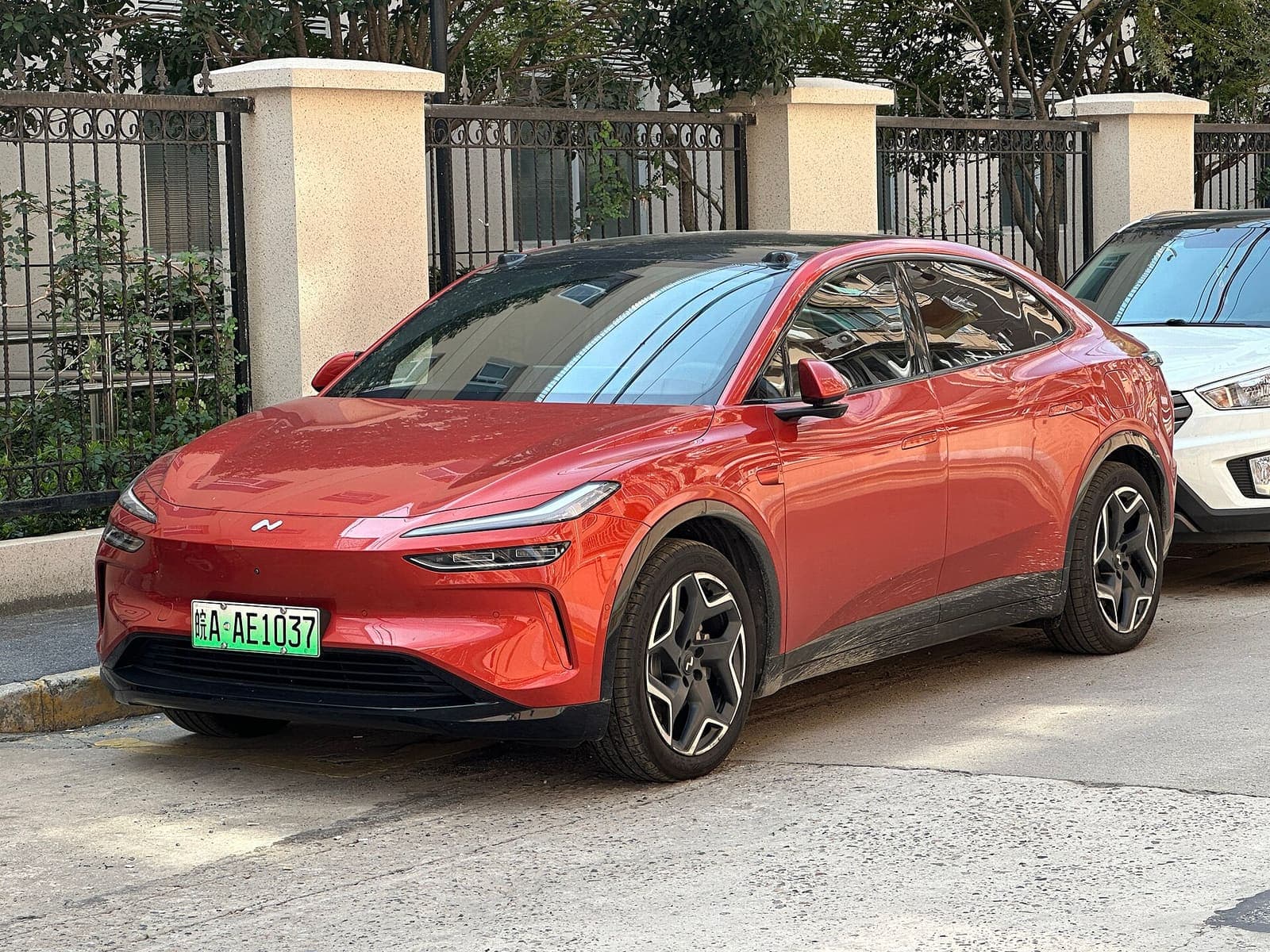
Mid-size electric SUV and ONVO's debut model - a direct rival to the Tesla Model Y and NIO's highest-volume sub-brand vehicle. The 2026 second-generation refresh (unveiled May 29, deliveries from June 12) added NIO's in-house Shenji NX9031 chip, an optional LiDAR variant, and a bigger 85 kWh pack option alongside the original 60 kWh pack, at a lower starting price than the outgoing model.
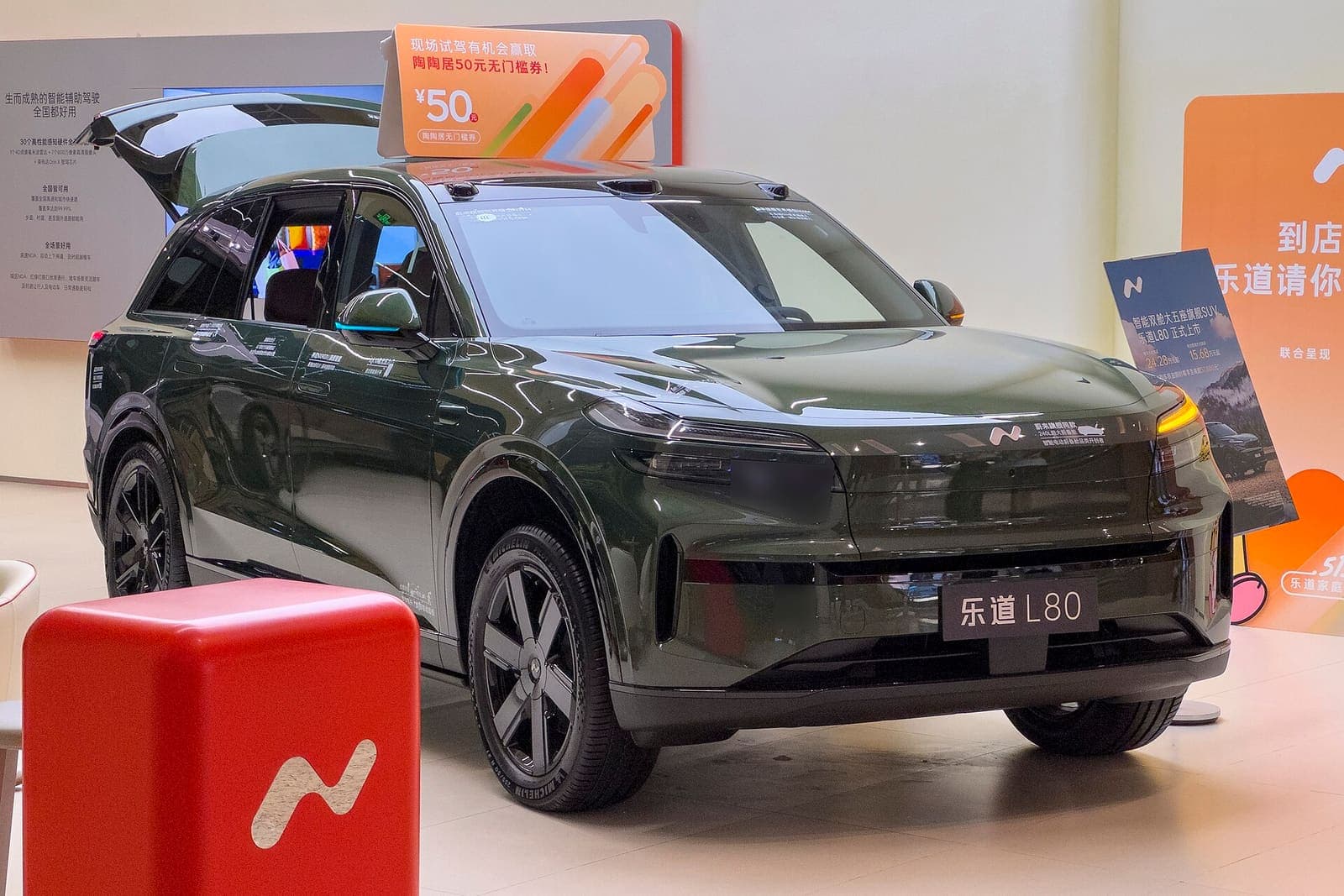
Five-seat large electric SUV and ONVO's third model, slotting in price below the flagship L90 while sharing its dimensions. Launched May 15, 2026 (ONVO's second anniversary) with a 240-liter frunk and up to 2,840 liters of total cargo space, positioning it against mid-size premium SUVs at a lower price point than rivals.
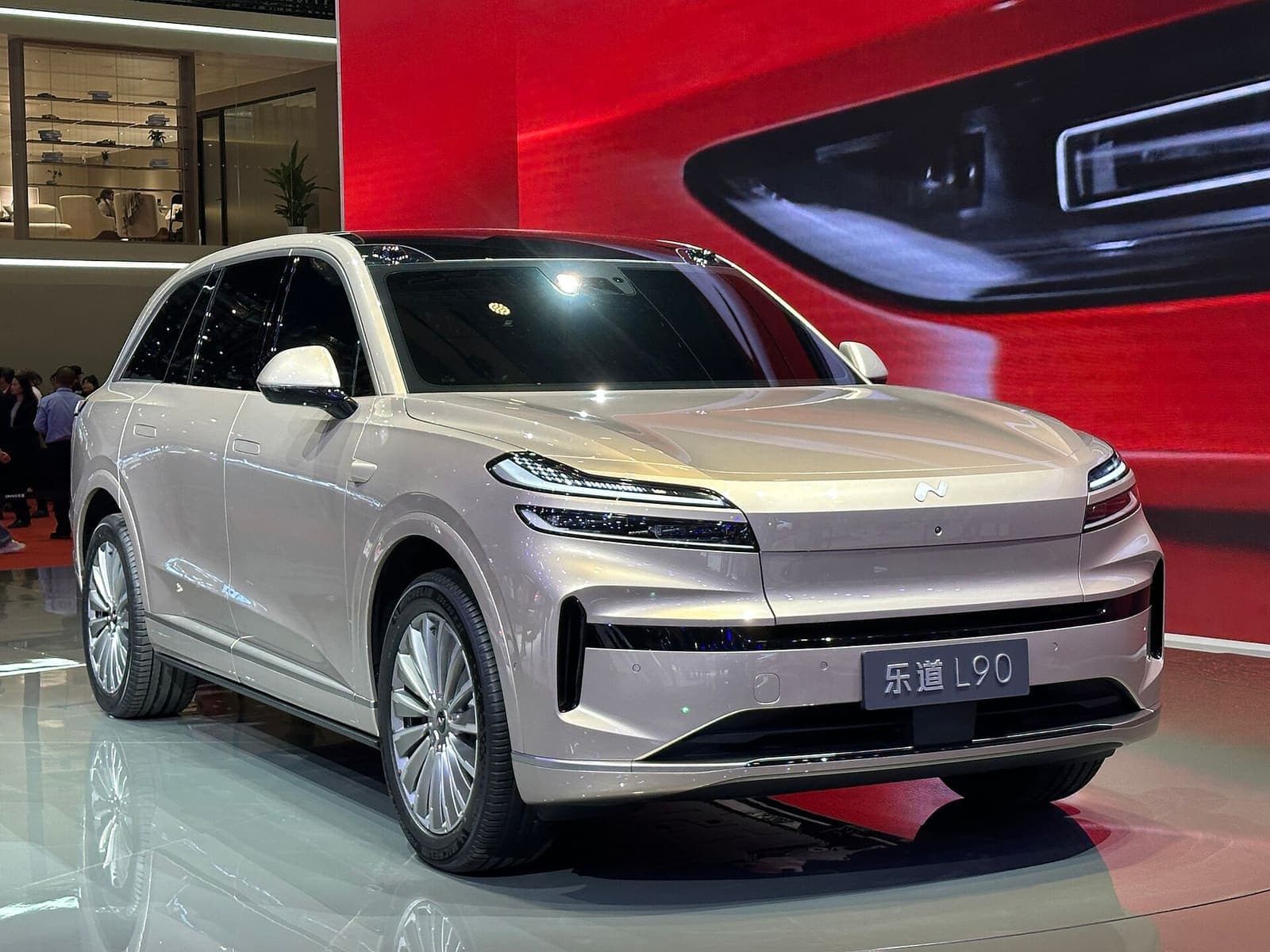
Full-size three-row (6/7-seat) electric SUV and the flagship of NIO's mid-market ONVO sub-brand. Built on an 850V-class architecture with an 85 kWh swappable battery and battery-swap support, it undercuts the premium NIO brand while keeping the swap ecosystem. The 2026 refresh (launched April 21) added LiDAR variants and was the first mass-market model to carry NIO's in-house 5nm Shenji NX9031 chip with the NIO WorldModel autonomy stack.
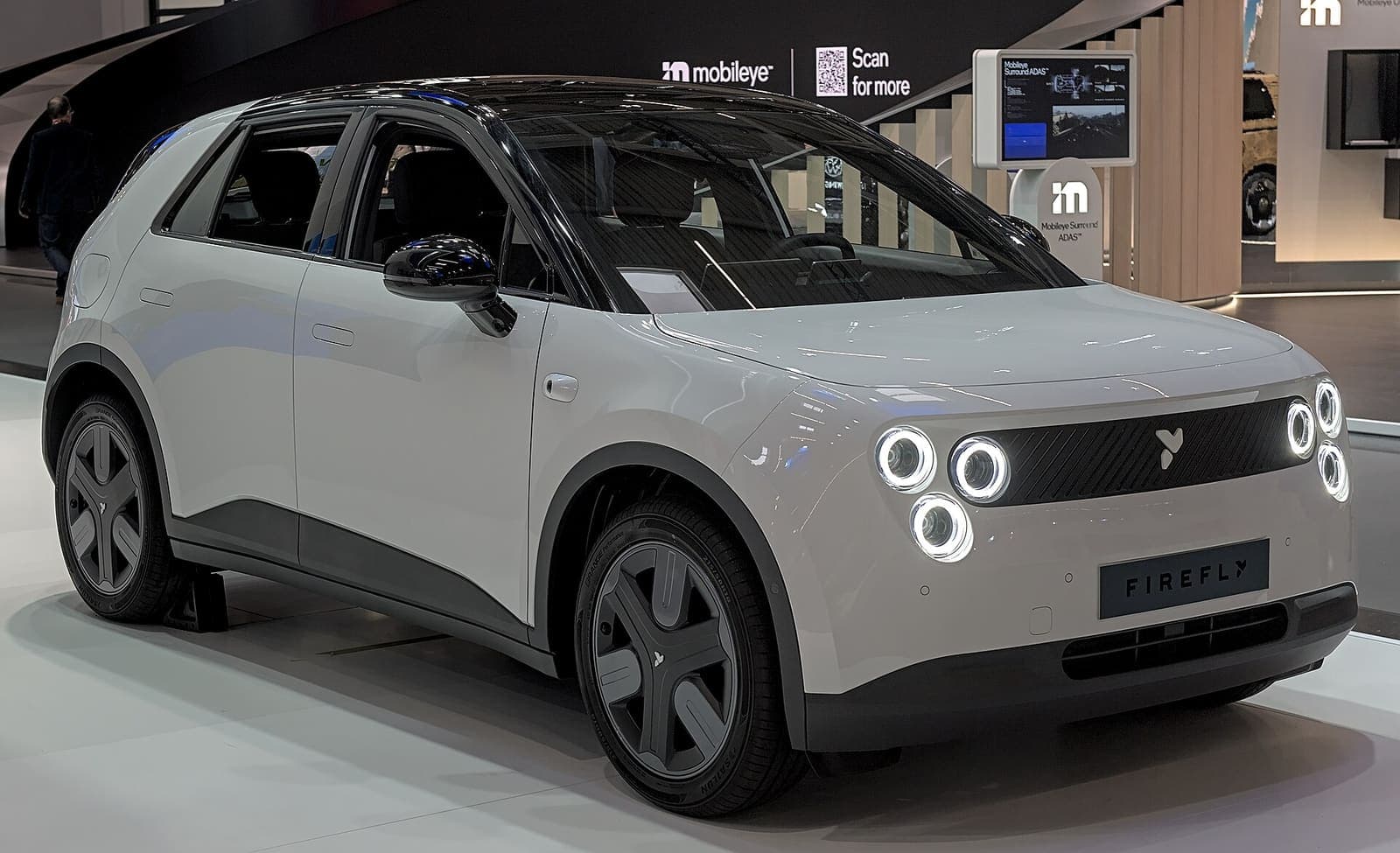
Boutique premium compact EV and NIO's third, entry-level brand - positioned below NIO and ONVO and serving as the group's lead export model. The 2026 upgrade (launched April 7) bumped power to a 120 kW (161 hp) motor while keeping a 42.1 kWh battery and ~420 km CLTC range. firefly is NIO's spearhead in international markets, with sales across Europe (Norway, Netherlands, Belgium and more) plus Singapore.
05
(~US$4.74B) in Q2 2026 (+69.1% YoY, +25.9% QoQ, but below the ~$4.95B Street consensus); RMB25.5B (~US$3.7B) in Q1 2026 (+112.2% YoY); RMB87.5B (~$12.5B) in FY2025. Non-GAAP operating profit was positive for a third straight quarter (RMB206.9M) though GAAP operations swung back to a RMB347.2M loss, partly on a memory-chip cost headwind averaging ~RMB14,000/vehicle; liquidity stood at RMB56.7B (~$8.4B) as of June 30, 2026. NIO guided Q3 2026 revenue of RMB33.285B-RMB34.051B. No newer quarterly print as of September 17, 2026
(as of August 31, 2026); August deliveries 35,836 (+14.5% YoY - 21,174 NIO brand, 8,810 ONVO, 5,852 firefly), lifting year-to-date deliveries to 262,893 (+57.9% YoY). September 2026 deliveries have not been disclosed as of September 17
As of Sept 18, 2026 NIO Power counted 4,090 swap stations and 5,282 charging stations (9,372 sites) plus 30,467 charging piles; first true Gen-5 stations went live August 7, 2026. A 3,605 km Silk Road swap corridor with 33 stations is slated to go fully operational in late September. NIO still targets roughly 4,500-4,600 total swap stations by year-end
(~$4.74B, +69.1% YoY, +25.9% QoQ) on 107,658 deliveries; vehicle margin 18.5%, gross margin 18.4%; non-GAAP operating profit RMB206.9M (third straight quarter positive) but GAAP operating loss of RMB347.2M and GAAP net loss of RMB528.0M (vs a RMB332.1M GAAP net loss in Q1 2026); liquidity RMB56.7B (~$8.4B) as of June 30, 2026. Q3 2026 guidance: 108,000-111,000 deliveries, RMB33.285B-RMB34.051B revenue. No newer quarterly print as of September 17, 2026
(+2.6% MoM after July's 6,315, the model's first sequential decline), bringing cumulative deliveries since May 28 to 24,497. The ES9 accounted for about 30.6% of NIO-brand August volume; higher-spec Horizon and Signature trims still carried three-to-four-month waits on the September 1 earnings call
World-model smart-driving system in more than 950,000 vehicles as of September 14, 2026, with 7.7 billion km and 98 million hours logged and 8.35 million potential accidents mitigated (William Li, WTO World Trade and Tech Day)
As of Sept 24, 2026: 4,117 swap stations and 5,302 charging stations (9,419 sites, 30,578 piles)
30,000 cumulative as of September 23, 2026 (119 days from May 28 start); about 5,503 implied so far in September after 24,497 at end-August
As of 26 Sep 2026: 4,125 swap stations and 5,306 charging stations (9,431 sites, 30,594 piles)
As of 27 Sep 2026: 4,126 Power Swap Stations and 5,307 charging stations (9,433 sites, 30,598 piles)
NIO China to hold 10% of Zhejiang Haohan Energy on close; cash amount and which NIO charging assets Haohan will buy remain undisclosed as of 29 Sep 2026
(+25.4% YoY), inside 108,000-111,000 guidance; September 37,408 (+7.7% YoY: 21,318 NIO brand, 8,763 ONVO, 7,327 FIREFLY); YTD 300,301; cumulative 1,297,893 as of Sept 30, 2026
06
Operating status
Operational
Operational across NIO, ONVO and FIREFLY. Official Oct 1 GlobeNewswire/6-K printed 37,408 September deliveries (21,318 NIO / 8,763 ONVO / 7,327 FIREFLY) and 109,178 in Q3, inside the 108,000-111,000 guide (YTD 300,301; cumulative 1,297,893). On Oct. 11 NIO said Guangdong passed 500 swap stations after six fifth-generation openings, with more than 17 million provincial swaps, and counted 9,584 charging and swap sites including 4,176 swap stations and 1,073 highway swap stations. The Oct. 9 holiday report had 1,192,221 swaps from Oct 1-7. Geely 30% NIO Power remains signed, not closed. Q3 financial results remain unpublished. English IR has not restated the Oct. 11 station counts.
Primary revenue driver from premium NIO vehicles plus ONVO and firefly models. Vehicle sales totaled RMB76.9B in 2025.
Battery-as-a-Service (BaaS) and Power Services
Recurring revenue from battery subscriptions, battery swapping, charging, and related energy services anchored by NIO's swap network. As of September 18, 2026 NIO Power counted 4,090 swap stations and 5,282 charging stations. On that date NIO Power signed a Virtual Power Plant Collaboration Cooperation Plan with China Huaneng covering electricity trading, green power and green certificates, expanding a 2024 Zhejiang frequency-regulation pilot that connected 115 stations. NIO is increasingly shifting the capital cost of the swap network onto state partners rather than carrying it alone: on August 12, 2026 it handed its entire Wuhan swap-station portfolio (the first batch of 36 stations) to state ownership through a joint venture with the state-owned Optics Valley Transportation Group.
Used-car sales, technical R&D services, parts, accessories, and after-sales vehicle services. Other sales totaled RMB10.6B in 2025.
Chip Technology Licensing (NIO Shenji)
NIO's majority-owned chip subsidiary Shenji began external licensing of its automotive AI chip technology in November 2025 and formed a Chongqing chip-design joint venture with Axera Semiconductor and OmniVision; the arrangement has generated several hundred million yuan in licensing fees. June and August 2026 follow-on rounds totaling RMB493 million valued Shenji at RMB12.25 billion post-money, with NIO retaining 59.95% control. The 700+ TOPS M97 chip is still targeted for a Q3 2026 launch; a September 2, 2026 report said Geely is evaluating two M97 chips for a dual-chip L3 system, with Leapmotor and Chery also showing interest, though no signed supply deal has been disclosed.
07
How past announced dates turned out.
3/3announced dates hit on time
Publish September 2026 group deliveries versus Q3 guidance of 108,000-111,000
Target Early October 2026 · Resolved Oct 1, 2026
Official Oct 1 GlobeNewswire and Exhibit 99.1 printed 37,408 September deliveries (21,318 NIO / 8,763 ONVO / 7,327 FIREFLY) and 109,178 in Q3, inside the 108,000-111,000 guide, with 300,301 in the first three quarters and cumulative 1,297,893.
Connect the 3,605 km Silk Road swap corridor
Target September 26, 2026 · Resolved Sep 26, 2026
NIO's official Weibo on 26 Sep 2026 said the 3,605 km Silk Road swap corridor with 33 stations is now connected, so drivers can reach every mainland provincial-level region by swap. Huanqiu reprinted the company WeChat notice the same day. The Budapest Silk Road Challenge fleet remains a separate pending trip.
Report Q2 2026 results and sustain the H2 delivery ramp
Target September 1, 2026 (Q2 earnings) · Resolved Sep 1, 2026
NIO reported Q2 2026 results on the announced date (Sept 1): revenue reached RMB32.14B (+69.1% YoY) on record deliveries of 107,658 (+49.4% YoY), and non-GAAP operating profit was positive for a third straight quarter (RMB206.9M). But the ramp was not fully sustained on the terms NIO had guided: deliveries came in under the 111,000-115,000 guidance range, revenue missed the roughly $4.95B Street consensus, and GAAP operations swung back to a RMB347.2M loss after Q1's rare GAAP profit, with management citing a memory-chip cost headwind of about RMB14,000/vehicle. Shares fell ~4.4% on the report.
08
2026
Guangdong swap network passes 500 stations
On Oct. 11, 2026 NIO said six fifth-generation swap stations opened in Guangzhou, Shenzhen, Huizhou, Dongguan, Foshan and Zhuhai, taking Guangdong past 500 swap stations with more than 17 million provincial swaps (about 13% of the national total). As of that date NIO counted 9,584 charging and swap sites in China, including 4,176 swap stations and 1,073 highway swap stations.
Holiday swap network handles 1.19 million swaps
NIO Energy's Oct. 9, 2026 holiday report said 4,168 swap stations completed 1,192,221 swaps from Oct. 1 to 7, up 22% year over year, with daily records of 183,469 on Oct. 1 and 183,664 on Oct. 5. Charging sessions passed 100 million on Oct. 3, and the network stood at 9,567 charging and swap sites.
English IR restates ES8 150,000 and ES9 30,000 in Q3 delivery update
NIO's October 1 English GlobeNewswire and Exhibit 99.1 delivery update, besides the 37,408 September and 109,178 Q3 group prints, restated that the All-New ES8 reached 150,000 deliveries on September 20 and the ES9 reached 30,000 on September 23. Those unit milestones had previously appeared on Weibo and specialist reporting rather than English IR.
Q3 deliveries 109,178, inside 108,000-111,000 guide
NIO reported 37,408 September deliveries, up 7.7% year over year (21,318 NIO brand, 8,763 ONVO, 7,327 FIREFLY), for 109,178 in the third quarter, up 25.4% and inside the 108,000-111,000 guide. Year-to-date deliveries reached 300,301 and cumulative deliveries 1,297,893 as of September 30. CnEVPost said ONVO fell about 43% year over year in September while FIREFLY set a monthly record.
Geely agrees 30% NIO Power stake at RMB16B
NIO announced definitive agreements with Geely Holding subsidiaries: a Geely unit contributes 100% of Yiyi Internet Technology (Chongqing) plus RMB640 million cash for 30.0% of NIO Power (NIO Energy Investment (Hubei)) at about RMB16 billion post-money. After close NIO China would hold 63.6%, Wuhan Guangchuang 6.4%. Geely's stake may be cut to no less than 20% on missed operational milestones and it has an option to invest another RMB640 million (to 34%). Concurrently NIO China agreed to take 10% of Geely's Haohan Energy, with that cash used to buy certain NIO charging assets. Both legs need regulatory clearances. Consumer swap plans for Geely-related models remain preliminary.
Silk Road swap corridor fully connected
On September 26, 2026 NIO connected the 3,605 km Xi'an-to-Khorgos Silk Road battery-swap corridor with 33 swap stations after the 4,125th station opened at Sayram Lake. The company said a driver can now swap from any NIO station to every provincial-level region on the Chinese mainland. Nationwide it counted 4,125 swap stations and 5,306 charging stations. CFO Qu Yu still targets 100 Power Journey scenic routes by year-end 2026.
Silk Road swap corridor opens across 3,605 km
NIO's official Weibo said the 3,605 km Silk Road battery-swap corridor, with 33 stations, is fully connected, so drivers can travel by swap from any NIO station to every provincial-level region on the Chinese mainland. IT Home, citing NIO, counted 4,125 swap stations, 5,306 charging stations, 30,594 piles and more than 120 million cumulative swaps nationwide that day.
HERE expands Europe maps partnership beyond firefly
On September 23, 2026 HERE Technologies said it expanded its European collaboration with NIO beyond firefly to the full European lineup, naming ET5, ET7, EL6, EL7 and EL8. NIO is adopting HERE streaming maps for road, traffic-regulation and POI updates, with NIO VP Chris Chen quoted on intelligent navigation and NOA. This is a maps/NOA expansion, not a Europe-exit reversal.
2026
Third-gen ES8 reaches 150,000 deliveries on launch anniversary
On September 20, 2026, the first anniversary of the third-generation ES8 launch, co-founder and president Qin Lihong handed over the 150,000th unit in Beijing, NIO said on Weibo. The 140,000th unit had been delivered August 21, so the latest 10,000 took 30 days. This confirms the week-of-September-14 target Yang Bo had previewed.
ES9 flagship reaches 30,000 cumulative deliveries
On September 23, 2026 founder William Li announced on Weibo that the ES9 flagship SUV reached 30,000 cumulative deliveries in 119 days, handing over the milestone vehicle to He Yinjun in Suzhou. Deliveries began May 28; 10,000 came June 26 and 20,000 August 8, so the latest 10,000 took 46 days. End-August cumulative deliveries were 24,497, implying about 5,503 ES9 units so far in September. Company-announced via Weibo; CnEVPost reported the ceremony.
Opens first off-grid solar-and-storage swap station at Xingxingxia
On September 23, 2026 NIO said a battery-swap station at the Xingxingxia service area on the G30 Lianyungang-Horgos Expressway in Xinjiang began operating off-grid, meeting all electricity demand from solar generation and LONGi Block/H2D storage without tapping the grid. Co-founder and president Qin Lihong called it NIO's first real-world test of off-grid swapping. NIO counted 4,109 swap stations and 5,301 charging stations as of that day. The 33-station, 3,605 km Silk Road swap corridor remained scheduled to connect on September 26.
NIO Power signs virtual-power-plant plan with China Huaneng
On September 18, 2026 NIO Power and the marketing department of China Huaneng Group signed a Virtual Power Plant Collaboration Cooperation Plan in Xiong'an New Area covering virtual power plants, electricity trading, green power and green electricity certificates. The pair had already connected 115 swap stations to Zhejiang's grid in 2024 for secondary frequency regulation. As of September 18 NIO counted 9,372 charging and swap sites in China, including 4,090 battery swap stations, 5,282 charging stations and 30,467 charging piles, with more than RMB20 billion invested in the network.
Silk Road Challenge fleet leaves Xi'an for Budapest
On September 16, 2026 the Silk Road Challenge 2026 fleet departed from Xi'an Zhangba Nio Space after a send-off by NIO's Xi'an general manager. Fourteen battery-electric vehicles - NIO ES8, ES6 and ET5 Touring plus Onvo L90 and L80 - began a 41-day, more than 20,000 km drive across 11 countries to Budapest. The China leg is planned to run entirely on NIO's 3,605 km Silk Road swap corridor of 33 stations, which NIO said would go fully operational in late September.
Recalls 686 firefly cars over steering-sensor harness interference
On September 18, 2026 China's State Administration for Market Regulation said NIO Auto Technology (Anhui) had filed recall S2026M0114V covering 686 firefly battery-electric cars produced from March 20 to April 2, 2026. Manufacturing-process variation may let the steering-column torque-sensor wiring harness interfere with the sensor rotor, which in extreme cases can cause abnormal sensor signals, light the electronic-steering warning and cut power-steering assist. NIO will inspect the vehicles free of charge and replace the harness where interference is found; cars already repaired need no further work, and owners will be notified by app, SMS or phone.
William Li tells WTO smart driving is in 950,000 vehicles
On September 14, 2026 founder William Li delivered a keynote at the WTO's World Trade and Tech Day in Geneva, arguing that smart EVs are already the most widely used physical AI agents. He said NIO's world-model, closed-loop-reinforcement-learning smart-driving system is deployed in more than 950,000 vehicles, has logged more than 7.7 billion kilometers and 98 million hours, and has helped mitigate or avoid 8.35 million potential accidents, with internal data showing human-AI co-driving averaging eight times the safe mileage of human-only driving.
Shenji follow-on rounds lift chip-unit valuation to RMB12.25B
In its September 1, 2026 Q2 report, NIO disclosed that chip subsidiary GeniTech (Shenji) signed definitive agreements in June and August 2026 for two follow-on funding rounds totaling RMB493 million, implying a RMB12.25 billion post-money valuation, up from the February 2026 first external round that valued the unit near RMB10 billion. After the transactions close, a NIO subsidiary will hold a controlling 59.95% stake, down from 62.7% after the February round.
Reaffirms Europe stay and sets Onvo debut for 2028-2029
On a September 15, 2026 Europe visit, founder William Li said NIO's shift toward local distributors is not an exit: the company will keep running directly in selected markets while leaning more on partners. NIO confirmed that its family EV brand Onvo will enter international markets, with a European debut now expected in 2028-2029, later than the 2027 window it had been evaluating in May. Distributor partnerships have already opened markets such as Greece, where NIO's first Athens Nio House opened in June with Motodynamics.
Signs 2026 Silk Road Challenge; 3,605 km swap corridor
On September 10, 2026 NIO signed as official EV partner of Silk Road Challenge 2026. Fourteen battery-electric vehicles (ES8, ES6, ET5 Touring, Onvo L90 and L80) will leave Xi'an on September 16 for a 41-day, more than 20,000 km drive across 11 countries to Budapest. NIO said the 3,605 km China Silk Road corridor will run 100 percent on battery swap across 33 stations and go fully operational in late September. As of September 10 it counted 4,079 swap stations, 5,255 charging stations, 30,296 chargers and more than 123 million lifetime swaps.
firefly crosses 80,000 cumulative deliveries
NIO's firefly brand handed over its 80,000th vehicle at a Hefei ceremony on September 5, 2026, about 17 months after first deliveries on April 29, 2025. The last 10,000 units came in under two months after the July 16 70,000-unit mark, the shortest interval yet between 10,000-unit thresholds. firefly delivered 5,852 units in August (+34.7% YoY) and 40,795 in the first eight months of 2026 (+180.3% YoY). The brand remains on an internal path toward 100,000 cumulative deliveries by year-end.
Ten new Yunnan highway swap stations open with Yunnan Transport
On September 8, 2026 NIO Power and Yunnan Transport Investment put 10 new highway battery-swap stations into operation at state-run service areas on the G5621, G85, G78, G5 and G8511 corridors, expanding an earlier 2024 highway-swap pilot into corridor-wide coverage. NIO said it had 9,328 charging and swap sites in China as of that date (4,075 swap stations and 5,253 charging stations) and more than 800 jointly built stations with over 40 local state partners.
First Nio House in Macau opens; ES9 deliveries begin
On September 2, 2026 NIO opened its first Nio House in Macau at Residencia Macau with authorized partner Guangdong Hongyue Automobile Group, and began ES9 deliveries in the city the same day. The local network now includes 1 House, 1 Space, and 2 swap stations, with a third station in planning, and NIO, ONVO, and firefly products all offered in Macau under a distributor-led model.
Q2 2026 results: record revenue misses estimates as memory-chip costs bite
NIO reports unaudited Q2 2026 results on September 1, 2026: revenue of RMB32.14B (~$4.74B, +69.1% YoY, +25.9% QoQ) on record deliveries of 107,658 (+49.4% YoY) - NIO brand 60,945, ONVO 29,124, firefly 17,589 - but both figures came in below guidance/consensus (111,000-115,000 delivery guidance; ~$4.95B revenue consensus). Vehicle margin held at 18.5% (vs 10.3% a year earlier) and non-GAAP operating profit was positive for a third straight quarter (RMB206.9M), but GAAP operations swung back to a RMB347.2M loss after Q1's rare GAAP profit, and GAAP net loss was RMB528.0M. Management flagged a memory-chip (DRAM/HBM) cost headwind averaging roughly RMB14,000 per vehicle versus late 2025 as a key drag; shares fell about 4.4% on the report. Liquidity stood at RMB56.7B (~$8.4B) as of June 30, 2026, and NIO guided Q3 2026 deliveries of 108,000-111,000 and revenue of RMB33.285B-RMB34.051B.
NX9031 chip alliance with GigaDevice
NIO's chip unit signs a strategic cooperation agreement with Chinese chipmaker GigaDevice on June 5, 2026 to co-develop automotive-grade semiconductors, with GigaDevice contributing memory and MCU expertise - an early step in turning the in-house NX9031 program into a broader external chip-supply ecosystem alongside the existing Axera/OmniVision joint venture.
Smart-driving SVP Ren Shaoqing launches an embodied-intelligence venture
NIO CEO William Li told the intelligent-driving division in a late-August 2026 all-hands meeting that Ren Shaoqing - the senior vice president who has led NIO's smart-driving R&D since 2020 and previously co-founded autonomous-driving software company Momenta - has registered an independent company focused on physical AI foundation models and embodied intelligence, reportedly already at unicorn valuation. NIO plans to make a strategic investment in the venture and collaborate with it, while Ren continues to run NIO's in-house smart-driving organization. Neither the startup's name nor NIO's investment size has been disclosed; the move mirrors Li Auto's separate strategic backing of an embodied-intelligence spinout from its own product and AI leadership.
ONVO L60 crosses 110,000 cumulative deliveries
ONVO's L60 electric SUV reached 110,000 cumulative deliveries on August 28, 2026 - about 23 months after customer handovers began September 28, 2024, and roughly two months after crossing 100,000 on June 26. The milestone came alongside an August delivery rebound for the model versus July, underscoring the L60's staying power as ONVO's highest-volume nameplate and a direct Tesla Model Y rival even as the three-SUV lineup matures.
ES9 tops 20,000 deliveries but cools in July
The ES9 flagship crosses its 20,000th cumulative delivery on August 8, 2026 - 73 days after deliveries began May 28, with the second block of 10,000 taking about six weeks. July deliveries fell to 6,315 units (down 26.5% month over month), the model's first sequential decline since launch, and its share of NIO-brand volume slipped to 31.6% from 39.2% in June; waits for higher-spec SkyRide trims still ran 13-14 weeks.
First Gen-5 swap stations go live across seven cities; 120 millionth swap
On August 7, 2026, NIO's first true fifth-generation battery-swap stations enter service simultaneously in Beijing, Shanghai, Guangzhou, Suzhou, Hefei, Chengdu, and Quanzhou - the Quanzhou site doubling as the network's 4,000th station in China. The same day, at 8:09 a.m. Beijing time, NIO completes its 120 millionth battery swap, just six months after passing 100 million in February 2026. The Gen-5 design serves all three brands (including firefly for the first time) with a 1-minute-48-second swap and 28 battery slots, and NIO targets 100+ new Gen-5 stations per month from September, rising past 150/month in Q4, toward roughly 4,500-4,600 total stations by year-end.
July 2026: 35,934 deliveries, record pricing power
NIO delivered 35,934 vehicles in July 2026 (+71% YoY) - 20,008 NIO brand, 10,155 ONVO, and 5,771 firefly - lifting year-to-date deliveries to 227,057 (+68% YoY) and cumulative deliveries to 1,224,649. The core NIO brand's average transaction price rose to RMB434,600 (~$64,010), driven by the ES8 (10,286 units in July, 51.4% of NIO-brand volume, +843.67% YoY off the prior-generation model's low base) and the ES9 flagship. NIO shares logged their best week in four months on the back of the delivery data and analyst upgrades pointing to a 2027 path to profitability.
European registrations keep falling through July
The German retrenchment deepens through July 2026: cumulative German registrations fall 89% YoY to just 18 units (only 3 in July alone, down 93.6% YoY), and Dutch registrations fall 88% YoY to 8 units. NIO's European lineup remains on the older NT 2.0 platform built in 2023-2024, with newer China models (ES8, ES9, ET9) not slated to reach Europe until late 2027; US-listed shares slid over 2% on the report.
European retail retrenchment: Hamburg and Weiterstadt close, deputy chief departs
NIO pulls back its direct-sales European footprint through mid-2026 as first-half German registrations collapse 87.6% YoY to just 15 units: it closes its Hamburg Nio House flagship showroom on July 20, shuts its Weiterstadt service hub days later (its second German retail retrenchment), and lets deputy Germany chief Christian Wiegand depart on July 31 without a named replacement (he is later hired by rival XPeng). NIO says it is not leaving Germany, with sales and service continuing through Berlin, Frankfurt, and Dusseldorf plus its partner network, but exclusive reporting says next-generation NT3 models and new battery-swap stations are off the table for Europe until at least late 2027, as the company shifts Germany, the Netherlands, and Sweden toward an asset-light distributor model.
NIO chip unit passes 300,000 NX9031 units and opens the chip to external buyers
At the World Artificial Intelligence Conference (WAIC 2026) in Shanghai on July 17, 2026, NIO's in-house chip unit NIO Shenji - in which NIO retains a controlling stake - showcased its automotive-grade silicon and disclosed that shipments of its 5nm Shenji NX9031 autonomous-driving chip had surpassed 300,000 units across NIO- and ONVO-brand vehicles. NIO has begun licensing and selling the NX9031 to external customers, adding a royalty and third-party revenue layer beyond in-house use - a shift that on July 22, 2026 prompted Morgan Stanley to argue NIO is moving beyond its cash-burning-EV label as the chip unit's AI push becomes a visible value driver.
ONVO L90 tops 60,000 cumulative deliveries
ONVO announced on July 19, 2026 that its L90 full-size electric SUV crossed 60,000 cumulative deliveries in under a year since its August 2025 launch, ranking as one of China's best-selling large all-electric SUVs in the ~RMB300,000 segment. The milestone - alongside the L60 passing 100,000 in June - underscores how NIO's mid-market ONVO sub-brand has become a major volume driver, with ONVO and firefly together accounting for roughly half of NIO group deliveries. Earlier in the month, NIO also passed 150,000 cumulative deliveries in its home city of Shanghai (July 8).
firefly surpasses 70,000 cumulative deliveries
NIO's firefly small-EV brand crossed 70,000 cumulative deliveries on July 16, 2026, less than two months after passing 60,000, as the sub-brand scaled monthly volume (6,946 delivered in June) and kept expanding internationally across Singapore, the Netherlands, Norway, and Belgium. firefly is also the pilot brand for NIO's fifth-generation multi-brand battery-swap stations, whose large-scale deployment is set for the third quarter of 2026.
Goldman Sachs upgrades NIO to Buy on premium-SUV turnaround
On July 13, 2026 Goldman Sachs upgraded NIO to Buy from Neutral and raised its U.S. price target to $7 from $6.60 (HK$55 for the Hong Kong shares), implying roughly 42% upside. Goldman cited NIO's 'consistent capability to launch more competitive models' and forecast about 43% volume growth by the end of 2026 versus ~1% for the broader Chinese market, a swing to positive free cash flow of RMB12.1B (from a RMB3.1B outflow), and a non-GAAP net profit of about RMB1.6B (from a RMB12.4B loss in 2025). NIO's U.S.-listed shares rose on the call, extending a rebound built on record Q2 2026 deliveries.
Five-seat ES8 launches; deliveries begin July 10
NIO launched a five-seat, two-row version of its third-generation ES8 flagship SUV on July 9, 2026, with deliveries starting July 10. Priced at RMB382,800 (~$57,420) for the Executive Premium and RMB422,800 (~$63,420) for the Executive Signature - or RMB274,800 / RMB314,800 under Battery-as-a-Service - it shares the three-row ES8's 900V platform, dual-motor drive, and 102 kWh long-range pack, offering up to 655 km CLTC range and a 1,334 L rear boot (3,084 L total) that NIO calls the largest in the premium five-seat SUV class. NIO says early orders skew toward buyers trading in luxury sedans, broadening the flagship beyond its six- and seven-seat configurations.
Record Q2 2026; June deliveries reach 40,597
NIO delivered 40,597 vehicles in June 2026 (+62.9% YoY) - 21,908 NIO brand, 11,743 ONVO and 6,946 FIREFLY - capping a record second quarter of 107,658 deliveries (+49.4% YoY) and near the top of guidance. Cumulative deliveries reached 1,188,715 as of June 30, 2026, with the ONVO and FIREFLY sub-brands together accounting for nearly half of June volume.
ES9 flagship hits 10,000 deliveries in one month; firefly begins Gen-5 swap beta
NIO delivered the 10,000th ES9 on June 26, 2026 - roughly one month after deliveries began on May 28 - with about 6,892 ES9 delivered in June alone (after 3,108 in May), prompting Deutsche Bank to lift its full-year ES9 forecast to 56,000 units. The same week, NIO Power signed a strategic agreement with Anhui's Zhongan Energy (June 26) to jointly build 500 battery swap stations in China within a year, and firefly began real-world beta testing at fifth-generation swap stations across six cities (Shanghai, Beijing, Hefei, Guangzhou, Chengdu, Kunshan) on June 25 - a key step toward unifying NIO, ONVO, and firefly on one swap network ahead of mass Gen-5 deployment in Q3 2026.
ONVO L60 surpasses 100,000 cumulative deliveries
ONVO announced on June 26, 2026 that its L60 electric SUV crossed 100,000 cumulative deliveries since customer handovers began on September 28, 2024, ranking among the top three best-selling all-electric mid-size SUVs in China's ~RMB200,000 class. The L60 - ONVO's first model and a direct Tesla Model Y rival - anchors NIO's push to scale volume through its lower-priced sub-brands.
Third-gen ES8 tops 120,000 deliveries; five-seat ES8 incoming
NIO's third-generation ES8 flagship SUV crossed 120,000 cumulative deliveries on June 22, 2026 - just 275 days after its late-September 2025 launch - after delivering 11,475 units in May (its seventh straight month above 10,000) and leading China's large-SUV segment. NIO opens pre-orders for a new five-seat ES8 variant on June 28, with launch and deliveries in early July, broadening the flagship lineup beyond the six- and seven-seat models into the larger five-seat SUV segment.
Pentagon designates NIO a Chinese military company under Section 1260H
The U.S. Department of Defense's updated Section 1260H list published June 8, 2026 names NIO alongside BYD and 186 other companies as supporting China's military-civil fusion strategy. The FY2024 NDAA prohibits direct DoD contracting with listed entities from June 30, 2026, with bans on indirect procurement following a year later; NIO called the designation factually incorrect and pledged to challenge it through all available legal channels.
ONVO scales to a three-SUV lineup; firefly passes 60,000 deliveries
ONVO builds out a full SUV lineup in 2026: the refreshed L90 (launched April 21, deliveries May 9), the new mid-size L80 (launched May 15), and the second-generation L60 (launched June 11 from RMB 192,800, deliveries June 12) - all gaining LiDAR variants and NIO's in-house NX9031 chip. ONVO topped 10,000 monthly deliveries in May (+92% YoY). The firefly small-EV brand crossed its 60,000th cumulative delivery on May 23, 2026.
ES9 flagship SUV launched with Yao Ming as CXO
NIO formally launches the ES9 - a 5.36-meter executive SUV on its new 900V architecture with 5C ultra-fast charging and 3-minute battery swap - at a May 27 event with Yao Ming as Chief Experience Officer. Pricing starts at RMB 498,000 (~$69,000) or RMB 390,000 (~$54,000) under Battery-as-a-Service, undercutting pre-sale levels by RMB 30,000. Nationwide deliveries begin May 28.
Q1 2026: record margins and near-profitability
NIO delivered 83,465 vehicles in Q1 2026 (+98% YoY), with NIO brand contributing 58,543, ONVO 13,339, and FIREFLY 11,583. Revenue reached RMB25.5B (+112% YoY), with record 19.0% gross margin and 18.8% vehicle margin - both four-year highs. Operating profit turned positive at RMB66.8M (second consecutive quarter), GAAP net loss narrowed 95% YoY to RMB332M, and non-GAAP net profit reached RMB43.5M. The battery swap network grew to 3,916 stations globally, and Q2 2026 guidance called for 111,000-115,000 deliveries (revenue RMB32.78B-RMB34.44B).
NIO Shenji chip unit raises RMB2.257B in first external funding round
NIO's chip subsidiary GeniTech (branded Shenji) signs definitive agreements in late February 2026 for a RMB2.257B (~$318-330M) external investment from Hefei State-Owned Capital Enterprise Investment, Hefei Haiheng, IDG Capital, China Fortune-Tech Capital, and Yuanhe Puhua, valuing the unit at close to RMB10B (~$1.4-1.5B). NIO retains a controlling 62.7% stake, external investors hold 27.3%, and 10% is set aside for an employee stock incentive plan - the first step in turning NIO's in-house chip program (the 5nm NX9031, with exploration into robotics and broader AI applications) into an externally funded, externally selling business.
1 million vehicles and 100 million swaps
Passes 1 million cumulative vehicle deliveries in January 2026 and completes its 100 millionth battery swap in February 2026, with 3,790 Power Swap Stations deployed worldwide.
2025
firefly enters production deliveries
Officially launches the firefly small EV on April 19, 2025 and starts customer deliveries later that month, giving NIO a third brand below NIO and ONVO.
Starts deliveries of the ET9 executive flagship in late March 2025, positioning it as the showcase for NIO's full-stack technology platform.
2024
2023
2022
2020
2018
2017
2016
2014
09
$9.1Bdisclosed across 5 rounds with a stated amount
Cumulative disclosed raise · dated rounds
Pre-IPO (Series A–D)
2015–2017
Tencent, Hillhouse Capital, Sequoia Capital China, Temasek, Baidu
IPO (NYSE)
September 2018
Public offering (NYSE: NIO)
Hefei Strategic Investment
February 2020
Hefei City Construction Investment Holding
CYVN Holdings Investment
2023
CYVN Holdings (Abu Dhabi)
Hong Kong Equity Placement
March 2025
Placement of 136.8M Class A ordinary shares to non-U.S. investors
Equity Offering
September 2025
ADS and ordinary-share offering with full underwriters' option exercise
Shenji (GeniTech) follow-on
June and August 2026
Undisclosed China investors; RMB12.25B post-money valuation; NIO retaining 59.95% control
NIO Power strategic (Geely)
2026-09-27
RMB640 million cash plus 100% of Yiyi
Geely Holding subsidiary