In Production
737 MAX
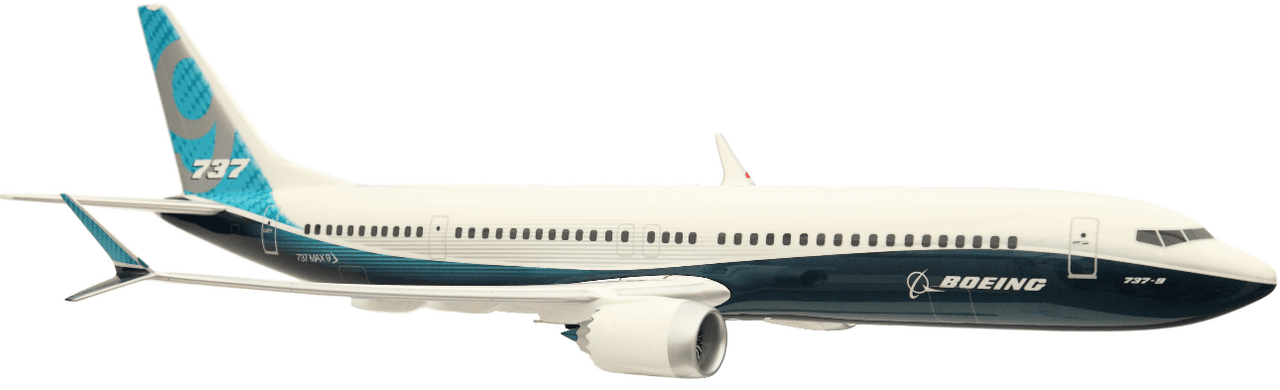
Boeing's current single-aisle aircraft family, spanning the 737-7 through 737-10, built around improved LEAP-1B engines, lower fuel burn, and broad commonality for airline operators.
Boeing is one of the world's largest aerospace companies, spanning commercial airplanes, defense and space systems, and aftermarket services.
Latest update Oct 19, 2026
01
The 2026 turnaround gathered pace through the first half of the year: 314 commercial deliveries in H1 2026 (its best first half since 2018), a Q2 net loss of $428M on $24.6B of revenue that nonetheless produced the company's first positive free cash flow quarter (+$631M) in over a year, and a record total backlog of $715B including more than 6,200 commercial aircraft. The 737 MAX line reached rate 47 per month in May 2026 and gained a fourth final-assembly line - the Everett 'North Line' - in July; CEO Kelly Ortberg said on September 16 it is taking longer than expected to stabilize that rate, pushing the early-2027 move to 52 into doubt. At the Farnborough Airshow (July 20-24, 2026) Boeing booked 170+ aircraft led by SMBC's 100-jet 737 MAX order. The FAA certified the 737 MAX 7 on August 3, 2026, and on August 10 Boeing agreed to sell its Wisk Aero, Insitu, and SkyGrid subsidiaries to Archer Aviation for a near-20% equity stake. August deliveries were 51 aircraft (41 737 MAX, 4 787s), bringing 2026 commercial deliveries to 418 through August - the most through eight months since 2018, but still 57 jets behind Airbus (475). On September 13 the final three SES O3b mPOWER satellites launched from Cape Canaveral after Boeing delivered them on September 2. On September 14 the Navy awarded Boeing a $562 million Lot 1 production contract for the MQ-25A Stingray unmanned tanker. On September 16 Korean Air finalized a record 103-jet order worth $36.2B at list prices (20 777-9, 25 787-10, 50 737-10, eight 777-8F). On September 17 the FAA waived 2028 CO2 rules so Boeing can sell 35 more 777F freighters through 2030 while the 777-8F waits on a ~2029 entry into service, and GE Aerospace said it had started shipping redesigned-seal GE9X engines in Q3 and does not expect the mid-seal issue to delay 777X service entry in 2027. SPEEA's membership vote on a tentative four-year deal runs noon PT September 24 through noon October 1; the current contract expires October 6. IBM completed its purchase of HRL Laboratories from Boeing and GM on August 26. Boeing shares closed at $197.08 on September 17 (market cap about $155.8B) after Ortberg's production remarks. Q3 2026 results are scheduled for October 28.
reuters.comUpdated Sep 18, 2026
Analysis · 5 min read · Jun 17, 2026The long view on Boeing: strategy, technology and what to watch02
2026
With the December 2025 acquisition closed and ~15,000 Spirit employees folded into Boeing, the focus shifts to translating it into measurable quality gains - Boeing reports a 45% drop in 737 fuselage defects since 2024 - and stabilising rail deliveries of 737 fuselages from Wichita, which now builds more than 70% of the 737 MAX airframe, as the line ramps to 47/month and the new Everett North Line opens (July 6, 2026). Boeing backed the integration with a $2.35B Wichita reinvestment (announced May-June 2026) and, with Wichita State University's WSU Tech, a roughly 35,000-square-foot Boeing Workforce Training Center for aerospace technicians expected to open by the end of 2026.
2026
Boeing's recovery still depends on sustaining its Safety Management System rollout, factory-level quality controls, and stronger safety governance across Commercial Airplanes as production rates climb. The FAA formally moved from a hard numerical production cap (the 38/month ceiling set after the January 2024 door-plug incident) to a performance-based oversight model in March 2026, delegating more individual airworthiness ('ticketing') authority back to Boeing's own authorized representatives as trust rebuilds. Passing the FAA's capstone review to run the 737 line at rate 47 in May 2026 was an explicit validation of those quality gates; lifting further toward rate 52 (and ultimately 63) remains contingent on holding defect rates down as Spirit AeroSystems is folded back in.
2026-2027
After the September 9, 2026 Army downselect, Boeing and Anduril move into detailed design, system development, integration and a competitive capability demonstration for the IFPC Increment 2 second interceptor. The design uses an Anduril solid rocket motor. A later production award would put the team into the Army's midrange air-defense interceptor magazine.
2026
TargetVote Sept 24-Oct 1, 2026; contract expires October 6, 2026
Boeing and SPEEA reached a new tentative four-year deal on September 11, 2026 after members rejected the first offer on August 21. SPEEA's negotiating team is recommending a 10% guaranteed wage increase on the first pay period after ratification (expected October 2 if the vote passes), a 4% guaranteed increase in March 2027, and 6% annual wage pools for 2028-2030 with a 4% guarantee each year - a 36.3% compound increase for the average member versus 29.4% in the rejected offer. The Northwest Tellers Committee set the membership vote for noon PT September 24 through noon PT October 1. The current contract still expires October 6; a strike can start October 7 if members do not ratify. SPEEA-represented staff work on 737 MAX 10 and 777-9 certification, so the remaining gate is membership ratification. The Air Current reported on September 17 that Boeing has begun a soft hiring freeze and strike-contingency planning.
2026
TargetAfter 2 Oct 2026 CARB finding; TC date unset
Late 2026
Boeing signed a definitive agreement on August 10, 2026 to sell its Wisk Aero (autonomous eVTOL), Insitu (defense UAS, over $200M annual revenue, 3,500+ systems fielded across 35 countries), and SkyGrid (airspace-management software) subsidiaries to Archer Aviation. In exchange Boeing receives Archer Class A shares and warrants for a stake of nearly 20% in Archer, commits to invest up to $55M in an upcoming Archer funding round, and retains cross-licensing rights to Wisk's autonomous flight systems for its own commercial and defense platforms. As of September 13, 2026 the deal remains unclosed - still pending antitrust review, with no closing date announced yet - so Boeing continues to be Wisk Aero's, Insitu's, and SkyGrid's parent for now.
2026
Target~September-October 2026 (year-end 2026 at the latest)
With the MAX 7 now certified (August 3, 2026), Boeing's remaining narrow-body certification work is the MAX 10, which completed its final planned certification flight on July 29, 2026 - closing out a campaign of 976 flights totaling more than 2,060 flight hours and roughly 1,040 ground-test hours. Remaining work is limited to development-assurance reviews, system-safety assessments, and final FAA submittals; Bloomberg reports the agency is expected to grant type certification around September or October 2026, with the FAA's public guidance still framing it as before year-end 2026. Certification clears the way for launch customers including United and Delta, with commercial deliveries expected to begin in 2027. Launch customer United - the type's largest customer with 167 firm orders - said on August 23, 2026 it now expects its first MAX 10 delivery in summer 2027 and is rethinking cabin plans after years of delay: hundreds of lie-flat premium seats originally bought for the jet have sat in storage, and United is leaning toward a higher-density domestic configuration (around 189 seats with recliner-style United First) instead of the lie-flat product it moved to the Airbus A321neo. A separate labor risk sits on the same window: SPEEA's current contract expires October 6, and Reuters said a strike could start October 7 if members do not ratify the September 11 tentative four-year deal covering about 17,000 professional and technical workers who work on MAX 10 and 777-9 certification. At Morgan Stanley's Laguna conference on September 16, 2026 CEO Kelly Ortberg said the MAX 10 will be certified 'very soon,' without naming a date.
Oct 22, 2026
TargetOctober 22, 2026 (AD effective date)
The FAA published Airworthiness Directive 2026-18-07 on September 17, 2026, requiring inspections of the fuselage skin, bear strap, and stub frame at the forward galley-door cutout on certain 737-8, 737-9, and 737-8200 airplanes under Boeing Alert Requirements Bulletin 737-53A1420 RB. The rule covers an estimated 476 US-registered jets and takes effect October 22, 2026. It is separate from AD 2026-15-11, which took effect September 10. The FAA said Boeing is changing the manufacturing process on in-production airplanes. Watch operator inspection findings after the October 22 effective date.
Oct 27, 2026
Nov 2026
2027
TargetEarly 2027 or later (rate 52)
The Everett 'North Line' opened as planned: assembly of the first 737 MAX 10 fuselage (destined for WestJet) began July 6, 2026, run as a deliberately slowed low-rate initial production so Boeing can demonstrate conformity to the FAA, with the first Everett-built jet expected to roll out by year end. The remaining milestone is rate 52 across all four 737 lines (three in Renton, one in Everett). At Morgan Stanley's Laguna conference on September 16, 2026 CEO Kelly Ortberg said it is taking 'longer than expected' to stabilize the line at the rate 47 cleared in May 2026, and that Boeing will only look to move to 52 a month after that; the shares fell about 2.5% immediately on the remarks and closed down 4.5%. That pushes the early-2027 rate-52 window he pointed to in May into doubt. Longer term, Ortberg has reiterated Boeing's ambition to reach 63 per month once 52 is stabilized and the market can support it.
2027
Target2027 (cert, with ETOPS work extending into 2027); 2027 (first delivery)
The seventh 777-9 test aircraft completed its first flight on July 29, 2026 from Boeing Field, pushing the test fleet past 4,800 flight hours; unlike prior airframes it is dedicated to ETOPS (extended-range twin-engine operations) certification, the last major test block after the FAA granted TIA Phase 4B in June 2026. CEO Kelly Ortberg has said Boeing expects to finish the rest of the flight-test program by the end of 2026 but that ETOPS work will extend into 2027, consistent with FAA Administrator Bryan Bedford's public expectation that 777X type certification lands in 2027. On September 17, 2026 GE Aerospace CFO Rahul Ghai said GE had started shipping GE9X engines with a redesigned mid-seal to Boeing in the third quarter and expects FAA certification of the new part in the next few months, and that he was confident the durability issue would not hold up 777X entry into service in 2027. The existing seal remains usable for certification work, including the approvals Boeing needs before starting ETOPS testing. Boeing continues to target first delivery to Lufthansa in 2027. Emirates still plans to reject the first 10-11 early-build jets as too old. United Airlines has been reported evaluating some of the stored early-build 777-9s, with CEO Scott Kirby saying a 777X order decision will come by the end of 2026.
2027
Boeing said the September 14, 2026 Lot 1 award for three MQ-25A Stingrays brings the total under Navy contract to 14 aircraft, with Lot 2 planned to be awarded in 2027. Lot 2 long-lead procurement was funded with Lot 1. Watch whether the 2027 award actually lands on that calendar and whether the 2029 Lot 1 delivery window still holds once Lot 2 is on contract.
Mid-2027
TargetMid-2027 (Artemis III); 2028 (Artemis IV)
Following the Boeing-built SLS core stage's successful role powering the crewed Artemis II lunar flyby in April 2026, Boeing is producing the next core stages at NASA's Michoud Assembly Facility and Kennedy Space Center. For Artemis III, Boeing shipped the core stage's 'Top Four-Fifths' section (forward skirt, intertank, and liquid oxygen/hydrogen tanks) from Michoud to Kennedy Space Center on April 20, 2026, its first time shipping a core stage without the engine section already integrated - a deliberate change meant to speed up production for later missions - with final vertical integration of the engine section occurring at Kennedy; core stages for Artemis IV and V are already in production behind it. Artemis III is targeted to land astronauts near the lunar south pole in mid-2027, with Artemis IV, which adds the Lunar Gateway station, targeted for 2028.
Mid-2028
Boeing's Q2 2026 results absorbed a $280 million loss on the VC-25B program, attributed to added production and certification resources as the two heavily modified 747-8s are converted into presidential aircraft. Cumulative program losses now exceed $3 billion against an original $3.9 billion fixed-price contract, pushing the total program cost toward nearly $7 billion. The US Air Force said on August 20, 2026 that Boeing is making steady progress replacing roughly 300 corrosion-driven structural stringer cracks identified on each of the two jets - a defect also found across the wider 747-8 fleet - with the first aircraft needing 21 more repairs and the second having completed 104 of its 300 items as of late July; the Air Force said the repair pace is not currently a threat to the schedule. Boeing continues to target first delivery in mid-2028, a program that has been a recurring source of fixed-price-contract losses.
2028-2030
Target2028-2030 (waiver window)
On September 17, 2026 the FAA approved a waiver of 2028 airplane CO2 certification rules so Boeing can sell another 35 777F freighters after January 1, 2028, covering original airworthiness certificates through about 2030. The current 777F does not meet the 2028 efficiency limits, and the 777-8F replacement is not expected to enter service until around 2029. Boeing had argued a production gap could cost more than $15 billion in U.S. exports. Watch whether cargo customers, including names such as FedEx that have been linked to extra 777Fs, actually sign for the extra slots, and whether 777-9 passenger customers keep pressing Boeing to delay freighter slots so more passenger jets can be delivered first.
mid-2028
2029
Target2029 (Lot 1 deliveries / IOC)
The Navy awarded Boeing a $562 million Lot 1 low-rate initial production contract on September 14, 2026 for three MQ-25A Stingray unmanned tankers plus long-lead parts for three Lot 2 aircraft. Lot 1 deliveries are expected to start in 2029 against a program of record of 67 operational jets and nine test aircraft. The next watch items are continued flight testing through the rest of 2026 and whether the 2029 IOC date, already four years later than first planned, holds.
Early 2030s
Lufthansa Group's Supervisory Board on September 17, 2026 exercised options for 20 Boeing 737 MAX 10 aircraft, the group's first firm MAX 10 order, lifting its firm 737 MAX total from 40 MAX 8s to 60 aircraft. Deliveries are scheduled to begin in the early 2030s, replacing older Airbus A320-family jets across the group. The order has a list value of about $3.4 billion; Lufthansa has not named which airline will fly the MAX 10s and still holds 40 unused MAX-family options from the 2023 deal. The MAX 10 itself still needs FAA type certification before those deliveries can start.
Through April 2035
On September 11, 2026 the Air Force added a $13.4 billion Foreign Military Sales ceiling to contract FA8609-19-D-0007, lifting the total to $19.1 billion through April 28, 2035 for Japan, Israel and future partners. The Department of Defense said no funds were obligated at award. Watch whether Japan and Israel task orders, or a later partner, actually draw against that ceiling.
TBD
TargetTBD (pending Qatari contract signature)
The US State Department approved a possible Foreign Military Sale to Qatar of up to four Boeing KC-46A Pegasus aerial refueling aircraft plus engines, radar-warning receivers and defensive systems, valued at roughly $4.5 billion, notified to Congress on August 20, 2026. Principal contractors are Boeing, Pratt & Whitney Military Engines, RTX and Northrop Grumman. The notification authorizes but does not finalize the sale - Qatar has not yet signed a firm order - and would make it the fourth KC-46A operator after the US, Japan, and Israel.
Date not announced
03
On Oct. 5, 2026 the Pentagon's Joint Interagency Task Force 401 selected Boeing's Compact Laser Weapon System for a directed-energy counter-drone pilot required by the fiscal 2026 NDAA. Untracked AeroVironment, Epirus and Kord were selected with palletized high-energy laser, Leonidas high-powered microwave and Firefly high-energy laser systems. Breaking Defense and Inside Defense, citing the Pentagon, said the pilot tests homeland operational use and that a December shoot-off at Dugway Proving Ground could add vendors.
Boeing said on Oct. 5, 2026 that Lockheed Martin, the PAC-3 MSE prime, awarded it an undefinitized contract action worth about $14.7 billion to scale and deliver PAC-3 Missile Segment Enhancement seekers. Boeing said the award formalizes the April 1 seven-year U.S. Department of War framework to triple seeker production; an undefinitized action means final terms are not yet set. Production ramp-up and Huntsville hiring began after that April framework, and Boeing expects hundreds of direct and indirect jobs in Alabama.
boeing.mediaroom.com www.prnewswire.com boeing.mediaroom.com
On Oct. 2, 2026 the FAA said its Corrective Action Review Board determined a software issue in certain Boeing 737 MAX flight computers is not a safety concern, because pilots retain full control and crew indications are clear and unambiguous. CNBC reported the finding paves the way toward 737-10 certification after the Sept. 28 hold; the FAA did not announce a type certificate. The agency said it would consider further action if it receives new information.
Boeing and Ethiopian Airlines announced on Sept. 30 a firm order for eight 777-8 Freighters and two 777 Freighters, making Ethiopian the first African customer for the 777-8F. The carrier already holds eight 777-9 passenger jets, so the freighter deal doubles its 777X family book. Boeing listed a 118-tonne maximum structural payload for the 777-8F; Ethiopian's cargo fleet already includes 12 777 Freighters. The company release did not state delivery years.
Boeing said on September 29, 2026 that the Department of War awarded it a $2.38 billion contract to build 22 more F-15EX fighters, bringing U.S. Air Force aircraft under contract across Lots 1 through 7 to 120. Air and Space Forces Magazine said the Lot 7 award met a reconciliation-funding deadline and that $2.38 billion for 22 jets averages about $108 million each, excluding separately bought GE Aerospace engines. Boeing said it will keep delivering Lot 3 aircraft through the rest of 2026 and is working to raise production to two F-15EX aircraft a month.
The Pentagon and U.S. Navy announced on September 29, 2026 that Boeing won the F/A-XX sixth-generation carrier fighter, a full-scale development contract valued at more than $20 billion that buys multiple test aircraft. Janes and Breaking Defense, citing the Pentagon, said the jet is meant to fly beginning in the 2030s, work with Collaborative Combat Aircraft, and is Boeing's second sixth-generation win after the Air Force F-47 in 2025. Boeing Defense CEO Steve Parker said the company planned to deliver two advanced fighters in parallel. This is a development-phase ceiling, not a production buy; a defense.gov contract listing was not retrieved.
NASA and Boeing said Monday an uncrewed Starliner-1 flight to the ISS is targeted for December 2026 or January 2027 to test propulsion fixes from the 2024 Crew Flight Test. A crewed Starliner-2 mission is planned for mid-2028 under commander Woody Hoburg. NASA's Dana Weigel put spacecraft upgrades plus ULA Vulcan human-rating at $359 million; Starliner-1 through 4 remain on Atlas V, with Starliner-5 and 6 planned for Vulcan.
www.cbsnews.com www.space.com spaceflightnow.com payloadspace.com + United Launch Alliance
Boeing told operators last month that 737 MAX flight-management-computer software versions 14 and 14.1 can drop vertical navigation after a missed approach if crews change the programmed path. The FAA said it will convene a Corrective Action Review Board. Southwest and United have asked Boeing not to deliver new MAX jets with the affected software, and Boeing said a permanent update is in work, originally aimed at 2028.
Archer said on September 24 that the Hart-Scott-Rodino waiting period for its purchase of Boeing's Wisk Aero, SkyGrid, and Insitu units expired at 11:59 p.m. EDT on September 18. That satisfies a key closing condition; other regulatory approvals remain, and Archer still expects the deal to close by the end of 2026. Boeing would take an equity stake in Archer. Insitu, Boeing's untracked drone unit, is part of the same package.
markets.financialcontent.com www.stocktitan.net + Archer Aviation+ Wisk Aero
Boeing and Turkish Airlines finalized an order on September 23 for 100 737-8 jets plus options for 50 more 737 MAX aircraft, the airline's largest Boeing single-aisle purchase. The agreement, signed in New York with President Recep Tayyip Erdogan present, includes substitution rights for the still-uncertified 737-10 and industrial participation in Turkiye. It follows Turkish Airlines' 2025 order for up to 75 787 Dreamliners; Boeing did not disclose a contract value.
boeing.mediaroom.com aerospaceglobalnews.com investors.boeing.com
The FAA published Airworthiness Directive 2026-18-07 in the September 17 Federal Register, requiring inspections of the fuselage skin, bear strap, and stub frame at the forward galley-door cutout on certain Boeing 737-8, 737-9, and 737-8200 airplanes. The rule, prompted by reported cracks between stations 290 and 296, incorporates Boeing Alert Requirements Bulletin 737-53A1420 RB, covers an estimated 476 US-registered jets, and takes effect October 22, 2026. It is a separate directive from AD 2026-15-11, which took effect September 10; the FAA said Boeing is changing the manufacturing process on in-production airplanes.
Lufthansa Group said on September 17 that its Supervisory Board approved exercising options for 20 Boeing 737 MAX 10 aircraft, the group's first firm order for the largest MAX variant, lifting its firm 737 MAX total from 40 MAX 8s to 60 aircraft. Deliveries are scheduled to begin in the early 2030s as the jets gradually replace older Airbus A320-family aircraft across the group. The order has a list value of about $3.4 billion; Lufthansa has not named which airline will fly the MAX 10s and still holds 40 unused MAX-family options from the 2023 deal.
The FAA said on September 17 that it approved a waiver of aircraft emissions rules so Boeing can sell another 35 777F freighters after new standards take effect on January 1, 2028, extending sales of the type for about three more years through 2030. Boeing requested the exemption in December 2025, arguing that the 777F is the only large widebody freighter in production and that its replacement, the 777-8F, is not expected to enter service until around 2029, leaving a gap the company said could cost more than $15 billion in U.S. exports. The FAA said it was accommodating uncertainty in the 777-8F certification timeline, and estimated the 35 aircraft could raise freighter fuel burn by about 8% relative to global freighter operations in 2024.
Boeing CEO Kelly Ortberg told Morgan Stanley's Laguna conference on September 16 that stabilizing 737 MAX output at 47 jets a month is taking longer than expected, and that the company will only push toward 52 a month once that rate holds. He said the 737-10, which makes up about 30% of all 737 orders, will be certified very soon, and played down analyst expectations of a large Chinese order when President Trump meets President Xi in Washington next week. Boeing separately said some 777X flight testing will spill into 2027 because FAA clearance to begin extended-range twin-engine operations testing is on hold pending certification of a mid-seal on the GE9X engine, though it still targets first delivery next year; the shares closed down 4.5%.
Boeing and Korean Air announced on September 16 that the airline finalized an order for 103 aircraft worth $36.2 billion at list prices, comprising 20 777-9s, 25 787-10s, 50 737-10s and eight 777-8 Freighters. The contract converts the procurement commitment Korean Air made in August 2025 during U.S.-South Korea trade talks, and of the types ordered only the 787 is certified today. Korean Air said it also signed $8.6 billion of engine agreements with GE Aerospace and CFM International covering 21 spare engines plus 15 years of maintenance on 28 aircraft.
04
Boeing's current single-aisle aircraft family, spanning the 737-7 through 737-10, built around improved LEAP-1B engines, lower fuel burn, and broad commonality for airline operators.
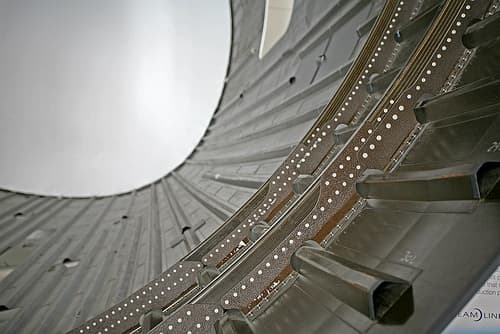
Wide-body long-haul twin-engine aircraft family built around composite structures, lower fuel burn, and route-opening flexibility for airlines.
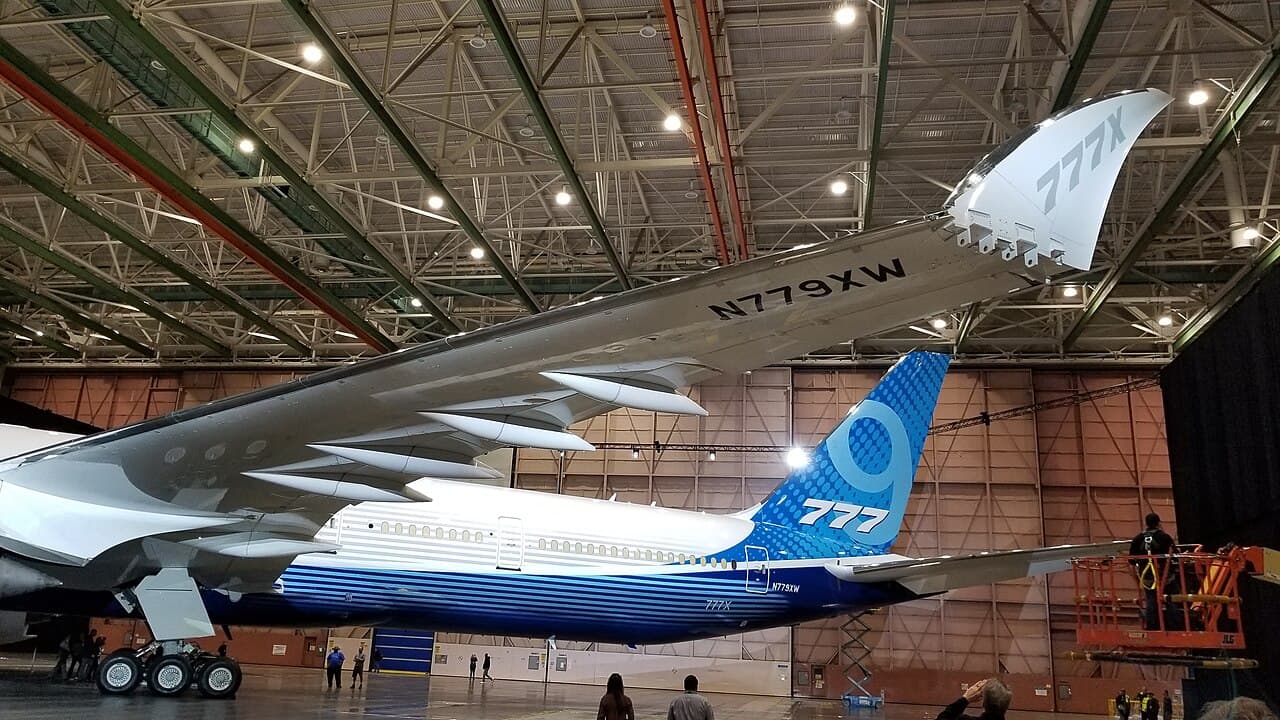
Next-generation wide-body twin-engine aircraft and the world's largest twin-engine jetliner, featuring folding wingtips, composite wings, and GE9X engines.
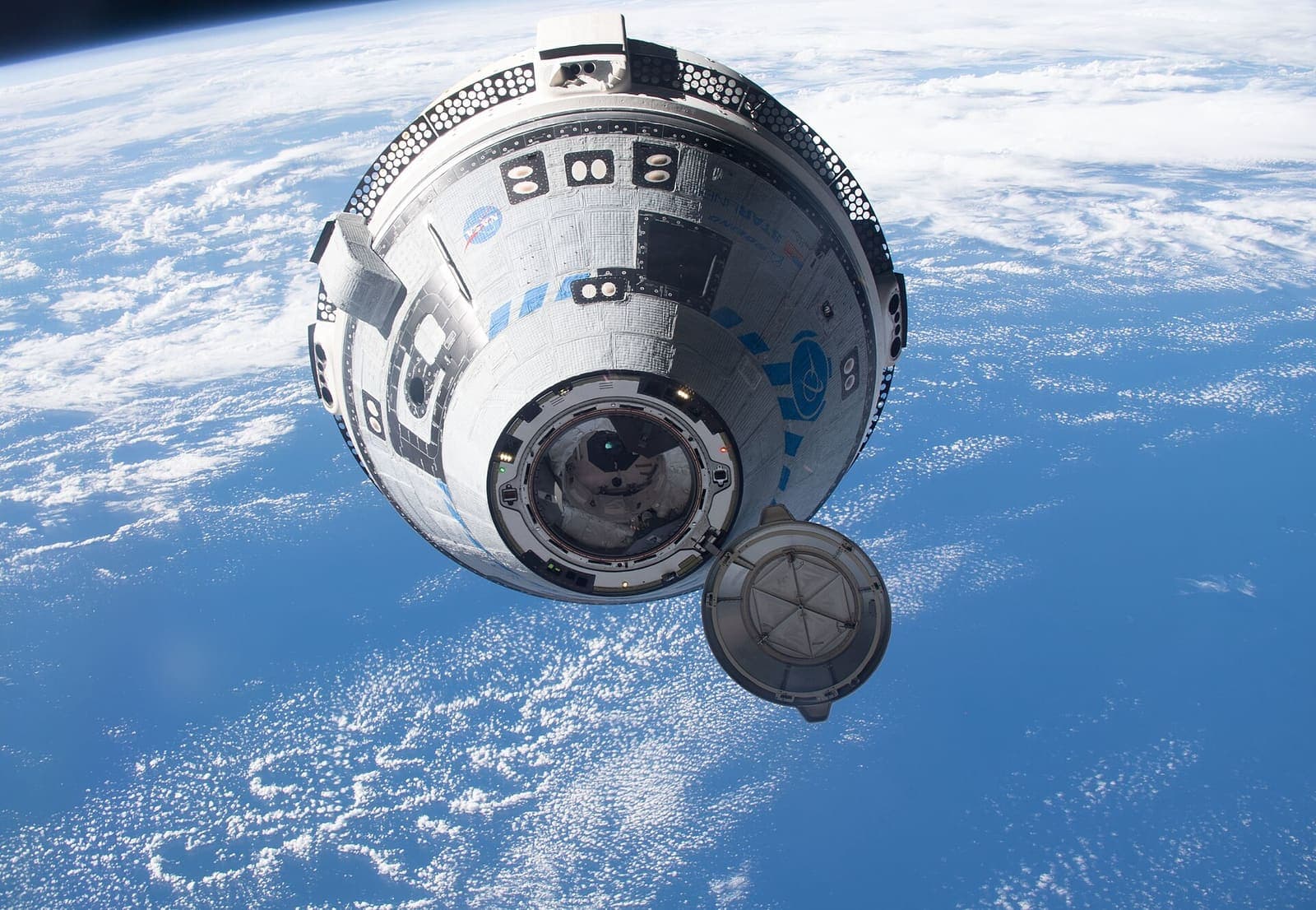
Boeing's crew capsule for NASA's Commercial Crew Program, built to ferry astronauts and cargo to the International Space Station under a $4.2B NASA award (alongside SpaceX's Crew Dragon).
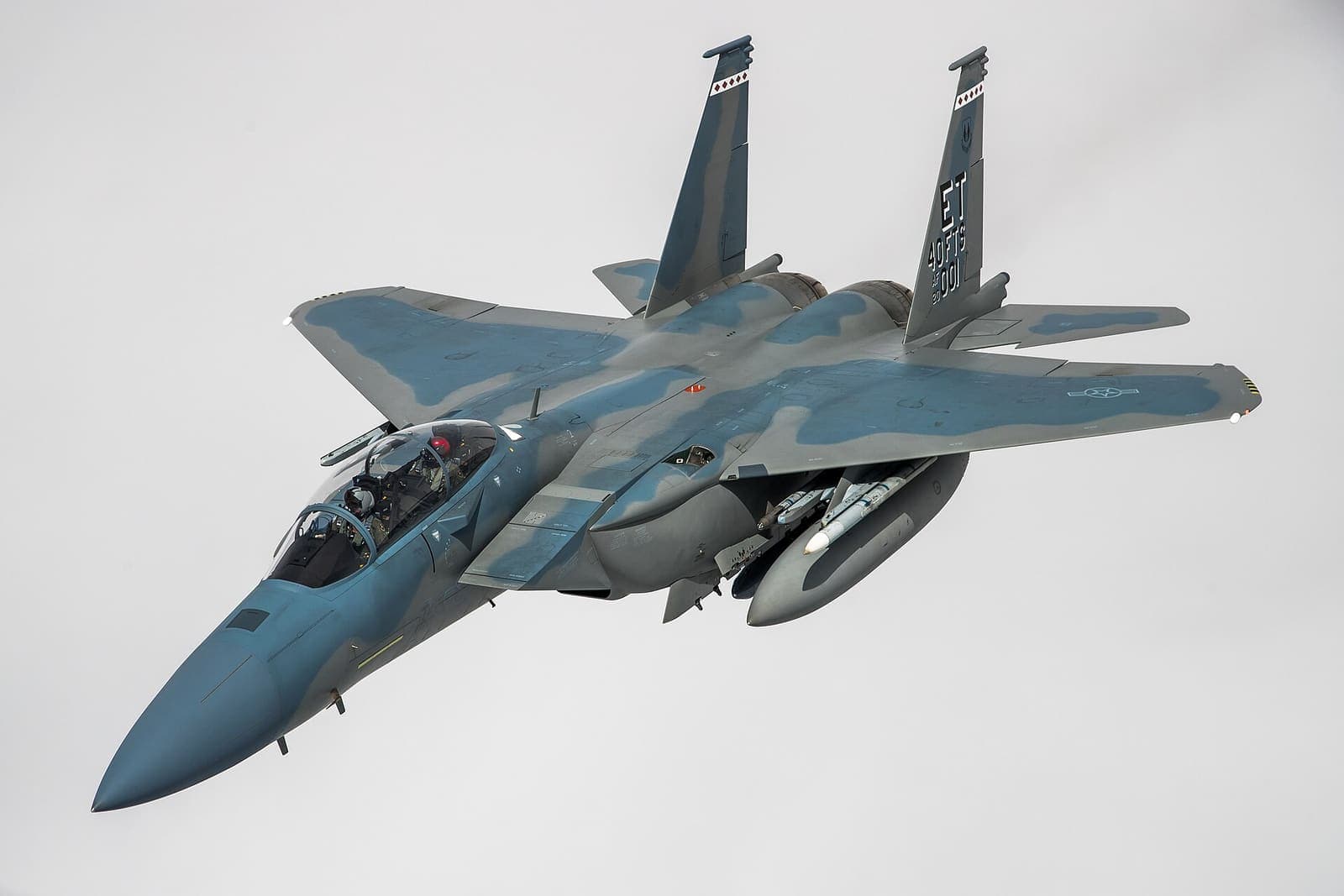
Boeing's newest-generation F-15 fighter for the U.S. Air Force and export customers, combining a modernized airframe and avionics with the F-15 family's high weapons payload as part of the Air Force's fighter 'high-low' mix alongside the F-35.
05
December 2025 company employment data
(FY 2025); $24.6B in Q2 2026; record total backlog $715B; first positive quarterly free cash flow (+$631M) in over a year - still the latest disclosed quarter as of Oct. 11, 2026 (Q3 2026 results scheduled for Oct. 27, 2026)
(as of Dec. 31, 2025, Boeing's latest officially disclosed headcount); still the figure cited on Sept. 17, 2026 market data. No later census has been published.
(51 737 MAX, 8 widebodies); best month of 2026 at the time; commercial backlog 6,758
(198 737 MAX, 2 737NG), up from ~220 a year earlier; superseded as the latest YTD print by the August figure of 418
(171 in Q2: 129 737, 25 787, 10 767, 7 777) - best first half since 2018, confirmed in Q2 2026 results
+$631M, Boeing's first positive quarter in over a year (vs. -$200M in Q2 2025), driven by the highest quarterly delivery volume since 2018; still the latest cash-flow print ahead of Q3 results on Oct. 28, 2026
(~50 737 MAX) and 121 gross orders booked, incl. China Southern Cargo (5 777-8F + 4 777F) and China Airlines (2 777F); re-verified against Boeing's own June 2026 Orders & Deliveries summary
173 firm orders across the show, edging Airbus's 154 - headlined by SMBC 100 737 MAX (60 MAX 10 + 40 MAX 8), Riyadh Air 28 787s firmed up (20 of them 787-10), Philippine Airlines up to 20 787-10 (15 firm + 5 rights), AerCap 15 787-9, Uganda Airlines 4 737-8 + 4 787-9, and Luxair MAX 10 conversions
($674.5B contractual, $40.8B unobligated) as of June 30, 2026, incl. 6,200+ commercial aircraft worth $596.7B; Defense, Space & Security $85.3B; Global Services $32.8B
net loss $428M ($0.67/share GAAP); record total backlog $715B (incl. 6,200+ commercial aircraft worth $597B); still the latest reported quarter - Q3 2026 results not yet released as of Sept. 9, 2026
(39 737 MAX: 32 MAX 8 + 7 MAX 9; 10 787; 3 767; 1 777F) - down 17% from June's 64; YTD through July was 367 (279 737 MAX, 50 787)
(41 737 MAX, 4 787) - slight dip from July's 53 and from 57 in August 2025; YTD 418, the most through eight months since 2018; 15 August orders (2 MAX, 13 787) and 453 net 2026 orders; 787 YTD 54 with FY guide still 90-100. Airbus delivered 57 in August and 475 YTD, a 57-jet gap.
6,784 aircraft, about 10.1 years of production coverage at current rates - 4,817 737 MAX + 34 737NG narrowbody; 1,154 787, 698 777-family, 81 767 widebody. August 2026 order/delivery counts are now in, but Boeing has not yet published a new month-end backlog breakdown.
$10.0B committed as of Aug 24, 2026: $3.0B 364-day facility to Aug 23, 2027; $4.0B five-year facility to May 15, 2030; $3.0B five-year facility to Aug 24, 2029. Liquidity covenant at least $5.0B.
06
Operating status
Operating; 475 commercial deliveries YTD, not final; 737-10 TC unset
On 13 Oct 2026 Boeing reported 161 commercial deliveries in the third quarter and 475 year to date: 124 and 367 737s, 10 and 26 767s, 5 and 20 777s, and 22 and 62 787s. Boeing said the figures are not final until quarterly results. Reuters the same day said September was 57 jets, including 43 737 MAX, eight 787s, two 777 freighters and four 767s, with 165 orders and an official backlog of 6,371 versus 6,156 at the end of August. No 737-10 type certificate is in that delivery release. The Air Current and Reuters reported a type-certification board meeting on the morning of 16 Oct; the FAA said safety dictates the timeline, and neither report is a posted certificate.
Design, manufacturing, and sale of commercial jet aircraft including the 737, 787, and 777 families. Boeing's largest revenue segment.
Military aircraft, satellites, missile defense systems, and government services including the F/A-18, KC-46, and Space Launch System.
Aftermarket support, maintenance, training, spare parts, and digital aviation solutions for commercial and government customers.
07
How past announced dates turned out.
2/3announced dates hit on time
Comply with FAA bear strap fuselage crack inspection directive
Target September 10, 2026 (AD effective date) · Resolved Sep 10, 2026
Airworthiness Directive 2026-15-11 took effect September 10, 2026 as published. Operators now inspect roughly 1,429 737 MAX jets worldwide (471 US-registered 737-8, -9, and -8200s) for cracking in the fuselage bear strap near the forward galley door. A separate directive, AD 2026-18-07, published September 17, adds bear-strap and stub-frame inspections under bulletin 737-53A1420 RB and takes effect October 22, 2026.
Ratify SPEEA engineers' contract
Target Vote closes August 21, 2026 · Resolved Aug 21, 2026
Members rejected Boeing's tentative four-year contract instead of ratifying it: engineers voted 64.3% against and technicians 71.9% against. Both units authorized a strike (87.9% and 89.7% in favor) if no new agreement is reached before the current contracts expire October 6, 2026, so the milestone rolls forward to that new deadline rather than being resolved.
737 MAX 7 certification
Target Summer 2026 · Resolved Aug 3, 2026
The FAA issued an amended type certificate for the 737 MAX 7 on August 3, 2026, within the announced summer 2026 target. Certification followed updated flight-control software, an improved crew-alerting system, and a redesigned engine anti-ice fix; roughly 30 finished jets now enter retrofit ahead of deliveries to Southwest Airlines.
08
2026
Reports 475 commercial deliveries through September
On 13 October 2026 Boeing said third-quarter commercial deliveries were 161 and year-to-date deliveries were 475: 124 737s in the quarter and 367 year to date, 10 and 26 767s, 5 and 20 777s, and 22 and 62 787s. Boeing said the figures are not final until quarterly results. Reuters the same day said September was 57 jets, including 43 737 MAX, eight 787s, two 777 freighters and four 767s, with 165 orders and an official backlog of 6,371 versus 6,156 at the end of August.
Avolon announces 140 737 MAX order, subject to Bohai vote
On 9 October 2026 Avolon said it entered a firm order with Boeing for 140 737 MAX aircraft as part of a 250-jet Airbus and Boeing package that remains subject only to approval by shareholders of Bohai Leasing, Avolon's 70 percent owner, expected before the end of October. Airbus posted a matching 110-jet release the same day. This run found no matching Boeing.com 2026 Avolon press release, and Boeing's commercial orders-and-deliveries page returned no September workbook.
FAA SAIB 2026-17 covers FMC U14.0/U14.1; 737-10 type certificate still unset
On Oct. 3, 2026 the FAA listed Special Airworthiness Information Bulletin 2026-17 on VNAV disconnect after a missed approach on airplanes with FMC U14.0/U14.1, covering 737-7/-8/-9 and 737 NG series. Specialist reporting says the bulletin is informational, not an airworthiness directive, after the Oct. 2 CARB finding that the issue is not a safety concern. FAA newsroom as of Oct. 11 still has no 737-10 type-certificate statement; the last MAX-family TC statement is the Aug. 3 MAX-7 approval. A later FMS load is not posted as the certified 737-10 software.
JIATF-401 selects Compact Laser Weapon System for counter-drone pilot
On Oct. 5, 2026 JIATF-401 selected Boeing's Compact Laser Weapon System for an NDAA-directed homeland directed-energy counter-drone pilot, alongside untracked AeroVironment, Epirus and Kord systems. Breaking Defense and Inside Defense cited the Pentagon release. No contract value was disclosed. A December shoot-off at Dugway Proving Ground may add vendors.
Lockheed awards ~$14.7B UCA to triple PAC-3 seekers
On Oct. 5, 2026 Boeing said Lockheed Martin awarded an undefinitized contract action worth about $14.7 billion to scale production and deliver PAC-3 Missile Segment Enhancement seekers, formalizing the April 1, 2026 seven-year Department of War framework to triple seeker output. An undefinitized action means final contract terms are not yet set. Boeing said ramp-up and hiring began after the April framework and that hundreds of direct and indirect jobs are expected in Huntsville, Alabama. Reuters reported the April framework independently; the $14.7 billion figure is Boeing-stated.
Boeing recap confirms cargo-only Starliner-1; $359M is reporter-quoted NASA
Boeing's 28 Sept feature says uncrewed Starliner-1 will carry cargo to the ISS in the December 2026/January 2027 window, with crewed Starliner-2 in 2028, Vulcan human-rating, and restoration of the fifth and sixth missions. The $359 million return-to-flight-plus-Vulcan figure is not in that Boeing recap; Aviation Week and Ars attribute it to NASA (Weigel) at the same briefing. NASA.gov commercial-crew pages timed out and no NASA.gov written recap of the briefing was retrieved.
SPEEA Professional and Technical units ratify four-year contracts
On 1 Oct 2026 SPEEA said Professional members approved Boeing's four-year offer 67.62% (7,895 accept, 3,780 reject) and Technical members 53.48% (2,061-1,793), with 96% and 89% turnout. Both units had rejected an earlier offer on 21 Aug. The current contracts expired 6 Oct; ratification averted a strike that could have started 7 Oct. Boeing's Ben Nimmergut said the company was pleased. The 10% ratification raise was effective 2 Oct.
FAA CARB says 737 MAX software issue is not a safety concern
On Oct. 2, 2026 the FAA said its Corrective Action Review Board determined a software issue in certain 737 MAX flight computers is not a safety concern, because pilots retain full control and crew indications are clear and unambiguous, CNBC reported. The FAA also said it would consider further action if it receives new information. The finding follows the Sept. 28 hold on 737-10 certification; opened sources did not show a type certificate.
2026
Ethiopian Airlines orders eight 777-8F freighters and two 777Fs
On Sept. 30, 2026 Boeing and Ethiopian Airlines announced a firm order for eight 777-8 Freighters and two 777 Freighters, making Ethiopian the first African 777-8F customer and doubling its 777X family book after eight 777-9 passenger jets. Boeing cited a 118-tonne 777-8F maximum structural payload. Ethiopian's cargo fleet already includes 12 777 Freighters, two 767 Freighters and four 737-800SF aircraft. The release did not state delivery years.
Wins $2.38B Lot 7 contract for 22 F-15EX jets
On September 29, 2026 Boeing said the Department of War awarded a $2.38 billion contract to manufacture 22 more F-15EX aircraft, bringing Air Force aircraft under contract for Lots 1 through 7 to 120. Air and Space Forces Magazine identified the award as Lot 7 and said $2.38 billion for 22 jets averages about $108 million each, excluding separately purchased GE Aerospace engines. Boeing said Lot 3 deliveries continue through the rest of 2026 and that it is working to raise production to two aircraft a month.
Wins Navy F/A-XX development contract above $20B
On September 29, 2026 the Pentagon and U.S. Navy announced Boeing as winner of the F/A-XX sixth-generation carrier fighter. The award is valued at more than $20 billion for full-scale development and procures multiple test aircraft for ground, airworthiness, systems and weapons-integration testing. Coverage citing the Pentagon said first flight is planned beginning in the 2030s and that the jet should work with Collaborative Combat Aircraft. This is Boeing's second sixth-generation fighter win after the Air Force F-47 in 2025. It is a development-phase contract, not a production lot.
FAA delays 737-10 certification over MAX VNAV software
On 28 September 2026 FAA Administrator Bryan Bedford said the agency will delay 737-10 certification until it is satisfied a flight-management-computer issue is not a safety-of-flight problem. Boeing told operators in August that pilots may lose automated flight guidance in a specific go-around; CBS reported the glitch in FMC software versions 14 and 14.1, a planned November procedure update, and a software fix previously pointed at 2028. Bedford said pilots remain in control and the question is workload. This supersedes CEO Kelly Ortberg's 16 September remark that certification was coming very soon after 976 certification flights.
Turkish Airlines firms 100 737-8s with 50 MAX options
On 23 September 2026 Boeing and Turkish Airlines announced an order for up to 150 737 MAX airplanes: 100 firm 737-8s and options for 50 more MAX jets, with substitution rights for the 737-10. It is the airline's largest Boeing single-aisle order and closes discussions begun in 2025. Turkish Airlines' KAP filing the same day dated deliveries between 2033 and 2037. The 737-10 remains uncertified; this is demand for the next decade, not 2026 output.
NASA targets uncrewed Starliner-1 in December-January and crewed flight in 2028
At a Kennedy Space Center briefing on September 28, 2026, NASA and Boeing said uncrewed Starliner-1 is targeted for December 2026 or January 2027 to dock with the ISS and stress-test propulsion and thermal changes after the 2024 Crew Flight Test. A crewed Starliner-2 flight is planned for mid-2028, with Woody Hoburg named commander. Dana Weigel said spacecraft upgrades, including thrusters, plus ULA Vulcan human-rating total $359 million. Starliner has no canonical product slug on file, so this is a timeline update rather than a product rewrite. No NASA.gov recap page was retrieved.
Replaces $3B 364-day revolver and extends $7B of five-year facilities
On August 24, 2026 Boeing entered a replacement $3.0 billion 364-day revolving credit agreement with Citibank as administrative agent and JPMorgan as syndication agent, scheduled to terminate August 23, 2027, with a right to convert outstanding borrowings into term loans maturing one year after that termination date. The same day Boeing amended its $4.0 billion five-year revolver, now scheduled to terminate May 15, 2030, and its $3.0 billion five-year revolver, now scheduled to terminate August 24, 2029, extending each by 365 days and adding a covenant to maintain liquidity of at least $5.0 billion. Combined committed revolving capacity is $10.0 billion. The 364-day facility also restricts consolidated debt to 60% of total capital. Filed August 28, 2026. These are committed facilities, not drawn borrowings.
FAA opens review of 737 MAX FMC software glitch
On September 26, 2026 Boeing and the FAA addressed a 737 MAX flight-management-computer software issue in versions 14 and 14.1. After a missed approach, if crews change the programmed path on a precision approach with autopilot engaged, vertical navigation can drop to a simpler pitch mode. Boeing told operators in August it is not an immediate safety issue and is writing a permanent update, originally aimed at 2028. The FAA said it will convene a Corrective Action Review Board. Southwest and United have asked not to take new MAX deliveries with the affected software. Alaska, American, Southwest and United said their in-service MAX fleets do not use that version. Whether the review delays MAX 7 deliveries or MAX 10 certification is not yet decided.
SPEEA councils recommend yes as membership vote opens
On September 22, 2026 SPEEA's Professional and Technical Bargaining Unit Councils both recommended that members accept Boeing's revised four-year offer, after the required 60% supermajorities. Electronic voting opened at noon Pacific on September 24 and closes at noon October 1. The current contracts expire October 6. The vote outcome is not yet known, so the ratification milestone remains pending.
Biman Bangladesh orders five 787-10s and six 737-8s
On September 23, 2026 Boeing and Biman Bangladesh Airlines announced an order for 11 airplanes: five 787-10 Dreamliners and six 737-8 jets. Boeing said it is the airline's second purchase this year and grows its 2026 Boeing order book to 25 787 Dreamliner and 737 MAX jets, building on a 14-jet order earlier in the year. Price, financing and delivery dates for the additional 11 aircraft were not disclosed in the Boeing release.
Turkish Airlines firms 100 737-8s plus 50 MAX options
Boeing and Turkish Airlines announced an order for 100 737-8 airplanes plus options for 50 more 737 MAX jets, the airline's largest Boeing single-aisle order, with substitution rights for the 737-10. The agreement was finalized in New York with President Recep Tayyip Erdogan present and includes industrial participation in Turkiye. It follows Turkish Airlines' 2025 order for up to 75 787 Dreamliners. Boeing did not disclose a price.
HSR waiting period expires on Archer sale of Wisk, Insitu, SkyGrid
Archer said on September 24, 2026 that the Hart-Scott-Rodino waiting period for its purchase of Boeing's Wisk Aero, SkyGrid, and Insitu subsidiaries expired at 11:59 p.m. EDT on September 18, satisfying a key closing condition. Other regulatory approvals remain and closing is still expected by year-end 2026. Boeing would receive an Archer equity stake under the August 10 agreements.
FAA issues AD 2026-18-07 for 737 MAX bear strap and stub frame
The FAA published Airworthiness Directive 2026-18-07 in the September 17, 2026 Federal Register, requiring inspections of the fuselage skin, bear strap, and stub frame at the forward galley-door cutout on certain 737-8, 737-9, and 737-8200 airplanes. The rule was prompted by reported cracks between stations 290 and 296 and stringers S-8R and S-9R, incorporates Boeing Alert Requirements Bulletin 737-53A1420 RB dated February 13, 2025, covers an estimated 476 US-registered jets, and takes effect October 22, 2026. It is separate from AD 2026-15-11, which took effect September 10. The FAA said Boeing is changing the manufacturing process on in-production airplanes.
Lufthansa Group firms 20 737 MAX 10 options
On September 17, 2026 Lufthansa Group said its Supervisory Board approved exercising options for 20 Boeing 737 MAX 10 aircraft, the group's first firm order for the largest MAX variant. The rights came from a 2023 deal for 40 MAX 8s plus 60 MAX-family options, so the firm 737 MAX total rises to 60 aircraft and 40 options remain. Deliveries are scheduled to begin in the early 2030s as the jets replace older Airbus A320-family aircraft across the group. Lufthansa put the list value at about $3.4 billion and did not name which airline will fly the MAX 10s.
GE Aerospace starts shipping redesigned-seal GE9X engines
On September 17, 2026 GE Aerospace CFO Rahul Ghai said at a Morgan Stanley conference that the company had started shipping GE9X engines with a redesigned mid-seal to Boeing in the third quarter and expects FAA certification of the new part in the next few months. He said he was confident the durability issue would not hold up 777X entry into service in 2027. The existing seal remains usable for certification work, including the approvals Boeing needs before starting ETOPS testing, while the redesigned seal for production aircraft follows a separate FAA path.
FAA waives 2028 emissions rules for 35 more 777F freighters
On September 17, 2026 the FAA approved Boeing's request to waive airplane CO2 certification rules so it can sell another 35 777F freighters after January 1, 2028, covering original airworthiness certificates through about 2030. The current 777F does not meet the 2028 efficiency limits; its replacement, the 777-8F, is not expected to enter service until around 2029, about two years after first 777-9 delivery. Boeing had argued that without the waiver it faced a production gap that could cost more than $15 billion in U.S. exports. The FAA said the 35 extra jets could raise global freighter fuel burn about 8% versus 2024 operations.
O3b mPOWER F11-F13 launch from Cape Canaveral
On September 13, 2026 Boeing said the final three O3b mPOWER satellites, F11, F12 and F13, joined the 10 already in orbit after a successful launch from Cape Canaveral, completing the initial 13-satellite MEO constellation Boeing delivered to SES on September 2.
Ortberg flags slower 737 MAX ramp; 777X testing slips into 2027
At Morgan Stanley's Laguna conference on September 16, 2026 CEO Kelly Ortberg said it is taking 'longer than expected' to stabilize 737 MAX production at 47 jets a month, and that Boeing will look to move to 52 a month only after that rate holds. He said the 737-10, roughly 30% of all 737 orders, will be certified 'very soon,' and played down analyst expectations of a large Chinese order when President Trump meets President Xi in Washington the following week. Ortberg also said engine-supply delays have kept 787 output at eight a month rather than the planned ten, with slow premium-seat certification making monthly deliveries lumpy. Boeing separately said some 777X flight testing will spill into 2027 - FAA clearance to start the ETOPS block is on hold pending certification of a GE9X mid-seal - while reiterating first delivery next year. The stock fell about 2.5% on the production remarks and closed down 4.5%.
Korean Air finalizes record 103-airplane order
On September 16, 2026 in Seoul, Boeing and Korean Air announced the airline had finalized an order for 103 jets worth $36.2 billion at list prices: 20 777-9s, 25 787-10s, 50 737-10s and eight 777-8 Freighters. The contract converts the procurement commitment Korean Air made in Washington in August 2025 and is Korean Air's largest ever Boeing order, signed ahead of its December 2026 merger with Asiana Airlines. Only the 787 is certified today; the 777-9 is awaiting 2027 certification and the 777-8 Freighter is still in development. Korean Air separately signed $8.6 billion of engine agreements with GE Aerospace and CFM International for 21 spare engines plus 15 years of maintenance covering 28 aircraft. Aviation advisory firm IBA put the aircraft order at about $12.6 billion at estimated current market prices.
Navy awards first MQ-25A Stingray production contract
On September 14, 2026 the U.S. Navy awarded Boeing a $562 million fixed-price incentive contract for Lot 1 low-rate initial production of the MQ-25A Stingray carrier-based unmanned tanker, the first production order for the type. The award funds three Lot 1 aircraft plus long-lead components for three Lot 2 jets, with Lot 1 deliveries expected to start in 2029. The program of record is 67 operational aircraft and nine test aircraft. The Navy completed a delayed first successful test flight on April 25, 2026, and Pentagon reporting still points to initial operational capability in 2029, four years later than first planned.
Delivers final three SES O3b mPOWER satellites
On September 2, 2026 Boeing completed manufacturing and delivery of O3b mPOWER satellites F11, F12 and F13 to SES, closing the initial 13-satellite medium-Earth-orbit constellation. Ten spacecraft were already on orbit. Boeing and SES said the three satellites are scheduled to launch from the Florida Space Coast in September 2026 and enter service in mid-2027 after orbit raising. Boeing said it is using a hardened version of the same 702X software-defined payload architecture for U.S. Space Force WGS-11, WGS-12, and Evolved Strategic SATCOM.
Reaches a tentative four-year deal with SPEEA
On September 11, 2026 Boeing and the Society of Professional Engineering Employees in Aerospace reached a tentative four-year contract after members rejected an earlier offer on August 21. Reuters said the pact covers about 17,000 professional and technical workers, with a 10% raise on October 16 and 4% annual raises plus merit from 2027 through 2030. The current contract expires October 6; a strike could begin October 7 if members do not ratify, which would put 737 MAX 10 and 777-9 certification work at risk.
Air Force adds $13.4B FMS ceiling to Boeing tanker contract
On September 11, 2026 the U.S. Air Force awarded Boeing a $13.4 billion ceiling modification (P00008) to contract FA8609-19-D-0007, adding Foreign Military Sales scope and lifting the total ceiling to $19.1 billion from $5.7 billion. The Department of Defense said the work covers FMS to Japan and Israel plus future partner countries, will be performed in Seattle through April 28, 2035, and obligated no funds at the time of award. Air Force Life Cycle Management Center at Wright-Patterson Air Force Base is the contracting activity.
Army advances Boeing-Anduril IFPC Increment 2 interceptor
On September 9, 2026 the U.S. Army selected Boeing to advance to Phase 2 of the Integrated Fires Protection Capability Increment 2 second-interceptor competition, a midrange interceptor meant to protect fixed and forward operating bases from cruise missiles and militarized drones. Boeing's design combines its seeker technology and a compact airframe with a solid rocket motor from Anduril Rocket Motor Systems. Phase 2 covers detailed design, system development, integration and a competitive capability demonstration.
August deliveries dip to 51 as 787 handovers slow
Boeing delivered 51 commercial jets in August 2026, a slight dip from 53 in July and from 57 a year earlier, as 787 Dreamliner handovers fell to four (from nine in August 2025). A Boeing spokesperson said the 787 drop was not due to production, supply-chain, or certification problems and that the company still expects 90 to 100 787 deliveries in 2026 (54 year-to-date through August). August included 41 737 MAX jets (9 to Southwest, 8 to United, 5 to AerCap). Through August Boeing has delivered 418 aircraft, the most through eight months since 2018, and booked 453 net orders in 2026. Airbus delivered 57 jets in August and 475 year-to-date, leaving Boeing 57 aircraft behind its rival.
FAA confirms $3.1 million safety fine paid in January
On September 2, 2026 the FAA told Reuters that Boeing had paid the full $3,139,319 civil penalty proposed in September 2025, remitting it in January 2026 without a public announcement until reporters asked. The penalty covered safety and quality-system violations from September 2023 through February 2024, including conduct tied to the January 5, 2024 Alaska Airlines 737 MAX 9 door-plug blowout, interference with safety officials' independence, and presenting two aircraft that were not airworthy. Boeing confirmed the payment.
FAA orders inspections of certain 787s over shim gaps
The FAA published a final airworthiness directive on August 26, 2026 requiring repetitive ultrasonic and detailed inspections of certain Boeing 787-8, 787-9 and 787-10 airplanes after a Boeing investigation found shim gaps at lower side-of-body splice plates that may have exceeded engineering allowances, with high assembly pull-up forces that could allow fatigue cracks at fastener holes. The rule is estimated to cover 17 U.S.-registered aircraft. Boeing said it identified an outdated shim-measurement method in 2019, corrected it in production, issued updated operator guidance in August 2025, and that affected airplanes can continue normal operations while inspections proceed.
Awarded $131.23B F-15 'Eagle Crest' sustainment IDIQ
The U.S. Department of War awarded Boeing an indefinite-delivery/indefinite-quantity contract with a $131.23 billion ceiling value for the F-15 'Eagle Crest' program on August 24, 2026, covering aircraft production, systems integration, upgrades, and sustainment (including new organic depot maintenance) for the F-15 fleet across the US Air Force, Air National Guard, and Foreign Military Sales customers including Japan, Israel, Saudi Arabia, South Korea, Singapore, Indonesia, and Poland. The figure is an IDIQ ceiling, the maximum the government could order over the vehicle's life, not a guaranteed backlog amount. Work is performed in St. Louis, Missouri; the ordering period runs through August 24, 2031 with an option to extend to 2036, and overall completion is expected by August 2037.
Signs seven-year SM-3 production framework with the Pentagon and RTX
Boeing signed new seven-year framework agreements with the U.S. Department of War and RTX business Raytheon, announced August 14, 2026, to increase production of Standard Missile-3 hardware - avionics and ejector assemblies for the SM-3 Block IB and Block IIA interceptor variants used in sea-based missile defense. The frameworks let Boeing begin building components ahead of a definitive contract while the three parties negotiate a multiyear production arrangement; no total dollar value or production quantity was publicly disclosed.
Delaware court dismisses director-oversight suit over the door-plug blowout
A Delaware Court of Chancery judge (Vice Chancellor Morgan Zurn) ruled on August 13, 2026 that Boeing's board of directors did not act in bad faith in overseeing the company's safety practices before the January 2024 Alaska Airlines door-plug blowout, dismissing a shareholder derivative suit that had accused directors of ignoring known safety and quality-control failures.
FAA orders bear strap fuselage crack inspections on the 737 MAX fleet
The FAA published Airworthiness Directive 2026-15-11 on August 6, 2026, requiring structural inspections of roughly 1,429 737 MAX jets worldwide (471 of them US-registered 737-8, -9, and -8200 models) for potential cracking in the 'bear strap,' a fuselage reinforcement near the forward galley service door. Boeing traced the defect to surface scratches inadvertently left on the bear strap while removing sealant and adhesive during the hot-bonding process, the same failure mode previously found on 737NG jets; no cracks have yet been found on MAX aircraft. The directive takes effect September 10, 2026. Boeing said it supports the AD, as it did the equivalent NG directive, and is implementing manufacturing process changes to prevent recurrence.
Wins initial JDAM-LR production contract
The U.S. Air Force awarded Boeing a $75 million Undefinitized Contract Action on August 5, 2026 to produce the BSU-111/B Payload Delivery Unit, clearing initial production of the new GBU-75 JDAM Long Range munition. The jet-powered JDAM variant, built on the standard JDAM guidance kit plus a wing kit and turbojet engine, can strike targets more than 300 nautical miles away with a 500-pound-class payload, following Boeing's roughly $100 million internal investment in the program and a successful first flight test off the California coast.
The FAA issued an amended type certificate for the 737 MAX 7 on August 3, 2026, clearing the smallest MAX variant for service after nearly a decade of review following the fatal MAX 8 crashes. Certification required updated flight-control software, an improved flight-crew alerting system, and a redesigned engine anti-ice system. Roughly 30 completed MAX 7 jets in storage, predominantly for Southwest Airlines, will now be retrofitted before delivery; entry into passenger service is not expected until early 2027.
737 MAX 10 completes certification flight testing
Boeing completes the final planned certification flight for the 737 MAX 10 on July 29, 2026, closing out a test campaign of 976 flights totaling more than 2,060 flight hours and roughly 1,040 ground-test hours that validated systems including the main landing gear, wet-runway braking, the engine anti-ice system, and the enhanced angle-of-attack system. Boeing now works through remaining development-assurance reviews and FAA submittals, with certification expected around October 2026 and commercial deliveries to launch customers United and Delta targeted for 2027.
Emirates rejects early-build 777-9s as GE9X shipments are paused
At the Farnborough Airshow (week of July 20, 2026), Emirates President Tim Clark confirms the airline will not accept the first 10-11 of its 270 777-9s on order - jets built in 2019-2021 and stored at Everett since the 2022 production pause - because they would be roughly eight years old and require costly rework before entering service; Emirates still expects newer-build 777-9s to enter its fleet from Q2 2027. Separately, Boeing disclosed on July 29, 2026 that GE Aerospace has temporarily paused GE9X engine shipments for the 777-9 to address a previously identified durability issue (a crack in a mid-seal component), with Boeing expecting shipments to resume in Q3 2026 (around October) and saying certification flight testing continues on schedule.
Boeing and GM agree to sell HRL Laboratories to IBM
Boeing and General Motors signed a definitive agreement on July 23, 2026 to sell HRL Laboratories, their 50/50 joint-venture research lab founded in 1948, to IBM to expand IBM's quantum computing roadmap with HRL's silicon spin-qubit research. IBM completed the acquisition on August 26, 2026. Financial terms were not disclosed; Boeing and GM continue to partner with IBM and HRL on quantum applications afterward.
Q2 2026 results: record backlog, deepened VC-25B charge
Boeing reported second-quarter 2026 results on July 28, posting a net loss of $428 million ($0.67 per share GAAP; $0.76 core loss per share) on revenue of $24.6B, narrower than the year-ago loss. Total company backlog grew to a record $715B, including more than 6,200 commercial aircraft worth $597B. Results absorbed a $280 million loss on the VC-25B (Air Force One replacement) program, driven by added production and certification resources, with Boeing still targeting first delivery in 2028.
Order haul at the Farnborough Airshow
Boeing opened the Farnborough International Airshow (July 20-24, 2026) with a day-one flurry and built to 170+ aircraft across the show. The centerpiece was lessor SMBC Aviation Capital's order for 100 737 MAX jets (60 MAX 10 and 40 MAX 8) - SMBC's first purchase of the higher-capacity MAX 10. On the widebody side Saudi Arabia's Riyadh Air firmed up 28 787 Dreamliners (20 of them 787-10s), Philippine Airlines committed to up to 20 787-10s (15 firm plus 5 purchase rights), AerCap added 15 787-9s, Uganda Airlines made its first direct Boeing buy (4 737-8s and 4 787-9s), and Luxair converted 737 MAX 10 commitments. Boeing edged Airbus at the show even as the combined OEM tally (~400+ commitments) fell short of pre-show hopes amid supply-chain limits; management said it was prioritizing production stability and delivery-slot discipline and studying 737 MAX rate increases beyond 47 per month.
Boeing details 'final steps' toward MAX 7, MAX 10 and 777-9 certification
Ahead of the Farnborough Airshow, Boeing disclosed on July 16, 2026 that certification of its long-delayed jets is entering the home stretch. The 737 MAX 7 has finished certification flight testing with deliverables 95% complete (686 flight-test hours over 441 flights plus 349 ground-test hours), leaving final FAA submittals and production certification of the engine anti-ice fix - putting it on course to be certified first, potentially within weeks. The MAX 10 is 98% through certification flight testing (about 2,060 flight hours, 972 test flights), with remaining work concentrated on development-assurance reviews and system-safety assessments, still targeting approval by year-end. The 777-9 test fleet has logged more than 4,800 flight hours across roughly 1,700 flights and is about 50% through planned certification testing, with TIA 5 and ETOPS test blocks remaining and first delivery still targeted for 2027.
Fourth 737 line ('North Line') opens in Everett
Boeing held a ribbon-cutting on July 10, 2026 for its new 737 MAX 'North Line' at the Everett, Washington factory - a roughly $1 billion, fourth final-assembly line and the first time 737s have been built outside the Renton plant since production consolidated there in 1970. Assembly work (starting with the MAX 10) began July 6 and the first Everett-built jet is expected to roll out by year end. Boeing frames the line, which adds nearly 1,000 jobs, as the platform for pushing 737 MAX output beyond the current rate of 47 jets per month toward 52 and ultimately 63 aircraft per month as it works down a backlog of roughly 6,700 aircraft.
China Southern orders 777 freighters in Boeing's China comeback
China Southern Airlines disclosed on June 26, 2026 an order valued at about $3.62 billion for seven Boeing freighters - two 777Fs and five next-generation 777-8Fs - plus options for three additional 777-8Fs. It marks a notable win for Boeing in mainland China, where new orders had largely dried up over the prior decade amid trade tensions, and adds backlog for the still-in-development 777X freighter line.
$2.35B reinvestment in the Wichita (ex-Spirit) campus
Boeing commits to a major reinvestment in its Wichita, Kansas campus - the former Spirit AeroSystems site reacquired in December 2025. An initial $1B buildings-and-renovations program announced May 11, 2026 is expanded to a $2.35B total ($1B infrastructure plus $1.35B machinery and equipment) and roughly 150 new high-wage jobs by June 11, 2026, with CEO Kelly Ortberg framing it as upgrading facilities, expanding employee training, and strengthening the production system. Boeing shares rose about 4.8% on the news.
777-9 clears FAA's TIA Phase 4B test block
Boeing Commercial Airplanes CEO Stephanie Pope confirms in early June 2026 that the FAA has granted the 777-9 Type Inspection Authorization (TIA) Phase 4B, unlocking the largest remaining block of certification flight testing - covering avionics, stability and control, and human-factors work. Phase 4B is the last of the program's five TIA phases carrying a significant workload, keeping the long-delayed widebody on track for certification later in 2026 and first deliveries in early 2027.
Best delivery month of 2026 with 60 jets in May
Boeing delivered 60 commercial aircraft in May 2026, its strongest month of the year and up from 47 in April, including 51 737 MAX jets as the narrowbody line recovered from a wiring issue. The month left Boeing's commercial backlog at roughly 6,758 aircraft and signaled its 737 production recovery was gaining pace, with single-aisle jets accounting for 52 of the deliveries.
FAA clears 737 MAX rate-47 capstone review
CEO Kelly Ortberg confirms on May 27, 2026 that Boeing has passed the FAA capstone review for 47 737s per month and is now running the line at rate 47, the first step toward the long-stated ambition of 52 and ultimately 63 jets per month.
China confirms order for 200 Boeing jets
On May 20, 2026 China's Ministry of Commerce confirmed an agreement for Chinese carriers to purchase 200 Boeing aircraft - plus engines and spare parts - following a Trump-Xi summit in Beijing. It marks China's first major Boeing order in nearly a decade (the last was in 2017). The jets, expected to be heavily weighted toward the 737 MAX, are to be allocated among Air China, China Eastern and China Southern, with Boeing then negotiating firm contracts carrier by carrier; officials framed aviation as a key area of U.S.-China cooperation.
First Lufthansa 777-9 takes flight
Boeing flies the first production-conforming 777-9 (registration WH128) from Everett on May 7, 2026 - the sixth 777-9 to fly but the first built to delivery standard with Lufthansa's fully outfitted passenger cabin, a key step toward 2027 entry into service.
2025
2024
2020
2019
2017
2011
2004
1997
1969
1958
1916
09