Active
Vulcan Centaur
Next-generation medium-to-heavy-lift launch vehicle replacing Atlas V and Delta IV, powered by BE-4 engines.
United Launch Alliance is Boeing and Lockheed Martin's launch-services joint venture.
Latest update Oct 15, 2026
01
Remaining Atlas V vehicles are reserved for Boeing Starliner: NASA and Boeing now plan an uncrewed Starliner-1 flight in December 2026 or January 2027 and a crewed Starliner-2 in 2028, with Starliner-1 through 4 on Atlas V and later missions planned for Vulcan once it is human-rated. Vulcan itself remains grounded after the February 12, 2026 USSF-87 GEM 63XL nozzle anomaly; ULA has not posted a return-to-flight date and independent trackers still list Amazon LV-01 as TBD. The company says it has more than 150 consecutive launches since 2006 and about 2,700 employees, with headquarters in Denver.
boeing.comUpdated Sep 30, 2026
Analysis · 5 min read · Jul 29, 2026The long view on United Launch Alliance: strategy, technology and what to watch02
2026
Return Vulcan to flight - grounded since the February 12, 2026 USSF-87 GEM 63XL solid-rocket-booster nozzle anomaly and the resulting U.S. Space Force pause on NSSL Vulcan launches. As of September 19, 2026 ULA had not posted a return-to-flight date; a spokesperson told Ars Technica on September 11 that the investigation is ongoing and that ULA will share the Vulcan Leo 1 mission launch date only upon completion of that investigation and coordination with Amazon. Independent trackers still list LV-01 as no earlier than late September 2026 (NET September 30, status TBD) from SLC-41 on a six-booster VC6L, carrying 45 satellites on the LEO-optimized Centaur V, which completed a wet dress rehearsal on August 6 and was stacked in VIF-G on August 15. A senior Space Force acquisition official confirmed on September 16, 2026 that Space Systems Command will review data from that Amazon Leo flight separately before restoring Vulcan to the national security manifest, so returning to flight commercially and regaining NSSL clearance are two distinct milestones.
2026-2027
Even after Vulcan flies its Amazon Leo return-to-flight mission, Space Systems Command must review data from that commercial launch, and be satisfied with the GEM 63XL root-cause investigation and corrective actions, before Vulcan carries national security payloads again. Until it does, SpaceX remains the only provider actively flying NSSL missions and ULA's roughly $5.3 billion Phase 3 Lane 2 backlog stays stalled. Ars Technica reported September 11 that the Space Force has already reassigned several Vulcan NSSL missions to SpaceX.
2026
Finish the Vandenberg pad modifications (more than 83% complete as of the last public construction update on June 3, 2026, which targeted an operational pad in Q3 2026) and fly the first West Coast Vulcan mission - SDA's Tranche 1 Tracking Layer B. Re-verified September 10, 2026: no newer completion figure has been published, no West Coast Vulcan launch has flown, and the Q3 2026 pad-ready window has not yet fully passed. First West Coast flight still depends on Vulcan's return to flight.
2026-2027
ULA entered 2026 aiming for 18-22 launches (16-18 Vulcans plus 2-4 Atlas Vs), but the Vulcan grounding left it with just five launches through September 19, 2026 (one Vulcan and four Atlas V Amazon Leo flights), putting the full-year goal out of reach. Ars Technica reported September 11 that Vulcan prices have risen to more than $200 million per mission and that several NSSL missions have already been reassigned to SpaceX. The near-term focus is posting a return-to-flight date and rebuilding cadence into 2027 through the 38-launch Amazon Vulcan backlog and the NSSL Phase 3 manifest. ULA said it still has more than 80 launches on contract.
2026 (year-end)
Fly the uncrewed Dream Chaser Tenacity spaceplane's debut mission on a Vulcan Centaur from Cape Canaveral - a free-flyer demonstration to LEO rather than an ISS docking, ending with a runway landing at Vandenberg. On September 2, 2026 Sierra Space said it had signed undisclosed national-security and commercial customers to fly payloads on that inaugural flight and was still finalizing the manifest. Sierra Space still targets late 2026, but the flight sits behind NSSL missions on Vulcan's recovering manifest and depends on Vulcan's return to flight; no launch date has been posted.
Dec 2026
Ongoing
Boeing and Lockheed Martin have long explored selling their 50/50 joint venture. Reuters reported in August 2024 that the pair were in talks to sell ULA to Sierra Space at a valuation of roughly $2-3 billion, after earlier unsuccessful approaches by Blue Origin and Cerberus Capital Management. As of September 19, 2026 the sale still had not closed and ULA remains a Boeing-Lockheed JV. Ars Technica reported September 11 that ULA's owners originally asked around $5 billion, that industry chatter about a Blue Origin bid quieted after Vulcan's booster woes, and that Boeing would not comment on sale rumors. Both parents' Q2 2026 SEC filings show rising ULA equity investments driven by matching $500 million bank guarantees each parent extended in May 2026, not by any divestiture. A completed sale would reshape ULA's ownership just as Vulcan works toward a return to flight.
Date not announced
Date not announced
TargetULA or Amazon posts an official Vulcan Leo 1 date
03
NASA and Boeing said Monday an uncrewed Starliner-1 flight to the ISS is targeted for December 2026 or January 2027 to test propulsion fixes from the 2024 Crew Flight Test. A crewed Starliner-2 mission is planned for mid-2028 under commander Woody Hoburg. NASA's Dana Weigel put spacecraft upgrades plus ULA Vulcan human-rating at $359 million; Starliner-1 through 4 remain on Atlas V, with Starliner-5 and 6 planned for Vulcan.
www.cbsnews.com www.space.com spaceflightnow.com payloadspace.com + Boeing
United Launch Alliance is preparing to return Vulcan to flight on an Amazon Leo mission, but Space Systems Command will run a separate review of data from that commercial launch before putting the rocket back on the national security manifest, a senior Space Force acquisition official said at the AFA conference in National Harbor on September 16. Vulcan has been barred from national security missions since a Northrop Grumman GEM 63XL solid rocket booster nozzle anomaly on the February 12 USSF-87 flight, the second booster nozzle failure on the vehicle since its second test flight in October 2024. The pause has left SpaceX as the only provider actively flying National Security Space Launch payloads, and trackers still list the first Vulcan Amazon mission, LV-01, as no earlier than late September.
United Launch Alliance upsized a private bond offering from an initial $500 million target to $1.5 billion across four tranches maturing in three to ten years. Proceeds will fund expanded assembly lines at ULA's Decatur, Alabama plant and pad upgrades at Cape Canaveral SLC-41 and Vandenberg SLC-3E, as the company works to scale toward a much higher Vulcan launch cadence.
United Launch Alliance named Mark Peller as its permanent president and CEO effective August 17, ending an eight-month interim period under COO John Elbon. Peller has been with ULA since its 2006 formation, led Vulcan rocket development from inception through certification, and most recently served as chief operating officer overseeing Atlas and Vulcan operations; he succeeds Tory Bruno, who resigned in December 2025 to join Blue Origin's national security group.
United Launch Alliance is seeking to raise about $500 million through a private bond placement arranged by US Bancorp, Mizuho and Wells Fargo to refinance existing debt, according to reports first surfacing August 5. The move follows a year of financial strain tied to the Vulcan Centaur's grounding since February 2026, and comes on top of, not in place of, the separate $500 million credit guarantee Lockheed Martin extended to ULA in July.
Blue Origin CEO Dave Limp said August 5 that a malfunctioning main oxygen valve on one of the BE-4 engines caused the New Glenn rocket's static-fire explosion at Cape Canaveral's Launch Complex 36 in late May, a finding confirmed through hardware recovery and inspection. The company is making small modifications to the valve that can be retrofitted to existing engines by the end of August, while continuing to repair the launch pad; Blue Origin still expects to return New Glenn to flight by year-end. United Launch Alliance, whose Vulcan rocket also uses the BE-4 engine, has said it is collaborating with Blue Origin on the investigation.
Lockheed Martin disclosed in its Q2 2026 SEC filing, around July 23, that it has guaranteed up to $500 million of United Launch Alliance's borrowings as Vulcan Centaur's continued grounding strains the joint venture's finances. Vulcan has not flown since a February 12, 2026 solid rocket booster nozzle anomaly on the USSF-87 mission, and ULA leadership is now targeting a return to flight only by the end of 2026, with ULA flying just five missions so far in 2026 against an original 18-22 launch goal.
United Launch Alliance launched the last Atlas V in its powerful 551 configuration in the early hours of July 2 from Space Launch Complex 41 at Cape Canaveral, carrying 29 Amazon Leo broadband satellites - a roughly 18-ton payload that tied the record for the heaviest load ever flown on an Atlas V. It was Amazon Leo's eighth and final launch on Atlas V, with future constellation flights shifting to ULA's next-generation Vulcan Centaur. Amazon said its low-Earth-orbit network stood at about 367 satellites before the mission, on the way to a planned fleet of more than 3,000.
United Launch Alliance launched its Vulcan rocket on the USSF-106 mission for the U.S. Space Force on June 11, the rocket's first national security launch and ULA's 101st national security mission overall. The flight followed an anomaly investigation into a Vulcan solid rocket booster issue, resolved after a successful Northrop Grumman GEM 63XL static fire test in mid-April. ULA expects to fly 20 to 25 missions in 2026, including a September Vulcan launch carrying 45 Amazon Leo satellites on an optimized Centaur V upper stage.
04
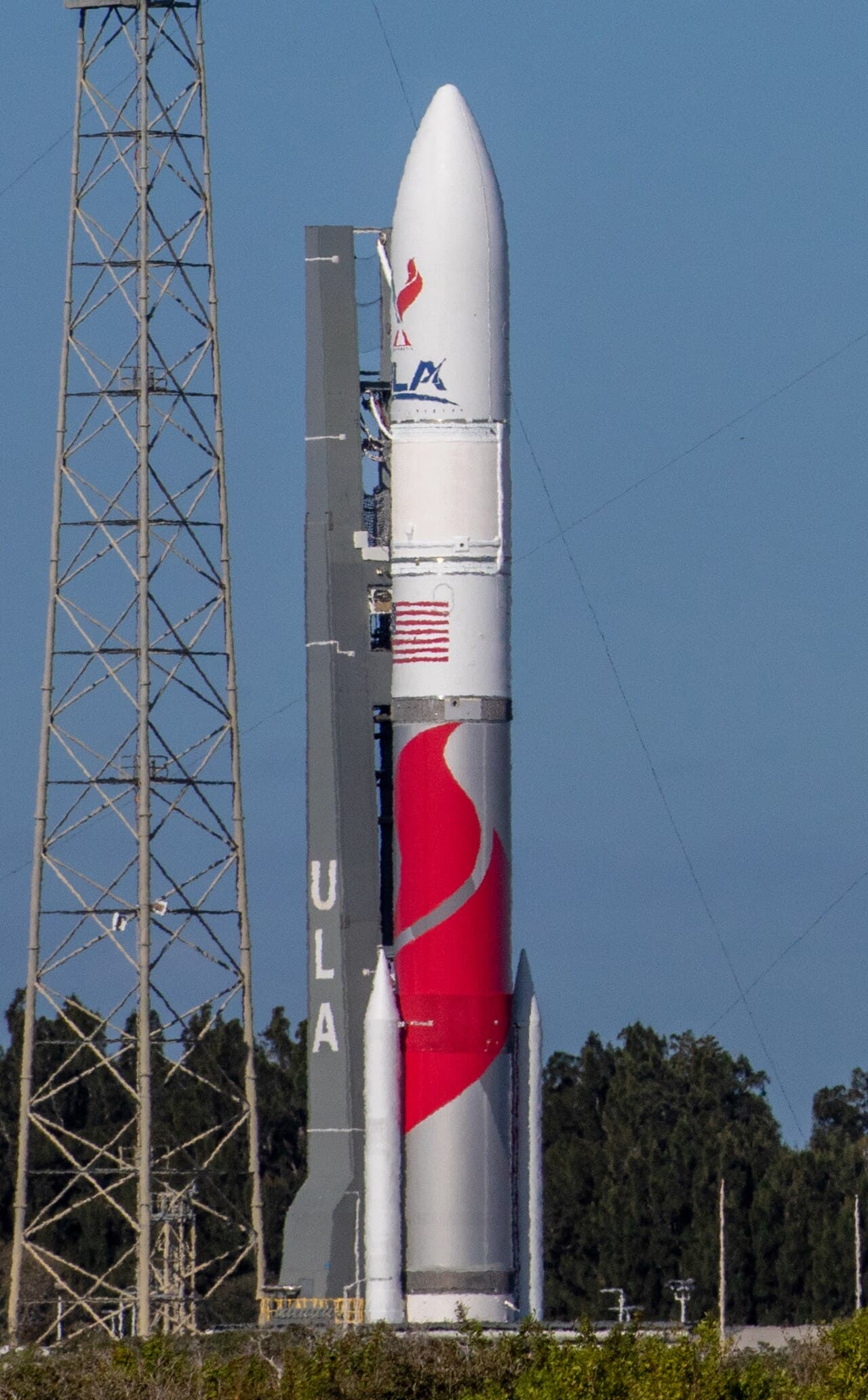
Next-generation medium-to-heavy-lift launch vehicle replacing Atlas V and Delta IV, powered by BE-4 engines.
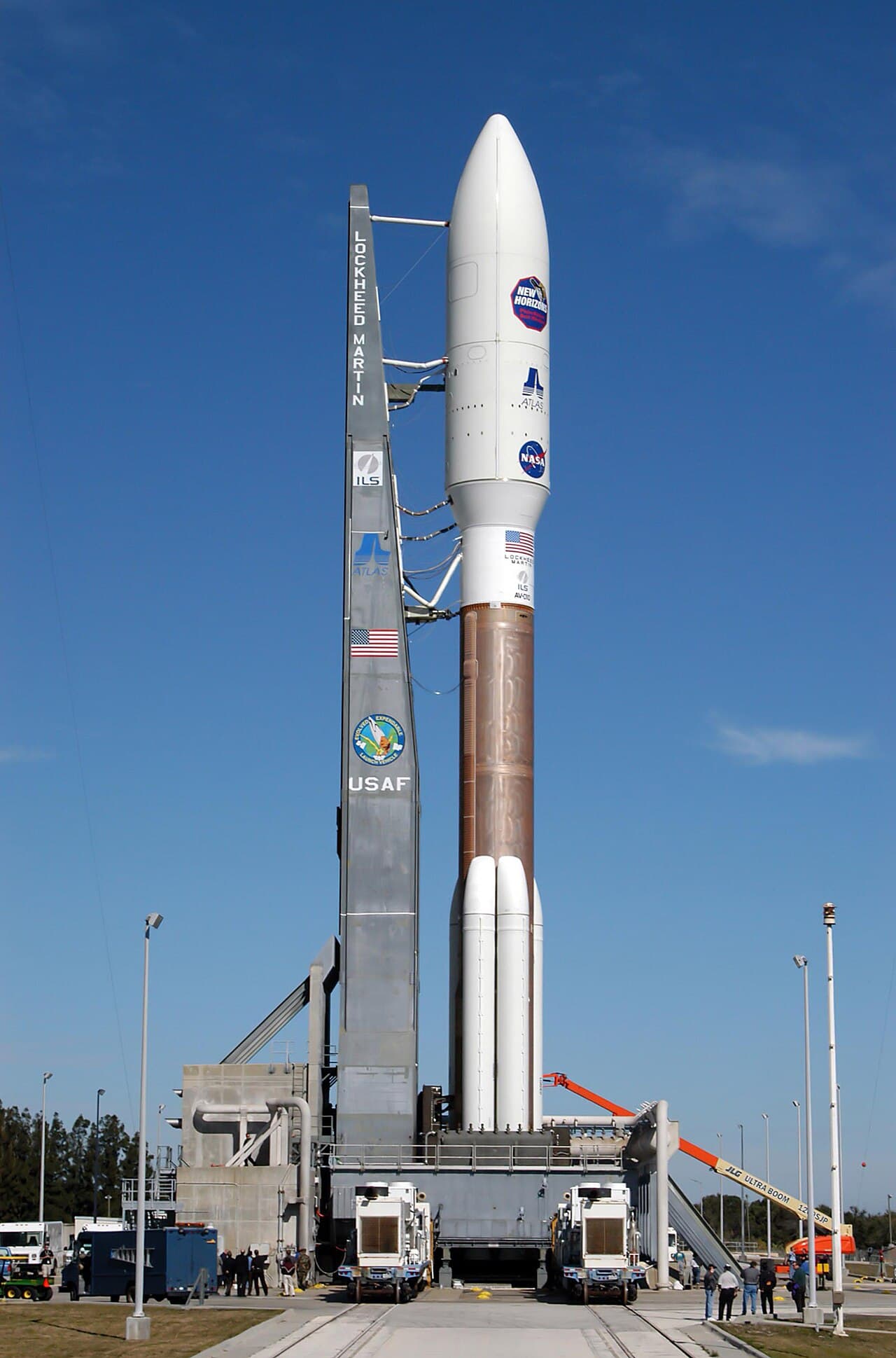
Workhorse medium-lift launch vehicle with a 100% mission success rate, being phased out in favor of Vulcan Centaur.
Advanced cryogenic upper stage for Vulcan, enabling high-energy orbits and deep space missions.
05
backlog includes $5.3B for 19 Space Force missions through 2029 plus 38 contracted Amazon Vulcan launches. A ULA spokesperson told Ars Technica on September 11, 2026 that the company still has more than 80 launches on contract and that its manifest is nearly sold out. Parents Boeing and Lockheed Martin each guaranteed up to $500M of ULA credit facilities (a combined $1B) maturing July 30, 2027, agreed in May 2026 and disclosed in their Q2 2026 SEC filings, amid Vulcan-grounding financial strain - pushing Lockheed's ULA equity investment to about $617M (from $551M) and Boeing's to about $585M (from $556M). Separately, the private bond placement ULA was reported seeking on August 5, 2026 (arranged by US Bancorp, Mizuho and Wells Fargo) was upsized threefold and priced on August 18, 2026 at $1.5B across four tranches maturing in three to ten years, with proceeds earmarked for expanded Decatur, Alabama assembly-line capacity and pad upgrades at Cape Canaveral SLC-41 and Vandenberg SLC-3E to support a target cadence of about 25 launches per year.
streak intact through the final Atlas V Amazon mission, LEO 8, on July 2, 2026; no ULA launch has flown since, pending Vulcan's return to flight
100+ ULA national-security missions since 2006; USSF-87 (Feb 12, 2026) was Vulcan's latest NSSL launch. As of September 19, 2026 SpaceX is the only provider actively flying NSSL payloads while Vulcan remains grounded. Ars Technica reported September 11 that the Space Force has already reassigned several Vulcan NSSL missions to SpaceX. Returning to commercial flight is not the same as NSSL clearance: Space Systems Command will review Amazon LV-01 data before restoring Vulcan to the military manifest
ULA official count across eight Atlas V flights through LEO 8, July 2, 2026 - final Atlas V Amazon Leo mission; remaining Amazon backlog now on Vulcan, first Vulcan Amazon flight LV-01 still listed NET late September 2026 / Sept 30 TBD, with no ULA-confirmed date
(16-18 Vulcan + 2-4 Atlas V); out of reach after the Vulcan grounding - still just five launches flown as of September 19, 2026
first Amazon Leo Vulcan flight LV-01 still NET late September 2026, 45 satellites each; ULA has not posted a return-to-flight date and said on Sept 11 it will share the Leo 1 date only after the GEM 63XL investigation is complete
from August 17, 2026; succeeded interim CEO John Elbon after Tory Bruno's December 2025 resignation
$1.5B private bonds across four tranches priced August 18, 2026; parents each guarantee up to $500M of ULA credit facilities; ULA says more than 80 launches remain on contract
Uncrewed Starliner-1 targeted Dec 2026/Jan 2027 on Atlas V; crewed Starliner-2 planned 2028. Starliner-1 through 4 remain on Atlas V; Starliner-5 and 6 planned for Vulcan after human-rating. Spacecraft upgrades plus Vulcan certification: $359 million (NASA/Weigel). Does not clear GEM 63XL grounding.
06
Operating status
Atlas V reserved for Starliner; Vulcan still grounded, no official return-to-flight date
Vulcan remains grounded after the February 12, 2026 USSF-87 GEM 63XL nozzle anomaly. ULA's newsroom still tops out at the August 17 Peller appointment and July 2 Atlas V Leo 8. The August 6 WDR blog still says a launch date has not been established. LV-01 has not flown. Launch Library 2 aggregators moved the unofficial NET from October 31, 2026 (month precision) to October 29, 2026 (day precision) on October 9 and still mark it TBD; that is not a ULA or Amazon date. Space Systems Command review of commercial-return data remains a later NSSL gate, not restored. Starliner-1 is still an uncrewed Atlas V cargo/engineering flight targeted for December 2026 or January 2027.
Primary revenue source - ULA won 40% of the Space Force's NSSL Phase 3 Lane 2 missions for the most demanding national-security orbits. Vulcan has been grounded since the February 12, 2026 USSF-87 mission after a GEM 63XL solid-rocket-booster nozzle anomaly, and the U.S. Space Force paused NSSL Vulcan launches pending the investigation. Ars Technica reported September 11 that several NSSL missions have already been reassigned to SpaceX. Returning to commercial flight with Amazon LV-01 is not the same as NSSL clearance: Space Systems Command will review that flight's data first.
Launch services for NASA science missions including Mars rovers, solar probes, and crewed Starliner flights. In March 2026 NASA also selected ULA's Centaur V as the new SLS upper stage from Artemis IV onward, adding a recurring deep-space hardware line beyond launch services.
Commercial launch services anchored by Amazon's Leo (Project Kuiper) constellation campaign. Atlas V completed its Amazon Leo campaign on July 2, 2026 with LEO 8 - its eighth and final Amazon mission - delivering 224 satellites on ULA's official count and leaving the remaining Amazon backlog (38 contracted Vulcan launches) entirely on Vulcan. The first Vulcan Amazon Leo flight (LV-01, 45 satellites) is still listed NET late September 2026 with status TBD; on September 11 a ULA spokesperson told Ars Technica the GEM 63XL investigation is ongoing and that ULA will share the Leo 1 date only after that investigation is complete. Deadline pressure on that manifest eased on June 5, 2026, when the FCC granted Amazon a limited waiver of its July 30, 2026 milestone; the FCC kept the July 30, 2029 full-deployment deadline, so Vulcan remains on the critical path for Amazon's constellation.
07
How past announced dates turned out.
1/1announced date hit on time
Name a permanent CEO
Target 2026 · Resolved Aug 17, 2026
ULA named longtime COO Mark Peller as permanent president and CEO effective August 17, 2026, ending an eight-month search that followed Tory Bruno's December 2025 resignation and John Elbon's interim tenure. Peller, a 35-year veteran of ULA and its predecessor companies, previously led Vulcan development from inception through certification and most recently served as COO overseeing Atlas and Vulcan operations.
08
2026
Aggregators move LV-01 NET from October 31 to October 29
Orbital Current's daily Launch Library 2 captures show Amazon Leo LV-01 moving on Oct. 9, 2026 from a month-precision Oct. 31 marker to Oct. 29, 2026 with day precision, still TBD through the Oct. 14 capture. Next Spaceflight on Oct. 15 still lists No Earlier Than October 29, 2026 and Planned. ULA's newsroom still ends at the Aug. 17 Peller release, and the Aug. 6 wet-dress blog still says a launch date has not been established. LV-01 has not flown, and Space Systems Command has not restored NSSL clearance.
Aggregators move LV-01 NET to October 31 without a ULA posting
Launch Library 2-based trackers now list Vulcan Amazon Leo LV-01 as NET October 31, 2026 TBD, a 31-day move from a prior NET of September 30. The same pages say the provider has not confirmed an exact date. ULA's newsroom, Vulcan page and August 6 WDR blog still have no Leo 1 calendar date, and LV-01 has not flown.
Says it is working toward Starliner-1 and Vulcan human-rating
After the September 28 NASA-Boeing Starliner briefing, ULA said it is already working toward the Starliner-1 mission and toward integrating and certifying Vulcan for human spaceflight. Space.com reported Starliner-1 through Starliner-4 remain on Atlas V, with Starliner-5 and 6 planned for Vulcan, and that NASA's Dana Weigel put spacecraft upgrades plus Vulcan certification at $359 million. This does not clear Vulcan's separate GEM 63XL grounding or restore NSSL flights.
Space Force adds a separate review gate before Vulcan resumes NSSL flights
At the Air and Space Forces Association conference in National Harbor on September 16, 2026, a senior Space Force acquisition official said Space Systems Command will examine data from ULA's upcoming Amazon Leo mission - Vulcan's planned return to flight - before allowing the rocket back onto the national security manifest. Returning Vulcan to flight commercially is therefore not the same event as regaining NSSL clearance: the commercial launch supplies evidence for a review that follows it. Vulcan has been off national security missions since the February 12, 2026 USSF-87 GEM 63XL nozzle anomaly.
ULA says GEM 63XL investigation is still open and withholds an LV-01 date
On September 11, 2026 Ars Technica reported that a ULA spokesperson said the investigation into the February 12 USSF-87 GEM 63XL nozzle anomaly is still ongoing and would not confirm a target date for the next Vulcan flight, saying ULA will share the Vulcan Leo 1 launch date only after that investigation is complete and coordinated with Amazon. Independent trackers still list LV-01 as NET September 30, 2026 (status TBD) on a six-booster VC6L, the first Vulcan to fly six GEM 63XL motors. Ars also reported Vulcan prices have risen from about $112 million to more than $200 million per mission and that the Space Force has already reassigned several national-security missions from ULA to SpaceX. ULA said it still has more than 80 launches on contract.
Stacks Centaur V atop Vulcan for LV-01 in VIF-G at SLC-41
On August 15, 2026 ULA hoisted the LEO-optimized Centaur V upper stage atop the Vulcan first-stage booster inside the Vertical Integration Facility-G (VIF-G) next to Space Launch Complex-41 at Cape Canaveral, stacking the vehicle set to fly LV-01, the first Amazon Leo mission on Vulcan - a concrete step following the August 6 wet dress rehearsal toward the targeted September 2026 launch.
Upsizes and prices $1.5B private bond offering
The private bond placement ULA was reported seeking on August 5, 2026 (initially targeted at about $500 million, arranged by US Bancorp, Mizuho and Wells Fargo) is upsized threefold and priced on August 18, 2026 at $1.5 billion across four tranches maturing in three to ten years, reflecting strong institutional demand. Proceeds are earmarked for expanded Decatur, Alabama assembly-line capacity and pad upgrades at Cape Canaveral SLC-41 and Vandenberg SLC-3E, supporting a target cadence of about 25 launches per year across 2026-2027.
Mark Peller named permanent president and CEO
ULA names Mark Peller as its permanent president and CEO effective August 17, 2026, ending an eight-month interim period led by COO John Elbon since Tory Bruno's December 2025 resignation. Peller has been with ULA since its 2006 formation, led Vulcan rocket development from inception through certification, and most recently served as chief operating officer overseeing Atlas and Vulcan operations.
2026
Completes wet dress rehearsal for first Vulcan Amazon Leo launch
ULA rolls a Vulcan Centaur to SLC-41 and, on August 6, 2026, completes a wet dress rehearsal of the rocket paired with a LEO-optimized Centaur V - the configuration set to fly the first Amazon Leo mission on Vulcan (LV-01) - ahead of an extensive test countdown from a new launch-processing lane dedicated to Amazon, a concrete step toward Vulcan's targeted end-of-2026 return to flight.
Blue Origin traces New Glenn explosion to a BE-4 valve, begins proactive Vulcan engine retrofit
Blue Origin confirms around August 5-6, 2026 that the May 28, 2026 New Glenn pad explosion was caused by a liquid oxygen valve fault in one of the rocket's BE-4 engines, and says it will proactively retrofit the same valve on BE-4 engines already in ULA's inventory - including engines at ULA's Decatur, Alabama factory and at Cape Canaveral - with updated hardware expected ready by the end of August 2026. ULA says the retrofit does not change its target of returning Vulcan to flight before the end of 2026, adding a second engine-side workstream alongside the ongoing GEM 63XL solid-rocket-booster nozzle investigation.
Seeks $500M private bond sale to refinance debt
ULA is seeking to raise about $500 million through a private bond placement arranged by US Bancorp, Mizuho and Wells Fargo to refinance existing debt, according to reports first surfacing August 5, 2026 - a separate financing action from the combined $1 billion in matching credit guarantees Boeing and Lockheed Martin extended to ULA in May 2026, underscoring the continued financial strain from Vulcan's grounding since February 2026.
Boeing and Lockheed Martin each guarantee $500M of ULA credit facilities
In Q2 2026 SEC filings, Lockheed Martin (July 23, 2026 10-Q) and Boeing (July 28, 2026 10-Q) disclose that in May 2026 they each agreed to guarantee up to $500 million of ULA credit facilities maturing July 30, 2027 - a combined $1 billion backstop - after the Vulcan grounding hurt ULA's finances. The guarantees push Lockheed's ULA equity investment to about $617 million (from $551 million at the end of 2025) and Boeing's to about $585 million (from $556 million); Lockheed also lowers its Space segment's full-year 2026 profit outlook to $1.34-1.38 billion, citing reduced ULA equity earnings.
Final Atlas V flies LEO 8, closing the Atlas V Amazon campaign
Atlas V flies its eighth and final Amazon Leo mission, LEO 8 (LA-08), on July 2, 2026 from SLC-41 - a 551-configuration vehicle (five solid rocket boosters) lofting 29 satellites weighing about 18 tons, tying the heaviest payload ever launched by an Atlas V. ULA's official release counted 224 Amazon Leo satellites delivered across eight Atlas V flights (not 226, as some secondary reports tallied) and retired Atlas V from the Amazon campaign, shifting the remaining Amazon backlog entirely onto Vulcan.
Vulcan stays grounded as SRB anomaly investigation continues
Vulcan remained grounded through mid-2026 following the February 12, 2026 USSF-87 mission, in which one of four Northrop Grumman GEM 63XL solid rocket boosters suffered a nozzle anomaly during ascent (the payloads still reached orbit). The U.S. Space Force paused all NSSL Vulcan launches pending the investigation. After Northrop Grumman completed a successful GEM 63XL static-fire test on April 15, 2026 validating nozzle design changes, ULA confirmed on May 14, 2026 that the investigation was still ongoing; ULA leadership says Vulcan will return to flight by the end of 2026, with the first Vulcan Amazon Leo mission (LV-01, 45 satellites) targeted for September 2026 pending that return.
Atlas V LEO 7 brings Amazon Leo to 331 satellites
Atlas V launches the LEO 7 mission on May 29, 2026, lofting another 29 Amazon Leo satellites and bringing the constellation total to 331 (ULA has delivered 197 of them across seven Atlas V flights). Two Atlas V Amazon Leo missions remain.
GEM 63XL static fire test passes
Northrop Grumman successfully static-fires a GEM 63XL solid rocket booster on April 15, validating nozzle design enhancements as ULA continues the USSF-87 anomaly investigation. Northrop Grumman takes a $71M charge to fund corrective actions.
NASA selects ULA's Centaur V as new SLS upper stage
On March 6, 2026 NASA awards ULA a sole-source contract to adapt the Vulcan-derived Centaur V as the new upper stage for the SLS Moon rocket from Artemis IV onward, dropping Boeing's long-delayed Exploration Upper Stage. The agency chose Centaur V over Blue Origin's New Glenn upper stage on schedule and RL10-heritage grounds, standardizing SLS in a near-Block 1 configuration to support a cadence of roughly one launch every 10 months.
Tory Bruno resigns; John Elbon named interim CEO
ULA's board confirms long-serving President and CEO Tory Bruno is leaving the company after nearly 12 years; COO John Elbon, a 35-year Boeing veteran, takes over as interim CEO while the board searches for a permanent successor. Bruno later joins Blue Origin to lead a new National Security Group.
Vulcan flies its first post-certification national security mission, delivering USSF-87 directly to GEO; ULA then begins corrective actions after a solid-rocket-motor anomaly observed during ascent.
2025
Tory Bruno resigns after nearly 12 years as CEO and John Elbon is named interim CEO while the board searches for a permanent successor.
Wins Phase 3 national security award
The U.S. Space Force selects ULA for 40% of NSSL Phase 3 Lane 2 missions, extending Vulcan's national-security backlog into the next decade.
Vulcan certified and operational
Vulcan Centaur is certified by the U.S. Space Force for national security missions. Begins operational NSSL and commercial launches.
2024
2023
2018
2012
2007
2006
09
$8.8Bdisclosed across 2 rounds with a stated amount