Active
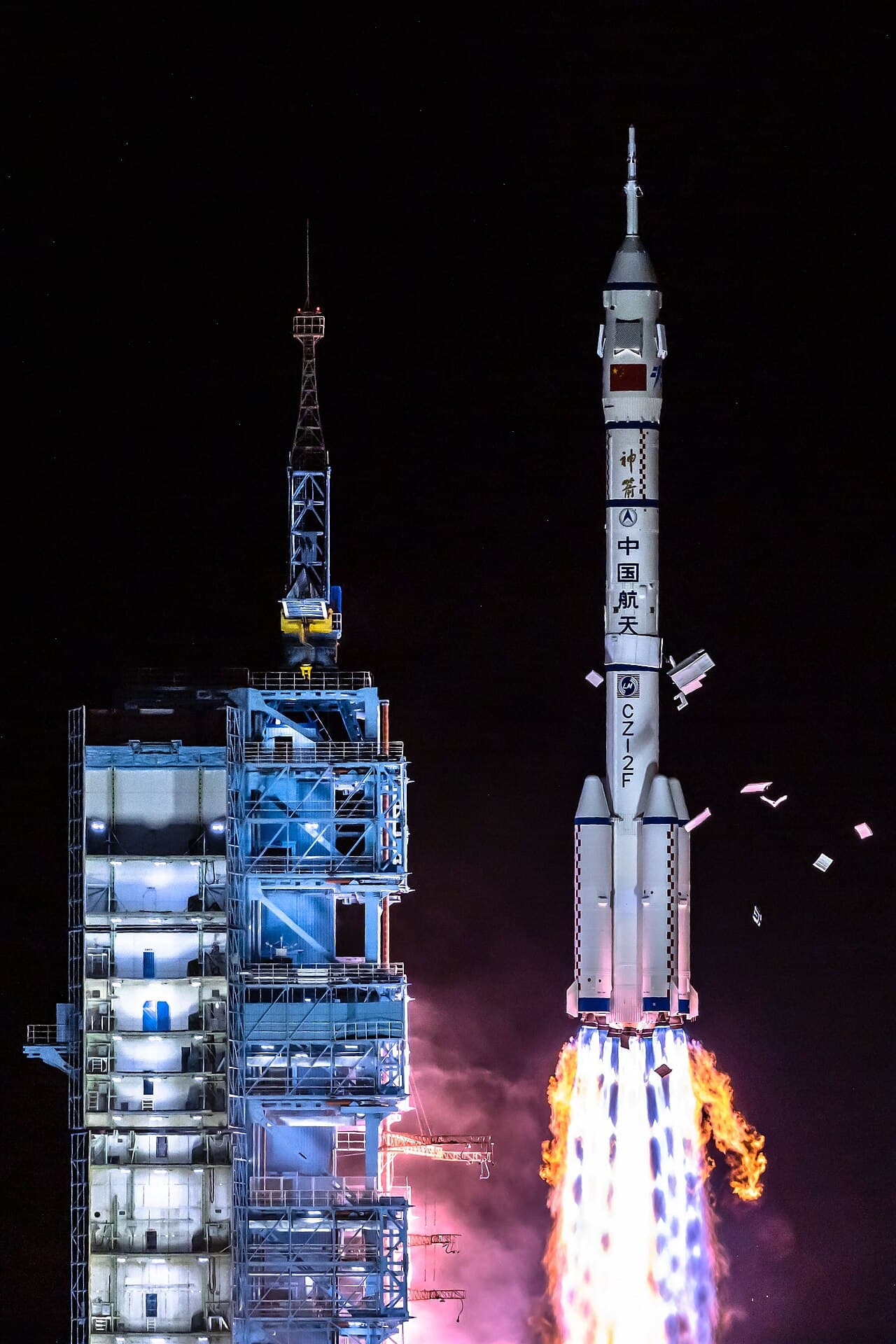
Long March 2F
Human-rated medium-lift rocket and the only Chinese launch vehicle cleared to carry astronauts, flying Shenzhou crews to the Tiangong station.
China Aerospace Science and Technology Corporation (CASC) is the state-owned prime contractor for China's space program and the world's most prolific launch organization by missions flown.
Latest update Oct 19, 2026
01
Wholly owned by the central government through SASAC and led by chairman Chen Mingbo, it develops and operates the Long March (Changzheng) rocket family - which flew its 671st cumulative mission on October 10, 2026, a Long March 12 from the Hainan commercial space launch site delivering satellite-internet low-Earth-orbit group 27 - along with the Shenzhou crewed spacecraft, Tianzhou cargo vehicles, the Tiangong space station, BeiDou navigation and GuoWang broadband satellites, the Chang'e lunar and Tianwen planetary probes, and China's strategic missiles. After a national-record 73 launches in 2025, CASC is targeting over 100 launches in 2026 amid an industry-wide national push toward ~140, debuted the partially reusable Long March 12B in June 2026, and saw its Tianwen-2 probe reach the quasi-moon asteroid Kamo'oalewa on July 6, 2026. On July 10, 2026 it made China the second nation ever to recover an orbital rocket first stage, when the new single-stick, partially reusable Long March 10B flew its maiden mission from Hainan and captured its booster in a sea-based net, with a reflight of the recovered booster still targeted before the end of 2026. That momentum was interrupted on August 10, 2026, when a Long March 7A broke apart shortly after liftoff and lost its satellite payload - only the vehicle's second failure ever. CMSA said Chang'e-7 cannot fly within the 2026 window; partner reporting points to early 2027, with no official CMSA date. After a 16-day gap following the 665th mission on August 25, Long March flights resumed with the 666th on September 10 and continued through the 671st on October 10. Specialist reporting said CASC had begun a September quality-correcting campaign across its enterprises to address a severe quality challenge. On August 28, 2026 the Shenzhou-23 crew completed its first spacewalk, repairing a Tiangong solar wing and installing debris shields. The Long March 10A orbital debut and uncrewed Mengzhou 1 capsule test remain targeted around late 2026 but flagged as at risk of slipping into early 2027 - neither had flown as of October 10, 2026.
english.spacechina.comUpdated Oct 11, 2026
Analysis · 5 min read · Jun 25, 2026The long view on CASC: strategy, technology and what to watch02
2026-2030
Target2026-2030 (feasibility and demonstration phase)
Carry out feasibility studies and stand up an integrated, ground-supported experimental system for space resource development under the newly unveiled 'Tiangong Kaiwu' initiative, announced January 29, 2026 as a major project of China's 15th Five-Year Plan (2026-2030). The program targets small-celestial-body prospecting, intelligent autonomous mining, low-cost in-space transportation, and in-orbit processing, with a longer-term roadmap toward a lunar and near-Earth-asteroid resource system by 2035 and Mars/main-belt-asteroid development by 2050.
H2 2026
TargetH2 2026 (root-cause finding expected)
Determine the root cause of the August 10, 2026 Long March 7A failure that destroyed the Zhongxing-4B/ChinaSat-4B satellite - only the vehicle's second failure ever - and issue a formal finding on whether the shared YF-100-series kerolox engine family needs design changes. CASC resumed Long March flights with the 666th mission on September 10, 2026 (Long March 4B, hypergolic, not YF-100). Specialist coverage said CASC began a September quality-correcting campaign across its enterprises to resolve a 'severe quality challenge.' As of September 14, 2026 CASC has still not issued an official root-cause finding or a formal fleet-wide clearance statement.
Late 2026
TargetLate 2026 (Long March 10A satellite debut and Mengzhou 1, with reported risk of slipping to early 2027); 2030 (crewed landing)
Fly the single-stick Long March 10A's own orbital debut - reported in April 2026 as carrying a Space-Time Reference Satellite to lunar transfer orbit via a CAS Space-built Kinastra upper stage - and separately fly the uncrewed Mengzhou 1 capsule test, a distinct later Long March 10A mission still targeted around late 2026. A subsequent report flagged a risk that Mengzhou 1 could instead slip into early 2027, citing incomplete ground infrastructure at the new Launch Complex 301. Neither mission had flown as of September 14, 2026. After Mengzhou 1, fly the full triple-core crewed vehicle in 2027, and conduct the two launches needed to land Chinese astronauts on the Moon before 2030.
Oct-Nov 2026
China's Manned Space Agency confirmed in February 2026 that a Pakistani payload specialist will fly a short-duration mission to the Tiangong station aboard Shenzhou-24, expected around October 2026, returning to Earth on the outgoing Shenzhou-23 - the first foreign national aboard China's independently built outpost, and a pointed act of orbital diplomacy while the US commercial-station field is still pre-launch. Candidates Muhammad Zeeshan Ali and Khurram Daud have been training at the Astronaut Center of China since arriving in late April 2026; CMSA says training is progressing smoothly ahead of the final crew assignment.
By end of 2026
TargetBy end of 2026 (first reflight)
Having achieved China's first orbital first-stage recovery on the Long March 10B's July 10, 2026 maiden flight (sea-based net capture), refurbish and reflight the recovered booster before the end of 2026 - the step that turns a one-off recovery demonstration into genuine operational reusability and the clearest proof CASC has matched the core SpaceX capability. As of September 14, 2026 the reflight has still not occurred; CASC has reiterated the before-year-end target but has not announced a specific date. Scale toward routine reuse across the reusable Long March fleet (10B and 12B).
Early 2027
TargetEarly 2027 (Chang'e-7, unofficial; CMSA has not dated a new window); by April 2027 sampling / Nov 2027 return (Tianwen-2)
Launch Chang'e-7 to the lunar south pole on a Long March 5 from Wenchang. The assembled stack rolled out on August 19, 2026, then rolled back after Typhoon Narra disrupted the planned August 24 attempt. CMSA said the spacecraft cannot fly within the 2026 window. Thailand's NARIT, a payload partner, said a one-month slip was no longer workable and that the mission would wait until next year; specialist coverage discusses February-March 2027 transfer windows but CMSA has not confirmed a date. Tianwen-2 arrived at asteroid Kamo'oalewa on July 6, 2026; sample collection is due by the end of April 2027, with the return capsule separating on November 29, 2027.
Late 2020s
As the ISS heads for retirement around 2030, China plans to grow Tiangong from its current three-module, roughly 90-tonne T-shape toward a six-module, roughly 180-tonne configuration, adding capacity and a co-orbiting survey telescope. The China Manned Space Agency confirmed the second-phase expansion plan on June 22, 2026: the first new 20-tonne-class multifunctional module will dock to form a cross configuration, adding docking ports for simultaneous multi-spacecraft dockings, an extra EVA hatch, and more storage/experiment capacity, while raising permanent crew capacity from three to six. The co-orbiting Xuntian Space Telescope is separately slated for launch in 2027 to dock with the station when maintenance is needed. No firm launch date has been announced for the first new module. The expansion positions the state-run station as the default long-term human platform in low Earth orbit against the still-unflown US commercial contenders.
Late 2020s+
Develop the super-heavy, fully reusable Long March 9 for mega-constellation deployment and crewed deep-space missions later in the decade. Large-diameter stainless-steel propellant tanks for the reusable stages have cleared manufacturing breakthroughs, with full-scale ground tests of major subsystems expected between 2026 and 2028 and first flight still targeted around 2033.
03
A Long March 12 lifted off at 03:27 Beijing time on Oct. 10 from the Hainan commercial space launch site and placed China's satellite-internet low-Earth-orbit group 27 into its planned orbit. CASC said its commercial rocket company was the launch prime contractor, that the 62-meter, 4-meter-class vehicle can lift at least 6 tonnes to a 700 km sun-synchronous orbit, and that the flight was the 671st Long March launch. CNSA separately confirmed the satellites reached the intended orbit.
China's Chang'e-7 lunar south-pole mission, earlier reported as delayed about a month by Typhoon Narra, has been postponed more significantly: the China Manned Space Agency said on August 23 that the spacecraft does not meet launch conditions and cannot fly within its 2026 window. Multiple outlets report the mission, which aims to search for water ice near the Shackleton crater, may now slip into 2027 given the lunar transfer geometry a south-pole landing requires.
China postponed the Chang'e-7 lunar south-pole mission by about a month after Typhoon Narra disrupted final launch preparations at the Wenchang Spacecraft Launch Site, with a new date not yet confirmed. The Chang'e-7 stack, mounted on a CASC Long March 5 (Y14), had rolled out to the pad on August 19 for a launch originally targeted no earlier than August 24-25, aiming to land near the Shackleton crater at the lunar south pole to search for water ice.
A week after a Long March 7A rocket broke apart during ascent on August 10, CASC flew two missions within about 24 hours: a Long March 12 lifted off from Hainan on August 16 carrying nine Guowang broadband satellites, followed by a Long March 2C delivering a satellite for the United Arab Emirates. CASC has not announced a root cause or a formal fleet clearance decision for the Long March 7A investigation as of this week.
A Long March 12 rocket lifted off at 12:10 Beijing time on August 16 from Launch Pad 2 at the Wenchang Commercial Space Launch Site, placing nine low-Earth-orbit internet satellites into their preset orbits. The batch is the 24th group for Guowang, China's state-backed broadband megaconstellation, and brings the number of Guowang spacecraft in orbit to roughly 195. The launch is the first Chinese orbital mission from Wenchang since a Long March 7A broke apart shortly after liftoff there on August 10.
LandSpace's planned August 10-11 second launch and first-stage catch attempt of its reusable Zhuque-3 rocket was postponed following the explosion of an unrelated CASC Long March 7A rocket at the Wenchang Space Launch Site on August 10. Launch trackers now list a new no-earlier-than target of August 31, 2026 from the Dongfeng pad at Jiuquan; neither LandSpace nor Chinese state media has given an official cause for the postponement or a confirmed new date.
A Long March 7A rocket broke apart in a fireball about 85 seconds after lifting off from the Wenchang Space Launch Site on August 10, during the joint burn of its first stage and four boosters. Xinhua confirmed the failure roughly three hours later, saying the rocket suffered a flight anomaly under investigation; the payload, reported as the Zhongxing-4B communications satellite, was lost with the rocket over the South China Sea in China's fourth orbital launch failure of 2026.
A Long March 6A rocket launched 18 Qianfan (Thousand Sails) broadband satellites into near-polar orbit from Taiyuan on August 6, lifting the constellation to 256 satellites, and its upper stage broke apart in orbit shortly afterward. Space-tracking firms Slingshot Aerospace and LeoLabs cataloged debris counts ranging from roughly 300 to more than 900 fragments; it is the second time a Long March 6A upper stage has broken up on orbit, after a similar incident in November 2022, and the cause has not been disclosed.
A CASC Long March 3B rocket carrying the Tianlian II-06 data relay satellite was struck by lightning about 30 seconds after lifting off from Xichang on July 23, an incident captured in widely circulated photos. CASC said onboard systems were unaffected and the satellite reached its planned transfer orbit, but the strike has drawn outside scrutiny of China's launch weather criteria.
On July 10, state contractor CASC flew the maiden mission of its new single-stick, partially reusable Long March 10B from the Hainan Commercial Space Launch Site and, about 11 minutes after liftoff, recovered the rocket's first stage on a sea-based platform using a net-capture system - China's first-ever controlled recovery of an orbital-class booster. The feat makes China the second country after the United States to demonstrate first-stage recovery, and the first to do it via net capture rather than landing legs. CASC said it aims to refurbish and refly the recovered booster before the end of 2026, a step toward closing the reusability gap with SpaceX.
CASC scheduled the maiden flight of its reusable Long March 10B from the Hainan Commercial Space Launch Site, with a launch window opening July 10 (0500-0900 UTC) and daily backups through July 13. The two-stage kerolox vehicle, a cargo variant of the crewed Long March 10A, will attempt to recover its first stage downrange on the 'Linghangzhe' barge using grid fins and an arrestor-net capture system. It would be China's third orbital first-stage sea-recovery attempt, after LandSpace's Zhuque-3 and a CASC/SAST Long March 12A last December.
A CASC Long March 7A lifted off from the Wenchang Space Launch Site at 02:10 UTC on June 23, placing the classified TJSW-26A (Communication Technology Experimental Satellite-26A) into geostationary transfer orbit. It was the rocket's first flight since a January 2026 third-stage propulsion failure grounded both the Long March 7A and its structural sibling the Long March 3B, which itself returned to flight on June 16 - a sequence confirming CASC has resolved the upper-stage fault. The mission was the 16th Long March 7A flight and the 653rd launch of the Long March family.
A Long March 3B/E rocket lifted off from the Xichang Satellite Launch Center on June 16 and successfully placed the Shijian-31 space-environment-monitoring satellite into orbit, returning the workhorse booster to flight after a five-month grounding. The launcher had been sidelined since a rare January 17 failure in which a third-stage anomaly lost the Shijian-32 payload during a burn toward geostationary orbit. The mission was the 651st flight of China's Long March rocket family.
Shanghai Spacecom Satellite Technology's Qianfan megaconstellation crossed the 200-satellite mark on June 5 after CASC put up 36 satellites in 19 hours - a Long March 6A from Taiyuan on June 4 and a Long March 8 from Wenchang on June 5, each carrying 18 SSST-built spacecraft. SSST said the milestone is enough to begin supporting maritime Automatic Identification System services and accelerates buildout of China's flagship answer to Starlink, though Qianfan still needs to roughly triple its in-orbit fleet by year-end to hit its 324-satellite initial global coverage target.
CASC's new partially reusable Long March 12B lifted off from Jiuquan at 4:40 a.m. EDT on June 1 in a no-notice maiden flight, successfully delivering two Genesat-built Qianfan broadband satellites - the constellation's 10th batch - to orbit. The 72-meter, 20-ton-to-LEO vehicle uses nine YF-102R kerolox engines on a 4.37-meter core and is designed for propulsive first-stage recovery, though the debut did not attempt a landing; the rocket is China's most capable commercial-class lifter to date and is expected to be a workhorse for the Shanghai-led megaconstellation.
04
Human-rated medium-lift rocket and the only Chinese launch vehicle cleared to carry astronauts, flying Shenzhou crews to the Tiangong station.
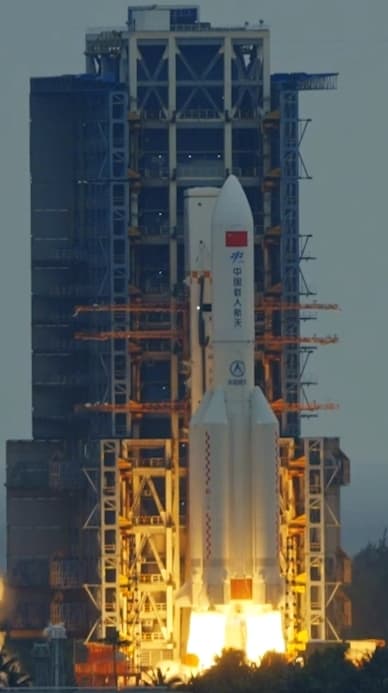
China's most powerful operational rocket; the heavy-lift workhorse that launches Tiangong station modules (5B), Chang'e and Tianwen deep-space missions, and large GEO satellites.
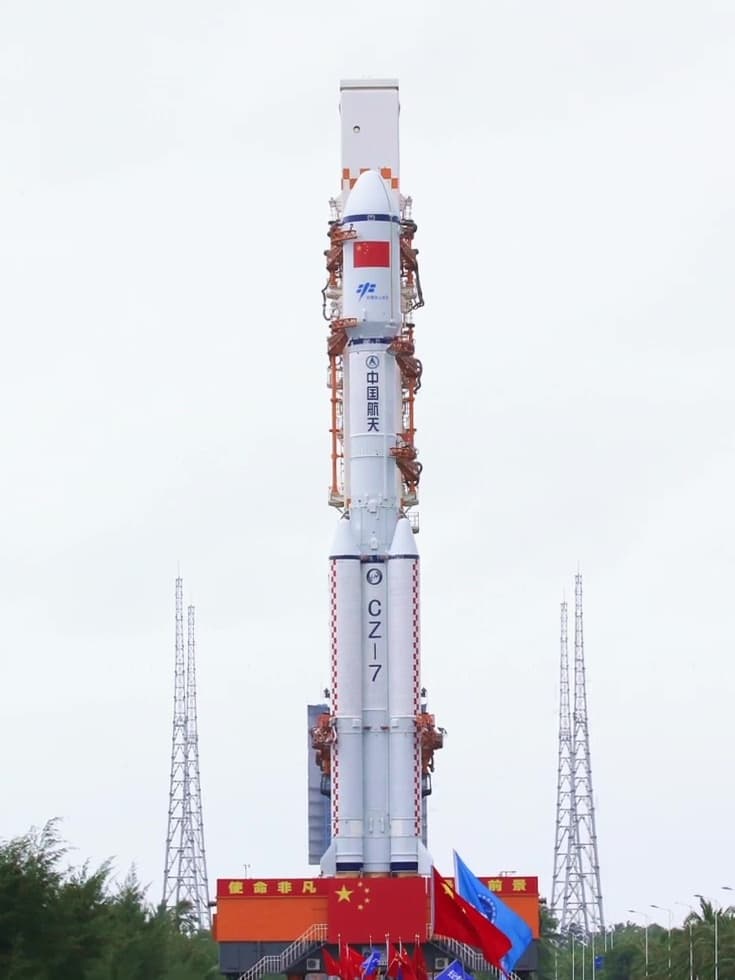
Kerolox medium-lift rocket designed as a next-generation workhorse; launches Tianzhou cargo freighters to the Tiangong space station.
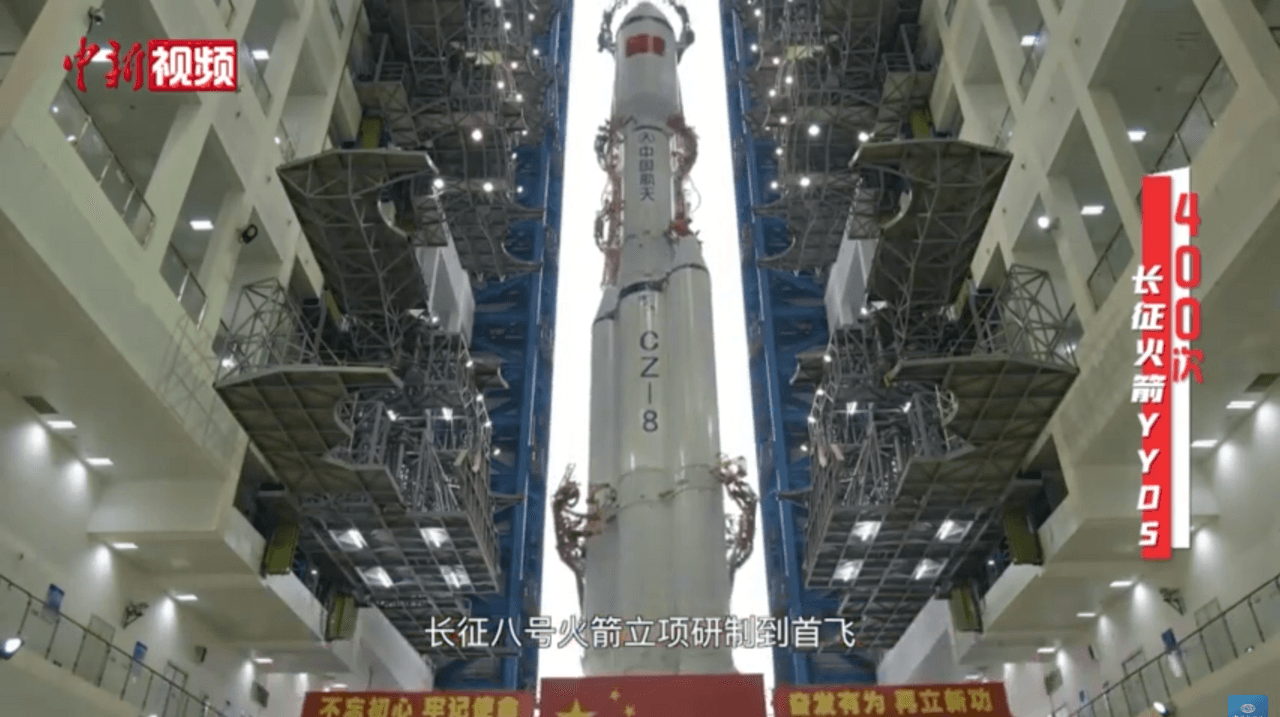
Lower-cost commercial medium-lift rocket optimized for sun-synchronous and constellation deployment, central to China's GuoWang and other satellite-internet build-out.
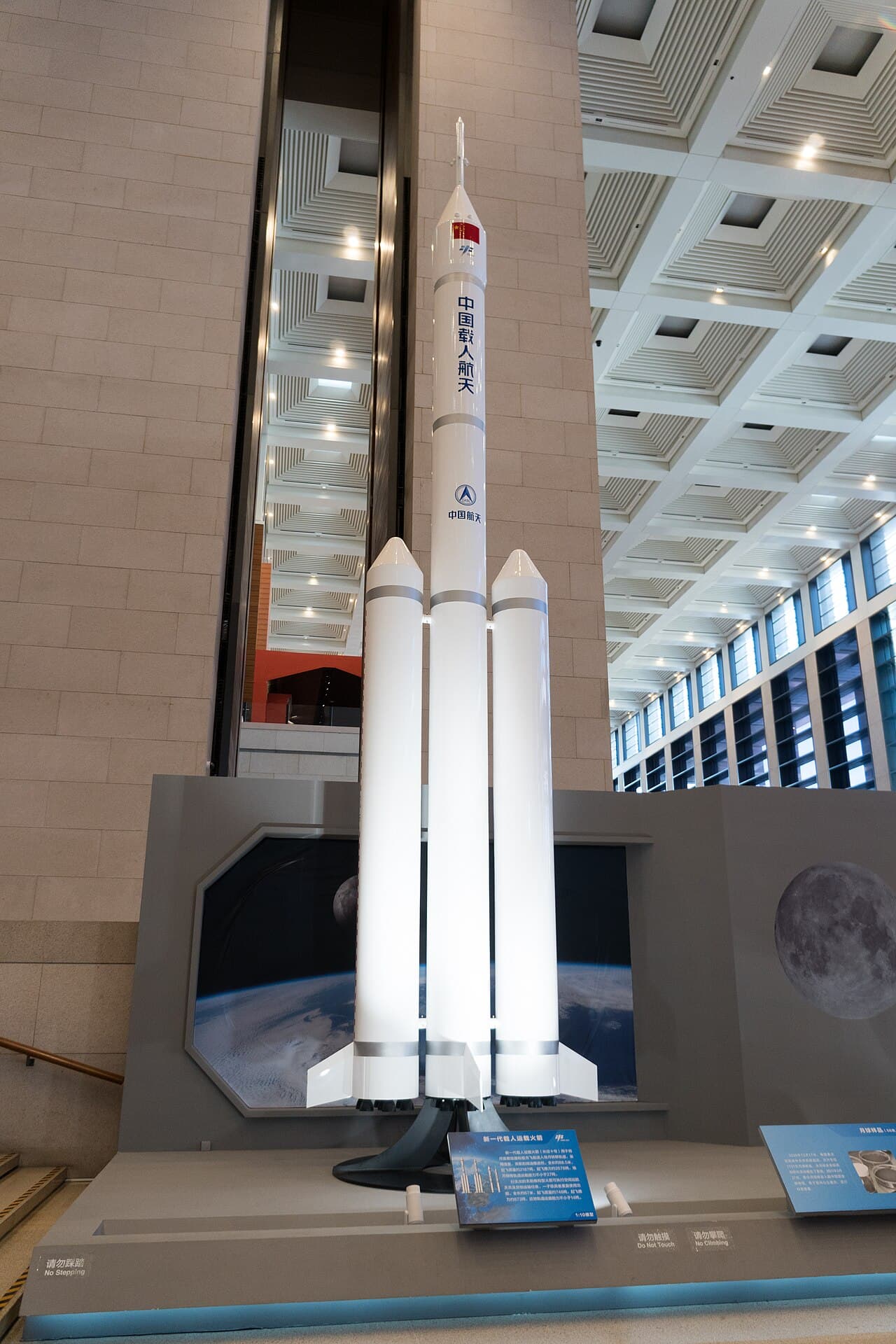
Partially reusable super-heavy-lift rocket for the crewed lunar program, designed to separately launch the Mengzhou spacecraft and Lanyue lander to trans-lunar injection.
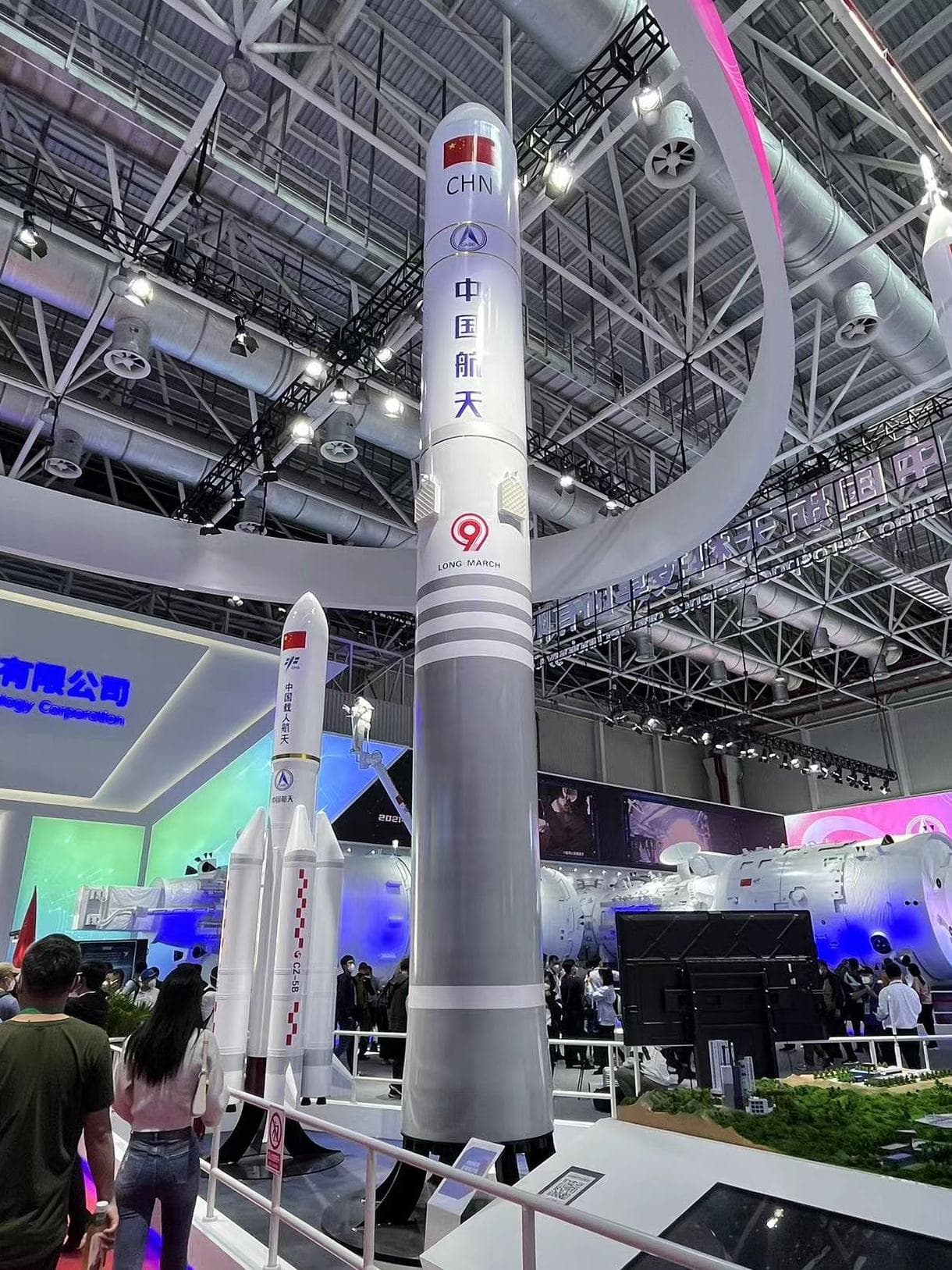
Fully reusable super-heavy launch vehicle in development - a Starship-class methalox design intended for mega-constellations, lunar and Mars cargo, and future crewed deep-space missions.
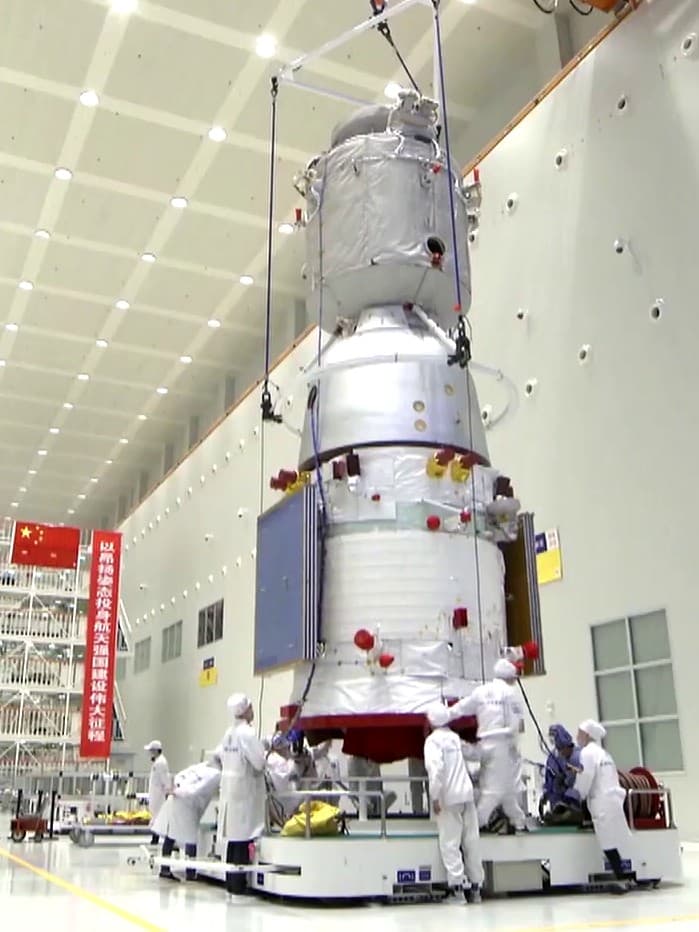
China's crewed spacecraft, ferrying three taikonauts at a time to the Tiangong station; built by the China Academy of Space Technology (CAST).
Partially reusable, kerosene/liquid-oxygen launch vehicle built by CASC Commercial Rocket Co., Ltd. for CASC's commercial constellation launch business, designed from the outset for propulsive first-stage recovery. A separate CASC reusable-rocket line, the methane/liquid-oxygen Long March 12A built by the Shanghai Academy of Spaceflight Technology, reached orbit on its own December 2025 debut but has yet to land its booster successfully.
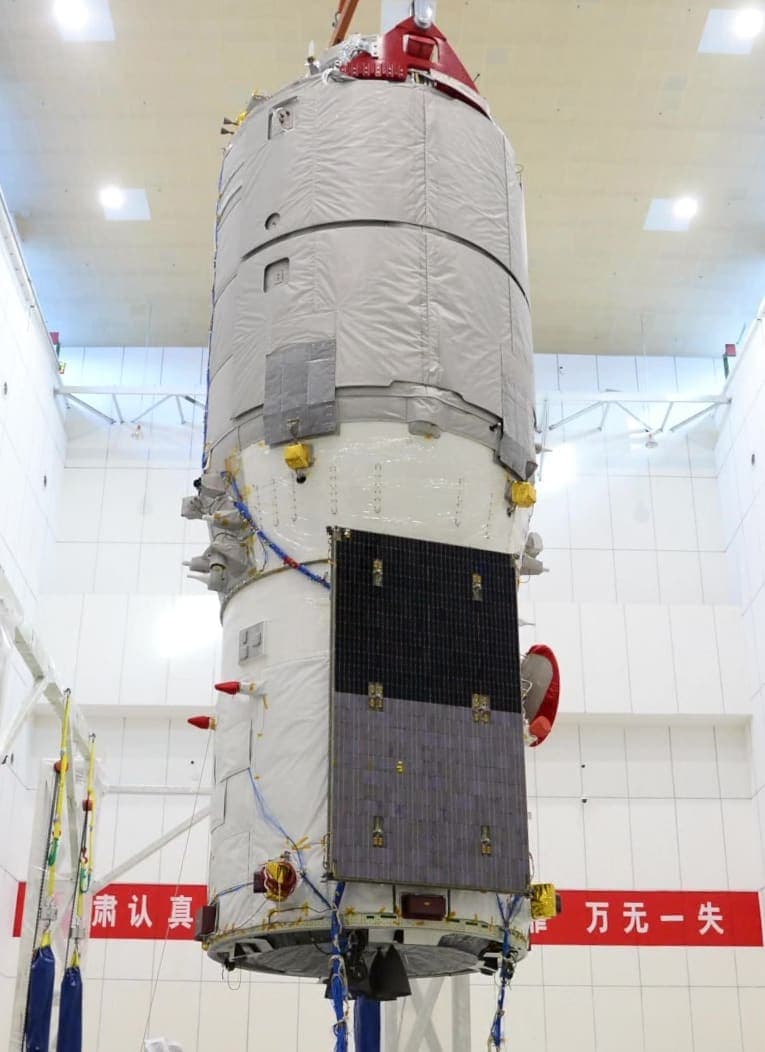
China's automated cargo spacecraft, delivering pressurized and unpressurized supplies, propellant, and experiment payloads to the Tiangong space station; built by CAST and rated the world's most capable active cargo spacecraft by transport capacity.
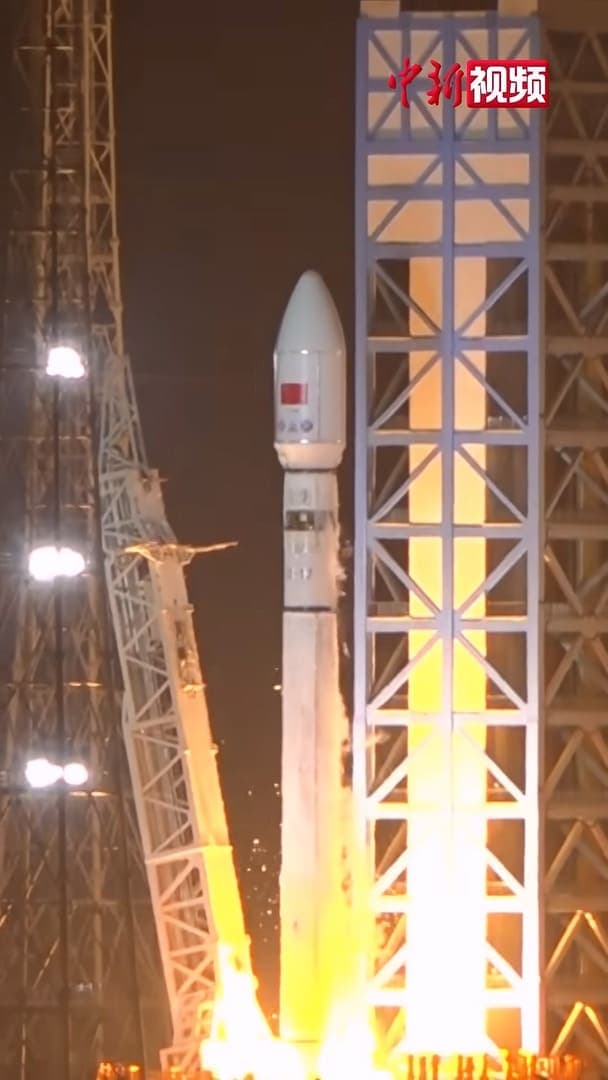
CASC Eighth Academy two-stage cryogenic launcher and China's first 4-meter-class single-core rocket. CASC says it is about 62 meters long and can lift at least 6 tonnes to a 700 km sun-synchronous orbit, with optional 4.2 or 5.2 meter fairings. On Oct. 10, 2026 it flew satellite-internet LEO group 27 from Hainan as the 671st Long March mission.
05
CASC current Chinese company profile, undated; Wikipedia still cites 174,000 for 2014
Not separately disclosed on a current basis; the widely cited figure of CN¥294B (~$46B) group revenue traces to a 2013 report per Wikipedia's infobox, with no more recent full financial disclosure identified. Secondary business-data aggregators (e.g. ZoomInfo, Craft.co) report divergent unaudited estimates in the roughly $9-10B range that could not be corroborated against a primary CASC or SASAC source.
671st on October 10, 2026 - Long March 12 from Hainan carrying satellite-internet LEO group 27
latest official tally, published around the 600th Long March mission in October 2025; no newer CASC figure identified through September 2026
06
Operating status
Operational
Fully operational as the prime contractor for China's space program, led by chairman Chen Mingbo (still listed on CASC's English leadership page). After a national-record 73 launches in 2025, CASC is targeting more than 100 launches in 2026. The Long March series reached its 671st cumulative mission on October 10, 2026 (a Long March 12 from the Hainan commercial space launch site carrying satellite-internet LEO group 27), after the 666th on September 10 (Long March 4B / Yaogan-53 and Yaogan-56). CASC has still not publicly announced a root cause or a formal fleet clearance for the August 10 Long March 7A / YF-100 investigation. The Chang'e-7 stack cannot fly in the 2026 window per CMSA; partner reporting points to early 2027 with no official date. The recovered Long March 10B booster reflight is still targeted before year-end and still not flown. Neither the Long March 10A satellite debut nor the uncrewed Mengzhou 1 capsule test had flown as of October 10, 2026. The English flight-record table still ends at mission 662.
Government, civil, and commercial orbital launches on the Long March family, including international commercial launches marketed through subsidiary China Great Wall Industry Corporation.
Design and production of BeiDou navigation, GuoWang broadband, Gaofen/Yaogan Earth-observation, and communications satellites through academies such as CAST and SAST.
Human Spaceflight & Space Station
Shenzhou crewed spacecraft, Tianzhou cargo freighters, and the Tiangong space station systems and operations for China's crewed program.
Chang'e lunar exploration, Tianwen planetary probes, and the crewed lunar-landing program built around the Long March 10, Mengzhou spacecraft, and Lanyue lander.
China's intercontinental strategic nuclear missiles and other defense and missile-system products developed across CASC's academies.
07
How past announced dates turned out.
0/2announced dates hit on time
Chang'e-7 launch within a ~one-month post-typhoon slip
Target Approximately late September 2026 (one month after the Aug 24 typhoon delay) · Resolved Aug 25, 2026
The delay proved larger than initially described: the China Manned Space Agency said on August 23 that Chang'e-7 does not meet launch conditions and cannot fly within the 2026 window at all. Multiple outlets report the mission may now slip into 2027, given the lunar transfer geometry a south-pole landing requires; no new launch date has been confirmed.
Chang'e-7 launch on Long March 5 from Wenchang
Target Aug 24, 2026 (00:05 UTC) · Resolved Aug 23, 2026
China postponed the Chang'e-7 launch attempt after Typhoon Narra disrupted final preparations at the Wenchang Spacecraft Launch Site. Officials said the delay is likely around one month; a new launch date has not been confirmed.
08
2026
670th Long March launch - Yaogan-40 04
CASC's English page says the Yaogan-40 04 group lifted off at 4:46 p.m. Beijing Time from Taiyuan aboard a modified Long March-6 and entered preset orbits for electromagnetic environment detection. CASC numbered it the 670th Long March mission. China Daily/NCSTI, citing CASC, describes the vehicle as a Long March 6A and the satellites as Yaogan 40D, the fourth Yaogan 40 group, built by CAST.
669th Long March launch - satellite-internet LEO group 26
On September 24, 2026 at 9:32 p.m. Beijing Time, a Long March-8A lifts off from the Hainan commercial spacecraft launch site and places the 26th group of low-orbit internet satellites into the designated orbit. CASC numbers the flight as the 669th Long March mission.
668th Long March launch - PIESAT-2 13-16
On September 20, 2026 at 6:50 p.m. Beijing Time, a Long March-2D lifts off from the Taiyuan Satellite Launch Center carrying the PIESAT-2 13-16 satellite group, which enter their preset orbits. CASC says the launch center numbered it the 668th Long March flight.
667th Long March launch - satellite-internet LEO group 25
On September 17, 2026 at 8:32 a.m. Beijing Time, a Long March 12 lifts off from the Hainan commercial spacecraft launch site and places the 25th group of low-orbit internet satellites into the designated orbit. CASC numbers the flight as the 667th Long March mission. Global Times, citing Science and Technology Daily, says the Eighth Academy developed the 62-meter, 4-meter-class vehicle and that CASC's commercial rocket company was the launch contractor.
671st Long March launch - satellite-internet LEO group 27
On Oct. 10, 2026 at 03:27 Beijing time, a Long March 12 lifted off from the Hainan commercial space launch site and placed satellite-internet low-Earth-orbit group 27 into its planned orbit. CASC's commercial rocket company was the launch prime contractor. CASC and CNSA both called the mission a success and CASC numbered it the 671st Long March flight.
666th Long March launch - Yaogan-53 and Yaogan-56
On September 10, 2026 at 5:00 p.m. Beijing Time, a Long March 4B lifts off from the Jiuquan Satellite Launch Center carrying the Yaogan-53 and Yaogan-56 remote-sensing satellite groups, which enter their planned orbits. CGTN and Xinhua report the mission as the 666th cumulative flight of the Long March series - the first Long March launch since the 665th on August 25. Specialist coverage said CASC had begun a September quality-correcting campaign across its enterprises after a 'severe quality challenge.'
Shenzhou-23 crew completes first spacewalk, repairs Tiangong solar wing
On August 28, 2026 the Shenzhou-23 crew completed its first series of extravehicular activities, working about 5.5 hours and finishing at 1:59 p.m. Beijing Time. Zhu Yangzhu and Zhang Zhiyuan, supported from inside by Li Jiaying plus the station robotic arm and ground teams, repaired the space station's solar panels and installed debris shields - the second time Chinese astronauts have performed in-orbit solar-wing maintenance. Zhu made his second career EVA; Zhang's was his first. The trio launched May 24, 2026 and had been on board more than three months.
Long March 6C upper stage fragments in orbit
The Long March 6C's spent upper stage from the August 25, 2026 rideshare mission (the 665th cumulative Long March launch) breaks apart in orbit roughly two days after liftoff. Commercial tracking firm LeoLabs detects the breakup at 02:30 UTC on August 27, 2026, in a decaying low orbit of about 396 by 482 km, estimating tens to hundreds of trackable fragments were generated. CASC has not disclosed a cause. It is the latest in a recurring pattern of post-mission upper-stage breakups affecting the Long March 6 family, most notably the Long March 6A, which shares a single YF-115 kerosene/liquid-oxygen second-stage engine design with the 6C.
2026
665th Long March launch - Thai and educational CubeSats
On August 25, 2026 at 11:21 a.m. Beijing Time, a Long March 6C lifts off from the Taiyuan Satellite Launch Center carrying seven satellites into their planned orbits, including the GISTDA CubeSat-1 (Lingzhi-09) for Thailand's Geo-Informatics and Space Technology Development Agency, tasked with remote-sensing data collection for agriculture and ecological monitoring. It is the 665th cumulative flight of the Long March series and the fifth-plus successful mission since the August 10 Long March 7A failure, extending the run of successful YF-100-powered flights (Long March 5B, 12, and now 6C) that has continued through the still-unresolved 7A investigation.
Chang'e-7 stack rolled out to the launch pad
On August 19, 2026, the assembled Chang'e-7 probe and its Long March 5 (Y14) carrier rocket are transferred vertically to the launch area at the Wenchang Spacecraft Launch Site, with the China Manned Space Agency reporting all facilities in good condition ahead of final functional checks, a joint test, and propellant loading. The rollout keeps the mission on track for a launch as early as August 24, 2026, with no delay reported as of August 22 despite the ongoing investigation into the August 10 Long March 7A failure, whose shared YF-100 engine also powers the Long March 5's boosters.
Long March 12 lofts the 24th GuoWang batch from Wenchang
On August 16, 2026 at 12:10 p.m. Beijing Time, a Long March 12 lifts off from Commercial Launch Pad 2 at the Wenchang Commercial Space Launch Site carrying nine low-Earth-orbit internet satellites - the 24th group for the state-backed GuoWang broadband constellation - which enter their preset orbits successfully. It is the second Chinese orbital mission since the August 10 Long March 7A failure and brings GuoWang's deployed fleet to roughly 195 spacecraft.
Long March 5B returns China to flight after the Long March 7A failure
On August 13, 2026, a Long March 5B lifts off from Wenchang carrying an eighth batch of ten GuoWang broadband satellites (with a Yuanzheng-2 upper stage) to orbit, CASC's first successful mission since the August 10 Long March 7A failure just three days earlier. The success does not itself confirm the YF-100 engine investigation is closed, but it shows CASC kept other Long March variants flying while that investigation continues, a modest positive signal for the Long March 5 that is due to carry Chang'e-7 later in the month.
Long March 7A fails again, losing Zhongxing-4B
A Long March 7A breaks apart in a fireball about 85 seconds after liftoff from Wenchang on August 10, 2026, during the joint burn of its first stage and four boosters. Xinhua confirms the failure roughly three hours later, citing a flight anomaly under investigation; the payload, reported as the Zhongxing-4B communications satellite, is lost with the rocket over the South China Sea. It is only the Long March 7A's second failure ever - after its March 2020 maiden flight, itself traced to LOX cavitation in a booster feed line during the same joint-burn phase - and China's fourth orbital launch failure of 2026 (following a January 17 Long March 3B loss and an April Tianlong-3 failure from a different operator). Unlike the January Long March 3B failure, which was a third-stage cryogenic-engine fault, this one implicates the YF-100 kerolox engine shared across the first stage and boosters of the Long March 5, 6, 7, 8, 10, and 12 families; observers flagged a risk that the resulting investigation could push the Chang'e-7 launch (which flies on a YF-100-boosted Long March 5) past its planned window.
661st Long March launch - 23rd GuoWang batch
On August 4, 2026 at 4:52 p.m. Beijing Time, a Long March 8A lifts off from Commercial Launch Pad 1 at the Wenchang Commercial Space Launch Site carrying nine satellites - the 23rd batch for the state-backed GuoWang broadband constellation - into orbit. It is the 10th flight of the Long March 8A variant, the 17th of the Long March 8 series, and the 661st cumulative launch of the Long March family.
On July 30, 2026 at 9:00 a.m. Beijing Time, a modified Long March 6 lifts off from the Taiyuan Satellite Launch Center carrying the TJSW-27A and TJSW-27B communication-technology experimental satellites into their planned orbits - the 660th cumulative flight of the Long March carrier rocket series.
Long March 7A launches Tianlian III-01, Wenchang's 50th launch
On July 29, 2026 at 7:50 p.m. Beijing Time, a Long March 7A lifts off from the Wenchang Spacecraft Launch Site carrying the Tianlian III-01 data-relay satellite - which will boost telemetry, tracking, and command throughput between Tiangong, crewed and cargo spacecraft, and Earth-based ground stations - into its preset orbit. The mission marks the 50th launch conducted from Wenchang since the site began operations in 2016.
Long March 5 rocket for Chang'e-7 arrives at Wenchang
The Long March 5 Y14 carrier rocket arrives at the Wenchang Spacecraft Launch Site on July 13, 2026, shipped from production and port facilities in Tianjin and Shanghai, and begins assembly and testing alongside the Chang'e-7 lunar south-pole probe (delivered to the site in April 2026) ahead of a launch targeted for late August 2026.
Long March 3B delivers relay satellite after lightning strike
On July 23, 2026, a Long March 3B lifted off from Xichang carrying a communications relay satellite to geostationary transfer orbit and, despite being struck by lightning shortly after liftoff, delivered its payload successfully - underscoring the resilience and continued high cadence of the Long March fleet as CASC pushed past its 655th cumulative series launch (reached July 4) on the way to a targeted 100-plus launches in 2026.
Long March 10B maiden flight - China's first orbital booster recovery
On July 10, 2026, CASC flew the maiden mission of the Long March 10B from the Hainan Commercial Space Launch Site, delivering an undisclosed satellite to orbit and - about 11 minutes after liftoff - recovering the vehicle's first stage on a sea-based platform via a net-capture system, using four 'landing hooks' to catch the net. It was China's first-ever controlled recovery of an orbital launch vehicle's first stage, making China the second country after the United States to master booster recovery and the first to do so with a net-capture technique. The 63-meter, 5-meter-diameter single-stick 10B (a partially reusable cargo/LEO variant of the crewed Long March 10) has seven YF-100K kerolox first-stage engines and lifts ~16 tonnes to LEO in reusable mode; CASC plans to reflight the recovered booster before the end of 2026.
Tianwen-2 reaches quasi-moon asteroid Kamo'oalewa
CASC/CNSA's Tianwen-2 spacecraft arrives at the near-Earth quasi-satellite asteroid (469219) Kamo'oalewa on July 6, 2026, completing a roughly 400-day, 1-billion-kilometer cruise, and begins a survey campaign that runs through about April 2027. First imagery, captured from about 20 km away on July 2, 2026, showed the asteroid to be barely 20 m across - about half the size ground telescopes had estimated - and complicated the leading theory that it is lunar-origin debris. The mission will attempt both anchor-and-attach and touch-and-go sampling - the first anchor-and-attach attempt at an asteroid - aiming to collect roughly 200-1,000 g of regolith no later than the end of April 2027, after which the sample capsule separates on November 29, 2027 and lands near Jiuquan in the Gobi Desert while the spacecraft continues on to main-belt comet 311P/PanSTARRS.
Long March 7A returns to flight after January failure
On June 23, 2026, a Long March 7A lifts off from Wenchang at 02:10 UTC and places the classified TJSW-26A (Communication Technology Experimental Satellite-26A) into geostationary transfer orbit. It is the vehicle's 16th flight and its first since a January 2026 third-stage propulsion failure grounded both the Long March 7A and its sibling Long March 3B (which returned to flight June 16), confirming CASC has resolved the upper-stage fault. The mission is the 653rd launch of the Long March series.
On June 11, 2026, a Long March 5 (Y11) lifts off from Wenchang carrying the TJS-25 communications-technology-validation satellite to geosynchronous transfer orbit, marking the 650th launch of the Long March series - reached just ~8 months after the 600th, underscoring the family's accelerating cadence.
On June 4, 2026, a Long March 6A Y25 lofts 18 Qianfan satellites from Taiyuan, marking the 648th flight mission of the Long March series carrier rockets.
Long March 12B reusable rocket maiden flight
On June 1, 2026, CASC's new partially reusable Long March 12B lifts off from the Dongfeng Commercial Aerospace Innovation Test Zone at Jiuquan and successfully delivers two Qianfan broadband satellites to orbit on its maiden mission. The 72-meter, 4.37-meter-diameter vehicle uses nine YF-102R kerolox engines on its first stage and is rated for 20 tonnes to LEO; first-stage propulsive recovery is planned for a later test.
Shenzhou 23 crew launched - first Hong Kong astronaut
On May 24, 2026, a Long March 2F lifts off from Jiuquan carrying commander Zhu Yangzhu, Zhang Zhiyuan, and Li Jiaying - China's first astronaut from Hong Kong - on the 17th crewed Chinese spaceflight and the 11th flight to the Chinese Space Station. The mission is China's first where one crew member is assigned to a yearlong in-orbit stay.
Tianzhou 10 cargo resupply to Tiangong
On May 11, 2026, a Long March 7 Y11 rocket launches the Tianzhou 10 cargo spacecraft from Wenchang, delivering approximately 7 tonnes of supplies, experiments, and equipment to the Tiangong space station, where it docks at 13:11 Beijing Time.
Long March 10 low-altitude flight test
On February 11, 2026, CASC conducts a successful low-altitude flight test of the Long March 10 alongside a max-dynamic-pressure abort test of the Mengzhou crewed spacecraft at Wenchang - a pivotal step toward landing astronauts on the Moon before 2030.
2025
Long March 12A reusable rocket reaches orbit on debut, booster landing falls short
On December 23, 2025, the Shanghai Academy of Spaceflight Technology (SAST), a CASC academy, flies the maiden mission of the Long March 12A - a 70.4-meter, methane/liquid-oxygen reusable rocket rated for about 12,000 kg to LEO - from a dedicated pad at Jiuquan. The rocket successfully delivers two satellites to orbit, but the first-stage's vertical landing attempt at a pad roughly 250 km downrange fails during the entry burn; SAST says the flight still yielded critical engineering data for future recovery attempts. Long March 12A is a separate reusable-rocket line from the CASC Commercial Rocket Co. Long March 12B that debuted in June 2026.
CASC sets a national record with 73 orbital launches in 2025 (69 Long March plus four Jielong-3), deploying over 300 spacecraft - a 43% jump over its 51 launches in 2024.
On October 16, 2025 a Long March 8A flies the 600th Long March mission, deploying a group of GuoWang internet satellites. By this milestone the family had delivered about 1,400 spacecraft and conducted roughly 86% of all China's space launches.
2024
2022
2021
2020
2016
2003
1999
09