Active
New Glenn
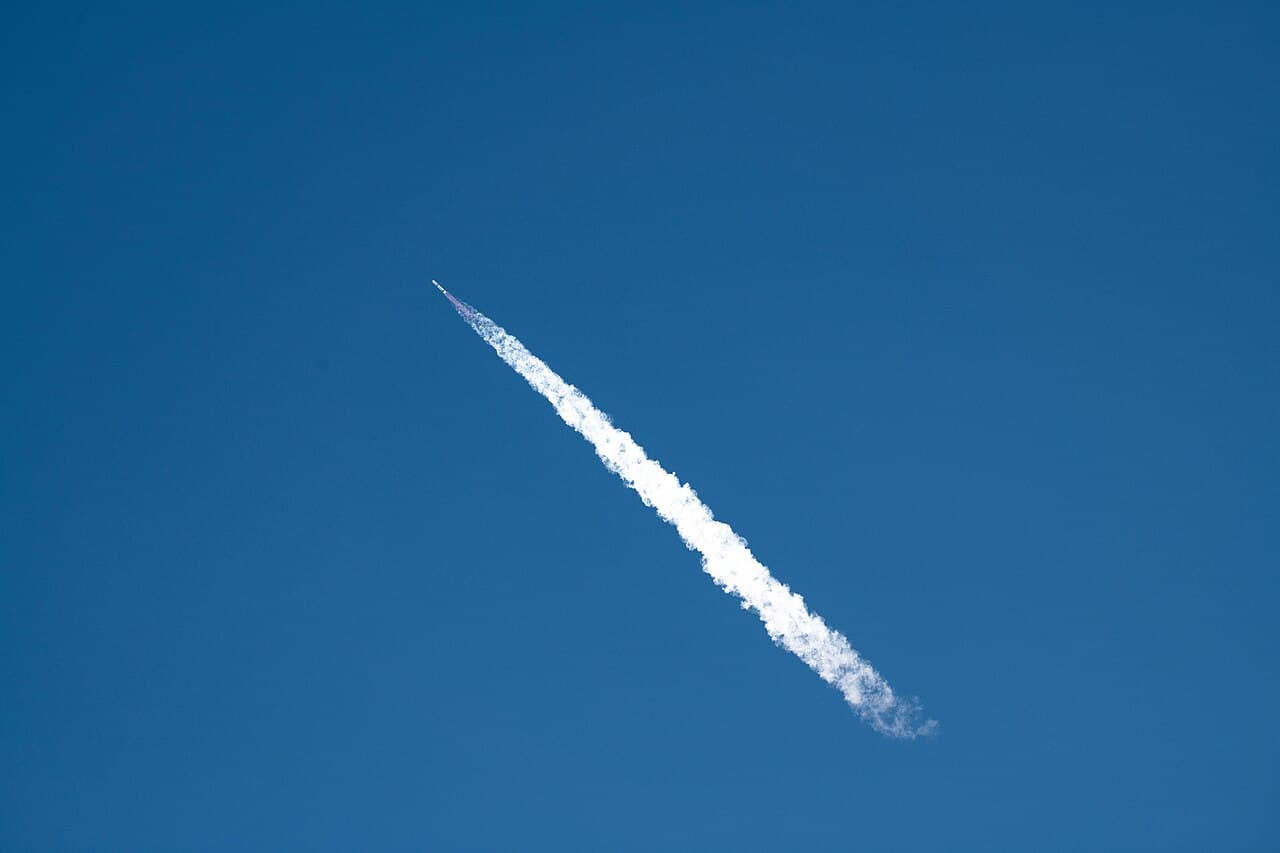
Heavy-lift orbital launch vehicle with a reusable first stage, designed for commercial, civil, and national security missions.
Blue Origin is a privately held aerospace company founded by Jeff Bezos that develops reusable launch vehicles, rocket engines, lunar landers, in-space mobility systems, and satellite communications infrastructure.
Latest update Oct 19, 2026
01
Its current programs span the New Shepard suborbital system, the New Glenn heavy-lift rocket, the BE-4 engine family that also powers ULA's Vulcan, the Blue Moon lunar lander family, the Blue Ring spacecraft platform, and the TeraWave network. The FAA closed its NG-3 mishap investigation and lifted the New Glenn grounding on May 22, 2026, but on May 28 a New Glenn exploded during a hotfire at LC-36. CEO Dave Limp still targets a flight before year-end via a hybrid crane-erect path; the June 30 return-to-flight page remains at Phase 3, and NG-4 has not flown. ETH Zurich said Oct. 2 that Thomas Zurbuchen will join in January 2027 as senior vice president of Advanced Concepts; Blue Origin has not posted a matching statement, and the reporting line is unpublished. On Oct. 8 the company announced Constellation Park in Hutto, Texas, a 1.3 million-square-foot campus for TeraWave, Quartz and other satellite hardware; construction start and occupancy dates were not published. New Shepard remains paused. The roughly $700 million Mars Telecommunications Network award remains stayed by Rocket Lab's September 11 GAO protest.
blueorigin.comUpdated Oct 10, 2026
Analysis · 5 min read · Jun 24, 2026The long view on Blue Origin: strategy, technology and what to watch02
2026-2027
Launch the first full Blue Ring mission, expected to become the first fully commercial GEO space-domain-awareness mission, carrying Optimum Technologies' Caracal sensor with Scout Space's Owl payload and internal payloads. Blue Origin has integrated the flight vehicle's primary structure, internal harnessing, and core propulsion module, but launch timing remains gated by New Glenn's return to flight after the LC-36 explosion; reverified September 12, 2026, no firmer date has been reported, though NASA's Sept 1 award of a Blue Ring-based Mars Telecommunications Orbiter (delivery by Dec 31, 2028) adds a second Blue Ring-derived flight in the same window.
Oct 30, 2026
TargetOctober 30, 2026 comment close
Dec 2026
With the FAA grounding lifted on May 22, 2026, the gating item for return-to-flight is rebuilding LC-36 after the May 28 hotfire explosion. Rather than replace the destroyed transporter-erector, Blue Origin adopted a hybrid horizontal-integration/crane-erect concept of operations (detailed June 30, 2026). On August 5, 2026 Blue Origin identified the root cause as a faulty main oxygen valve on one of the booster's seven BE-4 engines. On September 15, 2026 the Orlando Sentinel reported Limp posting drone imagery of the rebuild: refurbished vehicle-access-tower modules were being restacked (new floors, pneumatics, electrical panels, backbone piping; elevator moved to the side of the tower), Never Tell Me the Odds was intact and headed to the integration facility, and a new upper stage had shipped to Stennis. Reverified September 18, 2026: Blue Origin was still targeting a return to flight before year-end 2026 once LC-36A is ready, with no LC-36A completion date or firm NG-4 launch date yet announced. The next New Glenn mission, NG-4 (payload LN-01: 48 Amazon Leo satellites), still depends on that rebuild.
End of 2026
Grow the newly launched Quartz ground-station-as-a-service network from its first three live sites (Bermuda, New Zealand, Australia) to nine sites worldwide by the end of 2026, adding larger 9-meter L/S/X/Ka-band antennas at later sites to support GTO, GEO, and cislunar missions alongside the initial 3.7-meter S/X-band stations. Built with partner RBC Signals, which is supporting site surveys, antenna procurement, deployment, and hosting. Reverified September 12, 2026: Blue Origin has not announced a fourth live site, so the count remains three of nine.
Mid-December 2026
NASA has suspended performance of the roughly $700 million Mars Telecommunications Network contract after Rocket Lab's September 11, 2026 Government Accountability Office protest. Federal bid-protest rules give GAO up to 100 days to rule, putting a decision around mid-December 2026. Until then Blue Origin cannot proceed on the Blue Ring-based Mars Telecommunications Orbiter that NASA still wants delivered by December 31, 2028.
NET Q1 2027
Fly the first Blue Moon Mark 1 cargo lander ('Endurance') to the Moon's south pole (Shackleton Connecting Ridge), validating up to 3-tonne cargo delivery, cryogenic propulsion, and autonomous GN&C. The lander has cleared thermal vacuum testing at NASA Johnson, radio-frequency compatibility testing at Lunar Plant 1, and (per an August 4, 2026 NASA Moon Base update) communications checkouts with TDRSS and the Deep Space Network; cryogenic propellant-loading tests are the next step before final launch integration. That same August 4, 2026 NASA Moon Base update is the first NASA material to explicitly confirm a first-quarter-2027 target for the mission. Reverified September 12, 2026: Blue Origin's newsroom still has no newer Endurance date, and the mission remains gated on New Glenn's return to flight.
Spring 2027
Orbital Reef, co-led with Sierra Space and founding partner Boeing (which is contributing a science module and plans to ferry crew via Starliner), is Blue Origin's bid for NASA's Commercial LEO Destinations Phase 2 award against Axiom, Vast, and Starlab. NASA posted a CLDC presolicitation on September 4, 2026 saying the final Phase 2 RFP is now anticipated at the end of September 2026, with offers due 60 days after release and award still targeted for spring 2027. A standalone Sierra Space LIFE pathfinder launch in late 2026 could not be re-confirmed; the near-term gate for Orbital Reef is the Phase 2 bid, not a dated inflatable demo. Watch for the final RFP drop.
2027
Target2027 (Artemis III LEO docking test); NET early 2028 (first crewed landing, lander TBD)
NASA's February 27, 2026 Artemis architecture overhaul restructured Blue Origin's original 2023 HLS award: Artemis III is no longer a lunar landing but a crewed low-Earth-orbit test flight in which Orion will dock in turn with prototypes of Blue Origin's Blue Moon Mark 2 and SpaceX's Starship HLS (crew named June 9, 2026 at Johnson Space Center), targeted for 2027. NASA has pushed the program's first crewed lunar landing to Artemis IV, targeted as soon as early 2028, with a second landing (Artemis V, starting lunar-base construction) as soon as late 2028 - and has left open which of the two landers, Blue Moon or Starship, flies the first landing, to be decided based on Artemis III performance. Blue Origin's original $3.4B NASA award still underwrites Mark 2 development regardless of mission order. NASA Administrator Jared Isaacman reaffirmed the 2027 Artemis III / early-2028 Artemis IV framework on August 14, 2026, tying it to SpaceX's Starship flight cadence rather than to any change on Blue Origin's side. Reverified September 12, 2026: no later NASA or Blue Origin announcement has moved those dates.
Q4 2027
Begin deploying the 5,408-satellite TeraWave broadband network (5,280 LEO + 128 MEO satellites in Q/V-band) on New Glenn rockets, delivering up to 144 Gbps LEO and 6 Tbps MEO optical capacity for enterprise, data center, and government customers worldwide. Blue Origin's roadmap ties TeraWave's larger satellite batches to the upgraded New Glenn 9x4 variant rather than the current 7x2 vehicle. Blue Origin's FCC application (filed January 2026) remains in regulatory review; reverified in late August 2026, the Q4 2027 deployment start is unchanged. Bloomberg reported September 3, 2026 that Blue Origin has hired at least 47 Amazon Leo veterans over the past year - including a director of recruiting and two vice presidents since March - to build out the TeraWave team, a sign of ramping investment ahead of deployment.
Dec 2027
Following the August 31, 2026 groundbreaking, complete construction of the roughly 120,000-square-foot payload processing facility at Cape Canaveral Space Force Station (four payload-processing bays, two encapsulation bays, four multi-manifest bays), funded via a $78.25M Space Force NSSL award plus Blue Origin's own investment (~$160M total), sized to support up to 16 missions per year for government and commercial customers. Spectrum News 13, reporting from the groundbreaking, said the facility is expected to be completed by December 2027 (WFTV the same day said early 2028). Re-verified September 18, 2026: no later construction-progress update has superseded that December 2027 completion target.
Dec 31, 2028
TargetBy Dec 31, 2028 (delivery); operational at Mars by 2030
Following NASA's ~$700M contract award, design, build, integrate, and launch a Mars Telecommunications Orbiter built on the Blue Ring platform, delivering it to NASA no later than December 31, 2028, with the relay network expected operational at Mars by 2030. This adds a deep-space communications line to Blue Origin's in-space services business alongside Blue Ring's national-security missions. On September 11, 2026 Rocket Lab filed a Government Accountability Office protest of the award, and federal bid-protest rules then stayed contract performance pending a ruling around mid-December 2026. The December 31, 2028 delivery date stands unless the protest changes the outcome.
Date not announced
TargetDate not published by Blue Origin
03
On October 16, 2026 Blue Origin operations chief Ian Richardson said Florida infrastructure is designed to support multiple New Glenn flights a week by the end of the decade. A $330 million Rocket Park expansion, targeted for summer 2027, is meant to produce up to 150 New Glenn 9x4 upper stages a year. The company said it will add two more pads, using the LC-36B construction approach, after investing more than $3 billion in Florida facilities that employ more than 5,000 people.
On Oct. 8, 2026 Blue Origin said it will build Constellation Park, a 1.3 million-square-foot manufacturing campus in Hutto, Texas, as a production hub for satellite and communications programs, adding more than 2,000 manufacturing and related jobs over 10 years. Texas Governor Greg Abbott said Blue Origin Manufacturing LLC will make a $554,780,000 capital investment and that a performance-based Texas Enterprise Fund grant of $18,171,000 plus a $10,000 Veteran Created Job Bonus have been extended. Blue Origin and the city of Hutto have not published a construction start or occupancy date.
ETH Zurich said on October 2, 2026 that Thomas Zurbuchen, NASA associate administrator for science from 2016 to 2022 and head of ETH Zurich Space since 2023, will leave the university for Blue Origin. He told ETH he will start in January 2027 as senior vice president leading Blue Origin's Advanced Concepts team in the United States, which develops next-generation systems for living and working in space. Blue Origin's newsroom had not posted a matching item as of October 5; SpaceNews reported the hire from Antalya on October 4.
On September 29, 2026 the FAA published a Federal Register notice and draft environmental assessment of Blue Origin's proposal to modify vehicle operator license VOL 24-133 and raise the New Glenn cap at Cape Canaveral Space Launch Complex 36 from 12 to 50 launches a year. The Proposed Action also covers associated static-fire testing, downrange first-stage ocean-platform landings, payload-fairing recovery and related airspace closures, and would not include new construction. Comments close October 30, 2026, with a virtual public meeting on October 22; completing the environmental review would not by itself grant the license modification.
www.federalregister.gov www.floridatoday.com talkoftitusville.com
NASA said on September 29 it added Blue Origin's New Glenn 9x4 launch service to the NASA Launch Services II contract under the annual on-ramp clause, making that configuration eligible to compete for future missions. The addition is not a mission award; New Glenn 7x2 is already on NLS II. NASA described NLS II as multiple-award IDIQ contracts with ordering through June 2030 and performance through December 2032.
The Wall Street Journal reported that Blue Origin has raised $10 billion in its first financing round with outside investors, valuing the company at about $140 billion. Jeff Bezos is putting in $2 billion of that total, taking his cumulative investment to about $30 billion. The company has not issued a confirming release, and the Journal said additional commitments could still enlarge the round.
Rocket Lab said on September 11, 2026 it filed a Government Accountability Office protest of NASA's roughly $700 million Mars Telecommunications Network award to Blue Origin. The company argued the decision looks inconsistent with eligibility rules set by Congress and that NASA's review of Rocket Lab's technical volume made incorrect assertions. NASA selected Blue Origin on September 1 to deliver a Blue Ring-based Mars orbiter by December 31, 2028, with operations targeted for 2030.
France's space ministry said SpaceX, Blue Origin, Stoke Space and Starcloud canceled attendance at President Emmanuel Macron's International Space Summit in Paris on September 9-10 after the White House Office of Science and Technology Policy hosted a call with US firms planning to go. Reuters, citing people familiar with the matter, said officials warned that showing up could be read as support for European space-policy positions Washington opposes, including the EU Space Act and mobile-satellite spectrum rules, but did not explicitly order a boycott. Some planned US-European announcements were also dropped; an OSTP official said the administration still looks forward to talks at the summit on science, exploration and space security.
Reuters (via WSAU) Politico Ars Technica + SpaceX+ Stoke Space+ Starcloud
Bloomberg reported September 3, 2026 that Blue Origin has hired at least 47 veterans of Amazon's Leo satellite venture over the past year, many now working on TeraWave, Blue Origin's planned enterprise-focused constellation. Recruits include satellite-testing, networking, avionics, radio, optical and software engineers, plus a TeraWave recruiting director and at least two vice presidents who left Amazon Leo since March. Neither company commented. TeraWave is seeking FCC authority for thousands of satellites, with first deployments targeted around late 2027.
NASA awarded Blue Origin a firm-fixed-price contract on September 1, 2026 with a maximum potential value of about $700 million to design, develop, launch, and operate the agency's Mars Telecommunications Network. Blue Origin must deliver a high-performance Mars telecommunications orbiter, built on its Blue Ring platform, no later than December 31, 2028, with the relay network expected to be operational at Mars by 2030 to carry science data, imagery, navigation, and mission communications for spacecraft on and around the planet.
Space Florida's investment committee heard on August 26 that Blue Origin plans a 140-foot-tall, 125,000-square-foot payload processing facility at Cape Canaveral Space Force Station, a $160 million capital project expected to create 23 jobs at an average salary of about $115,000. Space Florida management proposed up to $2.5 million in Florida DOT Spaceport Improvement Program matching funds, with the board scheduled to vote in early September, as Blue Origin rebuilds Launch Complex 36 after the May New Glenn pad explosion.
Blue Origin signed a temporary nine-acre lease with the Titusville-Cocoa Airport Authority at Space Coast Regional Airport on August 26, paying about $16,880 a month through June 2027 for contractor staging space along Challenger Avenue. The deal comes alongside a pending lease of the airport's former terminal building and sits near Blue Origin's roughly 100-employee light-manufacturing site on Grissom Parkway, part of the company's broader Space Coast buildout as it rebuilds its New Glenn launch complex at Cape Canaveral.
Blue Origin said August 13 it has begun a global rollout of Quartz, a new ground-station network for satellite communications, tracking and telemetry, with its first three 3.7-meter S-band and X-band antennas installed and tested in Bermuda, New Zealand and Australia as part of a nine-site buildout planned by year-end. The company built the network with partner RBC Signals, whose existing ground-station business will host the new sites and resell unused capacity to other satellite operators, giving Blue Origin a new infrastructure business alongside its rockets, landers and satellite programs.
Blue Origin said August 14 it has begun construction of a second Cape Canaveral launch pad, renaming its rebuilt existing pad LC-36A (for the current New Glenn 7x2) and building new LC-36B to host the larger New Glenn 9x4 variant. The buildout adds a new Vertical Integration Facility and a government-partnered Payload Processing Facility supporting both New Glenn variants and other national security launch providers, using about 2,500 tons of steel to assemble a roughly 700-foot launch tower.
Blue Origin CEO Dave Limp said August 5 that a malfunctioning main oxygen valve on one of the BE-4 engines caused the New Glenn rocket's static-fire explosion at Cape Canaveral's Launch Complex 36 in late May, a finding confirmed through hardware recovery and inspection. The company is making small modifications to the valve that can be retrofitted to existing engines by the end of August, while continuing to repair the launch pad; Blue Origin still expects to return New Glenn to flight by year-end. United Launch Alliance, whose Vulcan rocket also uses the BE-4 engine, has said it is collaborating with Blue Origin on the investigation.
04
Heavy-lift orbital launch vehicle with a reusable first stage, designed for commercial, civil, and national security missions.
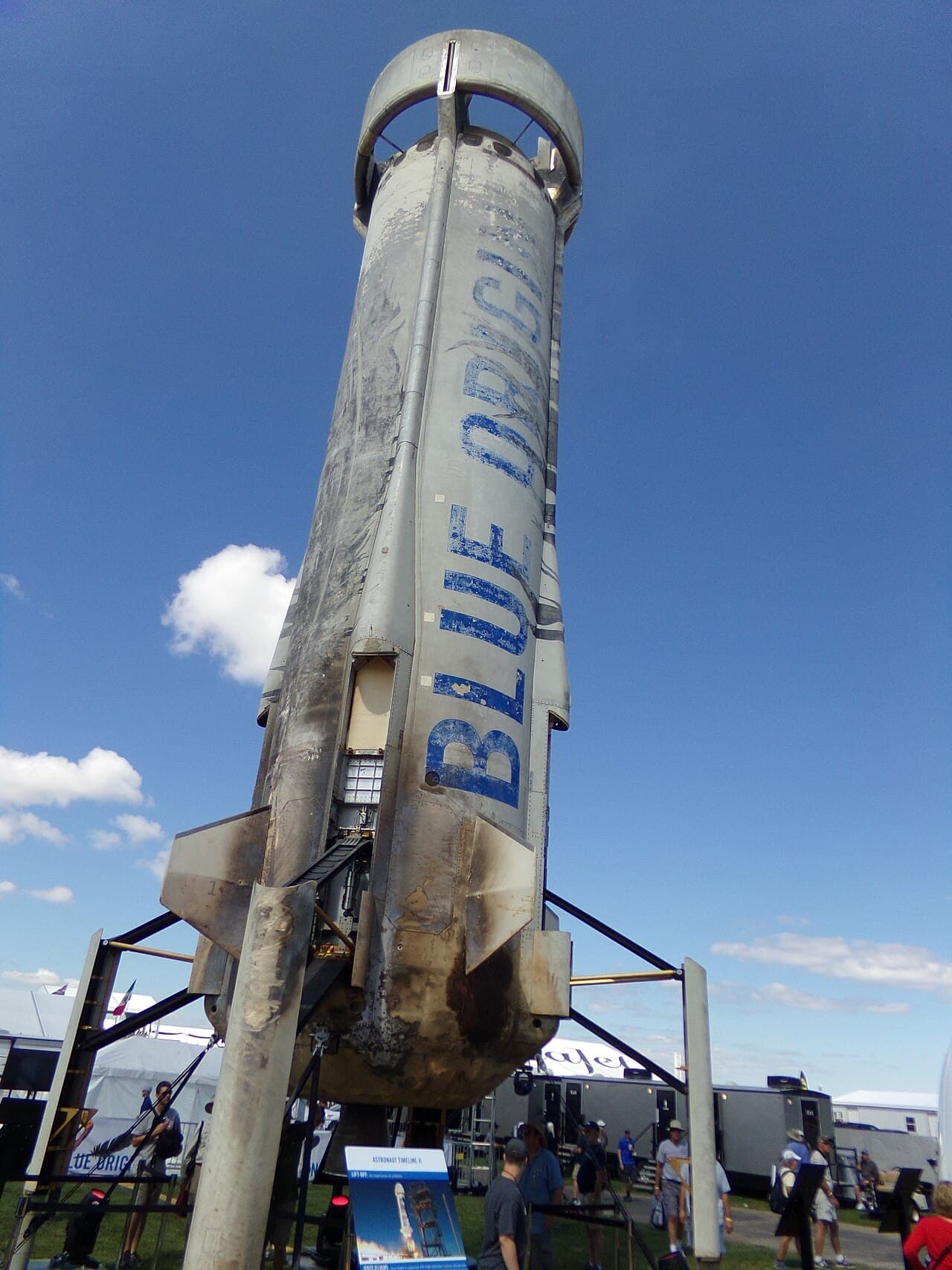
Suborbital launch vehicle for space tourism and research, capable of fully autonomous vertical landing and reuse.
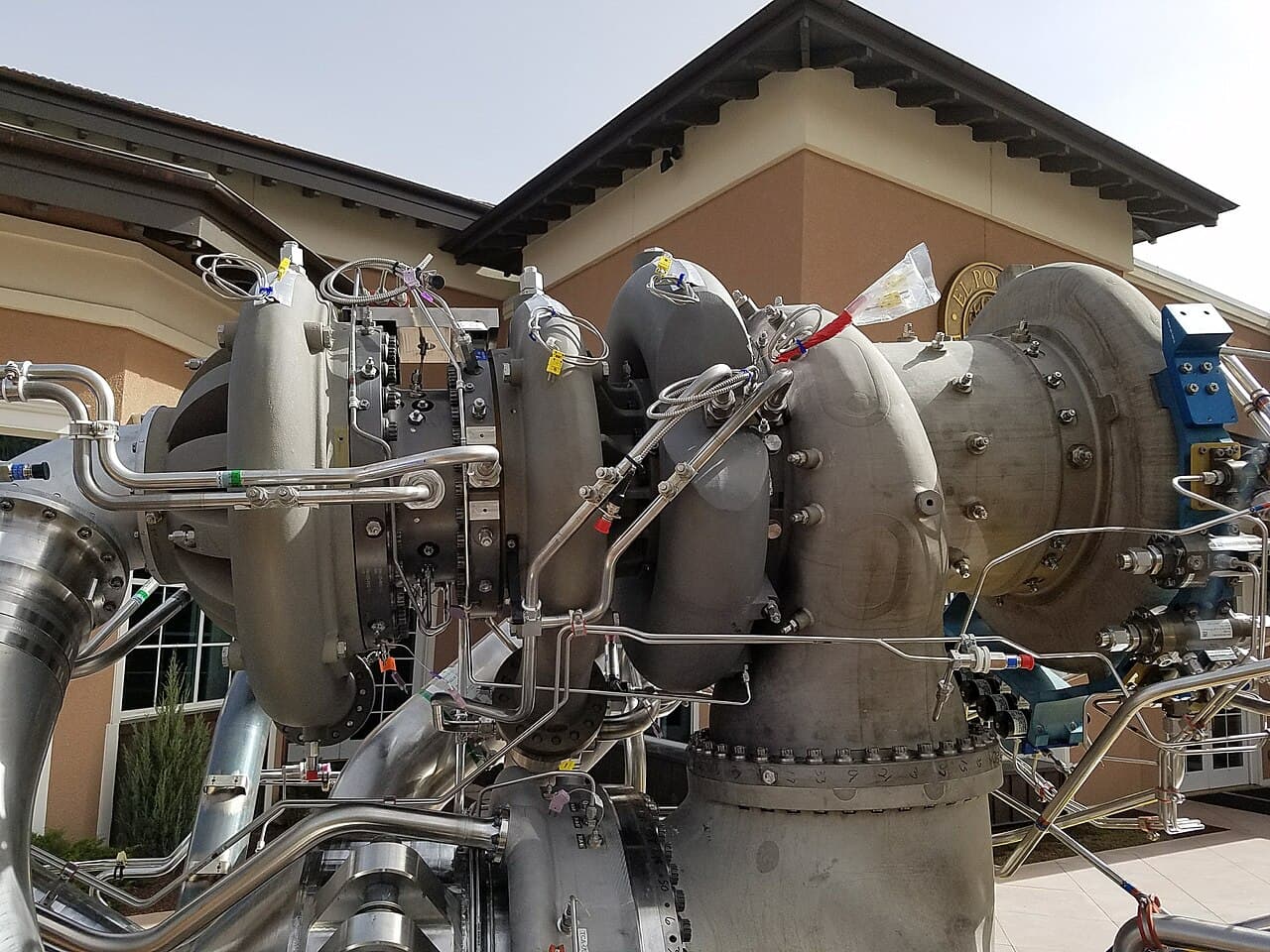
Liquid oxygen/liquefied natural gas (methane) rocket engine - the first American-made oxygen-rich staged combustion engine. Powers New Glenn and ULA Vulcan Centaur.
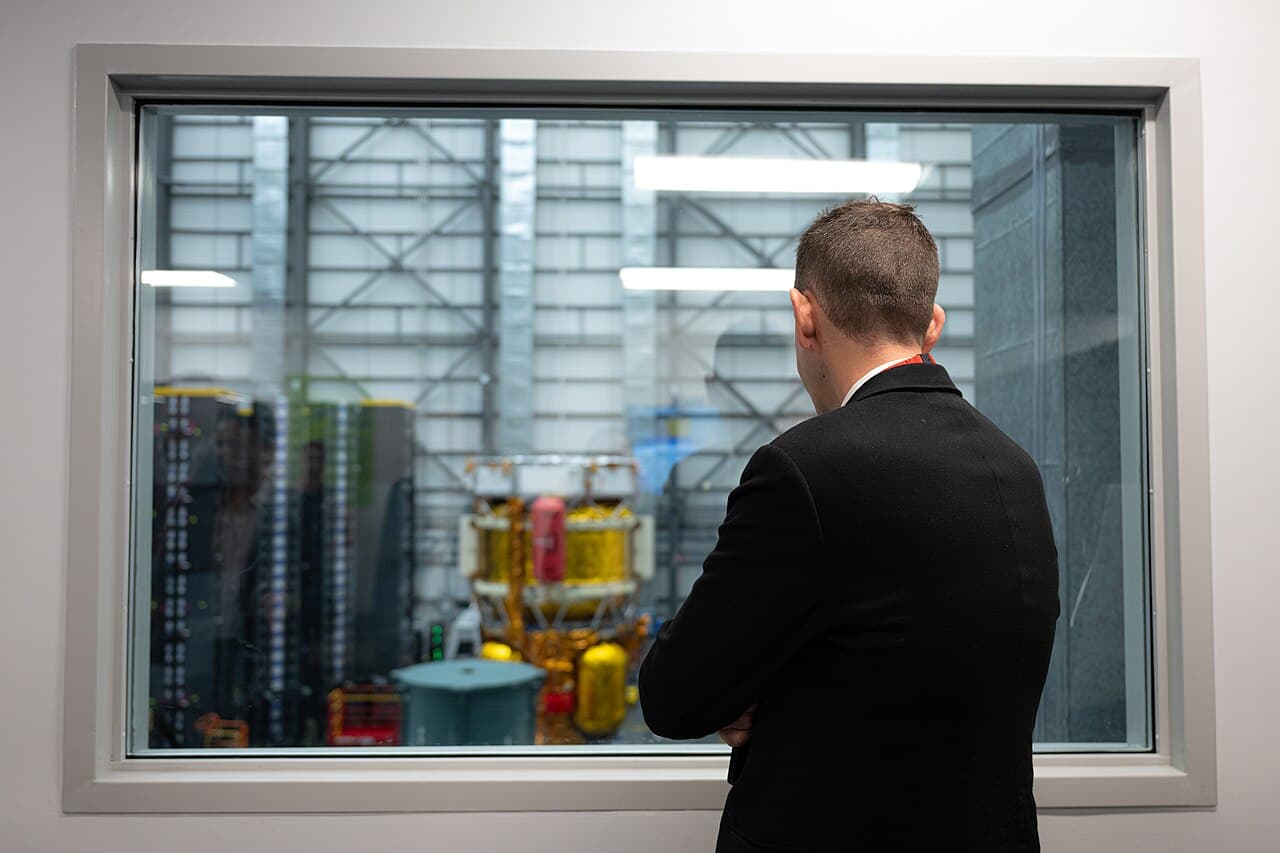
Lunar landing system family with a cargo-focused Mark 1 variant and a crew-capable Mark 2 variant being developed for NASA's Artemis program.
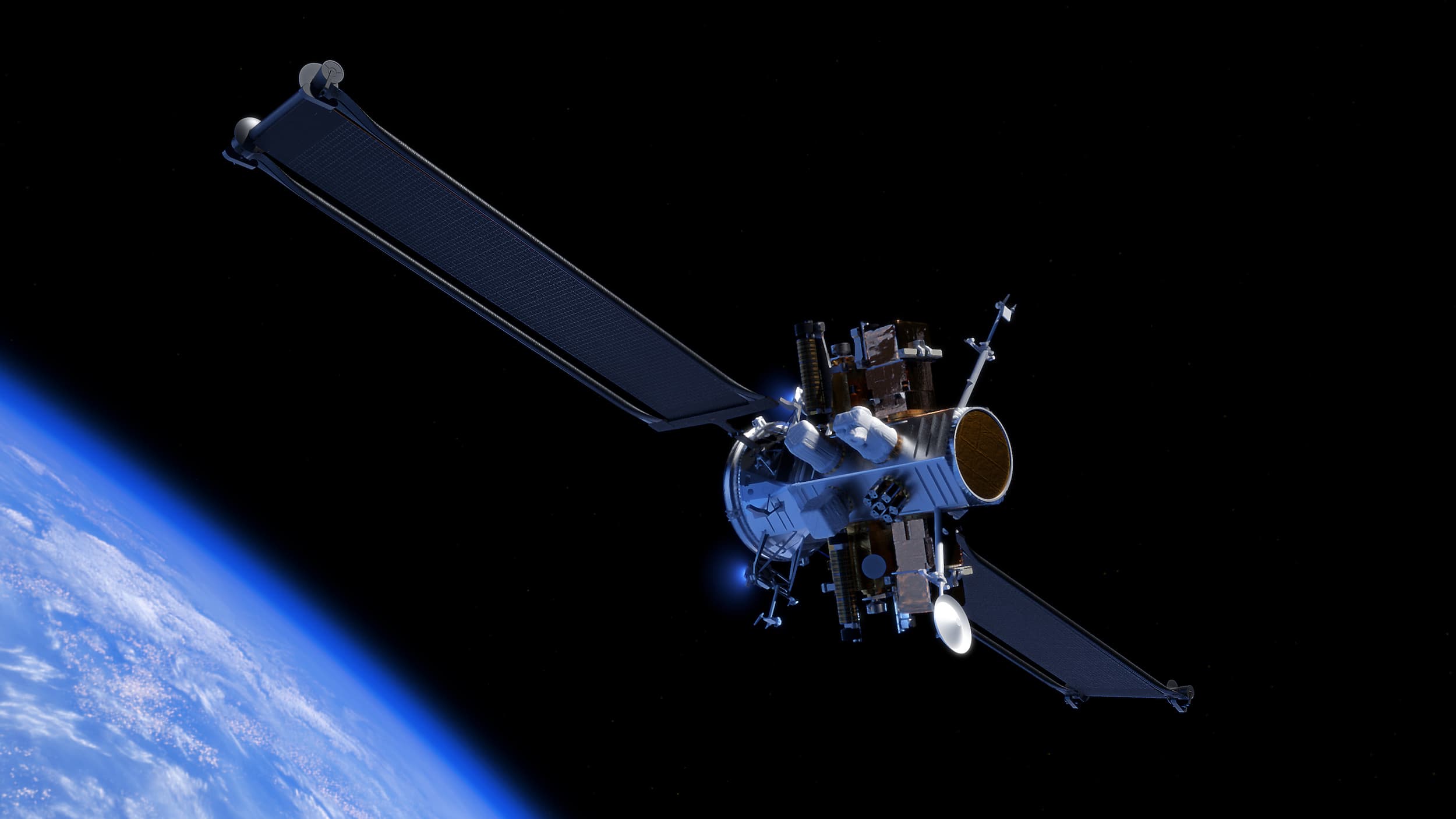
Multi-mission in-space transport platform with hybrid chemical and solar-electric propulsion, providing hosting, transportation, refueling, data relay, and in-space cloud computing services.
Enterprise broadband satellite constellation with 5,408 optically interconnected satellites across LEO and MEO, delivering up to 6 Tbps symmetrical data speeds for enterprise, data center, and government customers.
Commercial space station project co-led by Blue Origin and Sierra Space, with partners, as a mixed-use 'business park in space' for research, industrial, international, and commercial customers in low Earth orbit, built around Sierra Space's inflatable LIFE habitat. It is the slowest-advancing of the four major US commercial-station programs and remains Blue Origin's bid for NASA's Commercial LEO Destinations Phase 2 competition (draft RFP released July 6, 2026).
Ground-station-as-a-service network providing communications, tracking, and telemetry (TT&C) access for satellite operators, built with partner RBC Signals.
05
(July 2026, first external round; ~$10B raised) - unchanged; no new round or IPO reported as of September 18, 2026
(~$1B/year average; includes the ~$2B Bezos put into the July 2026 outside funding round). Unchanged as of September 18, 2026; no later cumulative-investment figure published
unchanged; NG-4 has not yet flown - FAA grounding lifted May 22, 2026; LC-36 pad rebuild underway after May 28 hotfire explosion, root-caused Aug 5, 2026 to a BE-4 main oxygen valve. On September 15, 2026 Limp reported vehicle-access-tower modules being restacked and Never Tell Me the Odds intact, still targeting return-to-flight before year-end 2026; no firm NG-4 date as of September 18, 2026
unchanged; program paused for ≥2 years from Jan 30, 2026, no flights since; Blue Origin's newsroom still lists NS-38 as the last flight as of Sept 12, 2026
unchanged since the program's January 2026 pause; no later crewed flight announced as of Sept 12, 2026
unchanged since the program's January 2026 pause; no later payload flight announced as of Sept 12, 2026
06
Operating status
Partially operational; Florida capacity plan published; LC-36 rebuild continues
Rechecked Oct. 19, 2026. The Oct. 16 Richardson post plans additional New Glenn launch pads on the Space Coast without a count or named sites, and separately says two more landing platforms are underway at Port Canaveral. It does not change the year-end New Glenn return-to-flight target. LC-36A restoration continues with no completion date. The newsroom still has no Zurbuchen item. The Oct. 8 Constellation Park post still has no construction-start or occupancy date. ETH Zurich's Oct. 2 interview does not say who Advanced Concepts reports to. New Shepard remains paused.
Commercial, civil, and national security orbital launches for customers including Amazon Project Kuiper, AST SpaceMobile, NASA, Eutelsat, and Telesat.
Production of reusable methane-fueled BE-4 engines for Blue Origin's own vehicles and for ULA's Vulcan launch vehicle. Following the May 28, 2026 New Glenn explosion (root-caused Aug 5 to a BE-4 main oxygen valve), Blue Origin is retrofitting the modified valve into BE-4 engines already delivered to ULA at its Decatur, Alabama factory and Cape Canaveral facilities as part of Vulcan's own return-to-flight effort.
Blue Moon MK2 human landing system development for NASA's Artemis V lunar landing campaign, plus Blue Moon MK1 cargo-lander delivery services - including a May 2026 NASA CLPS award ($188M, plus a $280.4M option) to deliver Astrolab and Lunar Outpost Lunar Terrain Vehicles to the Moon's south pole in 2028.
Suborbital astronaut flights and research missions flown by New Shepard. The business is paused for no less than two years while resources shift toward lunar development.
In-space payload delivery, hosting, logistics, and space-domain-awareness missions using the Blue Ring platform for commercial and national security customers.
Mars Telecommunications Network (NASA)
NASA-funded deep-space communications infrastructure: a firm-fixed-price contract worth up to $700M, awarded in 2026, to design, build, launch, and operate a Mars Telecommunications Orbiter built on the Blue Ring platform, delivering it to NASA by December 31, 2028 for network operations at Mars by 2030.
TeraWave Enterprise Connectivity
Planned high-throughput satellite communications services for enterprise, data center, and government customers using Blue Origin's TeraWave network.
Rocket Cargo / Point-to-Point Logistics (REGAL)
Under a U.S. Air Force Research Laboratory REGAL study contract (expanded July 31, 2026 from about $1.3M to roughly $13M), Blue Origin is defining technical and mission requirements for point-to-point military cargo delivery via its launch vehicles - an early-stage, pre-revenue research line alongside Anduril, Sierra Space, and Rocket Lab's parallel REGAL awards.
Ground-station-as-a-service network offering satellite operators communications, tracking and telemetry access, launched August 13, 2026 with RBC Signals as build/hosting partner. First three 3.7-meter S/X-band sites are live in Bermuda, New Zealand and Australia, with a nine-site global buildout planned by year-end.
07
How past announced dates turned out.
0/1announced date hit on time
Bring the Cape Canaveral payload processing facility to initial operational capability
Target Early 2027 · Resolved Sep 18, 2026
The August 31, 2026 groundbreaking was initially recorded against an early-2027 initial-operational-capability target. Spectrum News 13, reporting from the same groundbreaking, said the 120,000-square-foot facility is expected to be completed by December 2027; WFTV the same day said early 2028. The nextSteps entry is re-dated to December 2027. Construction continues; the facility has not been cancelled.
08
2026
Plans more Florida launch pads and two landing platforms
On Oct. 16, 2026 Ian Richardson, senior vice president of operations, said Florida infrastructure is designed to support multiple New Glenn flights a week by the end of the decade. The company post says a $330 million Rocket Park expansion is underway and, when complete in summer 2027, will enable up to 150 New Glenn 9x4 upper stages a year. LC-36A is being restored after this year's anomaly, and LC-36B is under construction for New Glenn 9x4. Additional New Glenn launch pads are planned on the Space Coast to join the two at LC-36, but the post does not give a count or name sites. It says those pads will be rapidly sited by replicating the LC-36B approach. Separately, work is underway on two more landing platforms at Port Canaveral, in addition to Jacklyn. The post does not state a return-to-flight date. Spaceflight Now reported the same day that Jeff Bezos had said earlier in the month the company was still pushing to fly New Glenn 7x2 before year-end, so the Oct. 16 post does not move that year-end LC-36A target.
Announces Constellation Park campus in Hutto, Texas
On Oct. 8, 2026 Blue Origin said it will build Constellation Park, a 1.3 million-square-foot multi-facility manufacturing campus in Hutto, Texas, as a central production hub for satellite and communications programs. The company said the site will add more than 2,000 manufacturing and related jobs over the next 10 years on top of more than 550 current Texas employees. Governor Greg Abbott said Blue Origin Manufacturing LLC is making a $554,780,000 capital investment and that a performance-based Texas Enterprise Fund grant of $18,171,000 and a $10,000 Veteran Created Job Bonus have been extended. Construction start and occupancy dates were not published.
Names Zurbuchen SVP of Advanced Concepts
ETH Zurich said on October 2, 2026 that Thomas Zurbuchen, NASA associate administrator for science from 2016 to 2022 and head of ETH Zurich Space since August 2023, will join Blue Origin in January 2027 as senior vice president leading the Advanced Concepts team in the United States. Zurbuchen said the team develops new concepts and systems for living and working in space. Blue Origin's newsroom had not posted a matching announcement as of October 5. SpaceNews reported the hire from Antalya on October 4.
NASA adds New Glenn 9x4 to Launch Services II contract
On September 29, 2026 NASA contract release C26-013 said the agency added Blue Origin's New Glenn 9x4 launch service to the NASA Launch Services II contract under the on-ramp clause. The 9x4 service becomes available to the Launch Services Program at Kennedy Space Center for future missions; it is not a specific mission award. NLS II is a multiple-award IDIQ vehicle with ordering through June 2030 and performance through December 2032. Defense News said the 9x4 sits alongside the existing New Glenn 7x2 on the contract.
FAA drafts EA on 50 New Glenn launches a year at SLC-36
On September 29, 2026 the FAA published a draft environmental assessment and Federal Register notice (Docket FAA-2026-9841) on Blue Origin's proposal to modify vehicle operator license VOL 24-133 and raise the New Glenn annual launch cap at SLC-36 from 12 to 50, including associated static-fire tests, downrange booster landings, fairing recovery and airspace closures. The Proposed Action would not include new construction. Public comments close October 30, 2026. Completing the environmental review does not itself approve the license change.
WSJ reports $10B first outside round at about $140B
The Wall Street Journal reported on September 24, 2026 that Blue Origin has raised $10 billion in its first financing round with outside investors, valuing the company at about $140 billion. Bezos is contributing $2 billion of that amount, taking his cumulative investment to about $30 billion. The Journal said additional commitments could still increase the size of the round. July reporting had described a $10 billion raise at a $130 billion pre-money valuation with Coatue expected to lead. Blue Origin has not published a confirming release.
Limp reports 'incredible progress' restacking LC-36 vehicle access tower
On September 15, 2026 the Orlando Sentinel reported CEO Dave Limp posting side-by-side drone images of Launch Complex 36 showing the May 29 damage versus more than three months of rebuild. Refurbished vehicle-access-tower modules - fitted with new floors, pneumatics, electrical panels, and backbone piping, with the elevator moved to the side of the tower to free floor access for the crane-erect concept of operations - had begun returning to the pad for restacking. Limp said Never Tell Me the Odds, the twice-flown booster that survived inside the integration facility, was alive and well and on the way to the IF, and a new upper stage had shipped to NASA Stennis for hot-fire testing. Blue Origin still targets a New Glenn return to flight before the end of 2026; NG-4 has not flown.
Rocket Lab protests NASA Mars Telecommunications Network award
On September 11, 2026 Rocket Lab filed a Government Accountability Office protest of NASA's September 1 award of the roughly $700 million Mars Telecommunications Network contract to Blue Origin. Rocket Lab said the decision appears inconsistent with congressional eligibility criteria and that NASA's technical-volume review made incorrect assertions. The award still calls for Blue Origin to deliver a Blue Ring-based Mars Telecommunications Orbiter by December 31, 2028, with operations targeted for 2030, unless the protest changes the outcome.
2026
Stands up an independent second-stage test stand at Merritt Island (MILA)
Trade-press reporting in early September 2026 reveals Blue Origin is quietly building its own New Glenn second-stage (GS2) hot-fire test stand at the Merritt Island Launch Area (MILA), a KSC site near its Exploration Park campus, separate from the Stennis Space Center B-2 stand arrangement agreed with NASA in July and independent of however long the Launch Complex 36 rebuild takes. FAA antenna structure filings submitted July 17, 2026 describe four permanent, roughly 42.7-meter (140 ft) steel lightning-protection masts at the site, followed by subsequent filings for cranes and aerial work platforms to support construction, pointing to an active build-out rather than a paper plan.
Report: hires dozens of Amazon Leo veterans for TeraWave
Bloomberg reports on September 3, 2026 that Blue Origin has hired at least 47 alumni of Amazon's Leo satellite venture over the past year, according to their LinkedIn profiles, with expertise spanning satellite testing, networking, avionics, radio communications, optical systems, and software. Many now work on TeraWave, Blue Origin's own broadband constellation; a TeraWave director of recruiting and at least two vice presidents have joined from Amazon Leo since March 2026. CEO Dave Limp previously led the Amazon Leo (formerly Project Kuiper) division before joining Blue Origin.
NASA awards $700M Mars Telecommunications Network contract
NASA selects Blue Origin as the provider for its Mars Telecommunications Network, a firm-fixed-price contract with a maximum potential value of about $700 million, following a request for proposal issued in May 2026 (Blue Origin beat Rocket Lab for the award). Blue Origin must deliver a Mars Telecommunications Orbiter (MTO) to NASA no later than December 31, 2028, with the network expected operational at Mars by 2030. The MTO is built on Blue Origin's Blue Ring in-space mobility platform (hybrid solar-electric/chemical propulsion, roll-out solar arrays) and will carry multiple steerable high-rate links plus a wide-area beam to relay science data, imagery, and navigation and communications support for current and future NASA Mars missions, managed under NASA's Space Communications and Navigation (SCaN) program.
Breaks ground on Cape Canaveral payload processing facility
On August 31, 2026 Blue Origin held a groundbreaking for its new payload processing facility at Cape Canaveral Space Force Station - roughly 120,000 square feet with four payload-processing bays, two encapsulation bays, and four multi-manifest bays, sized to support up to 16 missions a year for both government and commercial customers (other launch providers included). The project traces to a $78.25M Space Force NSSL Space Vehicle Processing award to Blue Origin in October 2025, combining with Blue Origin's own investment for a reported ~$160M total. Spectrum News 13, reporting from the ceremony, said the facility is expected to be completed by December 2027.
Adds Titusville staging area and airport terminal lease
The Titusville-Cocoa Airport Authority approved a temporary nine-acre staging-area agreement with Blue Origin along Challenger Avenue at Space Coast Regional Airport, running through June 30, 2027 at $16,880 per month, to accommodate the contractor buildout tied to the Launch Complex 36 rebuild. A pending follow-on agreement would have Blue Origin lease the airport's former terminal building for further property improvements, adding to its existing Merritt Island manufacturing and Cape Canaveral launch footprint.
Details $160M Cape Canaveral payload processing facility
On August 26, 2026 Space Florida's investment committee heard that Blue Origin plans a 140-foot-tall, 125,000-square-foot payload processing facility at Cape Canaveral Space Force Station, a $160 million capital project expected to create 23 jobs at an average salary of about $115,000. Space Florida management proposed up to $2.5 million in Florida DOT Spaceport Improvement Program matching funds, with the board scheduled to vote in early September, as Blue Origin rebuilds Launch Complex 36 after the May New Glenn pad explosion.
Begins construction on second pad, LC-36B, for New Glenn 9x4
On August 14, 2026 Blue Origin said it has begun construction of a second launch pad at Cape Canaveral's Launch Complex 36, renaming the rebuilt existing pad LC-36A (serving the current New Glenn 7x2) and building new LC-36B to host the larger New Glenn 9x4 variant. The buildout includes a new Vertical Integration Facility and, built in partnership with the U.S. government, a Payload Processing Facility supporting both New Glenn variants and other National Security Space Launch providers on the Eastern Range; Blue Origin is sourcing about 2,500 tons of steel to assemble the roughly 700-foot launch tower.
Launches Quartz ground station network
On August 13, 2026 Blue Origin said it has begun a global rollout of Quartz, a new ground-station network for satellite communications, tracking and telemetry, with the first three 3.7-meter S-band and X-band antennas installed and tested in Bermuda, New Zealand and Australia as part of a nine-site buildout planned by year-end. The network is built with partner RBC Signals, whose existing Global Ground Station Network will host the new sites and resell unused capacity to other satellite operators, giving Blue Origin a new ground-infrastructure business line alongside its launch, lander and connectivity programs.
BE-4 valve fix extends to ULA's grounded Vulcan fleet
Following the August 5, 2026 root-cause finding, Blue Origin begins retrofitting the modified BE-4 main oxygen valve into engines already delivered to ULA at its Decatur, Alabama factory and at Cape Canaveral. ULA has been separately grounded since a February 12, 2026 solid-rocket-booster nozzle burn-through on the USSF-87 mission (unrelated to BE-4), and says the BE-4 retrofit work is aligned with its own goal of returning Vulcan to flight before the end of 2026.
Blue Origin pins May 28 explosion on BE-4 oxygen valve
On August 5, 2026 CEO Dave Limp said hardware recovery and inspection confirmed the May 28 LC-36 hotfire explosion originated at the main oxygen valve on one of the BE-4 engines. Blue Origin is making small modifications to the valve that can be retrofitted to existing engines, with updated hardware ready by the end of August; the fix affects ULA's Vulcan as well, since it also flies the BE-4, and ULA has said it is collaborating with Blue Origin on the investigation. Blue Origin still targets returning New Glenn to flight by year-end 2026.
Air Force expands Blue Origin rocket cargo study to ~$13M
On July 31, 2026 the Air Force Research Laboratory adds $11.7 million to Blue Origin's REGAL (Rocket Experimentation for Global Agile Logistics) contract, growing it from about $1.3 million to roughly $13 million, to define technical and mission requirements for adapting Blue Origin vehicles to point-to-point military cargo delivery. Work is expected to run through October 2027; Anduril, Sierra Space, and Rocket Lab hold parallel REGAL awards.
NASA names Artemis III crew for LEO lander docking test
At a June 9, 2026 event at Johnson Space Center, NASA announces the crew for the restructured Artemis III mission, in which an Orion spacecraft will dock in Earth orbit in turn with prototypes of Blue Origin's Blue Moon Mark 2 and SpaceX's Starship human landing systems, validating crew transfer and docking ahead of the program's first Moon landing on Artemis IV.
NASA overhauls Artemis architecture, delays first Moon landing to Artemis IV
On February 27, 2026 NASA announces a restructured Artemis architecture: Artemis III becomes a crewed low-Earth-orbit test flight in which Orion docks in turn with prototype human landing systems rather than a lunar landing, and the program's first crewed Moon landing moves to Artemis IV, targeted as soon as early 2028, with Artemis V (a second landing beginning lunar-base construction) as soon as late 2028. NASA leaves open whether Blue Origin's Blue Moon Mark 2 or SpaceX's Starship HLS flies the program's first landing, to be decided based on Artemis III performance.
NASA and Blue Origin agree to New Glenn GS2 hot fire testing at Stennis
On July 24, 2026 NASA and Blue Origin announced an agreement to conduct hot fire testing of New Glenn's second stage (GS2) - powered by a pair of BE-3U engines burning liquid hydrogen and liquid oxygen for a combined ~400,000 lbf of vacuum thrust - on the historic B-2 test stand at NASA's Stennis Space Center in Mississippi, with testing targeted to begin this fall. The move follows the severe LC-36 damage from the May 28, 2026 hotfire explosion; NASA supplies engineers, specialized equipment, and facility modifications to ready the B-2 stand for the hydrogen-fueled stage, framing the partnership as advancing Artemis-related capability while Blue Origin's Cape Canaveral pad recovers.
Blue Origin raises ~$10B at $130B valuation in first outside round
On July 8, 2026 Blue Origin was reported to have raised about $10 billion at a $130 billion valuation - its first-ever external fundraising round after 26 years funded almost entirely by Jeff Bezos. Coatue Management committed roughly $4 billion and Bezos himself about $2 billion, with other large institutional investors covering the remaining ~$4 billion. The raise turns the company's long-signaled openness to outside capital into a concrete round, coming after the late-May New Glenn hotfire explosion and amid surging investor appetite for space following SpaceX's record IPO. The capital is earmarked for Blue Origin's heavy-lift rockets, lunar landers, and satellite constellations as Limp chases a ~100-launch-per-year cadence.
LC-36 debris cleared; hybrid recovery targets LC-36A this year, LC-36B in 2027
By early July 2026 Blue Origin said hardware recovery and debris removal at Launch Complex 36 were complete and reconstruction had begun following the May 28 hotfire explosion. Under the hybrid horizontal-integration/crane-erect plan, the company aims to have a rebuilt LC-36A ready by the end of 2026 for New Glenn's return to flight, and expects a second pad, LC-36B, in service by late 2027 to raise long-term launch cadence. Blue Origin reiterated it has insulated the Blue Moon lunar-lander program from the pad-recovery effort so risk-reduction testing continues on schedule.
Blue Origin details crane-based CONOPS for New Glenn return to flight
On June 30, 2026 Blue Origin outlined a redesigned launch-pad concept of operations for returning New Glenn to flight after the May 28 LC-36 explosion. Rather than replace the destroyed transporter-erector, the company will mate the rocket's stages horizontally in the integration facility, roll the integrated vehicle to the pad, and use a crane to raise it vertical, installing the payload only after the rocket is upright - an approach it says also increases long-term flight cadence. Blue Origin reiterated it aims to return New Glenn to flight by the end of 2026, and NASA Administrator Jared Isaacman called its response 'almost beyond impressive.'
LC-36 pad rebuild underway; Bezos and Limp report 'good progress'
Through mid-June 2026 Blue Origin begins rebuilding Launch Complex 36 after the May 28 hotfire explosion, with Jeff Bezos and CEO Dave Limp saying around June 17 that recovery is making good progress. The company reports that the propellant tanks and a processing hangar survived the blast and that the damaged main support gantry can be repaired in place, keeping a New Glenn return to flight before the end of 2026 - and a Blue Moon MK1 'Endurance' lunar launch this year - on the table.
Space Force awards Blue Origin first NSSL Phase 3 Lane 1 NRO mission
On May 28, 2026 - hours before the LC-36 hotfire explosion - the U.S. Space Force awarded Blue Origin its first National Security Space Launch Phase 3 Lane 1 task order (NRO Task Order-4), directing a National Reconnaissance Office satellite launch from Cape Canaveral in Q4 2027 or Q1 2028. Lane 1 is reserved for missions that can accept greater schedule and performance risk than the military's most critical payloads, giving Blue Origin an entry point into national security launch while New Glenn recovers. A May 29 Space Force press release confirmed it remains a 'committed partner' and that the ground-test explosion does not trigger disqualification under Phase 3 rules.
NASA taps Blue Origin to deliver first Moon Base lunar rovers
On May 26, 2026 NASA selected Blue Origin for two Commercial Lunar Payload Services task orders - worth $188M with a $280.4M option period - to deliver the first Lunar Terrain Vehicles to the Moon's south pole using Blue Moon Mark 1 landers launched on New Glenn. NASA is separately funding the rovers themselves: Astrolab's crewed CLV-1 ($219M) and Lunar Outpost's Pegasus ($220M), both LTVs targeted to launch in 2028 under the agency's Moon Base Phase One initiative. Blue Origin has begun work on two additional Blue Moon Mark 1 landers for the deliveries and, per July 2026 reporting, has insulated the lander program from the LC-36 pad-recovery effort by continuing risk-reduction testing on schedule.
Blue Origin weighs first-ever outside fundraising
Reporting in mid-May 2026 (GeekWire, TechCrunch, The Next Web) reveals that, after 26 years funded almost entirely by Jeff Bezos's annual ~$1B Amazon stock sales, Blue Origin is now exploring its first outside investment round. CEO Dave Limp tells staff that scaling to roughly 100 launches per year will require more capital than a single investor can provide. Capstone Partners estimates Blue Origin will spend ~$4.8B in 2026 with cumulative investment approaching $28B, amid a SpaceX IPO push that is reframing investor appetite for the sector.
Limp commits to New Glenn return-to-flight before year-end
On June 2, 2026 CEO Dave Limp posts that Blue Origin will fly New Glenn again before the end of 2026 despite the May 28 LC-36 explosion, citing better-than-expected pad damage: the propellant farm, water tower, an additional flight-ready booster, and three nearby upper stages all look in good shape. Blue Origin will pivot to an alternative vertical assembly approach rather than wait for a new transporter-erector and rules out skipping straight to the larger 9x4 New Glenn variant.
New Glenn explodes on pad LC-36 during hotfire test
On May 28, around 9 p.m. EDT, a New Glenn rocket bursts into a fireball during a static fire test at Cape Canaveral's Launch Complex 36 - Blue Origin's only New Glenn pad. The vehicle was being prepared to launch 49 Amazon Leo satellites as soon as June 4; no injuries are reported, but lightning towers and the transporter erector appear damaged, pushing the next New Glenn flight further into the future.
Blue Moon MK1 'Endurance' completes thermal vacuum testing at NASA Johnson
Blue Origin's first Blue Moon Mark 1 (Endurance) cargo lunar lander completes environmental testing inside Thermal Vacuum Chamber A at NASA's Johnson Space Center in Houston, with structural and thermal integrity verified ahead of radio-frequency compatibility testing at Lunar Plant 1. Endurance is being prepared for a launch to the lunar south pole later in 2026 on New Glenn.
Announces $600M 'Project Horizon' upper-stage manufacturing expansion
On May 22, 2026 Florida Governor Ron DeSantis announced that Blue Origin will invest $600 million to build an approximately 830,000-square-foot upper-stage manufacturing facility at its Rocket Park campus in Merritt Island, dubbed Project Horizon, to increase New Glenn upper-stage production volume. The expansion is expected to create about 500 aerospace jobs with an average salary above $98,000.
FAA closes NG-3 investigation and clears New Glenn to fly again
On May 22, 2026 the FAA approves Blue Origin's mishap report and lifts the New Glenn grounding. Blue Origin identifies the root cause as a cryogenic leak that froze a hydraulic line, causing an off-nominal thermal condition before the second BE-3U burn and a thrust shortfall. Nine corrective actions are committed before NG-4.
New Glenn reuses booster but misses customer orbit; FAA grounds vehicle
New Glenn's third flight (April 19) reuses and lands a first-stage booster, but one of two upper-stage BE-3U engines underperforms during the second burn, leaving AST SpaceMobile's BlueBird 7 in too low an orbit. The FAA issues a launch moratorium, grounding New Glenn pending an investigation that is compounded by separate ground-facility damage.
New Shepard paused for 2+ years
After 38 flights, 98 humans flown to space, and more than 200 research payloads, Blue Origin pauses New Shepard flights for no less than two years to redirect resources toward its lunar human flight program.
TeraWave satellite constellation announced
Blue Origin unveils TeraWave, a 5,408-satellite broadband network across LEO and MEO delivering up to 6 Tbps for enterprise and government customers, with deployment beginning Q4 2027.
2025
New Glenn 9x4 super heavy variant announced
Blue Origin unveils the New Glenn 9x4 roadmap variant, designed to carry more than 70 metric tons to low Earth orbit with a larger 8.7-meter fairing alongside the existing 7x2 vehicle.
New Glenn booster landing success
On its second flight (NG-2) in November 2025, New Glenn successfully lands its first-stage booster on the drone ship Jacklyn while deploying NASA's ESCAPADE Mars probes - a historic achievement on only the rocket's second attempt.
The U.S. Space Force awards Blue Origin a National Security Space Launch Phase 3 Lane 2 contract with an anticipated value of about $2.386 billion. Blue Origin is projected to receive seven missions starting in order year 2 as it completes eligibility milestones.
NASA awards VIPER lunar delivery task order
NASA awards Blue Origin a CLPS task order with a total potential value of $190 million to deliver the VIPER rover to the Moon's south pole in late 2027 using a Blue Moon Mark 1 lander.
New Glenn reaches orbit on first launch
New Glenn launches for the first time from Cape Canaveral on January 16, 2025, reaching orbit and deploying the Blue Ring Pathfinder payload. Booster landing attempt unsuccessful.
2024
2023
2022
2021
2015
2000
09
$54.2Bdisclosed across 7 rounds with a stated amount
Cumulative disclosed raise · dated rounds
First External Round
July 2026
Coatue (~$4B), Jeff Bezos (~$2B), and other large investors - Blue Origin's first-ever outside round after 26 years of near-total Bezos self-funding
Founder funding
2000–present
~$28B cumulative (Capstone est., May 2026)
Jeff Bezos (personal investment funded largely by ~$1B/year Amazon stock sales; ~$4.8B 2026 burn rate)
NASA HLS contract
2023
NASA (Artemis program)
NASA VIPER task order
2025
NASA (CLPS / VIPER delivery)
NASA LTV delivery task orders
2026
NASA (CLPS - Astrolab & Lunar Outpost Lunar Terrain Vehicle delivery via Blue Moon Mark 1)
NSSL Phase 3 Lane 2
2025
U.S. Space Force (IDIQ contract; projected Phase 3 missions starting in order year 2)
First outside financing
2026-09-24
$10B raised at about $140B valuation (WSJ)
Outside investors plus $2B from Jeff Bezos; Coatue was the expected July lead