Paused
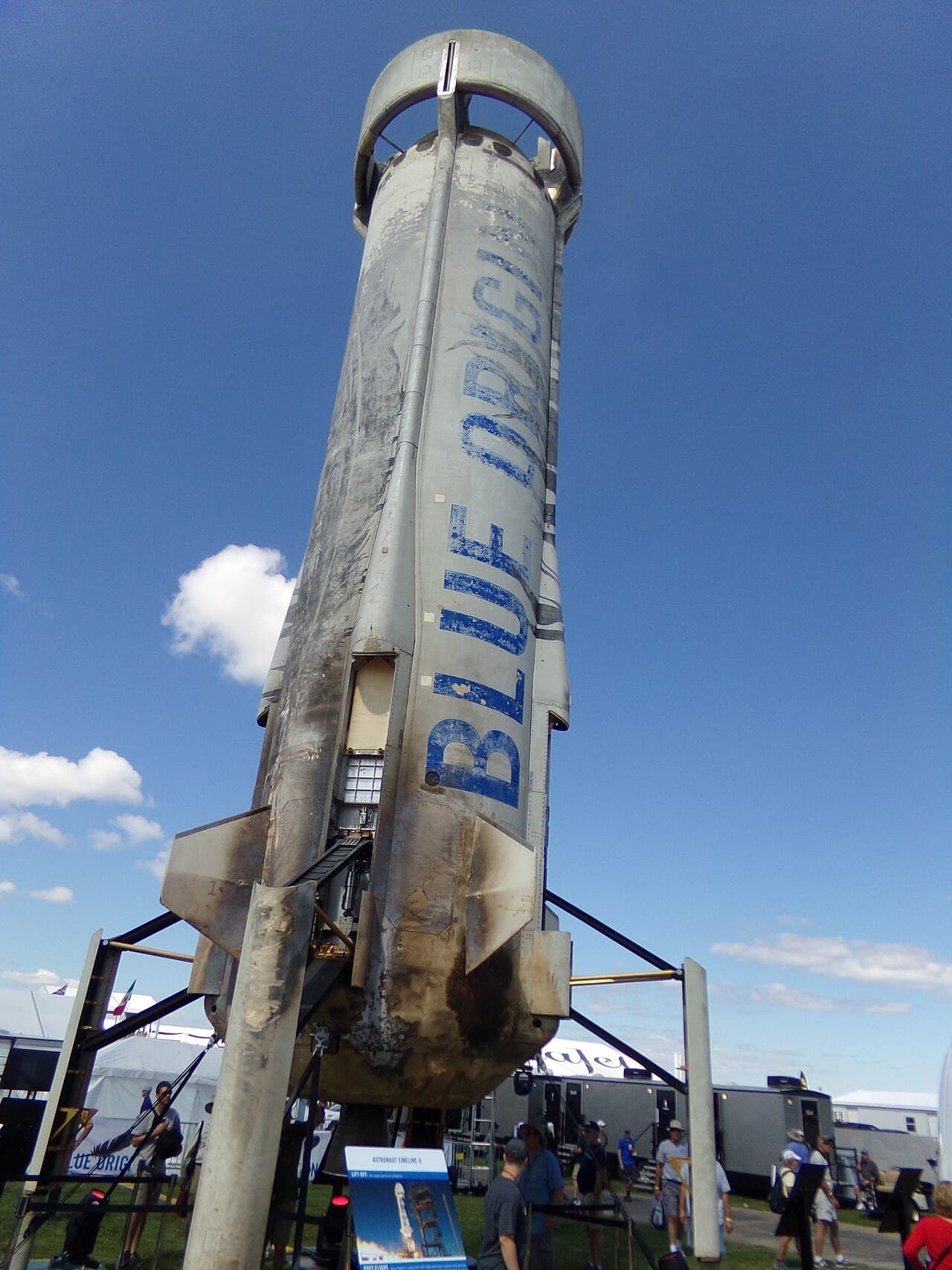
New Shepard
Suborbital launch vehicle for space tourism and research, capable of fully autonomous vertical landing and reuse.
 Blue Origin
Active
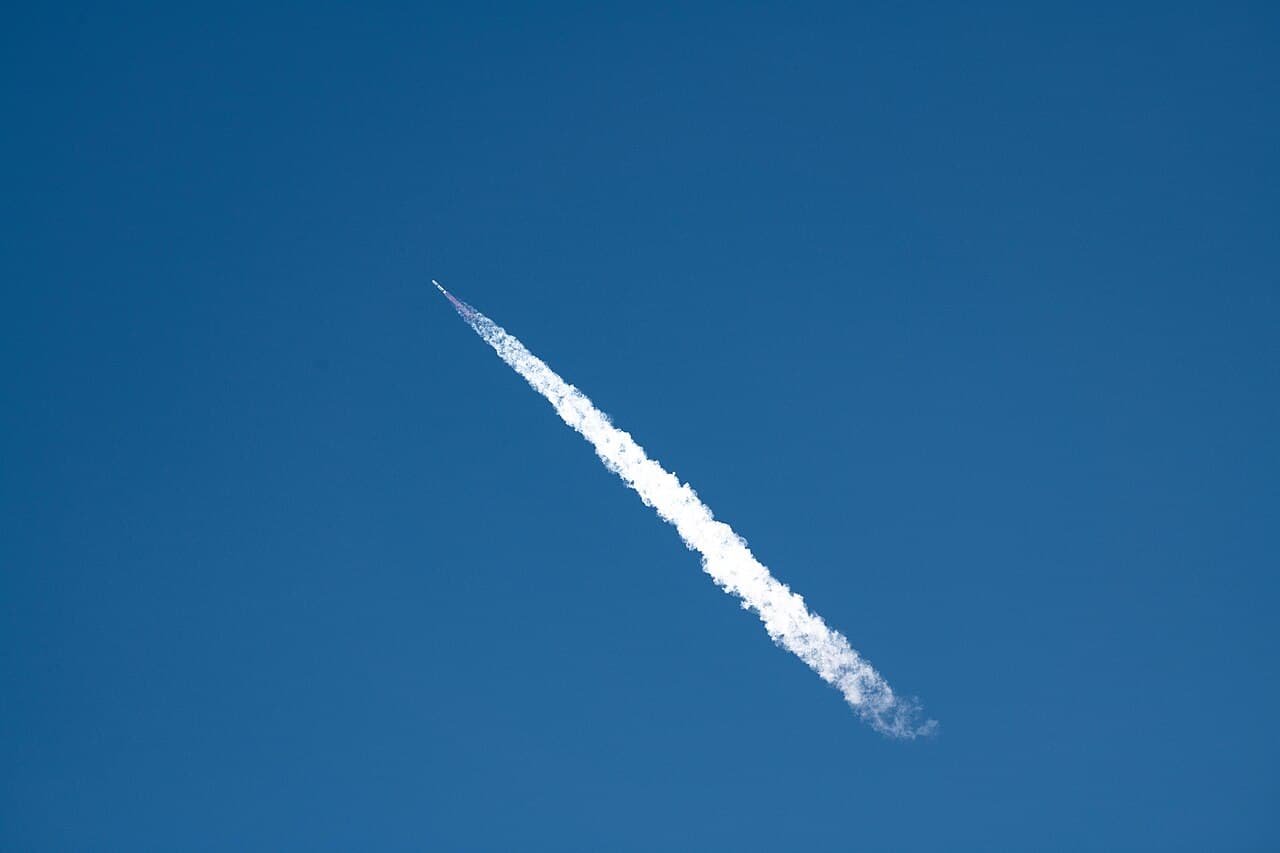
Heavy-lift orbital launch vehicle with a reusable first stage, designed for commercial, civil, and national security missions.
Latest update Aug 28, 2026
01
NG-1 reached orbit on January 16, 2025. NG-2 launched NASA's ESCAPADE spacecraft on November 13, 2025 and landed the booster on Jacklyn. NG-3 (April 19, 2026) reused and re-landed that booster but suffered an upper-stage BE-3U thrust shortfall - traced to a cryogenic leak that froze a hydraulic line - that left BlueBird 7 short of orbit; the FAA closed its investigation and lifted the grounding on May 22, 2026. A New Glenn was destroyed in a May 28, 2026 hotfire explosion at LC-36, damaging the transporter-erector at Blue Origin's only New Glenn pad; Blue Origin root-caused the explosion on August 5, 2026 to a BE-4 main oxygen valve fault and is retrofitting modified valve hardware (targeted end of August 2026) while pursuing an alternative vertical assembly path to return to flight before year-end. Reverified in late August 2026: NG-4 still had not flown and no LC-36A completion date had been announced beyond the year-end 2026 target.
02
03
Announced next steps from Blue Origin that mention New Glenn.
2026-2027
Launch the first full Blue Ring mission, expected to become the first fully commercial GEO space-domain-awareness mission, carrying Optimum Technologies' Caracal sensor with Scout Space's Owl payload and internal payloads. Blue Origin has integrated the flight vehicle's primary structure, internal harnessing, and core propulsion module, but launch timing remains gated by New Glenn's return to flight after the LC-36 explosion; reverified September 12, 2026, no firmer date has been reported, though NASA's Sept 1 award of a Blue Ring-based Mars Telecommunications Orbiter (delivery by Dec 31, 2028) adds a second Blue Ring-derived flight in the same window.
Oct 30, 2026
TargetOctober 30, 2026 comment close
Dec 2026
With the FAA grounding lifted on May 22, 2026, the gating item for return-to-flight is rebuilding LC-36 after the May 28 hotfire explosion. Rather than replace the destroyed transporter-erector, Blue Origin adopted a hybrid horizontal-integration/crane-erect concept of operations (detailed June 30, 2026). On August 5, 2026 Blue Origin identified the root cause as a faulty main oxygen valve on one of the booster's seven BE-4 engines. On September 15, 2026 the Orlando Sentinel reported Limp posting drone imagery of the rebuild: refurbished vehicle-access-tower modules were being restacked (new floors, pneumatics, electrical panels, backbone piping; elevator moved to the side of the tower), Never Tell Me the Odds was intact and headed to the integration facility, and a new upper stage had shipped to Stennis. Reverified September 18, 2026: Blue Origin was still targeting a return to flight before year-end 2026 once LC-36A is ready, with no LC-36A completion date or firm NG-4 launch date yet announced. The next New Glenn mission, NG-4 (payload LN-01: 48 Amazon Leo satellites), still depends on that rebuild.
NET Q1 2027
Fly the first Blue Moon Mark 1 cargo lander ('Endurance') to the Moon's south pole (Shackleton Connecting Ridge), validating up to 3-tonne cargo delivery, cryogenic propulsion, and autonomous GN&C. The lander has cleared thermal vacuum testing at NASA Johnson, radio-frequency compatibility testing at Lunar Plant 1, and (per an August 4, 2026 NASA Moon Base update) communications checkouts with TDRSS and the Deep Space Network; cryogenic propellant-loading tests are the next step before final launch integration. That same August 4, 2026 NASA Moon Base update is the first NASA material to explicitly confirm a first-quarter-2027 target for the mission. Reverified September 12, 2026: Blue Origin's newsroom still has no newer Endurance date, and the mission remains gated on New Glenn's return to flight.
Q4 2027
Begin deploying the 5,408-satellite TeraWave broadband network (5,280 LEO + 128 MEO satellites in Q/V-band) on New Glenn rockets, delivering up to 144 Gbps LEO and 6 Tbps MEO optical capacity for enterprise, data center, and government customers worldwide. Blue Origin's roadmap ties TeraWave's larger satellite batches to the upgraded New Glenn 9x4 variant rather than the current 7x2 vehicle. Blue Origin's FCC application (filed January 2026) remains in regulatory review; reverified in late August 2026, the Q4 2027 deployment start is unchanged. Bloomberg reported September 3, 2026 that Blue Origin has hired at least 47 Amazon Leo veterans over the past year - including a director of recruiting and two vice presidents since March - to build out the TeraWave team, a sign of ramping investment ahead of deployment.
04
On October 16, 2026 Blue Origin operations chief Ian Richardson said Florida infrastructure is designed to support multiple New Glenn flights a week by the end of the decade. A $330 million Rocket Park expansion, targeted for summer 2027, is meant to produce up to 150 New Glenn 9x4 upper stages a year. The company said it will add two more pads, using the LC-36B construction approach, after investing more than $3 billion in Florida facilities that employ more than 5,000 people.
On September 29, 2026 the FAA published a Federal Register notice and draft environmental assessment of Blue Origin's proposal to modify vehicle operator license VOL 24-133 and raise the New Glenn cap at Cape Canaveral Space Launch Complex 36 from 12 to 50 launches a year. The Proposed Action also covers associated static-fire testing, downrange first-stage ocean-platform landings, payload-fairing recovery and related airspace closures, and would not include new construction. Comments close October 30, 2026, with a virtual public meeting on October 22; completing the environmental review would not by itself grant the license modification.
www.federalregister.gov www.floridatoday.com talkoftitusville.com
NASA said on September 29 it added Blue Origin's New Glenn 9x4 launch service to the NASA Launch Services II contract under the annual on-ramp clause, making that configuration eligible to compete for future missions. The addition is not a mission award; New Glenn 7x2 is already on NLS II. NASA described NLS II as multiple-award IDIQ contracts with ordering through June 2030 and performance through December 2032.
Space Florida's investment committee heard on August 26 that Blue Origin plans a 140-foot-tall, 125,000-square-foot payload processing facility at Cape Canaveral Space Force Station, a $160 million capital project expected to create 23 jobs at an average salary of about $115,000. Space Florida management proposed up to $2.5 million in Florida DOT Spaceport Improvement Program matching funds, with the board scheduled to vote in early September, as Blue Origin rebuilds Launch Complex 36 after the May New Glenn pad explosion.
Blue Origin signed a temporary nine-acre lease with the Titusville-Cocoa Airport Authority at Space Coast Regional Airport on August 26, paying about $16,880 a month through June 2027 for contractor staging space along Challenger Avenue. The deal comes alongside a pending lease of the airport's former terminal building and sits near Blue Origin's roughly 100-employee light-manufacturing site on Grissom Parkway, part of the company's broader Space Coast buildout as it rebuilds its New Glenn launch complex at Cape Canaveral.
Blue Origin said August 14 it has begun construction of a second Cape Canaveral launch pad, renaming its rebuilt existing pad LC-36A (for the current New Glenn 7x2) and building new LC-36B to host the larger New Glenn 9x4 variant. The buildout adds a new Vertical Integration Facility and a government-partnered Payload Processing Facility supporting both New Glenn variants and other national security launch providers, using about 2,500 tons of steel to assemble a roughly 700-foot launch tower.
Blue Origin CEO Dave Limp said August 5 that a malfunctioning main oxygen valve on one of the BE-4 engines caused the New Glenn rocket's static-fire explosion at Cape Canaveral's Launch Complex 36 in late May, a finding confirmed through hardware recovery and inspection. The company is making small modifications to the valve that can be retrofitted to existing engines by the end of August, while continuing to repair the launch pad; Blue Origin still expects to return New Glenn to flight by year-end. United Launch Alliance, whose Vulcan rocket also uses the BE-4 engine, has said it is collaborating with Blue Origin on the investigation.
NASA announced on July 24 an annex to its Space Act Agreement with Blue Origin allowing the company to conduct New Glenn second-stage hot-fire testing on the B-2 stand at Stennis Space Center, the 1960s-era dual-position stand originally built to test Saturn V stages for Apollo. NASA will provide engineers, equipment and building services to prepare the stand for New Glenn's twin BE-3 upper-stage engines, with testing expected to begin this fall as Blue Origin works toward a self-imposed end-of-2026 return to flight following the May 28 New Glenn pad anomaly.
Blue Origin is raising about $10 billion at a $130 billion pre-money valuation, its first-ever external fundraising round, according to reports on July 8. Coatue is expected to invest roughly $4 billion and founder Jeff Bezos about $2 billion, with other large investors covering the balance. The raise follows the late-May New Glenn static-fire explosion and rides a wave of investor interest in space companies after SpaceX's record IPO.
Blue Origin on June 30 outlined a redesigned launch-pad approach for returning New Glenn to flight after a May 28 static-fire explosion destroyed a vehicle and the pad's transporter-erector at Cape Canaveral's Launch Complex 36. Under the new hybrid concept of operations, the rocket's stages are mated horizontally in the integration facility, rolled to the pad and lifted vertical with a crane, with the payload installed only after the vehicle is upright. The company reiterated it aims to return New Glenn to flight by the end of 2026, and NASA Administrator Jared Isaacman called Blue Origin's response 'almost beyond impressive.'
Blue Origin CEO Dave Limp said the company has started reconstruction of Launch Complex 36 at Cape Canaveral after a New Glenn rocket exploded on the pad during a May 28 static fire, with all debris cleared from the site in nine days. Limp said the propellant farm, fuel tanks and water tower were not seriously damaged, and that Blue Origin still aims to return New Glenn to flight before the end of 2026 - partly by adopting an alternative vertical concept of operations that avoids replacing the transporter-erector. The grounding has slowed deployment of Amazon's Leo broadband constellation, which counts on New Glenn for heavy-lift launches.
NASA on June 9 named the four astronauts for Artemis III - commander Randy Bresnik, pilot Luca Parmitano (ESA), and mission specialists Frank Rubio and Andre Douglas - for a roughly two-week flight that will stay in low-Earth orbit to rendezvous and dock with both human landing systems before any crewed lunar landing. Administrator Jared Isaacman said Orion will link up with Blue Origin's Blue Moon and SpaceX's Starship landers to evaluate life support and other critical systems, with launch targeted as soon as late 2027. The plan turns the crewed test directly on the two companies' lander programs, both of which face hurdles - Blue Origin after the May 28 New Glenn pad explosion and SpaceX as it works to ready Starship for an orbital lander test.
The U.S. Space Force awarded Blue Origin its first NSSL Phase 3 Lane 1 task order on May 28, 2026 - hours before the New Glenn rocket exploded during a hotfire at Cape Canaveral's LC-36. Designated NRO Task Order-4, the award directs Blue Origin to launch a National Reconnaissance Office satellite from Cape Canaveral in the fourth quarter of 2027 or first quarter of 2028 under the lower-risk Lane 1 contracting track, which is reserved for missions that can accept greater launch risk than the military's most critical payloads. A May 29 Space Force press release confirmed the service remains a 'committed partner' with Blue Origin and that the ground-test explosion does not trigger automatic disqualification under Phase 3 program rules.
Blue Origin CEO Dave Limp said on June 2 that New Glenn will return to flight before the end of 2026 despite the May 28 hotfire explosion that wrecked the transporter-erector at LC-36, citing better-than-expected damage to the propellant farm, water tower, an additional flight-ready booster, and three upper stages staged nearby. Limp said the company will shift to an alternative vertical assembly path rather than wait for a new transporter-erector and ruled out skipping straight to the larger 9x4 New Glenn variant - keeping Blue Moon MK1 'Endurance' and the Amazon Leo NG-2 manifest within reach for 2026.
A New Glenn rocket erupted in a fireball at Cape Canaveral's Launch Complex 36 around 9 p.m. EDT on May 28 during a static fire test, with no injuries reported but apparent damage to the pad's lightning towers and transporter erector. The vehicle was being prepared to launch 49 Amazon Leo broadband satellites as soon as June 4, and because LC-36 is Blue Origin's only New Glenn pad, the loss jeopardizes both Amazon's constellation timeline and AST SpaceMobile's BlueBird launches - AST stock fell roughly 17% on the news.
05
Suborbital launch vehicle for space tourism and research, capable of fully autonomous vertical landing and reuse.
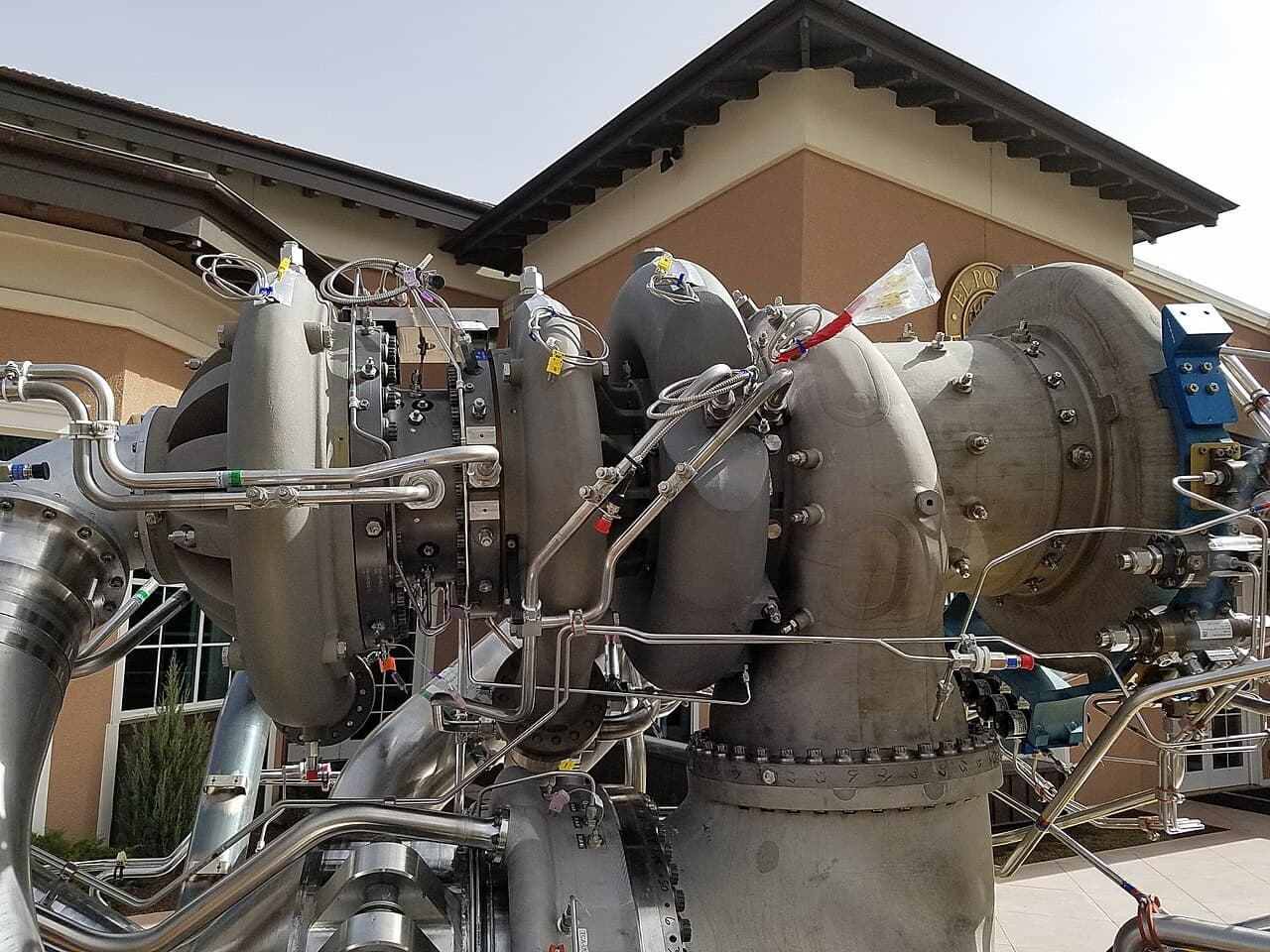
Liquid oxygen/liquefied natural gas (methane) rocket engine - the first American-made oxygen-rich staged combustion engine. Powers New Glenn and ULA Vulcan Centaur.
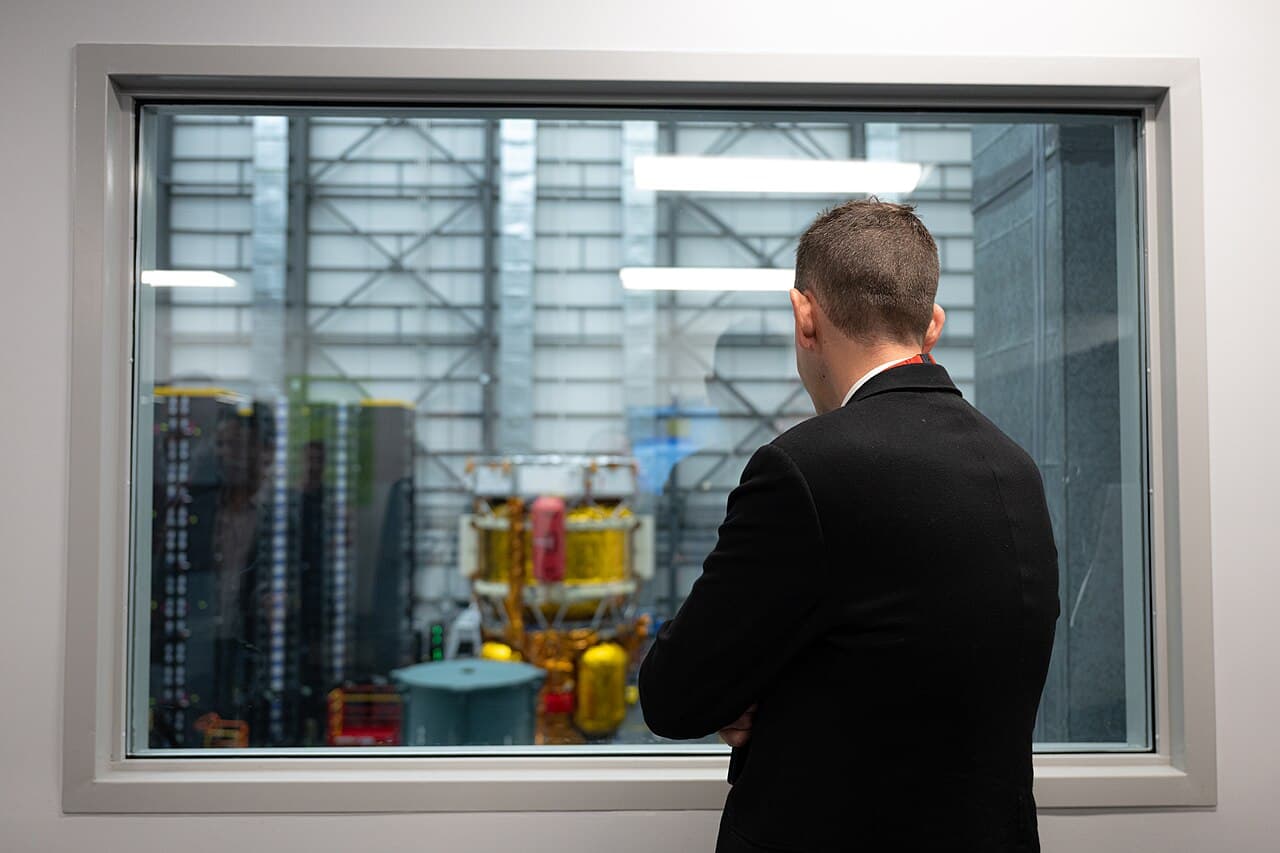
Lunar landing system family with a cargo-focused Mark 1 variant and a crew-capable Mark 2 variant being developed for NASA's Artemis program.
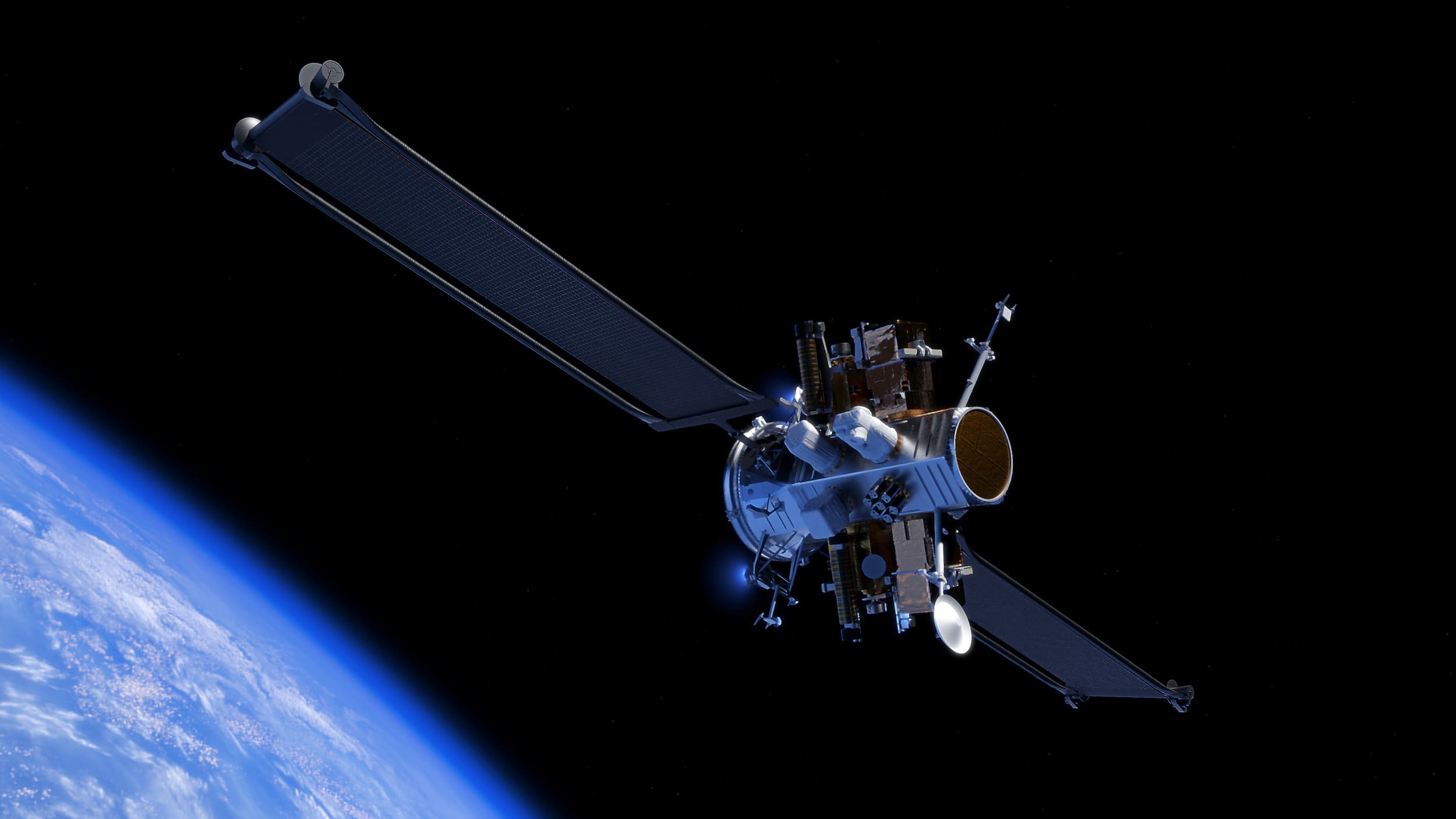
Multi-mission in-space transport platform with hybrid chemical and solar-electric propulsion, providing hosting, transportation, refueling, data relay, and in-space cloud computing services.
Enterprise broadband satellite constellation with 5,408 optically interconnected satellites across LEO and MEO, delivering up to 6 Tbps symmetrical data speeds for enterprise, data center, and government customers.
Commercial space station project co-led by Blue Origin and Sierra Space, with partners, as a mixed-use 'business park in space' for research, industrial, international, and commercial customers in low Earth orbit, built around Sierra Space's inflatable LIFE habitat. It is the slowest-advancing of the four major US commercial-station programs and remains Blue Origin's bid for NASA's Commercial LEO Destinations Phase 2 competition (draft RFP released July 6, 2026).
Ground-station-as-a-service network providing communications, tracking, and telemetry (TT&C) access for satellite operators, built with partner RBC Signals.
06
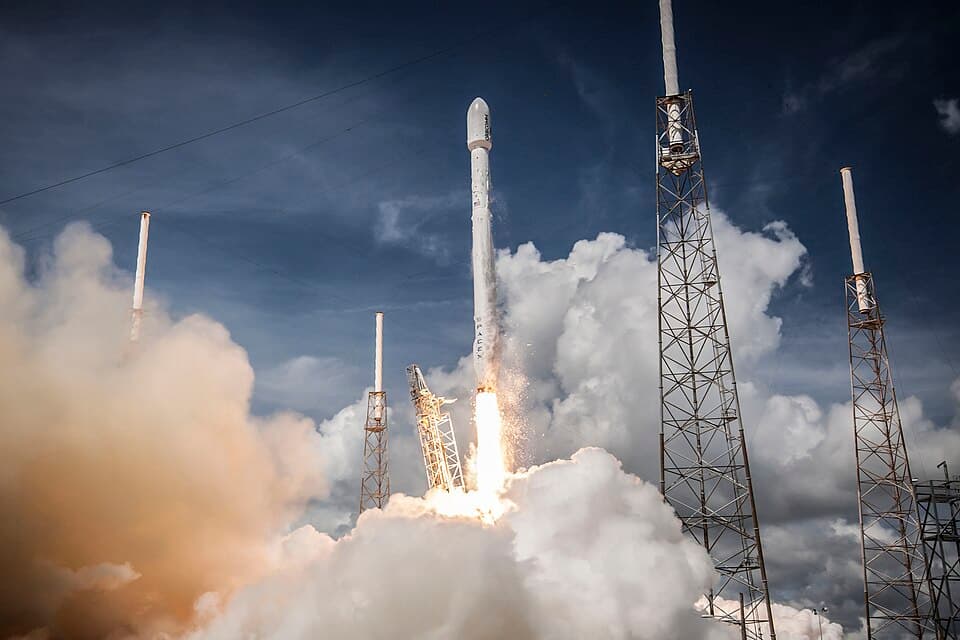
SpaceX
Partially reusable two-stage medium-lift launch vehicle. The world's most frequently launched orbital rocket.
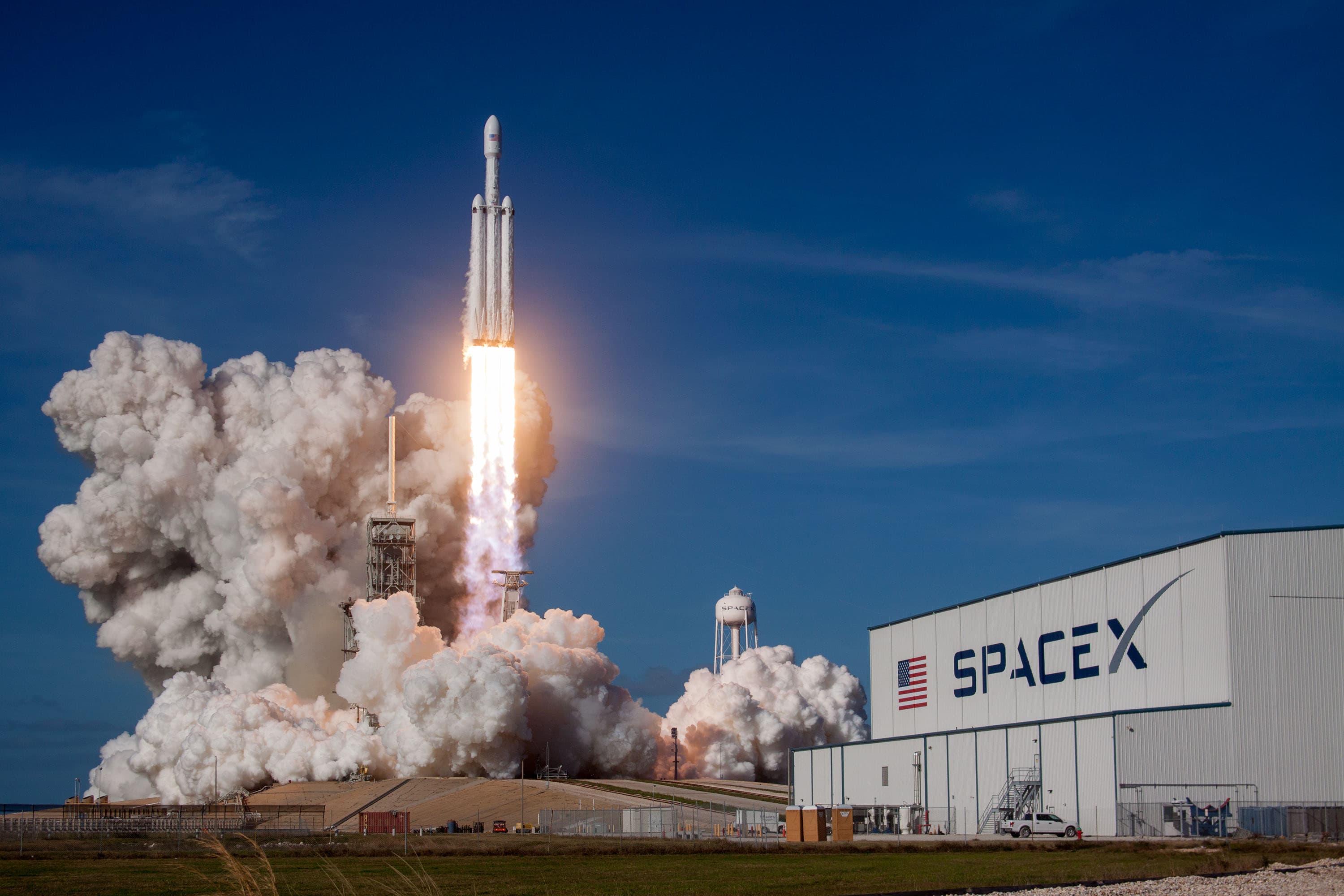
SpaceX
Heavy-lift launch vehicle consisting of a strengthened Falcon 9 core with two additional boosters.
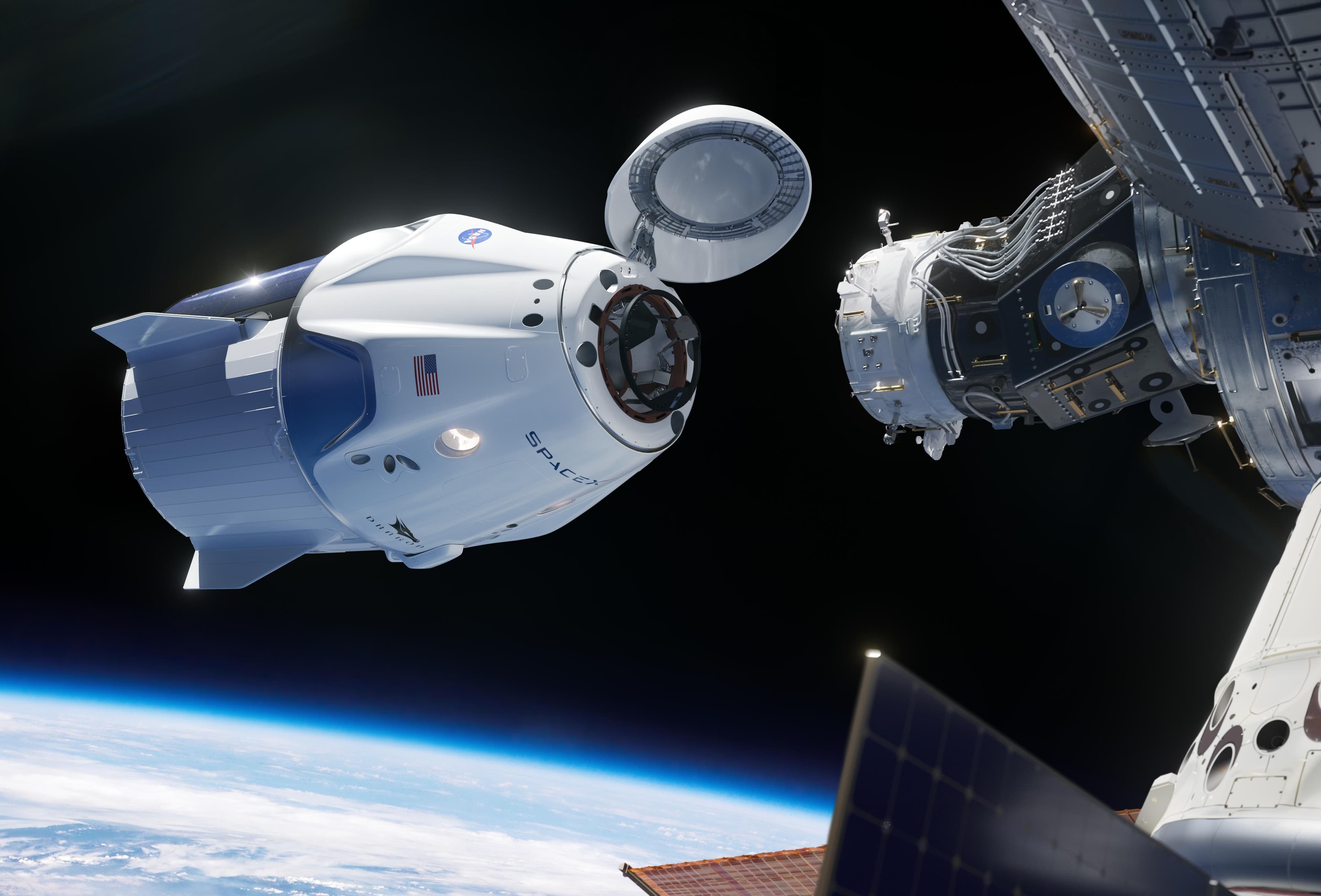
SpaceX
Reusable spacecraft for cargo and crew transport to the International Space Station.
SpaceX
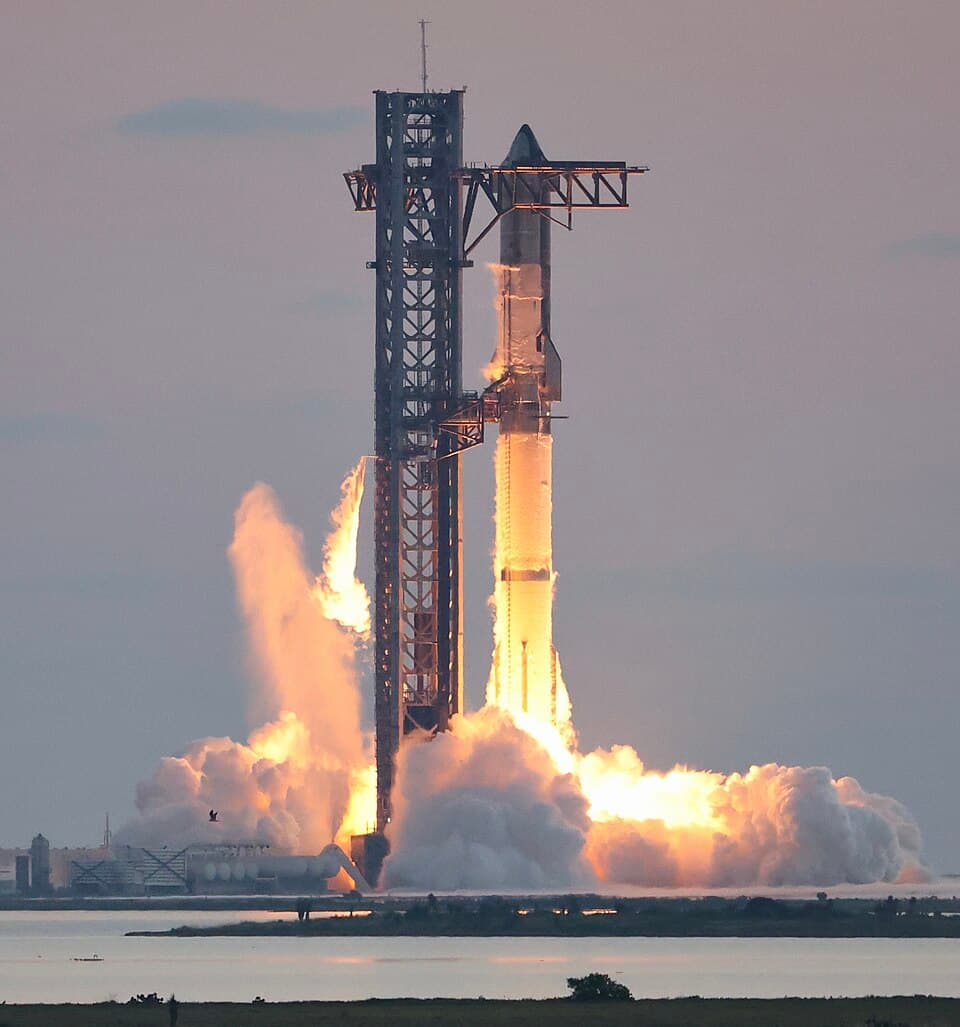
Fully reusable super-heavy-lift launch system designed for missions to the Moon, Mars, and beyond. V3 (Block 3) variant with Raptor 3 engines is the production version.