Voyager Technologies is a Denver-based defense-technology and space-infrastructure company best known for leading Starlab, the international joint venture building a commercial successor to the International Space Station.
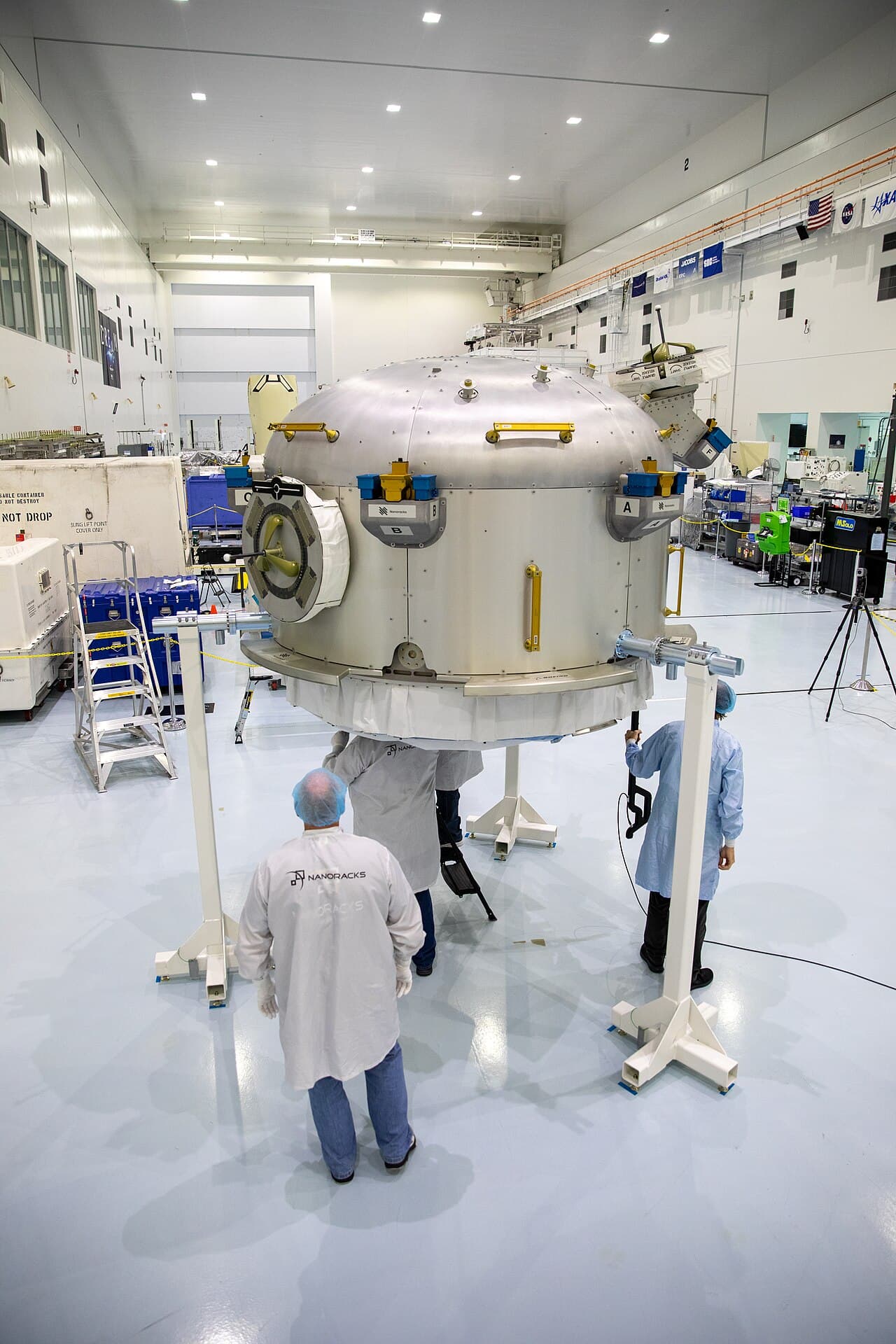
Founded in October 2019 by Dylan Taylor as Voyager Space Holdings, the company grew by rolling up twelve space and defense firms - including Altius Space Machines and Pioneer Astronautics (2020), The Launch Company, Valley Tech Systems and Nanoracks (2021), Space Micro (2022), ZIN Technologies (2023), and Estes Energetics, ExoTerra Resource and LEOcloud (2025). Through Nanoracks it owns the Bishop Airlock, the first and only permanent commercial module on the ISS, operating since December 2020. Starlab won a $160M NASA Commercial LEO Destinations award in December 2021 (later raised to $217.5M) and evolved into Starlab Space LLC, a US-led JV with Airbus, Mitsubishi Corporation and MDA Space, with Palantir supplying station software, Hilton designing crew quarters and Northrop Grumman providing Cygnus resupply. The single-launch, 8-meter-class station - with roughly half the ISS's pressurized volume - is contracted to fly on SpaceX's Starship, now targeted for 2029, and completed its Commercial Critical Design Review with NASA in February 2026, clearing the way for flight manufacturing. Voyager rebranded to Voyager Technologies in early 2025 to emphasize national security and went public on NYSE in June 2025, raising $382.8M and briefly touching a ~$3.8B valuation. Its Defense & National Security segment - solid and electric propulsion, energetics, signals intelligence and communications - is its fastest-growing business and put it on the Anduril-led team named among the Space Force's Golden Dome space-based-interceptor awardees in April 2026. On July 13, 2026 it closed its acquisition of Pittsburgh lunar-lander developer Astrobotic Technology ($162M cash and stock plus up to $129M in earnouts and $9M assumed debt), rebranding the unit Voyager Lunar Systems under continuing CEO John Thornton. NASA's June 30, 2026 Moon Base awards fund two Peregrine landers (Peregrine-2 and Peregrine-3) totaling $297.9M, each carrying three NASA payloads to the Gruithuisen Domes in 2028. The nearer-term proof point is Griffin-1, an infrastructure-class lander carrying 10 NASA, ESA, and commercial payloads. On October 13, 2026 Voyager said Griffin-1 completed acceptance testing, including environmental testing, and is returning to Pittsburgh for final preparations before shipment to Cape Canaveral, with launch targeted for late 2026. As of September 10, 2026 Voyager traded around a $2.0B market cap, posted $166.4M of 2025 revenue, held $585.5M of total liquidity as of June 30, 2026, and had closed an upsized $250M J.P. Morgan-led credit facility on July 6, 2026. Q2 2026 results reported August 3 showed record revenue of $52.7M (up 51% sequentially), record bookings of $113.0M, and a record $335.5M backlog, prompting Voyager to raise 2026 revenue guidance to $275-305M; Starlab separately has signed over $500M of commercial reservations ahead of launch. On October 1, 2026 Voyager set Q3 results for after the close November 2, with the call November 3 at 9 a.m. ET. Starlab extended ISS CFP Step-1 proposals to October 21, 2026; the updated PDF still anticipates award notices December 18, 2026 and an indicative Q1 2028 flight. NASA release 26-086, dated October 9, 2026, posted the final CLDC request. Proposals are due December 8, 2026, with awards expected in spring 2027. Starlab chief executive Marshall Smith told Ars the company will compete. Oct 5: $22.4M SCO OTA for prototype small-sat dispensers. Oct 6: CASIS contract to manage Symphony Biosciences' SymphNode ISS experiment.
Following the February 2026 Commercial Critical Design Review - the 28th NASA milestone - Starlab transitions from design validation to manufacturing, fabrication, testing and assembly of the flight station. The program has now signed over $500M of commercial reservations (approaching $600M) ahead of launch, and NASA Space Act Agreement milestone payments (~$211M of the $217.5M awarded received through Q2 2026) are moderating as the program shifts toward Phase 2 commercialization. Watch for structural test article and long-lead hardware milestones.
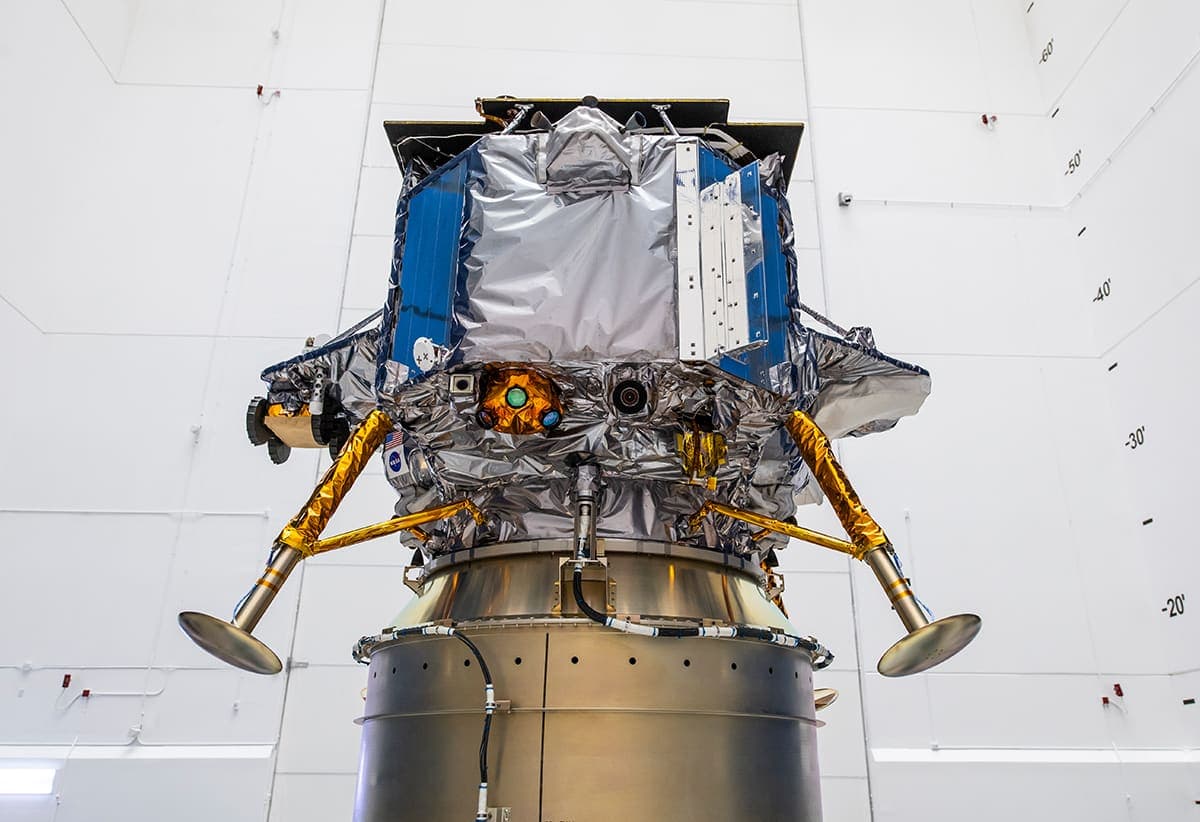
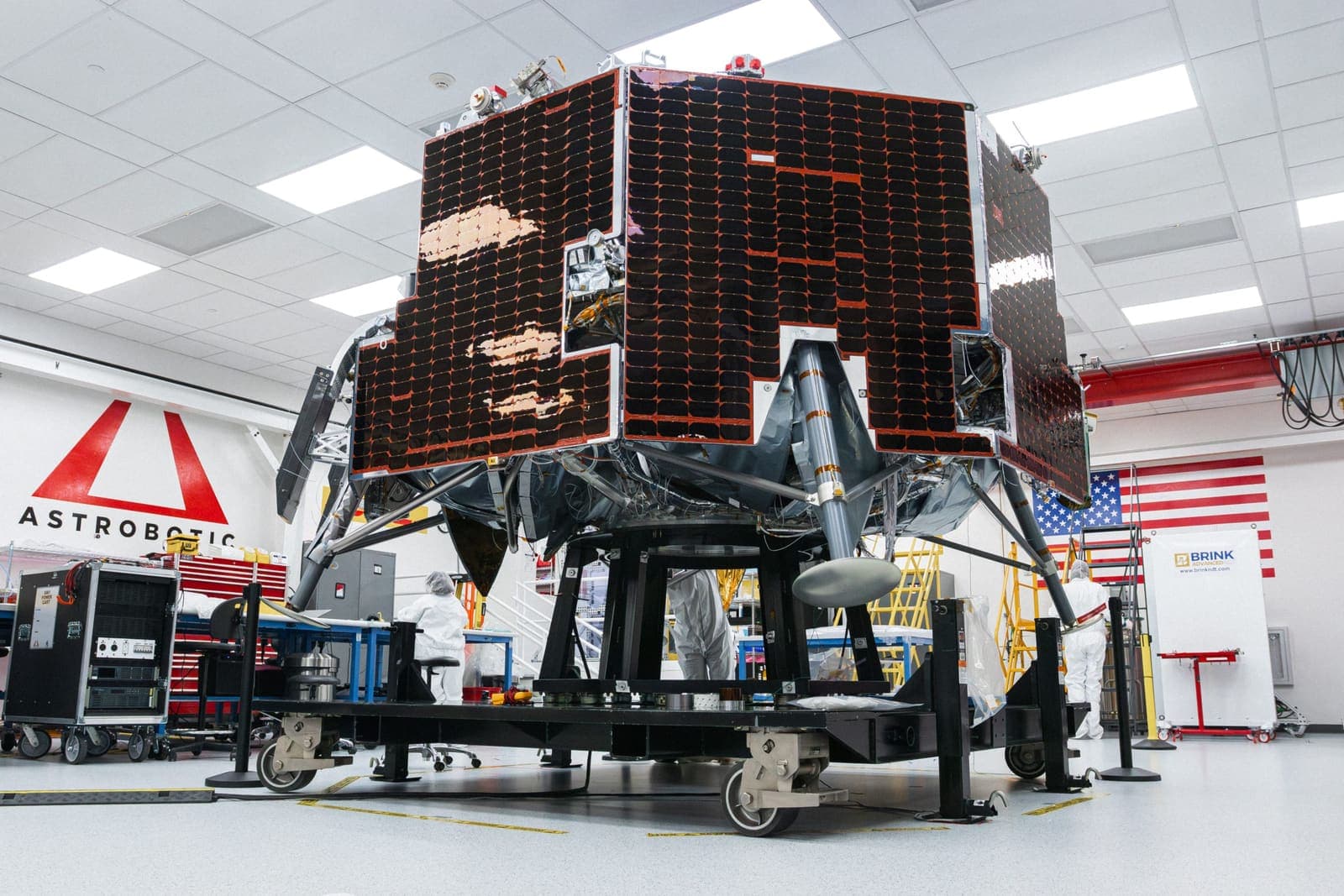
Griffin-1, the infrastructure-class lander Astrobotic (now Voyager Lunar Systems) built for NASA's now-cancelled VIPER rover, carries 10 NASA, ESA and commercial payloads - including Venturi Astrolab's FLEX Lunar Innovation Platform (FLIP) rover - to the Nobile Crater region near Mons Mouton at the lunar south pole. As of September 2, 2026 it had completed four of five JPL acceptance tests (mass properties, EMI/EMC, acoustic, and sine vibration), with multi-week thermal-vacuum testing still ahead. The mission is targeted to launch on a SpaceX Falcon Heavy from Kennedy Space Center no earlier than late November 2026.
Select Starlab ISS research teams from the Swiss CFP
Starlab's September 11, 2026 call for ISS microgravity proposals, run with the Center for Space and Aviation Switzerland and Liechtenstein, takes Step-1 questions through September 25 and proposals through October 9. Up to four teams will be selected, with award notices expected in December 2026 and flights targeted for 2028.
NASA released the Phase 2 draft RFP on July 6, 2026 and closed the industry feedback window on July 27. A September 4, 2026 NASA Johnson Space Center presolicitation now says the final Commercial LEO Destination Contract RFP is expected at the end of September 2026, with offers due 60 days after release (roughly late November) and contractual questions due September 15. An award is still expected in early-to-spring 2027. CEO Dylan Taylor has publicly pushed NASA for relaxed Phase 2 requirements. NASA plans at least two early development contracts for commercial space stations before a later down-select. Winning is the pivotal catalyst for Starlab's multi-billion-dollar opportunity.
After a record Q2 2026 (revenue $52.7M, up 51% sequentially; bookings $113.0M; backlog $335.5M), management raised full-year 2026 revenue guidance again on August 3 to $275-305M (66-84% YoY growth over 2025's $166.4M), from a prior $230-255M range. No Q3 2026 results had been reported as of September 13, 2026; whether the back half of the year lands within the raised range, and whether losses narrow, is the next test.
Integrate Astrobotic and execute Peregrine-2 and Peregrine-3 lunar deliveries
With the Astrobotic acquisition closed on July 13, 2026, the unit has been rebranded Voyager Lunar Systems (Astrobotic CEO John Thornton remains in charge). NASA's June 30 Moon Base awards fund two Peregrine landers totaling $297.9M - Peregrine-2 and Peregrine-3 - each carrying three NASA payloads to the Gruithuisen Domes in 2028, with leftover commercial capacity still for sale. Watch for hardware and manifest updates on both flights and further CLPS task-order wins.
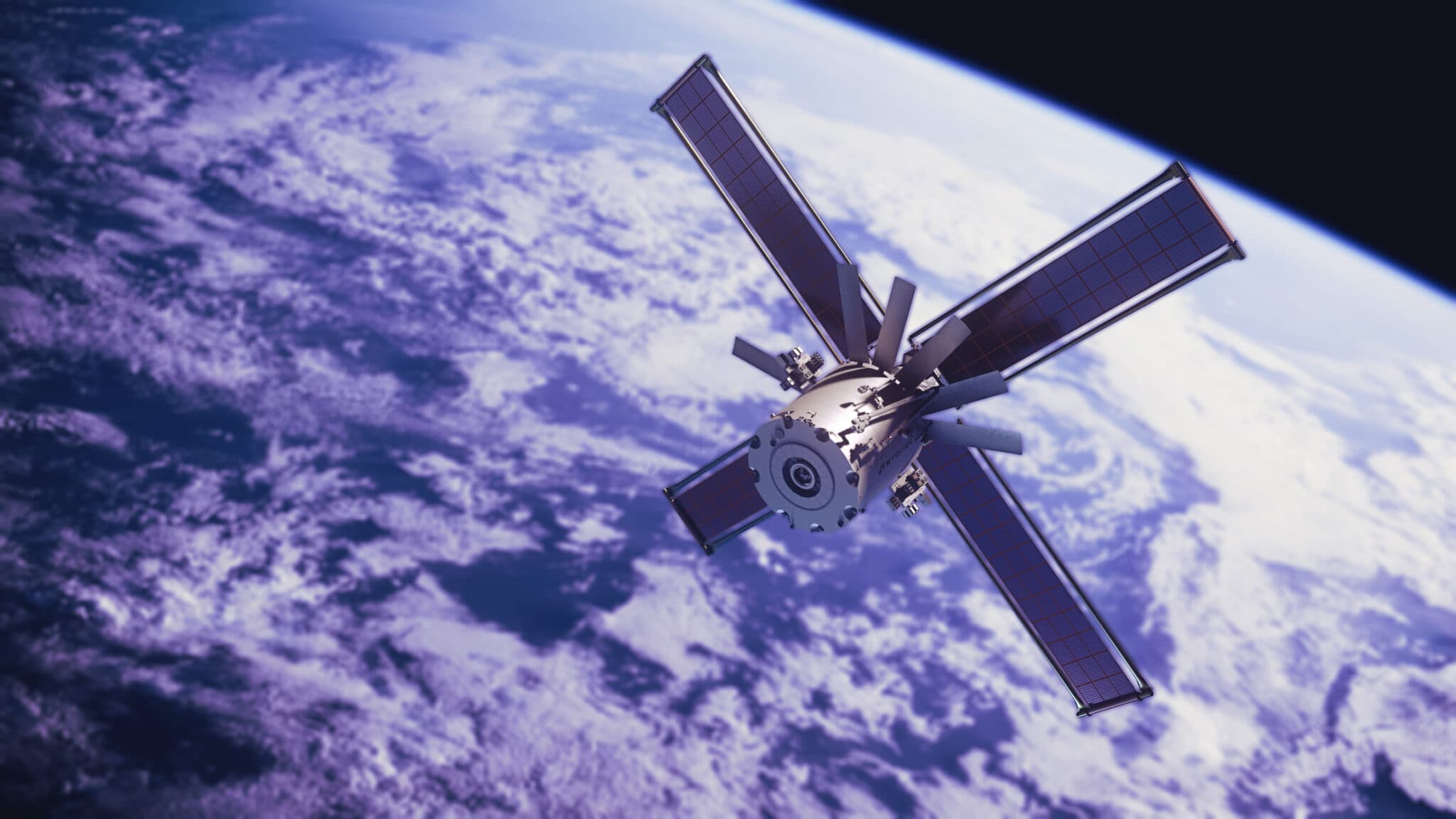
The complete station is contracted to launch in a single SpaceX Starship flight, currently targeted for 2029 - timed to provide continuous LEO access before the ISS is retired around 2030.
NASA Johnson Space Center posted the final Commercial LEO Destination Contract RFP (80JSC027R0004) on Oct. 9, with proposals due Dec. 8 at 1 p.m. Central. The solicitation supersedes the draft RFP and seeks firms to design, build, certify and operate commercial LEO destinations. Axiom, Voyager's Starlab and Vast each said they will compete; NASA told Ars it plans to select two or more contractors, with a decision expected in April.
Voyager Technologies said on Oct. 5 it received a $22.4 million Other Transaction Agreement from the Department of War Strategic Capabilities Office to prototype next-generation satellite deployment systems. Under the OTA, Voyager is to deliver prototype but flight-ready small-sat dispensers meant to use leftover launch payload capacity without displacing primary missions, with the stated objective of transitioning the capability to the U.S. Space Force. The company release and follow-on reporting do not disclose a delivery schedule, launch-vehicle list, follow-on production award, or revenue-recognition timing.
Anduril Industries and Voyager Technologies announced a strategic partnership on September 29, 2026 to speed development, testing, qualification and production of technologies for U.S. weapon systems and missile defense. A joint Business Wire release said Voyager is already contracted to supply more than $60 million of hardware to Anduril, including solid rocket motors and divert and attitude control systems. Voyager said its Pueblo, Colorado American Defense Complex is intended, when fully scaled, to support about 15,000 to 20,000 propulsion systems a month; that figure is a facility target, not current output.
Starlab Space, the commercial space station joint venture led by Voyager Technologies alongside Airbus, Mitsubishi Corporation, MDA Space, Palantir Technologies and Space Applications Services, announced on August 19 a strategic investment from Global Venture Management. The investment amount was not disclosed, but Starlab said it adds to a deepening pool of institutional capital backing the station as it works to become the leading post-ISS commercial outpost in low Earth orbit.
Voyager Technologies was awarded a contract on August 10 by the U.S. Space Force's Space Systems Command to develop space-to-space communication capabilities supporting a resilient data transport architecture for the Department of Defense. Under the award, Voyager will design a flight-ready waveform capable of operating across a variety of orbits and perform an on-orbit communication demonstration, extending its Defense & National Security segment into proliferated-LEO data relay work alongside its recent Golden Dome interceptor and Raytheon SM-3 propulsion contracts.
Voyager Technologies was awarded a contract on August 4 by Raytheon, an RTX business, to advance propulsion technologies for the Standard Missile-3 interceptor family. Voyager will supply its solid controllable throttleable propulsion technology and divert, attitude and control systems, precision subsystems that improve accuracy during the exo-atmospheric midcourse phase of flight, extending its Defense & National Security segment into missile-defense propulsion.
Voyager Technologies reported record Q2 2026 revenue of $52.7 million (up 51% sequentially), record bookings of $113.0 million, and a record $335.5 million backlog on August 3. The company raised full-year 2026 revenue guidance to $275-305 million from a prior $230-255 million range, citing accelerating defense demand and $84.3 million in Golden Dome-related awards, and shares jumped more than 13% after hours.
Voyager Technologies closed its acquisition of lunar lander maker Astrobotic on July 13, paying $162 million in cash and stock plus $9 million in assumed debt, with up to $129 million more available in earnouts. Astrobotic now operates as Voyager Lunar Systems under CEO John Thornton, and NASA awarded the combined company a roughly $298 million task order for the Peregrine-2 mission, targeting a 2028 landing at the Gruithuisen Domes.
(FY2025); Q2 2026 revenue $52.7M, up 51% sequentially; 2026 guidance raised to $275-305M, still the latest official range as of September 13, 2026
Market cap
~$2.0B
$32.97/share close on September 10, 2026
Revenue (FY2025)
$166.4M (+15% YoY)
Q2 2026 Net Loss
$(46.5)M
($(0.79)/share); Adjusted EBITDA loss of $(38)M - management frames 2026 as an investment year, with losses driven by scaling Defense & National Security and Starlab
2026 revenue guidance
$275M-$305M
(raised with Q2 2026 results, from a prior $230M-$255M; 66-84% YoY growth); still the latest official range as of September 13, 2026, with no Q3 2026 results yet
Total backlog
$335.5M (Q2 2026, record)
NASA Starlab Space Act Agreement
$217.5M awarded
($160M in 2021 + $57.5M in 2024); ~$211M received via milestone payments through Q2 2026 (a $4M milestone completed in the quarter), with milestone funding now naturally moderating as the program shifts from Phase I development toward Phase 2 commercialization
Starlab commercial reservations
Over $500M signed, approaching $600M as of the Q2 2026 earnings call (Aug 3, 2026) - government and commercial customer commitments ahead of a station that has not yet launched
Liquidity
$585.5M total available liquidity as of June 30, 2026: $373.4M cash and cash equivalents plus $212.1M of available revolver capacity under the $250M J.P. Morgan-led credit facility (upsized July 6, 2026, with an accordion for up to $150M more)
Starlab target launch
2029, single launch on SpaceX Starship
NASA CLPS Peregrine awards
$297.9M total for two Peregrine landers
(Peregrine-2 and Peregrine-3) to the Gruithuisen Domes by end-2028
Convertible notes (2032)
$402.5M 0% senior unsecured notes due Oct 15, 2032 issued Sept 28, 2026 (~$391.6M net); initial conversion ~$40.82; capped calls cost ~$52.5M at $78.50 cap (8-K)
Market cap (Sept 30, 2026)
About $1.78B
(MarketBeat and Defense World, Sept 30, 2026). VOYG opened $30.55 per MarketBeat; Defense World last-traded $32.73 the same session.
Q3 2026 results date
Company date: results after the close Monday, November 2, 2026; earnings call Tuesday, November 3, 2026 at 9 a.m. ET (Voyager, Oct 1, 2026). Not yet printed.
Griffin-1 acceptance testing
Complete as of Oct
13, 2026; returning to Pittsburgh before Cape shipment; launch targeted late 2026
06
Operations & revenue
Operating status
CLDC final RFP posted; Griffin-1 acceptance testing complete
NASA release 26-086, dated Oct. 9, 2026, posted the final CLDC request. Proposals are due Dec. 8, and awards are expected in spring 2027. The JSC table shows Final RFP actual 10/09/2026 and Contract Award planned Spring 2027, actual blank. Marshall Smith told Ars Starlab will compete. The April date is not on those NASA pages. Starlab Step-1 proposals remain due Oct. 21, 2026 at 23:59:59 Eastern. On Oct. 13 Voyager said Griffin-1 completed acceptance testing, including environmental testing, and is returning to Pittsburgh before shipment to Cape Canaveral, with launch targeted for late 2026. That supersedes the Sept. 2 four-of-five status. The JPL write-up returned HTTP 403, so chamber dates are not copied. Q3 results remain set for after the close Nov. 2. The Oct. 5 $22.4 million SCO dispenser OTA was already on the timeline.
Revenue streams
Defense & National Security
Solid-fuel and electric propulsion, energetics, radiation-hardened electronics, signals intelligence, communications and AI-powered edge computing for defense customers - the fastest-growing segment (63% YoY growth in Q4 2025), including work on the Anduril-led Golden Dome space-based interceptor team, a spot on the Air Force's $46B agile acquisition contract vehicle, a May 26, 2026 DARPA 'Burn n' Go' Phase 2 contract ($16.5M) for tailorable solid-rocket-motor technology, a July 9, 2026 agentic-AI spectrum-operations platform contract, a July 20, 2026 Sandia National Laboratories mission-management contract for the 'Big Boy' ISS demonstration, an August 4, 2026 Raytheon contract to supply solid controllable throttleable propulsion and divert/attitude control systems for the SM-3 missile-defense interceptor family, and an August 10, 2026 Space Force Space Systems Command contract to develop space-to-space communication capabilities.
Space Solutions
ISS commercial services through the Bishop Airlock (payload hosting, satellite deployment, trash disposal), in-space electric propulsion systems, and space science and exploration hardware drawing on Nanoracks and ZIN Technologies heritage - anchored by a new four-year, $24.5M NASA Johnson Space Center IDIQ contract (Feb 9, 2026) for full-service ISS mission management, building on more than 50 task orders executed under the prior JSC services contract.
Starlab (NASA milestones today, station services later)
Milestone payments under the $217.5M NASA Commercial LEO Destinations Space Act Agreement fund development today (~$211M received through Q2 2026, with milestone funding now moderating as the program shifts toward Phase 2 commercialization); Starlab has already signed over $500M of commercial reservations ahead of launch, and after launch Starlab Space (majority-owned JV) would sell astronaut time, payload racks and research services to NASA, international agencies and commercial customers as an ISS replacement.
Added with the July 13, 2026 close of the Astrobotic acquisition and rebranded Voyager Lunar Systems (Astrobotic CEO John Thornton continues to lead it): commercial lunar payload delivery via the Griffin and Peregrine landers under NASA's Commercial Lunar Payload Services program. Griffin-1 - carrying 10 NASA, ESA and commercial payloads - had completed four of five JPL acceptance tests as of September 2, 2026, with thermal-vacuum testing still ahead of a Falcon Heavy launch no earlier than late November 2026. NASA's June 30 Moon Base awards fund two Peregrine landers (Peregrine-2 and Peregrine-3) totaling $297.9M to the Gruithuisen Domes in 2028. The unit also develops lunar power systems (LunaGrid), planetary mobility, and expandable habitats with Max Space.
07
Track record
How past announced dates turned out.
3/5announced dates hit on time
3 Hit
2 Slipped
0 Missed
Hit
NASA posts the CLDC Phase 2 final RFP
Target October 2026 · Resolved Oct 9, 2026
NASA release 26-086, dated Oct. 9, 2026, and the JSC CLDC table list the final RFP actual date as 10/09/2026. Proposals are due Dec. 8, 2026. The table still plans Contract Award for Spring 2027 with a blank actual. Marshall Smith told Ars Starlab will compete.
Voyager completed the acquisition of lunar-lander maker Astrobotic on July 13, 2026 - $162M in cash and stock plus up to $129M in earnouts and $9M assumed debt - on the timeline signaled at announcement, and the same day disclosed a ~$298M NASA CLPS task order (Peregrine-2 to the Gruithuisen Domes in 2028) won under the deal.
The October 2021 announcement targeted a free-flying station by 2027, but by the time Starlab booked its Starship launch in January 2024 the target had moved to 2028.
On Oct. 13, 2026 Voyager said Griffin-1 completed acceptance testing, including environmental testing, and is returning to Pittsburgh for final preparations before shipment to Cape Canaveral. Launch remains targeted for late 2026. The release does not give a Cape shipment date. This supersedes the Sept. 2 statement that thermal-vacuum testing was still ahead.
NASA release dates the final CLDC request
NASA release 26-086, dated Oct. 9, 2026, says the final commercial station request for proposals is out, proposals are due Dec. 8, and awards are expected in spring 2027. The JSC CLDC table lists Final RFP actual 10/09/2026 and Contract Award planned Spring 2027 with a blank actual. Marshall Smith told Ars that Starlab will compete. The April date in the Ars report is not on these NASA pages.
NASA posts the final commercial station RFP
On 9 October 2026 Ars reported that NASA released the final commercial low-Earth-orbit destination request, with responses due 8 December. Ars said NASA plans to select two or more contractors in this phase and intends a final decision in April, and that phase-1 winners would be guaranteed at least $100 million. Voyager Starlab chief executive Marshall Smith told Ars that Starlab looks forward to competing.
CASIS contract to manage Symphony Biosciences ISS cancer-implant study
On October 6, 2026 Voyager said it signed a contract with the Center for the Advancement of Science in Space to manage Symphony Biosciences' SymphNode biopolymer cancer-implant experiment aboard the ISS. Voyager will adapt hardware, clear NASA safety reviews, manage launch integration and stowage, oversee on-orbit operations such as incubation and fluorescence reading, and return samples, data and close-out reporting. The release does not disclose contract value or a flight date.
Wins $22.4M SCO OTA for prototype small-sat dispensers
On October 5, 2026 Voyager announced a $22.4 million Other Transaction Agreement with the Department of War Strategic Capabilities Office to prototype next-generation satellite deployment systems, with the stated objective of transitioning the capability to the U.S. Space Force. Under the OTA Voyager is to deliver prototype but flight-ready small-sat dispensers meant to use leftover launch payload capacity without displacing primary missions. SpaceNews the same day described it as a Pentagon award for flight-ready small-satellite deployers. The announcement does not disclose a delivery schedule, follow-on production award, or revenue-recognition timing.
Starlab extends ISS CFP Step-1 deadline to October 21
Starlab's CFP page now says Step-1 proposals are due Wednesday, October 21, 2026 at 23:59:59 Eastern after an extension from the September 11 press release's October 9 date, and the Step-1 question deadline has passed. The updated CFP PDF still lists anticipated award notifications on December 18, 2026 and an indicative Q1 2028 ISS flight, subject to ISS, launch-provider, integration, safety, regulatory and funding schedules. Step-2 invitations are listed for October 28 and Step-2 proposals November 24.
Sets official Q3 2026 results date for November 2
On October 1, 2026 Voyager said third-quarter 2026 results will be published after the market closes Monday, November 2, 2026, with the earnings call Tuesday, November 3 at 9 a.m. ET. The release and presentation will be posted on the investor-relations site before the call. This is a company date, not an analyst estimate. Q2 2026 remains the latest reported quarter.
Adds two Exobiosphere ISS drug-screening campaigns for 2027
On September 24, 2026 Voyager and Exobiosphere said two additional OHTS screening campaigns will fly after the platform's planned April 2027 ISS installation: one on a CRS mission in June 2027 and one in August-September 2027. Customers were unnamed. Voyager Europe handles mission management with Nanoracks / Voyager Space Solutions in Houston. These are scheduled research campaigns, not completed flights.
2026
Closes $402.5M 0% convertible notes due 2032
On September 28, 2026 Voyager issued $402.5 million aggregate principal of 0% convertible senior notes due October 15, 2032, including $52.5 million from full exercise of the initial purchasers' option (Form 8-K filed the same day; period of report September 22). Initial conversion rate 24.4978 Class A shares per $1,000, or about $40.82, a roughly 30% premium to the $31.40 last sale on September 23. Net proceeds about $391.6 million; about $52.5 million funded capped calls with a $78.50 cap. A Fifth Amendment to the JPMorgan credit agreement on September 22 raised the convertible-debt basket. This is a second convert stack alongside the November 2025 0.75% notes due 2030.
Formalizes Anduril weapons and propulsion partnership
On September 29, 2026 Voyager Technologies and Anduril announced a strategic partnership for U.S. weapon systems and missile defense. Voyager is contracted to supply more than $60 million of technologies to Anduril, including solid rocket motors and divert and attitude control systems. Voyager president Matt Magana said the company has invested more than $500 million in propulsion, energetics and manufacturing capacity, and that the American Defense Complex in Pueblo, Colorado is intended, when fully scaled, to support about 15,000 to 20,000 propulsion systems a month.
Starlab opens ISS microgravity research call with Swiss partners
On September 11, 2026 Starlab Space and the Center for Space and Aviation Switzerland and Liechtenstein opened an international call for proposals to fly advanced microgravity research on the ISS. Up to four teams will be selected: one Starlab-funded award open worldwide and three awards funded with CSA and the Canton of Zurich. Step-1 questions are due September 25 and proposals October 9, with award notices expected in December 2026 and flight opportunities targeted for 2028.
Griffin-1 completes four of five JPL acceptance tests
On September 2, 2026 Voyager said Griffin-1 had completed the fourth of five acceptance tests at NASA's Jet Propulsion Laboratory, covering mass properties, electromagnetic interference and compatibility, acoustic, and sine vibration testing. The remaining campaign is multi-week thermal-vacuum testing. CEO Dylan Taylor said Voyager now has three CLPS missions planned within three years: Griffin-1 plus Peregrine-2 and Peregrine-3.
Griffin-1 lander enters environmental testing at NASA JPL
Following mass-properties testing, Griffin-1 - Voyager Lunar Systems' infrastructure-class lander carrying 10 NASA, ESA and commercial payloads to the lunar south pole - is shipped to NASA's Jet Propulsion Laboratory for environmental testing (vibration and thermal-vacuum) simulating launch and the cislunar journey, a critical step toward a Falcon Heavy launch no earlier than November 30, 2026 as part of NASA's Moon Base cargo program.
Wins Space Force contract for space-to-space communications
On August 10, 2026 Voyager is awarded a U.S. Space Force Space Systems Command contract to develop space-to-space communication capabilities supporting a resilient data transport architecture for the Department of Defense. Voyager will develop a flight-ready waveform design for a variety of orbits and perform an on-orbit communication demonstration, extending its Defense & National Security segment into proliferated LEO data-relay technology.
Wins Raytheon contract for SM-3 propulsion technology
On August 4, 2026 Voyager is awarded a contract by Raytheon, an RTX business, to advance propulsion technologies for the Standard Missile-3 (SM-3) interceptor family. Voyager will supply its solid controllable throttleable propulsion technology and divert, attitude and control systems (DACS) - precision subsystems that enable accuracy during the exo-atmospheric midcourse phase of flight - adding a new missile-defense propulsion line to its Defense & National Security segment.
Q2 2026 results: record backlog, guidance raised again
Voyager reported record Q2 2026 revenue of $52.7 million (up 51% sequentially), record bookings of $113.0 million (2.1x book-to-bill), and a record $335.5 million backlog on August 3, 2026. The company raised full-year 2026 revenue guidance to $275-305 million from a prior $230-255 million range, citing accelerating defense demand, the completed Astrobotic acquisition, and $84.3 million in Golden Dome-related awards; shares jumped more than 13% after hours.
Wins Sandia National Laboratories mission-management contract
On July 20, 2026 Voyager is awarded a contract to provide end-to-end mission management - experiment design, payload integration, safety review, manifest and mission planning, and on-orbit operations - for Sandia National Laboratories' 'Big Boy' demonstration, which will fly to the ISS in 2027 integrated with Voyager's NEL external payload platform on the Bishop Airlock.
Closes Astrobotic acquisition, rebrands it Voyager Lunar Systems, wins ~$298M NASA lunar contract
On July 13, 2026 Voyager completes its acquisition of Pittsburgh-based lunar company Astrobotic Technology, first announced June 2 - paying $162M in cash and stock plus the assumption of $9M in debt, with up to $129M in earnouts tied to performance milestones - and rebrands the unit Voyager Lunar Systems, with Astrobotic's Moon Base headquarters becoming the center of Voyager's lunar program and longtime Astrobotic CEO John Thornton staying on to lead it. The same day Voyager disclosed that Astrobotic had been awarded a roughly $298M NASA Commercial Lunar Payload Services task order (announced June 30, after the deal was signed) for the Peregrine-2 mission, which will deliver three NASA payloads to the Gruithuisen Domes in 2028 to study the lunar radiation environment, analyze landing-engine plume interactions, and establish a long-term navigational reference point, under NASA's Artemis-aligned Moon Base initiative.
NASA releases CLD Phase 2 draft RFP
After pausing the Phase 2 acquisition in January 2026 to revisit requirements, NASA releases a draft request for proposals on July 6, 2026, planning at least two early development contracts for commercial space stations. Industry feedback is due July 27, positioning Starlab for the decisive ISS-replacement competition.
On July 6, 2026 Voyager amends its May 2025 credit agreement with JPMorgan Chase, lifting total lender commitments by $50M to $250M and revising covenants, while preserving the ability to request up to $150M more through an accordion feature. CFO Phil De Sousa: 'We continue to maintain a fortress balance sheet.'
Agrees to acquire Astrobotic for up to $300M
On June 2, 2026 Voyager announces the acquisition of Pittsburgh lunar-lander company Astrobotic Technology - $162M in cash and stock plus up to $129M in earnouts and $9M of assumed debt - expanding into commercial lunar delivery and lunar power. The deal was expected to close by early July 2026.
Wins $16.5M DARPA 'Burn n' Go' Phase 2 contract
On May 26, 2026 Voyager is awarded a 20-month, $16.5M DARPA Burn n' Go Phase 2 contract to develop and validate propellant-embedded control technology giving solid rocket motors tailorable, post-manufacturing thrust control, culminating in hot-fire demonstrations - adding a new propulsion R&D line to the Defense & National Security segment.
Named in Space Force Golden Dome interceptor awards
On April 24, 2026 the Space Force reveals up to $3.2B in contracts to 12 companies to develop Golden Dome space-based interceptors. Voyager participates on the Anduril-led team alongside Impulse Space and K2 Space, contributing energetics, propulsion, and digital avionics and communications technologies.
Starlab completes NASA Commercial Critical Design Review
On February 23, 2026 Starlab completes its Commercial Critical Design Review with NASA - the 28th milestone under its Space Act Agreement - confirming the design is mature and executable and marking the transition from design to manufacturing, fabrication, testing and assembly.
Wins $24.5M NASA Johnson Space Center mission-management IDIQ
On February 9, 2026 Voyager wins a new four-year, $24.5M ceiling Indefinite Delivery/Indefinite Quantity contract from NASA's Johnson Space Center for full-service ISS mission management - payload integration, mission operations, safety and compliance, and post-mission closeout - building on the more than 50 task orders Voyager executed under its prior JSC services contract, including Bishop Airlock waste-deployment operations.
2025
IPO on NYSE raises $382.8M
Voyager prices its IPO at $31 per share and begins trading on the NYSE as VOYG on June 11, 2025, selling 14,200,645 shares for $382.8M. Shares close their first day up more than 80% at $57.13, valuing the company as high as ~$3.8B.
Rebrand to Voyager Technologies
Voyager Space rebrands as Voyager Technologies in early 2025 to reflect an expanded focus on national security alongside its space business. The company organizes around Defense & National Security, Space Solutions and Starlab segments.
2024
Mitsubishi and MDA Space become Starlab equity partners
Mitsubishi Corporation joins the Starlab joint venture as an equity owner in April 2024, followed by Canada's MDA Space on May 29, 2024, which contributes SKYMAKER robotic arms and external robotics. Palantir (station software/AI, February 2024), Hilton (crew quarters, 2022) and Northrop Grumman (Cygnus resupply, 2023) round out the partner network.
Starlab Space LLC finalized; NASA funding grows to $217.5M; Starship booked
The Voyager-Airbus JV Starlab Space LLC closes on January 9, 2024, and NASA adds $57.5M to the Space Act Agreement (total $217.5M) on January 5. On January 31 Starlab books SpaceX's Starship to launch the entire station in a single flight.
2023
Airbus joins Starlab; transatlantic JV formed
Airbus Defence and Space joins the Starlab program in January 2023, replacing Lockheed Martin and shifting the design from inflatable to a rigid metallic 8-meter-class module. Voyager and Airbus formalize a joint venture agreement in August 2023 after passing NASA's Systems Requirements Review in June.
2021
NASA awards Starlab $160M CLD agreement
In December 2021 NASA selects the Nanoracks/Voyager-led Starlab team for a $160M Commercial LEO Destinations Space Act Agreement - the largest of three awards, ahead of Blue Origin's Orbital Reef ($130M) and Northrop Grumman ($125.6M). Starlab is proposed as a free-flying successor to the ISS.
Nanoracks acquisition anchors the roll-up
Voyager acquires a majority stake in X.O. Markets, parent of ISS-services leader Nanoracks, in May 2021 - its marquee acquisition among twelve since 2019, including Altius Space Machines and Pioneer (2020), The Launch Company and Valley Tech Systems (2021), Space Micro (2022) and ZIN Technologies (2023).
2020
Bishop Airlock reaches the ISS
The Nanoracks Bishop Airlock, the first permanent commercial module on the International Space Station, launches on SpaceX CRS-21 on December 6, 2020 and is berthed to the Tranquility module on December 19. Voyager acquires Bishop's owner Nanoracks the following year.
2019
Founded as Voyager Space Holdings
Dylan Taylor founds Voyager Space Holdings in Denver in October 2019 as a holding company to consolidate NewSpace firms. The strategy is growth by acquisition across space infrastructure and services.
09
Funding
$866Mdisclosed across 3 rounds with a stated amount
Cumulative disclosed raise · dated rounds
RoundAmountInvestors
Growth round
Feb 2023
$80.2M
NewSpace Capital, Midway Venture Partners, Industrious Ventures, Seraphim Space
IPO (NYSE: VOYG)
Jun 2025
$382.8M
Public market investors (14,200,645 shares at $31.00; first-day close $57.13, ~$3.8B valuation)