Vast logo

Vast

PrivateFounded 2021🇺🇸Long Beach, California
CEO

Max Haot

Data verified as of Aug 27, 2026

Summary

Vast was founded in 2021 by Jed McCaleb - the programmer-entrepreneur behind eDonkey, Mt. Gox, Ripple, and Stellar - around a long-term thesis of artificial-gravity space stations that let humans live in orbit without the health toll of weightlessness, and a near-term race to fly the world's first commercial space station. McCaleb was the company's sole backer for its first years and has said he is prepared to put up to $1 billion of his fortune into the venture. Vast came out of stealth in September 2022, acquired rocket startup Launcher in February 2023 (whose founder Max Haot became CEO in August 2023, with McCaleb moving to chairman), and in May 2023 signed SpaceX to launch Haven-1, a single-module four-crew station (45 m³ habitable volume), plus Dragon crew missions. The company has taken an incremental, hardware-rich path: it pressure-tested the Haven-1 flight primary structure beyond nominal conditions in late 2025, passed a NASA-STD-5001 pressurization proof test on a separate primary-structure qualification article at its Mojave facility in February 2026, and its Haven Demo testbed satellite launched November 2, 2025 on SpaceX's Bandwagon-4, completed 49 test objectives validating avionics, GNC, solar arrays, propulsion, and Starlink-based communications, and executed a controlled deorbit on February 4, 2026. Haven-1 - originally targeted for August 2025, then May 2026 - entered clean-room integration in January 2026, when Vast re-baselined launch readiness to Q1 2027; the thermal control system was integrated in June 2026, and as of late August 2026 the final environmental test campaign at NASA's Neil Armstrong Test Facility in Ohio had not yet begun. Momentum accelerated through 2026: NASA selected Vast in February for the sixth private astronaut mission to the ISS (no earlier than summer 2027, to be commanded by ESA astronaut Thomas Pesquet under a two-mission agreement with France), and in March Vast closed a $500M round ($300M Series A led by Balerion Space Ventures plus $200M debt), bringing total private capital invested to roughly $1 billion across a team of 1,000+ employees. In April 2026 Vast unveiled two new hardware lines at the Space Symposium: the Vast Astronaut Flight Suit, an intravehicular suit developed with Vast lead astronaut Drew Feustel, and the Large Docking Adapter, a 2.9-meter-aperture docking interface (roughly 30 times stiffer than the ISS's International Docking Adapter) that Vast is selling commercially and publishing as an open industry standard - not planned for use on Haven-1 or Haven-2 itself, but aimed at future large modules and vehicles like Starship. Vast also launched a 15 kW satellite-bus product line, opened Houston and Paris offices, and signed agreements with France, the UK Space Agency, ESA/Czech Republic, and others. Its nine-module Haven-2 (first module 2028, full build-out by 2032) is its bid for NASA's CLD Phase 2 ISS-successor competition, whose draft RFP was released July 6, 2026, with a final RFP expected in late August 2026 and a contract award targeted for spring 2027. On July 22, 2026, Vast also launched a Special Programs division to pursue classified and unclassified national-security space work, led by former Slingshot Aerospace CEO Melanie Stricklan, adding a fourth business line alongside Haven-1, Haven-2, and the satellite-bus program.

/ Recent News

View all →
  • View all news

    Browse the daily archive

Main Products

Haven-1

Haven-1

In Development

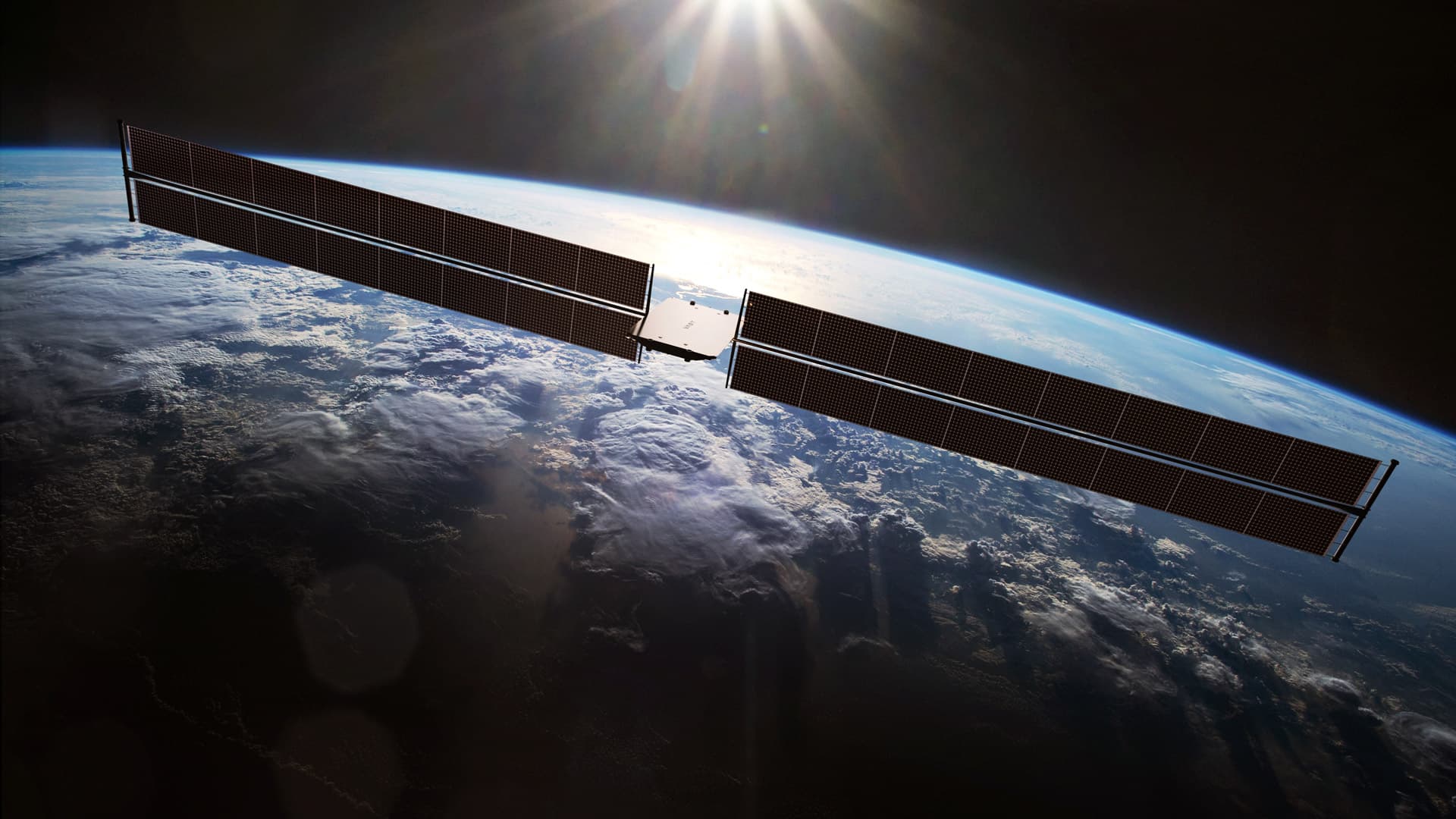
A single-module commercial space station scheduled to become the world's first, launching complete on a SpaceX Falcon 9 to a 425 km, 51.6° orbit. It hosts four astronauts for roughly two-week Dragon missions, with private crew quarters, a 1.1 m domed window, Starlink laser connectivity, and the Haven-1 Lab microgravity research facility. The flight structure has passed beyond-nominal pressure testing and is in final integration for launch readiness in Q1 2027, followed by an uncrewed Dragon docking verification before the first crew.
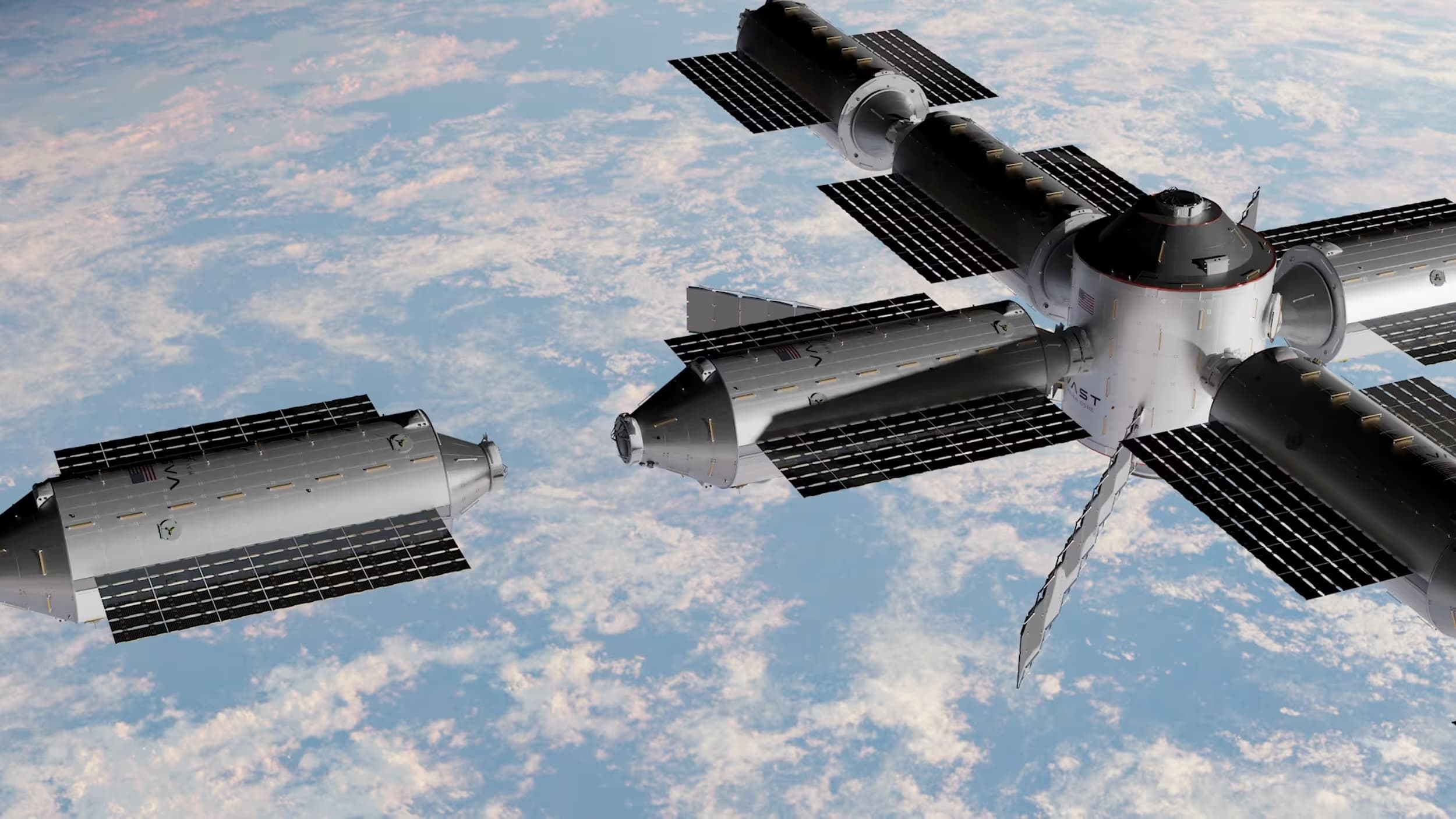
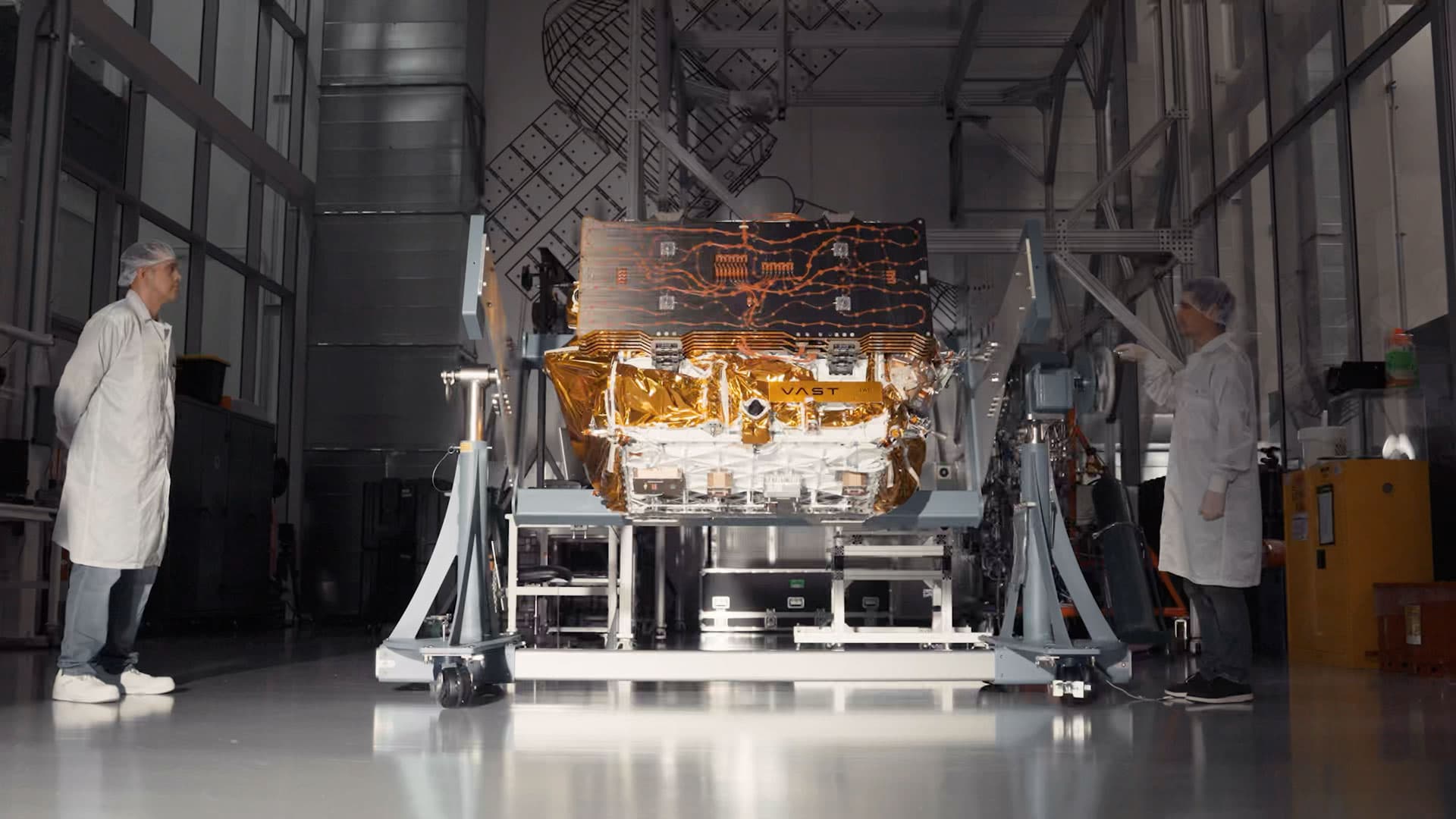
In clean-room integration; launch readiness targeted Q1 2027, first crewed mission (Vast-1) planned 2027

Crew capacity4
Habitable / pressurized volume45 m³ / 80 m³
Mass / power14,600 kg / 13.2 kW
Haven-2

Haven-2

In Development

Vast's proposed successor to the International Space Station and its bid for NASA's CLD Phase 2 competition. Modules launch on Falcon Heavy roughly every six months starting in 2028, building from a single NASA-certifiable 16 m module to a nine-module station by 2032 with 12 crew, a 3.8 m cupola, EVA airlock, external payload facilities, and Starlink laser terminals. Unlike Haven-1's 160 crew-days of consumables, each Haven-2 module supports 720 crew-days and cargo resupply.

Design phase; first module targeted 2028 pending NASA CLD Phase 2 outcome (draft RFP released July 6, 2026)

Crew capacity (full config)12
Habitable / pressurized volume510 m³ / 1,160 m³
Build-outFirst module 2028; 9 modules by 2032
Haven Demo

Haven Demo

Retired

A 552 kg testbed satellite that flew Haven-1's non-human-rated systems in orbit before the station's launch. Launched November 2, 2025 on SpaceX's Bandwagon-4 rideshare to a 510 km orbit, it completed 49 test objectives - validating GNC, avionics, power, solar arrays, thermal control, propulsion, RF communications, and radiation mitigation - and ended with a controlled deorbit burn on February 4, 2026.

Mission success; deorbited February 4, 2026 after validating Haven-1 subsystems

Mass / power552 kg / 1,100 W
Test objectives completed49
Vast Satellite (15 kW bus)

A high-power satellite bus line announced in May 2026, leveraging avionics, power systems, and flight software proven on Haven Demo. The inaugural 15 kW-class platform (700 kg dry mass, 350+ kg payload, 20+ kW peak payload power, 5-year design life, 350–1,200 km LEO) targets communications, Earth observation, national security, and orbital data-center constellations. A confidential first customer ordered 4 satellites with options for up to 200 more.

Announced May 2026 with first order signed (4 satellites + options for up to 200)

Solar power15 kW (20+ kW payload peak)
Payload capacity350+ kg (700 kg bus dry mass)

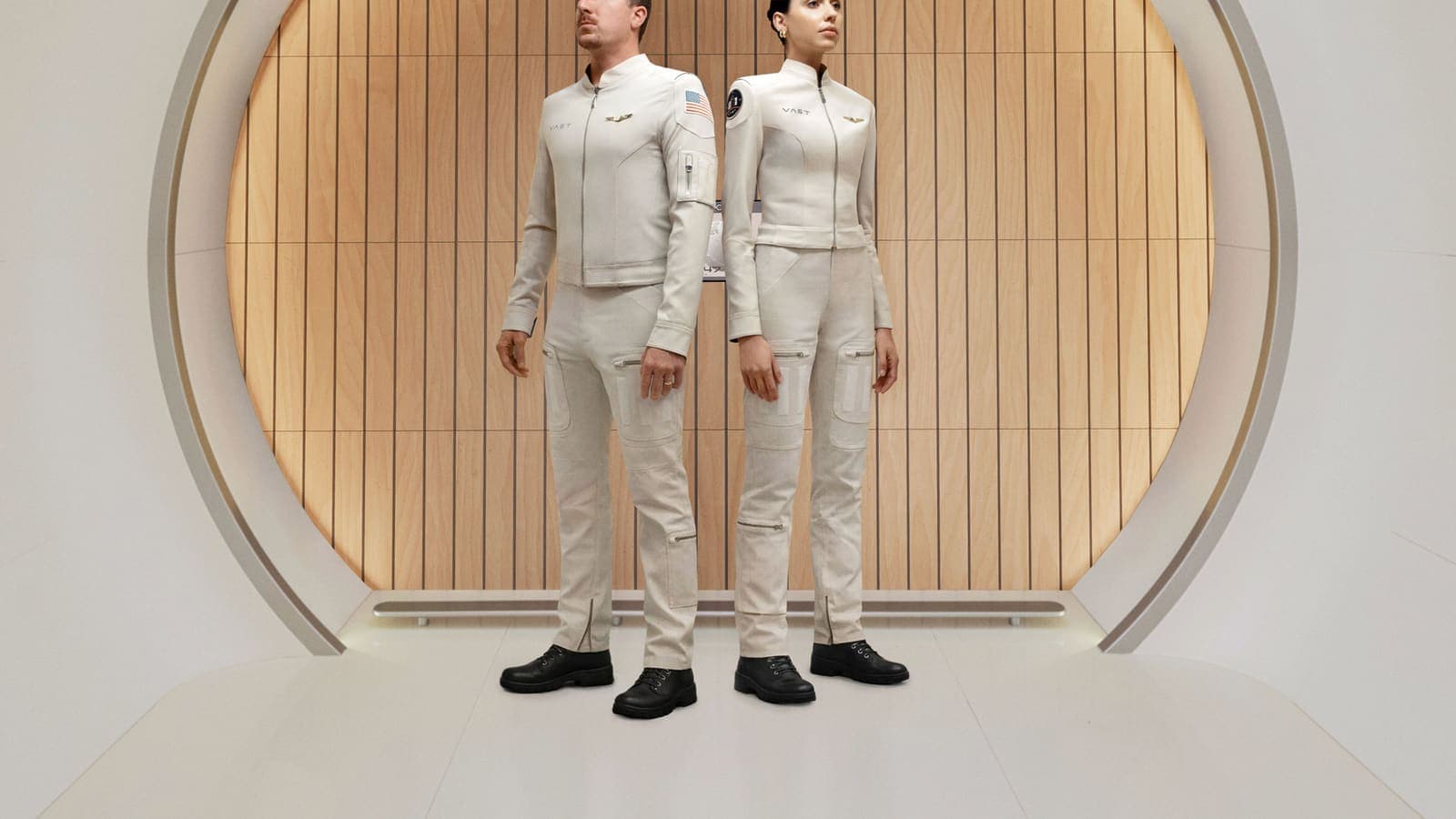
An intravehicular flight suit for crew aboard Haven-1 and NASA private astronaut missions, unveiled April 13, 2026 at the 41st Space Symposium and developed in partnership with Vast lead astronaut Drew Feustel. Custom-tailored per crew member, it is configurable as a single-piece or two-piece outfit (jacket zips from trousers) with pockets and hook-and-loop fasteners for securing tools and personal items in microgravity, prioritizing mobility, comfort, and on-orbit functionality over launch/entry protection.

Unveiled April 2026; crew will wear it for training and upcoming Haven-1 and PAM-6 missions

UnveiledApril 13, 2026 (41st Space Symposium)

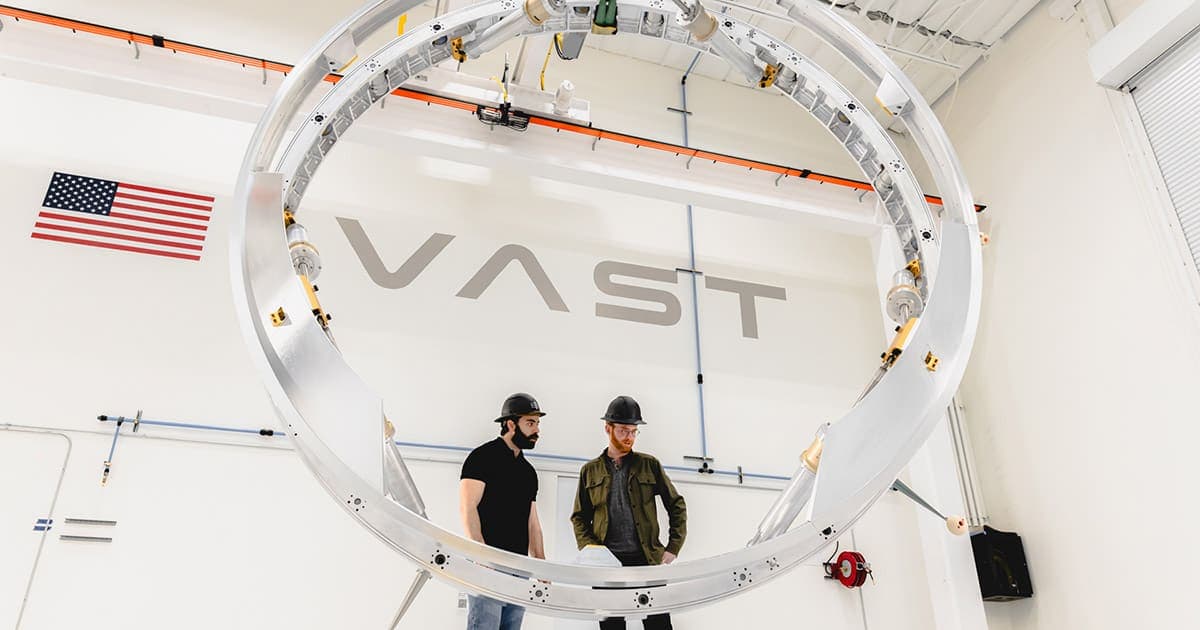
A docking interface for large space station modules and spacecraft, unveiled April 15, 2026 at the Space Symposium, with a 2.9 m pressurized opening (roughly 3x the International Docking Adapter's diameter, ~6.6 m² of area) and a structure up to 30 times more rigid than the IDA - intended for future large modules and vehicles like Starship, not for Haven-1 or Haven-2. Vast plans to sell the adapter commercially while publishing its interface as an open, non-proprietary standard for space agencies and other manufacturers to build compatible hardware against; a design user guide became available May 4, 2026.

Unveiled April 2026; open interface standard and design user guide published May 2026; no station or vehicle customers publicly disclosed as of August 2026

Pressurized opening2.9 m diameter / ~6.6 m² area
Structural rigidity vs. IDAUp to 30x stiffer

What's Next

Complete Haven-1 integration and environmental testing

Vast says it will finish all three integration phases (fluids/life support, avionics/GNC, crew interior and MMOD shielding) plus a suite of environmental tests at NASA's Neil Armstrong Test Facility (former Plum Brook Station, Ohio) in 2026. A separate qualification article already passed a NASA-STD-5001 pressurization proof test in February 2026, but as of late August 2026 the flight article's environmental test campaign had not yet started and no shipment of the flight vehicle to Ohio had been announced. Watch for phase-completion updates and the shipment to Ohio for testing - the last major gates before launch.

Late 2026

Haven-1 launch on Falcon 9

Launch readiness for the world's first commercial space station remains set for Q1 2027, already re-baselined from August 2025 and then 2026. As of late August 2026 Vast is still completing integration and has not yet started the environmental test campaign at NASA's Neil Armstrong Test Facility. Watch for a firm launch date and the uncrewed Dragon docking verification that must follow before any crew flies.

Q1 2027

Vast-1: first crewed mission to Haven-1

Four astronauts, including French ESA reserve astronaut Arnaud Prost as flight test engineer, would arrive within weeks of launch on a SpaceX Dragon for a roughly two-week stay - but timing depends on SpaceX verifying Haven-1 is safe for Dragon docking, which CEO Max Haot has said could take from two weeks to much longer. Watch crew announcements and docking-verification progress.

2027

NASA CLD Phase 2 award decision (Haven-2 bid)

NASA released the draft RFP on July 6, 2026, and the industry feedback window closed July 27, 2026, after NASA affirmed in June it would proceed with its original commercial-station strategy following industry pushback against an earlier proposed pivot. NASA expects to release the final RFP shortly, with formal proposals due in mid-to-late fall 2026, targeting at least two early-development winners, a crewed flight test required by 2029, and a contract selection now expected in early 2027 per rival bidder Voyager Technologies' August 3 earnings call - a modestly earlier timeline than the previously reported spring 2027 estimate. Vast's Haven-2 roadmap (first module 2028) hinges on selection.

Early 2027

Sixth ISS private astronaut mission (PAM-6)

Vast's first NASA private astronaut mission - up to 14 days aboard the ISS via Falcon 9/Dragon, commanded by ESA astronaut Thomas Pesquet, with Czech reserve astronaut Aleš Svoboda confirmed as pilot on June 8, 2026 under an ESA agreement on behalf of the Czech Republic - Svoboda would become the first Czech citizen to visit the ISS. Both are subject to review and approval by the ISS Multilateral Crew Operations Panel. Watch for the remaining crew announcement and mission manifest details.

Summer 2027

Track Record

0 of 2 announced dates hit · 2 slipped

Haven-1 launch (2026 target)

Target May 2026 · Resolved Jan 20, 2026

On January 20, 2026, as Haven-1 began clean-room integration, Vast announced the schedule was moving from 2026 to launch readiness in Q1 2027 - the second slip from the original August 2025 target.

Slipped

Haven-1 launch (original target)

Target August 2025 · Resolved May 7, 2025

The May 2023 announcement targeted launch no earlier than August 2025; by early 2025 Vast had rebaselined Haven-1 to a May 2026 launch as the flight structure was still being built and qualified.

Slipped

Operations & Revenue

StatusPre-launch - Haven-1 in final integration

As of late August 2026, Haven-1 remains in clean-room integration at Vast's Long Beach headquarters, working toward launch readiness in Q1 2027 on a SpaceX Falcon 9. A separate primary-structure qualification article passed a NASA-STD-5001 pressurization proof test at Vast's Mojave facility in February 2026; the thermal control system on the flight article was integrated in June 2026, the company's in-house 10 kW Hall thruster (derived from JPL's H10) began vacuum-chamber testing demonstrating over 3,000 s specific impulse, and Vast says it remains on track to complete all three integration phases in 2026. The environmental test campaign at NASA's Neil Armstrong Test Facility (the former Plum Brook Station) in Ohio remains pending, with no shipment or test-start announced yet as of this update. The Haven Demo pathfinder completed its flight-validation mission (November 2025 - February 2026), and after launch Haven-1 must pass an uncrewed Dragon docking verification before SpaceX flies the first Vast-1 crew, planned for 2027. Vast has also broadened beyond the two Haven stations: it unveiled the Vast Astronaut Flight Suit and the Large Docking Adapter, a commercially sold, open-standard docking interface, at the Space Symposium in April 2026. In parallel, Vast is preparing its Haven-2 bid for NASA's CLD Phase 2 competition: the draft RFP was released July 6, 2026, the industry feedback window closed July 27, and NASA is expected to release the final RFP in late August 2026, with formal proposals due roughly 60 days later.

Revenue Streams

Crewed station missions

Two-week missions to Haven-1 for government space agencies and private astronauts, sold per seat or as full four-person crews (SpaceX Dragon transport). France signed the first sovereign Haven-1 mission agreement in June 2026; additional partner-nation crew members are to be announced.

NASA services (ISS private astronaut missions and future CLD contract)

NASA selected Vast for the sixth ISS private astronaut mission (NET summer 2027), and Haven-2 is Vast's bid for NASA's multi-billion-dollar Commercial LEO Destinations Phase 2 program to succeed the ISS.

Microgravity research and manufacturing (Haven-1 Lab)

Hosted payload slots (10 slots at 30 kg / 100 W each) for research, pharmaceutical, and in-space manufacturing customers; partners include Redwire, Yuri Gravity, JAMSS, Interstellar Lab, Exobiosphere, and a 2026 biotech network including UC San Diego's Sanford Stem Cell Institute, Auxilium, LambdaVision, and BioOrbit.

High-power satellite buses

A 15 kW-class satellite bus line (700 kg dry mass, 350+ kg payload) built on Haven Demo heritage for communications, Earth observation, national security, and orbital data-center constellations; first order signed in May 2026 for 4 satellites with options for up to 200.

Special Programs (national security space)

Classified and unclassified space systems for the US defense and intelligence communities, launched as a dedicated division on July 22, 2026 under SVP Melanie Stricklan and drawing on Vast's commercial station and satellite manufacturing base.

Large Docking Adapter sales and licensing

A 2.9 m-aperture docking interface for large station modules and vehicles (e.g. Starship), unveiled April 2026. Vast plans to sell the adapter commercially while publishing its interface as an open industry standard for other manufacturers to build compatible hardware; not used on Haven-1 or Haven-2. No sales have been publicly disclosed as of August 2026.

Key Metrics

Employees

1,000+ (as of March 2026)

Est. Annual Revenue

Pre-revenue (no station yet in orbit); early commercial bookings include Haven-1 crew seats and lab payload slots, a first satellite-bus order (4 satellites, options for up to 200), and NASA's sixth ISS private astronaut mission

Employees

1,000+

Total private capital invested

~$1 billion (through Mar 2026)

Haven-1 target launch

Q1 2027 (Falcon 9)

Haven-1 crew capacity / habitable volume

4 crew / 45 m³

Haven Demo test objectives completed

49 (Nov 2025 – Feb 2026 mission)

Haven-2 full configuration

9 modules, 12 crew, 510 m³ habitable by 2032

Haven-1 Lab payload capacity

10 slots (30 kg / 100 W each)

Large Docking Adapter aperture

2.9 m pressurized opening (~6.6 m²), ~30x stiffer than the ISS's IDA

Timeline

2026Haven-1 enters integration; launch re-baselined to Q1 2027

In January 2026, Haven-1 begins three-phase clean-room integration (fluids and life support, then avionics/GNC, then crew interior and MMOD shielding). With the milestone, Vast updates the schedule from 2026 to launch readiness in Q1 2027.

2026Haven-1 qualification article passes pressurization proof test

On February 6, 2026, Vast announces that a primary-structure qualification article - a separate unit from the flight structure already in integration - passed a proof test at its Mojave facility, pressurized to 1.8 bar differential (26 psig) and held for 5 hours with the leak rate and strain gauges staying within specification throughout, meeting NASA-STD-5001 structural safety requirements on the first attempt.

2026NASA awards Vast the sixth private astronaut mission to the ISS

On February 12, 2026, NASA selects Vast for the sixth ISS private astronaut mission (the first five went to Axiom Space) - up to 14 days aboard the ISS on a SpaceX Dragon, no earlier than summer 2027, focused on biology, biotech, physical science, and human research.

2026$500M raised; total private capital reaches ~$1B

On March 5, 2026, Vast announces $500M in new funding - a $300M Series A led by Balerion Space Ventures plus $200M in debt - with IQT, Qatar Investment Authority, Mitsui, MUFG, Nikon, and McCaleb participating. The company reports 1,000+ employees and ~$1B in total private capital invested.

2026Unveils Astronaut Flight Suit and Large Docking Adapter

At the 41st Space Symposium in Colorado Springs (April 13-15, 2026), Vast introduces two new hardware lines: the Vast Astronaut Flight Suit, a custom-tailored intravehicular suit developed with Vast lead astronaut Drew Feustel for Haven-1 and PAM-6 crews, and the Large Docking Adapter, a 2.9 m pressurized-opening docking interface roughly 30 times stiffer than the ISS's International Docking Adapter, aimed at future large station modules and vehicles like Starship. Vast says it plans to sell the adapter while publishing its interface as an open industry standard; a design user guide becomes available May 4, 2026.

2026Expands into high-power satellite buses

In May 2026 Vast launches a 15 kW-class satellite bus line built on Haven Demo flight heritage, targeting communications, Earth observation, national security, and orbital data-center constellations. A confidential first customer orders 4 satellites with options for up to 200 more.

2026France signs two-mission agreement; European expansion

On June 1, 2026, France signs for two Vast missions: the ISS private astronaut mission commanded by ESA astronaut Thomas Pesquet, and Haven-1's first crewed flight with ESA reserve astronaut Arnaud Prost as flight test engineer, both in 2027. Vast establishes a European headquarters in Paris and signs MoUs with the UK Space Agency and ESA/Czech Republic in the same month.

2026NASA releases CLD Phase 2 draft RFP

After pausing the Commercial LEO Destinations Phase 2 acquisition in early 2026 and lifting the hold on June 4, NASA releases a draft RFP on July 6, 2026 for commercial stations to succeed the ISS, calling for a crewed flight test by 2029 - the competition Haven-2 is designed to win.

2026Names Steve Isakowitz senior adviser

On June 30, 2026, Vast names Steve Isakowitz - former president and CEO of The Aerospace Corporation and a veteran of NASA, the Department of Energy, and the Office of Management and Budget - as a senior adviser, ahead of NASA's next Commercial LEO Destinations Phase 2 steps and Vast's broader push into government and national-security partnerships.

2026Launches Special Programs division for national security

On July 22, 2026 Vast establishes a new Special Programs division to pursue classified and unclassified space work for the US defense and intelligence communities, naming Melanie Stricklan - former CEO of space-domain-awareness company Slingshot Aerospace and a 21-year Air Force veteran - as senior vice president to lead it. The division draws on Vast's commercial station and satellite-bus platforms and manufacturing base, adding a national-security revenue line alongside Haven-1, Haven-2 and the satellite-bus business.

2025Haven-1 flight structure passes pressure testing

Vast completes full-scale pressure testing of the Haven-1 flight primary structure at its Mojave facility, pressurizing it beyond nominal operating conditions, and completes docking-system installation and fit checks in October 2025.

2025Haven Demo launches and validates core systems

On November 2, 2025, Vast's 552 kg Haven Demo testbed launches on SpaceX's Bandwagon-4 rideshare. It completes 49 test objectives - validating GNC, avionics, solar arrays, thermal control, propulsion, and communications - before a controlled deorbit on February 4, 2026.

2024Final Haven-1 design and Haven-2 unveiled

Vast unveils the final Haven-1 design (October 2024) alongside Haven-2, a nine-module proposed ISS successor targeting first launch in 2028 and completion by 2032. It also announces the Haven-1 Lab microgravity research platform and signs The Exploration Company's Nyx capsule for future Haven cargo.

2023Acquires Launcher, moves to Long Beach

Vast acquires rocket startup Launcher in February 2023, roughly tripling its workforce and gaining the E-2 engine and Orbiter spacecraft platform; Launcher founder Max Haot joins as president. The company relocates to a 115,000 sq ft Long Beach headquarters.

2023Haven-1 and Vast-1 announced with SpaceX

In May 2023 Vast announces Haven-1, targeted to become the world's first commercial space station, launching on a Falcon 9 no earlier than August 2025, with the four-person Vast-1 Dragon mission to follow. In August, Max Haot is appointed CEO with McCaleb becoming chairman.

2021Founded by Jed McCaleb

Crypto billionaire Jed McCaleb (eDonkey, Mt. Gox, Ripple, Stellar) founds Vast in El Segundo, California, to build artificial-gravity space stations, personally bankrolling the company. It publicly launches in September 2022 with former SpaceX VP Hans Koenigsmann as an early advisor.

Funding

RoundDateAmountInvestorsSource
Founder capital2021–2025Undisclosed (Jed McCaleb, sole backer through 2025, prepared to invest up to $1B)Jed McCaleb
Series A + debtMar 2026$500M ($300M equity + $200M debt)Balerion Space Ventures (lead), IQT, Qatar Investment Authority, Mitsui & Co., MUFG, Nikon, Stellar Ventures, Space Capital, Earthrise Ventures, Jed McCaleb

/ Related Companies

All Space Stations
Axiom Space logo

Axiom Space

Space Stations +2

Axiom Space, founded in Houston in 2016 by former NASA ISS program manager Michael Suffredini and entrepreneur Kam Ghaffarian, is the leading commercial human-spaceflight company, built around three lines of business: private astronaut missions to the ISS, the Axiom Station commercial space station, and next-generation spacesuits. It flew Ax-1, the first all-private crewed mission to the ISS, in April 2022, and has since flown four missions carrying 16 astronauts - most recently Ax-4 (June-July 2025), which returned India, Poland, and Hungary to human spaceflight; NASA has ordered a fifth mission (Ax-5, NET January 2027) whose crew remains unannounced as of August 2026. In 2020 NASA awarded Axiom a $140 million contract to attach the first commercial module to the ISS, and in September 2022 a $228.5 million task order (under a contract worth up to $1.26 billion) to build the Artemis moonwalking spacesuit, the AxEMU, covering four suits. NASA's early-2026 Artemis restructuring turned Artemis III into a non-landing rendezvous test flight and pushed the first crewed lunar landing to Artemis IV (targeted early 2028) - the mission the AxEMU suits are now built for; Axiom became NASA's sole suit developer after Collins Aerospace was descoped in 2024, and while a NASA OIG report in April 2026 warned the suit could still slip toward 2031, Axiom is running a roughly yearlong qualification-testing campaign toward a 2027 flight demonstration. The company hit severe financial turbulence in late 2024 - roughly 100 layoffs, voluntary 20% pay cuts, and late payments to contractors including SpaceX - followed by rapid CEO churn (Suffredini out August 2024, Ghaffarian interim, Tejpaul Bhatia April-October 2025, then NASA-veteran astrophysicist Jonathan Cirtain). In December 2024 it re-sequenced station assembly to launch a Payload Power Thermal Module first; that target has since slipped from NET 2027 to early 2028, with a free-flying station still expected to form as early as 2028. Finances have since stabilized: a $100M round at a ~$2B valuation (March 2025), $100M from Hungary's 4iG (December 2025), and an oversubscribed $525M+ round closed June 2026 with Qatar Investment Authority, Type One Ventures, and MUFG Bank. With ~700 employees, Axiom launched its first two orbital data center nodes in January 2026, plans a third node aboard the ISS with Spacebilt in 2027, is evaluating a role for that network in the Pentagon's proposed Golden Dome missile-defense architecture, and is competing for NASA's Commercial LEO Destinations Phase 2 award - whose original full-and-open competition structure NASA reaffirmed in June 2026 after briefly floating a government-owned core-module alternative in March - with a final RFP expected late August 2026 and selection targeted for spring 2027.

Blue Origin logo

Blue Origin

Space Stations +2

Blue Origin is a privately held aerospace company founded by Jeff Bezos that develops reusable launch vehicles, rocket engines, lunar landers, in-space mobility systems, and satellite communications infrastructure. Its current programs span the New Shepard suborbital system, the New Glenn heavy-lift rocket, the BE-4 engine family that also powers ULA's Vulcan, the Blue Moon lunar lander family, the Blue Ring spacecraft platform, and the TeraWave network. The FAA closed its NG-3 mishap investigation and lifted the New Glenn grounding on May 22, 2026 - pinning the BlueBird 7 deployment failure on a cryogenic leak that froze a hydraulic line - but six days later, on May 28, a New Glenn exploded during a hotfire at Cape Canaveral's LC-36, destroying the transporter-erector at Blue Origin's only New Glenn pad. CEO Dave Limp said the rocket will fly again before year-end via a hybrid horizontal-integration/crane-erect path that skips replacing the destroyed transporter-erector, with the propellant farm, a second flight-ready booster, and three upper stages intact; on July 24, 2026 NASA and Blue Origin agreed to conduct New Glenn second-stage (GS2) hot fire testing at Stennis Space Center's B-2 stand beginning this fall while LC-36 recovers, and NASA's Pegasus barge is due at Kennedy Space Center around August 10-12, 2026 to carry the completed GS2 to Stennis. The Blue Moon MK1 'Endurance' cargo lunar lander has completed thermal vacuum testing at NASA Johnson, but with New Glenn grounded its launch to the Moon has slipped from a fall-2026 target to early 2027. Separately, a February 2026 NASA Artemis architecture overhaul reassigned the crewed Blue Moon Mark 2 lander to compete with SpaceX's Starship for the program's first Moon landing (now targeted for Artemis IV, as soon as early 2028) following a 2027 crewed low-Earth-orbit docking test on the restructured Artemis III. In a landmark shift after 26 years of near-total self-funding (roughly $30B cumulative), Blue Origin raised about $10B at a $130B valuation in July 2026 - its first-ever outside round, led by Coatue (~$4B) with Jeff Bezos adding ~$2B - to bankroll Limp's target cadence of roughly 100 launches a year against an estimated ~$4.8B 2026 spend. The company broke ground on a new ~120,000-square-foot Cape Canaveral payload processing facility on August 31, 2026, and on September 1, 2026 NASA awarded it a $700M contract to build and deliver a Mars Telecommunications Orbiter - built on the Blue Ring platform - by December 31, 2028, extending Blue Origin's business beyond Earth-orbit launch and lunar landers into deep-space communications infrastructure.

CASC logo

CASC

Space Stations +2

China Aerospace Science and Technology Corporation (CASC) is the state-owned prime contractor for China's space program and the world's most prolific launch organization by missions flown. Wholly owned by the central government through SASAC and led by chairman Chen Mingbo, it develops and operates the Long March (Changzheng) rocket family - which flew its 661st cumulative mission on August 4, 2026, delivering a 23rd batch of GuoWang broadband satellites - along with the Shenzhou crewed spacecraft, Tianzhou cargo vehicles, the Tiangong space station, BeiDou navigation and GuoWang broadband satellites, the Chang'e lunar and Tianwen planetary probes, and China's strategic missiles. After a national-record 73 launches in 2025, CASC is targeting over 100 launches in 2026 amid an industry-wide national push toward ~140, debuted the partially reusable Long March 12B in June 2026, and saw its Tianwen-2 probe reach the quasi-moon asteroid Kamo'oalewa on July 6, 2026. On July 10, 2026 it made China the second nation ever to recover an orbital rocket first stage, when the new single-stick, partially reusable Long March 10B flew its maiden mission from Hainan and captured its booster in a sea-based net - a landmark step toward closing the reusability gap with SpaceX, with a reflight of the recovered booster still targeted before the end of 2026. That momentum was interrupted on August 10, 2026, when a Long March 7A broke apart shortly after liftoff and lost its satellite payload - only the vehicle's second failure ever - triggering an engine investigation that put a question mark over the timing of Chang'e 7; CASC kept other Long March variants flying through the investigation, with a Long March 5B launching an eighth GuoWang satellite batch on August 13, 2026, and on August 19, 2026 rolled the Chang'e-7 probe and its Long March 5 (Y14) rocket out to the Wenchang pad ahead of a planned August 24, 2026 launch, but the mission was then postponed by Typhoon Narra and, per an August 23 China Manned Space Agency statement, cannot fly within the 2026 window at all - multiple outlets report a possible slip into 2027 - with no root cause or formal fleet clearance yet announced for the 7A investigation either. CASC is also advancing the triple-core Long March 10 toward a crewed Moon landing before 2030: the Long March 10A's own orbital debut is separately reported to carry a lunar navigation satellite ahead of the uncrewed Mengzhou 1 capsule test, still targeted around September 2026 but flagged in one report as at risk of slipping into early 2027.

Voyager Technologies logo

Voyager Technologies

Space Stations +2

Voyager Technologies is a Denver-based defense-technology and space-infrastructure company best known for leading Starlab, the international joint venture building a commercial successor to the International Space Station. Founded in October 2019 by Dylan Taylor as Voyager Space Holdings, the company grew by rolling up twelve space and defense firms - including Altius Space Machines and Pioneer Astronautics (2020), The Launch Company, Valley Tech Systems and Nanoracks (2021), Space Micro (2022), ZIN Technologies (2023), and Estes Energetics, ExoTerra Resource and LEOcloud (2025). Through Nanoracks it owns the Bishop Airlock, the first and only permanent commercial module on the ISS, operating since December 2020. Starlab won a $160M NASA Commercial LEO Destinations award in December 2021 (later raised to $217.5M) and evolved into Starlab Space LLC, a US-led JV with Airbus, Mitsubishi Corporation and MDA Space, with Palantir supplying station software, Hilton designing crew quarters and Northrop Grumman providing Cygnus resupply. The single-launch, 8-meter-class station - with roughly half the ISS's pressurized volume - is contracted to fly on SpaceX's Starship, now targeted for 2029, and completed its Commercial Critical Design Review with NASA in February 2026, clearing the way for flight manufacturing. Voyager rebranded to Voyager Technologies in early 2025 to emphasize national security and went public on NYSE in June 2025, raising $382.8M and briefly touching a ~$3.8B valuation. Its Defense & National Security segment - solid and electric propulsion, energetics, signals intelligence and communications - is its fastest-growing business and put it on the Anduril-led team named among the Space Force's Golden Dome space-based-interceptor awardees in April 2026. On July 13, 2026 it closed its acquisition of Pittsburgh lunar-lander developer Astrobotic Technology ($162M cash and stock plus up to $129M in earnouts and $9M assumed debt), rebranding the unit Voyager Lunar Systems under continuing CEO John Thornton, and the same day disclosed a roughly $298M NASA Commercial Lunar Payload Services task order won under the deal - funding the Peregrine-2 lander to carry three NASA payloads to the Moon's Gruithuisen Domes in 2028 - adding an end-to-end lunar business alongside space stations and defense; the nearer-term proof point is Griffin-1, an infrastructure-class lander carrying 10 NASA/ESA/commercial payloads that is now in environmental testing at NASA JPL ahead of a Falcon Heavy launch no earlier than November 30, 2026. As of August 28, 2026 Voyager traded around a $2.1B market cap (down from a post-earnings peak near $2.55B in mid-August), posted $166.4M of 2025 revenue (net loss $116.1M), held $585.5M of total liquidity as of June 30, 2026, and had closed an upsized $250M J.P. Morgan-led credit facility on July 6, 2026. Q2 2026 results reported August 3 showed record revenue of $52.7M (up 51% sequentially), record bookings of $113.0M, and a record $335.5M backlog, prompting Voyager to raise 2026 revenue guidance to $275-305M from a prior $230-255M range; Starlab separately has signed over $500M of commercial reservations ahead of launch. Since then Voyager has added an August 4 Raytheon SM-3 missile-interceptor propulsion contract and an August 10 Space Force space-to-space communications contract to its Defense & National Security backlog. NASA's CLD Phase 2 industry-feedback window closed July 27, 2026 as scheduled; as of August 29, 2026 NASA had not yet issued the final RFP it had been tracking toward late August, with an award still expected in early-to-spring 2027.

Airbus logo

Airbus

Space Stations +1

Airbus is Europe's largest aerospace company, spanning commercial aircraft, helicopters, defence and space. In civil aviation it remains Boeing's only true peer at global scale and is pairing near-term production growth with longer-term work on lower-carbon aircraft technologies, future single-aisle designs and hydrogen propulsion. The company combines a mature global airliner business with broader aerospace capabilities across defence, space and rotorcraft. Q1 2026 was unusually weak - 114 deliveries (vs. 136 a year earlier), revenue down 7% to EUR 12.65B and adjusted EBIT halved to EUR 300M due to Pratt & Whitney engine shortages and Chinese delivery disruptions - but Airbus reaffirmed full-year 2026 guidance of ~870 deliveries, EUR 7.5B adjusted EBIT and EUR 4.5B free cash flow, with a record commercial backlog above 9,000 aircraft. Output recovered strongly through mid-year: official figures reported July 10 showed 351 deliveries in H1 2026 (up ~15% YoY), Airbus's best first half since 2019, and the backlog stood at 9,216 aircraft at end-June. At a measured Farnborough Airshow (July 20-24, 2026) Airbus booked roughly 157 firm commercial orders plus commitments (of a show-wide $84.7B / 353 firm aircraft), headlined by SMBC Aviation Capital's 100 A320neo-family jets, VietJet's 20 A330neos (~$7.4B), and new A350-1000 orders from Riyadh Air and Philippine Airlines, with CEO Guillaume Faury reaffirming the ~870-delivery full-year target. On July 26 Airbus announced a EUR 5B share buyback and raised medium-term targets, and on July 29 it reported H1 2026 results: revenue up 12% YoY to EUR 33.2B on 351 deliveries, powered by a record Q2 (237 deliveries, +39% YoY). Airbus's official July tally, published August 7, showed the delivery pace cooling further to 67 aircraft (39 customers) and 204 gross orders, taking YTD deliveries to 418 versus 373 at the same point in 2025 - still 51 aircraft ahead of Boeing (367 YTD) but below the roughly 85-90/month cadence needed to reach the 870-aircraft target. August's official tally showed a further cooldown to 47 aircraft delivered to 31 customers and 46 gross orders (including airBaltic firming 10 more A220-300s), taking YTD deliveries to 465 - now requiring an average of roughly 100 aircraft a month over the final four months of the year to hit the 870-aircraft guidance. Part of the August softness traces to a production quality issue on the A330neo: Airbus found a stray tool and other quality lapses on the horizontal tail plane (assembled at its Getafe plant) that nearly halted A330neo deliveries for three months - zero handed over in June and July, just one in August, to Starlux Airlines - before Airbus said in early September the root cause was identified, the issue was isolated and unrelated to the Spain labor dispute, and deliveries had resumed. Two other supply and schedule risks continue to shadow the ramp: Airbus's dispute with Pratt & Whitney over shorted A320neo engine deliveries has hardened into a formal damages claim that could go to arbitration, and the A350F freighter has now penciled in a tentative first-flight date around September 24, 2026 (reports August 19-20), with first delivery still targeted for the second half of 2027 - a tight but so-far-unrevised schedule given typical 12-15 month flight-test campaigns. Airbus also confirmed two divisional leadership changes already in effect this year (Lars Wagner as Commercial Aircraft CEO since January, Matthieu Louvot as Airbus Helicopters CEO since April) and a board chair transition, with Amparo Moraleda succeeding Rene Obermann on October 1, 2026. Thousands of Airbus workers in Spain resumed an indefinite strike the week of August 24 after rejecting a pay offer; on August 31 workers voted 81% to keep striking rather than suspend it, and on September 1 SIMA-mediated talks with the three unions leading the walkout (CGT, UGT, UTIL) broke down without agreement, so Airbus shifted to a parallel negotiating track with non-striking unions (CCOO, SIPA, ATP) while the indefinite strike, and its drag on production, continued into early September with no resolution yet. On the defense side, Airbus also picked up two notable wins in mid-to-late August: a $115 million U.S. Army contract (option for two more) for 10 UH-72B Lakota helicopters announced August 14, and a EUR 5.4 billion (~$6.3B) Spain-Poland framework agreement approved by Spain's Council of Ministers on August 25 for the joint procurement of seven A330 MRTT tankers (three for Spain, four for Poland) under the EU's SAFE instrument, to be assembled at Airbus's Getafe site with Polish deliveries targeted by 2030 and definitive contracts still to be negotiated. Airbus's stock has held up despite the noise, with a market cap of roughly $190B in mid-August 2026. Separately, on August 29, 2026 the Financial Times reported that Airbus is reviewing its US small-satellite manufacturing business at Merritt Island, Florida (more than 200 staff and several hundred million dollars in annual revenue), with a sale among the options; Airbus confirmed the review and said it is separate from its planned European space combination with Leonardo and Thales.

Boeing logo

Boeing

Space Stations +1

Boeing is one of the world's largest aerospace companies, spanning commercial airplanes, defense and space systems, and aftermarket services. The 2026 turnaround gathered pace through the first half of the year: 314 commercial deliveries in H1 2026 (its best first half since 2018), a Q2 net loss of $428M on $24.6B of revenue that nonetheless produced the company's first positive free cash flow quarter (+$631M) in over a year, and a record total backlog of $715B including more than 6,200 commercial aircraft. The 737 MAX line reached rate 47 per month in May 2026 and gained a fourth final-assembly line - the Everett 'North Line' - in July, with rate 52 targeted for early 2027. At the Farnborough Airshow (July 20-24, 2026) Boeing booked 170+ aircraft led by SMBC's 100-jet 737 MAX order, while the long-delayed 777X neared its certification finish line even as Emirates declined to accept the first 10-11 early-build 777-9s over their age and GE Aerospace temporarily paused GE9X engine shipments pending a durability fix. The FAA certified the 737 MAX 7 on August 3, 2026, clearing the smallest MAX variant after nearly a decade of review, and on August 10 Boeing agreed to sell its Wisk Aero, Insitu, and SkyGrid subsidiaries to Archer Aviation for a near-20% equity stake. July's delivery pace cooled to 53 aircraft (down 17% from June and now trailing Airbus by 51 aircraft year-to-date, 367 vs 418), and on August 21 Boeing's roughly 17,000 SPEEA-represented engineers and technicians rejected the tentative contract their own bargaining councils declined to endorse (64.3% and 71.9% against, respectively) and authorized a strike if no new deal is reached before the current contracts expire October 6. Boeing shares fell about 7.5% on the news, cutting market cap to roughly $170B (from ~$183B in mid-August). On August 26 the FAA finalized an airworthiness directive requiring inspections of certain 787 Dreamliners over shim gaps at lower side-of-body splice plates. Boeing remains one of the two central global commercial-jet manufacturers alongside Airbus, with its trajectory now hinging on sustaining the 737 ramp without reintroducing defects, closing out 737 MAX 10 certification, avoiding an engineers' strike, and steering the 777X's remaining ETOPS testing toward 2027 certification.