Axiom Space, founded in Houston in 2016 by former NASA ISS program manager Michael Suffredini and entrepreneur Kam Ghaffarian, is the leading commercial human-spaceflight company, built around three lines of business: private astronaut missions to the ISS, the Axiom Station commercial space station, and next-generation spacesuits. It flew Ax-1, the first all-private crewed mission to the ISS, in April 2022, and has since flown four missions carrying 16 astronauts — most recently Ax-4 (June–July 2025), which returned India, Poland, and Hungary to human spaceflight; NASA has ordered a fifth mission (Ax-5) for no earlier than January 2027. In 2020 NASA awarded Axiom a $140 million contract to attach the first commercial module to the ISS, and in September 2022 a $228.5 million task order (under a contract worth up to $1.26 billion) to build the Artemis moonwalking spacesuit, the AxEMU — Axiom became NASA's sole suit developer after Collins Aerospace was descoped in 2024, though a NASA OIG report in April 2026 warned the suit could slip to 2031. The company hit severe financial turbulence in late 2024 — roughly 100 layoffs, voluntary 20% pay cuts, and late payments to contractors including SpaceX — followed by rapid CEO churn (Suffredini out August 2024, Ghaffarian interim, Tejpaul Bhatia April–October 2025, then NASA-veteran astrophysicist Jonathan Cirtain). In December 2024 it re-sequenced station assembly to launch a Payload Power Thermal Module first (NET 2027) so a free-flying station could form as early as 2028. Finances have since stabilized: a $100M round at a ~$2B valuation (March 2025), $100M from Hungary's 4iG (December 2025), and an oversubscribed $525M+ round closed June 2026 with Qatar Investment Authority, Type One Ventures, and MUFG Bank. With ~700 employees, Axiom launched its first two orbital data center nodes in January 2026 and is competing for NASA's Commercial LEO Destinations Phase 2 award expected in spring 2027.
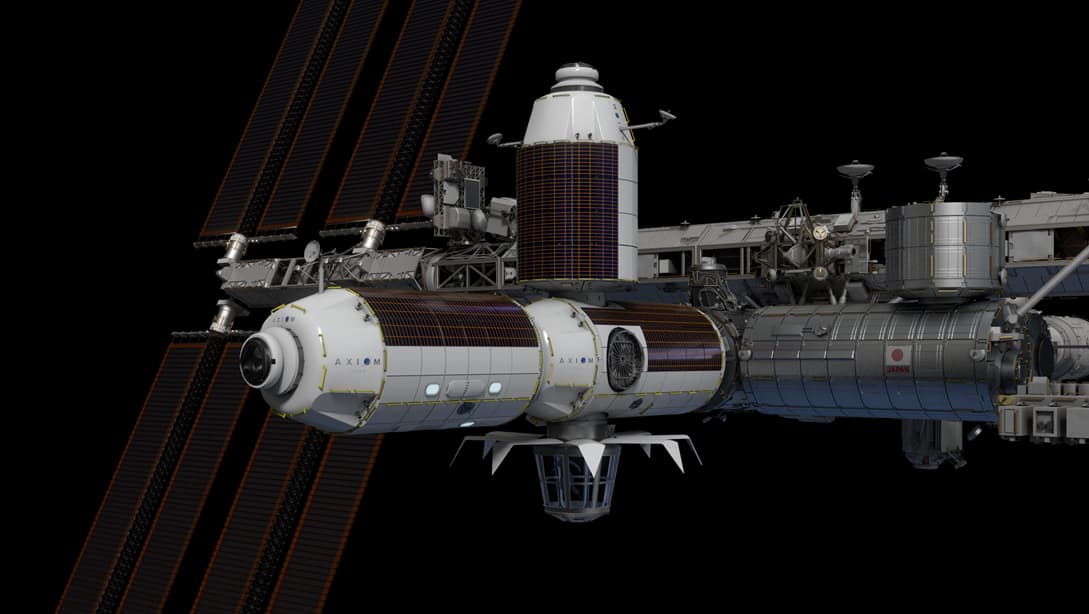
Commercial successor to the ISS, assembled in stages: a Payload Power Thermal Module (PPTM) berths to the ISS first (NET 2027), then detaches to join the Hab-1 habitat as a free-flying station as early as 2028, later expanded with an airlock, Hab-2, and a Research & Manufacturing Facility with a windowed Earth observatory. Primary structures are in fabrication at Thales Alenia Space, with final assembly at Axiom's Houston Spaceport facility.
PPTM launch NET 2027 after repeated slips; design reviews complete and module structures in fabrication; awaiting NASA CLD Phase 2 outcome (award expected spring 2027)
First module launchNET 2027 (PPTM to ISS)
Free-flyer capabilityAs early as 2028 (PPTM + Hab-1)
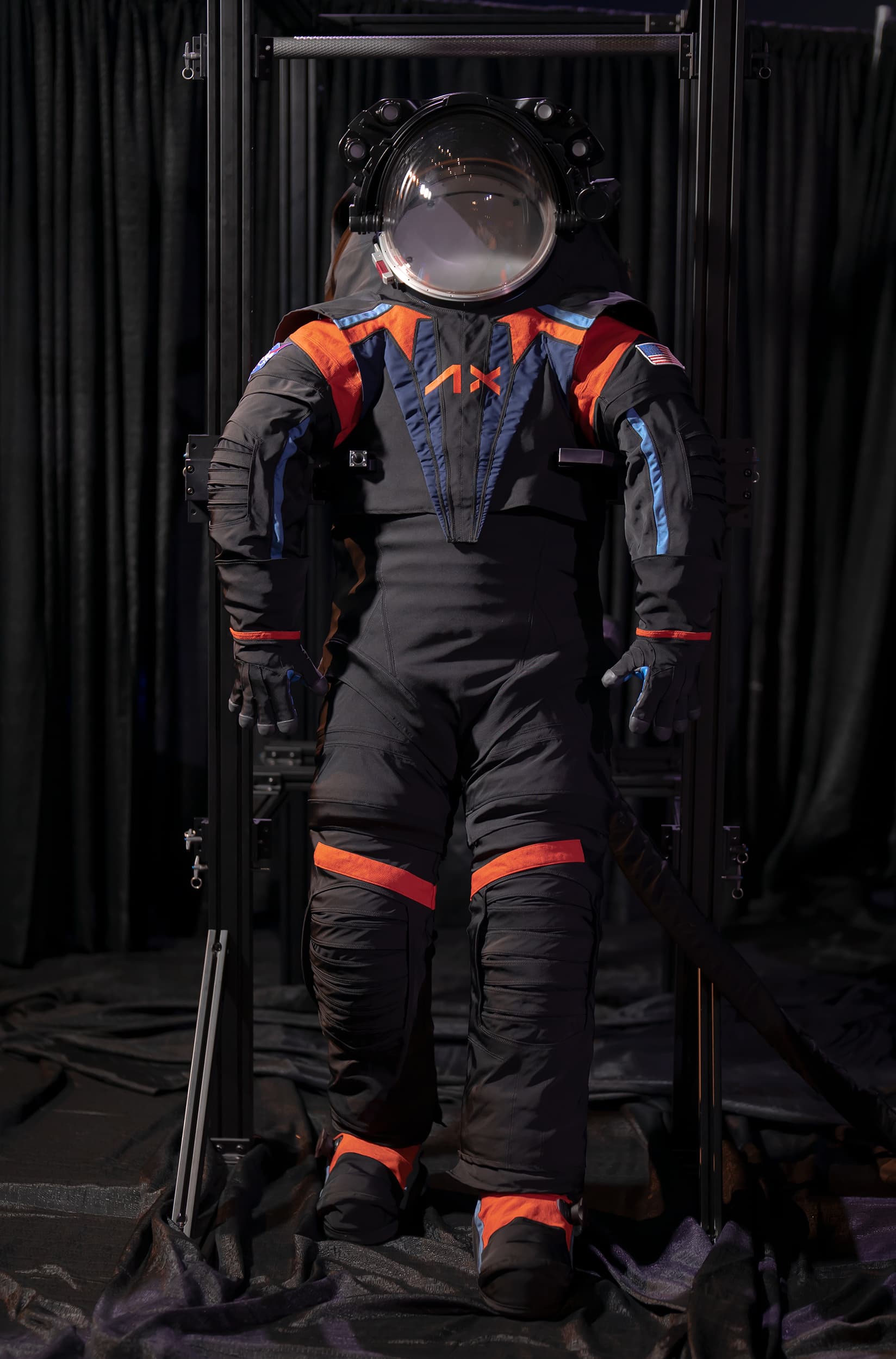
Next-generation extravehicular mobility unit evolved from NASA's xEMU design, built for the first Artemis crewed lunar landing — supporting at least two-hour EVAs at the lunar south pole and in permanently shadowed regions — with redundant life support, improved mobility joints, and broad crew sizing. Prada co-developed the outer layer (2024) and the liquid cooling and ventilation inner garment (unveiled June 2026).
In critical design phase with 700+ hours of crewed pressurized testing and first thermal-vacuum test completed Nov 2025; NASA OIG warned in April 2026 the suit is ~18 months behind schedule and demos could slip to 2031
NASA task order$228.5M base (Artemis lunar suits, Sept 2022)
Crewed test time700+ hours pressurized (as of Nov 2025)
Lunar EVA capability≥2 hours in permanently shadowed regions
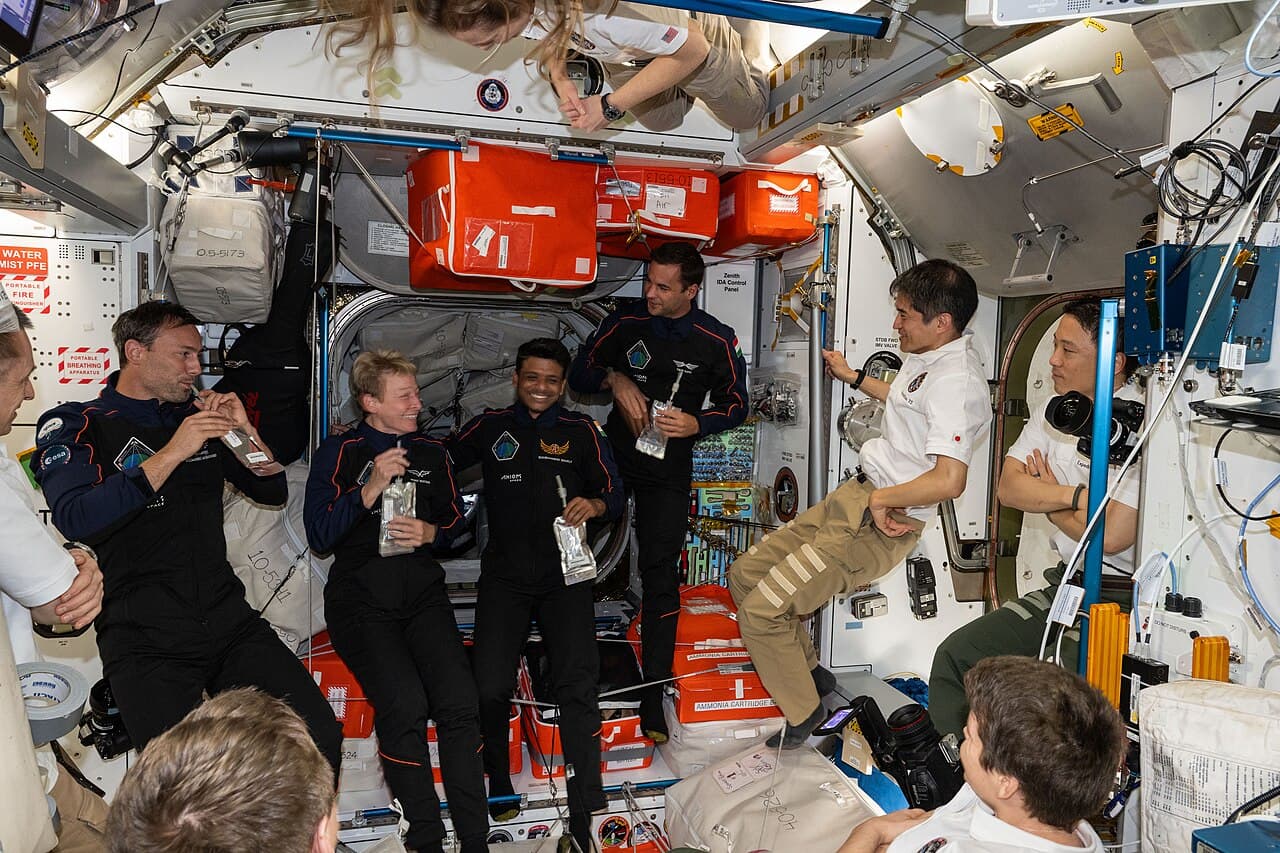
End-to-end crewed missions to the ISS on SpaceX Crew Dragon — crew selection, training, mission management, and research integration — sold to individuals and, increasingly, national governments. Four missions flown (Ax-1 April 2022, Ax-2 May 2023, Ax-3 January 2024, Ax-4 June 2025) carrying 16 astronauts, including the first government astronauts from Saudi Arabia, Turkey, India, Poland, and Hungary in decades.
Ax-4 completed July 15, 2025; NASA ordered Ax-5 (its fifth consecutive PAM award to Axiom) for NET January 2027, with Voyager Technologies as payload-integration teammate
Missions flown4 (2022–2025), 16 astronauts
Estimated seat price~$55M
Next missionAx-5, NET January 2027 (up to 14 days docked)
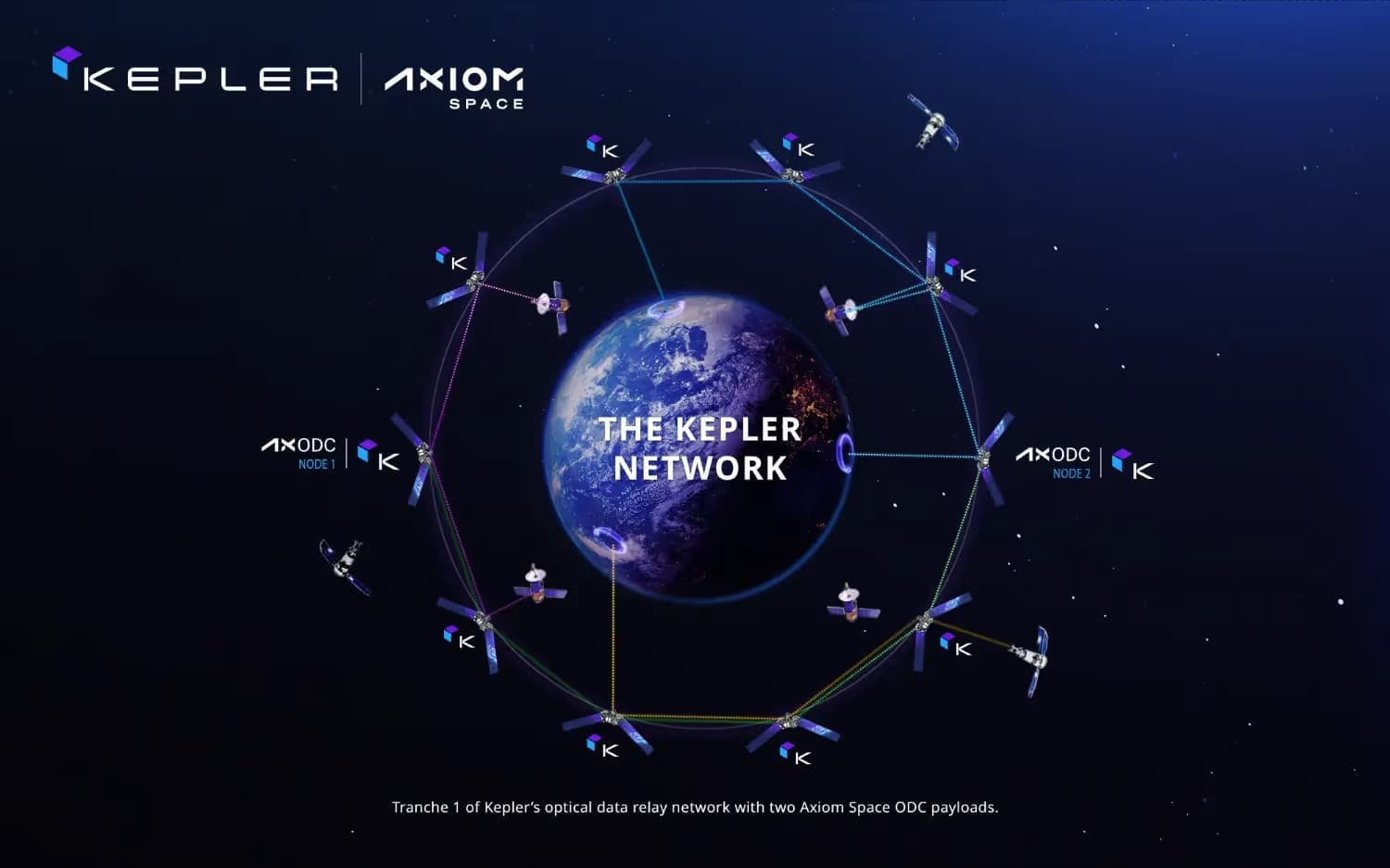
Space-based cloud computing nodes providing secure data storage, processing, and AI/ML directly to satellites and spacecraft on orbit, independent of ground infrastructure. The first two nodes launched January 11, 2026 aboard Kepler Communications' optical relay constellation, with 2.5 Gbps SDA-compatible optical links, options for additional Kepler payloads, and a roadmap from kilowatts toward megawatts of on-orbit compute.
ODC Nodes 1 and 2 launched January 11, 2026 on Kepler's first tranche of ten optical relay satellites (SpaceX Falcon 9 from Vandenberg)
Nodes on orbit2 (launched Jan 11, 2026)
Optical link speed2.5 Gbps (10 Gbps+ upgrades planned)
What's Next
NASA Commercial LEO Destinations Phase 2 award
NASA released the draft CLD Phase 2 solicitation on July 6, 2026 ($1–1.5B in funding FY2026–2031, minimum two awards, crewed flight test required by 2029); industry feedback is due July 27, the final RFP is expected in late August 2026, and contract award is expected in spring 2027. Winning is pivotal to Axiom Station's anchor-customer economics against Vast, Starlab, and Blue Origin.
Spring 2027
Ax-5 private astronaut mission to the ISS
Axiom's fifth NASA-approved private astronaut mission, ordered January 30, 2026, will launch from Kennedy Space Center for up to 14 days docked to the ISS, with Voyager Technologies handling payload integration; the crew — expected to include more national-government astronauts — has not yet been announced.
NET January 2027
Launch of first Axiom Station module (PPTM) to the ISS
The Payload Power Thermal Module — carrying power, thermal systems, and eight science racks — will berth to an ISS cargo port before later detaching to anchor the free-flying station. Structures are in fabrication at Thales Alenia Space with final integration in Houston.
NET 2027
AxEMU spacesuit crewed demonstration readiness
Axiom is targeting spacesuit demonstration readiness in late 2027 to support the first Artemis crewed lunar landing, but NASA's Inspector General warned in April 2026 that on historical testing averages the demo could slip to 2031, leaving little to no schedule margin. Watch the remaining qualification and thermal-vacuum test campaign.
Late 2027
Free-flying Axiom Station (Hab-1 joins PPTM)
Hab-1, with four crew quarters and initial research and manufacturing capability, launches after PPTM; the two modules mate in an independent orbit to form a free-flying station roughly two years earlier than Axiom's pre-2025 plan, ahead of ISS retirement around 2030.
As early as 2028
Track Record
2 of 3 announced dates hit · 1 slipped
Launch first two orbital data center nodes by year-end 2025
Target Late 2025 · Resolved Jan 11, 2026
Announced April 7, 2025 for launch by year-end 2025, ODC Nodes 1 and 2 reached orbit on January 11, 2026 — eleven days past the target — aboard Kepler Communications' first tranche of ten optical relay satellites on a SpaceX Falcon 9 from Vandenberg.
Hit
Fly Ax-4 private astronaut mission to the ISS
Target Spring 2025 · Resolved Jun 25, 2025
Ax-4 launched June 25, 2025 — days past the 'no earlier than spring 2025' window NASA set in August 2024, after short delays for a Falcon 9 propellant leak and an ISS Zvezda-module leak review — and completed a successful 20-day mission carrying India's, Poland's, and Hungary's first government astronauts in over 40 years, splashing down July 15, 2025.
Hit
Install first habitat module (Hab-1) on the ISS
Target Late 2026 · Resolved Dec 18, 2024
Axiom's plan to attach its Hab-1 habitat to the ISS in late 2026 (itself a slip from an original 2024 target) was superseded on December 18, 2024, when Axiom and NASA re-sequenced assembly: a Payload Power Thermal Module now launches first, no earlier than 2027, with Hab-1 following NET 2028.
Axiom Space names new CFO and CIO for space-station push
Axiom Space said on July 15 it appointed Zach Gitomer as chief financial officer and Erick Wegerer as chief information officer, filling out its executive team as it develops the Axiom Station commercial space station, flies private astronaut missions and builds Artemis moonwalking spacesuits. Gitomer, who has advised on roughly 100 financing and M&A transactions worth nearly $100 billion, oversees finance and capital markets, while Wegerer — previously CIO at Boeing subsidiary Insitu — leads information systems and cybersecurity. The hires continue a stabilization drive following heavy 2024–2025 leadership churn and cash strains, after Axiom closed an oversubscribed $525M-plus round in June.
Operations & Revenue
StatusOperational services; station in development after financial reset
Axiom generates real revenue today — four private astronaut missions flown (a fifth ordered by NASA for NET January 2027), NASA spacesuit task orders, and newly operational orbital data center nodes — but its flagship station remains years from orbit, with the first module (PPTM) targeted NET 2027 versus an original mid-2020s plan. The company nearly ran aground in late 2024 (about 100 layoffs, voluntary 20% pay cuts, late payments to SpaceX and other contractors, per Forbes) and cycled through three CEOs in 2025 before stabilizing under Jonathan Cirtain. Finances have materially improved: roughly $725M raised between December 2025 and June 2026 (4iG's $100M plus the oversubscribed $525M+ round with QIA, Type One Ventures, and MUFG Bank), plus Texas state grants. Two open risks dominate: NASA's Commercial LEO Destinations Phase 2 competition (draft RFP issued July 6, 2026; award expected spring 2027) where Axiom faces Vast, Starlab, and Blue Origin; and the AxEMU spacesuit, where NASA's Inspector General warned in April 2026 of schedule slips toward 2031 with little to no margin for the first Artemis lunar landing.
Revenue Streams
Private astronaut missions
Sells seats on Crew Dragon missions to the ISS — estimated at roughly $55M per seat — primarily to national governments (Saudi Arabia, Italy, Turkey, India, Poland, Hungary), with training, integration, and mission operations included. Fifth NASA-approved mission (Ax-5) targeted NET January 2027.
NASA spacesuit contracts (xEVAS)
Firm-fixed-price task orders under NASA's xEVAS IDIQ contract, starting with the $228.5M Artemis III lunar suit order (Sept 2022) plus ISS microgravity suit work; NASA rents rather than owns the suits, leaving Axiom the servicing and upgrade business. Axiom became sole provider after Collins Aerospace was descoped in 2024.
NASA commercial ISS module / station development
A $140M NASA contract (2020) to attach the first commercial module to the ISS, with future revenue planned from leasing Axiom Station capacity to space agencies, researchers, and manufacturers after the ISS retires. Axiom is competing for NASA's CLD Phase 2 award ($1–1.5B pool, FY2026–2031).
Orbital data centers
Space-based cloud computing, storage, and AI/ML processing sold to satellite operators, national-security, and international customers; first two ODC nodes launched January 2026 on Kepler's optical relay network, with plans to scale from kilowatts to megawatts of on-orbit compute. Hungary's 4iG invested $100M partly to secure a role in the ODC program.
Key Metrics
Employees
~700 (as of June 2026)
Est. Annual Revenue
~$400M (2023, most recent public figure)
Private ISS missions flown
4 (Ax-1 to Ax-4, 2022–2025)
NASA Artemis spacesuit task order
$228.5M base (under contract worth up to $1.26B)
Latest financing round
$525M+ (oversubscribed, closed Jun 2026)
Valuation
~$2B (Mar 2025 round)
Customer contracts
>$2.2B (as of Aug 2023)
Employees
~700 (Jun 2026)
AxEMU crewed testing
700+ hours pressurized crewed test time (Nov 2025)
Orbital data center nodes on orbit
2 (launched Jan 11, 2026)
Timeline
2026First two orbital data center nodes reach orbit
Axiom's ODC Nodes 1 and 2 launch January 11, 2026 aboard Kepler Communications' first tranche of ten optical relay satellites on a SpaceX Falcon 9, giving Axiom operating space-based cloud computing hardware with 2.5 Gbps optical links.
2026$525M+ oversubscribed financing closed
Axiom closes an oversubscribed round at more than $525 million on June 4, 2026 — a $350 million first close in February led by Type One Ventures and Qatar Investment Authority, extended by $175 million with Japan's MUFG Bank joining. Later in June the company redomiciles from Delaware to Texas.
2026Builds out executive team with new CFO and CIO
On July 15, 2026, Axiom names Zach Gitomer — a finance veteran who has advised on roughly 100 transactions worth nearly $100B — as chief financial officer, and Erick Wegerer, previously CIO at Boeing subsidiary Insitu, as chief information officer overseeing information systems and cybersecurity. The hires round out Axiom's leadership as it develops Axiom Station, flies private astronaut missions, and builds Artemis spacesuits, continuing a stabilization drive after 2024–2025 leadership churn and its oversubscribed $525M-plus June 2026 raise.
2025Ax-4 returns India, Poland, and Hungary to human spaceflight
Ax-4 launches June 25, 2025 on SpaceX's new Crew Dragon Grace, commanded by Peggy Whitson with government-sponsored astronauts from India, Poland, and Hungary — each nation's first spaceflight in over 40 years. The crew splashes down July 15 after 20 days.
2025Jonathan Cirtain named CEO after leadership churn
Axiom appoints president Dr. Jonathan Cirtain, an astrophysicist and NASA Marshall veteran, as CEO on October 15, 2025 — replacing Tejpaul Bhatia less than six months after Bhatia took the job in April 2025, the company's third CEO that year.
2024Ax-3: first all-European commercial ISS mission
Ax-3 launches January 18, 2024 with astronauts from Italy, Turkey, and Sweden (for ESA) on a 21-day mission, cementing Axiom's model of selling national astronaut flights to governments.
2024Cash crunch, layoffs, and CEO departure
Forbes reports in September 2024 that Axiom is struggling to make payroll, paying contractors including SpaceX late, laying off roughly 100 employees, and asking staff to take voluntary 20% pay cuts. CEO Mike Suffredini steps down in August 2024; co-founder Kam Ghaffarian becomes interim CEO.
2024Station assembly plan re-sequenced around PPTM
On December 18, 2024, Axiom and NASA announce a revised assembly order: a Payload Power Thermal Module (PPTM) will launch to the ISS first instead of the Hab-1 habitat, allowing Axiom Station to become a free-flying platform as early as 2028 — about two years sooner than the prior plan.
2023Ax-2 flies and $350M Series C closes
Ax-2, commanded by Peggy Whitson, carries the first Saudi astronauts to the ISS in May 2023. In August, Axiom closes a $350 million Series C anchored by Aljazira Capital and Boryung, lifting total funding past $505 million with more than $2.2 billion in customer contracts.
2022Ax-1: first all-private crewed mission to the ISS
Axiom Mission 1 launches April 8, 2022 on a SpaceX Crew Dragon, carrying commander Michael López-Alegría and three private astronauts for a 17-day mission — the first fully private crewed flight to the ISS.
2022NASA task order for Artemis moonwalking spacesuits
NASA awards Axiom a $228.5 million task order in September 2022 — the first under its xEVAS spacesuit contract worth up to $1.26 billion to Axiom — to build the AxEMU suits astronauts will wear on the first Artemis lunar landing.
2020NASA selects Axiom for first commercial ISS module
NASA awards Axiom a $140 million contract to attach the first commercial habitable module to the International Space Station, giving Axiom exclusive access to an ISS docking port for its station segment.
2016Company founded in Houston
Michael Suffredini, NASA's ISS program manager from 2005 to 2015, co-founds Axiom Space with entrepreneur Kam Ghaffarian to build the world's first commercial space station and fly private astronauts.
Aljazira Capital and Boryung (co-anchors); total raised passed $505M
Venture round
Mar 2025
$100M at ~$2B valuation
1789 Capital and Type One Ventures (co-leads) — valuation down from $2.6B in 2023
Strategic investment
Dec 2025
$100M
4iG Space and Defence (Hungary) — $30M by Dec 31, 2025 and $70M by Mar 31, 2026, becoming an anchor investor
Growth financing (equity + debt)
Jun 2026
$525M+
Type One Ventures and Qatar Investment Authority (co-leads), MUFG Bank, 1789 Capital, 4iG, LuminArx Capital, Kam Ghaffarian ($350M first close Feb 12, 2026; $175M extension closed Jun 4, 2026)