Active
Alpha
Small-lift two-stage orbital launch vehicle for dedicated commercial, civil, and national-security missions.
Firefly Aerospace is a public space and defense company that launches the Alpha small-lift rocket, is co-developing the Eclipse medium-lift vehicle with Northrop Grumman, flies Blue Ghost lunar landers, and builds Elytra orbital vehicles for maneuvering, communications, imaging, and other cislunar services.
Latest update Oct 7, 2026
01
After becoming the first commercial company to complete a fully successful Moon landing, Firefly expanded further into defense software and data systems through its SciTec acquisition, which won a U.S. Space Force Space-Based Interceptor OTA agreement in May 2026 and a $5.5M Air Force CBC2 data-fusion option in June 2026 as part of the Golden Dome architecture. Firefly doubled its Cedar Park campus to 144,000 sq ft to industrialize Blue Ghost and Elytra production, and on September 22, 2026 completed a new ISO Class 8 cleanroom four times the size of the existing room; together the two cleanrooms can work on up to 12 Blue Ghost landers and Elytra vehicles at once. It closed a 12M-share follow-on at $48/share on June 1, 2026, and - per June 23, 2026 Reuters reporting - is set to secure a ~$110M EXIM loan to fund further Texas production expansion (the July 27, 2026 Federal Register notice opened public comment through August 21; as of September 17, 2026 no published EXIM board minutes confirming a close were found). In July 2026 Firefly also won a $13M NASA JPL subcontract - the first out of its new Gloworks innovation lab - to build the aeroshell for NASA's SkyFall Mars helicopter mission. On August 11, 2026 Firefly reported record Q2 2026 revenue of $117.7M (up 659% YoY, its first quarter above $100M), ~$1.5B backlog, and $940.3M of liquidity, and reaffirmed full-year guidance of $420M-$450M; Q3 2026 results had not been posted as of September 17. The first full Alpha Block II flight (Flight 8) remains targeted for Q4 2026, but Blue Ghost Mission 2 (Riders 2 the Dark) is still listed no earlier than 2027. SciTec also won a $93.7M Space Force radar-digitization contract in August, Firefly extended its Lockheed Martin multi-launch deal to up to 25 Alpha missions through 2031, and on September 9 it signed a contract with SSC Space for two Alpha launches from Esrange no earlier than 2028. Alpha also flies hypersonic test missions, including a second confidential hypersonic task order disclosed with Q2 results.
globenewswire.comUpdated Sep 22, 2026
Analysis · 6 min read · Jul 9, 2026The long view on Firefly Aerospace: strategy, technology and what to watch02
2026-2028
Execute SciTec's Space-Based Interceptor OTA under U.S. Space Force Space Systems Command, building software, sensing, and AI for the Golden Dome space-based missile defense layer, with capability integrated into the architecture targeted by 2028. SciTec's other Space Force work (CBC2 data fusion and the $93.7M GBARD radar-digitization OTA) remains in execution; Firefly has posted no new Golden Dome contract update since the May 4, 2026 SBI announcement.
2026-2027
With the new ISO Class 8 cleanroom complete as of September 22, 2026, Firefly said the two Cedar Park cleanrooms can support up to 12 Blue Ghost landers and Elytra orbital vehicles at once. Watch whether that capacity shows up as a faster Blue Ghost Mission 2 integration cadence and more simultaneous CLPS and DIU spacecraft in work.
Q3 2026 results
TargetQ3 2026 results; CNBC estimates 12 Nov 2026 (unofficial)
Q4 2026
Fly the first full Alpha Block II configuration - with a 7-foot fuselage extension, in-house consolidated avionics, upgraded thermal protection, and stronger carbon composite structures - after Flight 7 validated key avionics and thermal upgrades. On its August 11, 2026 Q2 earnings call, CEO Jason Kim said the next two Alpha launches, including the Block II debut, have slipped from the originally targeted late-summer window to Q4 2026, with Firefly now targeting a total of three Alpha missions by year-end and rockets for Flights 10 and 11 already moving through the production line. As of September 17, 2026 Firefly had posted no new launch-date update since that call and no Flight 8 launch; the Q4 2026 window still has more than two months remaining.
By end of 2026
Finish the preliminary design review for an Elytra-based satellite deorbit mission under the Defense Innovation Unit and Space Development Agency's Deorbit-as-a-Service program, part of an $8.4M award shared with D-Orbit and Katalyst Space Technologies. Completing the PDR makes Firefly eligible to compete for the follow-on phase covering launch and on-orbit deorbit operations. As of September 17, 2026 Firefly had posted no PDR-complete update since the August 13 award; the target remains by end of 2026.
NET 2027
Execute the far-side lunar mission with Blue Ghost and Elytra Dark - delivering ESA's Lunar Pathfinder satellite to lunar orbit before Blue Ghost touches down on the far side for at least 10 days of surface operations - then keep Elytra in lunar orbit for communications, calibration, and Firefly's Ocula imaging service. Firefly's mission page now dates the launch no earlier than 2027, after the prior NET December 2026 window slipped. Kim said on the Aug 11, 2026 Q2 call that the lander's main structural and fluid components are assembled and avionics and payloads are still being integrated, pending delivery to Florida and a confirmed Falcon 9 window.
NET 2027
Continue Eclipse qualification and manufacturing work with Northrop Grumman - including Stage 1 tank testing on the ~100-ft-tall first stage and assembly and bonding of the engine base structure that mounts the seven Miranda first-stage engines - ahead of the medium-lift vehicle's inaugural launch from Wallops. On the Aug 11, 2026 Q2 call Kim said first-stage delivery to Northrop Grumman is targeted no earlier than 2027, with an inaugural launch still planned no earlier than 2027. Firefly's Eclipse page still lists first flight no earlier than 2027 as of September 17, 2026.
NET 2028
Carry a Zeno Power 'Survive-the-Night' radioisotope heating unit, fueled by americium-241, on a future Blue Ghost lunar lander mission to demonstrate keeping electronics operational through the 14-day, minus-170degC lunar night - addressing a NASA incentive for survive-the-night technology. The roughly 5-watt-thermal unit is designed to send a 'still here' signal after five days on the surface.
NET 2028
Firefly and SSC Space signed a September 9, 2026 contract for two Alpha launches from Esrange Space Center in Kiruna, Sweden, targeted no earlier than 2028. The missions would be Alpha's first flights from continental Europe, using the pad Firefly inaugurated at Esrange on June 30, 2026.
03
Firefly Aerospace said on September 30, 2026 it signed a commercial payload agreement to fly Starcloud's SC-1L AI compute payload on an Elytra orbital vehicle. Starcloud is being added to Firefly's third lunar mission, targeted no earlier than 2028, where Elytra will first relay for a Blue Ghost CLPS landing at the Gruithuisen Domes and then remain in lunar orbit for five years. Firefly did not disclose the contract value.
Firefly Aerospace said September 22 it completed a new ISO Class 8 cleanroom at its 144,000-square-foot Cedar Park, Texas campus, four times the size of the existing room, after a ribbon-cutting with the Texas Space Commission and NASA Moon Base and CLPS officials. Combined, the two cleanrooms can assemble, integrate and test up to 12 Blue Ghost landers and Elytra orbital vehicles at once. Firefly said the expansion, backed by a Texas Space Commission grant, is meant to raise spacecraft throughput as lunar and in-space demand grows.
Firefly Aerospace signed a multi-launch contract with SSC Space on September 9, 2026 for two Alpha missions from Esrange Space Center in Kiruna, Sweden, targeted no earlier than 2028. The flights will carry Swedish national-security payloads and commercial rideshare customers, with SSC Space holding full payload capacity on both. Firefly said launch-control, payload-processing and vehicle-integration buildings are complete, with pad work at Launch Complex 3C still underway.
The U.S. Space Force selected Rocket Lab for its Space Data Network Consortium on August 18, awarding $12 million in initial contracts to demonstrate secure optical satellite communications for the Space Data Network Backbone. The same announcement onboarded Rocket Lab to the Space Force's NITE-STAR program, a contract vehicle with a $981 million ceiling covering spacecraft, software, ground systems and mission operations that Firefly Aerospace joined earlier this month.
Firefly Aerospace and Zeno Power announced August 19 that a future Firefly Blue Ghost lunar lander mission, targeted no earlier than 2028, will carry a Zeno americium-241 radioisotope heating unit generating about 5 watts of thermal energy. The package is designed to keep electronics operational through the 14-day, minus-170 degree Celsius lunar night and send a still-here signal after five days, addressing a NASA incentive for survive-the-night technology demonstrations.
NASA named Firefly Aerospace on August 17 as one of four companies, alongside All Points Logistics, Blue Origin and L3Harris, added to its Spacecraft Processing Operations Contract on-ramp. The award lets Firefly compete for task orders covering payload processing, fueling, integration and encapsulation for NASA missions launching from Vandenberg Space Force Base, where its commercial Payload Processing Facility sits less than half a mile from its own launch pad.
The Defense Innovation Unit and Space Development Agency awarded Firefly Aerospace a contract on August 13 to complete a preliminary design review for a satellite deorbit mission using its Elytra spacecraft, part of an $8.4 million combined Deorbit-as-a-Service award split with D-Orbit and Katalyst Space Technologies. Completing the design review, due by year-end, makes Firefly eligible to compete for the follow-on phase covering launch and on-orbit deorbit operations; Elytra draws on avionics, structures and propulsion already flight-proven on Firefly's Alpha rocket and Blue Ghost lunar lander.
Firefly Aerospace announced on August 11 a two-year extension of its multi-launch agreement with Lockheed Martin, covering up to 25 Alpha Block II launches through 2031, the same maximum launch count as the original 2024 deal now stretched over a longer window. The companies are also working with Seagate Space on sea-based launch concepts using Firefly's Alpha vehicle from an offshore platform.
Firefly Aerospace reported record Q2 2026 revenue of $117.7 million on August 11, up 659% year over year and its first quarter above $100 million, with backlog around $1.5 billion and a net loss of $92.3 million. On the same call CEO Jason Kim said the next two Alpha launches, including the debut of the upgraded Block 2 configuration, have slipped from a late-summer target to the fourth quarter of 2026; the company reaffirmed full-year revenue guidance of $420-450 million.
The U.S. Space Force named Firefly Aerospace one of 15 companies eligible for task orders under NITE-STAR, a new indefinite-delivery/indefinite-quantity contract vehicle worth up to $981 million across two five-year periods through July 2032. The program funds modernized space test and training infrastructure, including adversary-mimicking satellites and ground systems that reproduce cyberattacks and electronic warfare, adding to Firefly's growing national-security business alongside its Alpha launch, Blue Ghost lunar, and Elytra orbital-transfer lines.
Firefly Aerospace said on July 7 it received a $13 million subcontract from NASA's Jet Propulsion Laboratory to manufacture, test and deliver the aeroshell for NASA's SkyFall mission to Mars, targeted to launch in late 2028. SkyFall is designed to deploy three heritage-design Mars helicopters to perform science and demonstrate airborne subsurface mapping and resource prospecting. Firefly said it is the first contract awarded to its Gloworks innovation lab, broadening the company's work beyond launch and lunar landers into deep-space hardware.
Firefly Aerospace was awarded a $144 million NASA Commercial Lunar Payload Services contract to fly an accelerated Blue Ghost lunar mission, its sixth contracted Moon mission, targeting a 2028 launch. Firefly says it will design, build and deliver the mission in about two years - roughly half the time of Blue Ghost Mission 1 - by leveraging its proven build-to-print lander design and flight data from its first successful lunar landing. The award backs Firefly's shift from one annual Moon landing to multiple missions per year.
Firefly Aerospace and Swedish Space Corporation announced on June 30 that they completed critical milestones toward orbital Alpha launches from Esrange Space Center, including finishing the launch control center, payload processing facility and vehicle integration building, with the launch pad now in final construction. The effort is underpinned by a U.S.-Sweden Technology Safeguards Agreement that makes Sweden only the sixth country with such a pact. First orbital launch from the site is targeted for 2028.
Firefly Aerospace announced on June 25 the acquisition of Space-ng, a developer of AI-powered vision navigation and autonomous guidance software and camera hardware. Space-ng's vision navigation flew on Firefly's Blue Ghost Mission 1, where it helped detect hazardous lunar terrain and autonomously redirect the lander to a safe touchdown in Mare Crisium; the technology will support Firefly's Blue Ghost landers and Elytra orbital vehicles. Space-ng co-founder and CEO Ethan Rublee joins Firefly as chief engineer of software; financial terms were not disclosed.
Firefly Aerospace is expected to secure a $110 million loan from the U.S. Export-Import Bank to help fund an expansion of its spacecraft production facilities in Texas, according to a document reviewed by Reuters, with EXIM's three-member board poised to vote on the financing on Tuesday, June 23. The loan - part of an EXIM initiative to help U.S. firms compete globally in artificial intelligence, space and other strategic areas - would carry a 12-month availability period and a 10-year repayment term, and the planned Texas expansion is expected to create about 200 jobs. The Austin-based company last year became the first private firm to fully land a spacecraft on the Moon with its Blue Ghost lander.
04
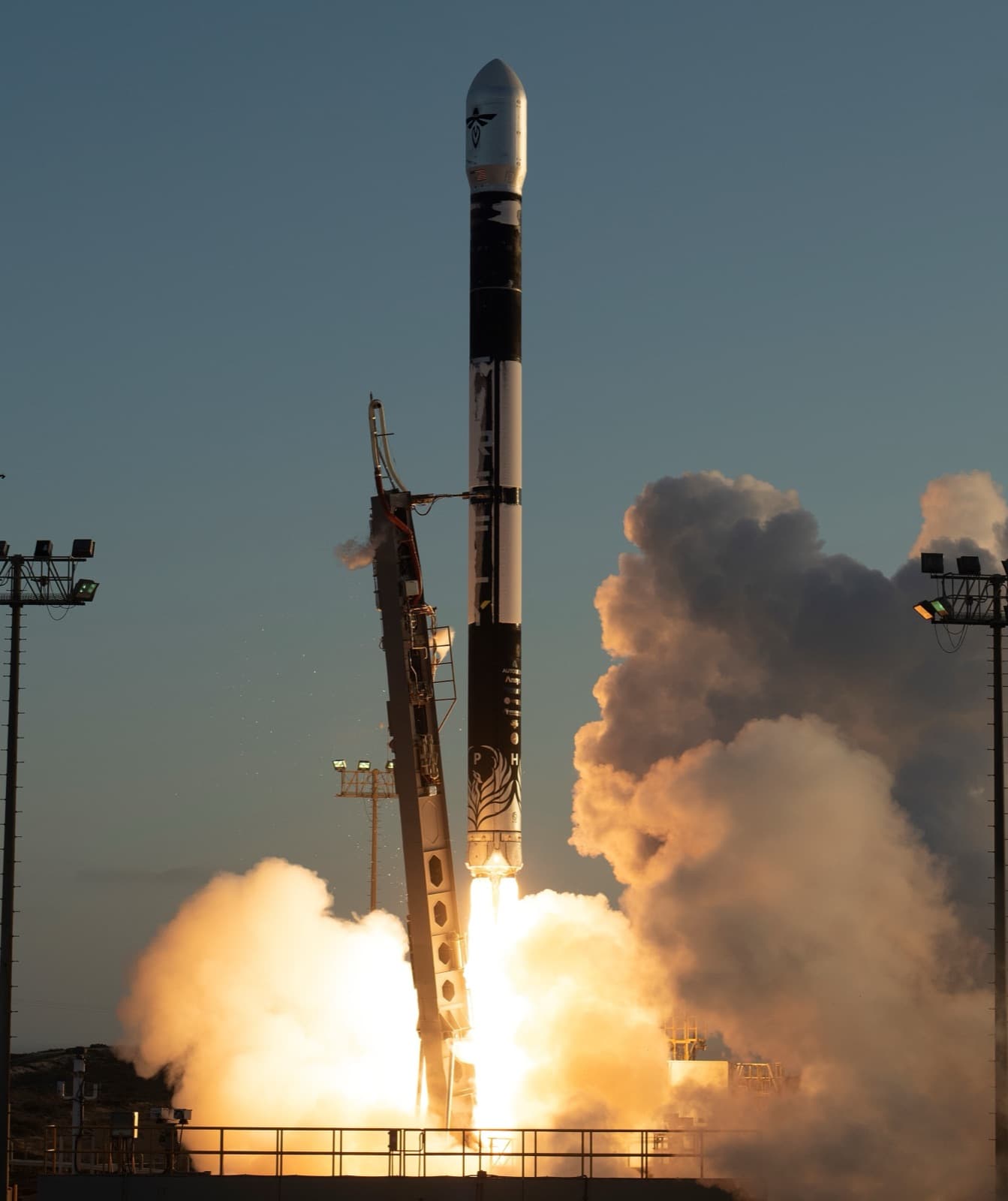
Small-lift two-stage orbital launch vehicle for dedicated commercial, civil, and national-security missions.
Reusable medium-lift launch vehicle co-developed with Northrop Grumman for commercial, civil, and national-security missions, launching from Virginia's Mid-Atlantic Regional Spaceport.
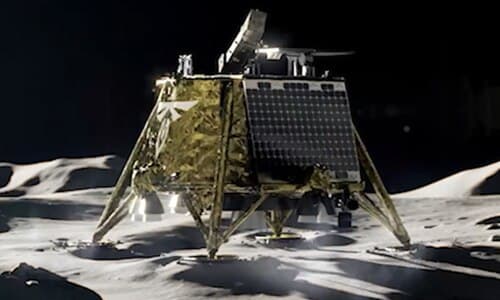
Lunar lander platform for NASA CLPS missions and commercial payload delivery anywhere on the lunar surface.
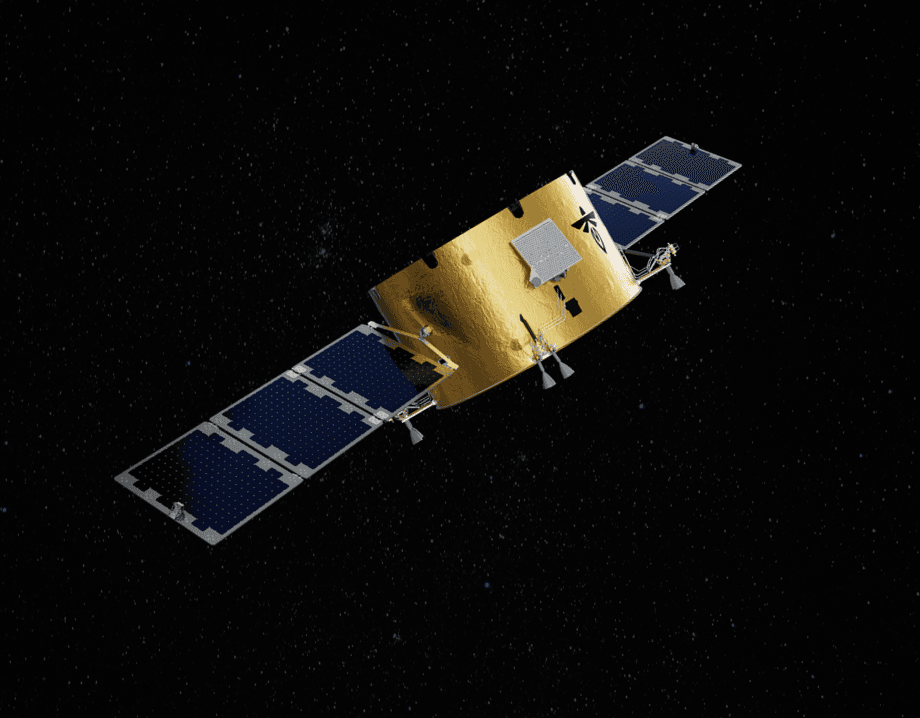
Family of orbital transfer and on-orbit service vehicles (Dawn, Dusk, Dark) providing in-space maneuvering, payload delivery and hosting, communications relay, and space domain awareness from LEO through cislunar space. Elytra Dark also carries Firefly's Ocula lunar imaging service.
05
1,409 full-time and 9 part-time as of Dec. 31, 2025 (10-K); Wikipedia still lists 750 (2025)
(2026 guidance, reaffirmed with Q2 2026 results Aug 11, 2026; Q3 2026 results had not been posted as of Sept 17, 2026, and Firefly's IR calendar listed no upcoming earnings event). Q2 booked 95% of the midpoint per CFO Darren Ma
reaffirmed with Q2 2026 results, Aug 11, 2026; Q3 2026 results not yet posted as of Sept 17
(through ~2029; sixth added via a $144M NASA CLPS task order in June 2026). Mission 2 (Riders 2 the Dark) is now targeted no earlier than 2027
06
Operating status
Operating; Flight 8 and EXIM close still pending
Event patch checked Oct 7, 2026. EXIM.gov minutes index still lists agendas through Sep 24, 2026, not published minutes closing AP300129XX after the Aug 21 comment deadline. Newsroom and missions still show Alpha Flight 7 (Mar 11, 2026) as the latest flown Alpha; Flight 8 is not posted. No official IR Q3 2026 date; CNBC estimates Nov 12, 2026. Official headcount is the 10-K year-end 2025 figure (1,409 full-time and 9 part-time), not Wikipedia's 750. Eclipse page lists a 206-second Miranda mission-duty-cycle hot fire; the 226-second figure is a later full-power endurance test beyond nominal duration.
Dedicated small-satellite launch services for commercial, civil, and national-security customers, including tactically responsive missions and East/West Coast launch campaigns.
Blue Ghost Lunar Missions & Data Services
Lunar delivery, hosting, and operations revenue from NASA CLPS missions, commercial rideshares, and follow-on lunar data services such as the Blue Ghost Mission 1 addendum.
Elytra Orbital Services & Ocula Imaging
In-space maneuvering, payload delivery, long-haul communications, space domain awareness, satellite deorbit, and the Ocula lunar imaging service provided through the Elytra vehicle family. On August 13, 2026 the Defense Innovation Unit and Space Development Agency awarded Firefly a contract (part of an $8.4M combined Deorbit-as-a-Service award split with D-Orbit and Katalyst Space Technologies) to complete a preliminary design review for an Elytra-based deorbit mission, adding satellite deorbit to Elytra's service line.
Eclipse Medium-Lift Launch Services
Future medium-lift launches for commercial spacecraft, space station resupply, scientific payloads, and national-security missions through the Northrop Grumman partnership.
Defense Software & Data Processing
Mission software, AI-enabled analytics, data processing, and classified ground infrastructure added through the SciTec acquisition for missile warning, space domain awareness, and other national-security programs. SciTec's Space Force work now spans the Golden Dome Space-Based Interceptor OTA, the Air Force CBC2 data-fusion option, a $93.7M firm-fixed-price OTA (announced August 11, 2026) to modernize ground-based radar onto a common digital architecture, and the long-running FORGE Enterprise Overhead Persistent Infrared (OPIR) ground-system program, where a $109M engineering change proposal grew the total contract value from $263M to $372M.
Planetary & Advanced Structures (Gloworks)
Planetary entry-descent-and-landing hardware and advanced-composite structures developed through Firefly's new Gloworks innovation lab in Cedar Park. Its first award is a $13M NASA JPL subcontract to build the aeroshell for NASA's SkyFall Mars-helicopter mission (targeted to launch late 2028), extending Firefly beyond launch, lunar, and defense into Mars entry-descent-and-landing hardware.
07
How past announced dates turned out.
0/1announced date hit on time
Launch Blue Ghost Mission 2 and activate Ocula
Target NET December 2026 · Resolved Sep 9, 2026
Firefly's own Blue Ghost Mission 2 page now lists the far-side Riders 2 the Dark launch as no earlier than 2027, matching CEO Jason Kim's Aug 11, 2026 Q2 call that the mission is pending spacecraft delivery to Florida and a confirmed launch window. The lander stack is still in avionics and payload integration. The nextSteps entry is re-dated to NET 2027.
08
2026
Signs Starcloud SC-1L payload for third lunar Elytra
On September 30, 2026 Firefly announced a commercial payload agreement to fly Starcloud's SC-1L AI compute payload on Elytra. Starcloud is being onboarded to Firefly's third lunar mission, targeted no earlier than 2028. Elytra will first relay for a Blue Ghost CLPS landing at the Gruithuisen Domes, then remain in lunar orbit for five years. Firefly did not disclose the contract value.
Completes ISO Class 8 Cedar Park cleanroom
On September 22, 2026 Firefly celebrated completion of a new ISO Class 8 cleanroom at its 144,000 sq ft Cedar Park, Texas campus, four times the size of the existing room, at a ribbon-cutting with the Texas Space Commission and NASA Moon Base and CLPS officials. Combined, the two cleanrooms can assemble, integrate and test up to 12 Blue Ghost lunar landers and Elytra orbital vehicles at once. Firefly said the expansion was backed by a Texas Space Commission grant.
Signs two-launch Alpha contract from Esrange
On September 9, 2026 Firefly and SSC Space signed a contract for two Alpha launches from Esrange Space Center in Kiruna, Sweden, targeted no earlier than 2028. The flights would be the first Alpha missions from continental Europe and follow Firefly's June 2026 inauguration of the first Alpha-class launch pad at Esrange.
Eclipse engine base structure enters assembly and bonding
As of August 2026, Eclipse's engine base structure - which will mount the seven Miranda engines powering the first stage - is in assembly and bonding ahead of integration, continuing hardware progress alongside Alpha Block II production toward a first Eclipse flight still targeted no earlier than 2027.
Onboards Zeno Power's radioisotope heater for a future Blue Ghost mission
On August 19, 2026 Firefly and Zeno Power announce that a future Firefly Blue Ghost lunar lander mission, targeted no earlier than 2028, will carry a Zeno 'Survive-the-Night' radioisotope heating unit fueled by americium-241, generating about 5 watts of thermal energy to keep electronics operational through the 14-day lunar night and send a 'still here' signal after five days.
Onboarded to NASA Spacecraft Processing Operations Contract
On August 17, 2026 NASA named Firefly one of four companies - alongside All Points Logistics, Blue Origin, and L3Harris - added to its Spacecraft Processing Operations Contract on-ramp, making Firefly eligible to compete for task orders covering payload processing, fueling, integration, and encapsulation for NASA missions launching from Vandenberg Space Force Base. Firefly's commercial Payload Processing Facility sits less than half a mile from its Space Launch Complex 2 at Vandenberg.
SciTec wins $93.7M Space Force ground-based radar digitization contract
On August 11, 2026 SciTec, Firefly's national-security software subsidiary, is awarded a $93,704,410 firm-fixed-price Other Transaction Agreement from U.S. Space Force Space Systems Command (Colorado Springs) to modernize ground-based radar systems onto a common digital architecture, adding a second major Space Force program alongside SciTec's Golden Dome Space-Based Interceptor work.
Extends Lockheed Martin launch deal to 25 missions through 2031
On August 11, 2026 Firefly announces a two-year extension of its multi-launch agreement with Lockheed Martin, covering up to 25 Alpha Block II missions through 2031 - the same maximum launch count as the original June 2024 deal (15 firm launches plus options for 10 more through 2029), now stretched over a longer window. Firefly, Lockheed Martin and Seagate Space are also collaborating on sea-based Alpha launch concepts from an offshore platform.
2026
Named to $981M Space Force NITE-STAR vendor pool
On July 31, 2026 the U.S. Space Force named Firefly one of 15 companies - alongside Rocket Lab, Lockheed Martin, Northrop Grumman, L3Harris, Boeing, Sierra Space, Redwire and others - eligible for task orders under NITE-STAR, a new $981M-ceiling, ten-year IDIQ contract vehicle to develop modernized space test and training infrastructure, including adversary-mimicking spacecraft and electronic-warfare ground systems, for the National Space Test and Training Complex.
Miranda engine passes 150 hot-fire tests including a 226-second endurance burn
Around its August 11, 2026 Q2 window, Firefly said Miranda had completed more than 150 hot-fire tests, including a 226-second full-power endurance firing that ran beyond a normal ascent. That 226-second figure is distinct from the Eclipse product page, which still lists mission-duty-cycle complete at 206 seconds, matching the longest engine burn during flight.
Record Q2 revenue tops $100M for the first time
On August 11, 2026 Firefly reports record Q2 2026 revenue of $117.7M, up 659% year over year and its first quarter above $100M, with backlog around $1.5B and a net loss of $92.3M. The company reaffirms full-year revenue guidance of $420M-$450M and says the next two Alpha launches, including the Block II debut, have slipped to Q4 2026.
$13M NASA JPL subcontract to build the SkyFall Mars aeroshell
On July 7, 2026 Firefly announced a $13M subcontract from NASA's Jet Propulsion Laboratory to manufacture, test, and deliver the aeroshell for NASA's SkyFall mission to Mars, targeted to launch in late 2028. SkyFall will deploy three heritage Mars helicopters via a mid-air 'SkyFall Maneuver' entry capsule to demonstrate airborne subsurface mapping and resource prospecting. Firefly will qualify and flight-accept the aeroshell at its Rocket Ranch before delivering it to JPL - the first award to come out of Firefly's newly opened Gloworks innovation lab, and its first Mars entry-descent-and-landing hardware program.
$144M NASA CLPS award for accelerated Blue Ghost Moon mission
On June 30, 2026 NASA awards Firefly a $144M Commercial Lunar Payload Services task order for an accelerated Blue Ghost mission - the company's sixth contracted lunar mission - targeting a 2028 launch. Firefly says it will design, build and deliver the mission in about two years, roughly half the time of Blue Ghost Mission 1, by leveraging its proven build-to-print lander and flight data from its first successful landing, supporting a shift from one annual Moon landing to multiple missions per year.
Esrange milestone for European Alpha launches
On June 30, 2026 Firefly and Swedish Space Corporation announced completion of critical milestones toward orbital Alpha launches from Esrange Space Center in Sweden - including the launch control center, payload processing facility and vehicle integration building, with the pad now in final construction. The effort is underpinned by a U.S.-Sweden Technology Safeguards Agreement making Sweden only the sixth country with such a pact; the first orbital launch from Esrange is targeted for 2028.
Acquires AI navigation firm Space-ng
On June 25, 2026 Firefly acquires Space-ng, a developer of AI-powered vision navigation and autonomous guidance software and camera hardware whose technology flew on Blue Ghost Mission 1 - helping detect hazardous lunar terrain and autonomously redirect the lander to a safe touchdown in Mare Crisium. The capability will support Firefly's Blue Ghost landers and Elytra orbital vehicles and be offered to government and commercial customers under the Firefly brand; Space-ng co-founder Ethan Rublee joins as chief engineer of software. Financial terms were not disclosed.
$110M EXIM loan to expand Texas spacecraft production
Per Reuters reporting (June 23, 2026), the U.S. Export-Import Bank was set to authorize a roughly $110M loan to Firefly to help fund Texas spacecraft production expansion. A July 27, 2026 Federal Register notice confirmed application AP300129XX for a final commitment above $100M and opened comment through August 21, 2026. As of October 7, 2026, EXIM.gov still lists board agendas through September 24, 2026 rather than published minutes confirming a close. The facility as described carries a 12-month availability period and a 10-year repayment term and is expected to create about 200 jobs.
SciTec wins $5.5M CBC2 data fusion option
On June 2, 2026 Firefly subsidiary SciTec is selected by the U.S. Air Force PAE C3BM to deliver the operational data fusion system for the Cloud-Based Command and Control (CBC2) program - a $5.5M option exercised under an original $24M 2024 IDIQ award and supporting NORAD, USNORTHCOM, and PACAF homeland-defense battle management.
Texas campus doubles to 144,000 sq ft
On May 19, 2026 Firefly moves into an expanded Cedar Park headquarters that doubles its prior Texas footprint to 144,000 sq ft across two adjacent new buildings. The campus templates Blue Ghost into a production line capable of multiple annual lunar missions for NASA's Moon Base initiative, adds a cleanroom four times the size of the prior one for Blue Ghost and Elytra assembly, and stands up the new 'Gloworks' innovation lab for propulsion, carbon composites, robotics, and 3D printing R&D.
$48 public follow-on offering closes
Firefly prices a public offering of 4M new shares plus 8M secondary shares from existing stockholders at $48.00/share (with a 1.8M-share underwriter option); the offering closed June 1, 2026 for general corporate purposes including supporting recently awarded programs.
$75M NASA JPL MoonFall subcontract for south-pole drones
On May 26 NASA's Jet Propulsion Laboratory awards Firefly a $75M subcontract for the MoonFall mission, in which Firefly's Elytra transfer vehicle will carry four drones over a ~45-day cislunar transit, enter lunar orbit, and deploy the drones about 50 km above the surface to survey the lunar south pole - including permanently shadowed regions - for NASA's Moon Base initiative, launching no earlier than 2028.
SciTec wins Space Force Golden Dome SBI agreement
On May 4 Firefly subsidiary SciTec receives an Other Transaction Authority agreement from U.S. Space Force Space Systems Command under the Space-Based Interceptor (SBI) program, part of a 20-agreement, $3.2B effort across 12 companies to build out the Golden Dome space-based missile defense layer by 2028.
Record Q1 revenue and Golden Dome work
Firefly reports $80.9M of Q1 revenue, maintains $420M-$450M full-year guidance, and says Q1 momentum included Golden Dome interceptor work, Blue Ghost milestones, Alpha Flight 7, and responsive-space demonstrations.
Alpha Flight 7 successfully reaches orbit, deploys a Lockheed Martin demo payload, and validates key Block II upgrades ahead of Flight 8.
2025
Firefly prices its upsized IPO, begins trading on Nasdaq as FLY, and then closes the SciTec acquisition to add defense software, data processing, and classified mission infrastructure.
Blue Ghost completes first fully successful commercial Moon landing
Blue Ghost Mission 1 lands on the Moon and completes more than 14 days of lunar surface operations, setting the longest commercial operations on the Moon to date.
Eclipse named and backed by Northrop investment
Northrop Grumman invests $50 million to advance Firefly's medium-lift vehicle, which is officially named Eclipse.
2022
2017
2014
09
$1.8Bdisclosed across 4 rounds with a stated amount
Cumulative disclosed raise · dated rounds
Private funding
2014–2024
Noosphere Ventures, AE Industrial, DADA Holdings, and others
Northrop Grumman investment
2025
Northrop Grumman
Initial public offering
2025
Public offering (NASDAQ: FLY)
Follow-on public offering
2026
$181.6M net proceeds (4M new shares plus 8M secondary shares at $48.00/share)
Public offering (NASDAQ: FLY)