Active
Electron
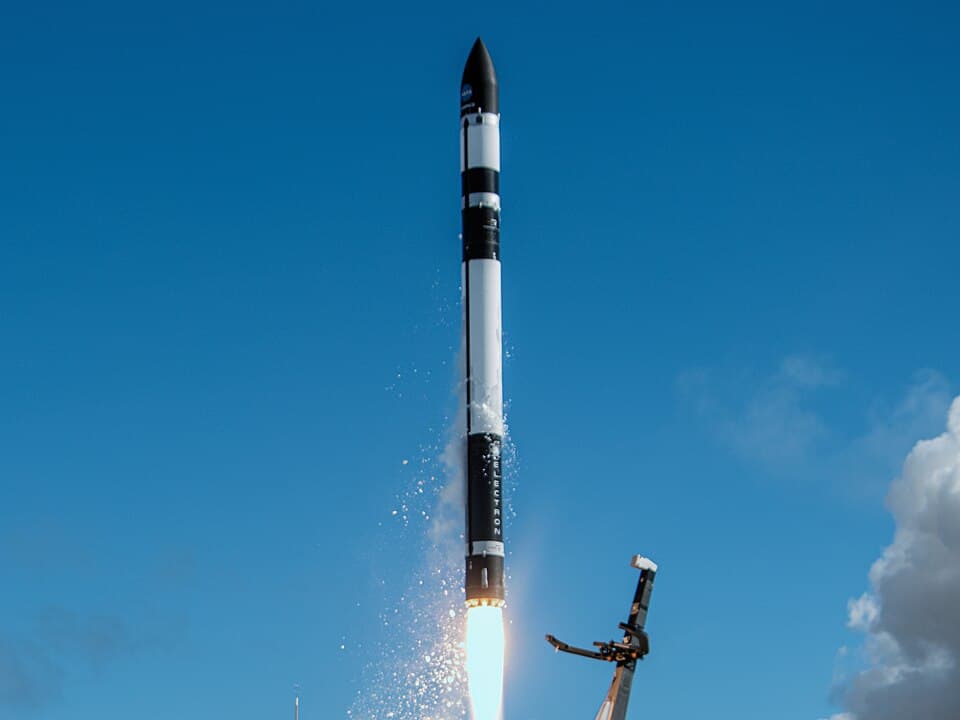
Small-lift, two-stage orbital launch vehicle for dedicated and rideshare small-satellite missions.
Rocket Lab is an end-to-end space company spanning launch, hypersonic test launch, spacecraft, payloads, satellite components, laser optical communications, and space robotics, with total headcount reaching 3,217 by the end of Q2 2026 after the Mynaric and Motiv acquisitions.
Latest update Oct 15, 2026
01
Electron remains the second most frequently launched U.S. rocket. Rocket Lab reached 97 Electron missions with the 26 September 2026 Owlright Owlright Owlright dedicated Synspective StriX-13 launch from Launch Complex 1 in Mahia (12:39 p.m. NZST into a 559 km orbit), its 18th launch of 2026, after the 19 September Owl By The Dozen StriX-12 flight and the 11 September Happily Ever Faster confidential Earth-observation flight, putting it on track for a record year and its 100th launch. Rocket Lab is developing the medium-lift Neutron rocket for constellation, national-security, and exploration missions; the live Q4 2026 milestone is still delivery of Neutron to the Wallops pad, though CEO Peter Beck told analysts on the August 10 earnings call that the end-of-year launch window is narrowing and a slip into 2027 is a real possibility. The company posted record Q1 2026 revenue of $200.3M and record Q2 2026 revenue of $234M (+62% YoY), guiding to $250M-$265M in Q3 2026 revenue, and completed the $155.3M Mynaric and the Motiv Space Systems acquisitions in April and May 2026. On May 27, 2026 Rocket Lab cleared the System Requirements Review for the Space Development Agency's $816M Tracking Layer Tranche 3 missile-defense constellation, taking total SDA awards above $1.3B, and on June 22, 2026 the company joined the Nasdaq-100 Index. On June 29, 2026 Rocket Lab announced an agreement to acquire Iridium Communications for about $8B in cash and stock ($54.00/share, roughly half cash and half Rocket Lab stock). The deal has since cleared U.S. antitrust review, Rocket Lab completed its $1.944B at-the-market equity sale of 29.3 million shares on September 15, 2026 and terminated the $3.6B senior secured bridge after Iridium amended its $1.775B term loan to permit the change of control. On 24 September 2026 Iridium stockholders adopted the merger (Proposal 1: 85,862,105 for, 318,415 against, 67,862 abstained; about 99.6% of votes cast and about 81.0% of outstanding shares). Close remains expected in mid-2027 / Q2 2027 and is no longer subject to Iridium shareholder approval; remaining gates are regulatory, including FCC license-transfer consent (comments due 15 October, oppositions 30 October, replies 9 November). On July 27, 2026 Rocket Lab won a $266M U.S. Space Force RSLP contract for 12 (plus an option for six more) HASTE launches through 2028. On August 4, 2026 the U.S. Space Force awarded a $397M SB-AMTI contract to build, launch on the still-unflown Neutron, and operate Flatellite tracking satellites. Rocket Lab added a second GEO satellite production award (Viasat PTS-G, August 17), was onboarded to the Space Force's $981M-ceiling NITE-STAR IDIQ, and was selected for the Space Data Network Consortium with $12M in initial delivery orders. On August 10, 2026 it reported record Q2 backlog of $2.36B and unveiled GHOST. On September 8 it put germanium-free IMM Apex space solar cells into production. On September 11 it filed a GAO protest of NASA's roughly $700M Mars Telecommunications Network award to Blue Origin. RKLB closed 29 September 2026 at $69.70, a market cap of about $44.57B.
investor.iridium.comUpdated Sep 30, 2026
Analysis · 5 min read · Jun 30, 2026The long view on Rocket Lab: strategy, technology and what to watch02
2026-2027
Build and deliver the 18-spacecraft Tracking Layer Tranche 3 constellation for the Space Development Agency under Rocket Lab's $1.3B SDA prime work. The May 27, 2026 System Requirements Review remains the last publicly confirmed milestone; as of September 13, 2026 no Preliminary or Critical Design Review has been announced, with those the next gates ahead of spacecraft delivery. Mynaric CONDOR Mk3 laser links are produced in-house.
2026
With 96 Electron missions flown through the September 19, 2026 'Owl By The Dozen' dedicated Synspective StriX-12 launch (Rocket Lab's 17th launch of 2026), sustain Electron's record 2026 tempo across commercial, civil, and defense customers toward the company's 100th launch milestone. Remaining constellation bookings include iQPS (9 dedicated missions remaining on its total 18-launch Electron bookings, running through 2030) and Synspective (further missions booked to complete that constellation by decade's end). A HawkEye 360 Electron mission is listed no earlier than September 30, 2026.
2026-2028
Turn a record $2.36B of backlog (as of Q2 2026) into higher Electron and HASTE flight tempo across constellation, agency, national-security, and hypersonic missions; Rocket Lab guided to another record revenue quarter in Q3 2026 and reported more than $1B in additional new contracts signed since the quarter closed. The new GHOST containerized launch system, unveiled August 10, 2026 with its first site at Kodiak, Alaska, is aimed directly at expanding cadence for responsive and national-security missions.
2026-2028
Design, build, integrate, and operate two geostationary satellites hosting the Heimdall space domain awareness payload under a $90M Space Systems Command contract - Rocket Lab's first GEO satellite production program. No public schedule update (PDR/CDR/delivery date) has been announced since the May 21, 2026 award as of September 13, 2026.
Nov 9, 2026
The FCC accepted Rocket Lab and Iridium's license-transfer applications for filing on September 16, 2026, starting the public-comment phase with comments and petitions due October 15, oppositions due October 30, and replies due November 9. Acceptance is a procedural step, not an approval. SpaceX has already asked the commission to scrutinize Iridium's conduct toward rival satellite operators while saying it does not oppose the deal. Close remains targeted for Q2 2027 after the September 24 Iridium stockholder vote.
2026
TargetQ4 2026 pad delivery; first launch at risk of slipping to 2027
Fly Neutron's maiden mission from Wallops. As of the week of August 23, 2026, Rocket Lab's Archimedes engines have completed more than 400 hot-fire tests and the full nine-engine flight set has entered production; Stage 1 is in final assembly and Stage 2 is finishing fluids and avionics integration ahead of shipping to Wallops. On its August 10, 2026 Q2 earnings call, Rocket Lab said Stage 1 tank production is aligned with delivering Neutron to the pad in Q4 2026, but putting the vehicle on the pad is not the same as launching it that quarter. September 7-8, 2026 Motley Fool coverage of that same update still treats pad delivery - not liftoff - as the live Q4 milestone, with no firm launch date and a real chance the maiden flight slips into 2027. FAA launch permits remain filed (window July 1-Dec 31, 2026), and Neutron's first contracted payload, the U.S. Space Force's $397M 'Flatellite' SB-AMTI mission awarded August 4, adds schedule pressure.
Dec 2026
On September 11, 2026 Rocket Lab filed a formal protest with the Government Accountability Office challenging NASA's September 1 award of the roughly $700 million Mars Telecommunications Network contract to Blue Origin. Rocket Lab said the award appears inconsistent with eligibility criteria mandated by Congress and that NASA's review of its technical volume was inconsistent. GAO bid-protest decisions are typically due within 100 calendar days of filing, which would put a ruling in the second half of December 2026 unless the protest is dismissed or withdrawn earlier.
Q2 2027
Complete the ~$8B cash-and-stock acquisition of Iridium Communications, subject to Iridium shareholder approval, FCC consent to transfer satellite licenses, and clearance under applicable foreign-investment and satellite laws. The U.S. antitrust waiting period under Hart-Scott-Rodino expired August 12, 2026, and Rocket Lab and Iridium filed FCC applications seeking consent to transfer Iridium's licenses on August 10. The FCC accepted those applications for filing on September 16, 2026, opening the public-comment phase with comments and petitions due October 15, oppositions due October 30 and replies due November 9; acceptance is a procedural step, not approval. Rocket Lab's Form S-4 registration statement was declared effective by the SEC around August 26-27, 2026; Iridium's definitive proxy went out ahead of the virtual special meeting on September 24, 2026 (record date August 21, 2026; 8:30 a.m. ET at virtualshareholdermeeting.com/IRDM2026SM). On September 15, 2026 Rocket Lab said the cash portion is fully funded after completing a $1.944B ATM (29.3 million shares), Iridium amended its $1.775B term loan to permit the change of control with a Rocket Lab USA unsecured guarantee at close, and Rocket Lab terminated the $3.6B senior secured bridge. Rocket Lab CFO Adam Spice told World Space Business Week on September 14 that close remains on track for the second quarter of 2027. SpaceX's late-August FCC comments asked the agency to scrutinize Iridium's conduct toward rival operators while saying SpaceX does not oppose the transaction.
2027
Stand up Launch Complex 4 at the Pacific Spaceport Complex - Alaska (Kodiak), the first deployment site for Rocket Lab's newly unveiled GHOST containerized Deployable Launch System, under the $266M Space Force RSLP contract for 12 HASTE missile-defense test launches (with an option for six more). LC-4 will add two pads, bringing Rocket Lab's total to six pads company-wide, complementing Launch Complex 1 in New Zealand and Launch Complexes 2 and 3 in Virginia. Guidance given alongside the August 10, 2026 GHOST unveiling points to a suborbital operational debut in 2027, later than the 'no earlier than end of 2026' timeline given when the RSLP contract was announced in July 2026. No later public construction or pad-ready update has been published as of September 13, 2026.
2027
Execute a live space demonstration under the $12M Space Force Space Data Network Consortium delivery orders awarded August 18, 2026: prove that Rocket Lab satellites can move data across systems built by rival vendors (Amazon Leo for Government, Lockheed Martin, Northrop Grumman, York Space Systems) via secure optical inter-satellite links, and develop 'Space Exchange Point' satellites acting as orbital routers between commercial and government networks, using Rocket Lab's Photon spacecraft. As of September 11, 2026 neither Space Force nor Rocket Lab has published demo results or a later award, so the original 2027 live-demo window still stands.
2029
Target2029 IOC demonstrations
Build, integrate, and support launch and on-orbit checkout of a mini-GEO satellite bus, a specialized variant of Rocket Lab's modular Lightning platform, hosting Viasat's dual-band X/Ka anti-jam payload for the U.S. Space Force's Protected Tactical SATCOM-Global (PTS-G) program. Viasat selected Rocket Lab on August 17, 2026 as bus supplier under its PTS-G Swarm 1 prime contract, Rocket Lab's second GEO satellite production award alongside its existing $90M Heimdall space domain awareness program. SatNews, covering the award, said Rocket Lab and Viasat will hand the spacecraft to Space Systems Command after on-orbit checkout to support initial operating-capability demonstrations projected for 2029. No later public schedule update (PDR/CDR/delivery) has been announced as of September 11, 2026.
03
On Oct. 14, 2026 Rocket Lab said Neutron's first launch is now expected in 2027. In a video update the same day, CEO Peter Beck said manufacturing issues in the first-stage forward propellant dome drove the slip, that those defects do not necessarily mean the dome would fail in flight, and that a replacement dome should be built and inspected before the first quarter, with first-stage assembly expected during that quarter. The 8-K does not give a launch month.
Rocket Lab said on Sept. 30, 2026 it signed a multi-year deal for 20 dedicated Electron missions with Tokyo-based Synspective, its largest commercial Electron launch contract. The flights will loft 20 StriX SAR satellites to sun-synchronous orbit from Launch Complex 1 annually from 2028 through 2031, taking Synspective's contracted Electron missions to 47, with 34 still to fly. Financial terms were undisclosed; Rocket Lab said the agreement helps push its launch backlog beyond 100 missions.
www.globenewswire.com www.rocketlabusa.com www.synspective.com
Rocket Lab's Electron lifted the Owlright Owlright Owlright mission from Launch Complex 1 in Mahia, New Zealand, at 12:39 p.m. NZST on 26 September 2026, placing Synspective's 13th StriX synthetic-aperture-radar satellite into a 559 km low Earth orbit. The flight was Rocket Lab's 97th Electron launch and its 18th launch of 2026. Rocket Lab said Electron has now deployed all 13 StriX satellites with 100% mission success, with 14 further dedicated launches still scheduled to finish the constellation by the end of the decade.
www.globenewswire.com www.quiverquant.com www.stocktitan.net
Iridium stockholders adopted the June 28, 2026 merger agreement with Rocket Lab at a September 24 special meeting, with 85,862,105 votes for Proposal 1, 318,415 against and 67,862 abstentions. The companies said that was about 99.6% of votes cast and about 81.0% of shares entitled to vote; the 8-K reports 86,248,382 shares present of 105,981,552 outstanding. Consideration remains $27.00 cash plus Rocket Lab stock under a collar, notional $54.00 per Iridium share, with close still expected mid-2027 subject to remaining regulatory approvals, including the FCC license-transfer review. This is stockholder approval, not closing. Iridium is untracked.
Rocket Lab said its Owl By The Dozen mission lifted off from Launch Complex 1 in Mahia, New Zealand, at 3:22 p.m. NZST on September 19 and placed Synspective's 12th StriX synthetic-aperture-radar satellite into a 572 km low Earth orbit. The flight is Electron's 96th launch and Rocket Lab's 17th of 2026, and the company said it keeps a 100% mission-success record on the multi-year Synspective partnership. Rocket Lab has 15 more dedicated Electron missions manifested through the end of the decade to finish Synspective's commercial SAR constellation.
The Federal Communications Commission accepted Rocket Lab and Iridium's license-transfer applications for filing on September 16, starting the public-comment phase of its review with comments and petitions due October 15, oppositions due October 30 and replies due November 9. The step is procedural rather than an approval, but it clears the first regulatory gate ahead of the Iridium stockholder vote on September 24, and it opens a docket in which SpaceX has already asked the commission to scrutinize Iridium's conduct toward rival satellite operators while saying it does not oppose the deal itself. Rocket Lab said at World Space Business Week in Paris that the roughly $8 billion acquisition remains on track to close by the second quarter of 2027.
Rocket Lab said on September 15 it finished a $1.944 billion at-the-market equity sale of 29.3 million shares, enough with existing cash to fund the cash portion of its pending Iridium Communications acquisition. Iridium also amended its $1.775 billion term loan so lenders consent to the change of control, with Rocket Lab USA set to guarantee the loan unsecured at close, and Rocket Lab terminated the $3.6 billion senior secured bridge facility signed in June. Close remains targeted for mid-2027, still subject to the September 24 Iridium stockholder vote and remaining regulatory approvals.
Rocket Lab said on September 11, 2026 it filed a Government Accountability Office protest of NASA's roughly $700 million Mars Telecommunications Network award to Blue Origin. The company argued the decision looks inconsistent with eligibility rules set by Congress and that NASA's review of Rocket Lab's technical volume made incorrect assertions. NASA selected Blue Origin on September 1 to deliver a Blue Ring-based Mars orbiter by December 31, 2028, with operations targeted for 2030.
Rocket Lab launched its 16th Electron of the year on September 11, 2026, lifting off from Launch Complex 1 in New Zealand at 3:28 p.m. NZST on the dedicated Happily Ever Faster mission for a confidential customer. The rocket deployed a single Earth-observation satellite to a 500 km circular low Earth orbit, marking Electron's 95th flight overall. The company said its next Electron, for another commercial constellation operator, is scheduled from the same pad before the end of the month.
Rocket Lab said on September 8, 2026 that it has put Inverted Metamorphic IMM Apex space solar cells into production. The germanium-free cell is rated at 31.5% beginning-of-life efficiency and 40% lower cell mass than heritage germanium cells, is a drop-in replacement, and is available now in multi-100 kW volumes. Rocket Lab said the IMM line powered NASA's Ingenuity Mars Helicopter and more than 1,100 satellites on orbit.
Rocket Lab's Electron lifted off from Launch Complex 1 in Mahia, New Zealand at 12:01 UTC on September 2, 2026 on the Owl Around the World mission, deploying a single StriX synthetic-aperture-radar satellite for Japan's Synspective about 56 minutes after liftoff into a 575 km low Earth orbit. The flight was Rocket Lab's 94th Electron mission and its 11th dedicated launch for Synspective, which has 16 more Electron flights booked to finish the constellation by the end of the decade.
SpaceX filed comments with the FCC asking the agency to examine Iridium Communications' conduct as it reviews license transfers for Rocket Lab's pending roughly $8 billion acquisition of Iridium. SpaceX satellite policy associate Matthew Turk said Iridium had filed more than 50 petitions in eight months seeking to block or restrict rival satellite deployments, including next-generation Starlink gateways that share spectrum in the 19.4-19.6 GHz and 29.1-29.3 GHz bands, while adding that SpaceX does not oppose the transaction itself. Iridium stockholders are scheduled to vote on the merger on September 24, 2026, and Rocket Lab shares fell about 6% after the filing.
Rocket Lab launched its 93rd Electron mission, named Lightning God Defends, from Launch Complex 1 in New Zealand on August 21, deploying the ninth QPS-SAR satellite for Japan's iQPS radar-imaging constellation into a 575-kilometer orbit. It was Rocket Lab's 14th Electron launch of 2026 and the ninth consecutive fully successful QPS-SAR deployment, with nine more dedicated iQPS missions still booked on Electron through 2030.
The U.S. Space Force selected Rocket Lab for its Space Data Network Consortium on August 18, awarding $12 million in initial contracts to demonstrate secure optical satellite communications for the Space Data Network Backbone. The same announcement onboarded Rocket Lab to the Space Force's NITE-STAR program, a contract vehicle with a $981 million ceiling covering spacecraft, software, ground systems and mission operations that Firefly Aerospace joined earlier this month.
Viasat selected Rocket Lab on August 17 to build, integrate and support launch and on-orbit checkout of a mini-GEO satellite bus for the U.S. Space Force's Protected Tactical SATCOM-Global program, using a specialized Lightning-GEO variant of Rocket Lab's modular satellite platform to host Viasat's dual-band X/Ka anti-jam payload. The award is Rocket Lab's second GEO satellite production program, alongside its existing $90 million Heimdall space domain awareness contract with the Space Force.
04
Small-lift, two-stage orbital launch vehicle for dedicated and rideshare small-satellite missions.
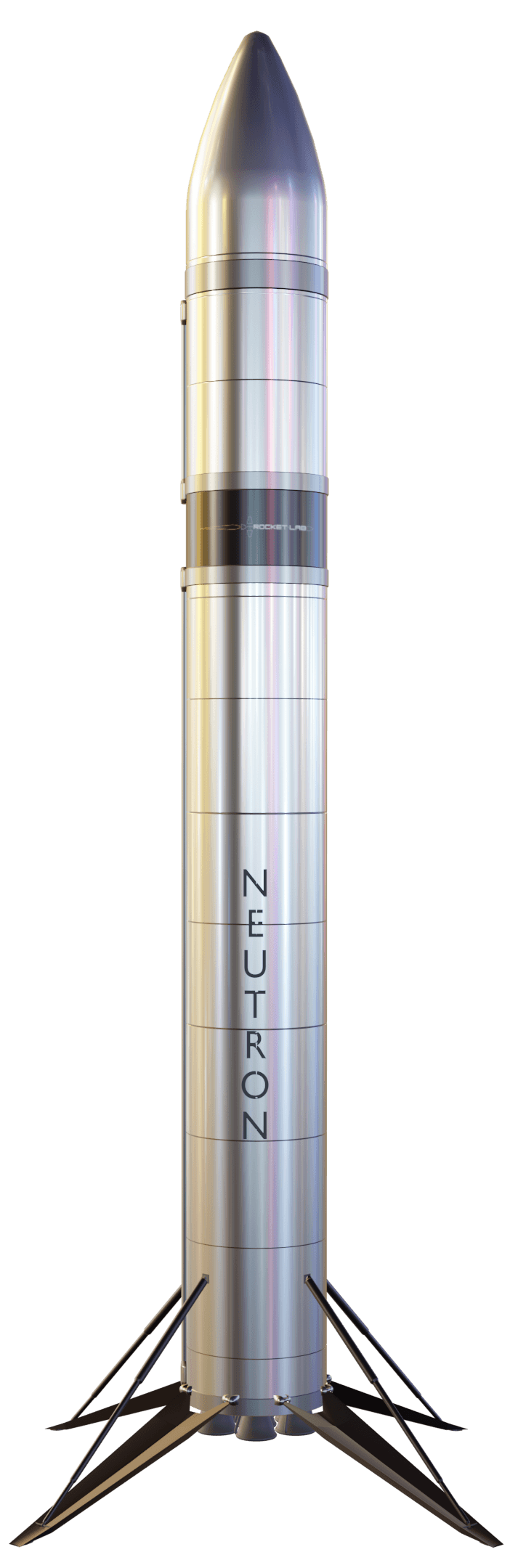
Medium-lift reusable rocket under development for mega-constellation deployment, national-security, and human spaceflight.
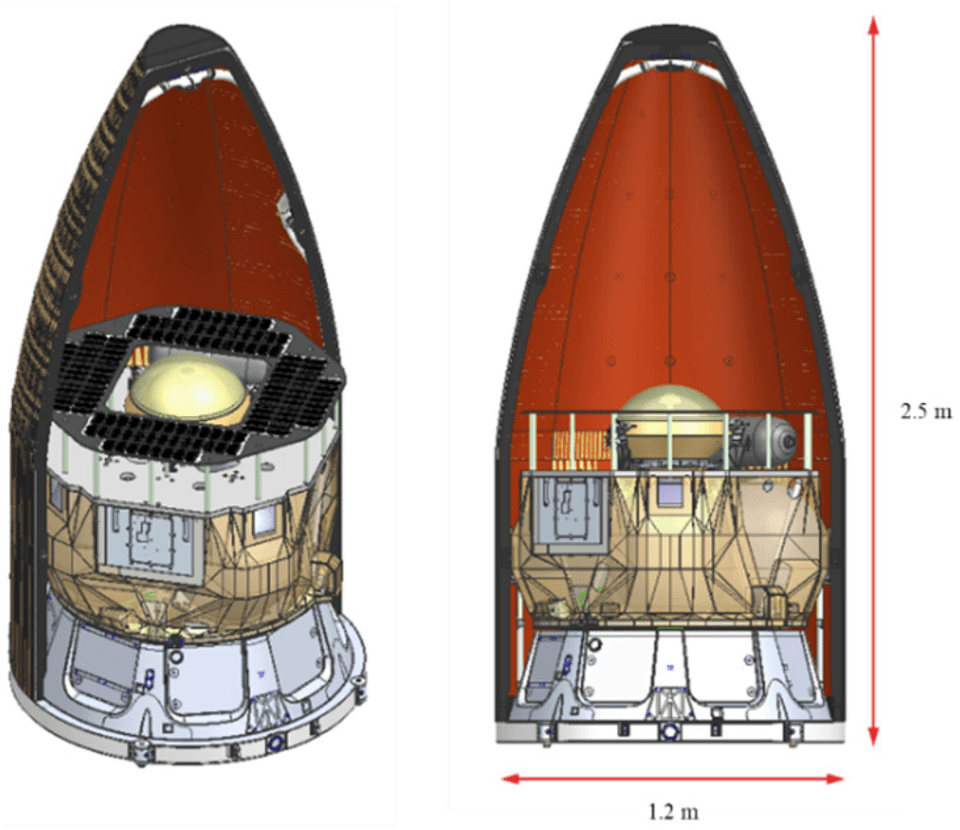
Versatile satellite bus and spacecraft platform for missions to the Moon and beyond.
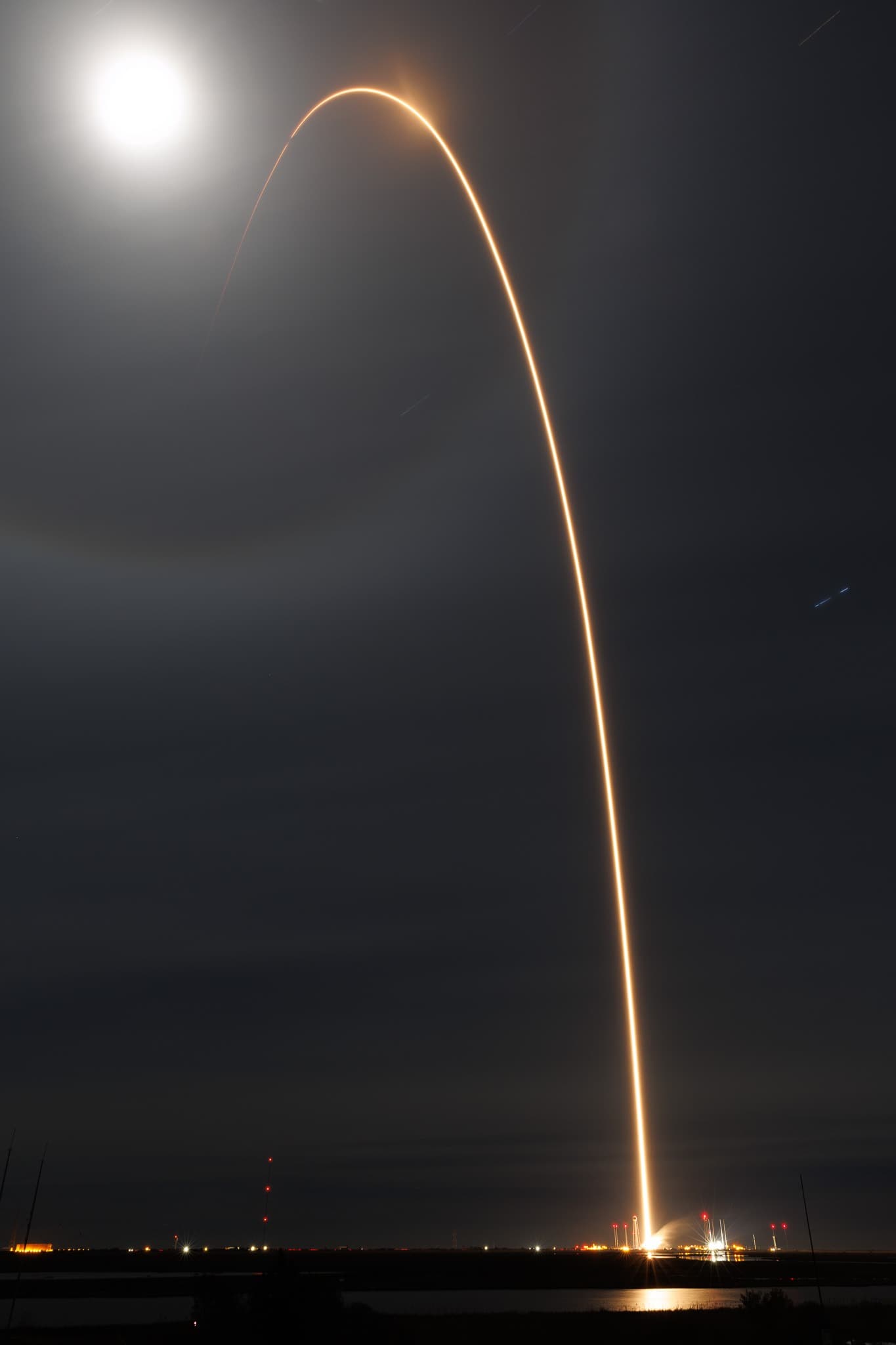
Suborbital launch vehicle derived from Electron, designed for hypersonic testing and defense applications.
Containerized Deployable Launch System that packages a complete rocket, ground infrastructure, and range control equipment inside standard shipping containers, giving Electron and HASTE launch-anywhere, responsive-space capability.
05
(+62% YoY, a record); Q1 2026 revenue was $200.3M; FY2025 revenue $602M. Still the latest official quarter as of Sept 19, 2026.
About $38.64B as of the September 18, 2026 close (RKLB $64.57), still well below the $150.23 all-time-high close of May 27, 2026 after the late-August slide on Q2 results, Iridium-dilution concerns, and SpaceX's FCC comments on the Iridium license-transfer review
(+62% YoY, a record and up $34M from Q1's record); GAAP EPS of -$0.08 missed the -$0.06 estimate and shares fell sharply after hours on continued cash burn. Still the latest official quarter as of Sept 19, 2026; Q3 results have not been reported.
96 Electron missions through September 19, 2026 ('Owl By The Dozen' deployed Synspective's 12th StriX SAR satellite from LC-1B; Rocket Lab's 17th launch of 2026) - on track for its 100th launch in 2026.
$2.36B total backlog, a record, up from $2.22B in Q1 2026; more than $1B in additional new contracts across launch and space systems already signed in Q3 2026-to-date as of the August 10 earnings report. Still the latest official backlog as of Sept 19, 2026.
~$2.4B in cash, restricted cash, equivalents & marketable securities (Q2 2026). Still the latest official liquidity figure as of Sept 19, 2026.
31.5% beginning-of-life efficiency, 40% lower cell mass, germanium-free; production release Sept 8, 2026. Rocket Lab says more than 1,100 satellites on orbit already use its solar products.
$250M-$265M, another record revenue quarter, guided on the August 10, 2026 Q2 earnings call. Still the live official guide as of September 19, 2026; Q3 results are not yet out.
97 Electron missions through 26 September 2026 (Owlright Owlright Owlright deployed Synspective's 13th StriX from LC-1; Rocket Lab's 18th launch of 2026).
About $47.28B as of the 25 September 2026 close (RKLB $73.95), up from about $38.64B on the 18 September close at $64.57.
Consent and Amendment No. 4 (Sept 15, 2026) lets the loans remain after close, with a Rocket Lab USA guarantee and post-close pricing of SOFR+2.50% to 3.00% (or base+1.50% to 2.00%) plus a 1.00% exit fee after the first anniversary.
06
Operating status
Neutron first launch expected in 2027
On Oct. 14, 2026 Rocket Lab said Neutron's inaugural launch is now expected in 2027. In a video the same day, CEO Peter Beck attributed the slip to manufacturing issues in the first-stage forward propellant dome and said a replacement dome would be built and inspected before the first quarter, with first-stage assembly expected in that quarter. The 8-K names no month. Electron's 97-flight count, the Synspective contract and the Iridium close timeline are unchanged.
Dedicated and rideshare small-satellite launches for commercial constellations, civil space agencies, and defense customers from New Zealand and Virginia.
Hypersonic flight-test launches for U.S. and allied defense customers; Rocket Lab signed a $190M, 20-flight HASTE block-buy in March 2026 and a $30M, 3-flight HASTE contract with Anduril in Q1 2026.
Spacecraft manufacturing, satellite components, software, mission operations, and related systems including radios, reaction wheels, star trackers, solar products, and separation systems. Generated $136.7M of Q1 2026 revenue. On September 8, 2026 Rocket Lab put germanium-free IMM Apex space solar cells into production (31.5% beginning-of-life efficiency, 40% lower cell mass), saying more than 1,100 satellites on orbit already use its solar products.
Optical Payloads & National Security Systems
Electro-optical and infrared payloads plus precision optomechanical hardware for missile warning, tracking, space domain awareness, and defense missions following the Geost and OSI acquisitions; powering Rocket Lab's $1.3B SDA Tracking Layer prime program.
Laser Optical Communications (Rocket Lab Europe)
Mynaric-built CONDOR Mk3 laser optical communication terminals and follow-on inter-satellite link products for commercial and government constellations including the SDA Proliferated Warfighter Space Architecture; produced from the Munich-based Rocket Lab Europe business.
Space Robotics & Precision Mechanisms
Mars-proven robotic arms, actuators, solar array drive assemblies (SADAs), and motion-control systems through the May 2026 Motiv Space Systems acquisition, supporting national security, planetary exploration, and commercial spacecraft programs.
07
How past announced dates turned out.
1/2announced dates hit on time
Iridium stockholders vote on the merger
Target September 24, 2026 · Resolved Sep 24, 2026
Iridium stockholders adopted the merger on 24 September 2026. Item 5.07 Proposal 1 passed 85,862,105 for, 318,415 against, and 67,862 abstained. The 8-K says close is still expected in mid-2027, subject to remaining regulatory approvals. Shareholder approval is no longer an open gate.
Open fourth launch pad at Kodiak, Alaska by end of 2026
Target Late 2026 · Resolved Aug 10, 2026
Alongside the August 10, 2026 unveiling of the GHOST deployable launch system, Rocket Lab guided the Kodiak site's (Launch Complex 4) operational debut to a suborbital launch in 2027, later than the 'no earlier than end of 2026' timeline given when the $266M RSLP contract was announced on July 27, 2026.
08
2026
Neutron first launch moved to 2027
On Oct. 14, 2026 Rocket Lab said Neutron's inaugural launch is now expected in 2027. CEO Peter Beck said in a video that manufacturing issues in the first-stage forward propellant dome caused the slip and that a replacement dome would be inspected before the first quarter of 2027.
Largest Electron commercial deal: 20 Synspective launches
On Sept. 30, 2026 Rocket Lab announced a multi-year agreement for 20 dedicated Electron missions with Synspective, its largest commercial Electron launch contract. The flights will deploy 20 StriX SAR satellites to SSO from Launch Complex 1 annually from 2028 through 2031. Synspective's contracted Electron missions rise to 47, with 34 still to fly. Financial terms were undisclosed.
Iridium Consent and Amendment No. 4 sets post-close term-loan pricing
On September 15, 2026 Rocket Lab filed an 8-K reporting Consent and Amendment No. 4 to Iridium's existing credit agreement. Lenders consented so the pending acquisition is not a Change of Control, and the $1.775 billion term loans outstanding as of June 30, 2026 may remain outstanding after close. Rocket Lab USA, Inc. will provide a downstream guarantee at closing. After close the interest rate steps up to SOFR plus 2.50% to 3.00% (or base rate plus 1.50% to 2.00%) based on Rocket Lab credit ratings, with a 1.00% exit fee on term loans prepaid after the first anniversary of close and a 1.00% premium on repricing transactions. The same 8-K confirmed about $1.944 billion of ATM gross proceeds from about 29.3 million shares and full termination of the $3.6 billion bridge.
97th Electron mission: Owlright Owlright Owlright for Synspective
On 26 September 2026 at 12:39 p.m. NZST Rocket Lab launched Owlright Owlright Owlright from Launch Complex 1 in Mahia, New Zealand, deploying Synspective's 13th StriX synthetic-aperture-radar satellite into a 559 km low Earth orbit. The flight was Rocket Lab's 97th Electron mission and its 18th launch of 2026. Rocket Lab said Electron has now deployed all 13 StriX satellites with 100% mission success and that 14 further dedicated launches remain to complete the constellation by the end of the decade.
Iridium stockholders approve Rocket Lab acquisition
On 24 September 2026 Iridium stockholders adopted the 28 June 2026 merger agreement at a virtual special meeting. The 8-K reports 86,248,382 shares present of 105,981,552 outstanding (about 81.38%). Proposal 1 passed 85,862,105 for, 318,415 against and 67,862 abstained. The joint release said about 99.6% of votes cast and about 81.0% of outstanding shares entitled to vote favored the deal. Consideration remains $27.00 cash plus Rocket Lab stock under a collar, notional $54.00 per share. The mergers are expected to close in mid-2027, still subject to remaining regulatory approvals. This is stockholder approval, not closing.
96th Electron mission: 'Owl By The Dozen' for Synspective
On September 19, 2026 at 03:22 UTC Rocket Lab launched 'Owl By The Dozen' from Launch Complex 1B in Mahia, New Zealand, deploying Synspective's 12th StriX synthetic-aperture-radar satellite to low Earth orbit. Next Spaceflight recorded the flight as a success and as Rocket Lab's 96th Electron mission and 17th launch of 2026, the sixth of a 10-launch Synspective bulk buy. As of September 19, 2026 Rocket Lab had not yet posted a company press release for the flight.
Completes $1.944B ATM and terminates Iridium bridge facility
On September 15, 2026 Rocket Lab said it completed its at-the-market equity program, raising about $1.944 billion in gross proceeds through the issuance of 29.3 million shares, and that those proceeds plus unrestricted cash are sufficient to fund the cash consideration for the pending Iridium Communications acquisition. The same day Iridium amended its $1.775 billion term loan (as of June 30, 2026) so lenders consent to the change of control, with Rocket Lab USA to provide an unsecured parent guarantee at closing, and Rocket Lab terminated the $3.6 billion senior secured bridge facility committed on June 28, 2026. Close remains targeted for mid-2027, still subject to the September 24 Iridium stockholder vote and remaining regulatory approvals.
Files GAO protest of NASA Mars Telecommunications Network award
On September 11, 2026 Rocket Lab said it filed a formal protest with the Government Accountability Office challenging NASA's award of the roughly $700 million Mars Telecommunications Network contract to Blue Origin. Rocket Lab said the award appears inconsistent with eligibility criteria mandated by Congress and that NASA's review of its technical volume was inconsistent and made incorrect assertions. NASA selected Blue Origin on September 1, 2026 to deliver a Mars Telecommunications Orbiter by December 31, 2028.
2026
95th Electron mission: 'Happily Ever Faster' for a confidential customer
On September 11, 2026 at 3:28 p.m. NZST Rocket Lab launched 'Happily Ever Faster' from Launch Complex 1 in New Zealand, deploying a single Earth-observation satellite to a 500 km circular low Earth orbit for a confidential customer. It was Rocket Lab's 95th Electron mission and 16th Electron flight of 2026. The company said its next Electron, for another commercial constellation operator, is scheduled from the same pad before the end of September.
Puts germanium-free IMM Apex space solar cells into production
On September 8, 2026 Rocket Lab announced the production release of Inverted Metamorphic IMM Apex, a germanium-free space solar cell rated at 31.5% beginning-of-life efficiency and 40% lower cell mass than heritage germanium cells. The company said IMM Apex is a mechanical and electrical drop-in replacement, is available now in multi-100 kW volumes, and extends IMM technology that powered NASA's Ingenuity Mars Helicopter and more than 1,100 satellites on orbit.
94th Electron mission: 'Owl Around the World' for Synspective
On September 2, 2026 at 12:01 UTC Rocket Lab launched 'Owl Around the World' from Launch Complex 1 in Mahia, New Zealand, deploying a Synspective StriX synthetic-aperture-radar satellite to a 575 km low Earth orbit about 56 minutes after liftoff. It was Rocket Lab's 94th Electron mission and its 11th dedicated launch for Synspective, which has 16 more Electron flights booked to finish the constellation by the end of the decade. The flight had been delayed from August 31 by high-altitude winds.
FCC accepts Iridium license-transfer applications, opening comment
On September 16, 2026 the FCC found Rocket Lab and Iridium's license-transfer applications acceptable for filing, starting the public-comment phase of its review: comments and petitions to deny are due October 15, oppositions October 30, and replies November 9. Acceptance is procedural rather than an approval, but it clears the first regulatory gate ahead of the September 24 Iridium stockholder vote and formalizes the docket in which SpaceX has asked the commission to scrutinize Iridium's conduct toward rival satellite operators. RKLB rose about 6% on the news, its first weekly gain in six weeks.
SpaceX asks FCC to scrutinize Iridium conduct in merger review
Around August 28, 2026 SpaceX filed comments with the FCC asking the agency to examine Iridium Communications' conduct as it reviews license transfers for Rocket Lab's pending roughly $8 billion acquisition. SpaceX satellite policy associate Matthew Turk said Iridium had filed more than 50 petitions in eight months seeking to block or restrict rival satellite deployments, including next-generation Starlink gateways that share spectrum with Iridium, while adding that SpaceX does not oppose the transaction itself. Iridium stockholders are scheduled to vote on the merger on September 24, 2026; RKLB shares fell about 6% after the filing.
Iridium S-4 declared effective, definitive proxy mailed for Sept 24 vote
Around August 26-27, 2026 the SEC declared Rocket Lab's Form S-4 registration statement for the Iridium Communications acquisition effective and Rocket Lab filed the final Form 424B3 prospectus. Iridium's definitive proxy statement/prospectus (DEFM14A) went out to Iridium stockholders ahead of their September 24, 2026 virtual special meeting (record date August 21, 2026) to vote on the merger. Several Rocket Lab executives, including COO Frank Klein and CFO Adam Spice, separately filed Form 4s reporting a combined ~$5.49M in share sales that week, largely tied to vesting tax obligations.
Archimedes engine set enters production after 400+ hot fires
By the week of August 23, 2026, Rocket Lab's Archimedes engines had accumulated more than 400 hot-fire tests across the reusable first-stage and vacuum-optimized second-stage variants at NASA's Stennis Space Center, confirming control and durability through repeated restarts. The full nine-engine flight set required for Neutron's maiden launch entered production, while Stage 1 moved into final assembly, the interstage completed its load-testing campaign, and Stage 2 neared shipment to Wallops after finishing fluids and avionics integration.
Rocket Lab Robotics supplies gimbal for NASA-selected lunar instrument EMILIA-3D
On August 19, 2026 Rocket Lab announced its Robotics division (built on the Motiv Space Systems acquisition) engineered and supplied the single-axis instrument gimbal mechanism for EMILIA-3D, a University of Arizona-led lunar terrain-mapping instrument selected for a NASA Artemis mission, positioning and actuating an infrared camera to build 3D thermal models of the lunar surface.
Iridium acquisition clears HSR, S-4 filed, stockholder vote set for September 24
The Hart-Scott-Rodino antitrust waiting period for the Iridium acquisition expired August 12, 2026, and Rocket Lab filed a Form S-4 registration statement (later amended) with the SEC to register the securities Iridium shareholders will receive. Per the amended S-4, Iridium stockholders are scheduled to vote on the merger at a virtual special meeting on September 24, 2026, with a record date of August 21, 2026 (105,981,552 Iridium shares outstanding and entitled to vote). Closing remains expected in mid-2027, subject to that vote plus regulatory and Nasdaq-listing conditions.
$1.94B at-the-market equity program to fund Iridium cash consideration
On August 13, 2026 Rocket Lab announced a replacement equity distribution agreement with Deutsche Bank Securities and Wells Fargo Securities for an at-the-market program to sell up to roughly $1.94B of common stock, carrying forward the unsold capacity from a prior May 2026 agreement. Rocket Lab intends to use the proceeds to help fund the cash portion of the pending Iridium Communications acquisition and reduce its $3.6B committed bridge loan facility.
93rd Electron mission: 'The Lightning God Defends' for iQPS
On August 21, 2026 (NZST) Rocket Lab launched 'The Lightning God Defends' from Launch Complex 1 in Mahia, New Zealand, deploying iQPS' 9th QPS-SAR synthetic-aperture-radar satellite to a 575 km circular low Earth orbit. It was Rocket Lab's 93rd mission overall and 14th Electron flight of 2026, keeping its mission-success streak intact and the company on track for its 100th launch in 2026. Nine more dedicated Electron missions remain booked by iQPS to complete its constellation by 2030.
Selected for Space Force Space Data Network Consortium, $12M awarded
On August 18, 2026 the U.S. Space Force selected Rocket Lab for its Space Data Network (SDN) Consortium and competitively awarded two delivery orders totaling $12M - roughly $10M to demonstrate that Rocket Lab satellites can move data across rival vendors' systems via secure optical inter-satellite links, plus about $2M to develop 'Space Exchange Point' satellites acting as orbital routers between commercial and government networks. Rocket Lab is one of five companies selected, alongside Amazon Leo for Government, Lockheed Martin, Northrop Grumman, and York Space Systems, and plans a live space demonstration in 2027 using its Photon spacecraft.
Onboarded to $981M Space Force NITE-STAR IDIQ contract
On August 17, 2026 Rocket Lab was onboarded to the U.S. Space Force Space Systems Command's NITE-STAR (Innovative Technology & Engineering - Space Test and Range) contract, a $981M-ceiling, ten-year IDIQ vehicle to develop modernized space test and training infrastructure, alongside more than a dozen other companies including Boeing, Lockheed Martin, Northrop Grumman, and L3Harris. The award makes Rocket Lab eligible to compete for future task orders; it does not itself guarantee revenue.
First MDA-built Globalstar satellites reach orbit
The first 8 of 17 satellite platforms Rocket Lab is building for MDA Space under a $143M deal launched August 15 from Cape Canaveral and reached orbit, with all eight confirmed performing nominally and generating power as commissioning began. The 500 kg platforms, a tailored version of Rocket Lab's Lightning bus built at its Long Beach headquarters, will extend Globalstar's direct-to-device and IoT mobile satellite service.
Iridium acquisition clears HSR review, S-4 registration filed
The Hart-Scott-Rodino antitrust waiting period for Rocket Lab's roughly $8B acquisition of Iridium Communications expired August 12, 2026, and on August 13 Rocket Lab filed a Form S-4 registration statement with the SEC to register the securities Iridium shareholders will receive at closing. Rocket Lab and Iridium had already filed FCC applications on August 10 to transfer control of Iridium's satellite licenses, and Rocket Lab said its capital strategy - including a new at-the-market equity program - remains underway to reduce its $3.6B bridge loan commitment; the deal remains on track for a mid-2027 close.
Signs dedicated Neutron launch deal with Kepler Communications
On August 10, 2026 Rocket Lab signs its first dedicated (non-rideshare) Neutron mission for Kepler Communications, launching from Launch Complex 3 at Wallops Island no earlier than 2028 to deploy multiple satellites expanding Kepler's optical-connectivity and on-orbit-compute constellation.
Establishes Rocket Lab Germany
On August 10, 2026 Rocket Lab establishes Rocket Lab Germany GmbH, a new wholly-owned subsidiary building on the Mynaric (Munich) acquisition to scale satellite and component manufacturing, and eventually Electron and Neutron launch services, for European sovereign-space demand.
Record Q2 revenue and backlog, unveils GHOST deployable launch system
On August 10, 2026 Rocket Lab reported record Q2 revenue of $234M (+62% YoY) and record backlog of $2.36B, with adjusted EBITDA loss of $8.8M beating guidance, though a wider-than-expected GAAP loss per share sent shares lower after hours. The same day, Rocket Lab unveiled GHOST, a containerized Deployable Launch System that packages complete rockets, ground infrastructure, and range control to give Electron and HASTE launch-anywhere responsive capability; the first GHOST site, Launch Complex 4, will stand up two pads at the Pacific Spaceport Complex in Kodiak, Alaska.
$397M Space Force SB-AMTI 'Flatellite' contract
On August 4, 2026 the U.S. Space Force awards Rocket Lab a $397M contract, with an option for additional units, under the Space-Based Airborne Moving Target Indicator (SB-AMTI) program. Rocket Lab will build, launch on its still-unflown Neutron rocket, and operate multiple 'Flatellite' satellites carrying space-based sensors and low-latency, high-bandwidth links to detect and track airborne threats in real time - an end-to-end award spanning spacecraft, launch, and mission operations that adds to Neutron's pre-debut backlog.
iQPS books 3 more Electron missions, lifting total bookings to 18
On July 30, 2026 Japan's iQPS signed its third multi-launch deal with Rocket Lab in under a year for three more dedicated Electron missions, each deploying a QPS-SAR satellite to a 575 km LEO from Launch Complex 1 in New Zealand, starting in late 2027. The deal lifts iQPS's total Electron bookings to 18 and helped RKLB shares rally roughly 10% intraday, rebounding from a dip earlier in the week.
92nd mission: 'The Grain Goddess Provides' for iQPS
On August 6, 2026 Rocket Lab launched 'The Grain Goddess Provides' from Launch Complex 1 in Mahia, New Zealand - more than five weeks after a June 30 last-second abort pushed the mission back - deploying iQPS' 100 kg QPS-SAR-13 (MIKURA-I) synthetic-aperture-radar satellite to a 575 km circular low Earth orbit. It was Rocket Lab's 92nd mission overall and 13th Electron flight of 2026, its eighth launch for iQPS toward that customer's planned 36-satellite constellation, keeping the company on track for its 100th launch in 2026.
Agrees to acquire Iridium for ~$8B - its largest-ever deal
On June 29, 2026 Rocket Lab announced a definitive agreement to acquire satellite-communications operator Iridium Communications for $54.00 per share - roughly half cash and half Rocket Lab stock, about a 24% premium and an enterprise value of approximately $8B. The deal folds Iridium's operational 66-satellite L-band low-Earth-orbit constellation, globally harmonized spectrum, ~2.55 million government, defense, aviation, and maritime subscribers, $871M of 2025 revenue, and 500-plus partner ecosystem into Rocket Lab's launch and satellite-manufacturing stack, creating a vertically integrated design–build–launch–operate space company positioned as a SpaceX/Starlink challenger. Deutsche Bank and Wells Fargo committed a $3.6B bridge loan for the cash portion. Both boards unanimously approved; the transaction is expected to close in mid-2027, subject to Iridium stockholder and regulatory approvals.
'Ten Owl of Ten' lofts Synspective's 10th radar satellite
On June 26, 2026 Rocket Lab launched its 'Ten Owl of Ten' Electron mission from Launch Complex 1 in Mahia, New Zealand, delivering Synspective's 10th Strix synthetic-aperture-radar satellite to a roughly 552-km low Earth orbit at 42 degrees inclination. It was Rocket Lab's 12th Electron launch of 2026 and kept its recent mission-success streak intact. The flight continued a dedicated multi-launch deal with Synspective, which has another 17 Electron missions booked to complete its SAR constellation by the end of the decade.
NASA selects Electron for three Sun and Earth science launches
On June 24, 2026 NASA selected Rocket Lab to fly three Electron missions: two back-to-back launches for the PolSIR ice-cloud CubeSat mission (no earlier than June 2027) and one for the TSIS-2 solar-irradiance satellite (early 2027), all from Launch Complex 1 in New Zealand. NASA cited Electron's flight heritage across more than 90 launches and its deployment accuracy, adding to Rocket Lab's government launch backlog.
VICTUS HAZE sets a responsive-space record and completes with full success
On June 19, 2026 Rocket Lab launched the U.S. Space Force's VICTUS HAZE mission on Electron from Launch Complex 1 in Mahia, New Zealand just 16 hours and 42 minutes after receiving the Notice to Launch - shattering the previous Space Force order-to-launch record by more than 10 hours. For the Space Systems Command Space Safari Program Office, Rocket Lab delivered its own Pioneer spacecraft to orbit, becoming the first single prime contractor to provide the spacecraft, launch vehicle, and on-orbit operations for a Tactically Responsive Space (TacRS) mission. On July 7, 2026 Rocket Lab declared the mission a complete success: Pioneer was fully commissioned in 38 hours (against a 72-hour deadline) and completed on-orbit rendezvous and proximity operations - tracking and photographing a target satellite - in under 59 hours, 25 hours ahead of schedule.
89th mission: 9th HASTE flight 'Curveball'
In mid-June 2026 Rocket Lab successfully flew its hypersonic HASTE vehicle on the 'Curveball' mission from Launch Complex 2 at Wallops Island, Virginia - its 9th HASTE flight and 89th mission overall. The flight kept Rocket Lab's 100% mission success streak intact and advanced its government hypersonic test backlog under the MACH-TB 2.0 program.
Rocket Lab joined the Nasdaq-100 Index - the 100 largest non-financial companies on the Nasdaq - before the market open on Monday, June 22, 2026, after announcing the inclusion on June 12. CEO Sir Peter Beck framed it as recognition of the company's journey 'from a small company with big ambitions to a global space leader,' making Rocket Lab one of only a handful of pure-play space companies in a major U.S. large-cap index.
Agostino Ricupati named Chief Accounting Officer
Rocket Lab appoints Agostino Ricupati as its new Chief Accounting Officer, effective June 3, 2026, as the company scales its finance organization to support a $2.2B backlog, Neutron development, and a recent run of acquisitions (Mynaric, Motiv, OSI) that has materially expanded reporting complexity.
SDA Tracking Layer Tranche 3 passes System Requirements Review
On May 27, 2026 Rocket Lab announces it has cleared the System Requirements Review for the Space Development Agency's Tracking Layer Tranche 3 (TRKT3) missile-warning and tracking constellation, establishing the technical baseline for the 18-satellite, $816M program built on Rocket Lab's Lightning bus with in-house IR sensors, optical communication terminals, Ka-band payloads, solar arrays, avionics, and propulsion. The milestone takes Rocket Lab's total SDA awards above $1.3B alongside the earlier $515M Transport Layer-Beta Tranche 2 program.
Insiders cash out $18M after record May rally
On June 1, 2026, four Rocket Lab executives and directors file Form 4 sales totaling about $18M after RKLB notched eight record-high closes in May, led by director Alexander Slusky's $8.96M disposition of 60,000 shares and a $513,345 sale by President Brad Clevenger; COO Frank Klein and General Counsel Arjun Kampani also unload stock under prearranged 10b5-1 plans.
$90M U.S. Space Force GEO contract
On May 21, 2026 Rocket Lab is awarded a $90M Space Systems Command contract to design, build, integrate, and operate two geostationary satellites hosting the Heimdall space domain awareness payload - Rocket Lab's first satellite production program for GEO.
Motiv Space Systems acquisition closes
On May 26, 2026 Rocket Lab completes the acquisition of Motiv Space Systems, adding Mars-proven robotic arms, actuators, and solar array drive assemblies - closing a key vertical-integration gap and positioning Rocket Lab for end-to-end Mars missions.
Joins Raytheon's Golden Dome Space-Based Interceptor program
On May 7, 2026 Rocket Lab agrees to support Raytheon's prototype work on the U.S. Space Force's Space-Based Interceptor program under the Golden Dome missile-defense initiative - a proliferated low-Earth-orbit constellation of kinetic interceptors for boost, midcourse, and glide-phase intercept. Raytheon is one of 12 primes sharing up to $3.2B in Space Systems Command Other Transaction Authority awards; Rocket Lab is a subcontractor/technology partner targeting an initial capability demonstration in 2028.
Mynaric acquisition closes for $155.3M
On April 14, 2026 Rocket Lab completes the acquisition of Munich-based Mynaric AG for $155.3M, adding CONDOR Mk3 laser optical communications terminals and establishing Rocket Lab's first European footprint as Rocket Lab Europe.
On February 26, 2026 Rocket Lab completes the acquisition of Optical Support, Inc. (OSI), adding 20 staff and 22,000 sq/ft of precision optomechanical machining and integration capacity to Rocket Lab Optical Systems.
Record Q1 revenue and Neutron launch wins
Rocket Lab reports record Q1 revenue of $200.3M, backlog above $2.2B, 31 new Electron and HASTE contracts, and five dedicated Neutron launches for a confidential customer.
Wins $266M Space Force HASTE suborbital contract - opens 4th launch pad in Alaska
On July 22, 2026 the U.S. Space Force's Space Systems Command Rocket Systems Launch Program (RSLP) awarded Rocket Lab a $266M firm-fixed-price contract for 12 suborbital HASTE launches - with an option for six more - through 2028, with $112M in FY2025 funds obligated upfront. Rocket Lab confirmed the award on July 27, 2026, calling it the company's largest launch contract to date; the missions will fly primarily from a new fourth launch pad at the Pacific Spaceport Complex - Alaska (Kodiak), complementing Launch Complex 1 in New Zealand and Launch Complexes 2 and 3 in Virginia, with the first Kodiak launch expected no earlier than the end of 2026. RKLB shares rose more than 5% in premarket trading on the news. The award builds on the March 2026 $190M, 20-flight HASTE block-buy and deepens Rocket Lab's lead in hypersonic test launch.
Largest launch contract in company history
Rocket Lab signs a $190M block-buy for 20 HASTE hypersonic test flights, pushing total company backlog above $2B and launch backlog above 70 missions.
2025
2024
2022
2021
2018
2017
2006
09
$3Bdisclosed across 3 rounds with a stated amount
Cumulative disclosed raise · dated rounds