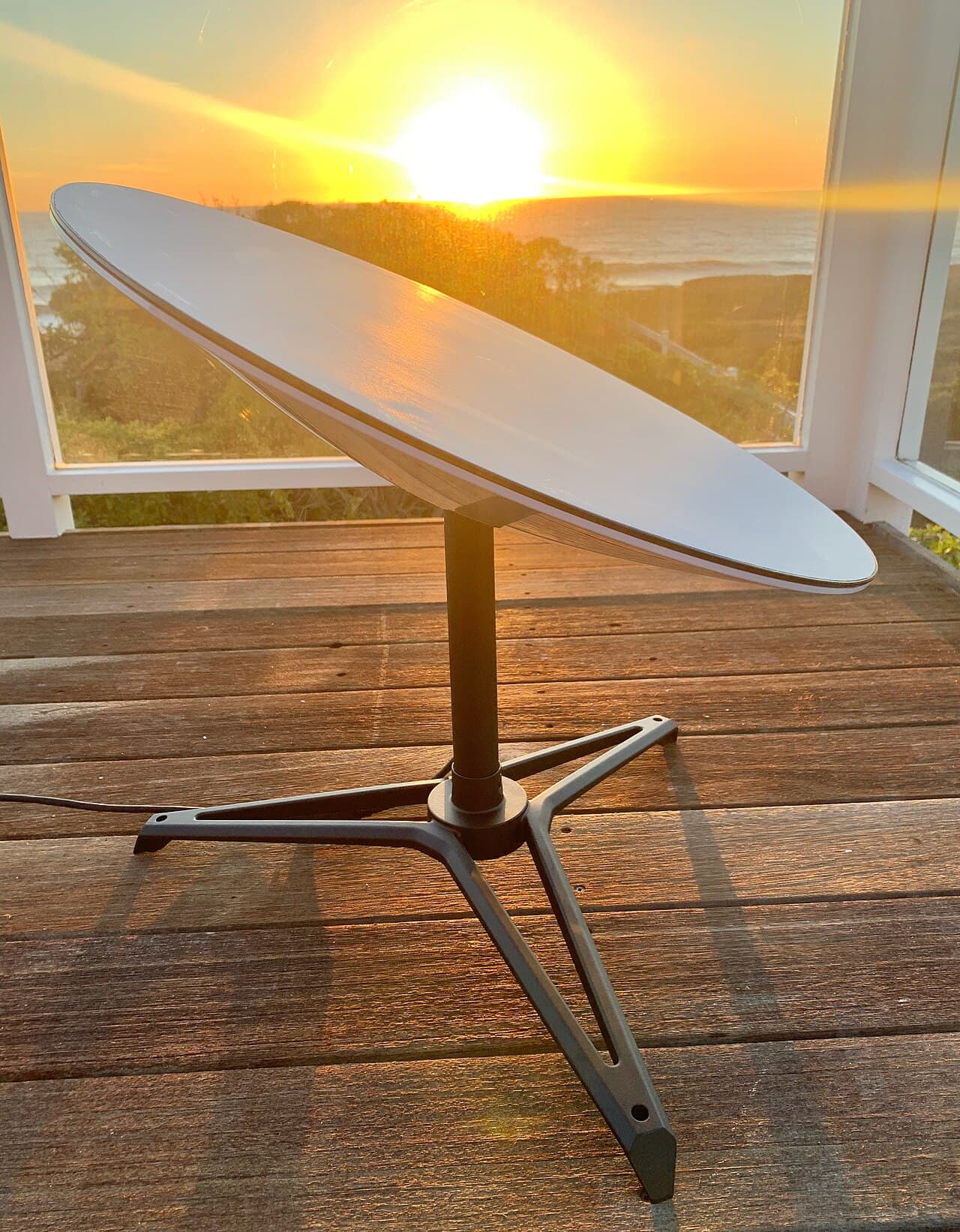
Active
Starlink Constellation
The largest satellite constellation ever flown: 11,112 working satellites in low Earth orbit delivering broadband across 160+ countries, with laser inter-satellite links and multiple weekly Falcon 9 deployment launches.

Part of SpaceXNASDAQ: SPCXFounded 2015🇺🇸Redmond, WashingtonCEO Michael Nicolls (VP of Starlink Engineering)
Starlink is SpaceX's satellite internet division and the largest satellite constellation ever flown, with 11,143 working satellites in low Earth orbit (11,157 in orbit, 12,988 launched as of KeepTrack Oct 2, 2026) serving 12M+ customers across 160+ countries as of mid-September 2026.
Latest update Oct 19, 2026
01
Reported as SpaceX's Connectivity segment, it generated $11.39B of revenue in 2025 (61% of SpaceX's total, up ~49% year over year) with $7.17B of segment adjusted EBITDA, and grew Q2 2026 quarterly revenue 66% year over year to $4.29B-$4.3B - the profit engine funding Starship and SpaceX's AI-compute buildout. Beyond fixed broadband, Starlink runs maritime, aviation (42 airlines have Starlink Wi-Fi), and Direct to Cell services: the July 2025 T-Satellite launch with T-Mobile made satellite-to-phone service commercial in the US, Airtel Africa launched commercial Starlink Mobile in the DRC on August 14, 2026 (Africa's first dish-free satellite-to-phone service), and the FCC-approved ~$17B EchoStar spectrum purchase (May 2026) positions 'Starlink Mobile' to become a direct consumer carrier competing with AT&T, Verizon, and T-Mobile - though all three have so far publicly declined an MVNO deal. Next-generation V3 satellites - roughly 1 Tbps of downlink capacity each, launchable only on Starship - had a suborbital release of 20 units on Flight 13 (July 24, 2026). Starship Flight 14 on September 28 reached orbit and deployed 26 V3 satellites that SpaceX and Musk said were operating nominally; KeepTrack's Oct 2 print includes those 26 in the launched count. Reporting says the satellites still need on-orbit checkout and orbit-raising before serving customers. V3 underpins plans for gigabit consumer service and a target of ~25M users by year-end 2026. SpaceX raised most residential and aviation Starlink plan prices in mid-2026, and on its first public earnings call as a Nasdaq-listed company (SPCX, Aug 4, 2026) confirmed Starlink's Q2 subscriber and revenue growth and reiterated plans to build its own Starlink Mobile network rather than lease capacity to a wireless carrier. Consumer service went live in the UAE on September 3, 2026 after a 10-year TDRA General Space Services License, and on September 2 SpaceX signed Europe's first Starlink Mobile and Sovereign Solutions deals with 4iG for Hungary, Albania, Montenegro and North Macedonia. On September 7, 2026 Senegal's Supreme Court provisionally suspended Starlink Senegal SUARL's five-year operating licence pending a Sonatel judicial-review challenge, an interim freeze rather than a final cancellation.
keeptrack.spaceUpdated Oct 3, 2026
Analysis · 5 min read · Aug 3, 2026The long view on Starlink: strategy, technology and what to watch02
2026-2027
Senegal's Supreme Court on September 7, 2026 ordered a provisional freeze of Starlink Senegal SUARL's five-year licence pending a full judicial-review ruling on Sonatel's excess-of-power challenge. The decision does not annul the licence. Watch whether the court restores, conditions, or invalidates the November 2025 authorization, and whether service for existing users remains interrupted in the meantime.
Late 2026
SpaceX's first-ever public earnings call (Aug 4, 2026, for Q2 2026) confirmed 12 million Starlink subscribers at quarter-end, doubling YoY from 6M with a record 1.7 million net adds in the quarter (up from 1.4M in Q1 2026). No Q3 2026 subscriber print has been disclosed as of September 18, 2026. Starlink still targets roughly 25M active users by year-end 2026 and plans to debut gigabit-class consumer service on the back of V3 capacity.
2027
After signing Europe's first Starlink Mobile and Sovereign Solutions agreements with 4iG Group on September 2, 2026, roll out first-generation commercial direct-to-cell service in Hungary and Albania, then a 2 GHz / 5G NTN generation across Hungary, Albania, Montenegro and North Macedonia, with Sovereign Solutions targeted for 2027.
End of 2027
After Korean Air started free Starlink Wi-Fi on September 15, 2026 on an initial four jets (three A350-900s and one 777-300ER), the first East Asia full-service carrier to do so, equip most of the Korean Air fleet by the end of 2027, with Asiana offering the same service under the Korean Air Group program.
H1 2028
On its first public earnings call on August 4, 2026, SpaceX president Gwynne Shotwell confirmed Starlink will build its own terrestrial mobile network on the ~65 MHz of nationwide mid-band spectrum acquired in the ~$17B EchoStar deal, rather than lease capacity through an MVNO deal - AT&T, Verizon, and T-Mobile had each publicly declined to offer SpaceX a wholesale arrangement as of their Q1 2026 earnings calls. The network will use femtocells mounted at rooftop Starlink dishes, Gateways, and Tesla Superchargers rather than traditional cell towers. On August 6, 2026 the FCC adopted an NPRM (FCC 26-51) proposing to open 200+ MHz of additional spectrum for satellite direct-to-device use. SpaceX plans to fly next-generation Starlink Mobile satellites on the V3 bus via Starship starting in 2027. CFO Bret Johnsen told Goldman's Communacopia conference, reported September 14, 2026, that a full 5G-quality mobile satellite service to smartphones is now targeted for the first half of 2028, later than the end-2027 standalone-customer aim given in August, and that SpaceX remains open to standing up its own terrestrial network or working with existing carriers. On September 17, 2026 the FCC granted SpaceX global facilities-based and resale authority under Section 214 to provide telecommunications services between the United States and foreign markets, on an application SpaceX said was intended to support Starlink Mobile service offerings; SpaceX filed the amended application on August 25 and the FCC accepted it for streamlined review on August 28. The grant lets SpaceX act as the carrier of record for traffic crossing international borders but does not award additional spectrum or by itself authorize operations in any foreign country.
2029
After Austrian Airlines flew its first Starlink-equipped A320neo (OE-LXF) from Vienna to Porto on September 7, 2026, complete the Lufthansa Group rollout of Lufthansa Group Wi-Fi powered by Starlink across about 850 aircraft by 2029. Austrian aims to equip 20 aircraft by the end of the 2026/27 winter schedule. The group-wide program covers Lufthansa, SWISS, Austrian Airlines, Brussels Airlines, ITA Airways, Edelweiss, Discover Airlines, Air Dolomiti, Lufthansa City Airlines, and Eurowings, with the service free for Miles and More members and Travel ID users.
Oct 7, 2032
Date not announced
TargetAfter on-orbit checkout and orbit raising
Date not announced
TargetPending FCC transfer consent
Sep 28, 2026
TargetSeptember 28, 2026 (Flight 14); critical mass around Q2 2027
The larger V3 satellites - roughly 1 Tbps of downlink each, targeting greater-than-100x available bandwidth at a lower 350 km altitude - can only launch on Starship. Deployment began July 24, 2026, when Starship Flight 13 released the first 20 operational V3s and SpaceX made contact with all 20, on a suborbital arc. SpaceX is now targeting September 28, 2026 for Flight 14 (slipped from September 22 with no public explanation), the vehicle's first planned orbital insertion, carrying 26 Starlink V3 satellites (about 1 Tbps of downlink each, ~26 Tbps added on that mission). A 'critical mass' of about 1,000 V3 satellites is still needed before the new hardware meaningfully improves network capacity, which SpaceX expects around Q2 2027.
03
SpaceX said Falcon 9 lifted off from Vandenberg SLC-4E at 5:28 p.m. PT on Oct. 12, 2026 (00:28 UTC on Oct. 13) with 27 Starlink satellites, the first Falcon 9 Starlink flight since Sept. 19. Booster B1088 landed on Of Course I Still Love You on its 20th flight. SpaceX lists satellite deployment at about T+1:01:58, and Space.com reported that SpaceX said the 27 satellites reached orbit 62 minutes after liftoff.
On Oct. 8, 2026 Grain Management announced a definitive agreement for SpaceX to acquire Grain's nationwide 800 MHz spectrum portfolio, subject to FCC approval and other closing conditions. SpaceX's FCC public-interest statement the same day describes a Purchase and Sale Agreement transferring up to 14 MHz of paired 800 MHz licenses from Grain affiliate NewLevel to Starlink Spectrum Holdings for a hybrid terrestrial and satellite Starlink Mobile coverage layer. Financial terms were not disclosed, and the license transfer is not yet granted.
graingp.com sxcontent9668.azureedge.us www.satellitetoday.com + SpaceX
On Oct. 6, 2026 the FCC granted in part SpaceX authority to deploy and operate 15,000 NGSO satellites (call sign S00735, DA-26-1078) for U.S. supplemental coverage from space and mobile satellite service, plus MSS and direct-to-cell outside the United States, with FSS backhaul and TT&C. SpaceX must launch, place, and operate 50% of the authorized stations by Oct. 7, 2032 and complete the constellation by Oct. 7, 2035. Commercial use of EchoStar-assigned AWS-3, AWS-H, and 2 GHz MSS bands remains conditioned on Step Two of the SpaceX-EchoStar transaction. The FCC also waived the terrestrial-lease rule for specified AWS-3 and AWS-H SCS operations, with conditions.
SpaceX's Starship Flight 14 lifted off from Starbase at about 8:48 a.m. EDT on September 28 and reached orbit for the first time after one upper-stage engine shut down and a brief no-orbit call was reversed. Ship 41 deployed 26 Starlink V3 satellites that Musk said were operating nominally, the first V3s intended to stay in the constellation rather than the July 24 suborbital release. Controllers cut the planned six-orbit, nearly 10-hour flight to about three hours; Super Heavy splashed in the Gulf of Mexico and the ship reentered for a Pacific splashdown north of Hawaii, where AP said it then tipped over and erupted in flames.
The FAA said on September 27 that it issued license authorization on September 26 for SpaceX Starship-Super Heavy Flight 14 launch and reentry operations, clearing the remaining named regulatory gate for the vehicle's first planned orbital attempt. SpaceX is targeting a 75-minute window opening at 7:15 a.m. Central on September 28 from Pad 2 at Starbase, with Ship 41, Booster 21 and 26 Starlink V3 satellites, and ocean splashdowns rather than tower catches. The attempt had not yet lifted off as of this check; backup beach closures are posted for September 29 and 30.
aviationweek.com spaceflightnow.com www.teslarati.com + SpaceX
A fire broke out on the evening of September 23 at a Starlink satellite communications ground station in Wola Krobowska, south of Warsaw. Poland's National Prosecutor's Office opened a case on September 24 treating the fire as arson and a suspected act of sabotage on behalf of a foreign intelligence service, with a stated aim of disrupting Starlink connectivity in Poland and Central and Eastern Europe; no charges have been filed. State operator Exatel said it subleases the land and provides data transmission, that none of its own infrastructure was destroyed, and that its services were unaffected. SpaceX had not issued a public comment in the sources checked.
www.gov.pl notesfrompoland.com wiadomosci.gazeta.pl + SpaceX
SpaceX stacked Ship 41 on Super Heavy booster B21 at Starbase Pad 2 in the early hours of September 23, assembling the 124-meter Flight 14 vehicle for Starship's first planned orbital attempt. The company said opportunistic full-stack testing, including a wet dress rehearsal, was planned for September 24, with launch still targeted as early as September 28 pending FAA approval. The roughly 10-hour mission is planned to deploy 26 Starlink V3 satellites, the first V3s intended to stay in orbit.
SpaceX said on September 17 that it is now targeting Starship Flight 14 as early as Monday, September 28, pending regulatory approval, a roughly six-day slip from the September 22 date it had posted on the mission page only two days earlier. The company gave no reason for the move, and it has not published a revised mission clock or a new FAA airspace window alongside the target. Flight 14 is the program's first planned orbital insertion, carrying 26 Starlink V3 satellites to about 275 km for roughly six orbits before a Pacific splashdown west of Chile, and CFO Bret Johnsen has described it as Starship's first revenue-generating flight.
The Federal Communications Commission on September 17 granted SpaceX global facilities-based and resale authority under Section 214 to provide telecommunications services between the United States and foreign markets, an application the company said explicitly was intended to support Starlink Mobile service offerings. SpaceX filed an amended application on August 25 and the FCC accepted it for streamlined review on August 28; the grant lets SpaceX act as the carrier of record for traffic crossing international boundaries but does not award additional spectrum or by itself authorize operations in any foreign country. It is the latest in a run of regulatory steps behind the satellite-to-phone business, after the roughly $17 billion EchoStar spectrum purchase approved in May, with CFO Bret Johnsen targeting full 5G-quality service in the first half of 2028 on next-generation satellites launching from 2027.
SpaceX is targeting September 22, 2026 for Starship Flight 14, the vehicle's first planned orbital mission, with a 75-minute window opening at 7:15 a.m. Central Time from Starbase. The Ship is expected to fly at about 275 km, complete roughly six orbits over nearly 10 hours, deploy 26 Starlink V3 satellites, and splash down in the Pacific west of Chile. Super Heavy is planned to splash in the Gulf of Mexico about seven minutes after liftoff, with no tower catch of either stage.
SpaceX CFO Bret Johnsen told Goldman's Communacopia conference that Starlink aims to turn on a full 5G-quality mobile satellite service to smartphones in the first half of 2028, later than the end-2027 standalone-customer target given on the August earnings call. He said a new direct-to-device constellation based on the V3 bus will start deploying via Starship in 2027, and that EchoStar mid-band spectrum is already FCC-approved for space and terrestrial use. Johnsen left open whether SpaceX will stand up its own terrestrial network or work with existing carriers.
Senegal's Supreme Court on September 7 ordered a provisional suspension of Starlink Senegal SUARL's five-year fixed satellite internet licence, granted by ministerial order 038974 of November 6, 2025, pending judicial review of a Sonatel challenge alleging excess of power. The freeze is an interim measure, not a final annulment; Starlink launched commercially in Senegal in February 2026 after Sonatel first complained on March 10. The government had cited about XOF 64 billion in savings and a social component covering one million people.
PCMag reported that SpaceX reversed an apparent 5TB monthly throttle on Starlink Residential service after users said speeds dropped to 10 Mbps or lower despite unlimited-data advertising. Several US and European customers said the cap was lifted, some with a one-month credit, but a September 12 update said users in Malaysia, Mexico and Bangladesh still reported throttling. SpaceX did not comment.
Britain is the first country outside the United States to publicly acknowledge buying SpaceX's classified Starshield service, after a Ministry of Defence FOI response showed roughly 1,000 Starshield terminals and 500 Starlink terminals in inventory. Reuters reported about 13 million pounds ($17.6 million) spent on Starshield and 16.5 million pounds on Starlink, or nearly $40 million combined, with Starshield airtime first bought for Starlink terminals in 2024 and dedicated Starshield hardware arriving last year. SpaceX did not comment; New Zealand is trialling Starshield.
Korean Air will start offering free Starlink high-speed Wi-Fi from September 15, 2026, becoming the first East Asia full-service carrier to do so. The initial rollout covers four Korean Air jets - three Airbus A350-900s and one Boeing 777-300ER - with most of the fleet targeted by the end of 2027. Asiana will also offer the service under the same Korean Air Group program.
04
The largest satellite constellation ever flown: 11,112 working satellites in low Earth orbit delivering broadband across 160+ countries, with laser inter-satellite links and multiple weekly Falcon 9 deployment launches.
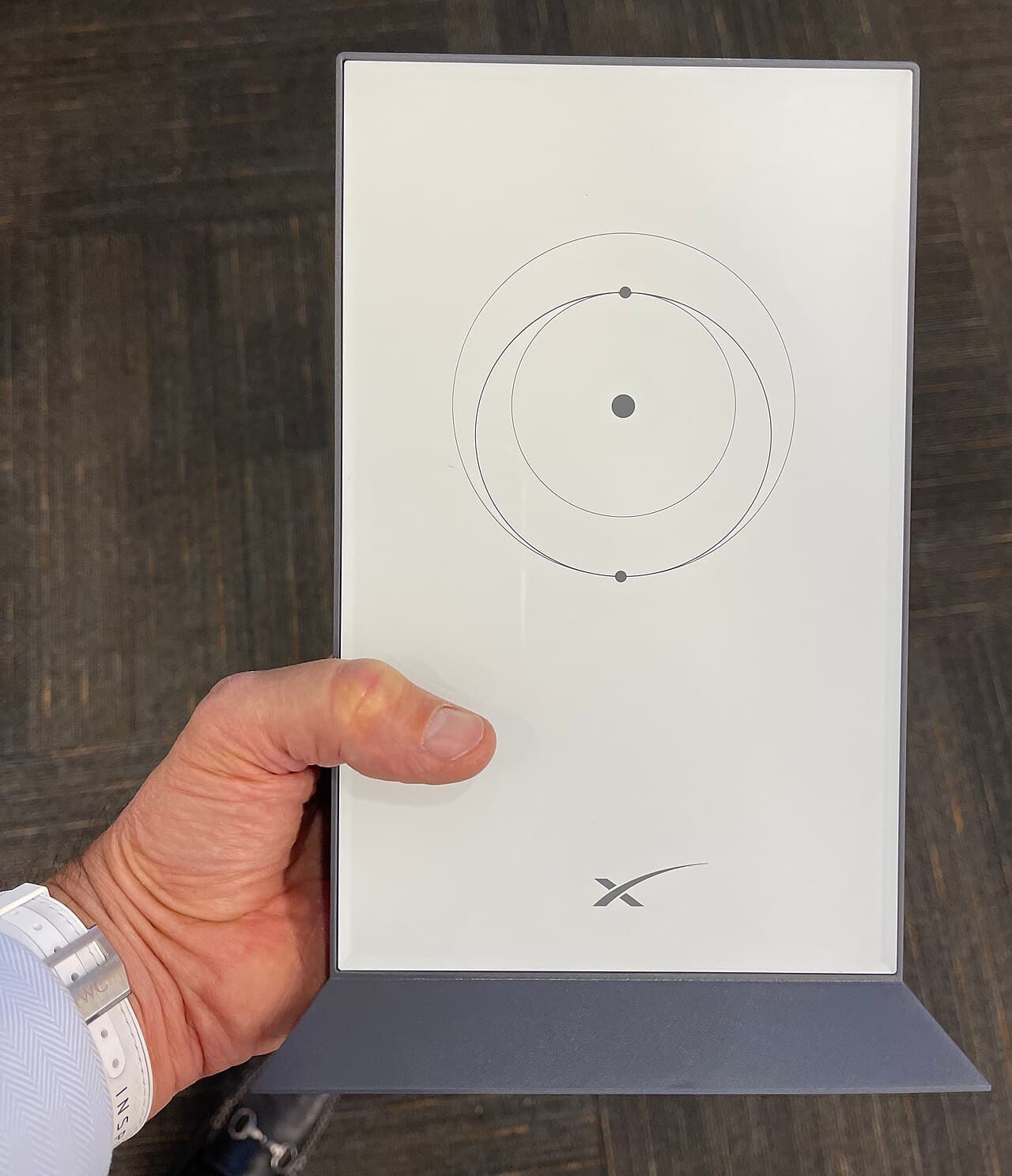
Self-install phased-array user terminals: the Standard Kit ($349), the portable Starlink Mini, and the enterprise-grade Performance dish ($1,999), with terminal manufacturing in Bastrop, Texas.
Satellite-to-phone service using 650+ dedicated satellites that act as cell towers in space, providing messaging, voice, data, and IoT connectivity to unmodified phones - commercial in the US since July 2025 as T-Mobile's T-Satellite and live with carrier partners worldwide.
05
(2025, SpaceX Connectivity segment; +49% YoY, $7.17B segment adjusted EBITDA). Q2 2026 quarterly Connectivity revenue was $4.29B-$4.3B (+66% YoY) with roughly $2.6B segment adjusted EBITDA, disclosed on SpaceX's first public earnings call (Aug 4, 2026) as a Nasdaq-listed company. Q3 2026 figures not yet reported as of Sept 18, 2026.
(confirmed on SpaceX's first-ever public earnings call, Aug 4, 2026, for Q2 2026: subscribers doubled YoY from 6M, with a record 1.7M net adds in the quarter, up from 1.4M in Q1 2026); target ~25M by year-end 2026. No Q3 2026 figures disclosed yet as of Sept 18, 2026.
(KeepTrack tracking, Sept 17, 2026), of 12,935 launched since May 2019; roughly two-thirds of all active satellites around Earth
More than 170 countries as of mid-2026 per SpaceX's 8 Oct 2026 FCC Grain narrative; Vietnam live Aug 12, 2026; UAE commercial service live Sep 3, 2026; Senegal Supreme Court provisionally suspended the Starlink Senegal licence on Sept 7, 2026 pending judicial review
$4.29B-$4.3B Connectivity segment revenue (+66% YoY), ~$2.6B segment adjusted EBITDA (+64% YoY), ~$1.66-1.7B operating income (+79% YoY) - Starlink's first quarterly disclosure since SpaceX's IPO. Q3 2026 results not yet reported as of Sept 18, 2026.
(confirmed again for Q2 2026, down ~22% YoY from $99 in 2023 as the mix shifts international). SpaceX raised most residential and aviation plan prices in June-August 2026 aiming to reverse the trend, but the Q2 print predates most of those hikes taking effect
(KeepTrack, Sept 24, 2026), of 12,962 launched since May 2019; up from 11,112 working / 11,127 in orbit / 12,935 launched on Sept 17 after Starlink 15-27 (27 satellites) from Vandenberg on Sept 19
(KeepTrack, Sept 27, 2026), of 12,962 launched since May 2019; working and in-orbit counts are down from 11,139 / 11,154 on Sept 24 with launched unchanged
(KeepTrack, Oct 2, 2026), of 12,988 launched since May 2019
(KeepTrack, Oct 9, 2026), of 12,988 launched since May 2019; launched count unchanged since Flight 14's plus-26. KeepTrack working is not confirmation that V3s are serving customers.
06
Operating status
Operational
KeepTrack on Oct. 18, 2026 listed 13,015 launched, 11,154 in orbit and 11,140 working. Its Oct. 14 brief says Group 15-25 raised launched by 27, from 12,988 to 13,015, while working rose by 25 because two older satellites reentered. That tracker working flag is not customer service, so the summary's Oct. 2 launched and working counts stay. The Oct. 8 Grain agreement is definitive for 100 percent of the 800 MHz portfolio, pending FCC consent, with no price in the release. The Flight 14 customer-service step stays open; the SpaceX Flight 14 page did not render on this pass.
Residential & Roam Subscriptions
Consumer broadband from $55/month (Residential 100 Mbps) up to $130/month (Residential MAX, after the July 2026 US price increase from $120) plus Roam plans at $150–$200/month for RVs, campers, and travelers; hardware from the $349 Standard Kit and the compact Starlink Mini.
Priority-data business plans and the Performance dish ($1,999) for enterprise sites, plus Starlink Dedicated Service (Bonded Gateway) offering dedicated Ka-band beams at up to ~20 Gbps symmetrical per gateway.
Priority-data maritime plans with a 99.9% network SLA for vessels and offshore operations.
In-flight Wi-Fi flying on 42 airlines in 2026, led by United (423 aircraft equipped), Qatar Airways (~140 aircraft), and Air France (~60% of fleet, fleetwide by end-2026). Austrian Airlines flew its first Starlink-equipped A320neo (OE-LXF) on September 7, 2026, and aims to equip 20 aircraft by the end of the 2026/27 winter schedule as Lufthansa Group targets about 850 aircraft across group airlines by 2029. Korean Air started free Starlink Wi-Fi on September 15, 2026 on an initial four jets (three A350-900s and one 777-300ER), targeting most of the fleet by end-2027, with Asiana on the same Korean Air Group program. Aviation pricing rose effective August 7, 2026: Aviation Global Unlimited from $10,000 to $20,000/month, business-jet hardware from $145,000 to $200,000, a new Aviation Regional Unlimited plan at $12,500/month, and Aviation Regional 25GB from $2,000 to $4,000/month.
Direct to Cell (Starlink Mobile)
Satellite-to-phone messaging, voice, data, and IoT sold through carrier partners - T-Mobile (US), Optus, Telstra, Rogers, One NZ, KDDI, Salt, Entel, Kyivstar, Virgin Media O2, Airtel Africa, Deutsche Telekom, Spark New Zealand (live since April 2026), NTT Docomo and SoftBank (Japan, live since April 2026), and more - with a shift toward selling Starlink Mobile directly to US consumers on the EchoStar spectrum, built with rooftop-dish and Gateway femtocells rather than traditional cell towers. AT&T, Verizon, and T-Mobile have each publicly declined an MVNO deal with SpaceX as of Q1 2026 earnings calls. On August 6, 2026 the FCC adopted an NPRM (FCC 26-51) proposing to open 200+ MHz of additional spectrum (2400-2483.5 MHz and 5725-5850 MHz) for satellite direct-to-device use.
07
How past announced dates turned out.
2/2announced dates hit on time
Bid for Grain Management's 800 MHz spectrum licenses
Target November 5, 2026 (FCC bidding process target) · Resolved Oct 8, 2026
Grain's Oct. 8, 2026 release says SpaceX will acquire 100 percent of the nationwide 800 MHz portfolio under a definitive agreement, subject to FCC approval. The release states no price. This closes the open-bid step aimed at Nov. 5. FCC transfer consent remains a separate milestone.
Record Starship Flight 14 orbital outcome and V3 deployment
Target After the Sept 28, 2026 7:15 a.m. CDT window · Resolved Sep 28, 2026
Flight 14 reached orbit from Starbase at 7:48 a.m. CT on 28 Sep 2026 and deployed 26 Starlink V3 satellites. SpaceX said payload deploy was complete and the Starlink team made contact with all 26; Musk said they were operating nominally. Mission duration was cut to about 3 hours; Ship 41 splashed down in the northern Pacific after 3 hours 8 minutes, then toppled and broke up. KeepTrack's 2 Oct print added 26 launched as Ship 41 / Launch 433.
08
2026
KeepTrack counts the Oct. 12 batch as launched, not as customer service
KeepTrack's Oct. 14 brief said Group 15-25 raised launched satellites from 12,988 to 13,015. Its Oct. 18 count page listed 13,015 launched, 11,154 in orbit and 11,140 working. The working figure is a tracking status. SpaceX has not said those 27 satellites, or Flight 14's V3s, are serving customers.
Falcon 9 adds 27 satellites on Starlink 15-25
SpaceX said Falcon 9 launched 27 Starlink satellites from Vandenberg at 5:28 p.m. PT on Oct. 12, 2026 (00:28 UTC Oct. 13), the first Falcon 9 Starlink mission since Sept. 19. Booster B1088 landed on its 20th flight, and SpaceX lists deployment at about T+1:01:58. Space.com's figure of more than 11,100 active satellites is a round number and does not replace the Oct. 9 KeepTrack census.
Flight 14 V3s still raising orbits; no SpaceX comment on Poland fire
As of 9-10 Oct 2026, SpaceX's Flight 14 page still says the 26 V3 satellites must finish on-orbit checkouts and raise orbits before serving customers. Jonathan's Space Report that day listed all 26 as working but none in operational orbit (16 drift, 10 ascent). KeepTrack's launched count remained 12,988. Separately, no SpaceX or Starlink public confirmation of the Wola Krobowska ground station's role or user-traffic impact after the 23 Sep fire was found; Polish prosecutors allege the fire aimed to disrupt Starlink connectivity, while Exatel said its own services were unaffected.
SpaceX files to add Grain 800 MHz for Starlink Mobile
On Oct. 8, 2026 SpaceX agreed to acquire Grain Management's nationwide 800 MHz portfolio, described as up to 14 MHz of paired low-band licenses, for a Starlink Mobile hybrid coverage layer intended to improve indoor reach. The transfer remains subject to FCC approval. Financial terms were not disclosed. This is separate from the Oct. 6 FCC authorization of up to 15,000 Starlink Mobile satellites.
FCC authorizes 15,000 next-gen D2D satellites
On Oct. 6, 2026 the FCC granted in part a 15,000-satellite Starlink Mobile/D2D constellation at 326-335 km (DA-26-1078). U.S. operations cover SCS and MSS; outside the U.S., MSS and direct-to-cell, subject to foreign approvals. Broadband Breakfast noted the current T-Mobile partnership runs on about 650 D2D satellites.
KeepTrack adds Flight 14's 26 V3s to the launched count
KeepTrack's 2 Oct 2026 X-report said SpaceX added 26 Starlink satellites in the latest batch (Ship 41, Launch 433), taking the constellation to 12,988 launched, 11,157 in orbit and 11,143 working, with two older units reentered. That launched increment matches Flight 14's 26 V3s. GCN, citing post-deployment contact over laser links, ground stations and user terminals, said the satellites will conduct on-orbit checkouts and raise their orbits before they begin serving customers.
Flight 14 puts 26 Starlink V3s into operational orbit
Starship Flight 14 on September 28, 2026 deployed 26 Starlink V3 satellites into orbit, the first V3s intended to remain in the operational constellation. Flight 13 on July 24 had released V3 satellites on a suborbital path that fell back. Reuters said the satellites were deployed one by one at about 269 km and quoted Musk that all 26 were operating nominally. This pass did not retrieve an updated KeepTrack working-satellite count after deployment.
FAA licenses Starship Flight 14 ahead of September 28 window
On September 26, 2026 the FAA issued license authorization for SpaceX Starship-Super Heavy Flight 14 launch and reentry operations, according to an FAA statement reported September 27. The 75-minute window remains 7:15 a.m. CDT September 28 from Starbase Pad 2, with backups September 29-30. The licensed profile is the vehicle's first planned orbital insertion carrying 26 Starlink V3 satellites. As of early September 28 UTC the window had not opened and those satellites had not been deployed.
2026
Poland investigates arson at a Starlink ground station
A fire broke out on the evening of September 23, 2026 at a Starlink ground station in Wola Krobowska, south of Warsaw. Poland's National Prosecutor opened a September 24 investigation treating the fire as arson and suspected sabotage on behalf of a foreign intelligence service; no charges have been filed. Exatel said it subleases the land and provides data transmission, that none of its own infrastructure was destroyed, and that its services were unaffected. SpaceX had not commented in the sources checked.
Starship Flight 14 stacked and completes wet dress rehearsal
SpaceX stacked Ship 41 on Super Heavy booster B21 at Starbase Pad 2 in the early hours of September 23, assembling the 124-meter Flight 14 vehicle for Starship's first planned orbital attempt. On September 24 the company completed a full-stack wet dress rehearsal. Launch remains targeted for a 75-minute window opening 8:15 a.m. EDT / 7:15 a.m. CDT on September 28, pending an FAA launch license that had not been issued as of September 24. The roughly 10-hour mission is planned to deploy 26 Starlink V3 satellites, the first V3s intended to stay in orbit.
Starship Flight 14 V3 orbital debut slips to September 28
On September 17, 2026 SpaceX pushed Starship Flight 14 from September 22 to as early as September 28, pending regulatory approval, with no public explanation for the six-day delay. The mission remains the vehicle's first planned orbital insertion and the first attempt to put 26 Starlink V3 satellites into the operational constellation (~1 Tbps downlink each, ~26 Tbps added on that flight) after Flight 13's July 24 suborbital V3 release. Space.com reported a 75-minute window opening at 7:15 a.m. CT from Starbase.
CFO slips 5G-quality Starlink Mobile to H1 2028
SpaceX CFO Bret Johnsen told Goldman's Communacopia conference, as reported September 14, 2026, that Starlink aims to turn on a full 5G-quality mobile satellite service to smartphones in the first half of 2028, later than the end-2027 standalone-customer target given on the August 4 earnings call. He said a new direct-to-device constellation based on the V3 bus will start deploying via Starship in 2027, that EchoStar mid-band spectrum is already FCC-approved for space and terrestrial use, and that SpaceX is still open to standing up its own terrestrial network or working with existing carriers.
Senegal Supreme Court provisionally suspends Starlink licence
On September 7, 2026 Senegal's Supreme Court ordered a provisional suspension of Starlink Senegal SUARL's five-year fixed satellite internet licence (ministerial order 038974 of November 6, 2025) pending judicial review of a Sonatel challenge alleging excess of power. The freeze is an interim measure, not a ruling on the merits or a final annulment. Starlink launched commercially in Senegal in February 2026; Sonatel first filed a ministerial complaint on March 10, 2026. The government had cited about XOF 64 billion (~USD 114.7 million) in savings and a social component covering one million people.
UK MoD FOI lists 500 Starlink terminals
A UK Ministry of Defence FOI response, reported by Reuters on September 10, 2026, listed about 500 Starlink terminals in inventory alongside 1,000 Starshield terminals, with roughly 16.5 million pounds spent on Starlink. Starshield airtime was first bought for Starlink terminals in 2024 before dedicated Starshield hardware arrived. Combined Starlink and Starshield spend is nearly $40 million.
Korean Air starts free Starlink Wi-Fi
Korean Air started offering free Starlink high-speed Wi-Fi on September 15, 2026, the first East Asia full-service carrier to do so. The initial rollout covers four Korean Air jets - three Airbus A350-900s and one Boeing 777-300ER - with most of the fleet targeted by the end of 2027. Asiana will also offer the service under the same Korean Air Group program.
Austrian Airlines flies first Starlink-equipped A320neo
Austrian Airlines completed its first scheduled Starlink flight on September 7, 2026, on a new Airbus A320neo registered OE-LXF from Vienna to Porto, the first aircraft in its fleet with Lufthansa Group Wi-Fi powered by Starlink. The airline aims to equip 20 aircraft by the end of the 2026/27 winter schedule. Starlink is working with Lufthansa Group to outfit about 850 aircraft across group airlines by 2029, with the service free for Miles & More members and Travel ID users.
Starlink consumer service goes live in the UAE
On September 3, 2026 Elon Musk confirmed that Starlink internet is live in the United Arab Emirates, moving the service from post-license pre-orders to commercial operations. The launch follows the UAE Telecommunications and Digital Government Regulatory Authority's August 28 grant of a 10-year General Space Services License covering residential, business, government, maritime and aviation use. Gulf News reported residential service at Dh300 per month with hardware from Dh1,465; Starlink warned of shipping delays amid high demand.
Signs first European Starlink Mobile and Sovereign Solutions deals with 4iG
On September 2, 2026 in Bastrop, Texas, SpaceX and Hungary's 4iG Group signed Europe's first Starlink Mobile and Sovereign Solutions agreements, with Gwynne Shotwell and 4iG CEO Gellert Jaszai signing. First-generation commercial direct-to-cell service is planned for Hungary and Albania, a later 2 GHz / 5G NTN generation is planned for Hungary, Albania, Montenegro and North Macedonia, and Sovereign Solutions is targeted for 2027.
FCC filing confirms Starship Flight 14 as first genuine orbital attempt
On September 1, 2026 SpaceX filed with the FCC for Starship Flight 14, listing a planned launch/deployment date of Tuesday, September 15, 2026 for a fresh batch of high-capacity orbital Starlink V3 satellites. The filing confirms Flight 14 will fly a true orbital trajectory rather than the suborbital arcs of every prior Starship flight, including Flight 13's July 24 splashdown.
UAE grants Starlink a 10-year public satellite license
On August 28, 2026 the UAE's Telecommunications and Digital Government Regulatory Authority granted Starlink Satellite Communications LLC a 10-year General Space Services License, authorizing it to establish, operate and manage a public satellite communications network and provide broadband satellite internet in the UAE for consumers, businesses and government users, plus maritime and aviation connectivity. The license puts Starlink on a formal public-network footing alongside fiber and 5G, subject to UAE security, spectrum and consumer-protection rules.
SpaceX's first public earnings call confirms Starlink's Q2 numbers
On August 4, 2026, SpaceX holds its first-ever public earnings call as a Nasdaq-listed company (SPCX). Starlink subscribers doubled year over year to 12 million with a record 1.7 million net adds in the quarter; Connectivity segment revenue reached $4.29B-$4.3B (+66% YoY) with roughly $2.6B of segment adjusted EBITDA. SpaceX targets a $100B all-segment annualized revenue run rate by December 2026 and says Starship's Flight 14, expected to attempt the vehicle's first full orbital flight and first ship catch, could fly before the end of August.
Starlink raises residential and aviation prices
Starting with the June 2026 billing cycle SpaceX raised US Residential 100 Mbps from $50 to $55/month and Residential MAX from $120 to $130/month; Standby Mode doubled from $5 to $10/month. Aviation pricing followed on August 7, 2026: the Aviation Global Unlimited plan doubled from $10,000 to $20,000/month and business-jet hardware rose from $145,000 to $200,000, reversing the ARPU decline that had taken hold as the subscriber mix shifted international.
First operational V3 satellites deployed on Starship Flight 13
On July 24, 2026, Starship Flight 13 deployed the first 20 operational Starlink V3 satellites in suborbit; all 20 extended solar arrays and antennas, established RF and laser links, and returned telemetry before reentry. The Super Heavy booster's landing burn ran into trouble (only a handful of its 13 engines relit) but it still made a survivable splashdown in the Gulf of Mexico - the ship's payload deployment was a clean success even as the booster fell short.
Routers exempted from FCC's foreign-made router ban
On July 27, 2026 the FCC's Public Safety and Homeland Security Bureau exempted new Starlink router authorizations from a national-security ban on foreign-made routers, based on a Department of War determination that the devices - manufactured in Texas and Vietnam - do not pose an unacceptable risk. The exemption runs through February 1, 2028, keeping Starlink's hardware supply chain intact alongside similar conditional exemptions granted to Netgear, Adtran, Calix, Nokia, and Sagemcom.
12M customers; S-1 reveals Starlink financials
SpaceX's May 20, 2026 S-1 discloses Starlink's financials for the first time: $11.39B of 2025 revenue (+49% YoY) at $7.17B of segment adjusted EBITDA. On June 4, 2026 Starlink announces it has crossed 12 million active customers across 160+ countries, adding ~27,700 customers per day.
FCC approves EchoStar spectrum purchase
On May 12, 2026 the FCC approves SpaceX's EchoStar spectrum acquisition (with a $2.4B escrow condition), handing Starlink ~65 MHz of exclusive-use, contiguous nationwide mid-band spectrum in the 1.9–2.2 GHz range - the foundation for a direct-to-consumer Starlink Mobile carrier play.
2025
T-Satellite goes commercial; $17B EchoStar spectrum deal
T-Mobile's Starlink-powered T-Satellite service launches commercially on July 23, 2025 - the first US nationwide satellite-to-phone service. In September, SpaceX strikes a ~$17B deal for EchoStar's AWS-4 and H-block spectrum, its first exclusive direct-to-device spectrum. Starlink ends 2025 with 8.9M subscribers and $11.39B of revenue.
2024
2023
2022
2020
2019
2018
2015