Active
Falcon 9
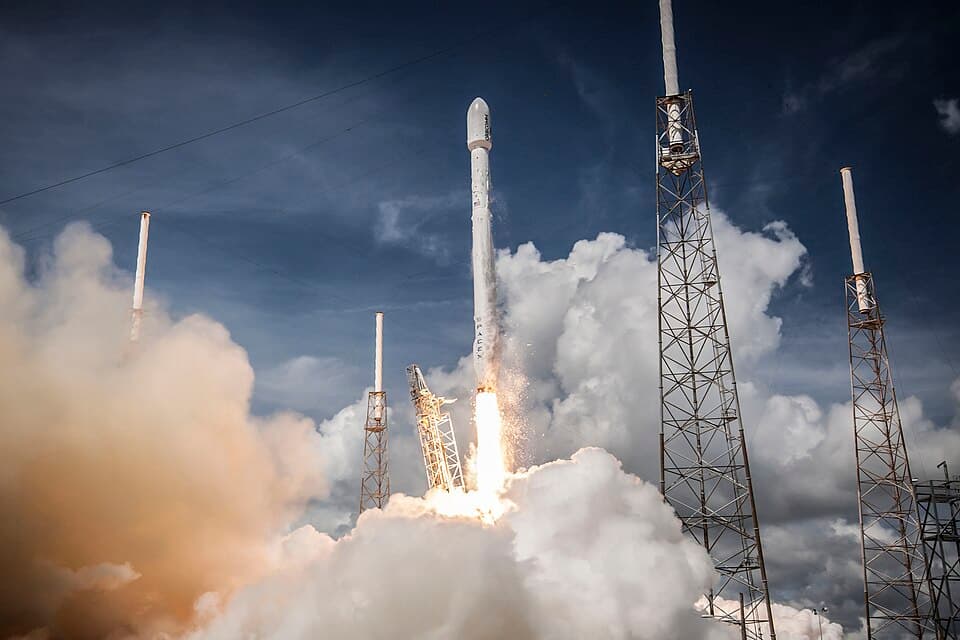
Partially reusable two-stage medium-lift launch vehicle. The world's most frequently launched orbital rocket.
SpaceX designs reusable rockets and spacecraft, operating Falcon 9, Falcon Heavy, Dragon, Starlink, and Starshield while developing Starship.
Latest update Oct 19, 2026
01
Starship Flight 14 lifted off from Starbase on September 28, 2026, reached orbit for the first time, deployed 26 Starlink V3 satellites, then deorbited after about three hours after an ascent engine issue rather than the planned six orbits. Super Heavy splashed down in the Gulf of Mexico. Ship 41 completed a landing burn in the northern Pacific, then tipped over and broke apart; it was not recovered intact as Ship 40 was. On October 1, 2026 SpaceX flew three Falcon missions: Crew-13 from SLC-40 at 11:10 a.m. EDT, with NASA reporting hatch opening at 9:19 p.m. EDT and the crew joining Expedition 75; Transporter-18 from Vandenberg SLC-4E with 130 payloads including Google's Project Suncatcher TPU pathfinder and Varda W-8 and W-9 (not W-7); and Falcon Heavy NROL-97 from LC-39A at 11:54 p.m. EDT, the NRO's first Falcon Heavy. Payload identity and upper-stage deploy for NROL-97 remain undisclosed. Official Flight 14, Transporter-18, and NROL-97 recap HTML remained JS-empty on October 6. SPCX closed October 5, 2026 at $171.09, market cap about $2.32T.
nasa.govUpdated Oct 6, 2026
Analysis · 4 min read · Oct 9, 2026The long view on SpaceX: strategy, technology and what to watch02
Early October 2026
TargetEarly October 2026 (NASA/SpaceX targeting that window; official date not yet posted)
NASA had moved up SpaceX's Crew-13 mission from a planned November launch to September 12, 2026 to increase ISS crew-rotation cadence, but on August 29, 2026 NASA and SpaceX postponed that date after an oxidizer leak was detected on Dragon's propulsion system during standard prelaunch processing. On September 16, 2026 NASA's ISS account said SpaceX had replaced the oxidizer valve and that NASA and SpaceX are now targeting as soon as early October to finish prelaunch work, readiness reviews and ISS coordination. On September 17 the four-person crew - NASA's Jessica Watkins (commander) and Luke Delaney (pilot), CSA's Joshua Kutryk, and Roscosmos's Sergey Teteryatnikov - entered prelaunch quarantine at Johnson Space Center. No specific launch date has been posted. The Dragon flight will lift off on a Falcon 9 from Kennedy Space Center, continuing the Commercial Crew Program's regular ISS rotations.
2026
TargetA little over 2 GW by end of 2026; 5-10 GW deployed in 2027
In an August 11, 2026 address to employees, Elon Musk said SpaceX's AI compute business would exceed all its other revenue lines by September 2026 and 'significantly' exceed them by Q4, and that AI would account for 'probably 99%' of SpaceX's value within five years. On the August 4, 2026 earnings call Musk had already committed SpaceX to building its future AI compute exclusively on Nvidia's Vera Rubin architecture, with an interim target of 2 GW of installed compute online by the end of 2026 - up from 1.4 GW at the end of Q2 2026 - en route to 10 GW by the end of 2027. On September 10, 2026 CFO Bret Johnsen restated that plan at Goldman Sachs Communacopia: ending 2026 a little over 2 GW, a 5-10 GW deployed range in 2027, Nvidia exclusive, and a $100B year-end ARR target on a December-annualized basis after closing an unnamed hosting deal at about $1.11B a month from December 1. He said SpaceX has line of sight to the power, facilities and permits needed for that 2027 range.
2027-2028
NASA Administrator Jared Isaacman said August 14, 2026 he is 'extremely confident' Artemis III will launch in 2027, saying NASA tracks 'every single component' of the program 'down to the day, down to the hour' - and tied that confidence directly to SpaceX's Starship cadence, saying that if Flight 14 flies in early September as planned and SpaceX keeps flying roughly every few weeks through year-end, NASA will 'feel very good' about Starship's readiness to contribute to Artemis III. NASA and SpaceX completed wind-tunnel testing of the upgraded Super Heavy V3 booster at NASA Ames in 2026, verifying the aerodynamic loads it will face returning from lunar missions. Artemis III is a late-2027 low-Earth-orbit demonstration testing rendezvous and docking between Orion and uncrewed pathfinder versions of both SpaceX's Starship HLS and Blue Origin's Blue Moon Mark 2, with the first crewed lunar landing pushed out to Artemis IV in early 2028. Progress still hinges on SpaceX demonstrating reliable Starship V3 flights - including Flight 14, which SpaceX's launches page listed on September 19, 2026 for September 28 from Starbase - and the in-orbit propellant-transfer capability the lunar lander depends on. As of September 19, 2026, Isaacman's August 14 statement remains NASA's most recent public HLS assessment; no new lunar-lander schedule update had been issued since.
Construction 2027
TargetConstruction 2027; first launch as soon as 2029
SpaceX's $100 billion Vermilion Parish spaceport is planned as five launch complexes (two pads each) with on-site propellant production, power generation, vehicle processing and housing. Construction is expected to begin in 2027, with SpaceX targeting a first Starship launch as soon as 2029; Louisiana Economic Development has said initial operations are expected around 2030. The project is expected to create 3,000 direct jobs over 10 years at an average salary of about $92,600.
Q4 2027
SpaceX and Nvidia are jointly developing Starmind, satellites pairing a space-optimized version of Nvidia's Vera Rubin NVL72 system (Vera CPUs and Rubin GPUs) to run AI workloads from low Earth orbit. On August 24, 2026 Elon Musk said the first-generation AI1 satellite (roughly 20 meters tall, 70 meters wide, about 150 kilowatts peak power and 120 kilowatts average compute) will now launch in Q4 2027, pulled forward from a prior 2028 target, with volume launches and a larger commercial orbital-compute constellation reaching significant scale in 2028. The announcement drove a roughly 3% jump in SpaceX shares.
2028
Space Cargo CEO Nicolas Gaume told Reuters on September 15, 2026 that the Luxembourg integrator is Starfall's first known customer and will fly its BentoBox payload system inside a Starfall capsule on Starship's first commercial mission, planned for 2028. The box is meant to secure up to about 1 ton of customer payloads through reentry, with nearly half of the first-mission pipeline in life sciences. SpaceX did not comment and has not itself dated Starship's first commercial flight. A second Starfall prototype reentry test, approved by the FAA, remains unflown.
Late 2020s
SpaceX and Tesla confirmed on August 6, 2026 that their jointly developed Terafab semiconductor factory will be sited in Grimes County, Texas (Gibbons Creek Reservoir, outside College Station), with an initial investment phase of $16.8 billion and at least 3,000 jobs planned. The vertically integrated, roughly 100-million-square-foot plant, to be operated by SpaceX as the high-volume production site, is designed to make, package and test advanced logic and memory chips, supplying high-power silicon for SpaceX's planned space-based AI data centers as well as Tesla's Optimus and Cybercab compute needs; total investment could reach $119 billion if further phases are built out, though SpaceX's own S-1 has characterized the plan as a non-binding general framework. Intel joined the project in April 2026 as its named foundry partner, committing its next-generation 14A process node - Intel's first major external 14A customer. The Grimes County tax incentives cleared their remaining hurdles in July 2026, when the Iola and Anderson-Shiro Consolidated Independent School Districts approved a combined $1.66 billion in property-tax abatements under the Texas JETI program, following county commissioners' earlier 4-1 vote for a reinvestment zone and 100% county tax abatement. As of mid-August 2026 the Grimes County site was reported to be in site-development, financing, equipment-ordering and early-construction stages; neither company has announced a formal groundbreaking ceremony, a completion date, or a first-output target for the full-scale facility.
Late 2020s+
Flight 13's July 24, 2026 success - the first operational Starlink V3 deployment - proved Starship V3 can reach space and deploy payloads, but the architecture for regular Mars cargo missions still depends on unproven capabilities: Super Heavy booster catch and rapid reuse, in-space propellant transfer between two Starships, and long-duration ship operations. The Flight 13 upper stage (Ship 40) was itself recovered intact after a 24-day ocean tow to Christmas Island, Australia (arriving August 18, 2026) and departed for Starbase, Texas aboard the vessel Forte on August 28, 2026, giving engineers a first-ever intact post-flight ship to inspect. No Mars-specific test has flown since Flight 13; the near-term gating step remains Flight 14, which SpaceX's launches page listed on September 19, 2026 for September 28 from Starbase, with the first tower-catch attempt of the upper stage still pushed to a few months after that. The S-1 explicitly anchors the long-term mission of making life multiplanetary on this architecture.
2030
On SpaceX's August 4, 2026 earnings call - its first as a public company - Elon Musk pulled the company's internal $1 trillion annual-revenue target forward a year, to 2030 from a prior 2031 goal, and said there is a 'non-zero chance' of reaching it as soon as 2029. Hitting $1T from 2025's $18.67B consolidated revenue base implies a roughly 122% five-year compound annual growth rate, a pace Musk is betting on AI-compute revenue (which he has separately said could reach $300B-$500B annually by the end of 2027) to deliver alongside Starlink and launch. As of September 19, 2026 this remains the standing target; no revised revenue figure or timeline has been issued since the August 4 call.
After Flight 14
TargetAfter Flight 14; ship catch not dated by SpaceX in the recap
Sep 24, 2026
The Day-90 lockup tranche unlocked on schedule on September 9, 2026, freeing about 319 million Class A shares; SPCX fell 3.9% that day to $147.55. A separate 59.1 million affiliate block became eligible September 10. The next calendar release is up to about 328 million shares on September 24, 2026 (Day 105), followed by October 9 and October 24, then a much larger batch two trading days after Q3 results, before the remaining 180-day lockup expires December 8, 2026. Elon Musk's roughly 6B-share stake stays locked until June 2027.
Sep 28, 2026
TargetSeptember 28, 2026 (pending regulatory approval); ship catch a few months later
Flight 13 succeeded on July 24, 2026 - the program's first operational Starlink V3 deployment (20 satellites) and controlled splashdowns of both stages - clearing SpaceX to attack the harder V3 milestones. Recovery crews spent 24 days towing the intact Flight 13 upper stage (Ship 40) through rough seas across the Indian Ocean, reaching Christmas Island, Australia on August 18, 2026 - the first Starship upper stage ever recovered intact after flight. SpaceX engineers inspected Ship 40 in place, collecting heat-shield samples that Musk said confirmed the heat-shield problem is solved, before loading it onto the semi-submersible vessel Forte, which departed Christmas Island on August 28, 2026 for the roughly 20,000 km trip back to Starbase, Texas. On August 28, 2026 SpaceX also completed a full-duration 33-engine static fire of the Super Heavy booster assigned to Flight 14 at Starbase, following a six-engine static fire of that flight's Ship. SpaceX posted the Flight 14 mission page on September 15 targeting Tuesday September 22, 2026 from Starbase, then said on September 17 that it is now targeting as early as Monday September 28 pending regulatory approval. As of September 19, SpaceX's launches page lists Flight 14 for September 28, 2026 (08:15-09:30 ET) from Pad 2, Starbase. The flight is planned as Starship's first orbital insertion: Ship at about 275 km, roughly six orbits over nearly 10 hours, 26 Starlink V3 satellites (the first V3s meant to join the constellation), then a Pacific splashdown west of Chile. Super Heavy is to splash in the Gulf of Mexico about seven minutes after liftoff; SpaceX is not attempting a tower catch of either stage on this flight. Musk has said the first ship catch will wait a few months, pushing the first Starship reflight out to around the end of 2026 or early 2027. On September 2, 2026 the FAA issued a Finding of No Significant Impact for expanded Pacific reentry contingency landing areas and an additional Starship return trajectory to Starbase, a required environmental step before the Office of Commercial Space Transportation can modify SpaceX's vehicle operator license to use those corridors. Beyond Flight 14, the roadmap runs through flying Starlink V3 on a rapid cadence and demonstrating an orbital ship-to-ship propellant transfer - the in-space refueling demo that FCC filings and the Artemis HLS contract both hinge on.
Sep 30, 2026
SpaceX replaced several leaders of its AI data-center build-out in early September 2026 after reliability and civil-engineering problems surfaced at its Tennessee and Mississippi sites, which had run for months without backup cooling or power; the Macrohard facility relied on more than 100 mobile chillers and posted uptime well below SpaceX's internal 99.9% target, with temporary power and cooling contributing to outages that interrupted AI training. Rocket-production executive Wesley Salandro and Starbase operations director Logan McConnell moved in to run data centers as prior leaders Jake Palmer, Zach Wells and Pablo Mendoza departed, while senior Starlink executive Michael Nicolls was installed to oversee xAI. The reshuffle comes ahead of a September 30, 2026 deadline for SpaceX to deliver the GPUs committed under its roughly $920 million-a-month, ~110,000-GPU compute deal with Google; after a one-month grace period, Google can terminate the agreement or accept fewer GPUs with proportionally reduced payments if SpaceX falls short.
Oct 9, 2026
03
NASA said SpaceX's CRS-35 Cargo Dragon docked to the Harmony module's space-facing port at 10:27 a.m. EDT on Oct. 15, carrying more than 6,300 pounds of cargo and the station's final pair of roll-out solar arrays. SpaceX's mission page gives the same docking time after the Oct. 13 launch at 6:33 a.m. EDT. NASA said the arrays will be installed later this fall and that Dragon is scheduled to stay until mid-November.
On Oct. 15, 2026 Tesla revealed a redesigned Roadster at a SpaceX test site in McGregor, Texas, and Elon Musk said production would begin in 2028 without naming a purchase price. Tesla's page lists a two-seat road-ready trim, a rear-thruster trim it says reaches 0-60 mph in under one second, and an invite-only Rocket trim that the page says can fly and is not approved for public road use. The U.S. reservation page lists $5,000 due now and $45,000 within 10 days, TechCrunch reported a $250,000 thruster-trim reservation, and CNBC said $50,000 deposits had reopened in recent weeks.
techcrunch.com www.cnbc.com www.tesla.com www.tesla.com + Tesla
On Oct. 15, 2026 at 5:01 p.m. PDT, which was 0001 UTC on Oct. 16, Falcon 9 lifted off from Vandenberg SLC-4E on the U.S. Space Force USSF-481 mission. Spaceflight Now and Space.com report that booster B1081, on its 28th flight, landed on Of Course I Still Love You about eight minutes later. The payload was not disclosed. Spaceflight Now says public notices also call the mission TH-2 and that hazard warnings suggest a low Earth orbit near 80 degrees inclination.
On Oct. 14, 2026, the FAA opened public scoping for a programmatic environmental impact statement on SpaceX's proposal to increase Starship-Super Heavy operations at Starbase, Texas. The notice compares the current authorization of 25 launches and 50 landings a year with a study ceiling of 456 launches and 912 landings, and a first phase of 100 launches and 200 landings. Comments are due Nov. 30, 2026, and the notice does not approve a higher cadence.
SpaceX launched NASA's 35th cargo resupply mission at 6:33 a.m. EDT on Oct. 13 from SLC-40, carrying more than 6,300 pounds of supplies, science, and the final pair of ISS Roll-Out Solar Arrays. Falcon 9 booster B1096 landed at Landing Zone 40 on its eighth flight. Cargo Dragon is scheduled to dock to the Harmony space-facing port at 11 a.m. EDT on Oct. 15.
SpaceX said Falcon 9 lifted off from Vandenberg SLC-4E at 5:28 p.m. PT on Oct. 12, 2026 (00:28 UTC on Oct. 13) with 27 Starlink satellites, the first Falcon 9 Starlink flight since Sept. 19. Booster B1088 landed on Of Course I Still Love You on its 20th flight. SpaceX lists satellite deployment at about T+1:01:58, and Space.com reported that SpaceX said the 27 satellites reached orbit 62 minutes after liftoff.
SpaceX launched Falcon 9 from Vandenberg SLC-4E at 12:39 a.m. PT on Oct. 10, delivering 21 Northrop Grumman-built Space Development Agency Tranche 1 Transport Layer satellites. SDA said the flight was the fourth of nine Tranche 1 missions and brought on-orbit T1 vehicles to 84 after an Oct. 5 abort. The booster, on its sixth flight, landed at LZ-4; Northrop said the satellites deployed and that a second 21-satellite plane is planned.
www.spacex.com www.sda.mil news.northropgrumman.com www.space.com
On Oct. 8, 2026 Grain Management announced a definitive agreement for SpaceX to acquire Grain's nationwide 800 MHz spectrum portfolio, subject to FCC approval and other closing conditions. SpaceX's FCC public-interest statement the same day describes a Purchase and Sale Agreement transferring up to 14 MHz of paired 800 MHz licenses from Grain affiliate NewLevel to Starlink Spectrum Holdings for a hybrid terrestrial and satellite Starlink Mobile coverage layer. Financial terms were not disclosed, and the license transfer is not yet granted.
graingp.com sxcontent9668.azureedge.us www.satellitetoday.com + Starlink
NASA said SpaceX Crew-12 Dragon Freedom splashed down at 8:34 a.m. PDT on Oct. 8, 2026 in the Pacific off Los Angeles, returning Jessica Meir, Jack Hathaway, ESA astronaut Sophie Adenot, and Roscosmos cosmonaut Andrey Fedyaev. NASA put the ISS stay at 237 days, more than 100 million miles, and more than 3,792 orbits after a Feb. 13 launch. SpaceX recovery teams retrieved the spacecraft; NASA set a crew news conference for Oct. 15 at Johnson Space Center. NBC Los Angeles independently reported splashdown about 8:35 a.m. PT. NASA news-release pages timed out on direct fetch; facts follow NASA search retrieval plus the opened NBC report.
On Oct. 6, 2026 the FCC granted in part SpaceX authority to deploy and operate 15,000 NGSO satellites (call sign S00735, DA-26-1078) for U.S. supplemental coverage from space and mobile satellite service, plus MSS and direct-to-cell outside the United States, with FSS backhaul and TT&C. SpaceX must launch, place, and operate 50% of the authorized stations by Oct. 7, 2032 and complete the constellation by Oct. 7, 2035. Commercial use of EchoStar-assigned AWS-3, AWS-H, and 2 GHz MSS bands remains conditioned on Step Two of the SpaceX-EchoStar transaction. The FCC also waived the terrestrial-lease rule for specified AWS-3 and AWS-H SCS operations, with conditions.
Elon Musk said on Oct. 7 that Tesla and SpaceX will build and run the planned Terafab AI chip complex in Texas, writing that TSMC might sublease part of the site but nothing more than that. Reuters reported the posts after Musk called weekend TSMC talks just discussions. Intel CEO Lip-Bu Tan told Bloomberg the same day that Intel remains involved as a partner on the project, which is planned around Intel's 14A process. TSMC and Intel did not immediately comment to Reuters. A TSMC sublease is not a signed agreement.
ae.marketscreener.com teslanorth.com www.tomshardware.com + Tesla+ TSMC
The Financial Times, Reuters, and CNBC reported SpaceX is in talks to raise about $40 billion to buy Nvidia AI chips, with Apollo expected to lead and PIMCO among lenders discussed. Reuters said the package would combine about $10 billion in bank loans with $30 billion in investment-grade debt. CNBC, citing a person familiar with the talks, said discussions remain preliminary, key lenders are not finalized, and GPUs would likely be used as collateral. SpaceX, Nvidia, Apollo, and PIMCO have not confirmed a signed transaction.
On Sept. 30, Defense Secretary Pete Hegseth commissioned Project Meridian, directing Pentagon chief technology officer Emil Michael to study future battlefields and submit recommendations by Jan. 28, 2027. In the State of the Force speech that day, Hegseth named Elon Musk, Anduril founder Palmer Luckey and former House Speaker Newt Gingrich as co-leads. The signed memorandum does not name those co-leads; Politico later reported Pentagon officials warning that Musk's and Luckey's companies hold large Defense contracts.
media.defense.gov www.snopes.com www.theguardian.com www.politico.com + Anduril Industries
A SpaceX Falcon Heavy lifted the classified NROL-97 payload from Kennedy Space Center LC-39A at 11:54 p.m. EDT on Oct. 1, 2026, the National Reconnaissance Office's first Falcon Heavy flight after 22 Falcon 9 missions and its first NSSL Phase 3 Lane 2 launch. Spaceflight Now and NASASpaceFlight said side boosters B1072 and B1104 landed at LZ-1 and LZ-2 while new center core B1106 was expended toward a high-energy orbit. Payload identity and upper-stage deploy status were not disclosed; the flight was SpaceX's third Falcon launch of the day and, Spaceflight Now said, the first day it landed four boosters.
SpaceX Dragon Grace docked to the ISS Harmony module's forward port at 7:05 p.m. EDT on Oct. 1, 2026, 7 hours and 55 minutes after Crew-13's 11:10 a.m. EDT launch. NASA called it the fastest launch-to-docking of a U.S. spacecraft in ISS history. The crew is NASA astronauts Jessica Watkins and Luke Delaney, CSA astronaut Joshua Kutryk and Roscosmos cosmonaut Sergey Teteryatnikov; Space.com said they will stay about six months and that Crew-12 could return as soon as Oct. 5.
04
Partially reusable two-stage medium-lift launch vehicle. The world's most frequently launched orbital rocket.
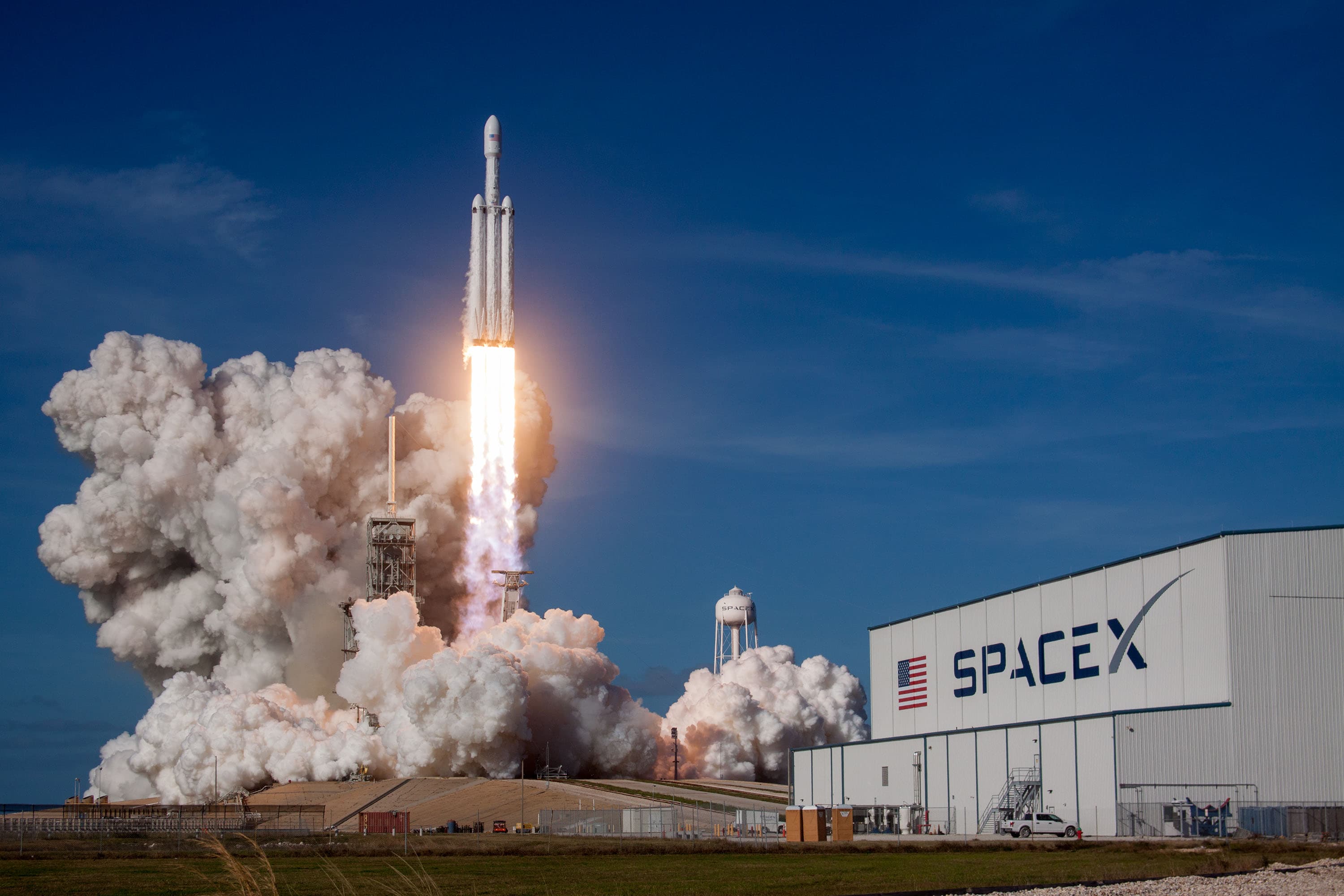
Heavy-lift launch vehicle consisting of a strengthened Falcon 9 core with two additional boosters.
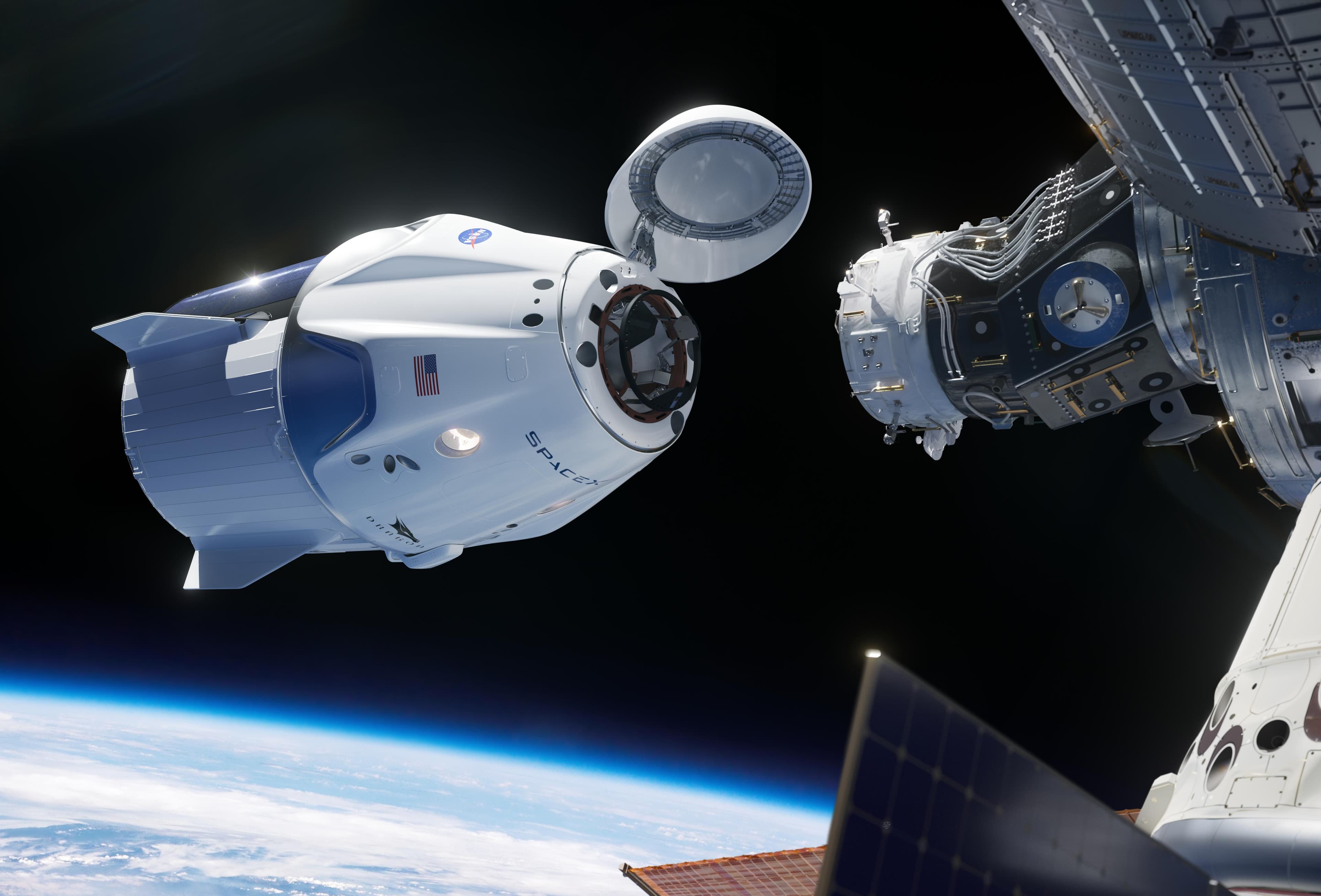
Reusable spacecraft for cargo and crew transport to the International Space Station.
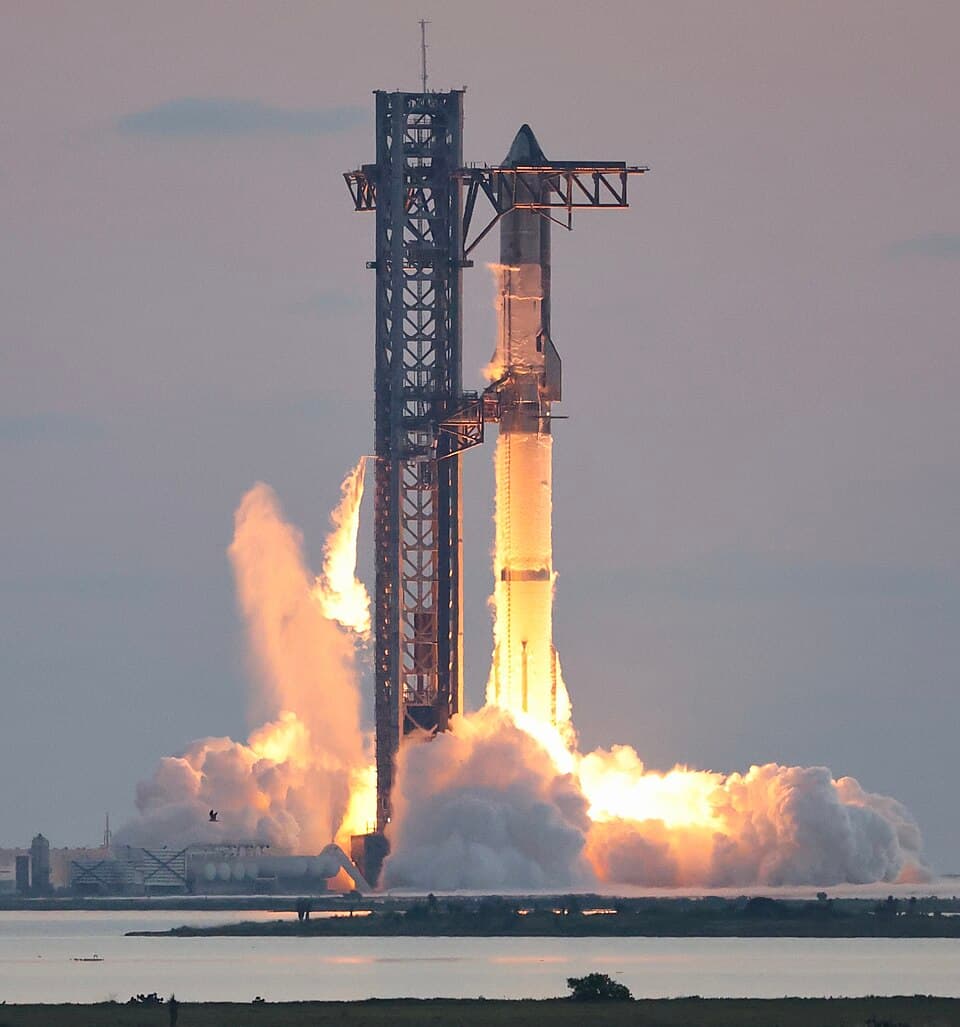
Fully reusable super-heavy-lift launch system designed for missions to the Moon, Mars, and beyond. V3 (Block 3) variant with Raptor 3 engines is the production version.
Government-focused satellite line built on SpaceX launch systems and Starlink platform technology for secure communications and other national-security missions.
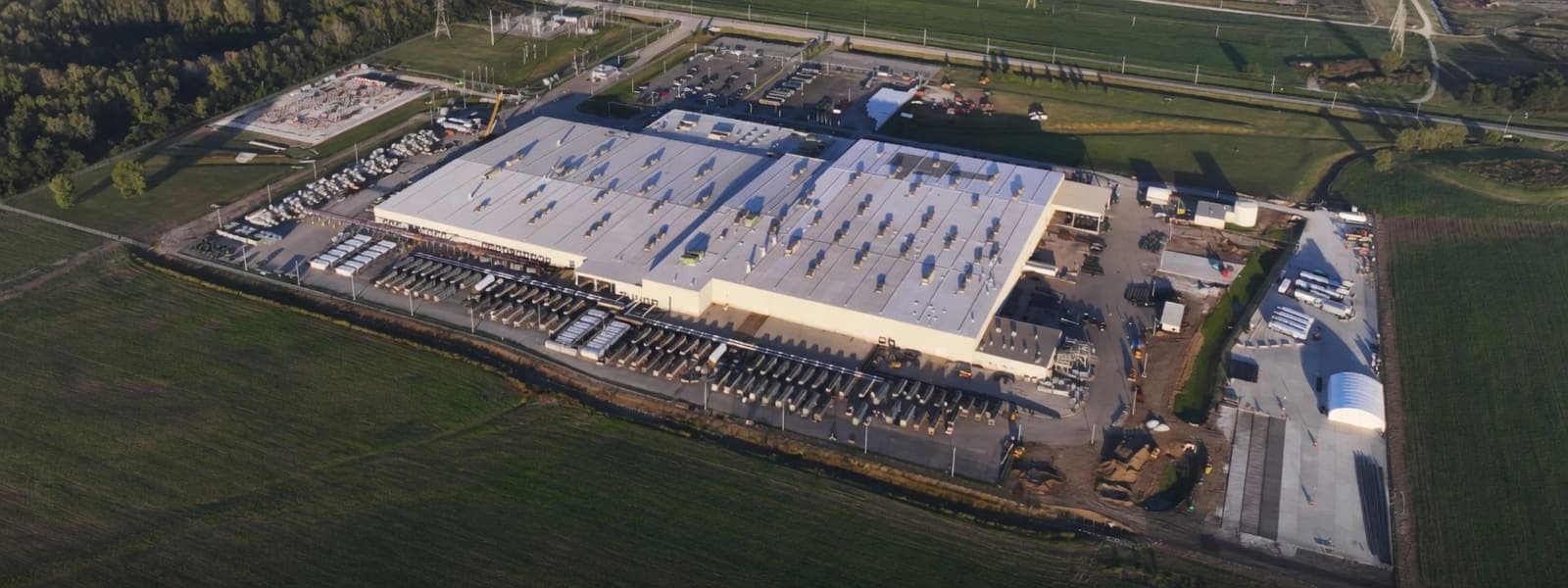
AI supercomputer in Memphis, Tennessee acquired in the February 2026 xAI merger. Sold as multi-year compute capacity to external AI customers, with disclosed contracts to Anthropic and Google.

Division
Starlink is SpaceX's satellite internet division and the largest satellite constellation ever flown, with 11,143 working satellites in low Earth orbit (11,157 in orbit, 12,988 launched as of KeepTrack Oct 2, 2026) serving 12M+ customers across 160+ countries as of mid-September 2026.
Division
xAI is Elon Musk's artificial-intelligence company, founded in March 2023, acquired by SpaceX on 2 February 2026, and rebranded SpaceXAI on 6 July 2026.
05
(incl. xAI); space business ~$15.5B (Starlink/connectivity ~$11.4B + launch ~$4.1B). In its first earnings report as a public company on August 4, 2026, SpaceX posted Q2 2026 revenue of $7.8B (up 92% year over year, beating consensus by nearly $1B) and a narrower-than-expected net loss of $541M ($0.09/share). By segment: Connectivity (Starlink) $4.29B on $1.66B operating profit, AI $2.56B (up 247% YoY) on a $1.26B operating loss, and Space $962M (up 29% YoY) on a $542M operating loss - Starlink remains the only consistently profitable segment as AI-infrastructure and Starship spending kept the others unprofitable. Q2 remains the latest reported quarter as of September 17, 2026. On September 10 CFO Bret Johnsen said SpaceX is on track for $100B ARR by year-end on a December-annualized basis after closing an unnamed hosting deal at about $1.11B a month from December 1.
662 after booster B1093 landed on Of Course I Still Love You following Starlink 15-27 on September 19, 2026, per Spaceflight Now's post-launch report
SPCX closed Friday September 18, 2026 at $152.71, down 1.36% on the day after a $150.88 close on September 16, still above the $135 IPO price. The third lockup tranche unlocked September 9 (about 319 million shares) and SPCX fell 3.9% that session to $147.55; a 59.1 million affiliate block followed September 10. Next calendar unlocks are about 328 million shares on September 24, then October 9 and October 24. Q2 2026 results (August 4) remain the latest reported quarter: $7.8B revenue (+92% YoY) and a $541M net loss, with $47.5B backlog and $100B cash. The August 3 52-week low was $104.83.
107 Falcon 9 launches YTD as of Starlink 15-27 on September 19, 2026 from Vandenberg SLC-4E (the 702nd Falcon-family flight after the September 16 USSF-259 701st). SpaceX's launches page next lists USSF-385 on September 26, Starship Flight 14 on September 28, and Crew-13 on October 1
(annual record; 167 orbital flights incl. Starship) - still the standing 2025 total as re-verified September 13, 2026
(June 30), with ARPU of $66/month (up 17% quarter over quarter) on $4.29B of Connectivity revenue for the quarter. On August 11, 2026 SpaceX publicly posted a Musk-hosted employee all-hands meeting disclosing Starlink had grown past 13M consumer subscribers, plus 22M monthly Starlink Mobile (direct-to-cell) users. No newer official subscriber print as of September 17, 2026. SpaceX targets ~25M active users by year-end 2026
$80B+ multi-year contract value through 2029 (Anthropic ~$45B at $1.25B/mo through May 2029, Google ~$30B at $920M/mo Oct 2026-Jun 2029, Reflection AI up to $6.3B at Colossus 2) plus a new unnamed hosting deal closed in early September 2026 that CFO Bret Johnsen said bills about $1.11B a month from December 1 (~$13B annualized). The named three deals still run at roughly $2.32B/month; Johnsen said almost all compute contracts are 90-day commits with a 90-day out (about six-month terms). SpaceX's Q2 2026 earnings report separately disclosed $14.1B of new Cloud Services Agreements signed in the quarter plus a further $6.7B booked in the opening weeks of Q3 2026. Johnsen also restated a $100B year-end ARR target on a December-annualized basis.
SPCX closed September 25, 2026 at $148.68 (stockanalysis), after $148.03 on September 24 when the Day-105 IPO lockup of about 328 million shares became eligible. Market cap $2.02T. Still above the $135 IPO price.
108 Falcon 9 launches YTD as of USSF-385 on September 26, 2026 from Vandenberg SLC-4E, per Space.com, after Starlink 15-27 on September 19 was the 107th.
06
Operating status
Operational; CRS-35 docked 15 Oct 2026
On Oct. 15, 2026 at 10:27 a.m. EDT, NASA said CRS-35 Cargo Dragon docked to Harmony's space-facing port with the station's final roll-out solar arrays. NASA said those arrays will be installed later this fall and that Dragon is scheduled to remain until mid-November. SpaceX's mission page matches the docking time. On Oct. 15 at 5:01 p.m. PDT, Falcon 9 launched USSF-481 from Vandenberg; the payload was not disclosed. The FAA's Oct. 14 Starbase scoping notice, with comments closing Nov. 30, remains a review and not a license change.
Recurring broadband subscriptions for residential, roaming, maritime, aviation, enterprise, and government users on the Starlink network - SpaceX's largest and only profitable segment, generating ~$11.4B of connectivity revenue in 2025 ($3.3B in Q1 2026).
Starlink Mobile (Direct-to-Cell)
Direct-to-cell service for messaging, voice, data, and IoT connectivity, currently sold through carrier partners (T-Mobile, Rogers, KDDI, One NZ, Optus, Telstra, Salt, Entel Peru, Entel Chile, Kyivstar, Virgin Media O2). With the FCC's May 2026 approval of its ~$17B EchoStar mid-band spectrum purchase, SpaceX is moving toward selling Starlink Mobile directly to US consumers and competing with AT&T, Verizon, and T-Mobile.
Dragon missions for NASA crew rotation, cargo resupply, and private astronaut flights to the International Space Station.
Falcon 9 and Falcon Heavy launches for commercial satellite operators, including rideshare missions at $275K for 50 kg to SSO.
Launch services for U.S. Space Force and NRO missions, including Phase 3 Lane 2 national security launch awards, plus the growing Golden Dome missile-defense book: a $4.16B Space Force AMTI satellite award and $2.29B Space Data Network Backbone award in May 2026 put SpaceX's confirmed Golden Dome-specific contracts at roughly $6.45B, and press reporting on August 20, 2026 that also counts the $1.6B, 18-launch Space-Based Sensing and Targeting order (awarded July 29, 2026) toward the program puts SpaceX's total Golden Dome-related awards above $8B - at least a third of Golden Dome contracts issued to date.
Starshield Government Services
Government-focused satellite services built on SpaceX launch and Starlink platform capabilities for secure communications and other national-security missions. A September 2026 UK MoD FOI made Britain the first country outside the United States to publicly acknowledge a Starshield buy (about 1,000 terminals and 13 million pounds spent).
AI Compute Services (Colossus)
Multi-year GPU compute capacity sold to external AI customers from the Memphis Colossus supercomputers (Colossus 1 acquired in the February 2026 xAI merger). Disclosed customers include Anthropic ($1.25B/month for the full ~220,000-GPU, 300 MW Colossus 1 capacity through May 2029), Google ($920M/month for ~110,000 GPUs from October 2026 through June 2029), and Reflection AI (up to $6.3B, ~$150M/month from July 2026 through 2029 for NVIDIA GB300 capacity at Colossus 2). On September 10, 2026 CFO Bret Johnsen said SpaceX had closed another unnamed hosting deal earlier in September at about $1.11B a month from December 1 (~$13B annualized), typically on 90-day commits with a 90-day out. Colossus 2 - previously under construction - became operational September 3, 2026 and was reported as the world's largest AI data center by IT power capacity (roughly 946 MW, with Epoch AI estimating around 1.1 million H100-equivalent compute units), giving SpaceX a second large leasable facility alongside Colossus 1.
07
How past announced dates turned out.
6/8announced dates hit on time
Launch Crew-13 from SLC-40 at the posted 11:10 a.m. ET October 1 window
Target October 1, 2026 11:10 ET; backup October 2 10:47 ET · Resolved Oct 1, 2026
Falcon 9 lifted Crew-13 from SLC-40 at 11:10 a.m. EDT on Oct. 1, 2026. NASA said Dragon hatch opened at 9:19 p.m. EDT and Jessica Watkins, Luke Delaney, Joshua Kutryk, and Sergey Teteryatnikov entered the station and joined Expedition 75. This run did not independently fetch the NASA docking blog, so the 7:05 p.m. Harmony docking already on the timeline is not restated here.
Starship Flight 14 (FCC earliest window September 15, 2026)
Target 2026-09-15 · Resolved Sep 12, 2026
Flight 14 did not fly in the September 15 FCC earliest window. The FAA later listed a primary airspace window of September 18, 2026 (12:15-14:14 UTC) with September 19 as backup, and SpaceX had not posted a mission page as of September 12. The first orbital-insertion attempt remains expected in that new window.
Third post-IPO lock-up tranche unlocks (Day-90, ~319M shares)
Target 2026-09-09 · Resolved Sep 9, 2026
SpaceX's Day-90 lockup tranche unlocked on schedule on September 9, 2026, freeing about 319 million Class A shares. SPCX fell 3.9% that day to $147.55. A 59.1 million affiliate block followed September 10. The next calendar tranche is about 328 million shares on September 24.
Launch Crew-13 to the ISS on schedule (September 12, 2026)
Target 2026-09-12 · Resolved Aug 29, 2026
NASA and SpaceX postponed the planned September 12, 2026 Crew-13 launch after detecting an oxidizer leak on Dragon's propulsion system during standard prelaunch processing. Joint teams are running additional tests and data review, with any needed rework completed before a new target date is announced; the mission remains expected to fly once the investigation closes.
Second post-IPO lock-up tranche unlocks (Day-70, ~319M shares)
Target 2026-08-20 (Day-70 calendar lock-up tranche) · Resolved Aug 20, 2026
SpaceX's second post-IPO lock-up tranche unlocked on schedule on August 20, 2026, freeing roughly 319 million additional shares (the Day-70 calendar release under the IPO lock-up agreement). SPCX fell as much as ~6% intraday and closed below its $135 IPO price for the first time since its June debut - a sharper reaction than the far larger August 6 unlock (911.5M shares), which the stock absorbed with a 6% gain. The next scheduled tranche (~319M shares, Day-90) falls around September 9, 2026.
Close $60B Cursor (Anysphere) acquisition
Target Late August 2026 · Resolved Aug 15, 2026
SpaceX officially closed its all-stock acquisition of Cursor-maker Anysphere on August 15, 2026, ahead of the late-August target, giving Cursor access to SpaceX's GPU fleet including the Colossus supercomputer for AI model training. The deal, first agreed June 16, 2026, is the largest acquisition of a venture-backed startup ever; Cursor and SpaceX have already jointly trained Grok models on Cursor's coding data.
Record lock-up unlock and post-earnings stock reaction
Target August 2026 · Resolved Aug 6, 2026
SpaceX's first post-IPO lock-up expired on August 6, 2026 as scheduled, freeing up to 911.5 million insider shares (worth roughly $100B) and more than doubling the public float to about 11.8% of shares outstanding from 4.9%. Despite the dilution, SPCX stock rose about 6.1% that day.
First public earnings report as a public company
Target August 2026 · Resolved Aug 4, 2026
SpaceX posted its first earnings as a public company on August 4, 2026: Q2 revenue of $7.8B (up 92% year over year, beating consensus by nearly $1B) and a narrower-than-expected $541M net loss ($0.09/share). Shares fell on the print as investors weighed AI-infrastructure capex despite the beat. The related August 6 lock-up expiration is a separate, still-upcoming event - see the current nextSteps entry.
08
2026
FAA opens Starbase review for up to 456 Starship launches a year
On Oct. 14, 2026 the FAA published a notice of intent to prepare a programmatic environmental impact statement for more Starship-Super Heavy operations at Starbase. The current authorization is 25 launches and 50 landings a year. The study ceiling is 456 launches and 912 landings, with a first phase of 100 launches and 200 landings. Comments are due Nov. 30, 2026. The notice does not approve a higher cadence.
Falcon 9 launches classified USSF-481
On Oct. 15, 2026 at 5:01 p.m. PDT (0001 UTC on Oct. 16), Falcon 9 lifted off from Vandenberg SLC-4E on USSF-481. Spaceflight Now and Space.com report booster B1081, on its 28th flight, landed on Of Course I Still Love You. The payload was not disclosed. Spaceflight Now says notices also call the mission TH-2.
SpaceX announces Starlink 15-25 deployment
Space.com reported on 13 October 2026 that SpaceX announced on X that the 27 Starlink 15-25 satellites deployed 62 minutes after the 12 October liftoff. The SpaceX mission page lists deployment at about T+1:01:58 among approximate mission events. Neither page gives a satellite-by-satellite checkout or an official post-flight constellation total.
Cargo Dragon docks CRS-35 to the station
SpaceX's CRS-35 page says Dragon autonomously docked with the International Space Station on 15 October 2026 at 10:27 a.m. ET, after a launch at 6:33 a.m. ET on 13 October and an approximate 52-hour flight. This was the fourth flight of that Dragon, which previously flew CRS-26, CRS-29, and CRS-33. The page does not give a C-series tail number, a departure date, or an EVA date for the final Roll-Out Solar Array pair. The NASA post-docking blog was not retrieved.
On Oct. 13, 2026 at 6:33 a.m. EDT, Falcon 9 lifted off from SLC-40 with NASA's 35th cargo resupply mission, more than 6,300 pounds of supplies and science, and the final pair of ISS Roll-Out Solar Arrays. Booster B1096 landed at Landing Zone 40 on its eighth flight. Cargo Dragon is scheduled to dock to the Harmony space-facing port at 11 a.m. EDT on Oct. 15.
Falcon 9 launches Starlink 15-25 after a three-week gap
SpaceX said Falcon 9 lifted off from Vandenberg SLC-4E at 5:28 p.m. PT on Oct. 12, 2026 (00:28 UTC Oct. 13) with 27 Starlink satellites, the first Falcon 9 Starlink flight since Sept. 19. Booster B1088 landed on Of Course I Still Love You on its 20th flight. SpaceX lists deployment at about T+1:01:58.
Falcon 9 lofts SDA T1TL-A, the fourth Tranche 1 plane
SDA said a Falcon 9 delivered 21 Northrop Grumman data-transport satellites from Vandenberg SLC-4E on Oct. 10, 2026, bringing on-orbit Tranche 1 vehicles to 84. Space.com timed liftoff at 12:39 a.m. PT after an Oct. 5 abort in the final minute and said booster 1103 made its sixth flight, landing at Vandenberg. SDA said this was the fourth of nine Tranche 1 missions Falcon 9 will fly, that the launches run through NSSL, and that initial warfighting capability remains 2027.
Agrees to buy Grain nationwide 800 MHz licenses
On Oct. 8, 2026 Grain Management announced a definitive agreement for SpaceX to acquire Grain's nationwide 800 MHz spectrum portfolio, subject to FCC approval. SpaceX's same-day FCC public-interest statement describes a Purchase and Sale Agreement transferring up to 14 MHz of paired 800 MHz licenses to wholly owned Starlink Spectrum Holdings for a hybrid terrestrial and satellite Starlink Mobile coverage layer. Financial terms were not disclosed.
2026
Crew-12 splashes down off Los Angeles
NASA said Crew-12 Dragon Freedom splashed down at 8:34 a.m. PDT on Oct. 8, 2026 off Los Angeles after a 237-day ISS stay, returning Meir, Hathaway, Adenot, and Fedyaev. SpaceX recovery teams retrieved the spacecraft.
FCC grants 15,000-satellite D2D constellation
On Oct. 6, 2026 the FCC granted in part SpaceX a 15,000-satellite NGSO D2D authorization (DA-26-1078, S00735) for U.S. SCS/MSS and international MSS/direct-to-cell. Half of authorized stations must be in assigned orbits by Oct. 7, 2032; the rest by Oct. 7, 2035. EchoStar-band commercial operations await Step Two close.
In talks to raise about $40B for Nvidia GPUs
On Oct. 6-7, 2026 the Financial Times, Reuters, and CNBC reported SpaceX is in talks to raise about $40 billion to buy Nvidia AI chips, with Apollo expected to lead and about $10 billion in bank loans plus $30 billion in investment-grade debt discussed. CNBC said talks remain preliminary, key lenders are not finalized, and GPUs would likely be collateral. SpaceX, Nvidia, Apollo, and PIMCO have not confirmed a signed deal.
Musk says SpaceX and Tesla will run Terafab
On Oct. 7, 2026 Elon Musk said Tesla and SpaceX will build and run the planned Terafab AI chip complex in Texas, writing that TSMC might sublease part of the site but would not own or operate the fab. Reuters reported Intel CEO Lip-Bu Tan told Bloomberg the same day that Intel remains involved. TSMC and Intel did not immediately comment. A TSMC sublease is not a signed agreement.
Transporter-18 deploys Varda W-8 and W-9, not W-7
Varda said on Oct. 1, 2026 that W-8 and W-9 launched together on SpaceX Transporter-18 from Vandenberg, the first time it put two W-series vehicles on one rocket. The release does not name W-7 on this flight. Space.com said Transporter-18 lofted 130 payloads at 2:32 p.m. EDT, including Google's Project Suncatcher TPU pathfinder. SpaceX's Transporter-18 recap page returned no usable deployment table on Oct. 6.
Musk named co-lead of Pentagon Project Meridian
On Sept. 30, 2026, Defense Secretary Pete Hegseth commissioned Project Meridian and, in the State of the Force speech, named SpaceX CEO Elon Musk a co-lead with Palmer Luckey and Newt Gingrich under Pentagon CTO Emil Michael. A same-day memorandum directs a future-warfare study with recommendations due Jan. 28, 2027; the memo itself does not name the co-leads.
Crew-13 hatch opens; crew joins Expedition 75
NASA said Crew-13 Dragon hatch opened at 9:19 p.m. EDT on Oct. 1, 2026, after docking at 7:05 p.m. EDT. Jessica Watkins, Luke Delaney, Joshua Kutryk and Sergey Teteryatnikov entered the station and joined Expedition 75. UPI independently reported the same hatch time. NASA's hatch blog timed out on a direct fetch for this run; the excerpt is from the published post.
Falcon Heavy launches classified NROL-97 for NRO
On Oct. 1, 2026 at 11:54 p.m. EDT, Falcon Heavy lifted classified NROL-97 from Kennedy LC-39A, the NRO's first Falcon Heavy after 22 Falcon 9 flights and its first NSSL Phase 3 Lane 2 mission. Spaceflight Now and NASASpaceFlight said side boosters B1072 (fourth flight) and B1104 (second flight) landed at LZ-1 and LZ-2 while new center core B1106 was expended on a northeasterly high-energy trajectory. Payload identity and upper-stage deploy were not disclosed; SpaceX ended the webcast after booster landing. Spaceflight Now counted it as SpaceX's third Falcon launch of the day and the first day it landed four boosters.
Crew-13 Dragon Grace docks at ISS Harmony
On Oct. 1, 2026 at 7:05 p.m. EDT, Dragon Grace docked to the ISS Harmony module's forward port with NASA astronauts Jessica Watkins and Luke Delaney, CSA astronaut Joshua Kutryk and Roscosmos cosmonaut Sergey Teteryatnikov. NASA said the 7-hour 55-minute trip was the fastest launch-to-docking of a U.S. spacecraft in ISS history. Hatch opening after leak checks was planned for about 8:45 p.m.; the NASA hatch-join blog timed out here so onboard entry is not recorded. Space.com said the crew will stay about six months and that Crew-12 could return as soon as Oct. 5.
Transporter-18 lofts Google Suncatcher TPU pathfinder
On Oct. 1, 2026 at 2:32 p.m. EDT, a Falcon 9 lifted Transporter-18 from Vandenberg SLC-4E with 130 payloads, including Google's Project Suncatcher TPU pathfinder hosted with Planet Labs. Space.com said the first stage landed at LZ-4 about 7.5 minutes later on its 25th flight. Payload deployments were due about 54.5 minutes after liftoff and were not independently confirmed at this update. This was SpaceX's second launch of the day after Crew-13.
Crew-13 launches to ISS on Dragon Grace
On Oct. 1, 2026 at 11:10 a.m. EDT, a Falcon 9 lifted off from SLC-40 at Cape Canaveral Space Force Station with NASA astronauts Jessica Watkins and Luke Delaney, CSA astronaut Joshua Kutryk and Roscosmos cosmonaut Sergey Teteryatnikov aboard Dragon Grace. NASA said Grace reached orbit, separated from the second stage and opened its nosecone, targeting a 7 p.m. EDT docking at Harmony's space-facing port, called the fastest launch-to-docking in ISS history. Space.com reported booster B1101 landed at LZ-40 about 7 minutes 40 seconds after liftoff on its third flight. Docking had not yet occurred.
Falcon 9 launches classified USSF-385 from Vandenberg
On September 26, 2026 at 7:00 a.m. PT (10:00 a.m. EDT), a Falcon 9 lifted off from SLC-4E at Vandenberg Space Force Base carrying the classified USSF-385 mission. Booster B1100 made its 10th flight and landing on Of Course I Still Love You about 8.5 minutes later. Space.com counted it as the 108th Falcon 9 of 2026 and the third Space Force flight from Vandenberg in 16 days after USSF-153 and USSF-259. Payload, destination, and activities remain undisclosed; SpaceX cut the webcast after booster landing. A Starshield payload remains unconfirmed by the Space Force.
Starship Flight 14 reaches orbit and deploys 26 V3s
Flight 14 lifted off from Starbase Pad 2 at about 8:48 a.m. EDT (12:48 UTC) on September 28, 2026 with Ship 41 on Super Heavy B21. After one upper-stage engine shut down, SpaceX spokesperson Dan Huot first said the team would not commit to orbit, then reversed that call. Ship reached orbit, deployed 26 Starlink V3 satellites, and returned after about three hours instead of the planned six orbits and nearly 10 hours. Super Heavy made a controlled Gulf of Mexico splashdown. The ship reentered for a Pacific splashdown north of Hawaii; AP said it then tipped over and erupted in flames. Reuters attributed the early return to the engine issue; AP said SpaceX gave no reason.
FAA licenses Starship Flight 14 launch and reentry
The FAA said on September 27 that on September 26 it issued license authorization for SpaceX Starship-Super Heavy Flight 14 launch and reentry operations. SpaceX is targeting a 75-minute window opening 7:15 a.m. Central September 28 from Pad 2 at Starbase with Ship 41 and Booster 21, first planned orbital insertion, 26 Starlink V3 satellites, and ocean splashdowns rather than tower catches. Backup beach closures are posted for September 29 and 30. This check is before the Monday window; the flight had not lifted off. FAA.gov's Starship page still does not list Flight 14.
Transporter-18 and NROL-97 posted for October 1
SpaceX's launches page lists Transporter-18 for October 1, 2026 at 11:18 PT from SLC-4E at Vandenberg, with a landing-zone return, on the same calendar day as Crew-13. Google's September 24 Project Suncatcher post said the Planet-built TPU prototype will fly on that rideshare. This is a Falcon 9 smallsat mission, not Starship Flight 14. The same board lists NROL-97 as a Falcon Heavy from LC-39A on October 1 at 23:53 ET (landing-zone / expended); it has not flown.
Polish prosecutors investigate arson at a Starlink ground station
On the evening of September 23, 2026 a fire broke out at a Starlink satellite-communications ground station in Wola Krobowska, Masovian Voivodeship, Poland. Poland's National Prosecutor's Office said the fire was arson causing large-scale property damage and opened an investigation into acting for a foreign intelligence service, sabotage, and a terrorism-related crime, with a reasonable suspicion the perpetrators acted on orders of Russian special services to disrupt Starlink connectivity in Poland and Central and Eastern Europe. No charges had been filed. BBC reported Deputy Prime Minister Krzysztof Gawkowski called it sabotage aimed at disrupting internet access including for Ukraine's army, and that the station remained operational. The Kremlin had not commented. BBC described a state-owned Polish station that uses SpaceX Starlink systems; this is not a confirmed SpaceX-owned site.
Google books Suncatcher prototype on Transporter-18
Google said on September 24, 2026 that Project Suncatcher's first TPU prototype satellite, built with Planet, will fly on SpaceX's Transporter-18 rideshare. Space.com reported the mission as currently scheduled for October 1. This is a Falcon 9 rideshare, not Starship Flight 14.
NASA adds Crew-15 through Crew-17 to Falcon/Dragon CCtCap
NASA awarded SpaceX a firm fixed-price CCtCap modification covering Crew-15, Crew-16 and Crew-17. NASA's September 18 release put the value at $946 million, taking SpaceX to 17 commercial-crew missions and $5.92 billion on the contract, with a period of performance through 2030 and mission readiness dates in 2027 and 2028. SpaceX confirmed the same day that Falcon 9 and Dragon will fly the missions from Florida. NASA has not named crews or exact launch dates for those three flights. This is a contract ceiling for three additional rotations, not recognized revenue.
Starship Flight 14 stacked at Pad 2
In the early hours of September 23, 2026 SpaceX stacked Ship 41 on Super Heavy booster B21 at Pad 2, Starbase, after the ship rolled from the production site around 7:45 p.m. CDT on September 22. Spaceflight Now said the stacked vehicle awaited FAA approval for Flight 14, still listed on SpaceX's mission page for as early as Monday September 28 with a 75-minute window opening at 7:15 a.m. CT. The mission page adds that two tiles recovered from Flight 13's Ship 40 are planned to fly again on Ship 41, the first Starship tile reuse.
Crew-13 posted for October 1 from SLC-40
SpaceX's launches board now lists Crew-13 for October 1, 2026 at 11:10 ET from SLC-40 at Cape Canaveral, with a landing-zone return. SpaceX posted on September 22 that it is targeting no earlier than Thursday October 1. Secondary reporting the next day said NASA is targeting 11:10 a.m. EDT that day, with a Friday October 2 10:47 a.m. EDT backup. This is the first posted clock after the August 29 oxidizer-leak slip from September 12. NASA's commercial-crew blog timed out this run.
Falcon 9 launches Starlink 15-27 from Vandenberg
On September 19, 2026 at 6:47 p.m. PDT (0147 UTC on September 20), a Falcon 9 lifted off from SLC-4E at Vandenberg carrying 27 Starlink V2 Mini Optimized satellites on Starlink 15-27. Booster B1093 flew its 17th mission and landed on Of Course I Still Love You, which Spaceflight Now counted as the 662nd Falcon booster landing. Space.com counted the flight as the 107th Falcon 9 and 81st Starlink mission of 2026. SpaceX's launches page lists the mission as complete.
Falcon 9 launches classified USSF-259 from Vandenberg
On September 16, 2026 at 6:07:56 p.m. PDT (0107:56 UTC on September 17), a Falcon 9 lifted off from Space Launch Complex 4E at Vandenberg Space Force Base carrying the classified USSF-259 mission for the U.S. Space Force, after a September 15 attempt was scrubbed before fueling. Spaceflight Now identified the flight as SpaceX's third NSSL Phase 3 Lane 1 launch in a month (after USSF-366 on August 15 and USSF-153 on September 10) and as the 701st Falcon-family mission following the September 13 O3b mPOWER 700th. Booster B1097 flew its 13th mission and landed on the droneship Of Course I Still Love You in the Pacific. Public documents label the payload TH-1; SSC has not confirmed satellite counts. A related R-3 mission is scheduled around September 27.
Starship Flight 14 slips six days to September 28
On September 17, 2026 SpaceX said it is now targeting Starship Flight 14 as early as Monday September 28 from Starbase, pending regulatory approval, moving off the September 22 target it had posted on the mission page two days earlier. The company gave no reason for the slip and published no revised mission clock or new FAA airspace window alongside the date. The flight profile stands: first orbital insertion, 26 Starlink V3 satellites at about 275 km, roughly six orbits, Pacific splashdown west of Chile, Super Heavy Gulf splash and no tower catch of either stage.
CFO discloses unnamed $13B ARR hosting deal and 5-10 GW 2027 compute range
On September 10, 2026 CFO Bret Johnsen told Goldman Sachs Communacopia that SpaceX had closed another unnamed terrestrial AI hosting deal earlier in September, billing about $1.11B a month from December 1 (roughly $13B annualized). He said the company is on track for $100B ARR by year-end on a December-annualized basis, will end 2026 a little over 2 GW of terrestrial compute, and is targeting a 5-10 GW deployed range in 2027, remaining Nvidia-exclusive. He also described the compute book as typically 90-day commits with a 90-day out (about six-month terms) and said Flight 14 later in September would be Starship's first revenue-generating flight, carrying production Starlink V3 satellites.
SpaceX targets September 22 for Starship Flight 14 first orbit
On September 15, 2026 SpaceX posted the Flight 14 mission page targeting Tuesday September 22 from Starbase, with a 75-minute window opening at 7:15 a.m. Central Time (12:15 UTC) pending regulatory approval. The flight is planned as Starship's first orbital insertion: Ship at about 275 km, roughly six orbits over nearly 10 hours, 26 Starlink V3 satellites (three carrying cameras to photograph the heat shield), then a Pacific splashdown west of Chile. Super Heavy is to splash in the Gulf of Mexico about seven minutes after liftoff; SpaceX is not attempting a tower catch of either stage.
Space Cargo named first known Starfall customer
On September 15, 2026 Space Cargo CEO Nicolas Gaume told Reuters the Luxembourg mission integrator is the first known customer for SpaceX's Starfall cargo-return capsule. Space Cargo plans to fly its BentoBox system inside a Starfall capsule on Starship's first commercial mission, targeted for 2028, carrying up to about 1 ton of customer payloads, nearly half in life sciences. SpaceX did not comment. Starfall flew a demo capsule on Falcon 9 on June 23, 2026.
Falcon 9 flies 700th Falcon mission with final O3b mPOWER sats
On September 13, 2026 at 2:49 p.m. EDT (1849 UTC), a Falcon 9 lifted off from SLC-40 at Cape Canaveral Space Force Station carrying SES's final three O3b mPOWER satellites (F11-F13). Spaceflight Now counted it as the 700th Falcon-family launch (687 Falcon 9 and 13 Falcon Heavy) and Space.com as SpaceX's 105th Falcon 9 and 107th orbital mission of 2026. Booster B1080 flew for the 29th time and landed on A Shortfall of Gravitas, the 661st Falcon booster landing. The Boeing-built satellites deployed around 8,000 km in medium Earth orbit about 33.5 minutes after liftoff and complete a 13-satellite constellation; SES says they will enter service by mid-2027.
UK MoD discloses first public non-US Starshield buy
A UK Ministry of Defence FOI response, reported by Reuters on September 10, 2026, showed Britain is the first country outside the United States to publicly acknowledge buying SpaceX Starshield. The MoD listed about 1,000 Starshield terminals and 500 Starlink terminals, with roughly 13 million pounds ($17.6 million) spent on Starshield and 16.5 million pounds on Starlink, or nearly $40 million combined. Starshield airtime was first bought for Starlink terminals in 2024, with dedicated Starshield hardware arriving last year. SpaceX did not comment; New Zealand is trialling Starshield.
FAA lists September 18 as Starship Flight 14 primary window
The FAA Space Operations Advisory listed a primary Starship Flight 14 airspace window of Friday September 18, 2026 (12:15-14:14 UTC) with September 19 as backup, slipping past the September 15 earliest date in SpaceX's early-September FCC filing. As of September 12 SpaceX had not posted a Flight 14 mission page; the test remains the program's first planned orbital insertion with about 20 Starlink V3 satellites.
Third IPO lockup tranche unlocks; SPCX falls 3.9%
On September 9, 2026 SpaceX's Day-90 lockup tranche unlocked on schedule, freeing about 319 million Class A shares. SPCX fell 3.9% that session to $147.55. A separate 59.1 million affiliate block became eligible September 10. Shares then recovered to close Friday September 11 at $151.21. The next calendar unlock is about 328 million shares on September 24.
Falcon 9 launches classified USSF-153 from Vandenberg
On September 10, 2026 at 8:42 a.m. PT, a Falcon 9 lifted off from Space Launch Complex 4E at Vandenberg Space Force Base carrying the classified USSF-153 mission for the U.S. Space Force. The first-stage booster was on its 27th flight and, after stage separation, landed on the droneship Of Course I Still Love You in the Pacific. The payload remains undisclosed. The Debrief reported the flight as SpaceX's 104th Falcon 9 mission of 2026.
FAA issues FONSI for Starship Pacific reentry and extra Starbase path
On September 2, 2026 the FAA published a Final Tiered Environmental Assessment and Finding of No Significant Impact for SpaceX Starship reentry contingency operations in the Pacific Ocean and an additional landing trajectory back to the Boca Chica launch site, with the Federal Register notice following on September 4. The review would support a later license modification adding a Northern Pacific Contingency Landing Area, expanding two existing Pacific splashdown zones, and authorizing temporary airspace closures for a new return-to-launch-site path. The FONSI is an environmental clearance, not itself a flight authorization or a Flight 14 date.
Super Heavy completes 33-engine static fire for Flight 14
On August 28, 2026 SpaceX fired all 33 Raptor engines on the Super Heavy booster assigned to Starship Flight 14 for a full-duration static fire at the Starbase, Texas launch pad, posting video of the test the same day. The booster run follows a six-engine static fire of Flight 14's Ship and is a key ground-test gate before Starship's first planned orbital-class flight, which is also expected to deploy next-generation Starlink V3 satellites.
Falcon Heavy launches NASA's Roman Space Telescope
On August 30, 2026 a Falcon Heavy lifted off from Launch Complex 39A at Kennedy Space Center carrying NASA's $4.3B Nancy Grace Roman Space Telescope toward the Sun-Earth L2 point - the rocket's 13th flight. Both side boosters landed back at Cape Canaveral (Landing Zone 2 and Landing Zone 40) while the center core was expended; Roman separated from the upper stage about 31 minutes after liftoff.
Golden Dome-related contracts tallied above $8B
Press reporting on August 20, 2026 tallied SpaceX's disclosed Golden Dome-related federal awards - the $4.16B SB-AMTI satellite contract and $2.29B Space Data Network Backbone contract from May 2026, plus the $1.6B Space-Based Sensing and Targeting Falcon 9 launch order from July 2026 - at more than $8B, above the roughly $6B SpaceX itself had confirmed on its August earnings call and representing at least a third of Golden Dome contracts issued to date.
Nvidia discloses $21B stake in SpaceX
A 13F filing made public August 14, 2026 shows Nvidia held about 122.8 million SpaceX Class A shares worth roughly $21B at the end of Q2 2026 - SpaceX's second-largest public equity holding for Nvidia, about 33% of its 13F portfolio. The stake traces to Nvidia's $10B investment in xAI as part of a $20B round in January 2026, converted into SpaceX shares when SpaceX absorbed xAI in February 2026 and then into public SPCX stock at the June IPO.
Flight 13 upper stage recovered intact; departs Christmas Island for Starbase
After 24 days battling rough seas in the Indian Ocean - and despite Elon Musk warning on August 7, 2026 that the odds were 'not looking good' - SpaceX recovery crews towed the intact Starship Flight 13 upper stage (Ship 40) to waters off Christmas Island, Australia by August 18, 2026, the first Starship upper stage ever recovered intact after a spaceflight. Engineers inspected the ship in place and collected heat-shield samples before loading it onto the semi-submersible transport vessel Forte, which departed Christmas Island on August 28, 2026 for the roughly 20,000 km voyage back to Starbase, Texas, expected to take several weeks.
Falcon 9 tops 100 launches for the year; B1067 sets 37th-flight reuse record
On August 25, 2026 SpaceX flew its 100th Falcon 9 mission of the year - Starlink 10-49 from Cape Canaveral - with booster B1067 (in service since June 2021) setting a new individual-booster reuse record on its 37th flight and landing, closing in on the Space Shuttle orbiter fleet's all-time reuse record of 39.
Second lock-up tranche unlocks; SPCX dips below IPO price
SpaceX's second post-IPO lock-up tranche unlocked on August 20, 2026 - the Day-70 calendar release under the IPO lock-up agreement - freeing roughly 319 million additional shares. SPCX fell as much as ~6% intraday and closed below its $135 IPO price for the first time since the June debut, a sharper reaction than the much larger August 6 unlock (911.5M shares), which the stock had absorbed with a 6% gain.
Announces $100B Starbase Louisiana spaceport
SpaceX announced on August 25, 2026 a $100 billion investment to build its fourth and largest launch site at Pecan Island in Vermilion Parish, Louisiana, on former Exxon land. The planned campus includes five launch complexes of two pads each plus propellant production, power generation, vehicle processing and employee housing, with 3,000 direct jobs at an average salary of about $92,600. Construction is expected to begin in 2027, with SpaceX targeting a first launch as soon as 2029; Louisiana Economic Development has said initial operations are expected around 2030. Under the local incentive agreement, SpaceX will pay Vermilion Parish $25 million annually for 25 years (plus a $20 million upfront payment) and is offering area residents a 50% discount on Starlink internet service.
Last Florida Falcon 9 Starlink launch
SpaceX flew its final planned Falcon 9 Starlink mission from Florida on August 25, 2026, closing out roughly seven years and about 260 Starlink launches from Cape Canaveral's Pad 40 on that rocket. Going forward, all Florida Starlink launches will fly on Starship, with Falcon 9 Starlink missions continuing only from Vandenberg Space Force Base on the West Coast.
100th mission of 2026 and 651st booster landing
SpaceX flew its 100th mission of 2026 on August 19 - a 24-satellite Starlink launch from Vandenberg that was also the year's 97th Falcon 9 flight - making it the third consecutive year SpaceX has topped 100 launches, reached about two months faster than in 2024. Booster B1097 landed on the droneship Of Course I Still Love You for the mission's cumulative 651st Falcon-family booster landing, five days after booster B1088 notched the 650th landing during a record 38.5-minute back-to-back Falcon 9 launch pair for Globalstar and a classified Space Force payload.
Closes $60B Cursor (Anysphere) acquisition
SpaceX officially closed its all-stock acquisition of Anysphere, the AI coding startup behind Cursor, on August 15, 2026 - ahead of the late-August target set when the deal was agreed June 16, 2026. Cursor gains access to SpaceX's GPU fleet, including the Colossus supercomputer, to scale AI model training; the companies say they have already jointly trained Grok models using trillions of tokens of Cursor's coding data, extending SpaceX's AI-compute push that began with the February 2026 xAI merger.
Starlink tops 13M subscribers and 22M Starlink Mobile users
SpaceX publicly posted a Musk-hosted employee all-hands meeting on August 11, 2026 disclosing that Starlink had grown past 13 million consumer subscribers - up from 12M at the June 30 close of Q2 - and 22 million monthly Starlink Mobile (direct-to-cell) users. In the same address Musk pulled SpaceX's internal $1 trillion annual-revenue target forward to 2030.
Record post-IPO lock-up expires
SpaceX's first post-IPO lock-up expired on August 6, 2026 as scheduled, freeing up to 911.5 million insider shares (worth roughly $116B) and more than doubling the public float to about 11.8% of shares outstanding from 4.9%. Despite the dilution, SPCX rose about 6.1% that day and went on to close back above its $135 IPO price on August 10, 2026 for the first time since mid-July.
First earnings report as a public company
SpaceX posted its first quarterly results as a public company on August 4, 2026: Q2 2026 revenue of $7.8B, up 92% year over year and beating the roughly $6.7-6.8B consensus by nearly $1B, with a narrower-than-expected net loss of $541M ($0.09/share) versus a ~$0.26 consensus estimate. The company disclosed $47.5B in backlog, $100B of cash on hand, and $18.4B of capex for the quarter (including $15.83B on AI infrastructure). On the same call Musk committed SpaceX to building its future AI compute exclusively on Nvidia's Vera Rubin architecture, targeting 2 GW of installed compute online by the end of 2026 - up from 1.4 GW at quarter-end - en route to 10 GW by the end of 2027.
Agrees to acquire Cursor-maker Anysphere for $60B
Four days after its Nasdaq debut, SpaceX confirmed on June 16, 2026 it will acquire Anysphere, the AI coding startup behind Cursor, in an all-stock deal valuing Anysphere at $60B - the largest acquisition of a venture-backed startup ever. SpaceX's wholly owned merger subsidiary X67 Inc. will absorb Anysphere, whose shareholders receive SpaceX Class A stock based on a seven-trading-day volume-weighted average price ahead of closing; the deal follows an April 2026 option giving SpaceX the choice between a $10B compute partnership or the full buyout, and is expected to close in Q3 2026 pending regulatory approval.
Launches classified NROL-95 mission for the NRO
On July 30, 2026 a Falcon 9 launches the classified NROL-95 payload for the National Reconnaissance Office from Space Launch Complex 40 at Cape Canaveral, under the National Security Space Launch Phase 2 program. Booster B1096 flies its seventh mission and lands at Landing Zone 2; payload deployment coverage is withheld at the NRO's request.
$1.6B Space Force order for 18 Falcon 9 launches
On July 29, 2026 the U.S. Space Force awarded SpaceX two task orders worth $1.6B for 18 Falcon 9 launches carrying Space-Based Sensing and Targeting satellites - an orbital early-warning system for spotting airborne threats - from Vandenberg Space Force Base through the end of 2027. The award, issued under the National Security Space Launch Phase 3 Lane 1 program, pushes SpaceX's 2026 Space Force contract total above $8B.
Starship Flight 13 succeeds; first operational Starlink V3 deploy
On July 24, 2026 SpaceX flew Starship Flight 13 from Starbase, Texas, the second flight of the Version 3 vehicle and its cleanest mission to date. Super Heavy lit all 33 Raptor 3 engines at liftoff and made a controlled offshore splashdown, though only about five of its planned landing-burn engines relit and it came down faster than intended. The upper stage reached space, deployed the program's first 20 operational Starlink V3 satellites - SpaceX later confirmed contact with all 20 - and performed the program's softest ship splashdown yet in the Indian Ocean. Each V3 satellite is designed for roughly 1 Tbps of downlink, and a full 60-satellite Starship load can add about 60 Tbps, some 20 times a Falcon 9 batch of V2 Mini satellites.
Starship Flight 13 aborted seconds before liftoff
On July 16, 2026 - SpaceX's first Starship launch attempt since its June Nasdaq debut - the Flight 13 countdown triggered an automatic abort when at least four of Super Heavy's 33 Raptor engines failed to ignite during the startup sequence. The flight, carrying the first 20 operational Starlink V3 satellites, was scrubbed at Starbase. Elon Musk said two Raptor engines would be removed and replaced 'to be confident of a good flight,' with the next attempt most likely early the following week.
SpaceX added to the Nasdaq-100 index
SpaceX joined the Nasdaq-100 index effective July 7, 2026 - only 15 trading days after its record June 12 IPO - under Nasdaq's new fast-track rule that admits mega-listings on their 15th trading day. The inclusion forces the more than $800B of funds tracking the index to buy SPCX, though its initial weighting starts small (an estimated 0.5%-0.7%) because less than 5% of its shares trade freely. It makes SpaceX one of the first launch companies in a major U.S. large-cap benchmark.
Starfall cargo reentry capsule debut
On June 23, 2026 SpaceX launched the debut flight of Starfall, a disk-shaped cargo reentry capsule, on a Falcon 9 from Space Launch Complex 40 at Cape Canaveral. About 3.1 meters in diameter and able to carry roughly 1,000 kg, the vehicle is designed to return research and orbital-manufacturing payloads - such as pharmaceuticals - to Earth, splashing down about 700 nautical miles off the U.S. West Coast. The mission marks SpaceX's entry into the commercial cargo-return market and is the first of at least two planned Starfall demonstrations.
FCC clears ~$17B EchoStar spectrum buy; Shotwell unveils Starlink Mobile carrier push
In May 2026 the FCC approved SpaceX's ~$17B acquisition of EchoStar spectrum (part of a broader ~$40B sale that also gave AT&T 50 MHz), handing SpaceX 65 MHz of exclusive-use, contiguous nationwide mid-band spectrum (AWS-4, AWS-3, H-Block in the 1.9–2.2 GHz range) - its first dedicated direct-to-device spectrum, with licenses fully transferring by ~November 2027. On June 26, 2026 President Gwynne Shotwell told IPO-roadshow investors SpaceX plans to take Starlink Mobile directly to US consumers and compete head-on with AT&T, Verizon, and T-Mobile, potentially building its own terrestrial network.
Debut investment-grade bond sale priced at $25B
On June 22, 2026 - ten days after its record IPO - SpaceX launched its first-ever investment-grade bond offering, and on June 23 priced it at $25B of senior unsecured notes, upsized from an initial $20B target after demand topped roughly $89B. The five-tranche deal (coupons from 5.350% on notes due 2031 to 6.650% on notes due 2056) settled June 26 and largely refinances a $20B bridge loan taken on in March. Offering documents disclosed roughly $100.8B in cash and equivalents as of June 19, 2026 and investment-grade ratings from Moody's, Fitch and S&P; SPCX shares fell more than 10% on the day the sale launched and over 20% across five sessions as investors weighed the pace of capital raising.
Up-to-$6.3B Reflection AI Colossus 2 compute deal
On June 22, 2026 SpaceX agreed a multi-year cloud-compute deal worth up to $6.3B under which open-source AI startup Reflection will rent capacity at SpaceX's Colossus 2 data center near Memphis, paying about $150M per month from July 1, 2026 through 2029 for access to NVIDIA GB300 chips. Reflection - focused on open-source models for government and national-security customers - joins Anthropic, Google and Cursor as a disclosed Colossus customer, deepening SpaceX's commercialization of its post-xAI-merger AI hyperscaler business.
Falcon 9 booster sets 35-flight orbital reuse record
On June 8, 2026 - days after SpaceX's Nasdaq debut - Falcon 9 booster B1067 launched and landed for a record 35th time on the Starlink 10-35 mission from Cape Canaveral, the most flights ever by an orbital-class rocket stage. The milestone puts Falcon 9 within reach of the 39-flight reuse mark set by NASA's Space Shuttle orbiters, which SpaceX intends to surpass as it certifies boosters for up to 40 flights.
Starlink crosses 12M active customers
On June 4, 2026 SpaceX announces Starlink has surpassed 12 million active customers across more than 160 countries and territories, with ~27,700 new customers added per day on average over the prior ~53 days. The constellation now exceeds 10,400 working satellites in orbit, and SpaceX uses the milestone to outline V3 satellite plans that target greater-than-100x available bandwidth at a lower 350 km operating altitude.
$30B Google Colossus 1 compute deal
An amended SpaceX S-1 disclosed June 5, 2026 reveals a multi-year cloud-services agreement with Alphabet's Google under which Google will pay $920M/month from October 2026 through June 2029 - about $30B in aggregate - for ~110,000 NVIDIA GPUs plus CPUs, memory, and related infrastructure routed through Memphis Colossus 1. With 90-day mutual termination rights after Dec. 31, 2026, the pact lifts SpaceX's disclosed AI-compute backlog above $70B alongside the May Anthropic deal, days before the Nasdaq SPCX debut.
$1.25B/month Anthropic Colossus 1 compute deal
On May 6, 2026 SpaceX and Anthropic announce a multi-year compute agreement under which Anthropic will use the full capacity of SpaceX's Memphis Colossus 1 data center - more than 220,000 NVIDIA GPUs and 300 MW - for $1.25B per month through May 2029. The deal is the first major external customer for SpaceX's post-xAI-merger AI hyperscaler business.
IPO priced at $135 for $1.77T valuation
On June 3, 2026 SpaceX sets a fixed $135-per-share price for its Nasdaq IPO, targeting a $1.77T valuation and ~$75B in proceeds - the largest public offering in history. The roadshow opens June 4 with 555.6M shares on offer, Goldman Sachs leading a syndicate that includes Morgan Stanley, BofA, Citi and JPMorgan, trading expected to start under ticker SPCX on June 12, and Elon Musk retaining ~82% voting control.
SpaceX debuts on Nasdaq in largest IPO ever
On June 12, 2026 SpaceX began trading on Nasdaq under ticker SPCX, selling 555.6M Class A shares at the fixed $135 price to raise roughly $75B at a ~$1.77T valuation - the largest IPO in history, eclipsing Saudi Aramco's 2019 record. Reported total demand exceeded $250B with an unusually large retail allocation of up to 30% of the offering, and Elon Musk retained ~82% voting control through a multi-class share structure.
$4.16B Space Force Golden Dome AMTI award
On May 29, 2026 the U.S. Space Force awards SpaceX a $4.16B contract to build a low-Earth-orbit constellation of airborne moving target indicator (AMTI) satellites for the Golden Dome homeland missile-defense initiative. The single award exceeds the combined prototype contracts of every other Golden Dome bidder and lifts SpaceX's total Golden Dome book to roughly $6.45B.
FAA classifies Flight 12 a mishap and grounds Starship V3
On May 27, 2026 the FAA formally classifies Starship Flight 12 as a mishap and requires SpaceX to complete an investigation - overseen by the agency - before Flight 13 can fly. The Super Heavy booster had failed to ignite all planned engines during its boostback maneuver, cutting the burn short and ending in the loss of the booster.
First Starship V3 flight (Flight 12)
On May 22, 2026 the first Starship V3 launches from Starbase Pad 2. The upper stage completes a full-duration suborbital flight, deploys 22 Starlink simulators, and splashes down in the Indian Ocean, while the Super Heavy booster is lost during its return burn.
xAI merger and public IPO filing
SpaceX absorbs xAI in an all-stock deal in February 2026, then on May 20, 2026 files a public S-1 to list on Nasdaq under ticker SPCX at an implied valuation near $1.75T, with pricing expected June 11. The filing discloses $18.67B in 2025 consolidated revenue, a $2.59B operating loss, and $6.58B adjusted EBITDA.
2025
Secondary sale values SpaceX at about $800B
A secondary share sale values SpaceX at roughly $800B, underscoring the scale of its launch and Starlink businesses ahead of public-market preparations.
Record 165 launches & Starlink Direct-to-Cell
SpaceX sets annual launch record with 165 Falcon missions. Starlink direct-to-cell SMS service goes live in the US and New Zealand via T-Mobile and One NZ. Starship completes 7 more test flights (Flights 7–11).
2024
2023
2020
2015
2012
2010
2008
2002
09
$110Bdisclosed across 5 rounds with a stated amount
Cumulative disclosed raise · dated rounds
Founding
2002
Elon Musk (personal investment)
Series A–G
2005–2015
Founders Fund, DFJ, Google, Fidelity
Multiple rounds
2019–2024
Sequoia Capital, a16z, and others
IPO (Nasdaq: SPCX)
2026
Public markets; Goldman Sachs-led syndicate (555.6M Class A shares at $135)
Debut investment-grade bonds
2026
$25B (senior unsecured notes; priced June 23, upsized from $20B on ~$89B orders)
Public debt markets; Goldman Sachs-led syndicate (refinances March 2026 bridge loan)