Active
Mira
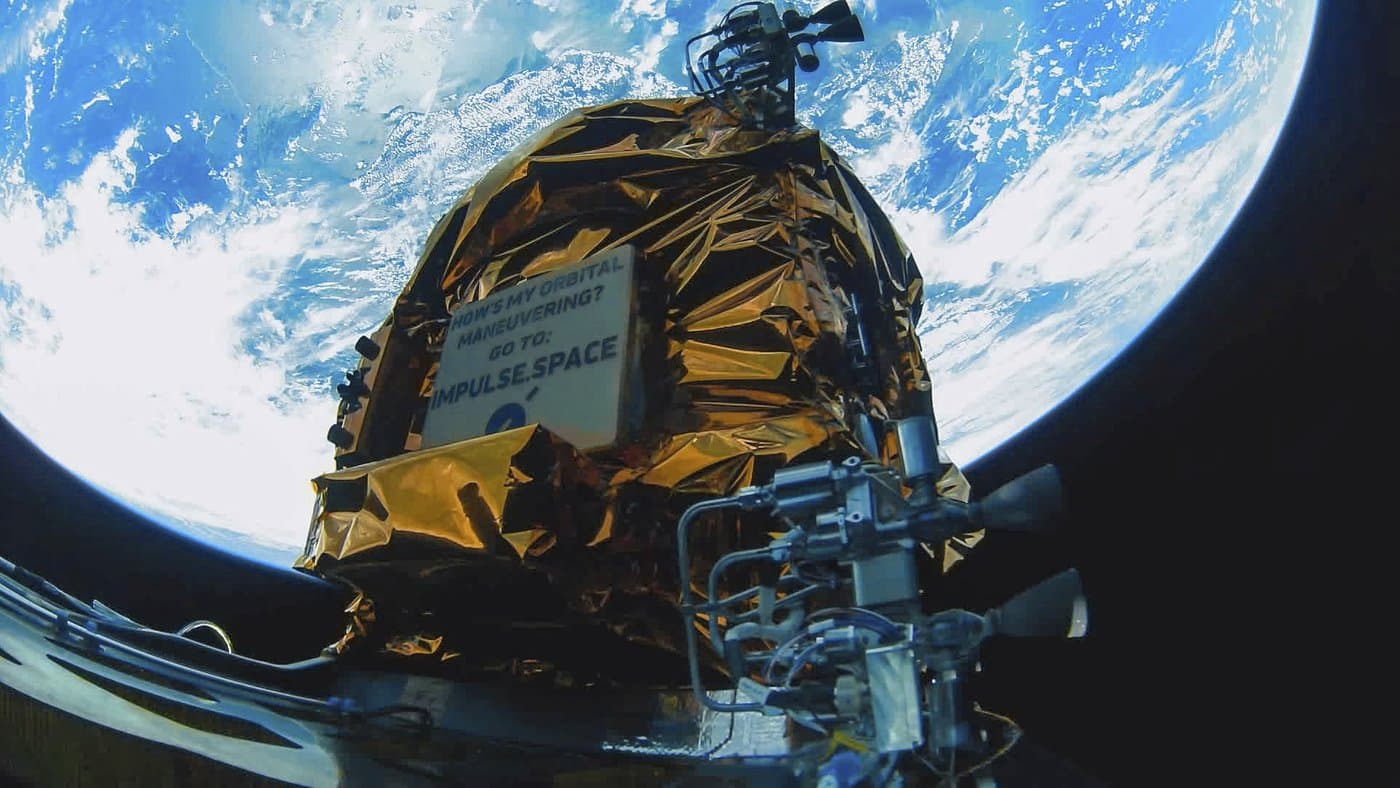
Orbital transfer and hosting spacecraft built for aggressive maneuvering, marketed as the most maneuverable vehicle on orbit. It delivers, deploys, and hosts payloads across LEO, MEO, GEO, and cislunar space.
Impulse Space builds the vehicles that move payloads once a rocket has done its job, a business the company calls in-space mobility.
Latest update Oct 21, 2026
01
Founded in 2021 by Tom Mueller, it sells Mira, a maneuverable orbital transfer and hosting spacecraft, and Helios, a Deneb-powered kick stage designed to move a payload from low Earth orbit to geostationary orbit in under a day. In July 2026 the U.S. Space Force awarded Impulse a National Security Space Launch Phase 3 Lane 1 contract, the first upper-stage prime in that program, and a June 2026 Series D followed by a September extension took that round to $808 million. Mira has completed two close-proximity campaigns: the December 2025 Remora rendezvous and a July 2026 flyby inside 200 meters, announced September 8, 2026. On October 20, 2026 Falcon 9 launched Bandwagon-5 at 7:04 a.m. ET from Cape Canaveral. Via Satellite reported that SpaceX confirmed all rideshare payloads deployed and that Impulse flew LEO Express 4, its fourth Mira, with no customer payloads, to test upgrades. A launch timeline lists that Mira deploying at T+00:58:22, manifested by Exolaunch. Impulse's own mission page, checked October 21, still says Ready for launch and its newest update is dated October 8. Helios and the Electra electric thruster remain targeted for the first half of 2027.
satellitetoday.comUpdated Oct 21, 2026
02
Oct 2026
Launch the Impulse-only LEO Express 4 Mira on SpaceX's Bandwagon-5 mid-inclination rideshare from Cape Canaveral, manifested via Exolaunch, to wring out the upgraded vehicle's higher delta-v, rapid thruster firings, and new avionics with no customer payloads aboard. Impulse's mission page does not name a date; independent trackers list Bandwagon-5 no earlier than October 2026. Mira's product page still lists three missions flown.
2026
TargetNo company post-flight update as of Oct. 21, 2026
H1 2027
Bring the Deneb-powered high-energy kick stage through qualification to its inaugural launch. Helios is the vehicle the company's GEO and cislunar business depends on, and it also gates both the Space Force's VICTUS SURGO mission and the debut Caravan 1 GEO rideshare mission, which carries commercial anchor customers SES, Astranis, and Infinite Orbits and has a fully booked, closed manifest. As of August 2026, Impulse and the Space Force both target the first half of 2027 for Helios's first flights, a more precise window than the general 2027 target cited in July 2026.
H1 2027
Complete flight-engine qualification and integrate Electra with Mira, then fly it operationally on the GEO Express 1 mission as part of Caravan 1, Impulse's first dedicated Falcon 9 GEO rideshare, now fully booked and targeted for the first half of 2027, giving Impulse a hybrid chemical plus electric architecture.
H1 2027
Execute the Tactically Responsive Space missions awarded under Impulse's SBIR Phase III contract with Space Systems Command, now worth $90.8M cumulative: VICTUS SURGO, where Helios delivers a Mira carrying a commercial optical payload to geosynchronous orbit, VICTUS SALO 1, a low Earth orbit mission with an MIT-built payload flying on a SpaceX Transporter rideshare, and the VICTUS SALO 2 and SALO 3 missions added in August 2026, each delivering a Mira to host government payloads in low Earth orbit. Space Systems Command now targets the first half of 2027 for SURGO and SALO 1.
2027
Ride Helios to geosynchronous orbit, detach, and use Anduril's mission data processor, long-wave infrared imager, and other sensor payloads to autonomously image and maneuver around designated objects without direct human control, a strategically watched capability given how much high-value military and commercial hardware sits in GEO. Anduril and Impulse originally targeted late 2026 for this demo when they announced it in September 2025, but it rides the same Helios vehicle now confirmed for a first half of 2027 debut, pushing the demo's realistic window to 2027 as well.
Q1 2028
After Caravan 1's closed first-half-2027 manifest, Impulse has booked Caravan 2 for the first quarter of 2028 with a waitlist, plus a shared Helios mission in 2028 and Caravan 3 in the fourth quarter of 2028, as it tries to move GEO rideshare from about one mission a year toward two. The step only matters if Helios flies in 2027.
Through June 2029
Complete the initial $5 million firm-fixed-price task order and compete for National Security Space Launch Phase 3 Lane 1 missions as an upper-stage prime, the first time the program has contracted a company that does not build a rocket. The Space Force raised the Lane 1 ceiling to roughly $17 billion in July 2026.
03
Impulse Space said on September 16 it raised a $308 million extension to its Series D, taking the round to $808 million with participation from existing investors 137 Ventures, BANNER VC, DFJ Growth, Linse Capital, Lux Capital and Valor Equity Partners. Reuters reported the extension values the in-space mobility company at $5.6 billion, up from $4.26 billion at the $500 million first close in June, and said the capital will accelerate hiring and manufacturing against a commercial and government backlog. Impulse also named its first chief financial officer, Adam Townsend, who was CFO of Vizio through its IPO and sale to Walmart.
Impulse Space said at the Small Satellite Conference on August 25 that its Helios-powered geostationary rideshare program is booked three missions deep through 2028: Caravan 1 (first half of 2027, manifest closed), Caravan 2 (Q1 2028, waitlisted) and Caravan 3 (Q4 2028). The company said it is moving from about one Caravan mission a year toward roughly two a year as demand grows from space-domain-awareness, life-extension and communications customers looking for cheaper, faster access to geostationary orbit.
Impulse Space said on August 12 it was selected by the Space Force's Space Systems Command for a $28 million Small Business Innovation Research Phase III contract extension covering two additional Tactically Responsive Space missions, VICTUS SALO 2 and VICTUS SALO 3. Under the award, Impulse will deliver two more Mira spacecraft to host government payloads for low Earth orbit missions, building on the SBIR Phase III vehicle that already funds Impulse's VICTUS SURGO and VICTUS SALO 1 missions and that the Space Force expanded to $62.8 million in late July.
The U.S. Space Force awarded Impulse Space a $27.77 million contract modification on July 28 for two additional Mira maneuverable spacecraft carrying government payloads for space domain awareness in low Earth orbit. The modification, under the same Small Business Innovation Research Phase III vehicle that first funded Impulse's VICTUS SURGO and VICTUS SALO missions, brings the cumulative contract value to $62.8 million, with work at Impulse's Redondo Beach facility running through March 2030.
Impulse Space introduced Electra on July 28, its first electric propulsion system, developed from concept to a working unit in under six months and built almost entirely in-house at its Redondo Beach facility. Electra offloads long-duration tasks like stationkeeping from the company's Mira orbital transfer vehicle, preserving Mira's chemical propellant for rapid maneuvers, and is set for its first in-space demonstration on the Caravan 1 mission next year.
04
Orbital transfer and hosting spacecraft built for aggressive maneuvering, marketed as the most maneuverable vehicle on orbit. It delivers, deploys, and hosts payloads across LEO, MEO, GEO, and cislunar space.
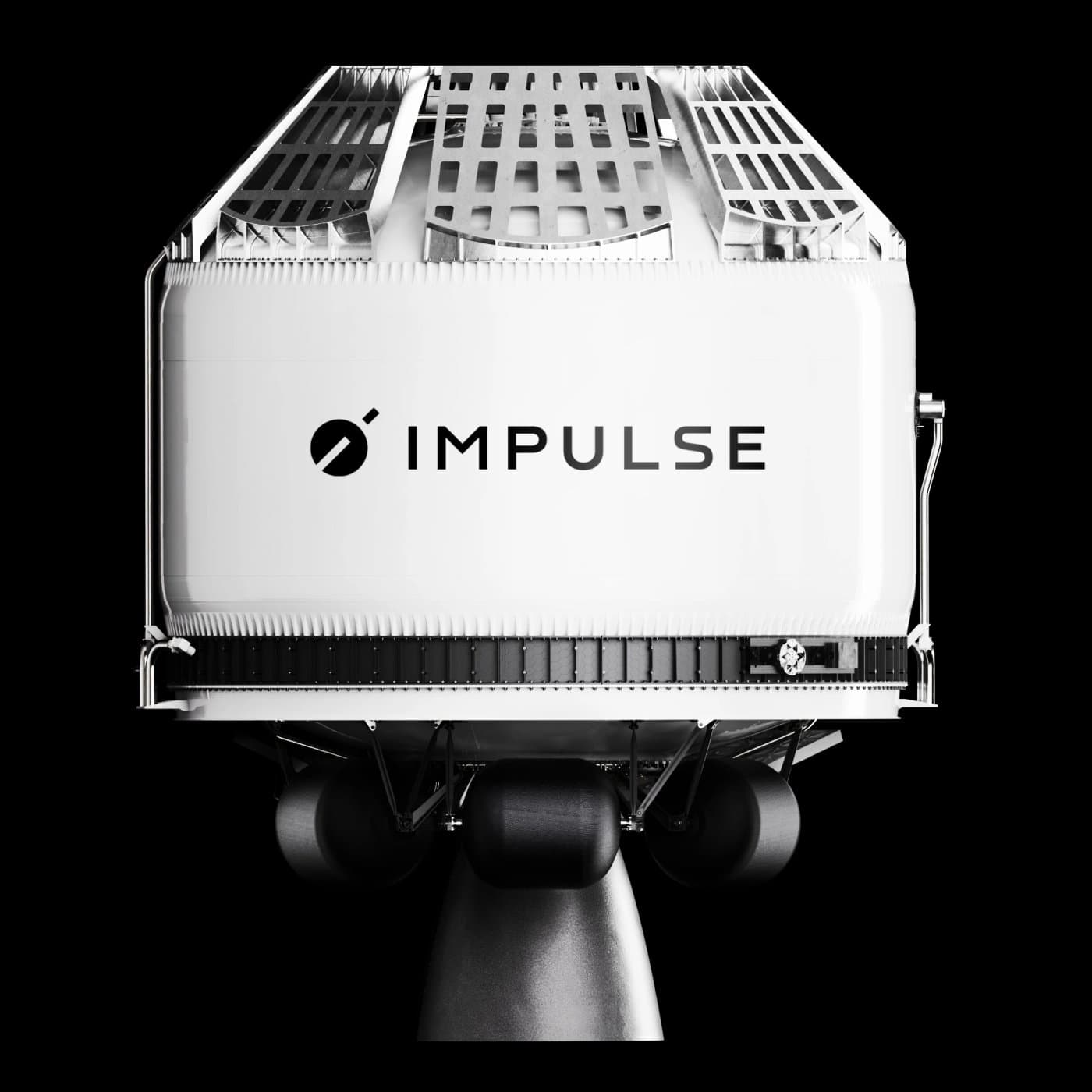
High-energy kick stage powered by a single Deneb methalox engine, designed to take payloads from a medium-lift rocket's low Earth orbit drop-off to GEO, translunar injection, or Earth escape without waiting months on electric propulsion.
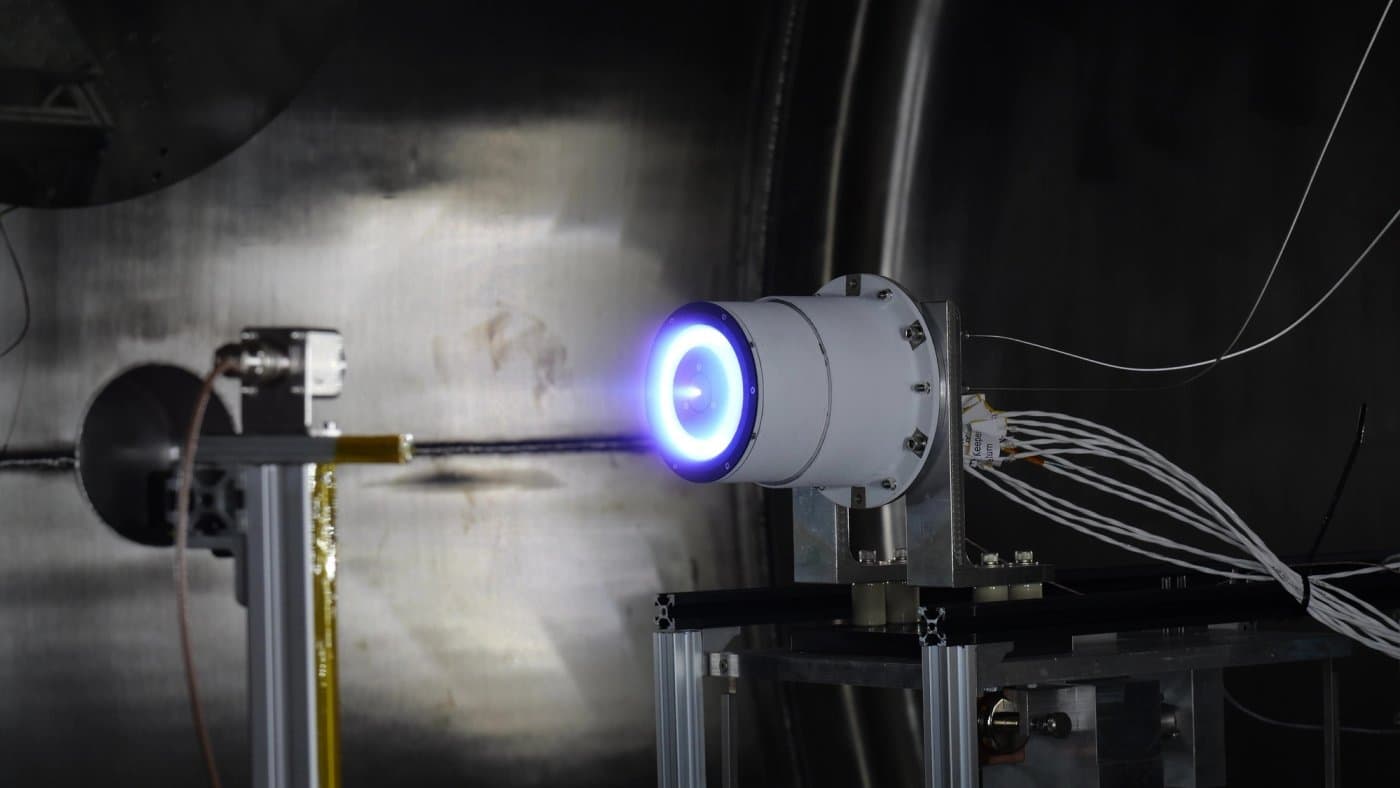
Impulse's first in-house electric propulsion system, built to handle long-duration stationkeeping so a spacecraft's chemical propellant stays reserved for rapid, responsive maneuvers.
05
three flown Mira missions plus government task orders; company cites roughly $200M in backlog across 30+ contracts
Over $1.3B raised to date, after the September 2026 $308M Series D extension took that round to $808M
~$5.6B at the September 2026 Series D extension, per Reuters, up from $4.26B at the June 2026 first close
(LEO Express 1, 2, 3, and 4). LEO Express 4 deployed on Bandwagon-5 on Oct. 20, 2026. Impulse's page still said Ready for launch on Oct. 21.
(LEO-2 to ~1,250 m of LEO-1, Starfish-guided) and July 2026 LEO-2/LEO-3 flyby to less than 200 m
30+ government and commercial contracts, roughly $200M in backlog, including new Helios/Caravan multi-launch agreements with SES, Astranis, and Infinite Orbits
06
Operating status
Operational (Mira, four flights) / Pre-Flight (Helios)
Mira is flight proven. On October 20, 2026 Falcon 9 launched Bandwagon-5 at 7:04 a.m. ET, and Via Satellite reported that SpaceX confirmed all rideshare payloads deployed, including Impulse's fourth Mira, LEO Express 4, an Impulse-only checkout with no customer payloads. A launch timeline lists deployment at T+00:58:22, manifested by Exolaunch. Impulse's mission page still said Ready for launch on October 21, so on-orbit checkout results are not yet posted. Earlier campaigns were the December 2025 Remora rendezvous and the July 2026 flyby inside 200 meters. Helios has not flown. Its first flights, including VICTUS SURGO and the fully booked Caravan 1 GEO rideshare, remain targeted for the first half of 2027, which also gates the planned Anduril GEO demonstration. Electra is scheduled to debut on that Caravan 1 flight.
Mira Orbital Transfer & Hosting Missions
Last-mile payload delivery, hosted payload operations, and on-orbit maneuvering services sold as dedicated Mira missions across LEO, MEO, GEO, and cislunar space.
Kick-stage services that lift payloads from a medium-lift rocket's LEO drop-off to GTO, GEO, translunar injection, or Earth escape, positioned as a cheaper alternative to buying a heavy-lift launch. Anchor commercial customers SES, Astranis, and Infinite Orbits have signed multi-launch Helios agreements for 2027.
Dedicated Falcon 9 missions on which Impulse aggregates customer payloads and carries them to high-energy orbits via Helios, giving smaller operators scheduled access to GEO and beyond. Caravan 1 is fully booked and now targeted for the first half of 2027; Impulse is scaling toward roughly two Caravan missions a year through 2029 amid strong demand.
Tactically Responsive Space work for the U.S. Space Force under a SBIR Phase III contract now worth $90.8M cumulative (VICTUS SURGO, SALO 1, SALO 2 and SALO 3), plus task orders competed under the NSSL Phase 3 Lane 1 IDIQ awarded in July 2026.
07
2026
LEO Express 4 deploys on Bandwagon-5
On October 20, 2026 Falcon 9 lifted off from SLC-40 at 7:04 a.m. ET. Via Satellite reported that SpaceX confirmed all rideshare payloads deployed and that Impulse flew LEO Express 4, its fourth Mira, with no customers aboard, to test upgrades. A launch timeline lists LEO Express 4 deploying at T+00:58:22, manifested by Exolaunch. Impulse's mission page still showed status Ready for launch on October 21, with its latest update dated October 8.
LEO Express 4 still targeted on Bandwagon-5 after Monday scrub
NASASpaceFlight wrote on Oct. 18 that Bandwagon-5 was delayed to Tuesday, Oct. 20, with a window opening at 6:30 a.m. EDT, after unfavorable recovery weather. The article says Exolaunch is manifesting Impulse LEO Express 4 on that flight. It does not report that the vehicle has launched. Spaceflight Now's Oct. 19 update confirms the Monday scrub and the Tuesday window and does not name the Mira.
Series D extended by $308M to $808M; first CFO hired
On September 16, 2026 Impulse announced a $308 million extension of its Series D, taking the round to $808 million, with existing investors 137 Ventures, BANNER VC, DFJ Growth, Linse Capital, Lux Capital and Valor Equity Partners participating. Reuters reported the extension valued Impulse at $5.6 billion, up from $4.26 billion at the June first close, and said the money funds faster hiring and more manufacturing capacity against a commercial and government backlog. Impulse also appointed its first chief financial officer, Adam Townsend, previously CFO of Vizio through its IPO and sale to Walmart and before that a senior finance executive at CBS, Showtime Networks and E*TRADE.
LEO Express 4 announced as Impulse-only Mira checkout on Bandwagon-5
Impulse posted a LEO Express 4 mission page for the fourth Mira flight: an Impulse-only checkout with no customer payloads, manifested via Exolaunch on SpaceX's Bandwagon-5 mid-inclination rideshare from Cape Canaveral. The flight is meant to wring out the upgraded Mira's higher delta-v, rapid thruster firings, and new avionics ahead of customer GEO work. Independent launch trackers list Bandwagon-5 no earlier than October 2026. Mira's product page still lists three missions flown, so the fourth vehicle has not yet launched.
LEO Express 2 and 3 Miras close to less than 200 meters
On September 8, 2026 Impulse published the results of a summer flyby campaign: after a February plane-change burn and spring alignment burns, the LEO Express 2 Mira executed a series of July close approaches to LEO Express 3, starting at about 820 meters and finishing at less than 200 meters. Starfish Space and HEO captured imagery of both vehicles. Impulse called it Mira's second close-proximity series after the December 2025 Remora rendezvous, and said the in-house GNC, propulsion, and mission-operations stack is now proven for space-domain-awareness and tactical re-tasking work.
Caravan GEO rideshare program scales on strong demand, Caravan 1 reset to H1 2027
At the Small Satellite Conference on August 25, 2026, Impulse discloses that its Caravan GEO rideshare program is now booked three missions deep through 2028: Caravan 1 (first half of 2027, manifest closed), Caravan 2 (Q1 2028, waitlisted), and a Caravan 3 mission (Q4 2028), with Caravan 4 and 5 eyed for 2029. The debut Caravan 1 mission, earlier framed around a 2026 target, is now precisely dated to the first half of 2027, and Impulse says it is moving from one Caravan mission a year toward roughly two per year given demand from space domain awareness, life-extension, and communications customers.
SBIR contract extended again for VICTUS SALO 2 and 3
On August 12, 2026 Space Systems Command's Space Safari Office selects Impulse for a further $28 million extension of its SBIR Phase III contract, covering two more Tactically Responsive Space missions, VICTUS SALO 2 and VICTUS SALO 3. Impulse will deliver two additional Mira spacecraft to host government payloads in low Earth orbit, following the $27.77M expansion announced two weeks earlier.
Space Force expands Mira SBIR contract to $62.8M
On July 28, 2026 the U.S. Space Force modifies Impulse's Small Business Innovation Research Phase III contract, adding $27.77 million for two more Mira spacecraft carrying government payloads for space domain awareness in low Earth orbit. The modification brings the cumulative value of the VICTUS SURGO/SALO-era contract to $62.8 million, with work at Redondo Beach running through March 2030.
2026
Electra electric propulsion unveiled
On July 28, 2026 Impulse introduces Electra, its first in-house electric propulsion system, developed from concept to working system in under six months. Electra handles long-duration stationkeeping so Mira's chemical propellant stays available for rapid maneuvers, and is qualifying flight engines for integration with Mira.
First upper-stage company to win NSSL prime status
On July 8, 2026 Space Systems Command awards Impulse a National Security Space Launch Phase 3 Lane 1 IDIQ contract with an initial $5 million firm-fixed-price task order, making Impulse the first upper-stage provider to serve as a prime contractor in a program that had only ever contracted rocket companies. Pairing Helios with a medium-lift launcher is positioned as a cheaper route to high-energy orbits than a heavy-lift rocket.
$500M Series D takes total funding past $1 billion
On June 3, 2026 Impulse closes a $500 million Series D co-led by 137 Ventures and BANNER VC with participation from Founders Fund, Lux Capital, and Linse Capital, bringing total capital raised to more than $1 billion. The company says it more than doubled headcount over the prior year and is expanding facilities in Redondo Beach, Boulder, Mojave, and Washington DC.
2025
Two Mira spacecraft complete an autonomous rendezvous
In December 2025 Impulse and Starfish Space announce the completion of the Remora mission: Starfish payloads aboard the LEO Express 2 Mira guided it through a fully autonomous rendezvous and proximity operation with the LEO Express 1 Mira already in orbit, using a single lightweight camera and closed-loop guidance software. The mission went from concept to launch readiness in nine months.
Second and third Mira missions fly
LEO Express 2 launches on SpaceX's Transporter-12 rideshare in January 2025, and LEO Express 3 follows in November 2025, taking Impulse to three flown missions and giving the company two Mira spacecraft simultaneously on orbit.
2024
$34.5M Space Systems Command contract for VICTUS SURGO and VICTUS SALO
The U.S. Space Force's Space Systems Command awards Impulse a $34.5 million SBIR Phase III contract covering two Tactically Responsive Space missions: VICTUS SURGO, in which Helios carries a Mira to geosynchronous orbit, and VICTUS SALO, a low Earth orbit mission carrying an MIT-built payload.
2023
2021
Founded by SpaceX propulsion architect Tom Mueller
Tom Mueller, SpaceX's first employee on propulsion and the designer of the Merlin engine family, leaves to found Impulse Space in Redondo Beach with the thesis that the bottleneck in space is no longer reaching orbit but moving around once you are there.
08
$1.3Bdisclosed across 5 rounds with a stated amount
Cumulative disclosed raise · dated rounds
Series A
Jul 2023
RTX Ventures (lead), Founders Fund, Lux Capital, Airbus Ventures, Space Capital
Series B
Oct 2024
Founders Fund (lead), RTX Ventures, DCVC, Airbus Ventures, and others
Series C
Jun 2025
Linse Capital (lead), DFJ Growth, Valor Equity Partners, Founders Fund, Lux Capital, RTX Ventures, DCVC, Airbus Ventures, and others
Series D
Jun 2026
137 Ventures and BANNER VC (co-leads), Founders Fund, Lux Capital, Linse Capital
Series D extension
Sep 2026
$308M (round total $808M; ~$5.6B valuation per Reuters)
137 Ventures, BANNER VC, DFJ Growth, Linse Capital, Lux Capital, Valor Equity Partners, among others