Anduril Industries is an American defense technology company founded in 2017 by Oculus creator Palmer Luckey with Palantir veterans Brian Schimpf (CEO), Trae Stephens, Matt Grimm, and Joe Chen.
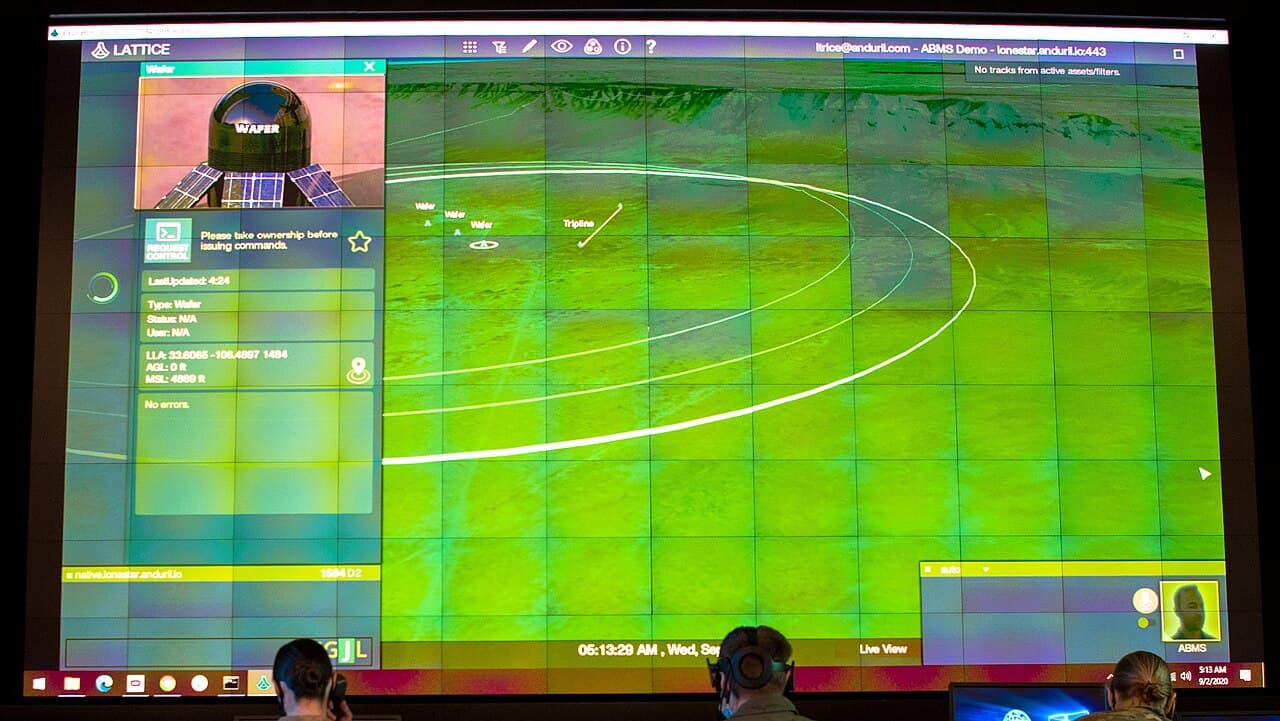
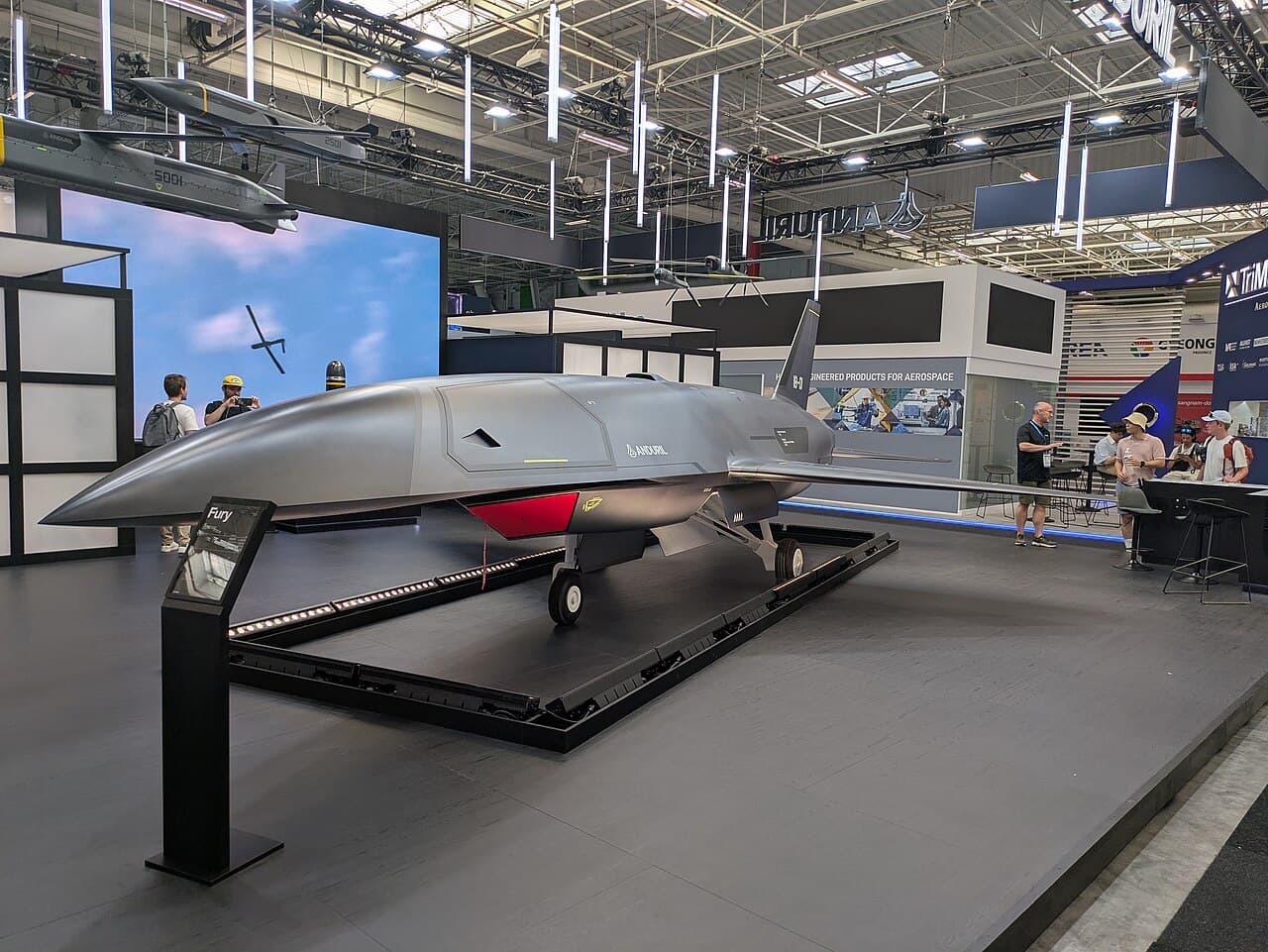
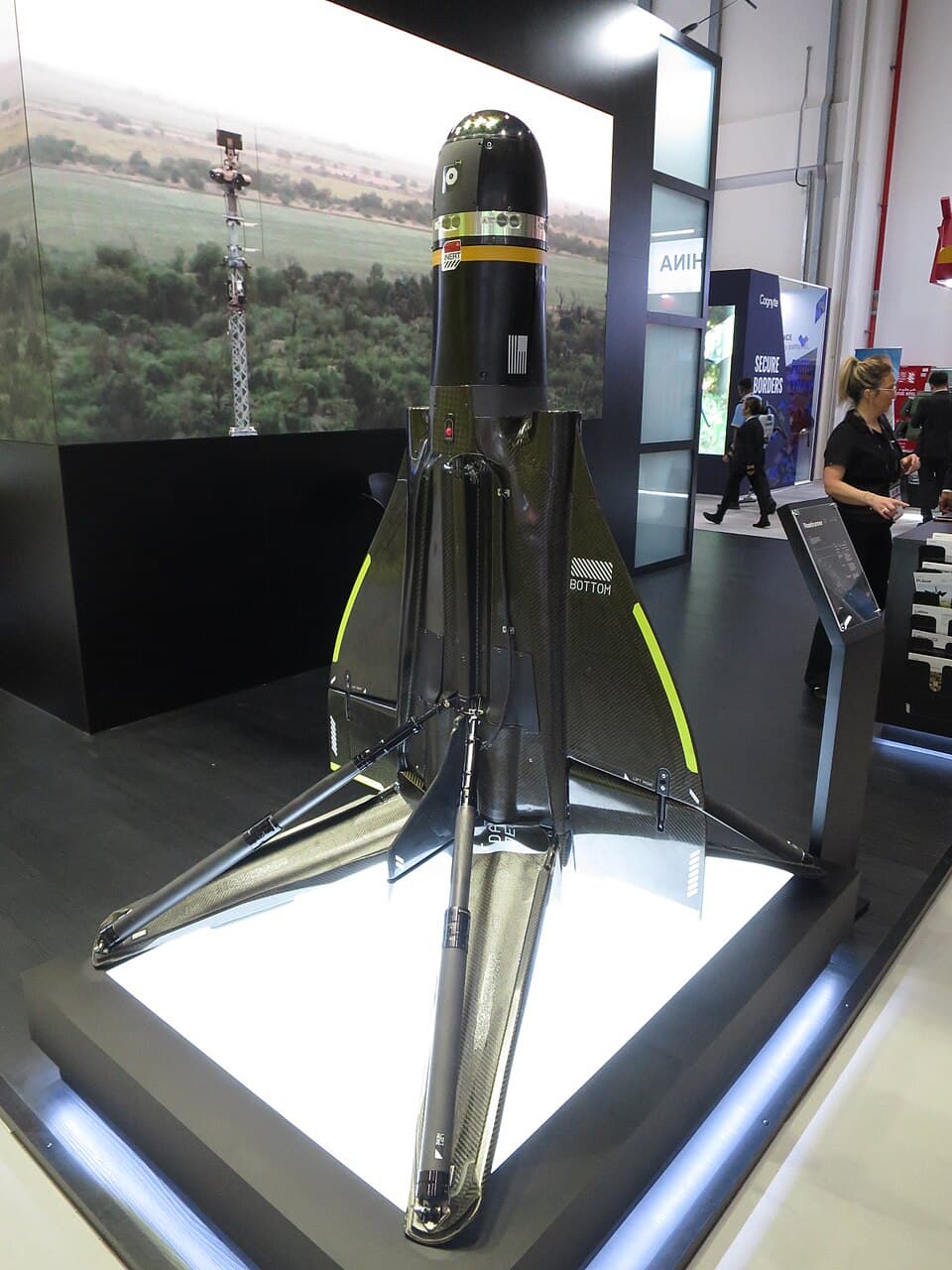
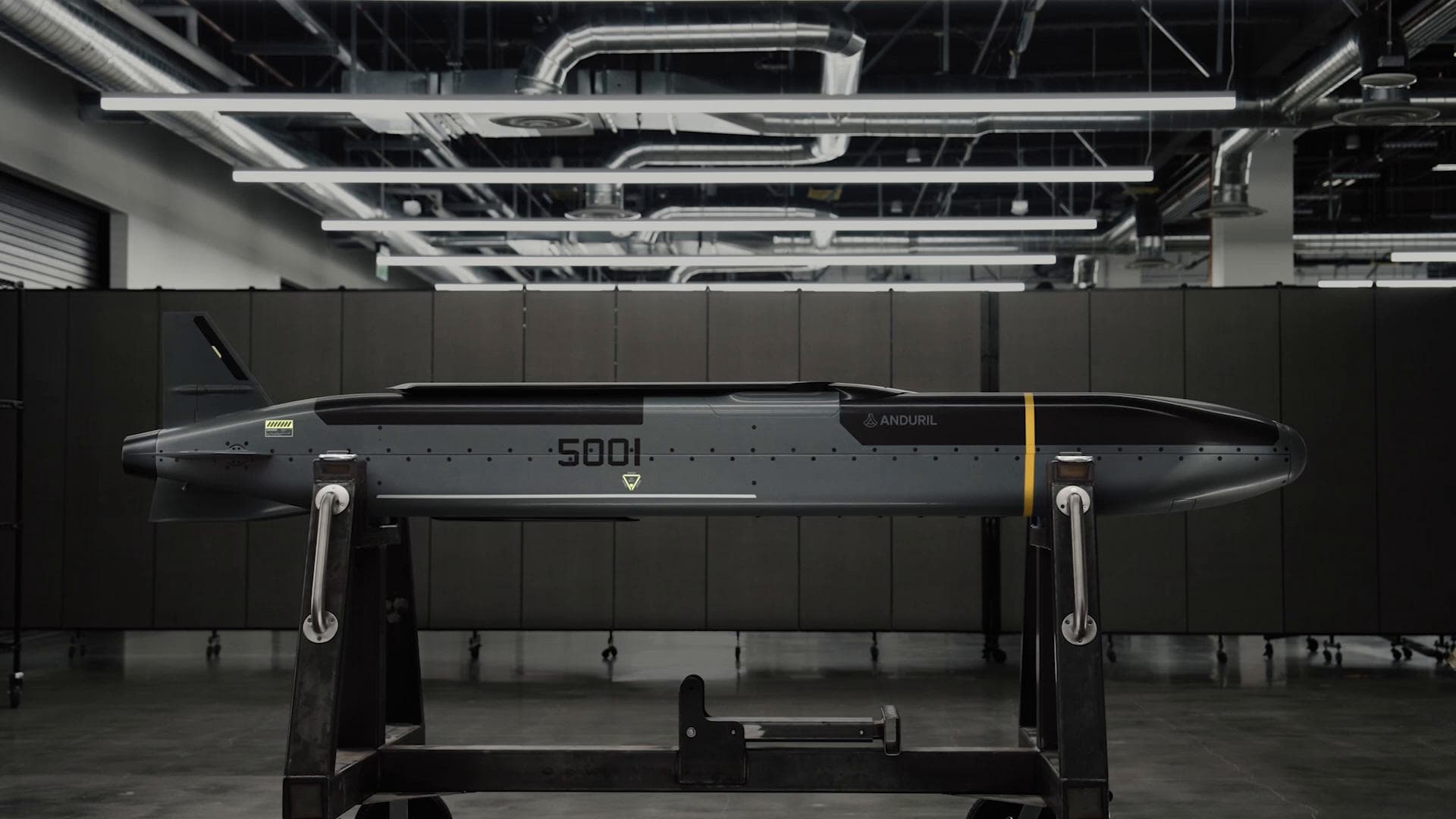
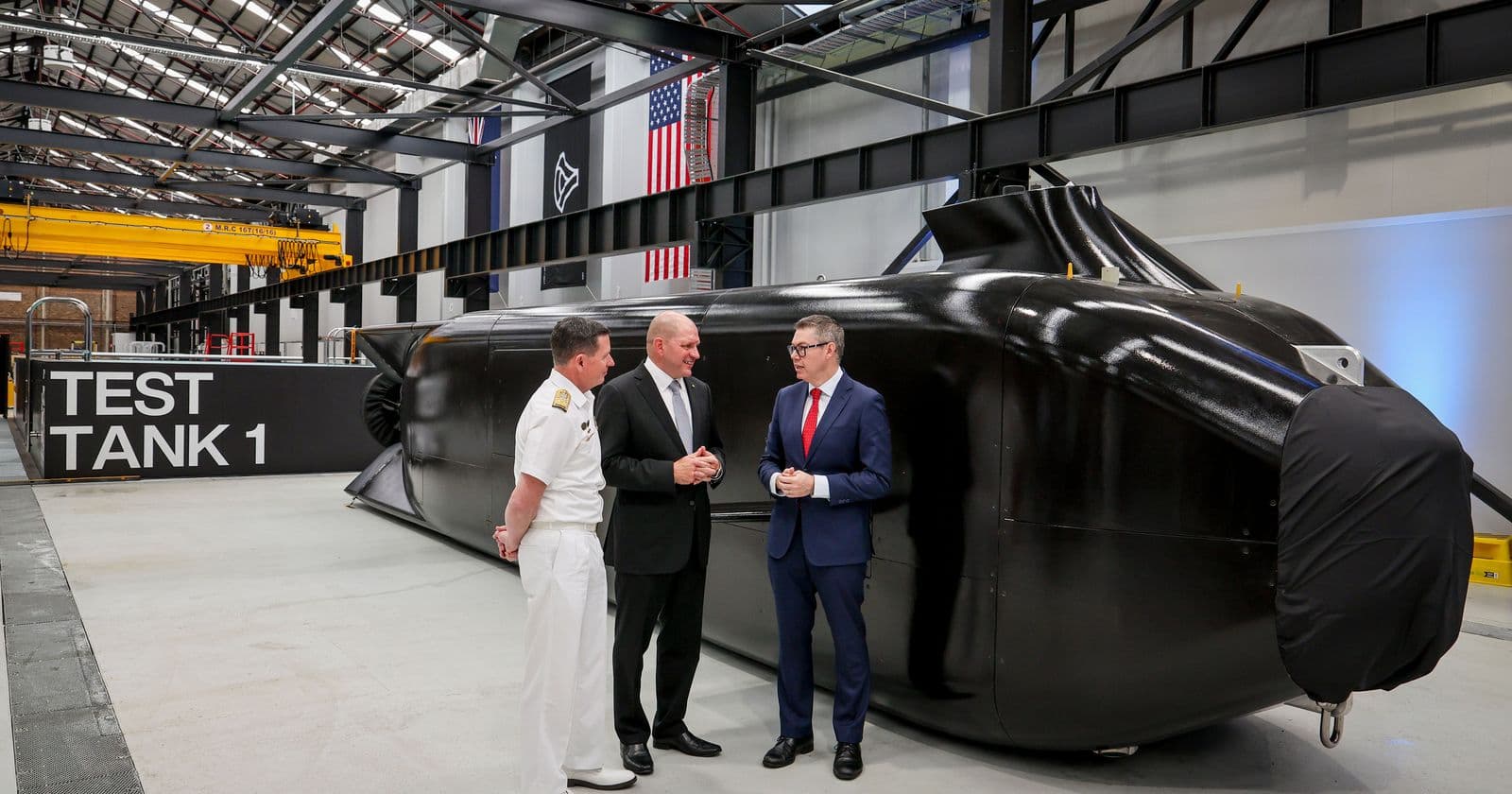
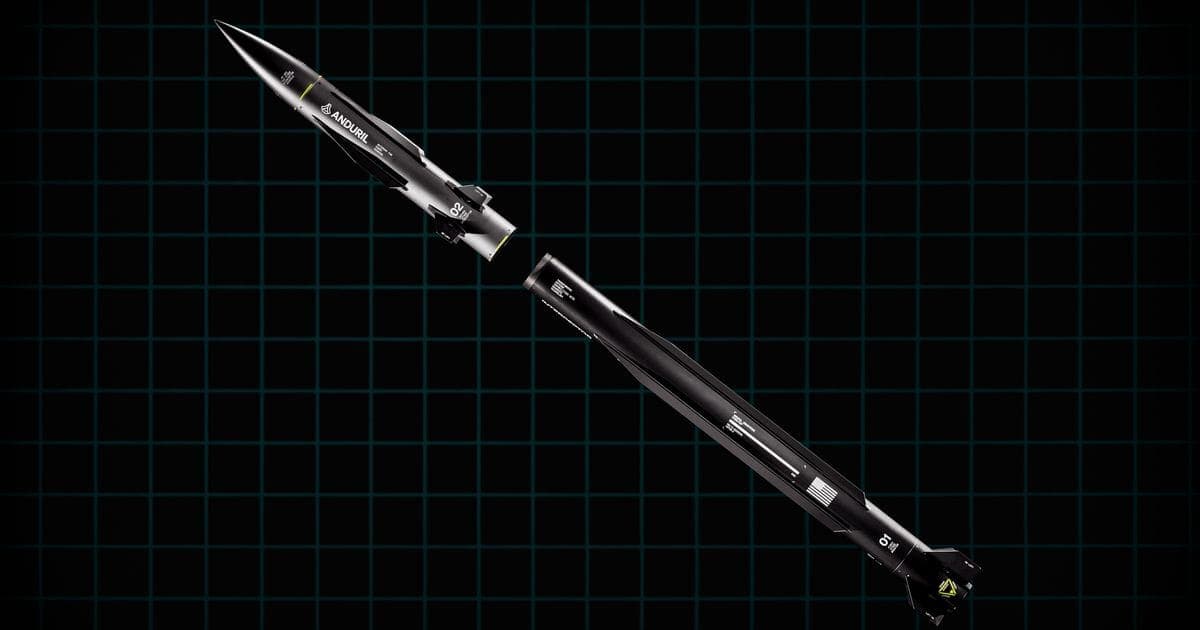
Its core thesis is to build software-defined, mass-producible autonomous weapons around Lattice, an AI command-and-control platform that fuses sensor data and orchestrates fleets of unmanned systems. Its hardware now spans every domain: the Fury (FQ-44A) collaborative combat aircraft, Ghost and Bolt drones, Altius loitering munitions, Roadrunner reusable jet interceptors, Barracuda cruise missiles, Ghost Shark autonomous submarines, a new class of autonomous surface vessels built with South Korea's HD Hyundai, and the EagleEye mixed-reality soldier headset built with Meta. Anduril holds prime positions on several of the Pentagon's most-watched programs: the Air Force ordered its FQ-44A into production in June 2026 alongside General Atomics' FQ-42A, and on September 14, 2026 Secretary of the Air Force Troy Meink formally named the jet FQ-44A Fury and raised the service's CCA target to at least 500 aircraft in service by 2032 (from the prior goal of over 150 by the end of the decade), with a mission-autonomy software down-select still to come; Anduril executives said the same day that Fury has already flown in formation alongside F-35s and that the first CCA has been permanently delivered to the Air Force Experimental Operations Unit at Creech, which is now flying it multiple times a day with a limited Anduril presence; it took over Microsoft's $22B IVAS soldier-headset program in 2025 (now SBMC) and is running a second prototype cycle after its Phase 2 hardware redesign, with an Army downselect and production decision potentially landing in fiscal 2028; it won a 10-year, $20B Army enterprise agreement for Lattice-based counter-drone command and control in March 2026; in August 2026 it demonstrated a Lattice-powered Battle Manager for the Guam Defense System at Exercise Valiant Shield, fusing Army, Air Force, Navy and Missile Defense Agency assets; and it leads an industry team prototyping Golden Dome space-based interceptors, which cleared the program's first design-review gate in August 2026. On September 9, 2026 the Army selected a Boeing-Anduril team to advance in the Indirect Fire Protection Capability Increment 2 second-interceptor competition, pairing a Boeing seeker and airframe with an Anduril solid rocket motor from the company's Mississippi Solid Rocket Motor Complex. In August 2026 the Department of Homeland Security also awarded Anduril a Track 2 slot on a $1.5B, five-year counter-UAS IDIQ. After Anduril protested its exclusion from the Track 1 hardware award, DHS agreed to re-evaluate that proposal and GAO dismissed the protest on September 4, 2026. International business is scaling too, led by Australia's A$1.7B Ghost Shark program, completed Altius-600M deliveries to Taiwan plus an August 2026 NT$26.9 billion (~$847 million) letter of offer and acceptance for 2,032 more Altius systems (1,554 Altius-700M loitering munitions and 478 Altius-600ISR, first deliveries in Q4 2026), a State Department-approved (not yet finalized) possible $1.98B Kuwait counter-drone Foreign Military Sale, and a July 2026 agreement for Poland's state defense group PGZ to build the surface-launched Barracuda-500M cruise missile locally - Anduril's first European production site - alongside a September 2026 pitch at MSPO Kielce to sell Fury and Thunder to Poland as loyal wingmen for its incoming F-35 and Apache fleets, and an Embraer MoU to launch palletized Barracuda-500Ms from the C-390. Manufacturing is anchored by Arsenal-1, a $1B, 5-million-square-foot Ohio factory where the first Ohio-built Fury rolled off the line on July 27, 2026, months ahead of schedule, with Roadrunner, Barracuda, and a classified platform slated to join the line by year-end. Revenue roughly doubled in 2025 to $2.2B (2026 guidance points to roughly $4.3B), and the company raised a $5B Series H at a $61B valuation in May 2026, bringing total funding above $11B; reports since late July 2026 of a further round at roughly a $100B valuation remain unconfirmed and had not closed as of September 10, 2026. With around 7,000 employees, Anduril is the most richly valued private defense-tech company; CEO Brian Schimpf said in July 2026 the company is in no rush to IPO.
Anduril demonstrated its Lattice-powered Battle Manager for the Guam Defense System at Exercise Valiant Shield 2026, fusing Army, Air Force, Navy and Missile Defense Agency assets and generating autonomous engagement recommendations less than six months after the development contract. The company said the prototype will be matured from exercise feedback and continuous testing over the following months; as of September 15, 2026 no follow-on fielding award had been announced. The next test is whether that software layer moves from a one-exercise demo into a fielded joint air-and-missile-defense command-and-control capability for Guam and other Indo-Pacific nodes.
Potential new funding round at roughly $100B valuation
Reported on July 24, 2026 to be in talks to raise again at about $100B, less than two months after its $61B Series H closed - a mark that would put Anduril nearly on par with Lockheed Martin. One floated structure is a two-stage round where investors commit now to a second tranche at a higher valuation within a year, contingent on Anduril hitting financial benchmarks. A September 2026 Globes report said the contemplated raise had reached about $10 billion at that valuation but had still not closed. Anduril says no decision has been made about any future financing; as of September 10, 2026 no close has been confirmed - watch whether the round actually closes and at what structure and valuation.
Anduril executives said on September 14, 2026 that a YFQ-44A Fury has already flown in formation alongside F-35s, but the fighter is not yet controlling the drone. Work on 'quarterback integration' - a crewed aircraft directing and employing the autonomous jet - has been run in hardware-in-the-loop and software-in-the-loop environments and on Fury itself, with live flying events expected in weeks or months. That demonstration is the next operational test of the CCA concept after the Air Force took over day-to-day Fury flying at Creech.
First Anduril-HD Hyundai autonomous surface vessel enters the water
The first hull of Anduril's new autonomous surface vessel class, under construction at HD Hyundai Heavy Industries' Ulsan shipyard since April 2026, is expected to enter the water and begin sea trials in October 2026. Anduril plans to bring the vessel to the US coast for further open-water testing by the end of 2026, aiming to position the design for follow-on US Navy unmanned-surface-vessel opportunities after missing the initial seven-company MUSV marketplace demonstration cohort.
Anduril is one of three Family of Affordable Mass Missiles primes, with CoAspire and Zone 5, under July 2026 Department of War framework agreements covering pallet-launched and lug-launched Barracuda-500 variants. Air Force Secretary Troy Meink said on September 14, 2026 that FAMM production is expected to begin this fall, with tens of thousands of the low-cost cruise missiles in inventory by 2030; fiscal 2027 budget documents count nearly 28,000 buys over five years. Anduril has said FAMM Barracuda-500 deliveries begin in 2027 after lug-launched ground and flight tests.
Arsenal-1 adds ALTIUS 600, Roadrunner, Barracuda, and a classified platform to production
Fury production started in March 2026, and as of September 17, 2026 Anduril is standing up an ALTIUS 600 line at Arsenal-1 in Ashville while Atlanta ALTIUS production continues. Roadrunner, Barracuda, and an unannounced classified platform are still slated to join by the end of 2026, with new technical teams deploying for Barracuda as a winter 2026 line. Whether the promised automotive-style production rates materialize is the key test of Anduril's manufacturing thesis.
Begin Taiwan Altius-700M and Altius-600ISR deliveries
Taiwan's August 2026 NT$26.9 billion (~$847 million) letter of offer and acceptance covers 2,032 Altius systems (1,554 Altius-700M loitering munitions and 478 Altius-600ISR). First deliveries are targeted for the fourth quarter of 2026, with the full order scheduled to complete by June 2033. The 291-unit Altius-600M sale finished in March 2026. Speaking in Taipei on September 19, 2026, founder Palmer Luckey said President Trump's months-long delay on a $14 billion Taiwan arms package is affecting Anduril's Taiwan business and stalling progress in other areas, without naming which programs sit inside that package; the 700M/600ISR first deliveries had still not been reported.
Start FQ-44 Fury production once fiscal 2027 appropriations pass
TargetEarly 2027 (contingent on FY2027 appropriations)
Anduril said on September 14, 2026 that it cannot begin work on the June 2026 Fury production contract until Congress appropriates fiscal 2027 money, which is not expected before December 11 at the earliest under the current continuing resolution. The company has self-funded its production facility and long-lead purchases and says it will not need a cold start, so the test is whether production aircraft still come off Arsenal-1 in early 2027 as planned, whether a funding anomaly lets work begin sooner, and how close orders get to the line's stated 150-aircraft annual capacity.
Hermeus selected Anduril on September 3, 2026 to integrate Lattice for Mission Autonomy on Quarterhorse Mk 2, the first third-party Group 5 airframe to carry the stack. Integration is underway and the first mission-autonomy test flight is planned for 2027, a commercial proving ground alongside Anduril's bid for the Air Force Collaborative Combat Aircraft software layer.
CCA Increment 1 autonomy down-select and software IOC
Alongside the June 2026 production award, the Air Force gave Anduril, Shield AI, and Collins Aerospace six-month mission-autonomy contract line items to advance their respective autonomy stacks (Anduril's Lattice for Mission Autonomy, Shield AI's Hivemind, Collins' Sidekick) toward the CCA's initial operating capability criteria; after that six months the Air Force plans to down-select further toward one or two vendors for a second six-month option, with a single autonomy provider and IOC targeted for summer 2027. The Fury's first live AMRAAM shot on July 10, 2026 and September 14, 2026 disclosure of F-35 formation flying de-risk the airframe side of that bid; winning the software layer as well would make Anduril the program's dominant player. As of September 15, 2026 the summer 2027 down-select still stood.
Anduril leads one of 12 teams (with Impulse Space, Inversion Space, K2 Space, Voyager, and Sandia) under Space Force OTA awards worth up to $3.2B, tasked with demonstrating a space-based interceptor capability by 2028. At the Space and Missile Defense Symposium in Huntsville on August 11, 2026, Golden Dome director Gen. Michael Guetlein said all 12 teams, including Anduril's, cleared Gate 1 (design lock and component-level testing) and are moving into Gate 2, building hardware meant to operate in space; two further gates remain before the 2028 target. The same week, Guetlein separately warned the wider Golden Dome program could grind to a halt when fiscal 2027 begins on October 1, 2026, because roughly 97% of its $17.5B FY2027 request depends on a second reconciliation bill rather than the regular base budget - a funding risk that sits over every team's timeline, Anduril's included.
SBMC Phase 2 prototype testing and Army downselect
Anduril delivered hundreds of Phase 1 EagleEye-based SBMC prototypes to the Army and tested them with the 75th Ranger Regiment in field conditions in August 2026. The redesigned Phase 2 hardware, unveiled August 17, 2026, widens the headset's horizontal field of view by almost 70%; the Army plans to field hundreds of the upgraded units for further testing starting in early 2027, with a downselect between Anduril and competitor Rivet, and a production award, potentially landing in fiscal 2028 - a slower path than the 'first scaled delivery' Anduril had previously targeted for 2027. A July 2026 GAO report on legacy IVAS underscores how much scrutiny this program carries after Microsoft's stumbles.
Japan evaluates Lattice for Self-Defense Force command and control
Japan's government is reported to be weighing Anduril's Lattice AI, alongside Palantir's Maven Smart System, for Self-Defense Force command and control, aiming to speed decision-making and improve interoperability with US forces while trying to avoid long-term dependence on foreign technology via a proposed Japanese Sakana AI-based command layer. Still at the consideration stage as of September 10, 2026, with no procurement timeline announced.
Field Pulsar-L counter-drone jammers on Marine Corps ACVs
The Marine Corps published a Notice of Intent to Sole Source on August 3, 2026 to buy Anduril's Pulsar-L electronic-warfare system to defend Amphibious Combat Vehicles against drones, giving 360-degree passive detection and AI-enabled countermeasures against single drones or swarms. Responses to the sources-sought notice were due August 18, 2026; initial fielding is targeted for early fiscal year 2027, with more than 50 units planned in the program's first year. No contract award had been announced as of September 10, 2026 - a new vehicle-mounted counter-drone customer distinct from Anduril's existing Washington National Guard and SOCOM counter-drone work.
Finalize the $1.98B Kuwait counter-drone Foreign Military Sale
The State Department approved a possible $1.98B FMS to Kuwait on June 5, 2026 covering Roadrunner-M and Anvil interceptor drones, Pulsar jammers, Sentry towers, Lattice software, and Menace tactical operations centers. State Department approval only clears the sale for negotiation - a definitive contract with Anduril had not yet been announced as of September 10, 2026.
After Anduril's August 12 protest of its exclusion from Track 1 of DHS's $1.5B counter-UAS IDIQ, DHS agreed to re-evaluate the company's hardware/software proposal and make a new selection. GAO dismissed the protest on September 4, 2026 because of that corrective action. Anduril already holds a Track 2 services slot; a Track 1 award would make it the second dual-track vendor alongside Leidos, joining Track 1 incumbents BAE, CACI, Dedrone, D-Fend, EMS Defense, Fortem and Leidos.
Advance the Boeing-Anduril IFPC Increment 2 interceptor through design and demonstration
After the September 9, 2026 Army downselect, the Boeing-Anduril team moves into detailed design, system development, integration, and a competitive capability demonstration for the IFPC Increment 2 second interceptor. The design uses an Anduril solid rocket motor from the Mississippi Solid Rocket Motor Complex. A later production award would put Anduril into the Army's midrange air-defense interceptor magazine alongside its existing Roadrunner counter-drone work.
Win a Polish order for Fury or Thunder alongside Barracuda production
At MSPO Kielce on September 9, 2026 Anduril pitched Fury as a loyal wingman for Poland's F-35s and Thunder as a force multiplier for the 96 AH-64E Apaches due from 2028, which would make Poland the first European user of either aircraft. Talks with the Ministry of National Defence were ongoing and no aircraft contract had been announced as of September 10, 2026.
The Air Force said on Oct. 16 that an F-22 pilot directed a single YFQ-44A in flight earlier this month, with the drone's autonomy software flying dynamic maneuvers and simulated combat tasks. Anduril vice president Mark Shushnar told Air and Space Forces the Fury and the F-22 launched from Edwards during the week of Oct. 5, joined in the air, and that the pilot sent an updated mission plan over a tactical data link. The Air Force release does not give the day or the base.
Anduril confirmed to CNBC on Oct. 14 an employee tender that would value the company at roughly $90 billion, above the $61 billion mark from its May primary round. Bloomberg reported a $94.80 share price, a roughly $1.3 billion cap, an Oct. 13 opening and a Nov. 9 close, including employees in 16 countries. Quartz, citing Bloomberg, said an Anduril representative declined to comment to Bloomberg. The cap is stock employees can sell, not new capital raised by the company.
Anduril on Oct. 12, 2026 introduced Steelfin, a modular two-stage surface-to-air interceptor family meant to cover cruise, ballistic and hypersonic threats from existing launchers. The company said ballistic tests with representative air vehicles are complete, flight tests begin next year, and short-term output is on the order of several thousand variants a year. Executives told Breaking Defense they aim for about one-third the cost of PAC-3 MSE and full-rate production around late 2028 or early 2029; Anduril declined to say whether Steelfin was selected for the Army Future Interceptor program.
On 6 October 2026 Maryland and Baltimore County said Anduril will invest $3.7 billion of private capital in Arsenal-2, a two-million-square-foot software-defined shipyard at Tradepoint Atlantic in Sparrows Point, to make Virginia-class submarine components. Reuters and Breaking Defense, citing an Anduril release, said the Navy awarded a contract worth up to $2.9 billion with payments tied to production outcomes, and that a 160,000-square-foot Orange County plant will start on items such as torpedo tubes before Baltimore initial operations in 2030. Anduril's public newsroom page did not list the item when checked; the $2.9 billion figure is a company-stated ceiling, not a confirmed funded obligation.
On Oct. 5, 2026 Anduril said the US Army awarded it a contract to expand the Next Generation Command and Control common data-layer baseline beginning with I Corps. The company put the initial base period at $162.8 million, with options that could bring the five-year total to $1.8 billion. InsideDefense reported the same figures and said the work is in the Pacific as NGC2 moves from division-level validation to I Corps. The $1.8 billion figure is an options ceiling, not a funded obligation.
On Sept. 30, Defense Secretary Pete Hegseth commissioned Project Meridian, directing Pentagon chief technology officer Emil Michael to study future battlefields and submit recommendations by Jan. 28, 2027. In the State of the Force speech that day, Hegseth named Elon Musk, Anduril founder Palmer Luckey and former House Speaker Newt Gingrich as co-leads. The signed memorandum does not name those co-leads; Politico later reported Pentagon officials warning that Musk's and Luckey's companies hold large Defense contracts.
Anduril Industries and Voyager Technologies announced a strategic partnership on September 29, 2026 to speed development, testing, qualification and production of technologies for U.S. weapon systems and missile defense. A joint Business Wire release said Voyager is already contracted to supply more than $60 million of hardware to Anduril, including solid rocket motors and divert and attitude control systems. Voyager said its Pueblo, Colorado American Defense Complex is intended, when fully scaled, to support about 15,000 to 20,000 propulsion systems a month; that figure is a facility target, not current output.
On September 25, Anduril and Latvian uncrewed-systems maker ORIGIN signed a memorandum of understanding to explore integrating ORIGIN's BLAZE autonomous counter-drone interceptor with Anduril's Lattice software. The companies said they will run joint testing, demonstrations and validation in Latvia as a layered counter-UAS option for Latvian air defense. The MoU was signed during a LIAA trade mission alongside Latvia's presidential visit to the United States; it is an integration trial, not a procurement contract.
Anduril said its Barracuda-M cruise-missile family is the first weapon in large-scale production to complete independent U.S. Air Force Weapon Open Systems Architecture verification. The Air Force Research Laboratory's MOATEL lab ran a four-day assessment covering 14 domains, including mission autonomy, seeker, propulsion, guidance, navigation, and the Munitions Data Bus. Production is underway, with first customer deliveries expected in early 2027 and annual output planned in the thousands.
Anduril founder Palmer Luckey told reporters in Taipei on September 19 that President Trump's delay in approving a $14 billion Taiwan arms package is affecting the company's business, saying Taiwan work would be in a different place if the package were moving and that the stall also blocks progress in other areas. Luckey, who attended a defense forum with Taiwan President Lai Ching-te, said he has discussed the issue with Trump, Vice President JD Vance, and Secretary of State Marco Rubio, but declined to name which Anduril programs sit inside the package. China sanctioned Luckey in December 2025 for selling weapons to Taiwan; Anduril's Altius drone is already used there, and Taiwan last year unveiled a jointly made Barracuda-500 missile.
Anduril is expanding ALTIUS 600 autonomous-aircraft production to its Arsenal-1 factory in Ashville, Ohio, adding the tube-launched drone to a lineup that already includes Fury, Roadrunner and Barracuda. Existing ALTIUS production continues in Atlanta, and the company has started hiring a launch team in Pickaway County. Vice president of production Kevin Kerr said the extra Ohio line is meant to meet rising demand for the ISR, strike and electronic-warfare system.
Anduril told reporters at the Air, Space and Cyber conference that it cannot start work on its FQ-44 Fury production contract until Congress passes fiscal 2027 appropriations, which are not expected before December. Vice president for strategy execution Erin Simpson said the company has invested its own money in a new production facility and bought long-lead items but can only go so far without procurement dollars, and floated a funding anomaly in any future stopgap as a way to begin early. Engineering senior vice president Jason Levin said Arsenal-1 outside Columbus, Ohio can build up to 150 Fury aircraft a year, more than current Air Force orders, and that YFQ-44 prototypes are being assembled there now.
Anduril executives told The War Zone at the AFA conference on September 14 that a YFQ-44A Fury already flew in formation alongside F-35s during the July Experimental Operations Unit exercise at Creech Air Force Base, though the fighter was not yet controlling the drone. The company also said it had permanently delivered a Fury to the EOU, the first CCA handed over to the unit, which is now flying it multiple times a day. Production aircraft are expected off the Arsenal-1 line in early 2027 at a unit cost Anduril said is well below $20 million at currently contemplated quantities.
Secretary of the Air Force Troy Meink formally named the service's first Collaborative Combat Aircraft on September 14: General Atomics' FQ-42A Vengeance and Anduril's FQ-44A Fury. Speaking at the AFA Air, Space and Cyber Conference, he said the Air Force intends to have at least 500 CCAs in service by 2032, up from the prior goal of more than 150 by the end of the decade. Both Increment 1 jets are already in production after first flights in August and October 2025.
The U.S. Army selected Boeing on September 9, 2026 to move into Phase 2 of the Integrated Fires Protection Capability Increment 2 second-interceptor competition, a midrange weapon meant to defend bases from cruise missiles and militarized drones. Boeing's design pairs its seeker and compact airframe with a solid rocket motor from Anduril Rocket Motor Systems. Phase 2 covers detailed design, development, integration and a competitive capability demonstration.
(~2x YoY). Reported to prospective investors ahead of a possible $100B round: 2026 revenue guided at roughly $4.3B (~2x YoY) alongside a roughly $1.2B operating loss tied to Arsenal-1 scale-up spending (over $900M in campus investment) - unconfirmed by Anduril and not GAAP-audited figures. No update to these figures had surfaced as of September 10, 2026.
Valuation
$61B Series H in May 2026
Employee tender confirmed to CNBC on Oct. 14 at roughly $90B. A separate primary round near $100B remains unconfirmed as of Oct. 19, 2026.
Revenue (2025)
$2.2B, roughly doubled year over year
Total capital raised
$11B+ across all rounds
Series H remains the latest closed round
Employees
~7,000
(2026); Seattle-area workforce alone was 560 as of August 2026
IVAS/SBMC program ceiling
$22B Army contract
(~120,000 headsets) assumed from Microsoft in 2025; now running a Phase 2 prototype cycle with a downselect and production award potentially in fiscal 2028
Arsenal-1 Fury capacity
Up to 150 FQ-44 Fury aircraft a year, above current Air Force order quantities (disclosed September 14, 2026)
Army enterprise agreement ceiling
$20B over 10 years
(2026-2036) for Lattice C2 and counter-drone capabilities
Arsenal-1 factory
$1B investment, 5M sq ft in Ohio
first Ohio-built Fury rolled off the line 557 days after groundbreaking (Jul 27, 2026); line capable of 150 aircraft/year at full capacity, with Roadrunner, Barracuda, and a classified platform still slated to join by end of 2026; assembly of Fury airframes underway, with production aircraft expected in early 2027
Ghost Shark program (Australia)
A$1.7B
(~US$1.1B) Royal Australian Navy program of record; Anduril Australia CEO David Goodrich said in May 2026 the program is in steady-state production of 'dozens' of boats, with every year of Ghost Shark to be updated in partnership with Navy operators
Space Force SDA contract
$200M IDIQ ceiling
(doubled via a $100.3M modification, May 5, 2026) - Anduril's first space domain program of record
DHS counter-UAS Track 2 IDIQ
$1.5B five-year, multi-vendor IDIQ
(Track 2 comprehensive services, awarded Aug 5, 2026); Track 1 hardware/software bid under DHS re-evaluation after Anduril's Aug 12 protest, which GAO dismissed Sept 4, 2026 after the corrective action
IFPC Increment 2 second interceptor
Boeing-Anduril team advanced Sept 9, 2026 to detailed design, development, and a competitive demonstration; interceptor uses an Anduril solid rocket motor from the 450-acre Mississippi SRM Complex
CCA Increment 1 fleet target
At least 500 CCAs in service by 2032
(FQ-44A Fury and GA FQ-42A Vengeance plus Increment 2), raised from over 150 by end of decade; Anduril unit cost well below $20M at currently contemplated quantities
Barracuda WOSA / deliveries
First weapon in large-scale production to complete independent AFRL MOATEL WOSA verification (14 domains, four-day assessment, announced Sept 23, 2026). Production underway; first customer deliveries expected early 2027; annual output planned in the thousands.
NGC2 I Corps base award
$162.8 million
Arsenal-2 announced capital
$3.7B private
(Maryland, 6 Oct 2026); Navy contract worth up to $2.9B per Anduril, payments tied to production outcomes
06
Operations & revenue
Operating status
Operational; F-22 directed a Fury in flight
Rechecked Oct. 19, 2026. The Oct. 16 Air Force release still gives no calendar date for the F-22 and YFQ-44A flight. Shushnar told Air and Space Forces it was at Edwards during the week of Oct. 5, and no Anduril newsroom post was found. The employee tender Anduril confirmed to CNBC on Oct. 14 is a secondary sale near $90 billion, separate from unclosed primary talks near $100 billion. The buyer is unnamed. Steelfin flight tests are planned for 2027. Future Interceptor selection was not confirmed.
Revenue streams
US DoD weapons and aircraft programs
Production and development contracts for autonomous hardware: the FQ-44A Fury CCA production award (June 2026), Roadrunner-M interceptors, Barracuda cruise missiles, Altius loitering munitions, and counter-drone systems including the ~$1B SOCOM systems-integration IDIQ.
Lattice software and command-and-control
Licensing and integration of the Lattice AI C2 platform across programs - the 10-year, $20B Army enterprise agreement (2026), the SBMC-Architecture software backbone, and Air Force ABMS/JADC2 work.
Soldier-borne systems (IVAS/SBMC and EagleEye)
The up-to-$22B Army mixed-reality headset program assumed from Microsoft in 2025, including the $159M SBMC prototype award (September 2025) and the Meta-partnered EagleEye headset family, with first scaled delivery slated for 2027.
Border and base security
Autonomous Sentry surveillance towers for US Customs and Border Protection (a program of record with 290+ towers deployed) and perimeter-security deployments including a renewed UK Home Office contract.
International and allied sales
Growing overseas business: Australia's A$1.7B Ghost Shark fleet program, the completed $300M-class Altius-600M foreign military sale to Taiwan (291 munitions, deliveries finished March 2026) and an August 2026 NT$26.9 billion (~$847 million) LOA for 2,032 additional Altius systems (1,554 Altius-700M and 478 Altius-600ISR, deliveries Q4 2026 through June 2033), a July 2026 deal for Poland's PGZ to locally build thousands of surface-launched Barracuda-500M cruise missiles, an Embraer MoU to arm the C-390 with palletized Barracuda-500Ms, a State Department-approved possible $1.98B Kuwait counter-drone Foreign Military Sale (Jun 2026, not yet finalized), UK and Dutch MoD work, and a production alliance with UAE's EDGE Group - alongside a year-old Rheinmetall partnership reported scaled back in July 2026.
Space domain awareness
Software-defined space-surveillance infrastructure: a Space Force IDIQ for SDANet, a Lattice-based mesh network linking ground sensors, orbital assets, and command nodes to modernize the Space Surveillance Network. Ceiling doubled to $200M in May 2026 - Anduril's first program of record in the space domain.
Maritime autonomous vessels
A new class of autonomous surface vessels co-developed with South Korea's HD Hyundai Heavy Industries, entering production in April 2026 at HD Hyundai's Ulsan shipyard and targeting first water entry in October 2026. Aimed originally at the Navy's now-cancelled MASC program, the vessel is now being pursued independently as a candidate for follow-on US Navy unmanned-surface-vessel opportunities, distinct from the Ghost Shark undersea program.
07
Track record
How past announced dates turned out.
2/3announced dates hit on time
2 Hit
1 Slipped
0 Missed
Hit
Move from company-run to Air Force-supervised Fury autonomy flights
Target Unspecified · Resolved Sep 14, 2026
Anduril executives said on September 14, 2026 that the company had permanently delivered a Fury to the Air Force Experimental Operations Unit at Creech, the first CCA handed over to the unit, and that Air Force crews are now flying it multiple times a day with a limited Anduril presence. The same briefing confirmed that Fury had already flown in formation alongside F-35s during the July EOU exercise, with Air Force personnel independently operating Mission Autonomy after only hours of training.
First scaled delivery of SBMC headsets to the Army
Target 2027 · Resolved Aug 17, 2026
Rather than moving toward a 2027 scaled delivery, Anduril and the Army are running another prototype cycle first: after delivering hundreds of Phase 1 SBMC units and testing them with the 75th Ranger Regiment in August 2026, Anduril unveiled an upgraded Phase 2 design (about 70% wider horizontal field of view) that will be fielded to soldiers for testing only starting in early 2027, with an Army downselect between Anduril and competitor Rivet, plus a production award, now potentially landing in fiscal 2028 at the earliest.
A YFQ-44A Fury fired a live AIM-120 AMRAAM at a simulated digital target during a 412th Test Wing trial out of Edwards Air Force Base over the Mojave Desert range on July 10, 2026, ahead of the originally targeted Q4 2026 window - the first live air-to-air weapons shot by any US Collaborative Combat Aircraft. The Fury handled detection, tracking, and closing with the target autonomously, with a human supervisor issuing the final fire command per standard weapons-release protocol. The Air Force and Anduril announced the test on July 15, 2026.
On Oct. 16, 2026 the Air Force said an F-22 pilot issued in-flight tactical directives to a single YFQ-44A earlier that month, and that the drone's autonomy software executed dynamic maneuvers and simulated combat tasks. The release does not state the calendar date or the base. Anduril vice president Mark Shushnar told Air and Space Forces the Fury and F-22 launched from Edwards during the week of Oct. 5, joined up, and that the pilot sent an updated mission plan over a tactical data link. He said the mission lasted multiple hours. Rechecked Oct. 19: no Anduril newsroom post of this flight was found. A site search returned earlier YFQ-44A items only.
Confirms an employee tender near a $90 billion value
On Oct. 14, 2026 CNBC said Anduril confirmed a Bloomberg report that an employee tender would value the company at roughly $90 billion. CNBC states that employees can sell at $94.80 a share, and it attributes the Oct. 13 opening, Nov. 9 close, $1.3 billion cap, and eligibility in 16 countries to that report. The article does not name the buyer. This is a sale of existing employee stock, not new primary capital. The May 2026 primary round remains $5 billion at $61 billion. A separate primary round near $100 billion was still unconfirmed and unclosed on Oct. 19.
Unveils Steelfin interceptor family
On Oct. 12, 2026 Anduril introduced Steelfin, a modular two-stage surface-to-air interceptor family for cruise, ballistic and hypersonic threats. The company page says ballistic tests with representative air vehicles are complete, flight tests begin next year, and short-term output is on the order of several thousand variants a year. It discloses no production contract. Steve Milano told Breaking Defense he expects full-rate production at the end of 2028 or the beginning of 2029, a low-end rate of multiple thousands a year, and an intent to build most subassemblies at Arsenal-1 with final integration by partners. Executives told Breaking Defense they are aiming at about one-third the cost of PAC-3 MSE. They declined to say whether Steelfin was selected for the Army Future Interceptor. Breaking Defense said Lockheed and one unnamed company were selected. Those production, cost, Arsenal-1, and selection points are comments to a reporter, not the company page.
Army says I Corps will be next to receive NGC2 software
On 7 Oct 2026 Army Public Affairs said the Army issued initial NGC2 warfighting-application awards totaling about $93.6 million over one year to vendors including GD Mission Systems, Air Space Intelligence Federal, Immersive Wisdom, LMI, Mente Systems, Stilman Advanced Strategies, Onebrief, Rune Technologies and AIR. Those awards add to data-layer and core AI software from Anduril, Palantir, Raft and Striveworks. The article says I Corps will be the next unit to receive the software capability, so I Corps had not yet received NGC2 fielding as of that date. It does not publish a PIID or restate Anduril's 5 Oct $162.8 million base / $1.8 billion options figures; DefenseScoop said an Army spokesperson had nothing to add to Anduril's announcement.
Announces Arsenal-2 shipyard for Virginia-class parts
On 6 October 2026 Anduril posted Anduril, U.S. Navy Invest $6.6 Billion to Expand America's Submarine Industrial Base. Maryland and Baltimore County announced a $3.7 billion private investment in Arsenal-2 at Tradepoint Atlantic. The company release, reprinted by Seapower, says the Navy awarded a contract of up to $2.9 billion with payments tied to demonstrated production outcomes, a company-stated ceiling rather than a confirmed funded obligation; no Navy PIID was found on SAM.gov. USNI reported that the 160,000 sq ft Costa Mesa plant has started torpedo-tube prototypes and is SUBSAFE certified, and that the company says production there begins about two years before 2030 Arsenal-2 initial operations. That is prototype and qualification work, not a confirmed first fleet torpedo-tube article.
Army awards NGC2 I Corps data-layer contract
On Oct. 5, 2026 Anduril said the Army awarded it a contract to expand the NGC2 common data-layer baseline beginning with I Corps, with an initial base period of $162.8 million and options that could bring the total to $1.8 billion over five years. InsideDefense reported the same values and said the work is in the Pacific as NGC2 scales from division-level validation to I Corps. The $1.8 billion figure is an options ceiling, not a funded obligation.
Luckey named co-lead of Pentagon Project Meridian
On Sept. 30, 2026, Defense Secretary Pete Hegseth said Anduril founder Palmer Luckey would co-lead Project Meridian with Elon Musk and Newt Gingrich, under Pentagon CTO Emil Michael. A same-day memorandum commissions the project to map future warfare and report by Jan. 28, 2027; the memo itself does not name the co-leads.
FY2027 starts under a CR that still blocks CCA production
Fiscal 2027 began 1 Oct 2026 under the Continuing Appropriations and Extensions Act, 2027 (P.L. 119-103), which continues FY2026 funding through 11 Dec 2026. Senate Division A section-by-section Sec. 102 bars DoD new starts, multiyear contracts, and production-rate increases unless the CR specifies otherwise; Sec. 104 bars activities that lacked FY2026 funding. On 28 Sep Brig. Gen. Timothy Helfrich said CCA production still needs a new budget. No Fury or CCA production anomaly was identified in sources opened this pass, so Anduril's June production-contract work has not started.
2026
Formalizes Voyager weapons and propulsion partnership
On September 29, 2026 Anduril and Voyager Technologies announced a strategic partnership covering development, testing, qualification and production of technologies for U.S. weapon systems and missile defense. The companies said Voyager is already contracted to supply more than $60 million of hardware to Anduril, including solid rocket motors and divert and attitude control systems, and described the pact as formalizing an existing relationship rather than a newly named procurement.
Signs ORIGIN MoU to trial BLAZE on Lattice
On September 25, 2026 Anduril and Latvian uncrewed-systems maker ORIGIN signed a memorandum of understanding to explore integrating ORIGIN's BLAZE autonomous counter-drone interceptor with Lattice, including joint testing, demonstrations and validation in Latvia. The companies framed it as a layered counter-UAS option for Latvian air defense during a LIAA trade mission; the MoU is exploratory and is not a procurement contract.
Barracuda completes Air Force WOSA verification
Anduril said Barracuda-M completed independent Air Force Research Laboratory MOATEL verification against the Weapon Open Systems Architecture standard, covering 14 domains in a four-day assessment. The company said it is the first weapon in large-scale production to clear that test, with production underway, first customer deliveries expected in early 2027, and annual output planned in the thousands.
Luckey says Taiwan arms-package delay is hitting Anduril
Speaking to reporters in Taipei on September 19, 2026 after a defense forum with Taiwan President Lai Ching-te, Anduril founder Palmer Luckey said President Trump's delay in approving a $14 billion Taiwan arms package is affecting Anduril's business. Luckey said Taiwan work would be in a different place if the package were moving, that the stall also blocks progress in other areas, and that he has discussed the issue with Trump, Vice President JD Vance, and Secretary of State Marco Rubio. He declined to name which Anduril programs sit inside the package. China sanctioned Luckey in December 2025 for selling weapons to Taiwan; Anduril's Altius drone is already used there, and Taiwan last year unveiled a jointly made Barracuda-500 missile.
Adds ALTIUS 600 production line at Arsenal-1 in Ashville
On September 17, 2026 Anduril said it is expanding ALTIUS 600 autonomous-aircraft production to Arsenal-1 in Ashville, Ohio, adding the tube-launched ISR, strike and electronic-warfare drone to a factory lineup that already includes Fury, Roadrunner and Barracuda. Existing ALTIUS production continues at the company's Atlanta facility. Vice president of production Kevin Kerr said hiring for a launch team in Pickaway County has started, with broader technical and manufacturing hiring to follow as the line stands up.
Fury production start tied to fiscal 2027 appropriations
Speaking to reporters at the Air, Space and Cyber conference on September 14, 2026, Anduril vice president for strategy execution Erin Simpson said the company cannot begin work on its FQ-44 Fury production contract until Congress passes fiscal 2027 appropriations, not expected before December. Anduril has funded a new production facility itself and bought long-lead items, but the continuing resolution passed earlier in September holds spending at fiscal 2026 levels through December 11 and restricts new-program starts; Simpson said a funding anomaly in any successor stopgap could let work begin sooner. Engineering senior vice president Jason Levin said Arsenal-1 near Columbus, Ohio can build up to 150 Fury aircraft a year, above current Air Force orders, and that YFQ-44 prototypes are being assembled there while the Air Force's Experimental Operations Unit ran a hot AMRAAM reload at Creech with the engine running.
Fury flies alongside F-35s; first CCA permanently delivered to the Air Force
At the same AFA conference on September 14, 2026, Anduril executives said a YFQ-44A Fury had already flown in formation alongside F-35s during the July Experimental Operations Unit exercise at Creech Air Force Base, though the fighter was not yet controlling the drone. The company also said it had permanently delivered a Fury to the EOU, the first CCA handed over to the unit, and that Air Force crews are now flying it multiple times a day with a limited Anduril presence. Assembly of Fury airframes has begun at Arsenal-1, with production aircraft expected off the line in early 2027 at a unit cost Anduril said is well below $20 million at currently contemplated quantities.
Air Force names FQ-44A Fury and raises CCA target to 500 by 2032
On September 14, 2026 at the AFA Air, Space and Cyber Conference, Secretary of the Air Force Troy Meink formally named Anduril's Collaborative Combat Aircraft the FQ-44A Fury (confirming the company's existing name) and General Atomics' jet the FQ-42A Vengeance, and said the service intends to have at least 500 CCAs in service by 2032, up from the June 2026 goal of over 150 combat-capable aircraft by the end of the decade. The 500 figure is expected to include upcoming Increment 2 aircraft as well as Increment 1 Fury and Vengeance jets already in production.
Lattice fuses 15 vendors into one port-security picture at BlueTIDE
In August 2026 Anduril ran Lattice as the common operating picture at BlueTIDE 2026, a US Navy-use innovation event in Newport Harbor, Rhode Island, integrating sensors and platforms from 15 companies into a single maritime security picture. The company published the result on September 8, 2026 as a demonstration that Lattice can ingest third-party hardware at software speed without a vertically integrated stack.
Pitches Fury and Thunder to Poland as F-35 and Apache wingmen
At the MSPO defense show in Kielce on September 9, 2026, Anduril vice president for Europe Brian Moran said the company is in talks with Poland's Ministry of National Defence to sell the Fury collaborative combat aircraft and Thunder autonomous attack rotorcraft as loyal wingmen for Poland's incoming F-35 fighters and 96 AH-64E Apaches, which could make Poland the first European user of either aircraft. The pitch sits alongside the July 2026 PGZ deal to build the surface-launched Barracuda-500M locally; no Polish aircraft contract had been announced as of September 10, 2026.
Boeing-Anduril team advances in Army IFPC Increment 2 interceptor competition
On September 9, 2026 the U.S. Army selected Boeing and Anduril to advance to the next phase of the Indirect Fire Protection Capability Increment 2 second-interceptor competition, a midrange interceptor meant to protect fixed and forward operating bases from cruise missiles and militarized drones. The design pairs Boeing seeker technology and a compact airframe with an Anduril solid rocket motor from the company's 450-acre Mississippi Solid Rocket Motor Complex, which Anduril says it backed with more than $100 million of its own capital plus $58 million in Defense Production Act funding. The next phase covers detailed design, system development, integration, and a competitive capability demonstration against Army requirements.
Iran claims capture of a Dive-LD in the Strait of Hormuz
Iran's Islamic Revolutionary Guard Corps said on September 8, 2026 that it captured a US Dive-LD uncrewed submarine at the entrance to the Strait of Hormuz. A Pentagon spokesperson said an older underwater drone had malfunctioned more than a day earlier while surveying regional waters and carried no classified sonar or radar. Anduril confirmed the loss to The War Zone, calling Dive-LD an attritable autonomous system that had already logged thousands of hours in months-long CENTCOM operations. Dive-LD is about 19 feet long and costs about $2.5 million per vehicle.
H-60M Black Hawk launches Altius-700 at Capstone 6
At Project Convergence Capstone 6 in Mojave, an H-60M Black Hawk rocket-launched an Anduril Altius-700 that teamed with another air-launched effect to find a target, pass the track and strike it. Footage dated August 31, 2026 showed the Altius-700 / 700M long-range precision munition, which carries a warhead of up to 33 pounds and a range of about 160 kilometers, in the Army's latest air-launched-effects hunter-killer trial.
Hermeus selects Lattice for Quarterhorse mission autonomy
Hermeus selected Anduril on September 3, 2026 to integrate Lattice for Mission Autonomy on the Quarterhorse Mk 2 high-Mach drone, Anduril's first commercial deal to put the stack on a third-party Group 5 aircraft. Integration is underway and the first mission-autonomy test flight is planned for 2027.
Army awards $65M TITAN production hardware work
On September 1, 2026 the U.S. Army awarded Anduril about $65 million to manufacture ruggedized vehicle-mounted hardware and integrate power, thermal, control, and operator subsystems for the TITAN targeting platform, alongside Palantir's $127 million prime award for eight production systems. Combined delivery orders totaled $192 million, with first systems due within 18 months and further awards planned in fiscal 2027.
Taiwan signs $847M LOA for 2,032 Altius systems
Taiwan's Ministry of National Defense posted a letter of offer and acceptance worth NT$26.9 billion (about $847 million) for 2,032 Anduril Altius unmanned systems: 1,554 Altius-700M loitering munitions and 478 Altius-600ISR reconnaissance drones, plus launchers and support gear. First deliveries are expected in the fourth quarter of 2026, with the full order scheduled for completion by June 2033. The buy follows the completed 291-unit Altius-600M foreign military sale, whose last batch arrived in March 2026, and is part of a broader US package approved in December 2025.
Battle Manager demonstrated at Valiant Shield 2026
Anduril demonstrated its Lattice-powered Battle Manager for the Guam Defense System during Exercise Valiant Shield 2026, fusing U.S. Army, Air Force, Navy and Missile Defense Agency assets into a single air-and-missile-defense picture and generating autonomous weapon-engagement recommendations. The company said the demo came less than six months after it won the development contract and billed it as a first-of-its-kind capability delivered to the Department of War.
Following delivery of hundreds of Phase 1 Soldier Borne Mission Command prototypes and field-conditions testing with the Army's 75th Ranger Regiment at Anduril's Seattle-area test site, Anduril detailed an upgraded Phase 2 design on August 17, 2026 that widens the EagleEye headset's horizontal field of view by almost 70%. The Army plans to field hundreds of the upgraded units for further testing starting in early 2027, with a downselect between Anduril and competitor Rivet, plus a production award, potentially landing in fiscal 2028 - a slower path than the 'first scaled delivery' Anduril had previously targeted for 2027.
On August 5, 2026 the Department of Homeland Security's Science and Technology Directorate awarded a five-year, $1.5B counter-UAS IDIQ across two tracks to 12 companies. Anduril won a Track 2 comprehensive-services slot but was excluded from the Track 1 hardware/software awards (which went to BAE Systems, CACI, Dedrone, D-Fend, EMS Defense, Fortem, and Leidos) despite fielding qualifying kinetic products such as its Anvil interceptor and Sentry radar. Anduril filed a GAO bid protest on August 12. After the protest, DHS agreed to re-evaluate Anduril's Track 1 proposal and make a new selection, and GAO dismissed the protest on September 4, 2026. A Track 1 win would make Anduril the second dual-track vendor alongside Leidos.
First Anduril-HD Hyundai autonomous surface vessel enters production
On April 20, 2026 Anduril and South Korea's HD Hyundai Heavy Industries began building the first hull of a new class of autonomous surface vessel at HD Hyundai's Ulsan shipyard, expanding Anduril's autonomy portfolio from undersea (Ghost Shark) into surface vessels. The program had originally targeted the Navy's Modular Attack Surface Craft effort, but the Navy cancelled MASC in March 2026 in favor of a new Medium Unmanned Surface Vessel 'marketplace,' and Anduril was not among the seven companies (Sea Machines, Leidos, Saronic, Galliano, PacMar, Birdon, and Huntington Ingalls) picked for that program's initial at-sea demonstration phase - after which Anduril vacated the Seattle shipyard space it had leased for the earlier MASC push. Anduril and HD Hyundai are proceeding independently, targeting first water entry in October 2026.
First satellite, ANDURIL-216, reaches orbit
Anduril's first fully-integrated satellite, ANDURIL-216, launched July 7, 2026 on a SpaceX Falcon 9 Transporter-17 rideshare from Vandenberg Space Force Base, carrying one long-wave infrared sensor and two electro-optical sensors. On August 17, 2026 the company said it had received the first calibrated images from all three payloads and had used its Lattice software to command and task an on-orbit spacecraft for the first time, going from clean-sheet design to orbit in under two years with a small group of partners.
First Ohio-built Fury rolls off the Arsenal-1 line
On July 27, 2026 Anduril unveiled the first FQ-44A Fury completed at Arsenal-1 in Pickaway County, Ohio, just 18 months after breaking ground on the site. The company has committed $910.5 million in capital investment and 4,008 production and service jobs by 2035, the largest single job-creation commitment in Ohio history, with the line targeting up to 150 Fury aircraft a year at full three-shift capacity.
Scales back year-old Rheinmetall partnership
On July 23, 2026 Bloomberg reported that Anduril's strategic partnership with German defense giant Rheinmetall - announced in mid-2025 - has been significantly scaled back, a setback to Anduril's push to broaden work with major European contractors. The suspended elements include jointly developing European-tailored versions of the Barracuda cruise missile and Fury combat aircraft, integrating Anduril systems into Rheinmetall's Battlesuite digital platform, and exploring solid-rocket-motor manufacturing for the European market. The pullback lands as Anduril scales US production at its Arsenal-1 factory in Ohio and as European governments weigh how much to rely on American defense-tech suppliers.
Embraer MoU to launch Barracuda-500M from the C-390
On July 21, 2026 at the Farnborough International Airshow, Anduril and Embraer signed a memorandum of understanding to integrate the air-launched Barracuda-500M on Embraer's C-390 Millennium transport, using standard palletized airdrop from the rear cargo ramp so a single aircraft could release dozens of low-cost cruise missiles at once. The concept builds on a 2024 Defense Innovation Unit trial in which a palletized Barracuda-500M flew autonomously for over 30 minutes to a target coordinate.
Unveils Thunder autonomous VTOL with Archer at Farnborough
On July 20, 2026 at the Farnborough International Airshow, Anduril and Archer Aviation unveiled a jointly-developed autonomous, series hybrid-electric tilt-rotor VTOL platform. Anduril's defense variant, 'Thunder' - a Group 5 autonomous attack rotorcraft - is designed as a pilotless 'loyal wingman' to fly in formation with crewed helicopters such as the AH-64 Apache and MV-75, cruising above 200 knots with a range of thousands of nautical miles; Archer's commercial variant is called 'Halo.' The companies said they have flown multiple test flights with full-scale surrogate aircraft, with first flight of the production Thunder planned for 2027.
Pentagon framework deal to scale Barracuda-500 production
On July 15, 2026 Anduril and the Department of War sign a framework agreement to hyper-scale production of the air-launched Barracuda-500, a low-cost, software-defined stand-off strike munition. The two-phase deal is meant to lead to procurement of thousands of missiles per year over roughly seven years, with initial deliveries in 2027; Barracuda output is slated to move to the Arsenal-1 factory in Ohio later in the year.
Poland to build Barracuda-500M cruise missiles under PGZ deal
On July 6, 2026 in Bydgoszcz, Anduril signed an agreement with Poland's state defense group PGZ and its subsidiary WZL-2 - witnessed by Prime Minister Donald Tusk and Defence Minister Wladyslaw Kosiniak-Kamysz - making Poland the first European country to establish production of the surface-launched Barracuda-500M (SLB-500M) cruise missile. Building on an October 2025 memorandum of understanding, the partners will start with assembly and move to full-scale production of thousands of missiles for the Polish Armed Forces, with the roughly 900 km-range, about $200,000-per-unit weapon later available to NATO partners and potentially Ukraine.
Fury fires its first live air-to-air missile
On July 10, 2026 a YFQ-44A Fury fires a live AIM-120 AMRAAM at a simulated digital target during a 412th Test Wing trial out of Edwards Air Force Base over the Mojave Desert range - the first live air-to-air weapons shot by any US Collaborative Combat Aircraft. The Fury handles detection, tracking, and closing with the target autonomously, with a human supervisor issuing the final fire command per standard weapons-release protocol; the Air Force and Anduril announce the test on July 15.
Air Force orders FQ-44A into production
On June 17, 2026 the Air Force awards Anduril and General Atomics engineering, manufacturing development, and production contracts for the first operational Collaborative Combat Aircraft - at least 150 jets combined by the end of the decade, at a target price near $30M each. The award came four months ahead of schedule.
Production agreement for surface-launched Barracuda-500M
On May 13, 2026 Anduril and the Department of War sign a production agreement for the surface-launched Barracuda-500M (SLB-500M) under the Ground-Launched Low-Cost Containerized Munition program: at least 3,000 systems over three years, ramping to roughly 1,000 complete missile systems a year, with first deliveries in H1 2027. The missile launches from a standard 20-foot ISO container holding up to 16 rounds, carries a roughly 100-pound payload beyond 500 nautical miles, and is built from about 70% commodity components so it can be assembled in about 30 hours with only common hand tools.
State Department approves possible $1.98B Kuwait counter-drone sale
On June 5, 2026 the US State Department approves a possible Foreign Military Sale to Kuwait of Anduril counter-UAS equipment worth an estimated $1.98B, including Roadrunner-M and Anvil interceptor drones, Pulsar electronic-warfare systems, Sentry surveillance towers, Lattice software, and Menace tactical operations centers. The sale still requires a finalized contract with Anduril as principal contractor.
Space Force doubles Space Surveillance Network mesh-networking contract to $200M
On May 5, 2026 the Space Force awards Anduril a $100.3M modification to its existing Space Domain Awareness IDIQ, doubling the ceiling from $99.7M to $200M. The work funds continued build-out of SDANet, a Lattice-based decentralized mesh network linking ground sensors, orbital assets, and command nodes to modernize the Space Surveillance Network - Anduril's first program of record in the space domain.
Picked to prototype Golden Dome space-based interceptors
The Space Force names Anduril among 12 companies sharing OTA agreements worth up to $3.2B to prototype space-based interceptors for the Golden Dome missile-defense shield, with demonstrations targeted by 2028. Anduril leads a team including Impulse Space, K2 Space, Voyager Technologies, and Sandia National Laboratories.
Army signs 10-year, $20B enterprise agreement
The Army awards Anduril a $20B ceiling enterprise vehicle (March 14, 2026, running to 2036) consolidating Lattice command-and-control software, hardware, and data infrastructure. The first $87M task order makes Lattice the tactical C2 backbone for Joint Interagency Task Force 401's counter-drone mission.
Fury production begins at Arsenal-1 ahead of schedule
Anduril starts building Fury at its Ohio mega-factory in March 2026, months earlier than the planned July start. The line can produce up to 150 aircraft per year at full three-shift capacity, with Roadrunner, Barracuda, and a classified platform to follow by year-end.
2025
Australia awards A$1.7B Ghost Shark program; first boat delivered
The Royal Australian Navy signs a A$1.7B (~US$1.1B) program of record for a fleet of Ghost Shark extra-large autonomous submarines to be delivered over five years. Anduril opens a Sydney factory in October and delivers the first production Ghost Shark in November, ahead of schedule.
YFQ-44A Fury flies for the first time
Anduril's CCA prototype makes its semi-autonomous maiden flight on October 31, 2025 in California - 556 days from clean-sheet design to first flight. The aircraft executed its mission plan and managed flight controls on its own, with an operator directing the landing.
Wins $642M, 10-year Marine Corps base-defense contract
The US Marine Corps awards Anduril a 10-year, $642M program of record to install and sustain counter-small-UAS protection across Marine Corps installations worldwide, beating nine other vendors. The award (2025-2035) extends Anduril's counter-drone franchise from mobile/expeditionary use cases into fixed-installation base defense.
Takes over $22B Army IVAS headset program; partners with Meta
Microsoft hands Anduril its troubled $22B IVAS contract for ~120,000 Army mixed-reality headsets (announced February, novation approved April 10). In May, Anduril and Meta announce a partnership on military XR devices, reuniting Luckey with the company that fired him - yielding the EagleEye headset family unveiled at AUSA in October.
Arsenal-1 mega-factory announced in Ohio
Anduril announces a $1B, 5-million-square-foot 'hyperscale' weapons factory at Rickenbacker International Airport near Columbus, Ohio, expected to create over 4,000 jobs. Arsenal-1 is designed to mass-produce autonomous systems the way automakers build cars.
2024
Wins CCA down-select over Boeing, Lockheed, Northrop
The Air Force picks Anduril and General Atomics to build and fly Collaborative Combat Aircraft prototypes for Increment 1, eliminating Boeing, Lockheed Martin, and Northrop Grumman. Anduril's entry becomes the YFQ-44A Fury - a startup designing a combat jet alongside the industry's biggest primes.
2023
Roadrunner reusable interceptor unveiled
Anduril reveals Roadrunner and Roadrunner-M, twin-turbojet VTOL aircraft that can intercept drones and missiles and - if not expended - land and be refueled for reuse. The company says it went from napkin sketch to fieldable system in under two years.
2022
SOCOM picks Anduril for ~$1B counter-drone integration
US Special Operations Command selects Anduril from 12 bidders as its counter-unmanned-systems systems-integration partner under an IDIQ worth roughly $1B running to 2032. It is the company's largest contract to date and cements its counter-drone franchise.
2020
Joins Air Force ABMS with up-to-$950M IDIQ
The Air Force adds Anduril to the Advanced Battle Management System effort with an indefinite-delivery contract worth up to $950M, an early validation of Lattice as military 'internet of things' infrastructure for Joint All-Domain Command and Control.
2018
Sentry towers deployed on the US-Mexico border
Anduril's first product, the autonomous Sentry surveillance tower running Lattice, is piloted with US Customs and Border Protection. CBP later makes the system a program of record, and over 290 towers are deployed along the southern border by 2023.
2017
Founded in Orange County
Palmer Luckey - recently ousted from Facebook after founding Oculus - starts Anduril with Palantir alumni Brian Schimpf, Trae Stephens, Matt Grimm, and Joe Chen. The company sets out to bring Silicon Valley product velocity to defense, betting on autonomous systems and software over exquisite manned platforms.
09
Funding
$11.3Bdisclosed across 7 rounds with a stated amount
Cumulative disclosed raise · dated rounds
RoundAmountInvestors
Series B
Sep 2019
$120M at $1B+ valuation
Founders Fund, General Catalyst, Andreessen Horowitz
Series C
Jul 2020
$200M at ~$2B valuation
Andreessen Horowitz, Founders Fund
Series D
Jun 2021
$450M at $4.6B valuation
Andreessen Horowitz, 8VC, Founders Fund, General Catalyst, Lux Capital, Valor Equity Partners, D1 Capital
Series E
Dec 2022
$1.48B at $8.48B valuation
Valor Equity Partners (lead), Founders Fund, Andreessen Horowitz, General Catalyst, 8VC, Lux Capital, Thrive Capital, DFJ Growth, USIT