General Atomics Aeronautical Systems built the armed drone as a category. The Predator it flew over the Balkans in 1995 and the MQ-9 Reaper that followed defined two decades of American air power, and the Predator line has now logged more than nine million flight hours. In 2026 the company converted that incumbency into the next generation: on June 17 the Air Force awarded GA-ASI a production contract for the FQ-42A, one of the first aircraft in history to carry the FQ designation, F for fighter and Q for uncrewed, alongside Anduril's FQ-44A. On September 14, 2026 Secretary of the Air Force Troy Meink formally named the jet FQ-42A Vengeance, dropping the company name Dark Merlin, and raised the service's CCA target to at least 500 aircraft in service by 2032 from the prior goal of over 150 by the end of the decade, against an eventual program goal of roughly 1,000 aircraft and a unit-cost target near one-third of an F-35. GA-ASI got there fast and not smoothly: the YFQ-42A prototype flew 15 months after contract award in August 2025, was destroyed on April 6, 2026 when an autopilot miscalculated the aircraft's weight and center of gravity after takeoff, and was flying again on May 21 after a joint safety review and a software fix. By July 2026 the main production facility had been converted to build six CCAs a month. The rest of the business is the export franchise: MQ-9B SkyGuardian and SeaGuardian are under contract with Belgium, Canada, Denmark, Germany, India, Japan, Poland, Taiwan, the UK and US SOCOM, with roughly $12 billion of signed deals, and India alone ordered 31 aircraft in October 2024. The MQ-9A Reaper line is still selling: Italy ordered two more Block 5 aircraft on September 8, 2026, for delivery at the end of 2027. A new front opened in August 2026 when GA-ASI unveiled Wildfire, a clean-sheet MQ-9 successor pitched at the Pentagon's Massed Modular Aircraft competition; after Iran combat losses reached about 45 Reapers, Meink on September 14 set MMA inventory goals of 100 aircraft in 2029 and 500 by 2032 at about $10 million a copy, replacing the earlier public figures of at least 180 aircraft and 20 mission-ready tails by fiscal 2031. On September 15 GA-ASI disclosed a July 21 large-force-exercise test that paired a CCA test aircraft with a Tactical Air Support F-5 Advanced Tiger on Infrared Search and Track Multi-Ship Ranging, using TacACE software over a beyond-line-of-sight link. The strategic exposure is one layer up the stack: the Air Force competes CCA mission autonomy separately from the airframe, and while General Atomics holds one of six baseline six-year autonomy contracts, the three companies funded for the first competitive phase are Anduril, RTX Collins Aerospace and Shield AI. Collins' Sidekick software, not GA-ASI's own, is what has been flying the YFQ-42A.
General Atomics Aeronautical Systems and Hanwha Aerospace said on September 16 that a Mojave STOL uncrewed aircraft completed what they call the first simulated-battlefield short-field operations by a medium-altitude, long-endurance drone. Pilots flying from ground stations launched from the Republic of Korea Army 513th Aviation Battalion runway in Pocheon, landed on a rough tank-and-artillery maneuver trail at Seungjin Training Field with dual weapon rails and inert payloads, took off again, and returned to the battalion. GA-ASI said a production-representative Mojave STOL is due for critical design review in November 2026, with first flight in 2027, after the 2025 Hanwha co-development and co-production pact.
General Atomics Aeronautical Systems said on September 14 it will open a 22,000-square-foot innovation hub in Dayton, Ohio, in spring 2027 near Wright-Patterson Air Force Base. The site will focus on hardware, software, and autonomy for U.S. Air Force programs, add a mission operations center for remote flight control, and expand GA-ASI's local footprint more than sevenfold, with about 50 jobs at the start.
Secretary of the Air Force Troy Meink formally named the service's first Collaborative Combat Aircraft on September 14: General Atomics' FQ-42A Vengeance and Anduril's FQ-44A Fury. Speaking at the AFA Air, Space and Cyber Conference, he said the Air Force intends to have at least 500 CCAs in service by 2032, up from the prior goal of more than 150 by the end of the decade. Both Increment 1 jets are already in production after first flights in August and October 2025.
The Air Force is accelerating its Massed Modular Aircraft program to field an MQ-9 Reaper successor after combat losses in operations against Iran reached at least 45 aircraft, roughly a quarter of the fleet, DefenseScoop and other outlets reported September 4, 2026. Air Force Secretary Troy Meink directed the acceleration, officials are targeting a unit cost near $10 million versus $30-50 million for the MQ-9A, and the fiscal 2031 goal of 20 mission-ready successor aircraft could be pulled forward by about two years. General Atomics Aeronautical Systems, the Reaper's maker, entered its own Wildfire design into the same Massed Modular Aircraft competition in August.
General Atomics Aeronautical Systems and Fujitsu signed a memorandum of understanding on August 26 to examine establishing domestic maintenance and operational support in Japan for the MQ-9B unmanned aircraft, covering avionics maintenance, parts management and maintenance training. The companies also plan to explore further technical collaboration on mission systems and systems integration, extending GA-ASI's support footprint in the Indo-Pacific as Japan builds out its MQ-9B fleet.
GA-ASI's Collaborative Combat Aircraft: a purpose-built uncrewed fighter designed for modular mission-system integration, with planned variants for surveillance, air-to-air and air-to-ground work. It is among the first aircraft to carry the FQ designation, F for fighter and Q for uncrewed. The Air Force named the production jet FQ-42A Vengeance on September 14, 2026, dropping the company name Dark Merlin. The YFQ-42A prototype flew in August 2025, 15 months after contract award, was lost in an April 2026 autopilot mishap, and returned to flight in May 2026. Production was ordered on June 17, 2026 at a program target cost near $30 million per aircraft. On July 21, 2026 a CCA test aircraft and a Tactical Air Support F-5 Advanced Tiger closed a kill chain using Infrared Search and Track Multi-Ship Ranging and TacACE software. The mission autonomy that flies it comes from a separate competition: Collins Aerospace's Sidekick software has been flying the aircraft, and the primary autonomy provider for Increment 1 is chosen by summer 2027.
Production contract awarded June 17, 2026; Air Force named the jet FQ-42A Vengeance on Sept 14; line converted to six CCAs a month, no deliveries announced yet.
First FlightAugust 2025 (YFQ-42A), 15 months after contract award
Production OrderJune 17, 2026; contract value classified
Target Unit CostRoughly less than $30M per tail, about a third of an F-35
Test RecordOne test article destroyed April 6, 2026 (autopilot weight and center-of-gravity error); flights resumed May 21, 2026
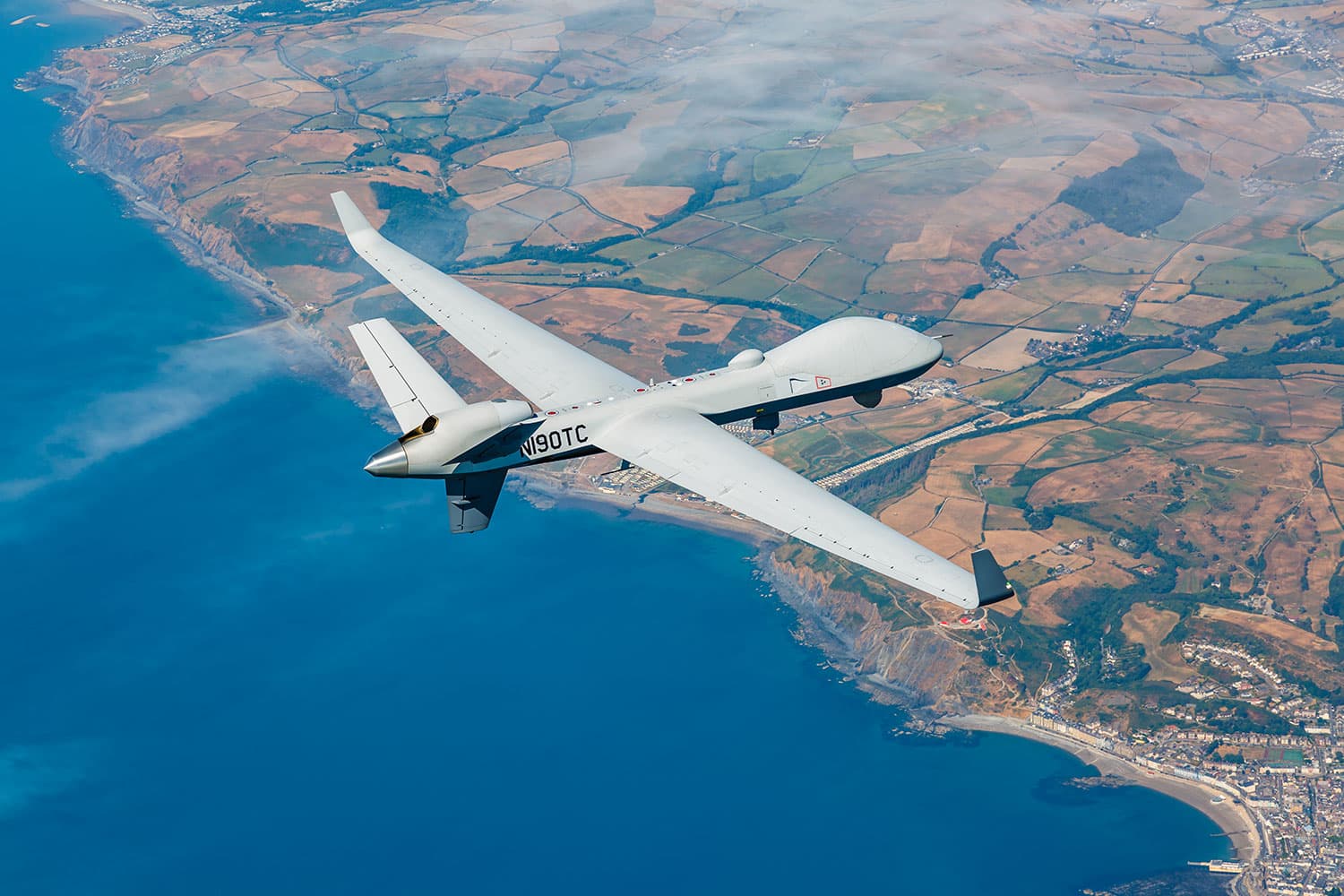
The export franchise and the successor to the Reaper: a long-endurance remotely piloted aircraft certified to fly in civil airspace, with SeaGuardian adding maritime surveillance and anti-submarine warfare payloads. Under contract with Belgium, Canada, Denmark, Germany, India, Japan, Poland, Taiwan, the UK and US SOCOM, it is what turns GA-ASI from a US program house into a global one. Weapons integration is continuous, most recently Paveway IV and Brimstone 3 qualification on the RAF's Protector RG Mk1 and Kongsberg Joint Strike Missile work.
In production and delivery across ten national customers.
Customers10 nations under contract, roughly $12B of signed deals
Largest Order31 aircraft for India (October 2024, roughly $3.3B)
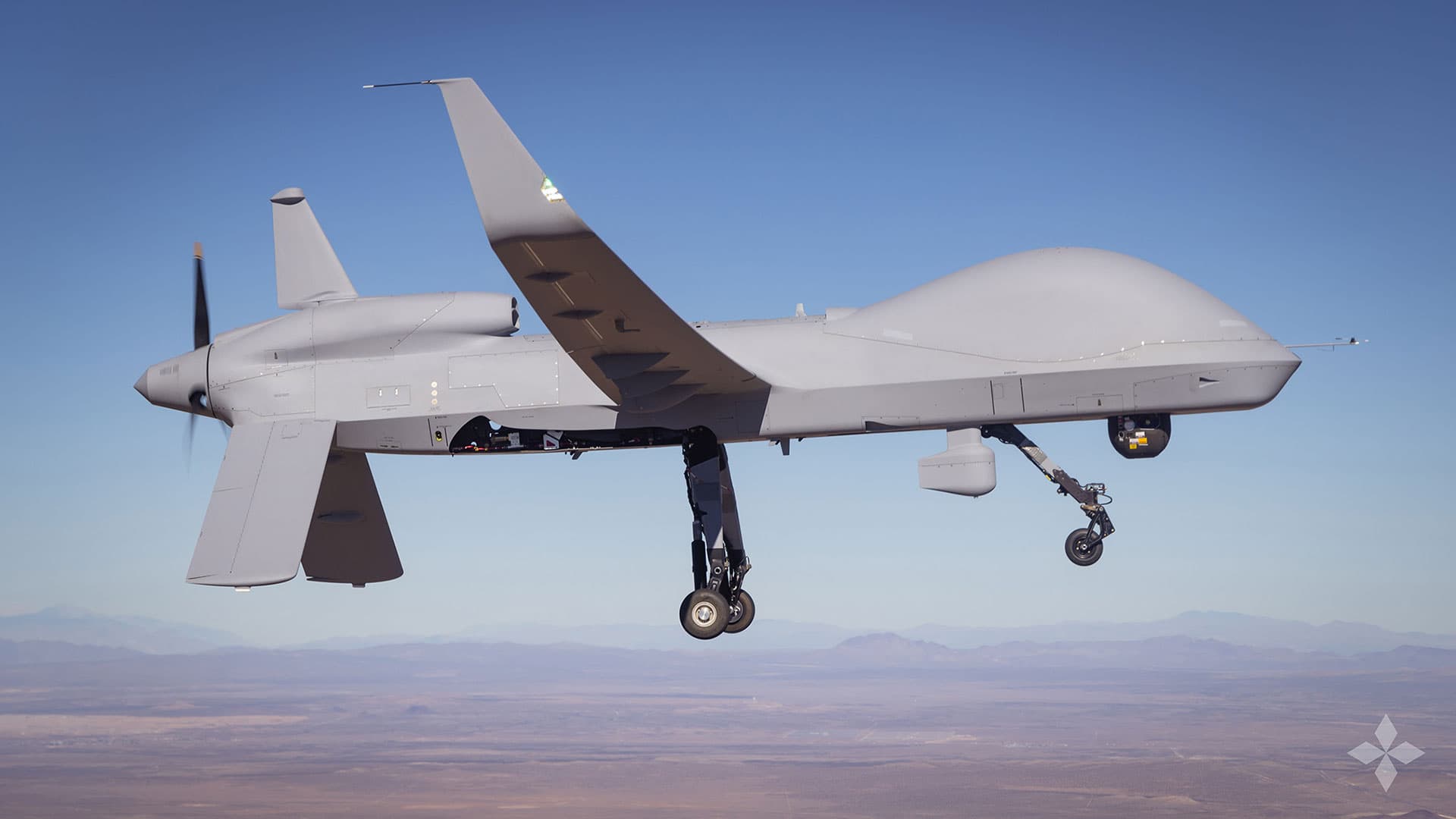
The Army's medium-altitude long-endurance aircraft, still being upgraded rather than replaced. The Extended Range variant carries communications intelligence, synthetic aperture radar and moving-target indicator payloads on a modular architecture, and in April 2026 the Army added an electronic intelligence sensor, integrated with Sierra Nevada Corporation, so it can find and geolocate integrated air defense systems while standing off from them.
In service with the US Army; ELINT upgrade contracted April 2026.
Latest UpgradeELINT sensor integration contracted April 15, 2026
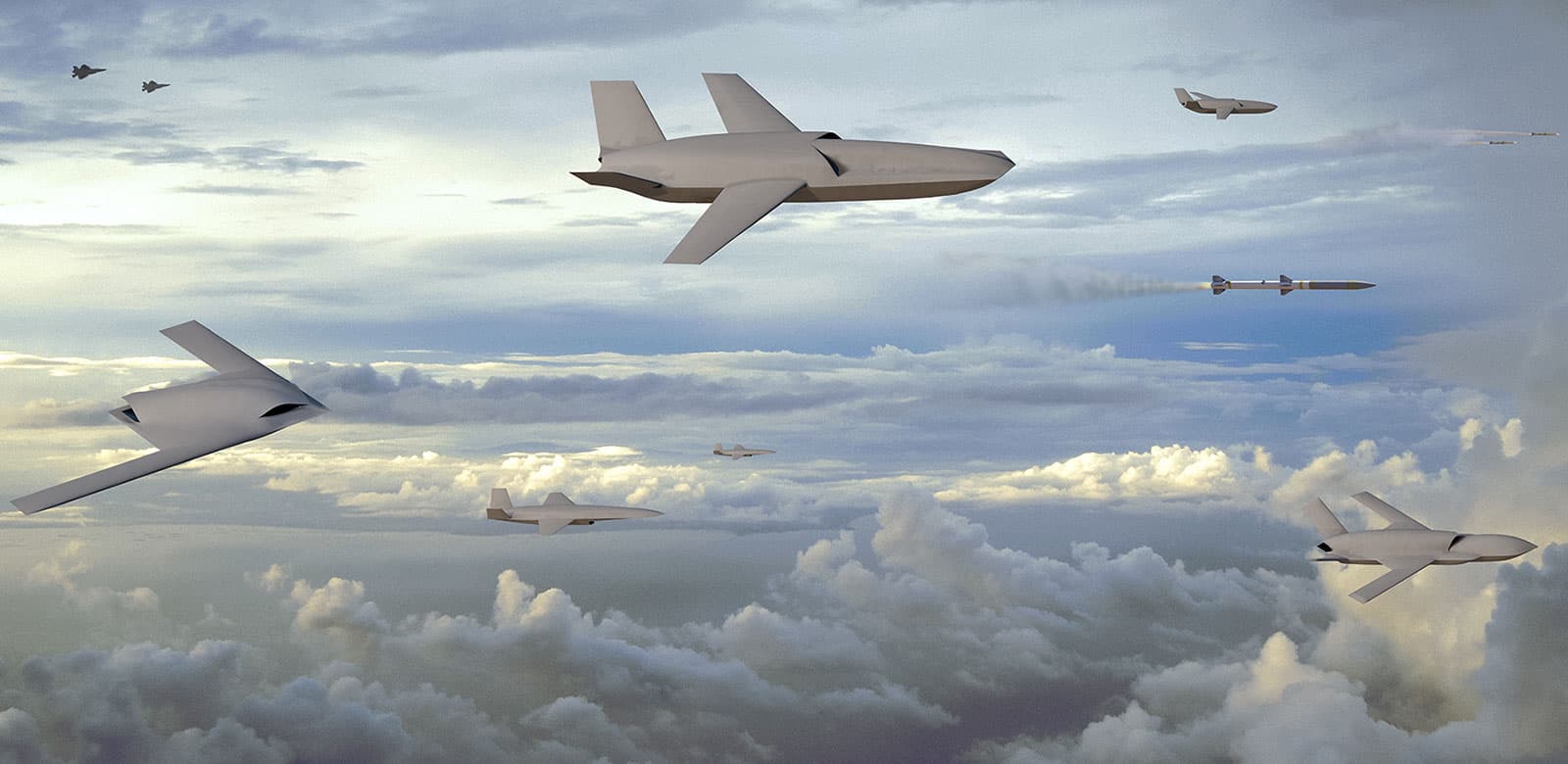
A family of uncrewed combat aircraft built on one common core chassis, which is where the FQ-42A's speed came from: Gambit 1 for long-endurance ISR, Gambit 2 for air-to-air, Gambit 3 as an advanced trainer and target, Gambit 4 for stealthy long-endurance reconnaissance, Gambit 5 as a carrier-capable CATOBAR design, and Gambit 6, revealed in November 2025, adding air-to-ground strike. GA-ASI is marketing the family to international CCA customers and used Gambit 5 as the basis for the Navy carrier CCA design study awarded in October 2025.
Design family in development and marketing; Gambit 5 underpins the US Navy carrier-based CCA design effort.
Variants6 announced, all sharing a common core chassis
Navy Design StudyCarrier-based CCA conceptual design contract, October 2025
A clean-sheet medium-altitude long-endurance unmanned aircraft GA-ASI unveiled in August 2026 as its answer to whatever comes after the MQ-9 Reaper. No images or detailed specifications have been released. Spokesman C. Mark Brinkley said Wildfire meets every item on the Pentagon's Massed Modular Aircraft wish list and can be delivered years earlier than the current schedule, while also saying the design is not dependent on that program. After Iran combat losses reached about 45 Reapers, Secretary Troy Meink on September 14, 2026 set MMA inventory goals of 100 aircraft in 2029 and 500 by 2032 at about $10 million a copy.
Design unveiled August 20, 2026. MMA vendor selection targeted by the end of 2026. Air Force inventory goals are now 100 in 2029 and 500 by 2032. No flight article announced.
ProgramPitched at DIU Massed Modular Aircraft; company says Wildfire is not dependent on that award
Air Force Target PriceAbout $10M per aircraft after the September 2026 acceleration (service target, not a GA-ASI quote)
What's Next
Complete Mojave STOL critical design review and first flight
After the September 16, 2026 Pocheon battlefield short-field demonstration with Hanwha Aerospace, GA-ASI said a production-representative Mojave STOL is due for critical design review in November 2026, with first flight in 2027, under the 2025 co-development and co-production pact aimed at the ROK Ministry of National Defense, the US Department of War, and other customers.
November 2026 (CDR); 2027 (first flight)
Open the Dayton innovation hub
GA-ASI said on September 14, 2026 it will open a 22,000-square-foot hardware, software, and autonomy hub in Dayton, Ohio, in spring 2027 near Wright-Patterson Air Force Base, with a mission operations center and about 50 jobs at the start. The addition expands the company's local footprint more than sevenfold from the 2014 Dayton-area site. JobsOhio said assistance will be made public after a final agreement is executed.
Spring 2027
Deliver the first production FQ-42A aircraft
The June 2026 award started production but no delivery date has been announced. Full-scale manufacturing was underway by July 28, 2026. The Air Force wants at least 150 CCAs fielded from Increment 1 by the end of the decade, split with Anduril in proportions it has declined to disclose, so the first delivered tails are the first real evidence of how that split lands. Secretary Troy Meink on September 14, 2026 raised the in-service target to at least 500 CCAs by 2032 and named the jet FQ-42A Vengeance.
By 2030
See which mission autonomy wins the CCA down-select
The Air Force runs two six-month competitive phases, funded for Anduril, RTX Collins Aerospace and Shield AI, before naming a primary mission-autonomy provider for CCA Increment 1 by summer 2027. General Atomics holds one of the six baseline autonomy contracts but is not in the funded phase, and Collins' Sidekick software is what has flown the YFQ-42A, so the down-select decides who owns the most valuable layer of GA-ASI's flagship program. A July 21, 2026 large-force exercise showed a CCA test aircraft and a manned F-5 sharing TacACE software and IRST Multi-Ship Ranging over a beyond-line-of-sight link, which GA-ASI presented as evidence that AMS-GRA-compliant sensors from different companies can interoperate.
Summer 2027
Convert the Navy carrier CCA design study into a program
GA-ASI has been designing a carrier-capable Collaborative Combat Aircraft for the Navy since October 2025, with the modular Gambit 5 as its basis. Carrier qualification is the hardest environment in uncrewed aviation and the Navy has not yet committed to a production program.
2027
Clear the Massed Modular Aircraft down-select with Wildfire
The Defense Innovation Unit-led Massed Modular Aircraft competition, which Wildfire entered on August 20, 2026, drew what Air Force officials described as a very robust industry response from both traditional primes and newer entrants, including Swarm Aero's Gamera unveil on September 14. Air Force officials still plan to select MMA vendors by the end of 2026, the gate that decides whether Wildfire becomes GA-ASI's actual MQ-9 successor program rather than a design unveiling. After combat losses in operations against Iran reached at least 45 Reapers, Secretary Troy Meink on September 14, 2026 set inventory goals of 100 MMA aircraft in 2029 and 500 by 2032 at about $10 million a copy, replacing the earlier public figures of at least 180 aircraft and 20 mission-ready tails by fiscal 2031.
End of 2026
Begin MQ-9B deliveries to India
India ordered 31 MQ-9B aircraft in October 2024 in GA-ASI's largest export deal, but first deliveries are not expected before January 2029, which is why the Indian Navy signed a 30-month lease for two more Sea Guardians in August 2026 to bridge the gap. No newer delivery date has been published.
January 2029
Convert the Fujitsu Japan MOU into a binding support framework
GA-ASI and Fujitsu signed an MOU on August 26-27, 2026 to examine domestic MQ-9B maintenance and support in Japan. The next step is turning that exploratory agreement into a definitive framework covering avionics maintenance, parts management, training and supply chain, in time to support Japan's planned fiscal-year-2027 start of MQ-9B deployment with the Maritime Self-Defense Force.
FY2027
Deliver Italy's two additional MQ-9A Block 5 Reapers
The Italian Air Force ordered two more MQ-9A Block 5 Reapers plus ground control stations on September 8, 2026, as a Foreign Military Sale through the US Air Force. GA-ASI said delivery is due at the end of 2027, extending a more-than-20-year MQ-9A relationship that still covers ISR over Italy, the Mediterranean, and NATO operations.
End of 2027
Operations & Revenue
StatusOperational
Producing MQ-9B SkyGuardian and SeaGuardian for ten national customers, sustaining the MQ-9 Reaper and MQ-1C Gray Eagle fleets, and now standing up Collaborative Combat Aircraft production: the FQ-42A Vengeance entered production in June 2026 and the main facility was converted to six CCAs a month by July, with a high-rate low-observable coating facility completed. Flight test of the YFQ-42A resumed May 21, 2026 after an April 6 autopilot mishap destroyed a test article. On July 21 a CCA test aircraft and a Tactical Air Support F-5 Advanced Tiger closed a kill chain with Infrared Search and Track Multi-Ship Ranging over a beyond-line-of-sight link. The MQ-9A Reaper line is still selling: Italy ordered two more Block 5 aircraft on September 8, 2026, for delivery at the end of 2027. A second growth line is Wildfire, the clean-sheet MQ-9 successor GA-ASI pitched in August 2026 for the Pentagon's Massed Modular Aircraft competition, which the Air Force accelerated in early September after about 45 Reaper combat losses. Development work also spans the Gambit family, a Navy carrier-based CCA design study awarded in October 2025, the X-68A LongShot air-launched drone, and the Mojave STOL aircraft, which on September 16, 2026 completed what GA-ASI calls the first MALE battlefield short-field landing and relaunch, at a Republic of Korea Army live-fire range with Hanwha Aerospace. On September 14, 2026 GA-ASI said it will open a 22,000-square-foot Dayton innovation hub in spring 2027 near Wright-Patterson for USAF hardware, software, and autonomy work. GA-ASI supplies the airframe and the production capacity; the autonomy software layer on CCA is competed separately, where it holds a baseline contract but is not among the three vendors funded for the current competitive phase.
Revenue Streams
US military aircraft production and sustainment
The legacy base: MQ-9 Reaper and MQ-1C Gray Eagle production, upgrades and sustainment for the Air Force and Army, including the April 2026 Gray Eagle ELINT upgrade contract with Sierra Nevada Corporation and Italy's September 8, 2026 order for two more MQ-9A Block 5 Reapers, due at the end of 2027.
International MQ-9B sales
Foreign military and direct commercial sales of MQ-9B SkyGuardian and SeaGuardian across ten customers, roughly $12 billion of signed deals, plus the weapons-integration work that keeps them competitive: Paveway IV and Brimstone 3 on the UK Protector, Kongsberg Joint Strike Missile integration, and an MBDA collaboration on European missiles.
Collaborative Combat Aircraft production
The growth line: the FQ-42A production contract awarded June 17, 2026 as one of two CCA primes, with Increment 1 targeting at least 150 aircraft by the end of the decade and further production lots to be awarded.
Services, training and mission systems
Company-operated flight test and training, including a decade of operations at its North Dakota Flight Test and Training Center, plus radars and mission systems sold alongside the aircraft.
Key Metrics
Employees
~5,000 at GA-ASI (third-party estimates; the company does not disclose headcount). Parent General Atomics lists 13,000 employees.
Est. Annual Revenue
Roughly $2.4B to $2.5B a year by third-party estimates. GA-ASI is a wholly owned subsidiary of privately held General Atomics and publishes no financials; parent General Atomics still shows about $3.2 billion of revenue on the Forbes private-company profile last updated February 10, 2026, with 13,000 employees.
CCA Production Rate
Main production facility converted to 6 CCAs per month (company statement, July 2026)
CCA Increment 1 Target
At least 500 CCAs in service by 2032 (Meink, Sept 14, 2026), up from over 150 by the end of the decade; Increment 1 production with Anduril already underway; program goal near 1,000 aircraft
Predator-Series Flight Hours
9 million+ across the Predator line
MQ-9B Customers
Belgium, Canada, Denmark, Germany, India, Japan, Poland, Taiwan, the UK and US SOCOM, against roughly $12B of signed deals
Largest Export Order
31 MQ-9B aircraft for India, signed October 2024, roughly $3.3B; first deliveries no earlier than January 2029
CCA Autonomy Position
Holds one of six baseline six-year mission-autonomy contracts but is not among the three funded for the first competitive phase (Anduril, RTX Collins Aerospace, Shield AI); Collins' Sidekick software flies the YFQ-42A, and a primary provider is chosen by summer 2027
Latest MQ-9A Order
Italy: two MQ-9A Block 5 Reapers plus ground control stations, ordered Sept 8, 2026, deliveries end of 2027
Timeline
2026YFQ-42A named Dark Merlin, then lost in a test mishap
GA-ASI names the aircraft YFQ-42A Dark Merlin in February 2026. On April 6 a test article is destroyed shortly after takeoff from the company's California desert airfield when the autopilot miscalculates the aircraft's weight and center of gravity. There are no injuries, but the aircraft is a total loss.
2026Return to flight after a software fix
The YFQ-42A resumes flight testing on May 21, 2026, six weeks after the mishap, following a joint Air Force and GA-ASI safety review and software remediation of the autopilot fault. President David R. Alexander: 'It's been said that you learn more from your setbacks than your successes.'
2026Gray Eagle gets an ELINT upgrade
On April 15, 2026 the US Army contracts GA-ASI to add electronic intelligence to the MQ-1C Gray Eagle Extended Range, integrating Sierra Nevada Corporation radar-detection and signal-collection technology so the aircraft can identify and geolocate integrated air defense systems from standoff range. It joins COMINT, synthetic aperture radar and moving-target indicator payloads already on the platform.
2026Air Force orders the FQ-42A into production
On June 17, 2026 the Air Force awards GA-ASI a production contract for the FQ-42A alongside Anduril's FQ-44A, four months ahead of schedule. Contract values are classified. The service targets at least 150 CCAs from Increment 1 by the end of the decade at roughly less than $30 million per tail, about a third of an F-35, against an eventual goal near 1,000 aircraft. Air Force acquisition executive Col. Timothy Helfrich called CCA 'the next evolution of airpower' and would not say how lots divide between the two companies.
2026Production line converted to six CCAs a month
At Farnborough in July 2026 GA-ASI says it has transitioned its main production facility to build six CCAs per month and completed a high-rate low-observable coating facility, the industrial step that separates a prototype program from a fielded fleet. The same week it qualifies Paveway IV and Brimstone 3 on the RAF's Protector RG Mk1, commits to weapons integration with MBDA, and advances Kongsberg Joint Strike Missile integration on MQ-9B.
2026India leases two more Sea Guardians as a bridge
On August 17, 2026 India's Ministry of Defence signs a roughly 1,943 crore rupee (about $203 million) 30-month lease for two MQ-9B Sea Guardians for the Navy, bridging the gap between the expiry of its existing lease in early 2027 and deliveries of the 31 aircraft ordered in 2024, which are not expected before January 2029.
2026Unveils Wildfire as an MQ-9 Reaper successor design
On August 20, 2026 GA-ASI unveils Wildfire, a clean-sheet unmanned aircraft design entered into the Pentagon's Massed Modular Aircraft competition to succeed the MQ-9 Reaper. The design targets a 10,000-nautical-mile ferry range, the ability to carry up to four AGM-158C LRASM missiles, and mass semi-autonomous swarming of up to 100 aircraft at a unit cost under $30 million, aimed at replacing Reaper losses that reportedly reached at least 45 aircraft during the Iran conflict.
2026Signs Japan support MOU with Fujitsu ahead of MQ-9B deployment
On August 27, 2026 GA-ASI and Fujitsu sign a memorandum of understanding to examine a framework under which Fujitsu would provide domestic maintenance and operational support for MQ-9B in Japan, covering avionics maintenance, parts management, maintenance training and supply-chain services. Japan's Ministry of Defense plans to field 23 MQ-9B aircraft with the Japan Maritime Self-Defense Force starting in fiscal year 2027, and the MOU is the first step toward building the in-country support base that deployment needs.
2026Tom Burke joins as UK international-strategy vice president
On August 27, 2026 GA-ASI named Tom Burke, a retired Royal Air Force Air Vice-Marshal, vice president of International Strategic Development for the United Kingdom. The hire deepens the company's UK bench as the RAF's Protector RG Mk1 (MQ-9B) weapons qualification and Paveway IV / Brimstone 3 work continue, and as European CCA interest grows around the Gambit family.
2026Air Force names FQ-42A Vengeance and raises CCA target to 500 by 2032
On September 14, 2026 at the Air and Space Forces Association conference, Secretary of the Air Force Troy Meink formally named GA-ASI's Collaborative Combat Aircraft the FQ-42A Vengeance, replacing the company name Dark Merlin, and said the service intends to have at least 500 CCAs in service by 2032. Increment 1 production with Anduril is already underway. The same speech set Massed Modular Aircraft inventory goals of 100 aircraft in 2029 and 500 by 2032, the program Wildfire is pitched into.
2026Announces Dayton innovation hub near Wright-Patterson
On September 14, 2026 GA-ASI said it will open a 22,000-square-foot innovation hub in Dayton, Ohio, in spring 2027 near Wright-Patterson Air Force Base, expanding its local footprint more than sevenfold. The site will focus on hardware, software, and autonomy for U.S. Air Force programs, add a mission operations center for remote flight control, and start with about 50 jobs. It is in addition to GA-ASI's existing Dayton-area location opened in 2014.
2026Mojave STOL completes battlefield short-field ops in South Korea
On September 16, 2026 GA-ASI and Hanwha Aerospace completed what they call the first simulated-battlefield short-field operations by a medium-altitude, long-endurance uncrewed aircraft. A Mojave STOL took off from the Republic of Korea Army 513th Aviation Battalion runway in Pocheon, landed on a rough tank-and-artillery maneuver trail at Seungjin Training Field with dual weapon rails and inert payloads, took off again, and returned to the battalion. GA-ASI said a production-representative Mojave STOL is due for critical design review in November 2026, with first flight in 2027.
2026Italy orders two more MQ-9A Block 5 Reapers
On September 8, 2026 the Italian Air Force ordered two new MQ-9A Block 5 Reaper remotely piloted aircraft from GA-ASI, plus ground control stations, as a Foreign Military Sale through the US Air Force. Deliveries are due at the end of 2027. Italy has flown MQ-9A for more than 20 years on ISR missions over Italy, the Mediterranean, and in NATO operations. MQ-9A Block 5 endurance is up to 26 hours and payload is 4,600 pounds, including 3,750 pounds of external stores.
2026CCA and manned F-5 close a kill chain with IRST Multi-Ship Ranging
On September 15, 2026 GA-ASI said that on July 21, during a large force exercise, a CCA test aircraft and a Tactical Air Support F-5 Advanced Tiger used Infrared Search and Track Multi-Ship Ranging to find, track, and engage an airborne target. Both aircraft flew GA-ASI TacACE software based on the Autonomy Government Reference Architecture Agile Mission Suite, and coordinated over a beyond-line-of-sight data link. GA-ASI framed the test as proof that AMS-GRA-compliant sensors from different companies can interoperate, and as evidence the CCA is ready for production.
2026FQ-42 Vengeance test article delivered to Creech AFB
GA-ASI said a new FQ-42 Vengeance arrived at Creech AFB, Nevada, on 18 September 2026 for test and evaluation with Air Force units. The company said FQ-42 production is underway on company investment as government funding plans mature, and that it is positioned to deliver six aircraft per month. This is a test-article delivery, not the start of the June production contract.
2025YFQ-42A first flight, 15 months after contract award
The YFQ-42A makes its maiden flight in August 2025, going from contract award to first flight in 15 months, one of the fastest new fighter rollouts on record. GA-ASI credits its 'genus/species' approach of reusing a common core across aircraft types, the same idea behind the Gambit family.
2025Navy picks GA-ASI to design a carrier-based CCA
In October 2025 the US Navy contracts GA-ASI to develop conceptual designs for a carrier-capable Collaborative Combat Aircraft, emphasizing a modular platform that can be reconfigured and upgraded for the future carrier air wing. GA-ASI's Gambit 5 is its CATOBAR carrier-capable design.
2024Selected with Anduril to build CCA Increment 1 prototypes
In April 2024 the Air Force picks GA-ASI and Anduril to build and fly Collaborative Combat Aircraft production-representative test articles, eliminating Boeing, Lockheed Martin and Northrop Grumman. GA-ASI's entry becomes the YFQ-42A.
2024India orders 31 MQ-9B aircraft
India's Ministry of Defence signs for 31 MQ-9B high-altitude long-endurance aircraft in October 2024, 15 SeaGuardians for the Navy and eight SkyGuardians each for the Army and Air Force, in a deal worth roughly $3.3 billion. India becomes the largest MQ-9B customer by both value and fleet size, with first deliveries not expected before January 2029.
1995Predator enters service over the Balkans
The RQ-1 Predator deploys to the Balkans, the first of the medium-altitude long-endurance aircraft that make GA-ASI the dominant supplier of armed and surveillance drones to the US military for the next two decades. The MQ-9 Reaper follows into Air Force service in 2007.
1993Spun out of General Atomics to build unmanned aircraft
General Atomics Aeronautical Systems is established in Poway, California as the unmanned-aircraft arm of privately held General Atomics, inheriting the Gnat 750 lineage that becomes the Predator. Neal Blue chairs it and Thomas J. Cassidy runs it as president.