In Development
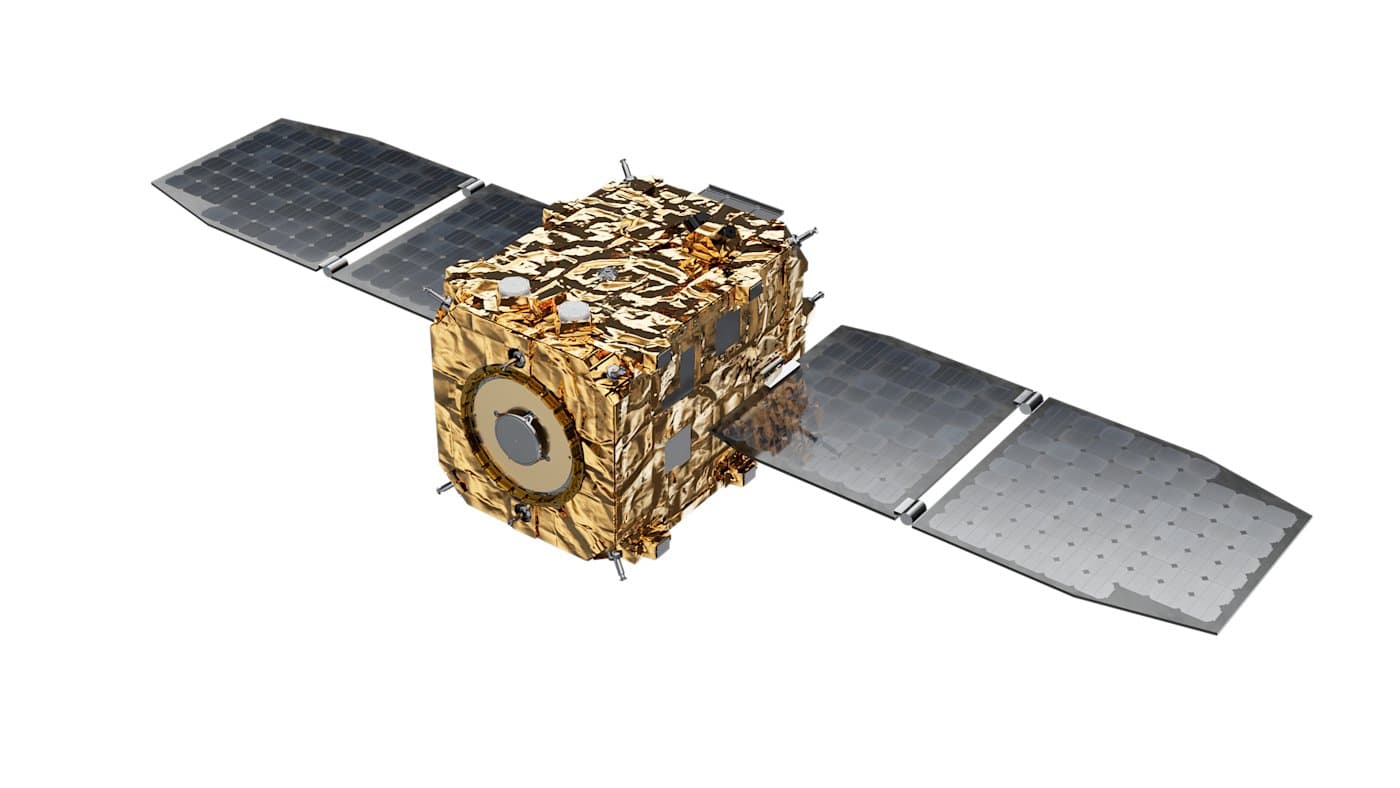
ADRAS-J2
Debris removal servicer built for Phase II of JAXA's Commercial Removal of Debris Demonstration program. It returns to the same spent H-IIA upper stage that ADRAS-J surveyed, captures it with a robotic arm, and deorbits it.
Astroscale is the only company in the world building a business purely around servicing what is already in orbit: removing debris, deorbiting dead satellites, extending the life of working ones, refueling them, and inspecting them.
Latest update Oct 19, 2026
01
Founded in Tokyo in 2013 by Nobu Okada and listed on the Tokyo Stock Exchange Growth market since June 2024 under ticker 186A, it operates across Japan, the UK, the US, France, and Israel. Its homepage lists 11 satellites in development, 2 launched and 43,800 cumulative in-flight operations hours. Its ADRAS-J spacecraft made history in 2024 as the first vehicle ever to approach and photograph a large piece of orbital debris up close, a discarded Japanese rocket upper stage, and it completed operations and began its own deorbit in March 2026. JAXA has since contracted the follow-on ADRAS-J2 at about 12 billion yen excluding tax (about 13.2 billion yen including tax, per the company mission page) to go back to that same rocket body and actually remove it with a robotic arm, now booked on Isar Aerospace's Spectrum rocket after Spectrum reached orbit on September 5, 2026. Alongside that flagship line Astroscale is preparing ELSA-M, billed as the world's first commercial end-of-life deorbit service and also booked on Spectrum; LEXI, a geostationary life-extension servicer; the Astroscale U.S. Refueler, which is set to perform the first refueling of a United States Space Force asset; and ISSA-J1, a 2027 mission that will inspect two retired Japanese satellites in different orbits on a single flight. On September 16, 2026 Astroscale Japan and Danish smallsat maker Space Inventor announced a joint LEO servicing architecture using standardized docking plates on Space Inventor buses. On September 11 it reported FY2027 Q1 (three months to July 31) IFRS revenue of 1.20 billion yen and an operating loss of 2.75 billion yen, held full-year guidance, and disclosed that its French subsidiary won a 13.2 million euro France 2030 deorbit demonstration with Exotrail and Eutelsat. It was not selected for the UK Space Agency's COSMIC Phase 3 debris-removal contract. Cash stood at 34.95 billion yen after the June 30.6 billion yen Hulic and SKY Perfect JSAT financing; the order backlog was 36.35 billion yen at end-July.
astroscale.comUpdated Sep 17, 2026
02
Early 2027
Launch the Astroscale U.S. Refueler (Provisioner) as part of the USSF-23 mission, alongside an Orbit Fab propellant depot and a Starfish Space servicing tug. Q1 materials said correlation vibration tests were complete and environmental tests were due to start in September 2026, still aimed at launch during the fiscal year ending April 2027. The sequence has never been done operationally: dock with an AFRL Tetra-5 spacecraft in geostationary orbit, transfer hydrazine, verify with a hyperspectral leak check, refuel from the Orbit Fab depot, and repeat on the Tetra-5 client.
Spring 2027
Launch the roughly 650 kg multi-orbit inspection spacecraft on a NewSpace India Limited PSLV rocket from the Satish Dhawan Space Centre, the first dedicated PSLV launch ever procured by a Japanese entity, then approach and survey two retired Japanese satellites, ALOS and ADEOS-II, on a single flight using propulsion, electro-optical cameras, and proximity navigation. A commercial company has never inspected clients in two different orbits on one mission. The project (funded through Japan's MEXT SBIR program) is expected to run through Phase III with completion targeted for March 2028.
2027
TargetFiscal year ending April 2027
Deliver IFRS revenue of 7.0 to 9.0 billion yen and project revenue of 12.5 to 17.0 billion yen for the fiscal year ending April 2027. Q1 (to July 31, 2026) came in at 1.20 billion yen IFRS revenue and 2.02 billion yen project income, behind a linear pace because of delayed cost and revenue recognition; Astroscale held full-year guidance on September 11, 2026 and said it will consider an upgrade if new contracts contribute. The France 2030 Exotrail subcontract (13.2 million euro) was signed after quarter-end. Next scheduled results disclosure is December 11, 2026.
2027-2028
Complete the Phase II servicer for JAXA's debris removal program and return to the spent H-IIA upper stage that ADRAS-J surveyed, this time capturing it with a robotic arm and deorbiting it. On September 1, 2026 Astroscale selected Isar Aerospace to launch ADRAS-J2 on a Spectrum rocket from Andoya Spaceport, Norway. Spectrum reached orbit on September 5, 2026. Q1 materials said capture-mechanism vibration tests at Tsukuba were complete and satellite AIT had started. It would be the first commercial removal of a large piece of debris from orbit.
2029-2030
Astroscale France's 13.2 million euro subcontract, disclosed September 11, 2026, supplies rendezvous, proximity operations and docking for Exotrail's France 2030 LEO deorbit demonstration of an end-of-life Eutelsat OneWeb satellite. It is the French subsidiary's first on-orbit mission. The demo is planned for 2029-2030.
FY2028 or later
Fly the ELSA-M in-orbit demonstration on Isar Aerospace's Spectrum rocket and dock with a prepared client satellite to deorbit it, converting a decade of capture research into a service satellite operators can buy before launch. Q1 materials said thermal-vacuum tests at Airbus were complete, with EMC tests next. Spectrum reached orbit on September 5, 2026. The launch itself is still Astroscale's FY2028 (from May 2027) or later.
Undated
Astroscale Japan and Space Inventor announced on September 16, 2026 a joint architecture that puts standardized docking plates and power/data channels on Space Inventor smallsat buses so an Astroscale servicer can dock, diagnose, supply auxiliary power and adjust altitude. The companies said they will continue ground-segment validation and integrate the hardware onto upcoming customer buses ahead of in-orbit demonstration campaigns. No demonstration date, first customer, or contract value was disclosed.
03
Astroscale Japan said on September 1, 2026 it selected Isar Aerospace to launch its ADRAS-J2 debris-removal spacecraft on a Spectrum rocket from Andoya Spaceport in Norway, targeting a 2027-2028 window. ADRAS-J2, contracted under JAXA's Commercial Removal of Debris Demonstration program, will attempt to capture and deorbit the same derelict rocket upper stage that Astroscale's ADRAS-J spacecraft inspected up close before completing its mission earlier this year. It is Isar's second Astroscale launch contract, after being picked in March 2026 to fly the ELSA-M demonstration mission.
Astroscale Japan's board finalized the contract for Phase II of JAXA's Commercial Removal of Debris Demonstration program, disclosed in an August 19 regulatory filing at roughly ¥12 billion ($82.1 million). The ADRAS-J2 spacecraft will grapple the same H-2A rocket upper stage currently being inspected by Astroscale's ADRAS-J and deorbit it, targeting launch in the company's fiscal year 2028.
04
Debris removal servicer built for Phase II of JAXA's Commercial Removal of Debris Demonstration program. It returns to the same spent H-IIA upper stage that ADRAS-J surveyed, captures it with a robotic arm, and deorbits it.
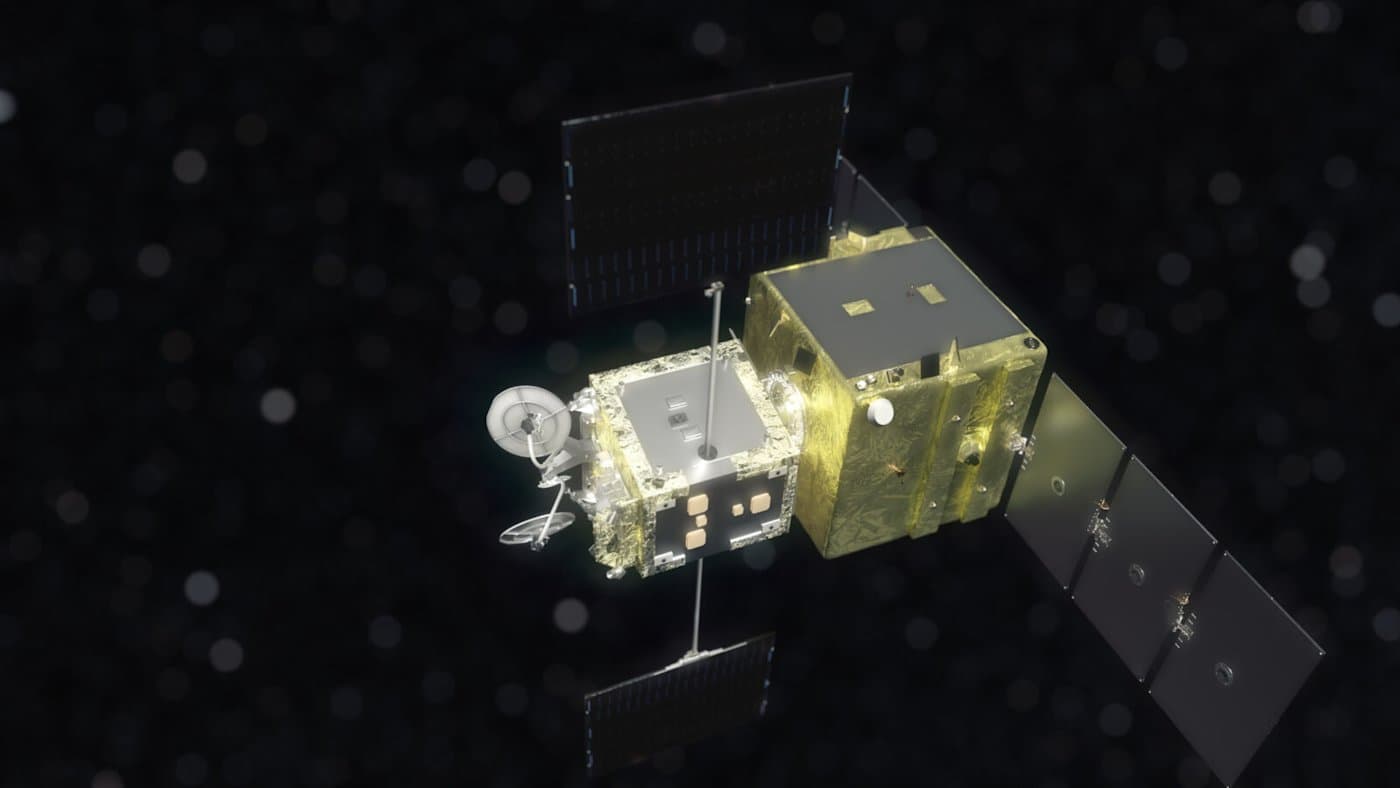
Commercial end-of-life servicer that docks with a prepared client satellite using a magnetic docking plate and drags it down to a disposal orbit. Designed to service multiple satellites on a single mission.
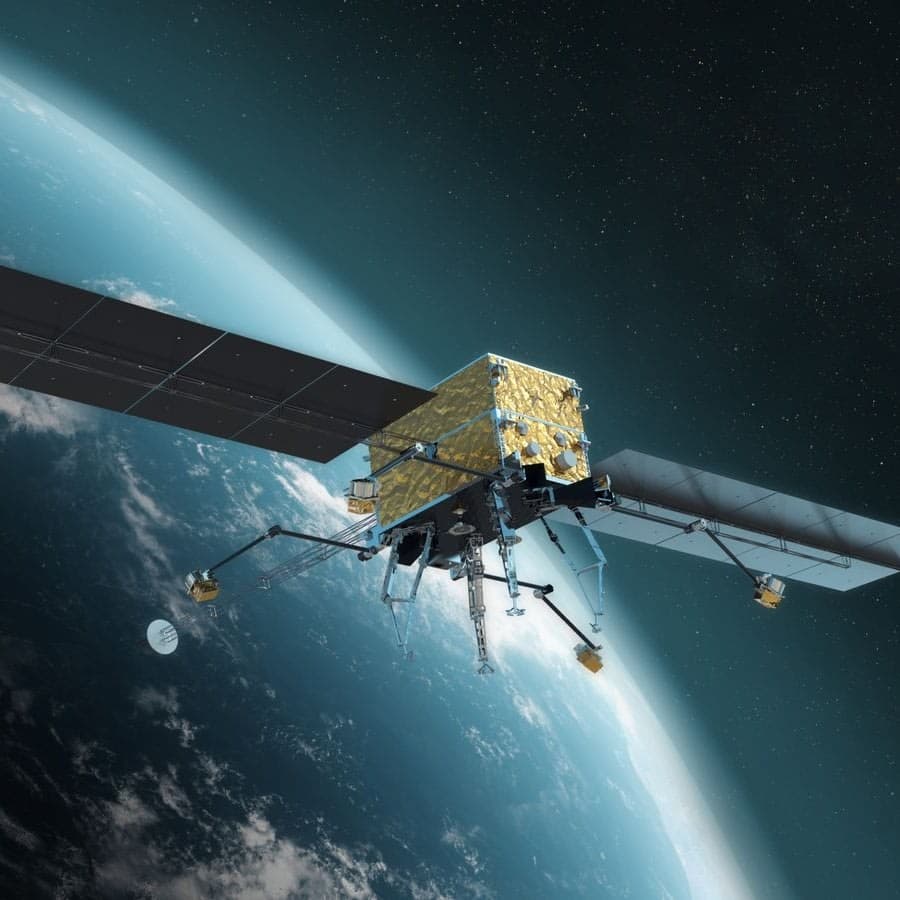
Life Extension In-Orbit servicer for geostationary satellites. It docks with an aging spacecraft and takes over stationkeeping and attitude control, adding years of revenue-generating life to a satellite that would otherwise be retired.
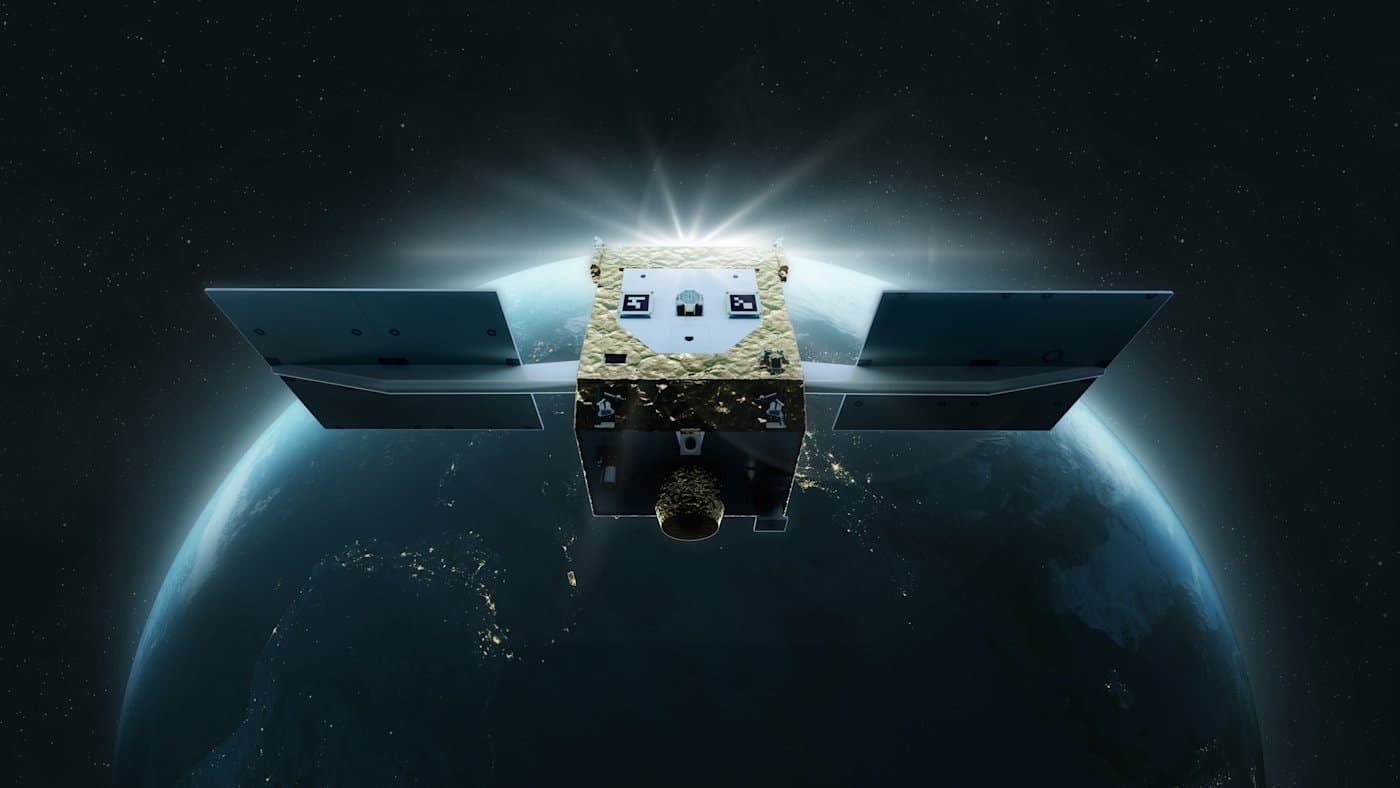
Roughly 300 kg refueling spacecraft that transfers hydrazine to satellites in geostationary orbit, and refuels itself from an Orbit Fab propellant depot so it can service more than one client per mission.
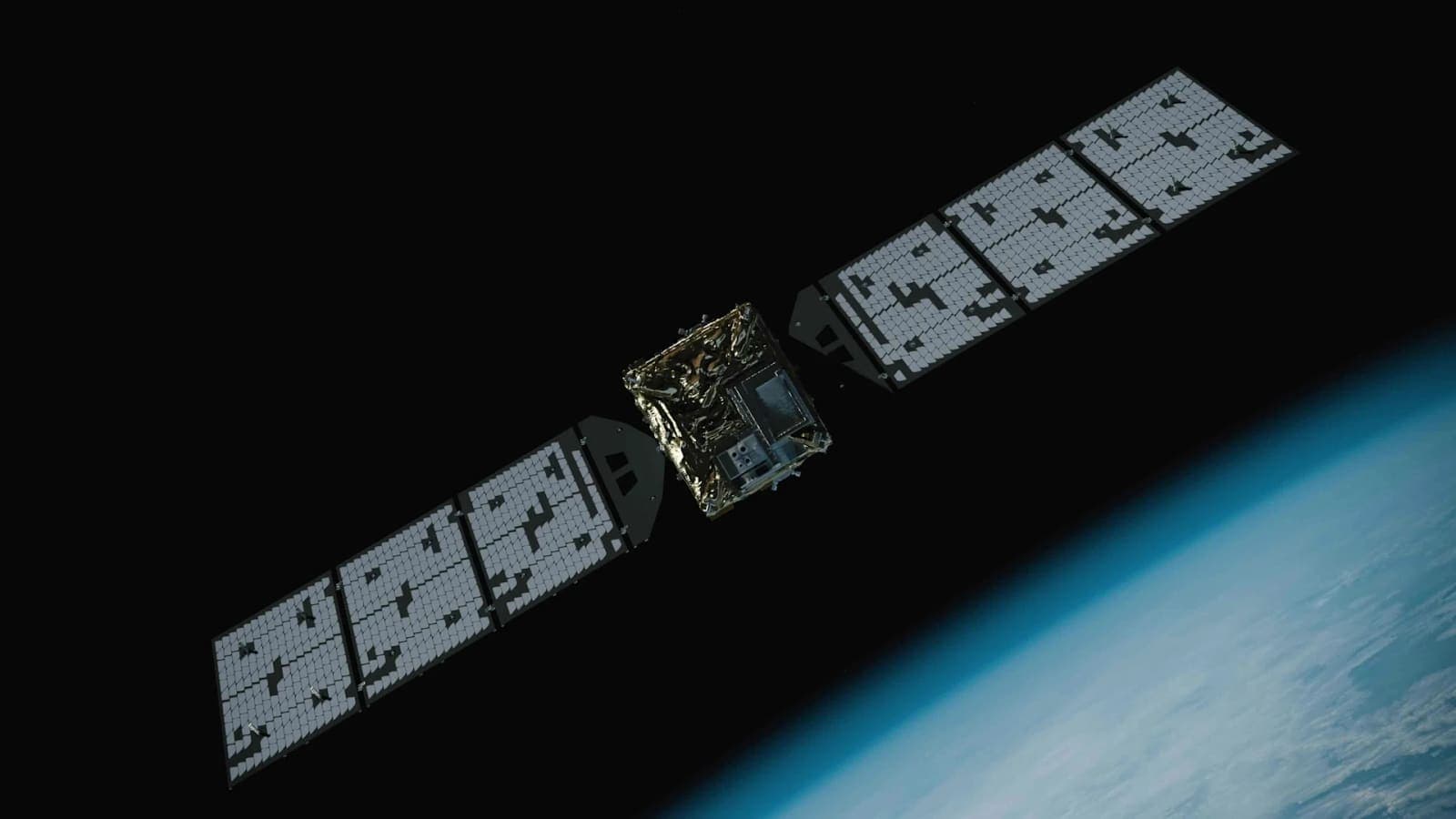
In-situ Space Situational Awareness inspection spacecraft that maneuvers to and photographs two retired Japanese satellites in different orbits on a single mission, using propulsion, electro-optical cameras, and proximity navigation without physical contact.
05
(3 months to July 31, 2026); FY to April 2026 was ¥5.94B. Full-year FY2027 guidance held at ¥7.0B-9.0B IFRS revenue and ¥12.5B-17.0B project income.
¥11.5B project income. Still the latest full-year print as of September 17, 2026; Q1 FY2027 (to July 31) was ¥1.20B IFRS revenue.
¥6.70B net loss. Still the latest full-year print as of September 17, 2026; Q1 FY2027 operating loss was ¥2.75B.
¥2.02B project income; ¥2.75B operating loss; guidance held
(¥25.85B contracted, ¥10.50B confirmed but uncontracted), down from ¥37.94B at end-April 2026
(~$82.1M) excluding tax, finalized via an August 19, 2024 board approval and regulatory filing. Astroscale's ADRAS-J2 mission page now states the JAXA Phase II contract is approximately ¥13.2B including tax, matching a 10% consumption-tax add-on to the ¥12B figure rather than a new award.
06
Operating status
Operational (Public, Loss-Making)
Astroscale has flown two servicing missions and has a stacked demonstration slate: ADRAS-J2 for JAXA (Spectrum, Japan FY2027), ELSA-M booked on Spectrum after thermal-vacuum tests at Airbus, the Astroscale U.S. Refueler for the Space Force (FY ending April 2027), ISSA-J1 for spring 2027 on PSLV, and a 13.2 million euro France 2030 OneWeb deorbit demo with Exotrail (2029-2030). On September 16, 2026 Astroscale Japan and Space Inventor announced a joint LEO servicing architecture using standardized docking plates, with ground tests continuing and no demo date. It was not selected for UK COSMIC Phase 3, disclosed with the September 11, 2026 Q1 results. Q1 IFRS revenue was 1.20 billion yen against a 2.75 billion yen operating loss; guidance for the year to April 2027 was unchanged. Cash was 34.95 billion yen after the June 30.6 billion yen Hulic and SKY Perfect JSAT financing. The commercial LEXI life-extension contract remains unsigned, with payload and docking CDRs complete. ELSA-M's Spectrum launch is still Astroscale FY2028. Spectrum itself reached orbit on September 5, 2026, the flight heritage Astroscale had said it wanted before ELSA-M and ADRAS-J2 fly. The homepage lists 11 satellites in development, 2 launched and 43,800 cumulative in-flight hours.
Government Debris Removal Programs
Multi-year contracts from national space agencies to demonstrate and then perform active debris removal, led by JAXA's Commercial Removal of Debris Demonstration program (ADRAS-J and the roughly ¥12B ADRAS-J2). The UK Space Agency COSMIC Phase 3 award went to another operator, as Astroscale disclosed with its September 11, 2026 Q1 results. A new 13.2 million euro France 2030 OneWeb deorbit demonstration with Exotrail (2029-2030) is now the European government-backed deorbit line.
Commercial End-of-Life Services
Deorbit-as-a-service for satellite operators whose spacecraft carry an Astroscale docking plate, sold ahead of launch as a disposal guarantee. ELSA-M is the in-orbit demonstration of the commercial product.
GEO life-extension servicing through the LEXI servicer and in-space refueling through the Astroscale U.S. Refueler, which is contracted to transfer hydrazine to United States Space Force spacecraft and to refuel itself at an Orbit Fab depot.
Space Situational Awareness & Defense
Inspection and rendezvous-and-proximity-operations work for defense and intelligence customers, including Japan's Ministry of Defense (a responsive-space GEO satellite prototype, plus a roughly 1 billion yen contract awarded January 2026 to develop a satellite gripping mechanism system), the UK MoD's Orpheus mission, and the ISSA-J1 multi-orbit inspection demonstration.
07
How past announced dates turned out.
0/2announced dates hit on time
Win COSMIC Phase 3 UK national debris-removal contract
Target 2026 · Resolved Aug 1, 2026
Astroscale's FY2027 Q1 materials, published September 11, 2026, said another operator was selected for Phase 3 of the UK Space Agency COSMIC mission to capture two retired UK satellites. Astroscale had worked COSMIC from early phases since 2021. The company said Phase 3 was not in its FY2027 forecast, so guidance was unchanged, and that the non-cooperative rendezvous and robotic-capture work remains on ISSA-J1, ELSA-M and ADRAS-J2.
Launch ELSA-M and prove commercial end-of-life deorbiting
Target 2026-2027 · Resolved Mar 19, 2026
Astroscale's March 2026 contract announcement for Isar Aerospace's Spectrum rocket revealed the ELSA-M in-orbit demonstration had slipped to Astroscale's FY2028 (beginning May 2027) or later, at least a year past the 2026-2027 window the company had been citing as recently as mid-2025, because Isar wants several Spectrum flights under its belt first.
08
2026
Partners with Space Inventor on a LEO servicing architecture
On September 16, 2026 Danish smallsat manufacturer Space Inventor and Astroscale Japan announced a joint in-orbit servicing, maintenance and repair architecture for low Earth orbit. Standardized docking plates on Space Inventor buses are designed to mate with Astroscale's robotic grappling mechanisms, with power and data channels for diagnostics, auxiliary power and altitude adjustments. The teams said they will continue ground-segment validation and aim to integrate the interfaces onto upcoming customer buses ahead of in-orbit demonstration campaigns. No demo date was given.
FY2027 Q1 results and France 2030 deorbit contract
On September 11, 2026 Astroscale reported results for the three months ended July 31, 2026: IFRS revenue of 1.20 billion yen (down 4.4% year over year), project income of 2.02 billion yen (down 14.5%), an operating loss of 2.75 billion yen, and a net loss of 3.07 billion yen, citing delayed cost and revenue recognition on several projects. Cash rose to 34.95 billion yen after the June financing; the order backlog was 36.35 billion yen. The same day it disclosed that Astroscale France won a 13.2 million euro (about 2.36 billion yen) subcontract from Exotrail under France 2030 to supply rendezvous and docking for a 2029-2030 Eutelsat OneWeb deorbit demonstration, the French subsidiary's first on-orbit mission. Full-year FY2027 guidance was held.
Misses UK COSMIC Phase 3 debris-removal award
Astroscale's FY2027 Q1 materials disclosed that another operator was selected for Phase 3 of the UK Space Agency COSMIC national debris-removal mission, which would have captured two retired UK satellites. Astroscale had worked COSMIC from early phases since 2021. The company said Phase 3 was not in its FY2027 earnings forecast, so full-year guidance was unchanged, and that the non-cooperative rendezvous and robotic-capture work COSMIC would have demonstrated remains on ISSA-J1, ELSA-M, and ADRAS-J2.
Isar Spectrum reaches orbit, de-risking Astroscale's booked launches
On September 5, 2026 Isar Aerospace's Spectrum rocket reached low Earth orbit from Andoya Spaceport on its second flight, the first privately developed European orbital launch. Astroscale has booked Spectrum for both ADRAS-J2 (Japan FY2027 window) and ELSA-M (Astroscale FY2028), and had previously said it wanted Spectrum to build flight heritage before those missions fly.
Selects Isar Aerospace to launch ADRAS-J2
Astroscale Japan announced on September 1, 2026 that it selected Isar Aerospace to launch its ADRAS-J2 debris-removal spacecraft on a Spectrum rocket from Andoya Spaceport in Norway, targeting a 2027-2028 window. ADRAS-J2, contracted under JAXA's Commercial Removal of Debris Demonstration program, will attempt to capture and deorbit the same derelict rocket upper stage that ADRAS-J inspected up close before completing its mission earlier in 2026. It is Isar's second Astroscale-group launch contract, after being picked in March 2026 to fly Astroscale UK's ELSA-M demonstration mission.
FY2026 results: revenue up, losses continue, backlog down
On June 12, 2026 Astroscale reports results for the fiscal year ended April 30, 2026: project income of 11.5 billion yen and IFRS revenue of 5.94 billion yen, an operating loss of 9.98 billion yen, a net loss of 6.70 billion yen, and an order backlog of 37.94 billion yen, down 14.6 percent year over year. Guidance for the year to April 2027 calls for 7.0 to 9.0 billion yen of IFRS revenue and a continued operating loss.
¥30.6B strategic growth financing with Hulic and SKY Perfect JSAT
Astroscale announces a strategic capital and business alliance with SKY Perfect JSAT on May 19, 2026, then completes a combined ¥30.6B (~$209M) growth financing on June 5, 2026: a ¥16.3B Series 1 unsecured convertible bond and international zero-coupon convertible bonds due 2029, plus a roughly ¥2.15B increase in capital stock from a third-party share allotment to Hulic Co., Ltd. and SKY Perfect JSAT Corporation. Proceeds are earmarked for expanding production facilities in Japan and the UK, manufacturing the LEXI-P spacecraft, and working capital.
ISSA-J1 multi-orbit inspection mission revealed
On April 6, 2026 Astroscale unveils the client satellites and concept of operations for ISSA-J1, which will inspect two retired Japanese satellites, the ALOS Earth-observation spacecraft retired in 2011 and ADEOS-II which failed in 2003, in different orbits during a single 2027 mission. It is developed under Japan's MEXT SBIR Phase 3 fund for large-scale technology demonstrations.
2026
ADRAS-J completes operations and begins its own deorbit
On March 25, 2026 Astroscale announces that ADRAS-J has finished its mission and started deorbiting itself. Days later the mission receives Japan's Minister of Defense Award, recognition of how much the rendezvous data matters to national space-domain awareness.
Isar Aerospace selected to launch ELSA-M
In March 2026 Astroscale books Isar Aerospace's Spectrum rocket to launch the ELSA-M in-orbit demonstration, the mission intended to prove the world's first commercial end-of-life deorbit service for satellites fitted with a docking plate.
ESA contract for in-orbit refurbishment and upgrading
In January 2026 Astroscale UK wins a EUR 399,000 eight-month Phase A contract from the European Space Agency to design IRUS, an In-Orbit Refurbishment and Upgrading Service that would replace degraded or outdated subsystems such as batteries, solar panels, and onboard computers on satellites already in orbit. BAE Systems joins as a prospective servicing client, and the study sits inside ESA's Space Safety Programme and its goal of becoming debris neutral by 2040.
Second Ministry of Defense contract: gripping mechanism system
On January 5, 2026 Astroscale Japan announced a roughly 1 billion yen (~$6.4M) contract from Japan's Ministry of Defense to develop and ground-demonstrate a general gripping mechanism system able to securely grip national security satellites under a range of on-orbit conditions. The project runs from December 2025 through March 2028 and is Astroscale's second MoD award, following an earlier contract to develop a responsive-space GEO satellite prototype for space domain awareness.
2024
ADRAS-J2 contract finalized at ¥12B
JAXA selected Astroscale Japan for Phase II of the CRD2 program (ADRAS-J2) in April 2024 without disclosing a value. Astroscale Japan's board approved and finalized the contract terms at ¥12B (~$82.1M), disclosed in an August 19, 2024 regulatory filing, superseding an earlier internal estimate of roughly ¥13.2B and adding materially to the company's contracted backlog.
ADRAS-J makes the first close approach to a large piece of debris
Under Phase I of JAXA's Commercial Removal of Debris Demonstration program, ADRAS-J rendezvouses with a spent H-IIA upper stage that has been tumbling in orbit since 2009 and photographs it from close range, the first time any spacecraft has safely approached and surveyed an uncontrolled piece of large debris.
IPO on the Tokyo Stock Exchange Growth market
Astroscale Holdings lists in Tokyo under ticker 186A in June 2024, becoming the first publicly traded company whose business is orbital debris removal and satellite servicing.
2021
2013
09
$665Mdisclosed across 3 rounds with a stated amount
Cumulative disclosed raise · dated rounds
Private rounds (Series A through F)
2015-2023
INCJ, Mitsubishi Estate, Mitsubishi UFJ, Development Bank of Japan, SBI Investment, Seraphim, and others
IPO (Tokyo Stock Exchange Growth, ticker 186A)
Jun 2024
Public markets
Strategic growth financing (convertible bonds + equity)
May-Jun 2026
¥30.6B (~$209M) total: a ¥16.3B Series 1 unsecured convertible bond, international zero-coupon convertible bonds due 2029, and a roughly ¥2.15B capital stock increase from a third-party share allotment
Hulic Co., Ltd. and SKY Perfect JSAT Corporation (strategic capital alliance), plus international bond investors