Cosmoleap (大航跃迁) is a Chinese launch startup founded in February 2024 by Chen Shuguang. The legal parent, Shanghai Dahang Yueqian Aerospace Technology, is registered in Shanghai's Lingang free-trade zone; the Beijing Dahang Yueqian subsidiary does rocket design, R&D, production, and operations.
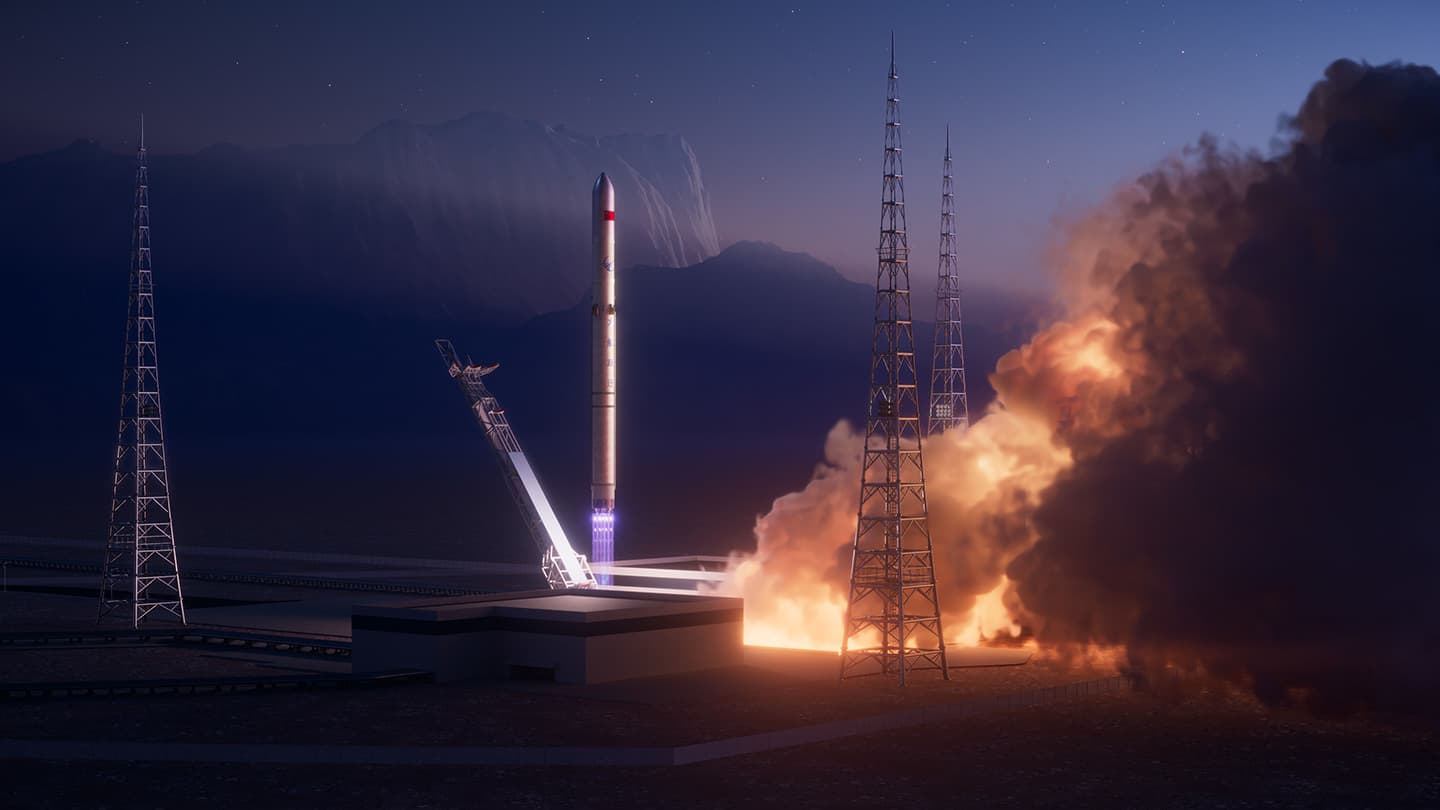
Its product is Yueqian-1 ('Leap-1'), and it remains the first Chinese company to pursue a SpaceX Starship-style 'chopstick' tower-catch recovery instead of landing legs. The roughly 70 m-tall, 4.2 m-diameter, methane-liquid oxygen two-stage rocket is designed to lift about 18,000 kg to LEO when expended or ~12,000 kg with the first stage recovered, on a cluster of nine ~80-ton-class engines reusable up to 20 times. It initially flies the YF-209 engine sourced from CASC's Academy of Aerospace Liquid Propulsion Technology while developing its own 100-ton-class Qingyu-11 methalox engine (targeting ~150 t thrust, deep throttling, and up to 50 reuses); Qingyu-11 cleared a round of core-component tests (torch ignition, low-temperature and liquid-flow testing) in June 2026 and is still moving toward full-system test firing, with no full-system firing reported as of early September 2026. Cosmoleap raised roughly 100 million yuan (~$14M) in November 2024 and a 500 million yuan (~$73M) Series A in April 2026 - about 600 million yuan (~$84M) total - and has disclosed no later round. On March 3, 2026 the company signed a strategic supply-chain cooperation agreement with Beijing Aerospace Guanghua Electronic Technology. The latest public hardware milestone remains the August 19, 2026 combined static-load test of the Yueqian-1 second-stage frame and propellant-tank rear-bottom structure; the company still plans final assembly and integrated testing in the second half of 2026 and a debut orbital flight in 2027, racing domestic tower-catch rival Astronstone.
Validate the 'chopstick' tower-catch and intelligent-control recovery architecture at scale - the technical centerpiece that distinguishes Cosmoleap from China's leg-landing reusable rivals - building on completed drop tests onto the catch arms, auxiliary-propulsion thruster hot fires, the June 2026 first-stage propellant-precooling test, and the August 2026 second-stage structural static test. As of early September 2026 the company has not published a later catch-tower demonstration.
Mature the in-house 150-ton-class Qingyu-11 methalox engine (30-105% throttle, up to 50 reuses) to replace the externally sourced YF-209 on later vehicles. Core-component tests (torch ignition, low-temperature and liquid-flow testing) finished in June 2026; full-system test firing is still the next sourced gate and has not been reported complete as of early September 2026.
Complete final assembly and integrated testing of the first Yueqian-1 in the second half of 2026, then fly the debut orbital mission - and first tower-catch recovery attempt - in 2027. The official product page still lists 2027 as first-flight year. First-stage precooling (June 2026) and second-stage structural static (August 2026) remain the last published airframe tests ahead of that stack.
(≈600M yuan); no new round disclosed since the April 2026 Series A
Yueqian-1 Payload to LEO
18,000 kg expended / 12,000 kg reused
First-Stage Engines
9 × ~80 t class (~720 t total)
Recovery Method
Tower-catch 'chopsticks' (China's first)
Orbital Launches
0
debut still targeted 2027; no later public flight date as of early September 2026
05
Operations & revenue
Operating status
Pre-flight - in development
Cosmoleap has passed the Yueqian-1 design review and is testing its 'chopstick' tower-catch recovery on a verification platform, having performed short drop tests of a test article onto the tower-catch arms and completed ground hot-fire tests of the 100N and 300N auxiliary-propulsion (attitude-control) thrusters. The latest public hardware milestone is still the August 19, 2026 combined static-load test of the second-stage frame and propellant-tank rear-bottom structure; no later ground-test or funding announcement has been published as of early September 2026. The first-stage liquid-methane pressurization/delivery system passed a natural-circulation precooling test in June. The in-house 150-ton-class Qingyu-11 methalox engine cleared core-component tests in June 2026 and is still moving toward full-system test firing, with no full-system firing reported. Official product specs remain 70 m tall, 4.2 m diameter, 554 t liftoff mass, 720 t liftoff thrust, 18 t expended / 12 t recovered to LEO, and a 2027 first flight. Final assembly and integrated testing of the first vehicle are still planned for the second half of 2026.
Revenue streams
Reusable Launch Services (planned)
Medium-to-large reusable launches on Yueqian-1 for multi-satellite deployment, China's national satellite-internet constellations, and deep-space missions, once tower-catch recovery and reuse are proven.
06
Timeline8
2026
Second-stage structural static test
On August 19, 2026 Cosmoleap completes a combined static-load test of the Yueqian-1 second-stage frame and propellant-tank rear-bottom structure, verifying strength, rigidity, stability and load transfer against design targets. IT Home and other Chinese outlets confirmed the same day that the rear-bottom frame design is used elsewhere only by SpaceX and LandSpace among comparable rockets. That remains the latest public airframe test as of early September 2026.
First-stage precooling test
On June 26, 2026 Cosmoleap completes China's first dedicated natural-circulation precooling test for a reusable methalox rocket's first-stage liquid-methane pressurization and delivery system, using simulated tanks, delivery lines and engine components to reproduce real operating conditions; measured flow rate and temperature closely matched simulation predictions, validating the system design.
Qingyu-11 engine clears core-component testing
In June 2026 the in-house 150-ton-class liquid oxygen/methane Qingyu-11 engine completes a round of core-component tests - torch ignition, low-temperature component testing, and component liquid-flow testing - validating key hardware performance and reliability ahead of full-system test firing.
500M yuan Series A
In April 2026 Cosmoleap closes a 500 million yuan (~$73M) Series A led by Qianhai Ark and Puhua Capital - bringing total funding to about 600 million yuan (~$84M) - to accelerate the Yueqian-1 and its in-house Qingyu-11 methalox engine toward a 2027 debut. No later equity round has been disclosed as of early September 2026.
Strategic supply-chain partnership with Aerospace Guanghua
On March 3, 2026 Cosmoleap signs a strategic cooperation agreement with Beijing Aerospace Guanghua Electronic Technology, a state-linked aerospace-electronics and electromechanical-assembly supplier, becoming the first Chinese commercial rocket company to reach deep strategic cooperation with the firm as part of restructuring the commercial-space supply chain.
2025
Tower-catch verification and drop tests
Cosmoleap builds a tower-recovery verification platform and begins short drop tests of its 'chopstick' capture system, alongside flight-control computer and recovery-tower controller development.
2024
First funding round and design review
Cosmoleap raises over 100 million yuan (~$14M) in November 2024 from state-owned and venture investors, conducts a 20-second static fire of its initial Longyun engine in early December, and passes the Yueqian-1 preliminary design review.
Founded
Chen Shuguang founds Cosmoleap in February 2024 (Shanghai parent; Beijing R&D subsidiary) to develop medium-to-large reusable rockets recovered by a 'chopstick' tower-catch system - a first among Chinese launch companies.
07
Funding
$87Mdisclosed across 2 rounds with a stated amount
RoundAmountInvestors
Angel / first round
2024-11
~$14M (100M+ yuan)
State-owned enterprises and venture capital firms
Series A
2026-04
~$73M (500M yuan)
Qianhai Ark, Puhua Capital (lead); Lingge Capital, Haiying Capital and others