Active
Hyperbola-1
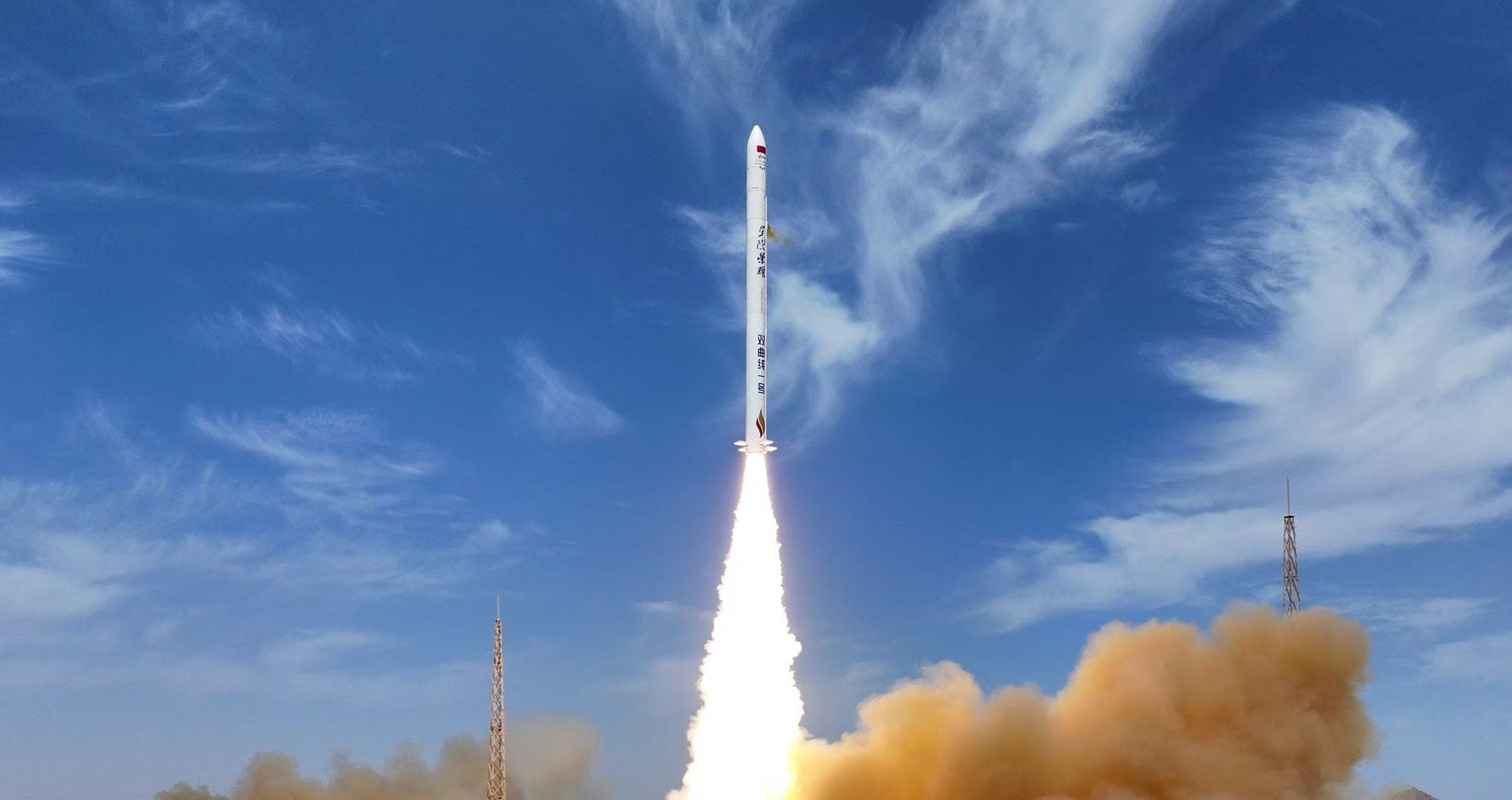
Four-stage solid-fuel small-lift orbital rocket with liquid attitude-control thrusters; the first privately developed Chinese rocket to reach orbit.
iSpace (Beijing Interstellar Glory Space Technology), founded in 2016 by former state rocket designer Peng Xiaobo, made history in July 2019 when its solid-fuel Hyperbola-1 became the first Chinese privately developed rocket to reach orbit.
Latest update Sep 20, 2026
01
Hyperbola-1's track record has been uneven (four successes in eight flights, most recently in July 2025, with no ninth flight scheduled as of September 20, 2026), and the company's future now rests on Hyperbola-3, a partially reusable methane-liquid oxygen rocket sized between 8.5 and 13.4 tonnes to LEO (Chinese coverage sometimes cites ~14 tonnes expendable). By mid-2026 Hyperbola-3's JD-2 / Focus-2 engines and both stages had been qualified for flight, a pathfinder had completed Qinglan drone-ship sea trials off Yangjiang, and on August 14, 2026 the 5.2 m payload fairing passed its final static-load test. On September 18, 2026 Science and Technology Daily reported that the first-stage methane tank and second-stage common-bulkhead tank had completed ultimate-load static tests to structural failure, which iSpace said shows its 4.2 m tank line can support batch production and backs the maiden flight. A first orbital flight with a sea-recovery attempt remains targeted for late 2026 (year-end / Q4) at Wenchang; launch trackers as of September 20 still list the demo as NET 2026 with a placeholder December 31 date. After a record 5.037 billion yuan (~$729.6M) Series D++ in February 2026 - the largest disclosed funding round by any Chinese launch startup - iSpace is raising a Series E round reported at roughly 7 billion yuan (~$980M), whose first tranche of nearly 1 billion yuan (~$140M) closed in August 2026, led by bank-affiliated asset managers, to fund Hyperbola-3 production, sea-recovery buildout, a new Chengdu production base (targeted for completion by end of 2026 and official production in 2027), and early work on the heavy-lift Hyperbola-9. In April 2026 it also registered a wholly owned Shanghai space-based computing subsidiary (100 million yuan registered capital) as a first step from rocket manufacturing toward in-orbit compute services. It remains China's best-funded private launch firm and is reportedly targeting a Shanghai STAR Market IPO in the second half of 2027, after Hyperbola-3's debut.
stdaily.comUpdated Sep 20, 2026
02
2026-2027
Move beyond reaching orbit to recovering and reflying the Hyperbola-3 first stage at sea - the core of iSpace's low-cost launch strategy - having completed full-profile ground verification of the landing system and June 2026 offshore sea trials of the Qinglan recovery drone ship. The debut mission itself is planned as the first sea-recovery attempt; a successful reflown booster would follow in 2027 if the late-2026 landing works.
2026-2027
Put the record 5.037 billion yuan (~$729.6M) Series D++ closed in February 2026, plus the first tranche of a new Series E round (nearly 1 billion yuan, ~$140M, out of a round reported at ~7 billion yuan / ~$980M total) closed in August 2026, to work - completing the 3.3B yuan Chengdu production base (Chengdu reporting in April 2026 still targeted completion by end of 2026, equipment debugging late 2026, and official production in 2027, sized for 20 rockets/year), expanding Hyperbola-3 final assembly and integrated-test capacity, building out Focus-2 methalox engine and sea-recovery infrastructure, raising Hyperbola-1's reliability, and starting early R&D on the heavy-lift Hyperbola-9 and its 300-tonne-class Focus-3 engine.
Late 2026
TargetLate 2026 (year-end / Q4)
Fly the reusable Hyperbola-3 for the first time from Commercial LC-2 at Wenchang, having qualified its engines and stages, completed Qinglan drone-ship recovery sea trials in June 2026, passed the payload fairing's final static-load test on August 14, 2026, and completed ultimate-load static tests of the first-stage methane tank and second-stage common-bulkhead tank as of September 18, 2026, attempting a sea-based first-stage recovery on the debut - still targeted for late 2026 (year-end / Q4). Company officials have not issued a locked December calendar date; public launch lists as of September 20, 2026 still show NET 2026 / a placeholder December 31 date, with no slip announced.
H2 2027
Progress toward an IPO on Shanghai's STAR Market, reportedly targeted for the second half of 2027 once Hyperbola-3 has completed its debut orbital flight and sea-recovery attempt - a milestone China's fifth listing standard requires for a reusable medium/large launch vehicle.
03
Chinese rocket maker iSpace (Interstellar Glory) said August 5 it closed the first tranche of a new Series E round worth nearly 1 billion yuan (about $140M), led by bank-affiliated asset-management institutions, with the broader round still underway. Proceeds are earmarked for Hyperbola-3 reusable-rocket production, Focus-2 methalox engine capacity, and launch and sea-recovery infrastructure, building on the record 5.037 billion yuan (about $729.6M) Series D++ iSpace closed in February 2026.
04
Four-stage solid-fuel small-lift orbital rocket with liquid attitude-control thrusters; the first privately developed Chinese rocket to reach orbit.
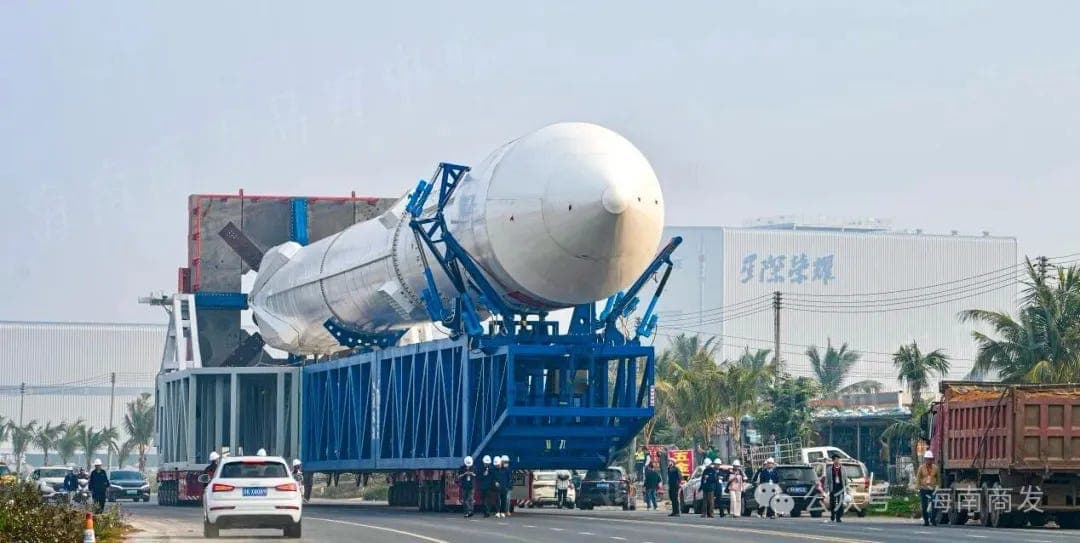
Two-stage, partially reusable methane-liquid oxygen rocket with a sea-recoverable first stage - iSpace's Falcon 9-class vehicle aimed at low-cost, high-cadence launch for satellite constellations.
05
latest disclosed figure from late-2024 funding coverage; no official 2026 headcount found
(4 failures); no ninth flight scheduled as of Sept 20, 2026
(reusable) / 13,400 kg (expendable); Chinese coverage sometimes cites ~14 t expendable
9 x JD-2 / Focus-2 methalox on stage 1 plus 1 vacuum JD-2 on stage 2 (10 engines total)
06
Operating status
Development Stage
Hyperbola-1 is an operational but inconsistent solid rocket (four successes in eight flights, most recently in July 2025; public launch lists show no ninth flight scheduled as of September 20, 2026). The company's focus is the reusable methalox Hyperbola-3, whose JD-2 / Focus-2 engines and both stages were qualified for flight by April 2026, with a pathfinder at Wenchang and the first-stage sea-recovery landing system through full-profile ground verification (a flight-weight drop-and-shock test iSpace reported May 17, 2026). In June 2026 the 100 m x 42 m Qinglan recovery drone ship completed extensive offshore sea trials with a Hyperbola-3 first-stage pathfinder, holding stability in waves up to four meters, and on August 14, 2026 the 5.2 m payload fairing passed its final static-load test. On September 18, 2026 Science and Technology Daily reported that the first-stage methane tank and second-stage common-bulkhead tank completed ultimate-load static tests to structural failure, which iSpace said shows its 4.2 m tank line can support batch production and supports the maiden flight. A first orbital flight from Wenchang with a sea-recovery attempt remains targeted for late 2026 (year-end / Q4), per company officials; September 20 launch trackers still list it as NET 2026 with a placeholder December 31 date. iSpace is also building a 3.3B yuan (~$460M) reusable-rocket production base in Chengdu (groundbreaking November 2025, targeted for completion by end of 2026 and official production in 2027, sized for 20 rockets/year) and has begun early R&D on a heavy-lift Hyperbola-9 rocket and its 300-tonne-class Focus-3 engine. In April 2026 it registered a 100 million yuan wholly owned Shanghai space-based computing subsidiary. The effort is backed by a record 5.037B yuan (~$729.6M) Series D++ closed in February 2026 and, in August 2026, the first tranche of a new Series E round (nearly 1B yuan, ~$140M, from bank-affiliated asset managers, out of a round reported at ~7B yuan / ~$980M total) earmarked for Hyperbola-3 production, sea-recovery buildout, the Chengdu base, and Hyperbola-9, while a Shanghai STAR Market IPO is reportedly targeted for H2 2027 after Hyperbola-3's debut.
Small-satellite launches on the solid-fuel Hyperbola-1 from Jiuquan for Chinese commercial and research customers.
Hyperbola-3 Reusable Launch Services
Planned high-cadence, low-cost reusable methalox launches sized for China's satellite-internet mega-constellations, pending the rocket's first orbital flight and recovery.
Through the April 2026 Shanghai Interstellar Glory Space-Based Computing subsidiary (100 million yuan registered capital, wholly owned), iSpace is exploring in-orbit AI compute and data-processing services as a longer-term adjacent business to launch. No commercial constellation or compute contract has been disclosed.
07
2026
Hyperbola-3 tanks pass ultimate-load static tests
On September 18, 2026, Science and Technology Daily reported that iSpace completed ultimate-load static tests of Hyperbola-3's first-stage methane tank and second-stage common-bulkhead tank (4.2 m diameter). The tanks were pressurized step by step to structural failure: first-stage methane-tank burst pressure was within 10% of prediction, second-stage upper-tank burst within 15% and lower-tank within 10%, with failure modes matching analysis. iSpace said the result shows its tank line can support high-quality batch production and supports the Hyperbola-3 maiden flight.
Shanghai space-based computing subsidiary registered
In April 2026 iSpace registered Shanghai Interstellar Glory Space-Based Computing Technology as a wholly owned subsidiary in Songjiang's Jiuting township, with 100 million yuan registered capital. The unit is aimed at satellite applications, AI, cloud computing, and on-orbit data processing, a first step from rocket manufacturing toward space-ground integrated solutions.
Hyperbola-3 fairing passes final static test, flight-ready
On August 14, 2026, the SQX-3 (Hyperbola-3) payload fairing completes its full-profile static-load test - following a November 2025 separation test - with the 5.2 m fairing's front cone, front cylinder and rear cylinder sections meeting all design requirements, putting the vehicle in flight-ready condition ahead of its debut orbital-plus-sea-recovery mission.
Series E funding (first tranche) closes
iSpace completes the first tranche of a Series E round worth nearly 1 billion yuan (~$140M), led by bank-affiliated asset-management institutions, with the broader round - reported at roughly 7 billion yuan (~$980M) in total - still underway. Proceeds are earmarked for Hyperbola-3 R&D and batch production, Focus-2 methalox engine capacity, launch and sea-recovery infrastructure, the Chengdu production base, and early R&D on the heavy-lift Hyperbola-9 and its companion 300-tonne-class Focus-3 full-flow staged-combustion engine.
Qinglan drone ship completes offshore recovery sea trials
In June 2026 iSpace took its 100 m x 42 m Qinglan ('Clear Waves') autonomous recovery drone ship - the first of a fleet named Xingji Guihang - a significant distance offshore near Yangjiang for extensive sea trials with a full-scale Hyperbola-3 first-stage pathfinder (grid fins, engines and semi-functional landing legs on a 4.2 m tank/structure mock-up) secured on deck, supported by five assist vessels. Qinglan held stability in waves up to four meters, verifying that a returning Hyperbola-3 booster would not tip at the extreme edge of acceptable weather - a key step toward the rocket's 'land-based launch, sea-based recovery' debut.
Hyperbola-3 hardware qualified for first flight
By April 2026, Hyperbola-3's JD-2 engines and both stages are qualified for flight, with a pathfinder delivered to Wenchang and the first-stage sea-recovery landing system completing full-profile ground verification, ahead of a debut orbital flight and recovery attempt targeted for 2026.
Record 5.037B yuan (~$729.6M) Series D++ closes
On February 12, 2026, iSpace closes a 5.037 billion yuan (~$729.6M) Series D++ round led by Tongchuang Weiye and Jingming Capital, with eighteen private investors and six provincial/municipal funds - the largest disclosed funding round by any Chinese launch startup, earmarked to accelerate Hyperbola-3 and its 'land-based launch, sea-based recovery' approach.
2025
Chengdu production base breaks ground
iSpace breaks ground on November 5, 2025 on a 3.3 billion yuan (~$460M) reusable-rocket production headquarters base in Chengdu's Shuangliu district, targeting completion by the end of 2026 with four smart final-assembly lines and two digital test lines sized for an annual capacity of 20 rockets.
2025
2024
2023
2021
2019
2016
08
$1.2Bdisclosed across 5 rounds with a stated amount
Cumulative disclosed raise · dated rounds
Series A-B
2017-2020
CICC, Matrix Partners China, and other Chinese venture investors
Series C / C+
2024-09
Xinding Capital, Sichuan Industrial Fund
Series D+
2025-09
Undisclosed (for Hyperbola-3 development)
Series D++
2026-02
Tongchuang Weiye, Jingming Capital, plus 18 private investors and 6 provincial/municipal funds
Series E (first tranche)
2026-08
~1B yuan (~$140M) first tranche of a round reported at ~7B yuan (~$980M) total, at a reported ~23.5B yuan (~$3.3B) pre-money valuation; broader round ongoing
Bank-affiliated asset-management institutions