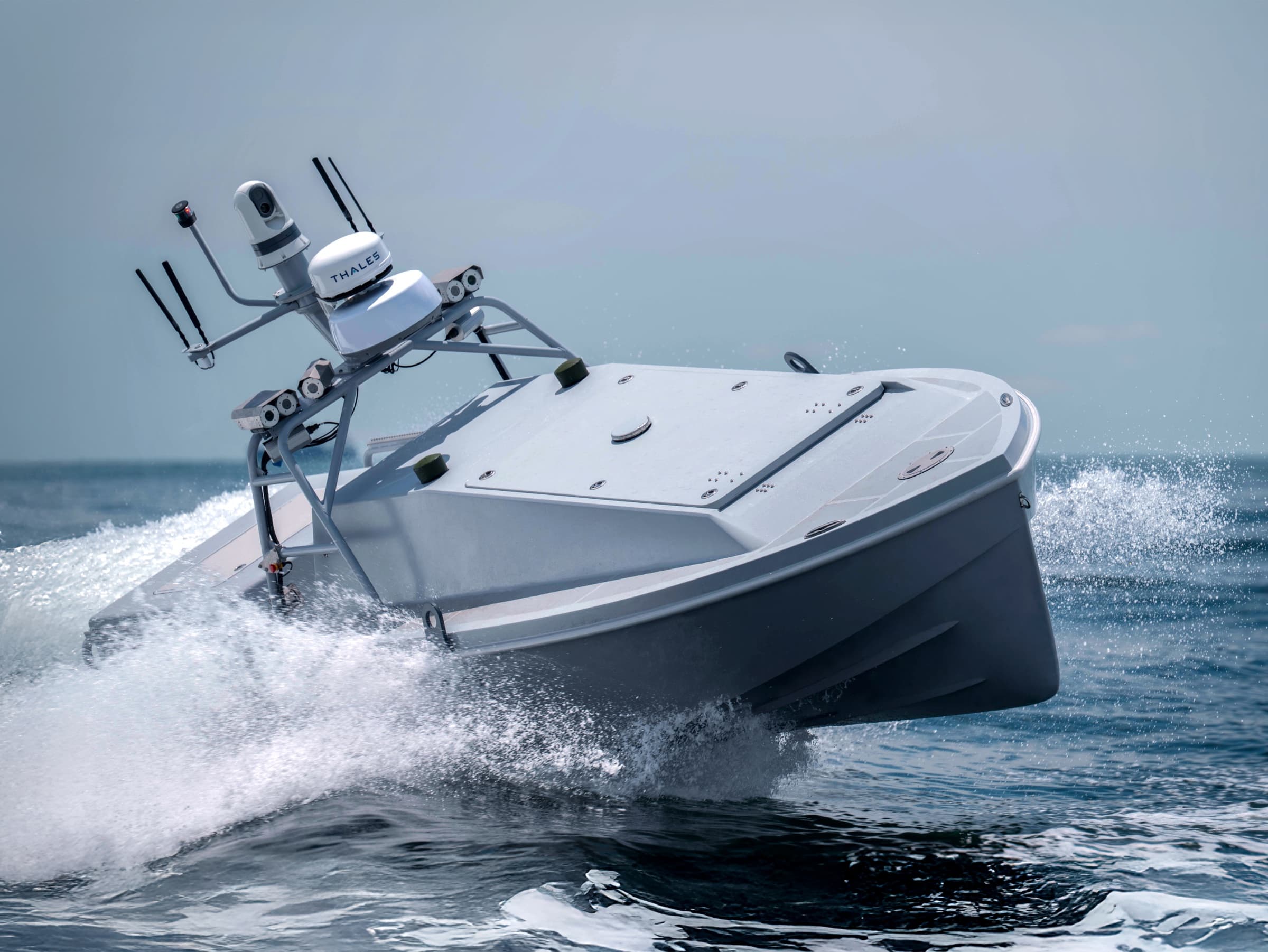
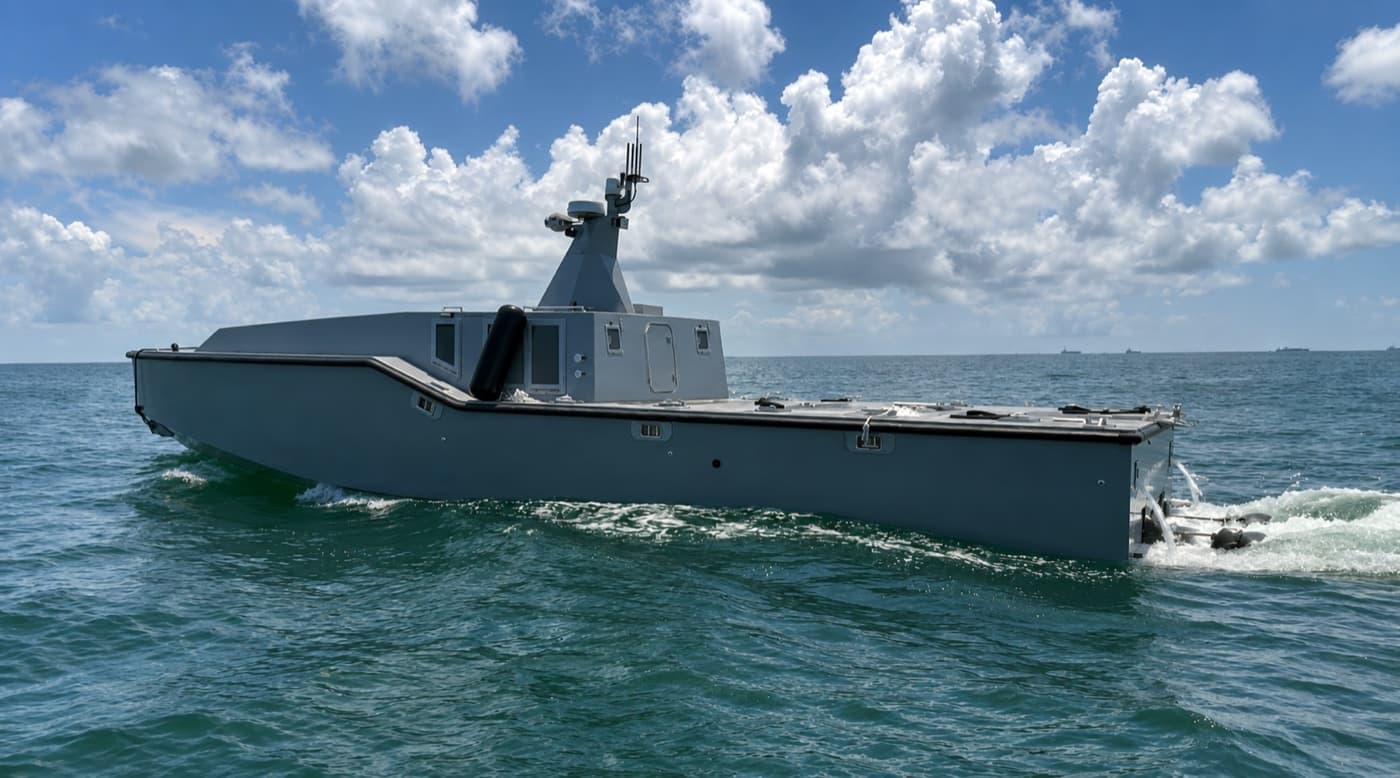
The 24-foot autonomous surface vessel that carries Saronic's combat record. Official specs: 1,000 pounds of payload, 1,000-plus nautical miles, and 35-plus knots. Corsairs deployed to the Middle East with Task Force 59 in March 2026, recovered two downed Army aviators off Oman on June 8, and three struck Iran's Bandar Abbas naval base on July 12 in the first combat use of USVs by US forces.
In production in central Texas under a $392M Navy contract and operationally deployed with the US Navy. Official spec page still lists 24 ft, 1,000+ nm, 35+ kts, and 1,000 lb payload.
Announced next steps from Saronic that mention Corsair.
H1 2027
Scale Franklin and Austin output toward company production targets
TargetEarly 2027 (Franklin expansion complete); 2027+ (full production ramp)
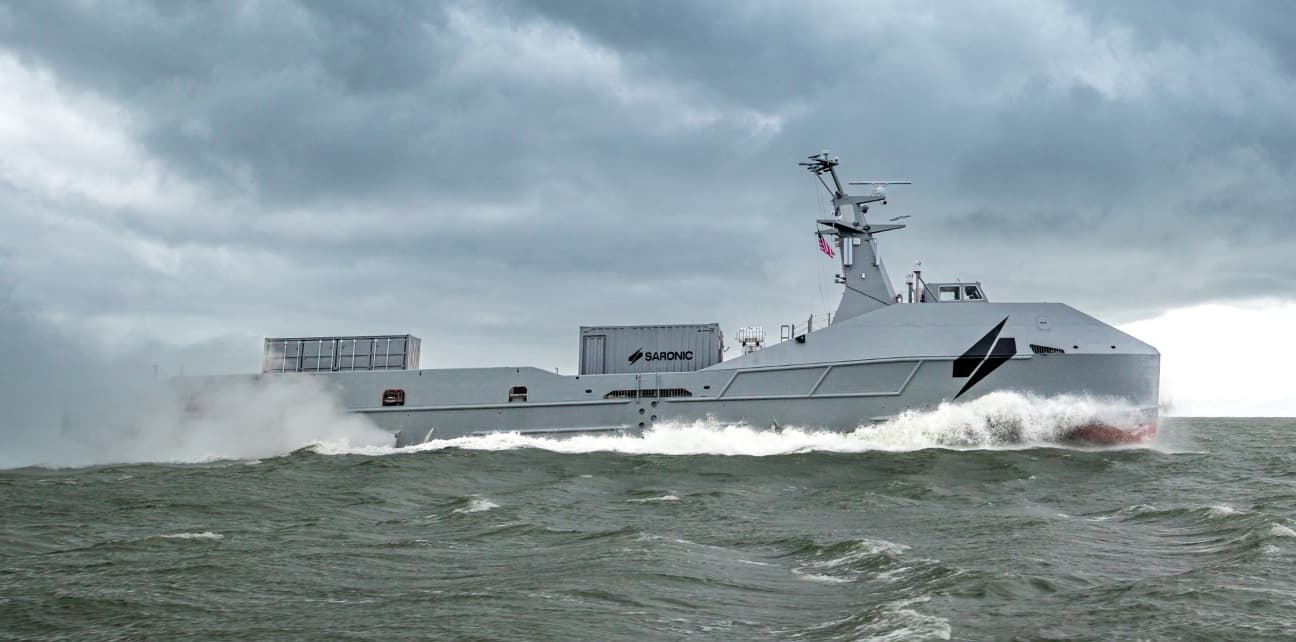
Three more Marauder hulls are under construction at Franklin, Louisiana, where Saronic's $300 million shipyard expansion (construction started November 2025, topped out August 25, 2026) is designed to support up to 20 Marauders a year once complete, on track for early 2027. On a September 7, 2026 factory tour, CEO Dino Mavrookas walked a 420,000-square-foot Austin Corsair line that he described as having capacity for 2,000 boats a year - the same figure previously framed as a new-line target on top of a 400-500 Corsair rating. In July 2026 Saronic said it could eventually produce hundreds of Mirages and thousands of Corsairs a year. These are company projections, so demonstrated delivery rates are the thing to watch rather than stated capacity.
Resolve the court challenge to the Navy's bundled LCS/sUSV sustainment award
Done whenThe Court of Federal Claims issues a merits decision on Saronic's protest of the bundled LCS and small-USV sustainment solicitation.
Announced asOctober 1, 2026 (government-requested merits decision)
Official schedule
Saronic is contesting a NAVSEA solicitation worth up to $1.57 billion that bundles operations-and-sustainment work for Littoral Combat Ship mission modules with small unmanned surface vessels, arguing in a US Court of Federal Claims complaint filed March 4, 2026 (Saronic Technologies, Inc. v. United States, No. 1:26-cv-00358, Judge Elaine Kaplan) that the bundled structure favors large, non-commercial primes. The Navy planned a single award around October 29, 2026. In a March 16 joint status report the United States asked the court for a merits decision no later than October 1, 2026, to avoid disrupting essential services. No ruling has been published as of September 17, 2026. The outcome decides whether Saronic can compete for a sustainment revenue stream well beyond its existing Corsair production contract.