Inversion Space

Arc

In Development

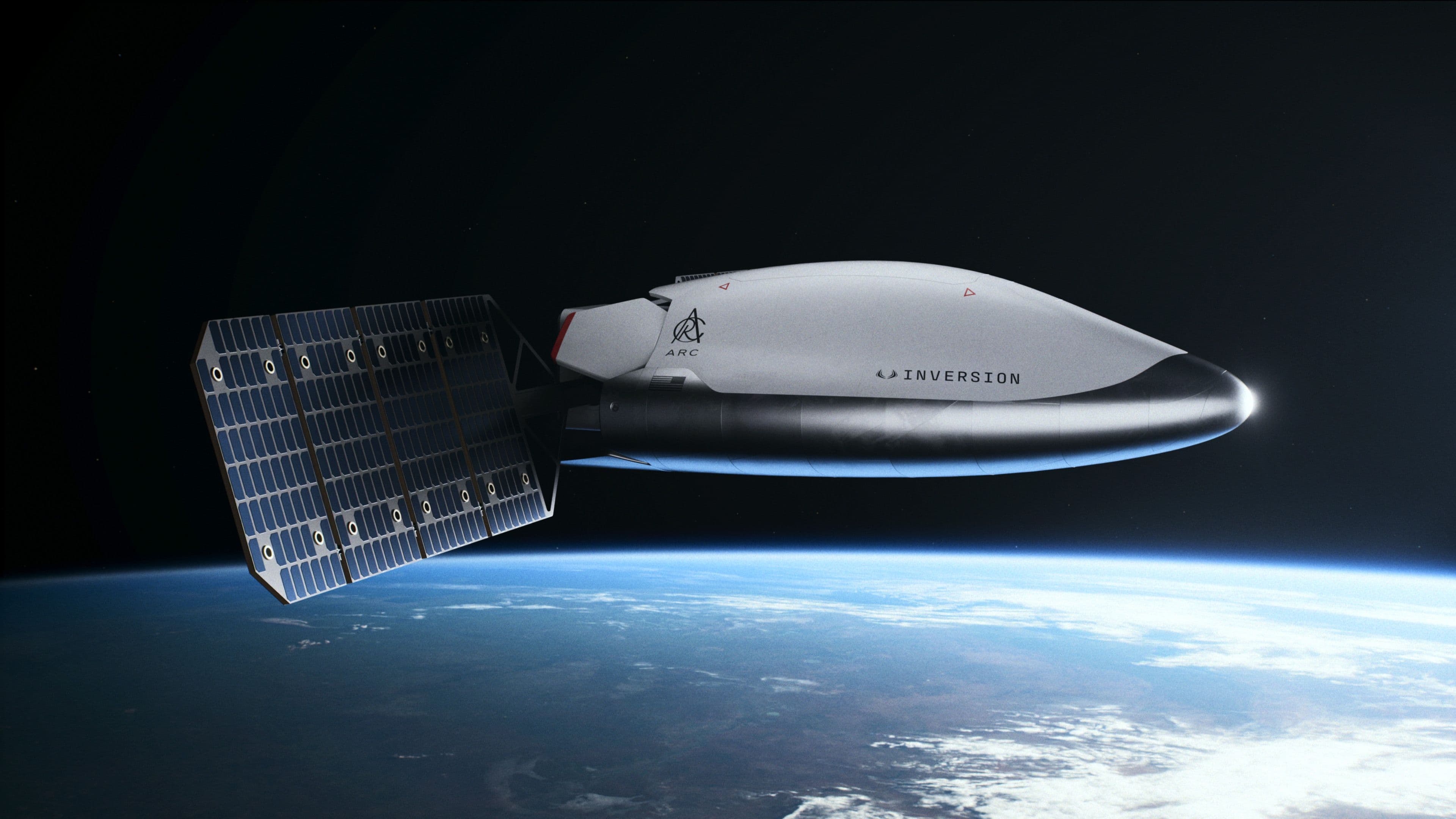
A fully reusable lifting-body reentry vehicle, roughly four feet wide and eight feet tall, that stays on orbit as a functioning satellite for up to five years holding about 500 lb of cargo, then deorbits on command. Control flaps, attitude-control thrusters, and a deorbit engine steer it through a Mach 20-plus reentry with more than 1,000 km of cross-range, and an autonomously guided parachute puts it down within about 50 feet of a target on unprepared ground. Non-toxic propellants let crews approach it as soon as it lands, and it can also capture and deploy assets and rendezvous with other spacecraft while on orbit.

Latest update Sep 13, 2026

Arc

01

Current status

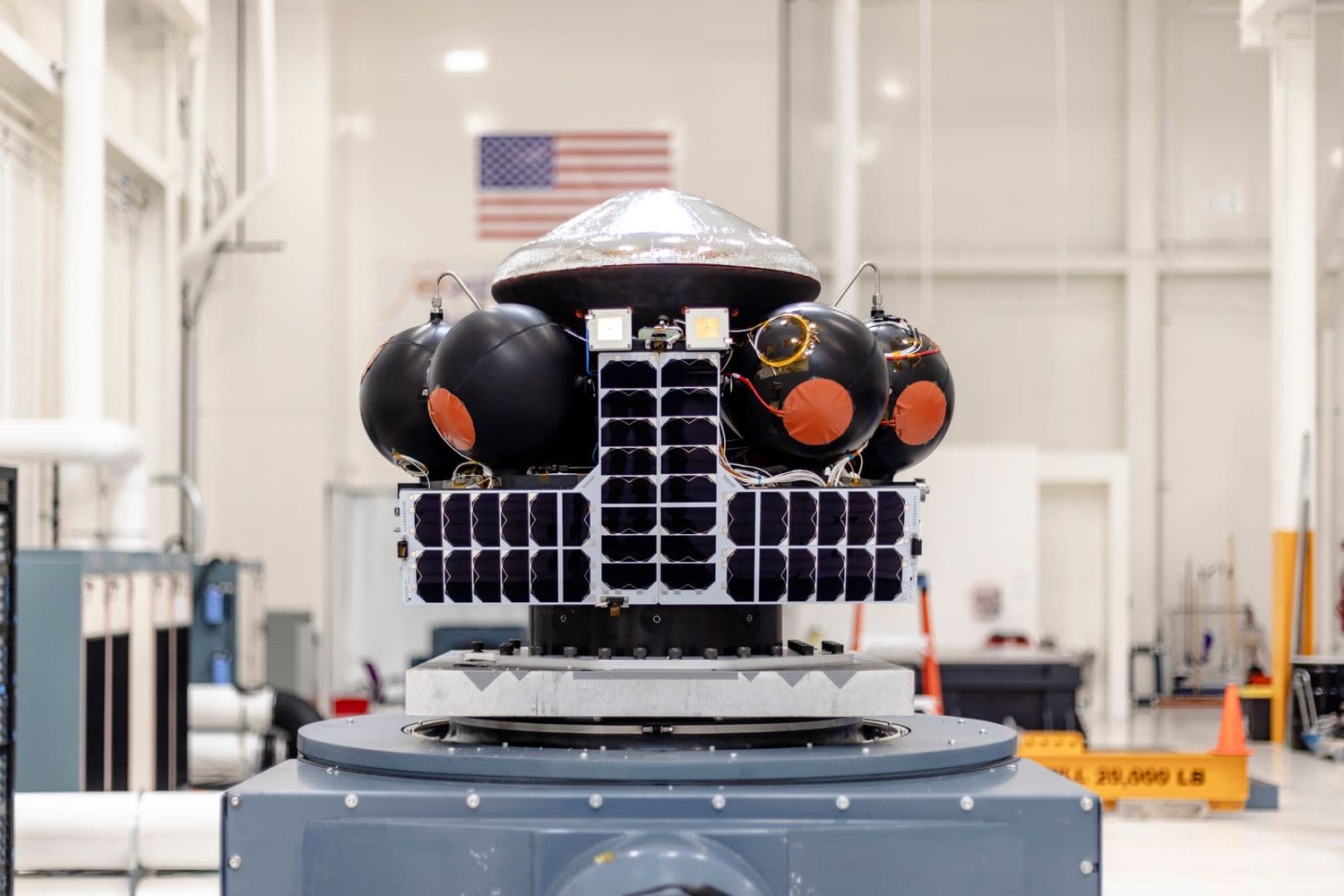
Full-scale structural development unit built, mission profile complete, dozens of drop tests flown, NASA working the thermal protection system and now a $350K aerocapture study; first orbital mission slipped from 2026 to no earlier than 2027

02

Specifications3

Payload
~500 lb, stored on orbit up to 5 years
Delivery time
Under 1 hour to anywhere on Earth
Cross-range
Over 1,000 km

03

Upcoming milestones3

Announced next steps from Inversion Space that mention Arc.

  1. 2027

    First orbital flight of Arc

    Target2027 (no earlier than)

    The mission that decides whether the company has a product: launching Arc, holding it on orbit, deorbiting under control, surviving a Mach 20-plus reentry, and landing under parachute close to a target. Ray never got past the deorbit burn, so this is the first real test of the reentry stack end to end. At the October 2025 unveiling Inversion targeted 2026; on September 10, 2026 CEO Justin Fiaschetti told Payload the first in-space demonstration is now planned no earlier than 2027. Watch for a launch assignment and an FAA reentry license for the Arc configuration.

  2. 2027

    Fly hypersonic test payloads under MACH-TB 2.0

    Inversion's selection into Kratos' MACH-TB 2.0 program gives it a paying use for reentry itself. Kratos completed its $50 million, 68,000-square-foot Indiana Payload Integration Facility in Crane, Indiana on July 28, 2026, ahead of schedule, the dedicated site built to prep hypersonic test payloads like Arc for flight. Watch for the first task order and the first customer payload flown through hypersonic conditions on an Inversion vehicle, the point at which the reentry capability starts generating revenue independently of the cargo-delivery thesis.

  3. Jun 30, 2027

    Complete the NASA aerocapture demonstration study

    NASA awarded Inversion a $350,000 firm-fixed-price study on September 10, 2026 to examine how Arc could demonstrate aerocapture in Earth's atmosphere - using a lifting-body atmospheric pass to brake into orbit instead of a propulsive capture burn. The work, supported at NASA Ames, runs through June 30, 2027 and covers mission design, aerodynamics, trajectory analysis, and vehicle definition. Fiaschetti framed it as a side quest that also helps Earth-orbit maneuverability. Watch for study results and whether NASA funds a follow-on flight demonstration.

04

More from Inversion Space1

05

More in Orbital Economy