Skyroot Aerospace builds small-satellite launch vehicles in Hyderabad and on July 18, 2026 became the first private Indian company to reach orbit, making India the third country after the United States and China with a privately developed orbital launcher. Vikram-1, a 22-meter carbon-composite rocket with three solid stages and a 3D-printed restartable liquid upper stage, lifted off from ISRO's Satish Dhawan Space Centre after a 35-minute hold and delivered its payloads to a roughly 450 km orbit about 15 minutes later. Founded in 2018 by former ISRO engineers Pawan Kumar Chandana and Naga Bharath Daka, the company had already flown India's first private rocket, the suborbital Vikram-S, in November 2022. Two months before the orbital flight it became India's first space-tech unicorn, raising about $60 million at a $1.1 billion valuation from GIC and Sherpalo Ventures with BlackRock-managed funds joining, taking total capital raised to roughly $160 million. The industrial bet behind the launch record is Infinity Campus, a 200,000 sq ft Hyderabad factory inaugurated by Prime Minister Narendra Modi in November 2025 and designed to turn out one orbital rocket a month - and the factory is already in use: on August 23, 2026 Skyroot shipped the first stage of its second Vikram-1, built at Infinity Campus, to Sriharikota. At the Bengaluru Space Expo in early September, Chandana still targeted a year-end second test, subject to finishing post-flight analysis, while the company's own launch page now lists a Q4 2026 LEO rideshare as Filling Fast and a Q1 2027 window as Open. On August 13, 2026 it signed an MoU with Tamil Nadu to invest Rs 250 crore (~$26M) in a Thoothukudi storage, assembly, integration and testing facility, creating about 500 jobs next to the Kulasekarapattinam spaceport that will handle Skyroot's high-inclination southward flights. The company is no longer pre-revenue: provisional FY26 results show Rs 100.6 crore (~$12M) of operating revenue from its space-systems business (composite structures, payload adaptors, propulsion hardware), an order book of more than Rs 605 crore, and customer advances above Rs 252 crore as of March 2026, even though commercial launch service is still slated for 2027 after a third or fourth Vikram flight. Next comes that second test, then Vikram-2, a cryogenic-upper-stage vehicle carrying 900 kg to low Earth orbit targeted for late 2027.
Skyroot Aerospace signed a multi-launch agreement with Kerala-based satellite operator HEX20 on August 6, 2026, its first firm commercial contract since Vikram-1 reached orbit on its July debut flight. The deal covers three dedicated Vikram-series missions starting in the fourth quarter of 2027 to deliver HEX20's Earth-observation satellites and in-orbit demonstration payloads, plus rideshare capacity for other spacecraft.
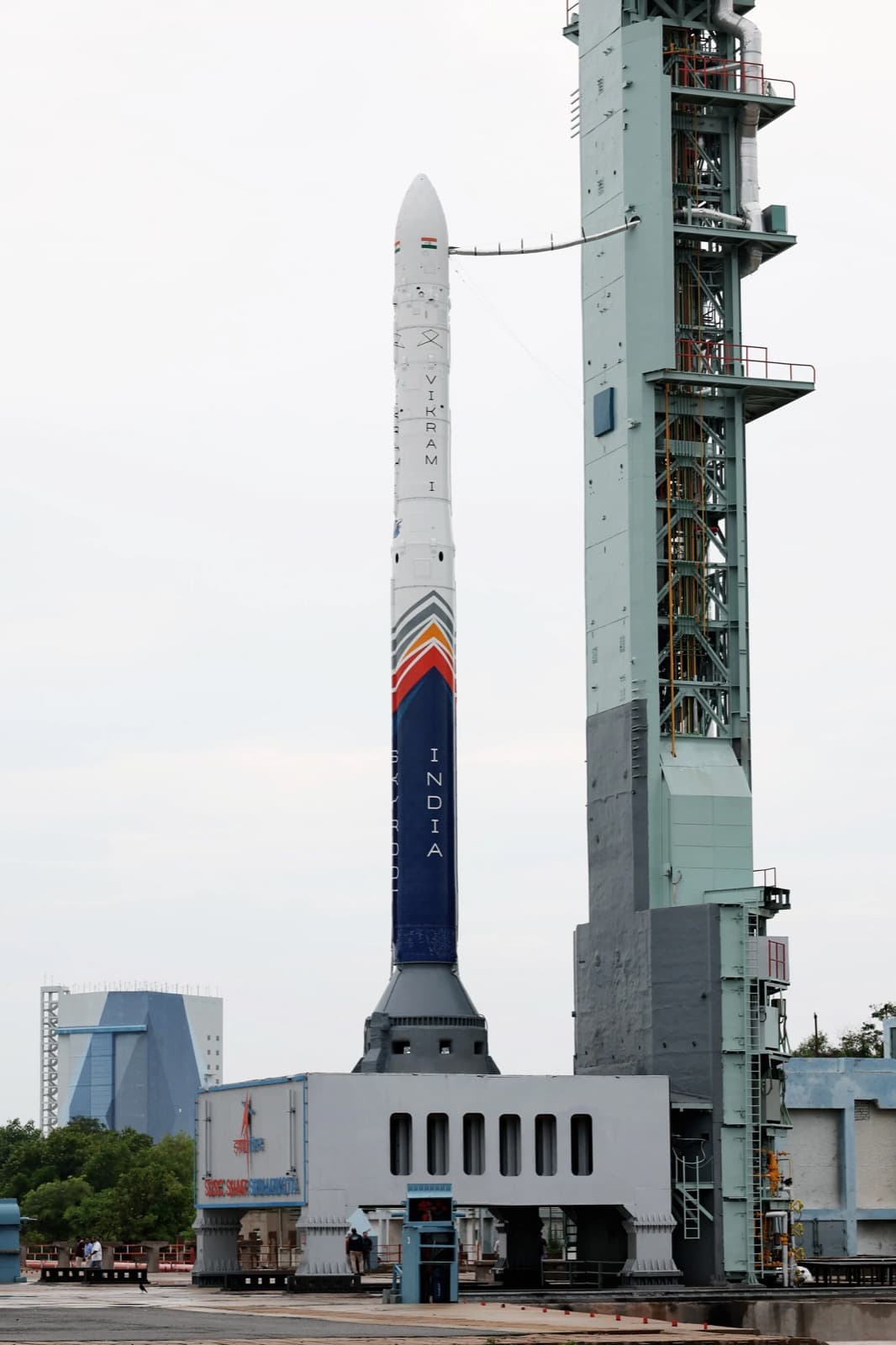
Skyroot's orbital small-satellite launcher: about 22 meters tall, built from carbon composite rather than metal, with three solid stages (Kalam-1200, Kalam-250, Kalam-100) and a 3D-printed Raman liquid upper stage that can start, stop, and restart in space to place payloads precisely. It carries 350 kg to a 500 km low Earth orbit or 260 kg to sun-synchronous polar orbit, and reached orbit on its first flight, July 18, 2026.
Flown once, successfully, on July 18, 2026. The first stage of the second vehicle left Infinity Campus for Sriharikota on August 23, 2026. At BSX 2026 in September, Chandana still targeted a year-end second test flight after post-flight analysis. The launch page now lists a Q4 2026 LEO rideshare as Filling Fast, before commercial service in 2027 after a third or fourth flight.
Height~22 m
Payload350 kg to 500 km LEO, 260 kg to SSPO
Stages3 solid stages plus a restartable 3D-printed liquid orbital-adjustment stage
First FlightJuly 18, 2026, Mission Aagaman, ~450 km orbit
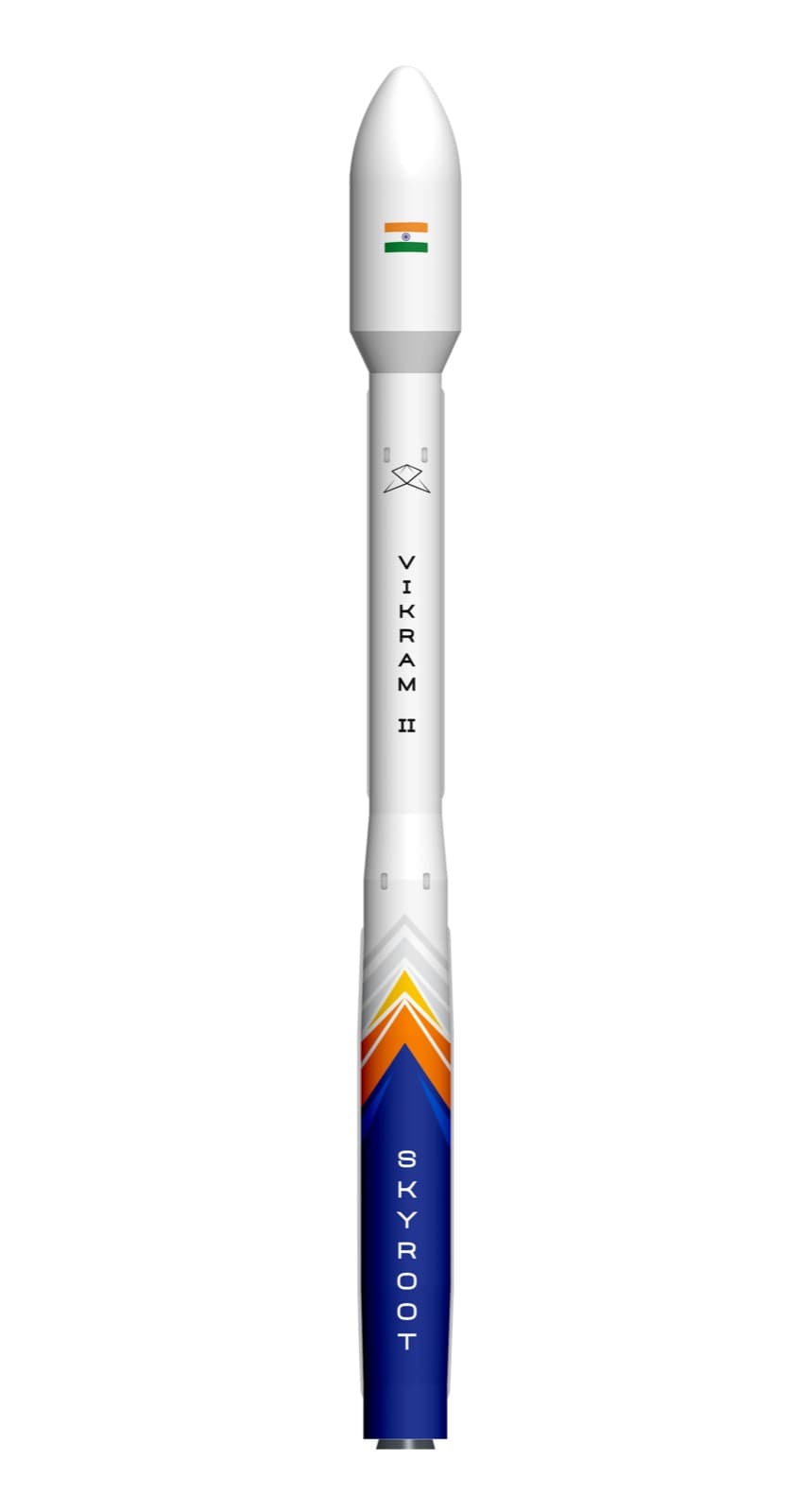
The heavier follow-on, built around the Dhawan cryogenic upper stage that burns liquid natural gas and liquid oxygen and is 3D-printed in-house. It is designed for 900 kg to low Earth orbit and 600 kg to sun-synchronous polar orbit, roughly tripling Skyroot's addressable payload class. Dhawan-III validated a 145-second endurance burn in February 2026.
Engine testing underway; first flight targeted for late 2027.
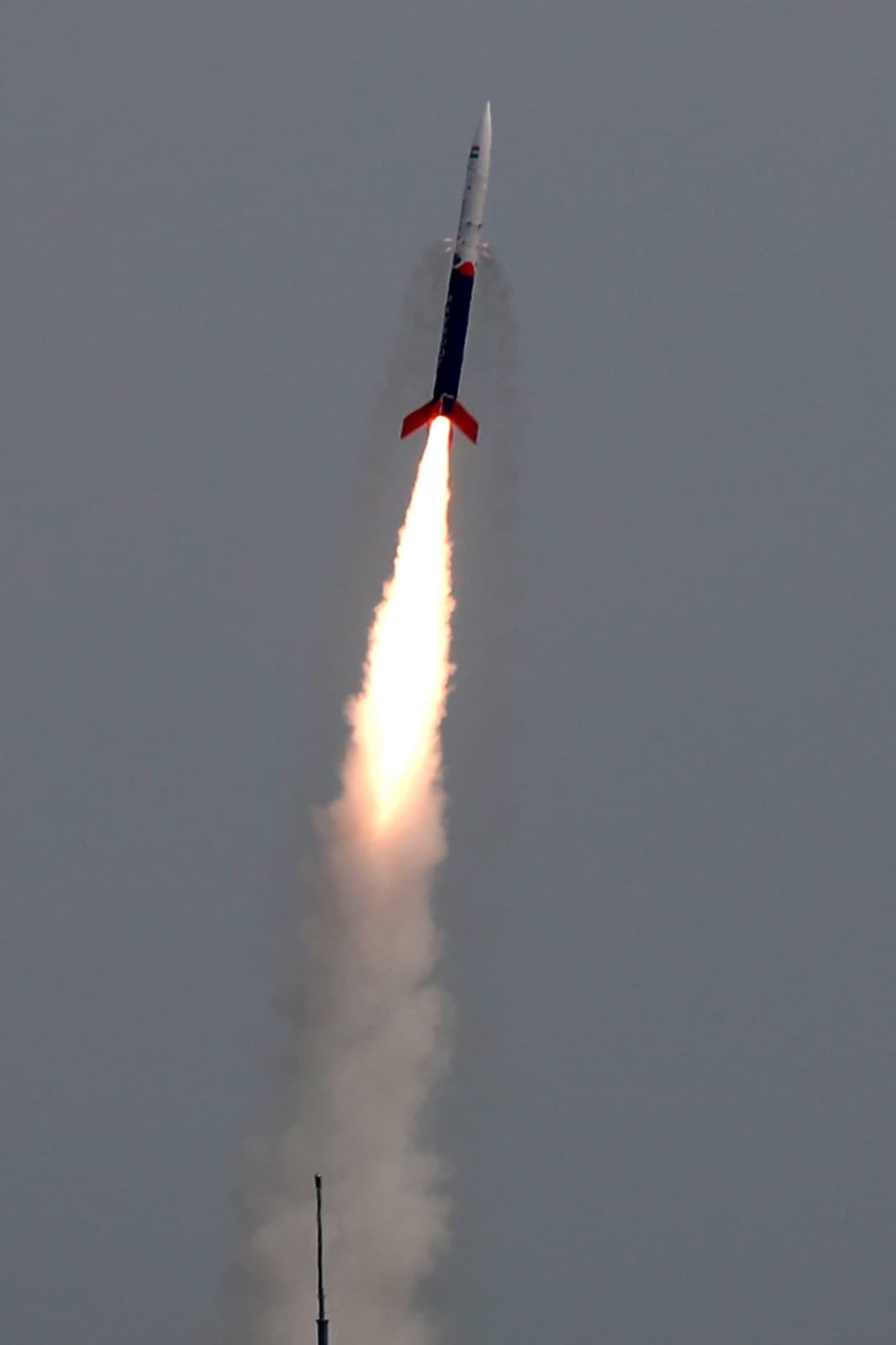
The single-stage suborbital demonstrator that flew Mission Prarambh on November 18, 2022, reaching about 89.5 km and becoming the first privately built Indian rocket to launch. It proved the solid propulsion, avionics, and stage design that Vikram-1 later carried to orbit, and it remains the company's proof that the 2020 reforms were real.
Flew once as a technology demonstrator in November 2022; superseded by Vikram-1.
Apogee~89.5 km
Flight DateNovember 18, 2022
What's Next
Fly a second Vikram-1 test mission
The first stage of the second Vikram-1 shipped from Infinity Campus to Sriharikota on August 23, 2026. At BSX 2026 in early September, Chandana said Skyroot was just about to complete post-flight analysis of Mission Aagaman and still targeting a year-end second launch, subject to any vehicle improvements and approvals. Payloads have not been named. The company's launch page now lists a Q4 2026 LEO rideshare as Filling Fast, so the second vehicle is being sold as a booked window even while Chandana still describes it as likely another test with mixed commercial and tech-demo payloads.
Late 2026
Begin commercial Vikram-1 launches
CEO Pawan Chandana says Skyroot expects to move to full commercial launches in 2027 after its third or fourth Vikram flight, with roughly 80% of payload demand expected from outside India. The first firm post-debut contract is three dedicated Vikram missions for HEX20 beginning Q4 2027.
2027
First flight of the cryogenic Vikram-2
Vikram-2 pairs the solid lower stages with the 3D-printed Dhawan cryogenic upper stage for 900 kg to low Earth orbit, moving Skyroot out of the smallest launch class. Dhawan-III cleared a 145-second endurance burn in February 2026; the homepage and Chandana still target first flight for the end of 2027.
End of 2027
Reach a launch a month
The Infinity Campus factory is built for one orbital rocket a month and Skyroot aims to be launching at that rate by the end of 2027. The second Vikram-1 is the first vehicle produced there; a demonstrated monthly cadence is still unproven. The Thoothukudi MoU is meant to add integration capacity next to Kulasekarapattinam as cadence rises.
End of 2027
Fly three dedicated Vikram missions for HEX20
Skyroot signed its first large commercial launch agreement on August 6, 2026, with Kerala-based satellite operator HEX20: three dedicated Vikram-series missions to deliver HEX20's Earth-observation satellites and in-orbit demonstration payloads to low Earth orbit, plus rideshare capacity for third-party spacecraft. It remains the company's first firm commercial deal since the July 2026 Vikram-1 orbital debut. No later launch contract has been announced.
Q4 2027
Stand up the Thoothukudi integration facility
The August 13, 2026 MoU with Tamil Nadu commits Rs 250 crore (~$26 million) and about 500 jobs to a storage, assembly, integration and testing site at Thoothukudi, next to the Kulasekarapattinam spaceport. Chandana said the plant is to support high-inclination southward flights from that port. It is still an MoU; no construction start or opening date has been published.
2026-2027
Operations & Revenue
StatusOperational
One orbital flight completed, from ISRO's Satish Dhawan Space Centre at Sriharikota, where Skyroot launches under the private-access framework created by India's 2020 space reforms. The first stage of the second Vikram-1 left Infinity Campus for Sriharikota on August 23, 2026. At BSX 2026 in September, Chandana still targeted a year-end second test flight after finishing post-flight analysis, and said future high-inclination missions would use Kulasekarapattinam while low- and mid-inclination flights stay at Sriharikota. The company's launch page now lists a Q4 2026 LEO rideshare as Filling Fast and a Q1 2027 window as Open. On August 13 it signed an MoU to invest Rs 250 crore in a Thoothukudi integration and testing facility near that second spaceport. Vehicles are now being built at Infinity Campus in Hyderabad, the roughly 200,000 sq ft factory opened in November 2025 and rated by the company at one rocket a month. Commercial service is still planned for 2027 after a third or fourth Vikram flight, with the cryogenic Vikram-2 targeted for late 2027.
Revenue Streams
Space systems and launch hardware
The current revenue line: composite satellite structures, payload adaptors, motor cases, propulsion systems, actuators and nozzles sold to satellite and launch customers. Provisional FY26 operating revenue of Rs 100.6 crore came entirely from this business, with more than Rs 605 crore of orders scheduled through FY28.
Dedicated small-satellite launch
The intended core business: dedicated Vikram-1 flights for operators who want a specific orbit and a specific date rather than waiting for a rideshare slot. Commercial service is targeted for 2027 after a third or fourth Vikram flight. The company's launch page is already selling a Q4 2026 LEO rideshare (listed Filling Fast) and a Q1 2027 window, alongside dedicated bookings up to 350 kg.
International launch contracts
Skyroot expects roughly 80% of its payload customers to be outside India, and the debut flight already carried a German technology demonstration payload from Dcubed alongside Indian smallsats. The first firm post-debut deal is three dedicated Vikram missions for HEX20 beginning Q4 2027.
Key Metrics
Employees
1,000+ (company About page, 2026)
Est. Annual Revenue
FY26 operating revenue Rs 100.6 crore (~$12M), the first meaningful year of sales, generated entirely by the space-systems business (composite satellite structures, payload adaptors, motor cases, propulsion hardware) rather than paid launches. EBITDA loss was Rs 130.3 crore. Customer advances exceeded Rs 252 crore as of March 2026, with more than Rs 605 crore of space-systems orders scheduled for execution by FY28. Commercial Vikram-1 launch service is still targeted for 2027 after a third or fourth flight. No later financials have been published.
Valuation
$1.1B (May 7, 2026), India's first space-tech unicorn
Total Raised
~$160M across all rounds through May 2026
Orbital Record
1 for 1: Vikram-1 reached a ~450 km orbit on its debut flight, July 18, 2026; second-flight hardware now moving to Sriharikota
FY26 Space-Systems Revenue
Rs 100.6 crore (~$12M) operating revenue; first meaningful sales year; EBITDA loss Rs 130.3 crore
Space-Systems Order Book
>Rs 605 crore of orders scheduled through FY28; customer advances >Rs 252 crore as of March 2026
Vikram-1 Payload
350 kg to a 500 km low Earth orbit, 260 kg to sun-synchronous polar orbit
Factory Capacity
One orbital rocket per month from the 200,000 sq ft Infinity Campus (company statement); the second Vikram-1 is the first vehicle built there
Customer Mix
Skyroot expects roughly 80% of payload customers to be international once commercial service starts
Timeline
2026$60M round makes Skyroot India's first space-tech unicorn
On May 7, 2026 Skyroot raises about $60 million co-led by GIC and Sherpalo Ventures at a $1.1 billion valuation, with BlackRock-managed funds, Playbook Partners, the Shanghvi Family Office, the Greenko founders, and Arkam Ventures participating. Total capital raised reaches roughly $160 million, earmarked for Vikram-1 cadence, manufacturing capacity, and Vikram-2.
2026Vikram-1 reaches orbit on its first attempt
Mission Aagaman lifts off from Sriharikota at 2:35 a.m. Eastern on July 18, 2026 after a 35-minute hold for a technical issue found at T-5 minutes, and reaches a roughly 450 km orbit about 15 minutes later. It carries a Skyroot satellite, a cubesat from Indian startup Grahaa Space, a technology demonstration payload from Germany's Dcubed, and a debris-removal robotic arm from Indian startup Cosmoserve. Skyroot becomes the first private Indian company in orbit and, by its own account, the first launch company anywhere to reach orbit on a debut flight.
2026Second Vikram-1 first stage ships to Sriharikota
On August 23, 2026 (India's National Space Day), 36 days after Mission Aagaman, Skyroot dispatched the Kalam-1200 first stage of its second Vikram-1 from Infinity Campus to the Satish Dhawan Space Centre. Proof-pressure tests on stages two and three were complete and propellant filling was under way; remaining stages were expected to follow in the next couple of months. CEO Pawan Chandana said the second test flight is still targeted by the end of 2026, subject to readiness and approvals, and that this vehicle was the first built at Infinity Campus rather than at MAX-Q.
2026MoU for a Rs 250 crore Thoothukudi integration facility
On August 13, 2026 Skyroot signed an MoU with Guidance Tamil Nadu at the Vetri Tamil Nadu Investment Conclave to invest Rs 250 crore (~$26 million) in a storage, assembly, integration and testing facility at Thoothukudi, expected to create about 500 jobs. The site sits near ISRO's second spaceport at Kulasekarapattinam, which Chandana said in September will handle Skyroot's high-inclination southward flights while low- and mid-inclination missions stay at Sriharikota. It is an MoU, not a completed plant.
2026At BSX 2026, targets second Vikram-1 by year-end and dual spaceports
At the Bengaluru Space Expo (September 7-9, 2026), CEO Pawan Chandana said Skyroot is targeting a second Vikram-1 launch by year-end, subject to finishing post-flight analysis from Mission Aagaman and any vehicle improvements, with payloads to be named closer to launch. He said low- and mid-inclination missions would keep using Sriharikota while high-inclination southward flights would go from the upcoming Kulasekarapattinam spaceport in Tamil Nadu. In a separate BSX interview he said more than 400 suppliers contributed to the debut vehicle, Infinity and MAX-Q composites lines are already full, and initial talks on defense-space use cases have just begun.
2025Kalam-1200 first stage fires for 110 seconds
The Kalam-1200 solid booster, the first stage of Vikram-1, completes a 110-second static fire on August 8, 2025, the largest motor Skyroot had tested and the last big propulsion gate before the orbital attempt. Kalam-250 had been static-tested in March 2024 and Kalam-100 in April 2025.
2025Infinity Campus inaugurated by the Prime Minister
Narendra Modi opens Infinity Campus in Hyderabad on November 27, 2025, a roughly 200,000 sq ft facility for designing, building, integrating, and testing launch vehicles, with a stated capacity of one orbital rocket per month. The fully built Vikram-1 is unveiled at the same event.
2023MAX-Q facility opens and Temasek leads a $27.5M round
Skyroot unveils MAX-Q on October 24, 2023, a 60,000 sq ft integrated rocket development facility near Hyderabad's airport with room for about 300 people, then raises $27.5 million in a pre-Series C led by Temasek on October 30, taking cumulative funding to roughly $95 million.
2022Mission Prarambh: India's first private rocket launch
Vikram-S, a single-stage suborbital demonstrator, lifts off from Sriharikota on November 18, 2022 and reaches about 89.5 km, validating Skyroot's solid propulsion, avionics, and stage design. It is the first rocket built by an Indian private company to fly, and the mission name means 'the beginning'.
2022$51M Series B, then the largest round in Indian space tech
GIC, Singapore's sovereign wealth fund, leads a $51 million Series B announced September 5, 2022, at the time the largest funding round in the Indian private space sector. GIC's Mayank Rawat joins the board.
2020Dhawan-I, India's first privately developed cryogenic engine
On September 25, 2020 Skyroot test-fires Dhawan-I, a fully 3D-printed cryogenic engine burning liquid natural gas and liquid oxygen, and the first cryogenic engine developed by a private Indian company. The Dhawan line becomes the upper stage of the future Vikram-2.
2018Founded by two ISRO engineers
Pawan Kumar Chandana and Naga Bharath Daka leave the Indian Space Research Organisation to start Skyroot in Hyderabad on June 12, 2018, betting that India's launch monopoly would open to private builders. It did: the 2020 space reforms let private companies build and fly their own orbital rockets from ISRO's spaceport.
Funding
Cumulative disclosed raise · dated rounds
Round
Date
Amount
Investors
Source
Series A
2021
$11M
Greenko Group founders and existing investors
Series B
September 2022
$51M
GIC (lead), plus Sherpalo Ventures, Mukesh Bansal, Solar Industries India and the Greenko founders on the cap table; the largest round in Indian private space tech at the time