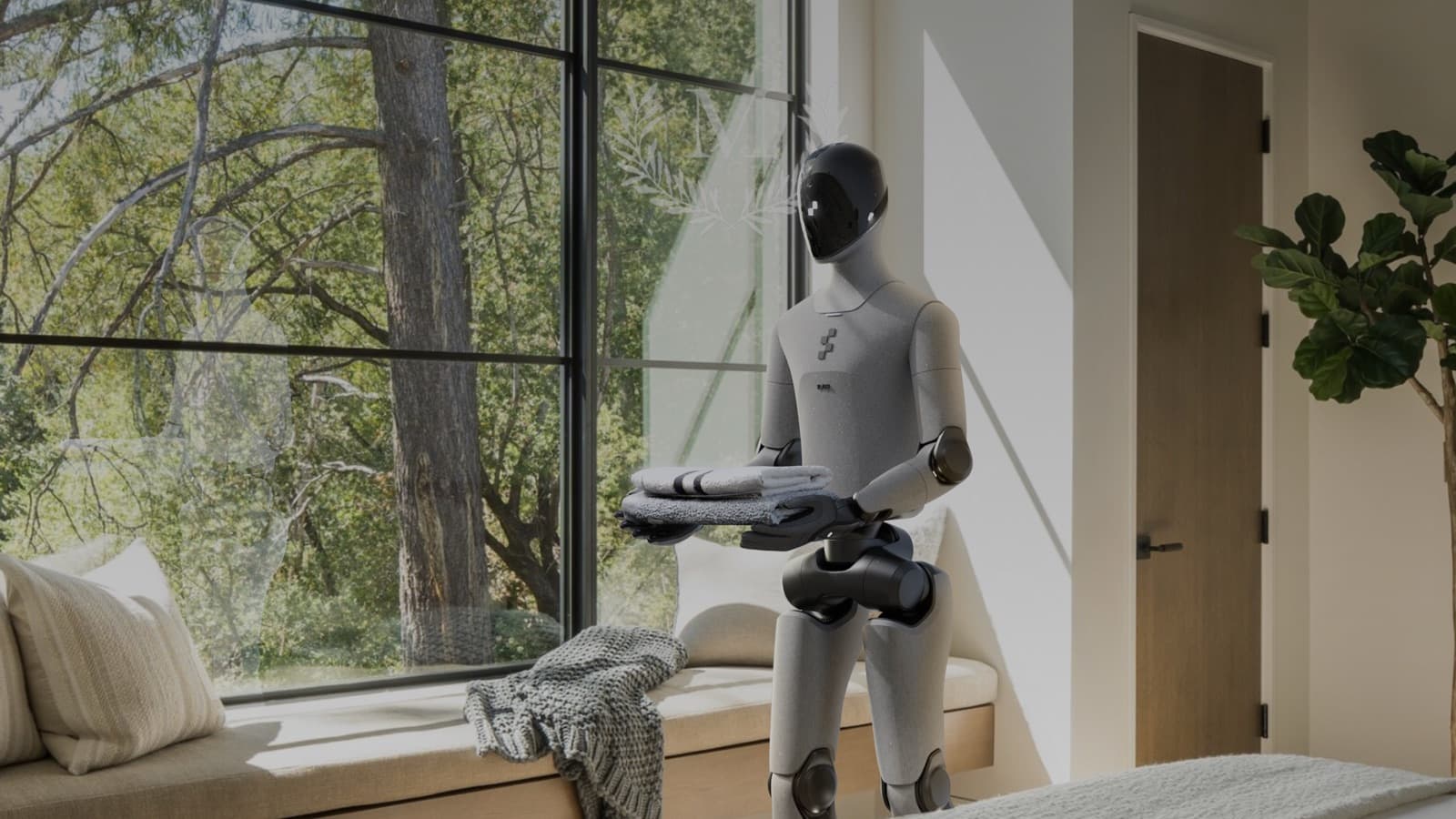
Figure AI is a San Jose robotics company building general-purpose humanoid robots and the Helix AI stack that powers them, and - following its $39B Series C in September 2025 - the best-capitalized pure-play humanoid company in the world.
Its current platform, Figure 03, is in early commercial deployment: after an 11-month Figure 02 program at BMW's Spartanburg plant, BMW brought Figure 03 back on June 25, 2026 for logistics sequencing, and as of a late-August 2026 plant report BMW was still treating that work as a validation campaign rather than quoting fleet numbers. Catalyst Brands (JCPenney's parent) signed in May 2026 to deploy Figure 03 fleets at its Reno logistics center. The Helix 02 vision-language-action stack has demonstrated full 8-hour and 200-hour autonomous package-sorting runs, while BotQ has scaled to one Figure 03 per hour and crossed 1,000 robots produced by July 23, 2026. On August 25, 2026 Figure launched Index, a crowdsourced physical-video app that while in stealth crossed 264,000 downloads, 16 million videos and $15 million paid to Creators. On September 3, 2026 Figure signed a multi-year Nscale compute partnership with an initial $3.5 billion commitment (intent to scale past $6 billion) for up to 100,000 Nvidia Vera Rubin GPUs starting in H2 2027 at Nscale's Barstow, Texas site. On September 17, 2026 it released Helix 2.5, a model pretrained entirely on Index that had Figure 03 tidy living rooms, fold towels and make beds across 30 unseen Bay Area homes with no data collected or fine-tuning in any of them, succeeding on 56% of whole-task trials against 9% for the same policy trained from scratch. Figure is separately contesting a wrongful-termination lawsuit from a former safety engineer, filed in November 2025; the case remains unresolved.
Figure hit a 24x throughput jump in early 2026 to one Figure 03 per hour and crossed 1,000 units produced on July 23, 2026, sustaining that pace over several months. The next phase is holding the rate as volumes climb further, finishing the publicly-stated supply-chain decoupling from China, and scaling toward Adcock's stated 50,000-unit annual target on the way to 100,000 robots across four years. Figure's news page listed no newer factory-count disclosure as of September 19, 2026.
Stand up the Reno, Nevada Figure 03 fleet on the Joey Pouch sorting/packing system, prove throughput and uptime on a live retail-logistics floor, and use the program as the template for broader Catalyst Brands and other retail-logistics deployments. As of September 19, 2026, neither company has disclosed the robot count or operating scale of the rollout, so it still reads as an early implementation phase rather than standing production.
After the 8-hour, extended 40-hour, and 200-hour (~250,000-package, zero-failure) autonomous package-sorting demos in May 2026, the next milestone is keeping Helix 02 in continuous Catalyst-style commercial production rather than one-off marathons, while extending whole-body autonomy across additional logistics, office, and home tasks. Helix 02 remains the stack Figure showed on BMW Spartanburg logistics sequencing; Helix 2.5 (September 17, 2026) is the newer home-task model. No independent reporting as of September 19, 2026 confirms continuous paying production has replaced the demo cadence.
After dishwasher and living-room demos, keep expanding Helix across more rooms, tools, and multistep household routines so Figure 03 can move from staged home tasks to real residential pilots inside the Brookfield-supplied housing footprint. Project Go-Big has already produced zero-shot, language-conditioned home navigation from egocentric human video. Index, launched August 25, 2026, is the main new data pipe, generating about 35 minutes of human-experience data every second. The September 17, 2026 Helix 2.5 release is the biggest step so far: Figure 03 tidied living rooms, folded towels and made beds in 30 unseen Bay Area homes with no data collected or fine-tuning in any of them, succeeding on 56% of whole-task trials. Figure has still not announced a paying residential pilot, so the open question is whether that 56% climbs to service-grade reliability in customer homes.
Nscale's initial GPUs for Figure are targeted for deployment starting in the second half of 2027 at its Barstow, Texas site, with Nscale becoming Figure's preferred compute provider and a shareholder. Watch whether the first Vera Rubin racks land on that H2 2027 window and whether the commitment scales from $3.5 billion toward the stated $6 billion-plus ceiling.
Scale Index data collection and $1B data-compute spend
After bringing Index out of stealth on August 25, 2026 (264,000 downloads, 44,000 weekly active users, 16 million videos, $15 million paid to Creators), Figure said it is on a path to scale that pipeline and is committed to spend more than $1 billion over the next 12 months on data and compute. The September 3, 2026 Nscale partnership adds an initial $3.5 billion of dedicated cloud compute (intent to scale past $6 billion) on up to 100,000 Nvidia Vera Rubin GPUs starting in the second half of 2027. Figure delivered the first published payoff on September 17, 2026 with Helix 2.5: Index pretraining alone raised zero-shot whole-task success in 30 unseen homes from 9% to 56%, and Figure said Index is now generating about 35 minutes of new human experience every second against a $3.5 billion compute commitment to Helix. The next milestone is turning that measured scaling law into reliability high enough for real deployments rather than blind evaluations.
Figure introduced Helix 2.5 on September 17, reporting that a single foundation model pretrained on its Index human-video dataset let Figure 03 tidy living rooms, fold towels and make beds across 30 Bay Area homes with no data collected, fine-tuning or adaptation in any of them. Holding task data and architecture fixed, Index pretraining lifted whole-task zero-shot success from 9% to 56%, or 237 of 420 trials with no partial credit, and Figure says the same behaviours needed half the task-specific data of a comparable Helix 02 policy. The company also reports a human-to-robot transfer scaling law precise enough to forecast its largest run's loss before training, says Index now generates about 35 minutes of new human experience every second, and has committed $3.5 billion of compute to Helix.
Nscale and Figure signed a multi-year compute partnership on September 3, 2026, with an initial $3.5 billion commitment that the AI cloud firm said it intends to scale past $6 billion. The deal targets deployment of up to 100,000 Nvidia Vera Rubin GPUs starting in the second half of 2027 at Nscale's Barstow, Texas site, and makes Nscale a Figure shareholder and preferred compute provider for the next generation of Helix models. Figure CEO Brett Adcock said data and compute remain the main constraints on bringing humanoid robots to scale.
Figure AI came out of stealth on August 25 with Index, a consumer app that pays people to record real-world physical tasks so Helix can train on diverse video. While in stealth the app crossed 264,000 downloads in 108 countries, 44,000 weekly active users, more than 16 million uploaded videos and 30 minutes of video processed every second, with $15 million paid to Creators so far. Figure said it is now committed to spend more than $1 billion over the next 12 months on data and compute as it scales the pipeline.
BMW is putting Figure AI's third-generation Figure 03 humanoid to work on complex logistics sequencing at its Spartanburg, South Carolina plant, following an 11-month Figure 02 pilot in the body shop. During that pilot the earlier robot supported production of more than 30,000 BMW X3 vehicles and loaded over 90,000 sheet-metal parts across roughly 1,250 runtime hours at greater than 99% placement accuracy. Figure 03 adds wireless charging, tactile hands, palm cameras and speech capability, and Figure said it is beginning fleet-wide retirement of the Figure 02.
Figure AI and Catalyst Brands - the parent of JCPenney, Aéropostale, and Brooks Brothers - announced a commercial agreement on May 26 to deploy Figure's next-generation humanoid robots in retail logistics, beginning at the Catalyst Brands Reno, Nevada Distribution Logistics Center. The robots will work alongside associates in the Joey Pouch sorting and induction system, marking one of the first publicly disclosed commercial deals to put humanoids inside a major U.S. retail distribution network and following Figure 03's recent week-long autonomous package-sorting marathon.
(not publicly disclosed); ~$1,000/robot/month RaaS pricing referenced by third parties, with independent 2026 ARR estimates in the low tens of millions of dollars based on shipment cadence (still negligible against the $39B valuation)
Total Funding
~$1.9B
no later primary round announced as of September 19, 2026
Valuation
$39B
(post-money, Sep 2025 Series C); still the latest primary mark as of September 19, 2026
Figure 03 Production Rate
1 robot/hour sustained, 1,000+ produced
(Jul 23, 2026); no newer factory count disclosed as of September 19, 2026
Helix 02 Autonomy
Sustained a 200-hour continuous autonomous package-sorting run (~250,000 packages, zero hardware failures) with three Figure 03 robots and autonomous battery swap; still the latest disclosed logistics endurance mark as of September 19, 2026
Helix 2.5 Zero-Shot Generalization
56% whole-task success
(237/420 trials) across 30 unseen Bay Area homes on bed making, towel folding and toy tidying, versus 9% for the same policy trained from scratch (Sep 17, 2026)
Manufacturing Target
12,000 robots/year initial, scaling toward 50,000/year and 100,000 over 4 years
06
Operations & revenue
Operating status
Scaling commercial deployments
Figure has moved from a single paying customer (BMW) to multiple commercial agreements and a return engagement at BMW: on June 25, 2026 BMW put Figure 03 to work on logistics sequencing in Hall 52 at Plant Spartanburg. An August 25, 2026 Automotive Logistics report from the plant said BMW is still focused on validating the sequencing application and gathering operational experience rather than quoting target robot counts. The May 2026 Catalyst Brands deal is deploying Figure 03 fleets at the Reno, Nevada distribution center on the Joey Pouch sorting/packing system; as of September 19, 2026 neither company has disclosed the robot count or scale of that rollout. On August 25, 2026 Figure launched Index (264,000 downloads, 16 million videos, $15 million paid to Creators). On September 3, 2026 it signed the Nscale compute partnership (initial $3.5 billion, intent to scale past $6 billion, up to 100,000 Vera Rubin GPUs from H2 2027 in Barstow, Texas). On September 17, 2026 it released Helix 2.5, reporting 56% whole-task zero-shot success across 30 unseen Bay Area homes. Figure's news page lists no later product or deployment announcement after that September 17 post. UPS talks remain unconfirmed; no signed UPS agreement has been announced.
Revenue streams
Robot-as-a-Service (BMW)
Figure's first paid factory deployment ran at BMW's Spartanburg plant, where Figure 02 loaded sheet-metal parts on a daily production line before the fleet was retired in late 2025.
Retail logistics (Catalyst Brands)
Commercial agreement signed May 26, 2026 to deploy Figure 03 humanoids at Catalyst Brands' (JCPenney/Aéropostale/Brooks Brothers) Reno, Nevada distribution center, starting on the Joey Pouch sorting/packing system before expanding across the network. As of September 19, 2026, neither company has disclosed the robot count or scale of the rollout.
Other early commercial deployments
Figure says it has initiated additional early commercial deployments with select customers and expects Brookfield-linked residential, office, and logistics environments - opened up under the companies' Project Go-Big data partnership - to widen that deployment base over time.
07
Timeline23
2026
Helix 2.5 does chores zero-shot in 30 unseen homes
On September 17, 2026 Figure introduced Helix 2.5, a single foundation model pretrained from random initialization entirely on its Index human-behaviour dataset, then adapted to three whole-body behaviours: tidying living rooms, folding towels and making beds. Figure 03 ran all three across 30 Bay Area homes with no data collected, fine-tuning or adaptation in those homes or on the objects handled, using one fixed checkpoint per task. With task data and architecture held fixed, Index pretraining lifted whole-task zero-shot success from 9% to 56% (237 of 420 trials, no partial credit: 67% bed making, 62% towel folding, 40% toy tidying), and the behaviours needed half the task-specific data of a comparable Helix 02 policy. Figure also reported a human-to-humanoid transfer scaling law across an 8x pretraining-data range accurate enough to forecast its largest run's test loss to four decimal places before training.
Signs $3.5 billion Nscale compute partnership
On September 3, 2026 Nscale and Figure signed a multi-year compute partnership with an initial $3.5 billion commitment that Nscale said it intends to scale past $6 billion. The deal targets deployment of up to 100,000 Nvidia Vera Rubin GPUs starting in the second half of 2027 at Nscale's Barstow, Texas site, and makes Nscale a Figure shareholder and preferred compute provider for the next generation of Helix models.
Launches Index crowdsourced physical-data app
Figure came out of stealth on August 25, 2026 with Index, a consumer app that pays people to record real-world physical tasks for Helix training. While in stealth the app crossed 264,000 downloads across 108 countries, 44,000 weekly active users, more than 16 million uploaded videos and 30 minutes of video processed every second, with $15 million paid to Creators. Figure said it is committed to spend more than $1 billion over the next 12 months on data and compute as it scales the pipeline.
Court orders Gruendel to return and destroy documents taken from Figure
In a July 2026 discovery order in the Gruendel wrongful-termination suit, the court found former safety engineer Robert Gruendel had taken a collection of Figure documents outside normal discovery and ordered him to produce all of them to Figure by July 8, 2026, destroy his and his vendor's copies by July 9, and certify compliance in writing by July 10 - while Figure was ordered to preserve the documents and produce non-privileged material responsive to the complaint. The underlying wrongful-termination and robot-safety claims remain unresolved.
CEO Brett Adcock's Hark raises $700M as he runs multiple companies at once
On May 21, 2026, Hark - a separate AI-hardware startup founded and personally funded by Figure CEO Brett Adcock to build 'personalized intelligence' devices - closed a $700M+ Series A at a $6B post-money valuation led by Parkway Venture Capital, with participation from NVIDIA, Intel Capital, Qualcomm, Salesforce, and Brookfield, several of whom are also Figure investors. Adcock now runs Figure, Hark, and the school-security startup Cover simultaneously, drawing governance questions from industry observers about executive bandwidth and potential conflicts across the ventures.
Figure 03 demonstrates autonomous ladder climbing
On August 1, 2026, CEO Brett Adcock posts video of a Figure 03 autonomously climbing a ladder, grabbing both rails and stepping up rung by rung without visible remote control or human guidance, an extension of the System 0/Helix perception-conditioned mobility work that already let Figure 03 handle stairs, ramps, and uneven terrain. Figure has not published technical details of the underlying policy and the demo has not been independently verified.
BotQ produces its 1,000th Figure 03
On July 23, 2026, Figure announces that BotQ has manufactured its 1,000th Figure 03 humanoid, up from 350+ units in late May, sustaining the roughly one-robot-per-hour production rate over several months. CEO Brett Adcock marks the milestone with a special gold-finished unit.
Figure 03 appears at White House AI education summit
On March 25, 2026, a Figure 03 humanoid accompanies First Lady Melania Trump into the East Room at the White House during the 'Fostering the Future Together' summit, greeting attendees in multiple languages - the first appearance of a humanoid robot at a White House event and a high-visibility moment for Figure's home/consumer ambitions.
2026
Robots outnumber humans at Figure
On June 20, 2026, CEO Brett Adcock announces that deployed Figure robots (roughly 740–750) now outnumber the company's human staff (about 660, of whom only ~314 are salaried with the rest hourly or contract) for the first time - a milestone he frames as evidence of Figure's manufacturing and deployment ramp as BotQ scales Figure 03 output and commercial fleets grow.
BMW deploys Figure 03 at Spartanburg for logistics sequencing
On June 25, 2026, BMW put Figure's third-generation Figure 03 humanoid to work on complex logistics sequencing (picking parts from unsorted containers into just-in-sequence trolleys) in Hall 52 at Plant Spartanburg - a return to the customer after the earlier Figure 02 pilot. That 11-month body-shop pilot supported production of 30,000+ BMW X3 vehicles and loaded 90,000+ sheet-metal parts across roughly 1,250 runtime hours at >99% placement accuracy. Figure 03 adds wireless charging, tactile hands, palm cameras and speech-to-speech audio, and Figure said it is beginning fleet-wide retirement of the Figure 02.
System 0 gains perception-conditioned whole-body control for stairs and terrain
Figure adds a perception-conditioned whole-body control upgrade to its low-level System 0 controller that lets Figure 03 climb stairs and cross ramps and uneven terrain using only onboard stereo cameras - no task-specific programming, motion capture, or operator intervention. RGB imagery is fused into a real-time 3D representation of the ground and combined with the robot's proprioceptive state; the locomotion policy is trained end-to-end with reinforcement learning across thousands of randomized simulated terrains and transfers zero-shot to the real robot across varied lighting, a key step toward multi-level factory, warehouse, and home environments.
On May 26, 2026, Catalyst Brands (parent of JCPenney, Aéropostale, and Brooks Brothers) signs a commercial agreement to deploy Figure 03 fleets in its Reno, Nevada distribution center, starting on the Joey Pouch sorting/packing system. The deal is one of the first public commercial humanoid agreements in U.S. retail logistics.
Helix 02 runs full 8-hour autonomous shifts, then a 200-hour marathon
On May 13, 2026, Figure live-streams four Figure 03 humanoids ('Bob,' 'Frank,' 'Gary,' and later 'Rose') running a fully autonomous 8-hour package-sorting shift powered by Helix 02 - detecting barcodes, picking packages, and orienting them onto a conveyor at roughly human throughput. Figure then escalates the demo through ~40-hour and 81-hour runs to a 200-hour continuous autonomous operation in late May 2026 - three Figure 03 robots sorting roughly 250,000 packages (~249,560) with zero hardware failures, using autonomous battery swap to foot-based wireless charging docks between stints.
BotQ scales to one Figure 03 per hour
Figure announces that BotQ has gone from one Figure 03 per day to one per hour - a 24x throughput improvement in under 120 days - with 350+ third-generation humanoids produced, more than 9,000 actuators across 10+ variants, 500+ battery packs shipped at 99.3% first-pass yield, and 80%+ end-of-line first-pass yield. CEO Brett Adcock says the plant is now scaling toward 55 robots per week.
Helix 02 reaches full-body home autonomy
Figure launches Helix 02 in January to unify walking, manipulation, and balance, then shows the system autonomously tidying a living room in March as it expands from kitchen demos to broader home tasks.
2025
Former safety engineer sues Figure over robot-force allegations
On November 21, 2025, Robert Gruendel, Figure's former principal robotic safety engineer, files a wrongful-termination lawsuit in the U.S. District Court for the Northern District of California alleging he was fired in September 2025 days after warning CEO Brett Adcock and chief engineer Kyle Edelberg that Figure's robots were powerful enough to fracture a human skull, citing a malfunction in which a Figure 02 unit gashed a steel refrigerator door. Figure says Gruendel was terminated for poor performance and is contesting the claims; the company filed its answer and counterclaims on January 16, 2026, and the case remains in early discovery as of mid-2026.
Figure 02 completes BMW deployment
Figure reports an 11-month Figure 02 deployment at BMW Spartanburg that ran daily 10-hour shifts, loaded 90,000+ parts, and contributed to 30,000+ X3 vehicles before the fleet's retirement.
Figure 03 introduced for home and scale
Figure introduces Figure 03, a lower-cost third-generation platform redesigned for Helix, home environments, and high-volume manufacturing through BotQ.
$1B+ Series C at $39B valuation
Figure exceeds $1B in Series C funding at a $39B post-money valuation to accelerate humanoid production, AI development, and commercial scale-up.
2024
Figure 02 unveiled
Figure unveils Figure 02, a ground-up redesign for workforce use with six onboard RGB cameras, fourth-generation hands, and 3x more onboard compute than Figure 01.
$675M Series B; BMW partnership
Announces commercial partnership with BMW Manufacturing in January and raises $675M Series B at a $2.6B valuation in February with investors including Microsoft, OpenAI, NVIDIA, and Jeff Bezos.
2023
Exits stealth; Figure 01 walks
Figure exits stealth mode in January. By May, Figure 01 achieves dynamic bipedal walking - less than one year from founding. Raises $70M Series A led by Parkway Venture Capital.
2022
Founded and self-funded
Brett Adcock founds Figure AI and self-funds a $100M seed round to develop general-purpose humanoid robots.
08
Funding
$1.8Bdisclosed across 4 rounds with a stated amount