Boston Dynamics is a pioneering robotics company founded in 1992 as an MIT spin-off that now commercializes mobile robots for industrial inspection, warehouse automation, and humanoid manipulation.
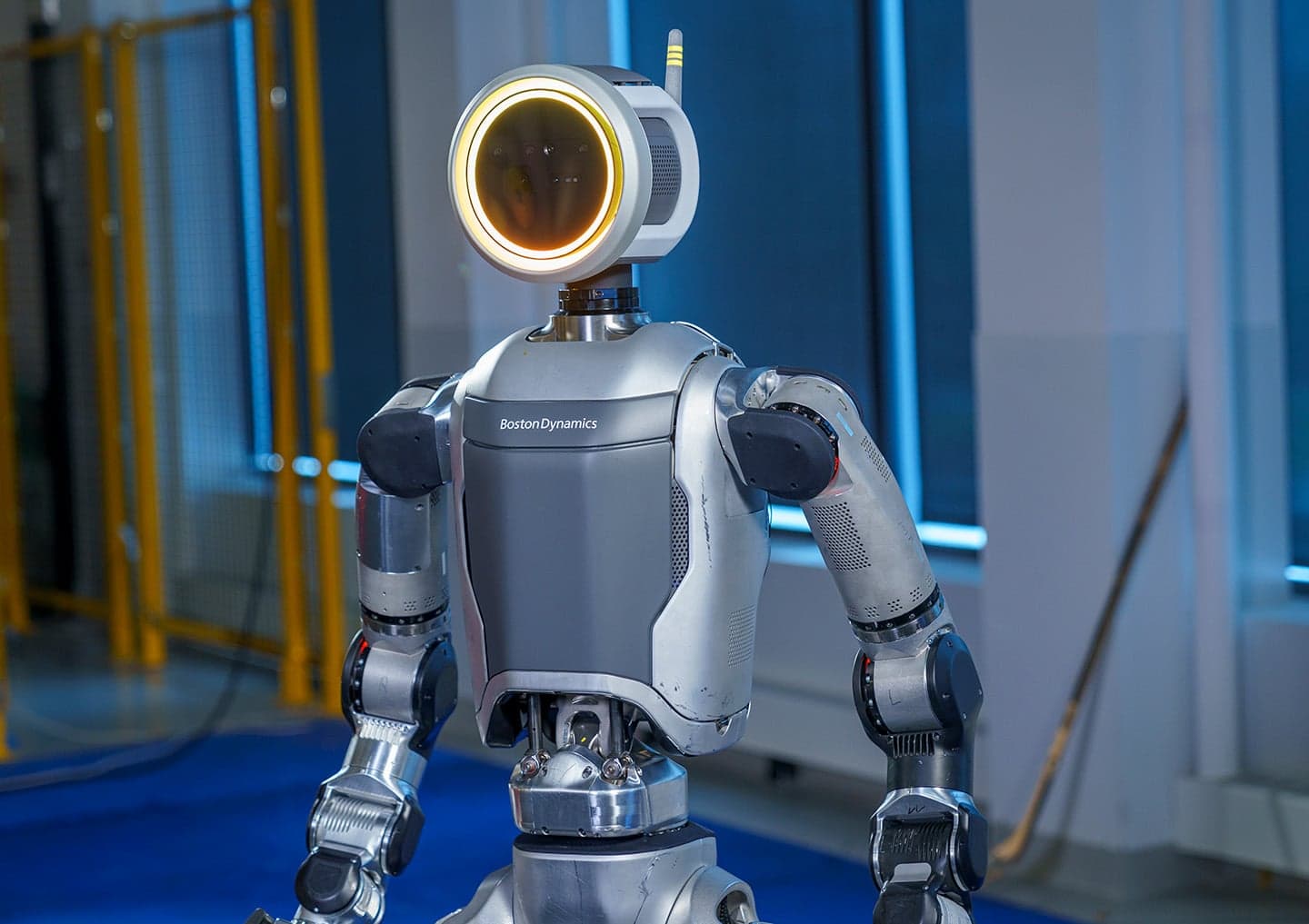
Its commercial portfolio spans Spot, Stretch, and Orbit, while the all-electric Atlas formally entered production at CES 2026 and is now demonstrating heavy-object manipulation and whole-body control via reinforcement learning. Now wholly owned by Hyundai-affiliated shareholders - Hyundai Motor Group bought out SoftBank's remaining ~9.65% stake for about $325M in June 2026, then raised roughly 1.2 trillion won (~$850M) more via a Jul-Aug 2026 rights offering that also lifted Chairman Euisun Chung's personal stake to about 25% - and backed by a $26B U.S. investment plan including a robotics factory targeting 30,000 Atlas units/year by 2028, Boston Dynamics has deployed more than 2,000 Spot and Stretch robots globally and has fully committed its 2026 Atlas production run to Hyundai's Robotics Metaplant Application Center and Google DeepMind, with additional customers planned for early 2027. At Hyundai's August 26, 2026 CEO Investor Day the company reaffirmed 2028 U.S. robot production of 30,000 units a year, said 25,000 units of initial volume are already committed, and said the factory site will be announced by year-end, with Atlas deployment at Hyundai Motor Group Metaplant America from 2028. Rohit Prasad, formerly Amazon SVP and head scientist for Alexa and AGI, became CEO on 7 Oct 2026, succeeding interim CEO Amanda McMaster. Re-read on 18 Oct 2026, the 6 Oct release still says his board seat is subject to the relevant approval process, and the newsroom's newest item is still that appointment. Manufacturing Dive on 7 Oct quoted a spokesperson that he is expected to join the board once approval is completed. The release does not state whether McMaster remains CFO and gives no Atlas unit or paid-hours figure. Parent Hyundai Motor's 25,000+ unit Atlas deployment plan had been a central flashpoint in a South Korean union wage dispute; the Korean Metal Workers' Union ratified a wage deal on August 31, 2026. On September 8, 2026 Dynamic Creatures emerged from stealth as Boston Dynamics' official hospitality and entertainment partner for mobile interactive character robots. ICE awarded RADeCO purchase order 70CMSW26P00000067 on 25 Sep 2026 for four Cerberus Spot AV packages (SAM notice 192126NFU00000158, J&A-26-0354, $1,304,296). Lidl's December 2025 plan for 22 Stretch robots in the Netherlands, Belgium, Austria and Spain by mid-2026 still has no public completion confirmation from Lidl or Boston Dynamics as of 18 Oct 2026.
Extend the Boston Dynamics-Google DeepMind partnership from Spot (where Gemini Robotics ER 1.6 now powers AIVI-Learning) into Atlas, integrating Gemini Robotics foundation models for broader humanoid task learning beyond reinforcement learning policies. Google DeepMind shipped Gemini Robotics 2 on July 30, 2026 with true whole-body control (legs, torso, arms, and five-fingered hands under one learned policy) - but the public demonstration platform was Apptronik's Apollo 2, not Atlas. As of September 12, 2026 an Atlas-specific integration milestone still has not shipped. Claims of an already-shipped 'Gemini 3-powered Atlas' continue to circulate in low-quality financial-content aggregators but remain uncorroborated by Boston Dynamics, TechCrunch, The Robot Report, or Google DeepMind's own blog, and are not reflected here.
Conclude the board's CEO search to replace interim CEO Amanda McMaster, who took over from retired founder/CEO Robert Playter on February 27, 2026. In a September 2026 Machina Summit interview she was still titled interim CEO and CFO, said Spot remains the currently adopted revenue product, and said the company would not rush Atlas commercialization. No successor has been named.
Build on the March 2026 FieldAI partnership: expand Spot deployments across construction and other changing environments using Field Foundation Models for autonomous inspections, mapping, and monitoring in less structured sites, with Stretch and the electric Atlas named as the next platforms to integrate FieldAI. A February 2026 Boston Dynamics case study reported that construction customers using FieldAI-equipped Spot deployments across Asia, Europe, and North America cut inspection and documentation time by more than 90%. As of September 12, 2026 no new deployment figures or Stretch/Atlas FieldAI integration have been announced.
Convert DHL's 1,000-unit MOU (plus its separate $15M North American automation investment) and Lidl's Netherlands/Belgium/Austria/Spain rollout into delivered fleets, while widening Stretch's case-picking capabilities beyond container/trailer unloading. Lidl's December 2025 plan called for integrating Stretch into regular import-warehouse operations in the Netherlands and Belgium by May 2026, and into Austria and Spain as a standard solution by mid-2026. As of September 12, 2026 neither Lidl nor Boston Dynamics has published confirmation that those mid-2026 country rollouts are complete, and no new DHL or Lidl unit commitment has been reported.
Broaden Hyundai deployment programs and build the Atlas factory
Turn Hyundai's $26B U.S. investment plan - which funds a robotics factory targeting 30,000 Atlas units/year by 2028 and Atlas deployment at Hyundai's Georgia Metaplant (sequencing first from 2028, assembly by 2030) - into broader Spot, Stretch, and Atlas deployment across manufacturing and logistics programs. At Hyundai Motor's August 26, 2026 CEO Investor Day, the company reaffirmed 2028 U.S. robot production at 30,000 units a year, said an initial committed volume of 25,000 units is already confirmed, and said the factory site will be announced by year-end, with Atlas first deployed at Hyundai Motor Group Metaplant America from 2028. The 25,000+ unit Hyundai/Kia deployment plan drew escalating labor pushback in Korea through most of August 2026: after strikes in July and a fourth round of partial stoppages running August 12-16 pushed cumulative Hyundai Motor production losses to an estimated 42,510+ vehicles and roughly $1.3B in lost revenue, Hyundai's union staged a full-day walkout on August 21 (its first in a decade) before a 17th round of negotiations produced a tentative wage agreement on August 24-25: a 100,000-won (~$72) monthly base increase, a performance bonus of more than 400% of monthly salary, a separate 12.5-million-won lump-sum payment, an extended retirement age, and a commitment to hire 500 new technical workers in 2027-2028. Union members ratified the deal on August 31, 2026 with 61.55% approval (78.63% turnout), ending the 117-day dispute; Hyundai has maintained throughout that the 2028 Atlas plan is not formally part of the wage talks.
Land a first named logistics partner for Spot last-mile delivery
Convert the July 14, 2026 'Bridging the Porch Gap' concept reveal - Spot riding in a delivery van, then walking parcels the final ~50 feet from curb to doorstep using a conveyor payload that carries two packages at a time (Boston Dynamics estimates that covers at least 60% of an average delivery van's load) - into a named pilot. Boston Dynamics said it was in talks with major logistics companies toward a full pilot in which Spot would work alongside a driver to deliver roughly 200 packages a day, five days a week. As of September 12, 2026 the company still has not named a partner, city, or start date.
Resolve the ICE Spot procurement into a signed contract
Follow ICE's Office of Firearms and Tactical Programs' August 27, 2026 sole-source procurement notice for an estimated $1-2M of Spot robots and accessories (place of performance: Fort Benning, Georgia) through to a formal solicitation and, if pursued, a signed contract. The DHS forecast listed an expected solicitation date of September 4, 2026, but as of a September 9 Boston.com report the government had still not issued an RFP. ICE did post a related Sources Sought notice for a quadruped unmanned ground vehicle (Notice ID 192126NFU00000158) around September 2, with responses due that day and the listing marked inactive on September 4; that was a capability survey, not the Spot RFP. Volume, delivery timeline, and whether a noncompetitive award survives scrutiny remain unconfirmed; Boston Dynamics has restated that any attempted weaponization is prohibited under its terms.
Convert Dynamic Creatures into a named guest-facing launch
Dynamic Creatures emerged from stealth on September 8, 2026 as Boston Dynamics' official hospitality and entertainment partner, already working with an unnamed large theme park and a retailer on mobile character robots. Interim CEO Amanda McMaster called it a new frontier for the company's platforms. The next milestone is a named venue, a public guest-facing start date, and whether the characters run on Spot, a custom body, or both.
Land a first named customer using Spot 5.2 agentic dispatch
Spot 5.2, released in September 2026, re-architected Orbit around assets rather than inspections, opened the API to third-party PLC sensors and cameras, and described that connectivity as the foundation for an MCP layer that lets AI agents dispatch Spot when business logic fires, for example sending the robot to a pump after a fixed sensor alerts. Gemini-powered AIVI now covers gauges, sight glasses, pallets, 5S boards and video inspections, plus gas sensing, visual vibration analysis and partial-discharge checks. Boston Dynamics has not named a customer running that agentic loop in production. Watch for a first disclosed site that actually lets an enterprise system send Spot rather than a scheduled mission.
Ship the 2026 Atlas production run to RMAC and DeepMind, then deliver to a first outside client
Convert the CES 2026 product launch into actual fleet deliveries: ship the 2026 Atlas production run to Hyundai's Robotics Metaplant Application Center (parts sequencing, sorting, transport) and to Google DeepMind. In a July 22, 2026 webinar on Atlas technology and delivery plans, Boston Dynamics confirmed it will deliver Atlas to a company outside the Hyundai Motor Group for the first time in 2027 to run a pilot test at an unfamiliar industrial site - the first step toward opening the order book beyond its initial Hyundai and DeepMind deployments. The named client has not been disclosed.
A senior Hyundai Motor Group executive with direct knowledge told Reuters on September 14, 2026 that a Boston Dynamics IPO in 2027 is unlikely, citing that Atlas is not yet deployed at scale and the company remains unprofitable. A Hyundai Glovis filing put the 2025 loss at 528.4 billion won, with cumulative losses from 2021 through 2025 near 1.7 trillion won. Meritz Securities analyst Kim Joon-sung said a listing is more likely in 2029 or 2030 once Hyundai has operational data and can sell robots more broadly to outside customers. Hyundai has not published an official IPO timetable or valuation target. Earlier 2026 coverage had floated a possible H1 2027 listing after the SoftBank buyout and Jul-Aug 2026 rights offering that raised Chairman Euisun Chung's personal stake to about 25%.
Develop and launch a new robot platform beyond the current Atlas, Spot, and Stretch lineup. Interim CEO Amanda McMaster tied the mid-July 2026 $100M Waltham robotics and AI center expansion - with phased move-in from mid-2027 - to giving the team the space and resources to launch its 'third robot platform this decade,' the company's clearest public signal yet of a new commercial product line in development. No platform name, category, or date had been disclosed as of late August 2026.
Boston Dynamics said Rohit Prasad, formerly Amazon senior vice president and head scientist for Alexa and AGI, becomes CEO on Oct. 7, 2026, succeeding interim CEO Amanda McMaster. Prasad is also expected to join the board, subject to approval. Hyundai Motor Group Vice Chair Jaehoon Chang, who chairs Boston Dynamics' board, said the hire is meant to pair the company's robotics with Prasad's product experience and Hyundai manufacturing.
Boston Dynamics on Oct. 1, 2026 announced a new Atlas hand with four fingers, 13 degrees of freedom, encapsulated direct-drive actuators and no pinky, designed for mass manufacturing and sim-to-real reinforcement learning. The company said the prior seven-DOF gripper was built to grasp objects, while this generation is meant to manipulate them, including pinch, tripodal and triggered-tool grasps such as drills and welding torches. IEEE Spectrum and The Robot Report independently reported the announcement the same day.
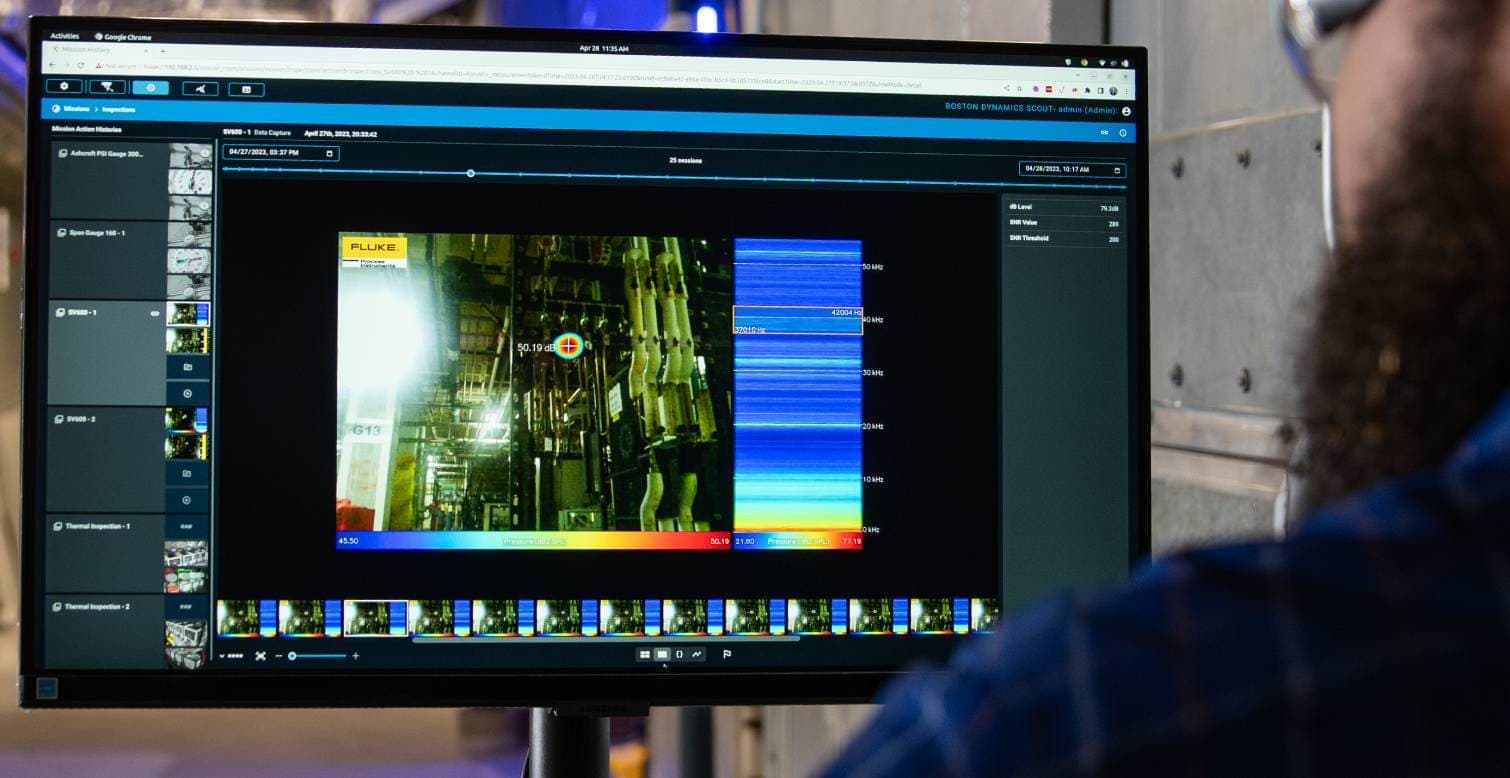
Boston Dynamics released Spot 5.2, rebuilding its Orbit fleet software around assets rather than inspections and opening its API to outside inputs such as PLC sensors and security cameras. The release lays the foundation for an MCP layer that lets AI agents dispatch Spot on their own, for example sending the robot to gather data when a fixed sensor alerts or to a zone where a camera detects movement. Orbit's AI visual inspection is now powered by Google Gemini and trained on industrial data for gauges, sight glasses, pallets and 5S boards, alongside detection of more than 20 gases, video-based vibration analysis and partial-discharge checks.
A senior Hyundai Motor Group executive with direct knowledge told Reuters a Boston Dynamics IPO next year is unlikely, saying Atlas is not yet deployed at scale and the company remains unprofitable. A Hyundai Glovis filing put Boston Dynamics' 2025 loss at 528.4 billion won, with cumulative losses from 2021 through 2025 near 1.7 trillion won. Meritz Securities analyst Kim Joon-sung said a listing is more likely in 2029 or 2030.
Dynamic Creatures emerged from stealth on September 8, 2026 as Boston Dynamics' official partner for mobile interactive character robots in hospitality and entertainment. The Boston company said it is already working with an unnamed theme park and a retailer, and interim Boston Dynamics CEO Amanda McMaster called the effort a new frontier for advanced robotics. It is a guest-facing character line, not a new industrial Atlas, Spot, or Stretch product.
Immigration and Customs Enforcement disclosed procurement plans in late August to spend as much as $2 million on Boston Dynamics' Spot robots for immigration enforcement operations, according to reporting by NBC News and the Boston Globe. The agency's notice describes the doglike robots, which start around $75,000 per unit and can be fitted with cameras and chemical sensors, as providing remote inspection, situational awareness, and hazard assessment in environments that could be unsafe for officers; the purchase remains at the procurement stage rather than a completed deployment.
At Hyundai Motor's August 26 CEO Investor Day, the company said U.S. robot production will begin in 2028 with 30,000 units of annual capacity for Spot, Stretch and Atlas, and that it aims to deploy Atlas at Hyundai Motor Group Metaplant America from 2028. CEO Jose Munoz called it the world's first large-scale commercial robot manufacturing facility and said an initial committed volume of 25,000 units is already confirmed, with the production site to be announced by year-end. The Robot Metaplant Application Center opened in the United States in June and is slated to expand ten-fold by the end of 2026.
Boston Dynamics confirmed in a July 22 webinar that it will deliver its Atlas humanoid to a company outside the Hyundai Motor Group for the first time in 2027, running a pilot test at an unfamiliar industrial site. The 2026 Atlas production run remains fully committed to Hyundai's Robotics Metaplant Application Center and Google DeepMind, with the named 2027 client still undisclosed.
Boston Dynamics' electric Atlas humanoid delivered the match ball to the referee at the Brazil–Norway round-of-16 game in East Rutherford, New Jersey on July 5, in what the company and partner Hyundai billed as the first integration of a humanoid robot into a live World Cup match. The robot walked pitchside and performed goal-celebration moves before handing over the ball. Boston Dynamics has said its 2026 Atlas production is committed to Hyundai and Google DeepMind.
Boston Dynamics said on June 24 it will invest about $100 million in a new advanced robotics and AI center, leasing a 323,000-square-foot facility at Reservoir Place in Waltham, Massachusetts. The project consolidates three nearby sites and is expected to create 1,250 new jobs by 2033, supported by a $25 million state Economic Development Incentive Program award, with phased move-in beginning in mid-2027. The expansion comes as Boston Dynamics ramps production of its all-electric Atlas humanoid following Hyundai's move to take full ownership of the company.
Hyundai Motor Group is buying out SoftBank's remaining roughly 9.65% stake in Boston Dynamics for about $325 million, a deal set for approval at a June 22 board meeting that would make the robotics maker a wholly owned subsidiary of the Korean automaker and its affiliates. The buyout exercises a put option tied to Hyundai's original 2020 acquisition and implies a valuation of about $3.4 billion - more than triple the roughly $1.1 billion mark when Hyundai first took control. Full ownership comes as Boston Dynamics ramps production of its all-electric Atlas humanoid, with the entire 2026 run committed to Hyundai facilities and Google DeepMind.
Hyundai Motor on May 29 launched 'School of Football,' a five-part social film series featuring Boston Dynamics' production Atlas humanoid running drills, executing a Rabona kick, and stumbling through training routines ahead of the FIFA World Cup 2026, which kicks off June 11. Hyundai says every move was performed by Atlas without CGI, the highest-profile public showcase yet of the new commercial Atlas as Boston Dynamics ramps initial fleet shipments to Hyundai's RMAC factory in Georgia.
(~$109M) in FY2025 per Hyundai Glovis annual disclosure; Hyundai Glovis' Q2 2026 results (record ₩8.71T group revenue, +15.8% YoY) still do not disaggregate a newer Boston Dynamics-specific figure
Mobile Robots Deployed
2,000+ Spot and Stretch robots
Customer Footprint
Hundreds of locations globally
Atlas Work Envelope
1.9 m tall, 2.3 m reach, 56 DOF, 360° joints, lifts up to 50 kg instant / 30 kg sustained (100+ lb in tests)
Atlas Price Target
< ~$320K
under two years of US manufacturing payroll
2025 Revenue (Hyundai Glovis disclosure)
₩150.1B
(~$109M); Hyundai Glovis' Q2 2026 results (record ~$5.9B group revenue) still do not disaggregate a newer Boston Dynamics-specific figure
Hyundai Demand Signal
Tens of thousands of robots planned
(25,000+ committed volume confirmed at Hyundai's Aug 26, 2026 Investor Day); $26B U.S. plan funds factory for 30,000 Atlas/year by 2028
Boston Dynamics Market Valuation
~₩30T
(~$20B) implied by Hyundai Glovis' Aug 2025 stake purchase, ~24x the $1.1B mark at Hyundai's 2021 acquisition; a Jul-Aug 2026 rights offering added roughly ₩1.2T (~$850M) of fresh capital from Hyundai Motor, Kia, Hyundai Mobis, Hyundai Glovis, and Chairman Euisun Chung, though no single updated post-offering valuation figure has been officially disclosed
ICE Spot contract
Award 70CMSW26P00000067
(25 Sep 2026) to RADeCO; SAM notice 192126NFU00000158; $1,304,296 for four Cerberus Spot AV packages plus arms, thermal cameras, radios, training and shipping.
RMAC Georgia status
First phase operational at HMGMA as of 21 Sep 2026; Atlas in training on sequencing. About 10x move into a new HMGMA building planned for 2027.
06
Operations & revenue
Operating status
Revenue-generating; Atlas in production; Prasad CEO effective 7 Oct 2026
As of 18 Oct 2026 the 6 Oct release still says Prasad's board seat is subject to the relevant approval process. A spokesperson told Manufacturing Dive on 7 Oct that he is expected to join once approval is completed; no later company or Hyundai confirmation was found. The release does not say whether Amanda McMaster remains CFO and includes no Atlas volume or paid-hours print. The Atlas product page still describes early-adopter deployment rather than a new production total. Lidl's mid-2026 four-country Stretch rollout still has no completion confirmation from Lidl or Boston Dynamics.
Revenue streams
Spot robots, payloads, and support
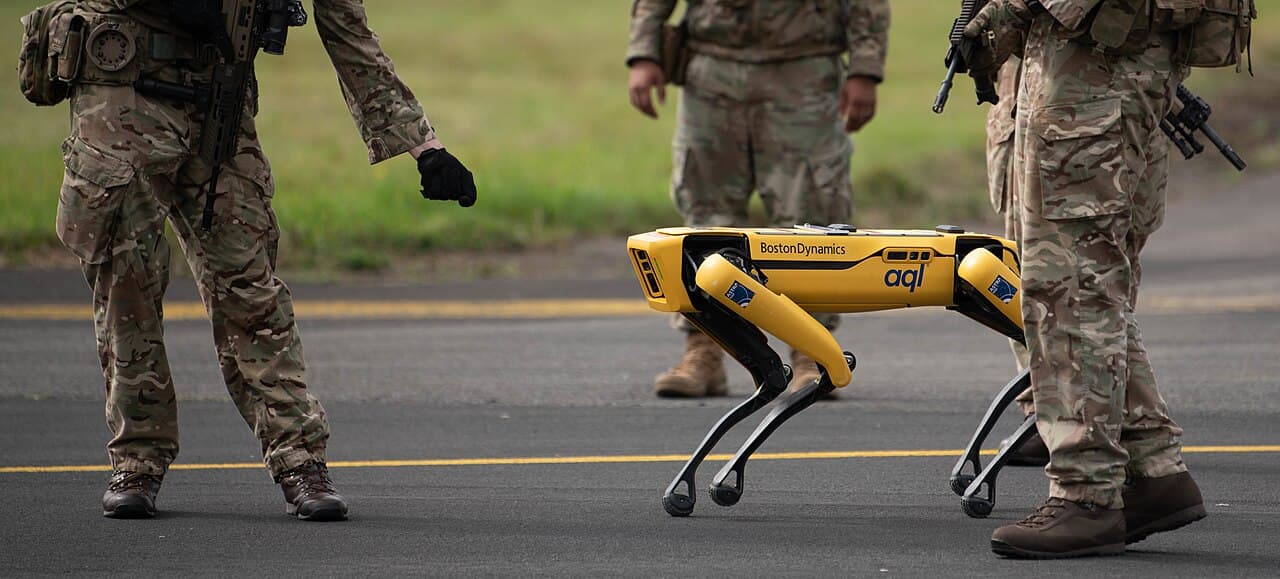
Spot hardware, payloads, support, and inspection workflows for industrial inspection, safety response, digital twin capture, and remote operations across factories, energy sites, construction projects, and - as of an April 2026 deployment at Mariana Minerals' Copper One - autonomous mining sites.
Stretch warehouse automation systems
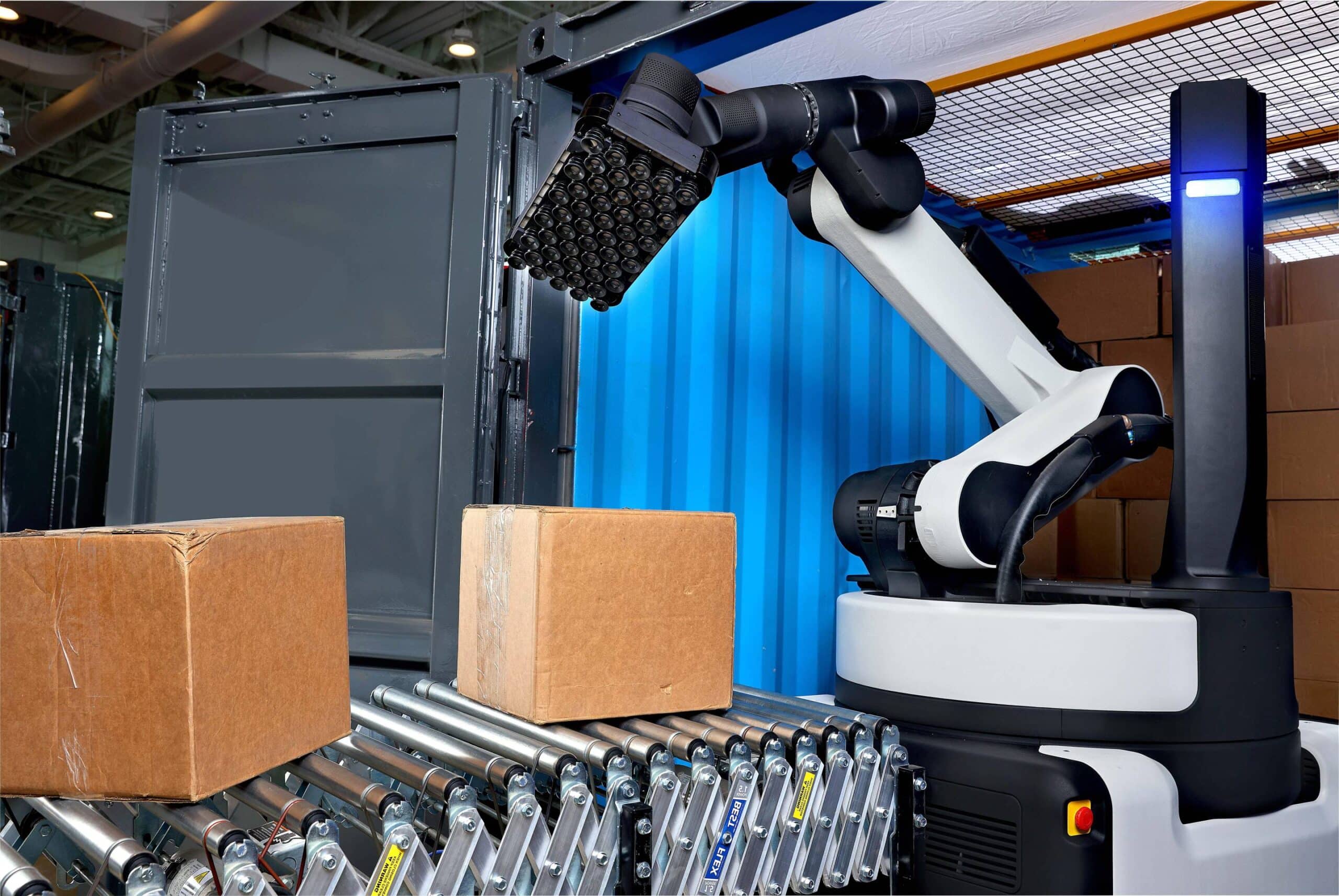
Stretch robot deployments, integration, and support for trailer and container unloading. Public reference customers include Otto Group, DHL Supply Chain, Gap, H&M, Maersk, NFI, and Lidl. DHL signed a May 2025 MOU for more than 1,000 additional Stretch units by 2030; Lidl announced in December 2025 that it is rolling out 22 Stretch units by mid-2026 for regular container-unloading operations in the Netherlands, Belgium, Austria, and Spain, following a testing phase that began in September 2025.
Orbit fleet management software
Orbit software deployments for robot fleet management, industrial inspection data, alerts, and workflow integrations across sites.
07
Timeline32
2026
Rohit Prasad named CEO, effective Oct. 7
Boston Dynamics appointed former Amazon Alexa and AGI head Rohit Prasad as CEO, effective October 7, 2026, succeeding interim CEO Amanda McMaster. Re-read on 18 Oct 2026, the 6 Oct release still says board membership is subject to the relevant approval process, and the newsroom has no later approval notice. Manufacturing Dive on 7 Oct quoted a spokesperson that approval was still ahead. The release does not state McMaster's remaining role and gives no Atlas volume or paid-hours figure.
ICE awards RADeCO $1.3M for four Cerberus Spot AV robots
SAM.gov lists ICE award 70CMSW26P00000067 dated 25 Sep 2026, notice ID 192126NFU00000158, a sole-source justification published 28 Sep for RADeCO Cerberus Spot AV robots, place of performance Plainfield, CT 06374. The J&A (J&A-26-0354) is a $1,304,296 firm-fixed-price buy on a 6-month base: four SPOT-AV at $110,200, four SPOT-ARM at $75,000, four thermal PTZ cameras at $49,250, radio kits, one LEO training line at $12,000, and $6,000 shipping. Solicitation number on the J&A is 70CMSW26R00000020. Project Salt Box, citing a contract record, said the order runs until 24 Nov 2026; that end date is not on the SAM.gov award page. Boston Dynamics has restated that weaponization is prohibited.
RMAC first phase opens at Hyundai Metaplant America
On 21 Sep 2026 Boston Dynamics said the first phase of the Robotics Metaplant Application Center is operational at Hyundai Motor Group Metaplant America outside Savannah, training Atlas on automotive parts logistics and sequencing, with component assembly targeted by 2030. ASSEMBLY reported June pilot operations transitioning to full operations. Next year operations move into a new HMGMA building about ten times current size, and the company said it is talking with existing Spot and Stretch customers about non-automotive Atlas training in 2027. The Group restated 25,000 Atlas units at Hyundai Motor and Kia plants over the next few years and a US factory for 30,000 robots a year.
Atlas gets a 13-DOF four-finger production hand
On Oct. 1, 2026 Boston Dynamics announced a new Atlas hand with four fingers, 13 degrees of freedom, encapsulated direct-drive actuators and no pinky. The prior seven-DOF gripper was designed to grasp; this generation is designed to manipulate objects and use triggered tools. The company said the hand is built for mass manufacturing and sim-to-real reinforcement learning.
McMaster remains interim CEO and keeps Spot as the revenue engine
In a September 2026 interview at the Machina AI Summit in Paris, Amanda McMaster was still titled interim CEO and CFO. She said Boston Dynamics had decided in the prior 12 months to commercialize Atlas, but described Spot as the currently adopted revenue product in industrial inspection and said the company would not rush the humanoid launch. She also said AI has compressed robot-behavior authoring from roughly a year to a few hours.
Spot 5.2 opens Orbit to outside sensors and Gemini inspections
Boston Dynamics released Spot 5.2 in September 2026, reorganizing its Orbit fleet software around assets rather than inspections so it mirrors enterprise CMMS, MES and EAM systems, and opening the API to third-party inputs such as PLC sensors and security cameras. The company says that connectivity lays the foundation for an MCP layer letting AI agents dispatch Spot autonomously, for instance sending the robot to collect data when a fixed sensor alerts or to a zone where a camera detects movement. Orbit's AI visual inspection is now powered by Google Gemini, trained on industrial data for gauges, sight glasses, pallets and 5S boards and able to read video as well as stills, alongside detection of more than 20 gases, video-based vibration analysis and partial-discharge checks.
Hyundai executive says a 2027 IPO is unlikely
A senior Hyundai Motor Group executive with direct knowledge told Reuters on September 14, 2026 that a Boston Dynamics IPO in 2027 is unlikely, saying Atlas is not yet deployed at scale and the company remains unprofitable. A Hyundai Glovis filing put Boston Dynamics' 2025 loss at 528.4 billion won, with cumulative losses from 2021 through 2025 near 1.7 trillion won. Meritz Securities analyst Kim Joon-sung said a listing is more likely in 2029 or 2030. Hyundai has not published an official IPO timetable.
Dynamic Creatures launches as entertainment robotics partner
On September 8, 2026 Dynamic Creatures emerged from stealth as Boston Dynamics' official partner for mobile interactive character robots in hospitality and entertainment. The Boston company said it is already working with an unnamed theme park and a retailer on guest-facing characters. Interim Boston Dynamics CEO Amanda McMaster said the effort opens a new frontier for advanced robotics. It is a character-robot line, not a new industrial Atlas, Spot, or Stretch product.
2026
Hyundai Motor union ratifies wage deal, ending 117-day dispute
On August 31, 2026, Hyundai Motor's Korean Metal Workers' Union ratified the tentative August 24-25 wage agreement, with 61.55% of participating members voting in favor on 78.63% turnout of 39,638 eligible members, ending the dispute that began May 6. The deal raises monthly base pay by 100,000 won, adds a performance bonus over 400% of monthly salary plus a lump-sum payment, 15 Hyundai Motor shares, and welfare points, extends the retirement age to 65 (pending law changes), and commits to hiring 500 new production workers from H2 2027 through 2028. The union's core original demand - no robot entering a Hyundai workplace without a prior labor-management agreement - was a recurring flashpoint through the strikes given Hyundai's 25,000+ unit Atlas deployment plan, though Hyundai maintained the 2028 Atlas rollout was never formally part of the wage talks.
ICE opens sole-source procurement for Spot robots
On August 27, 2026, U.S. Immigration and Customs Enforcement's Office of Firearms and Tactical Programs publishes a noncompetitive procurement notice (FAR Subpart 13.5) for an estimated $1-2 million of Boston Dynamics Spot robots and accessories, intended to provide remotely operated inspection, situational awareness, and hazard assessment in environments that could pose risks to officers. The notice lists the place of performance as Fort Benning, Georgia, an Army installation rather than a border sector or field office. A formal solicitation is expected September 4, 2026. A senior DHS official told reporters the robots will not be used to make arrests, and Boston Dynamics reiterated its stated policy that it will not authorize or partner with anyone seeking to weaponize its robots.
Hyundai Investor Day sets 2028 U.S. robot factory for Atlas
At Hyundai Motor's August 26, 2026 CEO Investor Day, the company said U.S. robot production will begin in 2028 with 30,000 units of annual capacity covering Spot, Stretch and Atlas, and that it aims to deploy Atlas at Hyundai Motor Group Metaplant America from 2028. CEO Jose Munoz said an initial committed volume of 25,000 units is already confirmed and that the production site will be announced by year-end. The Robot Metaplant Application Center, opened in the United States in June, is slated to expand ten-fold by the end of 2026.
Boston Dynamics rights offering raises Chairman Chung's stake to ~25%
Boston Dynamics carried out a roughly 1.2 trillion won (~$850 million) rights offering (paid-in capital increase) in July-August 2026, its fourth major capital raise since Hyundai's 2021 acquisition. Hyundai Motor, Kia, Hyundai Mobis, and Hyundai Glovis all invested in proportion to their existing stakes, while Chairman Euisun Chung personally invested roughly 293 billion won (~$212 million), raising his individual stake in Boston Dynamics to about 25%. The raise followed Hyundai-affiliated shareholders' buyout of SoftBank's remaining stake and was reported alongside renewed Nasdaq IPO speculation.
Hyundai Motor union strike escalates further; cumulative losses top 42,000 vehicles
Wage talks remained deadlocked through early August 2026 after repeated failed negotiating rounds. Combined with four refused Saturday overtime shifts, cumulative Hyundai Motor production losses from the ongoing strikes reached an estimated 42,510 vehicles and roughly 1.8 trillion won (~$1.3 billion) in lost revenue as of August 9. On August 11, the Korean Metal Workers' Union announced a further four-day round of partial strikes (Aug 12: 4hr, Aug 13: 4hr, Aug 14: 6hr, Aug 16: 6hr) after another round of talks failed to narrow the gap, with the union's demand for a labor-management agreement before any robot enters a Hyundai workplace still unresolved.
Strike escalates as Hyundai completes full Boston Dynamics ownership
After 15 rounds of wage talks failed, the Korean Metal Workers' Union escalated from its July 13-15 rolling strike to four-hour partial stoppages on July 20-22, 2026 - the same window in which Hyundai's buyout of SoftBank's remaining Boston Dynamics stake legally closed (July 20). Industry estimates put the combined production impact of the strikes at roughly 15,000 vehicles and about 650 billion won (~$439 million) in lost revenue. On July 27, 2026 Hyundai reiterated that its plan to deploy Atlas robots from 2028 is not formally part of the wage-negotiation talks, disputing characterizations of the strike as robot-driven.
Korean Metal Workers' Union strikes over humanoid robot deployment plan
From July 13-15, 2026, roughly 35,000 Hyundai Motor unionized workers in South Korea staged a rolling partial strike (walking off shift four hours early), affecting roughly half of Hyundai's global output, in what is widely described as the first auto-industry strike explicitly tied to humanoid robot deployment. The Korean Metal Workers' Union's core demand is that no robot enter a Hyundai workplace without a prior labor-management agreement, alongside a shift to fixed salaries, a higher retirement age, and a larger profit share; the union retained its strike mandate after the three-day action. On July 27, 2026, Hyundai Motor stated its plan to deploy Atlas robots from 2028 is not part of the ongoing wage negotiations, disputing reports that frame the strike as robot-driven.
Atlas debuts in a live FIFA World Cup match
On July 5, 2026, an all-electric Atlas humanoid appeared in a live FIFA World Cup 2026 match environment for the first time - delivering the match ball to the head referee and performing goal celebrations at halftime of the Brazil vs. Norway Round of 16 game in East Rutherford, New Jersey. Run by Hyundai Motor as the tournament's official robotics partner, the showcase highlighted Atlas's retargeting, reinforcement-learning, and whole-body-control capabilities and was billed as the first integration of a humanoid robot into a live World Cup match.
Spot robots deployed for FIFA World Cup 2026 security
Boston Dynamics and Hyundai deploy four Spot quadruped robots to help secure the FIFA World Cup 2026 (June 11–July 19), a high-profile public-safety showcase for the platform. Two Spots patrol the International Broadcast Center in Dallas and two operate at MetLife Stadium in New Jersey - the venue for the final - conducting perimeter inspections, checking suspicious packages and hazardous materials, detecting threats, and alerting human agents who make the final decisions.
Plans $100M Waltham robotics and AI center
On June 24, 2026 Boston Dynamics announces a roughly $100 million expansion - reaffirmed in mid-July 2026 - leasing a 323,000-square-foot facility at Reservoir Place in Waltham, Massachusetts to build an advanced robotics and AI center. The project consolidates three nearby sites and is expected to create 1,250 new jobs by 2033 (roughly doubling its workforce), supported by a $25 million state Economic Development Incentive Program award, with phased move-in beginning mid-2027 - adding capacity as the all-electric Atlas humanoid scales into production and the company signals a new robot platform in development.
Hyundai takes full ownership of Boston Dynamics
Hyundai Motor Group's acquisition of SoftBank's remaining ~9.65% stake in Boston Dynamics for about $325 million - approved at a June 22, 2026 board meeting and exercising a put option from the original 2020 deal - closed on July 20, 2026, making the company a wholly owned subsidiary of Hyundai and its affiliates (Hyundai Motor, Kia, Hyundai Mobis, and Hyundai Glovis). The buyout implies a valuation of roughly $3.4 billion, more than triple the ~$1.1 billion mark when Hyundai first took an 80% controlling stake, and lands as the all-electric Atlas ramps production for Hyundai facilities and Google DeepMind.
On May 18, 2026 Boston Dynamics publishes a technical blog and two videos showing the production Atlas lifting and carrying a ~50 lb mini-fridge with shifting internal contents, and reports Atlas successfully handled 100+ lb test loads without retraining. The work uses GPU-parallel reinforcement learning in simulation with zero-shot sim-to-real transfer to deliver whole-body control without visual identification of the object.
Spot deployed in autonomous mining at Mariana Minerals' Copper One
On April 21, 2026, Mariana Minerals and Boston Dynamics announce Spot's deployment at Copper One, a reopened Utah copper mine near Moab that Mariana Minerals bills as the world's first autonomous-first mine and refinery. Spot performs safety monitoring and site inspection, feeding thermal, camera, and acoustic sensor data directly into Mariana's proprietary MarianaOS software stack as a mobile sensor platform rather than a standalone inspection tool - Boston Dynamics' first publicized autonomous-mining customer deployment.
Orbit AIVI-Learning powered by Google Gemini Robotics
On April 8, 2026, the transition of Orbit AIVI-Learning to Google Gemini and Gemini Robotics ER 1.6 goes live for all enrolled Spot customers, delivering higher-order reasoning for industrial inspections including 5S audits, sight glass fullness readings, pallet counting, lever detection, and gauge reading.
Robert Playter retires; Amanda McMaster named interim CEO
On February 10, 2026 Boston Dynamics announces that founder and CEO Robert Playter will retire after roughly 30 years at the company, with his last day on February 27, 2026. CFO Amanda McMaster - at Boston Dynamics since February 2020 - steps in as interim CEO while the board runs a search for a permanent successor.
Hyundai Mobis signs actuator supply agreement for Atlas
On January 8, 2026 at CES, Hyundai Mobis announces a strategic collaboration to supply actuators for the next-generation Atlas as it moves to mass production - Mobis' first official customer win in the robotics-components market. Actuators account for roughly 60% of a humanoid robot's material cost, and the two companies say the deal is meant to build a reliable component supply chain to accelerate Atlas production scaling as part of Hyundai's $26B U.S. investment plan.
Atlas enters product phase at CES 2026
Boston Dynamics and Hyundai unveil the production version of the all-electric Atlas at CES Las Vegas on January 5, 2026. Production starts immediately at Boston Dynamics' headquarters, with the entire 2026 run committed to Hyundai's RMAC and Google DeepMind. Hyundai pairs the launch with a $26B U.S. investment plan including a new robotics factory targeting 30,000 Atlas units/year by 2028, and Boston Dynamics signals an Atlas price target below two years of U.S. manufacturing payroll (~$320K).
2025
Hyundai expands commitment to Boston Dynamics
Hyundai Motor Group says it plans to purchase tens of thousands of robots over the next few years, deepens manufacturing collaboration with Boston Dynamics, and highlights future Atlas deployment at its Georgia metaplant.
2024
Hydraulic Atlas retired; electric Atlas announced
Retires the iconic hydraulic Atlas in April. Unveils the fully electric, commercially oriented Atlas the next day - a ground-up redesign for industrial deployment.
2020
Spot goes on sale; Hyundai acquisition announced
Spot becomes first commercially available robot at $74,500. Hyundai Motor Group agrees to acquire 80% stake for ~$880M, valuing the company at $1.1B.
2017
Acquired by SoftBank
Sold by Alphabet to SoftBank Group. Company rebrands as a commercial robotics company under new leadership with Robert Playter as CEO.
2013
Atlas unveiled; acquired by Google
Atlas humanoid robot unveiled for the DARPA Robotics Challenge in July. Acquired by Google X (Alphabet) in December.
2005
BigDog quadruped introduced
BigDog quadruped robot introduced, funded by DARPA as a military pack mule capable of carrying 340 lbs over rough terrain.
1992
Founded as MIT spin-off
Marc Raibert founds Boston Dynamics as a spin-off from MIT's Leg Laboratory, initially focused on legged locomotion research and later joined by Robert Playter.
08
Funding
$2.1Bdisclosed across 4 rounds with a stated amount
Cumulative disclosed raise · dated rounds
RoundAmountInvestors
Acquisition by Google X
Dec 2013
Undisclosed
Alphabet (Google X)
Acquisition by SoftBank
Jun 2017
Undisclosed (~$100–165M est.)
SoftBank Group
Acquisition by Hyundai (80%)
Jun 2021
~$880M (valued at $1.1B)
Hyundai Motor Group (80%), SoftBank (20% retained)
Hyundai buys out SoftBank (full ownership)
Jul 2026
~$325M for remaining ~9.65% (implies ~$3.4B valuation)
Hyundai Motor Group (100%)
Rights offering (paid-in capital increase)
Jul-Aug 2026
~₩1.2T (~$850M)
Hyundai Motor Company (~₩362.6B), Kia (~₩223.4B), Hyundai Mobis (~₩146.5B), Hyundai Glovis (~₩147.1B), and Chairman Euisun Chung personally (~₩293.1B, raising his individual stake to roughly 25%)