Nvidia, founded in 1993 by Jensen Huang, Chris Malachowsky, and Curtis Priem, invented the modern GPU (GeForce 256, 1999) and then - via the 2006 CUDA platform - turned it into the engine of the AI revolution.
Fiscal 2026 revenue hit $215.9B (+65%), and Q2 FY2027 (ended July 26, 2026, reported August 26, 2026) delivered a record $96.2B (+106% YoY) with data-center revenue of $89.0B (+117% YoY), CFO Colette Kress guiding Q3 to $108.0B plus or minus 2% and roughly 70% revenue growth for FY2028. Shares closed September 25, 2026 at $225.07 with a market cap of about $5.42 trillion, still the world's most valuable company. The Blackwell Ultra GB300 platform drove the ramp, and Vera Rubin reached customers on July 21, 2026. On September 3, 2026 Nvidia confirmed a $12.93B deal to acquire Hugging Face, expected to close in the first half of 2027 pending regulatory approval. IonQ said on September 23 that its Superion 256 will be the first on-premise quantum processor at Nvidia's Accelerated Quantum Research Center, connecting to a GB200 NVL72 rack through NVQLink and CUDA-Q, with installation scheduled for 2027; Nvidia's own newsroom did not post a matching notice and its quantum page still lists Quantinuum, QuEra, Quantum Machines and EQuS as current NVAQC partners. Nvidia's Q3 outlook still assumes zero China data-center compute revenue. Competition now comes less from AMD than from customers' own silicon: Google TPUs, AWS Trainium, Broadcom-built custom ASICs, and OpenAI's Jalapeno inference chip. On October 8, 2026 Nvidia announced commitments valued at $1 billion over five years for U.S. science, covering higher education, quantum leadership, and cloud providers serving government missions, with no published dollar split or payment schedule. On October 13, 2026 it announced a $250 million five-year UK compute donation, about $50 million a year, with a proportion for BOLD at Oxford, SOFAIR at UCL, and Imperial College London. UK cloud-provider selection and commercial terms are still open, and the release does not name the AI Security Institute. RTX Spark laptops went on sale October 16, 2026 from $2,599. Nvidia states up to 128GB of unified memory and does not list which capacities shipped. Volvo's October 15 release names a next-generation car and a gradual introduction of eyes-off and mind-off driving, not a model or a date. Mercedes-Benz's October 16 release covers future SAE Level 4 development, including robolimousines, without a first model, a start date, or a statement that the function is certified.
Turn AEMA flexibility rules into faster US data-center interconnection
After the September 16, 2026 launch of the AI Energy Management Alliance with Google and Emerald AI, Nvidia still has to convert the coalition's performance-based principles into utility interconnection products and regulator-recognized demand-response rules. Watch named AEMA member sites that actually curtail or shift load, whether FERC, state commissions or regional grid operators adopt faster pathways for facilities that can prove ride-through and contingency response, and whether the 100 GW of extra connections cited by TechCrunch as AEMA's case ever shows up as contracted capacity rather than an advocacy figure.
TargetQ3 2026 (Vera Rubin at scale); 2028 (Ohio capacity phases)
With Vera Rubin now shipping (confirmed July 21, 2026), OpenAI is set to deploy it at scale in Q3 2026 - the step that unlocks the first tranche of Nvidia's up-to-$100B progressive investment tied to the ≥10 GW partnership. Nvidia's financing for OpenAI's Ohio data-center campus - reported as under negotiation at up to $250B in July and scaled back to under $120B by mid-August - has since been finalized at $105B for an initial 4.25 IT-GW build (with an option for 3.75 IT-GW more), with capacity coming online in phases starting 2028 rather than as a single Q3 2026 event.
Stand up the $500B+ AI compute financing platforms
Nvidia partnered with Apollo Global Management, Blackstone, BlackRock, Brookfield, Goldman Sachs and KKR on August 10-11, 2026 to establish AI compute infrastructure financing platforms aiming to mobilize more than $500 billion of third-party capital, using compute power itself as collateral through special-purpose entities. CEO Jensen Huang framed AI compute as an emerging investable asset class; the platforms are a new financing channel alongside Nvidia's existing equity stakes in OpenAI, Anthropic and the Stargate project. As of September 14, 2026 the arrangement remains at the memorandum-of-understanding stage, with no individual platform deals reported closed yet - the next milestone to watch is the first deals actually closing.
Deploy Nvidia's AI factory stack across Lancium's 15GW+ site pipeline
Nvidia and Blackstone-backed energy infrastructure company Lancium announced a strategic partnership on August 24, 2026 making Lancium's site portfolio (4GW already leased, a pipeline of more than 15GW) a deployment platform for Nvidia's full AI factory stack of compute, networking and software, alongside a strategic Nvidia investment in Lancium. The companies plan to use Nvidia's DSX MaxLPS and DSX Flex reference designs, aimed at fitting more GPUs into a given power budget and managing grid-responsive power draw; no site-by-site buildout timeline has been disclosed yet.
TargetBy November 2026, with a possible post-midterm slip
Reuters reported September 11, 2026 that Nvidia is in talks to invest up to $10 billion as an anchor investor in Anthropic's planned IPO, which would raise as much as $100 billion at a valuation of about $2 trillion. The plans remain under discussion and neither company has confirmed the talks. A later Reuters report on September 18 said two people familiar with the matter said Anthropic's listing could slip past the November 2026 US midterms, which would push any Nvidia anchor decision with it.
Take Salesforce Koa from Agentforce pilots to U.S. GA
TargetWinter 2026 (Koa U.S. GA); October 2026 (Missionforce models)
Salesforce and Nvidia announced Koa on September 15, 2026, a CRM reasoning model post-trained from Nemotron 3 Super for Agentforce. It is in select pilots now, with U.S. general availability expected in winter 2026. Watch whether Koa ships on that winter window, and whether Missionforce's post-trained Nvidia models reach select government customers in October 2026 as pledged.
Nvidia confirmed on September 3, 2026 a definitive agreement to acquire Hugging Face for $12.93 billion, with up to $1 billion more for employee retention. Huang pledged the platform will stay open and hardware-neutral. Nvidia's September 2, 2026 8-K says the deal is expected to close in the first half of 2027, subject to customary closing conditions including required regulatory approvals.
Stand up the 2 GW Australia DSX AI factory buildout
Nvidia's September 9, 2026 announcement with Firmus, Sharon AI, IREN, Megaport, ResetData, CDC, NEXTDC and AirTrunk targets up to 2 gigawatts of land, power and shell capacity for NVIDIA DSX AI factories in Australia by 2027. Sharon AI said it is deploying up to 68,000 Nvidia GPUs; IREN cited its 800-megawatt Bundey campus in South Australia. Watch partner site deliveries against the 2027 capacity target.
The mid-generation upgrade scales to 576 GPUs per ~600 kW rack with 15 exaflops of FP4 inference and 365 TB of fast memory - a rack so power-dense it will force data-center redesigns. A SemiAnalysis report (July 6, 2026, via CNBC) says the Kyber rack-scale system meant to house it has slipped more than 12 months to 2028 on persistent PCB midplane manufacturing problems, with a stopgap design reportedly scrapped after customer pushback; Nvidia disputes the report and says its product roadmap is 'intact,' so whether Kyber/Rubin Ultra ships on the original H2 2027 timeline or slips is now a live open question.
Starmind AI1 orbital-compute satellites with SpaceX
Nvidia is jointly developing Starmind with SpaceX - satellites pairing a space-optimized version of Nvidia's Vera Rubin NVL72 system (Vera CPUs and Rubin GPUs) to run AI workloads from low Earth orbit. On August 24, 2026 Elon Musk said the first-generation AI1 satellite (roughly 20 meters tall, 70 meters wide, about 150 kilowatts peak power and 120 kilowatts average compute) will now launch in Q4 2027, pulled forward from a prior 2028 target, with volume launches and a larger commercial orbital-compute constellation reaching significant scale in 2028.
TargetNext fiscal year (FY2028, ending January 2028)
Jensen Huang said on September 17, 2026 that he expects Nvidia to sell twice as many chips next year as it does this year, citing demand from countries building domestic AI infrastructure. Because Nvidia does not publish unit shipments, the claim is only checkable indirectly: against the roughly 70% FY2028 revenue growth already guided (about $673B), against TSMC wafer and CoWoS advanced-packaging capacity, and against HBM supply, where Nvidia's own commitments more than doubled to $279B. Watch whether the Rubin ramp plus the wider CPU, NVLink switch, optical and Jetson lines can physically absorb a doubling, and whether Huang repeats the figure on a quarterly call where it would carry guidance weight.
Ship Hyundai Hyperion 10 L2+ and L2++ ADAS in 2028
Hyundai said it will roll out Level 2-plus and Level 2-plus-plus driver assist in 2028 on Nvidia Hyperion 10 while delaying its own Atria software to late 2029. Watch named model years, whether lidar is added for Level 3, and how much of Hyundai-Kia's global volume actually ships on Hyperion.
The generation after Rubin - announced on Nvidia's roadmap with advanced 3D chip stacking, a new Rosa CPU, LP40 memory, BlueField-5, NVLink-8, and Spectrum7 networking - keeps the annual-cadence data-center platform train running into 2028.
Confirm the reported Perplexity investment at a $30B+ valuation
The Information reported around August 25-27, 2026 that Nvidia is in talks to invest in AI search company Perplexity's next funding round at a valuation above $30B, up from roughly $20B a year earlier, as Perplexity's annualized revenue climbed to about $750M (from under $250M in January 2026). Neither company has confirmed the deal as of September 14, 2026.
Nvidia and Volvo Cars said on Oct. 15 that future Volvos will use Hyperion, Halos OS and Alpamayo Stack, with a gradual move to eyes-off and mind-off driving. The stack is set to debut in a next-generation Volvo that neither company named. The Verge, quoting Volvo software chief Alwin Bakkenes, said the hands-free system is aimed before the end of the decade, and Nvidia's Ali Kani said the described setup does not include lidar.
Nvidia and Mercedes-Benz said on Oct. 16 that they will extend their automated-driving partnership. Mercedes-Benz will combine MB.OS with Nvidia Hyperion compute and sensors, Alpamayo Stack software and the Halos safety system for point-to-point urban assistance, active safety, automated parking and future SAE Level 4 uses, including what the release calls robolimousines. Mercedes-Benz is not in the Atlas catalog. The release names no first model or start date.
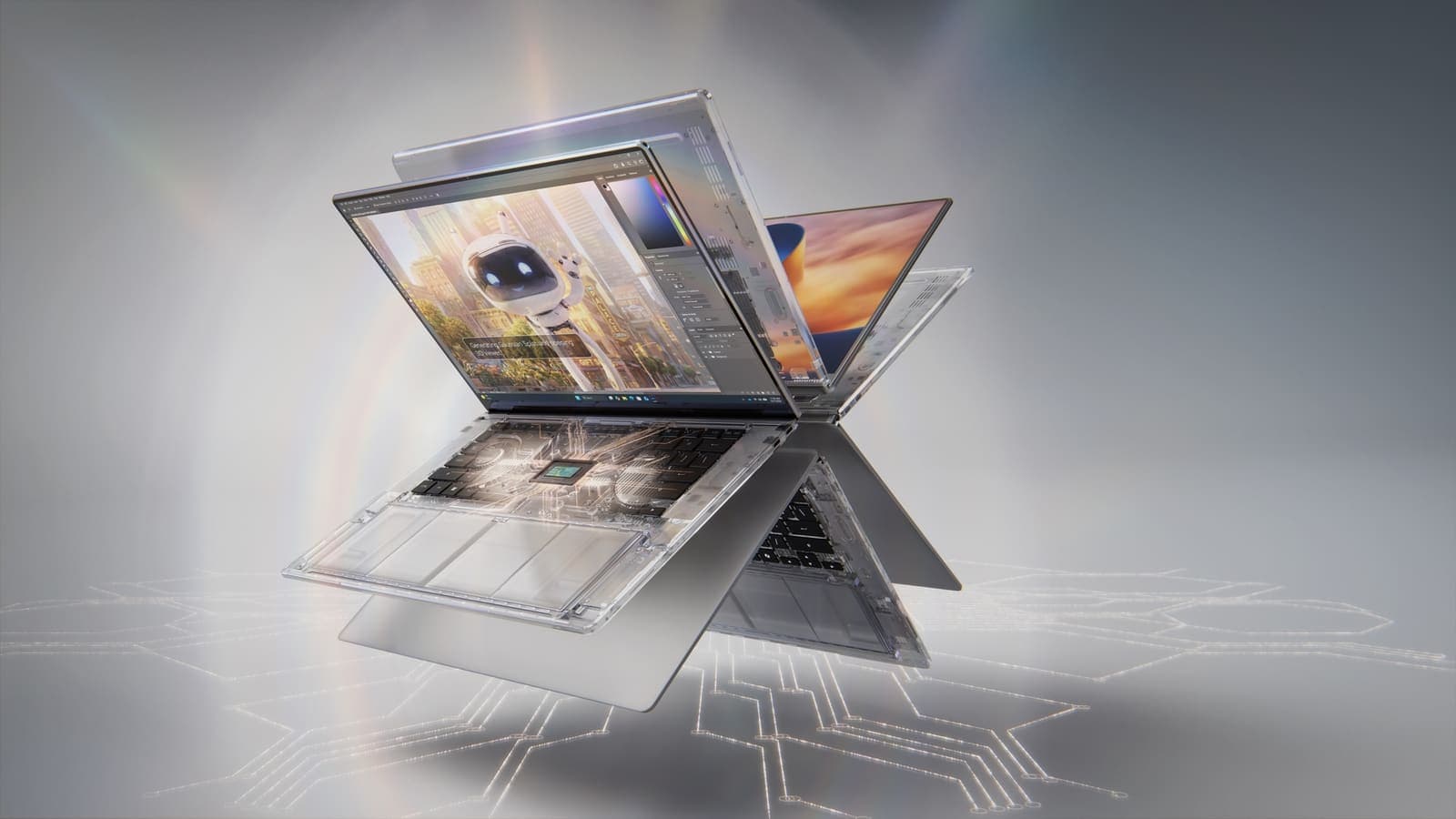
On October 16, 2026 Nvidia said RTX Spark laptops are on sale from ASUS, Dell, HP, Lenovo, Microsoft and MSI, starting at $2,599, with prices and configurations varying by region. Nvidia says the Blackwell RTX and Grace chip offers up to 128GB of unified memory and up to 1 petaflop of FP4 performance. The lineup includes the Microsoft Surface Laptop Ultra. Yusuf Mehdi said those Windows PCs add local compute for creators and developers.
Nvidia on Oct. 15 released open weights for Nemotron 3.5 Super VL, a 120-billion-parameter model that activates 12 billion parameters per token, and for Nemotron 3.5 Bolt 74B-A9B, built for 24GB local systems. Nvidia says Bolt E4B, aimed at conversational and physical agents, follows on Oct. 23. The company says Super VL is up to five times faster than the next open model in its class; that comparison is Nvidia's.
On Oct. 14, 2026 at SEMICON West, Nvidia said semiconductor companies are adopting CUDA-X libraries, including a new cuPotential library for AI agents that simulate how atoms and molecules interact. Nvidia said early-access tests sped already GPU-optimized workflows by an additional 2-3x, and named Synopsys as an early user. The company also said Lam Research expects NanoVDB to speed some wafer-etch modeling by up to 30x, with that SEMulator3D capability targeted for release by year-end. cuPotential is in early access.
Nvidia said on Oct. 14 it will provide $250 million of compute over five years, about $50 million a year, for UK research on agentic AI safety and security. Most of the commitment is for the wider UK research community, with a portion for Oxford's BOLD lab, UCL's SOFAIR lab and Imperial College London, delivered through UK-based Nvidia cloud partners. The company did not name the AI Security Institute, and it said the provider, architecture and commercial terms are still to be agreed.
Nvidia said on Oct. 13 that the full Run:ai GPU orchestration platform is now open source inside the DSX AI Factory stack, with source on GitHub and an NGC community product that includes a Helm chart. The release names KAI Scheduler, the GPU Fractioning Operator, KAI Resource Management, and Workload Map as components that can be used separately. The community product does not include Nvidia enterprise support, which remains on the paid commercial offerings.
The Financial Times reported Oct. 10 that Nvidia is in early talks to deepen its $800 million stake in Reflection AI or acquire the open-weight coding startup, including a possible acqui-hire, and that talks could still fail. Bloomberg reported Oct. 11 that the talks may instead add computing power, with no terms reached. Nvidia did not comment; Reflection declined to comment to Bloomberg. Reuters could not independently verify the FT report.
At the Open Compute Project summit in San Jose on Oct. 12, Nvidia said it contributed Vera Rubin rack and compute-tray designs to OCP through MGX, including a liquid-cooled rack specification for deployments up to 250 kW. Nvidia said Meta will adopt Spectrum-6 102.4 Tb/s Ethernet switches for Vera Rubin factories, and that future ConnectX-10 SuperNICs and BlueField DPUs will support Google's Falcon transport. SiliconANGLE reported the same rack contribution and Meta switch adoption. This is an open-design and networking announcement, not a new shipment total.
Amazon on Oct. 8, 2026 launched the Physical AI Toolchain on AWS, an open-source stack of architecture guidance, deployment automation, and reference code for training, simulating, validating, and deploying physical-AI models. The toolchain combines SageMaker, EC2 GPU instances, IoT Greengrass, and Bedrock AgentCore with NVIDIA Isaac Sim, Isaac Lab, Isaac GR00T, and Cosmos. AWS director Sri Elaprolu told The Robot Report the package is meant to let robotics teams focus on applications rather than infrastructure.
NVIDIA said on Oct. 8, 2026 it will commit $1 billion over five years to U.S. super-intelligence research, including university compute, quantum work, and cloud providers serving government missions, at the White House Science: A New Golden Age event. The White House listed that pledge inside a $2.4 billion industry pool that also names AMD ($500 million), OpenAI ($200 million), Anthropic and Google ($150 million each), and AWS ($50 million). NVIDIA did not split the $1 billion among those uses, and the figure is a multi-year commitment rather than a booked payment.
Nvidia said on Oct. 7 that Jensen Huang and Satya Nadella outlined RTX Spark Windows PCs at a Microsoft event in San Francisco, with laptop preorders open the same day and availability from Oct. 16. Nvidia described RTX Spark as a Blackwell RTX GPU plus a Grace CPU with up to 128GB unified memory and 1 petaflop of FP4 AI compute, and previewed DGX Station for Windows on the GB300 Grace Blackwell Ultra Desktop Superchip. Microsoft also said Microsoft Execution Containers reached general availability. Tom's Hardware and Windows Central reported Surface Laptop Ultra preorders from $2,599, with Spark PCs from Asus, Dell, Lenovo, HP, and MSI also due Oct. 16.
The Financial Times, Reuters, and CNBC reported SpaceX is in talks to raise about $40 billion to buy Nvidia AI chips, with Apollo expected to lead and PIMCO among lenders discussed. Reuters said the package would combine about $10 billion in bank loans with $30 billion in investment-grade debt. CNBC, citing a person familiar with the talks, said discussions remain preliminary, key lenders are not finalized, and GPUs would likely be used as collateral. SpaceX, Nvidia, Apollo, and PIMCO have not confirmed a signed transaction.
On Oct. 2, 2026 Nvidia said a 64GB DGX Spark configuration will ship from Acer, ASUS, Dell, Gigabyte, HP and MSI on Oct. 23, starting at $4,999. The OEM-only SKU keeps the GB10 Grace Blackwell Superchip, DGX OS and Nvidia AI software stack of the 128GB model and, Nvidia said, can run up to 100-billion-parameter models on device. Two 64GB units can cluster over ConnectX-7; Nvidia reported up to 1.7x performance versus one unit on Qwen 3.8 27B.
At Fully Connected in San Francisco on September 30, CoreWeave said Nvidia Vera Rubin NVL72 systems with Spectrum-X 102.4T Ethernet are now available on its cloud, with Cognition the first customer running production Devin workloads. Nvidia's blog quoted HPC vice president Ian Buck and said CoreWeave received its first production racks earlier in September, then stood up a Cognition cluster in days. Cognition reported up to 4.8 times total token throughput on SWE-2 inference versus a GB200 NVL72 baseline, and CoreWeave separately cited a 3.8 times output-token gain on reinforcement-learning jobs; those figures are customer benchmarks, not Nvidia specifications. CoreWeave is untracked here.
(FY2026, ended Jan 25, 2026, +65% YoY; net income $120.1B). Q2 FY2027 added $96.2B. CFO Colette Kress guided Q3 FY2027 to $108.0B plus or minus 2% and roughly 70% revenue growth for FY2028, well above the ~45% analysts had modeled
Market cap
~$5.27T
(Sep 11, 2026 close; NVDA $218.29) - still the world's most valuable company, a shade below the $5.29T Aug 28 close and well below the record $5.42T Aug 7 close after Q2 FY2027 gross-margin guidance eased to 74.0% plus or minus 50 bps for Q3
Latest quarterly revenue
$96.2B
(Q2 FY2027, ended July 26, 2026, +106% YoY, beating the $92.2B consensus); Q3 guided to $108.0B plus or minus 2%, with no China data-center compute revenue assumed
Data center revenue
$89.0B in Q2 FY2027
(+117% YoY, +18% QoQ; ~92-93% of total revenue) - Hyperscale $48.7B (+101% YoY), AI Clouds/Industrial/Enterprise $40.3B (+138% YoY)
AI accelerator market share
~75–87% of data-center AI accelerator revenue (estimates vary by methodology; one Q1 FY2027 comparison put Nvidia at 87.4% of combined Nvidia+AMD+Intel merchant data-center chip revenue); AMD closing in at ~5–7%
Gross margin
75.0% GAAP and non-GAAP
(Q2 FY2027); Q3 outlook 74.0% plus or minus 50 bps
Order book
~$1T in Blackwell + Rubin orders projected through 2027 (reaffirmed); supply commitments more than doubled to $279B on the Aug 26 Q2 FY2027 call (from $119B three months earlier, mostly HBM memory), with management citing a hyperscaler cloud backlog exceeding $2T
Public Equity Investment Portfolio
Disclosed in an August 14, 2026 13F filing: ~$30B Intel stake (largest holding) and ~$21B SpaceX stake (122.8M Class A shares as of June 30, 2026 quarter-end - originating from Nvidia's $10B investment in xAI, which converted to SpaceX equity after Musk folded xAI into SpaceX). Together the two positions are over 80% of Nvidia's disclosed public equity portfolio; SpaceX's stake value has since drifted with the stock, down to roughly $17B by the filing's disclosure date.
CUDA developers
~6 million (GTC 2026)
Employees
42,000
as of Jan 25, 2026; FY2026 10-K. The Q2 FY2027 10-Q filed Aug 26, 2026 does not disclose a newer headcount
Market cap
~$5.42T
(Sept 25, 2026 close; NVDA $225.07) - still the world's most valuable company
Market cap
About $5.72T
(Oct 7, 2026 close; NVDA $237.47 on 24.10B shares) - still among the world's most valuable companies
U.S. science commitment
Commitments valued at $1 billion over five years
06
Operations & revenue
Operating status
Operational; October science, UK compute, RTX Spark and auto checks
The October 8, 2026 $1 billion U.S. science commitment has no published split or payment schedule. The October 13 UK pledge names BOLD, SOFAIR, and Imperial and leaves cloud providers unselected; it does not name the AI Security Institute. RTX Spark is on sale from $2,599 with up to 128GB stated and no shipped-capacity table. Volvo's October 15 release names a next-generation car and gradual eyes-off and mind-off driving, not a model or date. Mercedes-Benz's October 16 release includes future Level 4 robolimousine development, not a certified function or a first model.
Revenue streams
Data center (compute + networking)
AI accelerators, rack-scale systems, and networking (NVLink, Spectrum-X, InfiniBand) for hyperscalers, AI clouds, and enterprises - $193.7B in FY2026 (+68%) and $89.0B in Q2 FY2027 (+117% YoY), roughly 92% of company revenue.
Gaming / AI PC
GeForce RTX GPUs for gamers and creators - a record $16.0B in FY2026 (+41%), though supply is being deliberately constrained in favor of data-center production. From Q1 FY2027 this reports under the new 'Edge Computing' platform.
Professional visualization
RTX workstation GPUs and Omniverse for design, simulation, and digital twins - $3.2B in FY2026 (+70%).
Automotive & robotics
DRIVE autonomous-vehicle platforms (BYD, Geely, Nissan, Hyundai/Kia, Uber robotaxi partnerships) and Jetson robotics computers - $2.3B in FY2026 (+39%), the seed of what Huang calls the next trillion-dollar market.
07
Track record
How past announced dates turned out.
4/5announced dates hit on time
4 Hit
0 Slipped
1 Missed
Hit
Confirm or walk back the reported $12.9B Hugging Face acquisition
Target Unconfirmed · Resolved Sep 3, 2026
Nvidia confirmed a definitive agreement on September 3, 2026 to acquire Hugging Face for $12.93 billion, with up to $1 billion more in employee retention. Huang pledged Hugging Face will remain an open, hardware-neutral platform. The September 2, 2026 8-K says closing is expected in the first half of 2027, subject to required regulatory approvals.
On July 21, 2026, Nvidia confirmed Vera Rubin has reached full production and shipments have begun to customers including OpenAI, CoreWeave, Google Cloud, Microsoft Azure, Meta, and Dell - on schedule inside the H2 2026 window. OpenAI plans to deploy it at scale in Q3 2026, and CoreWeave reported its early NVL72 racks delivering roughly 10x the token throughput of the prior generation.
All seven Vera Rubin platform chips were declared in full production at GTC on March 16, 2026 - ahead of analyst expectations of early 2027 - with partner systems available H2 2026 as planned on the March 2025 roadmap.
Resume AI chip sales to China after the April 2025 H20 license requirement
Target 2025 · Resolved Feb 25, 2026
Despite a December 2025 presidential decision allowing H200 sales to China with a 25% cut to the US government, shipments stalled in an interagency review while Beijing pushed buyers toward Huawei; Nvidia's FY2026 10-K (February 2026) declares the company effectively foreclosed from China's data-center market, and guidance assumes zero China revenue.
GB300 entered mass production in June 2025 and servers began shipping in September 2025, on schedule - the ramp went smoothly by reusing GB200 infrastructure and drove record data-center revenue through FY2026.
Volvo adopts Hyperion for future automated driving
On Oct. 15, 2026 Nvidia and Volvo Cars said the technology will debut in a next-generation Volvo car, using Hyperion, Halos OS, and Alpamayo Stack, with a gradual introduction of eyes-off and mind-off driving. The company release names no model and no calendar date. It does not state an end-of-decade target or a lidar decision.
Extends Mercedes automated-driving partnership
On Oct. 16, 2026 Nvidia and Mercedes-Benz said they will combine MB.OS with Hyperion, Alpamayo Stack, and Halos. The release says these technologies support development of future SAE Level 4 applications, including robolimousines. It names no first model or start date, and it does not say a Level 4 function is certified.
Puts RTX Spark laptops on sale
On October 16, 2026 Nvidia said RTX Spark laptops are on sale from ASUS, Dell, HP, Lenovo, Microsoft and MSI, starting at $2,599. Nvidia says the Blackwell RTX and Grace chip offers up to 128GB of unified memory and up to 1 petaflop of FP4 performance. The named lineup includes the Microsoft Surface Laptop Ultra. Prices and configurations vary by region.
Releases Nemotron 3.5 Super VL and Bolt 74B
On Oct. 15, 2026 Nvidia released open weights for Nemotron 3.5 Super VL, a 120-billion-parameter model that activates 12 billion parameters per token, and for Nemotron 3.5 Bolt 74B-A9B, sized for 24GB local systems. Nvidia says Bolt E4B follows on Oct. 23. The five-times speed claim is the company's.
Pledges $250 million of UK safety compute
On Oct. 13, 2026 Nvidia's newsroom announced a five-year compute donation valued at $250 million, about $50 million a year. A proportion supports BOLD at Oxford, SOFAIR at UCL, and Imperial College London. The majority is for the wider UK research community. Compute is to go through UK-based Nvidia Cloud Partners, but provider selection, technical architecture, and commercial terms are still to be agreed. The release does not name the AI Security Institute.
Introduces cuPotential at SEMICON West
On Oct. 14, 2026 Nvidia's newsroom introduced cuPotential in early access for AI agents that simulate atomic and molecular interactions. Nvidia said early-access testing added 2-3x on already GPU-optimized workflows. Synopsys is an early adopter using cuPotential. Lam Research intends to integrate NanoVDB into SEMulator3D, with that capability targeted for release by the end of 2026. The post says semiconductor leaders are using Nvidia's stack. It does not say a named chipmaker committed to a new fab deployment.
Open-sources the full Run:ai platform
On Oct. 13, 2026 Nvidia said the full Run:ai platform source is open and governed by its applicable open source licenses. It identifies KAI Scheduler as Apache 2.0, a license from the earlier scheduler release. The NGC community product requires Nvidia's software license and does not include enterprise support. The post uses present-tense integration language for Crusoe, Mirantis, Nebius, OpenNebula, Saturn Cloud, Spectro Cloud, and vCluster. It says Rafay is expanding its integration into a fully managed service. The post does not separately prove which partner integrations have shipped.
Opens Vera Rubin rack designs at OCP
On Oct. 12, 2026 at the OCP Global Summit in San Jose, Nvidia said it contributed Vera Rubin rack and compute-tray designs to OCP through MGX, including the MGX 1.2 liquid-cooled rack spec for deployments up to 250 kW. It said Meta will use Spectrum-6 102.4 Tb/s Ethernet switches for Vera Rubin factories, and that future ConnectX-10 and BlueField parts will support Google's Falcon transport. These are company announcements, not a new shipment count.
2026
FT and Bloomberg: talks to deepen Reflection AI tie
The Financial Times reported Oct. 10 that Nvidia is in early talks to deepen its $800 million investment in Reflection AI or acquire it, including a possible acqui-hire, and that talks could fail. Bloomberg reported Oct. 11 the talks may instead add chips or compute, with no terms reached. Nvidia did not comment.
Physical AI Toolchain on AWS uses Isaac and Cosmos
On Oct. 8, 2026 Amazon launched the Physical AI Toolchain on AWS, pairing AWS services with NVIDIA Isaac Sim, Isaac Lab, Isaac GR00T, and Cosmos. Amazon's page names those NVIDIA components for simulation, reinforcement learning, humanoid training, and synthetic world generation.
Commits $1B over five years to US science
NVIDIA announced commitments valued at $1 billion over five years for U.S. super-intelligence science R&D at the Oct. 8, 2026 White House Science: A New Golden Age event, covering universities, quantum work, and cloud providers serving government missions.
Unnamed sources say SpaceX is seeking $40B to buy Nvidia GPUs
On October 7, 2026 CNBC reported, citing a person familiar with the talks, that Apollo and several banks are in preliminary discussions to help SpaceX buy $40 billion of Nvidia GPUs, primarily via the investment-grade debt market and likely using GPUs as collateral. CNBC said the Financial Times reported the talks first. Apollo declined to comment and Nvidia did not immediately respond. This is not a signed order, loan close, or Nvidia confirmation.
Opens RTX Spark Windows laptop preorders
On Oct. 7, 2026 Nvidia said RTX Spark Windows laptop preorders opened, with availability from Oct. 16, after Jensen Huang and Satya Nadella outlined the PCs at a Microsoft event. Nvidia described RTX Spark as a Blackwell RTX GPU plus Grace CPU with up to 128GB unified memory and 1 petaflop of FP4 AI compute, and previewed DGX Station for Windows on the GB300 Grace Blackwell Ultra Desktop Superchip. Compact desktops were listed for sale in November.
CoreWeave puts Vera Rubin NVL72 in limited production with Cognition
On September 30, 2026 Nvidia said CoreWeave announced availability of Vera Rubin NVL72 and that Cognition is the first customer running production workloads on the platform. CoreWeave separately said the system is in limited availability, with Cognition seeing up to 4.8 times total token throughput versus GB200 NVL72 on SWE-2 inference, a Cognition figure published by the two companies. Nvidia dated CoreWeave's first production racks to earlier in September.
Adds 64GB DGX Spark SKU at $4,999
On Oct. 2 Nvidia announced a 64GB DGX Spark configuration, sold only through Acer, ASUS, Dell, Gigabyte, HP and MSI from Oct. 23 at a starting price of $4,999. It keeps the GB10 Grace Blackwell Superchip, DGX OS and AI software stack of the 128GB model and, Nvidia said, supports up to 100-billion-parameter models on device; two units can cluster over ConnectX-7.
CoreWeave puts Vera Rubin NVL72 into production with Cognition
At CoreWeave Fully Connected in San Francisco, CoreWeave said Nvidia Vera Rubin NVL72 with Spectrum-X 102.4T Ethernet is available on its cloud, with Cognition the first customer running production Devin workloads. Nvidia's blog quoted HPC vice president Ian Buck as CoreWeave brought Vera Rubin NVL72 into production. Cognition reported up to 4.8 times SWE-2 inference token throughput versus GB200 NVL72; that figure is a customer benchmark.
Huang signs White House Super Intelligence accord
On September 29, 2026 Nvidia CEO Jensen Huang signed the White House Accord on Super Intelligence Joint Commitment on Frontier Responsibilities. The published text commits signatories to internal controls, an internal team, independent external audits and a board committee. Trump signed a same-day executive order on Super Intelligence terminology. Huang has previously opposed binding AI regulation; this accord is voluntary.
Huang set to attend White House East Room AI lunch
On September 29, 2026 Nvidia CEO Jensen Huang is set to attend a White House East Room lunch with President Trump and Speaker Johnson, according to a source familiar with Huang's plans cited by CBS News. A White House official listed Huang among nearly 20 tech attendees, NBC News reported. CNBC cited MS Now for the same expectation.
Board adds $150B to share-repurchase authorization
On September 28, 2026 Nvidia said its board authorized an additional $150 billion under the existing share repurchase program, raising remaining authorization to $235 billion. Nvidia called it the largest share-repurchase authorization increase on record and said it expects to execute the remaining program through fiscal 2028. This is an authorization ceiling, not a completed repurchase.
Launches Open Agent Safety Platform with OpenShell 0.1.0
On September 28, 2026 Nvidia announced the Open Agent Safety Platform, combining OpenShell 0.1.0 open-source runtime software with a Sentry reference system design on BlueField-4 DPUs. OpenShell enforces agent permissions outside the workload and is available via Nvidia developer resources and GitHub; Nvidia says it can extend to Arm and Intel. Sentry is described as an out-of-band watchdog that can quarantine agents in milliseconds. SecurityWeek notes OpenShell is broadly available while Sentry is a reference design, not generally available customer software. Nvidia said more than 100 organizations are working with the technologies.
NVAQC to host IonQ Superion 256 in 2027
IonQ said its Superion 256 will be the first on-premise quantum processor at Nvidia's Accelerated Quantum Research Center, planned to connect to a GB200 NVL72 rack through NVQLink and CUDA-Q. Nvidia quantum vice president Timothy Costa is quoted in the IonQ release. Installation and first Superion 256 customer deliveries are scheduled for 2027. Nvidia's own newsroom did not post a matching Superion NVAQC notice.
Launches AI Energy Management Alliance with Google and Emerald AI
On September 16, 2026 Nvidia, Google and grid-software firm Emerald AI launched the AI Energy Management Alliance, a coalition to treat AI data centers as flexible grid resources that can shift compute, discharge storage, use paired generation or respond to contingencies, in exchange for faster and larger interconnection. Nvidia's blog said the alliance is technology-neutral and performance-based, focused on measurable response speed, duration, predictability and emergency behavior rather than specific hardware. Axios reported 20 member organizations including Anthropic and utilities and generators AES, Constellation, National Grid, NRG and RWE, and said Google can already curtail about 1 GW through utility agreements. TechCrunch reported AEMA's argument that demand response could free room for about 100 GW of additional data-center connections; Nvidia's own announcement did not state that figure.
Huang guides to doubling chip unit sales next year
On September 17, 2026, speaking to reporters before an AI summit convened by King Charles III at Dumfries House in Scotland, Jensen Huang said 'I expect Nvidia to sell twice as many chips as this next year as we do this year,' attributing the jump to countries and industries wanting to invest in domestic AI infrastructure and cloud capacity. The unit-volume forecast sits alongside Nvidia's existing guidance of roughly 70% revenue growth in the fiscal year ending January 2028, about $673B. Nvidia does not disclose total unit shipments, and the comment covers its whole silicon range rather than data-center GPUs alone, including CPUs, NVLink switch and optical networking chips, and Jetson parts for robots and vehicles. Bloomberg reported the same day that Nvidia had committed $2B to Brookfield's AI infrastructure fund as an anchor investor.
Vera Rubin NVL72 makes its MLPerf Inference debut
On September 16, 2026 Nvidia published its first MLPerf Inference preview submission for Vera Rubin NVL72, in the v6.1 round. The rack delivered up to 3.7x the throughput of the shipping GB300 NVL72 on Qwen3-VL (vLLM with Nvidia Dynamo) and up to 2.5x on DeepSeek-R1 (TensorRT-LLM), using NVFP4 precision, disaggregated prefill and decode, and large-scale expert parallelism over sixth-generation NVLink. Nvidia separately scaled a GB300 NVL72 DeepSeek-R1 submission from 72 to 288 GPUs at 99% scaling efficiency, and said software work alone raised GB300 Qwen3-VL performance up to 1.6x over v6.0. Nineteen partners submitted on Nvidia systems and Nebius filed its own Vera Rubin NVL72 preview; Nvidia also claimed 30x GB300 performance on the SemiAnalysis AgentX agentic benchmark in preview testing.
Salesforce launches Koa CRM model on Nemotron 3 Super
On September 15, 2026 Salesforce and Nvidia announced Koa, Salesforce's first CRM reasoning model for Agentforce, built by post-training Nvidia Nemotron 3 Super on synthetic enterprise workflows with no customer data. Salesforce said Koa matches or exceeds leading models on its CRM benchmark with three times fewer errors; it is in select Agentforce pilots now, with U.S. general availability expected in winter 2026. The companies are also putting Nemotron-based models into Missionforce for government and regulated customers, with post-trained Nvidia models due to select customers in October 2026.
Adds CUDA-Q Logical for fault-tolerant quantum apps
On September 14, 2026 Nvidia expanded its open-source CUDA-Q platform with CUDA-Q Logical, an orchestration layer for designing and testing applications on fault-tolerant quantum computers. Fermilab used it to cut architecture work from five months to three weeks. Iceberg Quantum modeled 1,000 logical qubits from 150,000 physical qubits on Diraq hardware, and Sandia National Laboratories' QUOPS benchmark is now available in CUDA-Q. CUDA-Q Logical is on GitHub.
Hyundai picks Hyperion 10 ADAS after delaying Atria
Reuters reported September 13, 2026 that Hyundai Motor will delay its in-house Atria driver-assist software to late 2029 from late 2027 and instead roll out Level 2-plus and Level 2-plus-plus systems in 2028 on Nvidia Hyperion 10 hardware. The first stack will use cameras, ultrasonic sensors and radar, with lidar later for Level 3. Hyundai also said the Nvidia relationship covers data-center chips and Boston Dynamics humanoids.
In talks to invest up to $10B as Anthropic IPO anchor
Reuters reported September 11, 2026 that Nvidia is in talks to invest up to $10 billion as an anchor investor in Anthropic's planned IPO, which would raise as much as $100 billion at a valuation of about $2 trillion. The plans are still under discussion and could change; Nvidia did not respond to Reuters and Anthropic declined to comment.
Deploys Palantir SAIOS on its own Vera Rubin supply chain
On September 10, 2026 Nvidia and Palantir announced a sovereign AI supply-chain stack pairing Palantir Foundry, AIP, and Ontology with Nvidia Nemotron open models and cuOpt. The first deployment is Nvidia's own operations, which the companies said must coordinate 1.3 million parts in each Vera Rubin rack. The Palantir Sovereign AI Operating System reference architecture is supported by Dell and Cisco on premises and by Rackspace and Nebius in the cloud.
Targets 2 GW of DSX AI factories in Australia by 2027
On September 9, 2026 Nvidia said it is collaborating with Australian NVIDIA Cloud Partners and infrastructure firms Firmus, Sharon AI, IREN, Megaport, ResetData, CDC, NEXTDC and AirTrunk to expand land, power and shell capacity for NVIDIA DSX AI factories, targeting up to 2 gigawatts by 2027. Partners will operate the sites; Nvidia supplies the DSX platform, accelerated computing, networking and software. Reuters said the buildout would more than double Australia's current 1.6 GW of computing capacity.
Confirms $12.93B Hugging Face acquisition, its largest ever
Nvidia confirmed on September 3, 2026 a definitive agreement to acquire open-source AI platform Hugging Face for $12.93 billion, Nvidia's largest acquisition to date, with up to $1 billion more earmarked for employee retention bonuses. Jensen Huang pledged Hugging Face, used by more than 18 million developers to share over 3 million models and 500,000 datasets, will remain an open platform for the whole AI ecosystem and will not require users to adopt Nvidia products. The deal is subject to regulatory approval.
Invests $3.5B in MediaTek; MediaTek adopts NVLink Fusion
On August 31, 2026 Nvidia announced a $3.5 billion investment in convertible bonds issued by MediaTek as the Taiwanese chip designer adopts Nvidia's NVLink Fusion platform, giving hyperscalers a prevalidated path to plug custom XPUs into Nvidia NVLink-connected, rack-scale AI factories. The companies also said they will keep collaborating on Spark personal AI computers and PCs and on AI-defined vehicle platforms. The stake is Nvidia's largest disclosed investment in a peer semiconductor firm.
AWS deal adds 2 million more GPUs for 2027-2028
Nvidia and AWS announce on August 26, 2026 an expanded partnership to deploy 2 million additional Blackwell Ultra, Rubin, and Rubin Ultra GPUs across AWS's global infrastructure in 2027-2028, on top of the 1 million GPUs AWS previously committed to at GTC 2026. The deal also brings Nvidia's new Vera CPU to AWS as an agentic-AI compute option and includes a 100,000-GPU AI factory for the US government on secure AWS infrastructure.
Q2 FY2027: $96.2B revenue beats estimates, shares slip on margin outlook
Nvidia reports Q2 FY2027 (ended July 2026) revenue of $96.2B on August 26, 2026, up 106% YoY and above the $92.2B consensus, with adjusted EPS of $2.22 versus $2.10 expected and 75.0% non-GAAP gross margin. CFO Colette Kress guides Q3 revenue to about $108B and projects roughly 70% revenue growth for fiscal 2028, but shares fall after hours as investors focus on gross-margin guidance easing to about 74% for Q3.
Reportedly agrees to $6B Poolside AI license plus $1B investment
Nvidia agreed to pay $6 billion to non-exclusively license AI startup Poolside's Model Factory system for building its Laguna family of coding models, and will extend job offers to more than 100 Poolside employees, Bloomberg reported August 20, 2026 citing Newcomer. Nvidia is separately investing $1 billion in Poolside at a $12 billion valuation, with Poolside continuing to operate independently under its existing co-founders; the deal had not been confirmed by either company via an official statement as of the report.
Invests $1.5B in SB Energy to secure 8GW Ohio AI campus for OpenAI
Nvidia announces on August 17, 2026 a $1.5B investment in SB Energy and secures land, power and shell capacity at the PORTS-Pike Technology Campus in Pike County, Ohio, becoming the exclusive AI compute infrastructure provider there. SB Energy will build, own and operate the data center under a 20-year lease with OpenAI as the customer, with an initial 4.25 IT-GW of capacity and an option for 3.75 IT-GW more coming online in phases starting 2028, backed by at least 10GW of new SoftBank-affiliated power generation and $4.2B of AEP Ohio grid investment.
Reclaims most-valuable-company title with biggest weekly market-cap gain on record
After ceding the crown to Apple on July 27, Nvidia's shares rallied through early August - lifted by an Nvidia/Oklo/Los Alamos nuclear-AI computing partnership, SpaceX and xAI's pledge to run exclusively on Nvidia GPUs, and broad chip-sector strength - retaking the world's-most-valuable-company title and adding about $562B of market cap in the week ending August 7, 2026, its largest one-week gain ever, to close at $223.96 (~$5.42T).
Vera Rubin ships to first customers
On July 21, 2026, Nvidia VP of accelerated computing Ian Buck confirmed Vera Rubin has reached full production with systems now shipping to customers including OpenAI, CoreWeave, Google Cloud, Microsoft Azure, Meta, and Dell. CoreWeave said its early NVL72 racks deliver roughly 10x the token output of the prior generation, and OpenAI plans to deploy Vera Rubin at scale in Q3 2026.
Taiwan detains Nvidia employee in AI chip-smuggling probe
Taiwan's Keelung District Prosecutors' Office detained an Nvidia employee, surnamed Chang, on July 24, 2026 and searched his desk at Nvidia's Taipei office, as part of a chip-diversion investigation opened in May 2026. Prosecutors say the group - which also includes Super Micro staff and a person from Taiwan-listed Albatron Technology - is suspected of falsifying documents to route roughly 50 Super Micro servers containing advanced Nvidia chips to China via Japan. It is the first known legal action against an Nvidia employee in a chip-smuggling case; prosecutors have not accused Nvidia itself of wrongdoing, and the company has called smuggling a 'nonstarter' for its business.
Invests ~$5B in Ilya Sutskever's Safe Superintelligence
Around July 27-28, 2026, Nvidia agreed to invest a reported $5 billion in Safe Superintelligence (SSI), the AI-safety lab co-founded by former OpenAI chief scientist Ilya Sutskever, and to give SSI access to Nvidia's Vera Rubin compute platform - an roughly tenfold increase in SSI's available compute over the following 12 months. The deal marks SSI's departure from the Google Cloud TPU infrastructure it had used since its 2024 founding, and extends Nvidia's pattern of taking equity stakes in the frontier labs that buy its chips (alongside prior stakes in OpenAI and Anthropic). Neither company confirmed the exact investment figure.
Reportedly the mystery tenant behind Hut 8's $50B Texas lease
The Financial Times reported around July 27-28, 2026 that Nvidia is the previously undisclosed tenant behind Hut 8's Beacon Point data center campus in Nueces County, Texas - a 525-acre, gigawatt-scale site built to Nvidia's DSX reference architecture, under a lease worth $19.6B over 15 years that can rise to about $50B with renewal options. Nvidia may sublease capacity to neocloud partners that buy its GPUs; neither company had directly confirmed the report.
Apple reclaims most-valuable-company title as AI-financing jitters hit chip stocks
On July 27, 2026, a Wall Street Journal report that Nvidia is in talks to guarantee up to $250B of financing for a 10 GW OpenAI-leased data center in Ohio (developed by SoftBank's energy unit, first ~800 MW phase due 2028) revived circular-financing concerns and helped send the PHLX Semiconductor index down about 10% for the week - its steepest weekly drop since April 2025. Nvidia shares fell about 5% to roughly $195-196, cutting its market cap to about $4.77T and letting Apple ($4.95T) reclaim the world's-most-valuable-company title Nvidia had held since June 2025. Deal terms were unconfirmed and Nvidia had not commented publicly.
$500B+ SK Group partnership for Korea AI factories
On July 24, 2026, Nvidia and South Korea's SK Group announced a partnership valued at more than $500 billion to build AI infrastructure across Korea, signing letters of intent on July 25. SK Telecom will build a 2-gigawatt AI factory on Nvidia's DSX platform and Vera Rubin systems powered by SK hynix HBM4 memory, with the first facility due online in 2027, while SK hynix committed to a long-term supply of next-generation AI memory - extending Nvidia's role as the central dealmaker of the AI buildout across Asia.
First real H200 shipments reach China, still a fraction of quota
ByteDance and Tencent each take delivery of roughly 10,000 Nvidia H200 chips in the weeks before August 19, 2026, the Financial Times reports, the first meaningful volume to move under the December 2025 licensing deal after months of 'trivial' shipments. Each company is licensed to buy up to 75,000 units, so the deliveries cover only about 13% of their approved quota, with other Chinese firms expected to receive comparable tranches.
H200 China sales clear approvals but shipments stay 'trivial'
After the December 2025 decision allowing H200 sales to China with a 25% cut to the US government, the Commerce Department by mid-2026 had approved roughly 10 Chinese firms - including Tencent and ByteDance - covering about $10B in H200 licenses. But on July 14, 2026 Under Secretary of Commerce Jeffrey Kessler told the House Foreign Affairs Committee that very few chips had actually shipped against those licenses, calling the volume 'trivial.' The gap between paper authorization and physical deliveries left Nvidia's guidance still assuming zero China data-center revenue.
Q1 FY2027: $81.6B revenue, dividend raised 25x
The quarter ended April 26, 2026 sets records across the board - $81.6B revenue (+85% YoY), $75.2B data center - alongside an additional $80B buyback and a dividend increase from $0.01 to $0.25 per share. Q2 guidance: $91B, assuming zero China data-center revenue.
GTC 2026: Vera Rubin platform in full production
On March 16, 2026, Jensen Huang announces all seven Vera Rubin chips in full production - ahead of analyst expectations of early 2027 - including the Groq 3 LPU integrated after a December 2025 licensing deal, and projects $1 trillion in Blackwell-plus-Rubin orders through 2027.
Record FY2026: $215.9B revenue, +65%
Fiscal 2026 (ended January 25, 2026) closes with revenue of $215.9B, data-center revenue of $193.7B (+68%), and GAAP net income of $120.1B, reported February 25, 2026.
2025
Up to $100B OpenAI partnership for 10 GW of systems
On September 22, 2025, Nvidia and OpenAI announce a strategic partnership to deploy at least 10 gigawatts of Nvidia systems, with Nvidia investing up to $100B progressively as each gigawatt comes online - the first on Vera Rubin in H2 2026.
First company to $4T, then $5T
Nvidia becomes the first company to close above a $4 trillion market cap on July 10, 2025, and the first to reach $5 trillion on October 29, 2025.
China export restrictions force a $4.5B charge
In April 2025 the US requires licenses for H20 exports to China, triggering a $4.5B charge. A December 2025 deal allowing H200 sales with a 25% cut to the US government stalls in interagency review; Nvidia's 10-K later declares the company effectively foreclosed from China's data-center market.
2023
First chipmaker to a $1 trillion market cap
The ChatGPT-driven AI boom sends Nvidia past $1T in June 2023, as data-center GPU demand outstrips supply industry-wide.
2022
Hopper H100 enters full production
The H100 data-center GPU, announced at GTC in March 2022, reaches full production in September - the chip that would power the first generation of large language models.
2012
AlexNet ignites the deep-learning era on Nvidia GPUs
AlexNet, trained on Nvidia GPUs, wins the ImageNet competition by a landslide - the moment deep learning took off, with CUDA as its foundation.
2006
CUDA launches - the software moat
Nvidia releases CUDA, a parallel-computing platform that lets developers run general-purpose code on GPUs - the billion-dollar gamble that made GPUs the substrate of modern AI and now counts ~6 million developers.
1999
IPO and the GeForce 256, 'the world's first GPU'
Nvidia lists on Nasdaq in January 1999 at $12/share, raising $42M, and in October ships the GeForce 256 - the first chip marketed as a GPU, integrating transform and lighting on-die.
1993
Founded by Huang, Malachowsky, and Priem
Nvidia is founded on April 5, 1993 - famously planned at a Denny's in East San Jose - and backed by about $20M in venture capital from Sequoia Capital, Sutter Hill Ventures, and others.
09
Funding
$62Mdisclosed across 2 rounds with a stated amount