Active
Xiaomi SU7
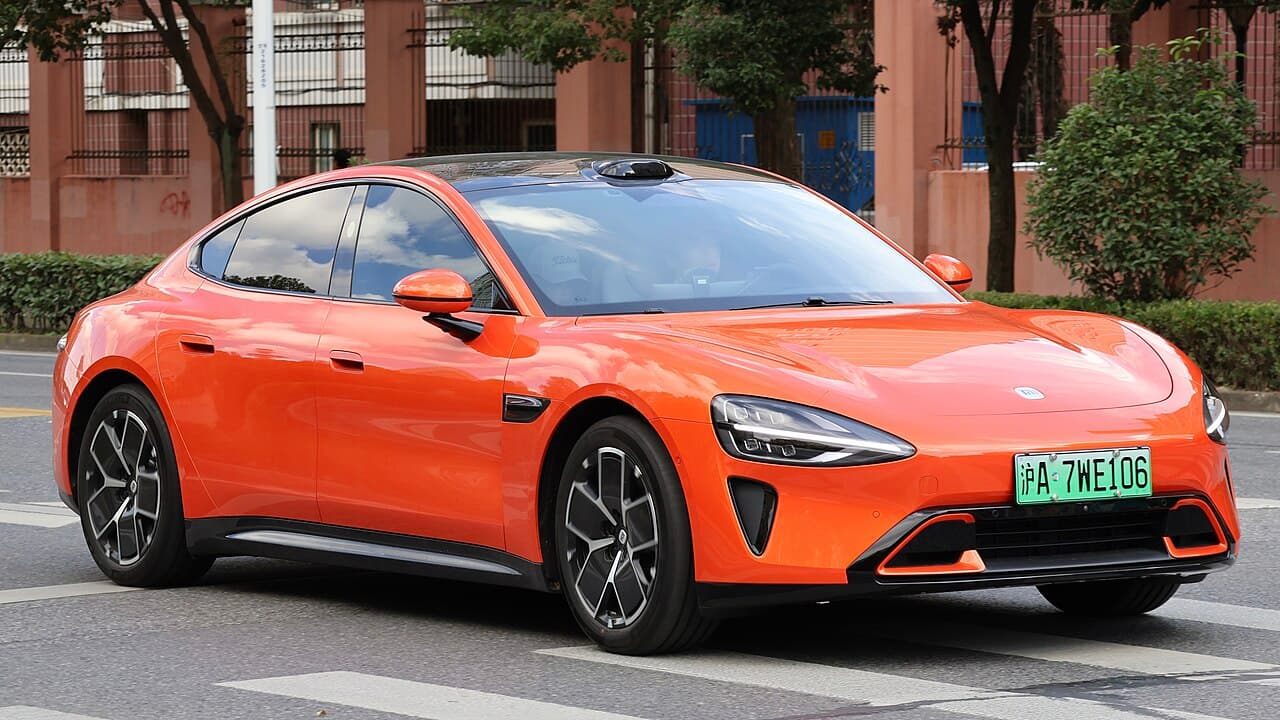
Xiaomi's first vehicle - a sporty mid-large electric sedan positioned against the Tesla Model 3 and rich with Xiaomi-ecosystem integration via HyperOS.
Division of Xiaomi CorporationHKEX: 1810Founded 2021🇨🇳Beijing, ChinaCEO Lei Jun (Xiaomi founder, Chairman & CEO)
Xiaomi EV is the automotive division of Xiaomi Corporation (HKEX: 1810), announced in March 2021 with a pledged about $10B over 10 years and led by founder Lei Jun. The SU7 sedan launched 28 Mar 2024 and the YU7 SUV on 26 Jun 2025.
Latest update Oct 19, 2026
01
The group delivered 411,082 vehicles in 2025. Cumulative deliveries passed 800,000 on 7 Sep 2026. On 1 Oct Xiaomi Auto said September deliveries exceeded 40,000, without an exact total or a model split. The China Automobile Dealers Association passenger-car report lists September Xiaomi Auto wholesale and retail at 40,015 each. CnEVPost attributes a CPCA split of SU7 15,751, YU7 11,820 and Sky Nomad 12,444 (N70 7,147 and N90 5,297); that split is not on the association's company ranking. Xiaomi Auto's 8 Oct Weibo said Sky Nomad lock orders exceeded 70,000 from 7 Sep to 7 Oct. Lock orders are not deliveries. The company delivery floor remains above 10,000, and no exact 7 Sep-7 Oct delivery total has been published. CPCA January-September deliveries are 286,490, about 52.1 percent of the 550,000-unit 2026 target. Cars are built in Beijing, where combined monthly output had previously stabilized above 45,000, and at a Wuhan plant still ramping toward a 35,000-per-month October checkpoint that 36Kr said may not reach full planned output until 2027. Sky Nomad EREV SUVs launched 7 Sep from 209,900 yuan, with first customer deliveries 12 Sep across 75 cities. At IFA Berlin on 3 Sep Xiaomi signed MoUs with eight German dealer groups ahead of a 2027 Germany-first Europe entry. Parent Xiaomi Corp last HK$23.96 at 11:04 HKT on 8 Oct (CNBC about HK$618.4B on 25.81B shares); previous close HK$23.94 on 7 Oct. Q3 group results are unprinted.
cada.cnUpdated Oct 18, 2026
02
2026
Xiaomi set a 550,000-unit target for full-year 2026. CPCA put August at 30,153, taking January-August to 246,475 (44.8% of target), so September-December still need to average about 75,881 a month - well above any month posted so far. Beijing and Wuhan capacity ramps, the YU7 backlog, and Sky Nomad volume after first deliveries began September 12 across 75 cities (more than 10,000 locked-in orders on September 7) are the levers.
2026-2027
Beyond the two-phase Beijing plant, whose combined monthly output has stabilized above 45,000 units (~540k/year run-rate), the newer Wuhan plant entered trial production in May 2026 and is still targeting 35,000 units/month (~420k/year run-rate) by October 2026. 36Kr, citing Tianyancha filings, said Beijing Yizhuang Phase II and Wuhan are each planned at 150,000 units/year of design capacity and that Wuhan may not reach full production until 2027 - so the October monthly-run-rate target is a ramp checkpoint, not confirmed current output. Combined, Xiaomi is still aiming toward ~1M+ (reportedly up to 1.2M) annual capacity longer-term.
Oct 2026
First Sky Nomad customer deliveries began September 12, 2026 across 75 Chinese cities, covering all four trims, after locked-in orders topped 10,000 on September 7. Xiaomi has not published a first-week wholesale figure. The watch item is how quickly those orders turn into September-October volume, and whether the cut launch prices (N70 Max 239,900 yuan, N90 Max 269,900 yuan) sustain demand beyond the opening surge.
Oct 2026
TargetOctober 2026 Wuhan 35,000-per-month ramp checkpoint
2027
Xiaomi unveiled its first in-house smart-driving chip, the 3nm Xring D100, on August 24, 2026. CnEVPost reported the chip has completed validation and is scheduled for commercial use in 2027; Xiaomi has not disclosed TOPS, the foundry, or the first vehicle that will use it. Current Xiaomi EVs mainly run Nvidia Thor. The watch item is whether 2027 vehicle fitment still holds after L3 lead Wang Naiyan left on September 7, 2026 - the second of four named AD core members to go.
2027
Xiaomi confirmed a 2027 Europe entry starting with Germany and, on September 3, 2026 at IFA Berlin, signed MoUs with eight German dealer groups (Ernst Dello, Autohaus Dinnebier, Emil Frey Germany, Fett & Wirtz, Hahn Automobile, LUEG Mobility, Penske-Jacobs Innovation and SPT Avior) as its first continental retail and service partners. The MoUs are non-binding and Xiaomi has not yet named models, local pricing or store counts. Prep work also includes a Munich R&D center, a global website launched August 26, 2026, and the April 2026 hire of former Tesla manager Dieter Lorenz to head European delivery and logistics. EU countervailing duties on Chinese-built EVs remain an open question: Xiaomi did not take part in the 2023 anti-subsidy investigation and could face the highest 35.3% duty on top of the standard 10% tariff.
Date not announced
TargetCompany 7 Sep-7 Oct Sky Nomad delivery total still unpublished
03
Xiaomi Auto said Sky Nomad (Peng Cheng) N70 and N90 range-extender SUVs locked more than 70,000 orders in the 30 days after the Sept. 7 launch. Lei Jun said first-month Sky Nomad deliveries exceeded 10,000 and helped Xiaomi Auto top 40,000 deliveries in September. The company said future new-model order figures will be limited to the first wave and the first sales month.
Xiaomi Auto said on October 1 that September deliveries exceeded 40,000 vehicles, its first monthly total above that floor in 2026, without giving an exact figure or a SU7, YU7 and Sky Nomad split. The Sky Nomad extended-range SUVs began customer deliveries in September after the September 7 on-sale date; Lei Jun has said first-month Sky Nomad figures are due after October 7. Disclosed 2026 monthly floors imply at least about 286,475 deliveries in the first nine months, still well short of the 550,000-unit full-year target.
Xiaomi began first customer deliveries of the Sky Nomad EREV SUVs on September 12, 2026 across 75 Chinese cities, with founder Lei Jun handing over keys in Xuzhou and later Shanghai. All four launch trims are in the first batch: N70 Pro from 209,900 yuan, N70 Max 239,900, N90 Max 269,900 and N90 Max Explorer 299,900. Locked-in orders had topped 10,000 on September 7; Xiaomi has not yet published a first-week volume figure.
Xiaomi officially launched its first extended-range Sky Nomad SUVs on September 7, 2026, expanding beyond battery-electric models. The five-seat N70 Pro and N70 Max start at 209,900 yuan and 239,900 yuan, and the seven-seat N90 Max and five-seat N90 Max Explorer are priced at 269,900 yuan and 299,900 yuan, with the N70 Max and N90 Max 20,000 and 30,000 yuan below July 30 presale prices. Xiaomi said locked-in orders topped 10,000 in four minutes and that deliveries can start in one to five weeks; founder Lei Jun said cumulative vehicle deliveries have passed 800,000, about 29 months after the first SU7 handovers.
At IFA Berlin on September 3, 2026, Xiaomi Auto signed memoranda of understanding with eight German dealer groups as its first retail and service partners in Europe: Ernst Dello, Autohaus Dinnebier, Emil Frey Germany, Fett & Wirtz, Hahn Automobile, LUEG Mobility, Penske-Jacobs Innovation and SPT Avior. The MoUs are the opening step toward a 2027 Germany-first European launch. Xiaomi has not yet named models, local pricing or store counts.
Xiaomi Auto announced a strategic battery partnership with CALB and Sunwoda for a new Dragonscale (Longjia) pack that Xiaomi says it specifies, helps design at the cell level, and oversees from materials through vehicle install. The pack is slated to debut on the Sky Nomad N70 and N90 at the September 7, 2026 launch, with a first-owner safety program that, for quality-defect self-ignition, offers a free replacement vehicle of equal specification. Xiaomi also said it will cover the gap between insurance payouts and pre-loss market value for battery fires after collisions or underbody damage, with coverage tied to connected-services and official-service conditions.
Xiaomi confirmed on September 2, 2026 that it will officially launch its Sky Nomad extended-range SUV lineup, the N70, N70 Pro and N90 Max, at a flagship event on September 7, its first move beyond all-electric models into EREVs. The N90 Max is priced from RMB 299,900 (about $44,300) and the N70 from RMB 259,900 (about $38,400), with the range-extender SUVs central to Xiaomi's push toward a 550,000-vehicle 2026 delivery target after pre-sales opened July 30.
Xiaomi said in its September 1, 2026 delivery update that August 2026 deliveries stayed above 30,000 units for a fifth consecutive month, though it again withheld an exact figure. The company is racing to prepare the official market launch and first deliveries of its Sky Nomad N90 Max and N70 Max extended-range SUVs in September, a step it needs to close the gap on its 550,000-unit full-year 2026 delivery target.
Xiaomi Auto launched a global website and social media channels on August 26, showcasing the SU7, SU7 Ultra, YU7 GT and Sky Nomad lineup alongside a dealer and distribution inquiries portal for prospective overseas partners. The launch confirms Europe as the first stop for Xiaomi's overseas car push, with overseas sales still not scheduled to begin until the second half of 2027.
Xiaomi unveiled its first in-house smart-driving chip, the Xring D100, on August 24, built on a 3nm process with a 20-core CPU and 16-core NPU supporting up to 160GB of unified memory, enough to run AI models with up to 200 billion parameters locally in the car. The TSMC-manufactured chip has completed validation, with commercial deployment in production vehicles targeted for 2027.
Xiaomi reported August 18 that its smart EV business delivered 104,199 vehicles in the second quarter of 2026, up 28.2% year over year, on RMB23.9 billion in revenue, but gross margin fell to 19.2% from 26.4% a year earlier and revenue per vehicle declined about 9.6%. Cumulative January-July deliveries of 216,322 units sit at only 39% of Xiaomi's 550,000-unit 2026 target, leaving the September launch of the Sky Nomad EREV SUVs as a key test of whether the back half of the year can close the gap.
Xiaomi said August 17 that cumulative deliveries of its SU7 sedan series have passed 500,000 units, 28.5 months after deliveries began in April 2024, which Xiaomi calls the fastest Chinese EV priced above RMB200,000 to reach the mark. Including the YU7 SUV launched in 2025, Xiaomi EV has now delivered more than 760,000 vehicles cumulatively.
Xiaomi unveiled its Sky Nomad extended-range EV sub-brand on July 30 with two SUVs, the five-seat N70 Max (presale from 259,900 yuan) and seven-seat N90 Max (presale from 299,900 yuan), each claiming over 1,000 miles of combined range ahead of a September market launch. Xiaomi shares fell as much as 8-11% intraday afterward as analysts flagged the aggressive pricing and the roughly 61,000 vehicles a month Xiaomi now needs in the second half to hit its 550,000-unit 2026 delivery target.
Xiaomi disclosed detailed specifications on July 28 for its new Sky Nomad sub-brand, the N90 Max seven-seat flagship and N70 Max five-seat all-wheel-drive SUV, both extended-range EVs built on a new Kunlun architecture with a 1.5-liter range extender rated at 5.7 liters per 100 km. The models debut July 30, and CEO Lei Jun defended the timing of Xiaomi's push into extended-range vehicles on July 29, citing strong demand for rival extended-range SUVs as evidence the segment still has room to grow.
04
Xiaomi's first vehicle - a sporty mid-large electric sedan positioned against the Tesla Model 3 and rich with Xiaomi-ecosystem integration via HyperOS.
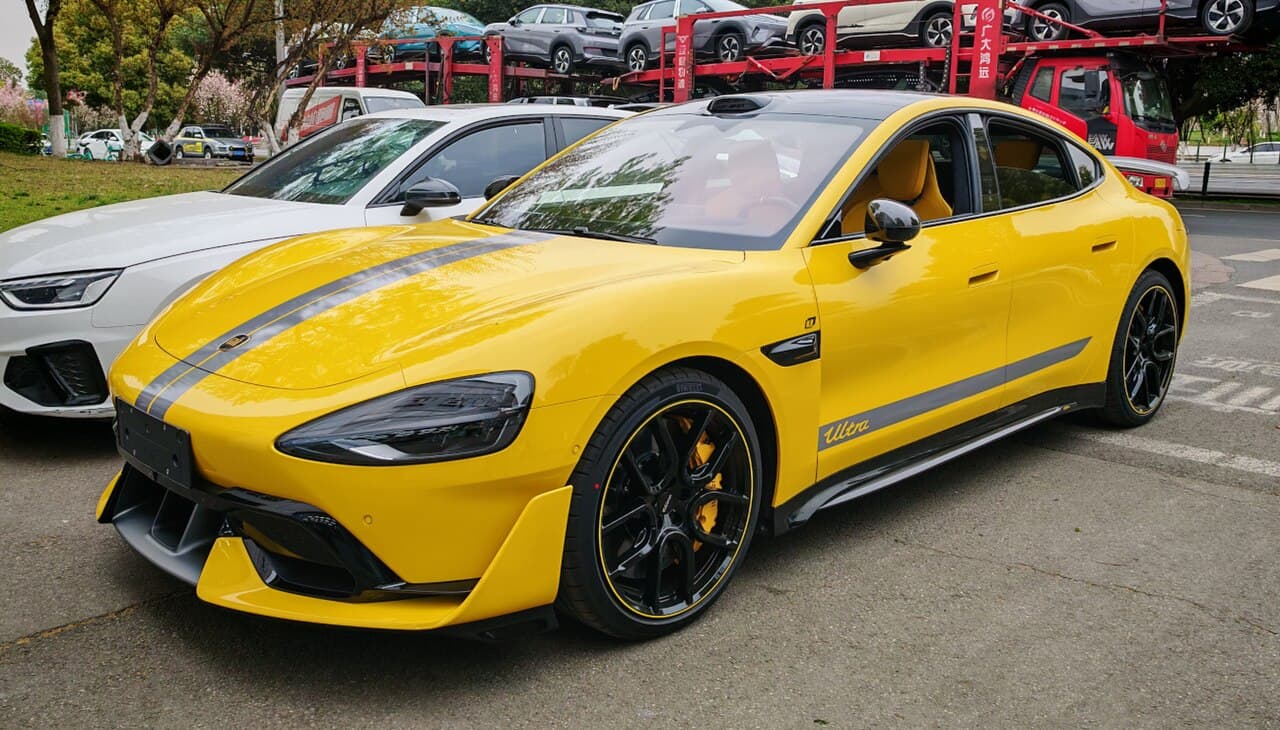
Tri-motor performance flagship of the SU7 line - a hypercar-rivaling electric sedan that anchors Xiaomi's high-performance halo and track credentials.
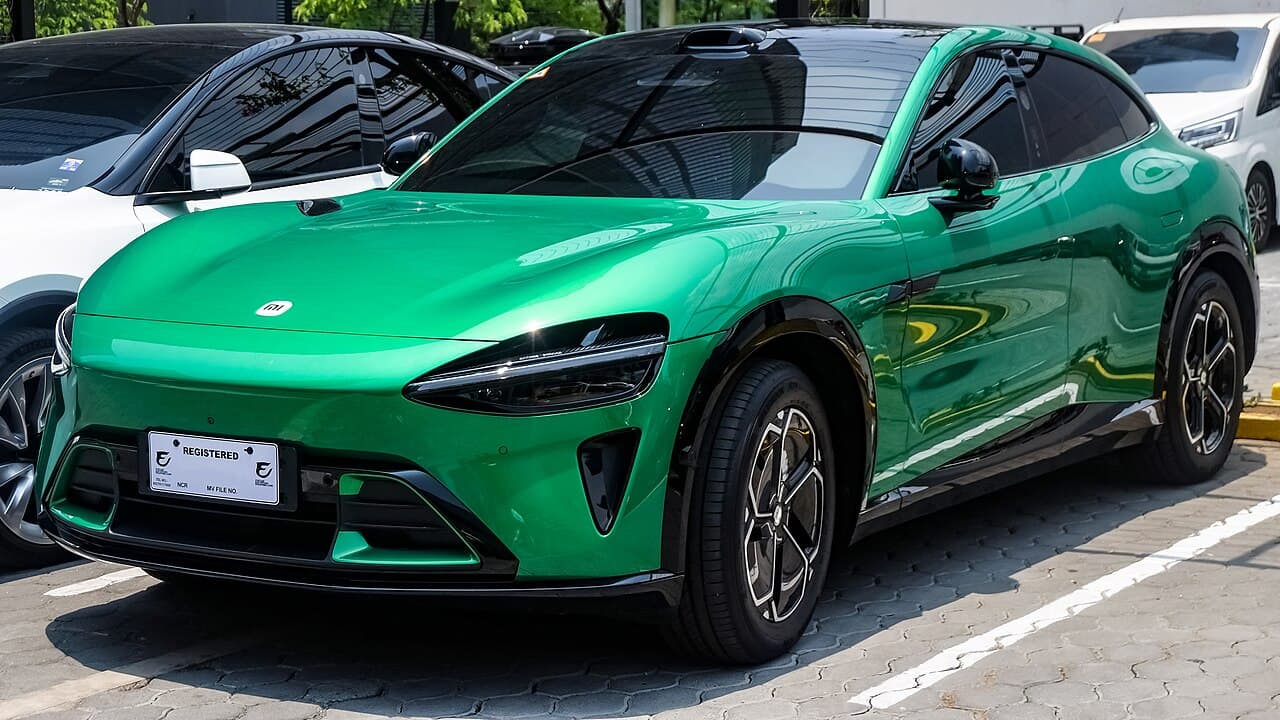
Xiaomi's first SUV - a mid-large electric crossover priced under the Tesla Model Y that became the brand's main growth driver, outselling the SU7 roughly 3:1.
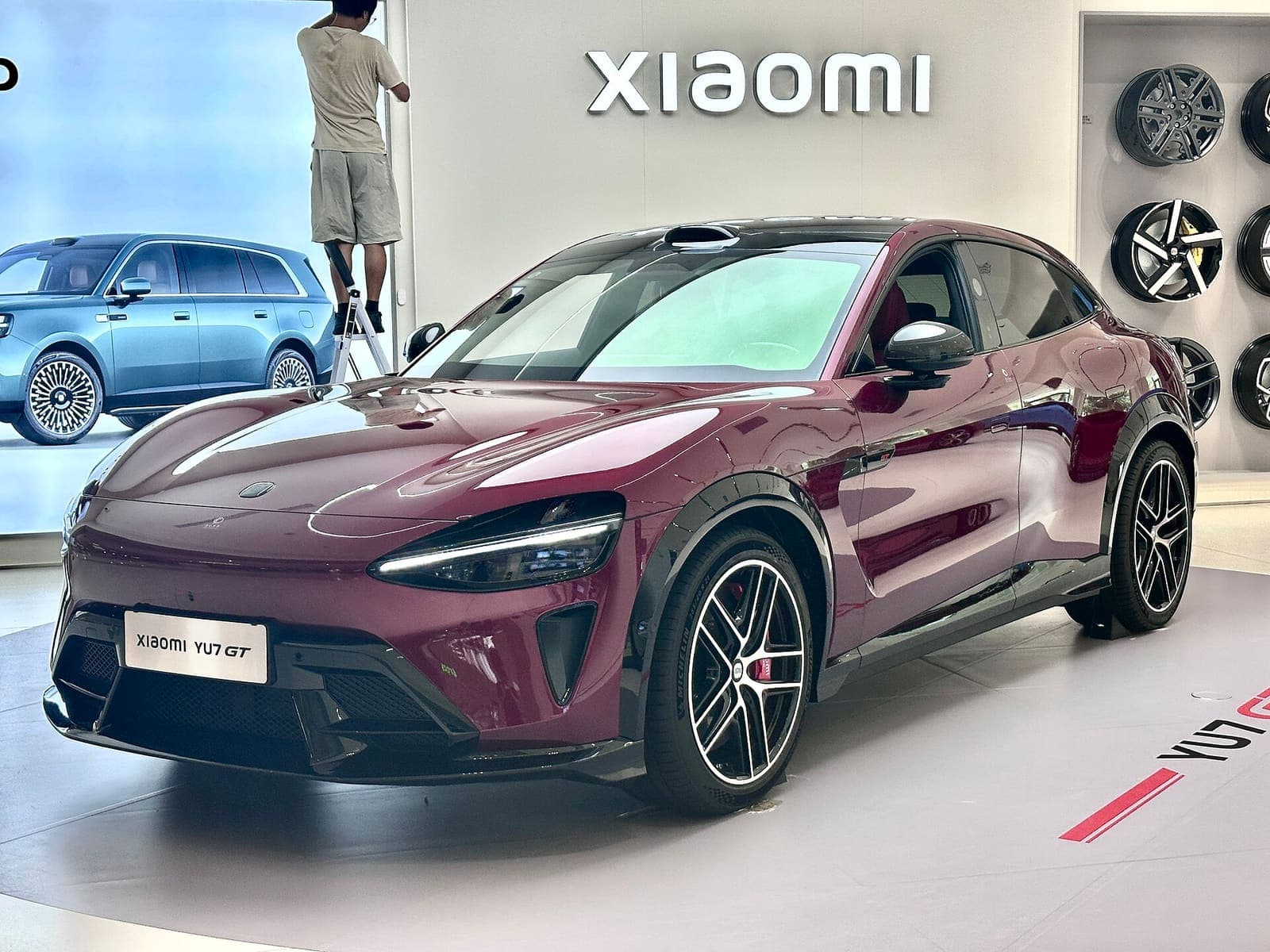
A Grand Touring performance variant of the YU7 SUV - positioned between the standard YU7 and a future 'Ultra' halo, built for high-speed comfort-oriented driving rather than pure track dominance. A Track Package-equipped YU7 GT holds a sub-7:23 Nurburgring Nordschleife lap, at the time the fastest recorded for an SUV.
Xiaomi's first extended-range (EREV) sub-brand, built on a new Kunlun architecture aimed at the Li Auto L9 and Aito M9. The on-sale lineup is the five-seat N70 Pro and N70 Max, the seven-seat N90 Max, and a five-seat N90 Max Explorer camping edition with a factory pop-top roof.
Xiaomi's first in-house smart-driving chip, built on a 3nm process and designed to run large AI models on-device for autonomous-driving decisions rather than relying on the cloud.
05
RMB23.9B smart EV sales revenue in Q2 2026 (deliveries +28.2% YoY to 104,199); H1 2026 smart EV revenue ~RMB42.9B (Q1 RMB19.0B + Q2 RMB23.9B); RMB103.3B smart EV segment revenue in FY2025 (first time above RMB100B)
(Lei Jun). CPCA January-September 2026 deliveries 286,490, about 52.1 percent of the 550,000-unit target. CnEVPost compiles 837,798 cumulative deliveries at end-September.
(CPCA; -17.15% YoY, -3.56% from July) - fifth consecutive month above 30,000, first year-on-year decline since March
(Q2 2026, down from 26.4% a year earlier and from Q1 2026's 20.1%); EV/AI segment posted a RMB2.6B operating loss in Q2, narrower than Q1's RMB3.1B loss but wider than the RMB300M loss a year earlier
(first time above RMB100B); RMB106.1B including AI/innovation
Beijing's two-phase plant combined monthly output stabilized above 45,000 units (~540k/year run-rate) as of Q2 2026; the newer Wuhan plant, in trial production since May 2026, is targeted to reach 35,000 units/month (~420k/year run-rate) by October 2026 as it ramps. 36Kr reported Wuhan may not reach full planned capacity until 2027.
CPCA/CADA: 40,015 wholesale and 40,015 retail. Xiaomi's own statement remains more than 40,000, with no company exact total or model split. CnEVPost attributes SU7 15,751, YU7 11,820 and Sky Nomad 12,444 (N70 7,147, N90 5,297); that split is not on the CADA company ranking.
last HK$23.96 at 11:04 HKT 8 Oct (CNBC about HK$618.4B on 25.81B shares)
06
Operating status
Operational
As of 18 Oct 2026 Xiaomi has not published an exact September delivery total or a SU7, YU7 and Sky Nomad split. CPCA/CADA lists 40,015 wholesale and 40,015 retail. CnEVPost's CPCA-attributed split is SU7 15,751, YU7 11,820 and Sky Nomad 12,444, which is calendar September, not the 7 Sep-7 Oct first sales month. Sky Nomad lock orders exceeded 70,000 in that first sales month, against a company delivery floor above 10,000. January-September CPCA deliveries are 286,490 versus the 550,000-unit 2026 target. Wuhan's October checkpoint and Q3 group results remain open.
SU7 sedan family and YU7 SUV - the overwhelming majority of segment revenue (RMB19B of ~RMB19.9B in Q1 2026).
Service, parts and accessories - roughly RMB0.9B in Q1 2026.
Xiaomi's first extended-range SUVs, launched September 7, 2026 from 209,900 yuan. Locked-in orders topped 10,000 in four minutes; first customer deliveries began September 12 across 75 Chinese cities. The series is the near-term volume bet against the 550,000-unit 2026 target, in a China EREV retail market that CPCA said fell 15.85% year-on-year in the first eight months of 2026.
HyperOS connectivity and Xiaomi-ecosystem in-car accessories that tie the car into Xiaomi's 'Human x Car x Home' strategy (bundled/ancillary).
07
How past announced dates turned out.
4/5announced dates hit on time
Publish Sky Nomad fuller first-month volume after 7 Oct
Target Sky Nomad fuller first-month volume after 7 Oct 2026 · Resolved Oct 18, 2026
The 8 Oct Weibo disclosed more than 70,000 Sky Nomad lock orders for 7 Sep-7 Oct, not a fuller delivery count. The 1 Oct delivery floor remains above 10,000. CPCA calendar-September volume is a different window.
Begin Sky Nomad customer deliveries
Target September 2026 · Resolved Sep 12, 2026
Xiaomi began first customer deliveries of the Sky Nomad EREV SUVs on September 12, 2026 across 75 Chinese cities, covering all four launch trims, with Lei Jun handing over keys in Xuzhou and later Shanghai. No first-week volume figure has been published.
Complete the Sky Nomad market launch and begin deliveries
Target 2026-09-07 · Resolved Sep 7, 2026
Xiaomi officially launched the Sky Nomad EREV lineup on September 7, 2026 at cut prices (N70 Pro from 209,900 yuan, N70 Max 239,900 yuan, N90 Max 269,900 yuan, N90 Max Explorer 299,900 yuan) and said locked-in orders topped 10,000 in four minutes, with first deliveries in one to five weeks.
Report Q2 2026 results
Target 2026-08-18 · Resolved Aug 18, 2026
Xiaomi reported Q2 2026 results on August 18, 2026: the Smart EV, AI and other new initiatives segment delivered 104,199 vehicles (+28.2% YoY), with smart EV sales revenue of RMB23.9B (segment revenue RMB24.9B, up from RMB21.3B a year earlier). Segment gross margin fell to 19.2% (from 26.4% a year earlier) and the segment posted a RMB2.6B operating loss - narrower than Q1 2026's RMB3.1B loss but wider than the RMB300M loss in Q2 2025.
Launch the Sky Nomad N90 Max and N70 Max EREV SUVs
Target 2026-07-30 · Resolved Jul 30, 2026
Xiaomi debuted the Sky Nomad sub-brand on schedule on July 30, 2026, opening presales for the seven-seat N90 Max (from RMB299,900) and five-seat N70 Max (from RMB259,900), each claiming over 1,000 miles of combined range; official market launch and deliveries are targeted for September 2026.
08
2026
Sky Nomad first-month lock orders exceed 70,000
On Oct. 8, 2026 Xiaomi Auto said Sky Nomad (Peng Cheng) locked more than 70,000 orders from Sept. 7 to Oct. 7. Lei Jun said first-month deliveries exceeded 10,000. Vice president Li Xiaoshuang said future new-model order prints will be limited to the first wave and the first sales month.
Lei Jun cites Sky Nomad first-month floor above 10,000
On 1 Oct 2026 Xiaomi Auto said September deliveries exceeded 40,000 without an exact total or a SU7/YU7 split. Sina Auto and 21st Century Business Herald reprinted a Lei Jun Weibo timestamped 09:01:36 that day saying Sky Nomad (Pengcheng) first-month deliveries exceeded 10,000. Xiaomi Auto's own statement, as reprinted by Tonghuashun and STCN, omitted that split. weibo.com originals returned 500 this pass. Phoenix reporting still says the fuller first-month Sky Nomad print is due after 7 Oct, when first-owner lock-in benefits end. The 10,000-plus figure is a floor, not an exact September model split.
September deliveries: company floor above 40,000; CPCA 40,015
On 1 Oct 2026 Xiaomi Auto said September deliveries exceeded 40,000, without an exact total or a model split. On 12 Oct the China Automobile Dealers Association passenger-car report listed Xiaomi Auto at 40,015 wholesale and 40,015 retail. CnEVPost attributes a CPCA split of SU7 15,751, YU7 11,820 and Sky Nomad 12,444, which that association ranking does not print. CPCA January-September deliveries are 286,490.
L3 autonomous-driving lead Wang Naiyan leaves for an embodied-AI startup
CnEVPost and 36Kr reported that Wang Naiyan, Xiaomi Auto's L3 autonomous-driving technology lead, left on September 7, 2026 to launch an embodied-AI venture focused on robot brains. He joined in May 2024 reporting to Ye Hangjun; of the four named core members of Xiaomi's AD team, Wang and Chen Long have now both left. Xiaomi has not named a successor in public filings.
CPCA: 30,153 vehicles delivered in August
The China Passenger Car Association put Xiaomi Auto's August 2026 deliveries at 30,153, down 17.15% year-on-year and 3.56% from July - a fifth consecutive month above 30,000, but the first year-on-year drop since March. January-August deliveries reached 246,475 (44.8% of the 550,000-unit 2026 target), so September-December still need to average about 75,881 a month. Cumulative deliveries stood at 797,783 at the end of August; Lei Jun said they passed 800,000 on September 7.
Sky Nomad first deliveries start in 75 cities
Xiaomi began first customer deliveries of the Sky Nomad EREV SUVs on September 12, 2026 across 75 Chinese cities, covering all four launch trims (N70 Pro from 209,900 yuan, N70 Max 239,900, N90 Max 269,900, N90 Max Explorer 299,900). Founder Lei Jun handed over keys in Xuzhou that day and later in Shanghai. Xiaomi has not published a first-week volume figure.
Sky Nomad EREV SUVs go on sale; cumulative deliveries pass 800,000
Xiaomi officially launched its first extended-range Sky Nomad lineup on September 7, 2026: the five-seat N70 Pro (209,900 yuan) and N70 Max (239,900 yuan, 20,000 yuan below July 30 presale), plus the seven-seat N90 Max (269,900 yuan, 30,000 yuan below presale) and five-seat N90 Max Explorer (299,900 yuan). Locked-in orders topped 10,000 in four minutes, and Xiaomi said an initial batch is built so deliveries can start in one to five weeks. The same day Lei Jun said cumulative vehicle deliveries had passed 800,000, about 29 months after the first SU7 handovers.
Unveils Dragonscale battery with CALB and Sunwoda
Xiaomi Auto announced a strategic partnership with CALB and Sunwoda for a Dragonscale (Longjia) battery that Xiaomi says it specifies, helps design at the cell level, and oversees from materials through vehicle install. The pack is slated to debut on the Sky Nomad N70 and N90 at the September 7, 2026 launch, with a first-owner safety program that, for quality-defect self-ignition, offers a free replacement vehicle of equal specification, and coverage of the insurance-to-market-value gap for battery fires after collisions or underbody damage.
2026
Signs first European retail partners at IFA Berlin
On September 3, 2026 at IFA Berlin, Xiaomi Auto signed memoranda of understanding with eight German dealer groups - Ernst Dello, Autohaus Dinnebier, Emil Frey Germany, Fett & Wirtz, Hahn Automobile, LUEG Mobility, Penske-Jacobs Innovation and SPT Avior - its first retail and service partners on the continent. The MoUs are the opening step toward a 2027 Germany-first European launch; Xiaomi has not yet disclosed models, local pricing or store counts.
Q2 2026: deliveries hit 104,199, EV loss narrows to RMB2.6B
Xiaomi delivers 104,199 vehicles in Q2 2026 (+28.2% YoY) on RMB23.9B smart EV revenue, but segment gross margin slips to 19.2% (from 26.4% a year earlier); the EV/AI segment posts a RMB2.6B operating loss, narrower than Q1's RMB3.1B loss but wider than the RMB300M loss a year earlier. H1 2026 deliveries reach 185,055, and July adds a further 31,267 - cumulative Jan-July deliveries of 216,322 sit at just 39% of the 550,000-unit 2026 target.
Sky Nomad EREV sub-brand launches, shares slide on pricing
Xiaomi unveils its Sky Nomad extended-range sub-brand on July 30 with two SUVs, the five-seat N70 Max (presale from RMB259,900) and seven-seat N90 Max (presale from RMB299,900), each claiming over 1,000 miles of combined range ahead of a September market launch. Shares fall as much as 8-11% intraday as analysts flag the aggressive pricing against the roughly 61,000 vehicles a month Xiaomi now needs in H2 to hit its 550,000-unit 2026 target.
EREV approval and H1 deliveries of 185,055
Xiaomi wins regulatory approval to build extended-range (EREV) vehicles in June 2026 - clearing the path for its first full-size SUV (YU9/'Kunlun') - and closes H1 2026 with 185,055 deliveries after three straight months above 30,000 (34,738 in June).
YU7 GT launches as performance flagship of the YU7 line
Xiaomi launches the YU7 GT on May 21, 2026, a Grand Touring performance variant of the YU7 with a dual-motor system producing a combined 738 kW (~1,003 PS / 990 hp), a 2.92s 0-100 km/h time, a 300 km/h top speed and 705 km CLTC range, starting at RMB389,900. A Track Package-equipped YU7 GT had already set a sub-7:23 Nurburgring Nordschleife lap in April 2026, at the time the fastest recorded for an SUV.
Q1 2026: EV segment swings to a loss
Xiaomi delivers 80,856 EVs in Q1 2026 on RMB19B auto revenue but posts a RMB3.1B EV operating loss (~$5,600 per car), blamed on fewer high-margin SU7 Ultra sales, purchase-tax subsidies and rising component costs; EV gross margin was 20.1%.
Next-generation SU7 launches with standard LiDAR and 800V platform
The refreshed SU7 (Standard/Pro/Max) goes on sale in April 2026 from RMB229,900, adding standard LiDAR with a 700-TOPS ADAS computer, a redesigned mechanical-backup door handle, dedicated backup power for the door locks, 9 airbags (up from 7), and CLTC range up to 902 km on the Pro - directly addressing the safety concerns raised through 2025.
Cumulative deliveries pass 600,000
Xiaomi surpasses 600,000 cumulative vehicle deliveries in February 2026 - just 22 months after its first car - and sets a 550,000-unit target for full-year 2026.
2025 results: 411,082 deliveries and first segment profit
Xiaomi reports 411,082 vehicles delivered in 2025 (beating its raised 350,000 target early), auto revenue above RMB100B for the first time, and a maiden full-year operating profit (~RMB900M) for its EV/AI segment.
First-generation SU7 ends production; Safety Advisory Committee launched
Xiaomi halts production of the original SU7 in February 2026 after nearly 381,000 units built since the March 2024 launch, freeing capacity for a next-generation model. On February 27, 2026 it also announces a Safety Advisory Committee of outside vehicle-safety experts plus a regular owner/media communication mechanism, citing a 3,500-person internal safety team, following the door-handle and driver-assist concerns raised by 2025's fatal accidents.
2025
SAMR recall: 116,877 SU7 units over driver-assist software flaw
China's State Administration for Market Regulation announces on September 19, 2025 a recall of 116,877 SU7 vehicles built between February 2024 and August 2025 - roughly a third of all SU7s sold - after finding the L2 highway assist system had insufficient recognition and warning in extreme scenarios, tracing back to the March 2025 fatal crash. Xiaomi remedies the flaw with a free OTA update.
YU7 SUV launches to record demand
The YU7 SUV launches June 26, 2025 with roughly 200,000 firm orders in 3 minutes and ~289,000 in the first hour; deliveries begin July 6 from RMB253,500, undercutting the Tesla Model Y, and production is effectively sold out into 2027.
Fatal SU7 crash triggers driver-assist scrutiny
A March 29, 2025 highway crash involving an SU7 in assisted-driving (NOA) mode kills three people, raising concerns over Xiaomi's driver-assist and door-release systems and weighing on the shares.
SU7 Ultra performance flagship launches
Xiaomi launches the tri-motor SU7 Ultra in February 2025 at RMB529,900; a prototype sets a 6:22.091 Nürburgring lap - third-fastest ever at the time - establishing Xiaomi's performance credentials.
2024
2021
09
$15.5Bdisclosed across 2 rounds with a stated amount