K2 Space logo

K2 Space

PrivateFounded 2022🇺🇸Torrance, California
CEO

Karan Kunjur

Data verified as of Aug 18, 2026

Summary

K2 Space builds deliberately large satellites at a moment when the rest of the industry is shrinking them, on the argument that power, not mass, is what limits what a spacecraft can do. Its Mega Class bus carries up to 3,000 kg of payload and tens of kilowatts of power for a list price around $15 million, roughly ten times the power of a typical constellation satellite, and its 20 kW krypton Hall-effect thruster is the most powerful electric thruster flown in space. Founded in 2022 by brothers Karan and Neel Kunjur, both former SpaceX engineers, the company flew a subsystem demonstrator called Heritage in January 2025 and launched its first full Mega Class satellite, Gravitas, on March 30, 2026, carrying 12 customer payloads and using its own thruster to climb from low Earth orbit toward medium Earth orbit. In 2026 it went from startup to supplier on three of the biggest programs in the sector: 28 satellites for SES's meoSphere MEO network, Mega Class buses for the Anduril-led space-based interceptor team on Golden Dome, and its first Pentagon program of record as bus provider for the Space Force's Protected Tactical Satcom-Global. A $500 million Series D on July 30, 2026 at a $6.8 billion valuation, more than double the December 2025 mark, funds the move from one satellite at a time to a 180,000 square foot Torrance factory rated at up to 100 large satellites a year.

Main Products

Mega Class

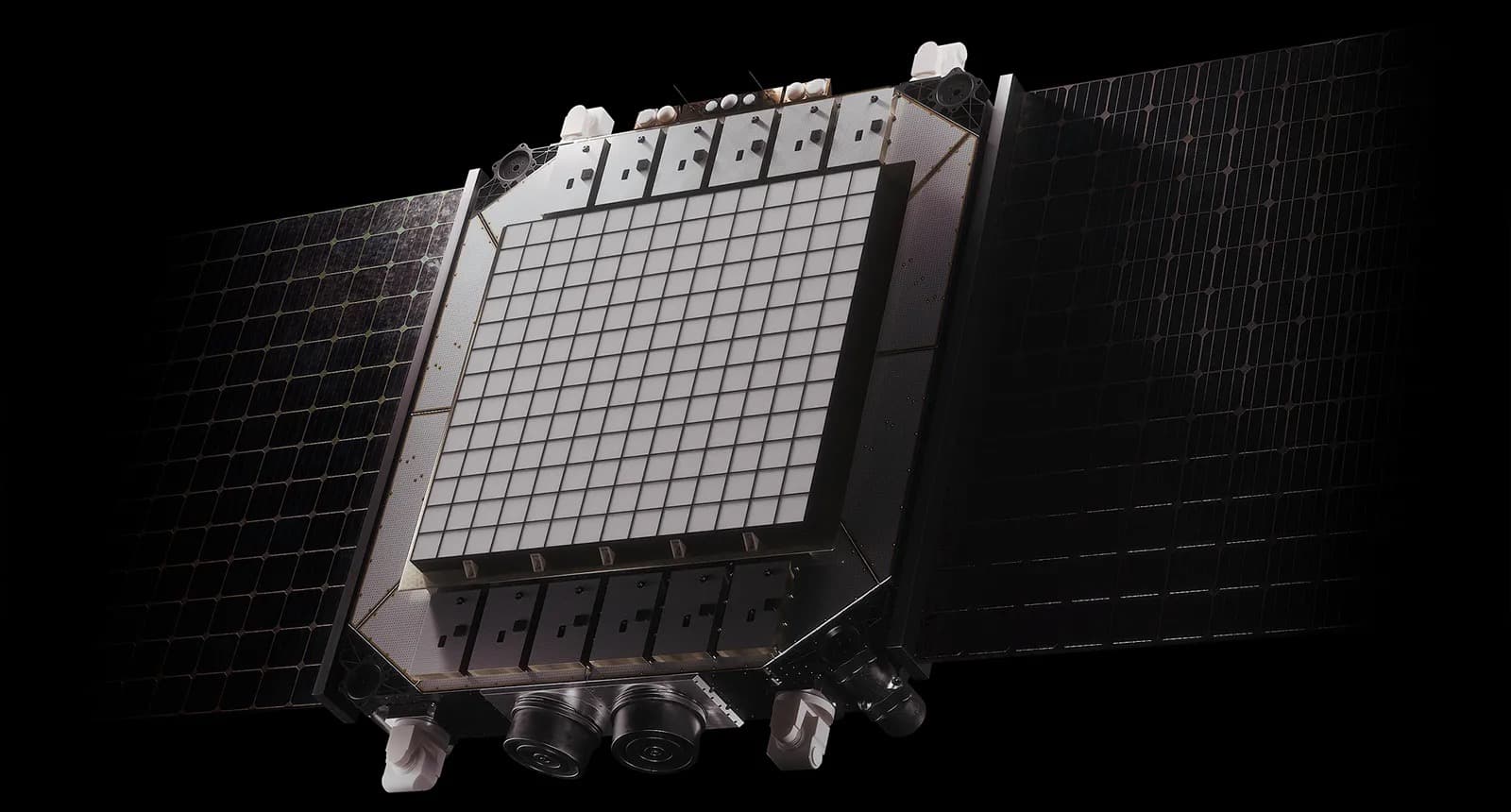
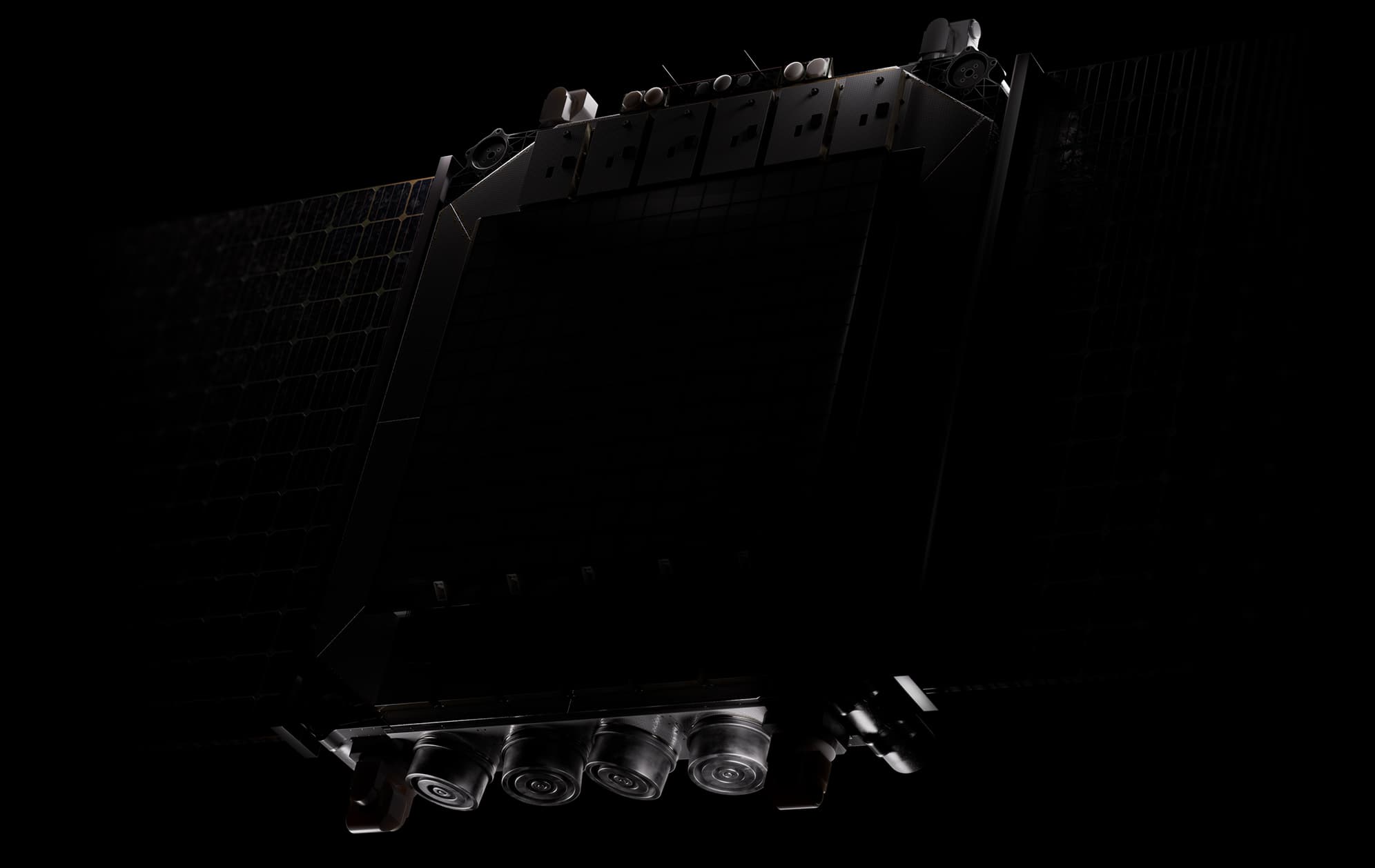
K2's production satellite bus and the whole thesis in one product: 3,000 kg of payload mass on a 3 by 2.7 metre deck, up to 30 kW of peak payload power, and 20 kW Hall-effect propulsion capable of an orbit raise from LEO to MEO in under three months. It is roughly ten times the power of a typical constellation-class satellite, and K2 says ten of them stack into a single launch vehicle for 200 kW delivered per launch. It flies to LEO, MEO, and GEO, and lists around $15 million.

First unit, Gravitas, launched March 30, 2026 and is operating in orbit. Production scaling toward up to 100 satellites a year at Torrance, with 28 ordered by SES for meoSphere and further units committed to Golden Dome and PTS-G.

Payload Mass3,000 kg
Payload PowerUp to 30 kW peak
Propulsion20 kW Hall-effect thrusters, LEO to MEO in under 90 days
Price~$15M per satellite
Giga Class

Giga Class

In Development

The scaled-up bus: 110 kW of array power, 15,000 kg of payload mass on a 6.2 by 6.2 metre deck, four 20 kW Hall-effect thrusters, and more than 30 kW of heat rejection. It is aimed at the applications that a Mega Class cannot power, including orbital compute and high-power defense payloads, and is the platform behind K2's pitch that satellites should get bigger as launch gets cheaper.

Marked coming soon on K2's site, with the company targeting a first 100 kW-class satellite in 2028.

Array Power110 kW
Payload Mass15,000 kg
Heat Rejection30+ kW
Target First Flight2028
20 kW Hall-Effect Thruster

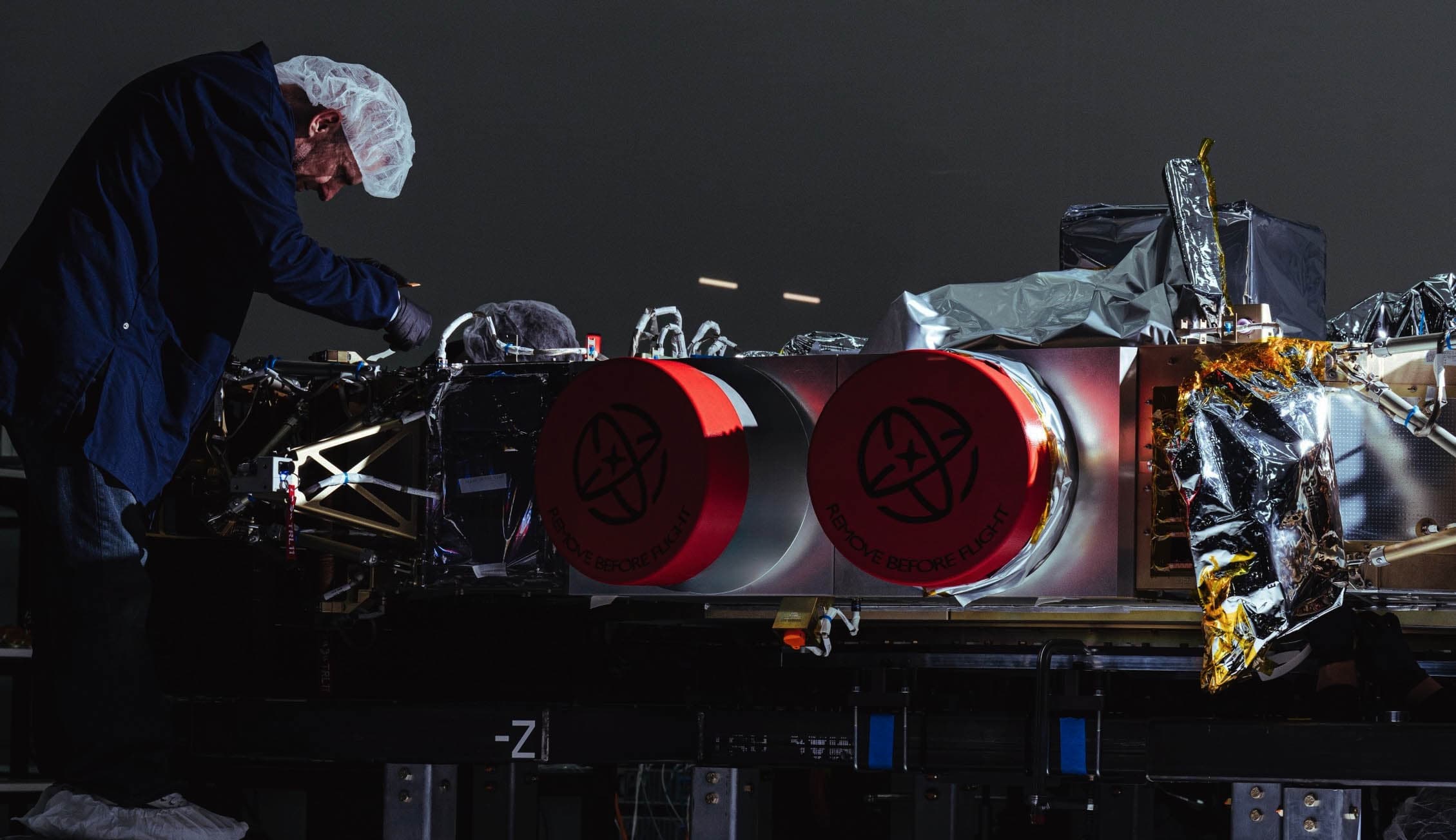
The krypton-fed electric thruster K2 designed in house, test fired at full power on the ground in 2025 and flown on Gravitas in 2026. K2 describes it as the most powerful Hall-effect thruster ever flown, and it is what lets a two-tonne satellite ride a cheap rideshare to low Earth orbit and then climb itself to medium Earth orbit in under 90 days instead of paying for a dedicated direct-inject launch. The economics of the whole Mega Class product depend on it.

Flying on Gravitas and performing the LEO to MEO orbit raise; four of them fly on the planned Giga Class.

Power20 kW, krypton-fed
Orbit RaiseLEO to MEO in under 90 days on a Mega Class satellite

What's Next

Finish Gravitas's orbit raise from LEO to MEO

Gravitas launched to low Earth orbit on March 30, 2026 with tiered success criteria: deploy and generate power, operate the 12 customer payloads and fire the thruster, then use that thruster to raise itself thousands of kilometres into medium Earth orbit. The third tier is the one that matters commercially, because the SES meoSphere order and the MEO defense architectures both assume a Mega Class satellite can get itself to MEO on electric propulsion in under 90 days rather than buying a dedicated launch.

2026

Fly Trinity, the three-orbit demonstration

K2's next mission carries multiple satellites, places them into different orbits from a single launch, and tests long-range optical intersatellite communications. It is the proof that K2 can operate a small fleet rather than one spacecraft at a time, and the optical links are the piece the Space Force is buying into through the Enterprise Space Terminal award. K2's own PR puts it in Q2 2027; Breaking Defense reported three satellites launching in February 2027.

Q2 2027

Deliver the first 100 kW Giga Class satellite

The Giga Class is the step from big satellites to very large ones: 110 kW of array power, 15,000 kg of payload, and over 30 kW of heat rejection, enough to host the kind of orbital compute and high-power defense payloads no current bus can feed. K2 targets a first 100 kW-class satellite in 2028.

2028

Deliver 28 satellites for SES's meoSphere network

SES ordered an initial 28 satellites in March 2026 for a MEO broadband network slated to be operating by 2030 and expected to grow toward 100 satellites, with pathfinders flying over the following three years to validate payload components and the K2 platform. It is K2's largest commercial commitment and the test of whether a company that has flown two satellites can become a volume manufacturer.

2030

Host Space Force laser-link terminal tests

The $22.9 million Enterprise Space Terminal award runs through 2028 and covers buying standardized optical terminals, integrating them onto two K2 buses, and launching them. The crosslinks are foundational to the Space Development Agency's Tracking Layer in LEO and the Resilient Missile Warning-Missile Tracking network in MEO, both parts of Golden Dome, so passing these tests is what positions K2 for the far larger production orders behind them.

2028

Operations & Revenue

StatusOperational

Gravitas is in orbit and raising itself from LEO toward MEO on its own 20 kW electric thruster while operating 12 customer payloads, and the earlier Heritage demonstrator validated K2's in-house avionics. Manufacturing runs out of a 180,000 square foot Torrance factory with over 85% of each satellite built in house, backed by an engineering office near Seattle, and headcount is near 300. The Series D is explicitly a production-scaling round: the target is up to 100 large satellites a year, against contracts for SES meoSphere, Anduril's Golden Dome interceptor layer, and the Space Force's PTS-G and Enterprise Space Terminal programs.

Revenue Streams

Commercial Satellite Buses

Selling Mega Class platforms to commercial operators, anchored by SES's order for an initial 28 satellites for the meoSphere MEO network announced March 24, 2026, with the constellation expected to grow toward 100 satellites and be operating by 2030.

Defense Programs

Mega Class platforms for the Anduril-led Golden Dome space-based interceptor team, bus provider for the Space Force's Protected Tactical Satcom-Global program of record on an SES Space & Defense-led team, and a $22.9 million Enterprise Space Terminal award through 2028 to host standardized optical crosslink terminals.

Hosted Payloads and Demonstration Missions

Flying customer payloads on K2's own missions, funded in part by government development awards. Gravitas carried 12 payload modules from several customers including the Department of Defense, supported by a $60 million Space Force STRATFI award.

Key Metrics

Employees

Nearly 300 (July 2026)

Est. Annual Revenue

Not disclosed. K2 is private and reports contract backlog rather than revenue: more than $1 billion in signed government and commercial contracts as of July 2026, against a satellite list price around $15 million and only two spacecraft flown. Most of that backlog is deliveries still ahead of it, including 28 satellites for SES's meoSphere network due to be operating by 2030.

Valuation

$6.8B post-money (Series D, July 30, 2026), up from $3B in December 2025

Total Raised

Over $1B since 2022

Signed Contracts

Over $1B in government and commercial contracts as of July 2026, up from $500M+ in December 2025. Backlog, not delivered revenue

Factory

180,000 sq ft in Torrance, California, designed for up to 100 large satellites a year, with over 85% of each satellite built in house

Satellites in Orbit

Two: Heritage (subsystem demonstrator, January 2025) and Gravitas (first Mega Class, March 30, 2026)

Propulsion Record

20 kW krypton Hall-effect thruster, the most powerful electric thruster flown in space, sized for a LEO to MEO orbit raise in under 90 days

Satellite Price

About $15M per Mega Class satellite, versus roughly $7.2M for a dedicated Falcon 9

Timeline

2026SES orders 28 satellites for meoSphere

Announced March 24, 2026, SES orders an initial 28 satellites from K2 for meoSphere, its next-generation medium Earth orbit network, slated to be in operation by 2030 and expected to grow toward 100 satellites. The network is designed for up to 1 Gbps Ka-band service to flat panels as small as 25 by 25 centimeters and up to 4 Gbps with parabolic antennas, with optical intersatellite links and hosted payloads for commercial and government missions.

2026Gravitas launches and starts climbing to MEO

K2's first full Mega Class satellite launches on a Falcon 9 on March 30, 2026 from Vandenberg, a roughly two-tonne spacecraft with a 40 metre wingspan when its arrays deploy and 20 kW of power for payloads. It carries 12 payload modules from several customers including the Department of Defense, backed by a $60 million Space Force STRATFI award, and begins using its 20 kW electric thruster to raise its own orbit from LEO toward MEO. SpaceNews reported the same launch as an initial SES-K2 meoSphere pathfinder.

2026Joins Anduril's Golden Dome interceptor team

In May 2026 K2 is named to the Anduril-led team developing space-based interceptors for the Golden Dome for America missile-defense program, supplying Mega Class spacecraft platforms alongside Sandia National Laboratories and commercial space firms including Impulse Space, Voyager Technologies, and Inversion Space. Contract value was not disclosed.

2026First Pentagon program of record: PTS-G

In June 2026 the Space Force selects K2 as satellite-bus provider for Protected Tactical Satcom-Global, K2's first selection for a Pentagon program of record. K2 supplies spacecraft to a team led by SES Space & Defense, with the satellite intended to deliver protected, anti-jam communications from geostationary orbit for military users in contested environments.

2026$22.9M Enterprise Space Terminal award

Announced July 31, 2026, the Space Force awards K2 $22.9 million through 2028 under the Enterprise Space Terminal program, covering procurement of standardized laser-link terminals, integration with two K2 satellite buses, and launch. The optical crosslinks underpin the Space Development Agency's Tracking Layer in LEO and the Resilient Missile Warning-Missile Tracking network in MEO, both foundations of Golden Dome.

2026$500M Series D at a $6.8B valuation

K2 closes a $500 million Series D on July 30, 2026 at a $6.8 billion valuation, more than double its December 2025 mark, co-led by Kleiner Perkins and ICONIQ with CapitalG, Lightspeed, Altimeter, Spark Capital, Sands Capital, ARK Invest, and T. Rowe Price accounts joining. Cumulative funding passes $1 billion against more than $1 billion in signed government and commercial contracts, and the money goes into scaling the 180,000 square foot Torrance factory toward 100 satellites a year.

2025Heritage flies and validates the subsystems

K2's first in-space demonstration mission, Heritage, launches in January 2025 and proves out components the company designed and built in house, including its flight computer, reaction wheel, embedded avionics, and flight software, all specified for the radiation environment of medium Earth orbit. The mission exists to take technical risk out of the far larger Gravitas satellite.

202520 kW Hall-effect thruster fires at full power

K2 test fires its krypton-fed 20 kW Hall-effect thruster at full power on the ground, the propulsion piece that makes the Mega Class architecture work: enough thrust for a Mega Class satellite to raise itself from low Earth orbit to MEO on electric propulsion in under 90 days rather than needing an expensive direct-inject launch.

2025$250M Series C at a $3B valuation

A $250 million Series C closes in December 2025 at a $3 billion valuation, with more than $500 million in contracts signed at that point. It funds the Torrance factory buildout ahead of the first Mega Class launch.

2022Founded by two ex-SpaceX brothers

Karan Kunjur (CEO) and Neel Kunjur (CTO) found K2 Space in 2022 around a contrarian premise: that the industry's move to ever smaller satellites had capped the power available to payloads, and that cheap heavy-lift launch makes big, high-power buses the better trade. An $8.5 million seed round follows.

Funding

Cumulative disclosed raise · dated rounds

$500M$1B2023202420252026$926M raised
RoundDateAmountInvestorsSource
Seed2022$8.5MEarly backers at founding
Seed extension2023$7MFollow-on from existing investors
Series AFebruary 2024$50MExisting and new investors
Series BFebruary 2025$110MExisting and new investors
Series CDecember 2025$250MExisting and new investors; $3B valuation
Series DJuly 2026$500MKleiner Perkins and ICONIQ (co-leads), CapitalG, Lightspeed, Altimeter, Spark Capital, Sands Capital, ARK Invest, T. Rowe Price Associates accounts and existing investors; $6.8B valuation

Related Companies

All Defense Tech
Blue Origin logo

Blue Origin

Defense Tech +2

Blue Origin is a privately held aerospace company founded by Jeff Bezos that develops reusable launch vehicles, rocket engines, lunar landers, in-space mobility systems, and satellite communications infrastructure. Its current programs span the New Shepard suborbital system, the New Glenn heavy-lift rocket, the BE-4 engine family that also powers ULA's Vulcan, the Blue Moon lunar lander family, the Blue Ring spacecraft platform, and the TeraWave network. The FAA closed its NG-3 mishap investigation and lifted the New Glenn grounding on May 22, 2026 - pinning the BlueBird 7 deployment failure on a cryogenic leak that froze a hydraulic line - but six days later, on May 28, a New Glenn exploded during a hotfire at Cape Canaveral's LC-36, destroying the transporter-erector at Blue Origin's only New Glenn pad. CEO Dave Limp said the rocket will fly again before year-end via a hybrid horizontal-integration/crane-erect path that skips replacing the destroyed transporter-erector, with the propellant farm, a second flight-ready booster, and three upper stages intact; on July 24, 2026 NASA and Blue Origin agreed to conduct New Glenn second-stage (GS2) hot fire testing at Stennis Space Center's B-2 stand beginning this fall while LC-36 recovers, and NASA's Pegasus barge is due at Kennedy Space Center around August 10-12, 2026 to carry the completed GS2 to Stennis. The Blue Moon MK1 'Endurance' cargo lunar lander has completed thermal vacuum testing at NASA Johnson, but with New Glenn grounded its launch to the Moon has slipped from a fall-2026 target to early 2027. Separately, a February 2026 NASA Artemis architecture overhaul reassigned the crewed Blue Moon Mark 2 lander to compete with SpaceX's Starship for the program's first Moon landing (now targeted for Artemis IV, as soon as early 2028) following a 2027 crewed low-Earth-orbit docking test on the restructured Artemis III. In a landmark shift after 26 years of near-total self-funding (roughly $30B cumulative), Blue Origin raised about $10B at a $130B valuation in July 2026 - its first-ever outside round, led by Coatue (~$4B) with Jeff Bezos adding ~$2B - to bankroll Limp's target cadence of roughly 100 launches a year against an estimated ~$4.8B 2026 spend.

CASC logo

CASC

Defense Tech +2

China Aerospace Science and Technology Corporation (CASC) is the state-owned prime contractor for China's space program and the world's most prolific launch organization by missions flown. Wholly owned by the central government through SASAC and led by chairman Chen Mingbo, it develops and operates the Long March (Changzheng) rocket family - which flew its 661st cumulative mission on August 4, 2026, delivering a 23rd batch of GuoWang broadband satellites - along with the Shenzhou crewed spacecraft, Tianzhou cargo vehicles, the Tiangong space station, BeiDou navigation and GuoWang broadband satellites, the Chang'e lunar and Tianwen planetary probes, and China's strategic missiles. After a national-record 73 launches in 2025, CASC is targeting over 100 launches in 2026 amid an industry-wide national push toward ~140, debuted the partially reusable Long March 12B in June 2026, and saw its Tianwen-2 probe reach the quasi-moon asteroid Kamo'oalewa on July 6, 2026. On July 10, 2026 it made China the second nation ever to recover an orbital rocket first stage, when the new single-stick, partially reusable Long March 10B flew its maiden mission from Hainan and captured its booster in a sea-based net - a landmark step toward closing the reusability gap with SpaceX, with a reflight of the recovered booster still targeted before the end of 2026. That momentum was interrupted on August 10, 2026, when a Long March 7A broke apart shortly after liftoff and lost its satellite payload - only the vehicle's second failure ever - triggering an engine investigation that put a question mark over the timing of Chang'e 7, still slated for a lunar south pole launch window of August 24-31, 2026 with backup opportunities into October; CASC kept other Long March variants flying through the investigation, with a Long March 5B launching an eighth GuoWang satellite batch on August 13, 2026. CASC is also advancing the triple-core Long March 10 toward a crewed Moon landing before 2030: the Long March 10A's own orbital debut is separately reported to carry a lunar navigation satellite ahead of the uncrewed Mengzhou 1 capsule test, still targeted around September 2026 but flagged in one report as at risk of slipping into early 2027.

Rocket Lab logo

Rocket Lab

Defense Tech +2

Rocket Lab is an end-to-end space company spanning launch, hypersonic test launch, spacecraft, payloads, satellite components, and now laser optical communications and space robotics. Electron remains the second most frequently launched U.S. rocket - Rocket Lab reached 92 missions with the August 6, 2026 'Grain Goddess' launch of iQPS' QPS-SAR-13 radar satellite, putting it on track for a record year and its 100th launch - and Rocket Lab is developing the medium-lift Neutron rocket for constellation, national-security, and exploration missions, with first launch still targeted for Q4 2026. The company posted record Q1 2026 revenue of $200.3M and backlog above $2.2B, completed the $155.3M Mynaric acquisition in April 2026 to add laser comms and a European footprint, and closed the Motiv Space Systems robotics acquisition in May 2026 to bring Mars-proven robotics in-house. On May 27, 2026 Rocket Lab cleared the System Requirements Review for the Space Development Agency's $816M Tracking Layer Tranche 3 missile-defense constellation, taking total SDA awards above $1.3B, and on June 22, 2026 the company joined the Nasdaq-100 Index. On June 29, 2026 Rocket Lab announced its largest-ever deal - an agreement to acquire satellite-communications operator Iridium Communications for about $8B in cash and stock ($54.00/share, roughly half cash and half Rocket Lab stock), adding an operational 66-satellite L-band constellation, ~2.55M subscribers, $871M of 2025 revenue, and globally harmonized spectrum, with the transaction expected to close in mid-2027. On July 27, 2026 Rocket Lab won its largest launch contract to date, a $266M U.S. Space Force RSLP contract for 12 (plus an option for six more) HASTE suborbital missile-defense launches through 2028, opening a fourth launch pad at Kodiak, Alaska, and three days later Japan's iQPS booked three more dedicated Electron missions, lifting its total Electron bookings to 18. On August 4, 2026 the U.S. Space Force awarded Rocket Lab a $397M contract (with an option for additional units) under the Space-Based Airborne Moving Target Indicator program to build, launch on the still-unflown Neutron rocket, and operate a constellation of 'Flatellite' satellites that track airborne threats in real time - a rare end-to-end win spanning spacecraft, launch, and mission operations. On August 10, 2026 Rocket Lab reported record Q2 2026 revenue of $234M (+62% YoY) and record backlog of $2.36B, guided to another record revenue quarter in Q3 2026, and unveiled GHOST, a containerized Deployable Launch System giving Electron and HASTE launch-anywhere responsive capability, with its first site standing up at Kodiak, Alaska.

Amazon Leo logo

Amazon Leo

Defense Tech +1

Amazon Leo - Amazon's satellite division, launched as Project Kuiper in 2019 and rebranded November 13, 2025 - is a low Earth orbit broadband network for customers and communities beyond the reach of existing terrestrial infrastructure. Led by VP Rajeev Badyal from Redmond, Washington, it combines thousands of satellites built at a Kirkland factory (up to five per day), a global ground network integrated with AWS, and a three-terminal hardware lineup: Leo Nano, Leo Pro, and Leo Ultra. The enterprise beta went live April 8, 2026 with partners including Verizon, AT&T, Vodafone, JetBlue, and NASA; after ULA's final Atlas V flight (LA-08) on July 2, 2026, about 396 production satellites are in orbit and Amazon says it has enough capacity to open commercial service in late 2026. The FCC granted a waiver June 5, 2026 for missing the July 30 50%-deployment milestone (1,618 of 3,236 satellites), imposing a temporary spectrum-priority reduction on post-July-30 satellites until March 2028. The $11.57B Globalstar acquisition (expected to close 2027) adds direct-to-device capability, Delta signed for a 500-aircraft Wi-Fi rollout beginning 2028, and a July 2026 deal makes South Africa's Herotel the first African ISP to distribute Leo residential service ('evry, powered by Amazon Leo', launching 2027).

AST SpaceMobile logo

AST SpaceMobile

Defense Tech +1

AST SpaceMobile is building a direct-to-cell satellite network designed to connect standard smartphones to space-based 4G and 5G service without special hardware. After proving the concept with BlueWalker 3 and launching BlueBird 1-6, the company reached 13 satellites in orbit on August 5, 2026 with the successful launch of BlueBird 11, 12 and 13, following the June 17, 2026 launch of BlueBird 8, 9 and 10. The company counts nearly 60 mobile-network-operator partners covering more than 3 billion subscribers and reported its first meaningful revenue from gateway deliveries, MNO milestones, and government work. In April 2026 the FCC granted AST commercial Supplemental Coverage from Space authority for a constellation of up to 248 satellites - its first U.S. operating license for direct-to-device service - and on August 4, 2026 AST told the FCC it had begun its first commercial service outside the US, direct-to-cell in Japan with Rakuten Mobile. BlueBird 7 was lost after an April 2026 New Glenn upper-stage issue, and on July 15, 2026 AST pushed continuous US commercial service from late 2026 to early 2027 as launch-vehicle disruptions thinned its near-term access to orbit; the company has since ramped manufacturing to as many as six fully equipped satellites per month across two Midland, Texas sites, and in early August 2026 Guinness World Records recognized its Block 2 phased array as the largest commercial communications array ever deployed in low Earth orbit. On August 6, 2026 AST said it had expanded network integration testing, subject to regulatory approvals, across eight European countries with Vodafone, Orange, Telefonica, Deutsche Telekom and Vodafone Ukraine, using the carrier-neutral ground infrastructure of Satellite Connect Europe, its Luxembourg-based joint venture with Vodafone. At its August 10, 2026 Q2 business update, AST reported $31.5M of quarterly revenue (more than double Q1 2026) and a $230.9M GAAP net loss driven largely by a $125.9M loss on involuntary conversion tied to the BlueBird 7 de-orbit, while its contracted revenue backlog grew to about $1.3B and the company disclosed three additional U.S. government awards worth over $100M of near-term funded value across 2026-2027; full-year 2026 revenue guidance of $150M-$200M was reaffirmed. Executives said the company has 10 launches booked across two providers and is not relying on Blue Origin's New Glenn to reach its ~45-satellite early-2027 target. On August 11, 2026 AST told the FCC it would begin UK direct-to-cell operations with Vodafone 'imminently', and on August 14, 2026 the FCC granted it a 30-day special temporary authority to test Supplemental Coverage from Space service over 800 MHz spectrum on up to 100 devices.

Astroscale logo

Astroscale

Defense Tech +1

Astroscale is the only company in the world building a business purely around servicing what is already in orbit: removing debris, deorbiting dead satellites, extending the life of working ones, refueling them, and inspecting them. Founded in Tokyo in 2013 by Nobu Okada and listed on the Tokyo Stock Exchange Growth market since June 2024 under ticker 186A, it operates across Japan, the UK, the US, France, and Israel. Its ADRAS-J spacecraft made history in 2024 as the first vehicle ever to approach and photograph a large piece of orbital debris up close, a discarded Japanese rocket upper stage, and it completed operations and began its own deorbit in March 2026. JAXA has since contracted the follow-on ADRAS-J2 for roughly 12 billion yen to go back to that same rocket body and actually remove it with a robotic arm. Alongside that flagship line Astroscale is preparing ELSA-M, billed as the world's first commercial end-of-life deorbit service and now booked on Isar Aerospace's Spectrum rocket; LEXI, a geostationary life-extension servicer; the Astroscale U.S. Refueler, which is set to perform the first refueling of a United States Space Force asset; and ISSA-J1, a 2027 mission that will inspect two retired Japanese satellites in different orbits on a single flight. The company remains deeply loss-making: for the fiscal year ended April 30, 2026 it reported 5.94 billion yen of IFRS revenue against a 9.98 billion yen operating loss, with an order backlog of 37.94 billion yen.