Active
W-Series Spacecraft
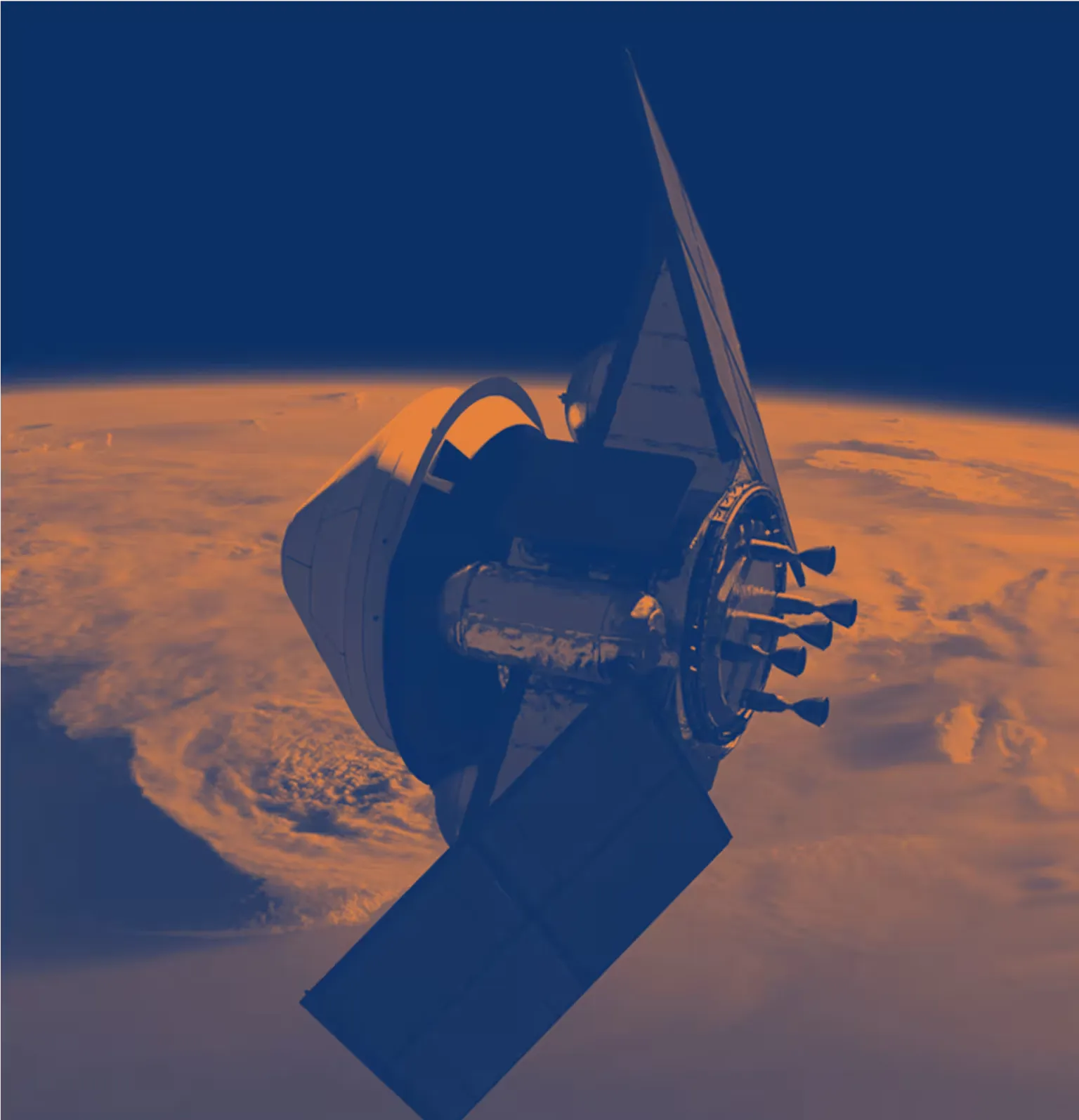
Free-flying orbital production satellite with an integrated reentry capsule. It processes materials in microgravity independently of any space station, then returns the finished product to Earth under parachute.
Varda manufactures materials in orbit and returns them by capsule from El Segundo. On Sept. 30, 2026 it announced a $251 million Series D led by Lux Capital and Natural Capital, taking company-stated capital to $598 million.
Latest update Oct 20, 2026
01
Payload reported a $1.6 billion valuation and Reuters reported the same figure from the company; neither that reporting nor the press release labels it pre-money or post-money. On Oct. 1 it lofted W-8 and W-9 together on SpaceX Transporter-18. The company counts six successful reentries: five recovered capsules plus W-4, whose mission page labels May 10, 2026 as the reentry date while describing a disposal deorbit, not a recovery. W-8 and W-9 had not been described as returned. On Oct. 19 the W-7 page still said scheduled, with launch date Oct 2026 and no day. United Therapeutics remains the first public-pharma processing partner, with first formulation flights still aimed at 2027.
varda.comUpdated Oct 19, 2026
02
2026
Gunter's Space Page lists W-Series 7 as a 2026 Falcon 9 launch from Vandenberg SLC-4E. Varda's own platform page still ends at W-6, and as of September 15, 2026 the company had not announced a launch date, rideshare, or payload. The August 3, 2026 Dolsten board appointment said Varda plans ten launches and reentries through 2027.
Remainder of 2026
2027
Begin processing small-molecule treatments for rare pulmonary disease aboard W-Series spacecraft under the collaboration announced in May 2026, using microgravity's effect on crystallization to chase formulations with better stability and bioavailability. CEO Will Bruey has said he expects the first United Therapeutics drug to fly in 2027; the partnership covers multiple low Earth orbit missions and is the first time a public pharmaceutical company has funded commercial space manufacturing from its own balance sheet.
2028
Increase the number of W-Series flights per year now that the spacecraft is built end to end in El Segundo, pursuing the company's stated goal of making reentry as common as launch. Under its expanded reentry agreement with Southern Launch, Varda is aiming to reach near-monthly capsule returns at the Koonibba Test Range by the end of 2028. The August 2026 Dolsten announcement said ten launches and reentries are planned through 2027, and a September 10, 2026 hiring post for a W-Series Vehicle Scheduler cited a target of 12+ vehicles per year. Two recoveries flew in the first half of 2026; W-7 had not launched as of September 15.
03
Falcon 9 lifted off at 7:04 a.m. EDT (11:04 UTC) on Oct. 20 from Cape Canaveral with 32 payloads, including SpaceX's second Starfall reentry capsule and Varda's W-7. Space.com reported the booster, on its 19th flight, landed on A Shortfall of Gravitas. Spaceflight Now's prelaunch manifest listed four ICEYE satellites; the accounts opened here did not confirm that every payload had separated.
www.space.com spacenews.com spaceflightnow.com + SpaceX+ ICEYE
Varda lofted W-8 and W-9 together on SpaceX Transporter-18 from Vandenberg on Oct. 1, 2026, the first time it has put two W-series vehicles on one rocket. SpaceX confirmed the rideshare deployment sequence at 3:41 p.m. ET; Via Satellite said the flight carried two Varda reentry vehicles among 130 payloads. Varda said both capsules carry commercial and government hypersonic-test payloads, including Canopy Aerospace Smart TPS-F on W-8 and Syensqo heatshield samples on W-9.
www.prnewswire.com www.satellitetoday.com www.prnewswire.com
Varda Space Industries announced on August 3 that Mikael Dolsten, who spent 16 years as Chief Scientific Officer and President of Pfizer R&D overseeing more than 36 medicine and vaccine approvals, is joining its board of directors. Varda said Dolsten's experience translating early-stage science into approved medicines will support its push to commercialize space-based pharmaceutical manufacturing, coming three months after publicly traded United Therapeutics became the first pharma company to fund its own microgravity drug-development program on Varda's W-Series capsules.
04
Free-flying orbital production satellite with an integrated reentry capsule. It processes materials in microgravity independently of any space station, then returns the finished product to Earth under parachute.

The W-Series capsule sold as a flight environment rather than a factory: a repeatable, low-cost way for defense and civil customers to test thermal protection materials, sensors, and guidance systems in real hypersonic reentry conditions.
05
(Asparouhov told Reuters Sept. 30, 2026; about 18 percent with pharmaceutical backgrounds). Caplight previously 248; Wikipedia still cites 140 as of 2025
revenue from government reentry testbed contracts including a $48M AFRL Prometheus IDIQ, Navy payloads, pharmaceutical partnerships, and an early-stage semiconductor materials agreement
(Forge figure including a $251M Series D on February 3, 2026). Disclosed rounds through Series C totaled $328M; Varda has not issued a Series D press release.
(W-1 through W-6), 5 capsules recovered (W-4 ended in a disposal burn, not a landing)
(Series D, February 2026, per Forge and PitchBook; up from ~$500M at the July 2025 Series C). Investor names undisclosed.
(W-1 through W-6, plus W-8 and W-9 on Oct. 1, 2026); 5 capsules recovered; W-4 deorbited May 10, 2026 without recovery; W-7 still scheduled and unflown
06
Operating status
Operational; W-7 launched 20 Oct 2026
Space.com reported on Oct. 20, 2026 that Varda's W-Series 7 capsule went up on Bandwagon-5 with a PROTAC solubility experiment described in the prelaunch Spaceflight Now account. Separation and a recovery date were not confirmed. W-8 and W-9 remain the Transporter-18 pair. The company W-7 page was not re-read after liftoff.
Pharmaceutical Processing in Microgravity
Contract manufacturing and formulation research for drug companies that want crystal structures and morphologies microgravity makes accessible, sold as processing slots aboard W-Series missions. The United Therapeutics collaboration covers multiple flights for rare pulmonary disease treatments.
Government Hypersonic Reentry Testbed
Selling the capsule itself as a low-cost, high-cadence flight environment for hypersonic and reentry experiments, funded through the Air Force Research Laboratory's Prometheus program and flown for NASA, the U.S. Navy, and defense customers.
Microgravity Research Services
General orbital processing and materials-science capacity for research customers who need a free-flying platform rather than a slot on a crewed space station.
Semiconductor Materials Manufacturing
A multi-flight joint development agreement with United Semiconductors, signed in October 2025, to grow bulk semiconductor and semimetal alloy crystals in microgravity aboard W-Series missions for autonomous-systems, sensing, AI, and defense hardware customers. Still early-stage; no flight-specific revenue has been disclosed.
07
How past announced dates turned out.
0/1announced date hit on time
Resolve the W-4 capsule's return
Target 2026 · Resolved May 10, 2026
W-4's reentry attempt, waved off in December 2025 for propellant-feed system evaluation, was never rescheduled. Varda closed out the mission with a disposal burn on May 10, 2026 instead of a capsule recovery, ending W-4's flight without returning its payload. The company said the extra year of data from the standoff informed the W-5 and W-6 missions that followed.
08
2026
Space.com reported on Oct. 20, 2026 that Varda's W-Series 7 capsule went up on Bandwagon-5. Spaceflight Now's prelaunch account says W-7 carries a PROTAC solubility experiment and is smaller than Starfall. Neither account confirmed separation or a recovery date.
CEO tells Space.com three capsules could return before Christmas
Space.com published on Oct. 13 an Oct. 7 interview with chief executive Will Bruey. He said another vehicle was due later in October, and the article says that if it launches nominally, that vehicle plus the Transporter-18 pair would come down before Christmas at Koonibba through Southern Launch. The article says Varda aims for seven further missions in 2027, two in each of the first two quarters and three together in the third. It also says the company had 286 employees and planned to hire 100 by the end of 2027. These are interview statements, not a recovery notice.
W-7 assigned to Bandwagon-5, still unflown on the company page
Spaceflight Now's Oct. 19 update says SpaceX scrubbed Bandwagon-5 that Monday for recovery-zone weather and is targeting an Oct. 20 window that opens at 6:30 a.m. EDT from SLC-40, with Varda W-7 aboard. The reporter calls W-7 Varda's ninth reentry capsule launched and says it is about three times smaller than Starfall. Varda's W-7 page, read before that window, still says scheduled and lists only Oct 2026, with a PROTAC solubility experiment and no rocket name or recovery date.
Announces $251M Series D; company total $598M
On Sept. 30, 2026 Varda issued a company press release for a $251 million Series D led by Lux Capital and Natural Capital, with Founders Fund, Khosla Ventures, Caffeinated Capital, General Catalyst, 8090 Industries, Giant Step and Also Capital. The company said total capital raised is $598 million. Payload reported a $1.6 billion valuation that the PR did not state. Secondary-market databases had listed a February 2026 close before this announcement.
W-8 and W-9 fly together on Transporter-18
On Oct. 1, 2026 Varda launched W-8 and W-9 together on SpaceX Transporter-18 from Vandenberg, the first time two W-series vehicles flew on one rocket. Via Satellite said SpaceX confirmed the rideshare deployment sequence at 3:41 p.m. ET. Varda said W-8 carries Canopy Aerospace Smart TPS-F and AFRL Prometheus heatshield work, and W-9 carries a government-funded hypersonic navigation payload plus Syensqo heatshield samples.
Series D reported at $251M / $1.58B; W-7 still unflown
Forge, PitchBook and Caplight all list a February 2026 Series D of about $251M at a $1.58B post-money valuation, taking reported capital raised to roughly $572M. Varda has not issued a Series D press release, and investor names are undisclosed. Separately, Gunter's Space Page lists W-Series 7 as a 2026 Falcon 9 rideshare from Vandenberg SLC-4E; as of September 15, 2026 no launch had been announced and the company's platform page still ends at W-6.
Ex-Pfizer R&D chief Mikael Dolsten joins the board
Varda announces on August 3, 2026 that Mikael Dolsten, who spent 16 years as Chief Scientific Officer and President of Pfizer R&D overseeing more than 36 medicine and vaccine approvals, is joining its board of directors - a biopharma-credibility signal three months after United Therapeutics became the first pharma company to fund its own microgravity drug-development program on Varda's W-Series capsules.
W-6 flies as a hypersonic testbed for NASA and defense customers
Launched in March 2026 and recovered at Koonibba on May 19, 2026, W-6 is optimized for atmospheric flight physics rather than pharmaceutical processing. Funded through the Air Force Research Laboratory's Prometheus program, it carries NASA and defense payloads and validates next-generation thermal protection systems and autonomous navigation during hypersonic reentry.
2026
United Therapeutics signs the first commercial pharma partnership
In May 2026 Varda and United Therapeutics announce a collaboration to develop microgravity-enabled formulations of small-molecule treatments for rare pulmonary disease across multiple low Earth orbit missions. It is one of the first times a publicly traded pharmaceutical company has invested its own capital in commercial space-based drug manufacturing rather than relying on government-funded research.
W-4 mission ends without recovery
After nearly a year on orbit while Varda evaluated the propellant-feed problem that forced it to wave off the reentry burn in December 2025, the company closes out the W-4 demonstration mission with a disposal burn on May 10, 2026 instead of a capsule recovery. Varda says the extra year of flight data informed the W-5 and W-6 missions that followed.
Leases former Mattel plant in El Segundo to scale production
Varda signs a lease for a 205,400-square-foot former Mattel R&D building about a mile from its headquarters, giving it a third El Segundo site to build production and assembly capacity as it works toward roughly ten more spacecraft built by the end of 2027.
W-5 returns on Varda's own vertically integrated bus
Launched November 28, 2025, W-5 lands at Koonibba on January 29, 2026 carrying a U.S. Navy payload. It is the first time Varda has flown a complete mission lifecycle, from orbital operations through reentry, on hardware it designed and built end to end.
2025
Varda and United Semiconductors agree to grow semiconductor crystals on orbit
In October 2025 Varda signs a multi-flight joint development agreement with United Semiconductors, which had already grown semiconductor crystals aboard the ISS National Lab, to produce bulk semiconductor and semimetal alloy crystals in microgravity aboard W-Series missions for autonomous-systems, sensing, AI, and defense hardware customers.
W-4 debuts the in-house bus and the FAA's first reentry operator license
W-4 launches in June 2025 on SpaceX's Transporter-14 carrying the first spacecraft bus Varda built itself rather than buying from Rocket Lab, and flies under the first reentry vehicle operator license the FAA has ever issued. Its return was deferred in December 2025 while the company evaluated the propellant feed system, and Varda has described W-4 as a demonstration mission with customer flights taking priority.
W-2 and W-3 return to Australia
Varda shifts recovery operations to Southern Launch's Koonibba Test Range in South Australia. W-2 lands in February 2025 and W-3 follows in May 2025, giving the company two Earth returns in roughly two months and establishing a repeatable recovery cadence.
2024
After months of regulatory delay in obtaining reentry approval, the W-1 capsule lands at the Utah Test and Training Range in February 2024 with its ritonavir sample intact. Varda later publishes results showing it recovered the metastable Form III of the drug, a structure difficult to produce on the ground.
2023
2021
Founded to manufacture in orbit
Will Bruey, who worked on Dragon at SpaceX, and Delian Asparouhov, a partner at Founders Fund, found Varda in El Segundo with a single premise: microgravity is a manufacturing environment worth paying for, and the missing piece is a cheap way to bring the product home.
09
$579Mdisclosed across 5 rounds with a stated amount
Cumulative disclosed raise · dated rounds
Seed
2021
Lux Capital, Founders Fund, Khosla Ventures
Series A
2021
Khosla Ventures (lead), Lux Capital, Founders Fund, Caffeinated Capital
Series B
Apr 2024
Caffeinated Capital (lead), Founders Fund, Khosla Ventures, Lux Capital, Also Capital
Series C
Jul 2025
Natural Capital and Shrug Capital (co-leads), Founders Fund, Peter Thiel, Khosla Ventures, Caffeinated Capital, Lux Capital, Also Capital
Series D
Sept. 30, 2026
$251M announced Sept. 30, 2026; company-stated total capital $598M. Payload and Reuters reported a $1.6B valuation that was not labeled pre- or post-money
Lux Capital and Natural Capital (co-leads), Founders Fund, Khosla Ventures, Caffeinated Capital, General Catalyst, 8090 Industries, Giant Step, Also Capital