Active
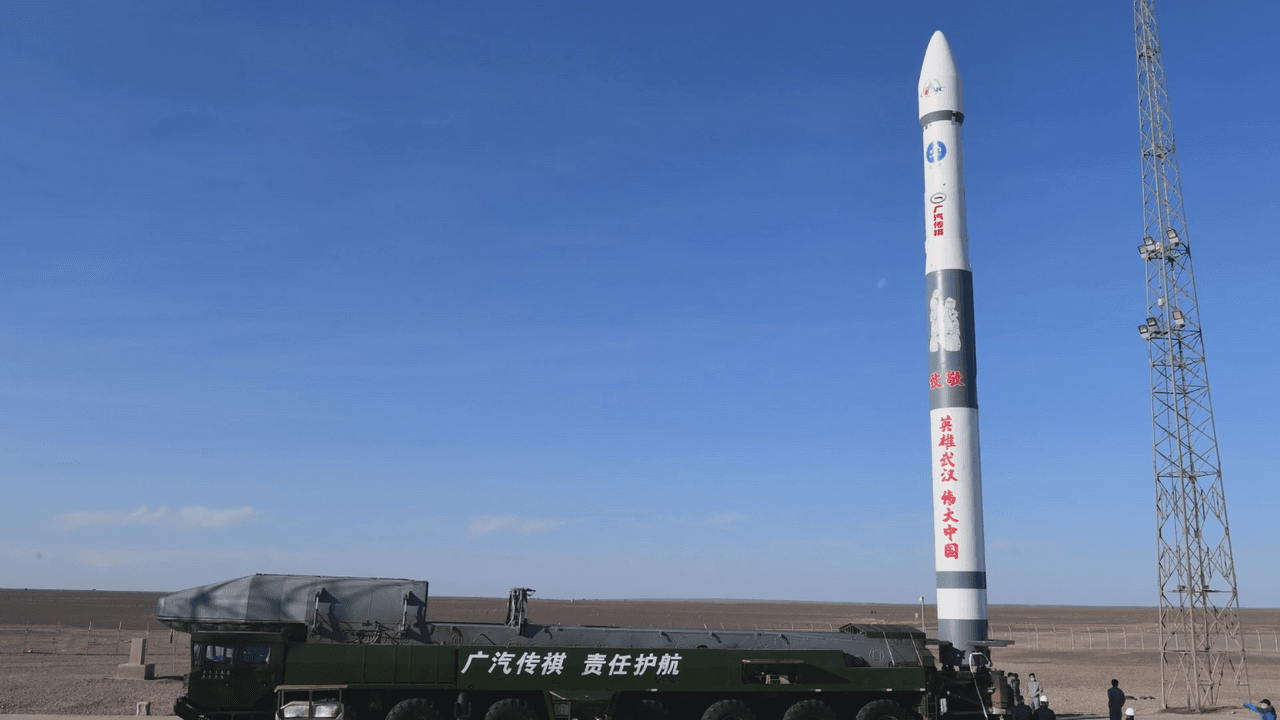
Kuaizhou-1A
Small-lift, solid-propellant launch vehicle (with a liquid upper stage) designed for rapid, low-cost small-satellite missions that can be prepared in hours. The upgraded 1A Pro adds a wider fairing and higher payload.
Majority Wuhan State-OwnedFounded 2016🇨🇳Wuhan, Hubei, ChinaCEO Zhang Di (Chairman)
Kuaizhou Aerospace (快舟航天空间科技), founded in 2016 in Wuhan as CASIC's commercial launch arm under the name ExPace (航天科工火箭技术), markets the solid-propellant Kuaizhou ('fast vessel') family - derived from missile technology - for rapid, low-cost small-satellite launches that can be readied in hours.
Latest update Sep 18, 2026
01
In April 2026 control shifted: Wuhan Investment Holding Group's Wuchuangxing Aerospace fund bought a 29.5904% stake from CASIC subsidiary China Aerospace Sanjiang for about 3.3 billion yuan (~$461M, implying an ~11.15B-yuan/~$1.56B valuation), becoming the company's largest shareholder as Sanjiang's stake fell from 56.43% to 26.84%. On July 31, 2026 the company completed a business-registration name change from ExPace to Kuaizhou Aerospace Space Technology Co., dropping CASIC branding entirely. Losing central-state-owned-enterprise status forces a 6-12 month business-license re-qualification that has pushed the STAR Market (科创板) IPO filing into late 2026 or early 2027. The workhorse Kuaizhou-1A (and its upgraded 1A Pro) has flown 31 times, most recently launching a pair of maritime VDES navigation satellites on December 5, 2025 - still no new 1A mission as of September 18, 2026, a gap of more than nine months. The larger Kuaizhou-11 flew its seventh mission on September 17, 2026 from Jiuquan, putting Tianyi-51 and Tianyi-52 into orbit on vehicle Y3, the first launch under the Kuaizhou Aerospace brand and the sixth straight success since the 2020 maiden failure. Across all variants the family has logged 40 orbital attempts. All-solid expendable vehicles face intensifying pressure from reusable kerolox rivals, and the Mingfeng liquid-engine line plus the larger Kuaizhou-21/-31 concepts remain earlier-stage with no maiden-flight dates announced.
english.news.cnUpdated Sep 18, 2026
02
2026
Kuaizhou-1A/1A Pro has not flown since its 31st mission (the VDES maritime-navigation pair) on December 5, 2025 - now more than nine months of quiet for a vehicle marketed on hours-long, high-tempo launch readiness. The latest flown vehicle was a Kuaizhou-11. Watch for the next 1A mission to confirm the cadence claim still holds.
2026-2027
Kuaizhou-11 Y3 succeeded from Jiuquan on September 17, 2026 with Tianyi-51 and Tianyi-52. No follow-on Kuaizhou-11 mission, payload, or window has been posted as of September 18, 2026. A next flight would show whether the post-rebrand 11 cadence can hold after three 2026 missions (March, June, September).
2026-2027
Advance the much larger solid Kuaizhou-21 (~20 t to LEO) and Kuaizhou-31 (~70 t to LEO) to move into medium- and heavy-lift constellation deployment. An earlier informal 2025 debut target for Kuaizhou-21 has passed with no confirmed maiden-flight date yet published. Wikipedia still lists a 2025 projected first flight that has not happened as of September 18, 2026.
2026+
Counter the mounting cost pressure from reusable rivals as CASIC's Mingfeng liquid-engine line and reusable-launch concepts remain earlier-stage, with no orbital reusable vehicle or maiden-flight date yet named. Industry reporting still flags Mingfeng-1's lack of a maiden flight as a potential IPO-review weakness. Kuaizhou Aerospace's all-solid, expendable lineup has not announced a comparable recovery demonstration.
2027
Follow through on the April 2026 ownership realignment and the July 2026 rename to Kuaizhou Aerospace by formally filing for a Shanghai STAR Market listing. The filing has slipped: shedding central-SOE status requires a 6-12 month business-license re-qualification. Company-adjacent reporting in August 2026 still pointed to a late-2026 or early-2027 filing rather than an imminent submission, and no filing has been announced as of September 18, 2026.
03
ExPace launched a Kuaizhou-11 solid rocket from the Jiuquan Satellite Launch Center at 11:58 a.m. Beijing time on June 17, carrying the CentiSpace-05 group of low-Earth-orbit GNSS-augmentation satellites built by Beijing-based Future Navigation. U.S. tracking indicated the payloads reached orbit on what was the sixth flight of the Kuaizhou-11 family, though Chinese authorities were unusually slow to confirm the result and unofficial reports raised questions about one or more satellites. The CentiSpace network is planned to grow to roughly 160 satellites to sharpen positioning accuracy.
04
Small-lift, solid-propellant launch vehicle (with a liquid upper stage) designed for rapid, low-cost small-satellite missions that can be prepared in hours. The upgraded 1A Pro adds a wider fairing and higher payload.
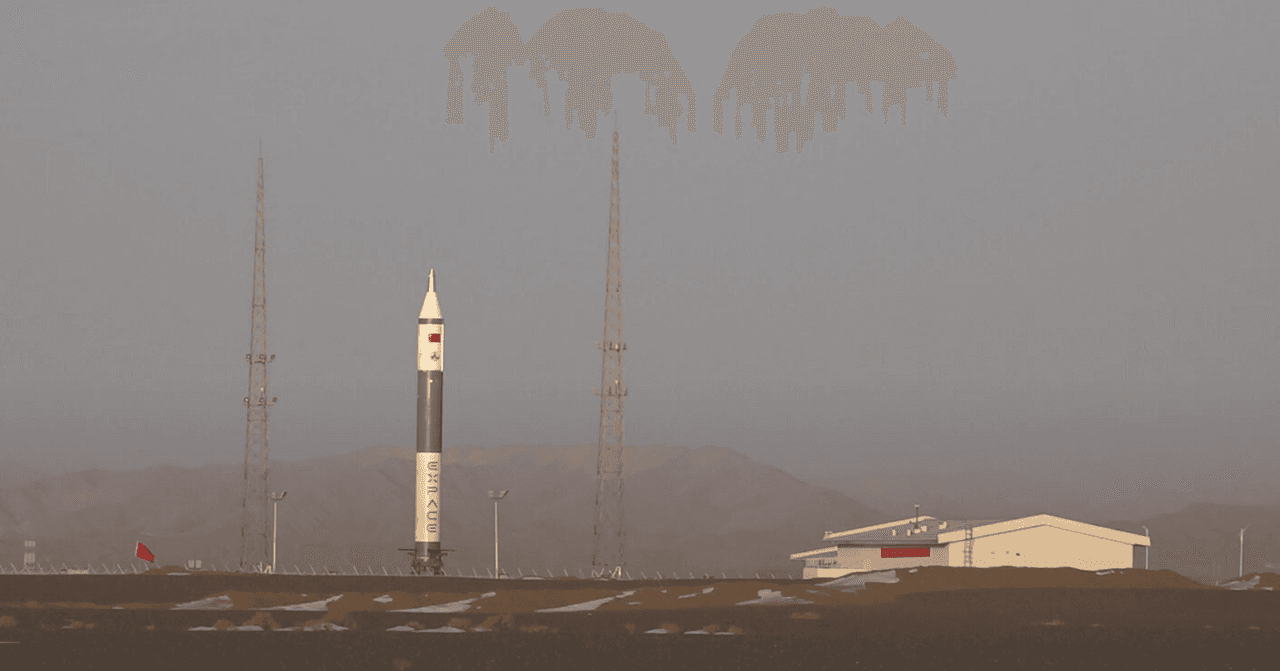
Larger solid-propellant launch vehicle with a 2.2 m diameter and 2.2–2.6 m fairing, offering roughly one tonne to a 700 km sun-synchronous orbit for quick-response constellation launches.
Next-generation solid-propellant launch vehicle in development, stepping up from the flight-proven Kuaizhou-11 to roughly 20 tonnes to LEO - in the Falcon 9 payload class - for larger constellation and government missions.
Largest planned member of the Kuaizhou family, a heavy-lift solid-propellant rocket targeting up to roughly 70 tonnes to LEO for large-constellation deployment and government payloads.
05
now a Wuhan-state-capital-led company still majority government-owned, moving toward a market-oriented IPO structure
Kuaizhou-11 Y3 on Sept 17, 2026 was the 40th
(2 failures); last flight Dec 5, 2025 - more than nine months with no 1A mission as of Sept 18, 2026
(1 failure - 2020 maiden); 6 straight successes since, including Y3 on Sept 17, 2026
06
Operating status
Operational
Kuaizhou Aerospace (renamed from ExPace on July 31, 2026) flies the operational solid-fuel Kuaizhou-1A/1A Pro and Kuaizhou-11. Kuaizhou-1A last flew December 5, 2025 and has now gone more than nine months without a mission. Kuaizhou-11 Y3 lifted off from Jiuquan on September 17, 2026 with Tianyi-51 and Tianyi-52, the seventh Kuaizhou-11 flight and the first under the new brand. No follow-on Kuaizhou-11 or 1A window has been posted as of September 18, 2026. The STAR Market IPO filing remains slipped into late 2026 or early 2027 while licenses are re-qualified after the loss of central-SOE status. The Mingfeng reusable liquid line and Kuaizhou-21/-31 remain earlier-stage against reusable kerolox rivals that have already demonstrated orbital-stage recoveries in 2026.
Rapid-response, low-cost solid-fuel small-satellite launches on Kuaizhou-1A and the upgraded 1A Pro for Chinese commercial and government customers, plus occasional international payloads.
One-tonne-class solid-fuel launches on Kuaizhou-11 for larger small satellites and constellation deployment to sun-synchronous and low Earth orbit. The vehicle's seventh flight on September 17, 2026 placed Tianyi-51 and Tianyi-52 in orbit from Jiuquan, the first launch under the Kuaizhou Aerospace brand and the sixth straight success since the 2020 maiden failure.
07
How past announced dates turned out.
1/1announced date hit on time
Fly Kuaizhou-11 Y3, the first launch under the new brand
Target 2026 · Resolved Sep 17, 2026
Kuaizhou-11 Y3 lifted off from Jiuquan at 10:40 a.m. Beijing Time on September 17, 2026 and placed Tianyi-51 and Tianyi-52 into their planned orbits. CGTN reported it as the seventh Kuaizhou-11 flight, the first under the Kuaizhou Aerospace name.
08
2026
Kuaizhou-11 Y3 flies the first mission under the new brand
On September 17, 2026, Kuaizhou-11 Y3 lifted off from Jiuquan at 10:40 a.m. Beijing Time and placed Tianyi-51 and Tianyi-52 into their planned orbits. Xinhua and CGTN reported it as the seventh Kuaizhou-11 flight and the first launch after the July 31, 2026 rename to Kuaizhou Aerospace, extending the vehicle's streak to six straight successes since the 2020 maiden failure. Wikipedia's Kuaizhou launch list records it as the family's 40th orbital attempt.
Kuaizhou-11 Y3 clears factory review for first post-rebrand launch
On August 27-29, 2026, Kuaizhou Aerospace said the Kuaizhou-11 Y3 vehicle had completed assembly and testing at its Wuhan base and passed factory quality review. The rocket is to move to Jiuquan Satellite Launch Center for a dual-satellite mission carrying Tianyi-51 (Caiyun SAR01, a C-band radar satellite for Yunnan's Caiyun constellation) and Tianyi-52. No official launch window has been announced. It would be the company's first flight since the July 31, 2026 rename and the seventh Kuaizhou-11 attempt.
On July 31, 2026, the company completes a business-registration name change from ExPace (Aerospace Science and Industry Rocket Technology Co.) to Kuaizhou Aerospace Space Technology Co., dropping CASIC branding entirely following the April 2026 shift to Wuhan state-capital control. Losing central-state-owned-enterprise status also forces a 6-12 month business-license re-qualification process that delays the previously targeted STAR Market IPO filing.
Wuhan state capital becomes largest shareholder
In April 2026, Wuhan Investment Holding Group's Wuchuangxing Aerospace venture fund wins a Beijing property-exchange auction for a 29.5904% stake in ExPace, paying about 3.3 billion yuan (~$461M) to CASIC subsidiary China Aerospace Sanjiang - implying an ~11.15B-yuan (~$1.56B) valuation. Sanjiang's stake falls from 56.43% to 26.84%, handing control to Wuhan municipal state capital and setting up a targeted STAR Market IPO filing in late 2026 or early 2027.
Kuaizhou-11 sixth flight succeeds
On June 18, 2026, Kuaizhou-11 lifts off from Jiuquan with the CentiSpace-1 Group 05 navigation-augmentation satellites. Roughly a day of official silence after liftoff sparked failure speculation, but U.S. Space Force tracking cataloged the payloads in orbit and Xinhua confirmed the mission successfully deployed the satellites - the vehicle's fifth straight success since its 2020 maiden-flight failure.
On March 16, 2026, Kuaizhou-11 conducts its fifth flight from Jiuquan, placing eight satellites into orbit and underscoring its role as China's quick-response solid launcher.
2025
On December 5, 2025, Kuaizhou-1A (Pro variant) launches its 31st mission from Jiuquan, placing the VDES-A and VDES-B maritime navigation satellites (Innovation Academy for Microsatellites, Chinese Academy of Sciences) into orbit to prove out a planned VHF Data Exchange System constellation for ship traffic management.
On July 31, 2025, Kuaizhou-1A flies its 30th mission - and the 36th of the broader Kuaizhou series - launching Pakistan's PRSC-EO2 remote-sensing satellite from Xichang as a return-to-flight after a March 2025 anomaly.
2024
2022
2020
2017
2016
09
$880Mdisclosed across 3 rounds with a stated amount
Cumulative disclosed raise · dated rounds
Strategic investment
2017
CASIC and eight Chinese institutional investors (Shanghai United Assets and Equity Exchange)
Series B-II
2022-06-28
Seven undisclosed institutional investors, for R&D on the Kuaizhou solid launch vehicle series and liquid-propellant launcher technology
Strategic equity transfer
2026-04
~$461M (~3.3B yuan) for a 29.5904% stake
Wuhan Investment Holding Group (via its Wuchuangxing Aerospace fund), buying from China Aerospace Sanjiang (CASIC)