In Development
Aurora Powerhouse
Oklo's fast-fission powerhouse product line is designed for build-own-operate deployment, targeting customers that want firm clean power in a smaller footprint than traditional large reactors.
Oklo is developing fast-fission power plants under its Aurora product line while building a vertically integrated nuclear business around power sales, fuel recycling, and radioisotopes.
Latest update Oct 19, 2026
01
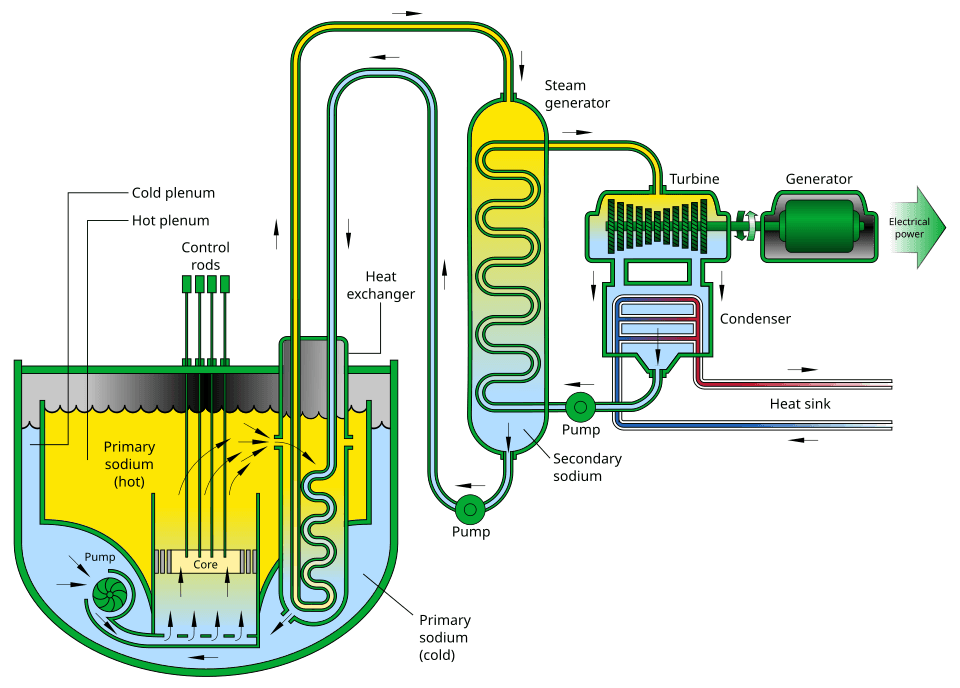
Aurora units are designed to produce 15-75 MWe and run on fresh, recycled, or down-blended fuel, targeting customers such as data centers, industrial sites, military facilities, utilities, and remote communities. Its first plant, Aurora-INL at Idaho National Laboratory, is advancing under DOE's Reactor Pilot Program - the DOE approved its Preliminary Documented Safety Analysis on June 11, 2026, leaving the final Documented Safety Analysis as the last safety-basis step before authorization. Oklo is deepening vertical integration through the June 2026 acquisitions of Oak Ridge precision manufacturer ARMEC and sodium-systems engineering firm Creative Engineers, plus its May 2026 selection for DOE's Surplus Plutonium Utilization Program, while Atomic Alchemy builds U.S. isotope supply around the Groves test reactor in Lockhart, Texas, which reached first criticality on August 5, 2026.
bloomberg.comUpdated Sep 19, 2026
Analysis · 6 min read · Jul 4, 2026The long view on Oklo: strategy, technology and what to watch02
2026-2027
With first criticality achieved on August 5, 2026, Oklo's next step is low-power testing and ascension to full power at the Groves Isotope Test Reactor in Lockhart, Texas, ramping toward R&D-scale isotope production over the following year. On its August 7, 2026 earnings call, management said it now expects Oklo's first isotope revenue in early 2027, and that it is more likely to come from the NRC-licensed Idaho Radiochemistry Laboratory than from Groves. Oklo's newsroom and isotopes page still describe Groves as having reached criticality in under a year, with no later public update on power ascension as of September 19, 2026.
2026-2027
With the DOE's Preliminary Documented Safety Analysis approved on June 11, 2026 - the third of four major Reactor Pilot Program authorization steps - and a November 2025 binding Siemens Energy contract closing out major long-lead power-conversion equipment procurement, Oklo's near-term focus is securing the final Documented Safety Analysis, the last safety-basis document before DOE authorizes operation, while completing construction at Idaho National Laboratory ahead of fuel loading and first power. As of September 19, 2026, the final Documented Safety Analysis has not yet been approved; on its August 7, 2026 earnings call Oklo raised its full-year 2026 capital-expenditure guidance to $400-500 million to accelerate Aurora-INL procurement and grid-interconnection work while reaffirming a 2028 commercial start-up target.
Late 2027-2028
Oklo is targeting late 2027-2028 for its first Aurora deployment at Idaho National Laboratory, which would make it one of the first commercial advanced fast-fission plants in the U.S. Management reaffirmed the 2028 commercial start-up target on its August 7, 2026 earnings call, and no later public change to that date has been issued as of September 19, 2026.
2027
TargetCycle 02 or EIT through December 31, 2027
Early 2030s
The Tennessee recycling facility is intended to become the first phase of Oklo's broader advanced fuel center, with metal fuel production targeted for the early 2030s after regulatory review. Oklo's fuel page still lists the Advanced Fuel Center in Tennessee as the recycling-plus-isotope site, and a June 2026 MOU with TRISO fuel maker Standard Nuclear remains the first third-party offtake pathway for recycled material. No later construction or NRC-application milestone has been published as of September 19, 2026.
03
On October 13 Oklo said it will advance Groves-2 Forge, a pilot meant to irradiate targets and process isotopes, starting with lutetium-177, using experience from the Groves test reactor. The company tied the plan to DOE's Nuclear Energy Launch Pad, whose August 24 selection named Oklo but did not describe this facility. Oklo said a move to commercial scale still requires the appropriate NRC licenses.
The Federal Energy Regulatory Commission issued a September 24 order in docket EL26-101 denying Oklo's complaint against PJM Interconnection. FERC eLibrary lists accession 20260924-3089 as an Order Denying Complaint. Utility Dive reported that Oklo failed to show PJM violated its tariff when it withdrew a 750 MW mixed-technology Virginia project from Cycle 01, and that modeling deficiencies remained after PJM's May notice. The project combines 150 MW of advanced nuclear with 300 MW of fuel cells and 300 MW of gas-fired generation. Oklo can refile in Cycle 02 or use PJM's Expedited Interconnection Track, open through December 31, 2027. Oklo has not posted a comment.
Oklo filed an emergency FERC complaint on August 28, 2026 after PJM Interconnection withdrew a 750 MW mixed project (150 MW advanced nuclear plus 300 MW fuel cells and 300 MW gas) from Cycle 01 on August 3, Utility Dive and the American Nuclear Society reported. Oklo spokesperson Bonita Chester said the queue position is for an early-stage Virginia project tied to the Possum Point and Ladysmith substations, not a deployment announcement, and that the withdrawal could delay the project by at least 14 months. PJM was directed to respond by September 4.
Oklo filed an emergency complaint at FERC on August 28, 2026 after PJM Interconnection withdrew a 750 MW mixed project - 150 MW nuclear, 300 MW fuel cells, and 300 MW gas - from Cycle 01, a step Oklo says would delay its Meta-backed 1.2 GW Pike County, Ohio campus by at least 14 months. The complaint (EL26-101) asks FERC to reinstate the project in the queue; PJM is due to respond by September 4. The Ohio campus is one of Oklo's flagship data-center nuclear sites.
Ontario Premier Doug Ford said on August 24 that Canada should be ready to cut off US access to electricity and critical minerals, naming high-grade nickel and uranium refined at Cameco's Blind River facility, the world's largest commercial uranium refinery, after the US imposed 50% tariffs on about $20 billion of Canadian goods. Canada supplied 32% of the uranium delivered to US reactor operators in 2025, and the threat pushed uranium prices to a seven-month high on August 27, lifting Oklo and NuScale shares along with the broader US nuclear supply chain on bets that supply-chain risk favors domestic small modular reactor developers.
Oklo reported second-quarter 2026 revenue of $1.21 million, ahead of analyst estimates, alongside a wider net loss of $48.5 million versus $24.7 million a year earlier, and ended the quarter with $3.0 billion in cash and marketable securities. On its August 7 earnings call the company reaffirmed a 2028 commercial start-up target for its Aurora-INL powerhouse and raised its full-year 2026 cash-flow-use guidance.
Oklo's privately financed Groves Isotope Test Reactor in Lockhart, Texas reached first criticality at 9:19 p.m. ET on August 5, less than a year after groundbreaking, achieving a controlled, self-sustaining nuclear chain reaction. It is the fifth reactor to reach criticality under the Department of Energy's Reactor Pilot Program and the first to do so on private land rather than national-lab infrastructure.
Oklo's board appointed five internal leaders as executive officers effective July 27: Alexandra Renner as Chief Product Officer, John Hanson as Chief of Staff, Vivek Narayanadas as General Counsel and Corporate Secretary, Erik Lassen as Senior Vice President of Engineering, and Michael Dixon as Vice President of Accounting and Controller. Oklo said the moves involve no new compensation arrangements as the company scales its Aurora powerhouse and Atomic Alchemy isotope businesses toward commercial operation.
Oklo said on July 23 that the U.S. Department of Energy granted startup authorization for its Groves Isotope Test Reactor in Lockhart, Texas, the final step in the DOE Reactor Pilot Program's authorization process, clearing the facility to bring in fuel, run startup tests, and proceed toward first criticality. The company said Groves went from groundbreaking to startup authorization in just over 10 months, completing engineering, construction, commissioning, personnel training, and DOE readiness reviews across all core requirements. Groves is a low-power test reactor meant to seed Oklo's Atomic Alchemy isotope business, which targets domestic production of isotopes for cancer care, manufacturing, research, and national security.
The Trump administration is preparing a roughly $200 million federal initiative - alongside Microsoft and Nvidia - to accelerate the design, licensing and construction of advanced reactors to power AI data centers, naming Oklo and X-energy among the reactor suppliers, Bloomberg reported. About $60 million over three years would flow to Department of Energy national labs and universities including UT Austin. Oklo shares rose as much as roughly 10% and X-energy-linked names climbed in after-hours trading on the report.
The U.S. Department of Energy approved the Documented Safety Analysis for Oklo's Groves Isotope Test Reactor in Lockhart, Texas, the facility's final safety-basis document, advancing the project under the DOE's Reactor Pilot Program. The remaining steps are a DOE readiness review and startup approval, after which the facility can load fuel and begin startup testing. Oklo is targeting first criticality for Groves in July 2026.
Oklo and Centrus Energy signed a letter of intent on June 18 for Centrus to supply domestic high-assay low-enriched uranium (HALEU) to power up to five of Oklo's Aurora powerhouses for multiple years, with deliveries slated to begin in 2029 - one of the first large-scale commercial HALEU supply agreements, and one that could include prepayments from Oklo. The fuel would support Oklo's planned 1.2-gigawatt Clean Energy Campus in southern Ohio. Separately, Oklo signed a memorandum of understanding with Kiewit Nuclear Solutions to support engineering, procurement and construction planning for the initial Aurora deployments at the site.
Oklo entered a memorandum of understanding with TRISO fuel maker Standard Nuclear on June 16 to collaborate on nuclear fuel recycling and advanced fuel manufacturing, in what it called its first third-party offtake pathway for recycled material. The companies will jointly evaluate specifications, commercial terms, and delivery schedules for reprocessed uranium and uranium-transuranic streams from Oklo's planned recycling facility in Oak Ridge, Tennessee, which could feed Standard Nuclear's TRISO fuel production. Both firms were among five selected by the U.S. Department of Energy for advanced negotiations under its Surplus Plutonium Utilization Program.
The U.S. Department of Energy on June 11 approved the Preliminary Documented Safety Analysis for Oklo's Aurora powerhouse at Idaho National Laboratory, a major step on the authorization pathway under the department's Reactor Pilot Program. The review covered the project's hazard and accident analysis, safety controls, and design commitments for what would be Oklo's first commercial fast-fission plant, and Oklo shares rose roughly 5% on the news. The approval follows Oklo's June 4 close of its acquisition of Oak Ridge precision-manufacturing firm ARMEC, which added about 40 engineers and technicians.
Antares Nuclear's Mark-0 sodium heat-pipe microreactor achieved zero-power criticality at Idaho National Laboratory on June 4, 2026, becoming the first privately developed advanced reactor to reach that milestone under the Department of Energy's Reactor Pilot Program - a Trump executive-order initiative targeting at least three advanced reactor criticalities by July 4. The Mark-0 is fueled by HALEU TRISO compacts and uses a heat-pipe-cooled, fast-spectrum design initially targeting U.S. military bases, with commercial electricity sales targeted for late 2027 and full deployment by end of 2028 - at the same Idaho National Laboratory campus where Oklo is constructing its Aurora powerhouse under an NRC-issued combined construction and operating license. The DOE has selected eleven advanced reactor projects under the RPP, and the Antares milestone validates the regulatory testing infrastructure and fast-fission design path that underpins the broader U.S. advanced nuclear build-out.
04
Oklo's fast-fission powerhouse product line is designed for build-own-operate deployment, targeting customers that want firm clean power in a smaller footprint than traditional large reactors.
Oklo is developing an advanced fuel center to recycle used nuclear fuel and fabricate metal fuel for Aurora and other fast-reactor applications.
Oklo's isotope business combines the Idaho Radiochemistry Laboratory, a planned pilot reactor in Texas, and a future multi-reactor foundry to supply critical medical, industrial, research, defense, and space isotopes.
Oklo's planned isotope production and processing pilot, announced October 13, 2026. Oklo said it will combine reactor irradiation with hot-cell processing, including separation, recovery, packaging, and transportation, initially for lutetium-177. Commercial-scale production still requires NRC licenses. The August 24 NRIC Launch Pad selection named Oklo but did not describe this facility.
05
company overview; no census date
($1.21M Q2 2026 revenue, ahead of estimates - $0.8M engineering/consulting, $0.17M manufacturing/fabrication, and $0.24M other, all from the ARMEC and Creative Engineers acquisitions rather than power or isotope sales; $48.5M net loss, widened from $24.7M a year earlier). Management guided on the August 7, 2026 earnings call that first isotope revenue is expected in early 2027 from the Idaho Radiochemistry Laboratory rather than the newly critical Groves reactor, which is expected to ramp to R&D-scale production over the following year. No later quarterly update has been published as of September 19, 2026.
(Q2 2026: $1.6B cash & equivalents plus $1.4B marketable securities, up from $2.54B in Q1 2026), including ~$1.9B raised through 2026 ATM equity programs
06
Operating status
Pre-revenue
Company overview says around 400 employees, with no census date. As of 16 Oct 2026 the newsroom still tops at the 13 Oct Groves-2 release, then the 7 Aug Q2 update. No Cycle 02 or Expedited Interconnection Track filing, no Aurora-INL final Documented Safety Analysis, and no official Q3 earnings date are posted. November 10 is only an aggregator estimate. ANS on 15 Oct gives 15 MWt and Lockhart, Texas to the first Groves reactor, not to Groves-2, and gives Groves-2 no site, power, or schedule.
Power Purchase Agreements & Prepayments
Oklo's core business model is to build, own, and operate Aurora powerhouses and sell electricity or heat under long-term agreements. Current commercial traction includes a 12 GW master power agreement with Switch, a prepayment agreement with Meta for a planned 1.2 GW Ohio campus, and additional LOIs with Equinix, Diamondback Energy, and Prometheus.
Atomic Alchemy's March 2026 NRC materials license enables commercial isotope sales and processing activity from the Idaho Radiochemistry Laboratory. On its August 7, 2026 earnings call, management guided that first isotope revenue is expected in early 2027 from the Idaho Radiochemistry Laboratory rather than the newly critical Groves reactor in Texas, which is expected to ramp to R&D-scale isotope production over the following year.
Manufacturing & Engineering Services
Oklo's June 2026 acquisitions of ARMEC and Creative Engineers now generate Oklo's only reported commercial revenue ahead of power or isotope sales: $1.21M in Q2 2026 ($0.8M engineering/consulting, $0.17M manufacturing/fabrication, $0.24M other), which management says both businesses fund out of positive free cash flow while also supporting Aurora-INL engineering, procurement, and sodium-systems work.
Fuel-Cycle & Manufacturing Infrastructure
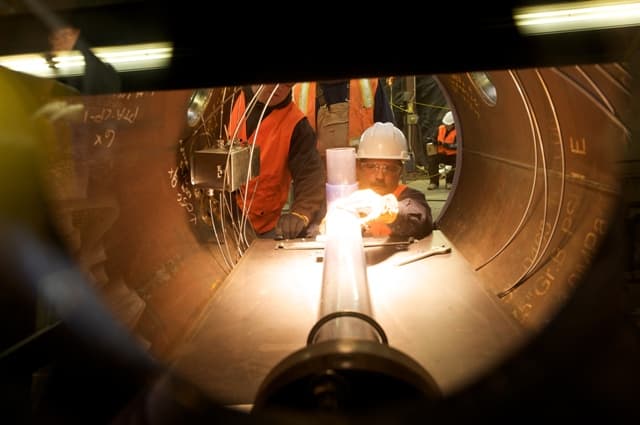
Oklo is developing fuel fabrication and recycling capabilities that can secure fuel supply for Aurora deployments and potentially support broader domestic advanced-reactor infrastructure over time. Two June 2026 acquisitions add in-house engineering and manufacturing depth: Oak Ridge, Tennessee manufacturer ARMEC brings fabrication, machining and welding capacity, and Creative Engineers, Inc. adds specialized sodium, NaK and lithium liquid-metal systems expertise for the Aurora sodium-cooled fast reactor.
07
How past announced dates turned out.
2/2announced dates hit on time
Resolve the PJM interconnection dispute for the Virginia project
Target September 2026 · Resolved Sep 24, 2026
FERC denied the EL26-101 complaint on 24 Sept 2026. The order did not reinstate Virginia project C01-1735 in Cycle 01. Oklo's newsroom has not announced a Cycle 02 or Expedited Interconnection Track filing.
Bring the Groves test reactor to first criticality
Target 2026 · Resolved Aug 5, 2026
Groves reached first criticality at 9:19 p.m. ET on August 5, 2026, less than a year after groundbreaking - the fifth reactor to reach criticality under the DOE's Reactor Pilot Program and the first to do so on private land.
08
2026
Plans Groves-2 Forge isotope processing pilot
On October 13, 2026 Oklo said it will advance Groves-2 Forge, a pilot to irradiate targets and process isotopes, starting with lutetium-177. NRIC had named Oklo in the August 24 Launch Pad selection without describing this facility. Oklo said commercial scale still needs the appropriate NRC licenses.
Cycle 01 Phase I listed start passes with C01-1735 still outside the queue
PJM listed Cycle 01 Phase I to begin September 28, 2026. FERC's September 24 order in EL26-101 (accession 20260924-3089, 196 FERC 61,231) denied Oklo's complaint, so project C01-1735 remains outside Cycle 01. As of September 30, 2026 Oklo has not announced a Cycle 02 submission or an Expedited Interconnection Track filing. Oklo told FERC the EIT was not viable; FERC said Oklo had not explained why. The Virginia Possum Point and Ladysmith queue position remains distinct from the Pike County, Ohio campus.
FERC denies EL26-101 complaint to rejoin PJM Cycle 01
On 24 September 2026 FERC issued an order denying Oklo's complaint in docket EL26-101 (eLibrary accession 20260924-3089, Order Denying Complaint). Utility Dive reported FERC found Oklo failed to show PJM violated its tariff when it withdrew the 750 MW mixed-technology project (150 MW advanced nuclear, 300 MW fuel cells, 300 MW gas) from Cycle 01, and that modeling deficiencies identified in May remained. Oklo may refile in Cycle 02 or use PJM's Expedited Interconnection Track through 31 December 2027. Oklo's newsroom has not posted a comment. This updates the 27 September public-record note that no order had been located.
No published FERC order in EL26-101 ahead of Cycle 01 Phase I
As of September 27, 2026, one day before PJM's listed Cycle 01 Phase I start, no published FERC order appears in eLibrary search results, Federal Register combined notices after the September 2 complaint notice, Oklo's newsroom, or PJM's posted September 4 answer. PJM had asked that any grant of relief come by September 14 so Phase I could still begin September 28; that requested date has passed. EnergyReader's September 25 denial write-up is not used: its cited sources are older Utility Dive and auction stories, not a Commission order. The 750 MW mixed-technology project (C01-1735) therefore remains outside Cycle 01 on the public record.
Files emergency FERC complaint over Ohio interconnection
On August 28, 2026 Oklo files an emergency complaint with the Federal Energy Regulatory Commission after PJM Interconnection drops a 750 MW mixed-technology project - 150 MW of advanced nuclear, 300 MW of fuel cells, and 300 MW of gas-fired generation - tied to Oklo's planned 1.2 GW Clean Energy Campus in Pike County, Ohio from its interconnection study cycle. Oklo asks FERC to order PJM to reinstate the project with its original queue position and says PJM was directed to respond by September 4, 2026, warning that the removal could delay the Meta-backed campus by at least 14 months and raise development costs.
Groves build touted as fastest modern U.S. reactor construction
In mid-August 2026 CEO Jacob DeWitte publicized that the Groves Isotope Test Reactor went from groundbreaking to first criticality in 229 days of active construction (roughly 11 months from a September 2025 groundbreaking to the August 5, 2026 criticality milestone). Coverage framed it as the fastest transition from greenfield to criticality for a full-scale, privately funded and privately sited U.S. reactor under modern environmental and DOE regulatory requirements - though not the fastest reactor build in history, since some early Atomic Age and Cold War-era reactors were built faster.
Reports Q2 2026 results, reaffirms 2028 Aurora-INL target
On August 7, 2026 Oklo reported second-quarter revenue of $1.21 million (all from the ARMEC and Creative Engineers acquisitions, not from power or isotope sales), ahead of analyst estimates, and a net loss of $48.5 million, widened from $24.7 million a year earlier, ending the quarter with $3.0 billion in cash and marketable securities. On the earnings call management reaffirmed a 2028 commercial start-up target for the Aurora-INL powerhouse, raised full-year 2026 guidance for cash used in operations to $120-150 million (from $80-100 million) and capital expenditures to $400-500 million (from $350-450 million) to accelerate Aurora-INL procurement and grid-interconnection work, and said first isotope revenue is now expected in early 2027 from the Idaho Radiochemistry Laboratory rather than the newly critical Groves reactor.
Board names five executive officers
On July 22, 2026 Oklo's board appoints five existing leaders as executive officers effective July 27, 2026 - Chief Product Officer Alexandra Renner, Chief of Staff John Hanson, General Counsel and Corporate Secretary Vivek Narayanadas, Senior Vice President of Engineering Erik Lassen, and VP of Accounting and Controller Michael Dixon - formalizing the leadership team as the company scales across its powerhouse, fuel, recycling, and isotope business lines. No new compensation or equity grants accompanied the appointments.
2026
Groves test reactor reaches first criticality
Oklo's Groves Isotope Test Reactor in Lockhart, Texas reaches first criticality at 9:19 p.m. ET on August 5, 2026, less than a year after groundbreaking, becoming the fifth reactor to reach criticality under the DOE's Reactor Pilot Program and the first to do so on private land.
DOE grants Groves reactor startup authorization
On July 23, 2026 the DOE granted startup authorization for Oklo's Groves Isotope Test Reactor in Lockhart, Texas - the final step in the Reactor Pilot Program's authorization process - clearing the facility and team to bring in fuel, run startup tests, and proceed toward first criticality under its startup plan. Oklo said Groves went from groundbreaking to startup authorization in just over 10 months, completing engineering, construction, commissioning, operating-program development, personnel training, and DOE readiness reviews, and framed it as a repeatable model for privately funded advanced reactors on private land with commercially sourced fuel and systems.
Joins DOE-led $200M nuclear-for-AI initiative
On July 21, 2026 the Trump administration selects Oklo and X-Energy for a $200 million Department of Energy-led initiative, alongside prior partners Microsoft and Nvidia, to accelerate the design, licensing, and construction of new nuclear reactors for AI data centers; $60 million of the program is earmarked over three years for national laboratories and universities including the University of Texas at Austin. Shares of Oklo rose as much as 9.9% in after-hours trading on the news.
DOE approves Groves test reactor safety analysis
On July 1, 2026 the DOE approved the Documented Safety Analysis for Oklo's Groves Isotope Test Reactor in Lockhart, Texas - the facility's final safety-basis document - under the Reactor Pilot Program. With the analysis approved, the project moves into DOE's final pre-startup phase of a readiness review and startup approval, after which Groves can load fuel and begin startup testing. Oklo is targeting first criticality at Groves in July 2026, positioning it among the first privately funded advanced reactors on privately owned land with commercially sourced fuel and systems.
Acquires Creative Engineers to deepen sodium-systems expertise
On June 30, 2026 Oklo acquired Creative Engineers, Inc. (CEI), a chemical process engineering firm founded in 1996 with deep expertise in sodium, sodium-potassium (NaK), and lithium liquid-metal systems, adding roughly 20 engineers, fabricators and welders. CEI's portfolio spans landmark U.S. sodium reactor programs including the Fast Flux Test Facility, Fermi 1, and Experimental Breeder Reactor II, directly supporting Oklo's Aurora sodium-cooled fast reactor and extending the vertical-integration push begun with the June 4 ARMEC acquisition. Financial terms were not disclosed.
Signs HALEU supply LOI with Centrus, EPC MOU with Kiewit
On June 18, 2026 Oklo and Centrus Energy sign a letter of intent for Centrus to supply enough domestic high-assay low-enriched uranium (HALEU) to power up to five Aurora powerhouses for multiple years, with deliveries beginning in 2029 - one of the first large-scale commercial HALEU supply agreements, and one that could include prepayments from Oklo to support fuel for its planned 1.2 GW Clean Energy Campus in southern Ohio. Oklo separately signs an MOU with Kiewit Nuclear Solutions to support engineering, procurement and construction (EPC) planning for the initial Aurora deployments at the site.
Signs fuel-recycling MOU with Standard Nuclear
On June 16, 2026 Oklo signs a memorandum of understanding with TRISO fuel maker Standard Nuclear to collaborate on nuclear fuel recycling and advanced fuel manufacturing - Oklo's first third-party offtake pathway for recycled material. The companies will jointly evaluate specifications, commercial terms and delivery schedules for reprocessed uranium and uranium-transuranic streams from Oklo's planned Oak Ridge, Tennessee recycling facility, which could feed Standard Nuclear's TRISO fuel; both firms were among five selected by the DOE for the Surplus Plutonium Utilization Program. Oklo's newsroom still lists this June 16 MOU as the latest Standard Nuclear update as of September 19, 2026.
DOE approves Aurora-INL Preliminary Documented Safety Analysis
On June 11, 2026 the DOE's Idaho Operations Office approves the Preliminary Documented Safety Analysis (PDSA) for the Aurora powerhouse at Idaho National Laboratory under the Reactor Pilot Program - a detailed review of the plant's hazard analysis, accident analysis, safety controls and design commitments. It leaves the final Documented Safety Analysis as the last safety-basis document before authorization. CEO Jacob DeWitte called it an important milestone that helps establish a foundation for future Aurora deployments. Oklo's newsroom has posted no later Aurora-INL safety-basis update as of September 19, 2026; the final DSA has not been approved.
Acquires ARMEC to bring manufacturing in-house
On June 4, 2026 Oklo completes the acquisition of ARMEC, an Oak Ridge, Tennessee precision manufacturing and engineering firm founded in 2002 with roughly 40 engineers, fabricators, machinists and technical staff serving nuclear, energy and defense markets. The deal adds in-house fabrication, machining and welding capability to support Oklo's advanced reactor and fuel-manufacturing programs and tighten control over its deployment timeline. Oklo's newsroom still lists this as the ARMEC close, with no later manufacturing-capacity update as of September 19, 2026.
DOE selects Oklo for Surplus Plutonium fuel program
The U.S. Department of Energy selects Oklo on May 26 - alongside Exodys Energy, SHINE Technologies, Standard Nuclear, and Flibe Energy - for advanced negotiations under the Surplus Plutonium Utilization Program. Oklo will partner with European fast-reactor developer newcleo to convert U.S. surplus plutonium into fuel for the Aurora powerhouse, broadening its fuel-supply pathway alongside HALEU.
NRC approves Aurora Principal Design Criteria
The NRC approves Oklo's Principal Design Criteria topical report for the Aurora powerhouse in Idaho on an accelerated schedule (less than half the traditional review timeline), clearing it to be referenced in future license applications.
NVIDIA and Los Alamos fuel collaboration
Oklo, NVIDIA, and Los Alamos National Laboratory announce a collaboration to use AI and high-performance computing to validate plutonium-bearing fuels, supporting Oklo's fast-reactor fuel work and nuclear-powered AI data centers.
The NRC grants Atomic Alchemy a materials license, enabling initial isotope sales from Oklo's Idaho Radiochemistry Laboratory.
Aurora-INL enters DOE pilot path
Oklo signs a DOE OTA for its first Aurora reactor at INL and receives approval of the Nuclear Safety Design Agreement under the Reactor Pilot Program.
Oklo signs a prepayment agreement with Meta to advance a planned 1.2 GW power campus in Pike County, Ohio.
2025
Signs binding Siemens Energy contract for Aurora power conversion system
On November 19, 2025 Oklo and Siemens Energy sign a binding contract for the power conversion system of the Aurora powerhouse at Idaho National Laboratory, covering a condensing SST-600 steam turbine, an SGen-100A industrial generator, and associated auxiliaries - closing out major long-lead equipment procurement ahead of Oklo's targeted 2028 startup.
The NRC accepts Oklo's Principal Design Criteria topical report for review under an accelerated timeline.
Tennessee fuel center announced
Oklo announces an Oak Ridge advanced fuel center, beginning with a fuel recycling facility backed by up to $1.68 billion of planned investment.
Oklo breaks ground at Idaho National Laboratory for its first Aurora powerhouse and continues targeting commercial operations around 2027-2028.
Oklo acquires Atomic Alchemy, expanding into radioisotopes and isotope-production infrastructure.
2024
2022
2020
2019
2013
09
$2.8Bdisclosed across 3 rounds with a stated amount
Cumulative disclosed raise · dated rounds