Active
Comirnaty
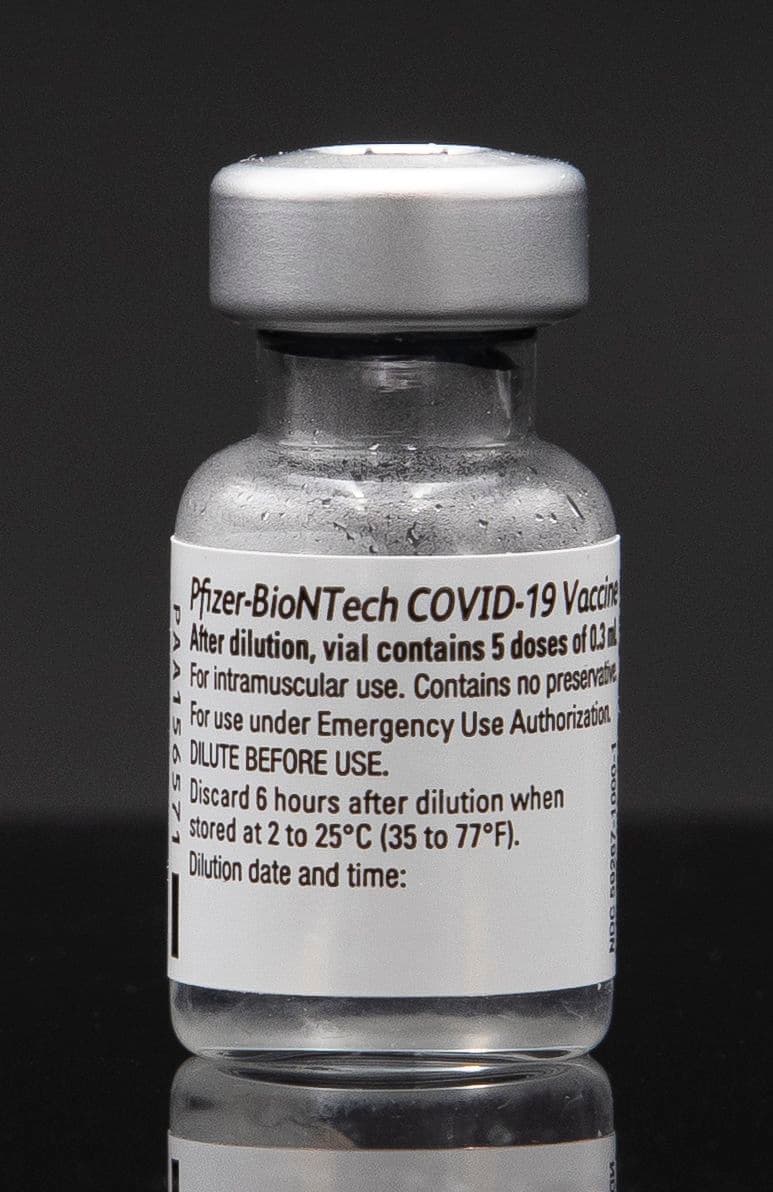
The mRNA COVID-19 vaccine (BNT162b2 / tozinameran) co-developed and commercialized with Pfizer - the first mRNA vaccine authorized for human use and the product that validated the platform at global scale.
01
Founded in 2008 by Uğur Şahin and Özlem Türeci (with Christoph Huber) as an individualized cancer-immunotherapy company, BioNTech is now aggressively redeploying its pandemic-era war chest (~€16.6B in cash) back toward oncology, including a manufacturing-network pullback (up to 1,860 roles, sites in Germany and Singapore) as it winds down excess COVID capacity. The first concrete sale from that pullback landed on August 27, 2026, when a DUBAG Group fund agreed to buy peptide-tools subsidiary JPT Peptide Technologies; other site divestments remain under review through the end of September 2026. Its centerpiece is BNT327 (pumitamig), a PD-L1xVEGF-A bispecific antibody obtained through the 2024-25 Biotheus acquisition and co-developed with Bristol Myers Squibb in a partnership worth up to ~$11.1B, now advancing across seven pivotal ROSETTA-program trials (part of 14 pivotal trials companywide) in lung, breast, gastric and other solid tumors. At WCLC 2026 on September 12, first global data for pumitamig plus the B7-H3 ADC elfetabart drozuntecan showed a 70.4% objective response rate and 93.0% disease-control rate in 71 evaluable small-cell lung-cancer patients. The pipeline also spans a second late-stage ADC platform with DualityBio (trastuzumab pamirtecan, whose breast-cancer indication reached a China BLA filing in April 2026, and the newly Phase 3 elfetabart drozuntecan in prostate cancer), a fourth late-stage asset in gotistobart (BNT316/ONC-392, with OncoC4), a next-generation anti-CTLA-4 antibody that posted 18.5 months median overall survival versus 10.0 months for docetaxel in non-pivotal PRESERVE-003 stage 1 at WCLC 2026 (HR 0.56) after earlier ELCC 2026 data showed a 54% reduction in risk of death, individualized neoantigen mRNA cancer vaccines (autogene cevumeran/BNT122 with Genentech), CAR-T and infectious disease, including BNT168, a therapeutic mRNA HIV vaccine that began a randomized Phase 1 first-in-human trial (NCT07698600) on August 4, 2026. COVID revenue keeps declining sharply (H1 2026 revenue just €223.7M, FY2025 was €2.87B) and BioNTech cut its FY2026 revenue guidance to €1.6-1.9B on August 4, 2026 while posting a widening H1 2026 net loss of €1.35B; the company still expects to recognize €613M of BMS collaboration revenue in Q3 2026. The stock jumped ~23% on August 19, 2026 as investors refocused on the oncology pipeline, then eased to a ~$24.1B market cap at the September 18 close. Incoming CEO Guido Oelkers (succeeding founder Uğur Şahin by February 1, 2027) inherits a validated-platform leader financing a multi-year bet to become a multi-product oncology company by 2030. On August 28, 2026 BioNTech terminated the Phase 2 BNT122-01 trial of autogene cevumeran as an adjuvant monotherapy in resected colorectal cancer after an independent Data Safety Monitoring Board found a numerical survival imbalance versus watchful waiting and judged continuation unlikely to change the outcome, though it reported no new safety signal; the separate Phase 2 IMcode003 trial testing autogene cevumeran in combination with chemotherapy and checkpoint inhibition for pancreatic cancer is unaffected and continues. On September 17, 2026 Pfizer Canada and BioNTech said Health Canada authorized XFG-adapted COMIRNATY for ages 6 months and older for the 2026-2027 season, with inventory due in the coming days and weeks. On October 13, 2026 BioNTech said AHEAD-MERIT (NCT04534205) of BNT113 plus pembrolizumab missed progression-free survival versus pembrolizumab alone in first-line HPV16-positive head and neck cancer; numerical PFS was not disclosed. Overall survival continues and can still make the trial positive. ClinicalTrials.gov lists the study as active, not recruiting (358 enrolled; primary completion August 2028).
sec.govUpdated Oct 13, 2026
02
2026-2027
Report registrational Phase 3 data for BNT327 (pumitamig) in first-line lung cancer - the key catalyst for its central immuno-oncology bet with Bristol Myers Squibb. The pivotal ROSETTA program (7 trials, 5 initiated in H1 2026) spans ROSETTA Lung-01 (1L extensive-stage small-cell lung cancer), ROSETTA Lung-02 (1L non-small-cell lung cancer), ROSETTA Lung-201 (unresectable stage III NSCLC vs durvalumab) and ROSETTA Lung-202 (1L PD-L1>=50% NSCLC vs pembrolizumab). As of the August 2026 Q2 update, ASCO 2026 data marked a third consistent global dataset showing efficacy across PD-L1 levels, but the registrational Phase 3 portions remain recruiting with no pivotal readout yet. BioNTech now runs 16 lung-cancer trials companywide (5 pivotal Phase 3 plus 2 novel-novel combination studies). WCLC 2026 (Seoul, September 12-15) delivered first pumitamig plus elfetabart drozuntecan combo data (70.4% ORR in SCLC) and the first median OS for gotistobart in PRESERVE-003 stage 1.
2026-2027
Deliver further pivotal data across the now-14-trial pivotal pipeline: gotistobart's pivotal Phase 3 PRESERVE-003 stage 2 in squamous NSCLC (after non-pivotal stage 1 at WCLC 2026 posted 18.5 vs 10.0 months median OS versus docetaxel, plus January 2026 FDA Orphan Drug Designation), the BNT113 mRNA vaccine in HPV16-positive head and neck cancer, and early pivotal progress for the newly Phase 3 elfetabart drozuntecan (BNT324) in prostate cancer, dosed since May 2026. Management guided to three late-stage readouts across immunomodulator, ADC and mRNA cancer-immunotherapy programs before year-end 2026; the WCLC 2026 gotistobart OS update is one of those visibility points, while registrational stage 2 remains the confirmation test.
2H 2026
Submit BioNTech's first US cancer-drug application - the antibody-drug conjugate trastuzumab pamirtecan (BNT323/DB-1303, with DualityBio) - marking its transition from vaccines to commercial oncology in its home market. The endometrial-cancer indication already holds FDA Fast Track and Breakthrough Therapy designations (Dec 2023) and its registrational cohort is now fully recruited; separately, a pivotal Phase 3 trial in HER2-positive breast cancer met its progression-free-survival endpoint, underpinning a China BLA (breast cancer) accepted for NMPA review on April 9, 2026. BioNTech and DualityBio are still determining the optimal US regulatory path across the endometrial and breast-cancer data; as of September 21, 2026 the US BLA had not yet been filed.
2026
TargetUpcoming Annual General Meeting; date not disclosed in the Sep 18, 2026 6-K
2026
TargetOS dual primary continues after the Oct 13, 2026 PFS miss; ClinicalTrials.gov lists primary completion August 2028
Fall 2026
Pfizer Canada and BioNTech said September 17 that Health Canada authorized XFG-adapted COMIRNATY for ages 6 months and older and that inventory for federal and provincial programs would move through distribution channels in the coming days and weeks. Watch provincial eligibility rules and whether people outside public programs can buy the shot at participating pharmacies.
Feb 1, 2027
Hand over the Chief Executive Officer role to incoming CEO Guido Oelkers, currently CEO of Sobi, by February 1, 2027 at the latest, completing founder Uğur Şahin's planned departure alongside co-founder and chief medical officer Özlem Türeci - who will move to lead a new independent mRNA-medicines company with Sahin - whose own CMO successor search continues.
2027
Advance the adjuvant pancreatic-cancer trial of autogene cevumeran with Genentech toward final analysis, testing whether individualized mRNA vaccines can prevent cancer recurrence. The companion colorectal-cancer trial of the same vaccine was terminated on August 28, 2026 after an independent safety monitoring board recommended discontinuing treatment. As of September 15, 2026 no new pancreatic-trial readout has been reported; final analysis remains expected in 2027.
By end of 2027
TargetBy end of 2027 (Germany); Q1 2027 (Singapore)
Wind down and exit COVID-vaccine manufacturing sites in Idar-Oberstein, Marburg and Tübingen, Germany, and in Singapore, cutting up to ~1,860 roles. The first signed sale is JPT Peptide Technologies (agreed August 27, 2026, expected to close in 2026); BioNTech is still exploring partial or full sale of the remaining sites through the end of September 2026, and as of September 21 no further signed sale has been announced. The program still targets ~€500M in recurring annual savings once fully implemented in 2029.
Tuebingen end-2027
TargetTuebingen end-2027; Singapore Q1 2027 (May plan); Marburg start-2028; Idar-Oberstein end-2028
2028
Complete the randomized Phase 1 first-in-human trial of BNT168 (NCT07698600), BioNTech's first clinical test of whether an mRNA therapeutic HIV vaccine can generate cellular immunity strong enough to support viral control during an analytical treatment interruption. The trial began recruiting August 4, 2026 and lists primary completion in February 2028.
2030
Scale BNT327 across its seven-plus pivotal indications and broaden the now-14-trial pivotal pipeline (spanning trastuzumab pamirtecan, elfetabart drozuntecan and gotistobart) while deploying the ~€16.6B cash reserve and cutting COVID-era manufacturing costs, targeting multiple approved cancer products by the end of the decade. Markets rewarded the pivot on August 19, 2026, when the stock jumped ~23% as investors refocused on the oncology pipeline. WCLC 2026 combo and gotistobart data are the latest visibility points; no oncology product is approved yet.
03
On October 13, 2026 BioNTech said the Phase 2/3 AHEAD-MERIT trial missed its progression-free survival goal for BNT113 plus pembrolizumab versus pembrolizumab alone in first-line unresectable recurrent or metastatic HPV16-positive head and neck cancer. An independent committee recommended the trial continue to overall survival, which can still count as a positive result under the pre-specified design. The company said it remains blinded to the ongoing data and did not publish a progression-free survival figure.
Pfizer Canada and BioNTech said September 17 that Health Canada authorized the XFG variant-adapted COMIRNATY vaccine for people aged 6 months and older for the 2026-2027 season. The partners said the decision rests on prior clinical, non-clinical, and real-world evidence, and Pfizer Canada said it has enough inventory for federal and provincial contracts, with distribution in the coming days and weeks. The Canadian clearance covers a broader age group than the August 27 FDA approval, which applied to adults 65 and older and higher-risk people ages 5 to 64.
First global data from BioNTech's Phase 1b/2 BNT324-01 trial of pumitamig plus elfetabart drozuntecan showed a 70.4% objective response rate and 93.0% disease-control rate among 71 evaluable small-cell lung cancer patients, IASLC reported at WCLC 2026. The combination is the first reported PD-(L)1 x VEGF bispecific plus ADC pairing in lung cancer; first-line ORR was 92.3%, and grade 3 or higher treatment-related events hit 23.3% of 193 patients treated as of June 2. Investigators said the safety profile was manageable and that NSCLC data remain immature.
BioNTech and OncoC4 presented the first median overall-survival data from non-pivotal stage 1 of the Phase 3 PRESERVE-003 trial at WCLC on September 14: gotistobart (BNT316/ONC-392) posted 18.5 months median OS versus 10.0 months for docetaxel (HR 0.56; nominal p=0.0295). The July 17, 2026 cut-off covered 87 previously treated squamous NSCLC patients (45 gotistobart, 42 docetaxel) after a median 25.4 months of follow-up; grade 3 or higher treatment-related adverse events were 44.4 percent versus 48.8 percent. Pivotal stage 2 is ongoing at more than 160 sites.
BioNTech said on August 28, 2026 it is terminating the Phase 2 BNT122-01 trial of its individualized mRNA cancer vaccine autogene cevumeran as an adjuvant monotherapy in surgically resected, ctDNA-positive colorectal cancer, run with Genentech. An independent Data Safety Monitoring Board recommended stopping after finding a numerical imbalance in overall survival between the vaccine and watchful-waiting arms and judging further continuation unlikely to change the outcome, though it reported no new safety signal. BioNTech said the separate Phase 2 IMcode003 trial testing autogene cevumeran in combination with chemotherapy and checkpoint inhibition for pancreatic cancer is unaffected and continues as planned.
BioNTech and Roche's Genentech terminated a Phase 2 trial of their individualized mRNA cancer vaccine autogene cevumeran (BNT122) in adjuvant colorectal cancer on August 28, after an independent data safety monitoring board recommended discontinuing treatment. The trial had tripped a futility threshold back in October 2025 but was kept running for more data; BioNTech's US-listed shares fell nearly 9% on the news, while the companion Phase 2 trial of the same vaccine in adjuvant pancreatic cancer continues.
The FDA approved the Pfizer-BioNTech COVID-19 vaccine reformulated to target the XFG variant for the 2026-2027 season on August 27, covering adults 65 and older and people ages 5-64 with at least one underlying condition that puts them at high risk for severe disease. The approval follows the European Commission's July 29 authorization of the same XFG-adapted formulation, and shipping to the US began immediately.
BioNTech reported Q2 2026 revenue of 105.6 million euros, down from 261 million euros a year earlier, and cut its full-year 2026 revenue guidance to 1.6-1.9 billion euros from 2.0-2.3 billion euros, citing softer global COVID-19 vaccine demand and delayed milestone revenue from an out-licensed program. The company posted a 820.8 million euro quarterly net loss but held 16.6 billion euros in cash, and its stock jumped about 23% on August 19 as investors focused on a pipeline of 14 pivotal oncology trials ahead of incoming CEO Guido Oelkers taking over from co-founder Ugur Sahin by February 2027.
BioNTech's Supervisory Board announced on August 3 the appointment of Guido Oelkers, CEO of Swedish Orphan Biovitrum (Sobi) since 2017, as the company's next Chief Executive Officer, taking office by February 1, 2027 at the latest. He succeeds co-founder Ugur Sahin, who said in March 2026 that he and his wife and co-founder, chief medical officer Ozlem Tureci, would depart to launch a new mRNA-medicines biotech; a successor for Tureci's role is still being sought.
The European Commission granted marketing authorization on July 29 for Pfizer and BioNTech's 2026-2027 COVID-19 vaccine formula targeting the XFG variant, for use in people 6 months and older. The approval followed a positive recommendation from the EMA's Committee for Medicinal Products for Human Use on July 23, and shipments to EU member states were expected to begin shortly to prepare for the fall vaccination season.
04
The mRNA COVID-19 vaccine (BNT162b2 / tozinameran) co-developed and commercialized with Pfizer - the first mRNA vaccine authorized for human use and the product that validated the platform at global scale.
BioNTech's flagship oncology asset: a next-generation bispecific antibody targeting both PD-L1 and VEGF-A, gained via the Biotheus acquisition and positioned as a potential immuno-oncology backbone across many solid tumors. Co-developed with Bristol Myers Squibb.
An individualized neoantigen-specific mRNA cancer vaccine, custom-manufactured for each patient's tumor mutations and co-developed with Genentech (Roche) to train the immune system against residual disease after surgery.
A HER2-targeted antibody-drug conjugate (third-generation topoisomerase-1 inhibitor payload) co-developed with China's DualityBio - BioNTech's lead candidate for its first-ever cancer-drug regulatory submission, being tested in HER2-expressing endometrial cancer and HER2-positive breast cancer.
A next-generation, topoisomerase-1-inhibitor-based antibody-drug conjugate targeting the immune-checkpoint protein B7-H3, co-developed with China's DualityBio - BioNTech's third late-stage oncology asset alongside BNT327 and trastuzumab pamirtecan, with clinical experience across more than ten tumor types.
A next-generation, pH-sensitive anti-CTLA-4 antibody designed to deplete regulatory T cells within tumors while sparing normal tissue, co-developed with OncoC4 since a March 2023 strategic collaboration ($200M upfront to OncoC4, costs and profits split on PD-(L)1 combination studies, BioNTech holding exclusive worldwide commercialization rights). It is BioNTech's fourth late-stage oncology asset alongside BNT327, trastuzumab pamirtecan, and elfetabart drozuntecan.
05
(Dec 31, 2025); up to 1,860 COVID-manufacturing roles slated to leave through 2027
(Q2 alone: €105.6M) as COVID revenue keeps fading; FY2026 guidance cut to €1.6-1.9B (from €2.0-2.3B) on August 4, 2026. BioNTech still expects the majority of 2026 revenue in Q3, including €613M of BMS collaboration revenue. FY2025 was €2.87B. Q3 2026 results are due November 3, 2026
H1 2026: €223.7M (Q2 alone: €105.6M); FY2026 guidance cut to €1.6-1.9B
($96.06/share at the Sept 18, 2026 close) - eased from ~$24.8B in mid-September after the Aug 19 oncology-pipeline rally
(IFRS). H1 2026: €1.35B (Q2 alone: €820.8M; adj. diluted LPS €2.22)
(IFRS). FY2026 adjusted R&D guidance: €2.0-2.3B (Q2 adj. R&D: €477.1M)
(5 initiated H1 2026); part of 14 pivotal trials companywide. WCLC 2026 also delivered first pumitamig plus elfetabart drozuntecan combo data (70.4% ORR in 71 evaluable SCLC patients) and gotistobart PRESERVE-003 stage 1 median OS (18.5 vs 10.0 months)
($1.5B upfront, $2B non-contingent through 2028, up to $7.6B milestones; 50/50 profit share). BioNTech still expects to recognize €613M of BMS collaboration revenue in Q3 2026
(~22% of workforce); Germany/Singapore site exits by 2027; JPT Peptide Technologies sale to a DUBAG fund agreed Aug 27, 2026; remaining Idar-Oberstein, Marburg, Singapore and CureVac site sales still under review through end of September 2026, with no further signed sale announced as of Sept 21
$402.5M of the $1B ADS repurchase program completed through Aug 14, 2026 (4,410,552 ADSs at an average $91.26); program runs through May 6, 2027
JPT sale agreed Aug 27 remains the only signed deal. Spokesperson-reported remaining closures: Tuebingen end-2027, Marburg start-2028, Idar-Oberstein end-2028; Singapore still a May Q1 2027 wind-down with no confirmed buyer. No matching newsroom post as of Oct 4.
06
Operating status
Commercial (COVID), pre-profit in oncology
COVID commercial, oncology still pre-product. Q2 2026 revenue 105.6M euro; FY2026 guide 1.6-1.9B euro; cash about 16.6B euro. Oct 2 close $96.90, market cap about $24.34B (251.20M shares); no later close was used. A BioNTech spokesperson told Fierce Pharma, Reuters and Pharma Manufacturing on or around 28 Sept that the remaining site-sale process produced no transaction after JPT; reported closures are Tuebingen end-2027, Marburg start-2028 and Idar-Oberstein end-2028. Singapore remains a May Q1 2027 wind-down with no confirmed buyer. Q3 results are still due 3 Nov. Wikipedia, read 14 Oct 2026, still lists Sahin as CEO and 7,807 employees (2025); the catalog keeps 8,052 at 31 Dec 2025 and the Oelkers handover by 1 Feb 2027. On 13 Oct 2026 a 6-K exhibit said AHEAD-MERIT missed its PFS dual primary for BNT113 plus pembrolizumab. Overall survival continues and can still make the trial positive. BNT113, also called tenumomeran/raplemomeran, encodes HPV16 E6 and E7. BioNTech's 21 Jan 2026 release announced FDA Fast Track. ClinicalTrials.gov lists NCT04534205 as active, not recruiting, 358 enrolled, primary completion August 2028.
COVID-19 vaccine (Comirnaty, via Pfizer)
BioNTech's share of gross profit from the Pfizer-partnered mRNA COVID-19 vaccine remains the dominant revenue source, but is declining sharply as demand normalizes in Europe and the US.
Collaborations, upfront & milestone payments
Payments from oncology and infectious-disease partnerships - notably the Bristol Myers Squibb BNT327 deal ($1.5B upfront plus $2B non-contingent through 2028) and the Genentech/Roche cancer-vaccine collaboration. BioNTech still expects to recognize €613M of BMS collaboration revenue in Q3 2026. Part of the FY2026 revenue guidance cut announced August 4, 2026 owes to milestone revenue from an out-licensed program no longer expected this year.
No oncology product revenue yet; the first US regulatory submission (trastuzumab pamirtecan in endometrial cancer) is still targeted for 2026, though a parallel China BLA was already accepted for review by the NMPA in April 2026. Meaningful oncology revenue is expected only later this decade.
07
How past announced dates turned out.
0/1announced date hit on time
Autogene cevumeran Phase 2 colorectal-cancer trial
Target 2027 · Resolved Aug 28, 2026
BioNTech and Genentech terminated the Phase 2 adjuvant colorectal-cancer trial of autogene cevumeran (BNT122) after an independent data safety monitoring board recommended discontinuing treatment; the trial had tripped a futility threshold in October 2025 but was kept running for more data. The companion Phase 2 trial in adjuvant pancreatic cancer continues.
08
2026
AHEAD-MERIT misses PFS; BNT113 continues for overall survival
On October 13, 2026 BioNTech reported first topline results from AHEAD-MERIT (NCT04534205): BNT113 plus pembrolizumab did not demonstrate a statistically significant PFS improvement versus pembrolizumab alone in first-line unresectable recurrent or metastatic HPV16-positive, PD-L1-expressing head and neck squamous cell carcinoma. Numerical PFS was not disclosed. An independent data monitoring committee recommended continuing for overall survival, which can still make the trial positive under the pre-specified design. ClinicalTrials.gov lists the trial as active, not recruiting (358 enrolled; primary completion August 2028).
Remaining plant-sale process produces no transaction
A BioNTech spokesperson told Fierce Pharma, Reuters and Pharma Manufacturing around Sept 28, 2026 that a broad sales process for Idar-Oberstein, Marburg, Tuebingen/CureVac and remaining international CureVac sites produced no transaction. JPT Peptide Technologies remains the only signed sale (agreed Aug 27). Reported closures: Tuebingen end-2027, Marburg start-2028, Idar-Oberstein end-2028. Fierce said Singapore operations still end with no buyer update; Reuters later removed Singapore from its headline. No matching biontech.com newsroom post or 6-K was found. Company-only spokesperson statements.
Supervisory Board names KPMG as independent auditor for FY2027
On September 18, 2026 BioNTech said its Supervisory Board approved appointing KPMG AG Wirtschaftspruefungsgesellschaft as independent auditor for the year ending December 31, 2027, subject to shareholder election at the upcoming Annual General Meeting, after a competitive Audit Committee tender. The company said it is not subject to mandatory auditor rotation. The FY2025 Form 20-F still carries the consent of EY GmbH & Co. KG Wirtschaftspruefungsgesellschaft as the then-current auditor.
BNT168 therapeutic mRNA HIV vaccine enters Phase 1/2
BioNTech began recruiting on August 4, 2026 for a randomized, placebo-controlled Phase 1 first-in-human trial (NCT07698600) of BNT168, an investigational RNA-based therapeutic HIV vaccine, in adults living with or without HIV. The study targets about 126 participants and will test safety, immunogenicity, and whether vaccine-induced immunity can support viral control during an analytical treatment interruption; a later Phase 2 portion is optional. Primary completion is listed as February 2028.
Pumitamig plus elfetabart drozuntecan posts 70.4% ORR in SCLC at WCLC
On September 12, 2026 IASLC presented first global data from the Phase 1b/2 BNT324-01 trial of pumitamig (PD-L1 x VEGF-A) plus elfetabart drozuntecan (B7-H3 ADC) in advanced or metastatic lung cancer, the first reported PD-(L)1 x VEGF bispecific plus ADC combination in the setting. Among 71 efficacy-evaluable small-cell lung-cancer patients, the overall objective response rate across all doses was 70.4% (1 complete response, 49 partial responses) with a 93.0% disease-control rate; first-line ORR was 92.3%. NSCLC data were described as immature. Safety was reported as manageable, with grade 3 or higher treatment-related adverse events in 23.3% of the 193 patients treated as of June 2, 2026.
Gotistobart posts 18.5-month median OS at WCLC
On September 14, 2026 BioNTech and OncoC4 presented the first median overall-survival data from non-pivotal stage 1 of Phase 3 PRESERVE-003 at the IASLC World Conference on Lung Cancer in Seoul: gotistobart monotherapy reached 18.5 months median OS versus 10.0 months for docetaxel (HR 0.56; nominal p=0.0295) in 87 previously treated squamous NSCLC patients (45 vs 42) at a July 17, 2026 cut-off after 25.4 months median follow-up. Grade 3 or higher treatment-related adverse events were 44.4% versus 48.8%. Pivotal stage 2 remains ongoing at more than 160 sites.
Sells JPT Peptide Technologies to a DUBAG-advised fund
On August 27, 2026 BioNTech agreed to sell Berlin-based peptide-tools subsidiary JPT Peptide Technologies GmbH to a fund advised by DUBAG Group (LEO III), the first completed-agreement sale from its manufacturing-footprint consolidation. Other site divestments (Idar-Oberstein, Marburg, Singapore, and CureVac facilities) remain under review through the end of September 2026, including partial or total sale options. The JPT deal is subject to closing conditions and is expected to close in 2026.
Health Canada authorizes XFG-adapted Comirnaty for ages 6 months+
On September 17, 2026 Pfizer Canada and BioNTech announced that Health Canada authorized the XFG variant-adapted COMIRNATY vaccine for active immunization of people aged 6 months and older for the 2026-2027 season. The partners said the decision rests on previously submitted clinical, non-clinical, and real-world evidence, and Pfizer Canada said it has enough inventory for federal and provincial contracts, with distribution in the coming days and weeks. The Canadian indication is broader than the August 27 FDA approval, which covered adults 65 and older and higher-risk people ages 5 to 64.
2026
FDA approves XFG-adapted Comirnaty for the US 2026-2027 season
On August 27, 2026 the FDA approved the Pfizer-BioNTech COVID-19 vaccine reformulated to target the XFG variant for the 2026-2027 season, covering adults 65 and older and people ages 5-64 with at least one underlying condition putting them at high risk for severe COVID-19. The approval follows the European Commission's July 29, 2026 authorization of the same XFG-adapted formulation and lets Pfizer and BioNTech begin shipping the updated shot to the US immediately.
16-trial lung cancer pipeline highlighted ahead of WCLC 2026
On August 20, 2026 BioNTech announces it is running 16 ongoing lung-cancer trials (5 of them pivotal Phase 3, plus 2 novel-novel combination studies) and will present updated PRESERVE-003 (gotistobart) overall-survival data and the first global data for a pumitamig plus elfetabart drozuntecan combination in advanced/metastatic SCLC and NSCLC at the IASLC World Conference on Lung Cancer in Seoul, September 12-15, 2026.
Gotistobart cuts death risk 54% in Phase 3 stage 1 (ELCC 2026)
At the European Lung Cancer Congress in Copenhagen (March 25-28, 2026), BioNTech and OncoC4 present stage-1 data from the pivotal Phase 3 PRESERVE-003 trial: gotistobart reduced the risk of death by 54% versus docetaxel in previously treated metastatic squamous NSCLC, with median overall survival not yet reached versus 10.0 months for chemotherapy. The trial's pivotal stage 2 (targeting 478 more patients) is ongoing, with updated overall-survival data due at WCLC 2026 in September.
Gotistobart wins FDA Orphan Drug Designation in squamous NSCLC
On January 12, 2026 BioNTech and partner OncoC4 announce the FDA has granted Orphan Drug Designation to gotistobart (BNT316/ONC-392), a next-generation anti-CTLA-4 antibody, for squamous non-small cell lung cancer - adding to the Fast Track designation the candidate already held since 2022 for metastatic NSCLC progressing on prior anti-PD-(L)1 therapy.
Q2 2026 results: revenue miss and FY2026 guidance cut
Reports Q2 2026 revenue of just €105.6M (H1 2026: €223.7M) as COVID-vaccine demand keeps fading, with a Q2 net loss of €820.8M (H1 2026: €1.35B). Cuts FY2026 revenue guidance to €1.6-1.9B (from €2.0-2.3B), citing weak COVID demand and the loss of milestone revenue from an out-licensed program, while maintaining adjusted R&D guidance of €2.0-2.3B. Cash and investments stood at €16.6B; the company had repurchased $151.6M of its $1B ADS buyback (launched June 8, 2026) by quarter-end. Reports an advanced pipeline of 14 ongoing pivotal clinical trials.
Elfetabart drozuntecan (BNT324) enters Phase 3 in prostate cancer
First patient dosed in May 2026 in BNT324-03, a global pivotal Phase 3 trial (target enrollment 736 patients) of elfetabart drozuntecan (BNT324/DB-1311), a B7-H3-targeted ADC co-developed with DualityBio, versus docetaxel in taxane-naive metastatic castration-resistant prostate cancer - BioNTech's third late-stage oncology asset alongside BNT327 and trastuzumab pamirtecan. The FDA has granted it Fast Track designation.
China BLA for trastuzumab pamirtecan (breast cancer) accepted by NMPA
On April 9, 2026, partner DualityBio announces that China's National Medical Products Administration has accepted for review the Biologics License Application for trastuzumab pamirtecan (BNT323/DB-1303) in HER2-positive metastatic/unresectable breast cancer, based on the pivotal Phase 3 DB-1303-O-3001 trial meeting its progression-free-survival endpoint versus T-DM1 - the first regulatory filing acceptance anywhere for a BioNTech-partnered cancer drug, ahead of the still-pending US BLA.
Manufacturing pullback cuts up to 1,860 roles as COVID capacity idles
Alongside Q1 2026 results on May 5, 2026, BioNTech announces it will exit COVID-vaccine manufacturing sites in Idar-Oberstein, Marburg and Tübingen (the former CureVac HQ), Germany, plus its Singapore site, affecting up to ~1,860 roles (about 22% of the then ~8,455-person workforce). Germany exits are targeted by end of 2027 and Singapore by Q1 2027, with divestment (partial or full sale) being explored for each site; BioNTech guides to ~€500M in recurring annual savings once fully implemented in 2029.
Guido Oelkers named incoming CEO, succeeding Şahin
On August 3, 2026 BioNTech's Supervisory Board announced the appointment of Guido Oelkers - CEO of Swedish Orphan Biovitrum (Sobi) since 2017 - as the company's next Chief Executive Officer, taking office by February 1, 2027 at the latest. He succeeds co-founder Uğur Şahin, who said in March 2026 that he and co-founder/chief medical officer Özlem Türeci would depart to launch a new mRNA-medicines biotech; a successor for Türeci's CMO role is still being sought.
EU authorizes XFG-adapted Comirnaty for 2026-2027 season
On July 29, 2026 the European Commission authorizes the Pfizer-BioNTech COVID-19 vaccine reformulated to target the XFG (JN.1 lineage) variant for the 2026-2027 season, for people aged six months and older across EU member states and select EEA countries. The partners begin at-risk manufacturing to supply Europe's seasonal demand, keeping Comirnaty commercially current even as its base revenue keeps declining.
Arbutus and Genevant file LNP patent suits over COVID vaccine
On July 16, 2026 Arbutus Biopharma and its licensee Genevant Sciences filed three international lawsuits enforcing lipid-nanoparticle (LNP) patents against Pfizer, BioNTech and affiliates - one in Canada's Federal Court and two in the Unified Patent Court covering about 20 European countries - seeking monetary relief and injunctions over the mRNA-LNP COVID-19 vaccine Comirnaty. The actions target BioNTech's legacy COVID franchise rather than its oncology pipeline, adding to existing US LNP litigation as the company's pandemic-era revenue continues to decline.
Oncology ramp; first cancer-drug submission targeted
Enters 2026 running eight planned BNT327 Phase 3 trials and guiding toward its first-ever US oncology submission (trastuzumab pamirtecan in endometrial cancer), while authorizing a $1B share buyback. FY2025 revenue was €2.87B with a €1.1B net loss.
2025
Closes acquisition of mRNA rival CureVac
Closes its acquisition of long-time mRNA competitor CureVac for ~$1.25B in stock - agreed June 2025 and completed December 18, 2025 with ~86.75% of shares tendered, followed by a compulsory squeeze-out of the remaining shares in January 2026 (CureVac stock ceased trading January 6, 2026) - consolidating mRNA intellectual property and manufacturing as it scales its oncology ambitions.
Up to ~$11.1B Bristol Myers Squibb partnership for BNT327
Signs a global co-development and co-commercialization deal with Bristol Myers Squibb for BNT327 worth up to ~$11.1B ($1.5B upfront, $2B non-contingent through 2028, up to $7.6B in milestones) with a 50/50 profit share.
Acquires Biotheus, gaining full rights to BNT327
Completes the acquisition of China's Biotheus for $800M upfront (plus up to $150M in milestones), securing full global rights to the PD-L1×VEGF-A bispecific antibody BNT327 - its new flagship oncology asset.
2023
2021
2020
2019
2018
2016
2008
09
$2Bdisclosed across 4 rounds with a stated amount
Cumulative disclosed raise · dated rounds
Founding capital
2008
Strüngmann family (Andreas & Thomas Strüngmann), MIG Fonds
Series B (upsized)
2019
Fidelity (lead), Redmile, Invus, Mirae Asset, Struengmann family office
Gates Foundation investment
2019
Bill & Melinda Gates Foundation
IPO (NASDAQ: BNTX)
2019
Public markets
BMS strategic partnership (BNT327)
2025
Bristol Myers Squibb ($2B non-contingent through 2028; up to $7.6B milestones)