Active
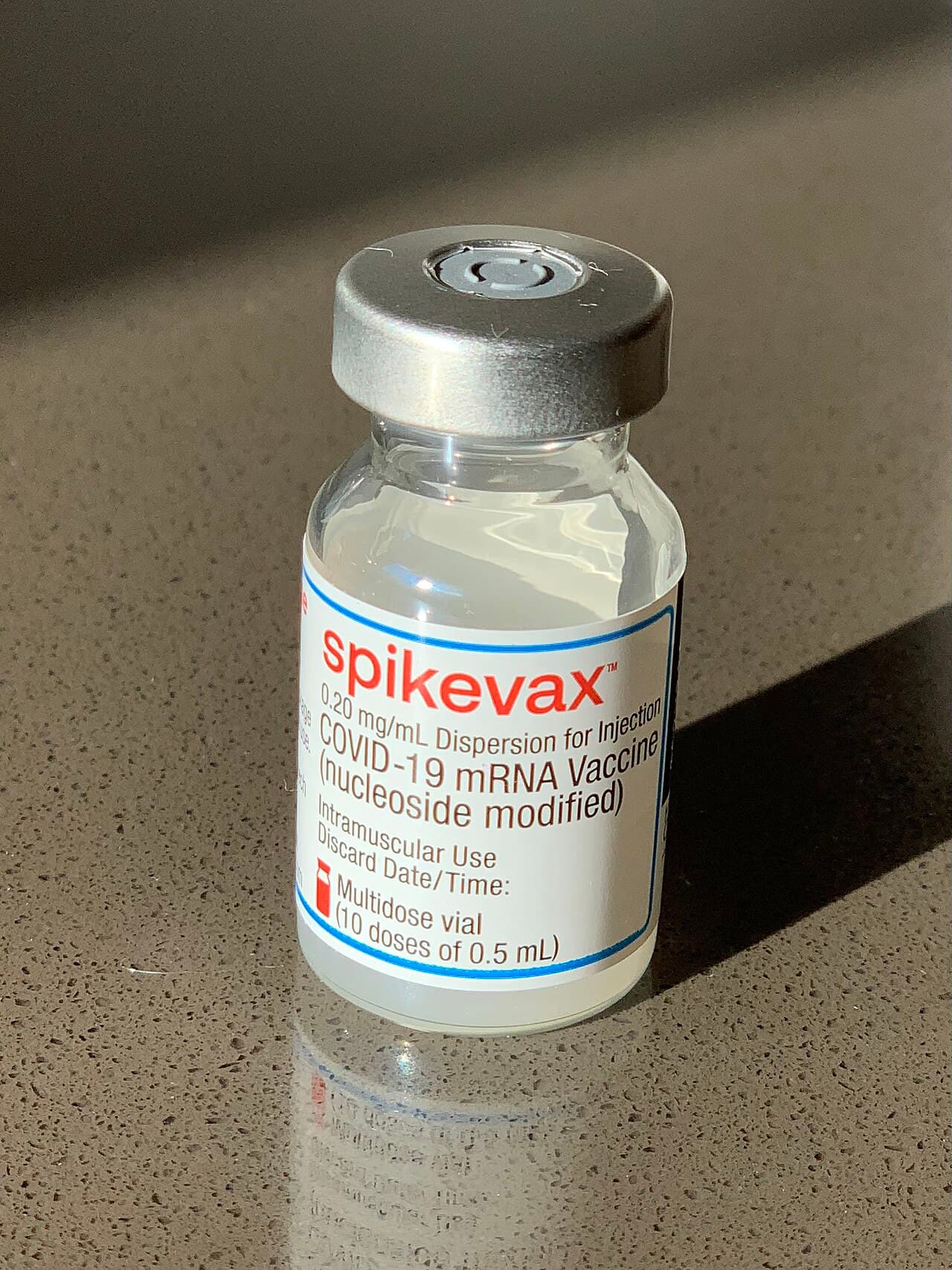
Spikevax
Moderna's original COVID-19 mRNA vaccine (mRNA-1273), the product that validated mRNA vaccines at global scale. Now sold as a seasonal respiratory vaccine and the company's largest historical revenue driver.
Moderna is a public mRNA company whose commercial franchise includes Spikevax, mNEXSPIKE, mRESVIA, EU-approved mCOMBRIAX, and mFlusiva, with intismeran autogene plus KEYTRUDA as its highest-value pipeline bet after the August 19, 2026 Phase 3 melanoma win.
Latest update Oct 19, 2026
01
Juan Andres is Chief Operating Officer. A Form 3 filed October 5, 2026 lists that title with a period of report of October 5, and both the company and investor leadership pages now list him as COO. Jerh Collins is no longer on those executive lists. Merck and Moderna have not announced a US BLA or EU MAA. Phase 3 RFS and DMFS hazard ratios remain unpublished ahead of ESMO late-breaking abstract LBA1 on October 24, 2026. FY2025 revenue was $1.9 billion with a $2.8 billion net loss; Q2 2026 revenue was $145 million. A $3.0 billion zero-coupon convertible closed September 1. Cash-flow breakeven is still targeted for 2028.
modernatx.comUpdated Oct 19, 2026
Analysis · 5 min read · Sep 1, 2026The long view on Moderna: strategy, technology and what to watch02
2026
Read out registrational data for the propionic acidemia program (mRNA-3927) - Moderna's first rare-disease readout, now partnered with Recordati (deal signed January 2026, closed March 16, 2026: $50M upfront plus up to $110M in milestones and royalties, with Recordati leading global commercialization). Part 2 of the Paramount study has completed enrollment, with a 12-month treatment evaluation and a data readout still expected in 2026. Moderna is also advancing methylmalonic acidemia therapy mRNA-3705, which was selected for the FDA's START pilot program; the company and FDA have agreed on a pivotal study design, with the registrational study expected to begin in 2026.
Late 2026
File for regulatory approval of intismeran autogene (mRNA-4157) plus KEYTRUDA in adjuvant melanoma after the pivotal Phase 3 INTerpath-001 trial met both its primary endpoint (recurrence-free survival) and key secondary endpoint (distant metastasis-free survival) on August 19, 2026 - the first positive Phase 3 result ever for an individualized mRNA neoantigen cancer therapy. As of September 8, 2026 no BLA or MAA has been filed. Moderna and Merck say they will present the data at an upcoming medical meeting and engage with regulators on filing submissions.
Oct 24, 2026
2027-2028
Moderna's Phase 3 norovirus vaccine trial (mRNA-1403, NOVA 301, ~38,000 participants) underwent its interim analysis but did not meet the statistical threshold for early success, the company disclosed on July 31, 2026 alongside Q2 earnings. The trial has already relocated across hemispheres more than once chasing enough norovirus cases; Moderna is now enrolling a fourth cohort after slower-than-expected case accrual, pushing a definitive efficacy readout to 2027-2028 at the earliest. No later public update has moved that window.
2027
Expand the Phase 1/2 INTERCEPT-Lynch study of mRNA-4194, Moderna's cancer-prevention vaccine for people with Lynch syndrome, into a larger Phase 2 across multiple UK centers - the next step after Phase 1 dosing began in 2026 under the UK MHRA's June 8, 2026 authorization. Moderna's public pipeline still lists the program in Phase 1 as of the May 28, 2026 pipeline cut; no later start date for the Phase 2 expansion has been announced.
2028
Execute further cost discipline and grow the respiratory, oncology, and rare-disease franchises toward a targeted return to cash-flow breakeven in 2028. Guidance reiterated at Q2 2026 earnings: GAAP operating expenses of approximately $4.9B in 2026, falling to $4.2-4.6B in 2027, on the path to breakeven in 2028. The August 2026 $2.6B convertible-note raise extends the cash runway but does not change the 2028 target.
Date not announced
TargetTiming not yet announced
Resubmit the US Biologics License Application for mCOMBRIAX, the flu-plus-COVID combination vaccine already approved in the EU. Moderna withdrew the original 2024 US application in May 2025 after the FDA requested Phase 3 influenza-efficacy data; that data has now been delivered via mFlusiva's August 5, 2026 approval, clearing the path to resubmit. Moderna has still not announced a specific resubmission timeline, and the FDA's rare refusal-to-file letter on mFlusiva earlier in 2026 (reversed on appeal) could add further delay before the combination shot is refiled.
03
The UK Medicines and Healthcare products Regulatory Agency authorized Moderna's updated Spikevax COVID-19 vaccine targeting the SARS-CoV-2 XFG variant for adults and children aged six months and older. Doses will be made at the Moderna Innovation and Technology Centre in Harwell, Oxfordshire, for the NHS 2026/27 vaccination programme. The European Medicines Agency's Emergency Task Force separately recommended that 2026/2027 COVID-19 vaccines target the XFG variant.
Moderna said on August 28, 2026 it priced an upsized $2.6 billion private offering of 0.00% convertible senior notes due 2032, up from a planned $2.0 billion, with sale to qualified institutional buyers expected to close September 1. The notes carry an initial conversion price of about $210.58 per share, a 47.5% premium to Moderna's August 27 close, and are paired with capped call transactions capped near $392.62 per share to limit potential dilution.
Moderna said on August 27 that the FDA approved the 2026-2027 formulas of Spikevax and mNEXSPIKE, both targeting the JN.1-lineage XFG subvariant of SARS-CoV-2. Spikevax is cleared for high-risk people aged 6 months through 64 and all adults 65 and older, while mNEXSPIKE is cleared for high-risk people aged 12 through 64 and all adults 65 and older; the company said the shots should be available in the coming days.
Moderna announced on August 27 a proposed private placement of $2.0 billion of convertible senior notes due 2032, with an option for initial purchasers to buy up to $300 million more. The company plans to use proceeds to expand its oncology business, including its Merck-partnered melanoma vaccine program, and to repay existing debt, while a planned capped-call transaction aims to limit dilution; shares fell in premarket trading on the announcement.
Merck and Moderna said August 19 that the Phase 3 INTerpath-001 trial of intismeran autogene (mRNA-4157) plus KEYTRUDA met both its primary endpoint of recurrence-free survival and its key secondary endpoint of distant metastasis-free survival in 1,137 patients with completely resected stage IIB-IV melanoma, the first positive Phase 3 result ever for an individualized mRNA neoantigen cancer therapy. Moderna shares surged as much as 90%+ intraday and Merck rose about 7-11%, and the companies said they plan to file for regulatory approval within months.
The FDA approved Moderna's mFlusiva on August 5, the first influenza vaccine built on mRNA technology, granting standard approval for adults 50 to 64 and accelerated approval for those 65 and older pending a postmarketing study. In the Phase 3 trial, mFlusiva showed about 27% higher relative efficacy against confirmed influenza-like illness than a standard-dose comparator, and Moderna expects it available in time for the 2026-2027 flu season, becoming the company's fourth approved respiratory product.
Moderna has started a Phase 1 randomized, dose-escalation trial of mRNA-1365 (Profile 2), a multicomponent vaccine targeting both RSV and human metapneumovirus in a single shot for adults 60 and older, first submitted to the clinical trial registry on August 10. The study compares the combination candidate's safety and immune response against two versions of Moderna's already-approved single-pathogen RSV vaccine mRNA-1345, broadening the company's respiratory-vaccine pipeline beyond COVID-19 and standalone RSV shots.
The FDA approved Moderna's mFlusiva (mRNA-1010) on August 5 for seasonal influenza in adults 50 and older, with the 65-plus indication cleared under accelerated approval pending a postmarketing study. In Moderna's Phase 3 trial of more than 40,000 adults 50 and older, the shot was about 27% more effective than a standard flu vaccine over the 2024-25 season, and Moderna expects it available for adults 50-plus this fall as a fourth product in its respiratory franchise.
Moderna disclosed on July 31, 2026 that the Phase 3 interim analysis of its norovirus vaccine candidate mRNA-1403 (the ~38,000-participant NOVA 301 study) did not meet the statistical threshold for early success. The company is enrolling an additional cohort after case accrual came in slower than expected across two Northern Hemisphere seasons, pushing a definitive efficacy readout to 2027-2028 while it maintains its full-year revenue growth guidance.
Moderna reported second-quarter 2026 results on July 31, posting revenue of $145 million, up 2% year over year and above the high end of its prior guidance, with a GAAP net loss of $782 million ($1.97 per share) as cost of sales, R&D, and SG&A all fell versus a year earlier. The company reiterated guidance for up to 10% revenue growth in 2026 and raised its projected year-end cash and investments to $4.7-5.2 billion, with an FDA decision on its seasonal flu vaccine mRNA-1010 expected around August 5.
Moderna said on July 16 it dosed the first U.S. participant in a Phase 1 trial of mRNA-4200, an off-the-shelf tumor-targeted cancer antigen therapy given alongside checkpoint-inhibitor treatment in adults with advanced or metastatic solid tumors. The candidate encodes seven antigens commonly shared across patients and tumor types and is designed to induce and expand T-cell responses; it is Moderna's third off-the-shelf cancer antigen therapy and was developed with Immatics. The open-label, multicenter, dose-escalation study will evaluate the therapy's safety and tolerability.
04
Moderna's original COVID-19 mRNA vaccine (mRNA-1273), the product that validated mRNA vaccines at global scale. Now sold as a seasonal respiratory vaccine and the company's largest historical revenue driver.
mRNA vaccine (mRNA-1345) against respiratory syncytial virus (RSV) - the first mRNA vaccine approved for a disease other than COVID-19, and a key pillar of Moderna's expanding respiratory franchise.
Moderna's standalone mRNA seasonal influenza vaccine (mRNA-1010), the fourth product in its respiratory franchise alongside Spikevax, mRESVIA, and mCOMBRIAX.
An individualized neoantigen cancer therapy, co-developed with Merck, that is custom-manufactured for each patient's tumor mutations and given with KEYTRUDA to train the immune system against the cancer. It is Moderna's highest-value pipeline asset.
Moderna's combination COVID-19 and influenza vaccine (mRNA-1083), the world's first authorized flu-plus-COVID combination vaccine, delivered as a single shot.
An investigational mRNA cancer-prevention vaccine, developed with the University of Oxford, designed to generate immune responses against early cancer-development targets in people with Lynch syndrome - Moderna's first program aimed at preventing cancer before it develops rather than treating existing disease.
05
(up 2% YoY, above guidance); guidance of up to ~10% growth for full-year 2026, with ~55% of H2 revenue guided into Q3
(Jun 30, 2026), before the $950M litigation settlement paid in July 2026; FY2026 year-end cash still guided to $4.7-5.2B. A $2.6B zero-coupon convertible-note raise priced Aug 27, 2026 adds liquidity ahead of Q3.
(Sept 2, 2026) - still more than double the pre-Aug 19 level after the Phase 3 melanoma-vaccine win; next earnings date Nov 5, 2026
36 development programs across 26 development candidates in clinical studies (Jun 30, 2026), incl. 9 Phase 2/3 oncology studies; company homepage separately cites 45 programs and 36 ongoing trials
Five commercial products: Spikevax, mNEXSPIKE, mRESVIA, mCOMBRIAX (EU), and mFlusiva (US, Aug 5, 2026) - the first FDA-approved mRNA flu shot
(~$1.5B more targeted by 2027); breakeven targeted 2028
06
Operating status
Commercial, pre-breakeven
Juan Andres's COO start on Oct. 5, 2026 is confirmed by Form 3 accession 0001682852-26-000183 and by the leadership pages, which list him as Chief Operating Officer and no longer list Jerh Collins. No later 10-Q has reported the start; Q3 results remain scheduled for Nov. 5. INTerpath-001 Phase 3 RFS and DMFS hazard ratios are still unpublished. The Sept. 21 release schedules LBA1 for Oct. 24, 2026 at 4:30 p.m. CEST, with an investor webcast at 7:00 p.m. CEST, and does not announce a US BLA or EU MAA. The HR 0.51 and 0.411 figures remain Phase 2b KEYNOTE-942, not INTerpath-001. Cash-flow breakeven remains targeted for 2028.
Spikevax and next-generation mNEXSPIKE remain the dominant revenue source (the bulk of $1.8B FY2025 product sales), though sales are declining and increasingly seasonal and international. The FDA approved the 2026-2027 XFG formulas of both products on August 27, 2026.
RSV, flu, and combination vaccines
mRESVIA (RSV) is a small but growing franchise, with its EU label expanded to adults 18+. mCOMBRIAX (flu+COVID combination) began generating European revenue in 2026. mFlusiva, the first FDA-approved mRNA flu shot (August 5, 2026), is expected in the US for the 2026-2027 season, with reviews open in the EU, Canada and Australia.
About $126M of FY2025 'other revenue' came from collaborations and grants, including Merck's ~50% cost-share on the intismeran cancer-vaccine program, licensing, and government funding.
07
How past announced dates turned out.
3/4announced dates hit on time
Juan Andres starts as Chief Operating Officer
Target October 5, 2026 · Resolved Oct 5, 2026
Form 3 filed Oct. 5, 2026, period of report Oct. 5, 2026, lists Juan Andres as Chief Operating Officer. The company and investor leadership pages now list him in that role and no longer list Jerh Collins. No 10-Q after the start date was on file; Q3 results are scheduled for Nov. 5.
Melanoma cancer-vaccine Phase 3 readout
Target 2026–2027 · Resolved Aug 19, 2026
The Phase 3 INTerpath-001 trial of intismeran autogene (mRNA-4157) plus KEYTRUDA met both its primary endpoint (recurrence-free survival) and key secondary endpoint (distant metastasis-free survival) in 1,137 patients with completely resected stage IIB-IV melanoma, the first positive Phase 3 readout ever for an individualized mRNA neoantigen cancer therapy. Moderna shares surged as much as 90%+ intraday and Merck shares rose about 7-11% on the news.
FDA decision on mRNA flu vaccine (mRNA-1010)
Target Aug 2026 · Resolved Aug 5, 2026
The FDA approved mFlusiva (mRNA-1010) on August 5, 2026 for adults 50 and older, with the 65+ indication under accelerated approval pending a postmarketing study, making it Moderna's fourth approved respiratory product.
Norovirus vaccine Phase 3 interim analysis
Target 2026 (timing at risk) · Resolved Jul 31, 2026
The interim analysis was conducted but did not meet the statistical threshold for early success; Moderna is enrolling an additional cohort and now expects a definitive efficacy readout in 2027-2028.
08
2026
Juan Andres starts as Chief Operating Officer
On October 5, 2026 Juan Andres became Chief Operating Officer, the date in his Form 3 and in the September 30 appointment. The company leadership page and the investor leadership page now list him as COO. Jerh Collins is no longer on either executive list. No later 10-Q was available because third-quarter results are still scheduled for November 5.
Creates COO role; Juan Andres returns; Jerh Collins to retire
On September 30, 2026 Moderna announced a new Chief Operating Officer role and appointed Juan Andres, effective October 5, 2026. Andres previously served as Chief Technical Operations and Quality Officer from 2018 through 2022 and as President, Strategic Partnerships and Enterprise Expansion before retiring in 2023. He will report to CEO Stephane Bancel, serve on the Executive Committee, and lead manufacturing. The company tied the role to preparing for potential launch and scale-up of intismeran autogene and a five-product infectious-disease franchise. Chief Technical Operations and Quality Officer Jerh Collins, who joined in October 2022 and became CTOQ in January 2023, has decided to retire. Offer-letter terms include an $800,000 base salary, a 90 percent target annual bonus (pro-rated for 2026), and a $5 million new-hire equity award with four-year vesting. The offer letter itself is to be filed with a future periodic report.
Schedules INTerpath-001 Phase 3 data for ESMO Presidential Symposium
On September 21, 2026 Moderna said INTerpath-001 Phase 3 melanoma results (intismeran autogene plus pembrolizumab versus pembrolizumab alone in resected stage IIB-IV melanoma) will be presented as late-breaking abstract LBA1 in the ESMO Congress 2026 Presidential Symposium on October 24 at 4:30 p.m. CEST in Madrid by Georgina V. Long. Two additional intismeran posters cover a Phase 1 pancreatic study on October 25 and the INTerpath-014 Stage I NSCLC trial-in-progress on October 26. Phase 3 hazard ratios remain unpublished, and no BLA or MAA has been announced.
Closes $3.0B zero-coupon convertible notes offering
Moderna closed its private offering of $3.0B aggregate principal amount of 0.00% Convertible Senior Notes due 2032, including full exercise of the $400M initial-purchaser option on top of the $2.6B priced August 27-28. Net proceeds were about $2,957.3M; $328.8M was used for capped-call transactions. The notes are senior unsecured, mature March 1, 2032, convert initially at about $210.58/share (4.7487 shares per $1,000), and may be settled in cash, stock, or a combination at Moderna's election. Remaining proceeds are for general corporate purposes, including oncology investment and possible debt repayment.
UK MHRA authorizes XFG Spikevax for ages 6 months+
The UK Medicines and Healthcare products Regulatory Agency authorized Moderna's updated Spikevax COVID-19 vaccine targeting the SARS-CoV-2 XFG variant for adults and children aged six months and older. Doses will be manufactured at the Moderna Innovation and Technology Centre in Harwell, Oxfordshire, for the NHS 2026/27 vaccination programme. The EMA Emergency Task Force separately recommended that 2026/2027 COVID-19 vaccines target XFG.
FDA approves 2026-2027 XFG Spikevax and mNEXSPIKE formulas
On August 27, 2026 the FDA approved the 2026-2027 formulas of Spikevax and mNEXSPIKE, both targeting the JN.1-lineage XFG subvariant of SARS-CoV-2. Spikevax is cleared for high-risk people aged 6 months through 64 and all adults 65 and older; mNEXSPIKE is cleared for high-risk people aged 12 through 64 and all adults 65 and older. Moderna said the updated shots should be available in the coming days.
Phase 1 trial opens for combined RSV/hMPV vaccine
Moderna starts a Phase 1 randomized, dose-escalation trial of mRNA-1365 (Profile 2), a multicomponent vaccine targeting both RSV and human metapneumovirus in a single shot for adults 60 and older, first submitted to the clinical trial registry on August 10, 2026. The study compares the combination candidate's safety and immune response against two versions of Moderna's already-approved single-pathogen RSV vaccine mRESVIA, broadening the respiratory-vaccine pipeline beyond COVID-19 and standalone RSV shots.
Phase 3 melanoma vaccine trial meets primary and secondary endpoints
The Phase 3 INTerpath-001 trial of intismeran autogene (mRNA-4157) plus KEYTRUDA meets both its primary endpoint of recurrence-free survival and its key secondary endpoint of distant metastasis-free survival in 1,137 patients with completely resected stage IIB-IV melanoma, announced August 19, 2026 - the first positive Phase 3 result ever for an individualized mRNA neoantigen cancer therapy. Moderna and Merck say they plan to file for regulatory approval within months.
2026
First cancer-prevention program: dosing begins in mRNA-4194 Lynch syndrome study
The UK MHRA authorizes INTERCEPT-Lynch on June 8, 2026, a Phase 1/2 study (with the University of Oxford) of mRNA-4194, Moderna's first mRNA vaccine designed to prevent cancer before it develops rather than treat existing disease, in the roughly 1-in-300 people with Lynch syndrome. Moderna's Q2 2026 earnings update confirms dosing has begun, alongside the separate Phase 1 mRNA-4200 solid-tumor study, as its two newest cancer antigen therapy programs.
mFlusiva (mRNA-1010) FDA-approved
The FDA approved mFlusiva on August 5, 2026 for seasonal influenza in adults 50 and older, with the 65+ indication under accelerated approval pending a postmarketing study. It becomes Moderna's fourth approved respiratory product alongside Spikevax, mRESVIA, and mCOMBRIAX.
Norovirus vaccine Phase 3 interim analysis misses efficacy bar
Moderna disclosed on July 31, 2026 that the Phase 3 interim analysis of its norovirus vaccine candidate mRNA-1403 (NOVA 301, ~38,000 participants) did not meet the statistical threshold for early success. The company is enrolling an additional cohort after slower-than-expected case accrual, pushing a definitive readout to 2027-2028, while maintaining its full-year revenue growth guidance.
Q2 2026 results: revenue beats guidance, loss narrows
Moderna reported second-quarter 2026 revenue of $145M, up 2% year over year and above the high end of prior guidance, with a GAAP net loss of $782M ($1.97/share) as cost of sales, R&D, and SG&A all declined versus a year earlier. The company reiterated guidance for up to 10% revenue growth in 2026 and raised its projected year-end cash and investments to $4.7-5.2B.
First patient dosed in mRNA-4200 solid-tumor trial
On July 16, 2026 Moderna dosed the first U.S. participant in a Phase 1 trial of mRNA-4200, an off-the-shelf, tumor-targeted cancer antigen therapy given with checkpoint-inhibitor treatment in adults with advanced or metastatic solid tumors. The candidate - Moderna's third off-the-shelf cancer antigen therapy, developed with Immatics - encodes seven antigens commonly shared across patients and tumor types to induce and expand T-cell responses. The open-label, multicenter, dose-escalation study is evaluating safety and tolerability, extending Moderna's oncology pipeline beyond the individualized intismeran autogene program.
FDA advisory committee backs mRNA flu vaccine 9-0
On June 18, 2026 an FDA advisory committee votes 9-0 that the benefits of Moderna's standalone mRNA seasonal flu vaccine (mRNA-1010, proposed brand mFLUSIVA) outweigh its risks in adults 50+, ahead of an expected ~August 5, 2026 FDA decision. The vote drives a sharp stock rally.
Durable 5-year melanoma cancer-vaccine data at ASCO
At the June 2026 ASCO meeting, Moderna and Merck present five-year Phase 2b data for intismeran autogene (mRNA-4157) plus KEYTRUDA in high-risk resected melanoma, sustaining a ~49% reduction in recurrence-or-death risk versus KEYTRUDA alone.
Recordati partnership to commercialize propionic acidemia therapy
On January 29, 2026 Moderna announced a strategic collaboration with Italy's Recordati to develop and globally commercialize mRNA-3927, its investigational therapy for propionic acidemia (PA) and Moderna's most advanced rare-disease program. The deal closed on March 16, 2026: Moderna continues to lead clinical development through approval while Recordati leads worldwide commercialization, paying $50M upfront plus up to $110M in milestone payments and tiered royalties on net sales. The mRNA-3927 registrational study has reached target enrollment, with data expected in 2026.
European approvals for mNEXSPIKE, mRESVIA expansion, and mCOMBRIAX; $950M settlement
The European Commission grants marketing authorization for mNEXSPIKE on February 12, 2026 and for mCOMBRIAX (the flu+COVID combination vaccine) on April 20, 2026, and separately extends the mRESVIA label to at-risk adults ages 18-59 - all valid across the EU plus Iceland, Liechtenstein, and Norway. Moderna also agrees to a ~$950M settlement of the Arbutus/Genevant lipid-nanoparticle patent litigation, with payment made in July 2026.
2025
Phase 3 CMV vaccine misses primary endpoint; congenital program discontinued
On October 22, 2025 Moderna announces that the pivotal Phase 3 CMVictory trial of its cytomegalovirus vaccine mRNA-1647 - the largest CMV vaccine study ever run, enrolling ~7,500 women across 13 countries - missed its primary efficacy endpoint of preventing CMV infection in seronegative women of childbearing age (efficacy of only 6-23% depending on case definition). Moderna discontinues the congenital CMV program but continues a smaller Phase 2 study of mRNA-1647 in transplant patients.
mNEXSPIKE approved; deep cost cuts and layoffs
Next-generation, lower-dose COVID vaccine mNEXSPIKE (mRNA-1283) is approved. Facing a post-COVID revenue decline, Moderna cuts ~$2.2B of annual operating expenses and lays off ~10% of its workforce (500+ roles), targeting fewer than 5,000 employees.
2024
2022
2020
2018
2015
2013
2011
2010
09
$8.7Bdisclosed across 6 rounds with a stated amount
Cumulative disclosed raise · dated rounds
Series E
2015
Flagship Pioneering, crossover institutional investors
Late-stage private rounds
2016–2017
Flagship Pioneering, Gates Foundation, sovereign and institutional investors
IPO (NASDAQ: MRNA)
2018
Public markets
Non-dilutive (government & foundations)
2013–2021
DARPA, BARDA/Operation Warp Speed (~$955M), CEPI, Gates Foundation
Convertible senior notes (due 2032)
Aug 2026
$2.6B (0.00% coupon, upsized from a planned $2.0B)
Private placement to qualified institutional buyers; initial conversion price ~$210.58/share (47.5% premium to the Aug 27, 2026 close), paired with capped call transactions capped near $392.62/share
Convertible senior notes due 2032 (close, including greenshoe)
2026-09-01
$3.0B aggregate principal (0.00% coupon)
Rule 144A private placement to qualified institutional buyers. $2.6B priced Aug 27-28, 2026 plus $400M initial-purchaser option exercised in full. Net proceeds about $2,957.3M; $328.8M used for capped calls (initial cap about $392.62/share). Initial conversion price about $210.58 (47.5% premium to the Aug 27 close of $142.77). Matures March 1, 2032.