LG Energy Solution is the largest battery manufacturer outside China and the West's main hedge against Chinese dominance of the cell supply chain. Spun out of LG Chem on December 1, 2020 from a battery division that dates to 1992, it listed on the Korea Exchange in January 2022 in a KRW12.75 trillion (about $10.7B) offering, still South Korea's largest IPO ever. It ranks third globally in EV batteries with 8.7% share and 41.0 GWh installed between January and May 2026, supplying GM, Tesla, Ford, Hyundai, Stellantis, Honda and Toyota through wholly owned plants in Korea, Poland and Michigan and joint ventures including Ultium Cells with GM, NextStar Energy with Stellantis and L-H Battery with Honda. The interesting part of 2026 is the pivot. With Western EV demand flat and the US federal tax credit gone, LGES has swung its North American capacity toward grid storage: its $1.4B, 1.7-million-square-foot Holland, Michigan plant is the first large-scale LFP cell factory in the United States, is scaling from 17 GWh to more than 30 GWh by the end of 2026, and its output is sold out three to five years ahead. GM and LG are converting an Ultium plant in Spring Hill, Tennessee from EV cells to LFP storage cells outright. The numbers show the transition mid-flight: 2025 revenue fell to KRW23.7T as EV sales slowed, but Q2 2026 revenue jumped 24.8% year over year to KRW7.56T on ESS and cylindrical demand and the company returned to an operating profit of KRW113.3B after three consecutive quarterly losses. Guidance for 2026 is revenue growth in the mid-teens to 20% with ESS sales more than tripling.
LG Energy Solution said on September 7, 2026 that joint work with Seoul National University's Jongwoo Lim lab, published in Nature Communications, suppressed gas generation in lithium manganese-rich cells by changing the voltage window and formation process rather than the cathode chemistry. Lowering charge cutoff from 4.6 V to 4.3 V raised oxygen recovery from 86% to 97%, and a 2.0 V discharge cutoff plus cooler formation let 40 Ah cells keep 92.2% of initial energy after 883 cycles. The company said the result supports using cheaper, cobalt-free LMR materials in large-format EV cells.
Smackover Lithium, a joint venture of Standard Lithium and Equinor, announced a binding take-or-pay agreement to supply LG Energy Solution with 8,000 metric tonnes per year of battery-quality lithium carbonate over 10 years from its South West Arkansas direct-lithium-extraction project, with deliveries tied to commercial production starting in 2029. Combined with an earlier Trafigura offtake, roughly 90% of the project's targeted volume is now committed, moving it closer to a final investment decision and giving LG Energy Solution a US-sourced lithium supply for its North American cell plants.
LG Energy Solution began production on August 18, 2026 at its all-new Lansing, Michigan battery plant, a site it took over outright after GM exited what was originally planned as a third Ultium Cells joint-venture factory. The 226-acre facility has drawn more than $2 billion of investment since 2022, targets over 35 GWh of annual capacity, and will make LFP cells for grid storage plus NMC cells for Toyota's 2027 electric Highlander, with roughly 900 workers on site growing toward 1,700.
Ultium Cells, the GM-LG Energy Solution battery joint venture, resumed production at its Warren (Lordstown), Ohio plant on August 18 after a seven-month shutdown triggered by weak EV demand following the expiration of the federal EV tax credit. Roughly 1,400 workers are back on site as the plant, Ultium's first factory with about 35 GWh of annual capacity for NCMA pouch cells, ramps output for GM's electric lineup including the Chevrolet Equinox EV and Cadillac Lyriq.
LG Energy Solution said on August 10 that its L-H Battery joint venture with Honda will sell the building and related structures at their Ohio battery plant to a Honda US manufacturing unit for $2.86 billion in a sale-and-leaseback deal, excluding land and equipment. LGES said the transaction will not change its ownership stake in the joint venture, which was announced in 2022 with a combined $4.4 billion investment to supply battery cells for Honda's North American EV lineup.
Lithium iron phosphate cells built for grid-scale storage, the product behind LGES's pivot away from EV dependence. They are made at the Holland, Michigan plant, the first large-scale LFP cell factory in the United States, which gives American storage developers a non-Chinese supply option that qualifies for domestic-content and foreign-entity-of-concern rules. Capacity runs from 17 GWh at the end of 2025 to more than 30 GWh by the end of 2026, and the full output is contracted three to five years ahead by large project developers.
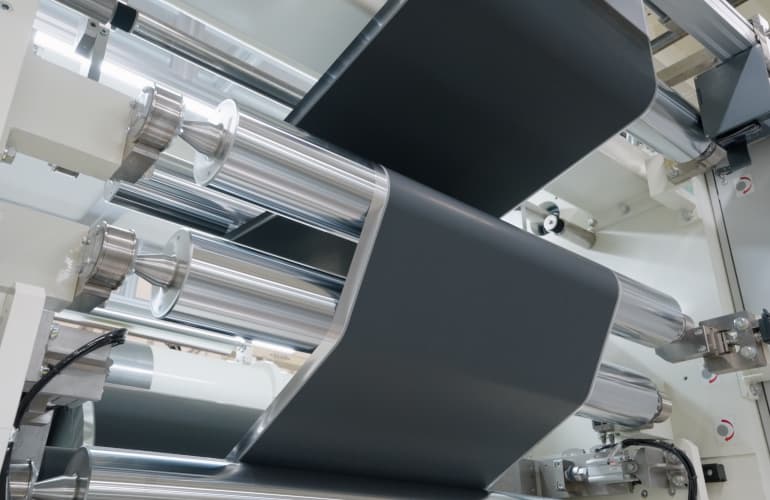
In production at Holland, Michigan since June 2025; Spring Hill, Tennessee converting from EV cells to LFP storage cells during 2026; the all-new Lansing, Michigan plant started making LFP cells for grid storage on August 18-19, 2026
North America ESS capacityHolland scaling from 17 GWh (end-2025) past 30 GWh (end-2026); over 50 GWh combined across five North American sites by end-2026, about 80% of LGES's global ESS capacity
Order bookFull output booked 3-5 years ahead by large-scale project developers
Plant investment$1.4B, 1.7M sq ft in Holland, Michigan; up to 1,700 jobs
The pouch and cylindrical lithium-ion cells that made LGES the largest battery maker outside China, supplied to GM, Tesla, Ford, Hyundai, Stellantis, Honda, Toyota and Mercedes-Benz from plants in Korea, Poland and Michigan plus automaker joint ventures across North America. LGES held 8.7% of global EV battery installations from January to May 2026 on 41.0 GWh, third behind CATL and BYD, though its share slipped from 9.5% a year earlier as Chinese makers gained.
Shipping at scale, but revenue guided to decline in 2026 as Western EV demand stalls and capacity converts to storage
Installations41.0 GWh (Jan-May 2026), 8.7% global share
Global rankThird worldwide; largest non-Chinese manufacturer
What's Next
More than triple ESS sales in 2026
LGES guided to annual revenue growth in the mid-teens to 20% with ESS sales more than tripling year over year while EV revenue declines. On the July 30, 2026 Q2 earnings call management reiterated full-year revenue growth of 20%+ as "comfortably achievable" on doubling ESS output, and guided Q3 ESS shipments up at least 50% quarter over quarter as new North American capacity comes online - the clearest single test of whether the grid-storage pivot can carry the company through the EV downturn.
Year-end 2026
Take Michigan LFP capacity past 30 GWh
The Holland plant is scheduled to nearly double from 17 GWh to more than 30 GWh of annual ESS cell capacity by the end of 2026, with every unit already contracted. Holland is now one of five North American ESS sites (with the newly launched Lansing plant, NextStar in Windsor, and joint ventures L-H Battery in Ohio and Ultium Cells 2 in Spring Hill) that together are set to exceed 50 GWh of ESS capacity by year end, about 80% of LGES's global ESS output.
Year-end 2026
Ramp Spring Hill LFP output and win data-center storage customers
With JF2 LFP cell mass production now live at Spring Hill, the next test is ramping output and converting the ESS pipeline (grid-scale, renewable-linked and AI data center projects) into signed supply contracts, following the same playbook as the Holland, Michigan plant. LGES's US system-integrator arm, LG ES Vertech, is separately targeting delivery of 50 GWh of US BESS projects in 2026, including a multi-year, 5 GWh supply and lifecycle-services deal with Qcells announced in February 2026.
Late 2026
Ramp Ohio Ultium Plant 1 to full EV cell output
Ultium Cells' Warren (Lordstown), Ohio plant resumed NCMA pouch-cell production for GM's Chevrolet Equinox EV and Cadillac Lyriq on August 18, 2026, ahead of its original Q4 2026 target. The plant - annual capacity above 45 GWh - now needs to ramp from restart back to steady-state output with its roughly 1,400 recalled workers, testing whether the EV demand recovery that triggered the recall holds through the rest of 2026.
Q4 2026
Start Tesla-specific LFP prismatic cell production at the Lansing, Michigan plant
The all-new Lansing, Michigan plant (a former planned third GM Ultium JV site, now wholly LGES-owned) started general production on August 18-19, 2026, making LFP cells for grid storage and NMC cells for Toyota's 2027 electric Highlander. The Tesla-specific piece - LFP prismatic cells for Megapack 3 under a $4.3B, three-year agreement confirmed by the US government in March 2026 - remains on track to begin in 2027 with options to extend supply and volume further, diversifying Tesla's Megapack cell sourcing away from CATL and BYD toward domestic, non-Chinese supply.
August 2027
Restore a mid-single-digit operating margin
Management targets a mid-single-digit percent operating margin and higher absolute operating profit in 2026, through ESS volume, stable operations, structural cost work and better operational efficiency. Q2's KRW113.3B operating profit was a start but still 77% below the prior year, and a net loss of KRW328.6B on non-operating items shows the underlying business is not yet consistently profitable. LGES has guided to more than 20% quarter-on-quarter sales growth in Q3 2026, with ESS shipments up at least 50% on new North American capacity and the restarted GM Ultium Ohio plant adding EV cell volume, and management now targets ESS profitability by Q4 even excluding US production incentives.
Year-end 2026
Move LMR cells from lab protocol to EV-scale product
The September 7, 2026 Nature Communications work showed 40 Ah LMR cells can hold 92.2% energy after 883 cycles by tightening the voltage window (4.3 V charge / 2.0 V discharge) and cooling formation to cut gas. The next test is whether that electrochemical protocol, rather than a new cathode recipe, can be locked into a commercial large-format EV cell without giving back the energy-density advantage that makes manganese-rich, cobalt-free LMR attractive versus NMC.
2027-2028
Track Record
3 of 4 announced dates hit · 1 missed
Ramp Ohio Ultium Plant 1 back to EV cell production by Q4 2026
Target Q4 2026 · Resolved Aug 18, 2026
Ultium Cells resumed NCMA pouch-cell production for GM's EV lineup at its Warren (Lordstown), Ohio plant on August 18, 2026, ahead of the original Q4 2026 target, completing a staged recall of roughly 1,400 workers that ran from July 27 through mid-August after a seven-month shutdown triggered by weak EV demand.
Hit
Convert the Spring Hill Ultium plant to LFP storage cells
Target 2026 · Resolved Jul 8, 2026
Ultium Cells began mass production of JF2 LFP battery cells for energy storage systems at Spring Hill, Tennessee in July 2026, completing the conversion in under five months on a $70M retooling investment. The roughly 700 workers furloughed in January 2026 are returning to work for the LFP line, which supplies grid-scale, renewable-linked and data-center storage projects in North America.
Hit
Grow 2025 revenue by 5% to 10%
Target Year-end 2025 · Resolved Jan 28, 2026
Revenue fell instead of growing, coming in at KRW23.7T for 2025 against KRW25.6T in 2024, as major customers' EV sales slowed faster than ESS growth could offset. Operating profit did improve to KRW1.3T on a better product mix, material cost efficiency and North American production incentives.
Missed
Start LFP cell production at the Holland, Michigan plant in 2025
Target 2025 · Resolved Jun 30, 2025
LGES began producing LFP cells for energy storage at Holland, Michigan in June 2025 on two lines, adding a third by year end and reaching 17 GWh of annual capacity. It is the first large-scale LFP cell plant in the United States.
Hit
Operations & Revenue
StatusOperational - mid-pivot from EV cells to grid storage
LGES is executing the sharpest strategic turn of any large cell maker. Western EV demand stalled and the US federal clean-vehicle credit expired in September 2025, so the company has redirected North American capacity toward energy storage across five sites (Holland and Lansing, Michigan; NextStar in Windsor, Ontario; and joint ventures L-H Battery in Ohio and Ultium Cells 2 in Spring Hill, Tennessee), which together are set to exceed 50 GWh of ESS capacity by end-2026, about 80% of LGES's global ESS output. The pivot is working on the top line, with Q2 2026 revenue up 24.8% year over year and the company back to an operating profit after three losing quarters, but profitability remains thin and uneven: that operating profit was still down 77% against the prior year and leaned on KRW241B of North American production subsidy, and a KRW241.2B non-operating loss from interest expense and asset disposals left the quarter with a net loss of KRW328.6B despite the operating profit. Management reiterated full-year 2026 revenue growth guidance of 20%+ on the July 30 earnings call, expects ESS shipments up at least 50% quarter over quarter in Q3, and is targeting ESS profitability by Q4 even excluding US production incentives, which would mark the clearest sign yet that the grid-storage pivot is carrying the company rather than just offsetting the EV downturn.
Revenue Streams
EV battery cells and modules
Pouch and cylindrical cells for GM, Tesla, Ford, Hyundai, Stellantis, Honda and Toyota, built in Korea, Poland, Michigan and a network of automaker joint ventures. Still the largest stream, but revenue is guided to decline in 2026.
Energy storage system batteries
LFP cells for grid-scale storage, made across five North American sites: Holland and the newly launched Lansing, Michigan, NextStar in Windsor, Ontario, and joint ventures L-H Battery (Ohio) and Ultium Cells 2 (Spring Hill, Tennessee). The fastest-growing stream by far, with 2026 sales guided to more than triple and combined North American capacity set to exceed 50 GWh (about 80% of LGES's global ESS output) with output booked out several years ahead.
North American production incentives
Advanced Manufacturing Production Credits on US-made cells, worth KRW241B in Q2 2026 alone and a material component of reported operating profit.
Key Metrics
Employees
32,000+
Est. Annual Revenue
KRW23.7T (~$17B) in FY2025, down on the EV slowdown; Q2 2026 revenue of KRW7.56T was up 24.8% YoY, with full-year 2026 revenue growth guidance reiterated at 20%+
Global EV battery market share
8.6% (52.6 GWh, H1 2026, up 8.4% YoY on installations) - third worldwide and the largest non-Chinese maker, down from 9.6% a year earlier
FY2025 results
KRW23.7T revenue; KRW1.3T operating profit (5.7% margin including US production incentive)
Q2 2026 results
KRW7.5602T revenue (up 24.8% YoY, 15.3% QoQ); KRW113.3B operating profit, ending three straight quarterly losses, though a KRW241.2B non-operating loss (interest expense and asset disposals) left a net loss of KRW328.6B for the quarter
H1 2026 ESS revenue growth
Up 4.6x year over year, reaching the high-20% range of total revenue; new ESS orders topped KRW3T
2026 guidance
Revenue growth guidance reiterated at 20%+ year over year on the Q2 2026 earnings call (July 30), management calling it "comfortably achievable" on doubling ESS output; Q3 2026 revenue guided up more than 20% quarter over quarter with ESS shipments up at least 50% QoQ, and management expects ESS to turn profitable in Q4 even excluding US production incentives
North America ESS capacity
Ramping past 50 GWh by end-2026 across five North American sites (LGES-owned Holland and Lansing, Michigan; NextStar Energy in Windsor, Ontario; and joint ventures L-H Battery in Ohio and Ultium Cells 2 in Spring Hill, Tennessee) - about 80% of LGES's global ESS capacity; Holland alone scales from 17 GWh at end-2025 to over 30 GWh by end-2026, with output booked out 3-5 years
Market cap
KRW85.5T (~$61.7B) as of August 11, 2026
Customers and joint ventures
GM (Ultium Cells), Stellantis (NextStar Energy), Honda (L-H Battery), Hyundai, plus supply to Tesla, Ford, Toyota and Mercedes-Benz. The all-new Lansing, Michigan plant (formerly a planned third GM Ultium JV site, now wholly LGES-owned) started production August 18-19, 2026, making LFP cells for grid storage and NMC cells for Toyota's 2027 electric Highlander; Tesla-specific LFP prismatic cells for Megapack 3, under the $4.3B, three-year deal confirmed by the US government in March 2026, remain on track to begin in 2027
Timeline
20262025 results show the EV slowdown and the ESS offset
Full-year 2025 revenue comes in at KRW23.7T with KRW1.3T of operating profit, a 5.7% margin including the North American production incentive. Revenue fell as major customers' EV sales slowed, but ESS grew solidly on the North American LFP expansion.
2026GM and LG convert a Tennessee EV plant to grid storage
In March 2026 GM and LG shift their Ultium Cells plant in Spring Hill, Tennessee from EV battery production to LFP cells for energy storage, recalling laid-off workers. It is the clearest signal yet that the joint venture capacity built for cars is being redirected to the grid.
2026Lansing, Michigan plant starts production
LGES starts production on August 18, 2026 at its all-new Lansing, Michigan plant, a site it took over outright after GM exited what was originally planned as a third Ultium Cells joint-venture factory. The 226-acre facility has drawn more than $2 billion of investment since 2022, targets over 35 GWh of annual capacity at full scale, and makes LFP cells for grid storage (including the Tesla Megapack 3 supply deal, with prismatic cell deliveries still slated to begin in 2027) plus NMC cells for Toyota's 2027 electric Highlander, employing roughly 900 workers growing toward 1,700.
2026Back to profit in Q2 on storage demand
Preliminary Q2 2026 results announced July 7 show revenue of KRW7.5602T, up 24.8% year over year and 15.3% on the quarter, and an operating profit of KRW113.3B that ends three straight quarters of losses. ESS and cylindrical cell sales carry the quarter while EV demand stays weak; the North American production subsidy contributes KRW241B.
2026Restarts idled Ohio EV battery plant as demand recovers
GM-LG joint venture Ultium Cells resumed production on August 18, 2026 at its idled Plant 1 in Warren (Lordstown), Ohio, completing a staged recall that ran from July 27 through mid-August and reversing a January 2026 shutdown triggered by weak EV demand after the US clean-vehicle tax credit expired. Roughly 1,400 workers are back on site as the plant, distinct from the Spring Hill, Tennessee plant's conversion to LFP storage cells, resumes NCMA pouch-cell production for GM's EV lineup including the Chevrolet Equinox EV and Cadillac Lyriq.
2026Spring Hill LFP conversion completed; mass production begins
Ultium Cells starts mass production of JF2 LFP battery cells for energy storage at Spring Hill, Tennessee in July 2026, completing the EV-to-storage conversion in under five months on a $70M retooling investment and bringing back roughly 700 furloughed workers.
2026L-H Battery sells its Ohio plant building to Honda for $2.86B
LGES said on August 10, 2026 that its L-H Battery joint venture with Honda will sell the building and related structures at their Ohio battery plant to a Honda US manufacturing unit for $2.86B in a sale-and-leaseback deal, excluding land and equipment. LGES said the transaction does not change its ownership stake in the joint venture, announced in 2022 with a combined $4.4B investment to supply battery cells for Honda's North American EV lineup.
2026Signs 10-year Arkansas lithium offtake with Smackover Lithium
Smackover Lithium, a joint venture of Standard Lithium and Equinor, announced around September 1, 2026 a binding take-or-pay agreement to supply LG Energy Solution with 8,000 metric tonnes per year of battery-quality lithium carbonate over 10 years from its South West Arkansas direct-lithium-extraction project, with deliveries tied to commercial production starting in 2029. Combined with an earlier Trafigura offtake, roughly 90% of the project's targeted volume is now committed, moving it closer to a final investment decision and giving LGES a US-sourced lithium supply for its North American cell plants.
2026LMR cells keep 92.2% energy after 883 cycles
On September 7, 2026 LG Energy Solution said joint research with Seoul National University's Jongwoo Lim lab, published in Nature Communications, suppressed gas generation in lithium manganese-rich cells by changing the voltage window and formation process. Lowering charge cutoff from 4.6 V to 4.3 V raised oxygen recovery from 86% to 97%, and a 2.0 V discharge cutoff plus cooler formation let 40 Ah-class cells retain 92.2% of initial energy after 883 cycles, a step toward using cheaper, cobalt-free LMR cathodes in large-format EV cells.
2025First large-scale US LFP plant opens in Michigan
LGES opens a 1.7-million-square-foot LFP cell plant in Holland, Michigan, a $1.4B investment and the first large-scale lithium iron phosphate factory for energy storage in the United States. Production starts in June on two lines, with a third by year end.
2022South Korea's largest IPO ever
LGES lists on the Korea Exchange in January 2022, raising KRW12.75 trillion (about $10.7B) at KRW300,000 a share, more than double the previous Korean record. The stock closes 68% above its offer price and the company becomes Korea's second most valuable listed firm after Samsung Electronics.
2020Spun out of LG Chem as an independent company
LG Chem separates its battery division, which traces back to 1992, into LG Energy Solution on December 1, 2020. LG Chem keeps roughly 81% of the new company.
Funding
Round
Date
Amount
Investors
Source
Spin-off from LG Chem
Dec 2020
Corporate separation
LG Chem (retains ~81%)
IPO (Korea Exchange)
Jan 2022
KRW12.75T (~$10.7B)
Public markets (KRX: 373220); South Korea's largest IPO ever, more than double the previous record