Space Pioneer logo

Space Pioneer

PrivateFounded 2019🇨🇳Beijing, China
CEO

Kang Yonglai

Data verified as of Aug 21, 2026

Summary

Space Pioneer (Beijing Tianbing Technology), founded in 2019 by former LandSpace CTO Kang Yonglai, develops kerosene-liquid oxygen rockets and engines. Its Tianlong-2 became the first privately developed Chinese liquid-propellant rocket to reach orbit (April 2023). The company's flagship is the reusable, Falcon 9-class Tianlong-3 (~17 t to LEO), built for China's satellite-internet constellations, but its April 2026 maiden flight failed about 33 seconds after liftoff when a first-stage engine over-expanded its thrust. As of mid-August 2026 the 'zeroing' fault investigation is still underway, no return-to-flight attempt has occurred, and a second Tianlong-3 is reportedly nearing completion for an attempt targeted before the end of 2026. Space Pioneer has raised roughly $764M and, alongside fellow launch startups LandSpace, Galactic Energy, CAS Space and iSpace, remains in pre-IPO tutoring for a listing on Shanghai's STAR Market after regulators loosened listing rules for unprofitable hard-tech companies.

Main Products

Tianlong-2

Two-stage kerosene-liquid oxygen orbital rocket; the first privately developed Chinese liquid-propellant rocket to reach orbit.
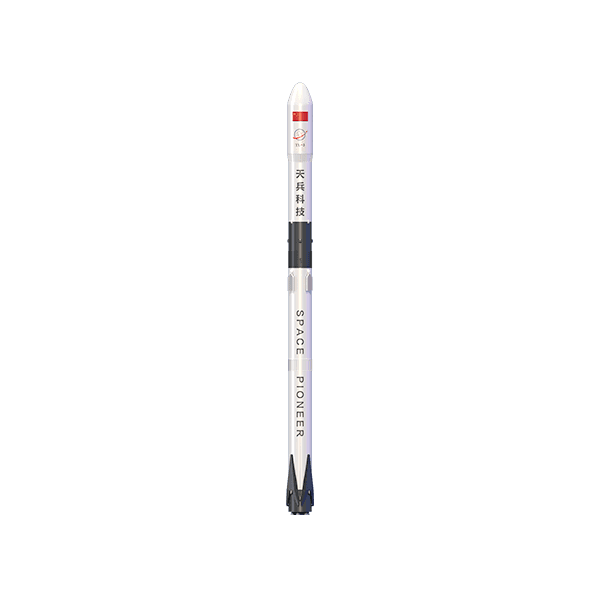
Reached orbit on its April 2, 2023 maiden flight carrying the Jinta cubesat to sun-synchronous orbit; one successful flight to date.

Payload to LEO2,000 kg
Payload to SSO1,500 kg (500 km)
Height32.8 m
PropellantKerosene / LOX
First Stage Engines7 x TH-11 (kerolox)
Maiden FlightApr 2, 2023 (success)
Tianlong-3

Tianlong-3

In Development

Two-stage kerolox rocket with a reusable first stage, designed as a Falcon 9-class vehicle able to loft up to ~36 satellites at once for China's satellite-internet constellations.

Maiden flight on April 3, 2026 failed after an engine-bay explosion ~33 seconds after liftoff. As of mid-August 2026 the fault investigation is still underway; a second vehicle is reportedly nearing completion for a possible second attempt before the end of 2026.

Payload to LEO~17,000 kg
Payload to SSO14,000 kg (500 km)
First Stage Engines9 x TH-12 (~100 tf each)
PropellantKerosene / LOX
ReusableYes (first stage)
Maiden FlightApr 3, 2026 (failure)

What's Next

Tianlong-3 return to flight

Complete the 'zeroing' fault-investigation into the April 2026 engine-bay failure and fly a second Tianlong-3, reportedly nearing completion, with a possible attempt before the end of 2026. As of mid-August 2026 no return-to-flight attempt has yet occurred.

2026

Demonstrate first-stage recovery and reuse

Move beyond reaching orbit to recovering and reflying the Tianlong-3 first stage, the core of Space Pioneer's low-cost launch strategy.

2026-2027

Scale launch cadence for constellations

Ramp Tianlong-3 production and flight rate to serve China's national satellite-internet mega-constellation deployment.

2027+

List on Shanghai STAR Market (IPO)

Complete pre-IPO tutoring and listing on Shanghai's STAR Market alongside fellow Chinese commercial launch startups LandSpace, Galactic Energy, CAS Space and iSpace, following regulators' move to loosen listing rules for unprofitable hard-tech companies. As of mid-2026 the company remains in tutoring; no confirmed listing date yet.

TBD (STAR Market listing date not yet set)

Operations & Revenue

StatusDevelopment Stage

Tianlong-2 has flown one successful orbital mission (2023), but the flagship reusable Tianlong-3 failed on its April 3, 2026 maiden flight after an engine-bay explosion ~33 seconds into flight; investigators observed that one of the nine first-stage TH-12 engines momentarily over-expanded its thrust. As of mid-August 2026 the 'zeroing' fault-investigation and rectification process is still underway and no return-to-flight attempt has occurred; a second Tianlong-3 is reportedly nearing completion for an attempt targeted before the end of 2026. Space Pioneer is also queued for an IPO on Shanghai's STAR Market alongside fellow Chinese launch startups LandSpace, Galactic Energy, CAS Space and iSpace, and remains in pre-IPO tutoring as part of a wave of commercial-aerospace listings after regulators loosened STAR Market rules for unprofitable hard-tech firms.

Revenue Streams

Tianlong-2 Launch Services

Small-to-medium kerolox orbital launches for Chinese commercial and research satellite customers.

Tianlong-3 Reusable Launch Services

Planned high-cadence, low-cost reusable launches sized for China's satellite-internet mega-constellations, pending return-to-flight after the 2026 maiden failure.

Liquid Rocket Engines

Development and production of the Tianhuo (TH) series of kerolox engines, including the TH-11 and the 100 tonne-force-class TH-12 powering Tianlong-3.

Key Metrics

Est. Annual Revenue

Not publicly disclosed (development-stage commercial launch provider)

Total Funding

~$764M

World First

First Chinese private liquid rocket to orbit (Tianlong-2, 2023)

Tianlong-3 Payload to LEO

~17,000 kg

Orbital Launches

Tianlong-2: 1/1 success; Tianlong-3: 0/1 (no return-to-flight attempt yet)

Timeline

2026Tianlong-3 maiden flight fails

On April 3, 2026, Tianlong-3 lifts off from Jiuquan but an explosion in its engine bay about 33 seconds after liftoff ends the mission, China's third orbital launch failure of the year.

2025Tianlong-3 sea-platform static fire & $350M round

A ~30-second Tianlong-3 first-stage static fire succeeds on a sea platform in September 2025 after redesign, and an October 2025 Series D adds about $350M for Tianlong-3 and next-generation engines.

2024Tianlong-3 static-fire mishap

During a June 30, 2024 static fire at Gongyi, a Tianlong-3 first stage breaks free of its hold-downs, makes an unintended suborbital hop and crashes about 1.5 km away. No casualties; the company later implements 127 corrective measures.

2023First Chinese private liquid rocket to orbit

On April 2, 2023, Tianlong-2 reaches orbit on its maiden flight carrying the Jinta cubesat, making Space Pioneer the first startup to orbit a liquid-propellant rocket on its first attempt.

2019Founded

Kang Yonglai, formerly CTO of LandSpace, founds Space Pioneer (Beijing Tianbing Technology) to build low-cost reusable launch vehicles and liquid rocket engines.

Funding

Cumulative disclosed raise · dated rounds

$500M$1B202020212022202320242025$973M raised
RoundDateAmountInvestorsSource
Series A-C2019-2023~$416M (multiple rounds)Zhejiang University Joint Innovation Fund, CICC Capital, and others
Reusable rocket round2024-06$207M (1.5B yuan)Undisclosed (for Tianlong-3 development)
Series D2025-10~$350MUndisclosed (Tianlong-3 and next-generation engines)

/ Related Companies

All Rockets
Blue Origin logo

Blue Origin

Rockets

Blue Origin is a privately held aerospace company founded by Jeff Bezos that develops reusable launch vehicles, rocket engines, lunar landers, in-space mobility systems, and satellite communications infrastructure. Its current programs span the New Shepard suborbital system, the New Glenn heavy-lift rocket, the BE-4 engine family that also powers ULA's Vulcan, the Blue Moon lunar lander family, the Blue Ring spacecraft platform, and the TeraWave network. The FAA closed its NG-3 mishap investigation and lifted the New Glenn grounding on May 22, 2026 - pinning the BlueBird 7 deployment failure on a cryogenic leak that froze a hydraulic line - but six days later, on May 28, a New Glenn exploded during a hotfire at Cape Canaveral's LC-36, destroying the transporter-erector at Blue Origin's only New Glenn pad. CEO Dave Limp said the rocket will fly again before year-end via a hybrid horizontal-integration/crane-erect path that skips replacing the destroyed transporter-erector, with the propellant farm, a second flight-ready booster, and three upper stages intact; on July 24, 2026 NASA and Blue Origin agreed to conduct New Glenn second-stage (GS2) hot fire testing at Stennis Space Center's B-2 stand beginning this fall while LC-36 recovers, and NASA's Pegasus barge is due at Kennedy Space Center around August 10-12, 2026 to carry the completed GS2 to Stennis. The Blue Moon MK1 'Endurance' cargo lunar lander has completed thermal vacuum testing at NASA Johnson, but with New Glenn grounded its launch to the Moon has slipped from a fall-2026 target to early 2027. Separately, a February 2026 NASA Artemis architecture overhaul reassigned the crewed Blue Moon Mark 2 lander to compete with SpaceX's Starship for the program's first Moon landing (now targeted for Artemis IV, as soon as early 2028) following a 2027 crewed low-Earth-orbit docking test on the restructured Artemis III. In a landmark shift after 26 years of near-total self-funding (roughly $30B cumulative), Blue Origin raised about $10B at a $130B valuation in July 2026 - its first-ever outside round, led by Coatue (~$4B) with Jeff Bezos adding ~$2B - to bankroll Limp's target cadence of roughly 100 launches a year against an estimated ~$4.8B 2026 spend. Separately, Florida's governor announced on May 22, 2026 that Blue Origin will invest $600 million in an 830,000-square-foot upper-stage manufacturing expansion ("Project Horizon") at its Rocket Park campus in Merritt Island, adding about 500 jobs averaging over $98,000. The company broke ground on a new ~120,000-square-foot Cape Canaveral payload processing facility on August 31, 2026, and on September 1, 2026 NASA awarded it a $700M contract to build and deliver a Mars Telecommunications Orbiter - built on the Blue Ring platform - by December 31, 2028, extending Blue Origin's business beyond Earth-orbit launch and lunar landers into deep-space communications infrastructure. Bloomberg reported on September 3, 2026 that Blue Origin has hired at least 47 alumni of Amazon's Leo satellite venture over the past year, many now working on TeraWave, as it builds out its own broadband constellation team.

Boeing logo

Boeing

Rockets

Boeing is one of the world's largest aerospace companies, spanning commercial airplanes, defense and space systems, and aftermarket services. The 2026 turnaround gathered pace through the first half of the year: 314 commercial deliveries in H1 2026 (its best first half since 2018), a Q2 net loss of $428M on $24.6B of revenue that nonetheless produced the company's first positive free cash flow quarter (+$631M) in over a year, and a record total backlog of $715B including more than 6,200 commercial aircraft. The 737 MAX line reached rate 47 per month in May 2026 and gained a fourth final-assembly line - the Everett 'North Line' - in July, with rate 52 targeted for early 2027. At the Farnborough Airshow (July 20-24, 2026) Boeing booked 170+ aircraft led by SMBC's 100-jet 737 MAX order, while the long-delayed 777X neared its certification finish line even as Emirates declined to accept the first 10-11 early-build 777-9s over their age and GE Aerospace temporarily paused GE9X engine shipments pending a durability fix. The FAA certified the 737 MAX 7 on August 3, 2026, clearing the smallest MAX variant after nearly a decade of review, and on August 10 Boeing agreed to sell its Wisk Aero, Insitu, and SkyGrid subsidiaries to Archer Aviation for a near-20% equity stake. July's delivery pace cooled to 53 aircraft (down 17% from June and now trailing Airbus by 51 aircraft year-to-date, 367 vs 418), and on August 21 Boeing's roughly 17,000 SPEEA-represented engineers and technicians rejected the tentative contract their own bargaining councils declined to endorse (64.3% and 71.9% against, respectively) and authorized a strike if no new deal is reached before the current contracts expire October 6. Boeing shares fell about 7.5% on the news, cutting market cap to roughly $170B (from ~$183B in mid-August). On August 26 the FAA finalized an airworthiness directive requiring inspections of certain 787 Dreamliners over shim gaps at lower side-of-body splice plates. Boeing remains one of the two central global commercial-jet manufacturers alongside Airbus, with its trajectory now hinging on sustaining the 737 ramp without reintroducing defects, closing out 737 MAX 10 certification, avoiding an engineers' strike, and steering the 777X's remaining ETOPS testing toward 2027 certification.

CAS Space logo

CAS Space

Rockets

CAS Space (Zhongke Aerospace) is a 2018 commercial spinoff majority-owned by the Chinese Academy of Sciences, led by founder and chairman Yang Yiqiang - former chief commander of the state Long March 11 solid rocket. Headquartered in Guangzhou, it operates the solid-fuel Kinetica-1 (Lijian-1), one of China's most-flown commercial rockets with 15 launches and 14 successes since 2022 (carrying 110 satellites - the first Chinese commercial rocket to top 100), and has committed to a monthly Kinetica-1 cadence for the second half of 2026. In March 2026 it successfully debuted the medium-lift kerolox Kinetica-2 (Lijian-2), a three-core, nine-engine rocket; its second flight, carrying 18 Qianfan constellation satellites, slipped from a September target to October 2026, with the Y2 vehicle departing CAS Space's Guangzhou factory for Jiuquan on August 26, 2026. The company holds ~63% of China's private launch market by volume. CAS Space filed for a $607M IPO on the Shanghai STAR Market in April 2026 at a target valuation of ~15 billion yuan (~$2.1B); the Shanghai Stock Exchange accepted the application, and on June 29, 2026 CAS Space refreshed its prospectus, disclosing full-year 2025 revenue of ~277M yuan against a ~1.12B yuan net loss and setting a 2029 profitability target for the first time. The application has since cleared the exchange's listing-committee review, with final CSRC registration, share pricing, and a trading date still pending as of early August 2026. It is scaling output at a new Zhejiang 'super factory' and developing first-stage reusability via the in-house Kinecore-2 engine (110 tf), which completed a 620-second cumulative long-duration qualification test - including a 400-second single burn, a new stability record - on June 30, 2026, en route to a phased plan targeting full first-stage recovery by Kinetica-2's tenth flight around 2028.

CASC logo

CASC

Rockets

China Aerospace Science and Technology Corporation (CASC) is the state-owned prime contractor for China's space program and the world's most prolific launch organization by missions flown. Wholly owned by the central government through SASAC and led by chairman Chen Mingbo, it develops and operates the Long March (Changzheng) rocket family - which flew its 661st cumulative mission on August 4, 2026, delivering a 23rd batch of GuoWang broadband satellites - along with the Shenzhou crewed spacecraft, Tianzhou cargo vehicles, the Tiangong space station, BeiDou navigation and GuoWang broadband satellites, the Chang'e lunar and Tianwen planetary probes, and China's strategic missiles. After a national-record 73 launches in 2025, CASC is targeting over 100 launches in 2026 amid an industry-wide national push toward ~140, debuted the partially reusable Long March 12B in June 2026, and saw its Tianwen-2 probe reach the quasi-moon asteroid Kamo'oalewa on July 6, 2026. On July 10, 2026 it made China the second nation ever to recover an orbital rocket first stage, when the new single-stick, partially reusable Long March 10B flew its maiden mission from Hainan and captured its booster in a sea-based net - a landmark step toward closing the reusability gap with SpaceX, with a reflight of the recovered booster still targeted before the end of 2026. That momentum was interrupted on August 10, 2026, when a Long March 7A broke apart shortly after liftoff and lost its satellite payload - only the vehicle's second failure ever - triggering an engine investigation that put a question mark over the timing of Chang'e 7; CASC kept other Long March variants flying through the investigation, with a Long March 5B launching an eighth GuoWang satellite batch on August 13, 2026, and on August 19, 2026 rolled the Chang'e-7 probe and its Long March 5 (Y14) rocket out to the Wenchang pad ahead of a planned August 24, 2026 launch, but the mission was then postponed by Typhoon Narra and, per an August 23 China Manned Space Agency statement, cannot fly within the 2026 window at all - multiple outlets report a possible slip into 2027 - with no root cause or formal fleet clearance yet announced for the 7A investigation either. CASC is also advancing the triple-core Long March 10 toward a crewed Moon landing before 2030: the Long March 10A's own orbital debut is separately reported to carry a lunar navigation satellite ahead of the uncrewed Mengzhou 1 capsule test, still targeted around September 2026 but flagged in one report as at risk of slipping into early 2027.

Cosmoleap logo

Cosmoleap

Rockets

Cosmoleap (大航跃迁), legally Dahang Yueqian Technology, is a Chinese launch startup founded in March 2024 by Chen Shuguang to build the Yueqian-1 ('Leap-1') - and notably is the first Chinese company to pursue a SpaceX Starship-style 'chopstick' tower-catch recovery instead of landing legs. The roughly 70 m-tall, 4.2 m-diameter, methane–liquid oxygen two-stage rocket is designed to lift about 18,000 kg to LEO when expended or ~12,000 kg with the first stage recovered, on a cluster of nine ~80-ton-class engines reusable up to 20 times. It initially flies the YF-209 engine sourced from CASC's Academy of Aerospace Liquid Propulsion Technology while developing its own 100-ton-class Qingyu-11 methalox engine (targeting ~150 t thrust, deep throttling, and up to 50 reuses); Qingyu-11 cleared a round of core-component tests (torch ignition, low-temperature and liquid-flow testing) in June 2026 and is moving toward full-system test firing. Cosmoleap raised roughly 100 million yuan (~$14M) in November 2024 and a 500 million yuan (~$73M) Series A in April 2026 - about 600 million yuan (~$84M) total - led by Qianhai Ark and Puhua Capital. On March 3, 2026 the company signed a strategic supply-chain cooperation agreement with Beijing Aerospace Guanghua Electronic Technology, becoming the first commercial rocket firm to partner with the state-linked aerospace-electronics supplier. With its design review passed and a tower-catch verification platform and drop tests underway, the company plans final assembly and integrated testing in the second half of 2026 and a debut orbital flight in 2027, racing domestic tower-catch rival Astronstone, which is pursuing a similar late-2026/early-2027 debut. Ground testing kept pace through mid-2026: the first-stage liquid-methane pressurization and delivery system passed China's first dedicated natural-circulation precooling test for a reusable methalox rocket in June, and the second-stage frame and propellant-tank rear-bottom structure passed a combined static-load test in August.

Deep Blue Aerospace logo

Deep Blue Aerospace

Rockets

Deep Blue Aerospace (深蓝航天) is a Chinese commercial launch startup built around vertically landing, reusable kerosene–liquid oxygen rockets - positioning itself as one of China's closest analogs to early SpaceX. Founded in 2016 and headquartered in Nantong, it has flown a series of VTVL hop tests, most notably a September 2024 high-altitude flight that completed 10 of 11 objectives with ~0.5 m landing accuracy before an anomaly during the final engine shutdown damaged the stage on touchdown. The company is now preparing the maiden flight of its medium-lift Nebula-1, which can loft up to 2,000 kg to LEO on nine Thunder-R engines and is designed for first-stage recovery; the first Nebula-1A vehicle was rolled out in March 2026 to a new sea-recovery pad on Lianli Island at Haiyang - which reached full launch-capable status after an integrated test mission on March 30–31, 2026 - for a debut orbital flight that will attempt a first-stage splashdown recovery. The originally targeted mid-2026 debut has slipped, with launch trackers now listing the flight no earlier than December 2026. Deep Blue is also developing the much larger Nebula-2 (25,000+ kg to LEO) and has begun pre-selling suborbital space-tourism tickets for flights targeted in 2027.