Apptronik

Apollo

Active

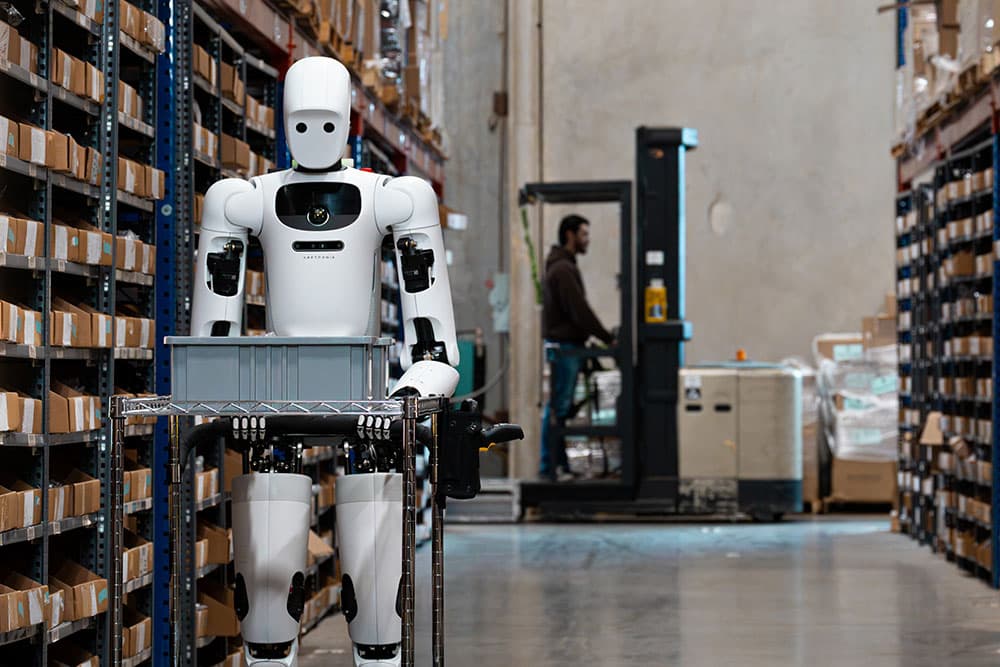
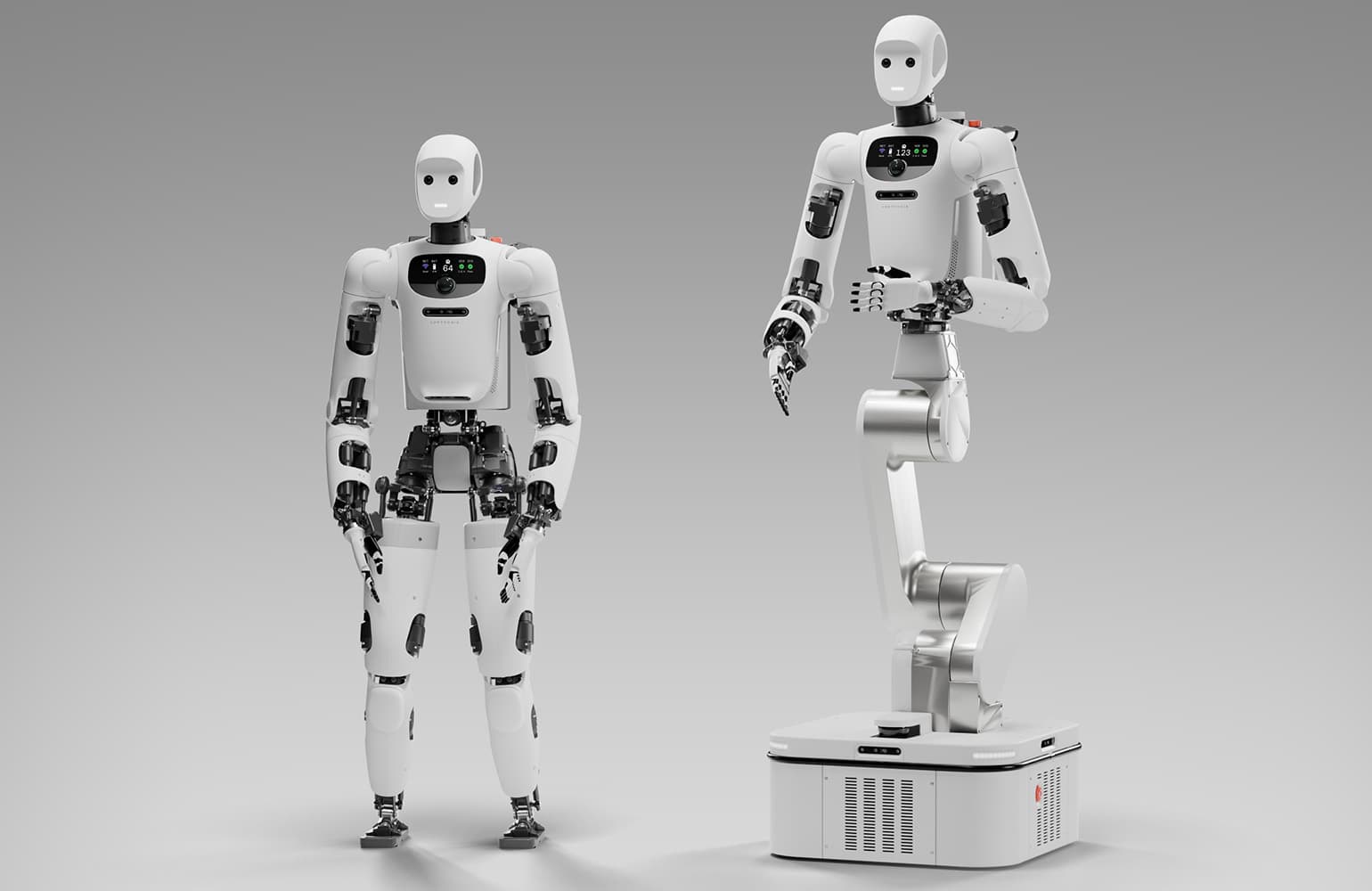
The humanoid that put Apptronik on the map: 5 feet 8 inches, 160 pounds, able to lift boxes up to 55 pounds, and sized and shaped to work in spaces built for people rather than requiring a rebuilt facility. It is pitched as multi-purpose rather than general purpose, aimed first at trailer unloading, palletizing, case picking, kitting, and parts transport. Units are working in designated areas inside Mercedes-Benz, GXO Logistics, and Jabil sites.

Latest update Sep 21, 2026

Apollo

01

Current status

Still in pilot deployment with strategic partners as of September 2026. Not sold commercially, and no price has been published. Apptronik's press list still ends at the June 30 Robot Park release.

02

Specifications4

Height
5 ft 8 in (1.73 m)
Weight
160 lb (72.6 kg)
Payload
Boxes up to 55 lb (25 kg)
Deployments
Mercedes-Benz, GXO Logistics, Jabil

03

Upcoming milestones5

Announced next steps from Apptronik that mention Apollo.

  1. 2026 to 2027

    Wide window

    Scale Apollo production through Jabil

    Apptronik's manufacturing route runs through Jabil rather than through factories of its own, under the April 2025 collaboration that also puts Apollo to work inside Jabil's own operations. Neither company has published 2026 production volumes. Proving that a contract manufacturer can build humanoids at rate is the supply-side half of the 2027 plan, and it is the part Apptronik controls least directly.

  2. 2026 to 2027

    Wide window

    Expand the Robot Park network to customer and partner sites

    The Austin Robot Park is the flagship of what Apptronik describes as a growing network of Robot Parks at customer and partner locations, including data-collection workflows at Google DeepMind, Mercedes-Benz and GXO. The June 30, 2026 release said the company plans to open new Robot Park locations in more cities soon. More sites mean more task diversity, which is the input both Apollo 3 and Google DeepMind's Gemini Robotics models depend on.

  3. 2027

    Ship Apollo 3, the first true commercial product

    Done whenApptronik ships Apollo 3 as a commercial product.

    Company date

    Everything Apptronik is learning on Apollo 2 at Robot Park is aimed at Apollo 3, which the company still describes as its next-generation commercial product expected in 2027. No later ship date has been published since the June 30 Robot Park announcement. It is the transition the whole company is built around: from pilot units inside partner facilities to a robot that gets sold, and it is what the $520 million extension was raised to fund.

  4. 2027

    Convert pilots into roughly $1B of orders

    Done whenApptronik or a customer discloses orders worth about $1 billion.

    Company date

    CEO Jeff Cardenas told CNBC in February 2026 that he expects orders worth around $1 billion starting in 2027, with investor Howard Morgan projecting high-volume delivery at roughly $80,000 a year per robot, about the price of a luxury car. Apptronik has never published a price and nobody can buy an Apollo today, so this is still the number that turns the pilot deployments at Mercedes-Benz, GXO, and Jabil into a business.

04

In the news2

  1. Apptronik and GXO sign a letter of intent for Apollo trials

    GXO said on Nov. 12, 2026 that it signed a letter of intent with Apptronik to expand live-warehouse trials of Apollo and to develop a robotics-as-a-service framework. The trials, covering picking, tote movement, packing, and sortation, are scheduled to begin in 2027. If they meet agreed performance and safety targets, the companies say they intend to move toward as many as 1,000 Apollo robots over four years, with a first North American deployment in late 2027; that figure is a conditional ceiling, not a purchase order.

    www.globenewswire.com

  2. DeepMind tests Gemini Robotics 2.5 on Mercedes lines

    On Nov. 10, 2026 Google DeepMind introduced Gemini Robotics 2.5, a vision-language-action model it is rolling out to robotics partners. In a proof of concept, Apptronik's Apollo 2 sorted metal brackets on Mercedes-Benz lines in Kecskemét, Hungary, and Sindelfingen, Germany, and DeepMind reported a 96 percent success rate without defining the denominator. DeepMind also says lab tasks succeeded 30 to 100 percent more often than its previous baseline and finished 20 to 30 percent faster.

    deepmind.google arstechnica.com + Google DeepMind+ Alphabet

05

More from Apptronik3

06

More in Humanoid Robots