Westinghouse Electric Company
Data verified as of Jul 17, 2026
Summary
Westinghouse Electric Company is the largest Western nuclear technology company, owned 51% by Brookfield (with institutional partners) and 49% by uranium miner Cameco since their $7.9B acquisition closed in November 2023. Nearly half of the world's operating nuclear reactors are based on Westinghouse technology, and its fuel and operating-plant-services businesses serve PWR, BWR, and VVER fleets globally — generating about $5.0B of revenue in 2025. Its flagship AP1000 reactor is the only fully licensed advanced large reactor operating in the US (Vogtle Units 3 and 4 in Georgia), with four more units operating in China and orders or advanced programs in Poland, Bulgaria, and Ukraine. In October 2025 the US government announced an $80B+ strategic partnership with Westinghouse, Brookfield, and Cameco to build a fleet of AP1000 and AP300 reactors across the United States, followed in June 2026 by a conditional $17.5B DOE loan commitment to finance long-lead components for up to 10 AP1000s. Alongside the large-reactor buildout, Westinghouse is developing the 330 MWe AP300 small modular reactor and the 5 MWe eVinci microreactor, which is slated for first fueled testing at Idaho National Laboratory and was selected for deployment at Malmstrom Air Force Base. Under CEO Dan Sumner, appointed in April 2026, the company sits at the center of the US nuclear renaissance.
Main Products

Generation III+ pressurized water reactor with fully passive safety systems and modular construction — the only fully designed and licensed advanced large reactor operating in the United States, and the reference design for the US nuclear buildout and for new plants in Poland, Bulgaria, and Ukraine.
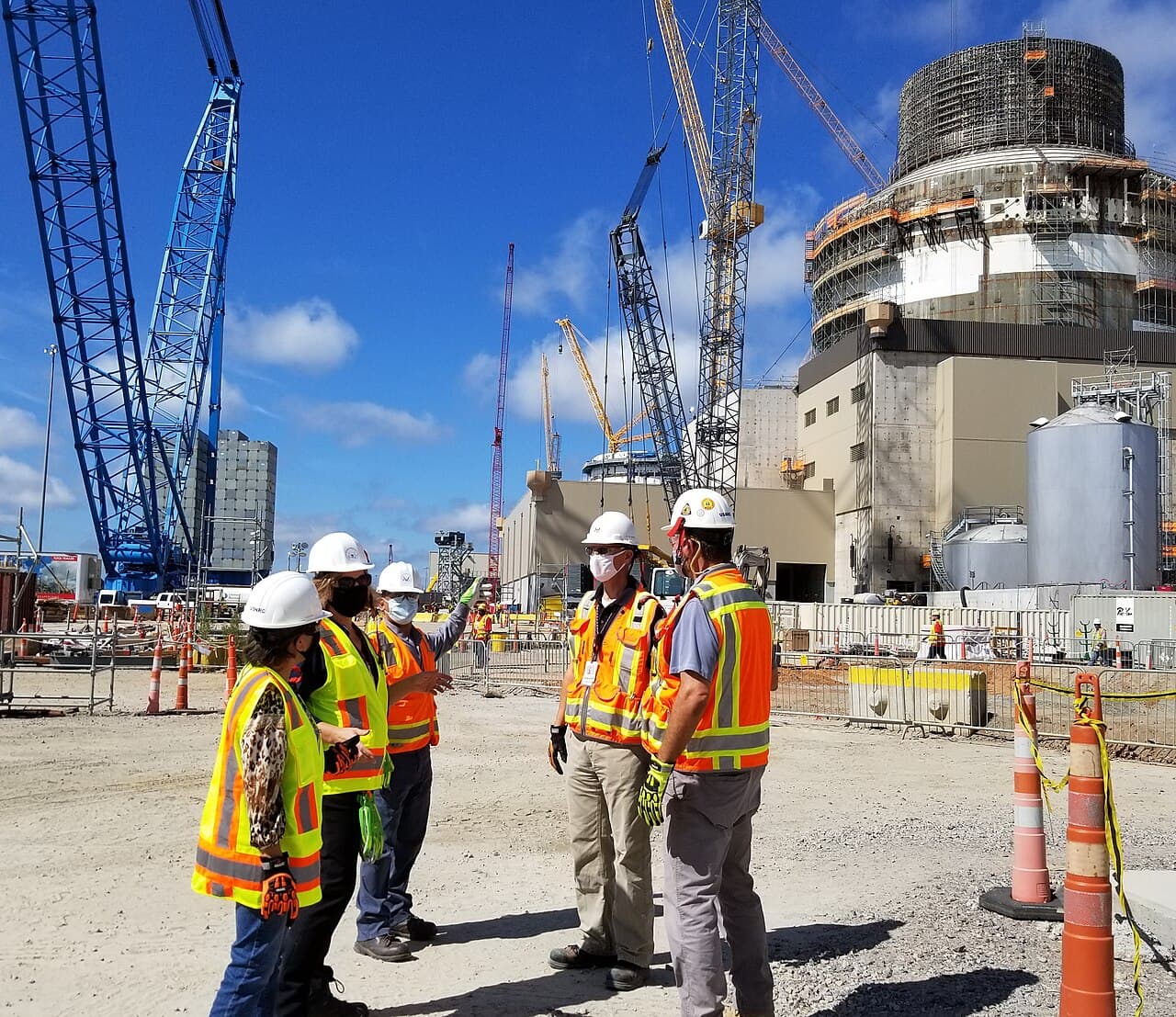
Operating at Vogtle Units 3 & 4 in Georgia (commercial operation 2023 and 2024) and at four units in China, with Chinese derivative units expanding the fleet to 12 operating reactors. Ordered or in advanced development for Poland (3 units), Bulgaria (Kozloduy 7 & 8), and Ukraine (9 units planned starting at Khmelnytskyi); in the US, four units at Project Matador in Texas entered NRC environmental scoping in March 2026 and the VC Summer completion effort is in feasibility. In April 2026 Westinghouse designated Vogtle Unit 4 as the standard reference plant for fleet-scale US deployment.

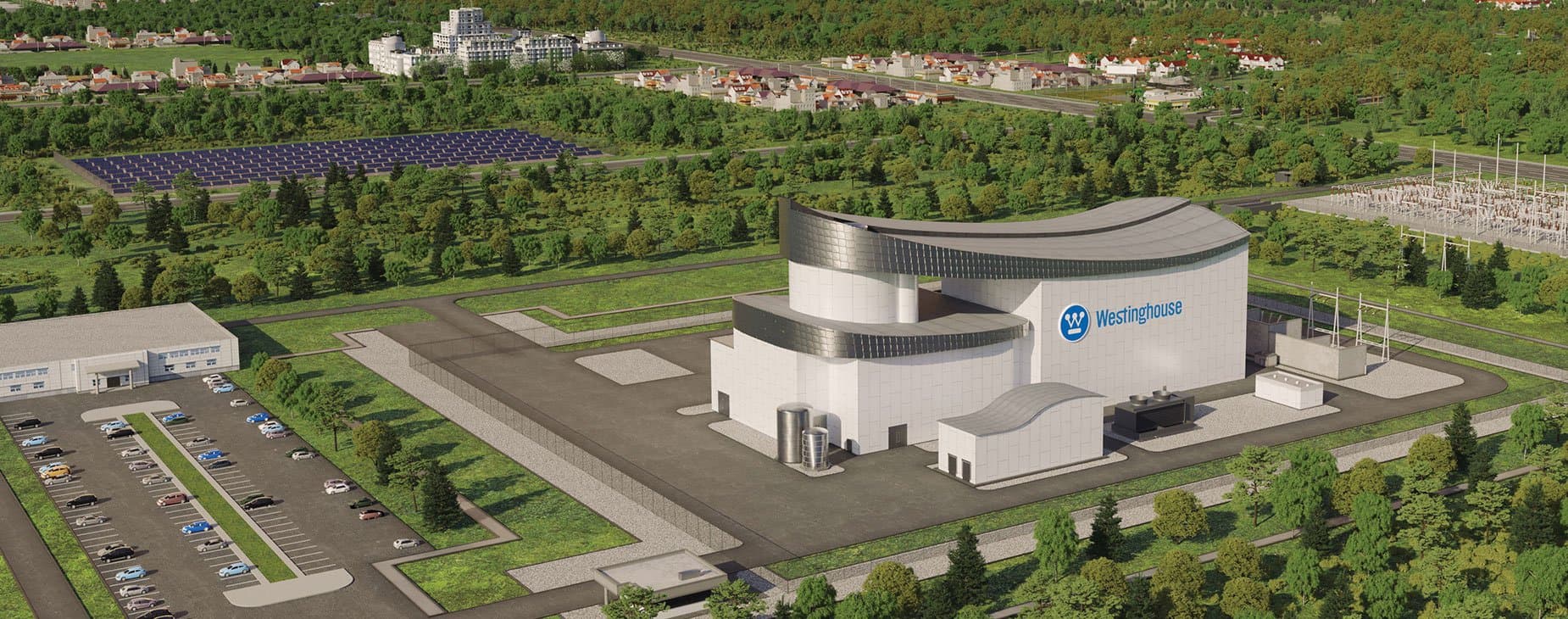
330 MWe (990 MWt) single-loop small modular reactor derived directly from the licensed AP1000, reusing its passive safety architecture and supply chain to shorten the path through licensing and construction.
In NRC licensing engagement with design certification anticipated by 2027. First announced fleet: an agreement with UK's Community Nuclear Power to deploy four AP300 units in North Teesside, England, targeting commercial operation in the early 2030s; the AP300 is also part of the October 2025 $80B US government buildout partnership alongside the AP1000.

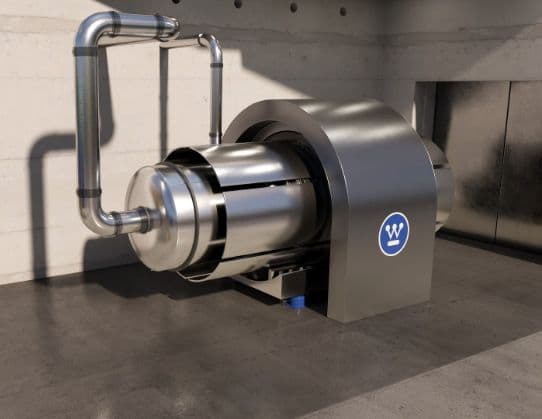
Transportable 5 MWe heat-pipe-cooled microreactor with TRISO fuel and no water cooling, designed to run for eight-plus years without refueling — targeting remote communities, mining, industry, data centers, and military installations.
First microreactor developer to complete front-end engineering (FEEED) and win DOE approval of its Preliminary Safety Design Report for the DOME test bed at Idaho National Laboratory, where a fueled test-reactor experiment is slated to begin in 2026. Selected by the US Air Force and Defense Innovation Unit in April 2026 for deployment at Malmstrom Air Force Base, and targeted for a first Canadian commercial deployment with the Saskatchewan Research Council by 2029.
What's Next
Operations & Revenue
Fully operational and profitable at the core: the nuclear fuel and operating-plant-services businesses serve reactor fleets worldwide (about $5.0B of 2025 revenue), boosted by work on the Dukovany new-build in the Czech Republic. The growth engine is the AP1000 buildout — Vogtle 3 & 4 operating in Georgia, engineering contracts executing for Poland's first plant and Kozloduy 7 & 8 in Bulgaria, licensing started for nine units in Ukraine, NRC environmental scoping underway for four units at Project Matador in Texas, and the VC Summer completion effort in feasibility — backed by the October 2025 $80B US government partnership and a conditional $17.5B DOE loan commitment (June 2026) for long-lead items on up to 10 US reactors. The AP300 SMR is in licensing and the eVinci microreactor test unit is preparing for first fueled testing at Idaho National Laboratory.
Revenue Streams
Fuel fabrication for PWR, BWR, and VVER reactors from plants in Columbia (South Carolina), Springfields (UK — 80 years of fuel manufacture in 2026), and Västerås (Sweden). Westinghouse is the Western supplier of VVER fuel, enabling Ukraine and Eastern European operators to replace Russian supply.
Outage services, maintenance, modernization, instrumentation and controls, and spare parts for the roughly half of the world's reactors built on Westinghouse technology — the company's largest and steadiest business.
Reactor technology, engineering, and equipment for new AP1000 plants: the US fleet buildout under the $80B government partnership, Poland's three-unit first plant, Bulgaria's Kozloduy 7 & 8, nine planned units in Ukraine, and participation in the Czech Dukovany project.
Key Metrics
Timeline
On June 23, 2026, Westinghouse and the DOE's Office of Energy Dominance Financing announce a conditional $17.5B commitment under the American Nuclear Supply Chain Loans program to finance long-lead components for up to 10 AP1000 reactors — advance procurement that could accelerate project timelines by up to three years.
In late October 2025 the US government announces a strategic partnership with Westinghouse, Brookfield, and Cameco to build at least $80B of new AP1000 and AP300 reactors across the United States, with the government facilitating financing, permitting, and regulatory approvals.
On November 7, 2023, Brookfield Renewable (with institutional partners, 51%) and Cameco (49%) complete their acquisition of Westinghouse at a $7.9B enterprise value, pairing the reactor and fuel-services company with the West's largest uranium producer.
Massive cost overruns on the first US AP1000 construction projects at Vogtle (Georgia) and VC Summer (South Carolina) drive Westinghouse into Chapter 11 bankruptcy in March 2017, nearly taking parent Toshiba down with it. The VC Summer project is abandoned; Vogtle continues.
Funding
Cumulative disclosed raise · dated rounds